- Quick Answer
- Pick Your Route by Situation
- What “Temple-Shrine Hopping” Means in Tokyo
- Before You Go — 4 Etiquette Rules in 60 Seconds
- Route 1 — Morning Quiet: Meiji Shrine → Harajuku → Omotesando
- Route 2 — Old Tokyo: Sensoji → Asakusa Shrine → Torigoe → Matsuchiyama Shoden
- Route 3 — Yamanote Wisdom: Kanda Myojin → Yushima Tenjin
- Route 4 — Harbor & Hilltop: Zojoji → Atago Shrine → Toranomon
- Route 5 — Yanesen Backstreet: Nezu Shrine → Yanaka Cemetery → Ueno Toshogu
- How to Combine Multiple Routes in 1 Day
- FAQ
- Related Reading
Quick Answer
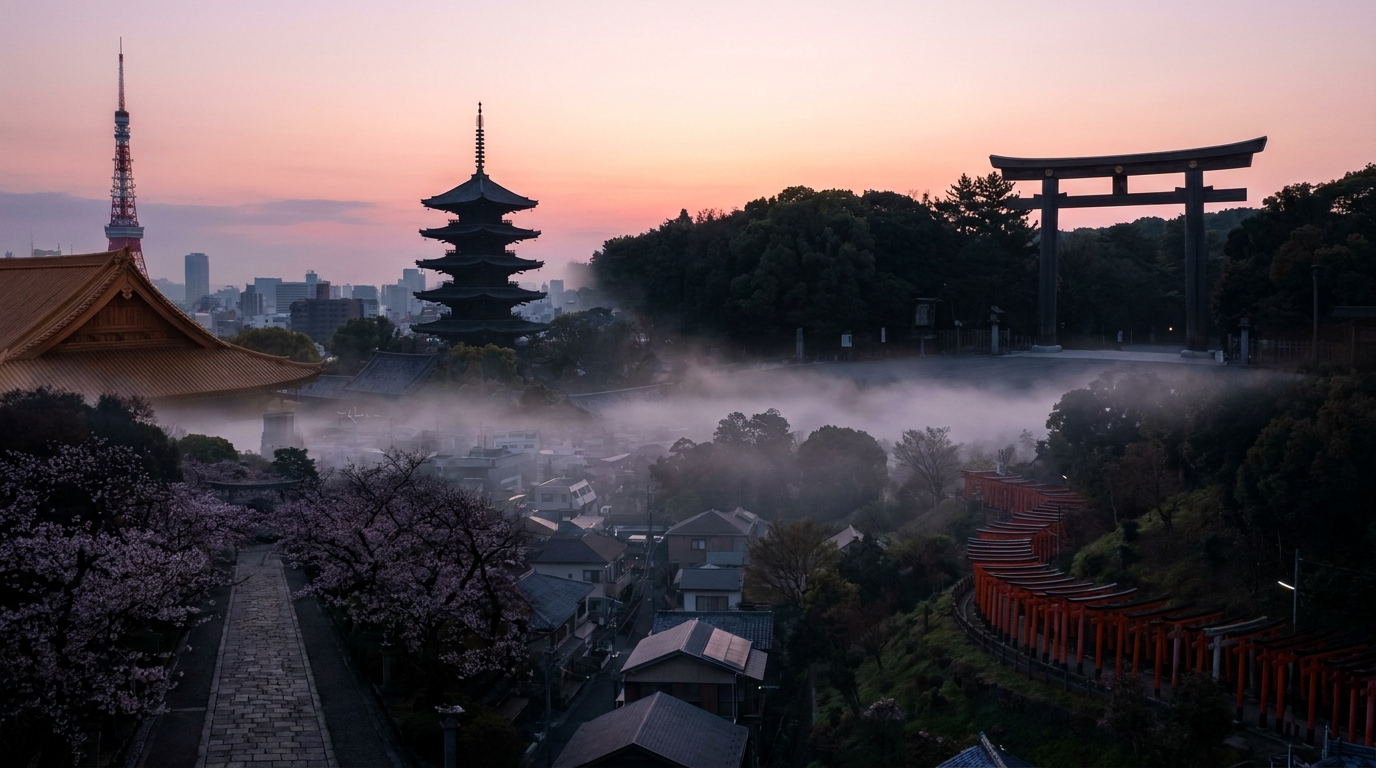
Tokyo has more than 1,000 temples and shrines, but most first-time visitors only see Sensoji and Meiji Shrine in the same day — then leave exhausted and feeling like they “saw temples.” Below are five half-day walking routes (3–4 hours each) that pair 2–4 sacred sites with food, cafes, and quiet backstreets. Most entries are free; the few paid sections cost ¥500–¥1,100.
This guide is built for first-time Tokyo visitors who want one focused route per half-day, not a 12-stop marathon.
Pick Your Route by Situation
If you only want the fastest answer, choose the route by what could go wrong in your day: crowds, rain, fatigue, or wasted train time.
| Your situation | Best route | Why |
|---|---|---|
| First Tokyo temple/shrine day | Route 1: Meiji Shrine → Harajuku → Omotesando | Low friction, easy stations, strong contrast between sacred forest and modern Tokyo. |
| Classic old Tokyo photos | Route 2: Sensoji → Asakusa Shrine → Torigoe | Best if you also want food streets and the Asakusa Quick Guide route. |
| Rainy day or short energy | Route 3: Kanda Myojin → Yushima Tenjin | Compact, easy to combine with Akihabara or Ueno without turning the day into a marathon. |
| Tokyo Tower photo goal | Route 4: Zojoji → Atago Shrine → Toranomon | Good for golden-hour photos and a calmer afternoon route. |
| Quiet local backstreets | Route 5: Nezu Shrine → Yanaka → Ueno Toshogu | Better when you want neighborhood texture instead of another major landmark. |
What “Temple-Shrine Hopping” Means in Tokyo
Tokyo’s sacred sites split into two types:
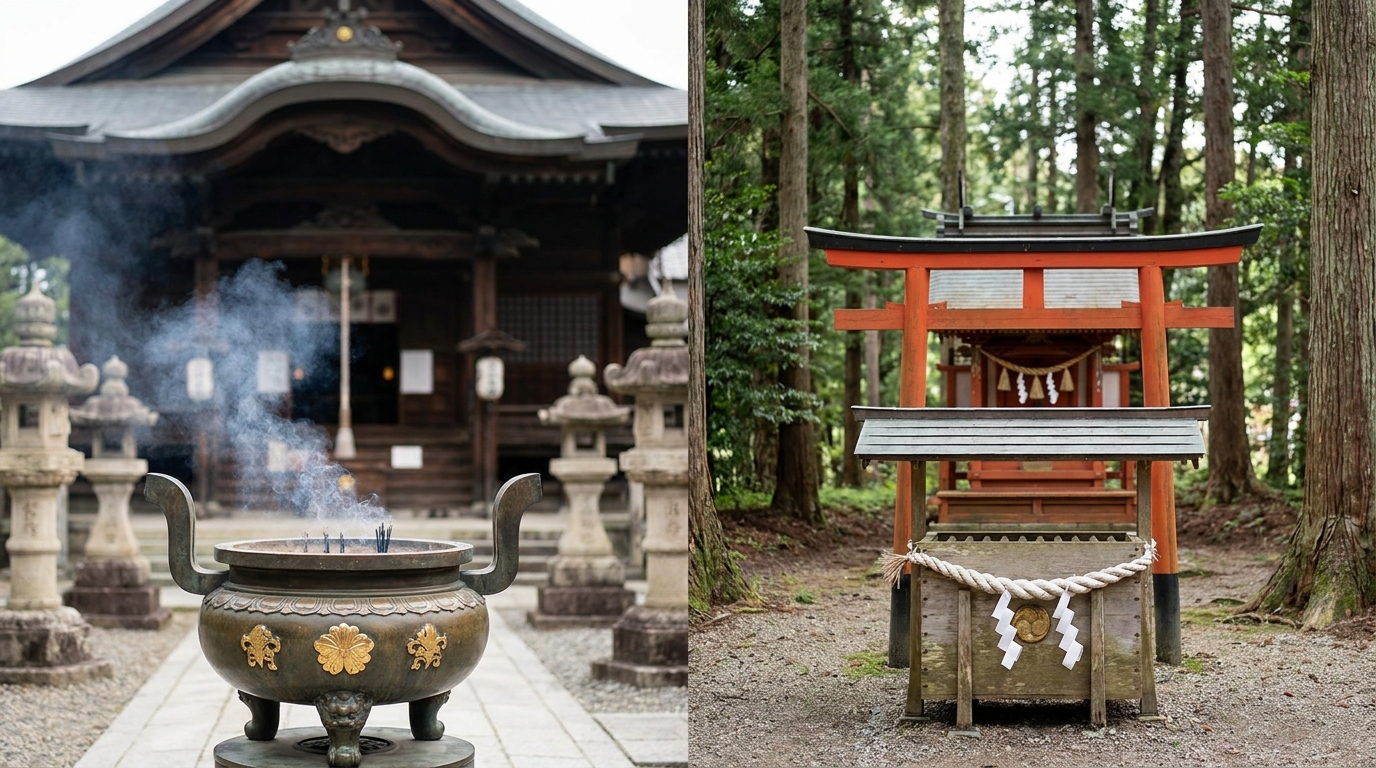
- Temples (otera, 寺) — Buddhist. You’ll see incense burners, large bronze statues, and a main hall (hondo) housing a Buddha image. Examples: Sensoji, Zojoji, Matsuchiyama Shoden.
- Shrines (jinja, 神社) — Shinto. You’ll see torii gates (red or wooden), a purification fountain (chozuya), and a worship hall (haiden). No Buddha images. Examples: Meiji Shrine, Asakusa Shrine, Kanda Myojin.
It’s normal to visit both in one walk — Japanese spirituality treats them as complementary, not rival.
A “half-day route” in this guide means 3–4 hours total, including transit between stops, photo time, a short prayer at each site, and one meal or coffee break. You can do two routes in a single day if you start at 9 AM, but expect to be tired by evening.
Before You Go — 4 Etiquette Rules in 60 Seconds
These four rules cover 90% of the situations you’ll face. Locals appreciate the effort even if you do them imperfectly.
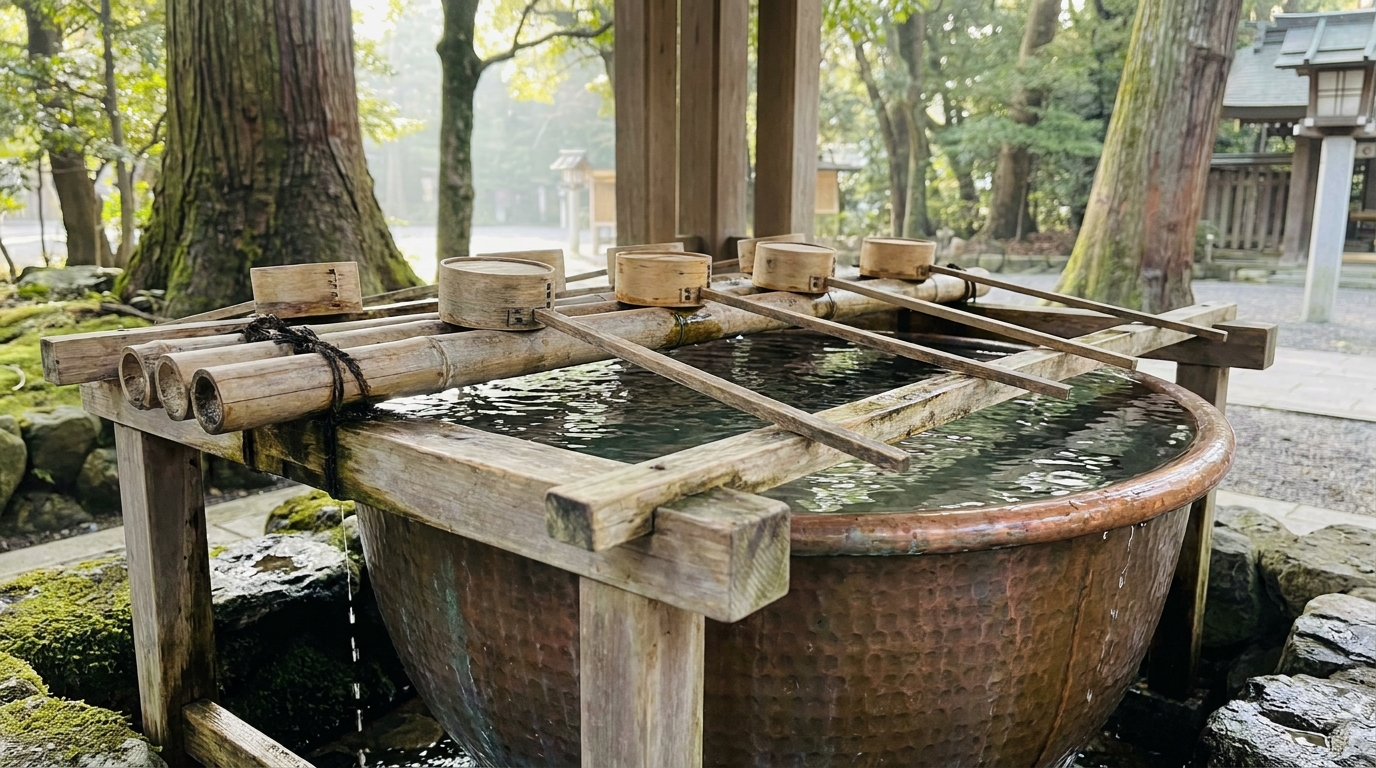
1. At the chozuya (purification fountain) before entering a shrine: scoop water with the ladle in your right hand, rinse your left hand, switch, rinse your right, then pour a little into your left palm to rinse your mouth (don’t drink directly from the ladle). Finally, tilt the ladle vertically so the remaining water rinses the handle. The whole sequence takes about 20 seconds.
2. At the offering box (saisen-bako): drop a coin in — ¥5 is traditional because “go-en” puns on “good fortune,” but any amount is fine. Then bow twice, clap twice, make a silent wish, and bow once more. Temples differ slightly (no clapping at most Buddhist sites — just hands pressed together silently).
3. Photography: outside grounds are almost always fine. Inside main halls and at the altar, look for a “no photography” sign or ask a staff member. At Meiji Shrine and many smaller shrines, ceremonies in progress should not be photographed.
4. Dress: no specific dress code, but avoid wearing swimwear, going shirtless, or showing the bottoms of your feet toward the altar. Tank tops and shorts are fine.
If you’re not religious, none of this is mandatory — but the etiquette is a courtesy to the space and the people who use it daily.
Route 1 — Morning Quiet: Meiji Shrine → Harajuku → Omotesando
Start station: Harajuku (JR Yamanote Line) or Meiji-jingumae (Tokyo Metro Chiyoda / Fukutoshin)
End station: Omotesando (Tokyo Metro Ginza / Chiyoda / Hanzomon)
Total time: 3–4 hours
Cost: Free for main grounds (¥500 for Inner Garden, ¥1,000 for Treasure Museum — both optional)
Best for: First-timers who want a contrast between sacred forest and modern fashion district in one walk.
Meiji Shrine (Meiji Jingu)
Dedicated to Emperor Meiji (1852–1912) and Empress Shoken, this shrine was founded in 1920 and sits inside a 700,000-square-meter man-made forest of approximately 100,000 trees, donated from across Japan when the shrine was built.
- Hours: Sunrise to sunset, year-round (the forest gates open and close with the actual sunrise/sunset times, so winter visits are shorter)
- Admission: Free for main grounds
- Inner Garden (Gyoen): 9:00–16:30 (until 16:00 Nov–Feb), ¥500. Famous for iris blossoms peaking around mid-June.
- Meiji Jingu Museum: 10:00–16:30 (last entry 16:00), closed Thursdays, ¥1,000
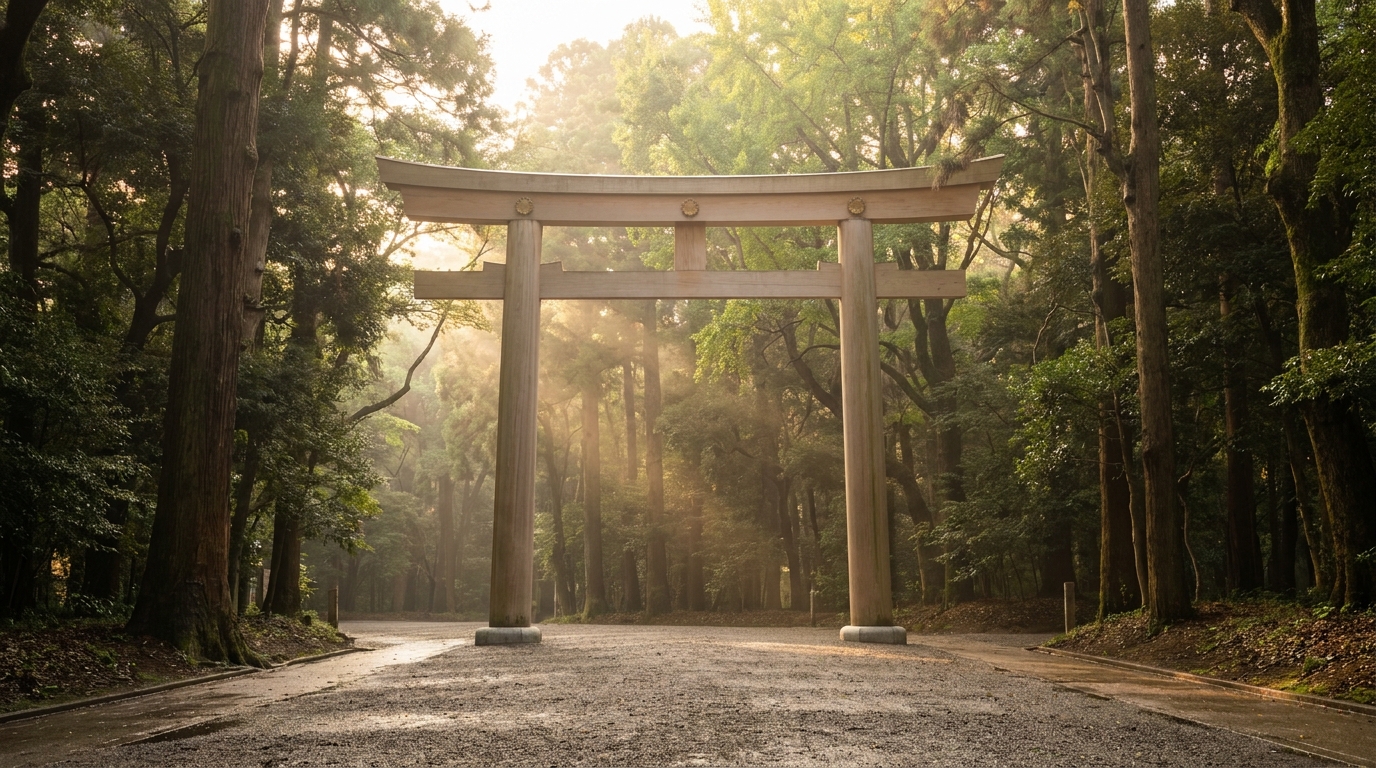
Walk to the main hall takes about 10 minutes from any of the three entrances (Harajuku side, Yoyogi side, Sangubashi side). The Harajuku-side approach is photogenic, passing under a massive wooden torii gate made of hinoki cypress — one of Japan’s largest of the wooden Myojin-zukuri style.
You may see a traditional Shinto wedding procession on weekends — couples in white silk under red parasols crossing the inner courtyard. Watching is fine; flash photography during the procession is not.
Harajuku → Omotesando walk (20 minutes)
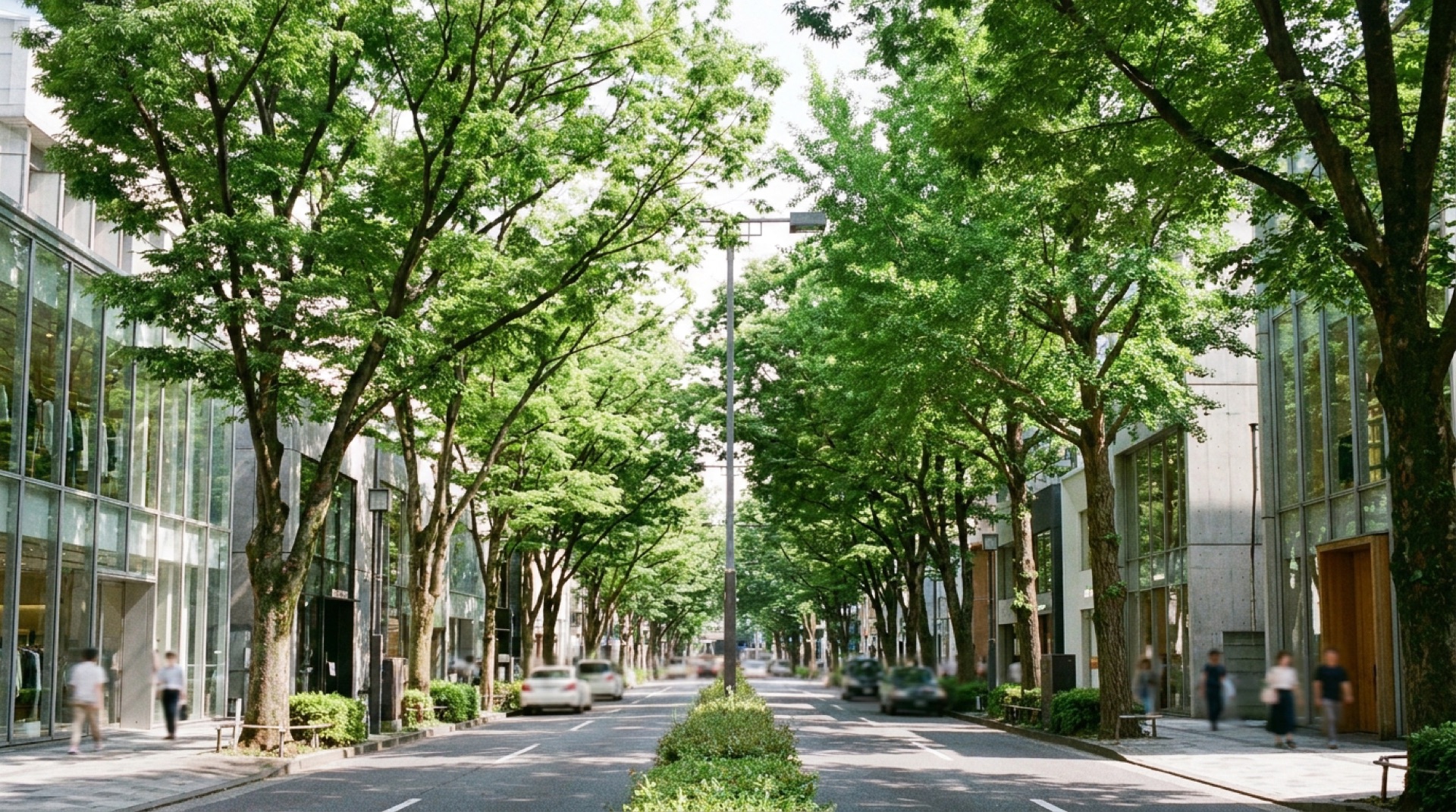
Exit the shrine through the Harajuku-side torii, cross under the JR tracks, and you’re on Takeshita-dori — Tokyo’s most concentrated teen-fashion street. It’s crowded, loud, and has crepe stands. Walk through (or skip it) and head down Omotesando, Tokyo’s tree-lined Champs-Élysées equivalent, ending at Omotesando station.
The Omotesando area has many cafés for a coffee break. Look for Anniversaire Café (open-air terrace), Aoyama Flower Market Tea House (inside a flower shop, plant-filled interior), or Nicolai Bergmann Nomu (Danish design, ¥1,500–¥2,000 lunch). All open by 11:00.
Route 2 — Old Tokyo: Sensoji → Asakusa Shrine → Torigoe → Matsuchiyama Shoden
Start station: Asakusa (Tokyo Metro Ginza Line / Toei Asakusa Line / Tobu Skytree Line / Tsukuba Express)
End station: Kuramae or Asakusabashi (Toei Oedo / Asakusa Line)
Total time: 4 hours (longest of the five routes)
Cost: Free at all four sites
Best for: Visitors who want depth, not just the Sensoji photo.
Sensoji Temple
Tokyo’s oldest temple, founded in 628 CE when two fishermen brothers (Hinokuma Hamanari and Takenari) and the village headman Hajinomatsuchi discovered a small Kannon statue in the Sumida River. Today it draws roughly 30 million visitors annually.
- Main hall hours: 6:00–17:00 (Apr–Sep), 6:30–17:00 (Oct–Mar)
- Admission: Free
- Grounds: open 24 hours (gates illuminated until late at night)
- Address: 2-3-1 Asakusa, Taito-ku, Tokyo 111-0032
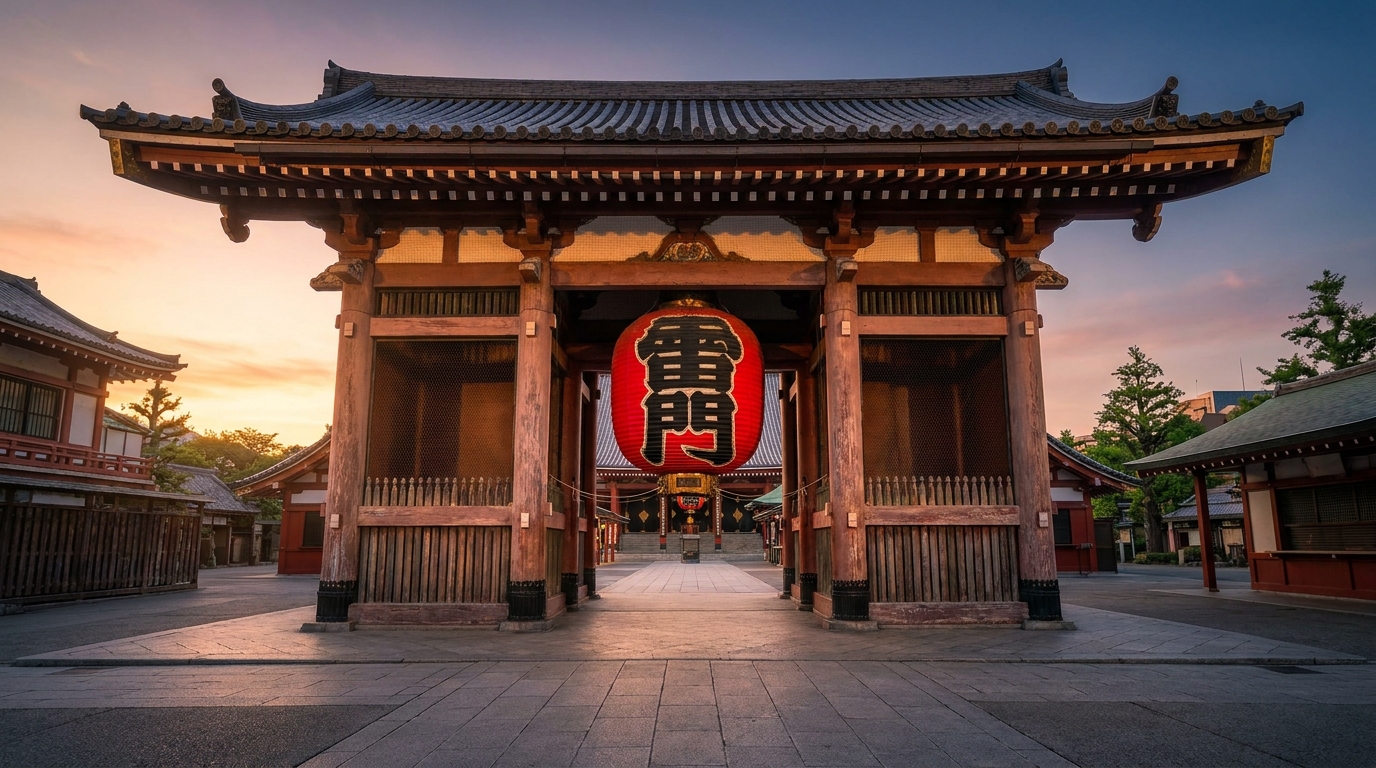
The famous Thunder Gate (Kaminarimon) is the iconic photo spot, but it’s mobbed during 10:00–16:00. Visit before 8:00 or after 18:00 for clean shots and uncrowded grounds. The shopping street Nakamise (200+ meters from Kaminarimon to the Hozomon inner gate) opens around 9:30; many stalls close by 19:00.
2026 event note: Sanja Matsuri runs May 15–17, 2026 (third weekend of May). Note that Sanja Matsuri is technically the festival of Asakusa Shrine (next door), though it spills across the entire Sensoji grounds. The area is packed but vibrant with hundreds of portable shrines (mikoshi).
Asakusa Shrine (Sanja-sama)
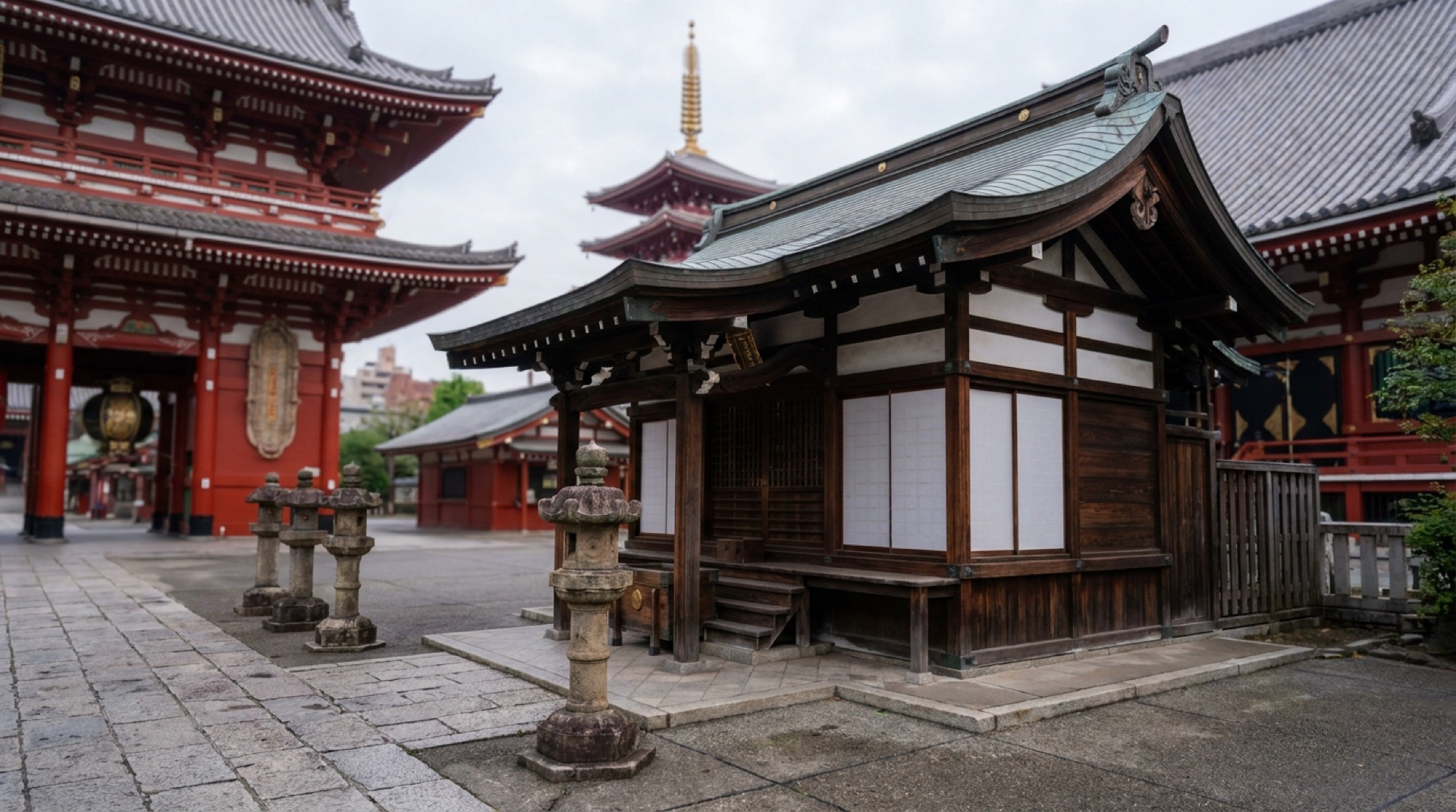
Just to the right of Sensoji’s main hall — same complex, but technically a separate Shinto shrine. Founded approximately 800 years ago during the Kamakura period, it honors the three men who founded Sensoji.
- Hours: Weekdays 9:00–16:00; Weekends/holidays 9:00–16:30
- Admission: Free
- Goshuin available
Most Sensoji visitors miss this shrine entirely because it’s tucked behind the main hall. That’s why locals visit it — it has the same history without the crowd.
Torigoe Shrine (Torigoe-jinja)
Walk about 15 minutes south from Asakusa Shrine through quieter residential streets. Torigoe Shrine is famous among Tokyoites for hosting Torigoe Matsuri in early June, which features what is widely considered Tokyo’s heaviest portable shrine (mikoshi). On non-festival days the precinct is small, quiet, and visited mostly by locals heading home from work.
- Founded: 651 CE (one of Tokyo’s older shrines, over 1,370 years of history)
- Hours: Open during daylight hours
- Admission: Free
- Nearest stations: Kuramae (Toei Oedo/Asakusa Line), Asakusabashi (JR Sobu/Toei Asakusa Line)
Matsuchiyama Shoden
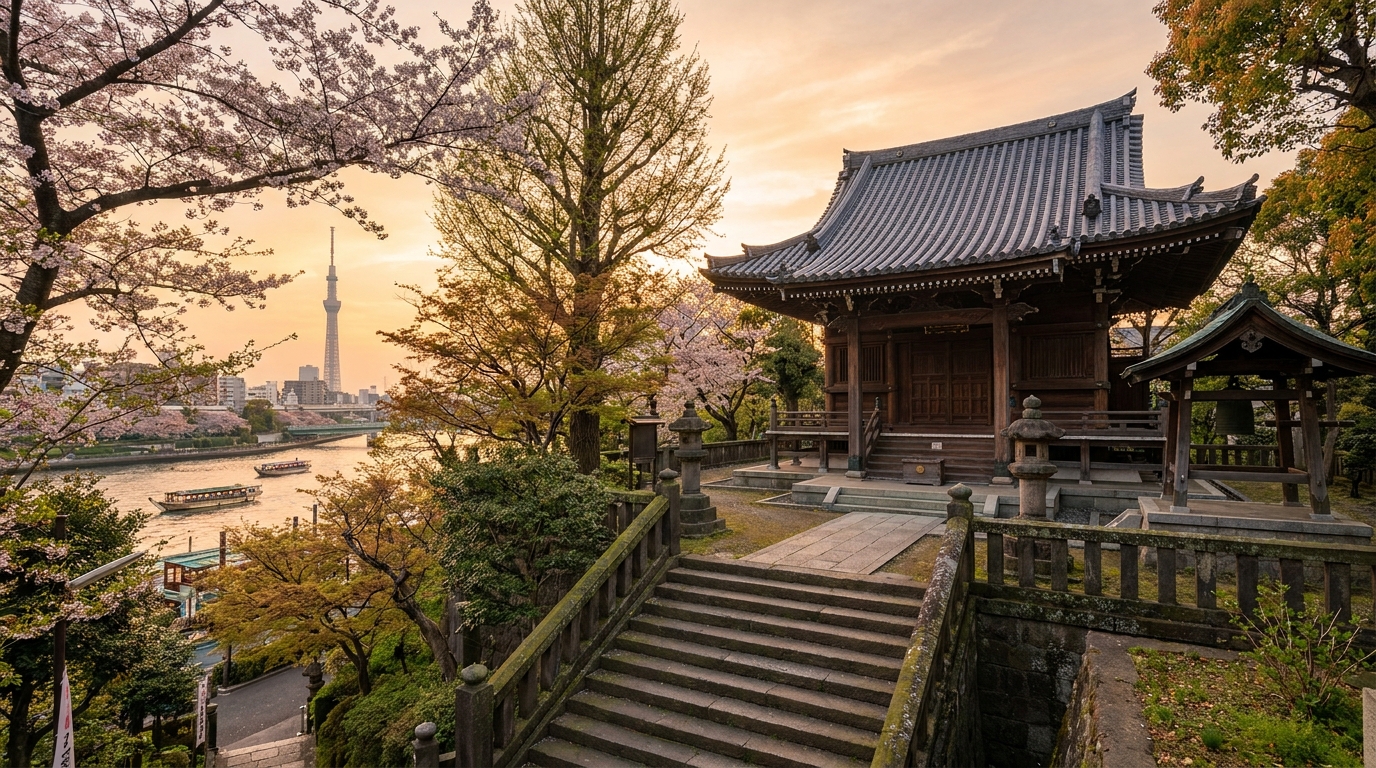
A small temple on a low hill overlooking the Sumida River, about 10 minutes north of Sensoji. Officially affiliated with Sensoji as a subsidiary temple, it has a distinctive symbol — a white daikon (radish) and a money bag — representing harmony of body and prosperity. Some visitors leave actual daikon as offerings.
- Founded: Traditionally dated to 595 CE (per temple legend; the founding date is not independently documented)
- Hours: 6:00–16:30 (varies seasonally)
- Admission: Free
- What to know: small grounds, peaceful river view, almost no other tourists
Route 3 — Yamanote Wisdom: Kanda Myojin → Yushima Tenjin
Start station: Ochanomizu (JR Chuo/Sobu) or Akihabara (JR Yamanote)
End station: Yushima or Ueno-Hirokoji (Tokyo Metro Chiyoda / Ginza)
Total time: 3 hours
Cost: Free at both sites
Best for: Students, exam-takers, parents praying for academic success, or anime fans (Kanda Myojin features in Love Live!).
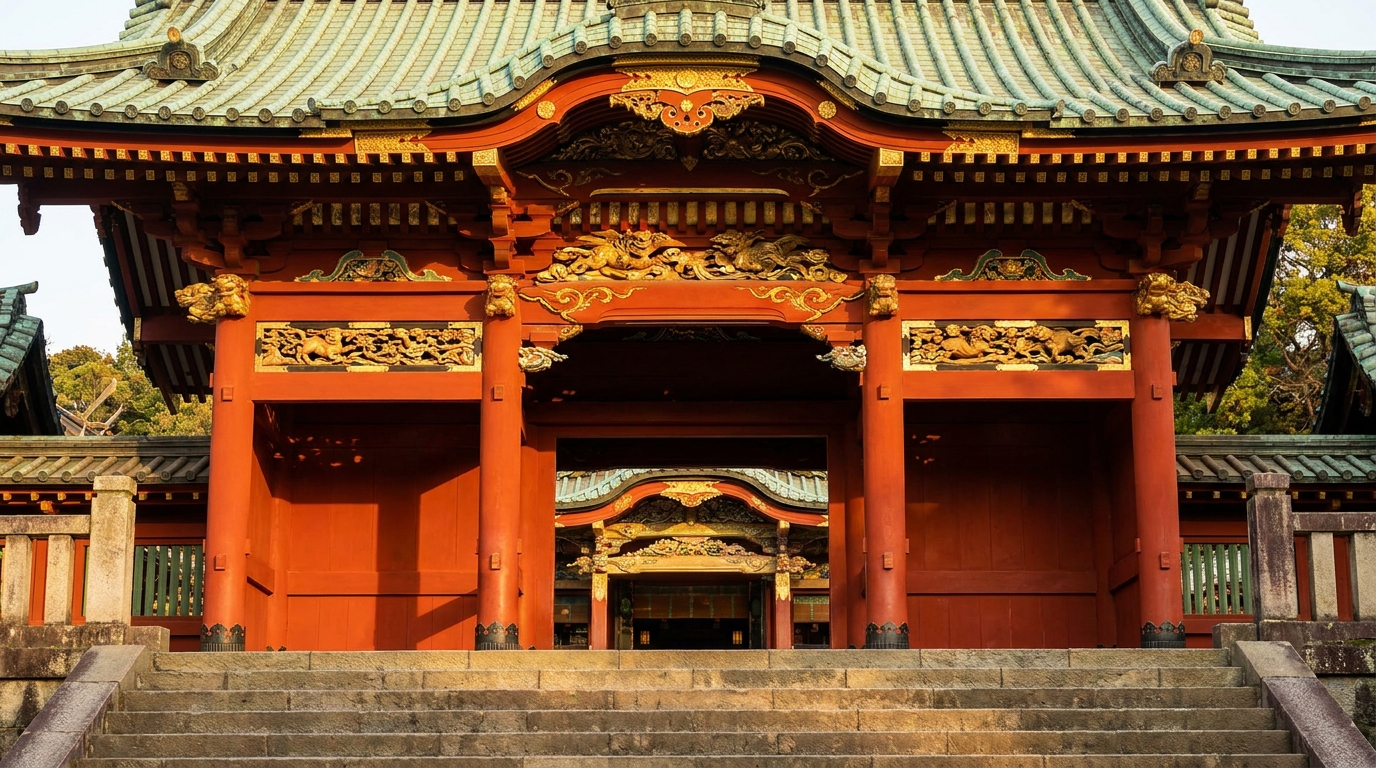
Kanda Myojin (Kanda Shrine)
Founded in 730 CE (about 1,300 years ago), Kanda Myojin is one of Tokyo’s most historically important shrines — designated as “Edo’s chief protective shrine” during the Tokugawa era. Today it draws an unusual mix: traditional worshippers, tech workers seeking blessings for their electronics, and anime fans of Love Live! (which used Kanda Myojin as a key setting).
- Hours: Open 24 hours for grounds; office hours 9:00–17:00 (goshuin, amulets)
- Admission: Free
- Address: 2-16-2 Sotokanda, Chiyoda-ku, Tokyo 101-0021
- Deities: Daikoku (prosperity), Ebisu (commerce), Taira no Masakado (Edo guardian)
- Phone: 03-3254-0753
Notable feature: Electronics blessings. Bring a smartphone, laptop, or any device for an IT shrine blessing (¥3,000–¥5,000). Tech companies in nearby Akihabara reportedly send corporate devices for the same ritual.
2026 events: Summer Purification Ceremony (Nagoshi Oharae) on June 30, 2026 at 11:00 and 15:00. Kanda Matsuri is held biennially in mid-May — 2026 observes the smaller-scale Kagematsuri (shadow festival), with the major Honmatsuri returning in odd-numbered years.
The shrine is a 5-minute walk from Ochanomizu Station or 10 minutes from Akihabara.
Yushima Tenjin (Yushima Tenmangu)
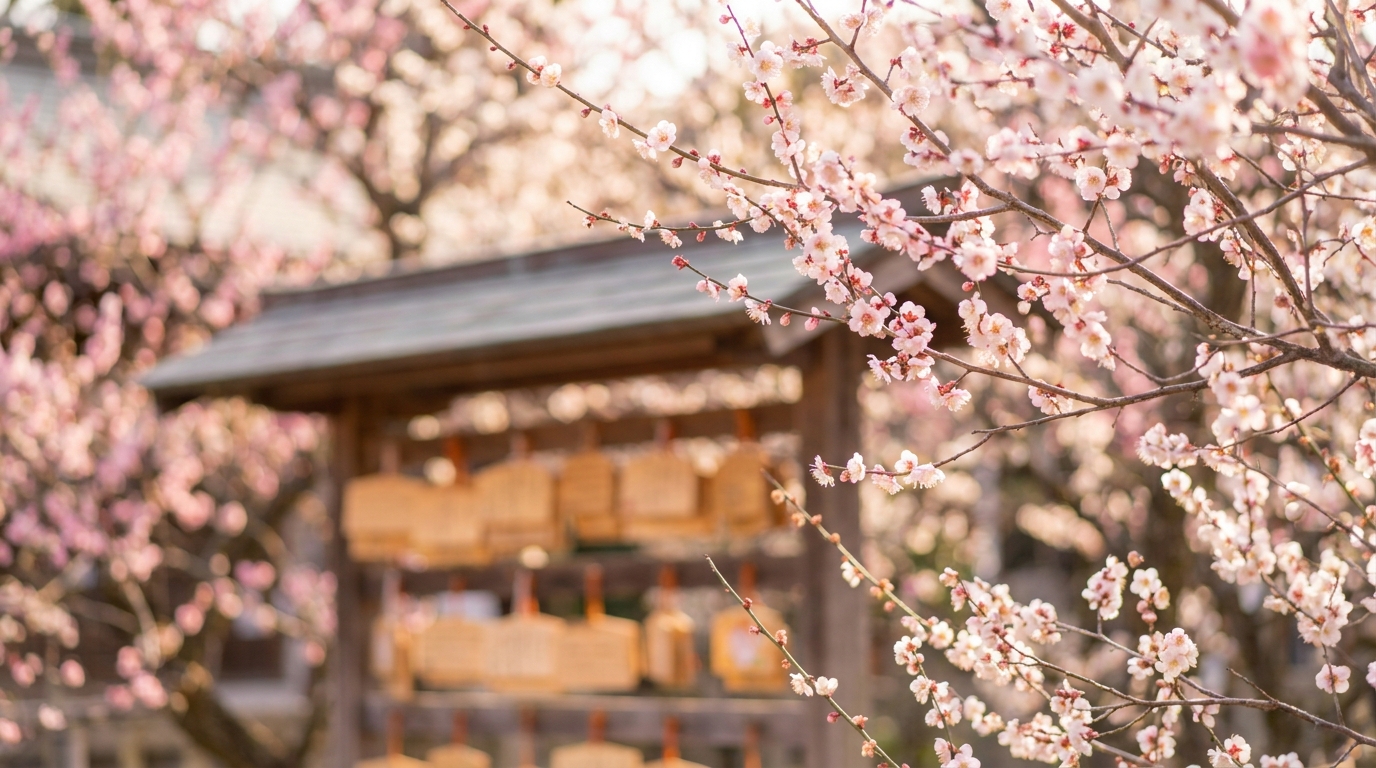
Walk 15 minutes north from Kanda Myojin to Yushima Tenjin, dedicated to Sugawara no Michizane (845–903 CE), the deified scholar-god of learning. This is where students come during exam season — January through March — to pray for academic success and tie wooden plaques (ema) inscribed with their target school’s name to the racks. Thousands cover the ema racks in February; you can spot Tokyo University, Waseda, Keio, and high-school exam plaques.
- Hours: 6:00–20:00 (typical)
- Admission: Free
- Bunkyo Plum Festival 2026: February 8 – March 8, 2026 — 300+ plum trees in bloom, food stalls, traditional performances
- Nearest stations: Yushima (Tokyo Metro Chiyoda Line), Ueno-Hirokoji (Tokyo Metro Ginza Line), Hongo Sanchome (Toei Oedo)
- Goshuin available
Route 4 — Harbor & Hilltop: Zojoji → Atago Shrine → Toranomon
Start station: Onarimon (Toei Mita) or Daimon (Toei Asakusa/Oedo) or Shiba-koen (Toei Mita)
End station: Toranomon Hills (Tokyo Metro Hibiya Line)
Total time: 3.5 hours
Cost: Free at grounds. Optional: ¥700 Treasures Gallery / ¥1,000 combo (Treasures + Tokugawa graveyard)
Best for: History buffs (six Tokugawa shoguns buried here), Tokyo Tower photographers, or anyone who wants a city skyline contrast with sacred space.
Zojoji Temple
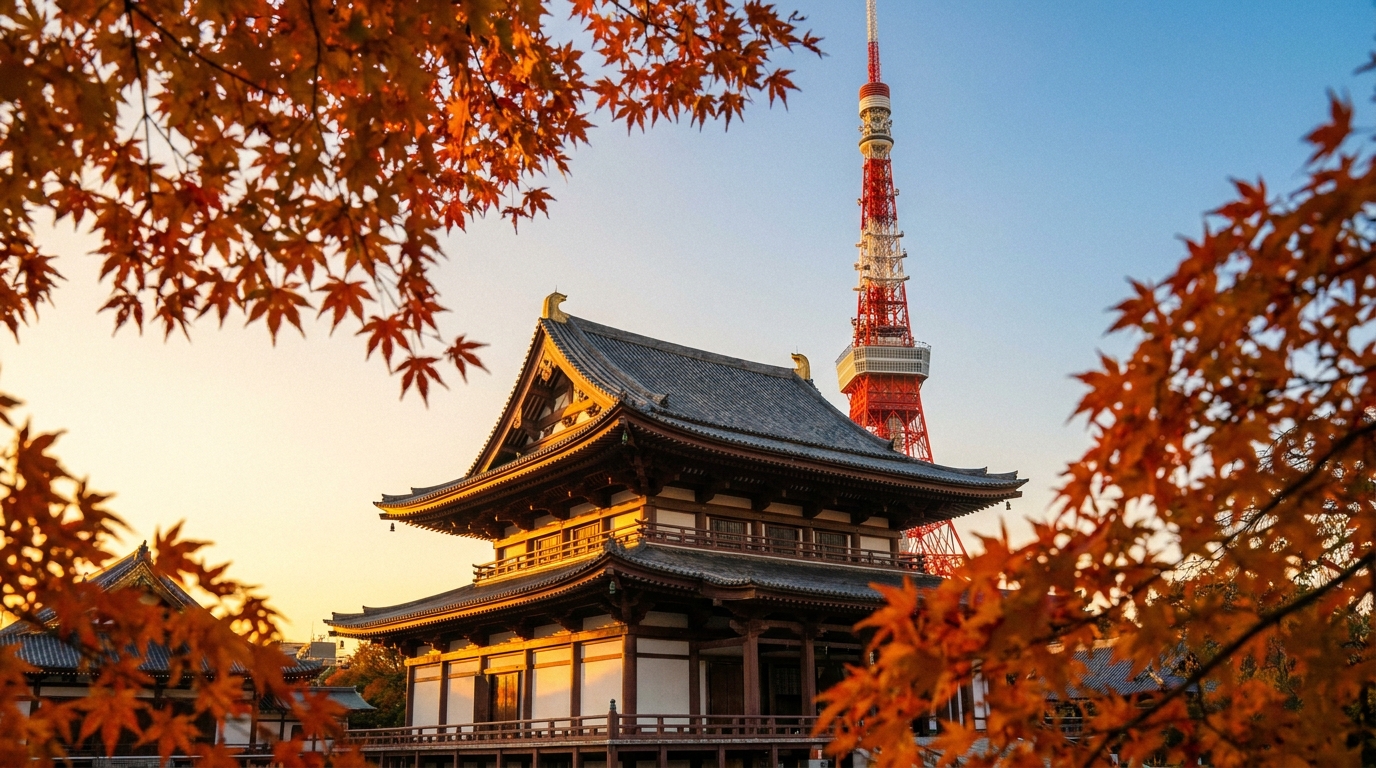
The Tokugawa family temple, founded in 1393 and dedicated to Amida Buddha. Six Tokugawa shoguns are buried here, along with family members. The view of Tokyo Tower rising directly behind the main hall is one of Tokyo’s most photographed angles.
- Hours: Grounds open 24 hours
- Treasures Gallery: 10:00–16:00, closed Tuesdays (except national holidays)
- Admission: Grounds free / Treasures Gallery ¥700 / Combo (Treasures + Tokugawa graveyard) ¥1,000
- Address: 4-7-35 Shibakoen, Minato-ku, Tokyo 105-0011
- Phone: 03-3432-1431
Notable features:
- Sangedatsumon main gate (1622) — Important Cultural Property
- Large bronze bell from 1673 — one of the Edo Period’s three most renowned bells
- Five Hundred Arhat Scrolls — rotating display in Treasures Gallery
Nearest stations: Onarimon (Toei Mita Line, A1 exit, 3 min walk), Daimon (Toei Asakusa/Oedo, 5 min), Shiba-koen (Toei Mita, 3 min).
Atago Shrine
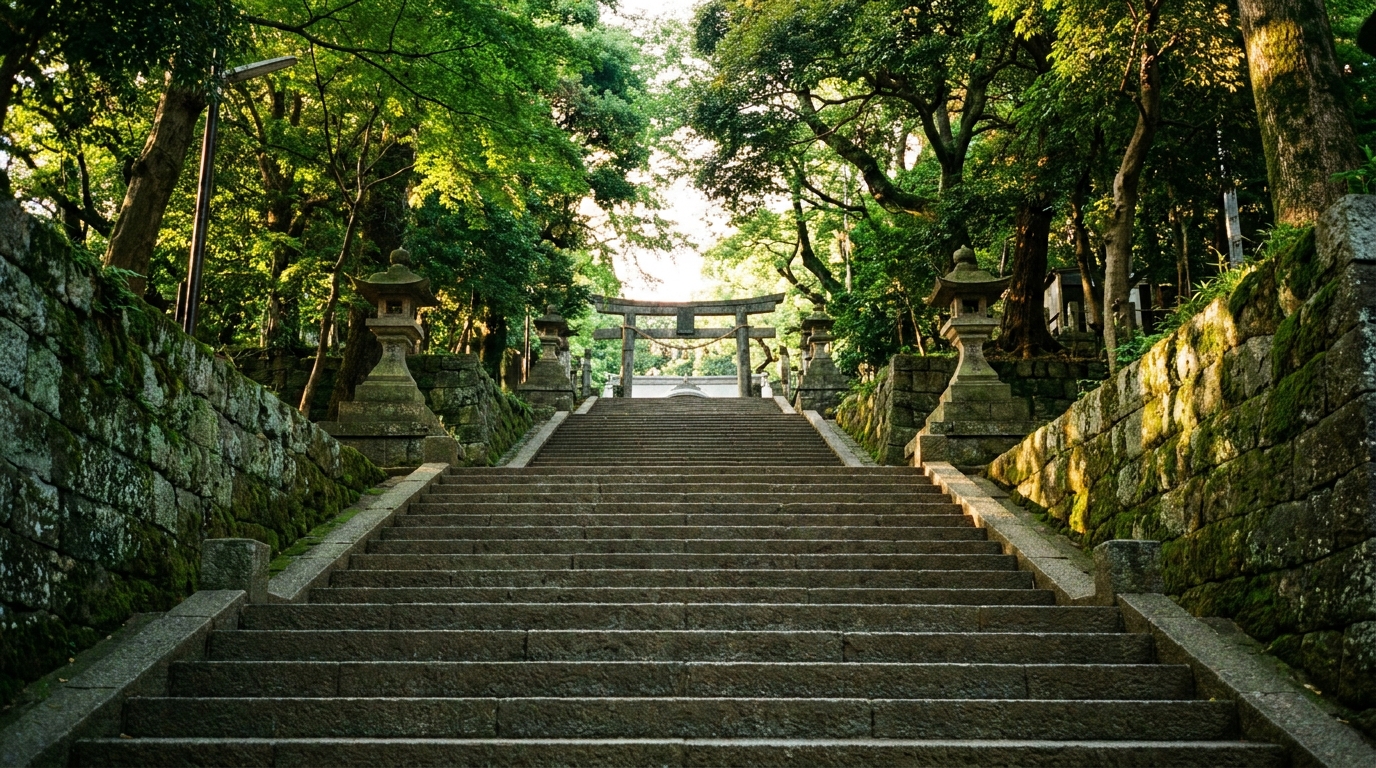
A 15-minute walk from Zojoji toward Toranomon. Atago Shrine sits atop Atago Hill (25.7 meters), the highest natural peak in Tokyo’s 23 wards. The shrine is famous for the 86-step stone staircase (“Shusse no Ishidan,” or “Success Stairs”) — leg-burning even for fit visitors. According to the shrine’s own telling of a 1634 legend, a samurai named Magaki Heikuro rode his horse up these stairs to deliver plum blossoms to Shogun Tokugawa Iemitsu, earning instant promotion. Today, businesspeople climb the stairs before big presentations or interviews.
- Hours: Daylight (typical for shrines)
- Admission: Free
- Address: 1-5-3 Atago, Minato-ku, Tokyo 105-0002
- Nearest stations: Kamiyacho (Tokyo Metro Hibiya, 5 min walk), Toranomon Hills (Hibiya, 5 min), Toranomon (Tokyo Metro Ginza, 8 min)
- On-site tea house: 11:00–16:00, closed Wednesdays
- Phone: 03-3431-0327
A small tea house at the top serves matcha (¥600–¥800) with a view of skyscrapers behind shrine roofs. Open 11:00–16:00, closed Wednesdays.
Route 5 — Yanesen Backstreet: Nezu Shrine → Yanaka Cemetery → Ueno Toshogu
Start station: Nezu (Tokyo Metro Chiyoda)
End station: Ueno (JR Yamanote / Tokyo Metro Ginza/Hibiya)
Total time: 3.5 hours
Cost: Free at most stops. Ueno Toshogu paid section ¥700 / ¥1,100 with peony garden
Best for: Visitors who want quiet local atmosphere, cat alleys (Yanaka), and old Tokyo lanes preserved from the Edo era.
Nezu Shrine
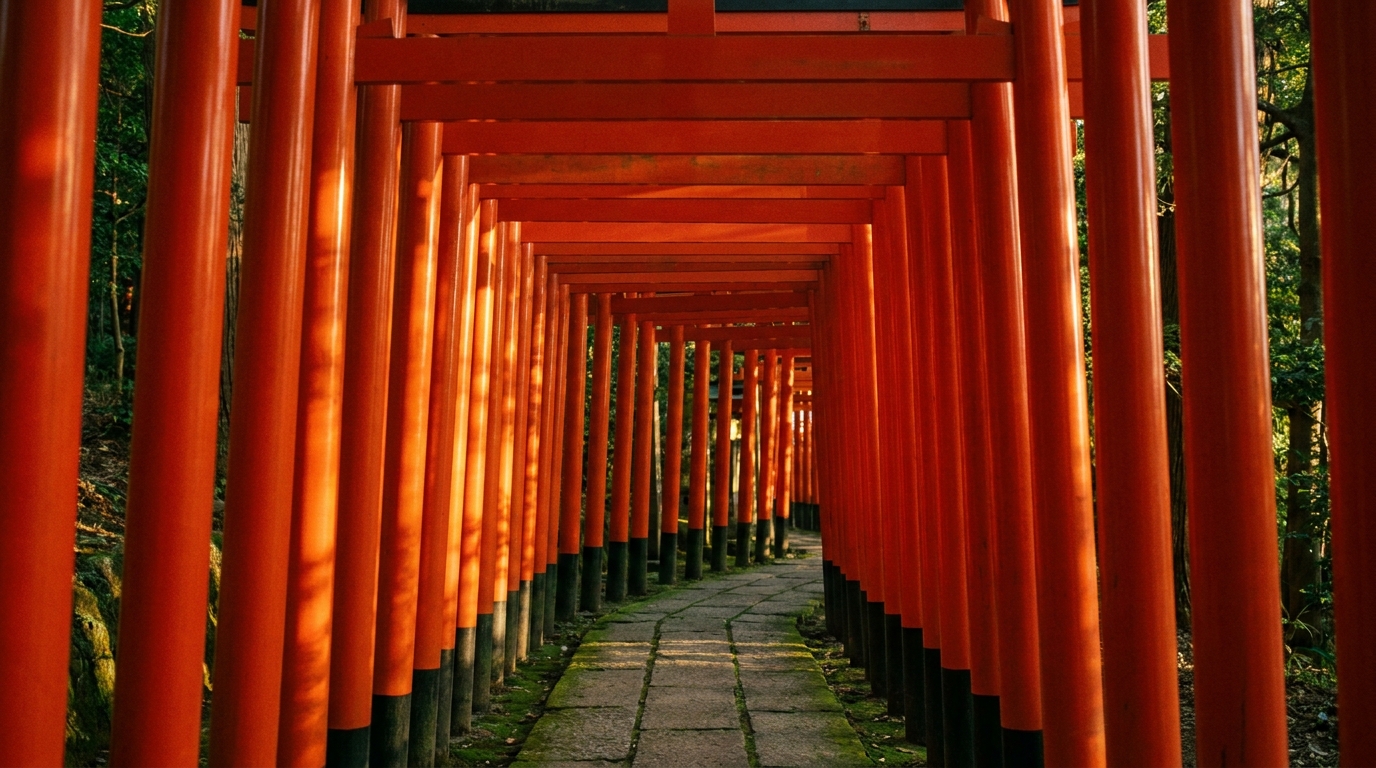
Founded approximately 1,900 years ago (legend), with current buildings from 1706. The shrine features a “thousand torii gates” (Senbon Torii) corridor — a smaller, calmer version of Kyoto’s Fushimi Inari, photogenic without the crowds. The grounds also include a famous azalea garden with 100+ varieties in late April–early May.
- Hours: Open daytime
- Admission: Free (grounds); paid for the azalea garden during festival period
- Address: 1-28-9 Nezu, Bunkyo-ku, Tokyo 113-0031
- Phone: 03-3822-0753
- Nearest stations: Nezu (Chiyoda Line, 5 min), Sendagi (Chiyoda Line, 5 min), Todaimae (Nanboku Line, 7 min)
- Bunkyo Azalea Festival 2026: 55th edition, April 1–30, 2026
- Goshuin available (written-only during festival)
Yanaka Cemetery + Yanaka Ginza walk
10-minute walk from Nezu Shrine toward Yanaka district. Yanaka Cemetery is one of Tokyo’s oldest, where the last Tokugawa shogun (Yoshinobu) is buried. It’s a peaceful walk through tall cherry trees — surreal in early April.
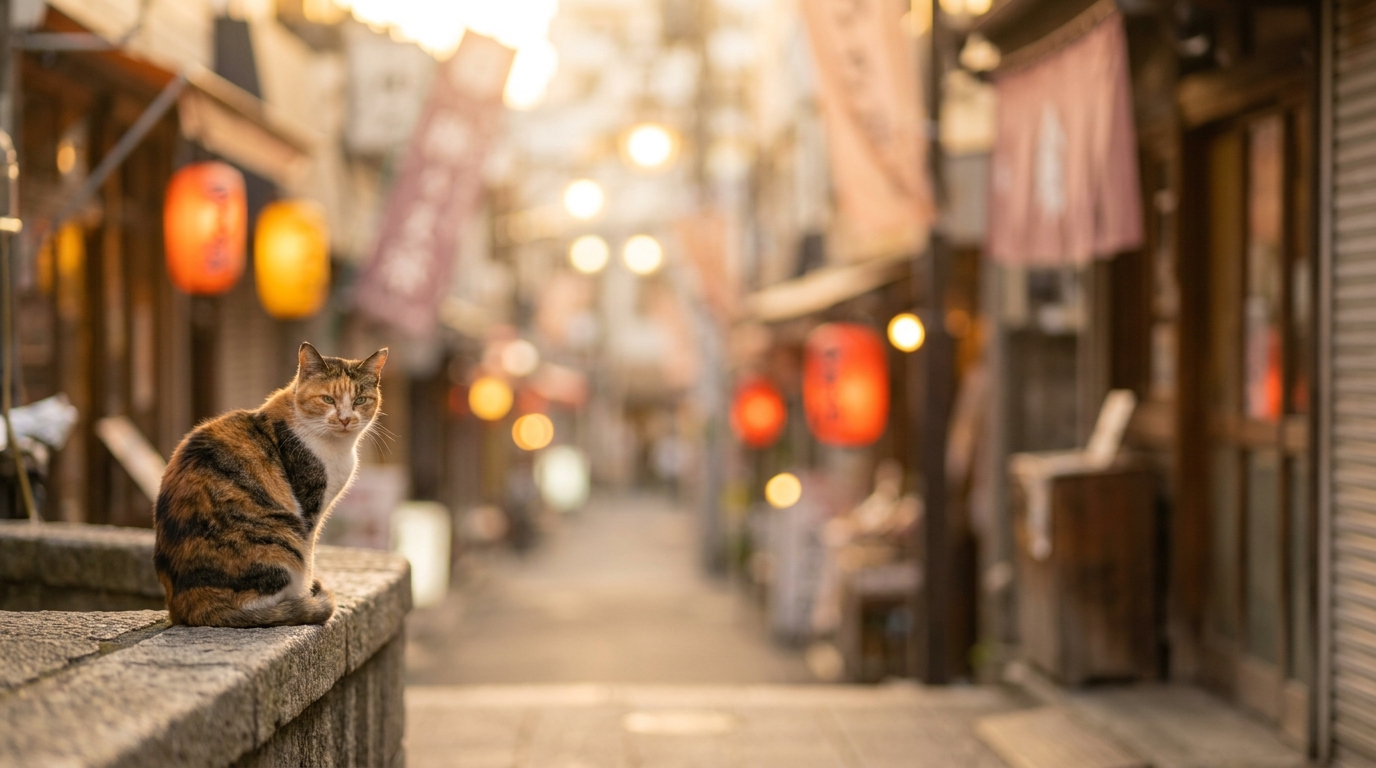
Continue to Yanaka Ginza shopping street, famous for cats lounging on streetlights and traditional snack stalls (menchi-katsu, dorayaki, taiyaki under ¥500 each). This is the most “Showa-era preserved” street in central Tokyo.
Ueno Toshogu
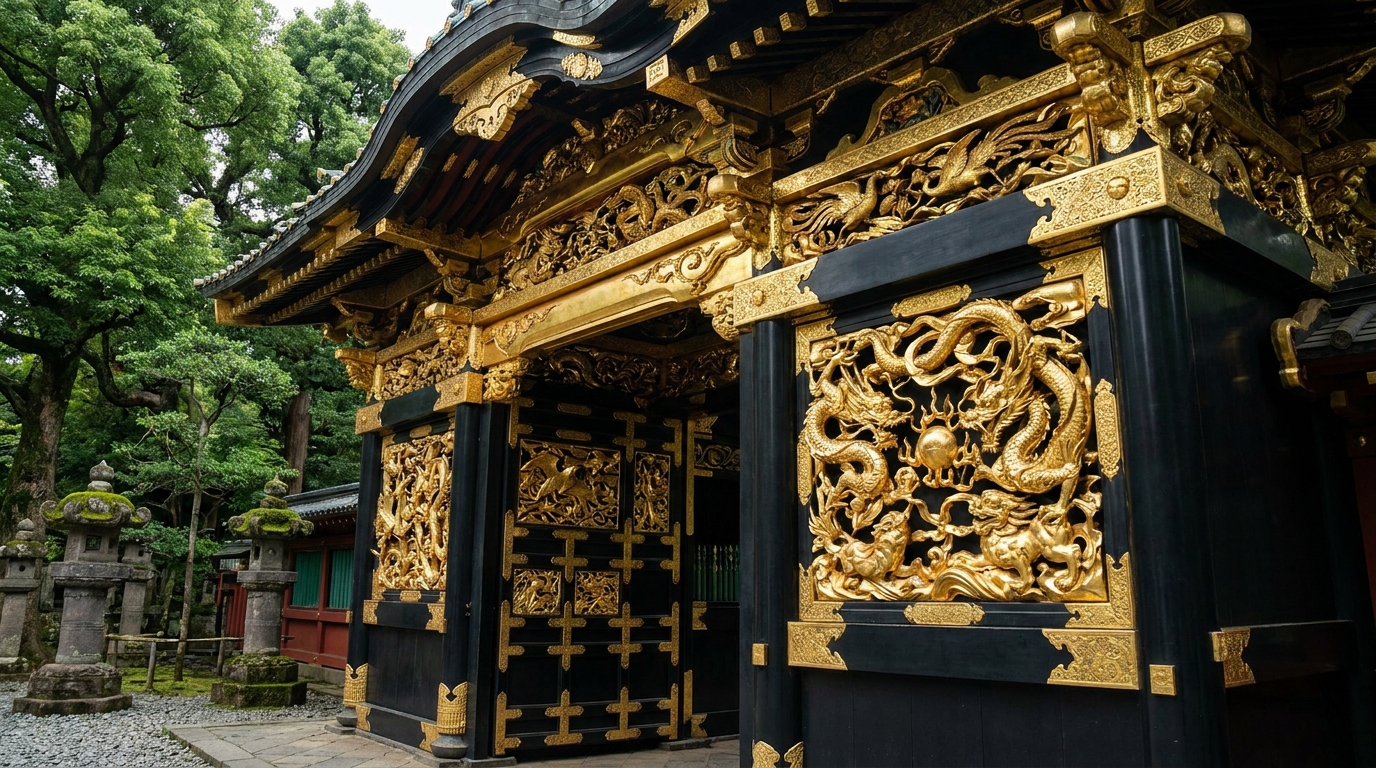
10-minute walk from Yanaka Ginza to Ueno Park, then 5 minutes inside the park to Ueno Toshogu. Established in 1627, this shrine honors Tokugawa Ieyasu (1542–1616), founder of the Tokugawa Shogunate. The Golden Karamon Gate (1651) and Sukibei Wall with carved creatures are the iconic features.
- Hours: Daily from 9:00. Closes 16:30 (Oct–Feb) / 17:30 (Mar–Sep)
- Admission: Outside grounds free / Inside walls ¥700 adults, ¥300 ages 6–12 / Combo with peony garden ¥1,100
- Address: 9-88 Ueno Koen, Taito-ku, Tokyo
- Phone: 03-3821-3455
- Peony garden: Jan 1–mid-Feb and mid-Apr–mid-May (¥700, separate ticket or ¥1,100 combo)
- Nearest stations: Ueno (JR Yamanote/Keihin-Tohoku, Park Exit), Ueno (Tokyo Metro Ginza/Hibiya, Shinobazu Exit), Ueno (Keisei Line, Shomen Exit)
- English ema and omikuji offered
How to Combine Multiple Routes in 1 Day
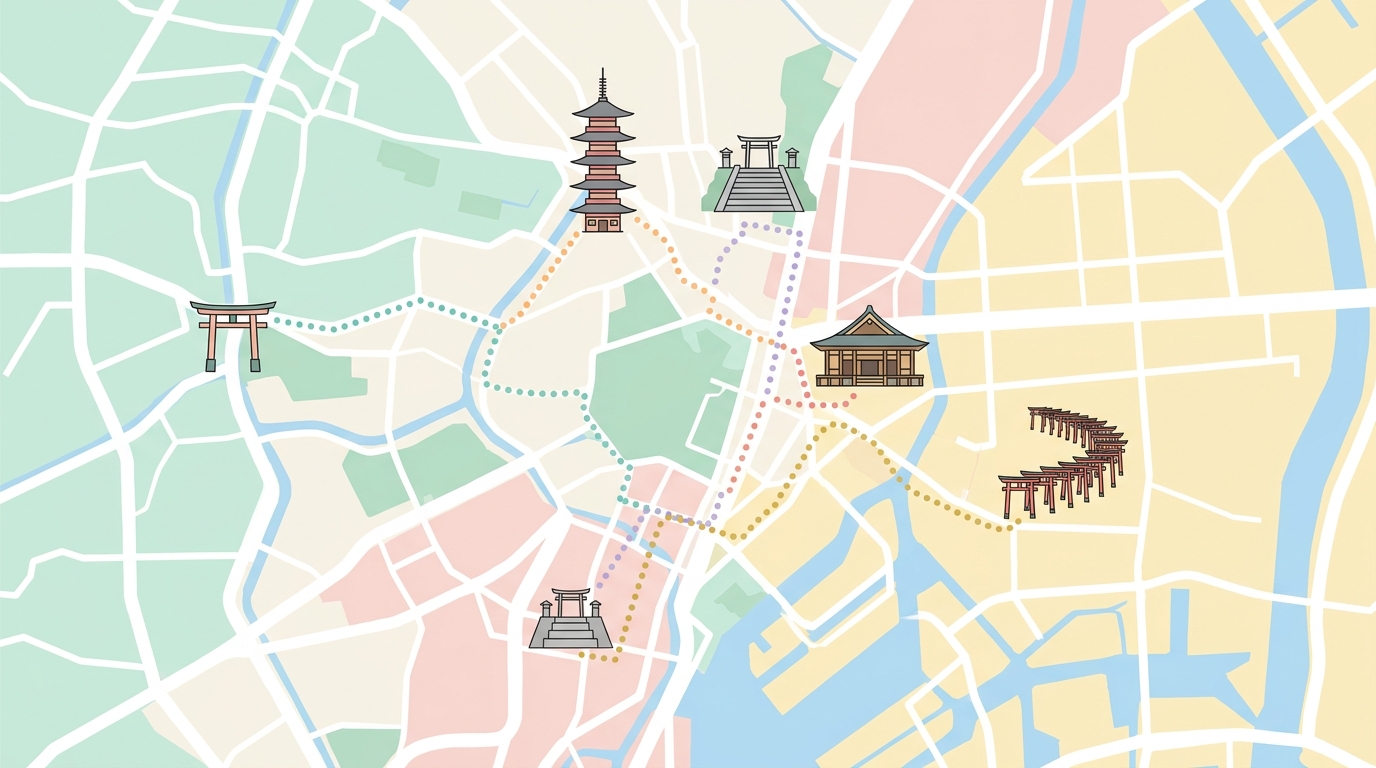
If you want to do two routes in one day, here are the combinations locals recommend:
- Route 1 (morning) + Route 4 (afternoon) — Meiji Shrine 9:00, lunch in Omotesando, then 30-minute train to Zojoji for golden-hour Tokyo Tower photos. Total: ~8 hours.
- Route 2 (morning) + Route 5 (afternoon) — Asakusa 8:00 (before crowds), lunch on Nakamise, then 25-minute train to Nezu for the Yanaka stroll. Total: ~8 hours.
- Route 3 alone — Kanda Myojin and Yushima Tenjin are close enough that you can add an Akihabara electronics stop or a Ueno Park afternoon and still finish by sunset.
What not to do: don’t combine Route 1 and Route 2. They’re geographically opposite and you’ll spend 1.5 hours on trains. Save Sensoji for a separate morning.
FAQ
Q1. Do I need to pay to enter Tokyo temples and shrines?
Almost all entries to the main grounds are free. Paid sections (treasure museums, inner gardens, special exhibits) are typically ¥500–¥1,100. Examples in this guide: Meiji Inner Garden ¥500, Zojoji Treasures Gallery ¥700, Ueno Toshogu paid wall section ¥700.
Q2. Can I take photos inside the main halls?
Outside grounds — almost always yes. Inside main halls or at the altar, look for “no photography” signs or ask staff. During ceremonies (especially weddings at Meiji Shrine), flash photography is not permitted.
Q3. What if I’m not religious — is it disrespectful to visit?
No. Visiting as a tourist is welcomed at all sites in this guide. The etiquette rules are about respecting the space (don’t be loud, don’t climb on structures, follow the chozuya basics) — not about belief.
Q4. Are tattoos allowed?
Yes at temples and shrines. There are no tattoo restrictions at any of the sites in this guide. (Tattoo restrictions in Japan apply mainly to public baths and onsen, not religious sites.)
Q5. What’s the best time of year to visit?
- Plum blossoms at Yushima Tenjin: mid-February to early March
- Cherry blossoms at Yanaka Cemetery and Ueno Park: late March to early April
- Azaleas at Nezu Shrine: April 1–30, 2026
- Iris blooms at Meiji Inner Garden: mid-June
- Sanja Matsuri at Sensoji: May 15–17, 2026
- Autumn colors (most temples): mid-November to early December
Q6. Should I visit Sensoji or Meiji Shrine first if I only have one day?
If you want quiet → Meiji first (8:00 arrival), Sensoji evening (after 18:00). If you want street food and shopping → Sensoji morning (before 10:00), Meiji late afternoon.
Q7. How early should I arrive to avoid crowds?
- Sensoji: before 8:00 or after 18:00
- Meiji Shrine: before 9:00 or after 16:00
- All other sites in this guide: any time before 11:00 is uncrowded.
Q8. What should I wear?
Casual clothing is fine — including tank tops, shorts, and skirts. The only requests are: no swimwear, no shirtless walking through grounds, no shoes on tatami inside halls.
Q9. Can I bring food or drinks inside?
Drinks (water bottles, coffee) are typically fine to carry. Eating inside the main halls is not done. Most grounds have benches where you can sit with a snack.
Q10. Do I need to make a donation?
No. Coin offerings (¥5 traditional, but any amount fine) are voluntary. Goshuin stamps cost ¥300–¥500 each but are optional souvenirs.
Related Reading
- Asakusa Quick Guide — Sensoji area deep dive for Route 2.
- Akihabara Quick Guide — Kanda Myojin area companion for Route 3.
- Shibuya Quick Guide — Meiji Shrine adjacent area for Route 1.
- Navigate Japan with Google Maps — Check station exits and walking time before combining routes.
- Tokyo Trains Complete Guide — JR, Metro, and Toei for moving between routes.
- Tokyo Train Manners — Etiquette during transit.
- Tokyo Kimono Rental Hidden Fees — Budget and return-time traps if you plan temple photos in kimono.
- Japan Onsen Etiquette — Related etiquette guide for tattoos and bathing rules.

Comments