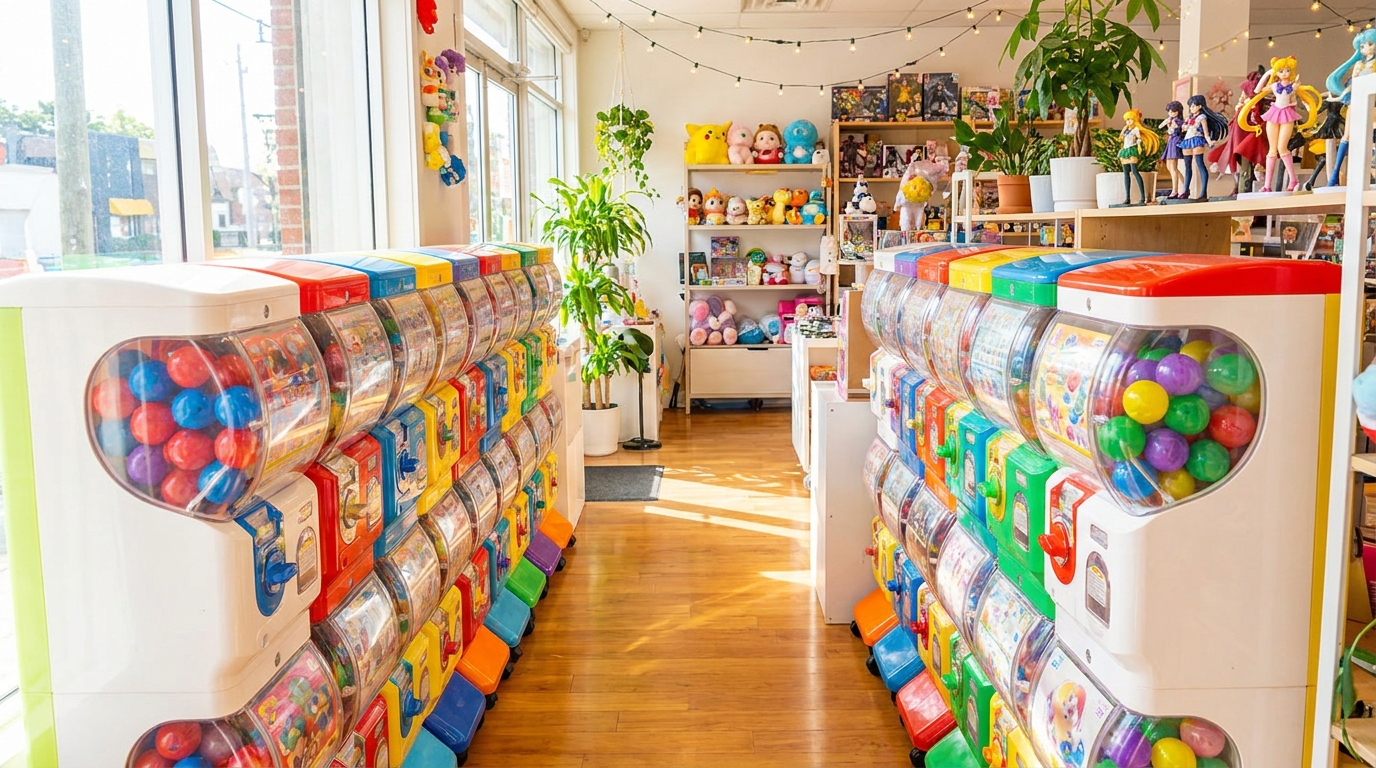
Quick Answer: Check the price and payment icons on the machine. Most coin-operated gachapon require the exact coins shown—often 100-yen coins—and do not give change. Cashless support varies by machine, even inside large stores. Turn the handle once in the indicated direction. If no capsule drops, do not insert more money or force the machine—ask staff or use the contact details shown on it. For a large selection in Tokyo, start with the official Bandai Namco stores in Ikebukuro or Akihabara.
Checked on: July 17, 2026. Machine prices, payment methods, stock, and store hours can change; confirm the machine panel and the official store page.
Gachapon (also written gashapon or gacha-gacha) are coin-operated machines that sell small capsule toys. You will see them at train stations, supermarkets, shopping malls, game centers, and whole shops dedicated to nothing else. They are cheap, fun, and one of the easiest souvenirs to bring home. This guide covers the parts travelers actually get stuck on: how to operate the machine, how to pay when you have no coins, the manners to follow, and exactly where the best shops are — with the nearest stations.
- What is gachapon?
- How to use the machine
- Paying and getting coins
- Etiquette and good manners
- Tips for travelers
- Where to try: Tokyo's best gachapon spots
- Official sources checked
- FAQ
- How much does gachapon cost?
- Do gachapon machines take cards or Suica?
- Do the machines give change?
- Where can I get 100-yen coins?
- Can I choose which toy I get?
- What's the difference between gachapon, gashapon, and gacha-gacha?
- Where can I find the most gachapon machines in one place?
- Are gachapon good souvenirs?
- What do I do with the empty capsule?
- Read next
- Did this guide solve your problem?
What is gachapon?
The name comes from the sounds the machine makes: gacha (turning the handle) and pon (the capsule dropping). Inside each capsule is a small toy. You do not choose the exact toy; each turn is a surprise from the series shown on the front of the machine.
A single series includes several different toys plus a rarer "secret" one, which is part of the appeal for collectors. Most capsules are small — just a few centimeters across — so they pack easily into a suitcase.
What's inside the capsules
Capsule toys cover a huge range. Common types include:
- Miniature figures of anime, manga, and video-game characters.
- Animal models, often surprisingly detailed and realistic.
- Tiny everyday objects — miniature food, furniture, signboards, and household items.
- Keychains and straps you can clip to a bag or phone.
- Novelty and joke items that you will not find anywhere else.
New series are released constantly, and shops rotate their line-ups, so the selection on any given visit is part of the fun. Some series are tied to popular anime, game, or character brands, which makes them collectible.
How to use the machine
The steps are simple once you have the right coins.
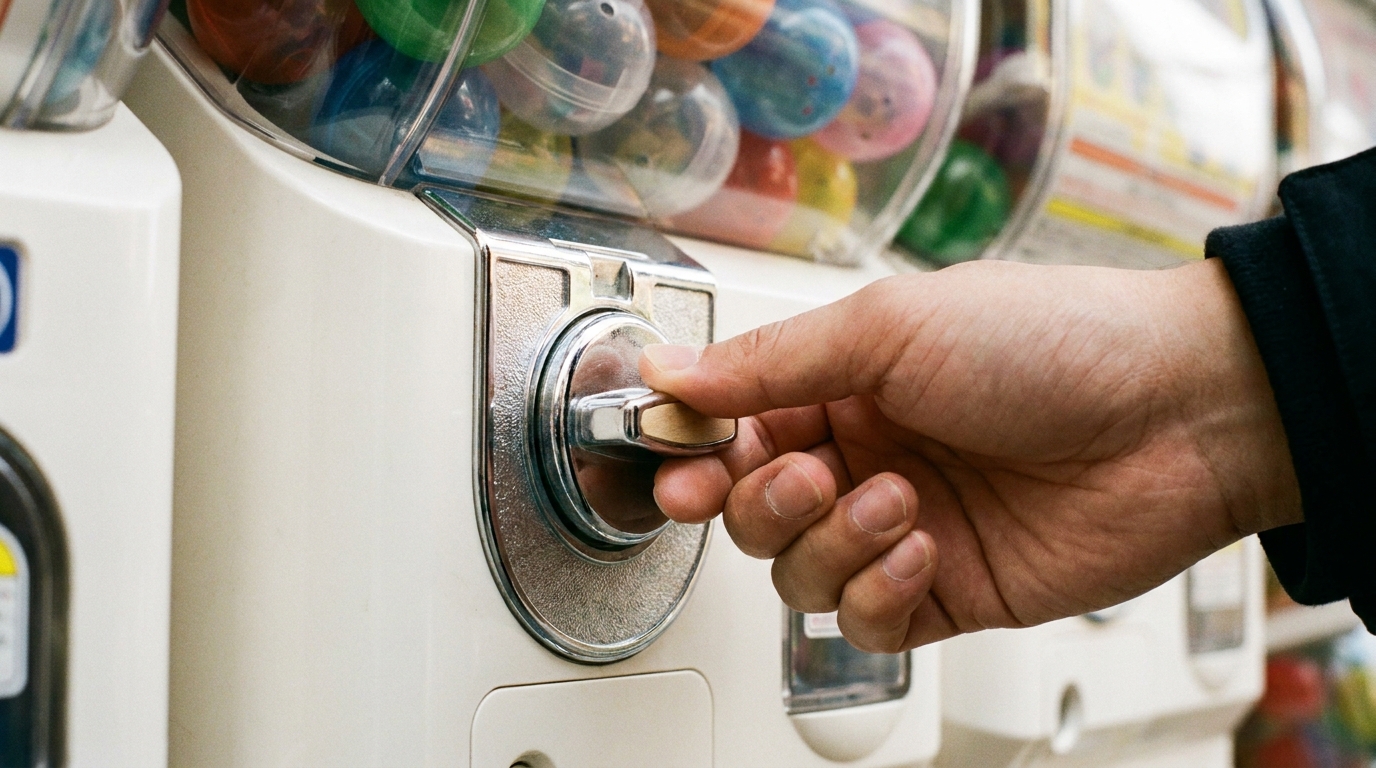
- Choose a machine. The front panel shows photos of the toys in that series and the price (for example, ¥300).
- Use the payment shown. Check the price and payment icons first. For a coin-operated ¥300 machine that shows 100-yen coins, insert three 100-yen coins. Do not assume every machine accepts the same denominations or cashless payment.
- Turn the handle once. Follow the arrow on the machine and rotate the knob until it stops and you hear the capsule drop. Do not force it past the stop.
- Collect your capsule. Open the small flap at the bottom and take out the plastic capsule.
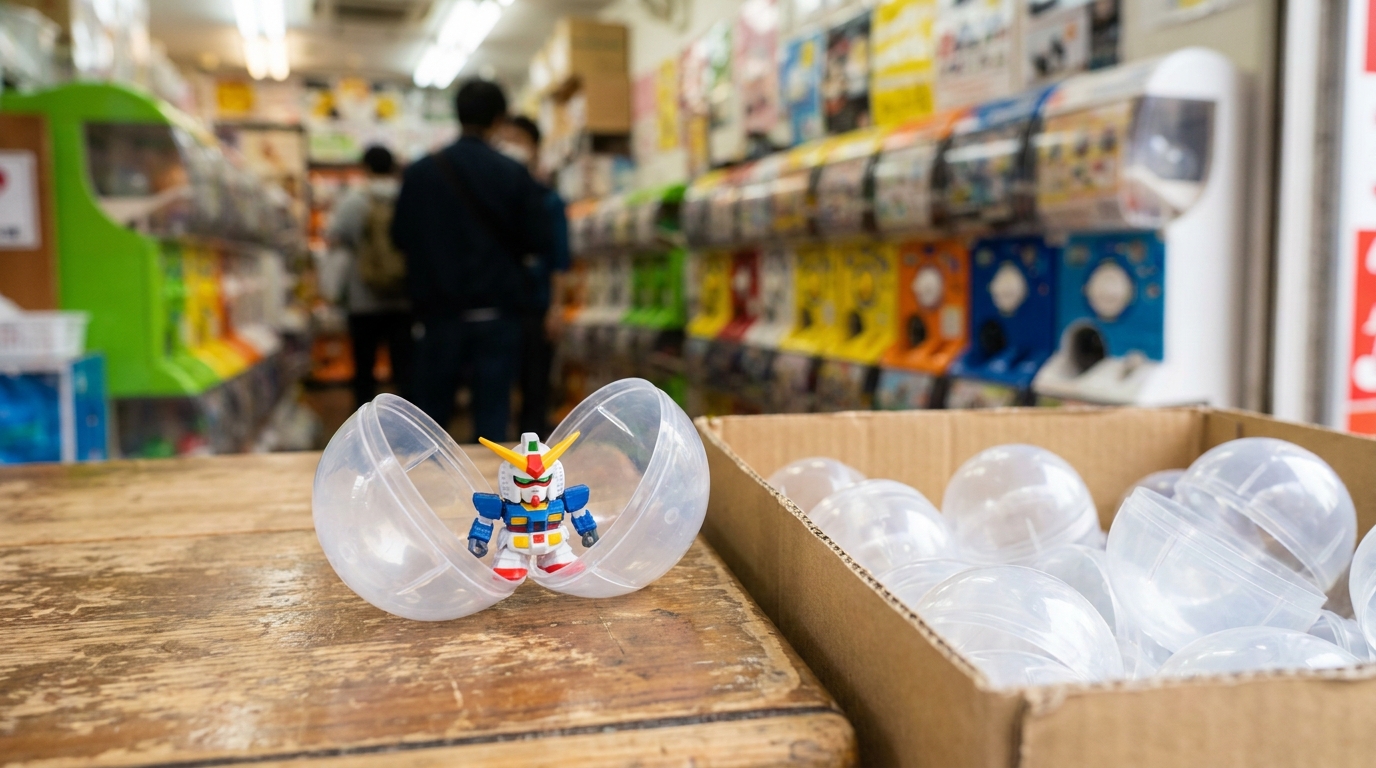
- Open it and recycle the shell. Pop the capsule open to get your toy. Many gachapon corners have a box for empty capsules right next to the machines — Japanese shoppers drop the empty shells there rather than carry them.
If no capsule drops: Stop before inserting more money. Check for a sold-out notice and confirm that you completed one turn in the indicated direction. Do not shake, hit, or force the machine. At a staffed shop, show the machine and ask an attendant. At an unstaffed location, photograph the machine number, payment display, and contact details before reporting the problem.
Paying and getting coins
This is where many visitors get caught out, so it is worth planning ahead.
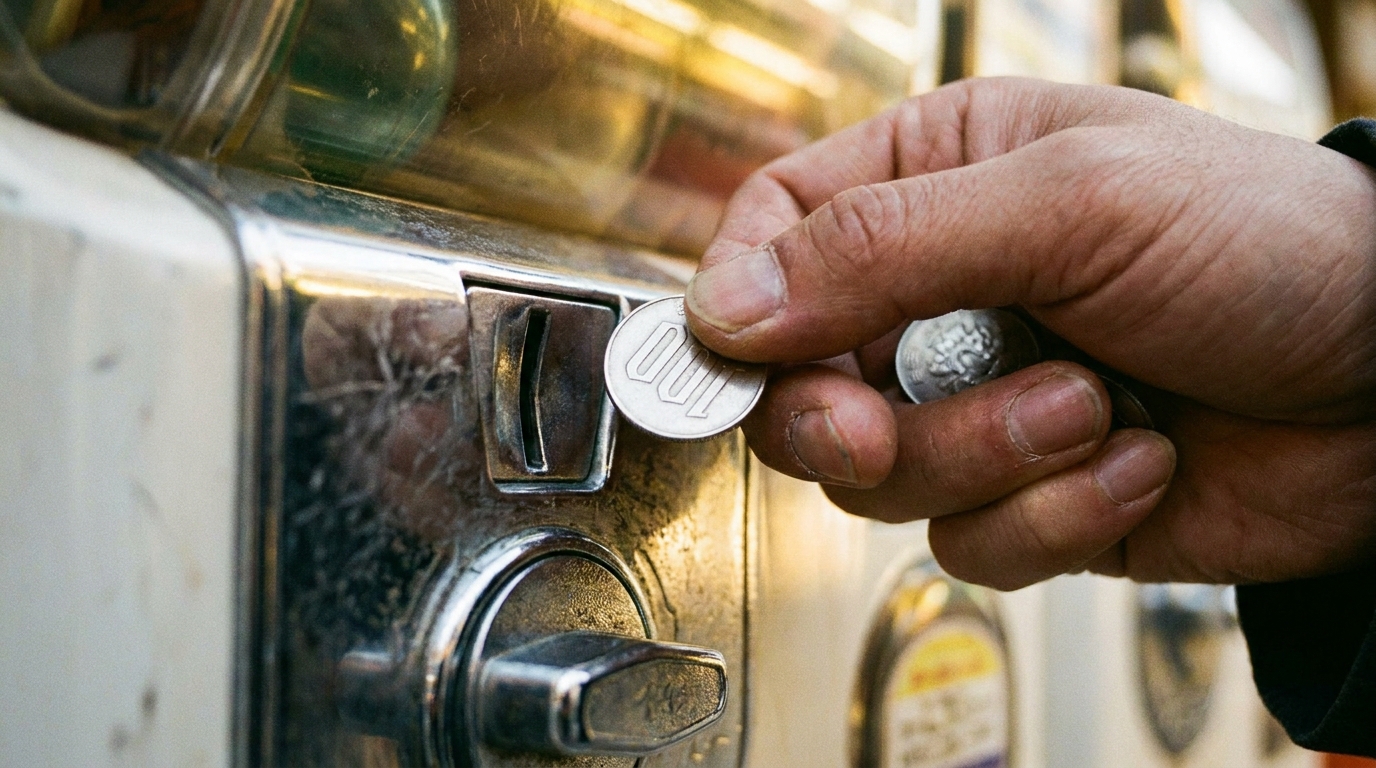
Check the payment icons on the individual machine. Many traditional machines are coin-operated and commonly use 100-yen coins, but payment methods vary. Do not assume a machine in a station, supermarket, or specialty shop accepts cards or phones. Coin-operated machines generally require the exact amount shown and do not exchange a 1,000-yen note.
Ways to get 100-yen coins:
- Coin exchange machines (両替機). Dedicated gachapon shops and game centers often have a machine that turns ¥1,000 notes into coins. Look for it near the entrance or along the wall.
- Buy something small at a convenience store. A drink at a konbini paid with a 1,000-yen note is an easy way to get coins as change.
- Carry coins on purpose. Japan still uses cash a lot, so keeping a small coin pouch is handy. See our guide to Japanese yen banknotes and coins if you are not sure which coin is which.
Cashless and "Smart Gashapon" machines
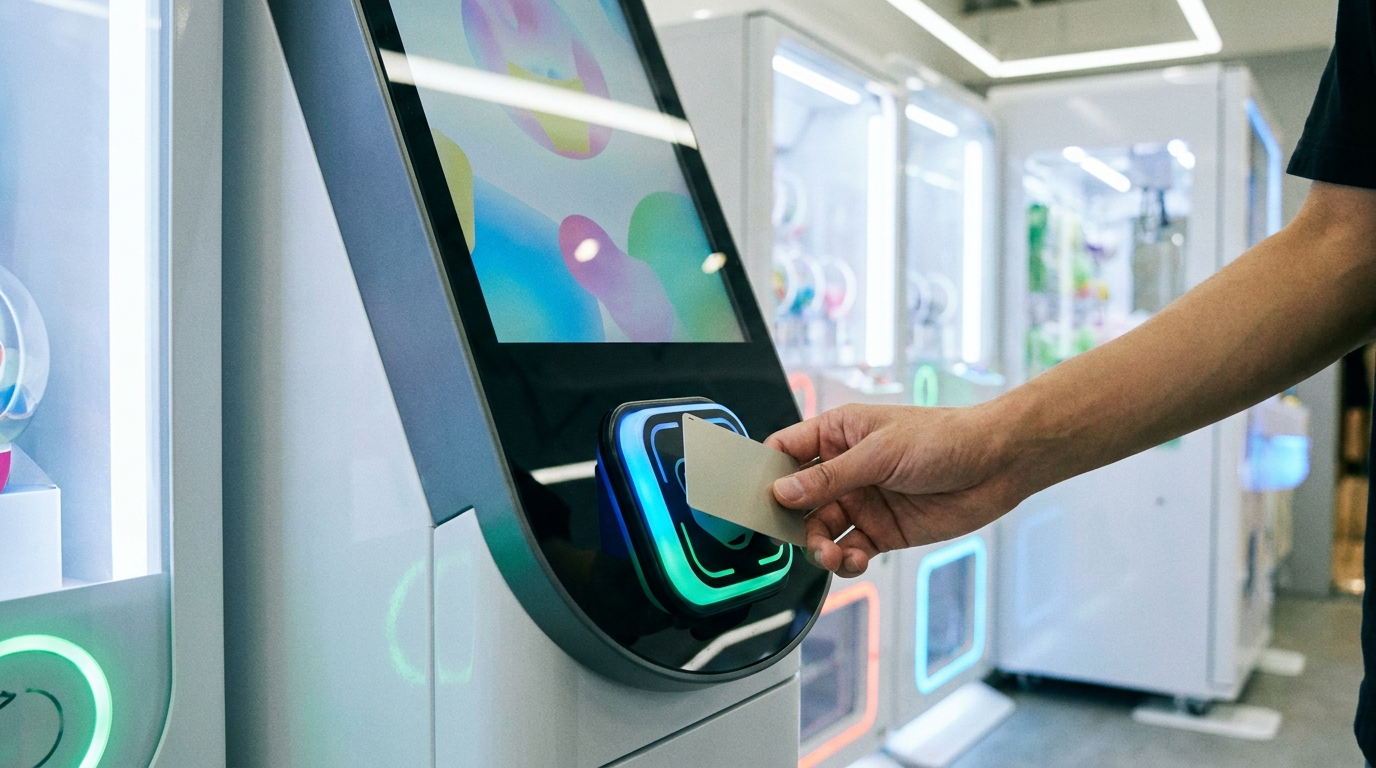
Cashless payment exists, but it is not guaranteed by store type. Bandai Namco's current Tokyo store list marks cashless payment as available on some machines at the Ikebukuro Main Store, while the Akihabara department-store listing marks its machines as cashless unavailable. Check the icons on the exact machine instead of planning around Suica, a credit card, or a QR app.
If you do not have an IC card yet, our Suica and PASMO guide explains how to get one. And if you enjoy buying things from machines, gachapon sit alongside Japan's wider machine culture — see our Japan vending machines guide for what else you can buy from a slot in the wall.
Etiquette and good manners
Gachapon corners can get crowded, especially the famous shops on weekends. A few simple manners keep things pleasant:
- Do not block the aisle. Step aside to open your capsule so others can reach the machines.
- Recycle your empty capsule in the box provided rather than leaving it on the floor or a machine.
- Do not shake or hit a machine if a capsule sticks. Ask a staff member at dedicated shops.
- Be mindful with photos. The colorful walls are very photogenic, but avoid filming other shoppers up close in busy stores.
Tips for travelers
- Set a budget. Capsules are cheap individually, but a wall of tempting series adds up fast. Decide how many turns you want before you start.
- Photograph the panel. If you want a specific toy from a series, snap a photo of the front panel so you remember the name later.
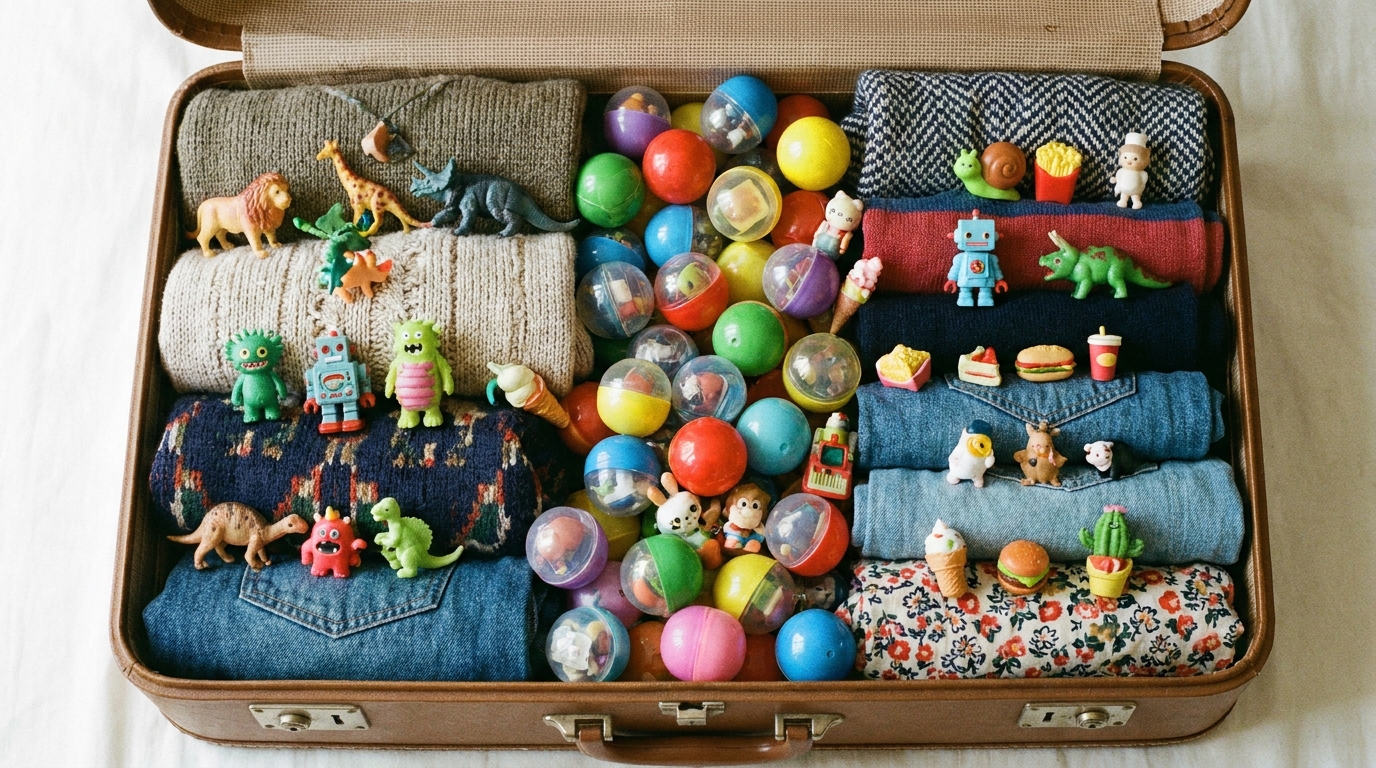
- Packing for home. Capsules are light but bulky. Many travelers open the capsules, recycle the shells in Japan, and wrap just the toys in clothing inside a suitcase to save space.
- Check the exact price. There is no reliable site-wide ¥200–¥500 ceiling. Official 2026 Bandai listings include common ¥300–¥500 products and higher-priced premium items. The machine panel is the authority for that turn.
- It is a game of chance. You cannot pick the exact toy, and duplicates happen. That randomness is the whole point — treat it as a small souvenir lottery.
Where to try: Tokyo's best gachapon spots
You do not need a special trip; gachapon are found across Tokyo, in stations, malls, and game centers. But if you want the widest selection in one place, these dedicated shops are worth planning around. Here is where they are and how to reach them.
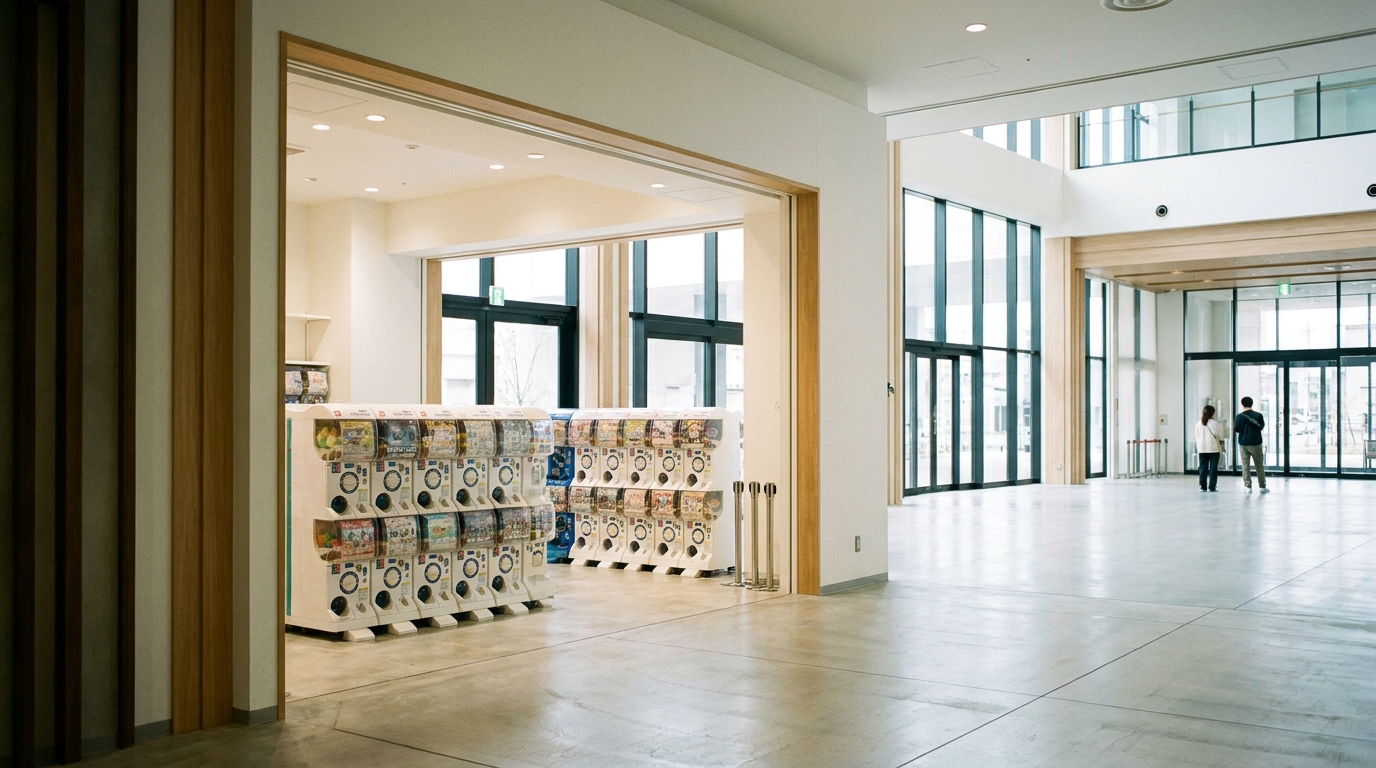
1. Gashapon Department Store, Ikebukuro (the flagship)
This is Bandai Namco's Ikebukuro flagship. The current official Tokyo store guide describes it as one of the world's largest capsule-toy specialty stores, with approximately 3,000 machine faces.
- Location: 3rd floor, World Import Mart Building, Sunshine City, Higashi-Ikebukuro.
- Nearest station: About an 8-minute walk from Ikebukuro Station (JR and Tokyo Metro), or a few minutes from Higashi-Ikebukuro Station (Yurakucho Line).
- Hours: Around 10:00–21:00 (check the official page before you go).
2. Gashapon Department Store, Akihabara
A large branch inside "namco Akihabara," easy to combine with an Akihabara anime and electronics day.
- Location: 4th floor of namco Akihabara, 1-15-9 Sotokanda, Chiyoda.
- Nearest station: About a 1-minute walk from Akihabara Station.
- Hours: 10:00–23:00; sudden changes are posted by the store.
- Scale: Approximately 800 machine faces in total, including the adjacent official shop.
Source: Bandai Namco official Akihabara store page.
3. Akihabara Gachapon Kaikan
A long-running, densely packed capsule-toy hall popular with collectors, a short walk from the first Akihabara stop.
- Nearest station: About 2 minutes from Suehirocho Station (Tokyo Metro Ginza Line), or about 7 minutes from JR Akihabara Station (Electric Town Exit).
- Hours: 11:00–20:00 on weekdays; 11:00–19:00 on Sundays and public holidays. Check the store's official X account for same-day changes.
Source: Akihabara Gachapon Kaikan official site.
Beyond these shops, Tokyo Station, major shopping centers, and game-center floors often have rows of machines, so keep an eye out as you go. Hours and machine line-ups change, so check each shop's official page before a long detour.
Official sources checked
- Bandai Namco: Tokyo stores, machine counts, access, hours, and cashless availability
- Bandai Namco: Akihabara official store information
- Akihabara Gachapon Kaikan: official hours and access
- Bandai Gashapon official product catalog and current product prices
FAQ
How much does gachapon cost?
There is no single price range that covers every current machine. Many products are in the ¥300–¥500 range, but official 2026 listings also include higher-priced premium items. Check the price printed on the machine before paying.
Do gachapon machines take cards or Suica?
Do not assume. Many machines are coin-operated, while cashless support is available only on selected machines and varies even within the same store. Check the payment icons on the exact machine.
Do the machines give change?
Coin-operated machines generally require the exact amount shown and do not give change. Check the denomination icons before inserting coins.
Where can I get 100-yen coins?
Use a coin exchange machine (両替機) inside gachapon shops and game centers, or buy a small item at a convenience store and receive coins as change.
Can I choose which toy I get?
No. Each turn gives a random toy from the series shown on the machine. A rarer secret toy is sometimes included.
What's the difference between gachapon, gashapon, and gacha-gacha?
They are different names for the same thing: capsule toy machines. Gashapon is Bandai's brand name, while gachapon and gacha-gacha are common everyday terms.
Where can I find the most gachapon machines in one place?
Bandai Namco's official guide describes its Ikebukuro Main Store in Sunshine City as one of the world's largest capsule-toy specialty stores, with approximately 3,000 machine faces.
Are gachapon good souvenirs?
Yes — they are small, inexpensive, and uniquely Japanese, which makes them easy and fun gifts to bring home.
What do I do with the empty capsule?
Many gachapon corners have a recycling box for empty capsules next to the machines. You can drop the shell there and keep just the toy.
Read next

Comments