- Quick Answer
- 2026 accommodation tax comparison
- Calculate the tax in three steps
- Tokyo: use the 2026 rules for 2026 stays
- Kyoto: five price bands since March 2026
- Osaka: mandatory cleaning fees can affect the band
- Sapporo: add the city and Hokkaido taxes
- Is the tax already included in your booking?
- Plan B when the charge is unclear
- Frequently Asked Questions
- Is Japan's accommodation tax charged per room or per person?
- Do meals count toward the accommodation-tax threshold?
- Is accommodation tax always included in an online booking total?
- Does Tokyo charge 3% in 2026?
- When did Kyoto's current accommodation-tax bands begin?
- Can a mandatory cleaning fee affect Osaka accommodation tax?
- Is the Sapporo amount separate from the Hokkaido tax?
- What should I do if I cannot confirm the tax before arrival?
- Official sources
Quick Answer
Japan does not have one nationwide hotel-tax rate. Accommodation tax is set locally and is normally calculated per guest, per night from the room-only amount or the authority's defined accommodation charge.
For stays in 2026, the four destinations in this guide use these bands:
- Tokyo: ¥0, ¥100 or ¥200
- Kyoto: ¥200, ¥400, ¥1,000, ¥4,000 or ¥10,000
- Osaka: ¥0, ¥200, ¥400 or ¥500
- Sapporo: a combined city-plus-Hokkaido total of ¥300, ¥400 or ¥1,000
Tokyo's 2026 bands apply to hotels and ryokan. Simple lodgings and minpaku enter Tokyo's accommodation-tax scope only when the new system begins on April 1, 2027. Kyoto, Osaka and Sapporo publish their own local scope rules, so confirm the exact property type and municipality when booking non-hotel accommodation.
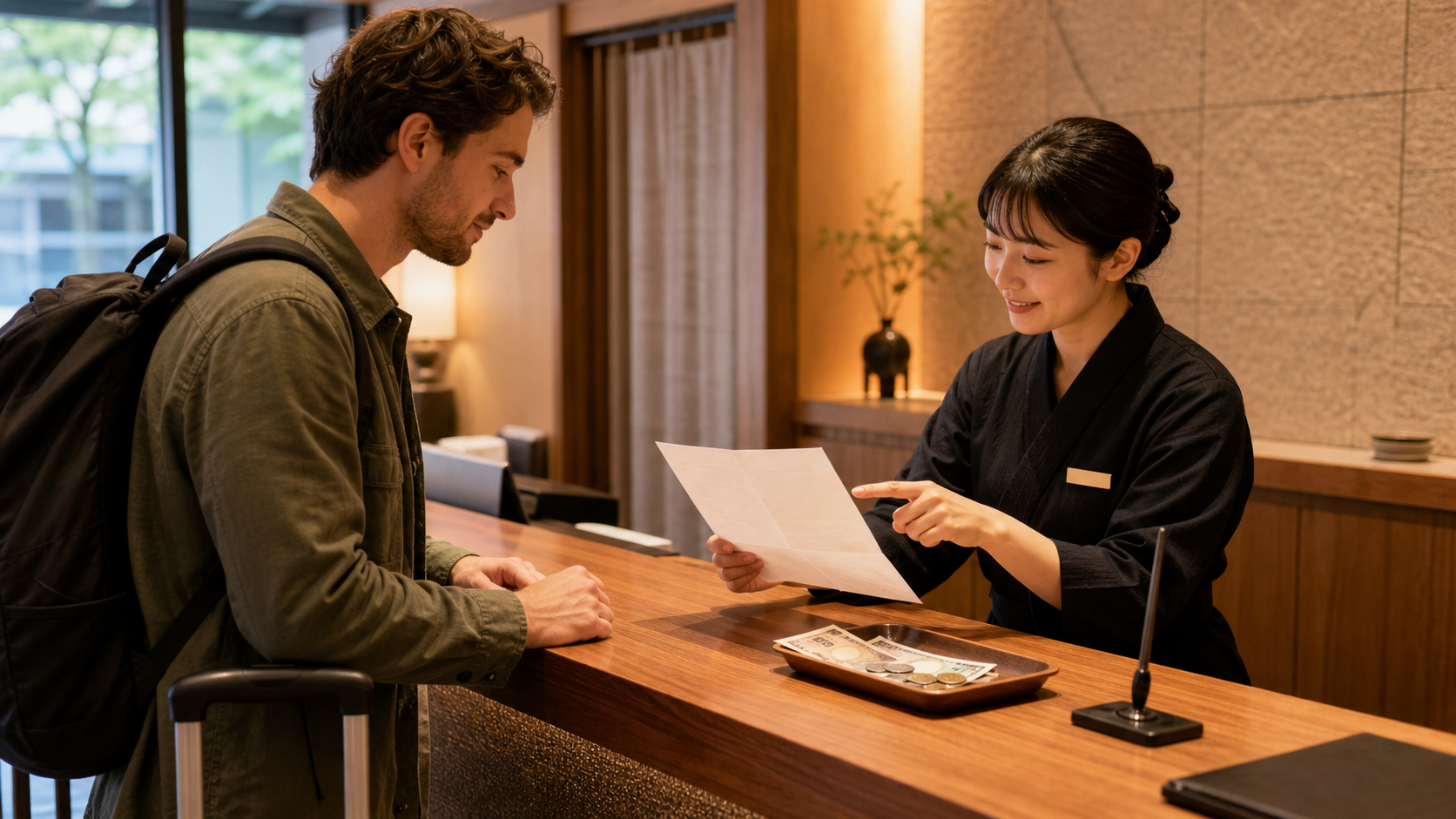
Check the booking cost breakdown because a platform or travel agent may collect the tax in advance, while another property may collect it at check-in. If the municipality, taxable amount or inclusion status is unclear, ask the property before the free-cancellation deadline.
Last checked: August 20, 2026 (JST). Local rates, taxable-price definitions and collection methods can change. This is a four-destination planning guide, not a list of every municipality in Japan.
2026 accommodation tax comparison
Use the nightly accommodation amount per person, not the total price for all guests and all nights.
| Destination | Per-person, per-night band for a 2026 stay | Accommodation tax per person, per night |
|---|---|---|
| Tokyo | Under ¥10,000 | ¥0 |
| Tokyo | ¥10,000–less than ¥15,000 | ¥100 |
| Tokyo | ¥15,000 or more | ¥200 |
| Kyoto | Under ¥6,000 | ¥200 |
| Kyoto | ¥6,000–less than ¥20,000 | ¥400 |
| Kyoto | ¥20,000–less than ¥50,000 | ¥1,000 |
| Kyoto | ¥50,000–less than ¥100,000 | ¥4,000 |
| Kyoto | ¥100,000 or more | ¥10,000 |
| Osaka | Under ¥5,000 | ¥0 |
| Osaka | ¥5,000–less than ¥15,000 | ¥200 |
| Osaka | ¥15,000–less than ¥20,000 | ¥400 |
| Osaka | ¥20,000 or more | ¥500 |
| Sapporo, city and Hokkaido combined | Under ¥20,000 | ¥300 |
| Sapporo, city and Hokkaido combined | ¥20,000–less than ¥50,000 | ¥400 |
| Sapporo, city and Hokkaido combined | ¥50,000 or more | ¥1,000 |
Tokyo scope note: the Tokyo rows above apply to hotels and ryokan for 2026 stays. Do not apply them to a Tokyo minpaku or simple lodging in 2026; those property types enter Tokyo's system from April 1, 2027.
The band is not always based on the number shown first in a search result. Tokyo, Kyoto and Osaka exclude meals from the defined base described in their guidance, while other items differ by authority. Osaka's visitor guidance, for example, says mandatory cleaning fees are included. For Sapporo, confirm the accommodation-rate base with the property when the breakdown is unclear.
This tax is separate from Japan's national departure tax. If you are also budgeting for your flight home, see Japan Departure Tax 2026: Who Pays ¥3,000?.
Calculate the tax in three steps
- Find the defined nightly accommodation charge. Start with the room-only line. Check whether service or a mandatory cleaning fee is included in the local base.
- Divide by the number of guests for that night. Apply the destination's band to the resulting per-person amount.
- Multiply the tax by guests and nights. Then check whether that total has already been collected.
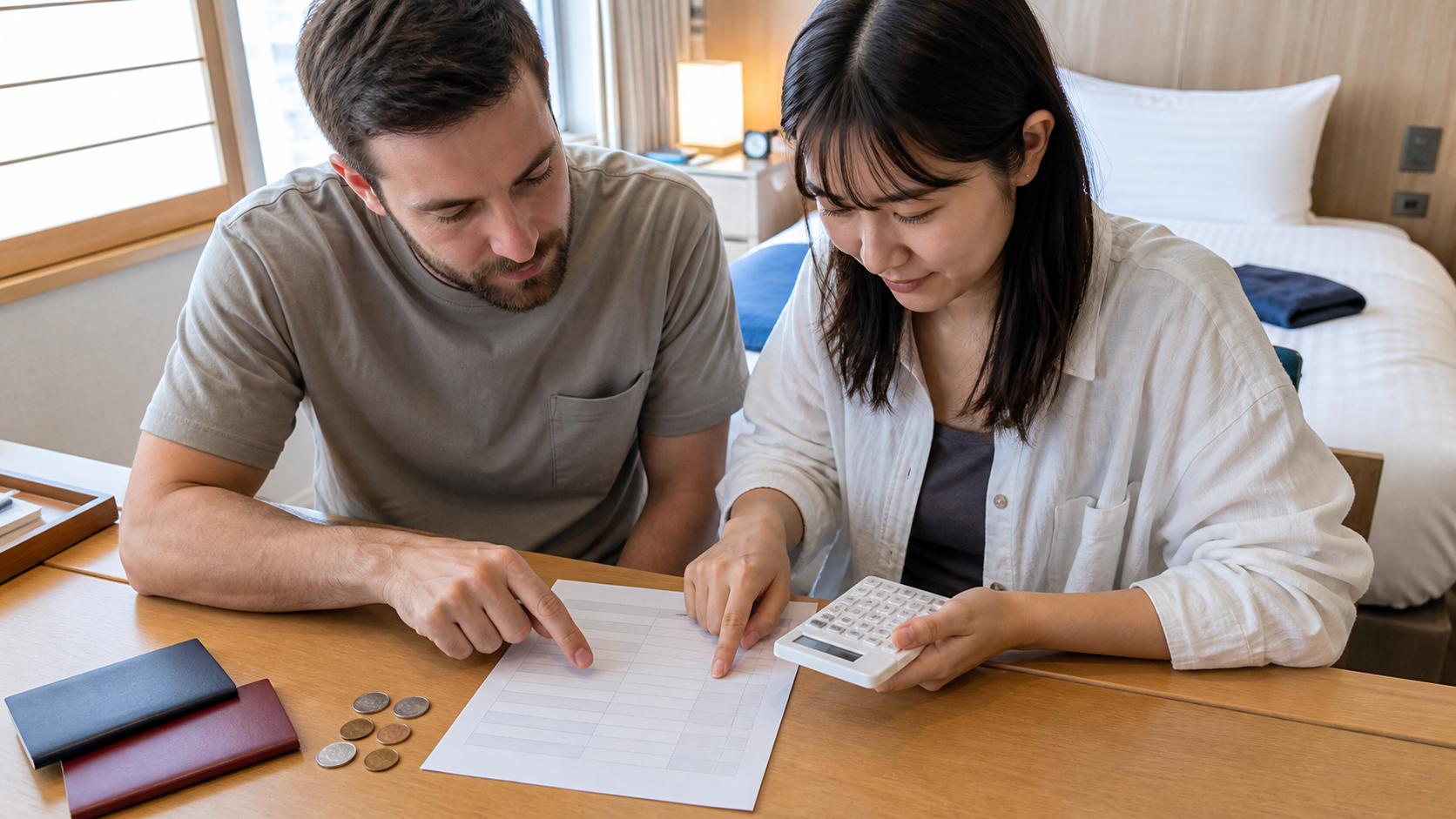
Example: two guests for three nights in Tokyo
A room-only charge of ¥24,000 per night for two guests is ¥12,000 per person per night. Under Tokyo's 2026 bands, that is ¥100 each per night:
¥100 × 2 guests × 3 nights = ¥600
Do not apply the threshold to the ¥72,000 whole-stay total. If occupancy changes during the booking, calculate each night using the guests staying that night.
Tokyo: use the 2026 rules for 2026 stays
For stays through March 31, 2027, Tokyo's current fixed bands apply to hotels and ryokan:
- under ¥10,000 per person per night: no Tokyo accommodation tax;
- ¥10,000 to less than ¥15,000: ¥100; and
- ¥15,000 or more: ¥200.
The Tokyo Metropolitan Government says the room charge is converted to a per-person amount for shared rooms. Its public guidance describes the base as the room-only charge, excluding meals, and states the thresholds using the tax-exclusive amount.
Do not apply the 2027 percentage to a 2026 stay
Tokyo has enacted a different system for April 1, 2027 onward: stays below ¥13,000 per person per night are exempt, while qualifying stays are charged at 3%. The scope also expands to simple lodgings and minpaku.
That future system is important for bookings that cross April 1, 2027, but it is not the rule for a 2026 stay. For a stay spanning the change date, ask the property how it will split the nights.
If you are still choosing a room configuration, Japan Hotel Rooms: Semi-Double, Twin & Size Guide can help you compare room types before calculating the per-person amount.
Kyoto: five price bands since March 2026
Kyoto changed its rates on March 1, 2026. The city now uses five bands, starting at ¥200 even when the defined accommodation charge is below ¥6,000 per person per night.
Kyoto defines the base as the room-only charge, including the room and service fee, while excluding meals and consumption tax. The city says guests pay through the accommodation property, but the amount may already be included in a booking-site or travel-agent payment.
Example: a ¥36,000 room for two guests
If the defined room-only charge is ¥36,000 per night for two guests, the per-person amount is ¥18,000. That falls in Kyoto's ¥6,000-to-below-¥20,000 band, so the tax is ¥400 per person per night.
For two guests staying three nights:
¥400 × 2 guests × 3 nights = ¥2,400
Older summaries may still show the pre-March 2026 bands. Use the current City of Kyoto page linked below.
Osaka: mandatory cleaning fees can affect the band
Osaka Prefecture's current bands have applied since September 1, 2025. The official visitor page says its accommodation-fee base includes:
- the room-only fee;
- service charges; and
- mandatory cleaning fees.
Meals are excluded. This means a search-result headline price can be too low for the tax calculation when a mandatory fee appears later in checkout.
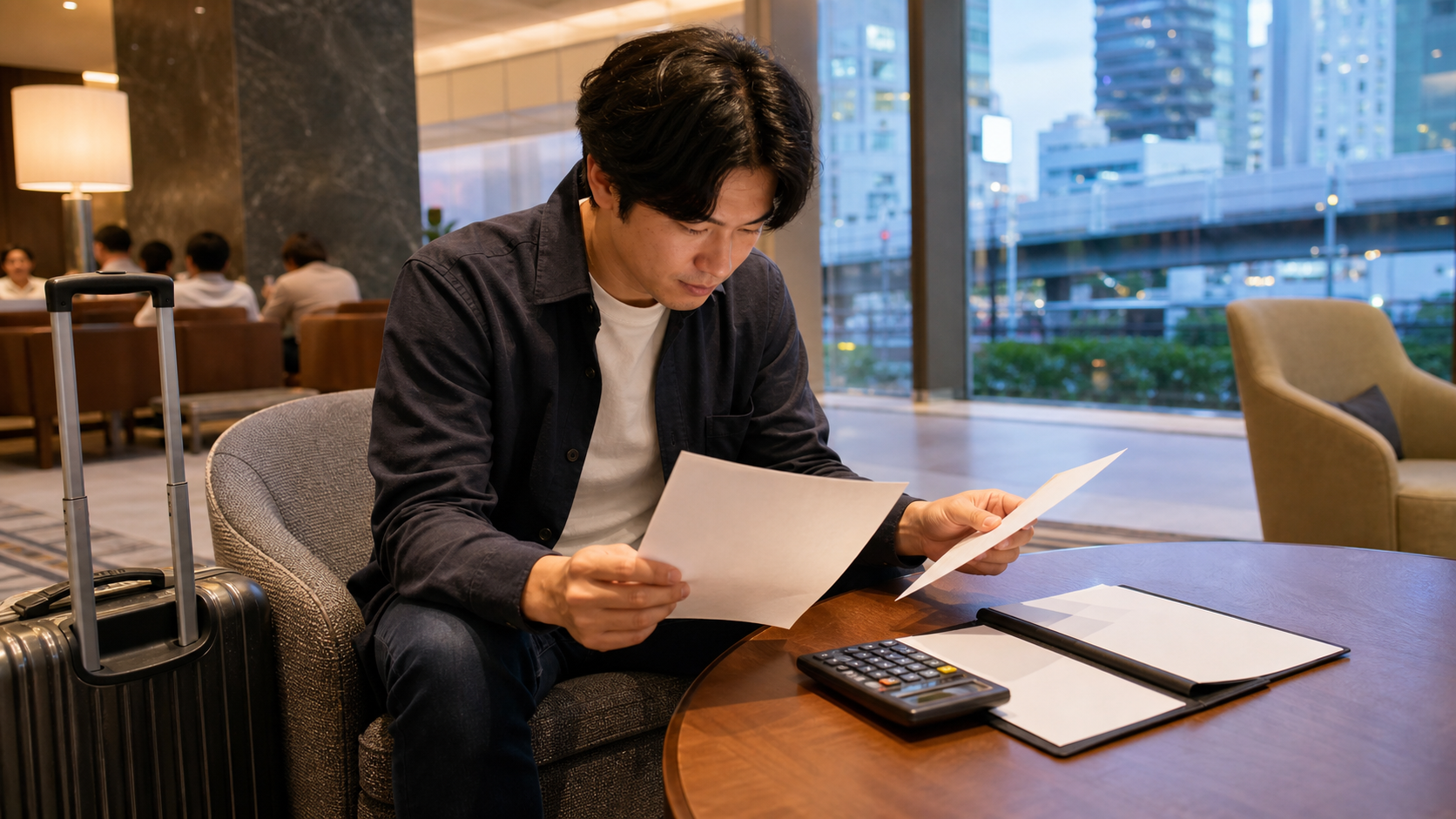
Before payment, open the full price breakdown. If a cleaning fee covers more than one night or the platform does not show how it is allocated per person and night, ask the property which band it will use. Do not invent an allocation from the trip total.
Sapporo: add the city and Hokkaido taxes
Sapporo and Hokkaido both introduced accommodation taxes on April 1, 2026. The official Sapporo visitor notice already gives the combined total, per guest per night:
- under ¥20,000: ¥300 total;
- ¥20,000 to less than ¥50,000: ¥400 total; and
- ¥50,000 or more: ¥1,000 total.
Do not add a second Hokkaido amount to those totals. They already combine both layers.

Example: a ¥36,000 room for two guests
The per-person amount is ¥18,000, so the combined Sapporo-and-Hokkaido tax is ¥300 per person per night. For two guests staying three nights:
¥300 × 2 guests × 3 nights = ¥1,800
These combined bands apply to Sapporo, not automatically to every destination in Hokkaido. Other municipalities can have different local layers. For a winter visit, the Sapporo Snow Festival 2027 guide also flags the need to check the hotel tax when budgeting.
Is the tax already included in your booking?
There is no safe assumption that every platform presents local tax in the same way. Look for lines such as accommodation tax, city tax, local tax, taxes payable at the property or additional charges.
Use this check before the cancellation deadline:
- Save the room-only and mandatory-fee breakdown.
- Confirm the exact municipality, especially for airports, resort areas and places near a city boundary.
- Calculate the expected per-person, per-night amount.
- Compare it with any local-tax line in the booking.
- Ask the property whether the tax has been collected and, if not, how it must be paid.
Keep a small amount of yen available unless the property confirms another payment method. The Hokkaido Government, for example, tells guests to pay using the accommodation provider's specified method; it does not promise one universal payment type.
For the wider arrival process, use the Japan Check-In Guide: Hotels, Airbnb & Minpaku.
Plan B when the charge is unclear
If the booking breakdown does not identify the tax, do not cancel or rebook solely from a rough estimate. Contact the property with four precise questions:
- Which municipality's accommodation tax applies?
- What per-person, per-night amount will you use as the taxable base?
- Is the tax already included in my paid total?
- If not, when and by what method will you collect it?
Save the reply with the reservation. If the property cannot answer before the free-cancellation deadline, keep a separate tax buffer and compare the risk with another refundable rate. This avoids assuming that “taxes included” on a platform necessarily covers every locally collected charge.
Frequently Asked Questions
Is Japan's accommodation tax charged per room or per person?
The four destinations in this guide calculate it per guest, per night. Divide a shared room's defined nightly accommodation charge by the number of guests before choosing the rate band.
Do meals count toward the accommodation-tax threshold?
Tokyo, Kyoto and Osaka exclude meals from the base described in the official guidance used here. Check the local definition for service charges, mandatory cleaning fees, consumption tax and other items; for Sapporo, ask the property when the accommodation-rate base is unclear.
Is accommodation tax always included in an online booking total?
No. A platform or travel agent may collect it, or the property may collect it separately. Read the full cost breakdown and ask the property if the inclusion status is unclear.
Does Tokyo charge 3% in 2026?
No. Tokyo's fixed ¥0/¥100/¥200 bands apply to 2026 stays. The 3% system, with stays below ¥13,000 exempt, begins on April 1, 2027.
When did Kyoto's current accommodation-tax bands begin?
Kyoto's current five bands began on March 1, 2026. They range from ¥200 to ¥10,000 per person per night, based on the defined room-only charge.
Can a mandatory cleaning fee affect Osaka accommodation tax?
Yes. Osaka's official visitor guidance says mandatory cleaning fees are included in the accommodation-fee base, along with room-only and service charges. Ask the property how a multi-night fee is allocated if the booking does not show it.
Is the Sapporo amount separate from the Hokkaido tax?
The ¥300/¥400/¥1,000 totals in this guide already combine Sapporo City and Hokkaido taxes. Do not add another prefectural amount to them.
What should I do if I cannot confirm the tax before arrival?
Save the booking breakdown, ask the property for the municipality, taxable base, inclusion status and payment method, and set aside a small separate yen buffer. Use another refundable option if the uncertainty matters before the cancellation deadline.
Official sources
- Tokyo Metropolitan Government accommodation tax
- Tokyo accommodation-tax Q&A
- City of Kyoto accommodation tax
- Osaka accommodation tax for visitors
- Hokkaido accommodation tax
- Sapporo City accommodation tax notice
This is an independent travel-planning guide, not tax advice. It covers four destinations and makes no claim of a hotel stay, booking or payment test. The relevant property and local authority determine the amount for an individual reservation.
Comments