- Quick Answer
- Are Nara’s Deer Dangerous?
- Before You Buy Deer Crackers
- How to Feed Nara Deer Without Teasing Them
- What to Do When Deer Crowd, Nip or Grab Your Bag
- Nara Deer Safety With Children and Strollers
- Seasonal Warnings: Fawns in Spring, Male Deer in Autumn
- Protect the Deer: Food, Paper, Plastic and Trash
- Plan B: Enjoy Nara Without Feeding the Deer
- FAQ
- Are the deer in Nara tame?
- What can I feed the Nara deer?
- What should I do if deer keep following me?
- Do I have to make a deer bow before feeding it?
- Can young children feed the deer?
- Can Nara deer bite or headbutt people?
- What should I do if a deer injures me?
- Is it okay to visit Nara Park without feeding the deer?
Quick Answer
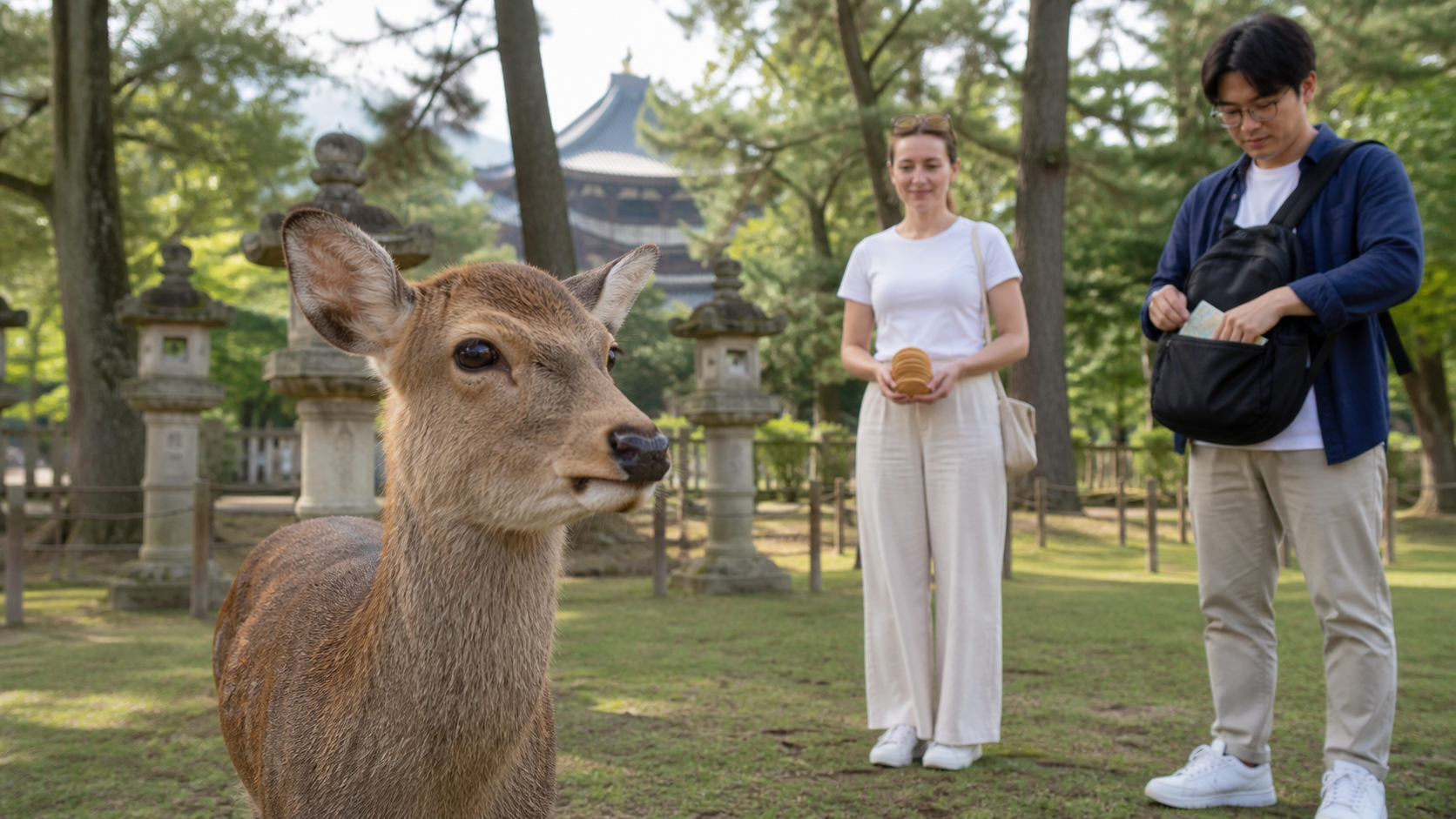
Nara Park’s deer are protected, but they are still wild animals. You do not have to feed them. If you choose to feed them, put away your food, maps, paper and plastic first; give them only official shika senbei deer crackers; do not tease or grab the deer; and give the crackers promptly instead of holding them for a photo.
When the crackers are gone, show the deer your empty hands. Nara’s official travel guide says they will usually move on when they can see you have no food. If a child is nervous or several deer gather, let an adult take over or skip feeding completely.
Best next step: before entering the park, zip away anything a deer might mistake for food and decide whether your group will feed the deer or observe them from a distance.
Are Nara’s Deer Dangerous?
Nara’s deer are accustomed to people, but “accustomed” does not mean domesticated. Nara City warns that they can charge or strike with their antlers. The Nara Deer Preservation Foundation also tells visitors to watch for biting, kicking, butting and charging.
Most encounters do not become emergencies. The risk increases when food is visible, visitors tease a deer, a child approaches alone, or someone gets too close during a sensitive season. Use the deer’s current behavior—not a cute photo you saw online—to decide whether to approach.
This three-state table is the core decision guide:
| Your situation | What to do now | When to leave |
|---|---|---|
| You have no crackers | Keep food, paper and plastic inside your bag. Observe without touching or chasing the deer. | If a deer approaches, show empty hands and create distance. |
| You are holding crackers | Do not pose with or tease the deer. Give the crackers promptly and watch the deer around you. | When the crackers are gone, show empty hands and move away. |
| Deer are crowding you or a child is frightened | Stop the photo or feeding game. An adult should take control; do not leave a child holding the crackers alone. | End the interaction and move toward an open or staffed area. Seek help if anyone is hurt. |
The third row is RJG’s practical threshold: feeding is optional, and ending an interaction early is a successful Plan B.
Before You Buy Deer Crackers
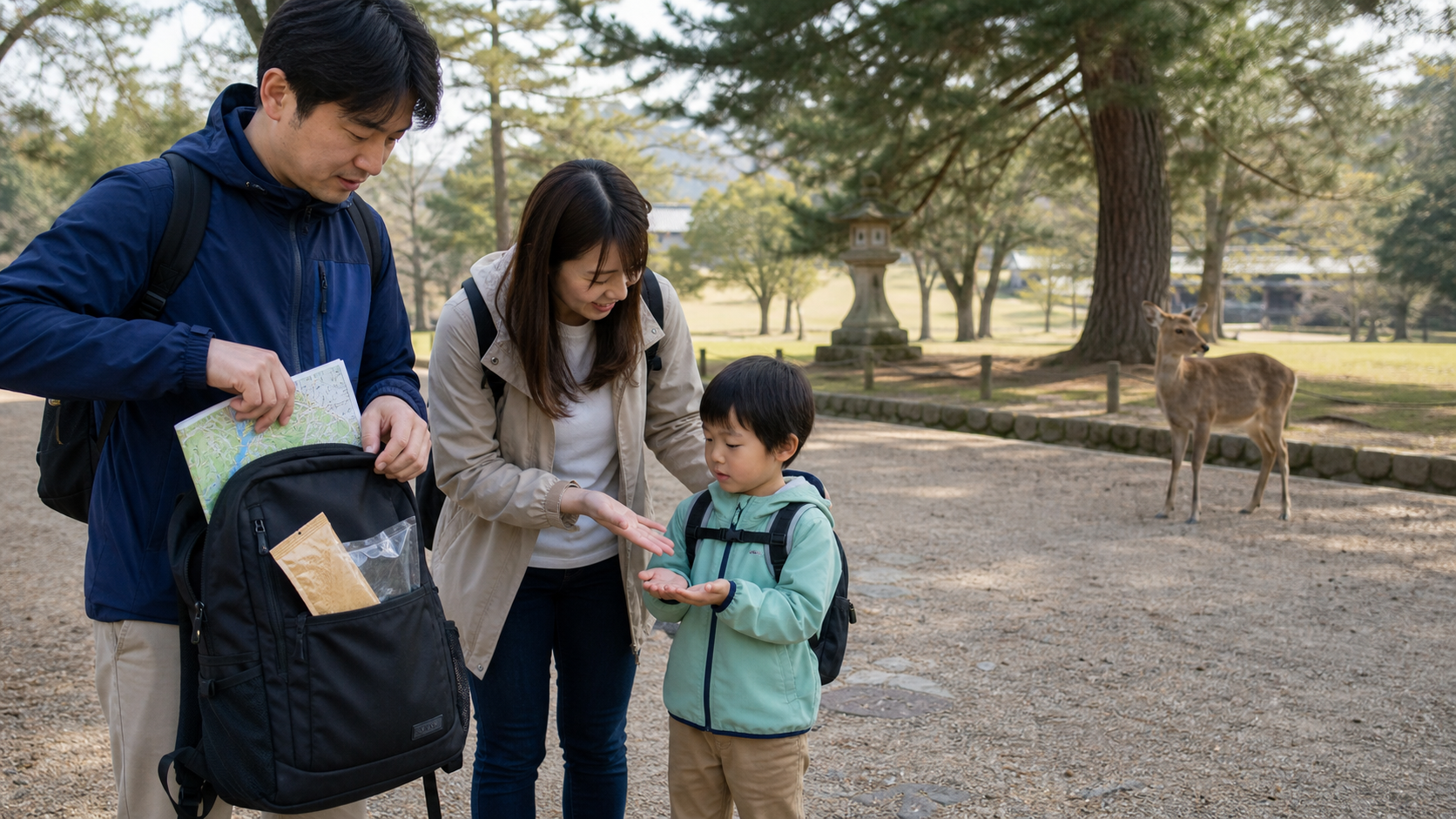
Take 30 seconds to prepare before food changes the deer’s behavior:
- Put snacks, bread and other human food inside a closed bag.
- Put away maps, brochures, shopping bags and plastic wrappers. Nara City says deer may try to eat these items, and straps or bags can catch on antlers.
- Check the space around you. Do not feed beside a road or from a vehicle; the city warns that roadside feeding can obstruct traffic or cause deer to move into the road.
- Decide who will hold the crackers. Small children and older visitors should not be left to manage approaching deer without close adult control.
- If anyone already feels uneasy, do not buy crackers. The deer do not need tourist food to survive.
Official shika senbei are the one recognized feeding exception. Nara City describes them as deer-safe treats with a historical role in the park, and says part of the sales supports deer protection. Bread, sweets, vegetables and packed lunches are not substitutes.
How to Feed Nara Deer Without Teasing Them
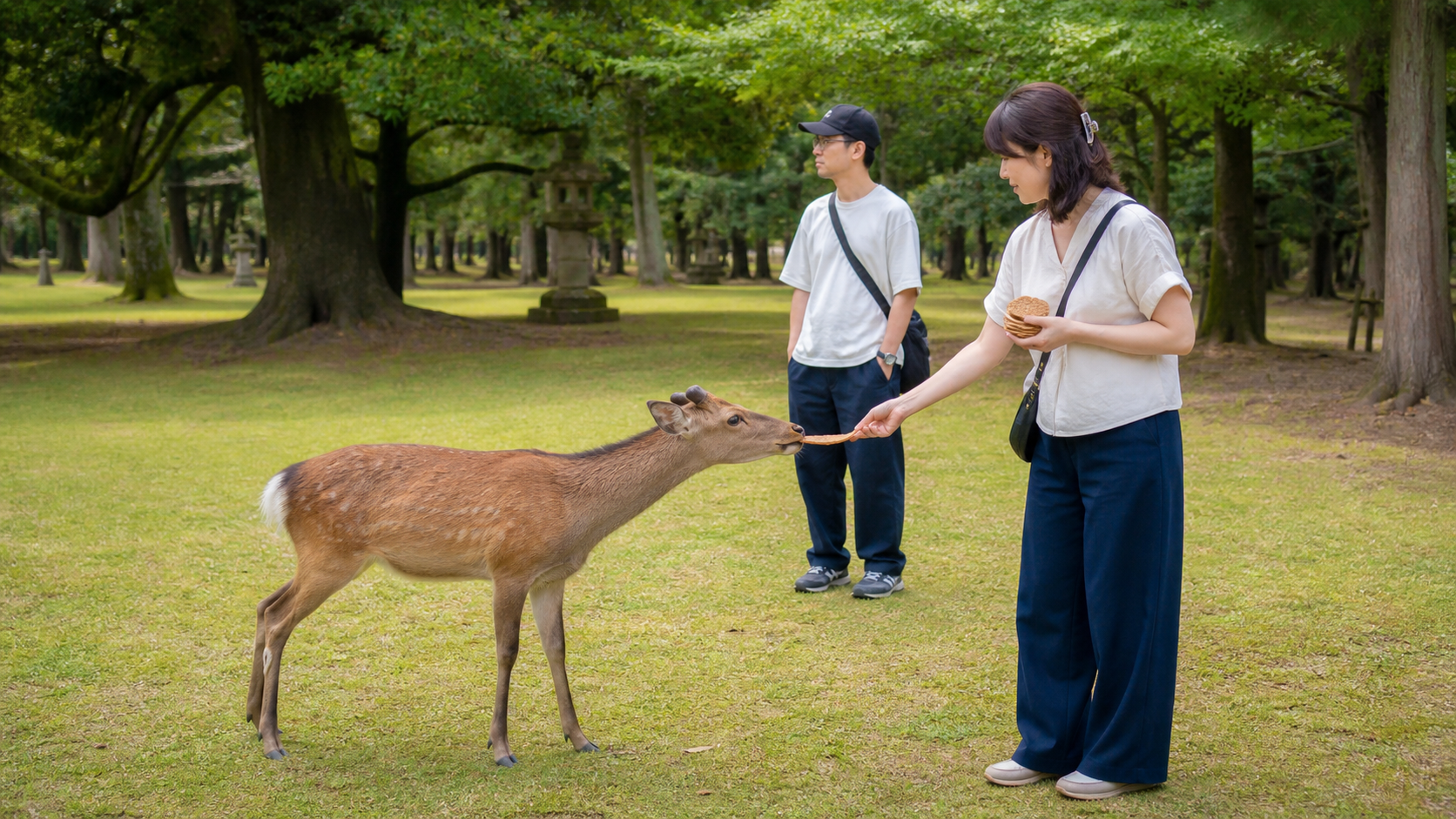
The Nara Deer Preservation Foundation’s key instruction is simple: do not make the deer wait while you hold the food. Deer may gather quickly, and keeping crackers clenched in your hand can make them follow you or behave dangerously.
Use this sequence:
- Keep the unopened stack controlled until you are ready.
- Look around before you begin; the closest deer may not be the only deer approaching.
- Give the crackers promptly. Do not lift them for a selfie, hide them behind your back or make a deer perform for food.
- Watch children continuously. If more deer arrive than the child can handle, the adult takes over.
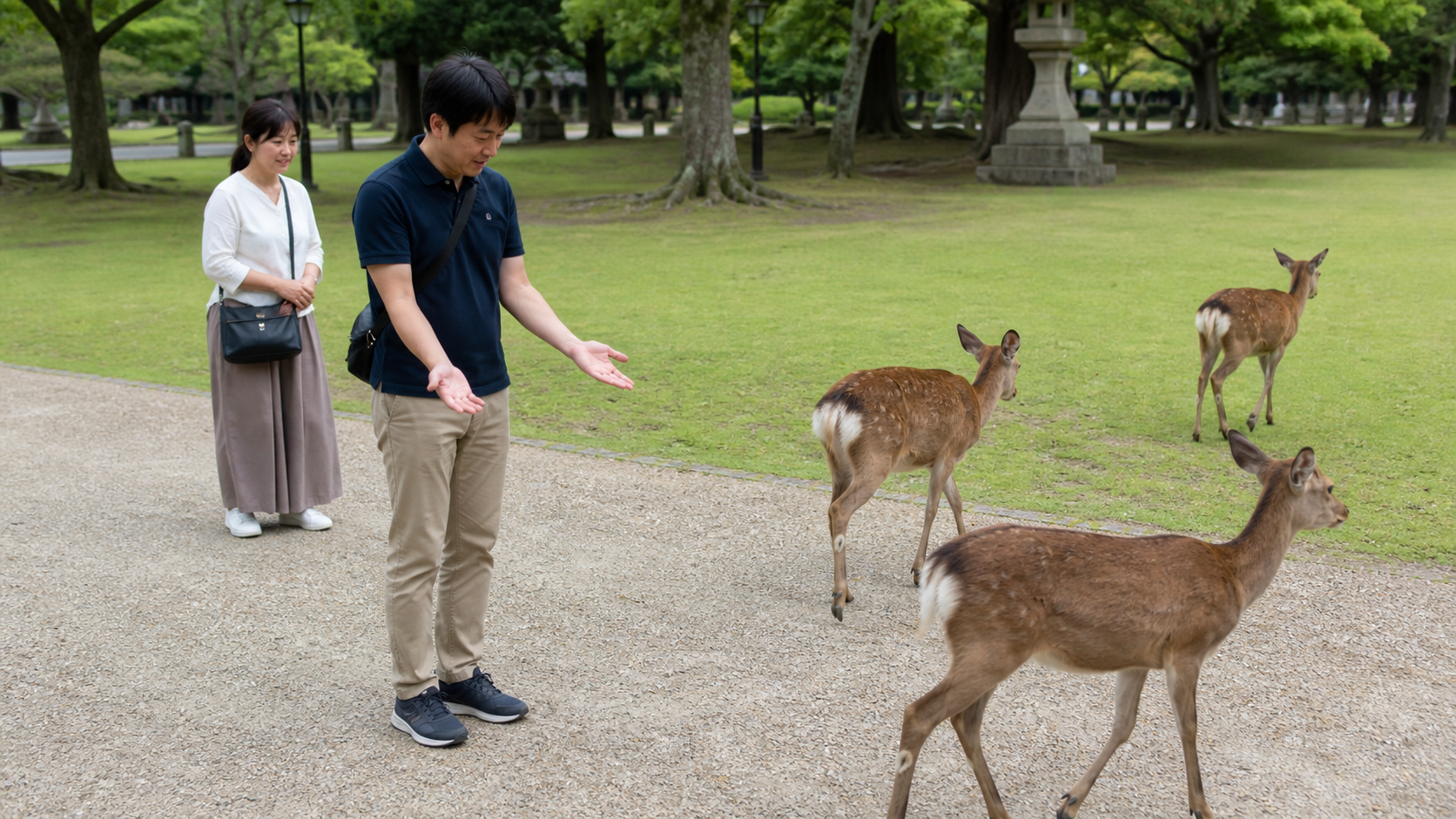
- When the last cracker is gone, open both hands so the deer can see there is no food.
- Leave the interaction instead of searching your bag for human food.
Official safety guidance does not tell visitors to require a bow. It tells them not to tease the deer and to give crackers promptly. The practical objective is a brief interaction in which the visitor, the deer and nearby pedestrians remain under control.
What to Do When Deer Crowd, Nip or Grab Your Bag
First, identify what is attracting them. Crackers are the obvious reason, but a deer may also investigate paper, a plastic bag or food packaging.
- If crackers remain: do not wave or hide them. End the photo attempt and give the remaining crackers promptly rather than continuing to tease the deer.
- If the crackers are gone: show empty hands. The official Nara travel guide says deer will usually leave when they see you have no food.
- If a deer reaches for paper or plastic: do not offer it. Secure the item inside your bag and create distance.
- If a bag catches on an antler: do not turn the moment into a tugging game. Ask nearby staff or another adult for help if you cannot disengage safely.
- If a deer threatens, charges or several animals surround a child: end the interaction and move to an open or staffed area.
If someone is injured, get away from the deer and ask park or visitor-center staff for assistance. Call 119 for an ambulance if the injury is serious. JNTO’s Japan Visitor Hotline—050-3816-2787—operates 24 hours a day in English, Chinese and Korean for accident and emergency assistance. This guide does not diagnose a bite, puncture or fall; use a medical professional for treatment decisions.
Nara Deer Safety With Children and Strollers
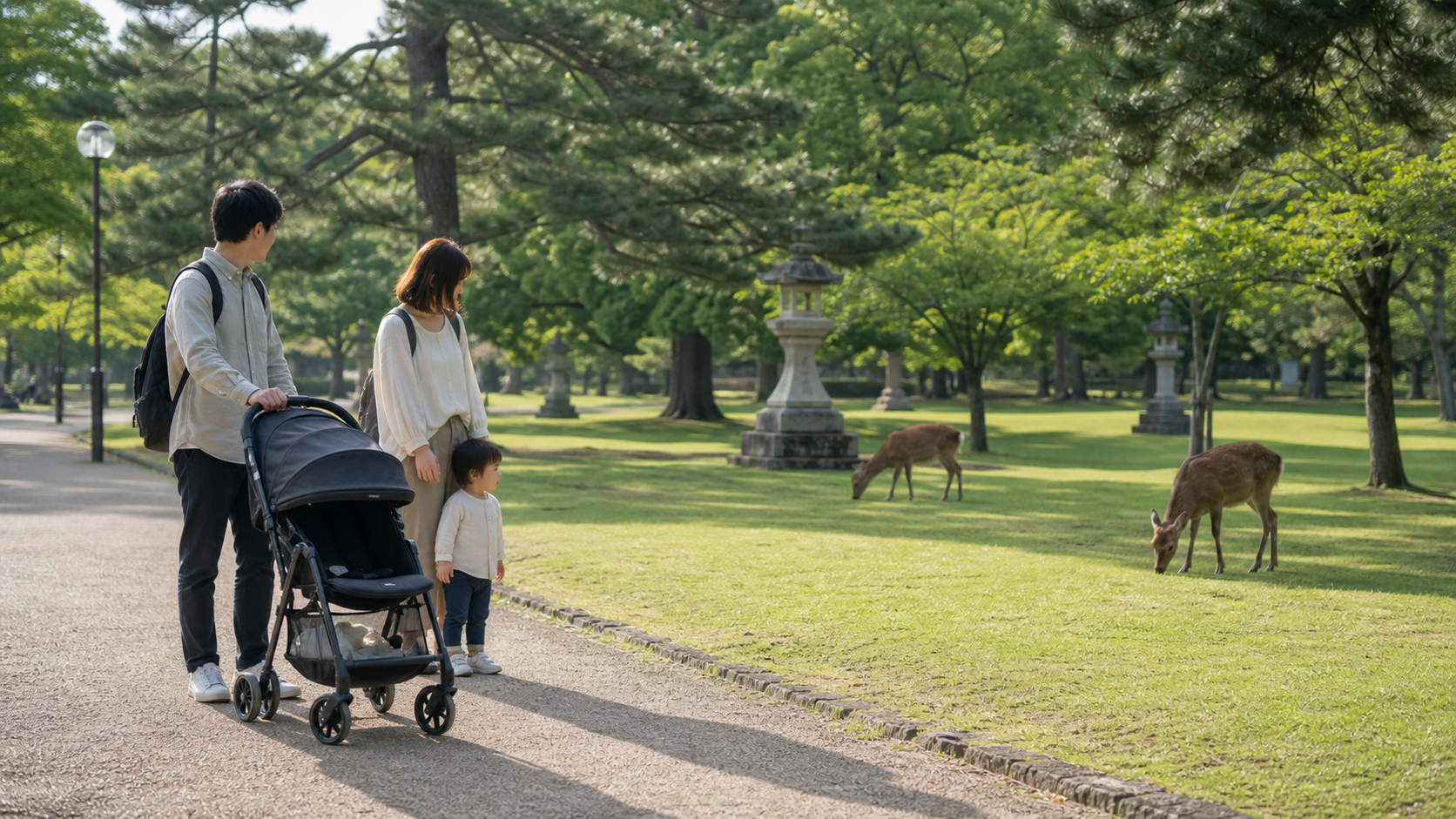
Nara’s official tourism guidance specifically notes that young children can feel overwhelmed when deer become impatient for crackers. Nara City says children should not approach the animals alone.
Use a simple family rule:
- One adult controls the crackers.
- Another adult watches the child, stroller and bags when possible.
- The child may observe without feeding.
- Feeding ends as soon as the child steps back, freezes, cries or cannot follow instructions.
- Do not position a stroller between a deer and visible food.
If your child wants a deer photo, take it before buying crackers or after the food is gone. This separates the photo from the feeding pressure and makes it easier to leave.
Seasonal Warnings: Fawns in Spring, Male Deer in Autumn
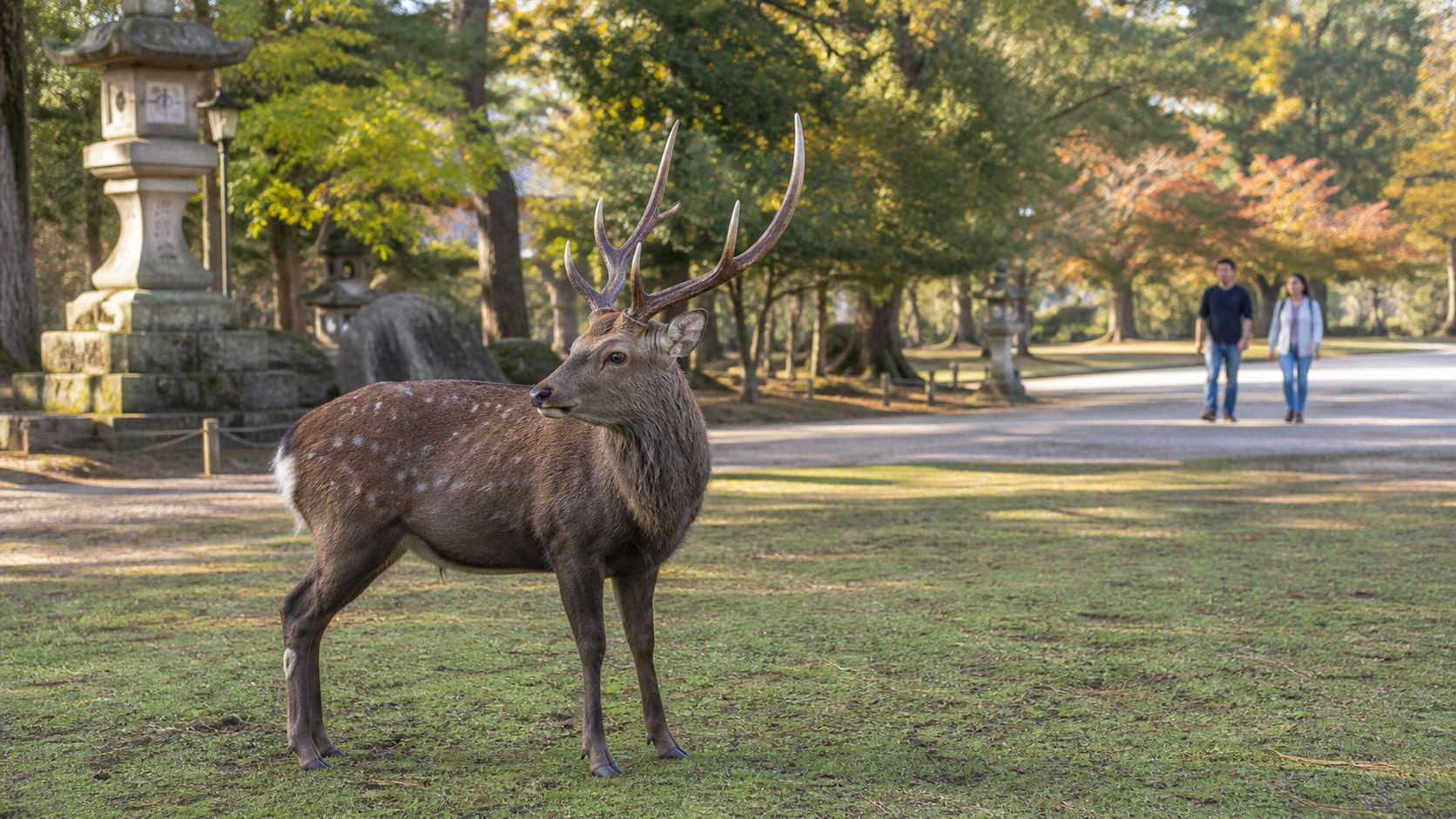
The level of caution changes during the year.
- Mid-May through early July: female deer may become defensive during the birth and early parenting period. Do not approach a fawn closely, even when it appears to be alone.
- September through November: male deer enter the rut and can become aggressive. The Nara Deer Preservation Foundation warns visitors not to approach either antlered males or males whose antlers have already been cut.
Autumn antler cutting does not make every male deer safe. Official guidance says visitors should avoid both antlered males and males whose antlers have already been cut. Distance is the control that works in every season.
Protect the Deer: Food, Paper, Plastic and Trash
The rules protect the animals as well as visitors.
Nara City says human food can make deer sick, while scented plastic may be swallowed with it. The city also states that Nara Park has no public trash bins, so carry your waste out of the park. Do not leave brochures, wrappers or bags where deer can reach them.
If you see an injured deer, a deer involved in a traffic accident or an animal behaving abnormally, contact the Nara Deer Preservation Foundation at 0742-22-2388 during its listed hours, 8:30–17:15. The foundation lists Nara Police at 0742-20-0110 for nighttime deer traffic accidents. These numbers are for deer incidents; human medical emergencies use 119.
Plan B: Enjoy Nara Without Feeding the Deer
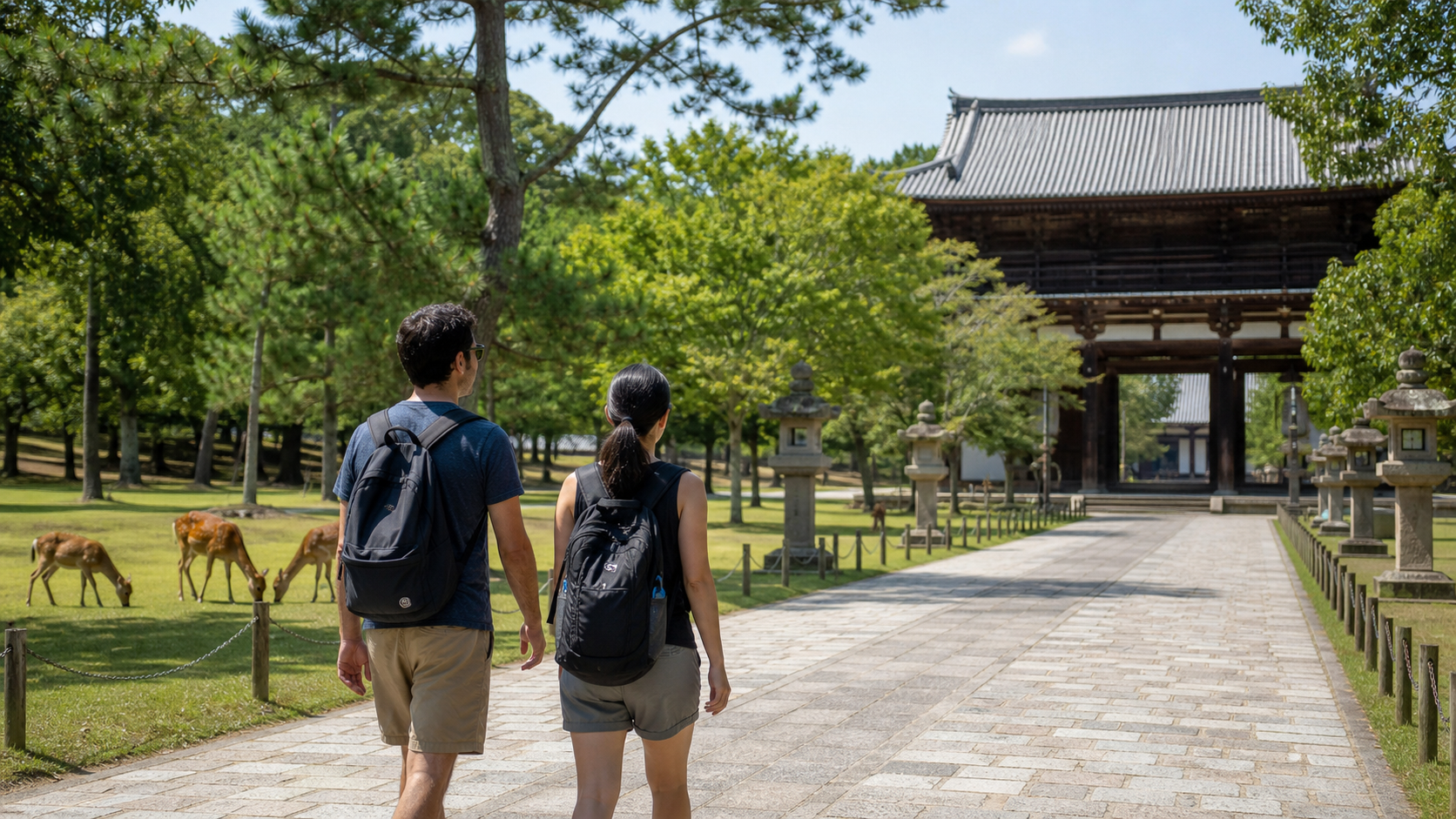
Skipping the crackers is the lower-contact choice for a nervous child, a visitor with limited mobility, or anyone who does not want animals approaching closely. It does not mean you missed Nara.
Use this no-feeding plan:
- Keep all food and loose paper inside your bag.
- Observe deer from a distance while walking toward the park’s temples, museum area or visitor facilities.
- Take photographs without calling, touching, chasing or offering food.
- If deer gather around another visitor, wait for the path to clear instead of joining the cluster.
- Use a multilingual visitor center if you need directions or help.
For the train journey, review Suica, PASMO and ICOCA for tourists. Use the Google Maps Japan guide before choosing between JR Nara Station, Kintetsu Nara Station and a bus connection. If you are combining Nara with peak-season Kyoto, check the Kyoto Autumn Crowd Plan.
FAQ
Are the deer in Nara tame?
No. They are used to people but remain wild animals. Nara’s official sources warn that deer may bite, kick, butt, charge or strike with antlers.
What can I feed the Nara deer?
Only official shika senbei deer crackers. Do not give them bread, sweets, vegetables, packed lunches, paper or other food.
What should I do if deer keep following me?
If the crackers are gone, show your empty hands. Official Nara guidance says deer will usually leave when they can see you have no food. Secure any paper, plastic or human food that may still attract them.
Do I have to make a deer bow before feeding it?
No. Official safety guidance does not tell visitors to require a bow. It tells visitors not to tease deer and to give crackers promptly, so do not delay food for a photograph.
Can young children feed the deer?
They can participate only with close adult control, but feeding is optional. Official guidance warns that small children can feel overwhelmed and should not approach deer alone. An adult should take over if several deer gather.
Can Nara deer bite or headbutt people?
Yes. Official safety guidance lists biting, kicking, butting and charging as possible behavior. Risk can increase around food, during the spring parenting period and during the autumn rut.
What should I do if a deer injures me?
Move away from the animal and ask park or visitor-center staff for help. Call 119 for a serious injury. JNTO’s multilingual Japan Visitor Hotline is 050-3816-2787. Seek professional medical advice rather than relying on an online guide for treatment.
Is it okay to visit Nara Park without feeding the deer?
Yes. The deer live on the park’s natural vegetation and do not need visitors to feed them. You can observe them from a distance while visiting Nara’s temples, museum area and park paths.
Last checked: August 13, 2026. Deer behavior cannot be guaranteed. Follow current signs and instructions from Nara Park staff and the Nara Deer Preservation Foundation.
Comments