- Quick Answer
- Use This Guide With the Right Next Click
- The Five Checks Before You Leave
- What to Bring to a Japanese Festival
- Food Stalls: How to Order, Pay, and Eat
- How to Handle Crowds Without Panic
- Trains, Stations, and the Ride Home
- Toilets, Trash, Smoking, and Photos
- Heat, Rain, and Plan B
- Three Simple Festival Plans
- If Something Goes Wrong
- Next Useful Guides
- FAQ
- Do Japanese festival stalls take credit cards?
- How much cash should I bring to a Japanese festival?
- Can tourists join Bon odori dancing?
- What should I bring to a summer festival in Japan?
- How early should I arrive at a Japanese festival?
- Are toilets available at Japanese festivals?
- What happens if it rains during a festival?
- Is it OK to take photos at Japanese festivals?
- Are Japanese festivals good for children?
- Should I take a taxi after a festival?
- Sources Checked
Quick Answer
If you are going to a Japanese festival in 2026, plan the night around three pressure points: cash for food stalls, crowd flow near the venue, and the train ride home.
The simplest safe plan is:
- Check the official event page on the same day.
- Bring small cash, an IC card, a charged phone, water, a towel, and a small trash bag.
- Arrive before the peak crowd, eat before the longest lines form, and decide your return station before you enter the crowd.
- Do not make the last train, a taxi, or one exact meeting point your single Plan B.
- If heat, heavy rain, or station crowding starts to feel wrong, step out early. A festival is optional; getting back comfortably is the win.
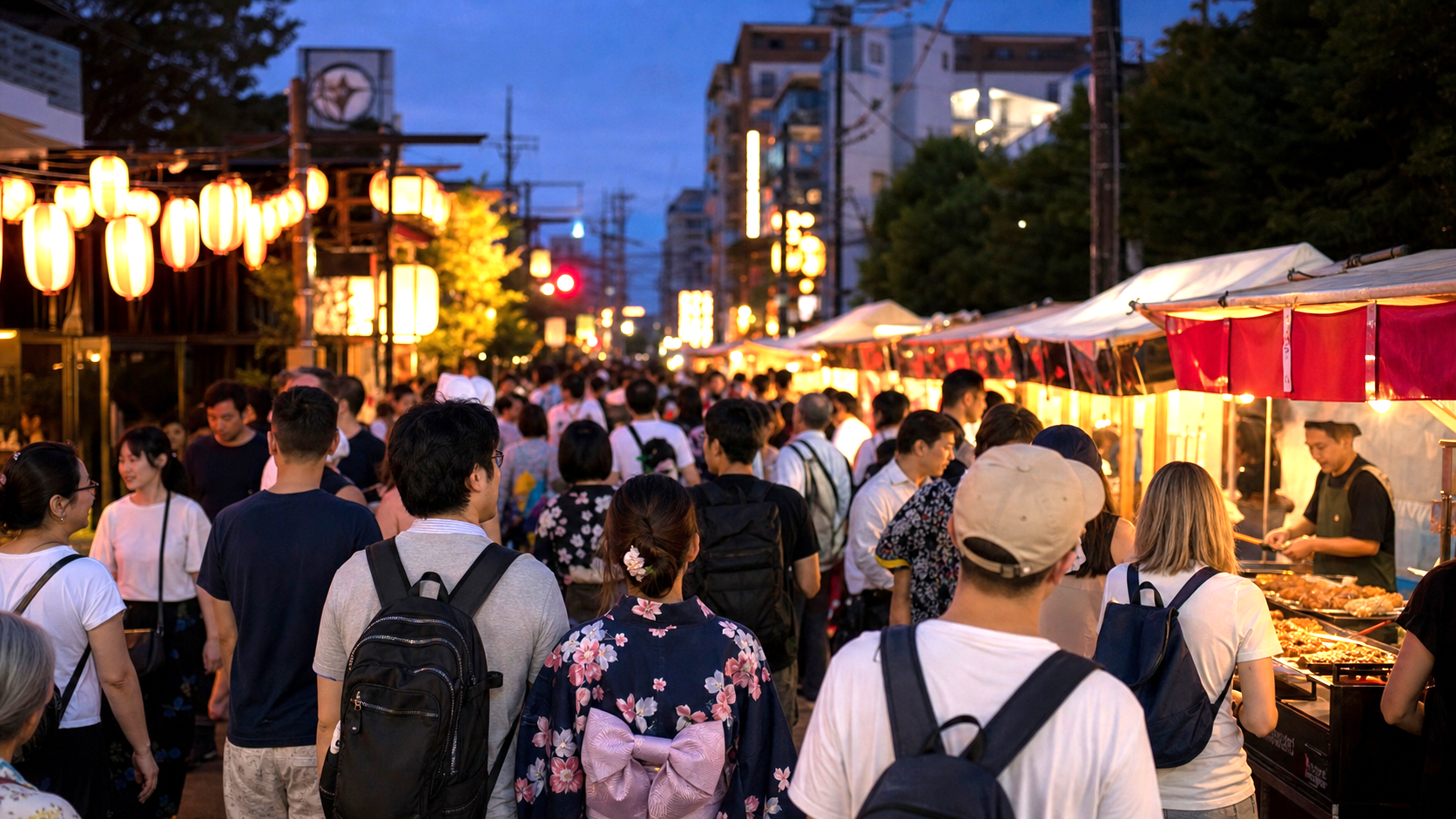
Japan’s festivals are one of the best parts of a trip. Summer brings matsuri, Bon odori dances, food stalls, lanterns, shrine processions, and fireworks. JNTO describes festivals as a window into Japanese culture, and notes that hundreds of summer festivals happen across Japan in June, July, and August.
For tourists, the hard part is rarely “what is a festival?” The hard part is much more practical: Where do I pay? Where do I eat? Where is the toilet? How do I leave when thousands of people head to the same station at once?
This guide is built for that moment.
Use This Guide With the Right Next Click
If you are still choosing where to go, start with our Tokyo Matsuri Guide 2026 for festival dates and local highlights.
If your main event is fireworks, use the Japan Summer Fireworks 2026 Guide for hanabi dates, paid seats, and viewing strategy.
If heat is your main worry, read Stay Cool in Japan: 10 Summer Cooling Items Tourists Can Buy before you go shopping.
This article does something different: it helps you survive the actual evening.
The Five Checks Before You Leave
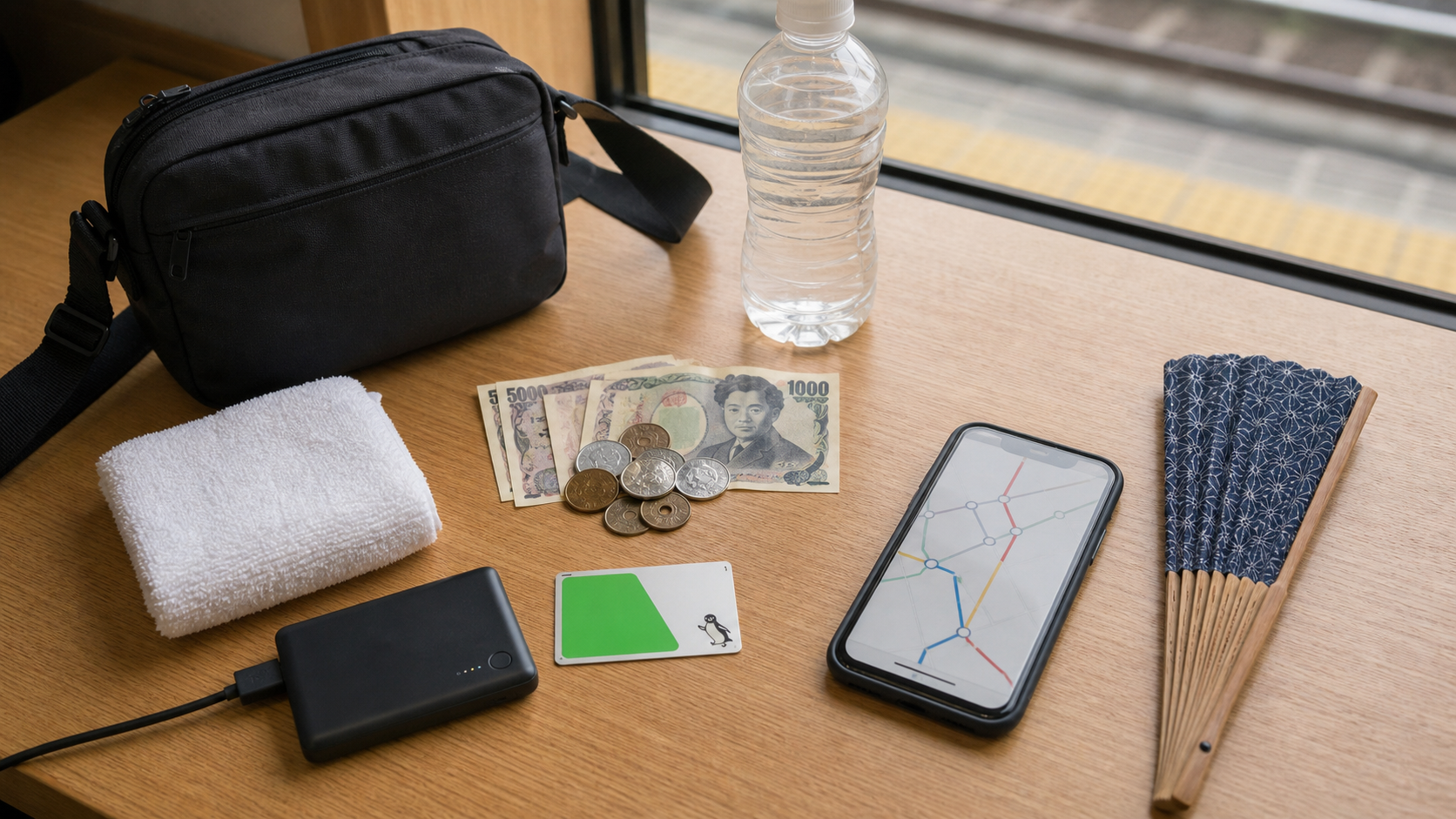
Before you leave your hotel, Airbnb, or station locker, do five checks. They take less than ten minutes and remove most festival friction.
1. Check the Official Event Page
Festival dates, start times, parade routes, paid seat rules, and rain decisions can change. Do not treat an old screenshot, a travel blog, or a social media clip as your full plan.
Check:
- official organizer site
- official city or shrine page
- official X account, if the event uses one
- weather updates on the day
For large events, route controls and one-way walking rules may be posted close to the date. That information matters more than a nicer photo spot.
2. Pick Your Return Station Before You Arrive
Do not wait until the end to decide how to leave. The station closest to the festival is often the station everyone else wants.
Before you enter the venue area, decide:
- your first-choice station
- one backup station within walking distance
- the train line you will use home
- what time you are willing to leave if the crowd gets uncomfortable
JR East provides English route search and train status information, and notes that its status screen does not update automatically. If you are checking delays, refresh rather than assuming an old screen is current.
For general train planning, keep our Tokyo Train Guide for Tourists nearby.
3. Check Heat, Rain, and Warnings
The Ministry of the Environment’s WBGT site uses Wet Bulb Globe Temperature as a heat stress index. Its guideline labels 25-28 as “Warning,” 28-31 as “Severe Warning,” and 31 or higher as “Danger.” WBGT changes by environment, not just by air temperature.
JNTO’s Safety Tips page also links to Japan Meteorological Agency weather warnings and advisories. For tourists, the practical point is simple: check heat and weather on the day, not just when you planned the trip.
This guide is not medical advice. If you feel seriously unwell, stop the plan, move to a cooler place, and ask staff or a nearby person for help.
4. Prepare Cash and IC
JNTO recommends carrying cash in Japan and notes that ATMs may not be 24 hours. For festival stalls, small cash is still the comfortable default.
Bring:
- 1,000 yen notes
- 100 yen and 500 yen coins
- an IC card or mobile IC for trains and vending machines
- one backup payment card
JR East’s Welcome Suica page explains that IC cards can be used for trains, buses, shopping, vending machines, and some lockers where the logo is accepted. That makes an IC card useful even if the yatai food stalls are cash-first.
For a deeper cash setup, read our Cash in Japan Guide.
5. Decide Your Toilet and Trash Plan
Festival toilets exist, but lines grow. Convenience store toilets near a major event may be busy, restricted, or not available. Go before you enter the densest streets, then treat any toilet you find later as a bonus.
Trash is similar. Some festivals set up labeled trash stations; smaller events may not. Bring a small plastic bag so a sauce tray, cup, tissue, or wet wipe does not become a problem.
For the practical details, see our Japanese Toilets Guide and Trash in Japan Guide.
What to Bring to a Japanese Festival
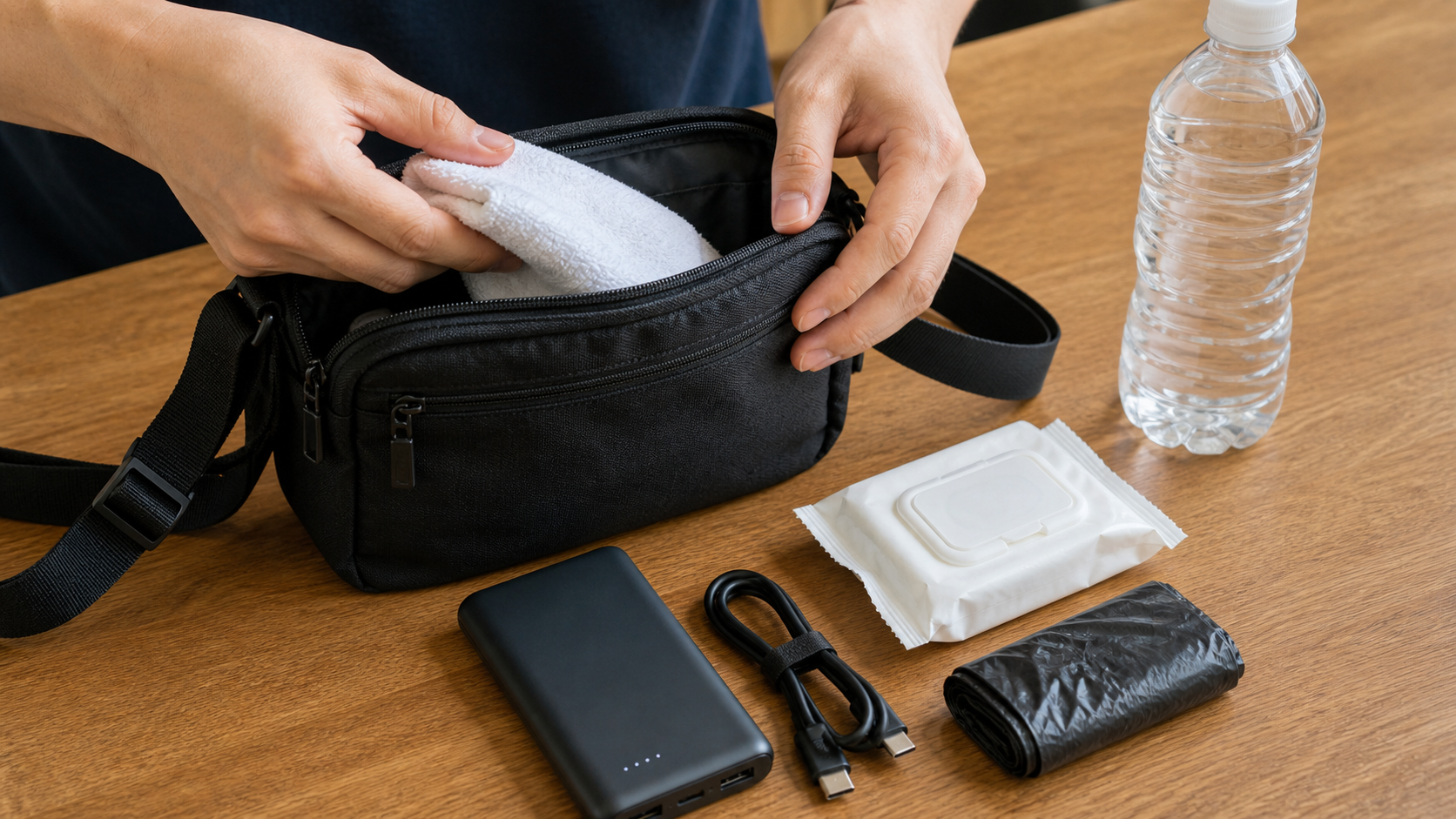
You do not need a huge backpack. In a crowd, a huge backpack becomes its own problem. Bring a small kit that keeps your hands free and your exit flexible.
Festival Kit
Bring:
- small cash
- IC card or mobile IC
- phone with offline map area saved if possible
- power bank and short cable
- small towel or handkerchief
- water or tea
- body wipes or cooling wipes in summer
- small trash bag
- light rain item if clouds look unstable
- any medicine or allergy items you normally need
For summer events, add a portable fan, sun umbrella, or cooling towel if you will stand outdoors before sunset. For night fireworks or riverside festivals, consider insect repellent.
Keep the important items in an outer pocket. A battery or towel at the bottom of a bag is not helpful when you are standing in a moving crowd.
What Not to Bring
Avoid:
- hard-to-carry suitcases
- large camera tripods in crowded areas
- bulky shopping bags
- fragile souvenirs
- shoes that are not already comfortable
If you are coming straight from sightseeing, use a station locker or luggage storage before the festival. A festival night is much better when you can move lightly.
Food Stalls: How to Order, Pay, and Eat
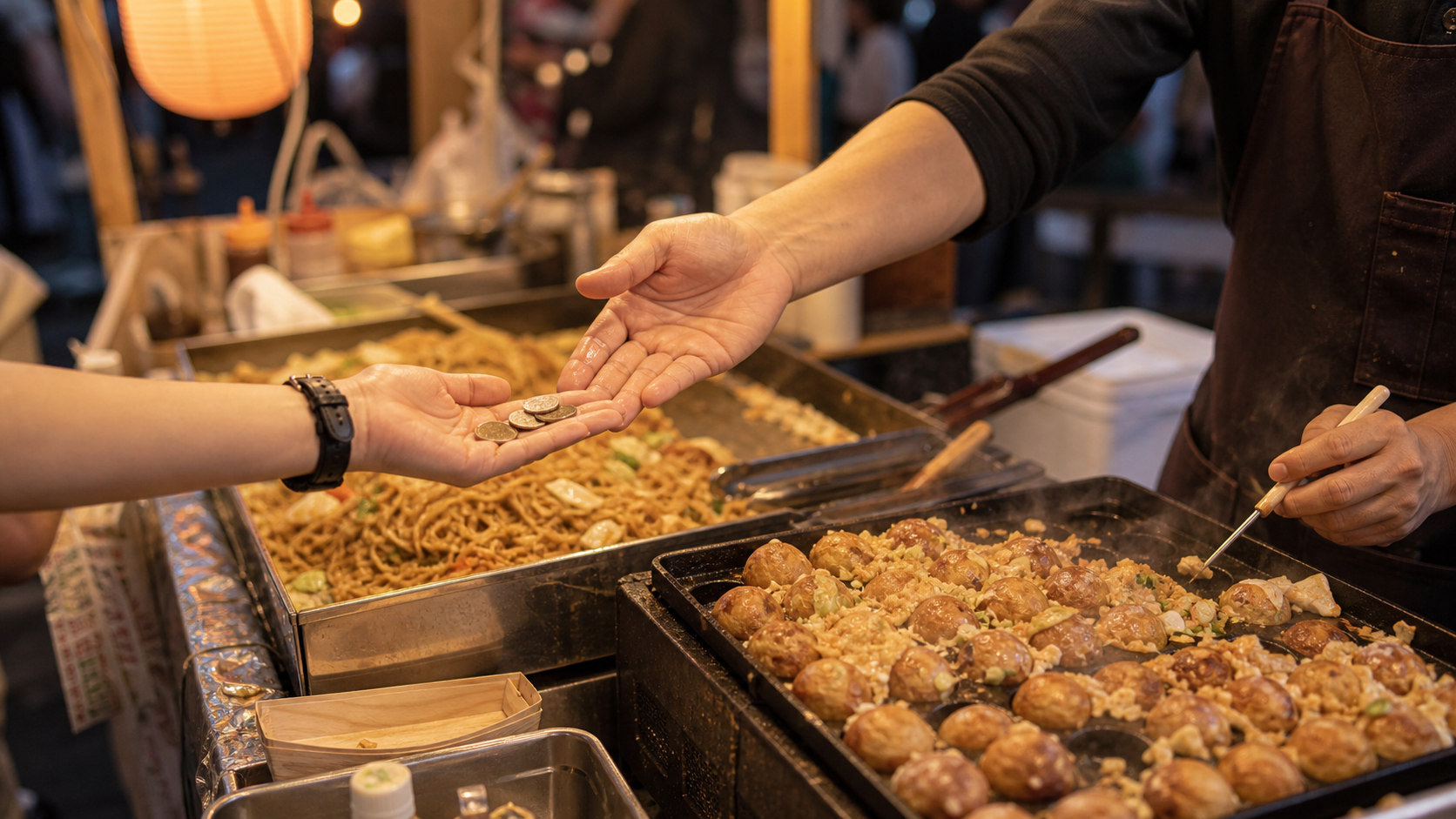
Food stalls are one of the best parts of the night. GO TOKYO’s summer guide lists festival favorites such as yakisoba, okonomiyaki, chocolate bananas, grilled corn, salted cucumbers, watermelon, and kakigori.
At the venue, the process is simple:
- Join the visible line.
- Decide before you reach the front.
- Order with the item name or point at the menu.
- Pay in cash.
- Step aside and wait if the food is being cooked.
- Eat in a less crowded spot.
- Dispose of the tray at a festival trash station, or carry it with you.
Cash Tips for Yatai
Use 1,000 yen notes and coins. A large note for a small order slows the line and may be awkward if the stall is low on change.
Do not assume cards are accepted. Some stalls may show QR code payment signs, but a tourist should not build the evening around one payment app. Cash keeps the line simple.
What to Eat First
If you are hungry, start with something that moves quickly:
- yakisoba
- takoyaki
- karaage
- yakitori
- fries or potato snacks
- kakigori
- bottled drinks
Watch turnover. A stall cooking fresh batches for a moving line is a calmer choice than a quiet stall where food has been sitting.
Where to Eat
Do not try to walk through a dense crowd with sauce-heavy food. It is stressful for you and risky for the person next to you.
Look for:
- a side street
- a curb edge
- a designated eating space
- a standing table
- the back of the food stall area
If you have dietary restrictions, eat something reliable before you go. Festival stalls are not the easiest place to ask detailed questions about ingredients, shared grills, or sauces in English.
If you are choosing between takoyaki, yakisoba, and grilled snacks, prioritize the stall with active cooking and a moving line.
How to Handle Crowds Without Panic
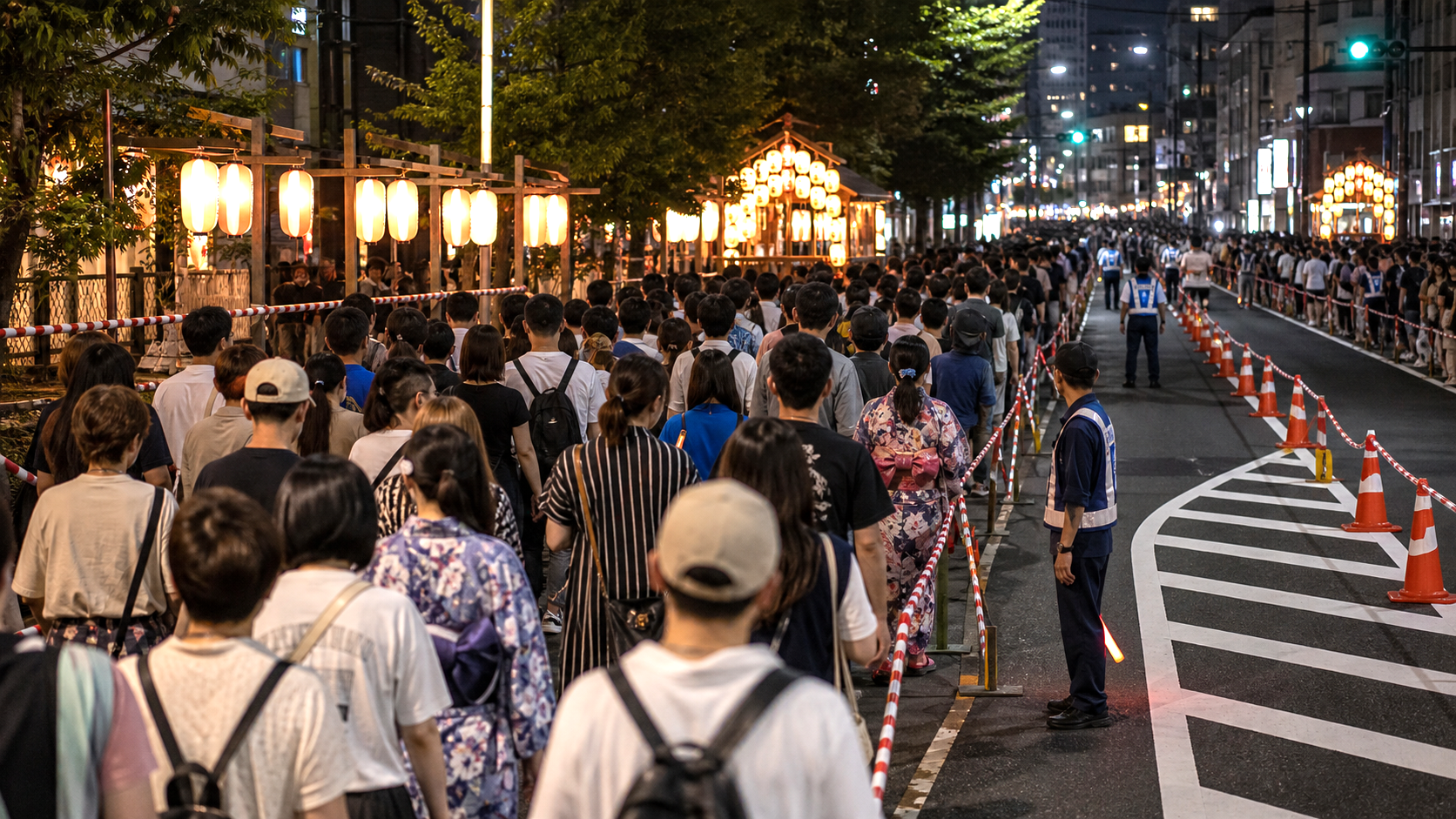
Festival crowds are not one single problem. They come in waves.
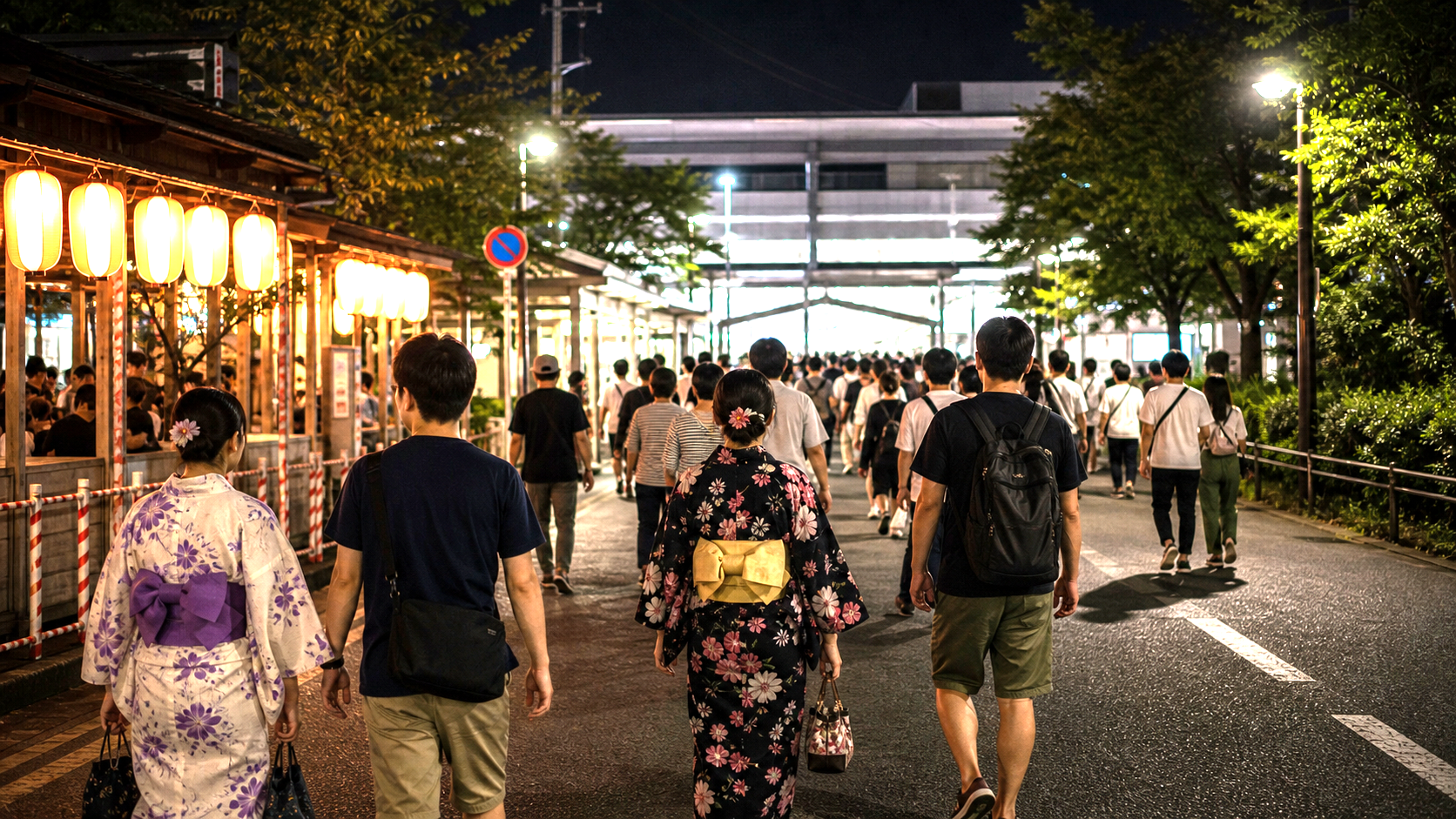
The first wave is arrival. The second wave is food lines. The third wave is the end of the parade, dance, or fireworks. The last wave is the station.
Your goal is not to erase the crowd. Your goal is to avoid getting stuck in a crowd without a decision.
Arrive Before the Peak
For evening festivals, arriving early often means:
- shorter food lines
- easier photos
- more space to understand the venue
- time to find toilets and exits
If the headline program starts at 19:00, arriving at 18:45 puts you inside the hardest part of the flow. Arriving earlier or later can be easier, depending on the event.
Move With the Flow
In dense areas:
- do not stop suddenly in the middle of the path
- step to the side before checking your phone
- keep bags in front or close to your body
- avoid pushing against a one-way walking route
- follow staff instructions even if your map says another way is shorter
Festival staff and police are there to prevent bottlenecks. Their route may look inefficient on a map, but it may be the route that keeps people moving.
Set a Meeting Rule
Do not rely on “meet at the station gate” after the finale. That gate may be blocked, crowded, or split by police control.
Use a rule like:
- If we separate, wait 10 minutes at the second-choice meeting point.
- If we cannot meet there, message and walk to the backup station.
- If phone batteries die, meet at the hotel or accommodation.
This is especially useful for families, groups, and anyone traveling with children.
Leave Before the Final Moment, or Wait It Out
The station crush is often worst immediately after the event ends. Two simple strategies work:
- Leave a little before the finale if you care more about a calm ride home than seeing the last minute.
- Stay nearby after the event and let the first crowd wave pass.
Do not plan a tight late-night Shinkansen, airport transfer, restaurant reservation, or paid activity immediately after a major festival.
Trains, Stations, and the Ride Home
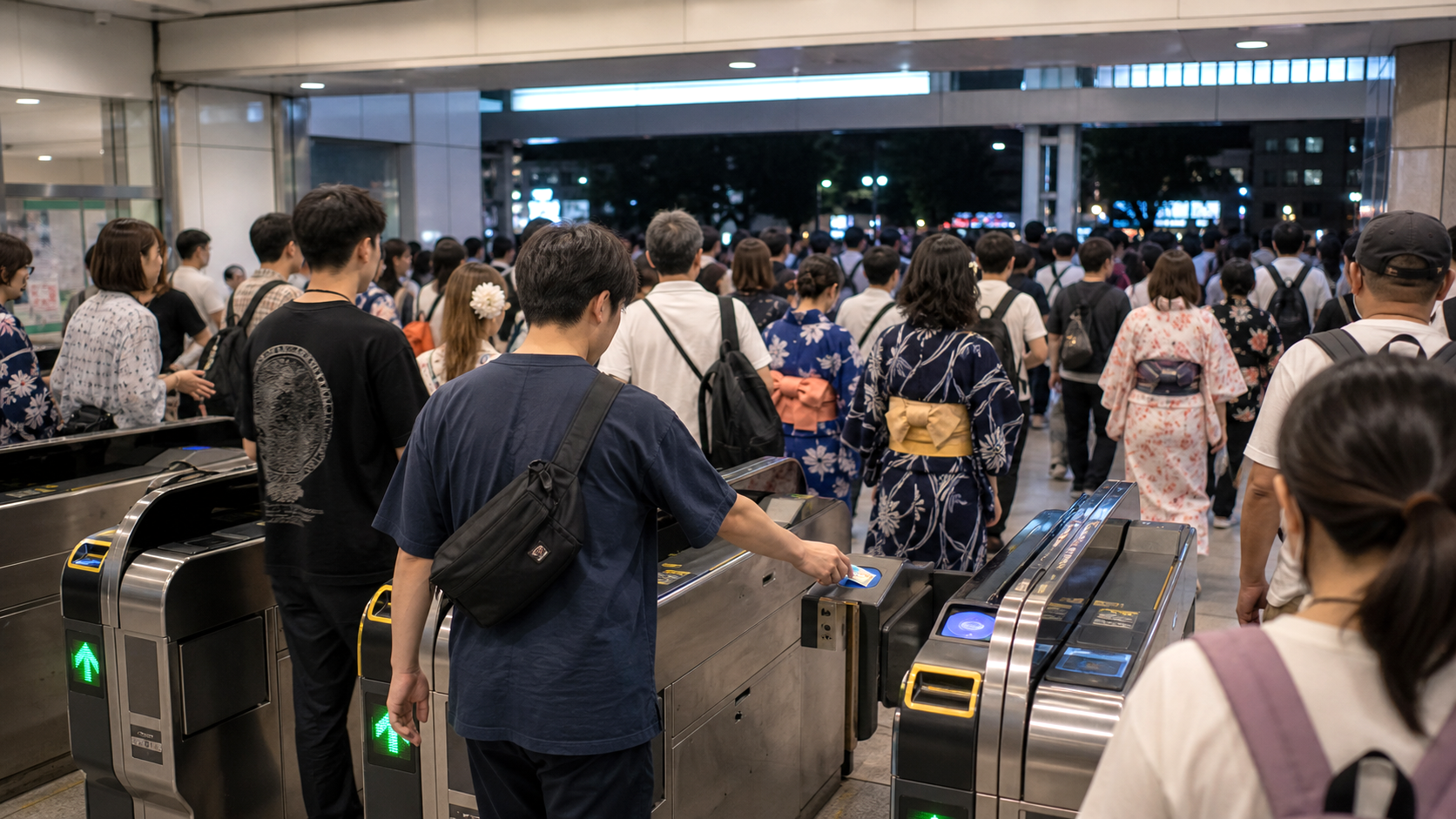
For a festival night, trains are a better first plan than taxis. Roads near popular events may close or jam, and ride-hailing does not solve the problem if the road itself is stuck.
Top Up Before You Go
Top up your IC card before you enter the festival area. The fare adjustment machines and ticket machines after the event may have lines.
If you use a mobile IC card, check battery level. A dead phone at the ticket gate turns a simple exit into a staff conversation.
Know the Station Layout
Some festivals have more than one nearby station. The closest one may not be the easiest one after the event.
Before you arrive, check:
- which station you will enter from
- which station you will leave from
- whether a second line is within walking distance
- whether your route has a transfer that could become crowded too
For major Tokyo events, walking 10 to 20 minutes to a less crowded station can feel longer on the map but shorter in real life.
Last Train Is Not a Festival Strategy
Last train works when everything goes right. Festivals are not the night to depend on everything going right.
Crowd control, delayed friends, toilet lines, rain, platform limits, and missed transfers can eat time. Build your plan around an earlier train.
If the Station Is Too Crowded
If the entrance line looks unsafe or stressful, you have options:
- wait outside the station area
- walk to the backup station
- take a local line in the opposite direction for one stop, then transfer
- sit somewhere safe and check train status again
Do not force yourself into a crowd that feels wrong. A slower return can be the better return.
Toilets, Trash, Smoking, and Photos
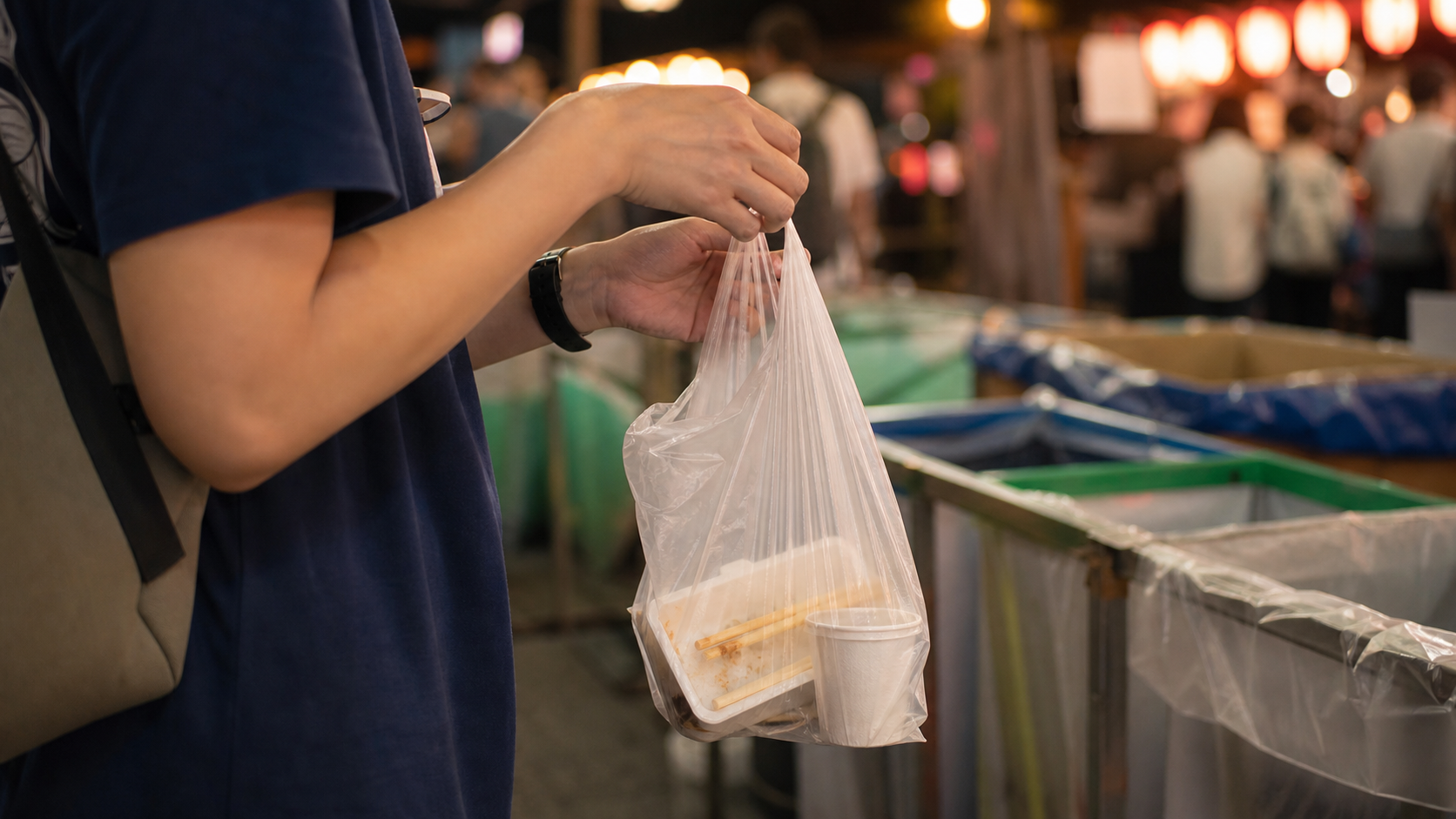
These small manners issues are where travelers feel most unsure. You do not need to act perfectly. You do need to pay attention.
Toilets
Use the toilet before you enter the densest area. Good options before the festival include:
- department stores
- large stations
- shopping centers
- your accommodation
- public facilities near the route
At the venue, follow signs and staff directions. If a toilet line is long, decide whether you can wait or should step out to a quieter area.
Do not flush wet wipes, tissues, food packaging, or hygiene products. In Japan, toilet paper goes in the bowl; other items go in the bin if one is provided.
Trash
Food stall trash is often sticky, wet, or awkward. Keep a small bag in your pocket.
If you see a festival trash station, sort by the labels. If you do not see one, carry the trash until you find a bin or return to your accommodation.
Do not stuff festival trash into a random shop bin, station corner, or convenience store restroom. That is exactly the kind of small friction visitors are trying not to create.
Smoking
Use designated smoking areas. Do not smoke while walking through the crowd, near food lines, near children, or inside shrine and temple grounds unless a sign clearly marks a smoking area.
If you are unsure, do not smoke there.
Photos
Festival photos are part of the fun, but a few rules help:
- obey no-photo signs
- do not block the walking route for a shot
- avoid close photos of children without permission
- do not push a camera into a dance circle or shrine ritual space
- skip flash if it would disturb performers or worshippers
If the photo requires someone else to move around you, pick another angle.
Heat, Rain, and Plan B
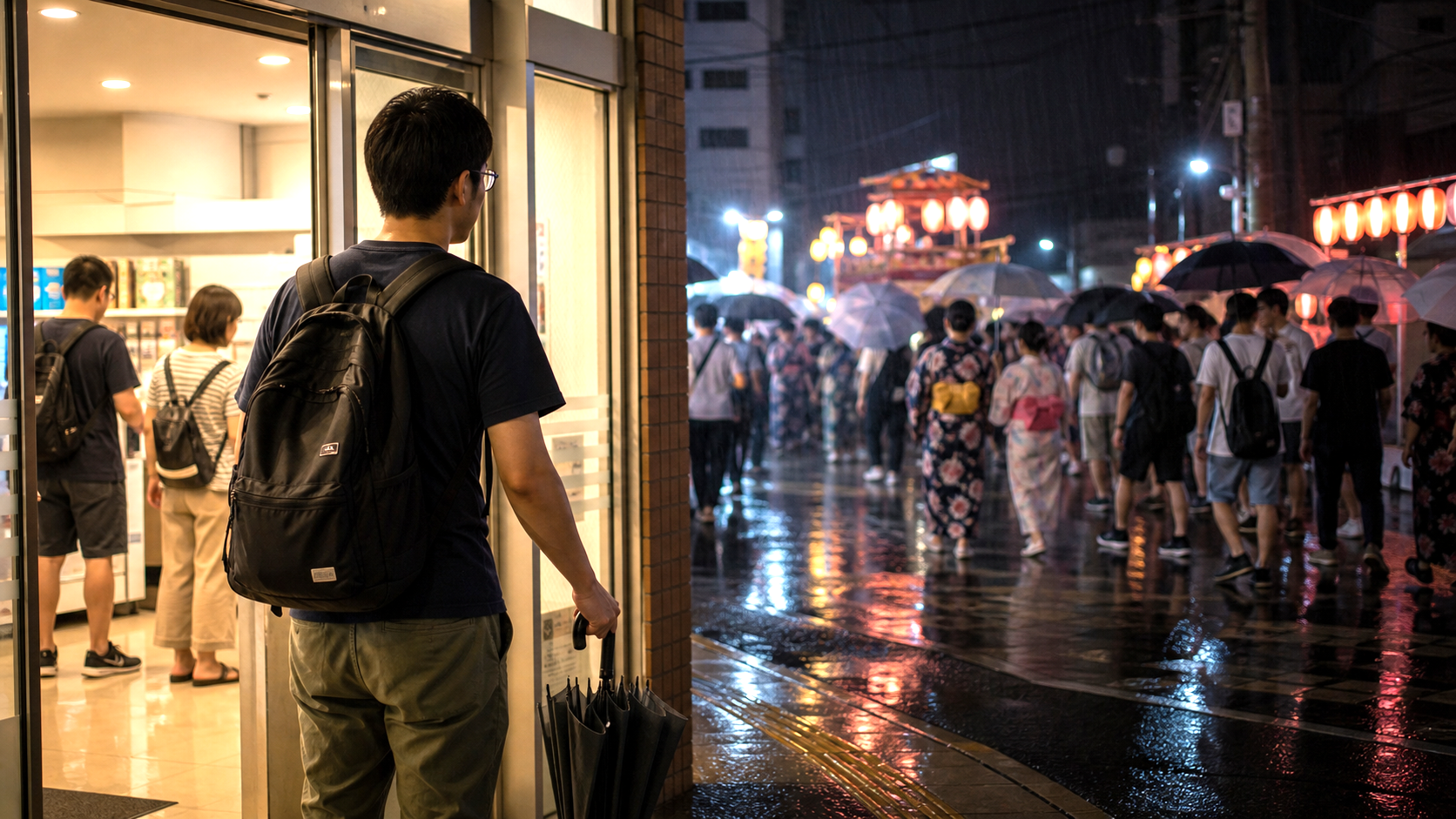
Summer festivals can be hot even after sunset. Asphalt, crowds, humidity, and station stairs work together. Rain can also arrive quickly, especially in summer evenings.
Heat Plan
Before leaving:
- check WBGT or local heat information
- drink before you feel dry
- buy water before the densest crowd
- choose light clothing and real walking shoes
- bring a towel or wipes
- know where you can step indoors
If your body feels wrong, do not try to “push through” because the festival is famous. Move to shade, a convenience store, a station, a cafe, or your accommodation.
For shopping help, use our summer cooling items guide.
Rain Plan
Light rain may not stop a festival. Heavy rain, lightning, strong wind, or safety concerns can change the schedule.
Before you go:
- check the official event page
- check weather warnings
- bring a compact rain item
- protect your phone and passport
- choose shoes that can handle wet streets
Umbrellas can be annoying in packed areas. A light rain jacket or compact poncho can be easier when the crowd is dense.
Plan B Ideas
If the festival feels too crowded, too wet, or too hot, you can still have a good night.
Plan B can be:
- eat one festival snack, then leave early
- walk the side streets instead of the central route
- move to a smaller nearby shrine or shopping street
- eat dinner before entering the venue
- watch fireworks from farther away
- return another night if the festival runs multiple days
The best Plan B is not dramatic. It is a normal choice you make before everyone is tired.
Three Simple Festival Plans
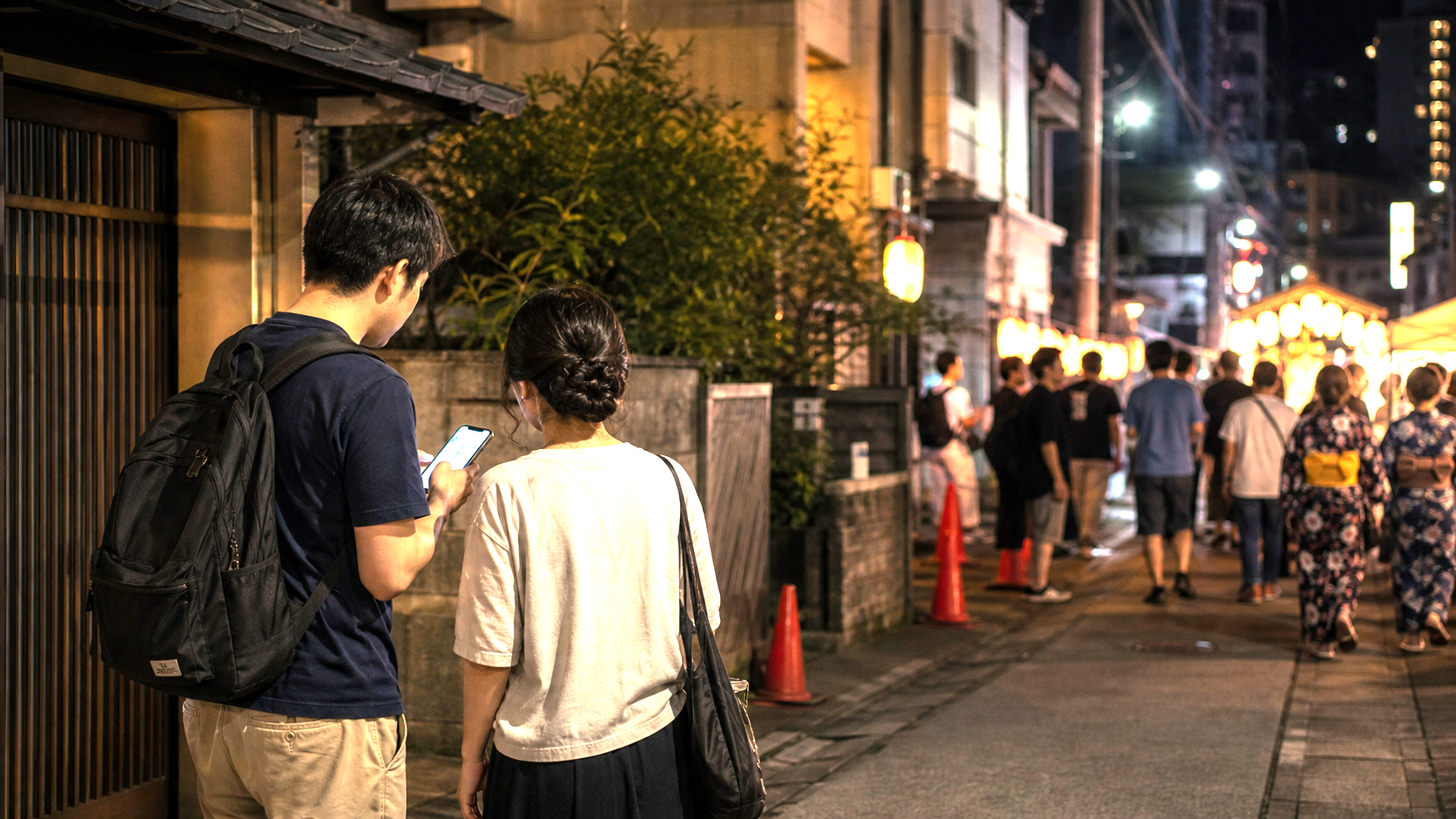
Plan 1: Neighborhood Matsuri
Best for: first-time visitors, families, tired travelers, people staying nearby.
Plan:
- arrive near opening or early evening
- buy one or two snacks
- watch the dance, lanterns, or procession
- leave before the station peak
Why it works: smaller festivals give you the feeling without turning the whole night into logistics.
Plan 2: Major City Festival
Best for: travelers who want the energy and can handle crowds.
Plan:
- arrive early
- eat before peak dinner time
- identify toilets and exits
- use one backup station
- leave before the final crush or wait it out
Why it works: large events are worth seeing, but they reward calm timing.
Plan 3: Fireworks Night
Best for: tourists who want the classic Japanese summer image.
Plan:
- choose your viewing area in advance
- bring a sheet if sitting is allowed
- buy food before the show starts
- keep trash bag and drinks ready
- decide whether to leave before the finale
Why it works: hanabi is less about wandering and more about claiming a spot, waiting, watching, and escaping intelligently.
For full fireworks planning, use the Japan Summer Fireworks 2026 Guide.
If Something Goes Wrong
Festivals are busy. Small problems are normal. Here is the calm version.
You Lose Your Group
Step to the side, not the middle of the path. Message your group with a clear location. If the crowd is too dense, move to the backup meeting point rather than trying to push backward.
Your Phone Battery Is Low
Stop using video. Turn on low power mode. Keep enough battery for maps, train gates if using mobile IC, and one emergency call or message. If you need to charge, move to a cafe, karaoke, hotel lobby, or electronics shop area outside the venue.
You Run Out of Cash
Do not spend the last cash on one more snack if you still need a locker, train adjustment, or backup taxi. Look for a 7-Eleven, Japan Post Bank ATM, or other international-card ATM away from the densest venue edge.
You Feel Unwell
Leave the crowd. Sit, drink, cool down, and ask for help if symptoms feel serious or confusing. JNTO’s Safety Tips page is worth bookmarking before the trip because it collects weather warnings, disaster information, and safety links for travelers.
The Event Is Cancelled or Changed
Do not chase rumors. Check the official page or account. If the event is cancelled for weather or safety, switch to dinner, a nearby shopping street, a station building, or an indoor Plan B.
Next Useful Guides
Use these based on the problem you are solving next:
- Need dates and Tokyo choices? Read Tokyo Matsuri Guide 2026.
- Going for fireworks? Read Japan Summer Fireworks 2026.
- Worried about heat? Read Stay Cool in Japan.
- Need cash setup? Read Cash in Japan.
- Unsure about trains? Read Tokyo Train Guide.
- Worried about toilets? Read Japanese Toilets Guide.
- Confused about trash? Read Trash in Japan Guide.
A festival is not a test of how “local” you can act. It is a night out in a crowded public place. Bring the basics, move gently, follow signs, and give yourself an easy way home.
FAQ
Do Japanese festival stalls take credit cards?
Some stalls may accept QR code payment, but tourists should plan on cash. Bring 1,000 yen notes and 100 yen or 500 yen coins so payment is quick.
How much cash should I bring to a Japanese festival?
For a short visit, 3,000 to 5,000 yen per adult is a comfortable food and drink buffer. Bring more if you plan to play games, buy goods, or pay for transport adjustments.
Can tourists join Bon odori dancing?
Often, yes. Many Bon odori circles are open and friendly to beginners. Step into the outer ring, copy the people ahead of you, and avoid blocking the central space.
What should I bring to a summer festival in Japan?
Bring small cash, an IC card, a charged phone, power bank, water, towel, wipes, a small trash bag, and a rain or heat item depending on the weather.
How early should I arrive at a Japanese festival?
For a neighborhood festival, early evening can be fine. For a major city festival or fireworks event, arriving before the peak crowd gives you more space, shorter food lines, and a calmer return plan.
Are toilets available at Japanese festivals?
Larger events may have toilets nearby or temporary toilets, but lines can be long. Use a station, department store, or your accommodation before entering the densest festival area.
What happens if it rains during a festival?
Light rain may not cancel an event. Heavy rain, lightning, strong wind, or safety concerns can change the schedule. Check the official event page or account on the day.
Is it OK to take photos at Japanese festivals?
Yes, but follow signs and use common sense. Avoid close photos of children without permission, do not block walking routes, and respect no-photo areas at shrines, temples, and performances.
Are Japanese festivals good for children?
Many are family-friendly, but crowd density, heat, toilet lines, and the train ride home can be hard with small children. Arrive early, choose a smaller event, and leave before the first exit wave.
Should I take a taxi after a festival?
Do not make a taxi your first plan near a major event. Roads may be closed or jammed. Trains plus a backup station may be more reliable for tourists.
Sources Checked
- JNTO: Festivals and Events
- GO TOKYO: Tokyo Summer Guide
- Ministry of the Environment: Heat Illness Prevention Information
- JNTO: Safety Tips for Travelers
- JNTO: Currency and Currency Exchange
- JR East: Route Search and Train Status
- JR East: Welcome Suica
Comments