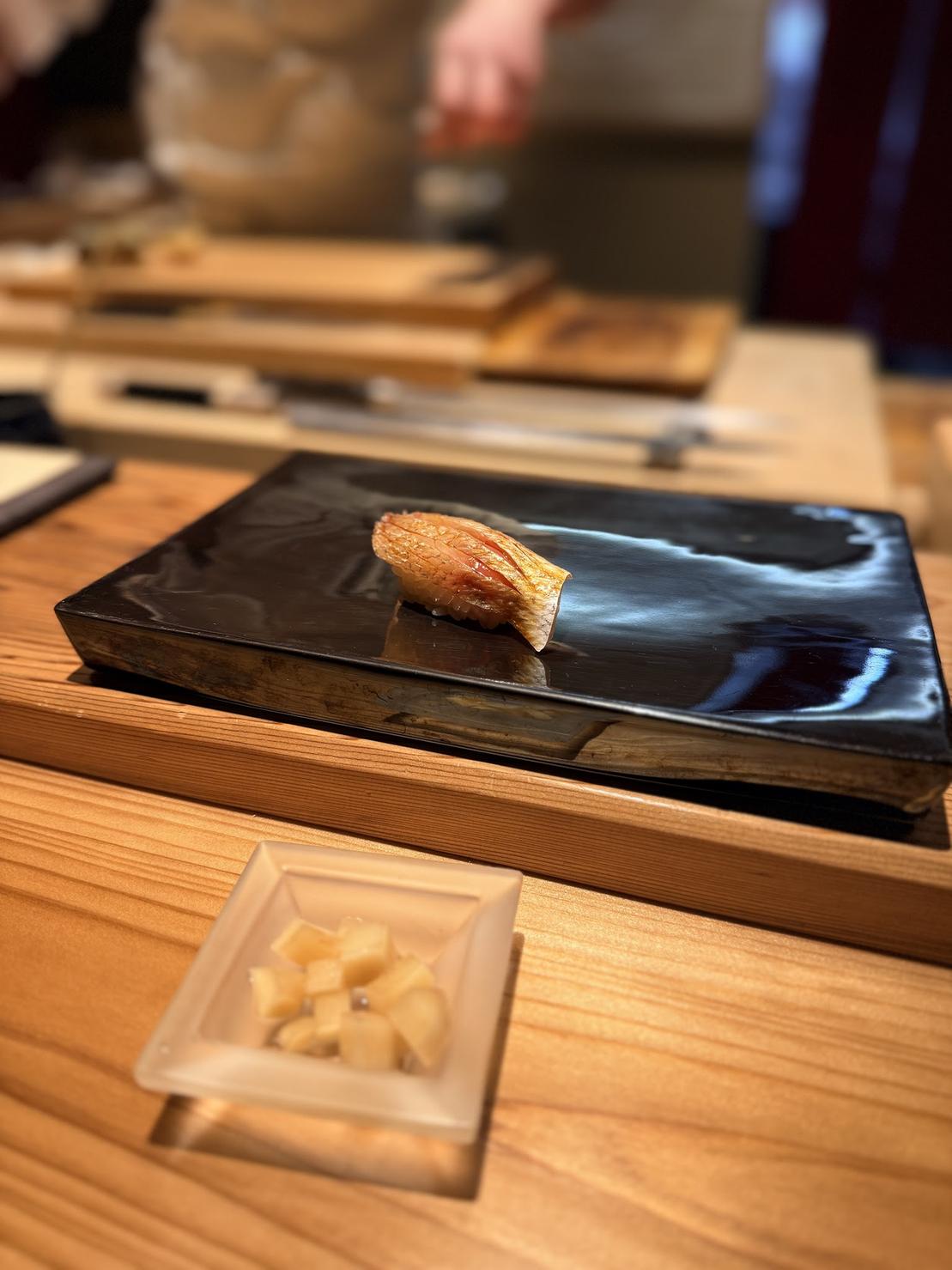
Karin sits on the ground floor of a building about a two-minute walk from Exit A5 of Ryogoku Station. You step through the noren curtain and the room opens up around a long counter made from a single plank of Yakusugi cedar. It is calm and a little grown-up, the kind of place you settle into slowly.
Karin is known for blending sushi with washoku, traditional Japanese cooking. The fish comes in fresh from Toyosu Market every morning, and the chef is friendly and easy to talk to. I had the omakase, the chef’s-choice course, and ate one careful plate after another.
Dish by Dish
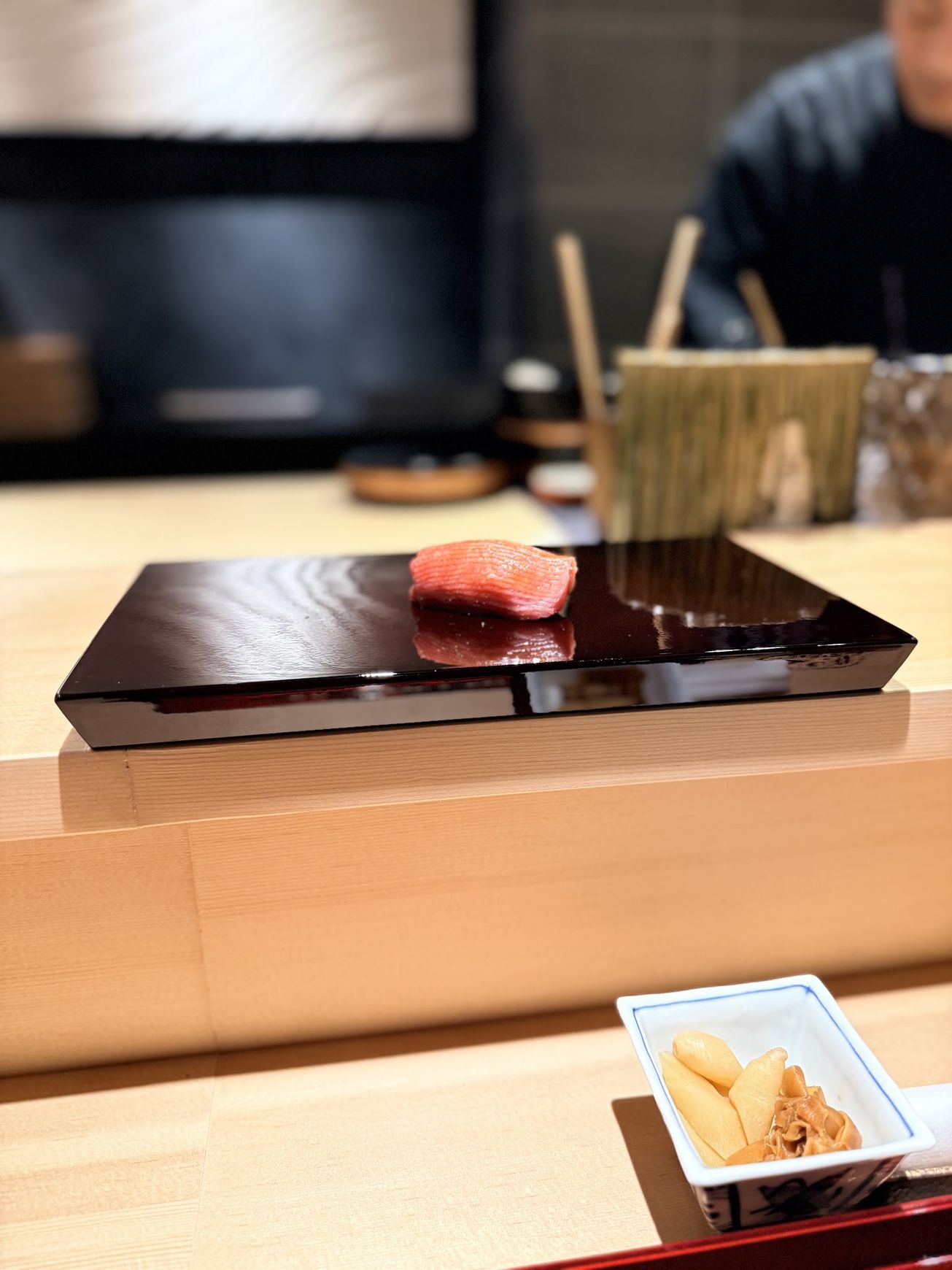
Marinated bluefin tuna (akami zuke)
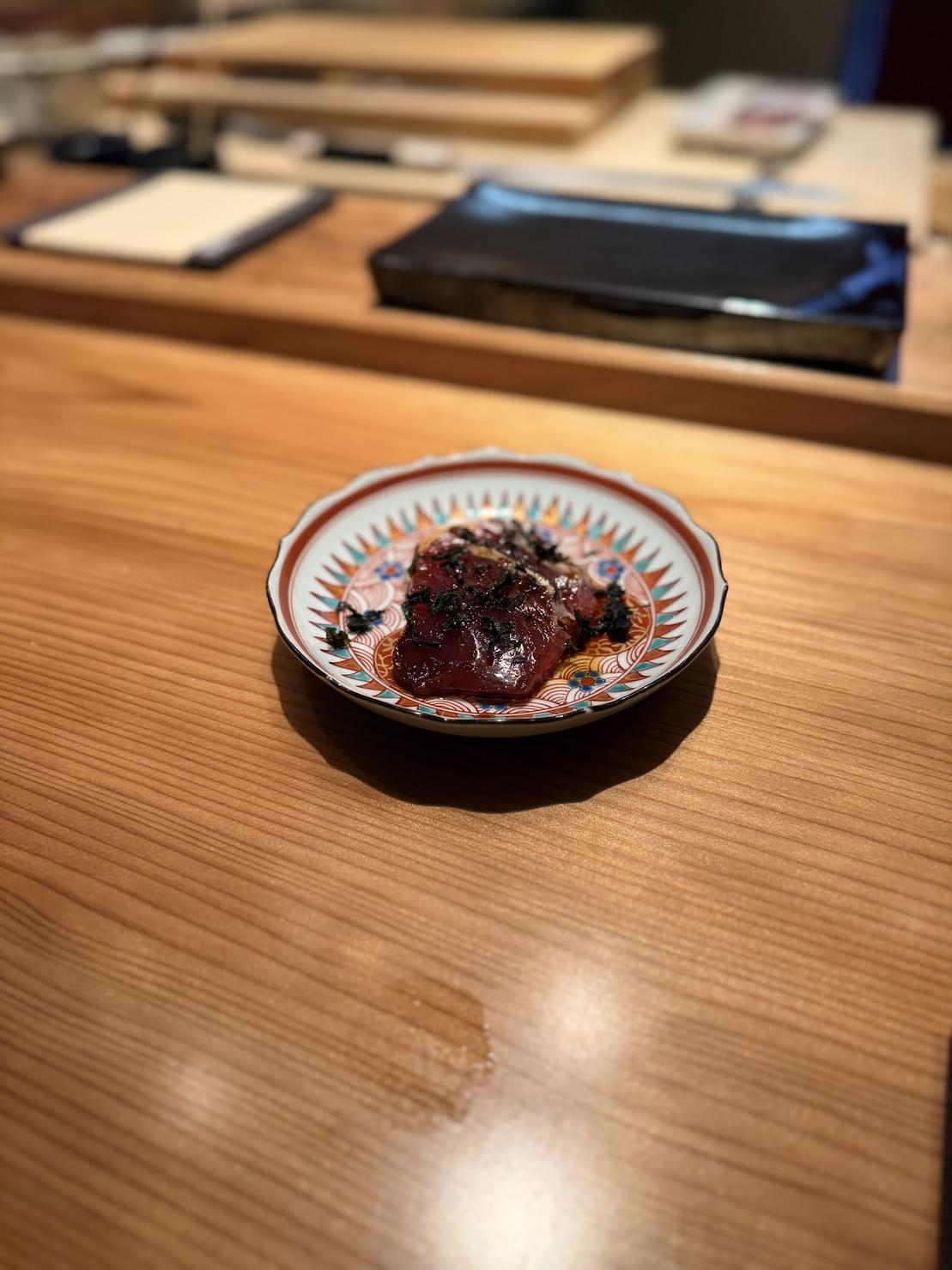
This is lean bluefin tuna from Minmaya in Aomori, briefly marinated in soy. The color is a deep, clean red. The rich taste of the lean tuna is still there, but the marinade adds a gentle sourness that gives it more depth.
What I liked most was the balance with the rice. The seasoned rice was measured so that it lifted the fish instead of covering it.
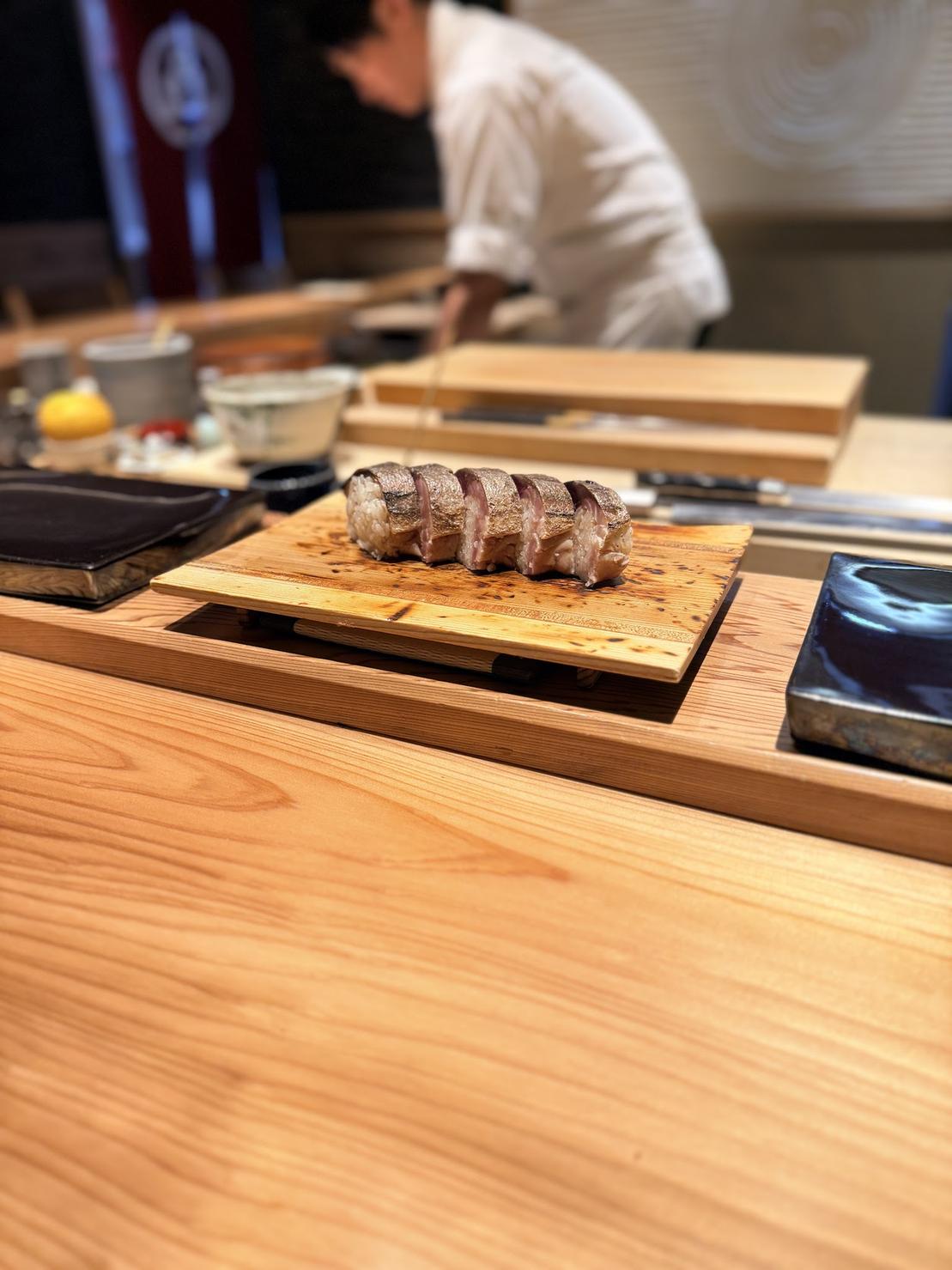
Pressed mackerel roll (saba bo-zushi)

The mackerel here is from Nagasaki, pressed onto rice and wrapped in nori seaweed. The fish was very soft and seemed to melt together with the vinegared rice in my mouth.
Even though the mackerel was fatty, the amount of rice kept it from feeling heavy, right to the last bite. The toasted nori added a nice roasted note on top of the fish.
Tuna and takuan, wrapped in nori (toro-taku)
For this one the chef chops a generous cut of fatty tuna and mixes in takuan, the crunchy pickled radish, here made by Nozaki Tsukemono in Miyazaki, the chef’s home region. He serves it as a hand-held bite with crisp nori.
The soft, sweet fat of the tuna met the firm crunch of the pickle, and the two textures played off each other really well. It was a small, clever bite that I kept thinking about.
Why a Tourist Should Go
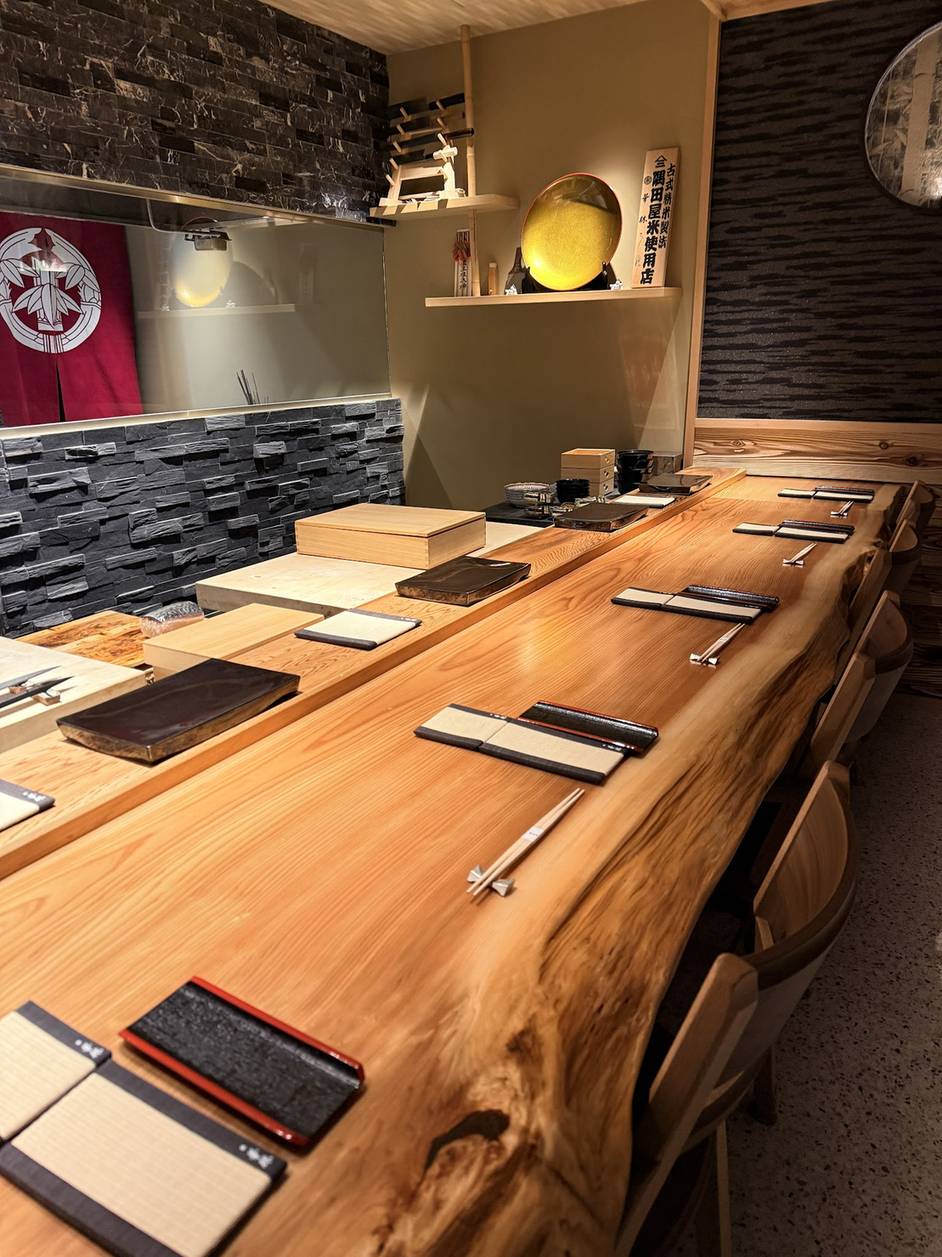
Karin is worth a short detour if you want a counter meal that feels personal rather than rushed. You watch the chef work right in front of you, and the cedar counter and quiet room make it easy to slow down and enjoy the course.
It is also a good window into how a young Japanese chef mixes classic sushi with his own ideas, using ingredients from his home region. If you are staying near the Sumida River or visiting the sumo and museum area of Ryogoku, it is an easy and rewarding stop.
Before You Go

- Area: Ryogoku, about a 2-minute walk from Ryogoku Station Exit A5
- Style: sushi and washoku (Japanese cooking) fusion, served as an omakase course
- Fish delivered fresh each morning from Toyosu Market
- Counter seating around a single-plank Yakusugi cedar bar
- Sake and beer available (Japanese craft sake offered alongside the course)
Find It on the Map
More Sushi in Tokyo
Choosing between reserved omakase and a more flexible sushi meal? Use our Tokyo Sushi Guide to compare formats, then check Karin’s official site for current availability and booking before you go.

Comments