- Quick Answer
- Make these five decisions before booking
- 1. Choose the meal plan before comparing prices
- 2. Read the price as a people-and-services total
- 3. Check payment and cancellation before you commit
- 4. Build the trip around dinner and check-in
- 5. Ask about dietary needs before booking
- What to expect—and what belongs in another guide
- Plan B for a late arrival or an unsuitable meal
- Your 60-second ryokan check
- FAQ
- Are ryokan prices per person or per room?
- Do ryokan stays always include dinner and breakfast?
- Do children stay free at a ryokan?
- What time is ryokan check-in?
- What happens if I arrive after dinner time?
- Can a ryokan handle vegetarian, vegan or allergy requests?
- Is station pickup included?
- Should I book through a ryokan or a booking site?
Quick Answer
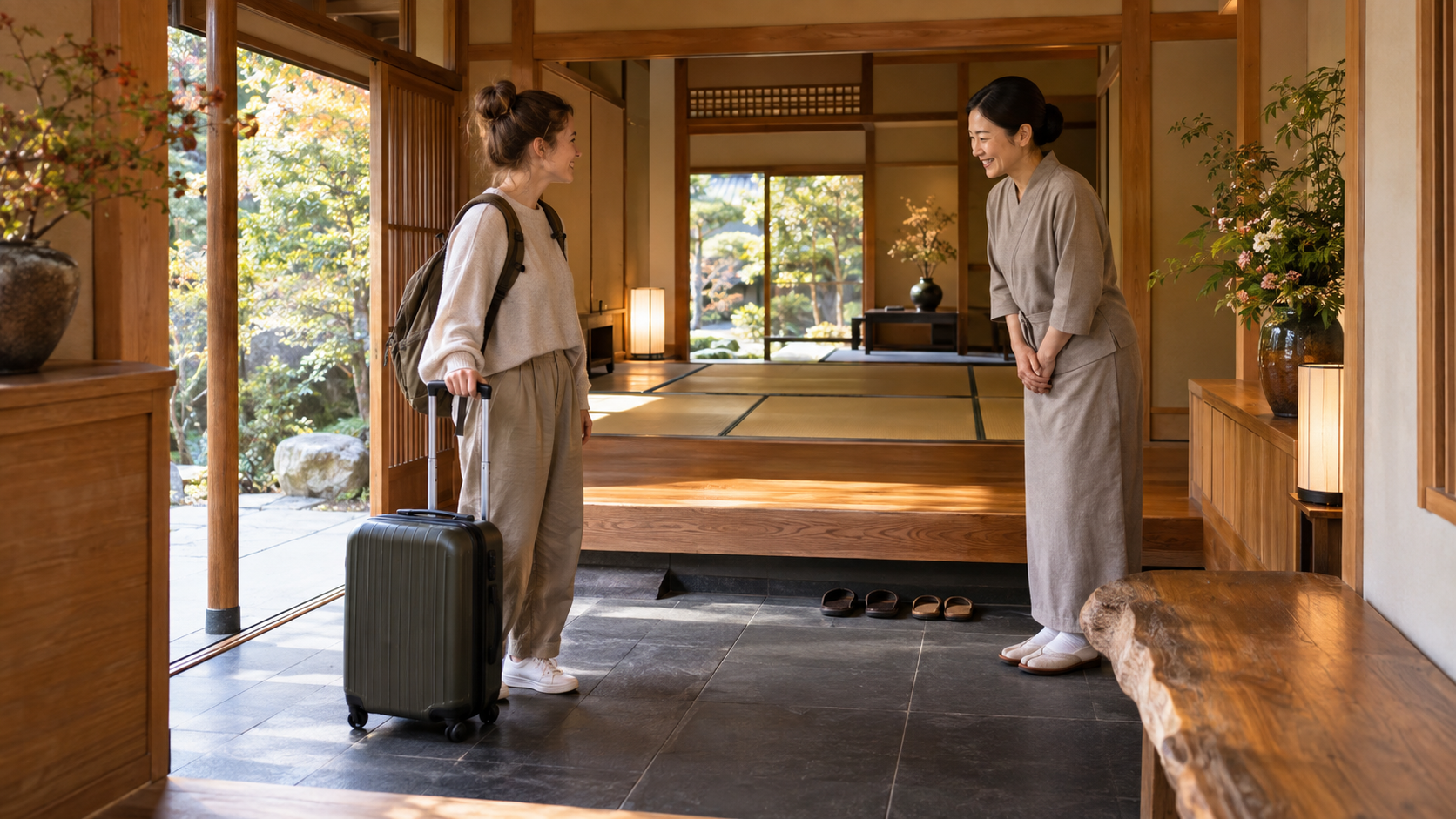
Do not compare ryokan by the headline room price alone. First choose the exact plan you want: room only, breakfast only, or dinner and breakfast. Then enter every adult and child correctly and check what the price includes. A ryokan may charge per person rather than per room, and child charges can depend on age, meals, bedding and facility use.
Before paying, confirm the dinner service window, final check-in condition, payment timing, cancellation terms, dietary response, access and any pickup reservation directly with the named property or booking channel. If transport disruption may make you late, contact the ryokan immediately. Do not assume it can hold dinner, provide a late pickup, accept a late check-in, change a complex meal or waive a fee.
This guide explains common patterns, not universal rules. Your reservation page and the property's current written reply control your stay.
Make these five decisions before booking
| Decision | What to check | Why it matters |
|---|---|---|
| 1. Plan | Room only, breakfast only, or dinner and breakfast | Two prices may include different meals |
| 2. People | Every adult and child, plus each child's age | Pricing and services may be per person |
| 3. Food | Meal time, location and dietary response | Ryokan meals require advance preparation |
| 4. Arrival | Check-in deadline, dinner window, transport and pickup | A late arrival may mean missing dinner |
| 5. Money | Payment timing, taxes, cancellation and no-show terms | The booking site and property may use different conditions |
The Japan Tourism Agency's ryokan Q&A explains that multiple pricing structures and meal plans exist. The practical consequence is simple: compare the same occupancy and the same included services, not two unlabeled totals.
1. Choose the meal plan before comparing prices
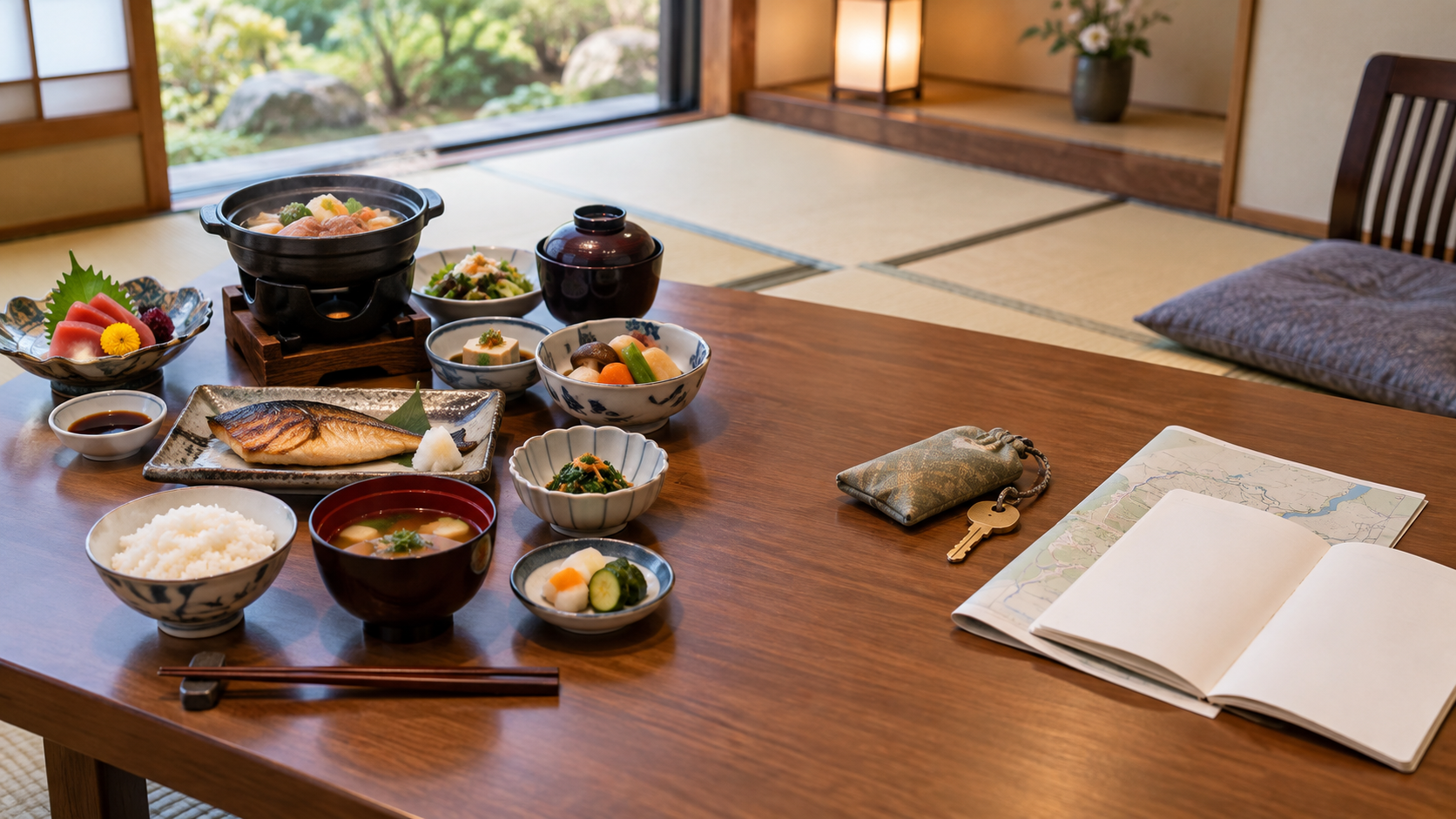
Traditional ryokan stays often include dinner and breakfast, but that is not guaranteed. Current official guidance also describes breakfast-only and simple-stay plans without meals. Some properties may offer only some of these choices.
Common booking labels can be translated into three decisions:
- Room only / no meals: you must arrange dinner and breakfast yourself.
- Breakfast included: dinner is not included unless the plan says so.
- Dinner and breakfast included: check both meal times and where they are served.
Do not assume you can add dinner after arrival. Ryokan meals commonly use local and seasonal ingredients and require advance preparation. The Japan Tourism Agency food guidance says meals are generally reserved with the room and are often served only during set periods.
If you will arrive late, leave before breakfast, dislike set menus or need a flexible evening, a room-only or breakfast-only plan may be safer. If the meal is the main reason for the stay, choose the full-meal plan only after checking the service window and dietary response.
2. Read the price as a people-and-services total
The JNTO Japanese Ryokan Guide says ryokan stays are commonly priced per person, with meals usually included. The Japan Tourism Agency also notes that some newer ryokan charge per room. This is why a search result that looks cheaper can become more expensive after the guest count and plan are corrected.
Compare a final total only after checking:
- number of adults;
- number and ages of children;
- whether each child receives bedding;
- whether each child receives an adult meal, child meal or no meal;
- whether a facility-use charge applies;
- included dinner and breakfast;
- taxes or charges shown later in checkout.
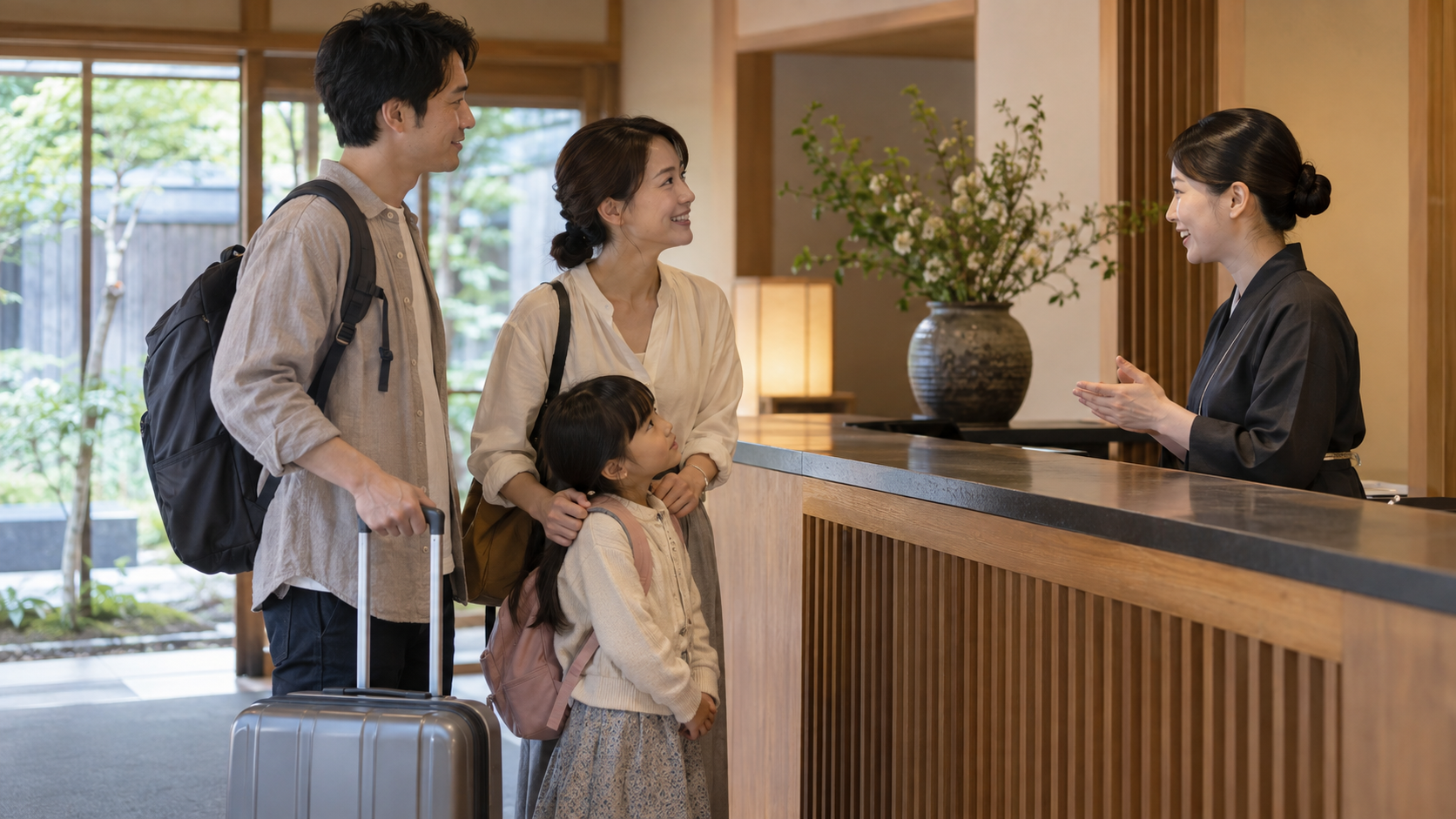
Never omit a child to make the search form show a lower price. Official guidance specifically tells guests to enter the number of accompanying children accurately. The property's rule—not a general age table—determines the actual charge and services.
The safest child-booking question
Send one message that includes the child's age and the services you need:
We will stay with two adults and one child aged five. Does this plan include a bed or futon and meals for the child? Is there any child or facility fee not shown in the current total?
Keep the written reply with the reservation. If the booking site and property answer differently, ask them to resolve the difference before payment rather than choosing the more favorable interpretation yourself.
3. Check payment and cancellation before you commit
Ryokan payment can be at the property, in advance, or offered either way. Cancellation charges usually increase as the stay approaches, and a no-show can carry a full charge. Those are official general patterns, not the terms of your booking.
Save these five items from the final checkout page:
- total amount and currency;
- what is payable now and what is payable locally;
- accepted payment method at the property;
- cancellation deadlines and percentages;
- the booking channel that must process a change or refund.
Payment timing depends on the ryokan or booking site. Confirm the exact payment and cancellation terms in your reservation rather than guessing from the checkout screen.
4. Build the trip around dinner and check-in
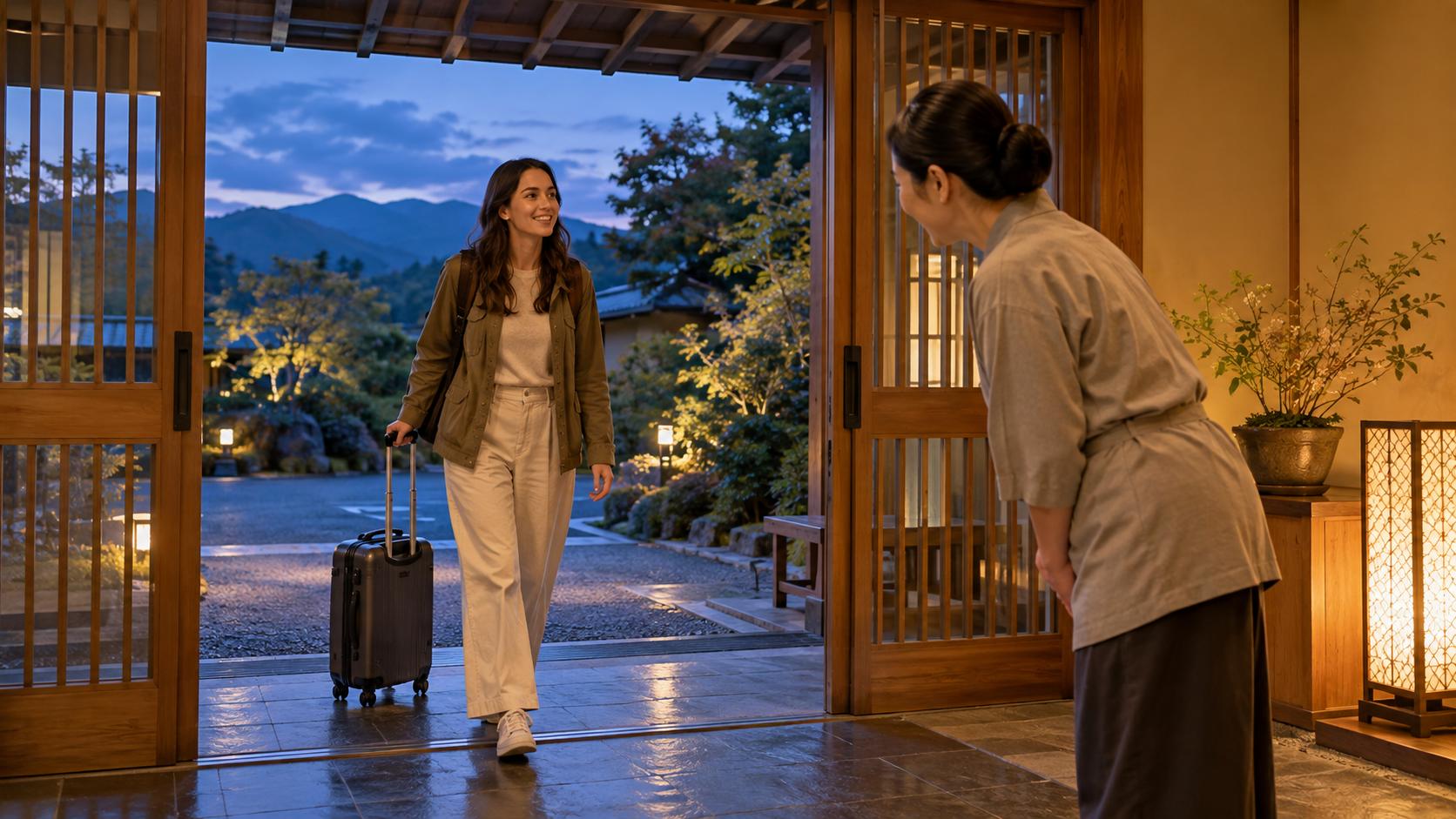
The Japan Tourism Agency arrival guide says check-in commonly starts around 15:00 or 16:00. That is a common pattern, not permission to arrive at any later hour. Dinner is usually served during a fixed window, and a traveler who arrives too late may miss it.
Work backward from the property's written dinner and check-in conditions:
- Note the last acceptable check-in and your selected dinner time.
- Find the final train or bus connection to the property.
- Confirm whether pickup exists and whether it requires a reservation.
- Add transfer time and a delay buffer.
- Save the property's phone number and message route offline.
If a pickup service is offered, arrange it in advance. Do not expect a vehicle to wait for an unconfirmed train or a late arrival. If you are driving, check parking separately; it is not universal.
This article owns the ryokan booking decision. For the mechanics of checking in at different accommodation types, use RJG's Japan accommodation check-in guide.
5. Ask about dietary needs before booking
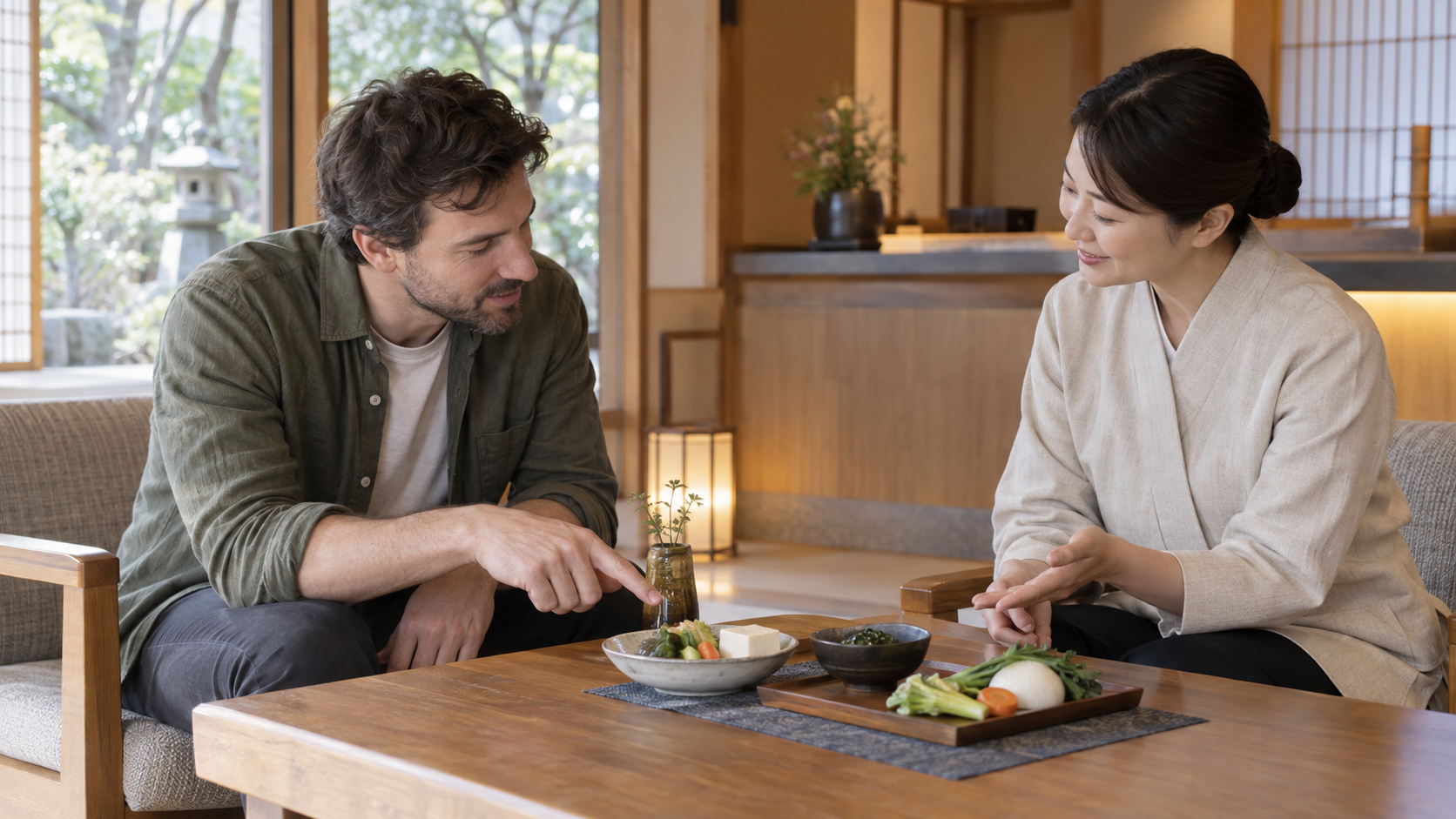
Tell the property about allergies, religious restrictions, vegetarian or vegan needs, gluten concerns and strong dislikes before paying when those needs determine whether you can stay safely. Be specific about ingredients and cross-contact concerns rather than using only a broad label.
Official guidance recommends making food requests in advance, preferably at least a few days before the stay when possible. It also warns that not every ryokan can accommodate every request. A friendly response is not the same as a clear confirmation.
Ask:
- Can this exact plan be adapted for the named restriction?
- Does the kitchen understand that the restriction includes broth, sauces and garnishes?
- Is cross-contact control possible if medically necessary?
- If the request cannot be met, can you book room-only or bring an approved alternative?
Do not ask this guide to certify a meal as allergy-safe, halal, kosher, vegetarian or vegan. Only the property can describe its current kitchen and plan. If the answer is uncertain, choose a different plan or property.
What to expect—and what belongs in another guide
Ryokan commonly use tatami rooms, futon bedding, yukata and shared or private baths. These features are part of the appeal, but they are not identical at every property.
Use the linked owner guide when your main question is:
- How do I set up or fold the bedding? See the Japanese futon guide.
- Where do I remove my shoes? See when to take off shoes in Japan.
- How do communal baths, nudity and tattoo policies work? See the Japan onsen etiquette guide.
Your property may give different instructions. Follow the room information and staff guidance on site.
Plan B for a late arrival or an unsuitable meal
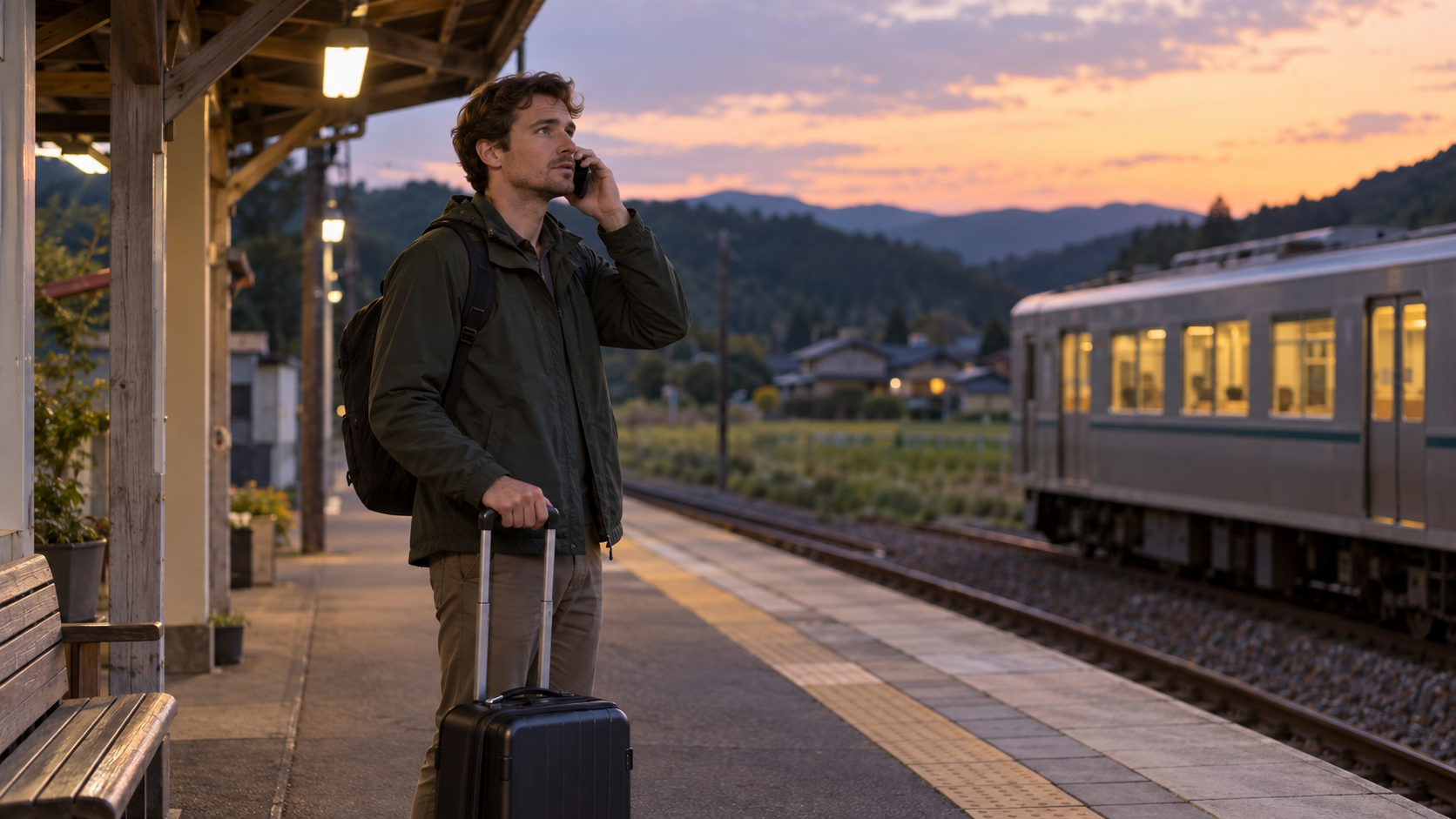
If a delay develops, contact the ryokan as soon as you know—not after the dinner window has passed. Give your name, reservation number, current location, expected arrival time and transport method. Ask what remains possible.
Do not demand or assume a result. The property may or may not be able to:
- hold or change dinner;
- offer a later check-in;
- move a pickup time;
- remove or substitute ingredients;
- change the plan;
- reduce or waive a charge.
If the property cannot serve dinner, ask whether check-in is still possible and whether food is available near the station or accommodation. In a rural area, late restaurants and taxis may be limited, so check before continuing the journey.
If the dietary response is not safe or clear, do not rely on an improvised change at dinner. Ask about room-only or choose another property before the cancellation deadline when possible.
Your 60-second ryokan check
- Exact property, room and dates confirmed.
- Every adult and child entered accurately.
- Child bedding and meal services confirmed.
- Included meals and service locations confirmed.
- Dinner window and final check-in condition saved.
- Dietary response received in writing if needed.
- Payment and cancellation terms saved.
- Transport, pickup and parking confirmed separately.
- Property contact route saved offline.
FAQ
Are ryokan prices per person or per room?
Per-person pricing is common, but some ryokan use per-room pricing. Enter the full guest count and compare the final total for the same plan and services.
Do ryokan stays always include dinner and breakfast?
No. Dinner-and-breakfast plans are common, but breakfast-only and room-only plans also exist. Read the exact plan name and inclusions.
Do children stay free at a ryokan?
There is no universal rule. Charges and services can depend on age, meals, bedding and facility use. Enter every child accurately and ask the property what the selected plan includes.
What time is ryokan check-in?
Official guidance says check-in often begins around 15:00 or 16:00, but the property's final check-in and dinner conditions control. Do not treat a common starting time as a universal late-arrival policy.
What happens if I arrive after dinner time?
You may miss the meal. Contact the property immediately and ask what remains possible; dinner, a refund and late check-in are not guaranteed.
Can a ryokan handle vegetarian, vegan or allergy requests?
Some can, but not all requests can be accommodated. Ask before booking, describe the restriction precisely and obtain a clear written response.
Is station pickup included?
Some ryokan offer pickup and others do not. When available, it usually requires advance arrangement. Confirm the train, meeting point and latest pickup directly.
Should I book through a ryokan or a booking site?
Use the route that clearly shows your plan, guest count, payment and cancellation conditions. If a term is unclear, ask the property and booking channel before paying and keep the written answer.
Last checked: September 15, 2026 JST. Ryokan plans, prices, child rules, meal times, dietary responses, payment, cancellation, access and pickup conditions vary. Recheck the named property's current terms before paying and contact it immediately if your arrival changes.


Comments