- Quick Answer
- The five-step sequence
- Step 1: confirm the operating carrier and terminal
- Step 2: choose online check-in, kiosk or counter
- Step 3: drop checked baggage before the airport cutoff
- Step 4: prepare for security before you join the queue
- Step 5: reach the current gate—not only the airside area
- How early should you arrive?
- Plan B if a cutoff is close or missed
- Your 60-second airport check
- FAQ
- Can I check in online for a domestic flight in Japan?
- What if online check-in does not work?
- Is check-in the same as bag drop?
- What is the Haneda domestic baggage deadline?
- When must I pass security and reach the boarding gate?
- Is arriving 60 minutes before departure always enough?
- Which airline's rules apply to a codeshare?
- What should I do if I miss a cutoff?
Quick Answer
For a domestic flight in Japan, first confirm the operating airline, airport and terminal on your current booking. Then use the operating carrier's official app or website to see whether online check-in is available. If it is not, use that carrier's self-service machine or counter at the airport. Travelers with checked baggage must complete bag drop before moving to security; travelers without checked baggage can normally continue with the boarding method issued by their airline.
Do not treat the departure time as the time to reach security. JAL's current domestic guidance says passengers must pass through security at least 20 minutes before departure and cannot board if they arrive at the checkpoint later. ANA's airport procedure likewise tells passengers to complete the earlier steps in time to pass security at least 20 minutes before departure. ANA also tells passengers to be at the boarding gate at least 10 minutes before departure and says boarding is not possible if that deadline is missed. Starting in September 2026, ANA's checked-baggage acceptance for domestic flights departing Haneda closes 30 minutes before departure.
Those times are carrier-published limits for the cited JAL and ANA services, not a nationwide rule or guarantee for every airline, airport or itinerary. Always use the operating carrier's current page for your exact flight and aim earlier than its hard cutoff.
A comfortable arrival buffer is not the same as an airline deadline. For a simple trip, arriving about 60–90 minutes before departure can create working time, but it is only a planning buffer. Add more time for a large airport, checked or special baggage, children, mobility assistance, a codeshare, an international connection or a holiday peak. If any cutoff is already close, go directly to the operating carrier's staff instead of troubleshooting alone.
The five-step sequence
| Step | Your decision | What to verify |
|---|---|---|
| 1. Identity | Which airline is actually operating the flight? | Airport, terminal, operating carrier, flight status |
| 2. Check-in | Online, kiosk or counter? | Eligibility, boarding method, identity or assistance needs |
| 3. Bag drop | Do you have checked baggage? | Carrier and airport cutoff; special-item handling |
| 4. Security | Are you ready to screen quickly? | Boarding pass, liquids, electronics, restricted items |
| 5. Gate | Are you at the current gate before its deadline? | Gate changes, boarding deadline, flight status |
This article owns the airport procedure. For allowances, fees and LCC baggage differences, use the RJG domestic-flight baggage guide. For deciding whether to fly or take a train, use Japan travel times from Tokyo.
Step 1: confirm the operating carrier and terminal
Start with the current reservation, not a memory of the brand that sold it. A codeshare can display one airline's flight number while another airline operates the aircraft and controls the airport procedure. The operating carrier determines the usable check-in route, counter, baggage process and boarding method.
Check these items before leaving your accommodation:
- Departure airport—not only the city name.
- Terminal and any terminal change notice.
- Operating carrier, especially on a codeshare.
- Current flight status.
- The exact name shown on the booking.
- The carrier's boarding method and any document requirement.
Save the reservation details offline, but do not assume an old screenshot proves the current gate or flight status. Gates can change. Recheck after security on the airline app or the airport information display.
Step 2: choose online check-in, kiosk or counter
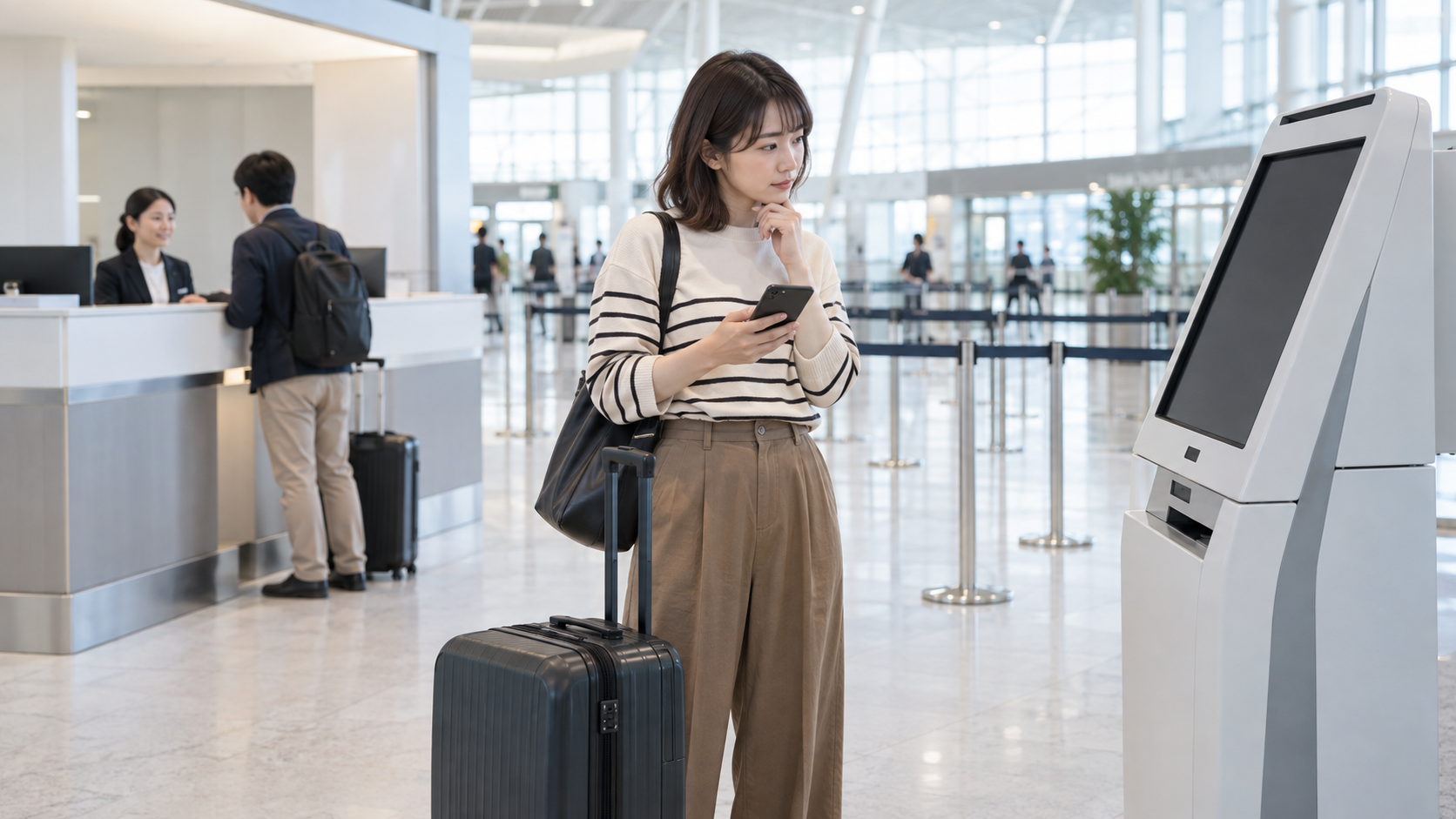
ANA currently states that domestic online check-in is available from 24 hours until 20 minutes before scheduled departure, subject to its exceptions. Its airport guide says passengers who cannot check in online must use a self-service machine or airport counter. JAL's Touch & Go service allows eligible passengers to proceed using the specified boarding method without a traditional counter check-in.
The practical rule is simple: follow the operating carrier's result. If the app or website issues a valid boarding method and says you can proceed, use it. If it says you are not eligible, cannot complete the process, or need document verification, go to the correct counter. Do not keep repeating a failed online attempt while a real cutoff approaches.
Use the counter early when you have:
- special assistance or mobility needs;
- a pet or an item needing special handling;
- a connection to an international flight;
- a booking or name problem;
- a codeshare process you cannot resolve;
- no usable boarding method after trying the official instructions.
Step 3: drop checked baggage before the airport cutoff
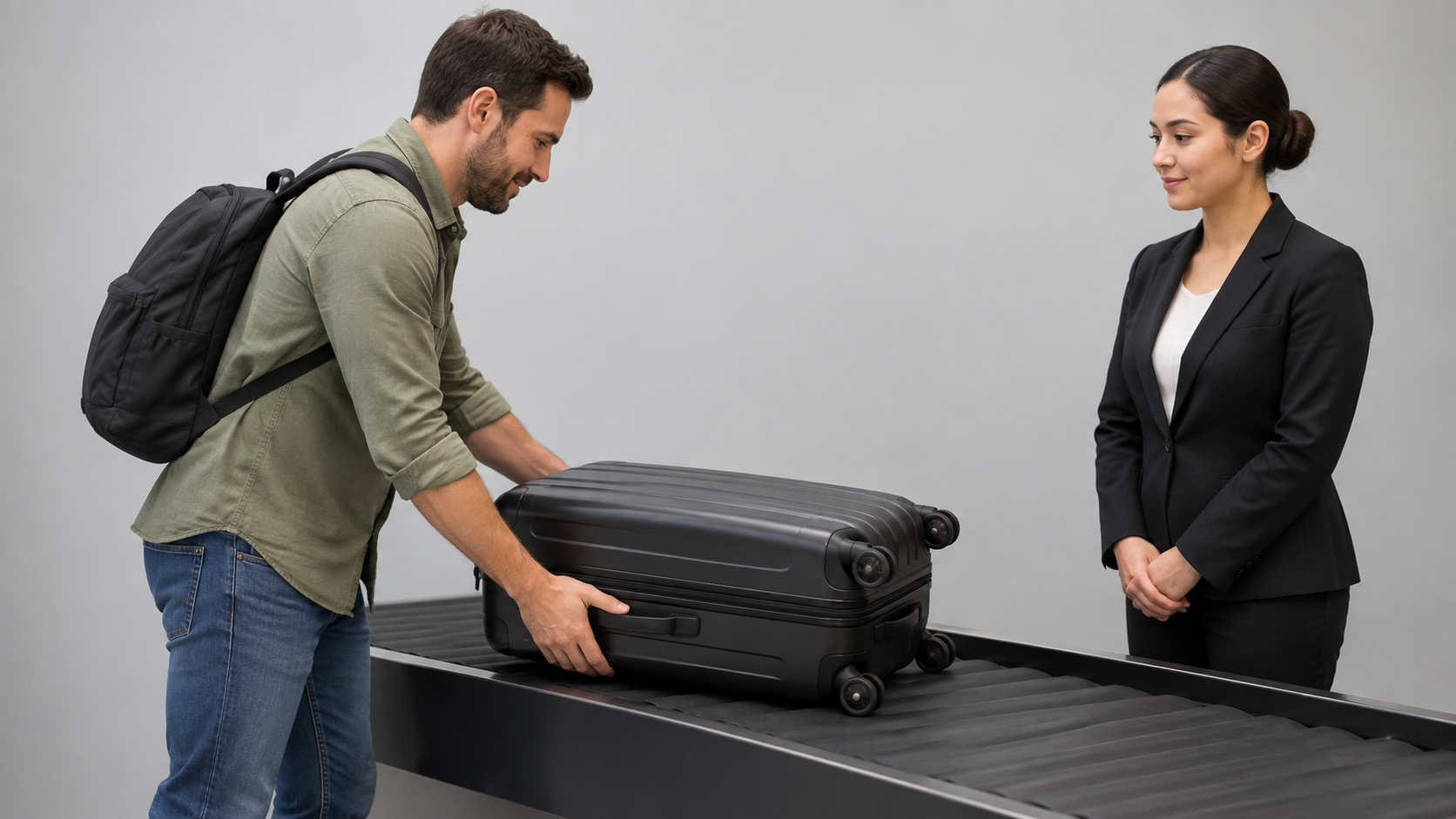
Check-in and bag drop are separate decisions. A mobile boarding pass does not move a suitcase into the aircraft. Take checked baggage to the operating carrier's supported bag-drop machine or counter and present the boarding method it requests.
ANA's current domestic airport flow says checked-baggage acceptance for flights departing Haneda closes 30 minutes before departure from September 2026. JAL also publishes current Haneda guidance in its domestic boarding flow. Other airports, carriers, special items and connections can have different instructions. The safe move is to open the exact carrier page for your departure airport rather than applying one airport's number nationwide.
Large sports equipment, fragile items, pets and other special baggage need more time. This guide does not repeat size, weight or fee tables because those belong to the domestic-flight baggage guide. Read that page before travel, then use the airline's current baggage page as the final authority.
Keep the baggage receipt until you collect the bag. Before leaving the counter area, confirm that you still have your phone, passport or identity document, wallet and boarding method.
Step 4: prepare for security before you join the queue
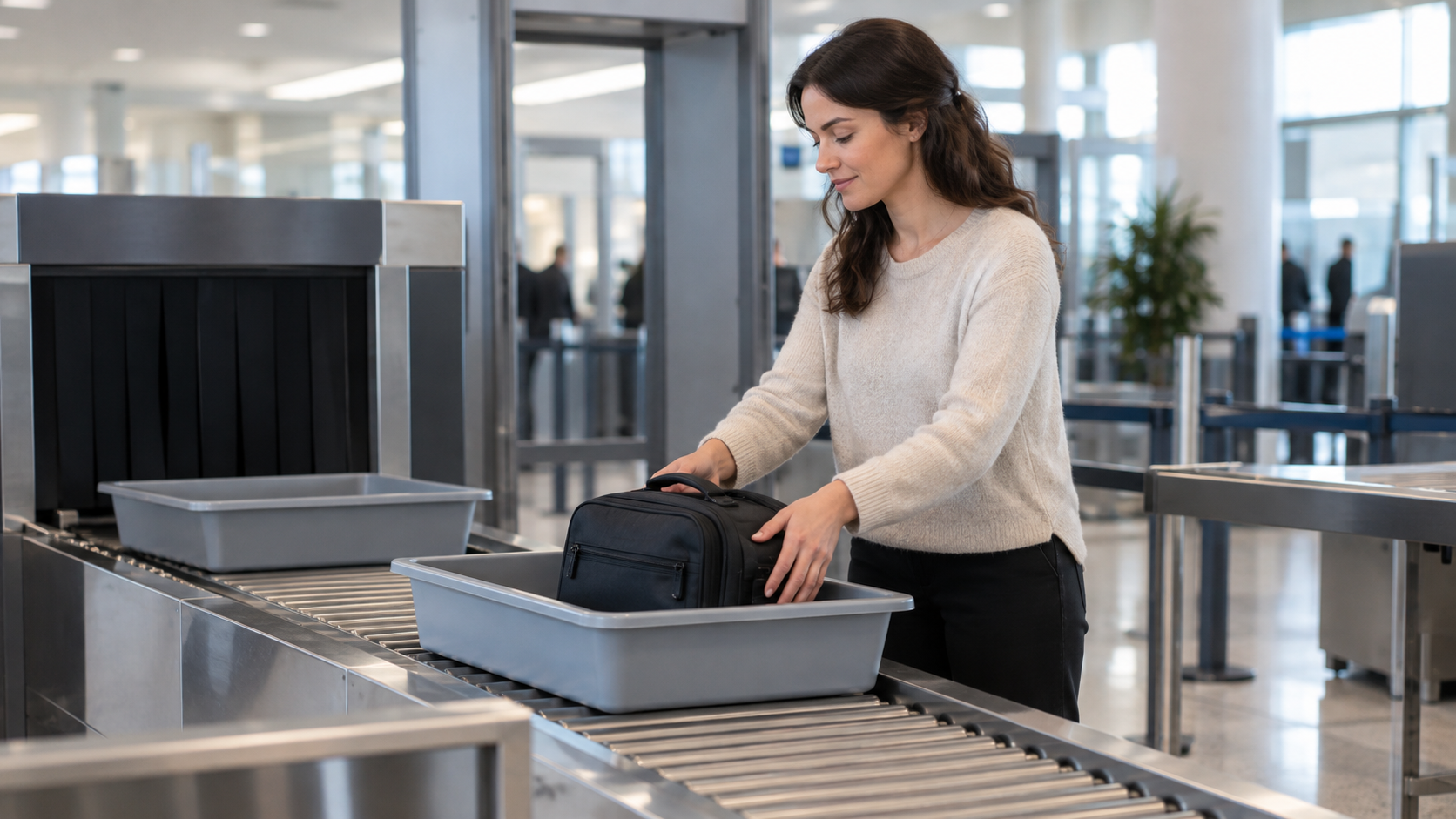
JAL's current domestic Touch & Go guide says passengers must pass security at least 20 minutes before departure and cannot board if they reach the checkpoint later. ANA's airport check-in flow likewise tells travelers to complete the preceding procedures early enough to pass security at least 20 minutes before departure. These are carrier-specific instructions: confirm the operating carrier's current cutoff, and allow extra time because waiting in the queue does not count as passing security.
ANA's official airport flow tells travelers to scan the boarding pass at security, remove coats and jackets, place metallic items in a bag or tray, take notebook computers and other electronics out, and remove plastic bottles for possible liquid inspection. It also points passengers to current restricted-item rules.
Airline and government instructions can change. Use this as a preparation pattern, then follow the signs and staff at your airport:
- open the boarding pass before reaching the reader;
- empty pockets and organize metal items;
- make electronics easy to remove;
- separate any bottle or item staff may inspect;
- keep prohibited items out of both carry-on and checked baggage as required;
- never leave a bag unattended.
Power banks need special care. Do not infer their rules from ordinary checked baggage; see RJG's power banks on Japan flights guide and recheck the operating carrier's current restrictions.
Step 5: reach the current gate—not only the airside area
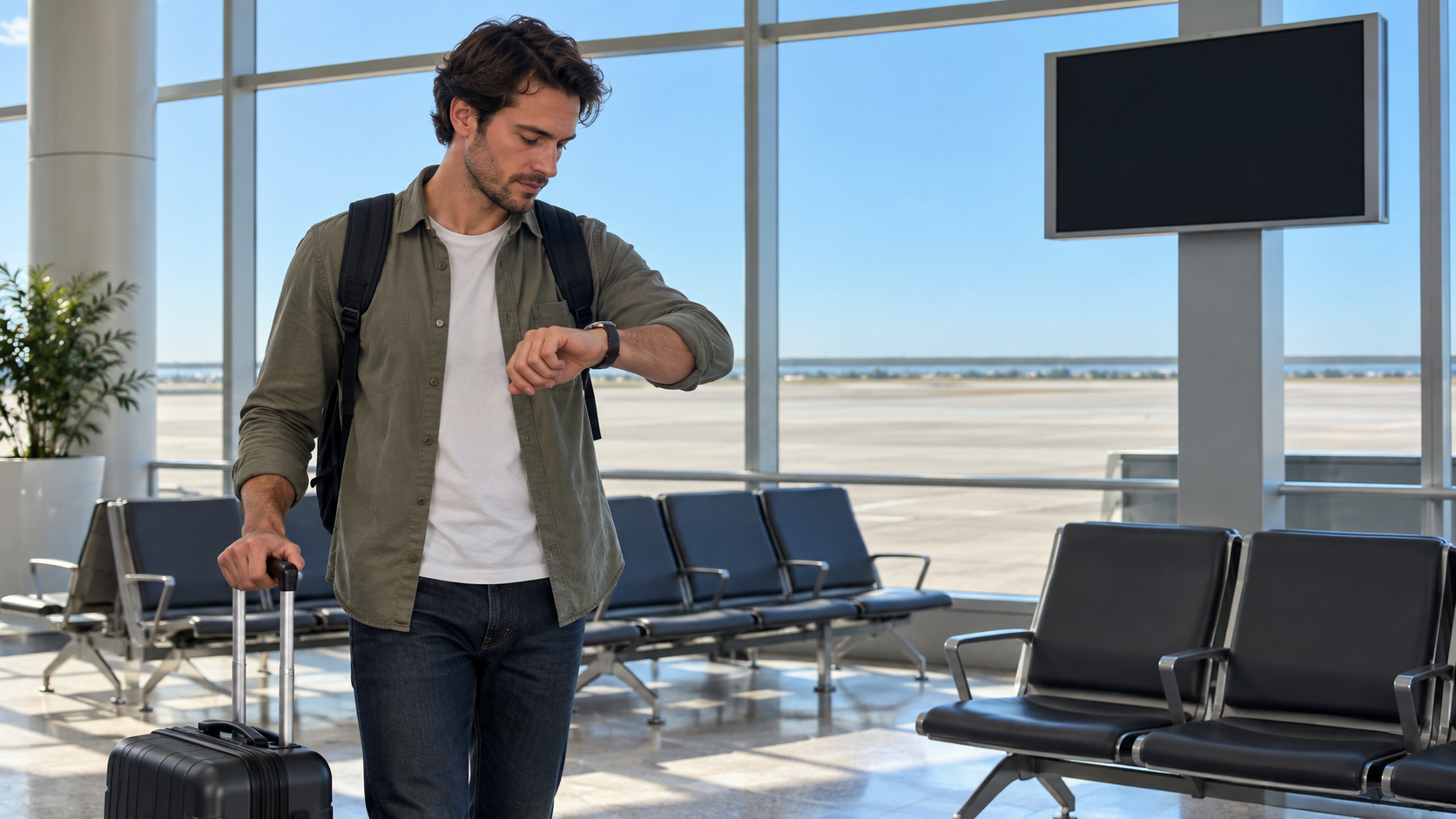
Passing security is not the end of the journey. Confirm the current boarding gate and walk there before stopping for food or shopping. Large airports can require a long airside walk or a bus-gate process.
ANA tells passengers to reach the boarding gate at least 10 minutes before departure and warns that a confirmed reservation is not enough if that deadline is missed. Treat the carrier's deadline as a hard operational boundary, not a target arrival time. Your own goal should be earlier.
At the gate:
- check the destination and flight number;
- look for a gate change or delay;
- keep the boarding method open and the phone charged;
- follow the operating carrier's boarding order;
- ask staff before leaving the gate area if the situation is unclear.
How early should you arrive?
There is no single comfort buffer for every domestic flight in Japan. Airline deadlines are minimum operational cutoffs; they do not include your train delay, terminal search, kiosk problem, queue or walking time.
Use 60–90 minutes before departure only as a starting planning range for a straightforward trip, not as a guarantee. Add more time when:
- you have checked or special baggage;
- the airport is large or unfamiliar;
- you are traveling in a holiday period;
- your route to the airport has few alternatives;
- you need assistance or are traveling with young children;
- the flight connects to an international itinerary;
- the ticket is a codeshare or the operating carrier is unclear.
The most useful question is not “What is the minimum?” but “What problem could consume 20 minutes on this trip?” Build time for that problem before bag drop and security, not after it.
Plan B if a cutoff is close or missed

If you are still outside the airport, check the flight status and contact the operating airline through its official channel. If you are already in the terminal, go directly to that airline's staffed counter or service desk. State your flight number, departure time and current problem clearly.
Do not assume that online check-in overrides a missed bag-drop, security or gate deadline. Do not buy a replacement ticket from an unverified link while staff are still assessing the booking. The airline controls whether any change, standby, rebooking or refund option applies to your fare and circumstances.
A calm sequence is:
- Stop non-essential shopping or troubleshooting.
- Confirm the operating carrier and current flight status.
- Go to the correct carrier's staff.
- Ask what option is actually available and what it costs.
- Check the arrival impact before accepting a new flight.
- Update any hotel, tour or transfer that depends on your arrival.
If no useful same-day flight is available, compare the next flight with rail only after checking total travel time and the new ticket terms. The Japan travel-times guide can frame that decision, but live operator information controls the result.
Your 60-second airport check
- Operating carrier and departure terminal confirmed.
- Current flight status checked.
- Boarding method opens on the phone, with a battery fallback.
- Checked baggage delivered before the airport/carrier cutoff.
- Security items organized before joining the queue.
- Current gate confirmed after security.
- Personal target time is earlier than the airline's hard deadline.
FAQ
Can I check in online for a domestic flight in Japan?
Often, but eligibility depends on the operating carrier and booking. ANA currently offers domestic online check-in from 24 hours until 20 minutes before scheduled departure, subject to exceptions. Follow the result shown for your exact booking.
What if online check-in does not work?
Use the operating carrier's self-service machine or airport counter as instructed. Go early if you need identity verification, assistance, special baggage or help with a codeshare.
Is check-in the same as bag drop?
No. Even with a mobile boarding method, checked baggage must be accepted separately by the carrier before its airport cutoff.
What is the Haneda domestic baggage deadline?
ANA states that, starting in September 2026, checked-baggage acceptance for domestic departures from Haneda closes 30 minutes before departure. Check your operating carrier because procedures can differ.
When must I pass security and reach the boarding gate?
JAL and ANA currently tell domestic passengers to pass security at least 20 minutes before departure. ANA instructs passengers to be at the gate at least 10 minutes before departure. These are carrier-specific limits, so use an earlier personal target and follow the operating carrier's current rule.
Is arriving 60 minutes before departure always enough?
No. Sixty to ninety minutes is a planning range, not an airline guarantee. Add time for a large airport, checked baggage, holiday queues, assistance, children or an international connection.
Which airline's rules apply to a codeshare?
Start with the operating carrier shown on the booking. It controls the practical airport procedure, but check both the seller's booking information and the operator's current instructions if anything conflicts.
What should I do if I miss a cutoff?
Go directly to the operating carrier's staff and ask which rebooking, standby or refund options actually apply. Do not assume that a reservation or completed online check-in guarantees boarding after another deadline is missed.
Last checked: September 15, 2026 JST. Airline procedures, terminals, cutoffs, boarding methods and flight status can change. Recheck the operating carrier's official pages for your exact flight before leaving and again at the airport.


Comments