- Quick Answer
- One-Way Rental Decision Table
- Step 1: Choose the Exact Stations, Not Just the Cities
- Step 2: Compare the Total Route Cost
- Step 3: Check Regional Boundaries
- Step 4: Confirm Station Hours and Inventory
- Step 5: Do Not Change the Return Station Casually
- A Booking Checklist You Can Save
- Plan B: Same-Return Loop or Rail
- Frequently Asked Questions
- Can I return a rental car to a different location in Japan?
- How much is a one-way rental-car fee in Japan?
- Is a one-way return free for a short distance?
- Can I return a Hokkaido rental car in Honshu?
- Can I change the return station after pickup?
- Does the fee table guarantee the route is available?
- Should I book hotels before confirming the one-way rental?
- Is one-way car rental better than taking the train?
- Sources and One Next Action
Quick Answer
Japan has one-way rental cars, but there is no single nationwide drop-off fee. The price and availability depend on the rental company, exact pickup and return stations, vehicle class, distance or region, and live inventory. A route that works for one company—or even one station pair—may be unavailable at another.
Before booking, enter the exact pickup station, return station, dates and car class in the rental company’s official reservation or one-way fee tool. Confirm that the different return location appears in the final reservation and save the quoted fee. Do not build a flight or hotel connection around a generic fee table alone.
Best next action: run the exact route through at least two official booking tools before choosing the rental car. If neither confirms it, use a same-station loop or travel by rail and rent again near the next driving area.
One-Way Rental Decision Table
| Provider | What the official page confirms | Important route or fee limit | What you should do |
|---|---|---|---|
| Toyota Rent a Car | One-way return requires advance application; an official simulator checks a pickup and return prefecture or station pair | Some station and vehicle combinations are unavailable, and cross-region movement has restrictions | Run the simulator, then confirm the same route and vehicle in the actual reservation |
| Nippon Rent-A-Car | A route-specific fee is shown during reservation or simulation; passenger-car fees are generally distance-based | The current page says passenger cars are generally free under 20 km, then ¥880 per 10 km, but regional exceptions and 2026 changes apply | Treat the final reservation result—not a remembered formula—as the price and availability decision |
| Times CAR RENTAL | The current one-way page publishes distance-band fees and links to booking | Cross-region returns involving Hokkaido or Okinawa are unavailable; travel between Honshu or Kyushu and Shikoku carries an additional surcharge | Check the exact station pair and current fee table before paying for the rest of the itinerary |
These are provider examples checked on September 2, 2026 JST. They are not a complete market list and do not guarantee inventory. Prices, station participation and regional rules can change.
Step 1: Choose the Exact Stations, Not Just the Cities
“Tokyo to Kyoto” is not a bookable one-way route. You need a specific pickup station and a specific return station. A downtown branch, airport branch and suburban branch in the same city can have different hours, vehicle stock and one-way acceptance.
Write down four items before searching:
- exact pickup station;
- exact return station;
- pickup and return date and time; and
- vehicle class.
Search the provider’s English reservation system with those details. If the return station does not appear, the booking tool rejects the pair, or the vehicle class disappears, treat the route as unavailable until the provider confirms otherwise. A nearby station may work, but it is a new route and needs a new fee check.
If you will drive in Japan, confirm your licence or permit eligibility first with RJG’s international driving permit guide.
Step 2: Compare the Total Route Cost
The one-way fee is only one part of the decision. Compare:
- base rental price;
- one-way or drop-off fee;
- expressway tolls;
- fuel and refueling requirements;
- parking;
- possible late-return or after-hours constraints; and
- rail or domestic-flight cost for the same journey.
For example, Times CAR RENTAL’s current general-vehicle table lists ¥3,300 up to 20 km, ¥5,720 up to 50 km and ¥11,440 up to 100 km. Nippon’s current passenger-car rule is generally free under 20 km and then ¥880 per 10 km. Those systems are not directly interchangeable: each company has its own categories, calculation method, regional exceptions and participating stations.
Use the provider’s final quote for your exact booking. A lower headline fee can still produce a higher trip cost after tolls, fuel and parking. RJG’s expressway toll and ETC guide and coin parking guide can help complete the comparison.
Step 3: Check Regional Boundaries
Long-distance one-way travel can cross operational regions that a rental company does not support. Toyota’s official simulator warns that some cross-region routes are unavailable. Times states that one-way returns across Hokkaido or Okinawa and other regions are not available, and that routes between Honshu or Kyushu and Shikoku add ¥6,600 to the normal one-way fee.
Do not assume that a ferry or bridge makes a rental-car return possible. The car may be allowed on the road or ferry while the rental company still refuses the different-region return. Check the station pair first; then check the road, ferry and timing separately.
For a multi-island trip, compare three structures:
| Structure | Usually best when | Main risk |
|---|---|---|
| One car, different return station | The provider confirms the full station pair and the fee is acceptable | High drop-off cost or a prohibited regional crossing |
| Same-station loop | The driving area is compact and you can return to the origin | Backtracking time |
| Rail or ferry between regions, separate local rentals | The provider does not allow the cross-region return | More pickups, luggage transfers and separate reservations |
Step 4: Confirm Station Hours and Inventory
A valid one-way policy does not guarantee that your exact vehicle is available. Small stations can have limited stock, and a return station may not accept every class. Airport branches may also have shuttle time, terminal differences or closing times that matter before a flight.
Check the reservation confirmation for:
- full station names and addresses;
- pickup and return times;
- vehicle class;
- one-way fee or fee-included total;
- operating hours and after-hours return rules; and
- cancellation or route-change conditions.
If the website gives a fee but will not complete the reservation, availability is not confirmed. Contact the provider through the current official channel shown on its site. Do not rely on an old phone number copied into a third-party article.
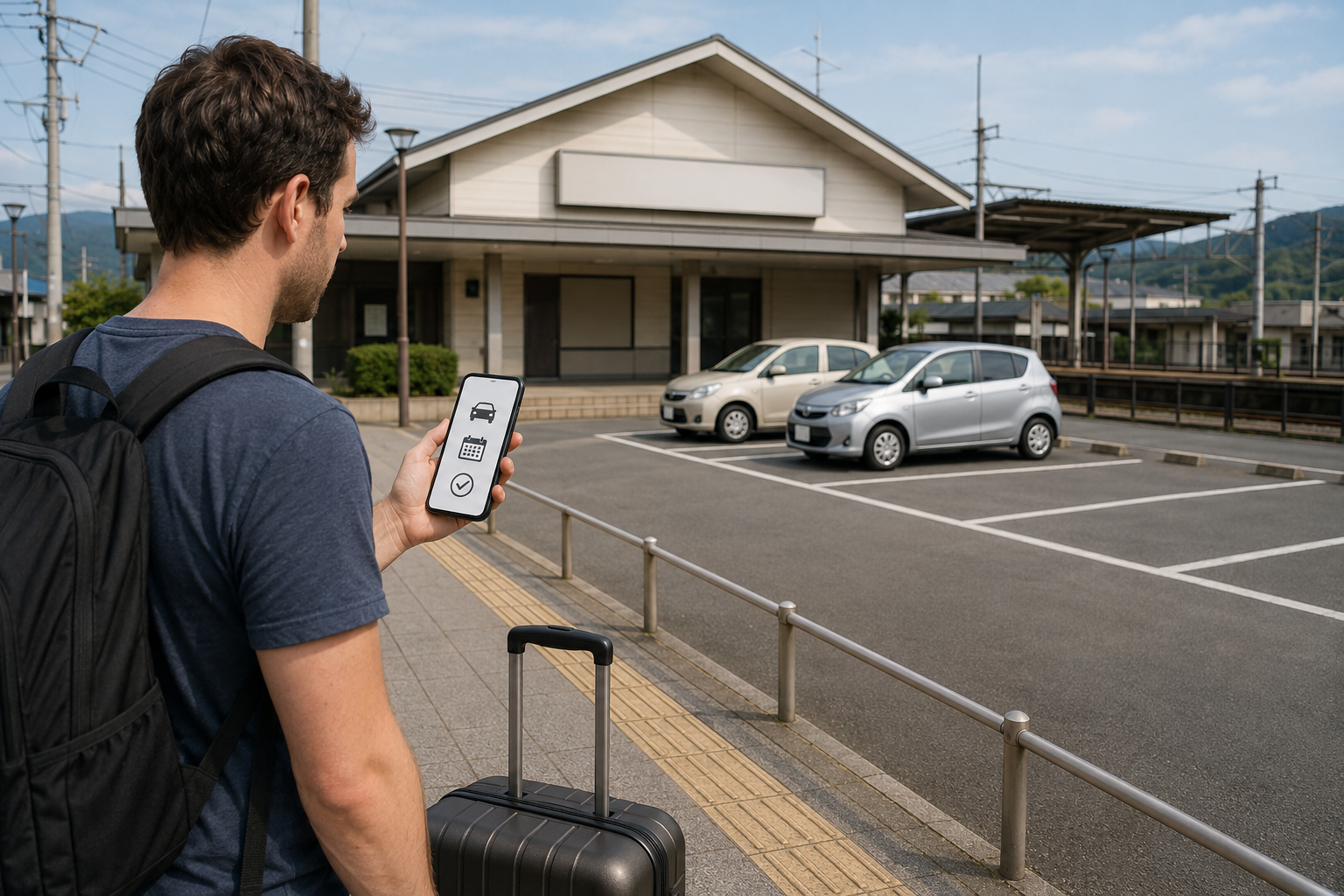
Step 5: Do Not Change the Return Station Casually
After pickup, call the rental company before changing the return location. Nippon Rent-A-Car’s current page says a change requires approval from the pickup office and may add a separate handling fee even when the normal one-way distance would otherwise be free. Other providers have their own rules.
If your trip changes, ask three questions:
- Is the new return station permitted for this vehicle?
- What additional one-way or handling fee applies?
- Has the new station and time been added to the rental record?
A spoken suggestion from a hotel or roadside staff member is not a reservation change. Keep the provider’s confirmation.
A Booking Checklist You Can Save
Before paying for hotels or flights that depend on the drive, confirm:
- exact pickup and return stations accepted;
- correct dates, times and vehicle class;
- one-way fee included or separately shown;
- regional restrictions cleared;
- station hours fit your arrival and departure;
- fuel-return rule understood;
- toll and parking budget compared;
- cancellation and route-change terms saved; and
- Plan B possible without the car.
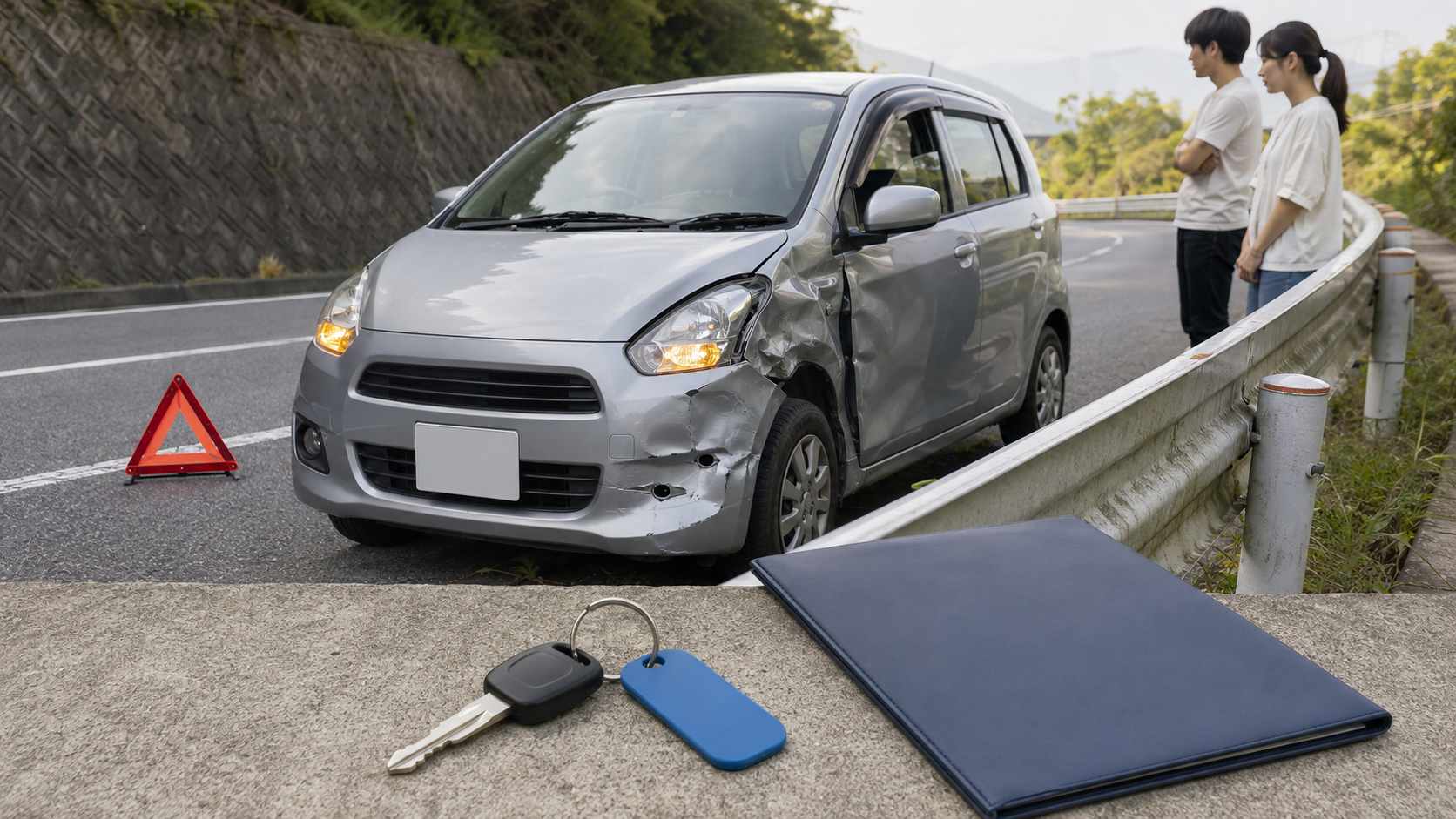
For normal return planning, RJG’s rental-car refueling guide explains Japanese gas stations. If an accident occurs, use the separate rental-car accident guide rather than treating a route change as an ordinary return.
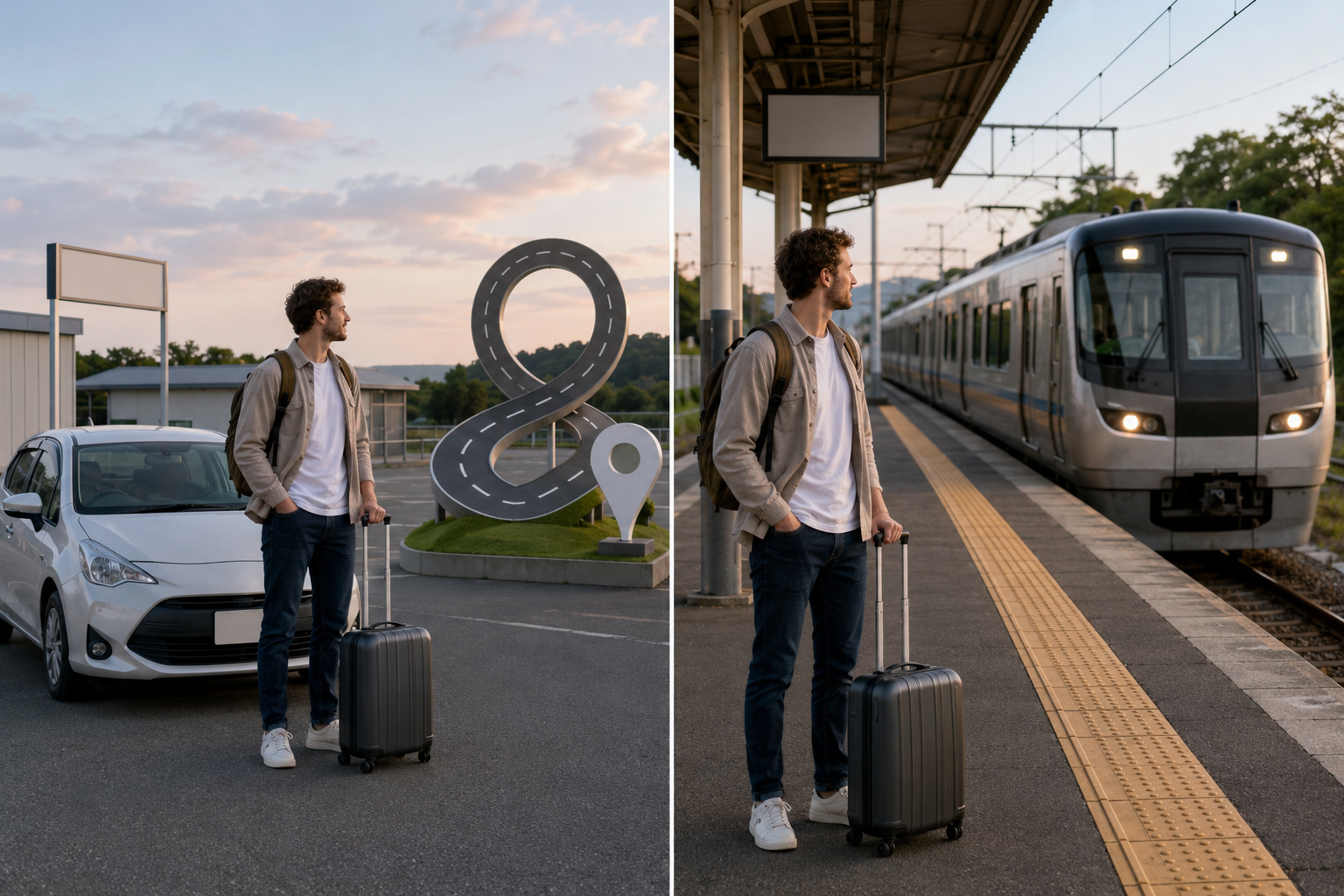
Plan B: Same-Return Loop or Rail
If the exact one-way route is unavailable or disproportionately expensive, rebuild the trip around one of two alternatives.
Same-return loop: keep the car within one region, return it to the pickup station, then continue by rail. This reduces one-way uncertainty but may add backtracking.
Rail between regions: take a train to the next region and make a separate local rental there. This can be easier for Hokkaido, Okinawa, Shikoku or long intercity itineraries where provider boundaries matter.
Do not force a one-way car into every part of a Japan itinerary. The car is most useful where it removes local transport friction; rail is often better between major cities.
Frequently Asked Questions
Can I return a rental car to a different location in Japan?
Yes, many companies offer one-way returns, but only for accepted station pairs, vehicle classes and regions. Check the exact route in the provider’s official reservation system.
How much is a one-way rental-car fee in Japan?
There is no nationwide fee. Providers use different distance bands, regional rules and vehicle categories. The final quote for your exact pickup and return stations is the controlling price.
Is a one-way return free for a short distance?
Sometimes. Nippon’s current page says passenger cars are generally free under 20 km, but exceptions apply. Other companies use different rules, so verify the exact booking.
Can I return a Hokkaido rental car in Honshu?
Do not assume so. Times explicitly says one-way returns across Hokkaido or Okinawa and other regions are unavailable. Check your chosen provider and station pair.
Can I change the return station after pickup?
Only with the rental company’s approval. The company may refuse the new station or charge extra one-way and handling fees. Make sure the change is recorded.
Does the fee table guarantee the route is available?
No. A table explains pricing, while the reservation result confirms whether the station pair, date and vehicle class are actually bookable.
Should I book hotels before confirming the one-way rental?
Avoid making non-refundable plans that depend on the car until the exact one-way reservation is confirmed. Keep a rail or same-return Plan B.
Is one-way car rental better than taking the train?
It depends on the route. A car can solve rural access, but drop-off fees, tolls, fuel and parking can make rail better between major cities. Compare the total trip, not only the base rental rate.
Sources and One Next Action
Primary provider information checked on September 2, 2026 JST:
- Toyota Rent a Car: One-Way System fee simulator and restrictions
- Nippon Rent-A-Car: One-way rental fees and route rules
- Times CAR RENTAL: One-way fee table and restrictions
Your next action is one step: enter your exact pickup station, return station, dates and vehicle class in two official booking tools, then save the confirmed route and total before building the rest of the itinerary.
Comments