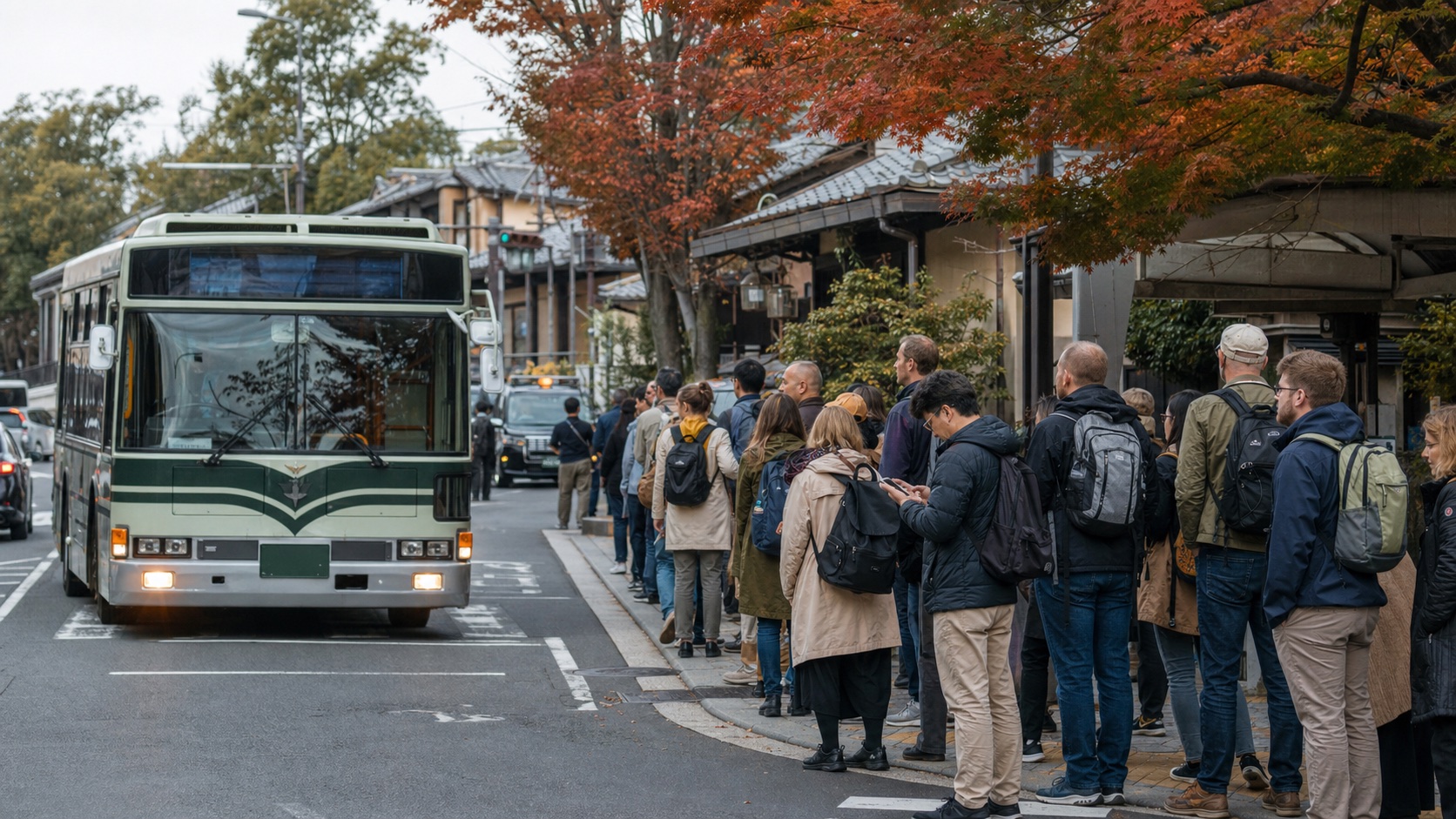
Kyoto’s autumn colors bring more people onto the same roads, buses, station platforms, and narrow approaches to famous temples. A route that looks simple on a map can become slow or uncomfortable when traffic builds and several visitors try to board with suitcases.
The solution is not to avoid buses completely. It is to use rail for the longest reliable part of the trip, keep buses for the last stretch when they are genuinely useful, and check current crowd conditions before committing to one place and time.
- Quick Answer: How to Avoid Kyoto’s Autumn Bus Crowds
- Why Kyoto Transport Gets Difficult in Autumn
- The 5-Minute Decision: Bus, Subway, Train or Walk?
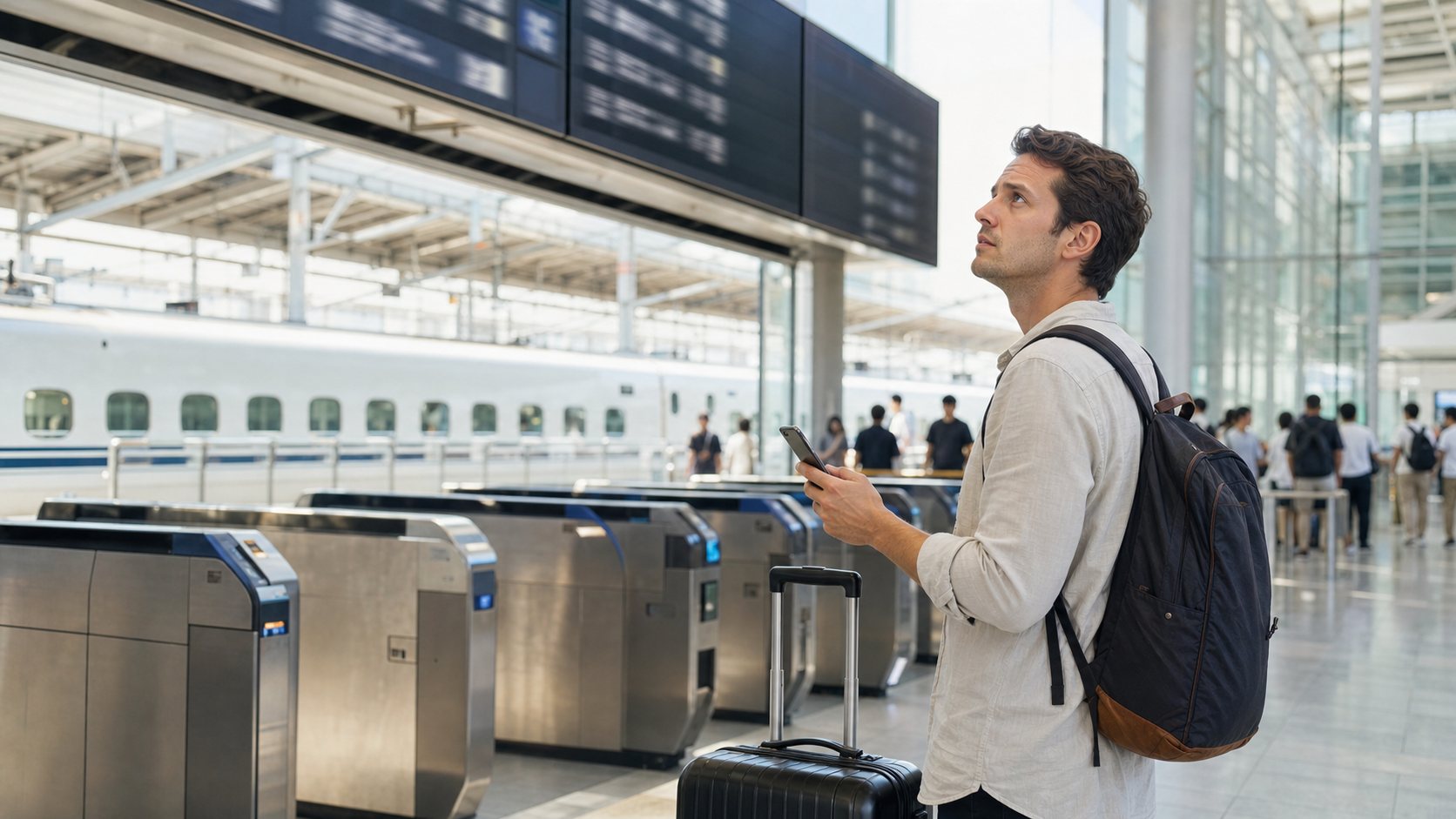
- Arriving at Kyoto Station With Luggage: Do This First
- Rail-First Routes to Kyoto’s Main Autumn Areas
- How to Use Kyoto’s Official Congestion Forecast
- What Can Go Wrong—and What to Do Instead
- Plan B: Change the Time, Route or Area
- Useful FAQ
- How crowded are Kyoto buses in autumn?
- Should I avoid Kyoto buses completely?
- What is the best route from Kyoto Station to Arashiyama in autumn?
- What is the easiest rail route to Fushimi Inari?
- Is there a train directly to Kiyomizu-dera?
- How do I reach Kinkaku-ji without taking a bus from Kyoto Station?
- Can I bring a suitcase onto a Kyoto city bus?
- Is Kyoto’s congestion forecast real-time?
- Last Checked and Your Next Action
Quick Answer: How to Avoid Kyoto’s Autumn Bus Crowds
- Travel by train or subway as close to the destination as possible. Kyoto City’s official guidance recommends rail first, followed by a bus or walk for the final stretch.
- Do not take large luggage onto a city bus. Store it at Kyoto Station or arrange delivery to your accommodation through HANDS FREE KYOTO.
- Check the Kyoto Travel Congestion Forecast before leaving. It covers 11 well-known spots in seven areas and shows forecasts by time and weather, with live feeds at selected locations.
- Keep a Plan B. Change the time, use a different rail approach, visit another area, or walk from a rail station instead of waiting for one overloaded bus.
- Recheck temporary operations. Special buses, live-camera periods, and transfer campaigns announced for autumn 2025 should not be assumed to operate in 2026 unless Kyoto City publishes a new notice.
Why Kyoto Transport Gets Difficult in Autumn
Kyoto’s most famous sights are spread across different sides of the city. Some, including Kinkaku-ji and Kiyomizu-dera, do not have a railway station at the entrance. Buses therefore carry both local passengers and visitors through streets where road traffic can delay the timetable.
The friction becomes worse when a route-search app selects the most direct bus without accounting for a queue at the stop, standing room, road congestion, or the time needed to board with luggage. A one-seat ride may not be the quickest journey in practice.
Kyoto City’s official autumn guidance recommends three steps: travel by train as close to the destination as possible, transfer to a bus if the final stretch requires it, and walk from the nearest practical stop. The same guidance promotes luggage storage and delivery so that public transport has more space.
This article uses that rail-first principle. It does not promise an empty train or bus. Autumn crowds can also appear on the JR Sagano Line, around Fushimi Inari, and on station approaches. The aim is to reduce exposure to unpredictable road traffic and give you more than one workable route.
The 5-Minute Decision: Bus, Subway, Train or Walk?
Use this check before opening a route app.
| Your situation | Best first choice | Why |
|---|---|---|
| The destination is beside a JR, subway, Hankyu, Keihan, Randen, or Eizan station | Train or subway | Rail is usually easier to time than a long cross-city bus ride |
| The destination has no nearby station | Rail, then a short bus ride | This limits the part of the trip exposed to road congestion |
| The next bus is crowded but the walk is reasonable for your group | Walk from the rail station or a nearby district | You avoid waiting through several buses and can change course easily |
| You have a suitcase or several large bags | Storage or delivery before sightseeing | Large luggage takes space and is difficult on crowded vehicles |
| A traveler cannot walk far or manage stairs | Check an accessible bus, taxi, or shorter transfer | The least crowded route is not useful if it is physically unsuitable |
| The forecast shows your first-choice area is crowded | Change the time or area | Kyoto’s official tool is designed to support this decision |
Kyoto has two municipal subway lines. The Karasuma Line runs north–south through Kyoto Station and Kitaoji, while the Tozai Line runs east–west through central Kyoto. They connect with JR and private railways at several stations. The official subway and train guide is a better starting point than treating Kyoto Station as the required hub for the whole itinerary.
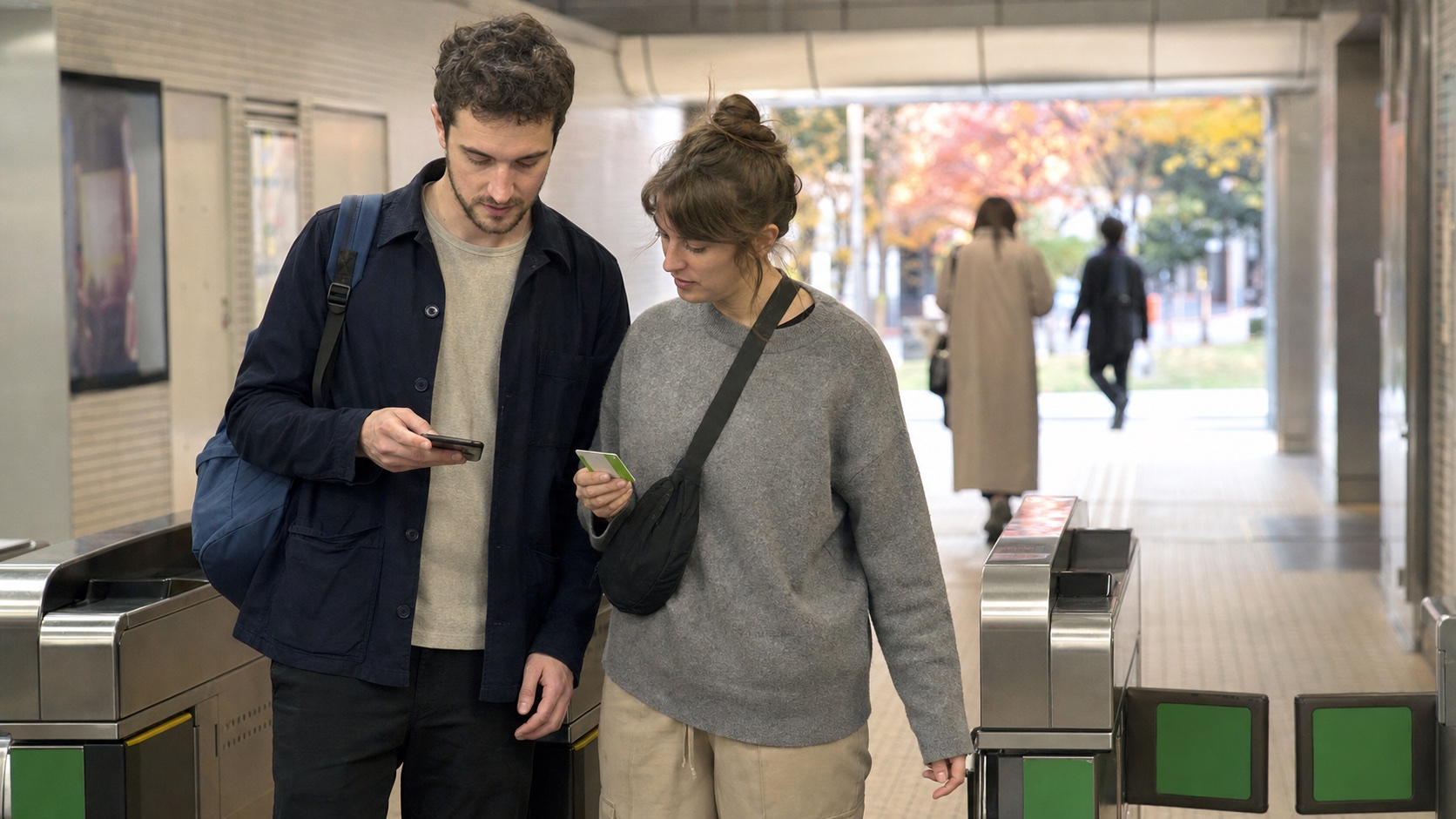
An IC card is useful when combining operators because you do not have to calculate a separate paper fare for each short ride. A day pass can be economical for some itineraries, but it should follow the route you actually plan to use—not determine the route by itself. Check the current coverage and price on Kyoto Travel’s transportation tickets and passes page.
Arriving at Kyoto Station With Luggage: Do This First
Do not begin an autumn sightseeing circuit with a large suitcase unless there is no realistic alternative.
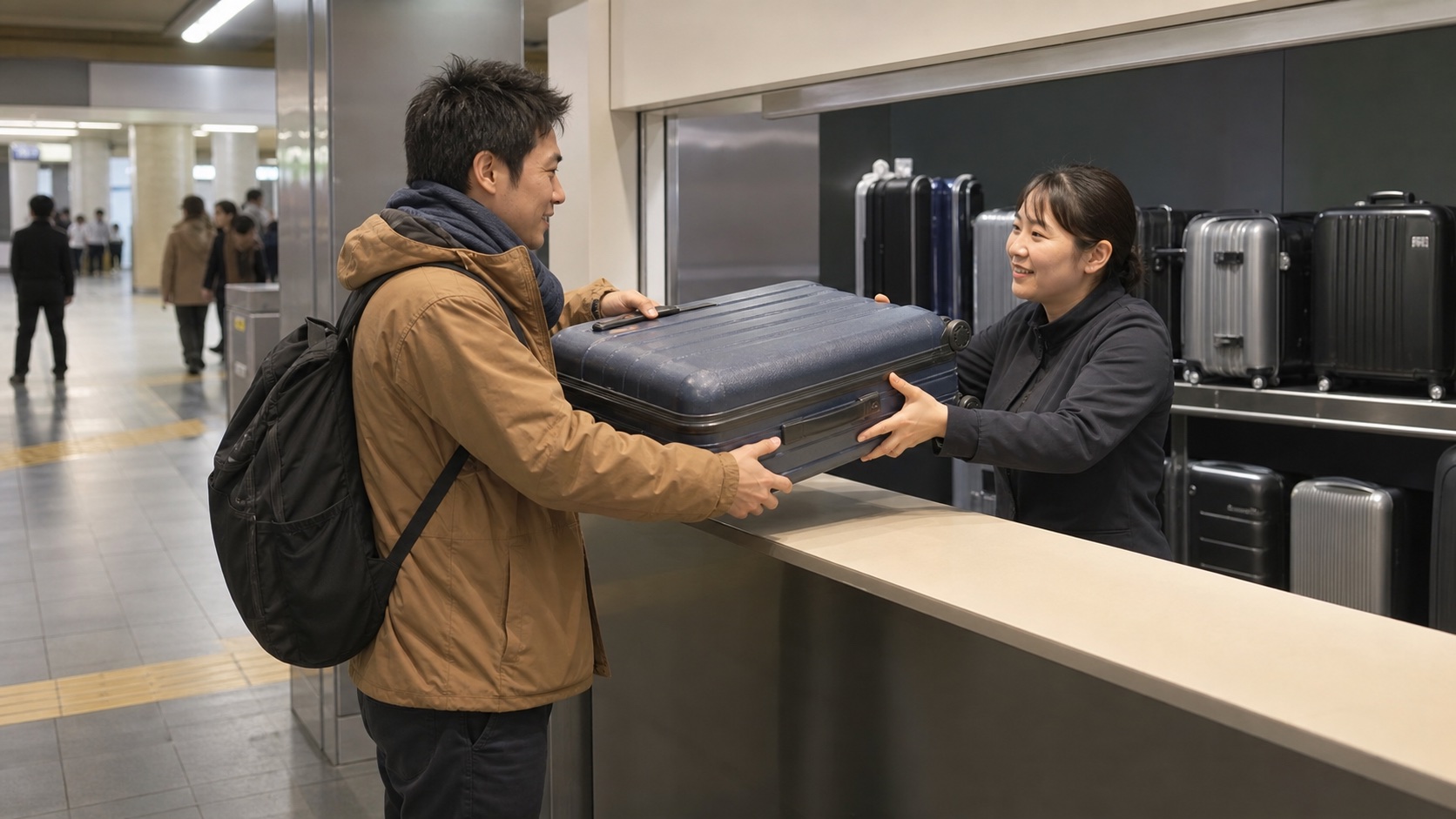
Kyoto City asks visitors to refrain from bringing large luggage onto city buses. Its official HANDS FREE KYOTO service lists three types of help:
- Carry service: delivery between Kyoto Station and participating accommodation, or between accommodation facilities.
- Luggage storage: staffed counters that can accept items that may not fit in a coin locker.
- Coin lockers: a convenient option when a suitable locker is available.
At Kyoto Station, decide between delivery and storage before joining a bus queue. Check the operating hours, same-day cutoff, accepted baggage, destination coverage, price, and collection procedure for the specific counter. These details can change, and a listed service may not cover your hotel or arrival time.
If lockers appear full, use the Kyoto Station Smart Navi map linked by the official tourism site or check a staffed storage counter. Do not spend an hour circling one locker bank while assuming the whole station is full.
For a broader explanation of forwarding bags between cities and hotels, see the Japan luggage delivery guide.
Rail-First Routes to Kyoto’s Main Autumn Areas
The following routes are decision frameworks, not promises about the fastest train on a particular day. Check live departures, service notices, walking conditions, and the needs of your group before travel.
Arashiyama: JR first, with subway and Randen as an alternative
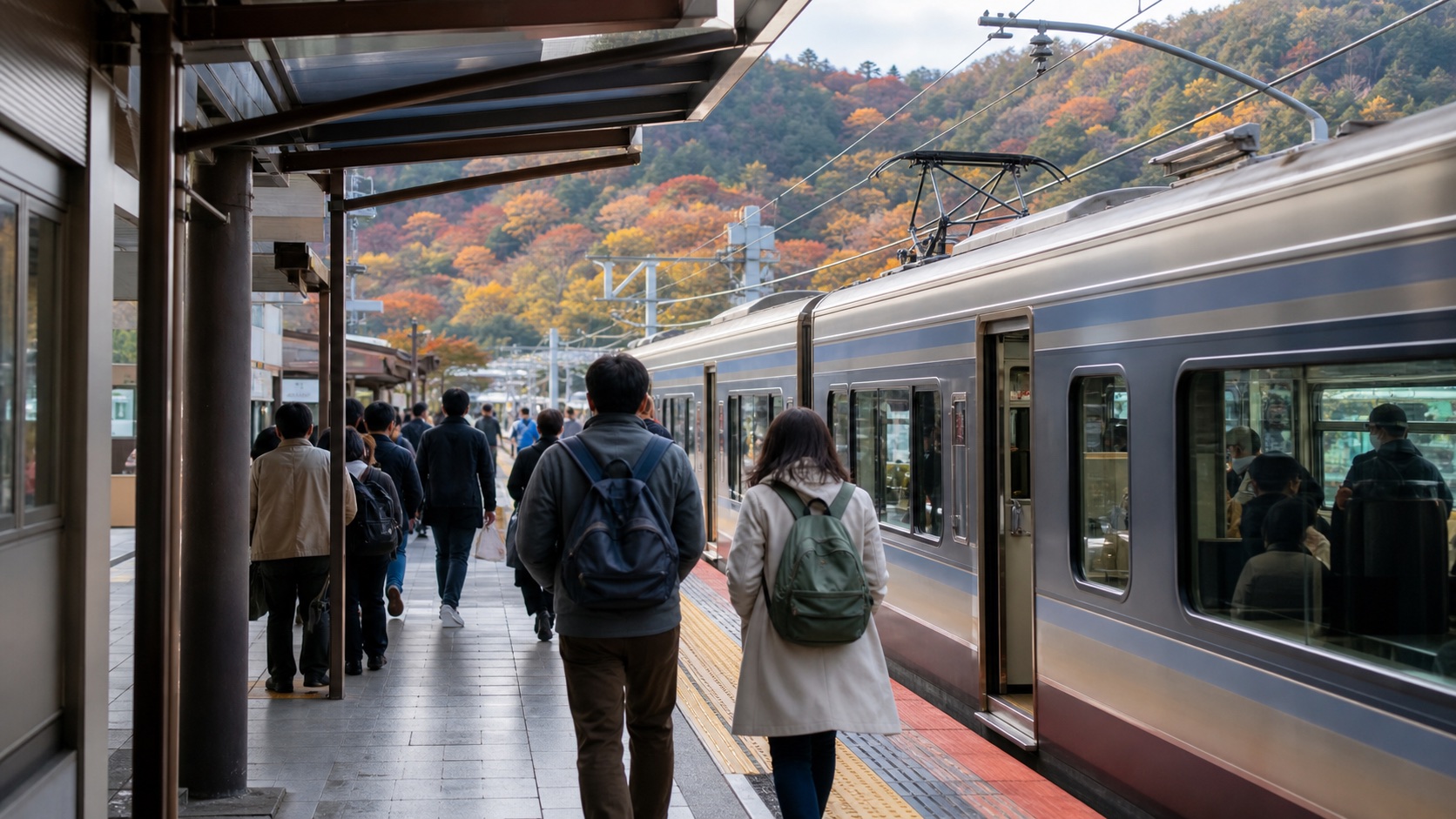
From Kyoto Station, the official Saga/Arashiyama access guide recommends the JR Sagano Line to Saga-Arashiyama Station. Both rapid and local services stop there. The Sagano Line platform is farther from some other Kyoto Station platforms, so allow time for the internal walk.
JR can also become crowded in autumn. Kyoto Travel presents a second rail-first route: take the Karasuma Subway Line to Karasuma Oike, transfer to the Tozai Line for Uzumasa Tenjingawa, and transfer to Randen for Arashiyama. This adds a transfer but gives you an alternative when the JR platform or trains are uncomfortable.
From the Shijo–Kawaramachi area, use Hankyu to Katsura and transfer to the Hankyu Arashiyama Line. A long bus ride from Kyoto Station or Shijo Kawaramachi is more exposed to road congestion.
Plan B: If central Arashiyama is already crowded, change the visit time instead of waiting for the same road conditions to clear. Check the official congestion forecast for the Togetsukyo Bridge and Bamboo Forest area before departing.
Fushimi Inari: JR from Kyoto Station, Keihan from Gion
From Kyoto Station, take the JR Nara Line to Inari Station. Kyoto Travel’s official Fushimi access guide recommends this route and notes that the shrine approach is immediately visible after leaving the station.
From Gion-Shijo, Keihan provides a direct rail route to Fushimi-inari Station. Limited express trains do not stop there, so confirm the train type before boarding. The shrine approach is a short walk east of the station.
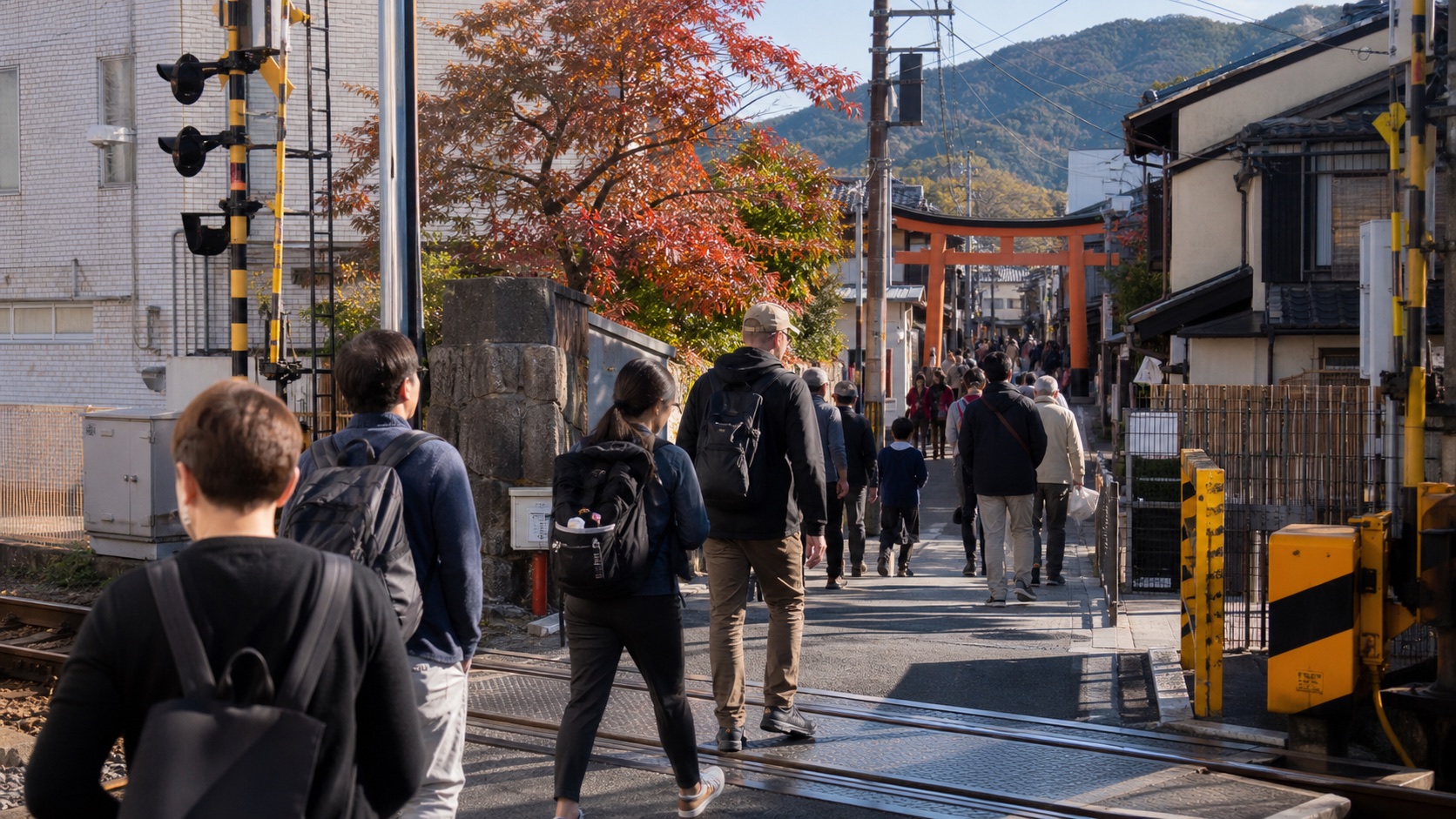
The roads around Fushimi Inari include narrow sections and railway crossings. Follow local signs, keep moving when an area is congested, and do not step into the road for photographs.
Plan B: If the entrance and lower torii paths feel too dense, do not force your way into the crowd. Check the forecast, wait in an appropriate place, change the time, or move to another district and return if conditions improve.
Gion and Kiyomizu-dera: rail plus walking can beat one long bus
For Kiyomizu-dera from Kyoto Station, Kyoto Travel’s official Higashiyama access guide gives several alternatives to a direct city bus:
- take the JR Nara Line to Tofukuji, transfer to Keihan, and get off at Kiyomizu-Gojo; the temple is then a substantial uphill walk;
- take JR to Yamashina, transfer to the Tozai Subway Line, and walk from Higashiyama Station through the wider Higashiyama sightseeing area; or
- use the Karasuma and Tozai subway lines to Higashiyama Station, then continue on foot.
These are not short door-to-door routes. Their advantage is that a larger part of the trip runs on rail and the walking section is predictable. Choose them when your group can manage the distance, slopes, weather, and crowds on narrow streets.
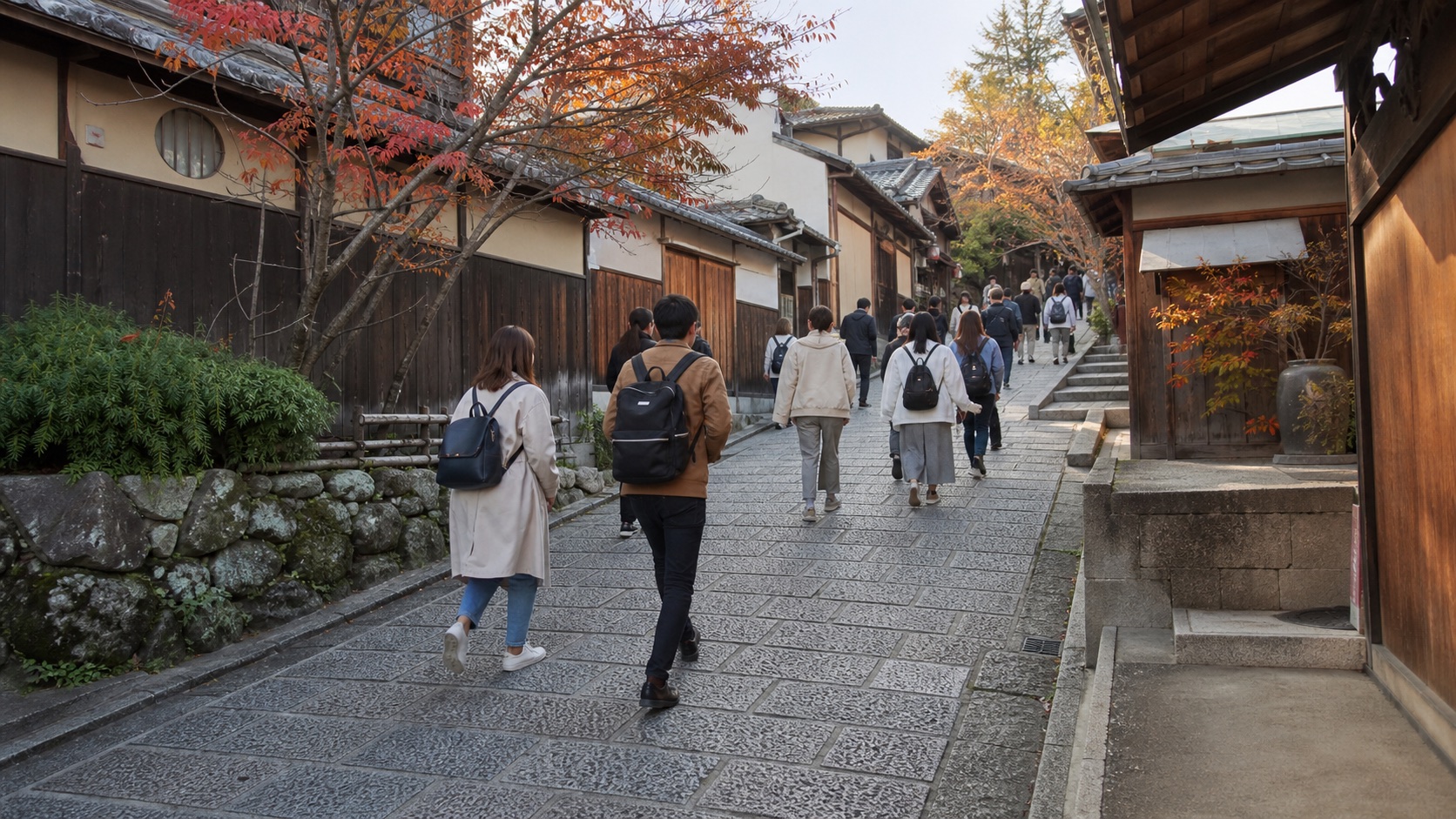
From Shijo Kawaramachi, Gion and Yasaka-jinja Shrine are within walking distance. Kyoto Travel warns that a bus along Shijo Street can take an unexpectedly long time in traffic. Kiyomizu-dera is farther and uphill, so split the district into a walkable sequence rather than repeatedly returning to a main bus stop.
Plan B: If Kiyomizu-zaka and the nearby approaches are crowded, switch to a later time or another area. Do not replace a bus queue with an unsafe walk in rain, darkness, extreme fatigue, or unsuitable footwear.
Kinkaku-ji: use rail for most of the trip, then a bus
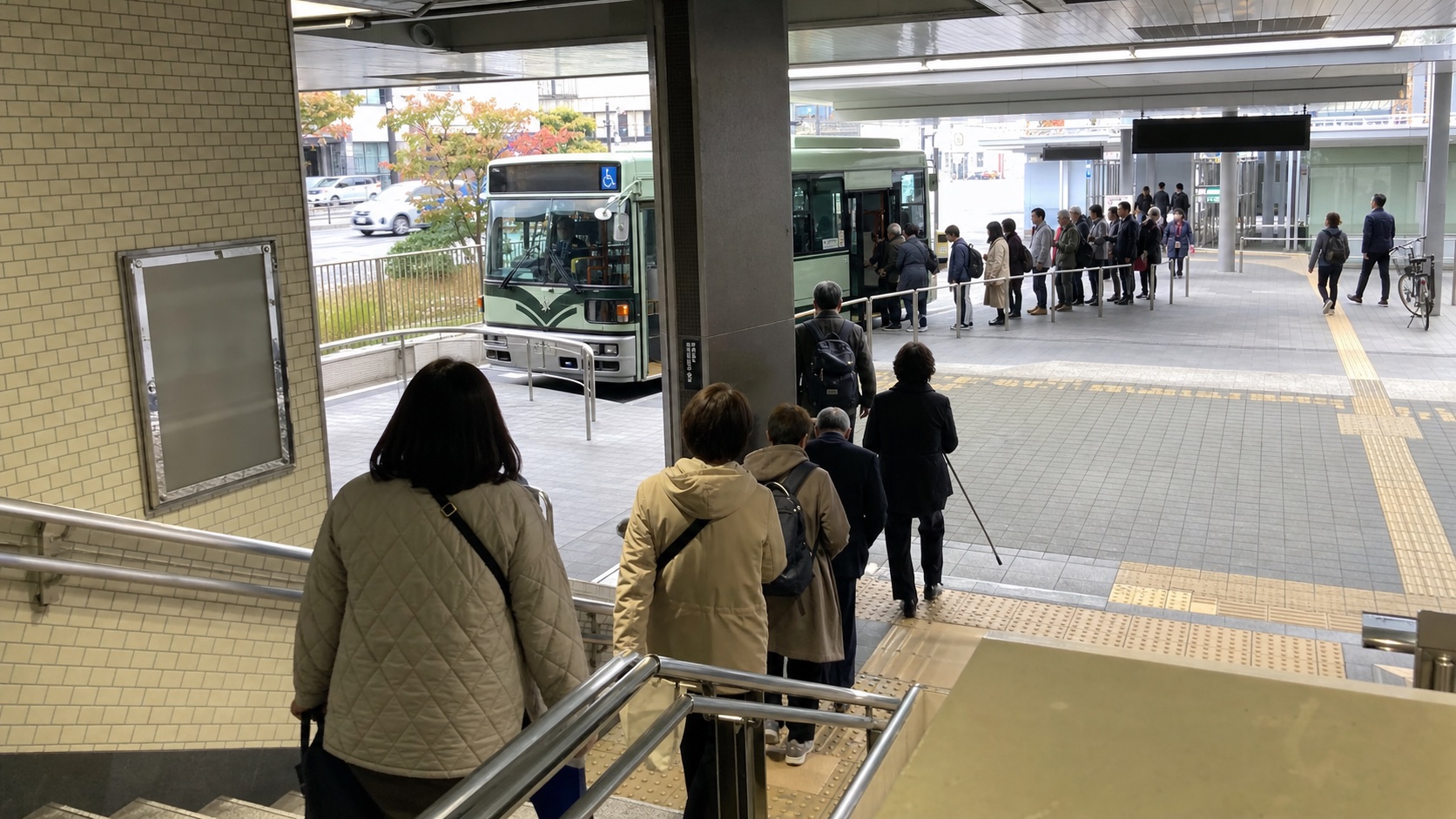
Kinkaku-ji does not have a railway station beside the entrance. From Kyoto Station, Kyoto Travel recommends taking the Karasuma Subway Line to Kitaoji Station, then transferring at Kitaoji Bus Terminal to a bus for Kinkakuji-michi. Another official option is the JR Sagano Line to Enmachi followed by a bus.
The point is not that the final bus will be empty. It is that the long northbound portion uses rail instead of staying on one bus from Kyoto Station through city traffic. Review the current stop and route information on Kyoto Travel’s Kinkaku-ji access guide and Kyoto City transportation notices before departure.
Plan B: If the bus from Kitaoji is full, check the next departure and the Enmachi approach. A taxi may be practical for a small group, but road congestion still affects it. Do not treat a taxi as a certain time saver.
How to Use Kyoto’s Official Congestion Forecast
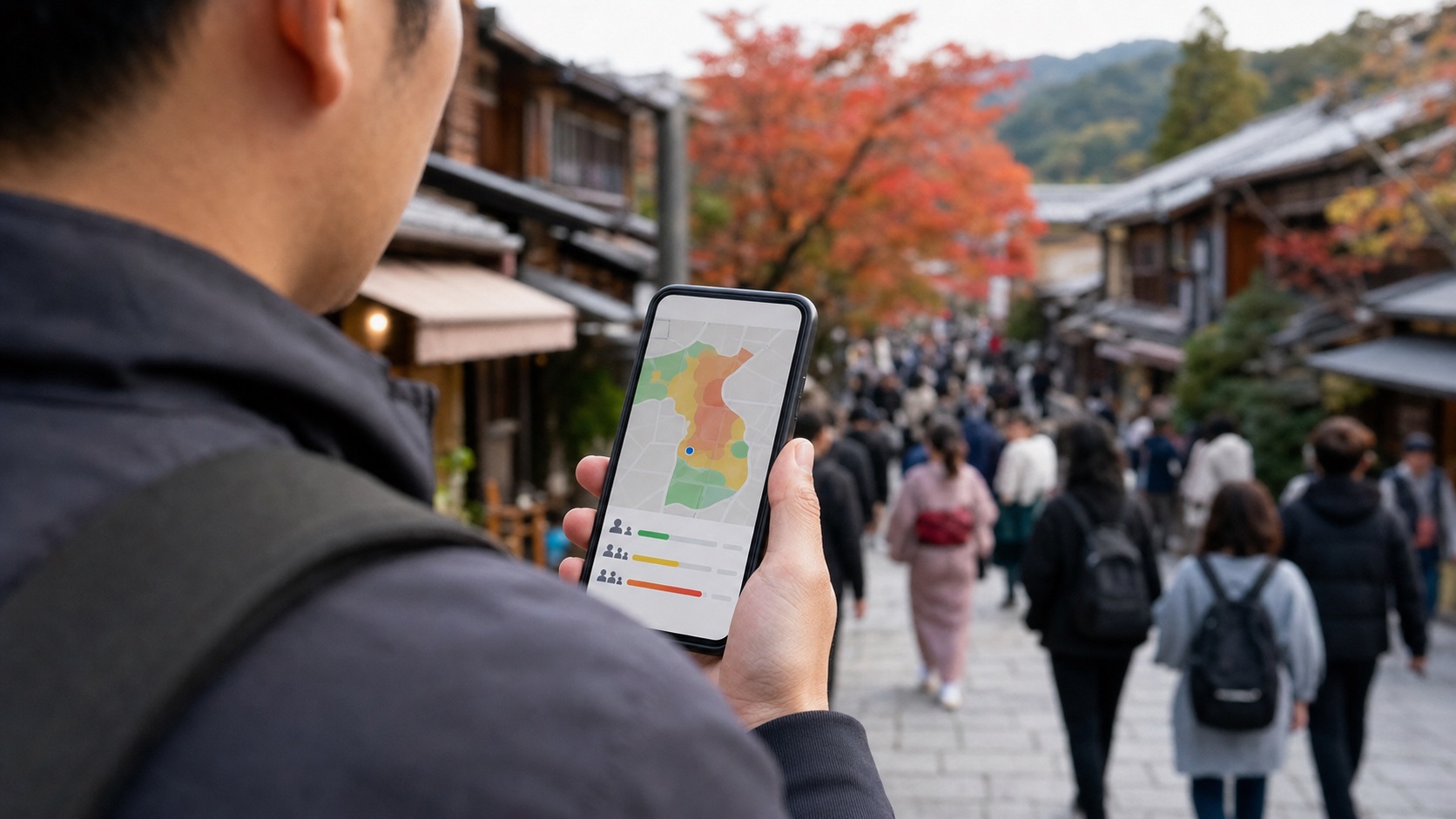
The Kyoto Travel Congestion Forecast was last updated on July 14, 2026 when this article was checked. It covers 11 famous spots in seven areas, including Arashiyama, Gion/Kiyomizu, Kinkaku-ji, Nishiki Market, Kyoto Station, and Fushimi Inari.
Use it in this order:
- Select the area you want to visit.
- Choose the intended date and time.
- Select the expected weather condition.
- Compare nearby time blocks instead of relying on a single result.
- Open a live feed when the selected location offers one.
- Decide whether to keep the plan, shift the time, or choose another area.
The forecast uses a five-level crowd scale. Its prediction can change as the date approaches and when the weather selection changes. Treat it as a planning input, not a reservation or guarantee.
The most useful check is the one made shortly before leaving your accommodation. A screenshot saved several weeks earlier cannot tell you about the day’s weather, disruption, or updated prediction.
What Can Go Wrong—and What to Do Instead
The route app keeps recommending a direct bus
Compare the rail-first route manually. Search for the nearest useful railway station, then add the walk or final bus separately. A route app optimizes its own estimate; it does not know how many buses you are willing to let pass.
The station platform is crowded too
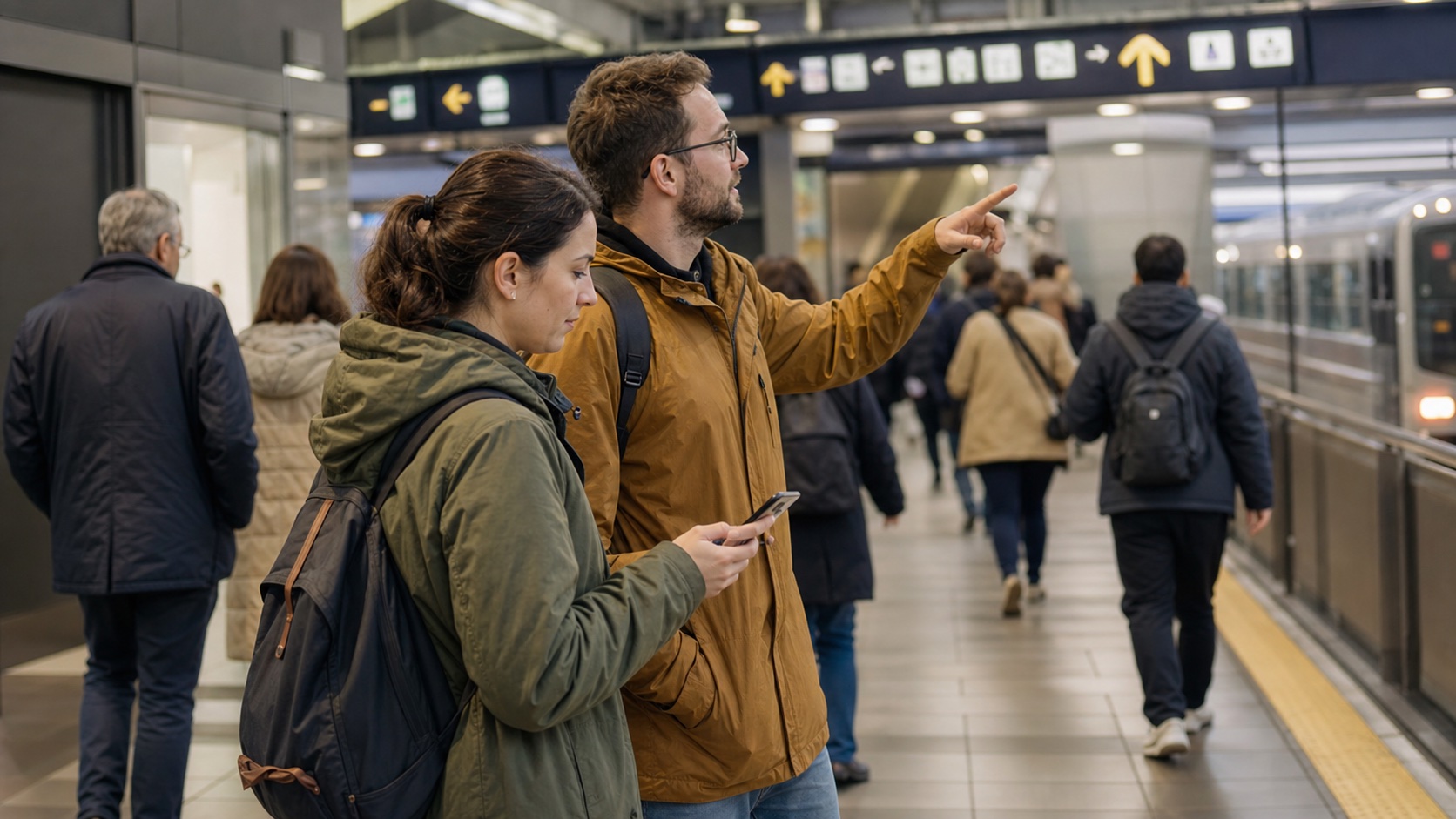
Rail-first does not mean crowd-free. Move away from the first staircase when signs and staff directions allow, consider the next service, or use the official alternative operator for that area. Do not block doors while deciding.
The bus arrives but you cannot board
Do not push luggage or members of your group into a full vehicle. Check the next departure, walk if it is safe and manageable, return to the rail network, or change the destination. Keep children and companions together before the bus arrives.
The luggage counter has closed or cannot accept your bag
Check another official storage point or your accommodation. Confirm whether the hotel accepts bags before check-in. A taxi to the hotel may solve the luggage problem, but allow for traffic and do not assume early room access.
A special autumn service appears in an old article
Check the year. Kyoto’s 2025 autumn page lists several trials and temporary operations that ended in November or December 2025. Use them as evidence that operations can change, not as a 2026 timetable.
Walking becomes harder than expected
Kyoto’s temple approaches can include slopes, steps, narrow pavements, and dense pedestrian traffic. Shorten the route, rest without blocking movement, or use a bus or taxi for the final section. Accessibility needs take priority over a theoretical congestion-saving route.
Plan B: Change the Time, Route or Area
Build one fallback before the travel day.
Plan A: Keep the place, change the route
Use JR, the subway, or a private railway for the cross-city section. Use a bus for the final section near the destination, or walk from the rail station if your group can do so safely.
Plan B: Keep the place, change the time
Compare time blocks in the congestion forecast. A shift can be more effective than trying to outwait a bus queue after arriving. Confirm the attraction’s official opening or admission hours before moving the visit.
Plan C: Keep the time, change the area
Choose a district reached by a different railway line. This lets the group avoid spending the day waiting for one famous spot. Use Kyoto Travel’s forecast and seasonal information to identify a practical alternative; do not assume an unfamiliar place will be empty.
Plan D: Remove the luggage
Store it, send it to the hotel, or return it to the accommodation. This can turn an unsuitable route into a manageable one and reduces friction for other passengers.
Plan E: Stop adding sights
Autumn daylight, admission times, and travel fatigue limit the day. If one transfer consumes more time than expected, remove the lowest-priority stop instead of rushing through several crowded areas.
Useful FAQ
How crowded are Kyoto buses in autumn?
There is no single crowd level. Crowding varies by route, stop, time, weather, events, and road conditions. The practical rule is to avoid depending on one long bus ride to a major attraction when a rail-first route is available.
Should I avoid Kyoto buses completely?
No. Buses remain useful for the final stretch to places without a nearby station, including Kinkaku-ji. Use rail for the longest part of the trip, then a shorter bus connection when it fits your group.
What is the best route from Kyoto Station to Arashiyama in autumn?
The official guide recommends the JR Sagano Line to Saga-Arashiyama. If JR is uncomfortable, the Karasuma and Tozai subway lines followed by Randen provide an alternative rail route. Check live service conditions before choosing.
What is the easiest rail route to Fushimi Inari?
From Kyoto Station, use the JR Nara Line to Inari Station. From the Gion area, Keihan to Fushimi-inari Station is convenient, but limited express trains do not stop there.
Is there a train directly to Kiyomizu-dera?
No railway station is at the temple entrance. Kiyomizu-Gojo and Higashiyama are rail-based approaches followed by a substantial walk. A bus can reduce the walking distance, but traffic and queues may add uncertainty.
How do I reach Kinkaku-ji without taking a bus from Kyoto Station?
Take the Karasuma Subway Line to Kitaoji and use a bus for the final section, or take the JR Sagano Line to Enmachi and transfer to a bus. There is no rail station beside Kinkaku-ji.
Can I bring a suitcase onto a Kyoto city bus?
Kyoto City asks visitors to refrain from bringing large luggage onto city buses. Use a station locker, staffed storage, or a delivery service listed by HANDS FREE KYOTO whenever possible.
Is Kyoto’s congestion forecast real-time?
It combines forecasts by date, time, and weather with real-time live feeds at selected locations. The forecast can change as the date approaches, so check it shortly before departure rather than relying on an old screenshot.
Last Checked and Your Next Action
This article was last checked on July 23, 2026 against Kyoto City and Kyoto City Tourism Association guidance. At that time, the official congestion forecast showed a last update of July 14, 2026. Specific autumn 2026 temporary transport measures had not been treated here as confirmed unless they appeared on a current official page.
Before leaving your accommodation, open the Kyoto Travel Congestion Forecast, check your first-choice area and time, and save one rail-first alternative in your route app.
Comments