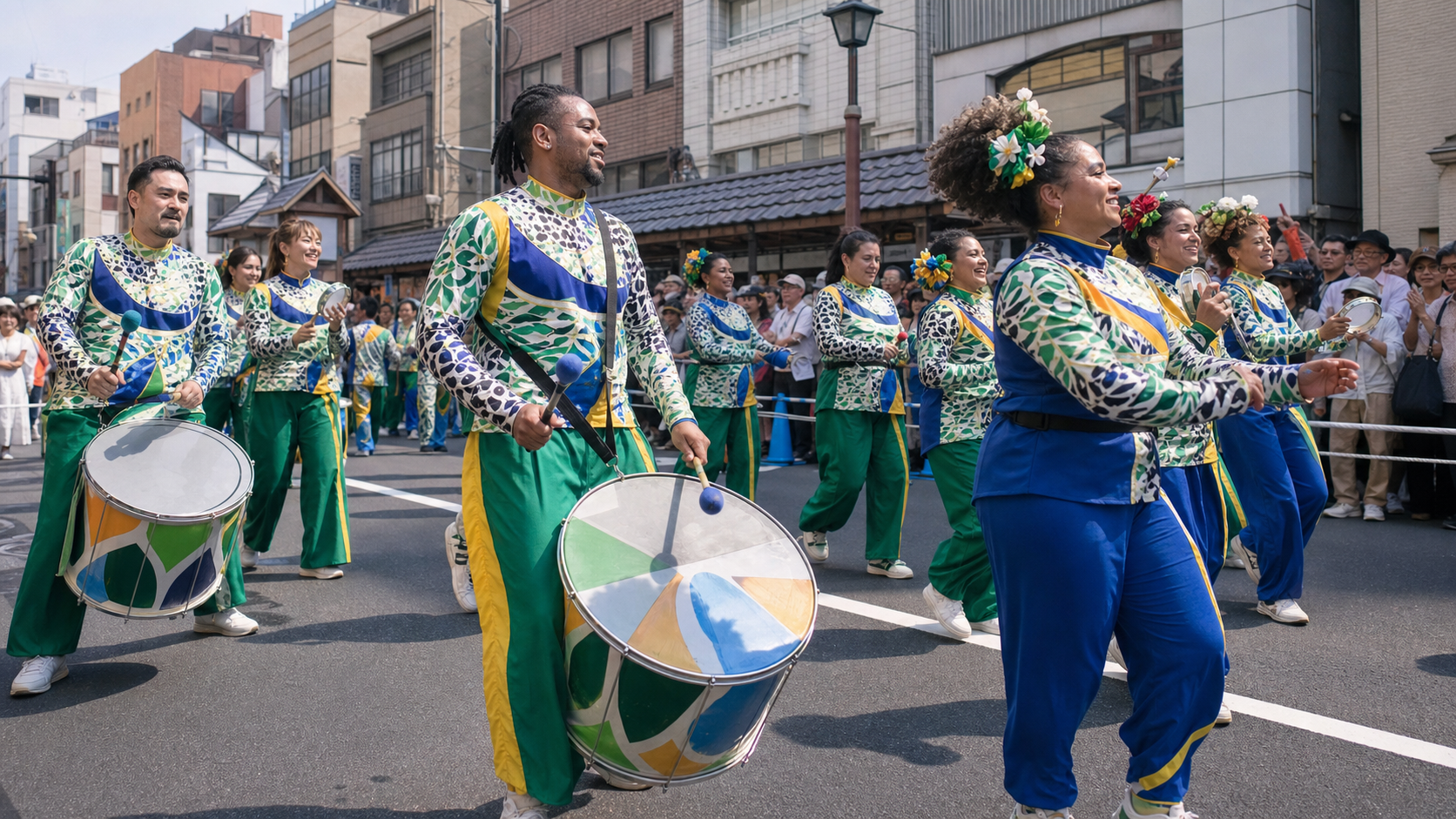
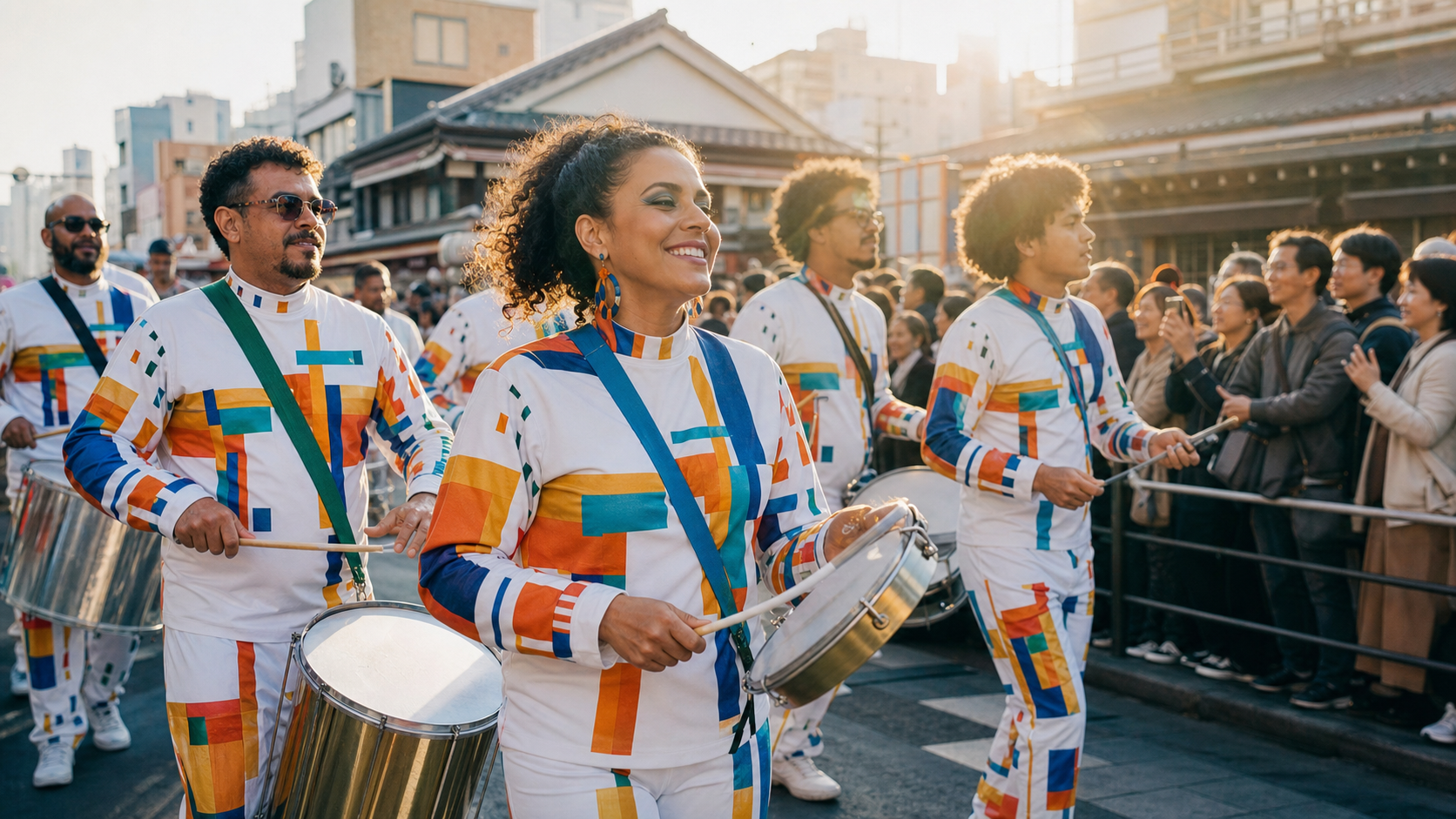
The 41st Asakusa Samba Carnival Parade Contest is scheduled for Saturday, August 29, 2026, on Umamichi-dori and Kaminarimon-dori in Asakusa. The organizer currently lists a 1:00 p.m. start, subject to change. The official 2026 map shows the parade beginning beside Senso-ji on Umamichi-dori, turning west onto Kaminarimon-dori, and finishing toward the Kokusai-dori side of Asakusa.
The performance is the easy part. The hard part is deciding where to stand, how long you are willing to wait in late-summer heat, and which station you will use after hundreds of thousands of other spectators begin moving at once.
This guide gives you a practical plan: choose your viewing priority before arrival, approach from the station that matches it, carry less than you think you need, and leave by a different station if the nearest entrance is overwhelmed.
For the basics that apply beyond Asakusa—meeting rules, toilets, trash and the train ride home—keep our Japan Festival Survival Guide 2026 with this event-specific plan.
- Asakusa Samba Carnival 2026: quick facts
- The best plan in 60 seconds
- Where is the 2026 parade route?
- How crowded will it be?
- When should you arrive?
- Train access: choose the station for your plan
- A practical arrival and exit plan
- Heat safety in late-August Tokyo
- Viewing rules and photography etiquette
- Is the supporters’ seat worth ¥8,000?
- Families, wheelchairs and travelers who cannot stand long
- Plan B if the route is too crowded
- Final checklist for August 29
- Asakusa Samba Carnival 2026 FAQ
- When is the Asakusa Samba Carnival in 2026?
- Is the Asakusa Samba Carnival free?
- What is the 2026 parade route?
- What is the best station for the Asakusa Samba Carnival?
- Can I sit along the parade route?
- Can I bring a tripod or selfie stick?
- Is the carnival suitable for children or wheelchair users?
- What happens if it rains or the event is cancelled?
- Sources and verification
Asakusa Samba Carnival 2026: quick facts
| Item | 2026 information |
|---|---|
| Date | Saturday, August 29, 2026 |
| Official start | 1:00 p.m.; the organizer says the time may change |
| Broader event window | Taito City’s official tourism site currently lists 12:00–17:00, also subject to change |
| Route | Umamichi-dori to Kaminarimon-dori, Asakusa |
| Format | Communication League, Theme Samba League, S2 League and S1 League |
| General viewing | Free; spectators must stand along the controlled course |
| Reserved option | Supporters’ reserved seat: ¥8,000 per seat while applications remain available |
| Recent scale | About 470,000 attendees at the 40th event, according to the organizer |
| Last verified | July 17, 2026 JST |
There is a small but important time discrepancy between official pages. The event organizer lists a 1:00 p.m. start, while the Taito City tourism page gives a 12:00–17:00 window. Use 1:00 p.m. as the currently announced parade start, but treat noon as the beginning of the practical event period. Recheck the organizer’s website shortly before you travel; detailed operations, traffic restrictions and transport changes can still be updated.
The best plan in 60 seconds
If this is your first visit and seeing the competition matters most, aim to be in Asakusa before noon, settle on one part of the route, and expect to remain standing. Do not plan to follow the parade along the street. Barriers and dense pedestrian traffic make that strategy unreliable.
If comfort matters more than a front-row view, do not fight for the most famous spot near Kaminarimon. Choose the western half of the route, accept a less iconic background, and keep Tawaramachi Station or Tsukuba Express Asakusa Station in your exit plan. This is editorial advice, not an official crowd-control route; staff instructions and temporary restrictions take priority on the day.
If anyone in your group uses a wheelchair or cannot stand for a long period, consider the official supporters’ seating program. The organizer says wheelchair space can be arranged by contacting the office, but applications are first-come, first-served.
Whatever plan you choose, save the official route map on your phone and decide your exit before the first performance begins.
Where is the 2026 parade route?
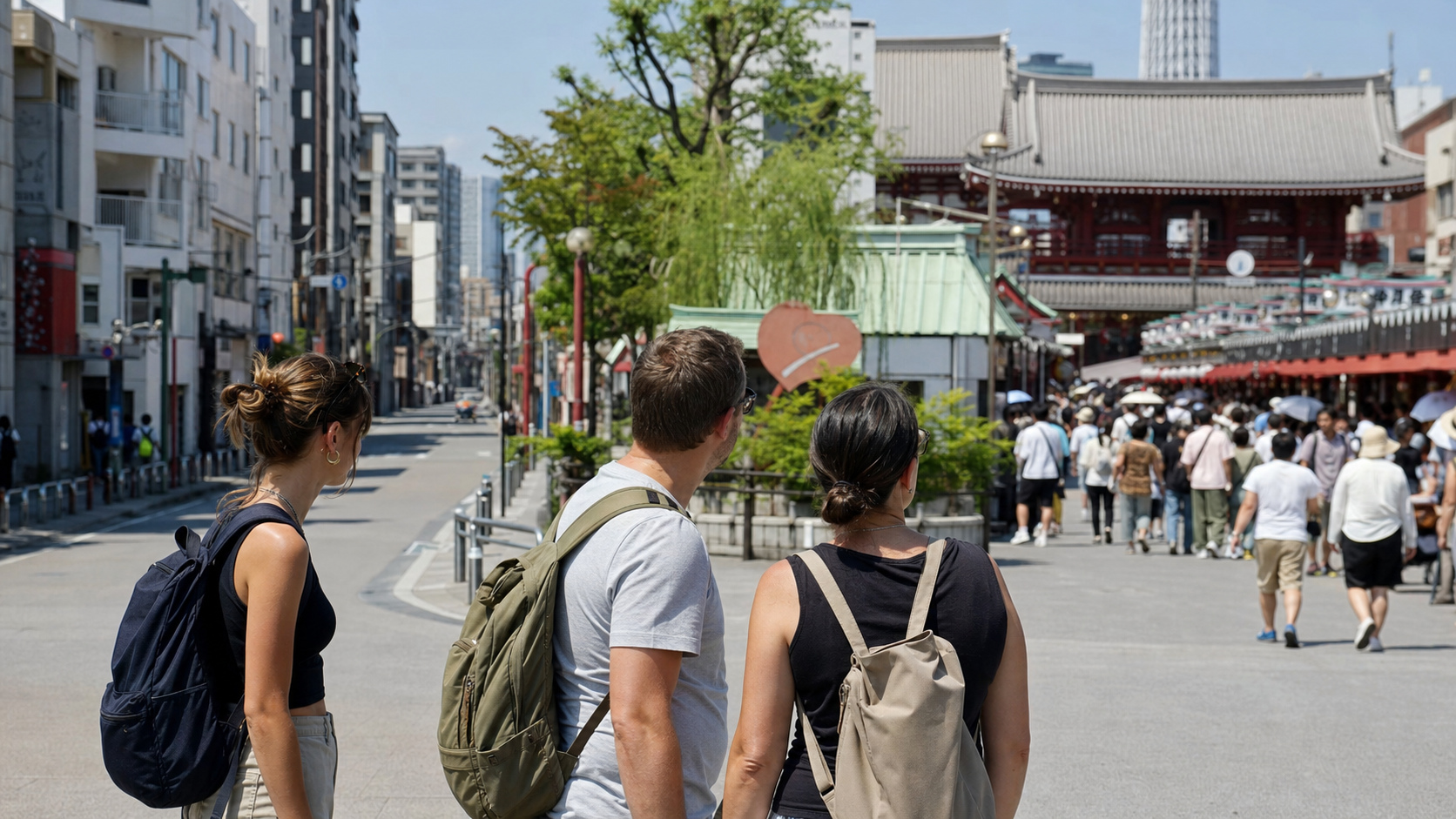
The organizer’s 2026 map places the start on Umamichi-dori, on the east side of Senso-ji near the Nitenmon and Taito Riverside Sports Center side. The course moves south on Umamichi-dori, turns right onto Kaminarimon-dori, and continues west toward the Kokusai-dori / Asakusa ROX side.
This direction matters. A spectator near the start sees groups earlier in their procession, while someone near the western end sees them later and may be closer to Tsukuba Express Asakusa or Tawaramachi for departure. The official map also marks reserved supporters’ sections along parts of Kaminarimon-dori and standby areas near both ends. Some stretches of pavement are therefore unavailable for general viewing.
The route can change without notice. Treat the official map as your planning base, then follow barriers, police and event staff on the day. Avoid choosing a position that requires repeated course crossings: the map specifically warns that entering, leaving or photographing near the standby areas can obstruct parade operations.
Which part of the route should you choose?
Choose the Umamichi-dori side if: you want the energy of groups entering the course, you are already visiting Senso-ji, and you are comfortable with a busy approach from the Tokyo Metro, Toei or Tobu Asakusa stations.
Choose the Kaminarimon-dori side if: you want a longer straight sightline and the classic central-Asakusa atmosphere. This is also where sections of the official supporters’ seating are shown, so check which areas remain available for free standing.
Choose the western end if: your priority is an easier escape toward Kokusai-dori, Tsukuba Express Asakusa or Tawaramachi. It will not be empty—the event reported roughly 470,000 attendees last year—but this choice avoids depending entirely on the closest subway entrance to Kaminarimon.
How crowded will it be?
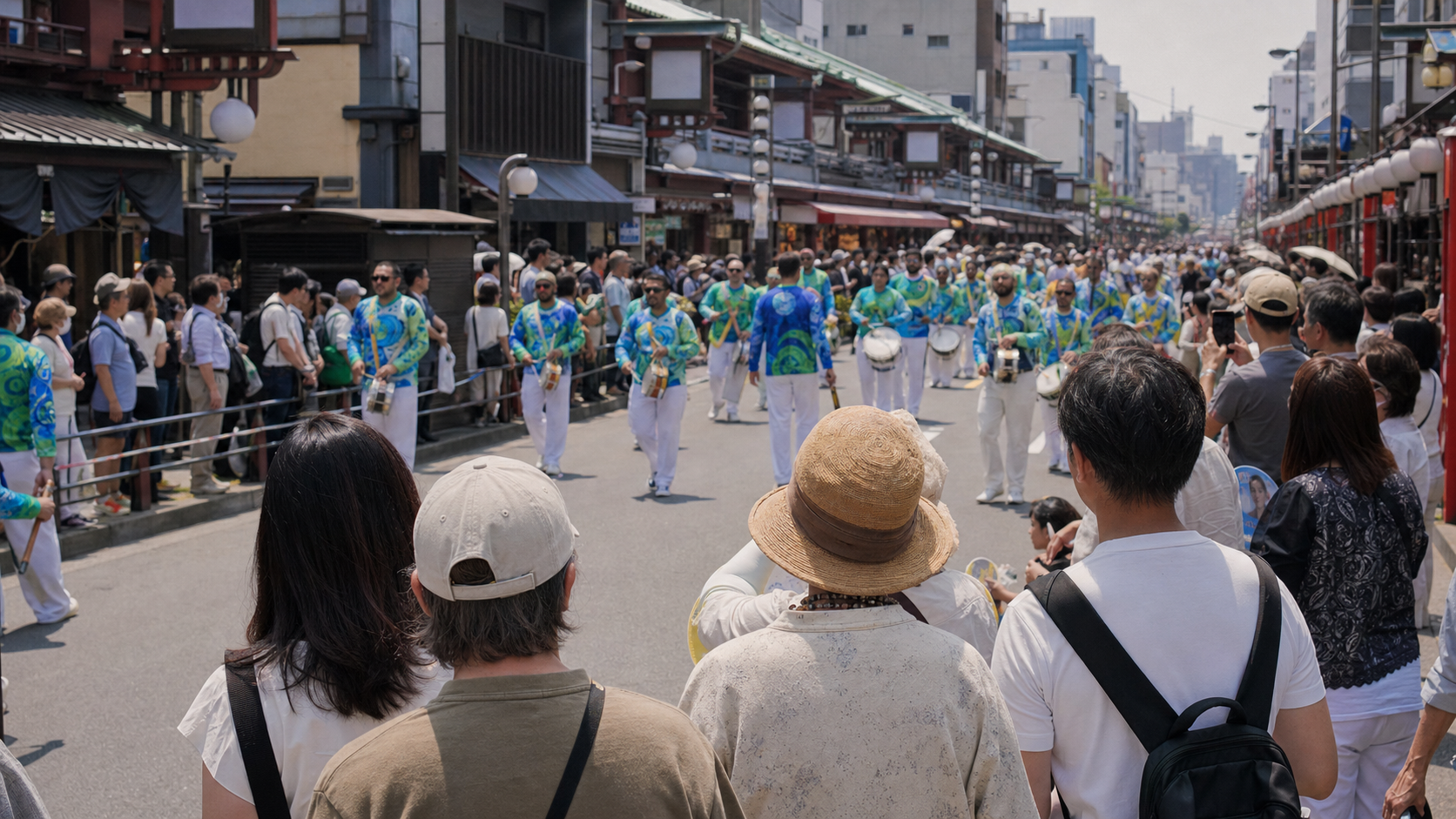
Very crowded. The organizer reports approximately 470,000 attendees for the 40th carnival. Its main page describes recent editions as attracting around half a million people. Even if visitors arrive and leave at different times, that scale changes how the neighborhood works.
Spectator volume is just one source of friction. Asakusa is already one of Tokyo’s busiest visitor districts. On carnival day, normal temple visitors, restaurant queues, shoppers and hotel guests share the area with a controlled parade course. A walk that looks short on a map can become slow because a crossing is closed, a sidewalk is one-way, or an entrance is temporarily held.
The organizer now requires general spectators to watch standing behind barriers. Sitting along the course is no longer allowed because blocked sidewalks created safety concerns. Chairs are prohibited. This means a good spot remains useful as long as your body can tolerate keeping it.
Use these crowd assumptions:
- You may not be able to move laterally along the course once the busiest period begins.
- The nearest subway exit may not be the fastest exit.
- Mobile data can feel slower in a dense crowd, so save maps and meeting points in advance.
- Members of a group can become separated in seconds; agree on a fixed reunion point away from the course.
- A stroller, large suitcase or bulky camera bag will make transitions harder.
For luggage, use a locker or hotel storage before entering the event area. Our Tokyo luggage storage guide explains practical options and a backup plan when station lockers are full.
When should you arrive?
The official start is currently 1:00 p.m., but the right arrival time depends on your viewing goal and physical comfort.
For a strong free viewing position
Arrive in the neighborhood around 10:30–11:30 a.m. This is a planning recommendation, not an official opening time or a guarantee of front-row space. Use the time to check the actual barriers, buy water, use a restroom and identify a second station. Do not stand in a place that staff have not opened for viewing.
For atmosphere without a long wait
Arrive closer to the announced start and accept that you may be several rows back. Sound carries well at a samba parade; you can still experience the bateria, singing and crowd energy without securing the most photographed corner. A short, enjoyable stay is better than becoming unwell while defending a curb position.
For families or heat-sensitive travelers
Consider watching a limited portion rather than treating the full program as mandatory. Build an indoor cooling break before arrival, choose a pre-agreed exit time, and leave while everyone still feels well. The most difficult moment is often not entry but the collective movement after a popular team or near the end.
Train access: choose the station for your plan
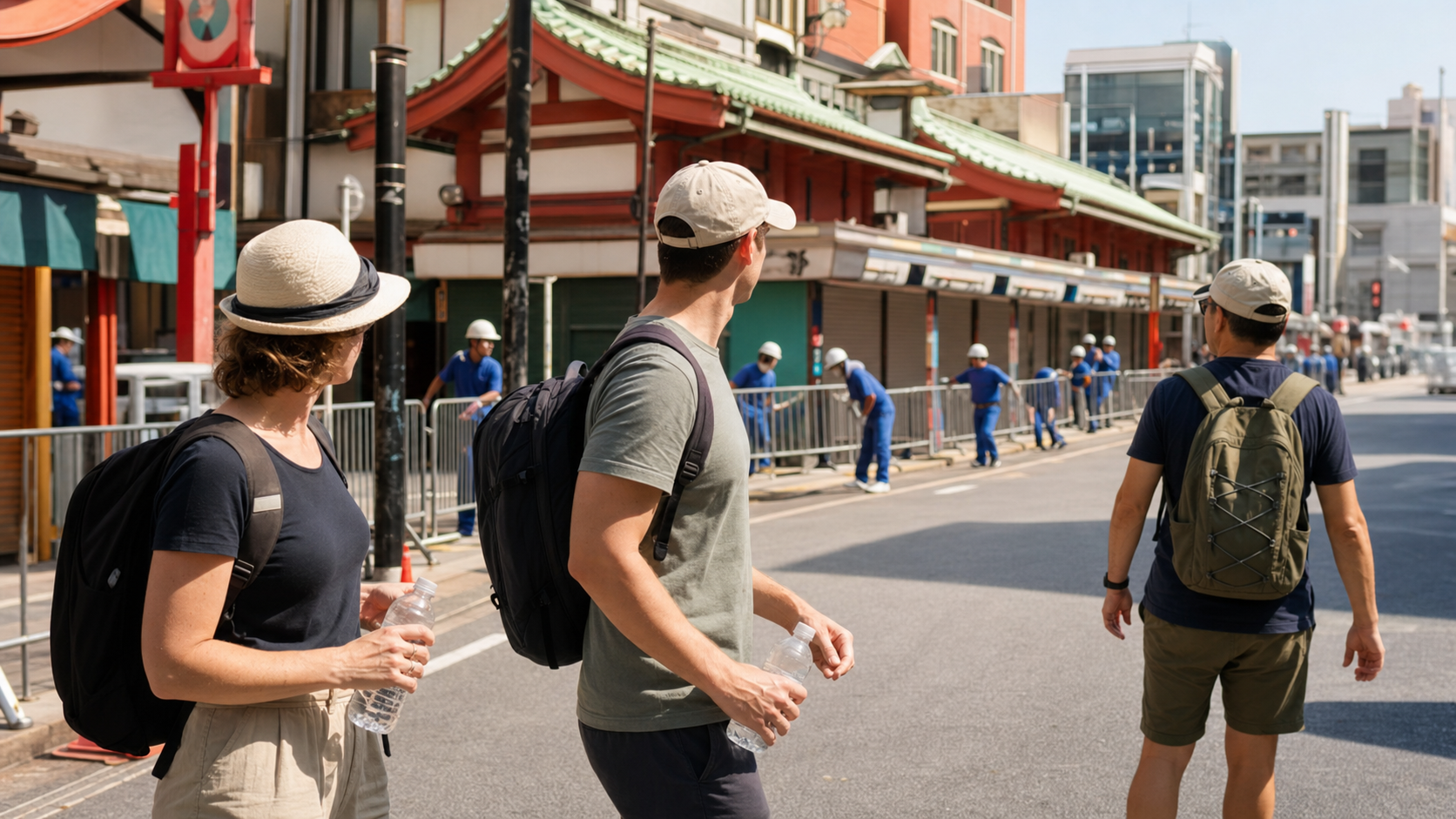
Asakusa has several stations with the same or similar name. Different companies operate them, and several station buildings are separate.
Tokyo Metro Ginza Line: Asakusa Station (G19)
This is the most obvious approach for many visitors from Ueno, Ginza or Shibuya. Tokyo Metro’s official station page lists Kaminarimon and Senso-ji near several exits, including Exit 1 and Exit 8. It is convenient, but convenience attracts demand. An exit that is normally ideal may feed directly into controlled pedestrian space on carnival day.
Toei Asakusa Line: Asakusa Station (A18)
Useful for travelers coming from the south side of central Tokyo and for some through-services toward the airport railways. Do not build an airport connection with a tight margin after the parade. Crowd control, platform access and the exact through-service add uncertainty.
Tobu Skytree Line: Asakusa Station
This station sits on the eastern side near the Sumida River. It can be useful if your next stop is Tokyo Skytree or a Tobu-line destination. The official route and barriers may make the last few blocks less direct than your map suggests.
Tsukuba Express: Asakusa Station (TX03)
This separate station is west of Senso-ji near Kokusai-dori. It is useful for the western end of the course and for travel toward Akihabara. Many first-time visitors do not realize it is different from the subway and Tobu Asakusa stations.
Tawaramachi Station (G18)
Tawaramachi is one Ginza Line stop west of Asakusa and can be a practical walking alternative after the event. It is not on the parade route. Whether it is faster depends on your position, temporary crossing restrictions and the live crowd, but it gives you a second option instead of forcing your way back to the closest Asakusa entrance.
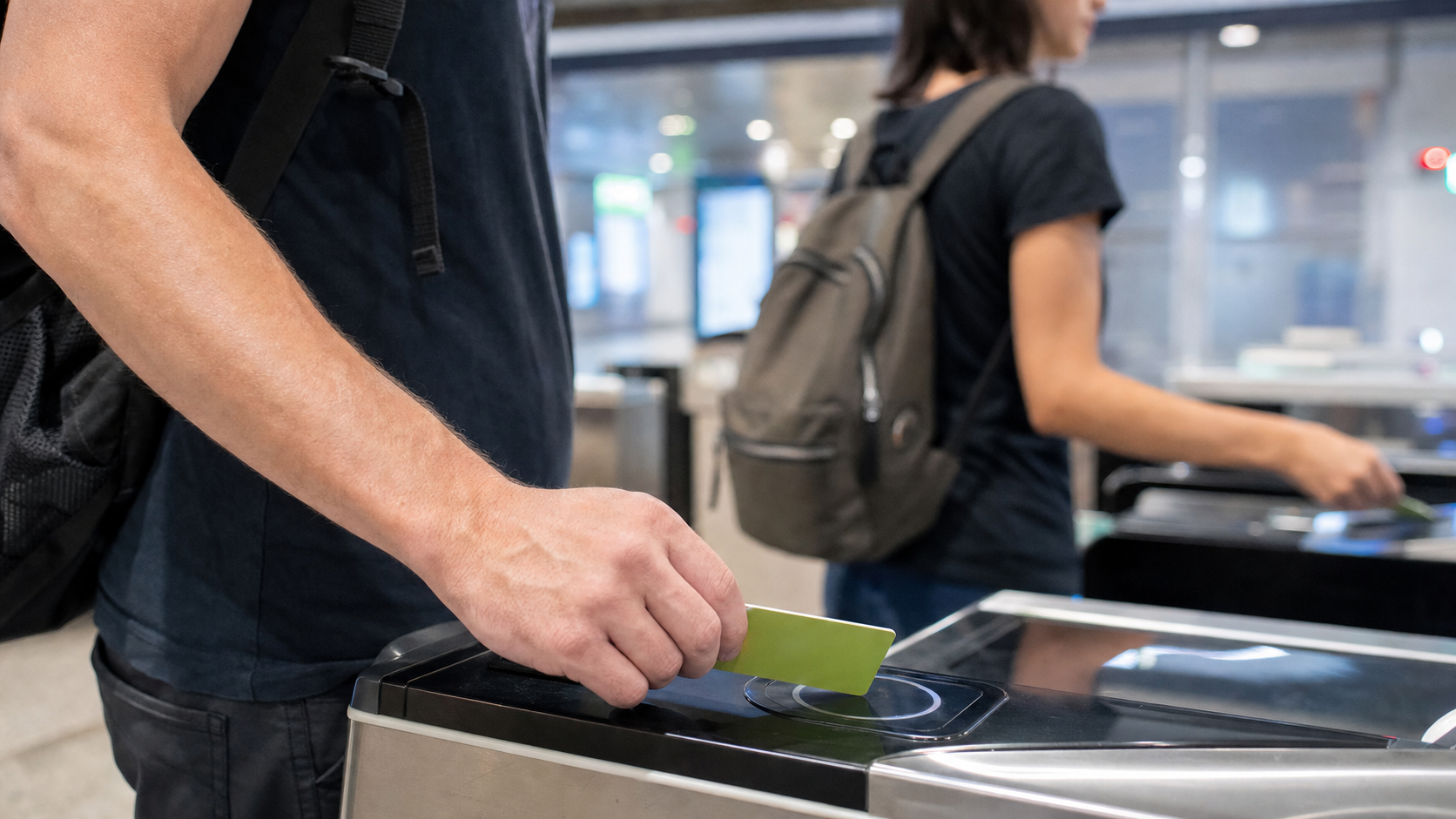
Load your IC card before you enter the crowd. If you still need to choose one, see our 2026 Suica and PASMO guide. Also check Tokyo Metro, Toei Transportation and the carnival website on the morning of August 29 for last-minute notices.
A practical arrival and exit plan
The lowest-friction strategy is to avoid retracing your steps.
- Arrive from the side that matches your viewing position. Use Tokyo Metro, Toei or Tobu Asakusa stations for the eastern/start area; use Tsukuba Express Asakusa or Tawaramachi for the western side.
- Choose your side of the route before the crowd peaks. A barrier can turn a two-minute crossing into a long detour.
- Save two station options. Screenshot the route from your viewing point to both, including one that does not require walking toward Kaminarimon.
- Set a departure trigger. For example: leave after one S1 team, at the first sign of heat stress, or before the closing movement begins.
- Do not schedule a fixed-time reservation immediately afterward. Give yourself room for slow walking, rest and a changed station entrance.
If you want to continue sightseeing, use our Asakusa Quick Guide on a normal morning or after the event area has cleared. Kaminarimon, Nakamise and Senso-ji are more enjoyable when you are not trying to cross an active parade course.
Heat safety in late-August Tokyo
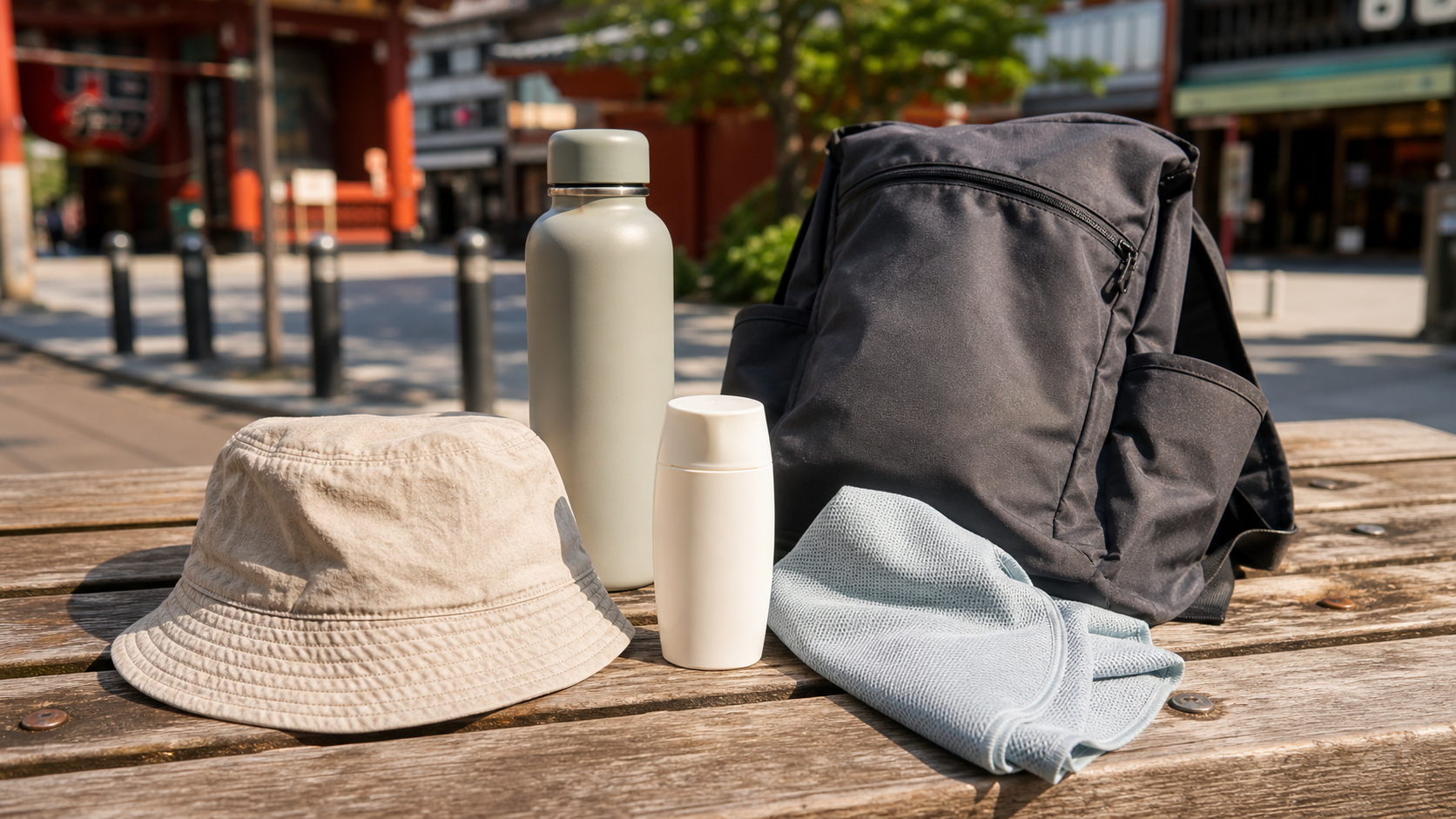
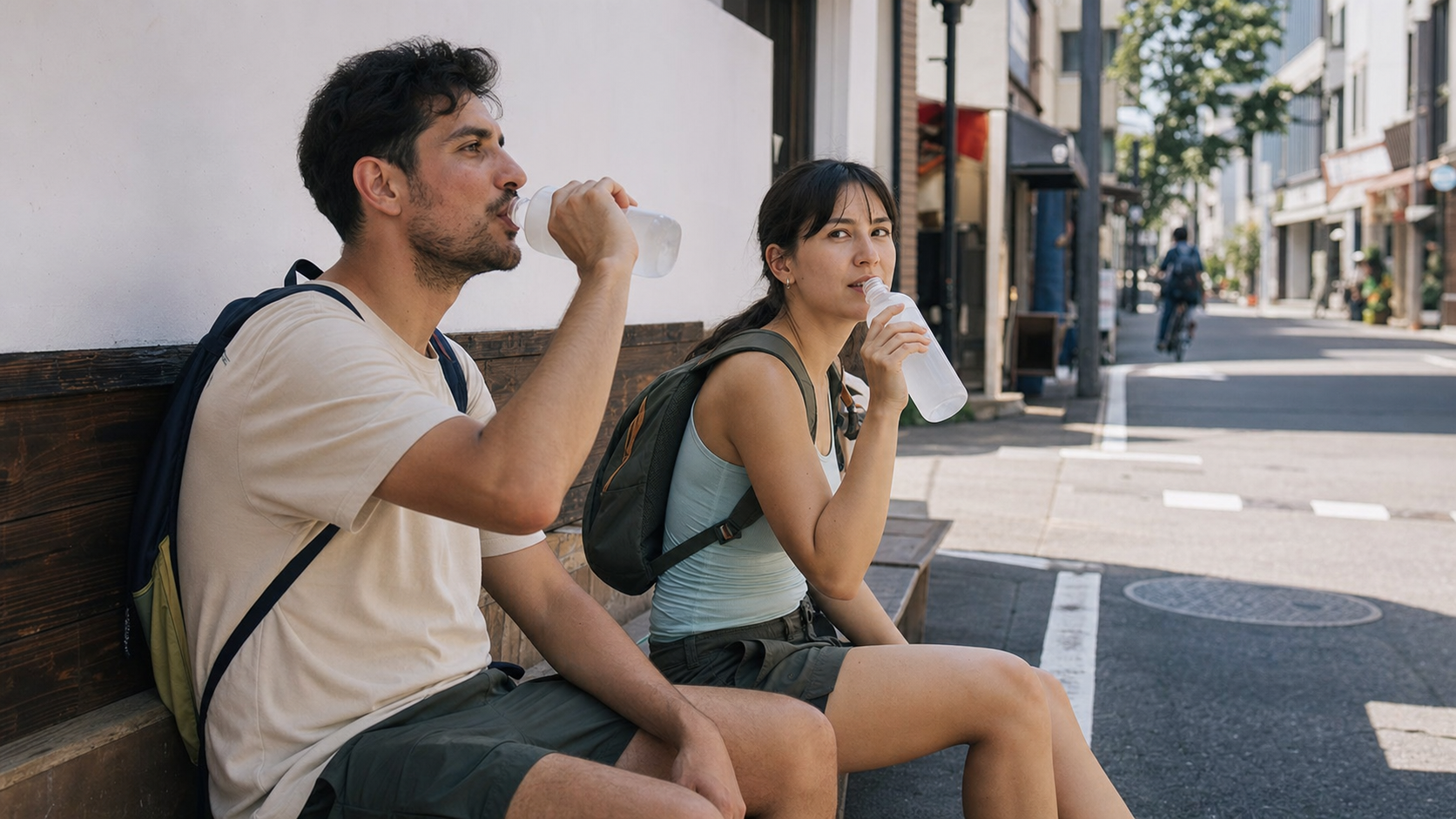
The event is outdoors in late August, and the reserved seats are also uncovered. The organizer explicitly tells supporters to hydrate frequently, wear a hat and use cooling items. That advice applies equally to free viewing.
Check the Ministry of the Environment’s Heat Illness Prevention Information on the day. Its WBGT index combines heat, humidity and radiant conditions; it is more useful for outdoor strain than looking at air temperature alone.
If you need to assemble a kit after arriving in Japan, our summer cooling items guide covers practical products that tourists can buy locally.
Bring:
- A hat that does not block the view behind you
- Water or an electrolyte drink
- A cooling towel or cold pack
- Sunscreen
- A small hand towel
- Any medication you normally need
- A light, compact bag that can stay in front of your body
Do not let a good spot become a trap. Move to shade or air conditioning if you develop dizziness, nausea, headache, unusual fatigue, heavy sweating followed by reduced sweating, or confusion. Ask staff for help in an emergency. The route map marks first-aid locations, but the safest choice is to act before symptoms become severe.
A parasol may be useful while walking in open space, but it can obstruct others in a dense viewing line. Close it when staff request or when you enter tightly packed areas; a breathable hat is the simpler option at the barrier.
Viewing rules and photography etiquette
The organizer prohibits:
- Drones
- Selfie sticks
- Monopods
- Tripods for general spectators
- Chairs
The organizer’s tripod exception applies to people in individual supporters’ seating, at their own seat and no higher than face level. General spectators must stand.
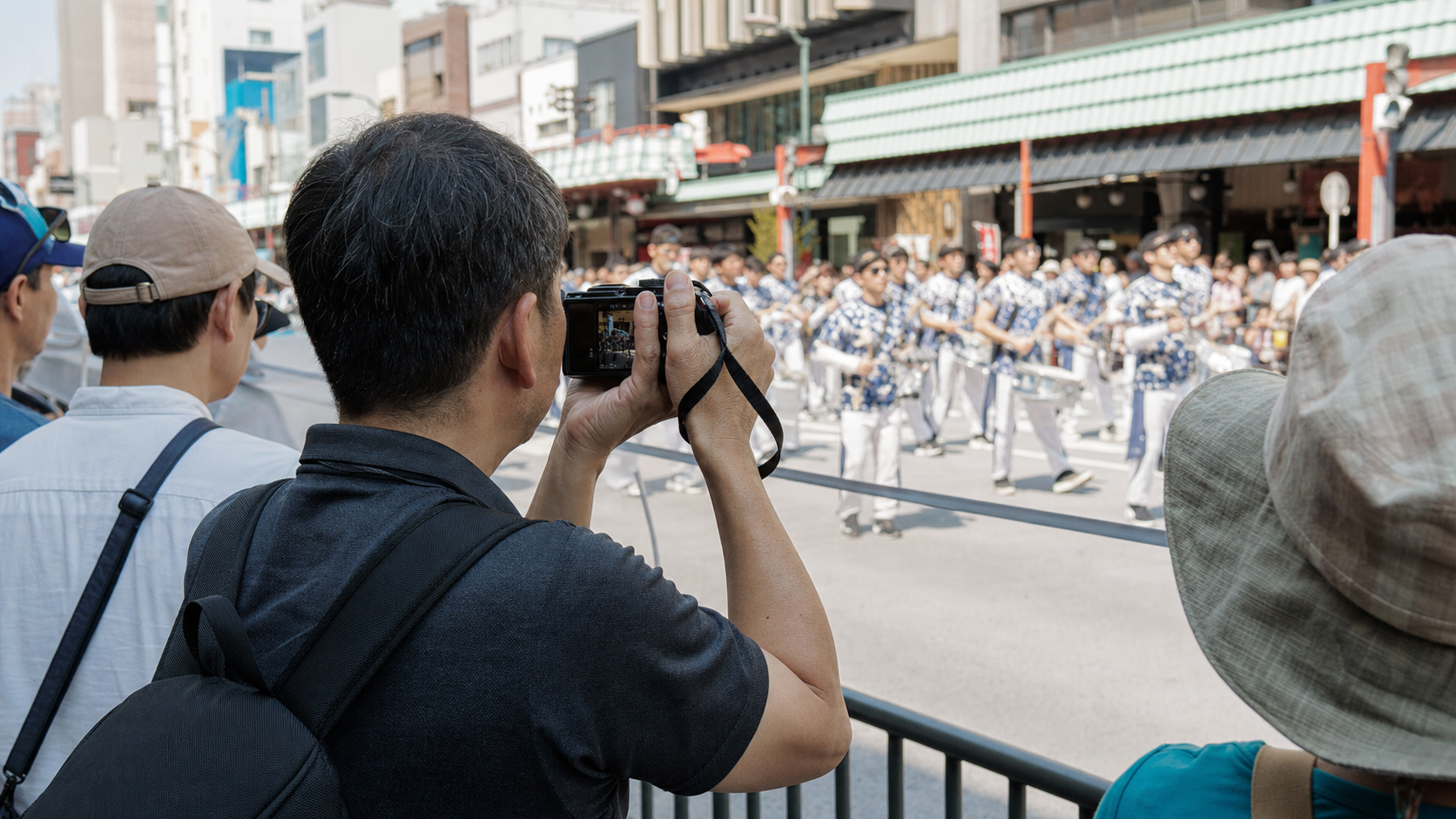
A phone or handheld camera is the simplest setup. Keep it near your own sightline rather than holding it above other spectators for an entire performance. Do not lean through barriers, enter standby areas, step into the road, or block the moving pedestrian lane for a photograph. Costumes are visually dramatic, but the performers are competing, not posing for unrestricted close-range access.
Avoid bringing professional-looking equipment unless you have confirmed the event’s media rules. The organizer published a separate request for press cooperation in July 2026, which is a reminder that working coverage and personal snapshots are not the same category.
Is the supporters’ seat worth ¥8,000?
The 2026 individual sponsorship program costs ¥8,000 per seat. It includes one reserved parade seat, an original towel and an official brochure. Applications are first-come, first-served and close when capacity is reached. The fee is non-refundable if the parade is cancelled, and seats cannot be selected.
It may be worth it if:
- You cannot comfortably defend a standing place for hours.
- You are traveling specifically for the carnival and want a predictable base.
- You use a wheelchair and arrange the dedicated space with the organizer.
- You value certainty more than changing viewpoints.
It may not be worth it if you want a short burst of atmosphere, your schedule is weather-dependent, or you are uncomfortable with the no-refund cancellation condition.
The seats are outdoors with no roof. Reserved does not mean cool, shaded or protected from weather. Read the official terms before paying and confirm that applications are still open.
Families, wheelchairs and travelers who cannot stand long
The general course is not a relaxed seated festival environment. It is a dense, standing event behind barriers. Families can still enjoy it, but the plan should be built around the least mobile person.
For a stroller, consider leaving it at your accommodation if the child can use a carrier safely. Do not place a stroller where it narrows a pedestrian lane. With children, write a contact number on a card, photograph their clothing before entry, and choose a reunion point away from the parade route.
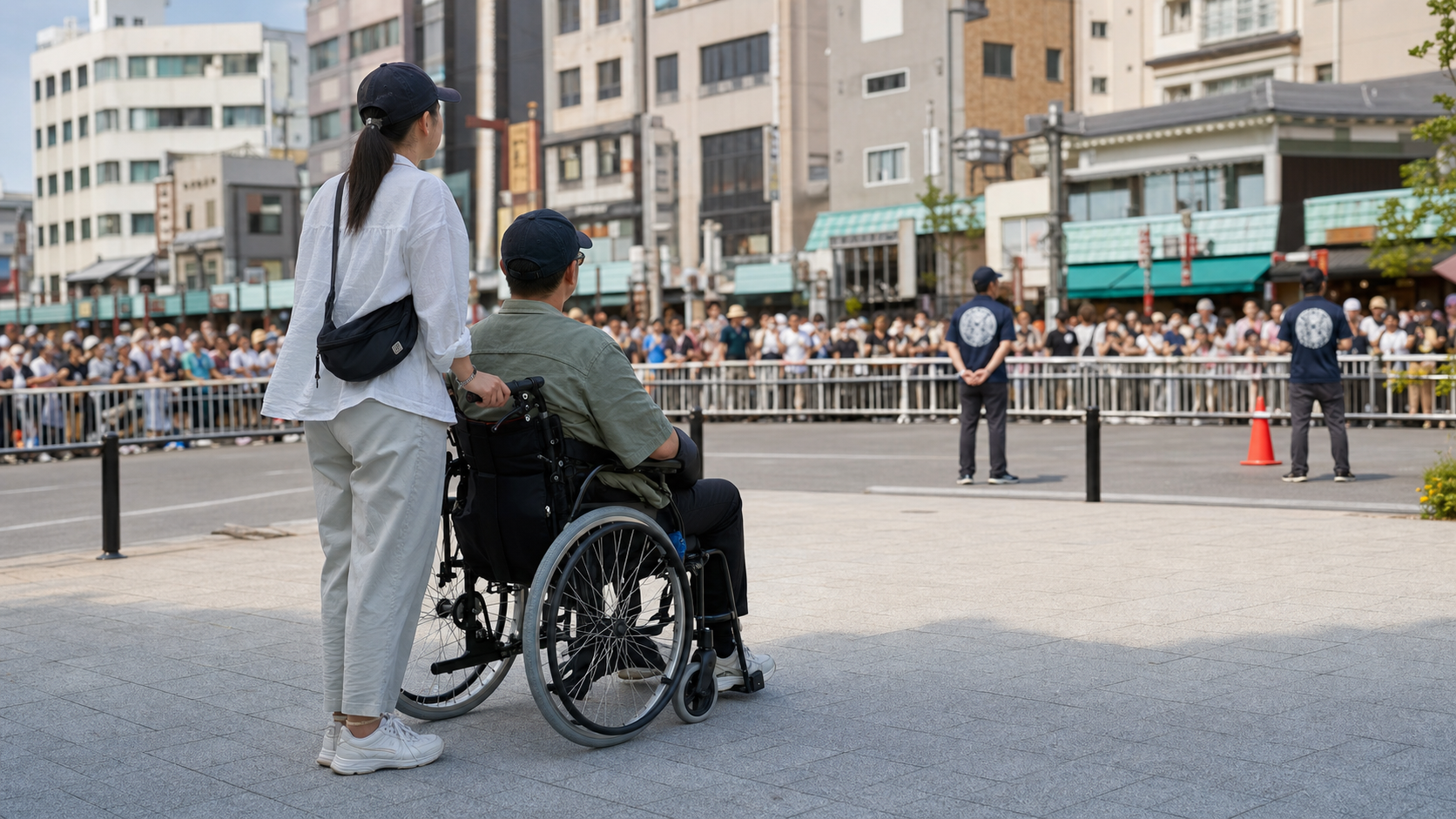
Wheelchair users should contact the organizer about the space mentioned in the supporters’ program. Ordinary curb space may not remain accessible, and some subway exits lack elevators. Tokyo Metro’s Asakusa station information identifies accessible routes, but temporary barriers can change the practical approach.
Anyone who cannot stand for long should either use reserved seating, watch briefly from farther back, or choose a different Asakusa day. Missing part of the parade is not a planning failure; pushing until someone becomes ill is.
Plan B if the route is too crowded
Your fallback should not require squeezing through the same crowd you are trying to escape.
Plan B1: hear the parade, then leave early
Watch one or two groups from a legal standing area, then walk away before the final departure surge. You still get the sound and scale without spending the whole afternoon in a fixed position.
Plan B2: cool down west of the route
Move toward Kokusai-dori when staff-directed crossings allow it, then take an indoor break and reassess. From the western side, Tsukuba Express Asakusa and Tawaramachi remain possible exits.
Plan B3: make Asakusa a two-visit neighborhood
Use carnival day for the carnival. Return on another morning for Senso-ji, Nakamise, Kappabashi and the river. The Asakusa Quick Guide works better when normal pedestrian routes are open.
Plan B4: leave the district
If your group is tired or uncomfortable, leave rather than searching for a “less crowded” block inside the same event core. A successful day can be thirty minutes of samba followed by dinner elsewhere in Tokyo.
If you would rather switch to a different summer event, compare dates and formats in our Tokyo Matsuri Guide 2026.
Final checklist for August 29
The night before:
- Recheck the official event overview and official map.
- Check the weather and official WBGT forecast.
- Check Tokyo Metro, Toei and your railway operator for service notices.
- Screenshot two walking routes to two different stations.
- Remove large luggage and unnecessary camera gear from your bag.
Before entering the route area:
- Top up your IC card.
- Buy water and use a restroom.
- Agree on a reunion point and departure trigger.
- Confirm which side of the course your next destination is on.
- Accept that staff instructions override the route saved on your phone.
The Asakusa Samba Carnival is a major Tokyo street spectacle, combining competitive samba, local festival energy and the visual density of old Asakusa. A practical approach is to avoid optimizing each minute. Pick one viewing goal, protect yourself from heat, and keep enough flexibility to leave well.
Asakusa Samba Carnival 2026 FAQ
When is the Asakusa Samba Carnival in 2026?
It is scheduled for Saturday, August 29, 2026. The organizer currently lists a 1:00 p.m. start, subject to change. Taito City’s tourism site lists a broader 12:00–17:00 event window, so check the organizer’s website shortly before traveling.
Is the Asakusa Samba Carnival free?
General standing viewing along the controlled course is free. The official supporters’ program offers a reserved seat, towel and brochure for ¥8,000 per seat while capacity remains.
What is the 2026 parade route?
The official map shows the parade starting on Umamichi-dori beside Senso-ji, moving south, turning west onto Kaminarimon-dori and finishing toward the Kokusai-dori / Asakusa ROX side. The route may change without notice.
What is the best station for the Asakusa Samba Carnival?
Tokyo Metro, Toei and Tobu Asakusa stations are convenient for the eastern and central route. Tsukuba Express Asakusa and Tawaramachi can be useful for the western end or as exit alternatives. Your choice should reflect barriers and crowd control on the day.
Can I sit along the parade route?
No. The organizer says general spectators must stand behind barriers. Chairs are prohibited. A reserved supporters’ seat is the official seated option.
Can I bring a tripod or selfie stick?
No for general viewing. Drones, selfie sticks, monopods, tripods and chairs are prohibited. The tripod exception is restricted to an individual supporters’ seat and up to the user’s face height.
Is the carnival suitable for children or wheelchair users?
It can be, but the free viewing area is crowded and requires standing. Families should plan a short visit and a reunion point. The organizer says wheelchair space can be arranged through the supporters’ program; contact the office in advance.
What happens if it rains or the event is cancelled?
Check the official carnival website for the organizer’s decision and any last-minute changes. Supporters’ fees are non-refundable even if the parade is cancelled, according to the 2026 application terms.
Sources and verification
Last checked: July 17, 2026 JST.
- Asakusa Samba Carnival official event overview
- Asakusa Samba Carnival official 2026 route map
- Official 2026 supporters’ seat information
- Taito City event page
- Official Taito City tourism listing
- Tokyo Metro Asakusa Station information
- Toei Transportation Asakusa Station information
- Ministry of the Environment heat illness prevention information
Comments