
- Quick Answer
- Why Food Allergies Feel Harder in Japan
- The 2026 Japanese Allergen Label System
- How to Read Packaged Food at Konbini and Supermarkets
- Restaurants Are Different From Packaged Food
- Hidden Problems: Dashi, Sauce, Soba and Shared Kitchens
- Vegetarian, Vegan, Halal, Pork and Alcohol
- Lower-Risk Plan B Meals
- Where to Eat by Restriction Type
- What to Do If You Feel Unwell
- Phrase Sheet
- The RJG Rule: Do Not Force the Meal
- FAQ
- Are food allergen labels mandatory in Japan?
- Is buckwheat allergy important in Japan?
- Can I trust English menus for allergies?
- Are convenience stores easier for food allergies?
- Is vegetarian food easy to find in Japan?
- Does halal-friendly mean fully halal?
- What number should I call for an ambulance in Japan?
- Should I bring an allergy card to Japan?
- Can restaurants make custom allergy-safe meals?
- What is the best Plan B meal?
- Sources Checked
Quick Answer
If you travel in Japan with a food allergy or strict dietary restriction, build your meals around three layers: packaged-food labels, direct restaurant confirmation, and a backup meal you can use when staff cannot confirm ingredients.
The practical 2026 plan is:
- For packaged food, check the Japanese allergen label first.
- As of April 2026, Japan’s mandatory allergen labeling covers 9 specified ingredients: shrimp, cashew nut, crab, walnut, wheat, buckwheat, egg, milk, and peanut.
- Restaurant menus do not work like packaged-food labels. A menu may not show full information about allergens, shared oil, broth, sauce, or trace-contact risk.
- Carry a clear allergy card in Japanese and show it before ordering.
- If staff cannot confirm, switch to a lower-risk Plan B instead of negotiating at the table.
- If your allergy can become serious, follow your clinician’s travel plan and carry your prescribed medication.
Last checked: July 5, 2026.
This guide is not medical advice. It is a travel-planning guide for reading labels, asking better questions, choosing lower-risk meals, and knowing when to step away.
Why Food Allergies Feel Harder in Japan
Food in Japan can be wonderful, but ingredient visibility is uneven for visitors.
A convenience store rice ball may have a formal allergen label. A tiny ramen shop may have no English menu. A sushi counter may know fish and shellfish very well, but may not be able to confirm sauce, garnish, vinegar, shared cutting board, or prepared-ingredient details quickly. A vegetarian-looking dish may contain bonito-based dashi. A sweet may contain egg or milk even when it looks plain.
For many tourists, the problem is not one famous dish. The problem is the gap between “I can point at a menu” and “I know enough to eat this comfortably.”
Use this guide with the right next click:
- For booking restaurants in advance, see TableCheck vs Tabelog: Book Tokyo Restaurants in 2026.
- For convenience-store meals, see 7-Eleven, FamilyMart, or Lawson? A Tourist’s Guide to Japan.
- For medicine and emergency shopping basics, see Japan Pharmacy & Drugstore Guide.
- For Muslim-traveler context, see What to Expect as a Muslim Guest at a Japanese Airbnb.
- For noodles, start with Tokyo Soba Guide 2026 and Tokyo Udon 2026.
The 2026 Japanese Allergen Label System
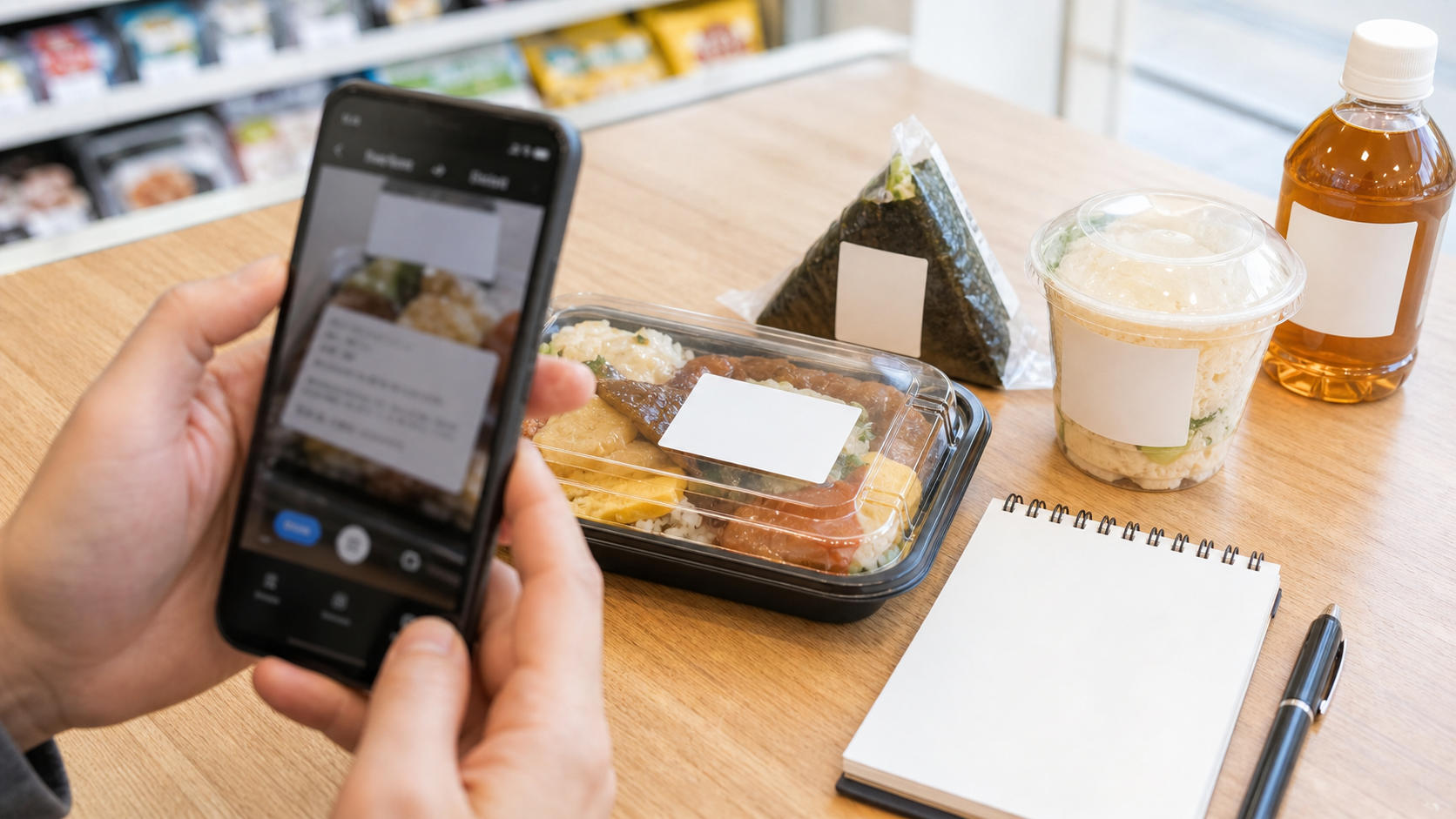
Japan’s packaged-food allergen system is useful, but it has boundaries.
The Consumer Affairs Agency separates allergen information into two levels. As of the April 2026 material checked for this article, Japan lists 9 items as mandatory specified ingredients and 20 items as recommended specified ingredients.
The 9 mandatory items are:
- shrimp
- cashew nut
- crab
- walnut
- wheat
- buckwheat
- egg
- milk
- peanut
In Japanese, these commonly appear as:
| English | Japanese label word |
|---|---|
| shrimp | えび |
| cashew nut | カシューナッツ |
| crab | かに |
| walnut | くるみ |
| wheat | 小麦 |
| buckwheat | そば |
| egg | 卵 |
| milk | 乳 |
| peanut | 落花生 / ピーナッツ |
The recommended list covers more ingredients, including items such as almond, abalone, squid, salmon roe, orange, kiwi fruit, beef, sesame, salmon, mackerel, soybean, chicken, banana, pistachio, pork, macadamia nut, peach, yam, apple, and gelatin.
Two important cautions:
- A packaged-food label is not a full restaurant guarantee.
- A recommended item may be displayed differently from a mandatory item.
For a traveler, the first useful action is simple: learn the Japanese word for your allergen and look for the allergen box near the ingredient list.
How to Read Packaged Food at Konbini and Supermarkets

Convenience stores and supermarkets are often easier than small restaurants because packaged foods have ingredient and allergen panels.
Look for words such as:
- 原材料名: ingredients
- アレルゲン: allergen
- 特定原材料: specified ingredients
- 含む: contains
- 一部に…を含む: contains … as part of the ingredients
- 本品製造工場では…を含む製品を製造しています: this factory also makes products containing …
The label may show allergens in a compact list, or in a sentence after the ingredients. On some packages, an icon panel shows common allergens, but do not rely on icons alone. Check the words as well.
Label Reading Workflow
Use this order:
- Check the front photo and name.
- Turn the package over.
- Find 原材料名.
- Find アレルゲン or 特定原材料.
- Search for your allergen word.
- Check factory-contact wording if your allergy is sensitive to trace contact.
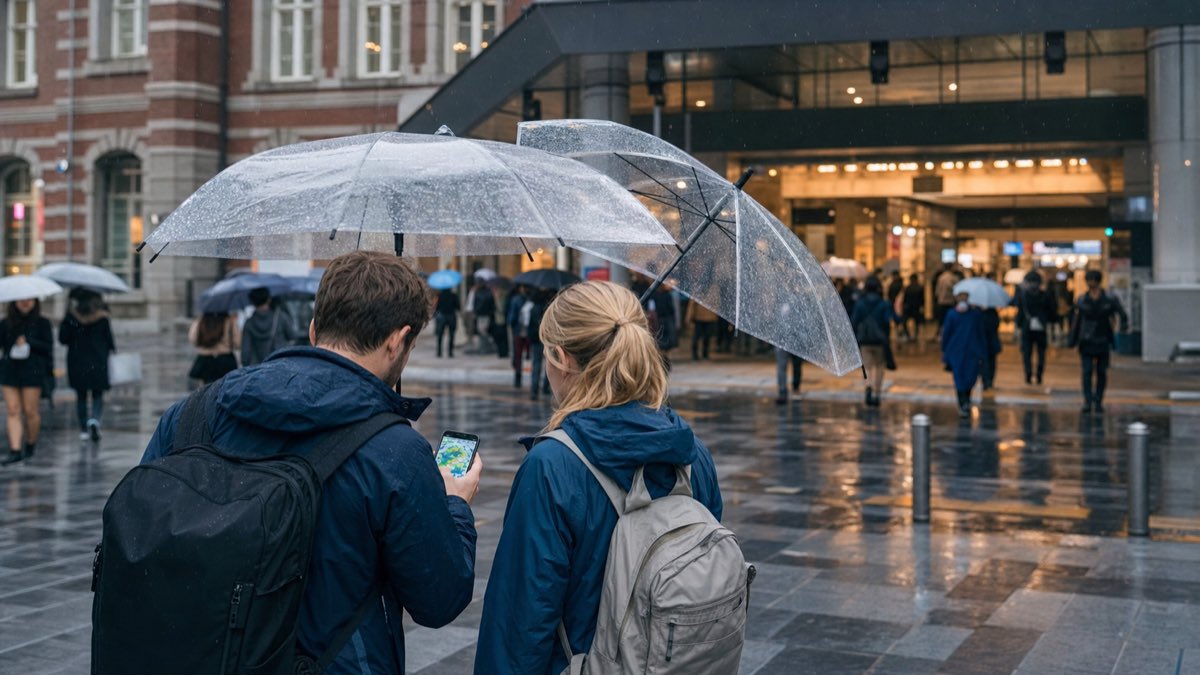
- If you cannot read the label, use camera translation and ask staff with a short phrase.
Camera translation helps, but it can mistranslate food words. For serious allergies, do not treat a phone translation as the final authority.
Useful phrase:
I have a food allergy. Could you please check whether this contains ___?
Japanese:
食物アレルギーがあります。これは___を含みますか?
Romaji:
Shokumotsu arerugii ga arimasu. Kore wa ___ o fukumiemasu ka?
If the answer is unclear, put the item back.
Restaurants Are Different From Packaged Food
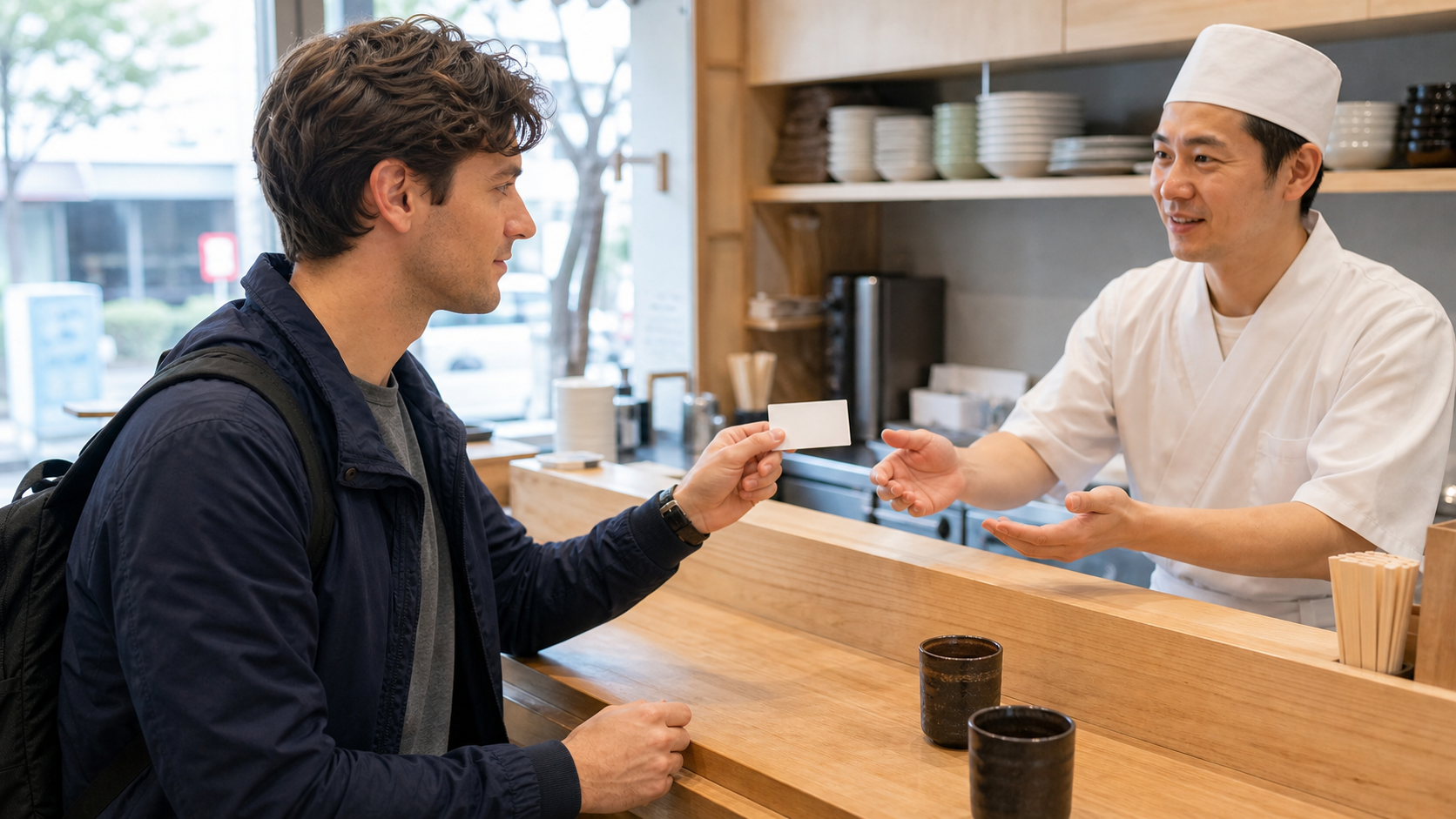
Restaurants in Japan vary widely. Large chains may have allergen charts online. Family restaurants may have a tablet menu or printed allergen list. A small ramen, soba, sushi, izakaya, tempura, or curry shop may not have a full English allergen system.
This does not mean the shop is careless. It means the kitchen may use prepared sauces, soup bases, shared fryers, shared utensils, or supplier ingredients that staff cannot confirm quickly in English.
Ask before you order, not after the food arrives.
The Best Restaurant Question
Do not ask:
Is this okay for me?
That puts a medical decision on the staff.
Ask:
Does this contain ___?
Japanese:
これは___を含みますか?
Then ask one follow-up:
Is the soup, sauce, or seasoning made with ___?
Japanese:
スープ、ソース、調味料に___は使われていますか?
If your concern includes shared oil or shared equipment, say it directly:
I cannot eat food cooked in the same oil as ___.
Japanese:
___と同じ油で揚げたものは食べられません。
Use an Allergy Card
An allergy card should be short, direct, and written in Japanese. It should name the allergen and the consequence in plain language.
Example:
I have a serious food allergy to buckwheat. I cannot eat soba, soba flour, soba broth, or food cooked with soba utensils. If this cannot be confirmed, I will not order it.
Japanese:
そばに重い食物アレルギーがあります。そば、そば粉、そばのつゆ、そばと同じ調理器具で作った料理は食べられません。確認できない場合は注文しません。
Keep the card polite. The goal is not to demand a custom meal. The goal is to help staff answer a concrete ingredient question.
Hidden Problems: Dashi, Sauce, Soba and Shared Kitchens
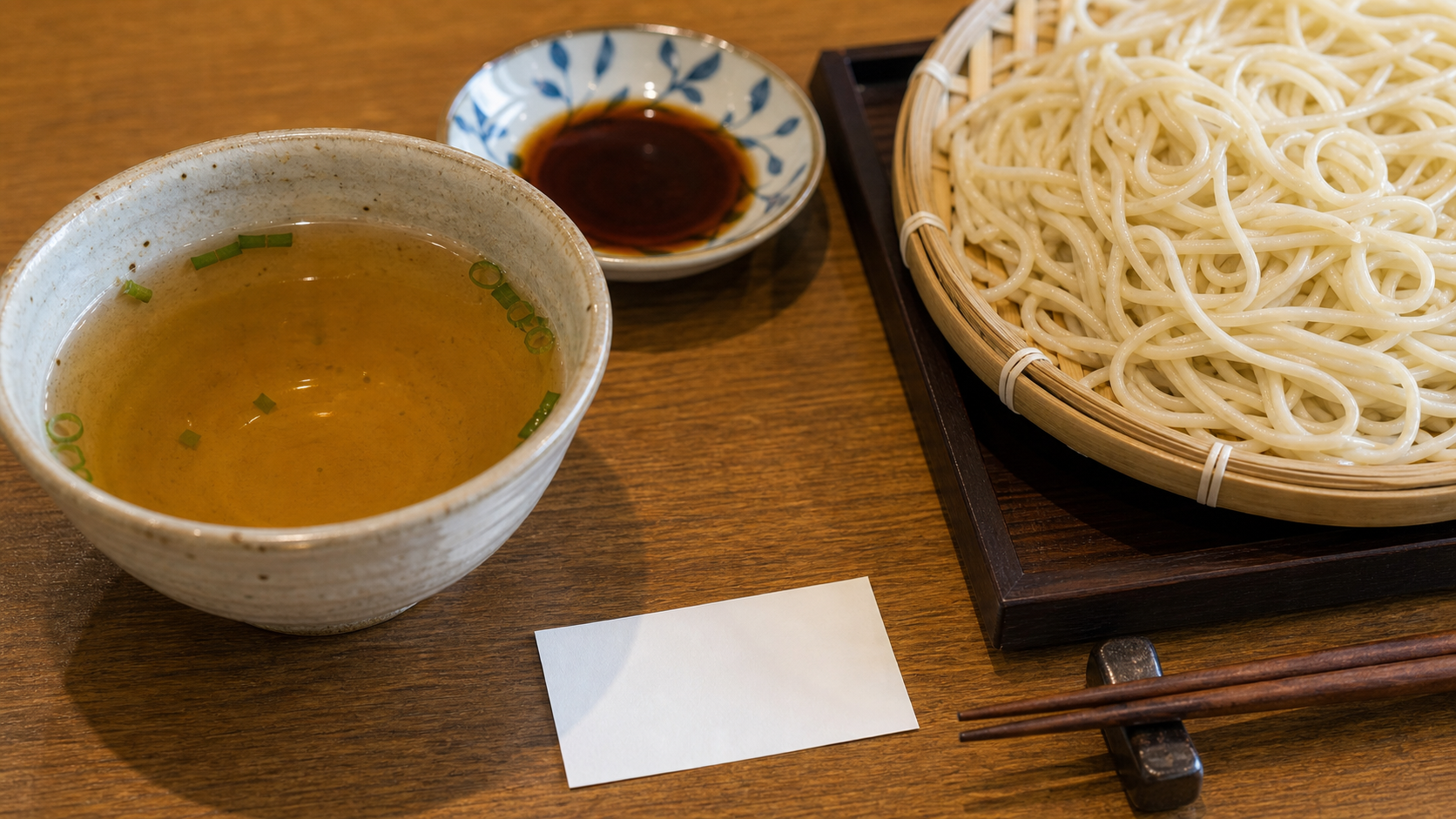
The visible ingredient may not be the problem.
Dashi
Dashi can be made with bonito flakes, dried sardines, kelp, shiitake, or mixed commercial stock. A dish that looks vegetable-based may still use fish-based stock. This matters for vegetarian, vegan, and some religious diets.
Ask:
Does this contain fish-based dashi?
Japanese:
これは魚のだしを使っていますか?
Soba
Buckwheat is one of Japan’s mandatory allergen-labeling items. For a serious buckwheat allergy, soba shops are difficult because flour dust, boiling water, utensils, and noodles can overlap. Some udon shops also serve soba.
If buckwheat is your allergen, treat soba-focused shops as high friction. Choose a different restaurant type unless the shop can clearly explain its separation practices.
Sauces and Seasonings
Soy sauce contains wheat in many standard versions. Miso may contain soybean. Dressing may contain egg, sesame, fish extract, dairy, or gelatin. Curry roux may contain wheat, milk, meat extract, or nut ingredients depending on the brand.
Ask about sauce and broth, not just the visible ingredient.
Shared Fryers
Tempura, karaage, croquettes, fries, pork cutlets, and seafood can share oil. If trace contact matters, a fried-food restaurant may be hard to verify.
Phrase:
Is this fried in the same oil as shrimp, crab, wheat, egg, or milk products?
Japanese:
これは、えび・かに・小麦・卵・乳製品と同じ油で揚げていますか?
Vegetarian, Vegan, Halal, Pork and Alcohol
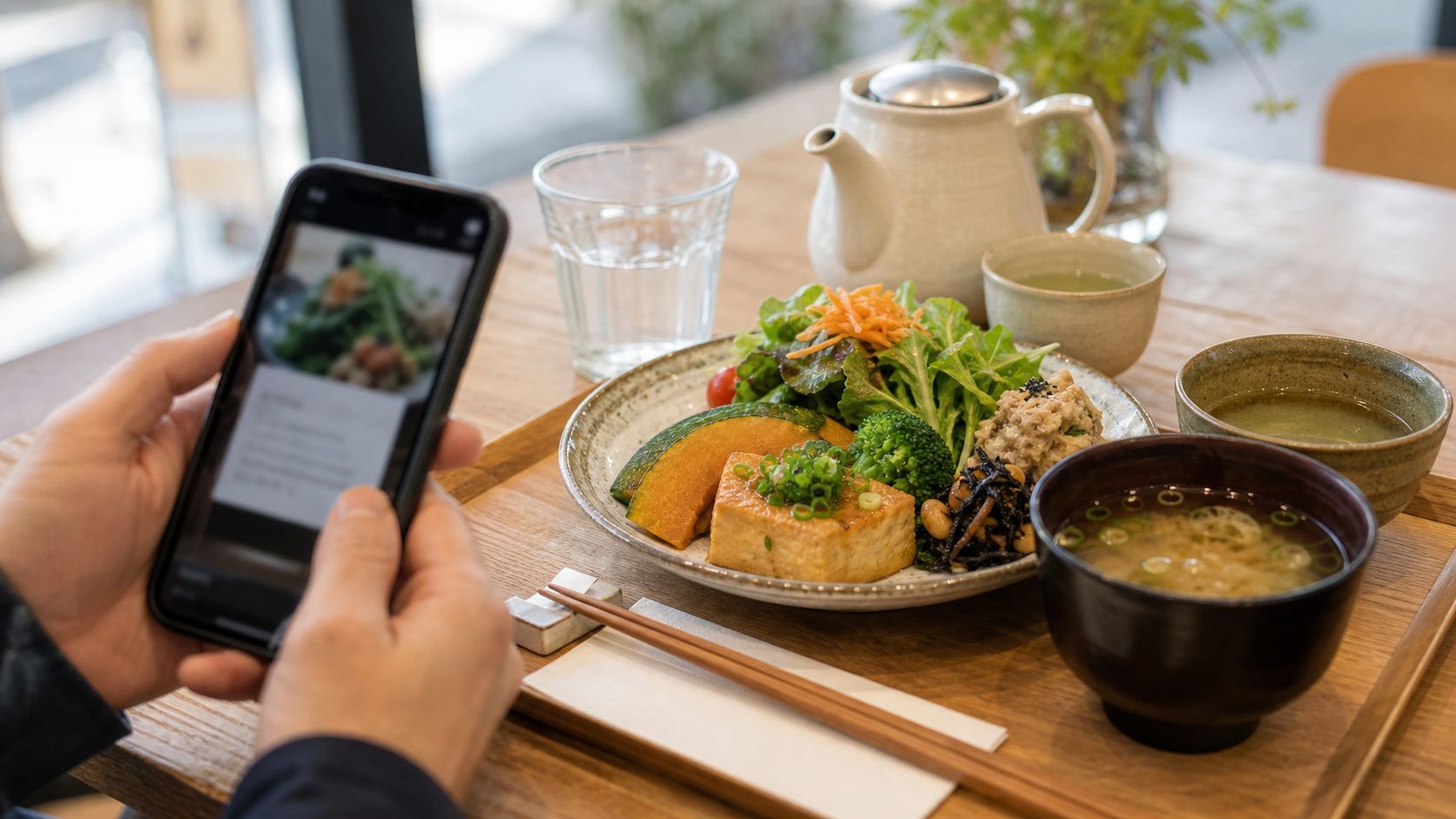
Dietary restrictions that are not medical allergies can still be hard in Japan.
JNTO’s vegetarian guide warns travelers to watch for hidden ingredients such as dashi, bonito flakes, meat extracts, and seafood-based seasonings. That creates a practical check: the dish may look plant-based, but the base may not be.
For Muslim travelers, pork, alcohol, mirin, sake, gelatin, emulsifiers, and shared preparation can matter. JNTO’s Muslim traveler information is a helpful planning source, but restaurant-level confirmation is still needed.
Vegetarian and Vegan Phrase
I do not eat meat, fish, seafood, eggs, dairy products, or fish-based dashi.
Japanese:
肉、魚、魚介類、卵、乳製品、魚のだしは食べられません。
If you eat some of those, remove the parts that do not apply.
Halal / Pork / Alcohol Phrase
I cannot eat pork, pork extract, gelatin, or food cooked with alcohol.
Japanese:
豚肉、豚由来の成分、ゼラチン、アルコールを使った料理は食べられません。
This phrase does not certify a meal as halal. It helps staff check specific ingredients.
For restaurants where this matters, search before you go. Same-day walk-ins are possible, but strict restrictions are easier when the restaurant already explains its policy online.
Lower-Risk Plan B Meals
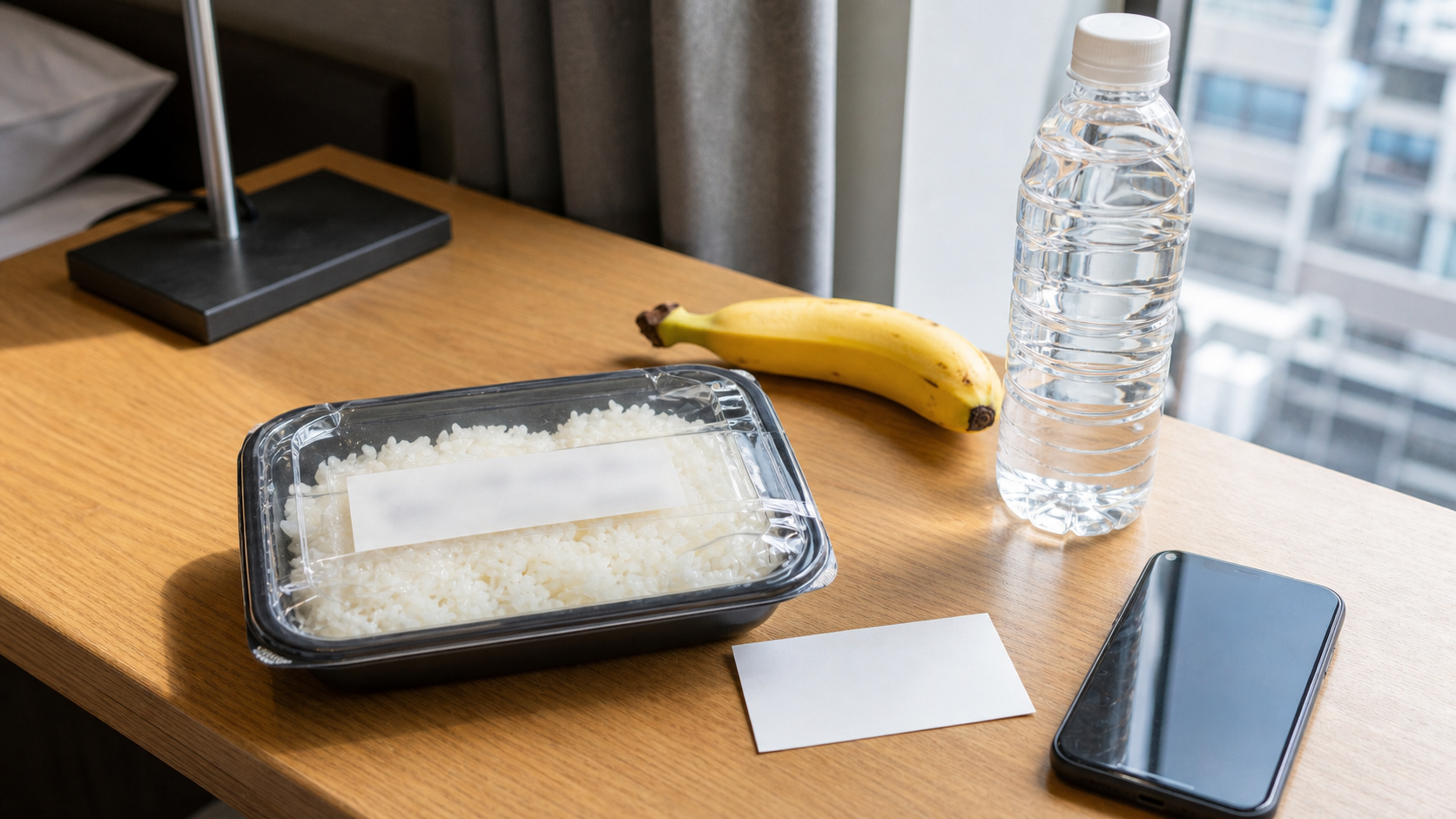
Plan B is not glamorous. It is what keeps the day moving when a restaurant cannot confirm ingredients.
A good Plan B has three conditions:
- You can inspect the label or ask a simple question.
- You do not need a special request in a busy kitchen.
- You can buy it near your route.
Possible Plan B options depend on your restriction, but these are common starting points:
- packaged plain rice or salt onigiri if the label works for you
- plain fruit from a supermarket
- bottled drinks with clear labels
- packaged salads or cut vegetables after checking dressing and toppings
- simple rice bowls or grilled items at chains that publish allergen information
- a restaurant you pre-checked near your hotel
- a famiresu with an allergen chart, if the chart covers your concern
For family restaurants and waiting-time use, see Famiresu in Japan: Cheap Meals, Drink Bars & Luggage Tips.
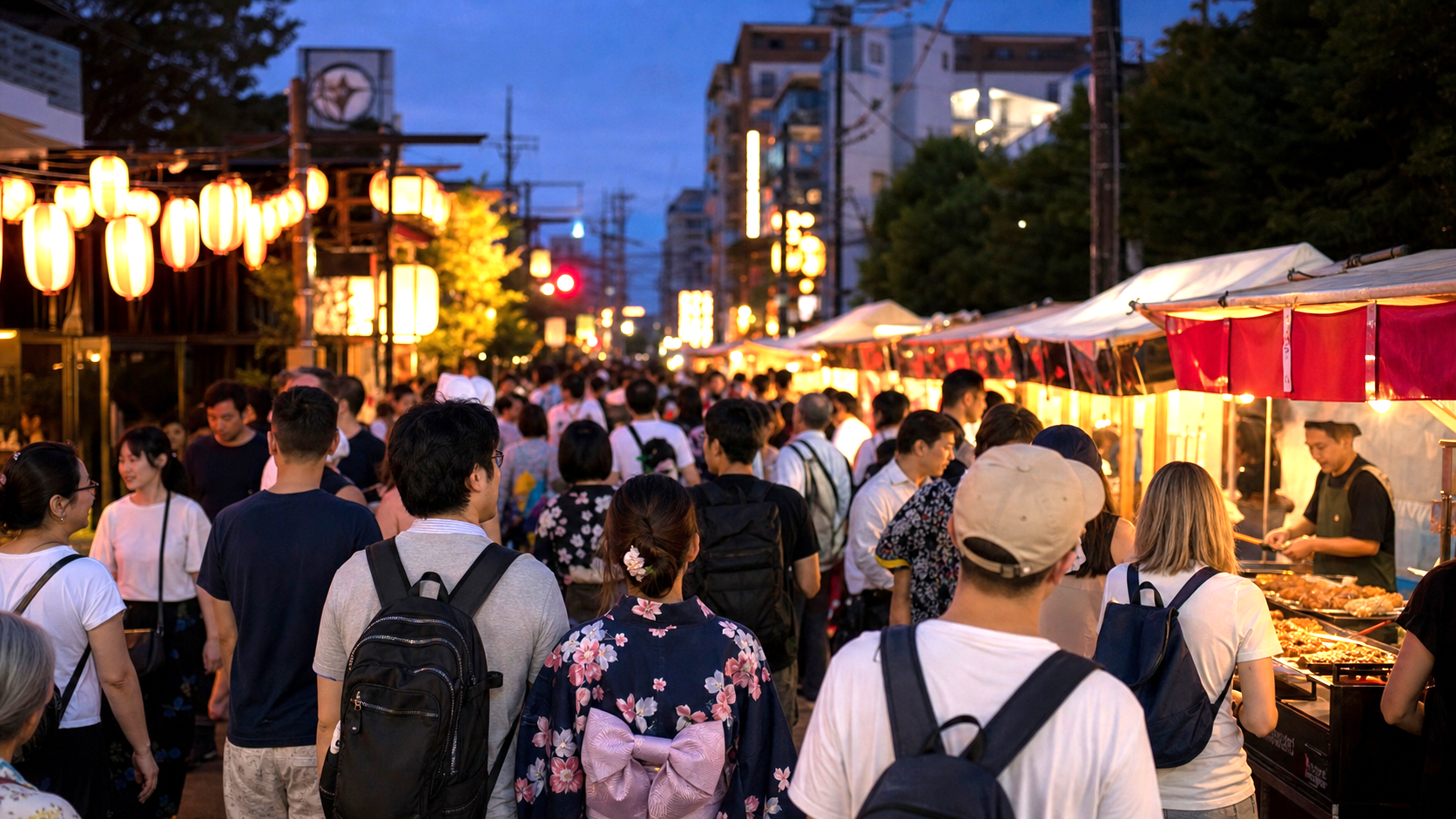
For festival nights, bring your Plan B before you enter the crowd. Food stalls are fun, but they are not the best place to ask complex ingredient questions. Use the Japan Festival Survival Guide for crowd and train planning.
Where to Eat by Restriction Type
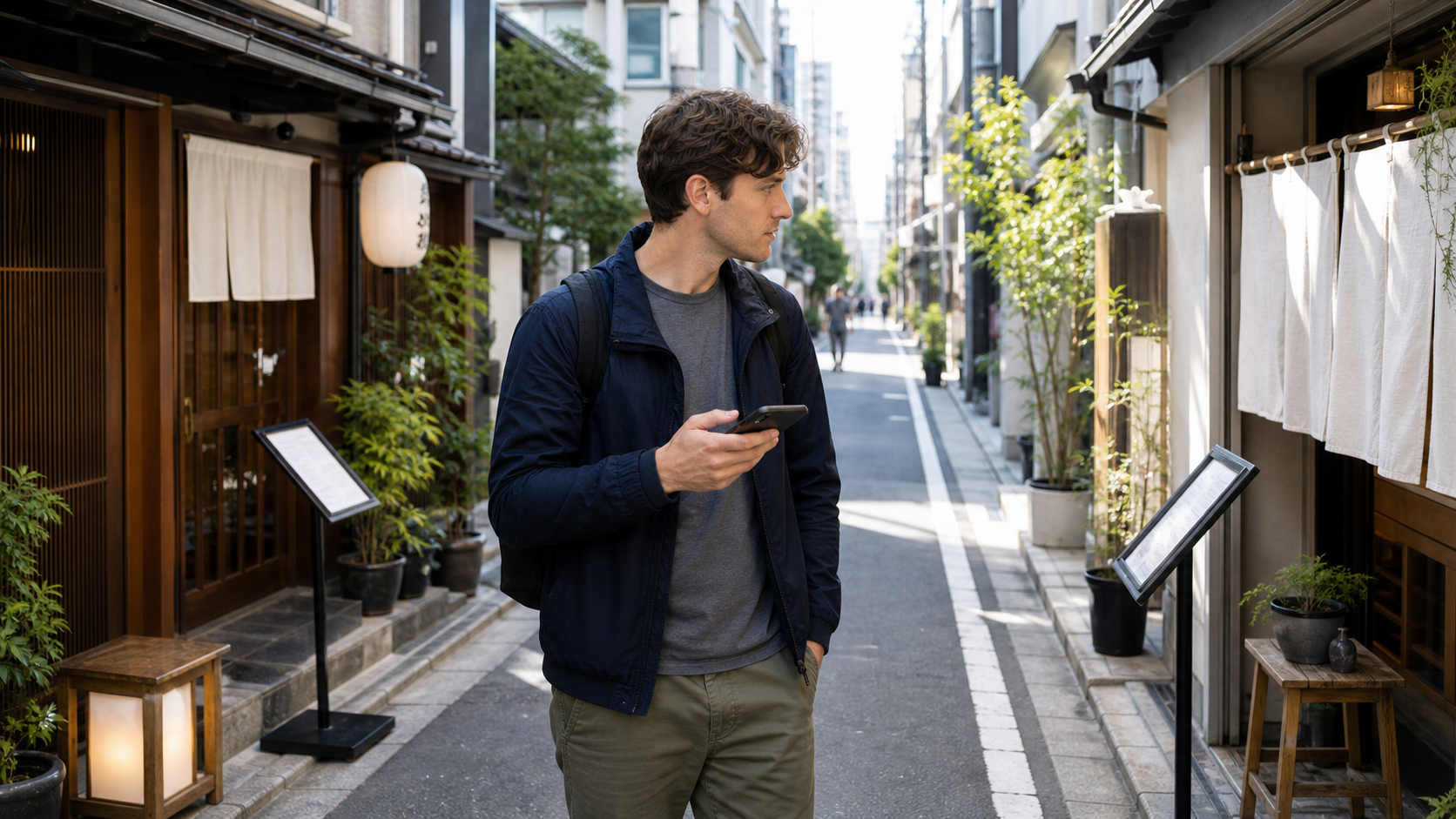
This section is a starting map, not a guarantee.
Severe Food Allergy
Best fit:
- restaurants contacted in advance
- hotel restaurants with English support
- larger chains with allergen charts
- packaged foods with readable labels
Harder fit:
- tiny counter shops during peak hours
- festivals and street stalls
- shared-fryer shops
- shops built around your allergen, such as soba shops for buckwheat allergy
Vegetarian or Vegan
Best fit:
- vegetarian or vegan-specialty restaurants
- Buddhist temple cuisine, after confirming details
- cafes with clearly marked vegan menus
- restaurants that publish English ingredient information
Harder fit:
- ramen unless the shop marks vegan broth
- okonomiyaki and monjayaki if the batter, sauce, or toppings are unclear
- convenience-store meals without checking dashi, gelatin, egg, milk, and meat extract
Halal / No Pork / No Alcohol
Best fit:
- halal-certified or Muslim-friendly restaurants with current information
- restaurants that clearly discuss pork, alcohol, and broth
- simple packaged foods after checking labels
Harder fit:
- ramen, curry, gyoza, tonkatsu, and sauces unless details are confirmed
- desserts with gelatin or alcohol flavoring
- izakaya menus where sauce and stock details vary
For a Tokyo-specific example, see Halal Ramen in Tokyo 2026.
What to Do If You Feel Unwell
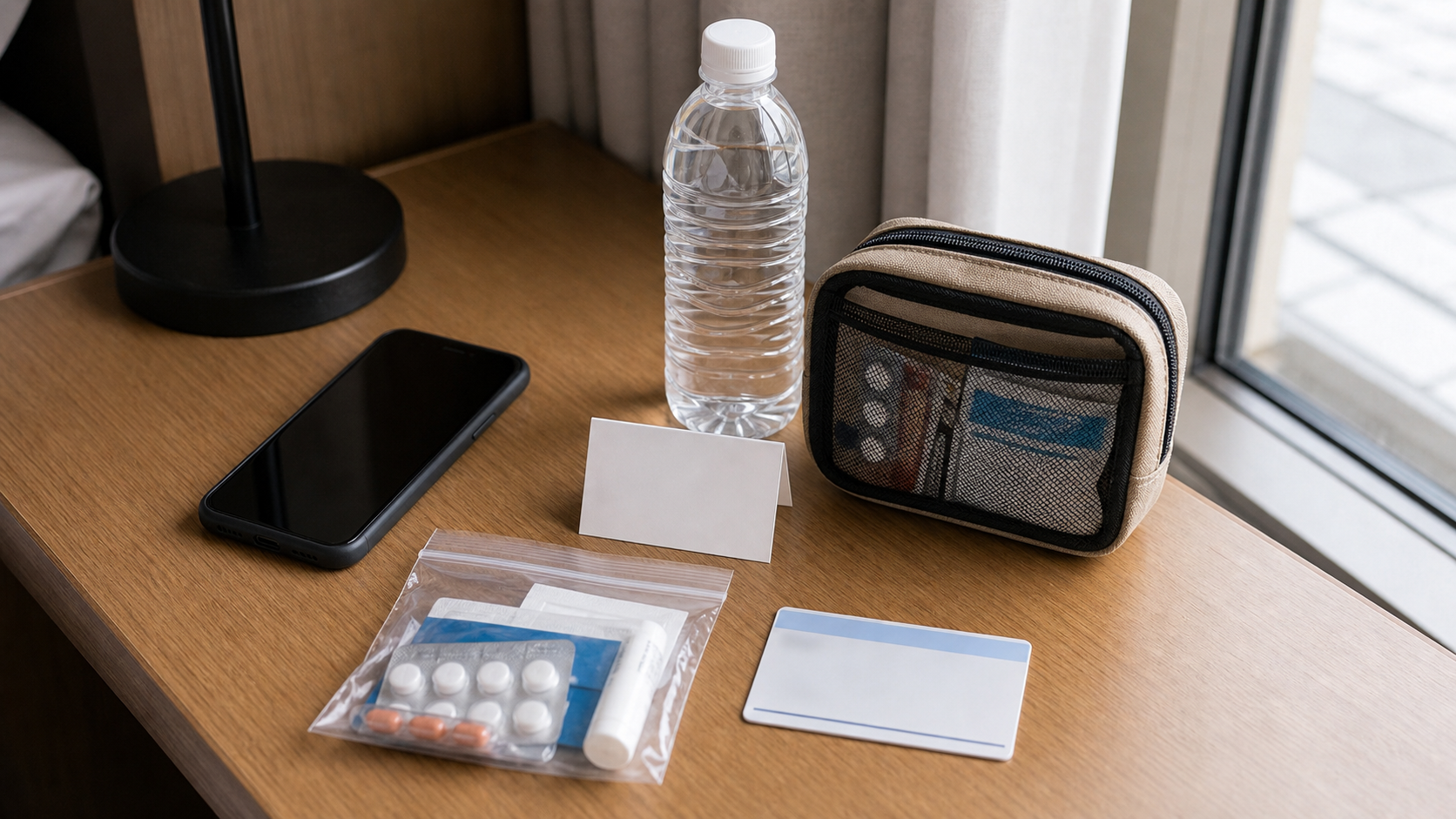
If you think you may be having an allergic reaction, stop eating and ask for help.
In Japan:
- 119 is the emergency number for ambulance and fire.
- 110 is the emergency number for police.
- JNTO provides emergency and medical information for visitors.
- The JNTO medical guide can help travelers search for medical institutions.
Useful emergency phrase:
I may be having an allergic reaction. Please call an ambulance.
Japanese:
アレルギー反応かもしれません。救急車を呼んでください。
Romaji:
Arerugii hannou kamoshiremasen. Kyuukyuusha o yonde kudasai.
If your clinician prescribed emergency medication, follow that plan. Do not wait for a restaurant, hotel, or station staff member to judge your symptoms.
For pharmacy basics, use the Japan Pharmacy & Drugstore Guide, but an emergency is not a drugstore problem.
Phrase Sheet
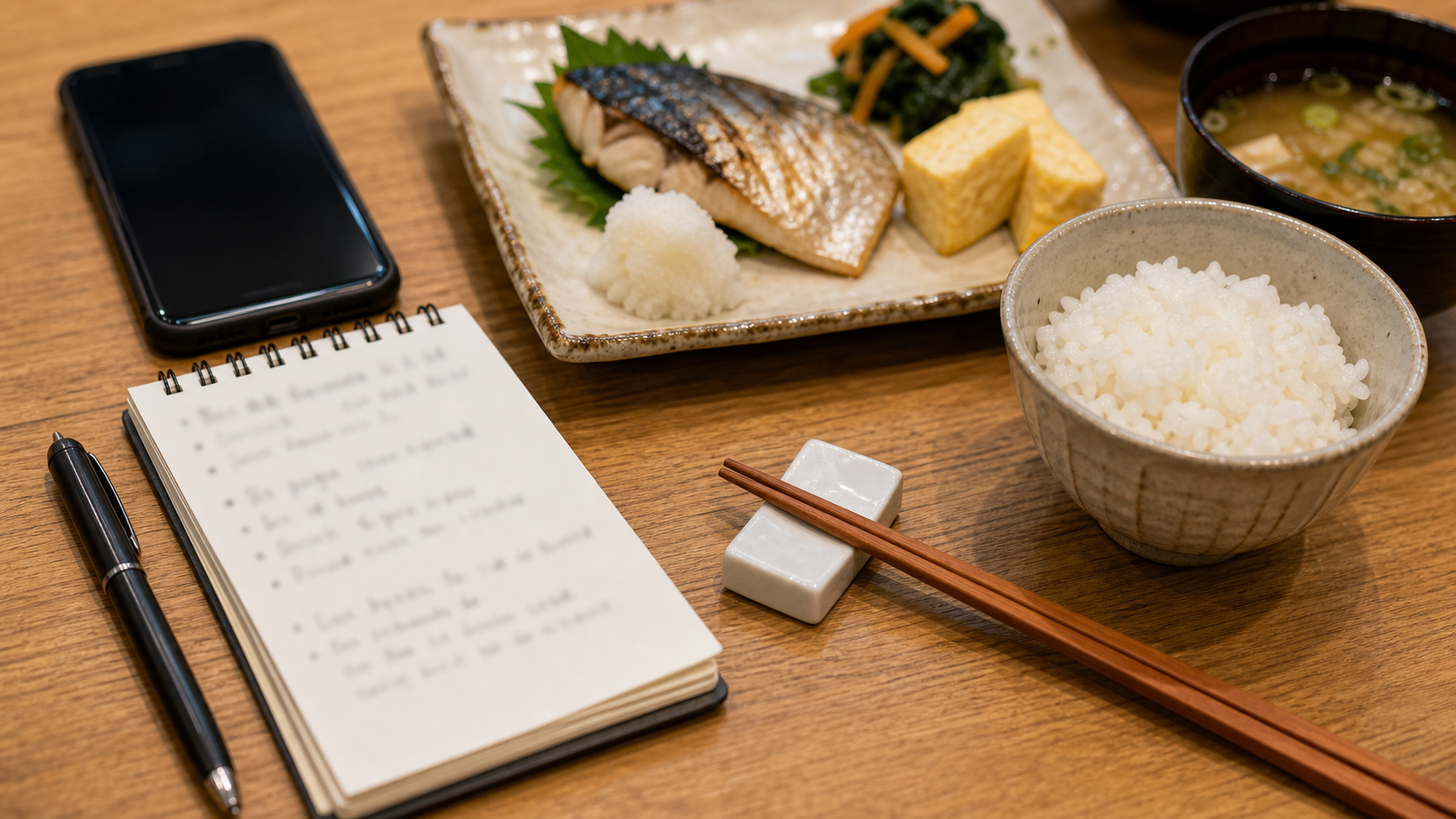
Copy the lines that match your situation.
Basic
| English | Japanese |
|---|---|
| I have a food allergy. | 食物アレルギーがあります。 |
| Does this contain ___? | これは___を含みますか? |
| I cannot eat ___. | ___は食べられません。 |
| Please check with the kitchen. | 調理場に確認してください。 |
| If you cannot confirm it, I will not order it. | 確認できない場合は注文しません。 |
Allergen Words
| English | Japanese |
|---|---|
| shrimp | えび |
| crab | かに |
| cashew nut | カシューナッツ |
| walnut | くるみ |
| wheat | 小麦 |
| buckwheat | そば |
| egg | 卵 |
| milk | 乳 |
| peanut | 落花生 / ピーナッツ |
| sesame | ごま |
| soybean | 大豆 |
| pork | 豚肉 |
| gelatin | ゼラチン |
| alcohol | アルコール |
| fish-based dashi | 魚のだし |
Serious Allergy Card Template
I have a serious allergy to . I cannot eat foods that contain , foods cooked with the same utensils, or foods fried in the same oil. If this cannot be confirmed, I will not order the dish.
Japanese:
に重いアレルギーがあります。を含む料理、同じ調理器具で作った料理、同じ油で揚げた料理は食べられません。確認できない場合は注文しません。
The RJG Rule: Do Not Force the Meal
The strongest travel move is sometimes leaving the restaurant politely.
Say:
Thank you. I will choose another restaurant today.
Japanese:
ありがとうございます。今日は別のお店にします。
This keeps the situation kind for both sides. Staff do not have to make a claim they cannot verify, and you do not have to gamble with an unclear meal.
Japan is easier when you plan the fallback before you are hungry. Save one chain restaurant, one supermarket, and one packaged-food option near your hotel. That small plan can rescue a whole day.
FAQ
Are food allergen labels mandatory in Japan?
For packaged foods, Japan has mandatory labeling for specified ingredients. As of the April 2026 Consumer Affairs Agency material checked for this guide, the mandatory list contains 9 items: shrimp, cashew nut, crab, walnut, wheat, buckwheat, egg, milk, and peanut. Restaurants are a different situation and may not provide the same label-style information.
Is buckwheat allergy important in Japan?
Yes. Buckwheat is one of Japan’s mandatory allergen-labeling items. It matters because soba noodles, soba flour, soba shops, and shared preparation can be difficult for travelers with serious buckwheat allergy.
Can I trust English menus for allergies?
Use English menus as a starting point, not the final check. Ask whether the dish contains your allergen, and ask about soup, sauce, seasoning, shared oil, or shared utensils if those matter for you.
Are convenience stores easier for food allergies?
They can be easier because packaged foods have labels. You still need to read the allergen panel and ingredient list. Camera translation can help, but it may mistranslate food terms.
Is vegetarian food easy to find in Japan?
Vegetarian and vegan options are easier in major cities than they used to be, but hidden dashi, bonito flakes, meat extract, gelatin, egg, dairy, and seafood-based seasoning can still be an issue. Search for dedicated vegetarian or vegan restaurants when the restriction is strict.
Does halal-friendly mean fully halal?
The term needs confirmation. Terms such as halal-friendly or Muslim-friendly can vary by restaurant. Check pork, alcohol, gelatin, broth, and preparation details before ordering.
What number should I call for an ambulance in Japan?
Call 119 for ambulance or fire emergency in Japan. For police, call 110. If you may be having an allergic reaction, ask nearby staff or a person near you to call an ambulance.
Should I bring an allergy card to Japan?
Yes. A short Japanese allergy card is one of the most practical tools. It should name the allergen, explain shared oil or utensils if relevant, and say that you will not order if the ingredient cannot be confirmed.
Can restaurants make custom allergy-safe meals?
Some restaurants may be able to adjust a dish, but you should not assume this. Busy small shops may not be able to confirm supplier ingredients, sauce contents, or shared equipment. A pre-checked restaurant or packaged Plan B is more reliable.
What is the best Plan B meal?
The best Plan B is the one you can verify. For some travelers, that may be labeled packaged rice, fruit, bottled drinks, or a chain restaurant with an allergen chart. For strict restrictions, choose your Plan B before you are hungry.
Sources Checked
- Consumer Affairs Agency: Food allergy labeling system and specified ingredients, checked July 5, 2026.
- Consumer Affairs Agency: Efforts for allergen information in eating out and prepared meals, checked July 5, 2026.
- JNTO: Emergencies in Japan and medical information for visitors, checked July 5, 2026.
- JNTO: Vegetarian and vegan guide, checked July 5, 2026.
- JNTO: Muslim traveler information, checked July 5, 2026.
Comments