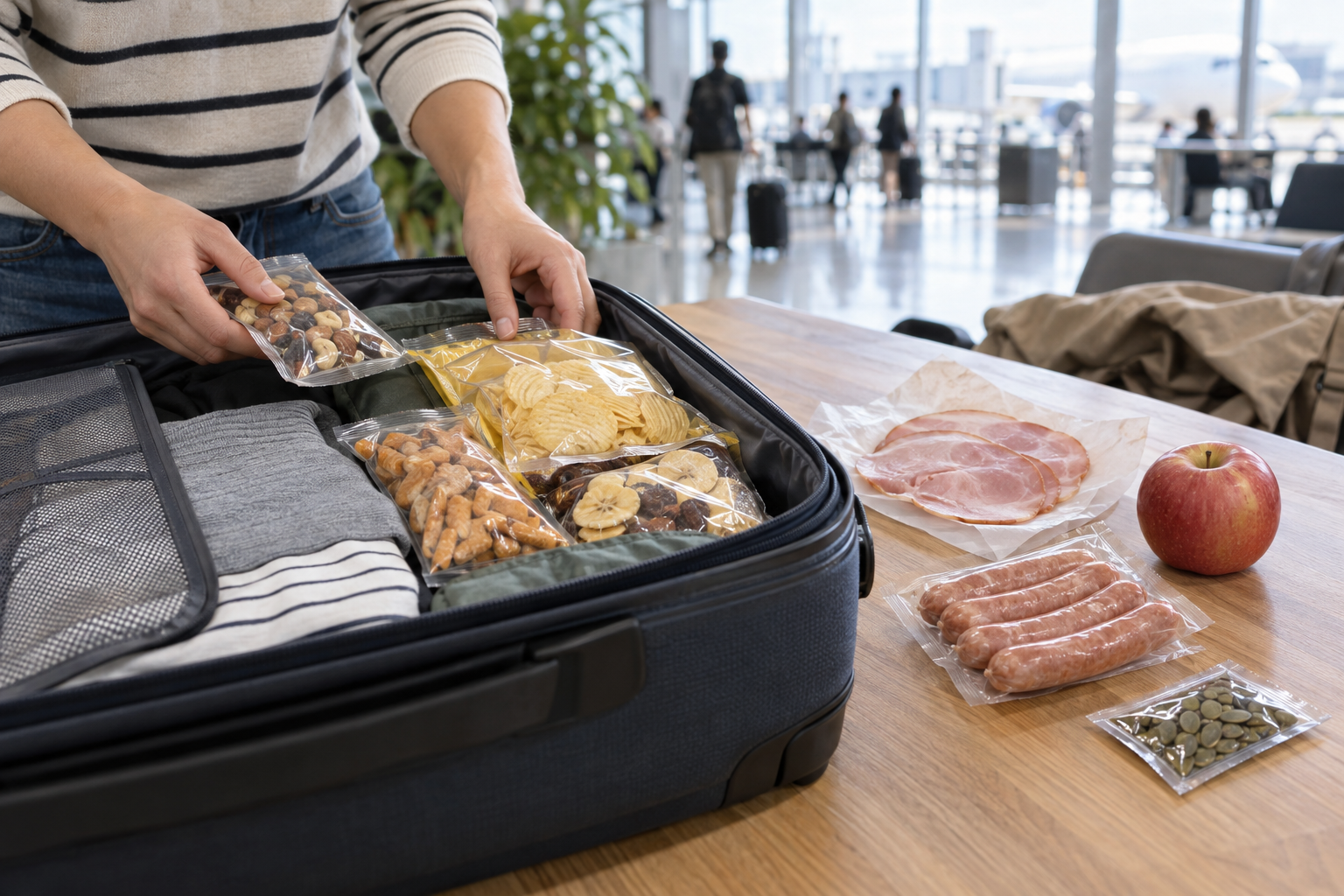
- Quick Answer: remove, check, present, or buy after arrival
- The 30-second packing decision
- Why there is no single “food rule”
- Meat and animal products: use the conservative rule
- Fruit, vegetables, seeds, and plants: item plus origin
- Sealed snacks, candy, dairy, and mixed foods
- The arrival sequence: quarantine before Customs
- A simple pre-flight checklist
- Plan B: buy it in Japan
- Mistakes that create unnecessary risk
- FAQ
- Can I bring snacks into Japan?
- Can I bring meat into Japan for personal use?
- Is cooked or vacuum-packed meat allowed?
- Can I bring fresh fruit or vegetables into Japan?
- Do seeds, grains, beans, or spices need inspection?
- Can I bring cheese or other dairy products?
- Can I bring dried fish or seafood snacks?
- Is food bought at duty-free automatically allowed?
- Should I declare food if I am unsure?
- Does personal use mean I do not need any import procedure?
- Final decision
Quick Answer: remove, check, present, or buy after arrival
When bringing food into Japan, do not ask only, “Is food allowed?” Ask what the item contains, where it came from, how it was processed, and which authority controls it.
Use four actions:
- Remove most meat and animal products before departure unless the exact item satisfies Japan’s current conditions and has the required government inspection certificate. Cooking, vacuum sealing, a small personal quantity, or buying it at duty-free does not automatically make it acceptable.
- Check fruit, vegetables, seeds, grains, beans, cut flowers, and other plant items by both item and origin. Some are prohibited. Others require a phytosanitary certificate and plant inspection.
- Present uncertain or restricted items before Customs. Japan Customs says restricted plants and animals must go to the appropriate quarantine officer before Customs examination.
- Use the safest Plan B: buy the food after arrival. If the official answer is unclear before your flight, leave the item behind.
All passengers entering Japan must submit a Customs declaration. Japan Customs recommends electronic declaration through Visit Japan Web, and paper forms remain available. A declaration form is not an import permit: animal and plant quarantine checks come first when they apply.
This guide is a practical checklist, not legal advice or approval for a specific product. Rules can change and can depend on the product, ingredients, country of origin, exporting country, disease status, processing, and certificates. Last checked: September 12, 2026 JST.
The 30-second packing decision
| What you are packing | First decision | What to do next |
|---|---|---|
| Ham, sausage, bacon, jerky, meat buns, or another product containing livestock or poultry ingredients | Treat as animal quarantine material | Usually remove it. Only continue if the exact current MAFF conditions and government certificate requirements are satisfied. |
| Fresh fruit, vegetables, seeds, grains, beans, cut flowers, or another plant item | Item and origin both matter | Use the official MAFF plant import-conditions search. Obtain any required phytosanitary certificate and present the item for plant inspection. |
| A sealed snack or mixed-ingredient packaged food | Packaging alone does not answer the question | Read every ingredient. Check whether it contains animal products or regulated plant material. Keep the original package for identification. |
| Fish or seafood product | Do not group it automatically with meat | Check the exact ingredients and current rules. Animal Quarantine Service gives a limited fish-product example, but another ingredient or another law may still matter. |
| Anything you cannot classify confidently | Uncertainty is the decision | Do not pack it, or present it to the appropriate quarantine counter before Customs. |
The table deliberately does not label every snack “allowed” or “banned.” A homemade list goes stale quickly and cannot account for every origin and ingredient. Use it to choose the correct official check.
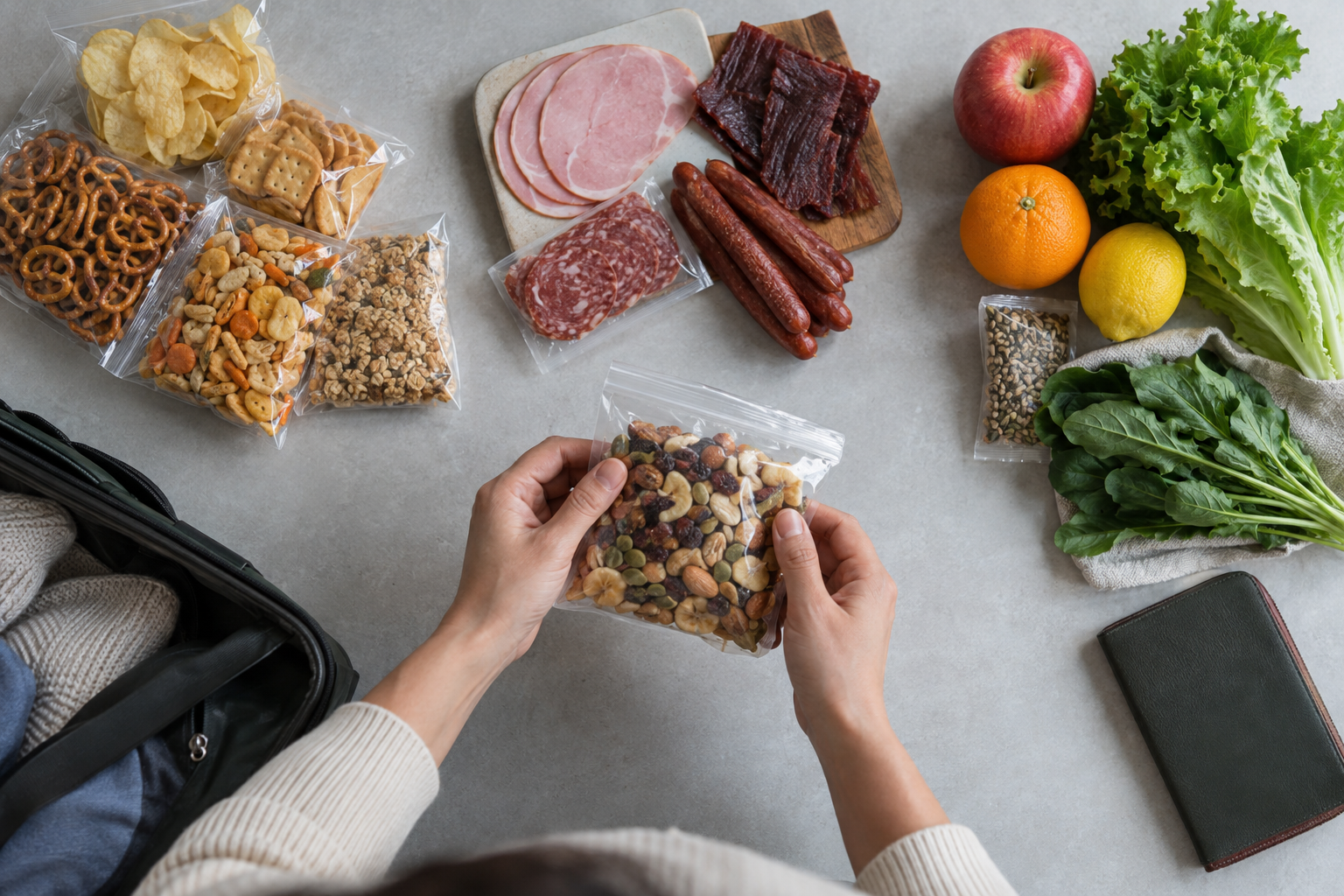
Why there is no single “food rule”
Four different questions are often mixed together:
- Animal quarantine: Could the product carry an animal disease? This covers many livestock and poultry products, including processed foods.
- Plant quarantine: Could the item carry a plant pest? The answer can change by plant, form, production country, and exporting country.
- Customs: Have you submitted the required declaration, and are any goods prohibited, restricted, taxable, or subject to another agency’s inspection?
- Food Sanitation Act import notification: Is the food being imported for sale or business use? MHLW says personal-use imports are exempt from that notification procedure, but that exemption does not cancel animal quarantine, plant quarantine, Customs, or other rules.
That last distinction matters. “For personal use” is not a universal pass. It answers one MHLW notification question; it does not make ham, fruit, seeds, or another restricted item admissible.
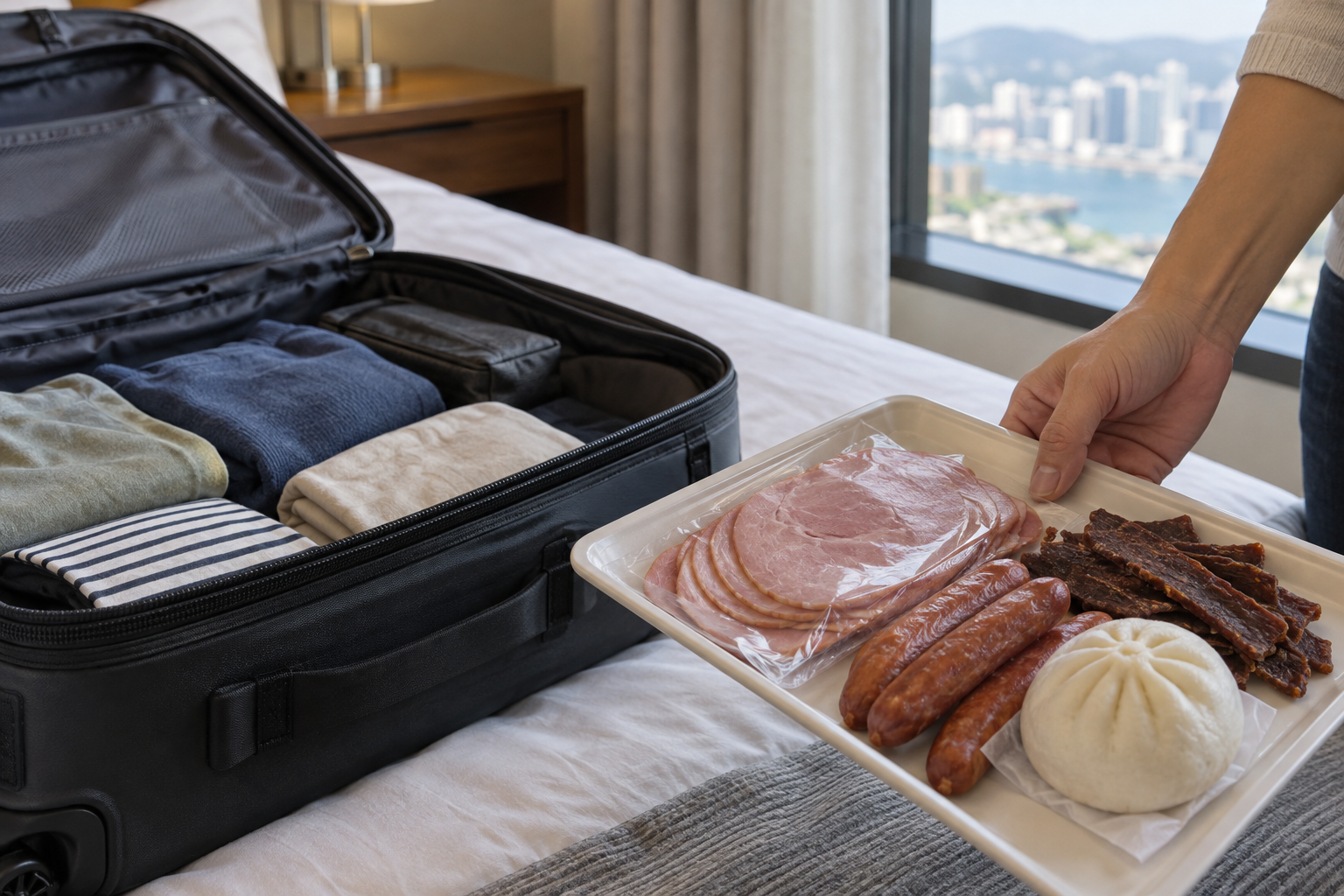
Meat and animal products: use the conservative rule
The MAFF Animal Quarantine Service passenger guidance says it is generally difficult for personal travelers to obtain the government inspection certificate required for animal products. As a result, most meat and animal products cannot realistically be brought into Japan in passenger baggage.
MAFF’s examples include:
- raw, chilled, frozen, cooked, and processed meat;
- organs;
- ham, sausage, bacon, jerky, and meat buns;
- eggs and eggshells;
- some other animal-derived materials.
Do not rely on these common myths:
- “It is only a small amount.”
- “It is for me, not for sale.”
- “It is cooked.”
- “It is vacuum-packed.”
- “I bought it in an airport duty-free shop.”
- “It is in checked luggage.”
MAFF states that personal consumption, heat processing, vacuum packing, and duty-free purchase do not by themselves remove the certificate and quarantine requirements. The exact product and current import conditions still control the result.
In July 2026, MAFF introduced exclusion criteria for certain animal-derived articles that clearly pose no risk of spreading monitored infectious diseases. That does not create a simple traveler allow-list. Use the current exclusion-criteria page and the main passenger guidance, or ask Animal Quarantine Service about the exact product.
MAFF also warns that illegal import can lead to disposal, inspection, and serious penalties, including up to three years’ imprisonment or a fine of up to ¥3 million for an individual. The practical lesson is simple: do not gamble on a souvenir sausage or meat snack.
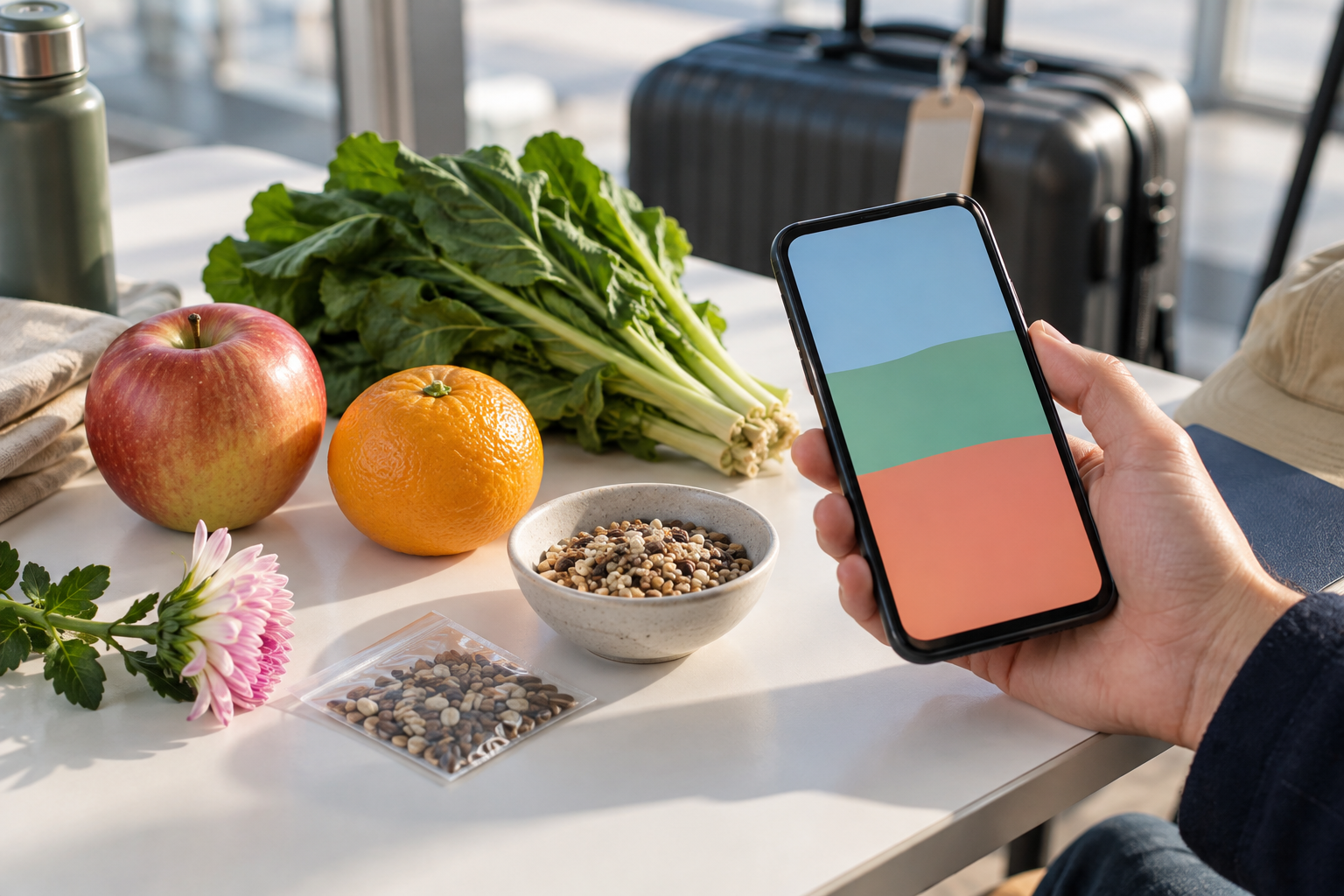
Fruit, vegetables, seeds, and plants: item plus origin
Plant rules are not one global yes/no list. The MAFF Plant Protection Station English guide explains that some items are prohibited and others require a phytosanitary certificate and import inspection.
Common categories that may require a check include:
- fresh fruit and vegetables;
- seedlings, bulbs, and seeds;
- cut flowers and branches;
- grains, beans, and cereal plants;
- some plant materials used in spices or herbal products;
- plants or plant products with soil.
Some processed plant products do not require plant inspection because the processing removes the pest risk. But “processed” is not precise enough for a traveler to decide by appearance. A dried, ground, roasted, sealed, or commercially packaged item can still require an ingredient and product check.
Use MAFF’s traveler quick-search page before departure. Search the exact plant and relevant country or region. If the quick search does not cover your item, use the detailed official information or contact the Plant Protection Station.
If a phytosanitary certificate is required, it must come from the exporting country’s plant protection authority. A receipt, product label, shop explanation, or airline acceptance is not a phytosanitary certificate.
Sealed snacks, candy, dairy, and mixed foods
Travelers often want one list saying that packaged snacks are safe to pack. That list would be misleading.
A sealed package helps an officer identify a product, but it does not change the ingredients. A snack may contain meat extract, animal fat, egg, seeds, whole fruit pieces, or another controlled component. Rules may also distinguish personal use from business use, and Customs allowances are separate from quarantine.
Use this sequence:
- Keep the original package.
- Read the complete ingredient list, not only the product name on the front.
- Identify any livestock, poultry, egg, plant, seed, fruit, or vegetable ingredients that may trigger a check.
- Check the relevant MAFF page for the exact category.
- If the result remains unclear, do not pack it or present it before Customs.
Do not assume that chocolate, cheese, infant food, protein powder, soup mix, instant noodles, pet food, supplements, spices, or canned goods share one rule. They do not form one legal category. The exact ingredients and official classification matter.
What about fish and seafood?
MAFF Animal Quarantine Service says dried fish and other fish products that do not contain livestock meat or eggs are not subject to Animal Quarantine Service inspection, while noting that an officer may check them to confirm the contents. That is a narrow statement about one agency’s scope, not a guarantee that every seafood product may enter without another check.
Read mixed ingredients carefully. A seafood snack can also contain egg, meat extract, or another ingredient that changes the answer.
The arrival sequence: quarantine before Customs
If you carry an item that requires animal or plant inspection, do not walk past the relevant counter and hope the declaration form fixes it later.
Use this order:
- Collect your baggage.
- Keep the product and its original packaging accessible.
- Go to Animal Quarantine Service or Plant Protection before Customs when the item requires inspection or you are unsure.
- Show the item and any required government certificate.
- Follow the officer’s instructions.
- Complete Customs honestly using your Visit Japan Web declaration or paper form.
Japan Customs explains that the green channel is for passengers with no dutiable goods and no prohibited or restricted goods. The red channel is for other passengers. Choosing a channel does not replace an inspection required by another authority.
For the electronic form process, see our Visit Japan Web guide. Use the official service for the actual declaration.

A simple pre-flight checklist
Complete this while you can still leave an item at home:
- List every food item in your carry-on and checked baggage.
- Photograph the front, back, ingredients, and country-of-origin information.
- Remove obvious meat products unless the exact official requirements and certificate are satisfied.
- Search each fruit, vegetable, seed, grain, bean, flower, or other plant item by item and origin.
- Do not convert “personal use” into a blanket exemption.
- Keep any required certificate with the item, not buried in another bag.
- Save the official page you relied on and note the date you checked it.
- Prepare to present uncertain items before Customs.
- If you cannot get a clear official answer, leave the item behind.
This is also a good time to separate medicines from food. Medicines follow a different system; use our bringing medicine to Japan guide rather than applying food rules to them.
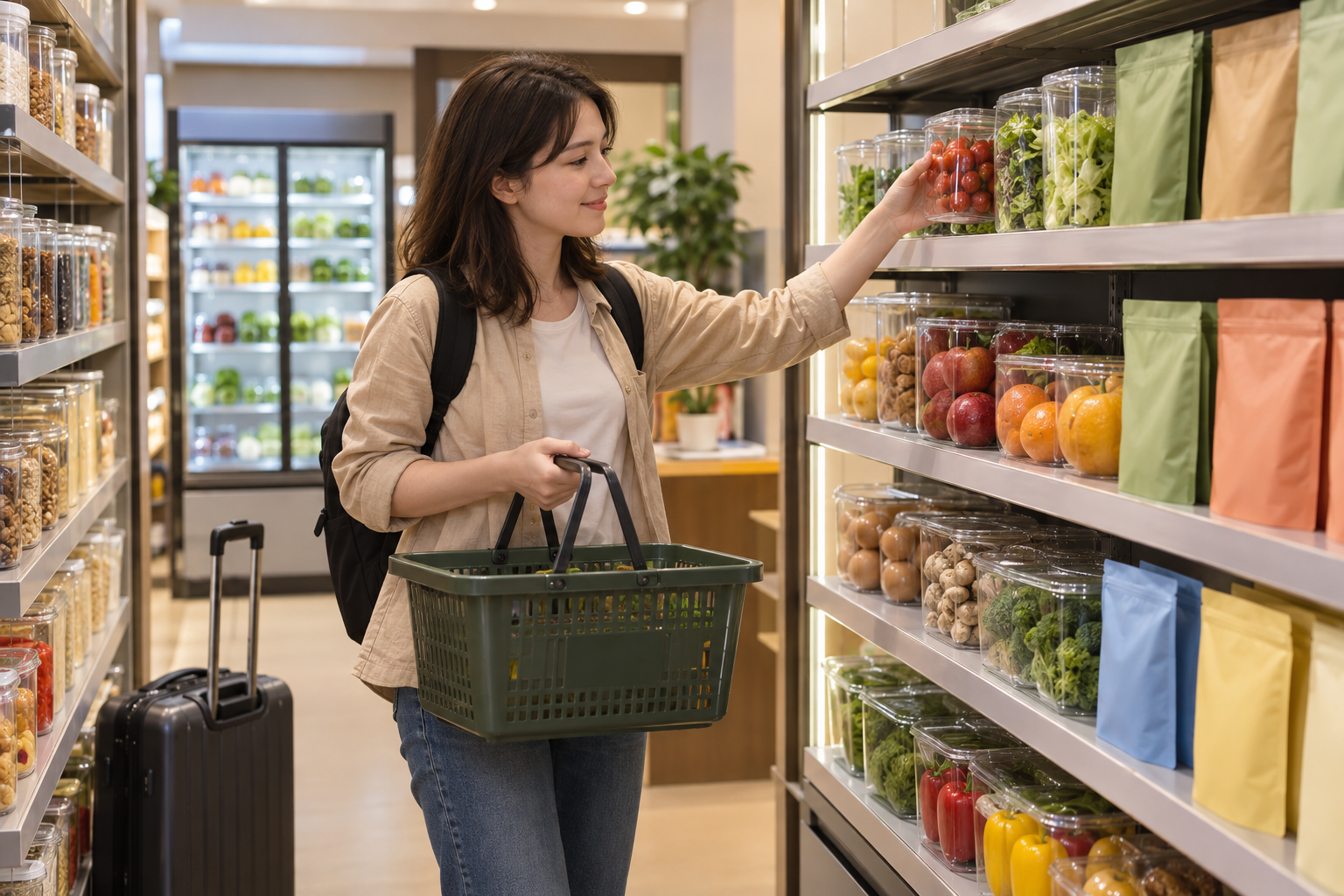
Plan B: buy it in Japan
Leaving a questionable food item at home is not a failed plan. It is often the fastest and least stressful choice.
Your Plan B can be:
- buy ordinary snacks or breakfast after arrival;
- ask your accommodation whether a needed staple is available nearby;
- bring a translated ingredient or allergy card and shop from labels you can check;
- use a supermarket, department-store food floor, or convenience store instead of importing a gift or meal component;
- contact the relevant Japanese authority before travel if the item is medically or culturally important.
Our Japanese convenience store guide can help with the first shopping stop. If allergies are the reason you planned to carry food, also read the Japan food allergy guide. Buying after arrival does not guarantee allergy safety, so keep checking labels and cross-contact.
Mistakes that create unnecessary risk
Treating airline acceptance as border approval
An airline can decide whether an item may be carried safely on the aircraft. That does not decide whether Japan permits the item to enter.
Trusting the seller
A shop employee may be helpful, but a seller’s promise is not a Japanese government inspection certificate or plant-health ruling.
Hiding an item inside checked baggage
Border rules apply to passenger baggage, not only the bag you carry through the cabin. Keep items accessible for inspection.
Throwing away the packaging
Unlabeled food is harder to identify. Original packaging does not grant permission, but it can make the ingredients and origin clearer.
Using an old social post as the final answer
Disease outbreaks, country suspensions, and official classifications change. Recheck the current MAFF and Japan Customs pages close to departure.
FAQ
Can I bring snacks into Japan?
Some snacks may not trigger animal or plant quarantine, but “snack” is not a regulatory category. Check the full ingredients, processing, and origin. Keep the original package and ask the relevant quarantine authority when uncertain.
Can I bring meat into Japan for personal use?
Usually not in practical traveler circumstances. MAFF says most meat and animal products require a government inspection certificate and that small amounts or personal consumption do not remove the requirement.
Is cooked or vacuum-packed meat allowed?
Cooking and vacuum sealing do not automatically make meat acceptable. MAFF specifically warns that heat-processed and vacuum-packed products still depend on current import conditions and certificates.
Can I bring fresh fruit or vegetables into Japan?
It depends on the exact item and origin. Some are prohibited; others require a phytosanitary certificate and plant inspection. Check MAFF’s current item-and-origin information before travel.
Do seeds, grains, beans, or spices need inspection?
Many seeds, grains, beans, and some plant materials used in spices can require plant inspection. Processing may change the result, so use the exact official category rather than assuming all dry goods are exempt.
Can I bring cheese or other dairy products?
Do not use a blanket dairy rule. The answer can depend on product type, ingredients, processing, quantity, and the authority involved. Check the exact product with current official guidance.
Can I bring dried fish or seafood snacks?
MAFF says dried fish and other fish products without livestock meat or eggs are outside Animal Quarantine Service inspection, but officers may verify the ingredients and other rules may still apply. Check mixed products carefully.
Is food bought at duty-free automatically allowed?
No. Duty-free purchase does not override quarantine or import restrictions. The product and certificate requirements remain the same.
Should I declare food if I am unsure?
Do not guess. Present uncertain animal or plant items to the relevant quarantine counter before Customs and answer the Customs declaration honestly. An officer can make the item-specific decision.
Does personal use mean I do not need any import procedure?
No. MHLW says personal-use food is exempt from its commercial Food Sanitation Act import notification, but animal quarantine, plant quarantine, Customs, and other controls can still apply.
Final decision
The safest packing rule is not “never bring food” and not “packaged food is fine.” It is:
- remove most meat products;
- check plant items by item and origin;
- keep mixed foods identifiable;
- present uncertain or restricted items before Customs;
- buy after arrival when the official answer is unclear.
That five-step decision is faster than arguing with an old checklist at the airport—and much safer than treating a snack label as an import permit.

Comments