Quick Answer
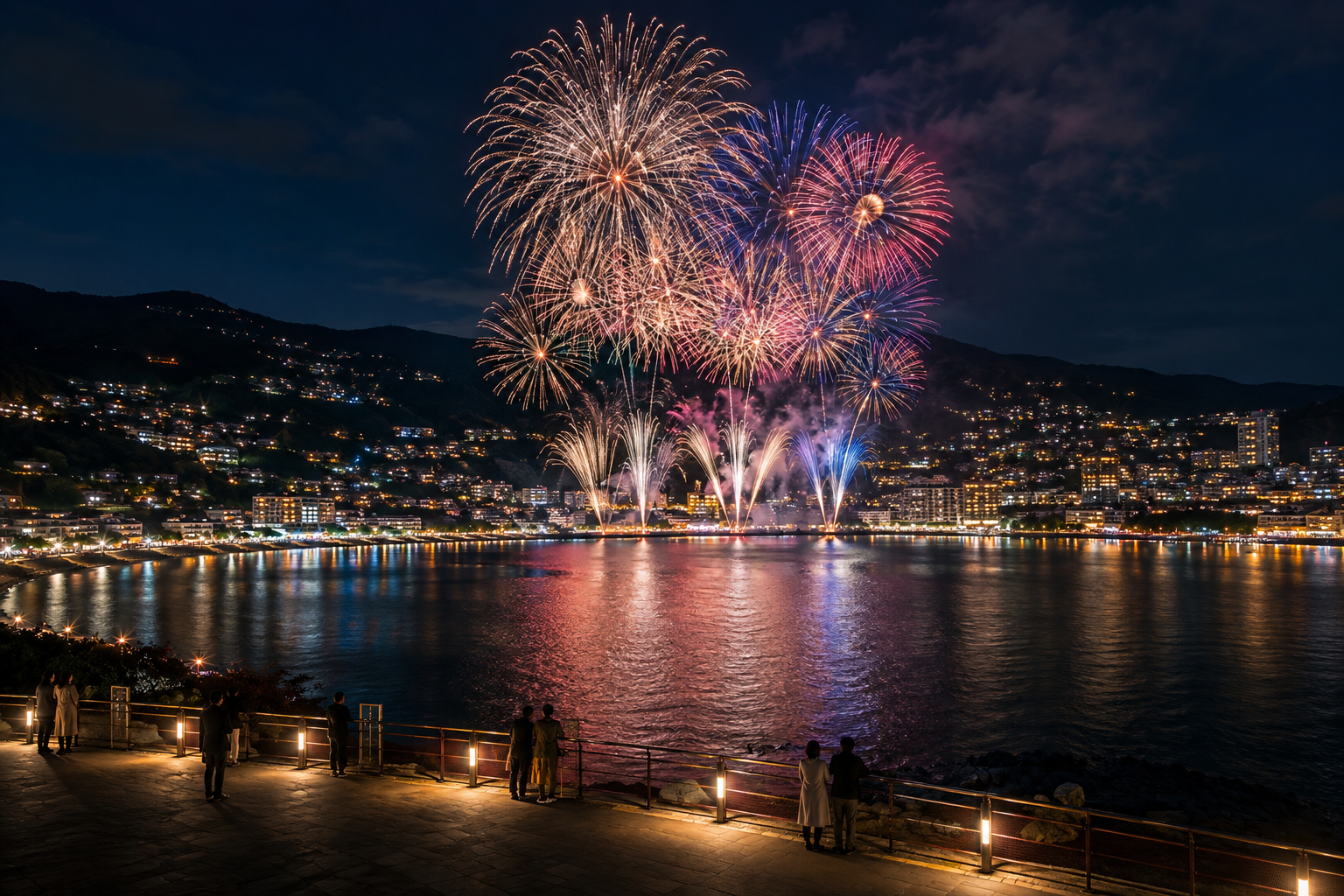
The Atami Marine Fireworks Festival is not one single summer night. Atami City lists eight remaining displays after August 29, 2026: September 13, October 12, October 25, November 8, November 23, December 6, December 25, and February 21, 2027. Each remaining display is currently scheduled for 8:20–8:40 p.m.
The fireworks last only 20 minutes, but the return journey is the real planning problem. Atami City warns that Atami Station becomes especially crowded from about 9:00 to 9:40 p.m. after a display. Use public transport, decide your exact return train before you arrive, and obtain the required ticket or reservation early. If that return feels too tight or tiring, choose another display date or book a cancellable overnight stay.
Do not use an old social-media map as your final authority. Recheck the Atami City schedule and the city’s current visitor notice on the day of travel.
Remaining Atami Fireworks Dates
The table below reflects official information checked on August 29, 2026. Atami City describes these as scheduled dates, so a future operational notice can still change them.
| Date | Day | Current display time | Planning note |
|---|---|---|---|
| September 13, 2026 | Sunday | 8:20–8:40 p.m. | First remaining autumn date |
| October 12, 2026 | Monday, national holiday | 8:20–8:40 p.m. | Check exact trains and rooms before committing |
| October 25, 2026 | Sunday | 8:20–8:40 p.m. | Check the same-day notice before leaving Tokyo |
| November 8, 2026 | Sunday | 8:20–8:40 p.m. | Bring a layer for the waterfront evening |
| November 23, 2026 | Monday, national holiday | 8:20–8:40 p.m. | Fix the return or hotel before committing |
| December 6, 2026 | Sunday | 8:20–8:40 p.m. | Winter waterfront conditions can feel cold |
| December 25, 2026 | Friday | 8:20–8:40 p.m. | Do not assume ordinary Friday availability |
| February 21, 2027 | Sunday | 8:20–8:40 p.m. | Added FY2026 date; recheck before booking |
The city’s event information lists Atami Bay as the launch area. The current English tourism listing identifies the coastline from Atami Sun Beach toward Atami Port as the broad viewing area. That does not guarantee access to every piece of waterfront, a hotel rooftop, a private terrace, or an old viewing pin. Follow current barriers and staff directions when you arrive.
Choose the Date Before You Choose the Train
Start with the date, not a generic “Atami fireworks” search result. The event runs repeatedly through several seasons, and July or August transport advice may include controls that do not apply to an autumn or winter date.
Use this order:
- Pick one date from the current Atami City schedule.
- Open the latest city visitor notice and event update.
- Check your exact outbound and return rail services with the operator.
- Decide whether you will accept the post-show station crowd.
- If not, compare a cancellable overnight stay before buying a non-flexible ticket.
The event’s repeat schedule is an advantage. If the first date produces a poor return plan, you do not need to force it. A later date may fit your trip better.
Arrive by Public Transport
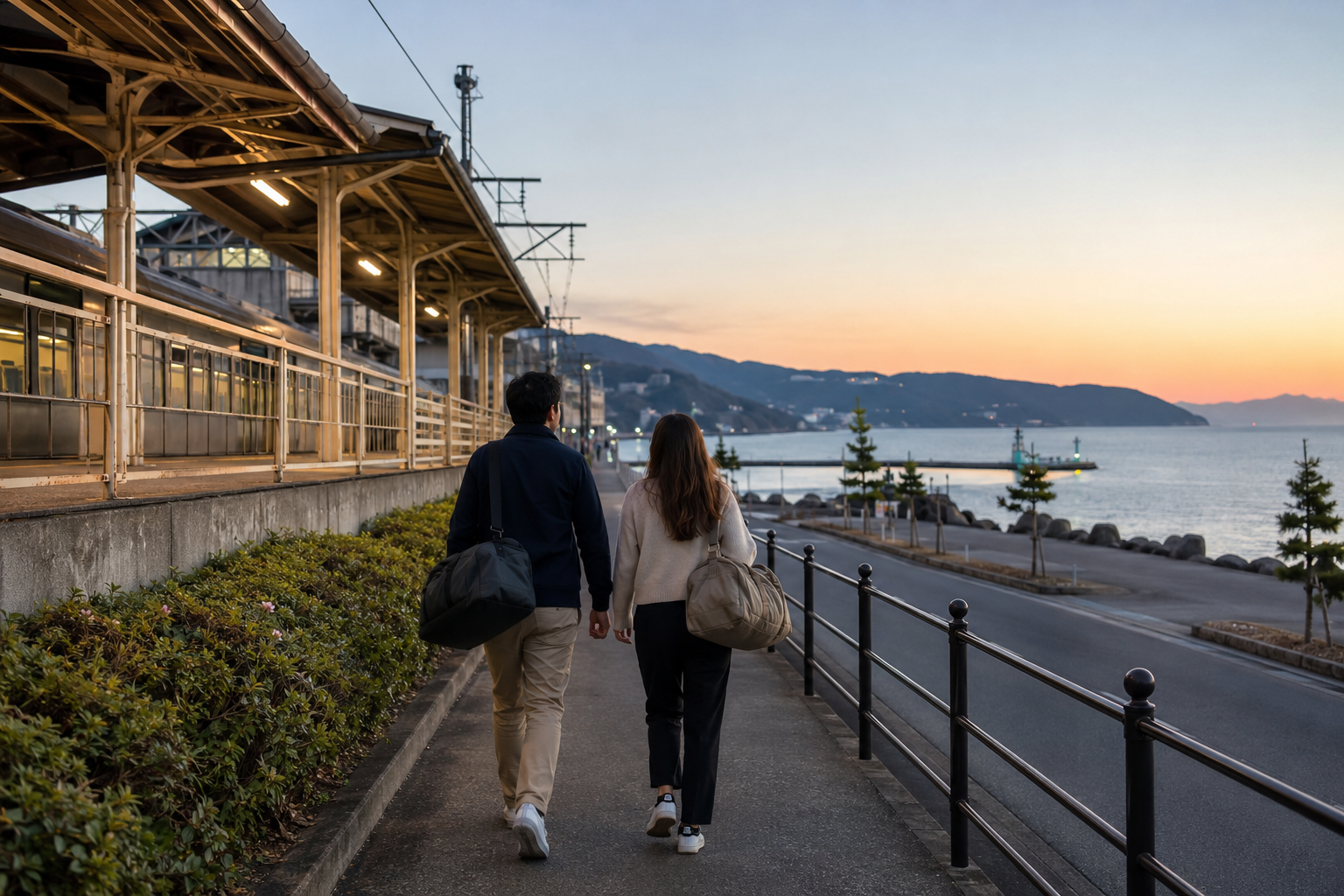
Atami City asks fireworks visitors to use public transport. The city also warns that local parking often fills early and that illegal or obstructive parking can interfere with emergency vehicles. A rental car is therefore not the default low-friction choice for this event.
Atami Station is served by intercity and local rail services, but the best service depends on your starting point, ticket, budget, and final connection. Do not copy an example departure time into your itinerary. Check the exact operating date with the railway, because last services, stopping patterns, and seat availability can change.
If you use a reserved intercity service, keep the reservation tied to the train you genuinely intend to board. If you use an ordinary train, confirm the full connection rather than assuming that reaching a Tokyo-area terminal solves the final journey to your hotel.
For ticket-system background, see RJG’s guide to booking Shinkansen from overseas. It explains booking tools and card problems, but the railway’s current result for your date remains the authority.
The Return Crowd Is the Hard Part
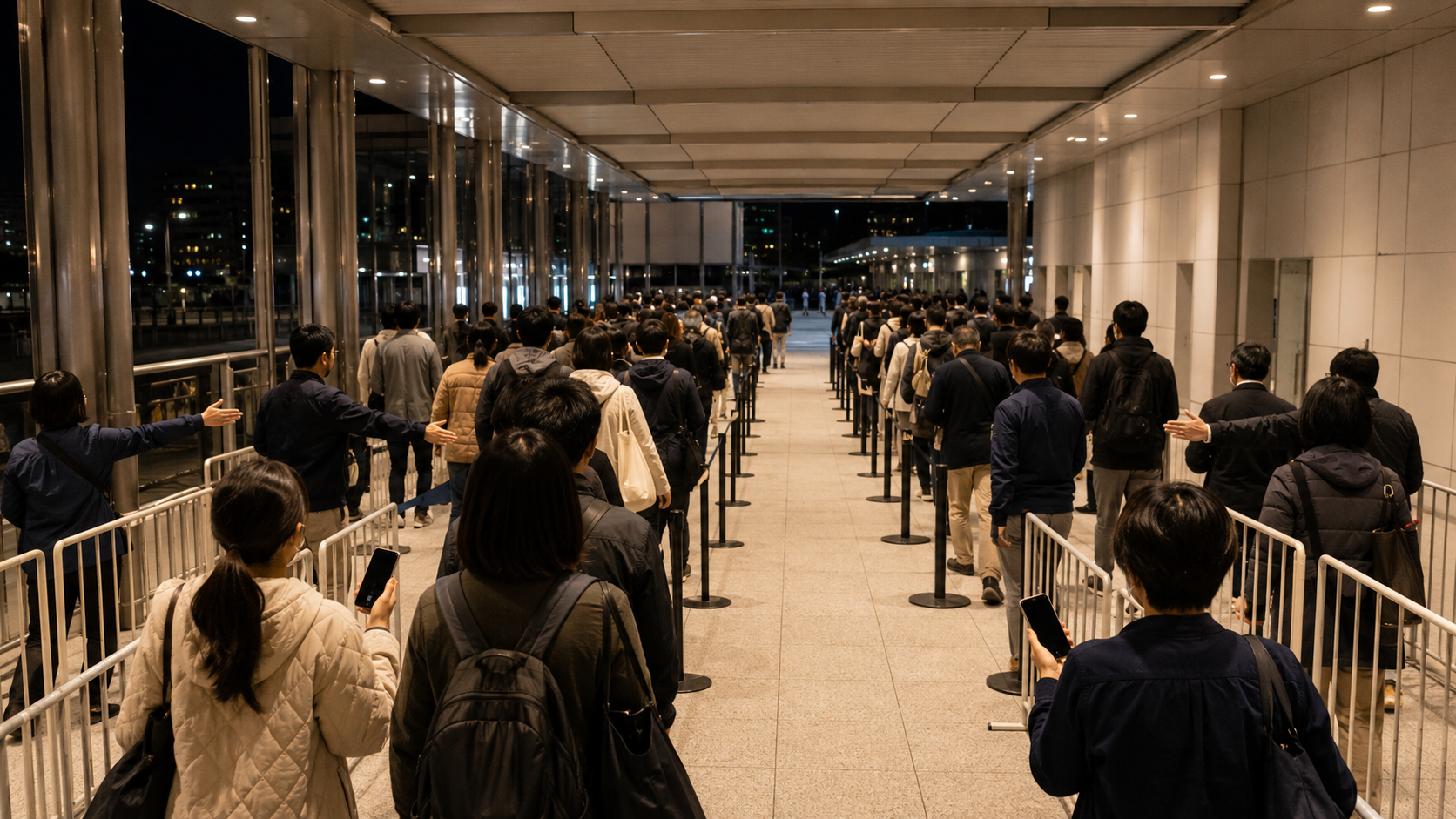
The official display ends at 8:40 p.m. Atami City says the station ticket gates become very crowded from approximately 9:00 to 9:40 p.m. That window is more useful than a vague warning that the event is “busy”: it tells you not to build a fragile connection immediately after the finale.
Before walking to the waterfront:
- save the exact return service and any connection after it;
- obtain the required return ticket or reservation in advance;
- save the operator’s current disruption page;
- load any transit balance you will need;
- agree on a meeting point if your group separates;
- decide what you will do if you miss the planned train.
Atami City specifically advises visitors to buy the return ticket before the fireworks. That does not mean every ticket is valid on every service. Check whether your ticket is train-specific, seat-specific, or flexible, and follow its actual conditions.
Do not assume a taxi will remove the problem. This article does not verify event-night taxi availability, queue time, or road access. The city’s own advice is to use public transport and avoid adding vehicles to the congestion.
Day Trip or Overnight Stay?
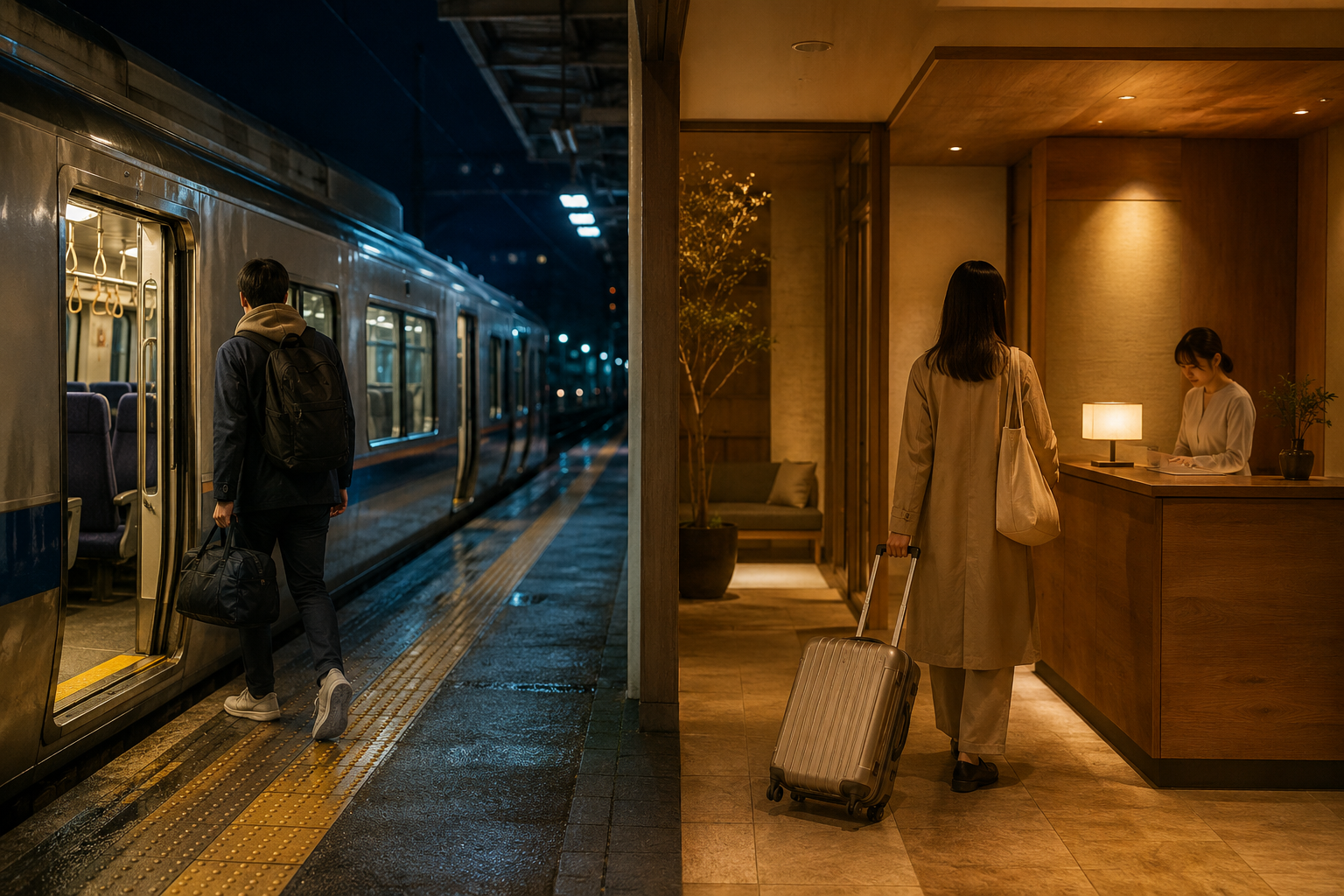
The best choice is not simply “the fastest train.” It is the plan that still works after a short display, a waterfront walk, crowd control, and the rest of your journey from the Tokyo terminal.
| Plan | Best when | Main risk | What to fix before travel |
|---|---|---|---|
| Same-night reserved intercity train | You want a faster, more predictable seat-based return | Missing a train-specific service or building a tight connection | Exact train, ticket conditions, post-arrival connection |
| Same-night ordinary train | You value flexibility and accept a longer ride | Standing, multiple connections, or missing the final onward service | Full route to the hotel, not only Atami to Tokyo |
| Overnight in Atami | You want to avoid the immediate station surge | Higher room cost or restrictive cancellation terms | Cancellable room, check-in time, baggage plan |
An overnight stay is not automatically better. It only solves the return problem if the room is genuinely available, the check-in terms work after the display, and the price is acceptable. A hotel’s private viewing offer, rooftop, or terrace is a separate product; do not assume that booking any Atami room grants special fireworks access.
If you stay overnight, confirm the hotel’s check-in deadline and tell the property if you will arrive after normal dinner or reception hours. RJG’s Japanese accommodation check-in guide explains the usual identity and timing checks.
A Practical Event-Day Timeline
This is an RJG planning framework, not an official event timetable.
- Before leaving Tokyo: recheck the official date, city notice, weather, rail status, and return ticket.
- Late afternoon or early evening: reach Atami with enough margin to walk, eat, use a toilet, and identify the route back.
- Before 8:20 p.m.: follow current staff directions to a currently permitted shoreline viewing area; do not enter a private or blocked space.
- 8:20–8:40 p.m.: watch the display from the area currently allowed by the organizer.
- After 8:40 p.m.: keep the group together and follow any pedestrian controls or staff directions in effect.
- About 9:00–9:40 p.m.: expect the station-gate crowd identified by Atami City.
- After boarding: verify any connection from the Tokyo-area arrival station to your final accommodation.
The point of arriving early is not to claim a “secret” place. It is to remove unnecessary decisions from the busiest part of the night.
Weather, Changes, and Plan B
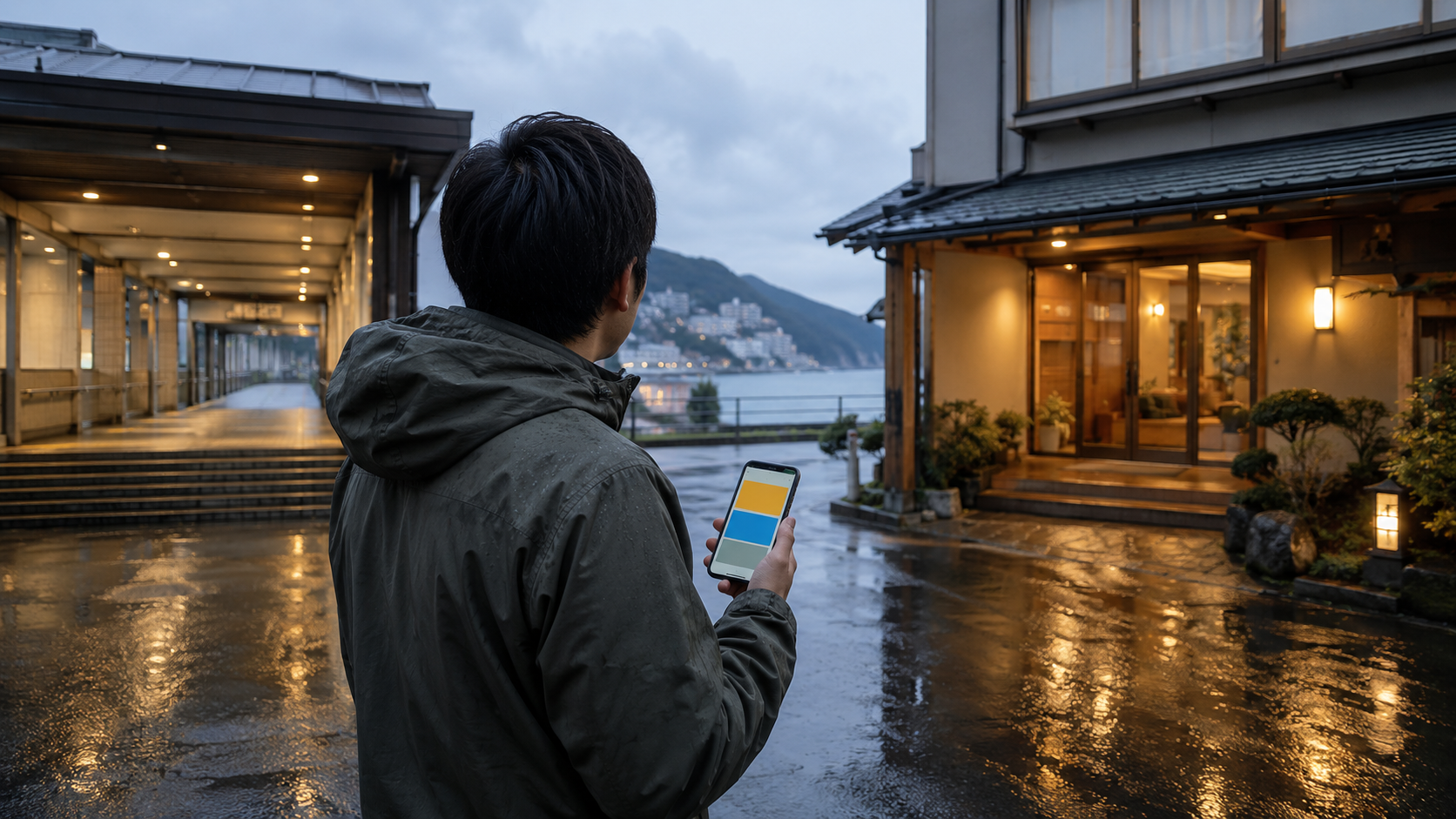
The current tourism schedule describes the fireworks as proceeding in rain, but it also says schedules can change with circumstances. “Rain or shine” is not a promise that every transport connection, waterfront area, or private facility will operate normally.
Check the city and tourism pages again on the event day. If weather, warnings, or transport disruption make the plan weak, use one of two clean alternatives:
- move to another remaining official display date; or
- keep the date but use a cancellable overnight stay that removes the tight return.
Do not improvise with an unverified parking lot, a hotel rooftop, a taxi promise, or a viewing map from another year. RJG’s rain and typhoon planning guide covers alerts and transport checks, while the festival survival guide covers crowd preparation.
What to Bring
Keep the kit small enough for a crowded station:
- return ticket or reservation details;
- charged phone and compact power bank;
- screenshots of the current schedule and return route;
- IC card or other payment method needed for local travel;
- light rainwear and a seasonal layer;
- essential medicine and water;
- hotel confirmation if staying overnight.
Avoid bulky luggage if possible. If you are changing hotels, arrange storage before the evening rather than carrying a large suitcase into the waterfront crowd.
Frequently Asked Questions
Is Atami Fireworks one annual event?
No. Atami City lists repeated displays across spring, summer, autumn, and winter, plus an added February 2027 date within the FY2026 schedule.
What dates remain after August 29, 2026?
The current list is September 13, October 12, October 25, November 8, November 23, December 6, December 25, and February 21, 2027. Recheck before booking.
What time are the remaining displays?
Each remaining listed date is currently scheduled for 8:20–8:40 p.m.
Where are the fireworks launched?
The official schedule identifies Atami Bay as the launch area. Current tourism guidance describes viewing along the coast from Atami Sun Beach toward Atami Port, subject to current controls.
Can I use any waterfront location?
No. Current tourism guidance identifies a broad shoreline viewing area, but current barriers and staff directions control actual access. It does not create access to hotel rooftops, private terraces, blocked zones, or every waterfront point.
When is Atami Station most crowded?
Atami City warns that the ticket-gate area becomes especially crowded from about 9:00 to 9:40 p.m. after the display.
Should I drive?
Atami City asks visitors to use public transport and warns that parking often fills. This guide does not treat driving, event-night parking, or taxi availability as a reliable Plan B.
What is the most practical fallback?
Choose another remaining official date or use a cancellable overnight stay. Recheck the city notice, weather, and railway status before committing.
Sources and Next Step
Primary/current sources checked August 29, 2026:
- Atami City: FY2026 fireworks schedule
- Atami City: current visitor guidance
- Atami City Tourism Association: official Atami News event page
- JAPAN 47 GO: English event listing
Do one thing now: choose one remaining date, then save the latest city notice and your exact return rail result before comparing anything else.

Comments