- Quick Answer
- Law and Product Size Are Two Different Checks
- Compare the Provider's Current Seat Categories
- Step 1: Measure Before You Search
- Step 2: Count Seats and People Together
- Step 3: Reserve Every Seat in Advance
- Step 4: If You Bring Your Own Seat
- Step 5: Inspect the Installation at Pickup
- Save This Booking Checklist
- Plan B: Change the Car, Provider or Transport Mode
- Frequently Asked Questions
- Is a child seat legally required in Japan?
- Can I choose a rental child seat by age alone?
- Are Toyota and Times seat-size ranges the same?
- Must I reserve a child seat before pickup?
- Does a child seat count like one adult seat?
- Can I install a child seat in the front passenger seat?
- Can rental staff install the seat for me?
- What if the correct seat or vehicle is unavailable?
- Sources and One Next Action
Quick Answer
In Japan, the driver must use a child seat for a child under six years old. That legal age rule does not tell you which rental-company product fits your child. Rental providers use their own infant, child and booster categories, with age, height and weight ranges that can differ.
Before booking, record each child's age, height and weight. Open the chosen rental company's current English booking page, match all three measurements to its product, add one seat for each child who needs one, and check that the selected car still has enough usable seating space. Reserve the seat in advance. Nippon Rent-A-Car and Times CAR RENTAL both warn that a rental may be refused when the required seat has not been prepared or reserved.
Best next action: choose the seat from the provider's current specification—not from a generic age label—then confirm the seat count, vehicle class and reservation together.
Law and Product Size Are Two Different Checks
| Decision | What controls it | What you should do |
|---|---|---|
| Is a child seat legally required? | Japan's rule for a child under six | Tell the rental company about every child under six and arrange an appropriate seat |
| Which seat category fits? | The selected provider's current age, height and weight limits | Match all three measurements; do not choose by age alone |
| Will the family fit in the car? | Vehicle layout, seat type and number of child seats | Check the booking page's capacity guidance or ask the provider before paying |
| Who confirms installation? | Provider terms place the final safety check on the customer | Inspect and tug-check the installed seat at pickup before driving |
JAF's English traffic-rules page states the legal requirement. Toyota, Nippon and Times then publish company-specific products and conditions. Keep those layers separate: the law answers whether a restraint is required, while the provider's live page answers which available product can be booked.
Compare the Provider's Current Seat Categories
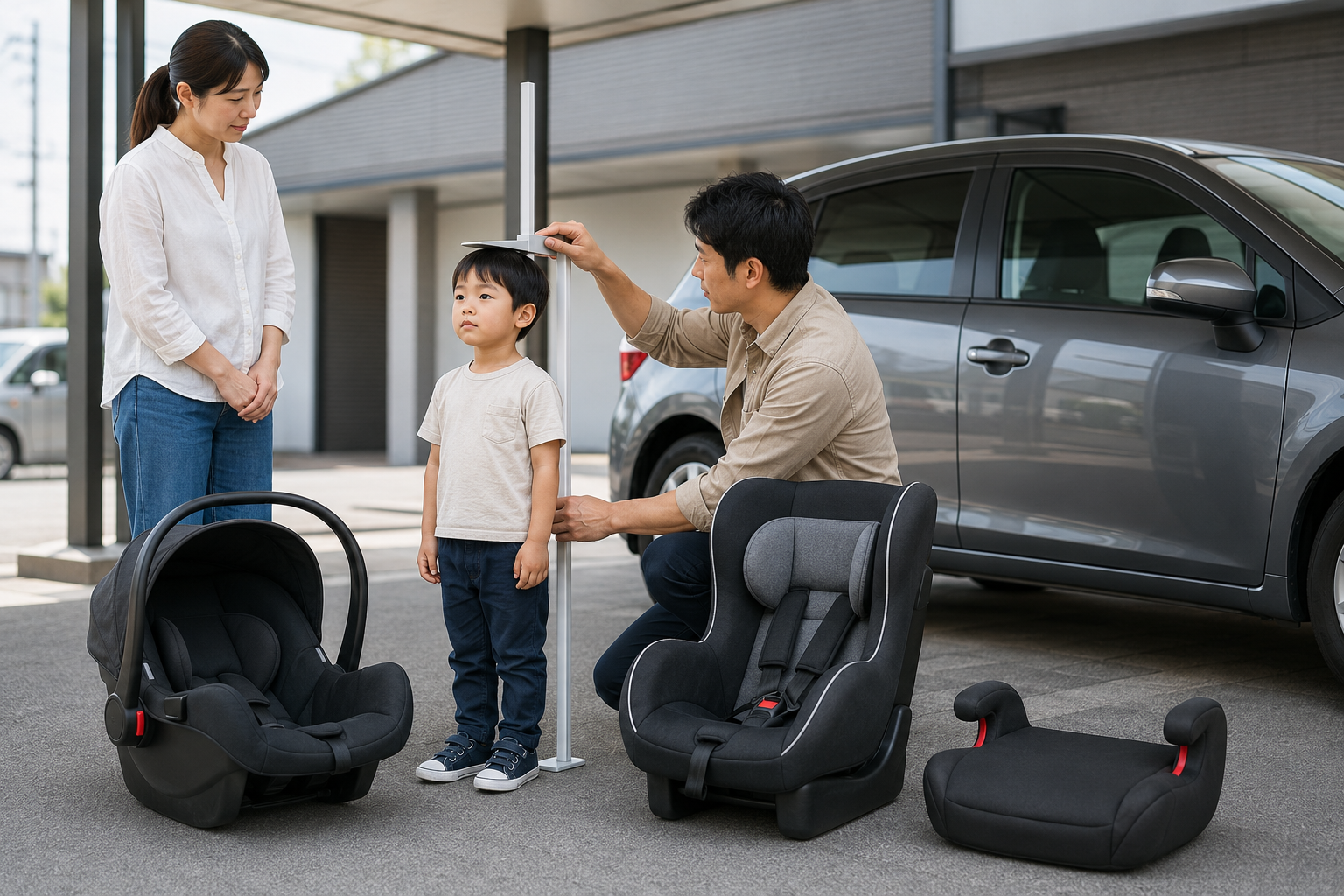
The table below shows why a single universal “baby/child/booster” chart is unsafe. These are examples checked on September 3, 2026 JST, not nationwide standards.
| Provider example | Current published fit information | Booking consequence |
|---|---|---|
| Toyota infant seat | Rear-facing insert/cushion; under 18 months, under 13 kg, up to 83 cm | Select the infant product only when the child's measurements fit all published limits |
| Toyota forward-facing child seat | Over 15 months, under 18 kg, 76–100 cm | The age boundary overlaps the infant category, so height, weight and orientation matter |
| Toyota booster | Approximately 3–12 years, 15–36 kg, 100–150 cm | Do not assume “over six” means the adult belt fits correctly; use the provider's product range and your child's measurements |
| Times infant seat | Newborn to about 1 year, up to 10 kg and up to 70 cm | Times uses a different range from Toyota's current infant listing |
| Times toddler seat | About 1–4 years, 9–18 kg and 65–100 cm | Overlapping boundaries require a measurement check, not a birthday guess |
| Times booster | About 4–10 years, 15–36 kg and 100–135 cm | The current Times height ceiling differs from Toyota's current booster listing |
Products, specifications, fees and availability can change. Some children may fit more than one published age band, while a height or weight limit removes one option. Use the provider's current booking result and contact channel if the measurements sit near a boundary.
Step 1: Measure Before You Search
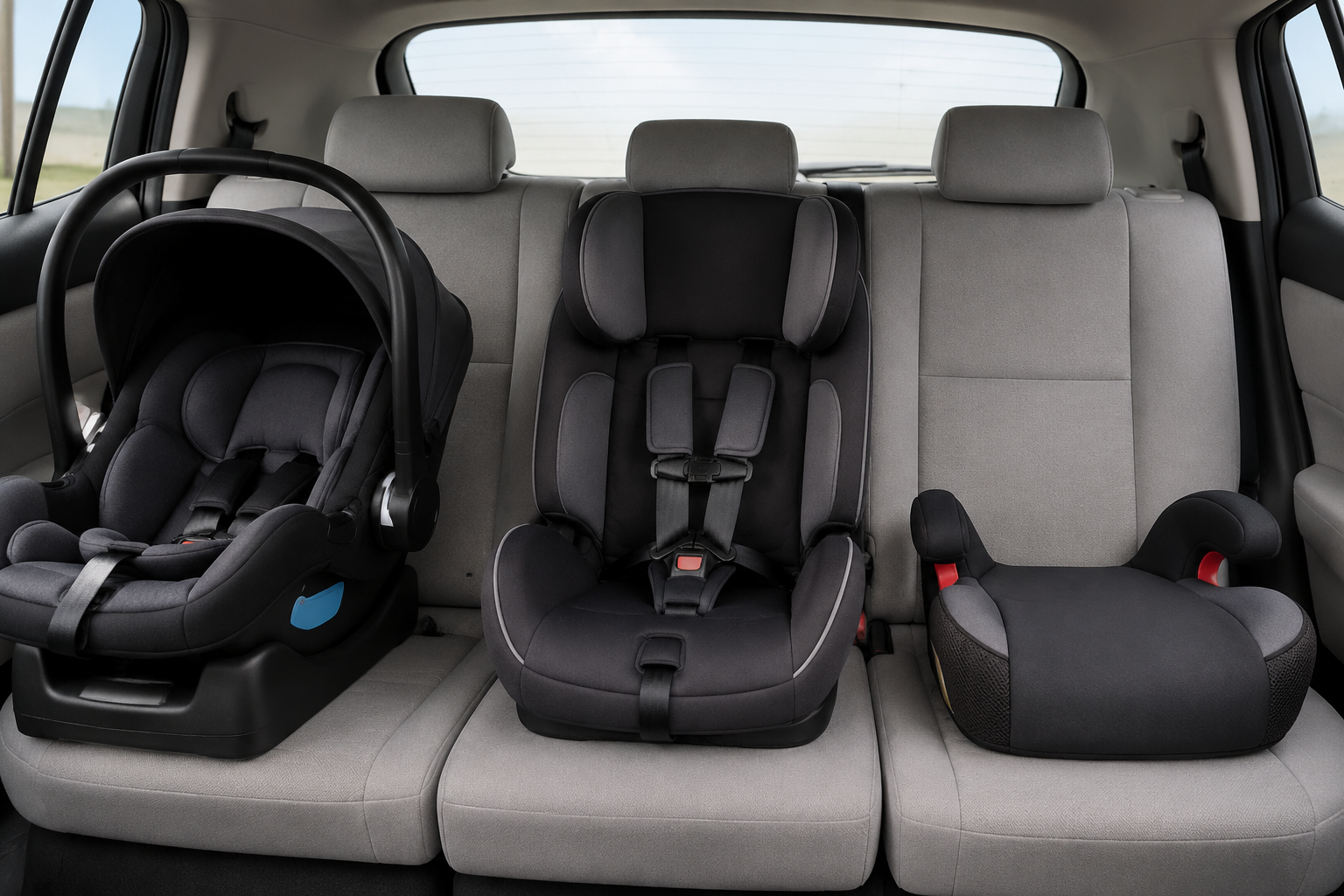
Write down for each child:
- age on the travel date;
- height in centimetres;
- weight in kilograms; and
- whether the child currently uses a rear-facing, forward-facing or booster restraint at home.
The home restraint is context, not proof that the same category name means the same product in Japan. Compare the measurements with the rental provider's page. If one measurement falls outside the listed range, do not select that product merely because the age looks right.
If you plan to drive, first confirm that your licence or permit is valid with RJG's international driving permit guide.
Step 2: Count Seats and People Together
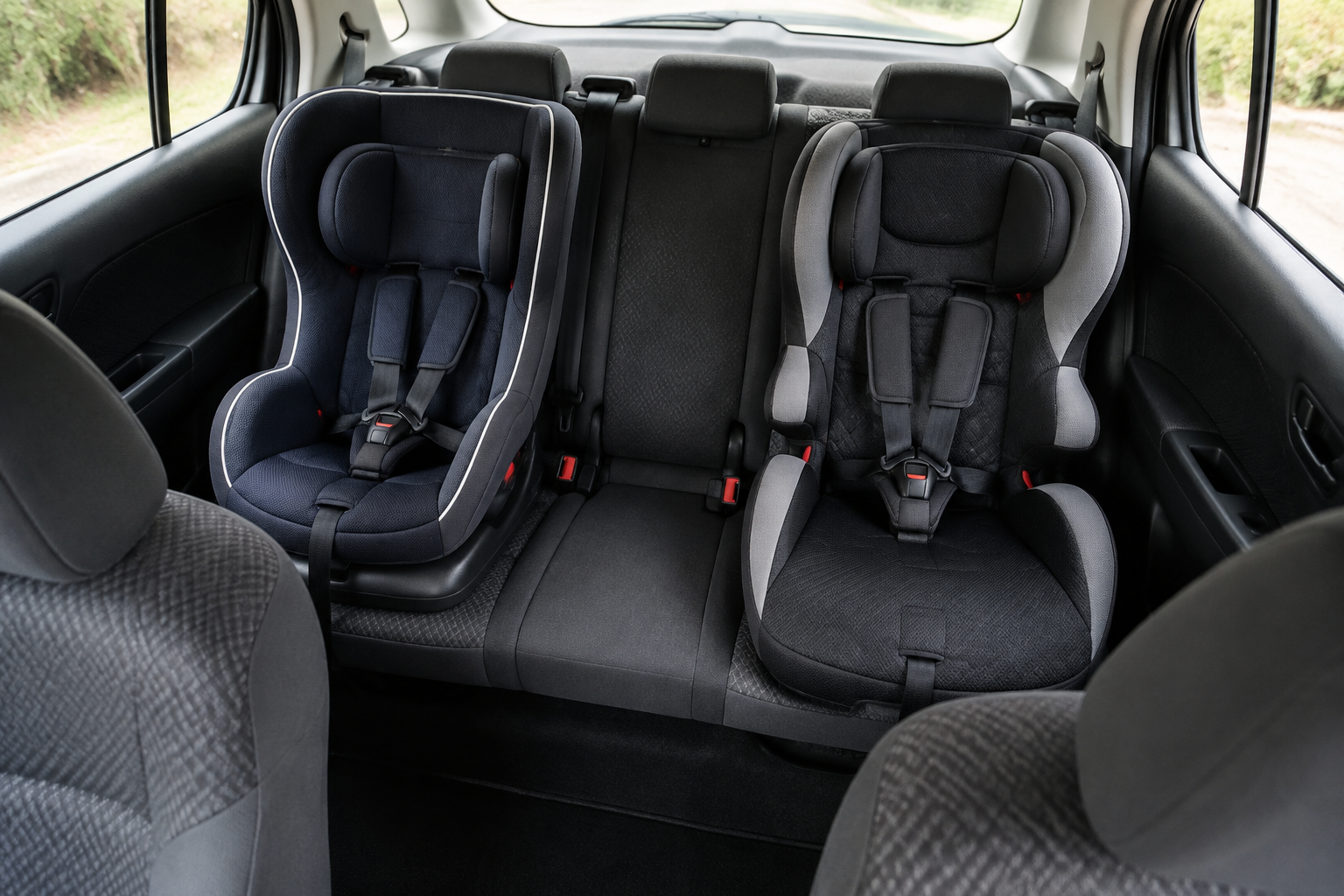
A five-seat car does not automatically carry two adults, three children, three restraints and holiday luggage comfortably. Toyota's current reservation page warns that a child or infant seat needs more seating space than one adult passenger. Times publishes approximate installation counts by vehicle class and warns that some seats cannot be installed in some layouts.
Send or enter this complete request:
- number of adults;
- number and measurements of children;
- number and type of child seats;
- preferred vehicle class;
- luggage count; and
- pickup station, date and time.
Do not place a required seat in the front passenger position just to make the arithmetic work. Times says it does not recommend front-passenger installation for safety. If the booking tool does not make the capacity clear, choose a larger vehicle or ask the provider through its current official channel.
Step 3: Reserve Every Seat in Advance
Do not treat a child seat as a walk-up accessory. Nippon states that it cannot rent the car when a required seat is not provided and tells customers to reserve one or bring their own. Times similarly states that rental may be refused if the seat has not been prepared or reserved.
On the reservation, verify:
- exact seat category for each child;
- quantity of each category;
- vehicle class;
- pickup station and time;
- option fee and cancellation terms; and
- confirmation that the accessory appears in the final booking.
Save the confirmation. A phone call or general product page is not the same as a seat attached to your exact reservation.
Step 4: If You Bring Your Own Seat
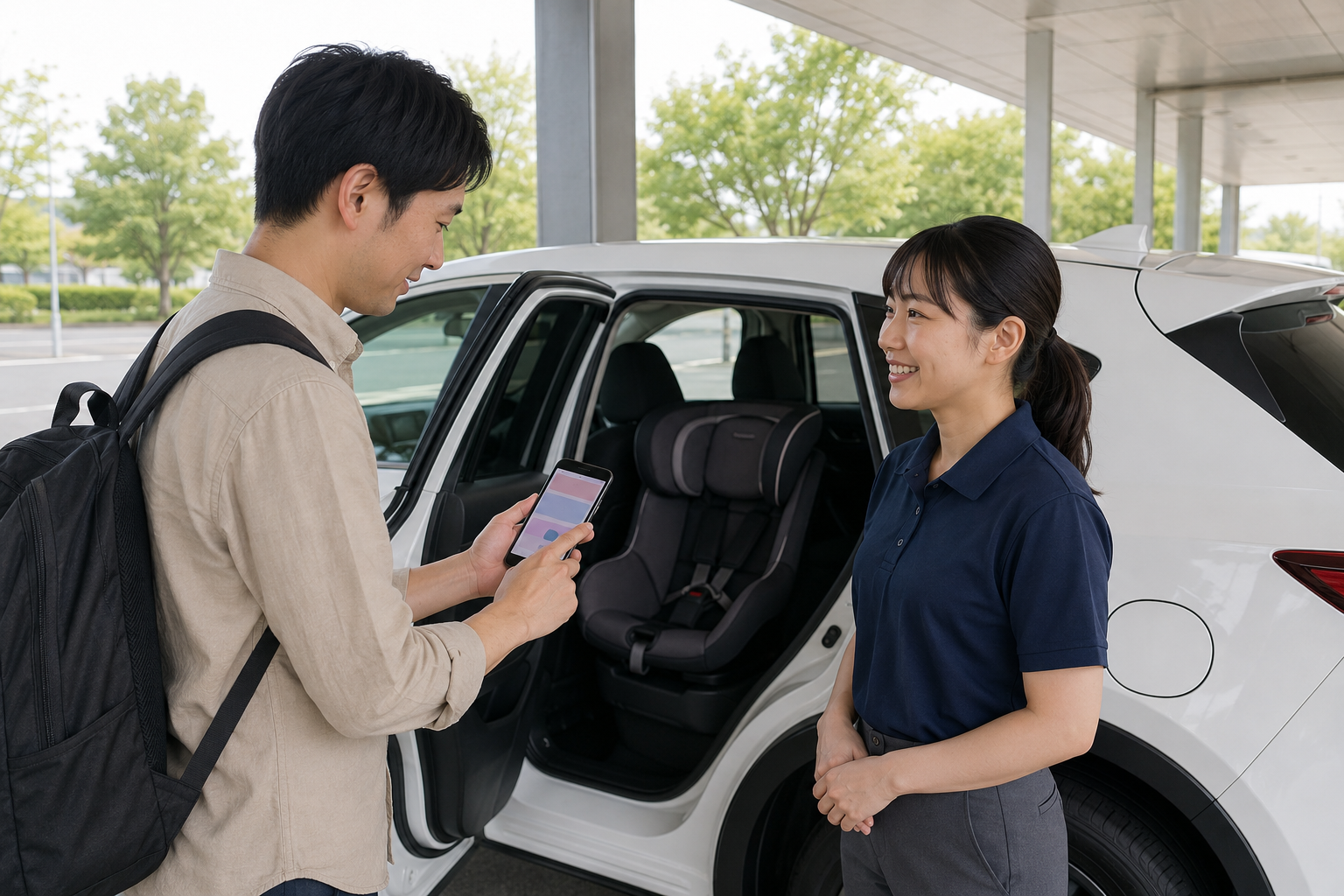
Ask the rental company in advance whether your seat can be used with the booked vehicle. Bring the restraint manual and know how it attaches. Do not assume that an overseas ISOFIX/LATCH product, support leg or top tether will fit every Japanese rental vehicle.
Nippon says it cannot judge whether a customer-supplied product is suitable for the child. The provider may also be unable to promise compatibility with an unspecified vehicle before pickup. If compatibility is uncertain, reserve the provider's appropriate product or change the vehicle/provider.
Step 5: Inspect the Installation at Pickup
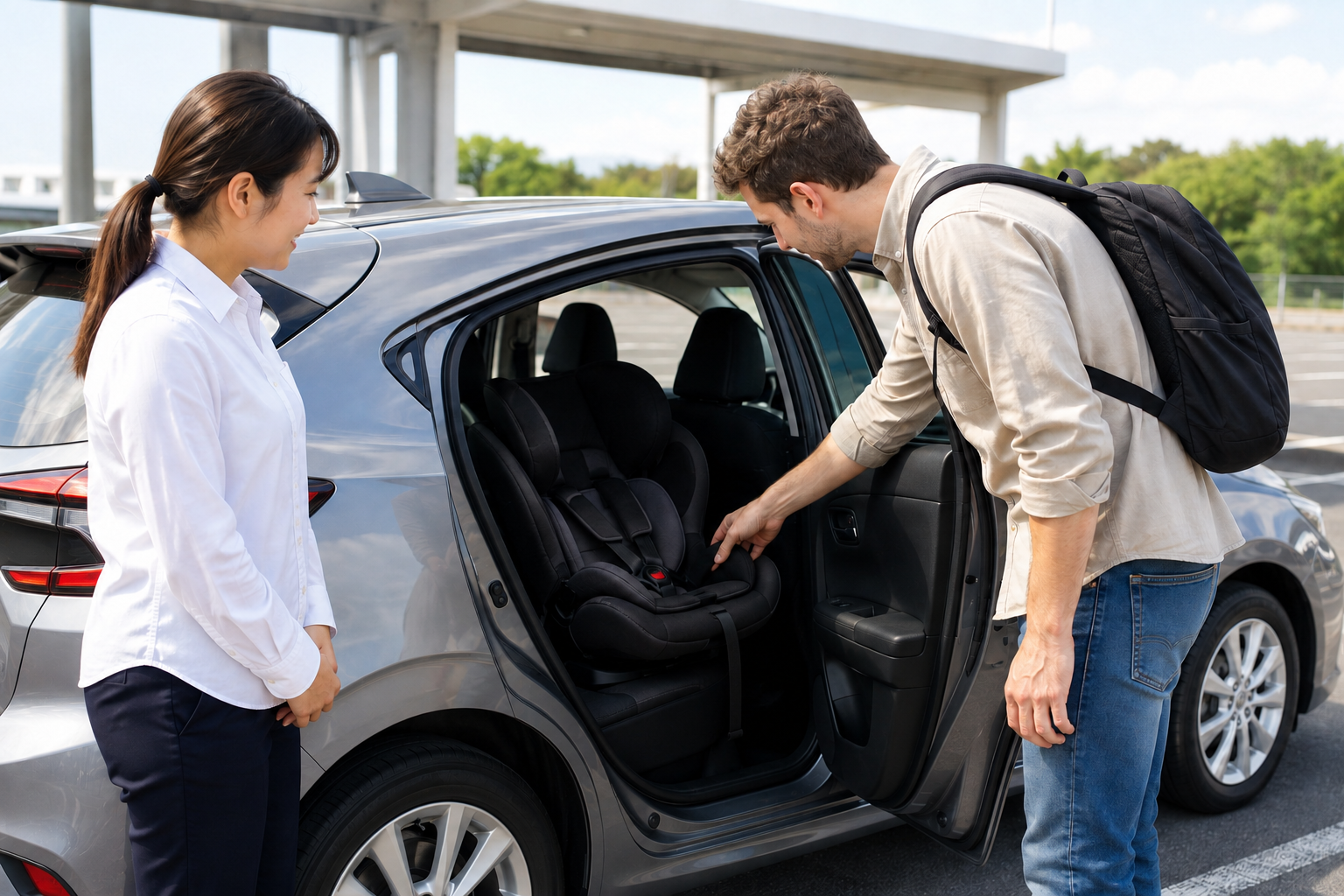
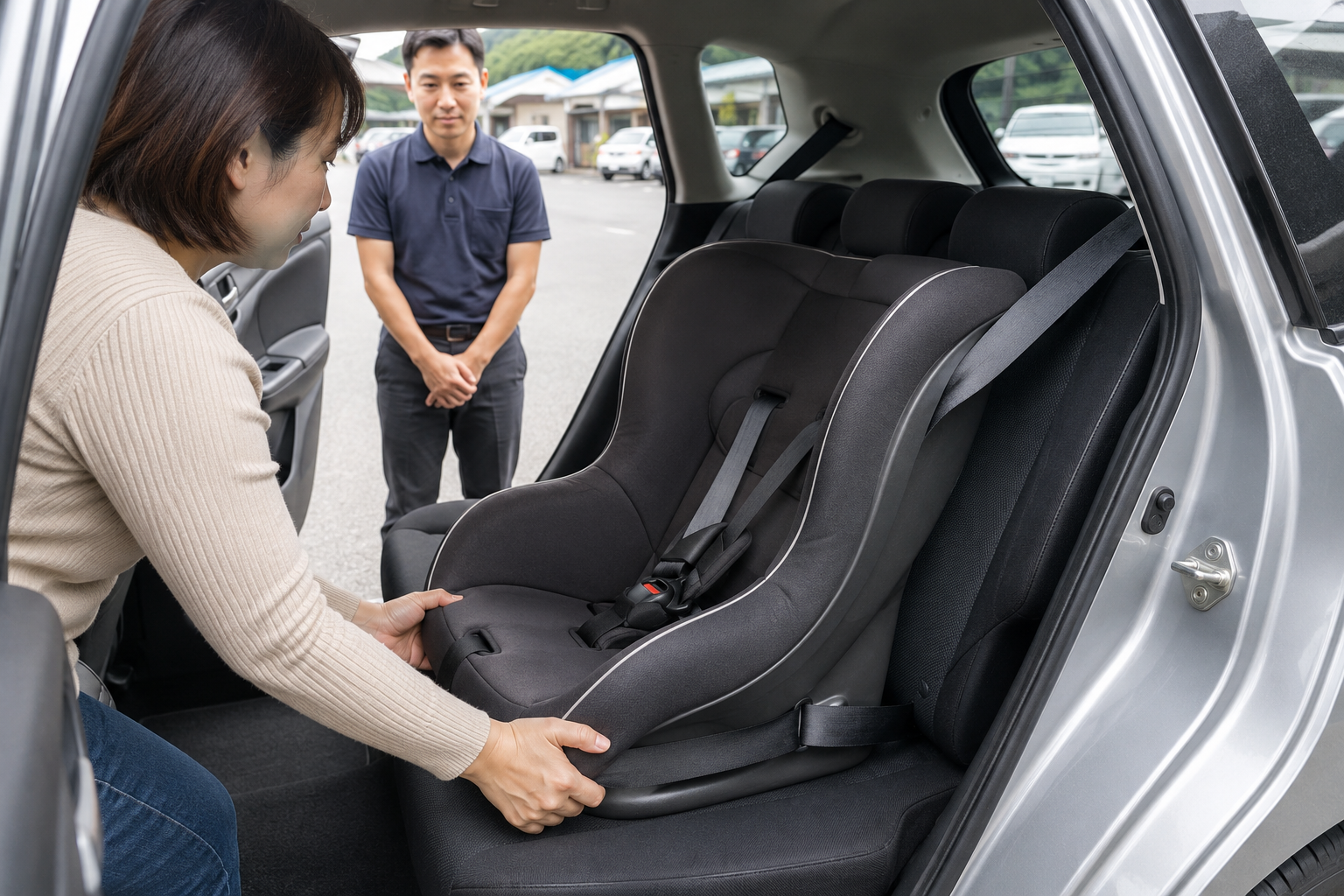
Provider staff may assist, but Toyota, Nippon and Times place responsibility for the final safety confirmation on the customer. Before leaving:
- confirm that the delivered category matches the reservation;
- check that it is installed in an approved rear seating position;
- follow the seat and vehicle instructions;
- tug-check for obvious looseness at the attachment path;
- confirm harness or belt routing before placing the child; and
- ask staff to stop and recheck if anything looks different from the booked product.
This article cannot inspect your specific child, seat or vehicle. If you cannot confirm a safe fit, do not drive away.
Save This Booking Checklist
- licence or permit eligibility confirmed;
- every child's travel-date age recorded;
- height and weight measured;
- provider-specific seat category matched;
- one seat reserved for each child who needs one;
- vehicle capacity checked with all passengers and luggage;
- child-seat options visible on the final reservation;
- own-seat compatibility confirmed if applicable;
- installation and restraint checked at pickup; and
- public-transport Plan B saved.
For the rest of the drive, use RJG's expressway toll and ETC guide, gas-station and refueling guide and coin parking guide. If a collision occurs, follow the separate rental-car accident guide.
Plan B: Change the Car, Provider or Transport Mode
If the correct seat is unavailable, the selected car cannot safely carry everyone, or compatibility remains uncertain, do not improvise at the counter. Search a larger vehicle, check another provider, bring a confirmed-compatible restraint, or rebuild that part of the trip around trains, buses and taxis.
The right Plan B is the one you can confirm before arrival. A hoped-for spare seat at the rental counter is not a plan.
Frequently Asked Questions
Is a child seat legally required in Japan?
The driver must use a child seat for a child under six years old. Confirm the current rule and any individual exception with an authoritative source before travel.
Can I choose a rental child seat by age alone?
No. Providers publish different combinations of age, height and weight. Match the child's measurements to the chosen provider's current product.
Are Toyota and Times seat-size ranges the same?
No. Their current published infant and booster ranges differ. Do not transfer one company's chart to another reservation.
Must I reserve a child seat before pickup?
Yes, reserve it in advance. Providers warn that a required seat may be unavailable and that the rental may be refused when it has not been prepared or reserved.
Does a child seat count like one adult seat?
Not necessarily. Toyota warns that a child or infant seat requires more seating space than one adult. Check the exact vehicle and seat count.
Can I install a child seat in the front passenger seat?
Do not use the front simply to increase capacity. Times says front-passenger installation is not recommended for safety; follow the provider, seat and vehicle instructions.
Can rental staff install the seat for me?
Staff may assist, but the customer remains responsible for confirming a safe installation under the cited provider terms.
What if the correct seat or vehicle is unavailable?
Change vehicle or provider, bring a confirmed-compatible seat, or use public transport. Do not drive with an unsuitable or missing restraint.
Sources and One Next Action
Primary information checked on September 3, 2026 JST:
- JAF: Basic traffic rules for driving in Japan
- Toyota Rent a Car: child-seat options and current fit ranges
- Nippon Rent-A-Car: user guide and child-seat conditions
- Times CAR RENTAL: child-seat types, fit ranges and usage conditions
Your next action is one step: measure every child, then attach the matching provider-specific seat and a compatible vehicle class to the same confirmed reservation.

Comments