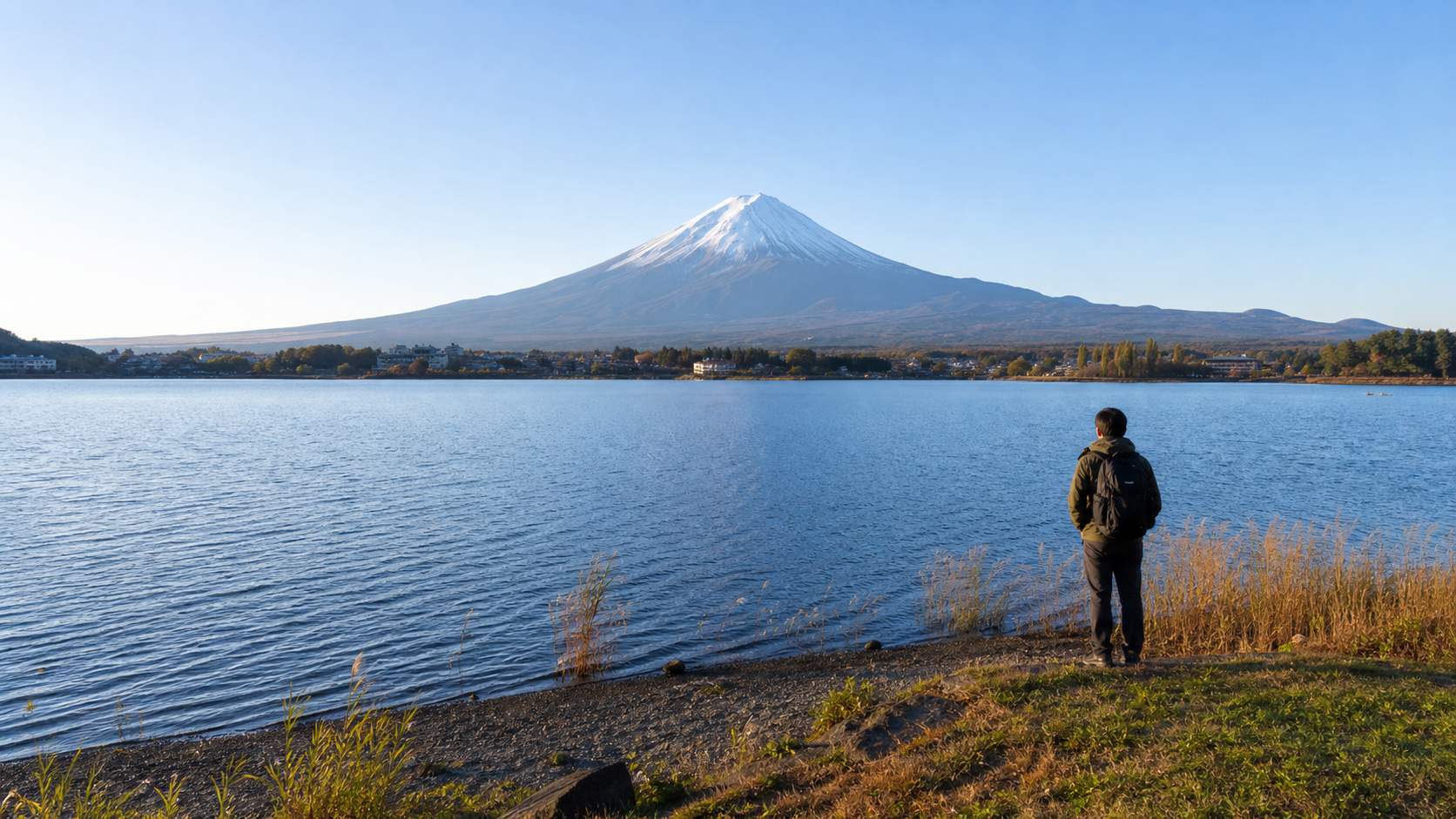
A Mt. Fuji day trip from Tokyo is easy to imagine and surprisingly easy to plan badly. The first problem is the destination. “Mt. Fuji” may mean Lake Kawaguchiko, Chureito Pagoda, Fujisan Station, Oshino Hakkai, the Fuji Subaru Line 5th Station, or the summit. Those places do not share one entrance or one simple sightseeing route.
This guide uses Kawaguchiko Station and Lake Kawaguchiko as the default first-time day-trip destination. It is not a climbing guide. It solves a narrower set of decisions: train or highway bus, when to reserve, what to do when seats are sold out, how to judge visibility on the morning, and how to keep the day worthwhile when clouds hide the mountain.
- Quick answer: the low-friction Mt. Fuji day-trip plan
- First decide which “Mt. Fuji” destination you mean
- Tokyo to Kawaguchiko: highway bus or Fuji Excursion?
- The real tradeoff: booking certainty versus weather flexibility
- The morning Go / Caution / No-Go check
- If the Shinjuku highway bus is sold out
- If the Fuji Excursion is fully booked
- A clear-day Kawaguchiko itinerary
- Cloudy-day Plan B: keep Fuji as the subject, not the promised view
- Return seats, last departures, and the missed-connection plan
- Luggage, IC cards, passes, and reservation checks
- This is not a Mt. Fuji climbing guide
- Your 48-hour and same-morning checklist
- FAQ
- Is Kawaguchiko the same place as Mt. Fuji?
- Is the train or highway bus better from Tokyo to Mt. Fuji?
- What time of day is best to see Mt. Fuji from Kawaguchiko?
- How early can I reserve the Shinjuku–Kawaguchiko highway bus?
- What should I do if the highway bus is sold out?
- What should I do if the Fuji Excursion is full?
- Can I use the Japan Rail Pass to Kawaguchiko?
- Can I use Suica or PASMO around Kawaguchiko?
- Is a Mt. Fuji day trip worth it when the mountain is cloudy?
- Can I climb Mt. Fuji on this day trip?
- Sources and update note
Quick answer: the low-friction Mt. Fuji day-trip plan
For most first-time visitors, reserve one direct route from Shinjuku to Kawaguchiko and reserve the return at the same time. Choose the highway bus when lower cost and a direct ride matter most, but accept road-delay risk. Choose the Fuji Excursion limited express when a predictable rail route matters more and the higher fare fits your budget.
If both direct choices are full, take a JR limited express from Shinjuku to Otsuki and transfer to a Fujikyu local train. JR East publishes this as the official Fuji Excursion fallback; the local Fujikyu train does not require a reservation. The journey is about 2.5 hours in the official example.
On the morning, check an official live camera and transport notices before leaving Tokyo. When the mountain is visible, go first to the north side of Lake Kawaguchiko rather than spending the best viewing window inside a cafe or ticket queue. When the mountain is hidden and the view is your only reason for traveling, move the trip if your ticket conditions allow. When the date cannot move, switch the objective to Fuji culture, museums, the lake, and local food.
Do not treat a sunny Tokyo forecast as proof of a Fuji view. Do not travel to the 5th Station simply because “Mt. Fuji” appears in the stop name. Do not leave the return journey unplanned.
One action now: open the official Shinjuku–Fuji Five Lakes highway-bus page and check seat availability for both directions on your date. If the times do not work, compare the official Fuji Excursion timetable and fare.
Spring Fuji visual preview
Watch the 28-second Spring Fuji Dream Tokyo Reel before you plan the real journey.
This is visual inspiration, not a live view or a promise of current conditions. Use the official cameras in this guide for the morning decision.
First decide which “Mt. Fuji” destination you mean
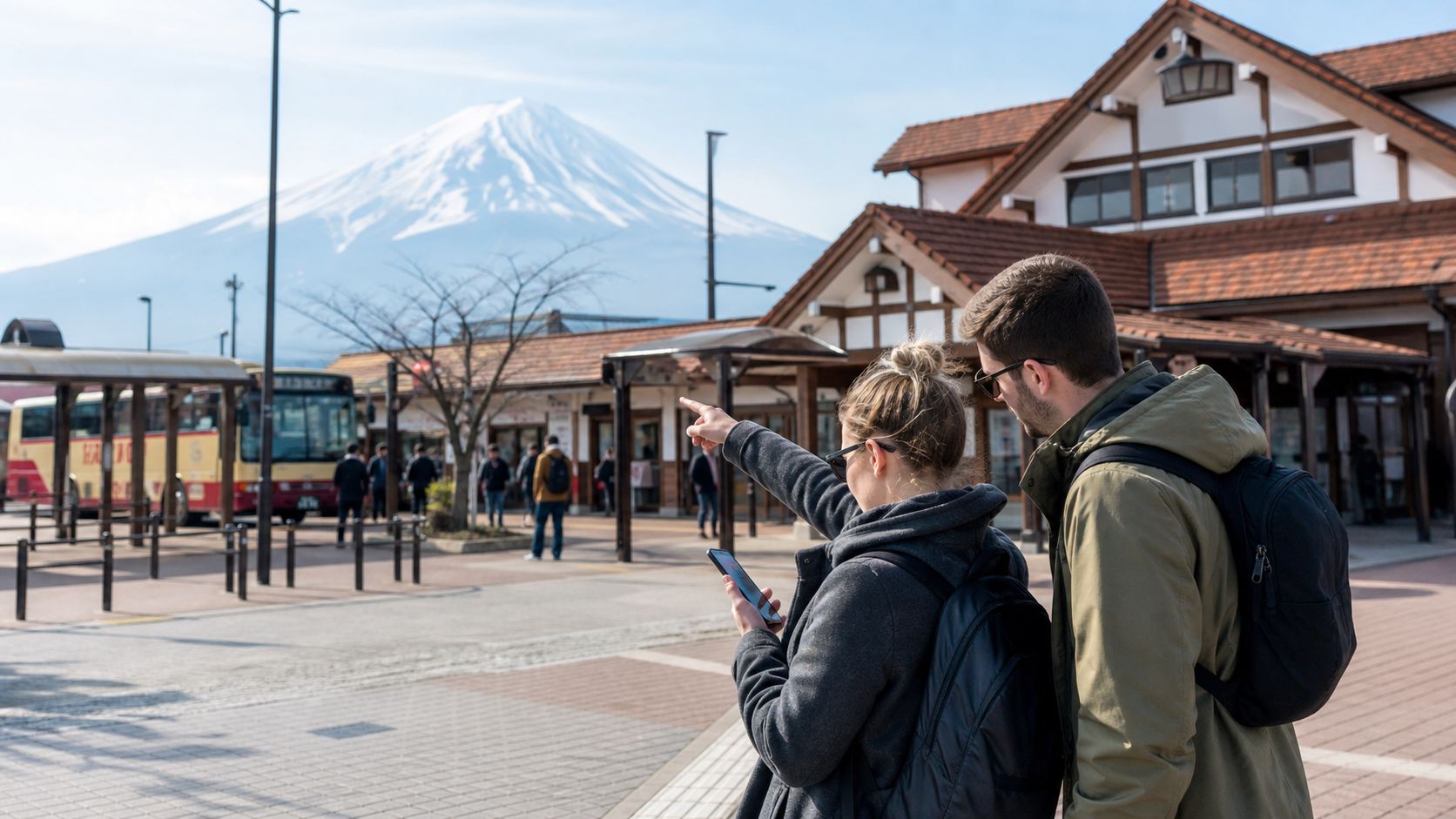
A transport mistake can happen before anyone buys a ticket. A traveler searches for “Mt. Fuji,” sees several stations and bus stops, and assumes they are interchangeable. They are not.
| Destination | Best for | Main access point | Important limit |
|---|---|---|---|
| Lake Kawaguchiko and its north shore | Classic lake-and-Fuji view, museums, ropeway, first visit | Kawaguchiko Station | The mountain may be hidden even when the lake is pleasant |
| Chureito Pagoda / Arakurayama Sengen Park | Pagoda-and-Fuji composition | Shimoyoshida Station | Steps, crowds, and visibility make it a single primary objective |
| Fujiyoshida | Fuji worship history, old streets, local culture | Fujisan Station or Shimoyoshida Station | “Fujisan Station” is a city station, not the mountain summit |
| Oshino Hakkai / Lake Yamanakako | Springs, village scenery, a different Fuji angle | Bus from the Kawaguchiko/Fujisan area or selected direct buses | Adding it to a Kawaguchiko day can create a long, fragile bus chain |
| Fuji Subaru Line 5th Station | High-elevation trailhead area and climbing access | Separate seasonal mountain bus or road access | It is not Lake Kawaguchiko and does not guarantee a view above clouds |
| Mt. Fuji summit | A serious climb during the official season | One of four regulated climbing routes | Not a Tokyo sightseeing day trip and not covered by this guide |
For a simple day, choose one primary image you want: Lake Kawaguchiko, Chureito Pagoda, or Fujiyoshida culture. If you choose Lake Kawaguchiko, use Kawaguchiko Station. If you choose Chureito, the direct Fuji Excursion can stop at Shimoyoshida before it reaches Kawaguchiko. If you choose the 5th Station, start again with the official seasonal access information; do not reuse the lake itinerary.
Lake Kawaguchiko is the default here because JNTO describes it as the easiest of the Fuji Five Lakes to access from Tokyo. Its north shore, museums, local sightseeing buses, and indoor Fuji heritage options also give the trip more than one way to succeed.
Tokyo to Kawaguchiko: highway bus or Fuji Excursion?
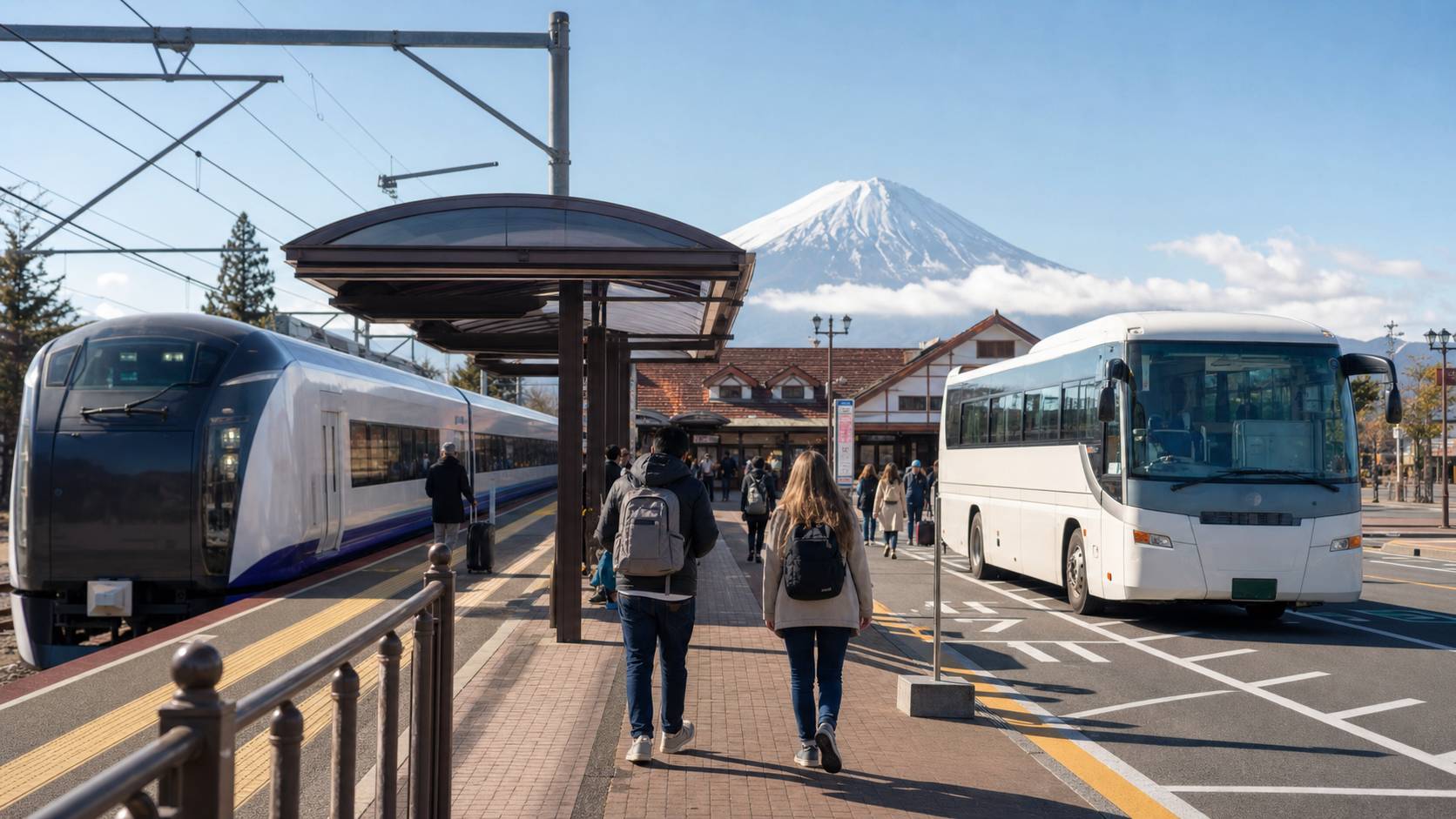
Both direct routes leave from the Shinjuku area and reach Kawaguchiko without a transfer. The better choice depends on what kind of uncertainty you prefer.
| Choice | Current official outline | Best when | Main risk |
|---|---|---|---|
| Shinjuku–Fuji Five Lakes highway bus | Direct; approximately 1 hour 45 minutes and ¥2,200 one way to Kawaguchiko on the current official page; advance seat booking available | You want a simple direct ride and lower transport cost | Expressway traffic can delay arrival and return |
| Fuji Excursion limited express | Four regular round trips daily plus some seasonal extras; Shinjuku–Kawaguchiko from 1 hour 58 minutes; ¥4,200 one way | You prefer rail predictability and can secure the required ticket | Direct seats can sell out; the fare is higher |
| JR to Otsuki + Fujikyu local train | One transfer; about 2.5 hours in JR East’s official full-train fallback | Direct bus and Fuji Excursion are full, or you value flexibility | More navigation and a transfer at Otsuki |
The listed facts were checked on July 20, 2026. Timetables, fares, seasonal trains, and booking conditions can change, so use the linked operator pages for your date.
Choose the highway bus for a direct, lower-cost trip
The Shinjuku bus leaves from Shinjuku Expressway Bus Terminal, commonly called Busta Shinjuku, and serves the Fuji Five Lakes area. The operator warns that seats often sell out on weekdays as well as weekends and recommends reserving in advance. Reservations open on the same calendar date of the previous month. Same-day travel is possible only when seats remain.
The bus is operationally simple: find the terminal, board the assigned service, and get off at the stop printed on your ticket. The weak point is the road. A scheduled journey of under two hours is not a promise during congestion, accidents, holiday traffic, or bad weather. A delayed outbound ride can erase the morning viewing advantage; a delayed return can collide with dinner or another reservation in Tokyo.
Reserve the return when you reserve the outbound. The operator explicitly recommends this when the return schedule is known. A reserved highway bus is not a city bus on which you should expect to stand after all seats are sold.
Choose the Fuji Excursion for rail predictability
The Fuji Excursion runs directly between Shinjuku and Kawaguchiko, stopping at Otsuki, Shimoyoshida, Fujisan, and Fuji-Q Highland on the way. From March 14, 2026, the regular pattern is four round trips each day, with selected seasonal extra trains.
The official one-way total from Shinjuku to Kawaguchiko is ¥4,200: ¥2,580 basic fare plus ¥1,620 express fee. The fastest listed regular trip leaves Shinjuku at 7:30 and reaches Kawaguchiko at 9:28. Tickets go on sale at 10:00 one month before the travel date through JR sales channels including JR-East Train Reservation, reserved-seat ticket machines, and ticket offices.
Rail avoids expressway traffic, but “direct” does not mean “walk on without planning.” Check the exact train, car, and ticket requirement. The train runs over both JR and Fujikyu tracks, and the private railway section matters for pass coverage.
If Japan’s rail ticket layers are unfamiliar, read the Tokyo Trains Guide 2026 before the trip. It helps separate a route search result from the base fare, limited-express requirement, platform, and reserved seat.
The real tradeoff: booking certainty versus weather flexibility

Mt. Fuji planning contains a conflict. The most convenient direct seats may sell out before the weather forecast becomes reliable, but the view may disappear behind cloud on the day you reserved.
There is no product that removes both risks. Choose one of these three booking styles deliberately.
Strategy 1: lock the trip early
Reserve the earliest workable outbound and a protected return as soon as sales open. Use this when Mt. Fuji is one of the trip’s highest priorities, your Japan itinerary has little spare time, or you are traveling during a weekend or holiday.
The cost of certainty is weather exposure. If the mountain is hidden, use the cloudy-day itinerary rather than trying to force a view. Read the cancellation and change conditions before buying; do not assume a train and a highway bus follow the same rules.
Strategy 2: keep two possible Fuji dates
Place two movable day-trip slots inside a Tokyo stay, then commit closer to the date. This provides more weather choice but increases the risk that the best direct services are full. It works better on quieter weekdays and when you are comfortable using the Otsuki transfer fallback.
Do not hold inventory you will not use if the product rules discourage it. The purpose is a flexible itinerary, not duplicate speculative bookings.
Strategy 3: reserve transport and redefine success
Keep the travel date but make the success condition broader than an unobstructed mountain view. A successful Kawaguchiko day can include the lake, Fuji worship history, a heritage center, art museums, local food, and a short lakeside walk.
This is the least fragile strategy for visitors who cannot move the date. It also prevents a common failure: traveling two hours, seeing cloud, and spending the rest of the day refreshing a forecast instead of experiencing the region.
The morning Go / Caution / No-Go check
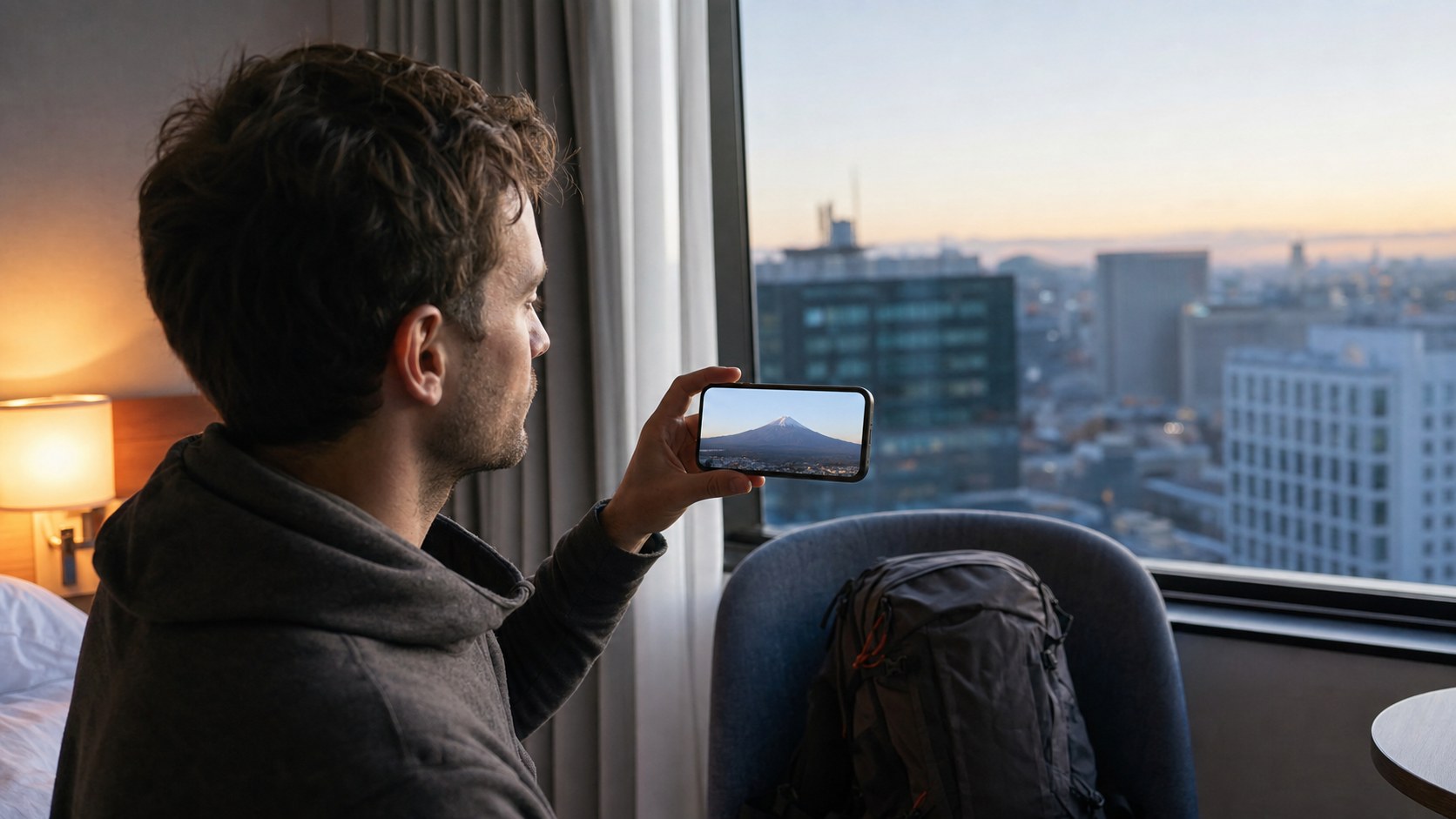
JNTO advises that the best Fuji views are generally in the morning because haze and clouds often build as the day continues. That is a planning tendency, not a guarantee. Make the final decision from current evidence.
Use this sequence before you leave your accommodation:
- Open the official Mt. Fuji live-camera collection. Choose a foothill camera facing the mountain, not only a summit camera looking away from it.
- Check the weather for Kawaguchiko or Fujiyoshida, not central Tokyo alone.
- Check the highway-bus, JR East, and Fujikyu service notices that apply to your route.
- Compare the live image with the timing and cancellation conditions of your ticket.
- Decide once: Go, Caution, or No-Go / Plan B.
Go
Use this when the mountain or a substantial part of it is visible from the relevant foothill camera, transport is operating, and no dangerous weather warning affects the route. Go to the primary viewing point first. Do not spend the clear morning completing every station task that could wait.
Caution
Use this when the mountain appears and disappears, low cloud sits around the upper slopes, or the camera evidence differs by side. Keep the trip if the region itself interests you, but shorten the viewing-point list and protect the indoor fallback.
No-Go or switch the objective
Use this when steady rain, dense low cloud, a serious weather warning, or a transport disruption removes the main purpose. If the ticket can be moved at an acceptable cost, use another Tokyo day. If it cannot, take the trip only after accepting the cultural Plan B.
A third-party “Fuji visibility score” can be a hint. The live view and official transport/weather information should make the decision. Weather changes quickly around a large mountain; neither a forecast icon nor this article can promise visibility.
If the Shinjuku highway bus is sold out
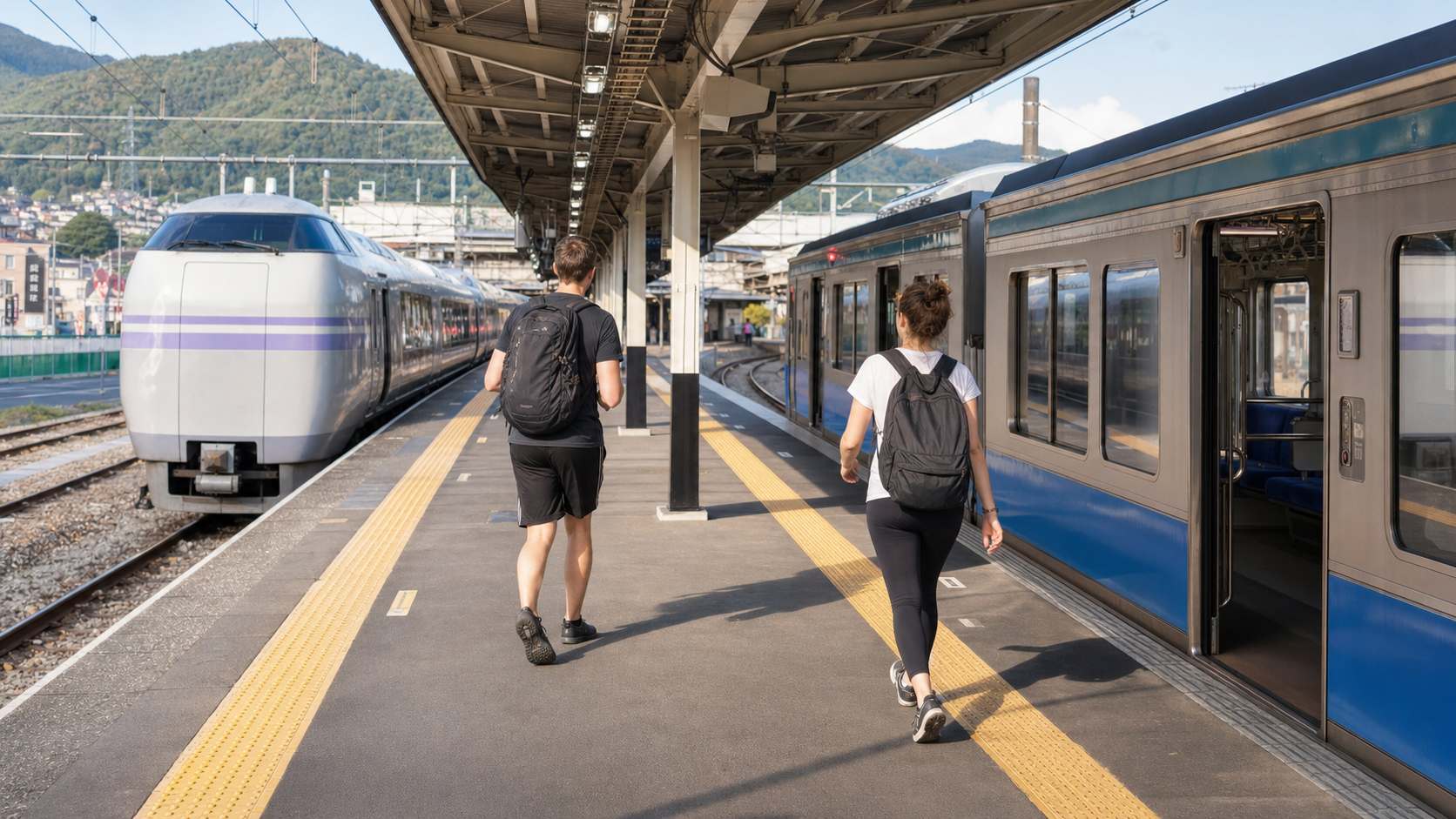
Do not arrive at Busta Shinjuku assuming an extra seat will appear. Use the fallback ladder before the travel morning.
Fallback 1: check the Fuji Excursion
Search the same date in JR-East Train Reservation or another official JR sales channel. The direct train reaches the same Kawaguchiko endpoint and also lets a Chureito-focused traveler get off at Shimoyoshida.
Fallback 2: take JR to Otsuki and a Fujikyu local train
This is the most durable public-transport fallback. Take a limited express Kaiji or Azusa from Shinjuku to Otsuki, then transfer to a Fujikyu local train for Kawaguchiko. JR East’s official guide estimates about 2.5 hours and states that the Fujikyu local train can be boarded without a reservation.
You still need the correct tickets. A Japan Rail Pass does not cover the Fujikyu Railway section. The JR TOKYO Wide Pass does cover that private-line section under the conditions shown in JR East’s official fallback guide. If using stored-value IC for the base fare, charge it before departure and buy any required express ticket separately.
Fallback 3: check another official departure hub
Fuji-area highway buses also operate from hubs such as Shibuya and selected Tokyo-area stations. Search the operator’s current route page rather than copying a stop from an old blog. A different hub can solve seat availability, but crossing Tokyo to reach it adds time and another failure point.
Fallback 4: move the date or stay overnight
If every usable outbound arrives after the best part of the day, do not buy a poor schedule merely to preserve the word “day trip.” Moving the date or staying near Kawaguchiko creates a better morning than reaching the lake near lunchtime.
If the Fuji Excursion is fully booked
The train has a particularly clear official fallback: use an Azusa or Kaiji between Shinjuku and Otsuki, then use a Fujikyu local train between Otsuki and Kawaguchiko.
At Shinjuku, board the exact limited express for which you hold the required ticket. At Otsuki, follow the Fujikyu transfer signs and allow enough time to resolve the fare method. The local train needs no seat reservation, but the JR limited express still has its own ticket conditions.
The transfer is not a downgrade if flexibility matters. Local Fujikyu trains continue after the final direct Fuji Excursion, so the Otsuki route also protects a traveler who wants a later return. It does add navigation. Save the current timetable, station names, and your last acceptable connection before you leave the lake.
Use the Google Maps Japan guide to understand the route, but verify the service and ticket against JR East and Fujikyu. A map app can show a train connection without teaching every ticket layer.
A clear-day Kawaguchiko itinerary
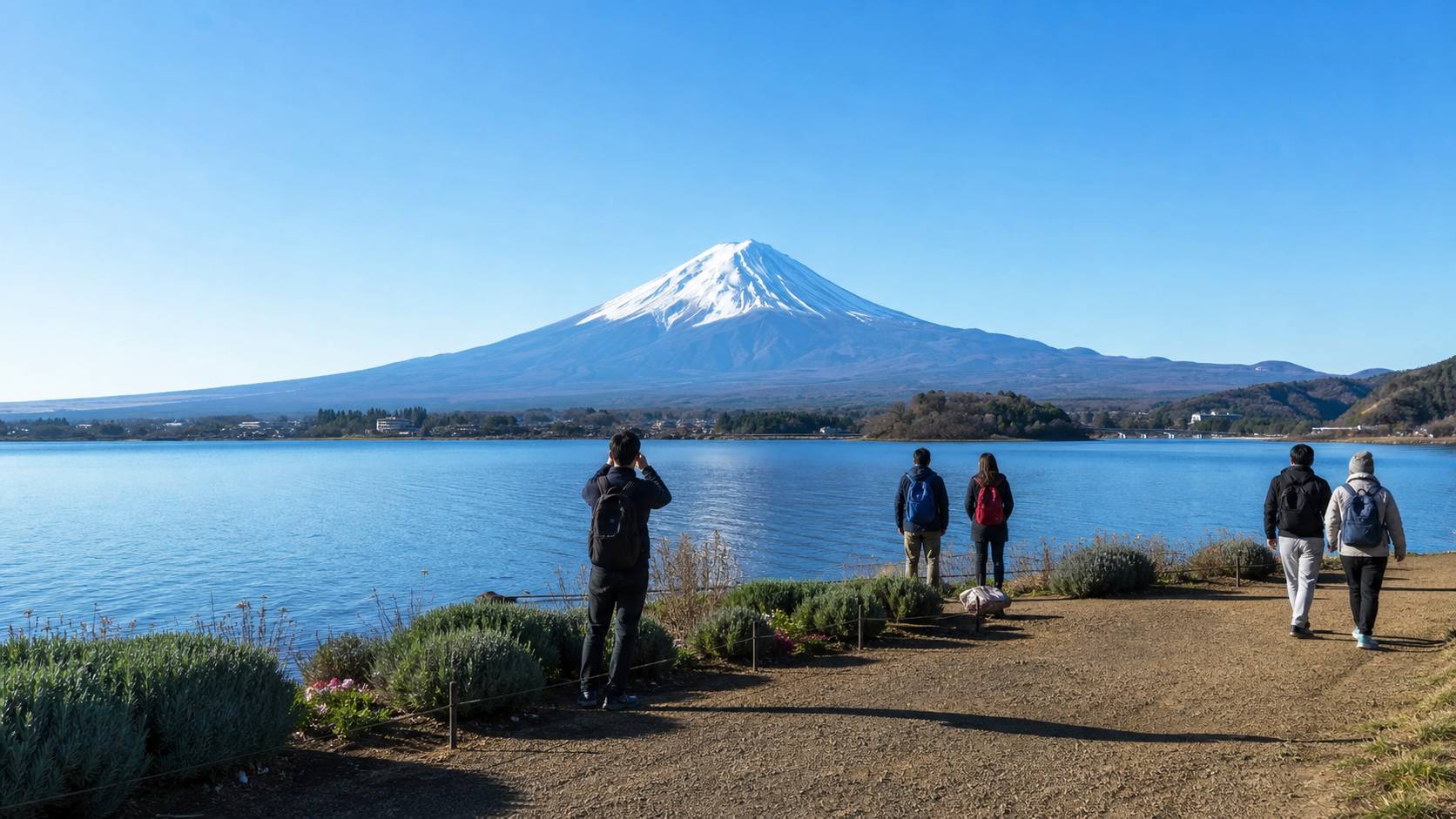
This itinerary protects the morning view and limits local transfers. It does not try to combine Lake Kawaguchiko, Chureito Pagoda, Oshino Hakkai, the 5th Station, and Fuji-Q Highland in one day.
Before leaving Tokyo
- Confirm the mountain on an official foothill live camera.
- Confirm the outbound and return service status.
- Put the return ticket, QR code, or reservation details somewhere available offline.
- Carry only a day bag.
- Choose one north-shore point and one secondary attraction.
On arrival at Kawaguchiko Station
Move toward the north shore while the mountain is visible. The official Kawaguchiko Sightseeing Bus Red Line serves the lake shore, museums, and Kawaguchiko Natural Living Center near Oishi Park. At the July 20 check, the core Red Line timetable showed departures from Kawaguchiko Station every 15 minutes from 9:00 through 17:45. Recheck the live operator page because local schedules change.
Oishi Park and the Natural Living Center give a broad lake-and-mountain composition. If buses are crowded and your group can walk safely, a short lakeside segment can be more enjoyable than repeatedly boarding and waiting. Do not assume the full lake circumference is a quick stroll.
Late morning: one secondary view, not three
Choose one:
- Continue along the north shore for a different angle.
- Return toward the southeast shore and use the Mt. Fuji Panoramic Ropeway when it is operating and the queue fits your return plan.
- Take the Lake Kawaguchiko sightseeing boat when weather and operation suit the day.
- Visit one museum on the Red Line.
The ropeway creates a high view over the lake, but it does not solve a cloud-covered mountain. A cruise creates a different lake experience, but operation can be affected by conditions. Treat both as optional additions after the primary view.
Lunch: keep it near the route
Eat near the lake or Kawaguchiko Station instead of making a separate cross-region food journey. Hoto noodles are a local Yamanashi choice, but queues can become another fixed block. A simple meal that protects the return is better than a famous restaurant that breaks the day.
Afternoon: convert from viewing to context
Once cloud builds or the best light passes, move to a museum, heritage stop, cafe, or relaxed lake walk. This prevents the final hours from becoming a repeated attempt to recreate the morning view.
Return: start earlier than the ticket requires
Reach Kawaguchiko Station with enough time for a delayed local bus, restroom, snacks, and platform or bus-bay confirmation. If the return is by highway bus, traffic can affect the Tokyo arrival even after you board on time. If the return is by train, distinguish the direct Fuji Excursion from a local train that requires an Otsuki transfer.
Cloudy-day Plan B: keep Fuji as the subject, not the promised view
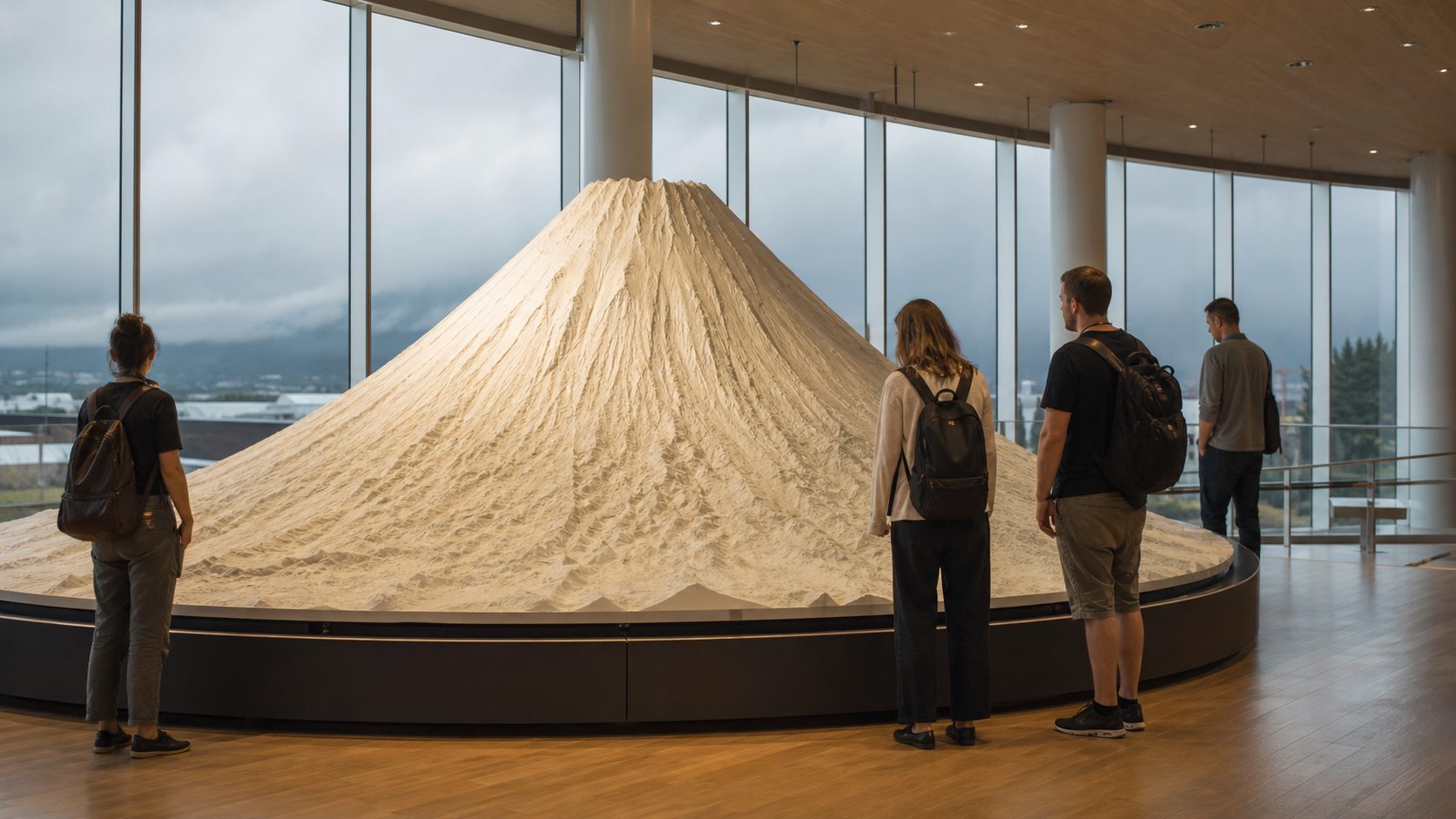
A cloudy plan should be selected before disappointment sets the pace. Use one of these versions.
Plan B1: Fuji culture and the lake
Visit the Yamanashi Prefectural Fujisan World Heritage Center. Its official English page lists standard hours of 9:00–17:00, longer July–August hours, and shorter December–February hours; admission ends 30 minutes before closing. Confirm the day’s opening status before travel.
Pair the center with a lake walk, a local meal, and one museum. The point is to understand why Fuji is a cultural World Heritage site and an object of worship and art, not only a distant photo background.
Plan B2: museum hopping on the Red Line
JNTO identifies several museums around Lake Kawaguchiko, including the Itchiku Kubota Art Museum, Kawaguchiko Art Museum, Kawaguchiko Music Forest, and the Muse Museum. The Red Line serves the museum corridor on the north and northeast shore.
Choose one or two after checking closures, admission, and bus timing. A cloudy day does not justify racing through four ticketed interiors.
Plan B3: Fujiyoshida history
Use the railway or local bus network for a focused Fujiyoshida visit. The official city guide describes Fujisan Museum as an indoor introduction to Fuji worship, local history, folklore, and industry, with projection mapping and other exhibits. Check its Tuesday and holiday closure pattern before traveling.
Plan B4: stay in Tokyo and move Fuji
If the view is the only objective and the ticket can be changed, stay in Tokyo. Use the day for a neighborhood, museum, food plan, or shopping that does not depend on mountain weather. Move Fuji to the clearest remaining date.
The failed version of Plan B is a long improvised chase between Kawaguchiko, Hakone, Gotemba, and the 5th Station. A hidden mountain can remain hidden from several sides, while the transport chain consumes the day.
Return seats, last departures, and the missed-connection plan
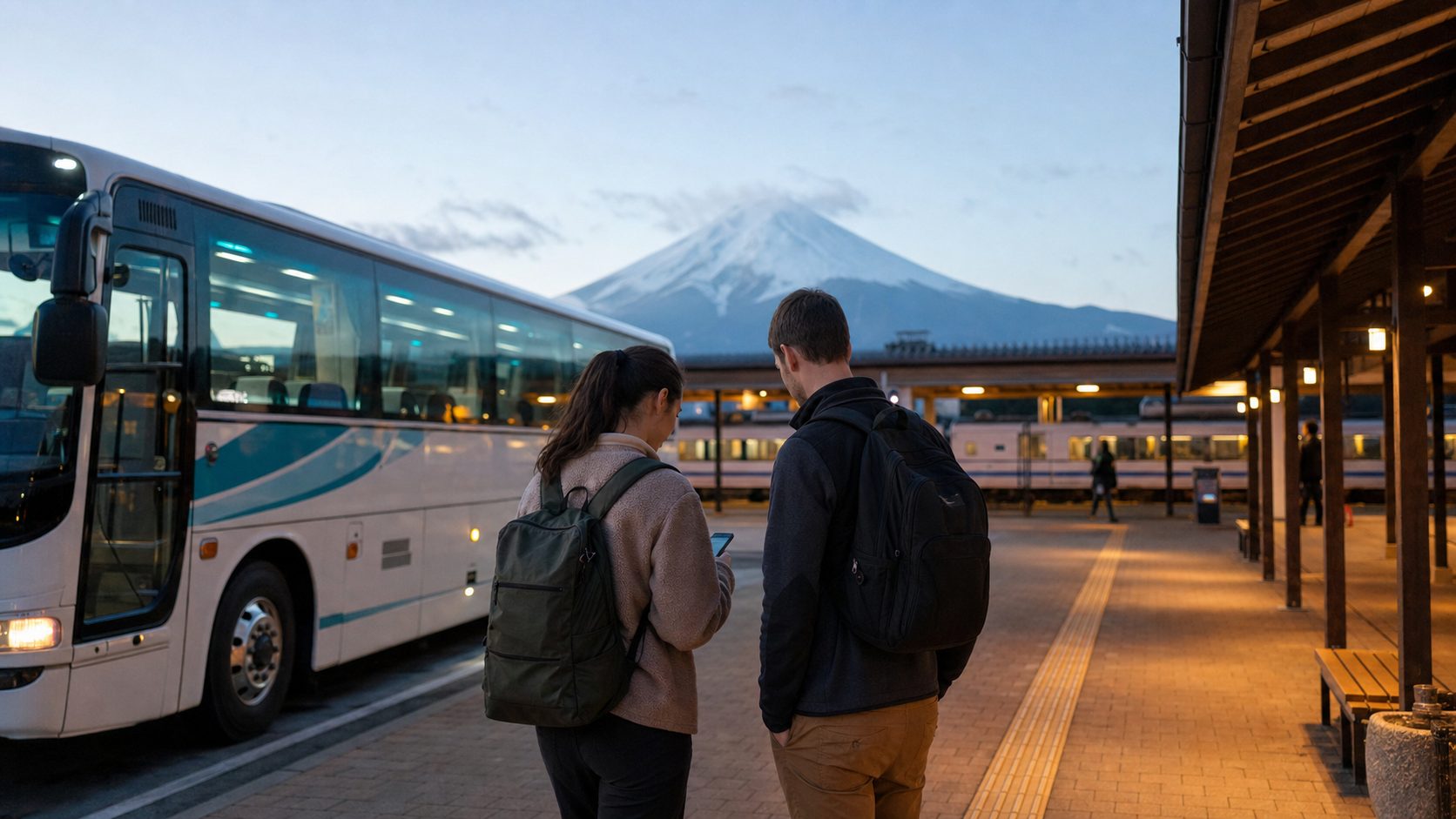
The return deserves the same attention as the outbound.
Highway bus return
Reserve it with the outbound when possible. Save the boarding stop and time, not only “Kawaguchiko to Tokyo.” Reach the station early enough to find the bay and resolve a ticket-display problem. If you miss a reserved bus, the next service may be full; check the operator’s rule rather than assuming automatic transfer.
Fuji Excursion return
Under the timetable effective March 14, 2026, the four regular direct departures from Kawaguchiko are 14:08, 14:58, 16:48, and 17:41. Seasonal extras can add another option on selected dates. The 17:41 regular service reaches Shinjuku around 19:40–19:48 depending on the day pattern shown by the operator.
Those times are a current planning snapshot, not a permanent promise. Verify your date. A photograph of a timetable from another season is not a ticket.
If the last direct train is too early
Fujikyu local trains continue toward Otsuki after the final regular Fuji Excursion in the current station timetable. A local train plus a JR connection can preserve the trip, but you must check the same-day connection to Shinjuku. Do not treat “a train leaves Kawaguchiko” as proof that every Tokyo connection is still available.
Set two return thresholds
Set a leave-the-attraction time and a must-be-at-the-station time. The first absorbs a crowded local bus. The second protects the reserved long-distance service. Share both times with the group before anyone joins a queue.
Luggage, IC cards, passes, and reservation checks
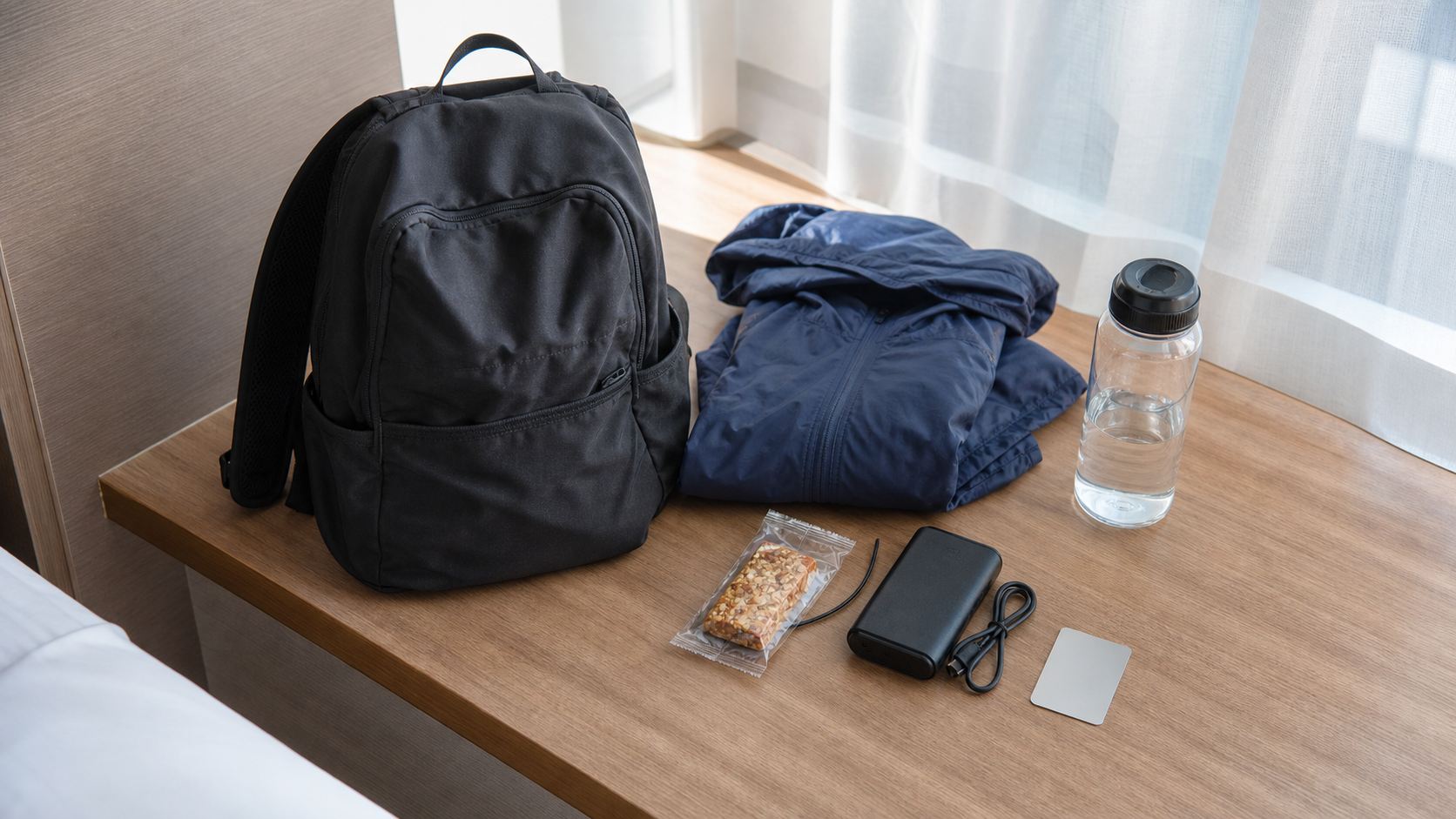
Travel with a day bag
Large luggage reduces mobility on crowded local buses and creates storage uncertainty. Leave suitcases at your Tokyo accommodation or another confirmed storage point. Do not build a tight itinerary around the hope that a locker will be empty on arrival.
Highwaybus.com notes that operators have separate rules for large items such as bicycles, skis, and musical instruments. Check the company operating your exact service before bringing oversized baggage. Keep valuables, medicine, and documents with you.
IC cards work for the base fare, not every ticket layer
Fujikyu Railway accepts Suica, PASMO, and other compatible transport IC cards. The company also says its trains, local buses, and taxis in the Fuji Five Lakes area support compatible cards. Charge before leaving Tokyo; charging opportunities and machine support are more limited than in central Tokyo.
An IC card does not replace a Fuji Excursion express or seat ticket. It also does not turn a reserved highway-bus journey into a tap-in ride. If using the Otsuki transfer, follow the operator’s transfer instructions for the combination of IC card, paper ticket, rail pass, and express ticket you actually hold.
For a broader explanation, see the Suica, PASMO and ICOCA guide.
Know which rail pass you hold
The nationwide Japan Rail Pass does not cover the Fujikyu Railway section between Otsuki and the Fuji area. JR East’s official fallback guide says holders pay the Fujikyu fare at the destination. The JR TOKYO Wide Pass covers the Fujikyu Line under its stated conditions.
Do not use “JR Pass” as a generic label. A nationwide pass, a JR East regional pass, and an ordinary JR ticket can have different coverage on the same direct train.
Check all three transport layers
Before travel, confirm:
- Tokyo-to-Fuji long-distance reservation
- Fuji-area local bus or rail timetable
- return service and fallback connection
The local sightseeing-bus pass can be useful when several covered rides fit the plan. At the July 20 check, the official two-day Kawaguchiko/Saiko/Motosuko sightseeing-bus pass was ¥2,000 for adults and ¥1,000 for children. Do not buy it automatically for a single out-and-back ride; compare the rides you will actually take.
This is not a Mt. Fuji climbing guide
Kawaguchiko sightseeing and a summit climb are different projects. In 2026, the official Yoshida Trail season is July 1 to September 10, subject to conditions. The Yamanashi rules list a ¥4,000 hiking fee, a 14:00–03:00 gate closure for climbers without a mountain-hut stay, a daily cap of 4,000 people excluding hut guests, and an equipment check.
The Shizuoka routes also have 2026 entry rules, fees, season dates, and night-entry restrictions. Outside the official season, summit trails are closed and the official site warns that climbing is extremely dangerous.
Do not add a summit climb to this day-trip itinerary. Use the official Mt. Fuji climbing website and create a separate plan with the correct trail, reservation, hut, equipment, weather, and descent logistics.
Your 48-hour and same-morning checklist
Forty-eight hours before
- Confirm the exact destination: Kawaguchiko, Shimoyoshida, Fujiyoshida, or the 5th Station.
- Recheck the outbound and return reservation.
- Read the cancellation or change rule for the exact product.
- Open the current Fuji Excursion, highway-bus, and local sightseeing-bus timetables.
- Choose one clear-day primary point and one cloudy-day indoor plan.
- Check the Kawaguchiko weather, not only Tokyo.
- Remove large luggage from the day-trip plan.
The same morning
- Open the official foothill live camera.
- Check JR East, Fujikyu, or highway-bus service notices.
- Make the Go / Caution / Plan B decision.
- Charge the IC card before leaving Tokyo.
- Save the return ticket and fallback route offline.
- Tell the group the leave-the-attraction time.
The measurable next action remains the most useful: open the official highway-bus seat-availability page for your date. If the round trip is unavailable, move immediately to the Fuji Excursion and Otsuki-transfer options instead of waiting until the travel morning.
FAQ
Is Kawaguchiko the same place as Mt. Fuji?
No. Kawaguchiko is a lake and transport hub north of the mountain. It is a popular place to view Mt. Fuji. Fujisan Station is a railway station in Fujiyoshida, the 5th Station is a separate high-elevation trailhead area, and the summit requires a regulated climb.
Is the train or highway bus better from Tokyo to Mt. Fuji?
At the fares checked for this guide, the highway bus is the lower-cost direct option, but road traffic can delay it. The Fuji Excursion costs more but avoids expressway congestion. Choose based on seat availability, budget, and how much schedule certainty you need.
What time of day is best to see Mt. Fuji from Kawaguchiko?
Morning is generally the better planning window. JNTO notes that haze and clouds tend to obstruct the mountain as the day continues. Check a live camera on the day because no time guarantees a view.
How early can I reserve the Shinjuku–Kawaguchiko highway bus?
The official route page says reservations are accepted from the same calendar date of the previous month. Seats often sell out on weekdays and weekends, so reserve the return with the outbound when your date is fixed.
What should I do if the highway bus is sold out?
Check the direct Fuji Excursion. If that is also unavailable, take a JR limited express to Otsuki and transfer to a Fujikyu local train, the fallback published by JR East. You can also check another official bus departure hub or move the date.
What should I do if the Fuji Excursion is full?
Take an Azusa or Kaiji limited express from Shinjuku to Otsuki, then transfer to a Fujikyu local train for Kawaguchiko. The local Fujikyu train does not require a reservation, but the JR limited express has its own ticket requirement.
Can I use the Japan Rail Pass to Kawaguchiko?
The nationwide Japan Rail Pass covers the JR portion to Otsuki but not the Fujikyu Railway section. JR East’s official guide says the JR TOKYO Wide Pass covers the Fujikyu section under its conditions. Verify the exact pass name.
Can I use Suica or PASMO around Kawaguchiko?
Yes. Fujikyu Railway accepts Suica, PASMO, and compatible cards, and compatible cards can be used on participating Fujikyu local transport. They cover a basic fare where accepted; they do not replace a required express, reserved-seat, or highway-bus ticket.
Is a Mt. Fuji day trip worth it when the mountain is cloudy?
Yes, if the lake, Fuji culture, museums, and local food also interest you. If the view is the only purpose and your ticket can be moved, use another day. Decide before departure rather than chasing the mountain between distant areas.
Can I climb Mt. Fuji on this day trip?
No. A summit climb requires a separate plan using an official route during its open season, with current entry procedures, equipment, weather, timing, and a mountain-hut strategy when the schedule requires an overnight. This article covers sightseeing around Kawaguchiko.
Sources and update note
Transport and operating facts were checked on July 20, 2026 against the official Shinjuku–Fuji Five Lakes highway-bus page, its fare and boarding page, the official Fujikyu Fuji Excursion page, JR East’s Fuji Excursion full-train fallback, the Kawaguchiko Station timetable, the Fujikyu sightseeing-bus page, and the Fujikyu IC-card guide.
Visibility and destination planning were checked against the official Mt. Fuji live-camera collection, JNTO’s Fuji Five Lakes itinerary, JNTO’s Lake Kawaguchiko guide, the Yamanashi Prefectural Fujisan World Heritage Center, and the official Fujisan Museum listing.
The climbing boundary was checked against the official 2026 Yoshida Trail rules and official 2026 Shizuoka-route rules.
Weather, visibility, timetables, fares, pass coverage, road conditions, and opening status can change. Recheck the official pages for the travel date. The linked Instagram Reel is a creative Spring Fuji interpretation and is not evidence of live conditions.
Comments