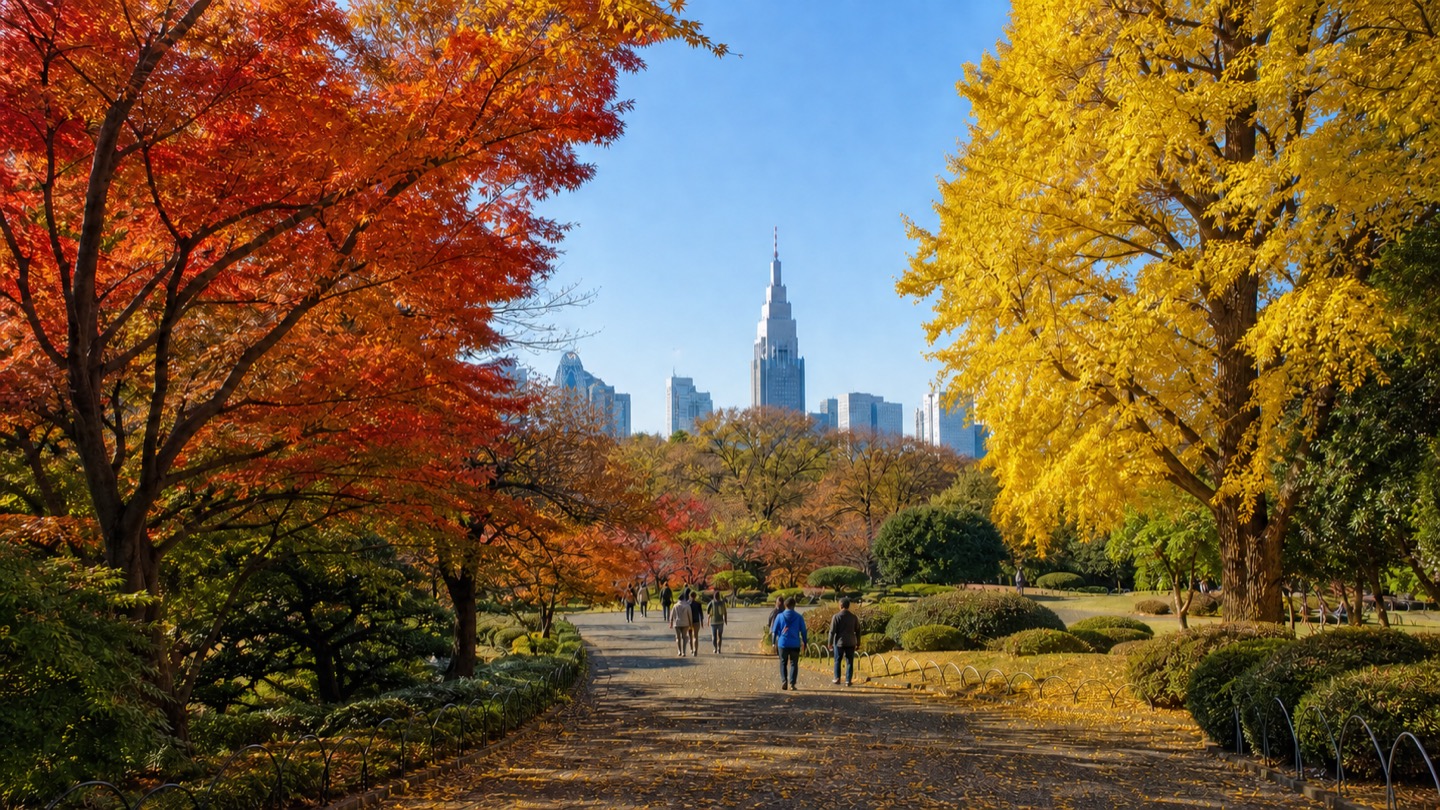
Tokyo’s autumn colors arrive later than many first-time visitors expect. The Tokyo Convention & Visitors Bureau currently gives mid-November to early December as a citywide viewing period. Mt. Takao and other western Tokyo areas can turn earlier, while some central gardens hold color into December.
As of July 18, 2026, the official GO TOKYO forecast page still displays its November 6, 2025 update. That means an exact 2026 peak date is not yet something you should build a non-refundable itinerary around. Use the date ranges below to choose a likely area, then check live official updates during the week of your visit.
This guide helps travelers with fixed dates choose between central gardens, ginkgo avenues, western Tokyo and a weather-proof Plan B.
- Quick answer: when do autumn leaves peak in Tokyo?
- Will you see autumn leaves on your Tokyo dates?
- Central Tokyo or western Tokyo: which area fits your dates?
- Six Tokyo autumn spots to compare
- 1. Mt. Takao: choose it for an earlier full-day option
- 2. Showa Kinen Park: choose it for ginkgo and space
- 3. Meiji Jingu Gaien: choose it for an iconic ginkgo avenue
- 4. Shinjuku Gyoen: choose it for variety and an easy central route
- 5. Rikugien: choose it for a traditional pond-and-maple scene
- 6. Koishikawa Korakuen: choose it for history and a shorter garden visit
- How to check the live foliage status before you leave
- Tokyo autumn crowd plan
- What if the leaves are early, late or hit by rain?
- Three simple autumn plans from a Tokyo base
- Practical checklist: trains, tickets, shoes and weather
- Tokyo autumn leaves FAQ
- Is late October too early for autumn leaves in Tokyo?
- Can I see autumn leaves in Tokyo in early November?
- When do Tokyo’s ginkgo trees tend to turn yellow?
- Can I still see autumn colors in Tokyo in December?
- Is Mt. Takao earlier than central Tokyo?
- How crowded are Tokyo’s autumn-leaf spots?
- Are autumn leaves worth seeing in the rain?
- How can I check the current foliage status?
- Sources and verification
Quick answer: when do autumn leaves peak in Tokyo?
For a first plan, use mid-November to early December for Tokyo as a whole. If your trip is in late October or early November, do not assume central Tokyo will already be red and gold. Check western or higher-elevation areas such as Mt. Takao, Mt. Mitake or Okutama, and keep a non-foliage day ready. If you visit from late November into the first week of December, central gardens and ginkgo avenues are more likely to fit—but the weather can still move the season.
GO TOKYO’s general autumn guidance also warns that weekends and holidays are especially busy. A weekday morning gives you a better chance of a calm visit, but it does not guarantee empty paths.
2026 planning snapshot
| Question | Practical answer as of July 18, 2026 |
|---|---|
| Main Tokyo window | Mid-November to early December is the current official general guide |
| Earlier Tokyo option | Mt. Takao is commonly listed from early or mid-November; check live color before traveling |
| Central Tokyo option | Gardens and ginkgo avenues are usually stronger later in November and into early December |
| Exact 2026 peak | Not yet available on GO TOKYO’s forecast page; its visible forecast is still the 2025 update |
| Quietest strategy | Weekday, near opening time, with a second location saved |
| 2026 night events | Do not assume last year’s illumination dates will repeat; confirm each official event page |
The ranges in this article are planning ranges, not a 2026 forecast. A warm autumn can delay color. Wind and heavy rain can shorten a good viewing window after the leaves turn.
Will you see autumn leaves on your Tokyo dates?
Late October: treat central Tokyo foliage as a bonus
Late October can feel like autumn, but central Tokyo may still be mostly green. GO TOKYO’s October guide says November is the foliage season in the city. If red and yellow leaves are your priority, check higher or western areas first rather than choosing a famous central garden from an old photograph.
Separate “an enjoyable autumn day” from “peak red leaves.” A garden, chrysanthemum display or museum-and-food route can still work when the maples have not changed.
November 1–10: look west, but verify the mountain first
Mt. Takao is a reasonable candidate: one GO TOKYO page lists early to late November, while an event page describes mid-November to early December. The difference shows why live status matters more than a generic date.
The 2026 Mt. Takao Autumn Leaves Festival schedule was not posted on the GO TOKYO event page when this guide was checked. The page still shows the 2025 edition. You can visit the mountain without a festival, but do not copy a 2025 event date into a 2026 plan.
November 11–25: keep both western and central options
This is a crossover period. Save one western option and one central option, then decide after checking official updates and the weather.
Do not try to combine Mt. Takao, Showa Kinen Park and a central garden in one “efficient” day. The transfers, early sunset and autumn crowds turn that into a transport project. Choose one main area and let the foliage status decide.
November 26–December 7: central Tokyo becomes the easier bet
This is a useful range for Rikugien, Koishikawa Korakuen, Shinjuku Gyoen and Meiji Jingu Gaien. It gives central Tokyo more time to change than an early-November visit.
It is also a high-demand period. Famous paths and illuminated gardens can be busy. If photography is not your main priority, trade the best-known evening session for a weekday morning.
After December 7: check individual gardens, not Tokyo in general
Some trees may still have color, but a citywide range is no longer useful. Mixed-species gardens can outlast a single-species avenue. Check current notices and recent official photos before crossing the city.
Central Tokyo or western Tokyo: which area fits your dates?
The choice is not simply “city or nature.” It is a timing decision.
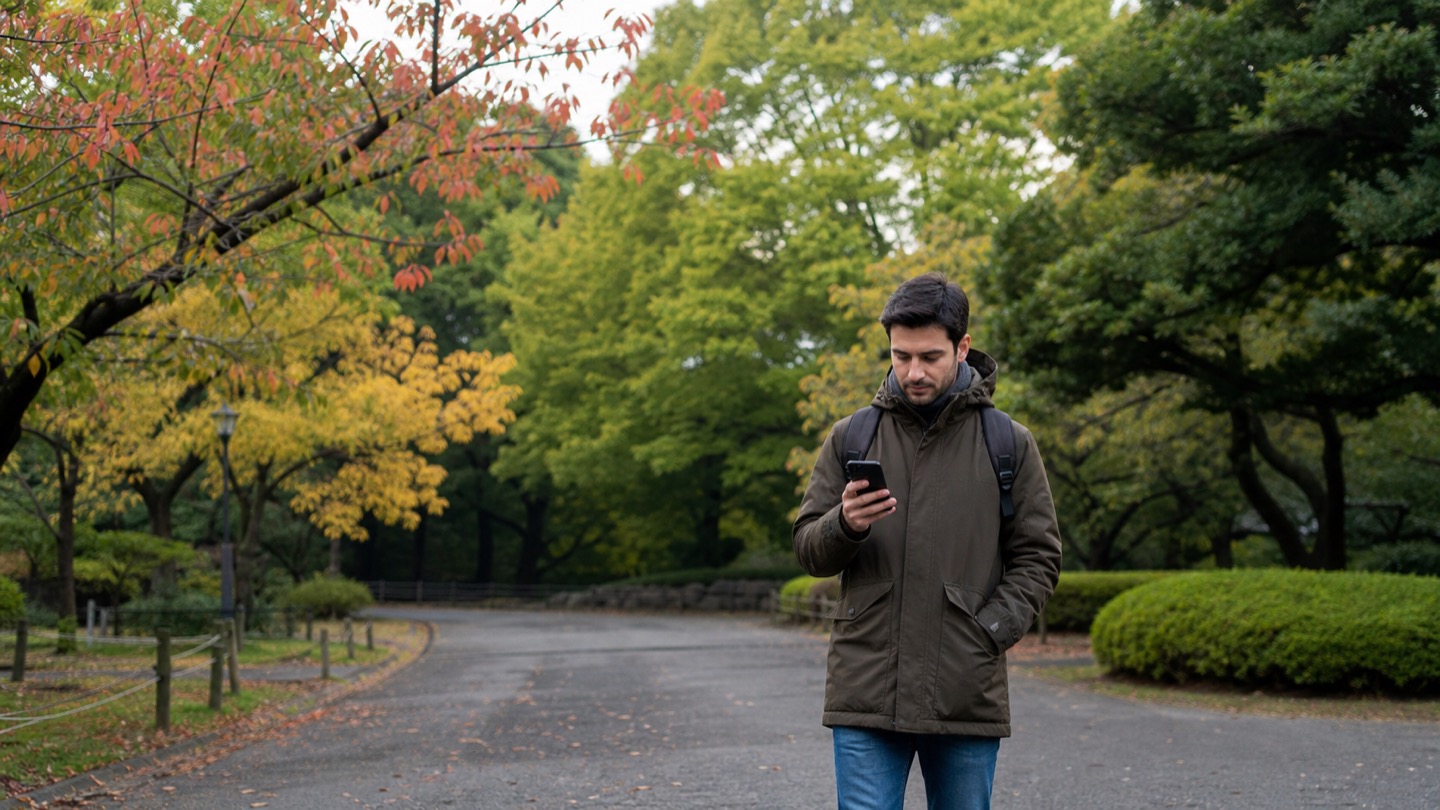
Choose western Tokyo when your dates are early, you are willing to spend most of a day outside the center, and the live status shows color. Mt. Takao offers hiking, cable-car and chairlift options. Okutama and Mt. Mitake offer a more rural landscape but require more travel and stronger weather judgment.
Choose central Tokyo for later dates, a shorter outing or a group that cannot manage a mountain day. Paid gardens have clear hours, toilets and compact routes; public ginkgo avenues are easy to combine with another plan but can feel crowded.
Choose Showa Kinen Park for a large park day between those extremes. It is in Tachikawa, west of the center but not a mountain hike; its official guide lists ginkgo color in November.
| Area type | Better fit for | Main trade-off |
|---|---|---|
| Mt. Takao / western mountains | Earlier dates, hiking, full-day nature | Weather, crowds, longer travel and more physical effort |
| Showa Kinen Park | Ginkgo, open space, a west-Tokyo park day | Large grounds and an earlier winter closing time |
| Central paid gardens | Later dates, short routes, traditional scenery | Admission hours and concentrated crowds |
| Public ginkgo avenues and parks | Flexible city itineraries, quick photos | No controlled entry, roadside congestion and fewer facilities |
Six Tokyo autumn spots to compare
The goal is not to collect six locations. Pick the one that fits your date, mobility and tolerance for crowds.
1. Mt. Takao: choose it for an earlier full-day option
GO TOKYO lists Mt. Takao as roughly 55 minutes from Shinjuku to Takaosanguchi Station on the Keio Line. The mountain is free with no fixed opening hours; cable-car, chairlift and other facilities have separate schedules and charges.
The current official destination page describes autumn color from early to late November and recommends a weekday because fall crowds are heavy. A separate official festival page uses mid-November to early December. Treat that as a broad season, then confirm the current leaves and transport before departure.
Choose Mt. Takao for a mountain-and-temple day if you can handle slopes, queues and changing weather. Skip it in heavy rain, strong wind or poor visibility. The free TAKAO 599 MUSEUM near the station is a local fallback, not a reason to attempt an unsafe summit.
2. Showa Kinen Park: choose it for ginkgo and space
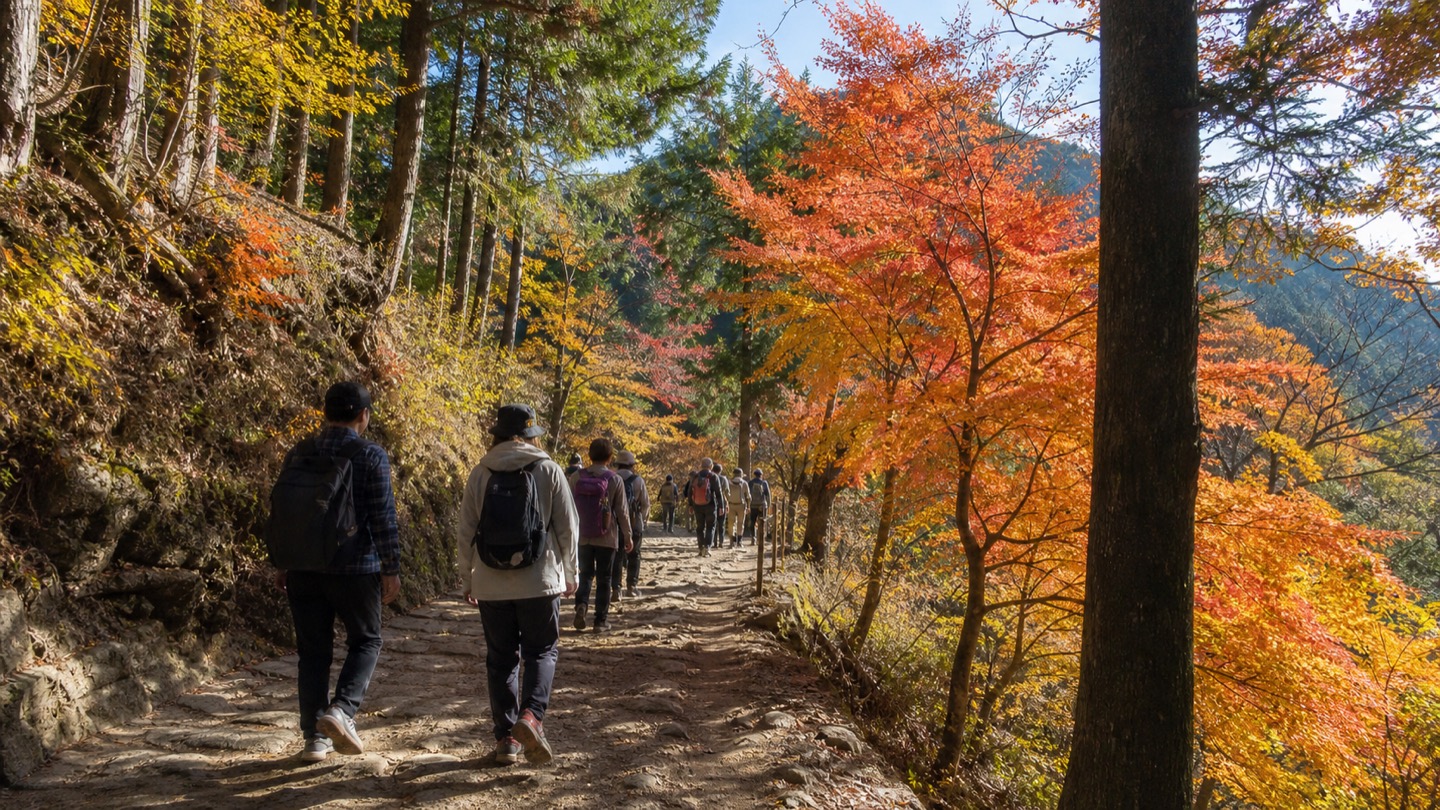
The park’s official English guide lists ginkgo leaves in November. From November through February, the paid area is scheduled to open from 9:30 a.m. to 4:30 p.m. Adult admission is ¥450; elementary and junior-high students are free, and the listed rate for visitors aged 65 or over is ¥210.
The park is large, so choose your gate and target area before arrival. It suits travelers who want lawns, a Japanese garden and long ginkgo views without a mountain trail.
Do not assume there will be a 2026 evening illumination simply because GO TOKYO’s previous forecast mentions illuminated evenings. Confirm the event calendar and ticket rules on the park’s official website.
3. Meiji Jingu Gaien: choose it for an iconic ginkgo avenue
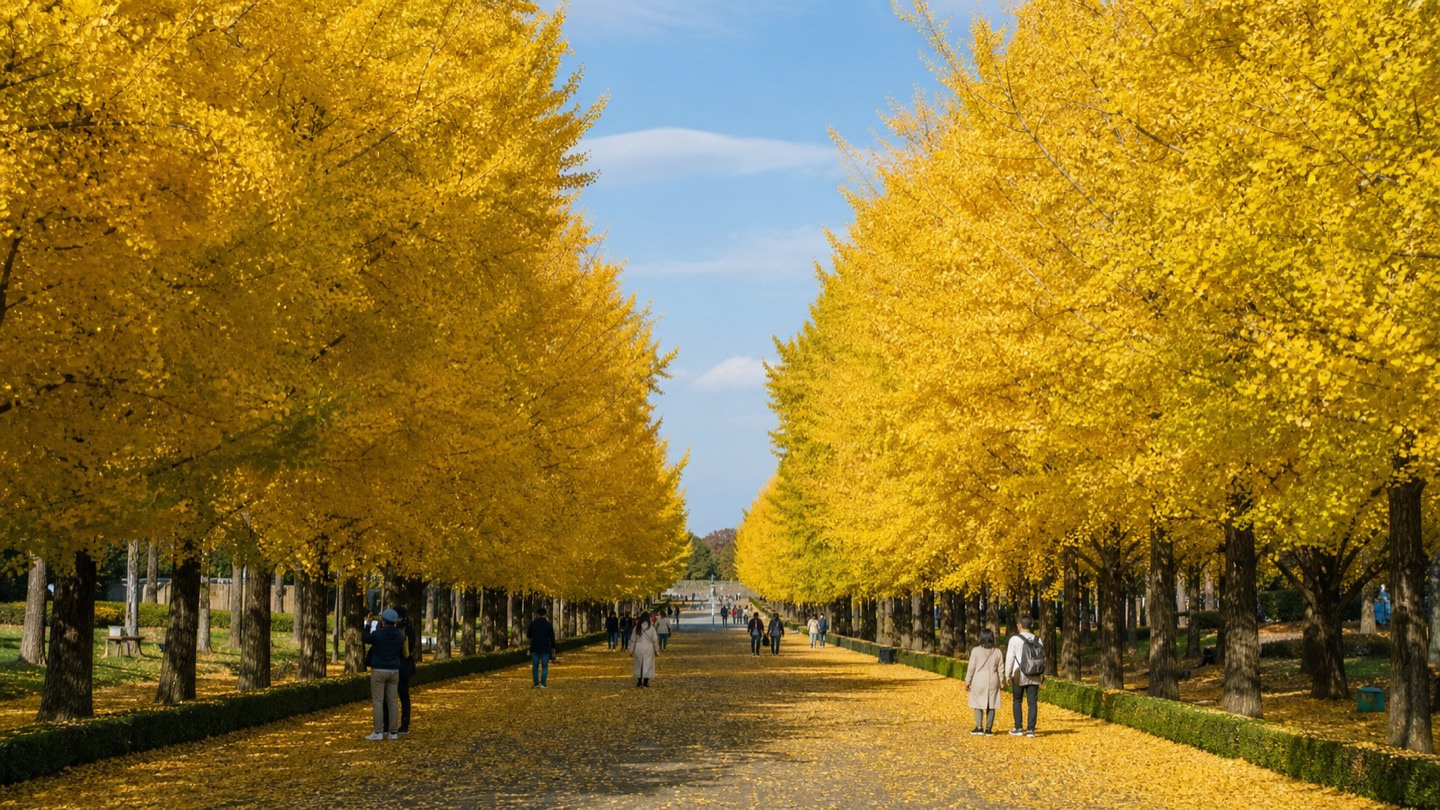
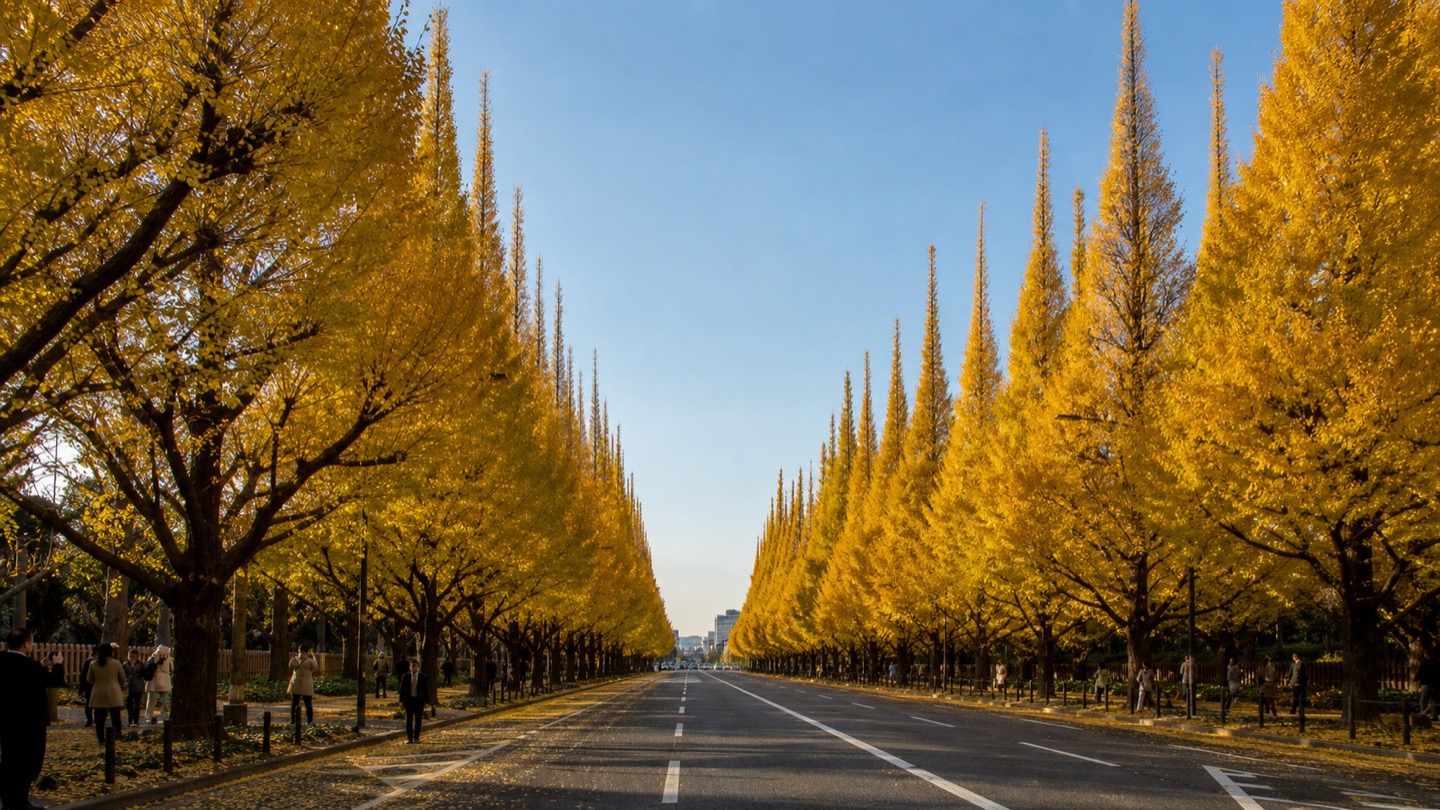
Icho Namiki, the ginkgo avenue at Meiji Jingu Gaien, is one of Tokyo’s recognizable autumn city views. GO TOKYO highlights the yellow trees with the Meiji Memorial Picture Gallery in the background.
This is a public urban avenue, not a controlled garden route. Pedestrians, vehicles and photography crowds share the area. Go early, keep out of the road and follow temporary restrictions.
Pair it with another nearby activity after checking the live color. If the trees are still green, there is little reason to wait in a photo crowd for the same composition many visitors are chasing.
4. Shinjuku Gyoen: choose it for variety and an easy central route
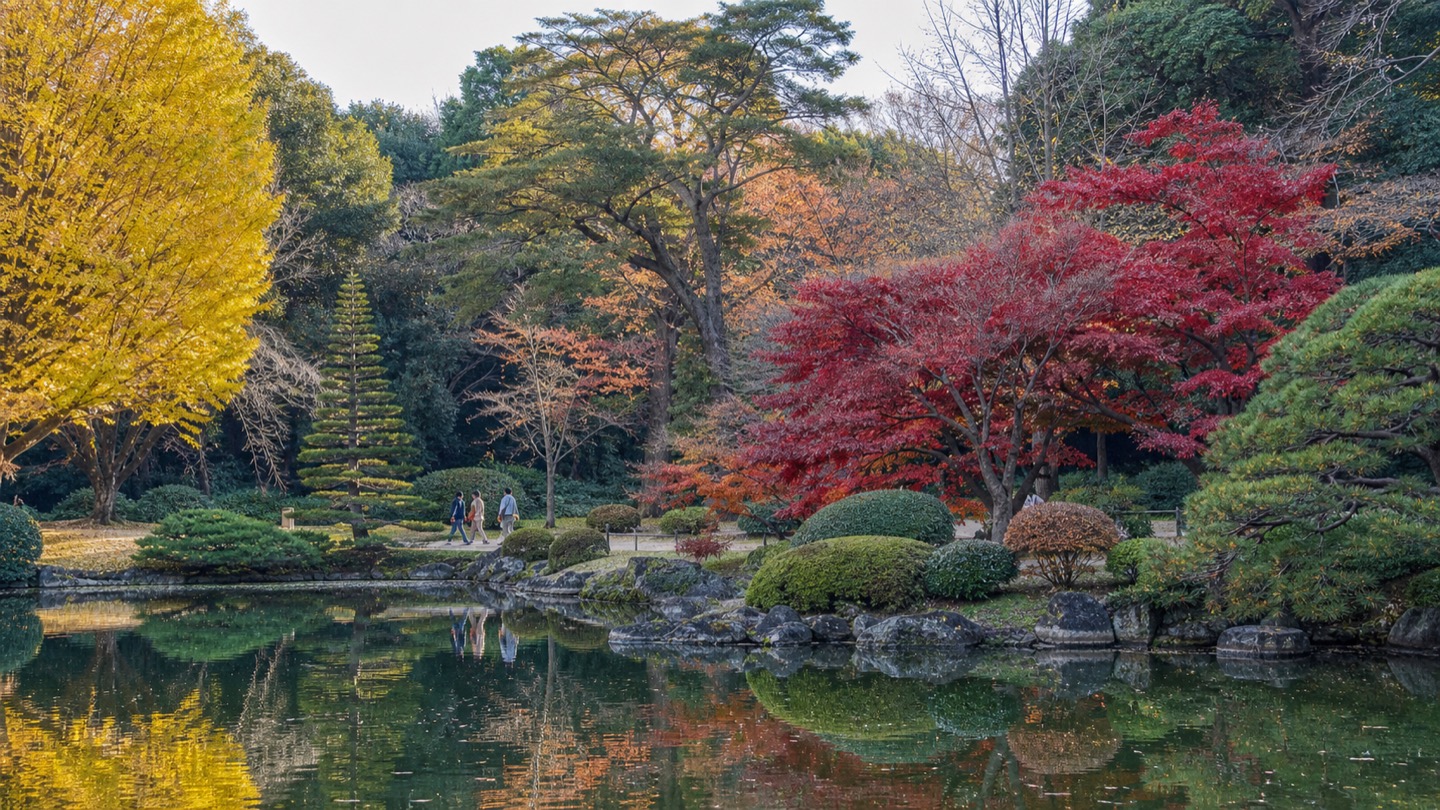
Shinjuku Gyoen is a useful choice for mixed groups because it offers broad lawns, formal gardens, toilets, a greenhouse and several entrances. From October 1 to March 14, the official schedule is 9:00 a.m. to 4:30 p.m., with last entry at 4:00 p.m. Adult admission is ¥500, and transport IC cards are accepted at the entry gates.
The official schedule lists closure on Mondays, or the following weekday when Monday is a public holiday. It also lists daily opening during the Chrysanthemum Exhibition period from November 1 to 15. Recheck the calendar before visiting because temporary closures and special operations are possible.
Choose Shinjuku Gyoen for a slower walk and a broader seasonal landscape. Alcohol, smoking, sports equipment and musical instruments are prohibited.
5. Rikugien: choose it for a traditional pond-and-maple scene
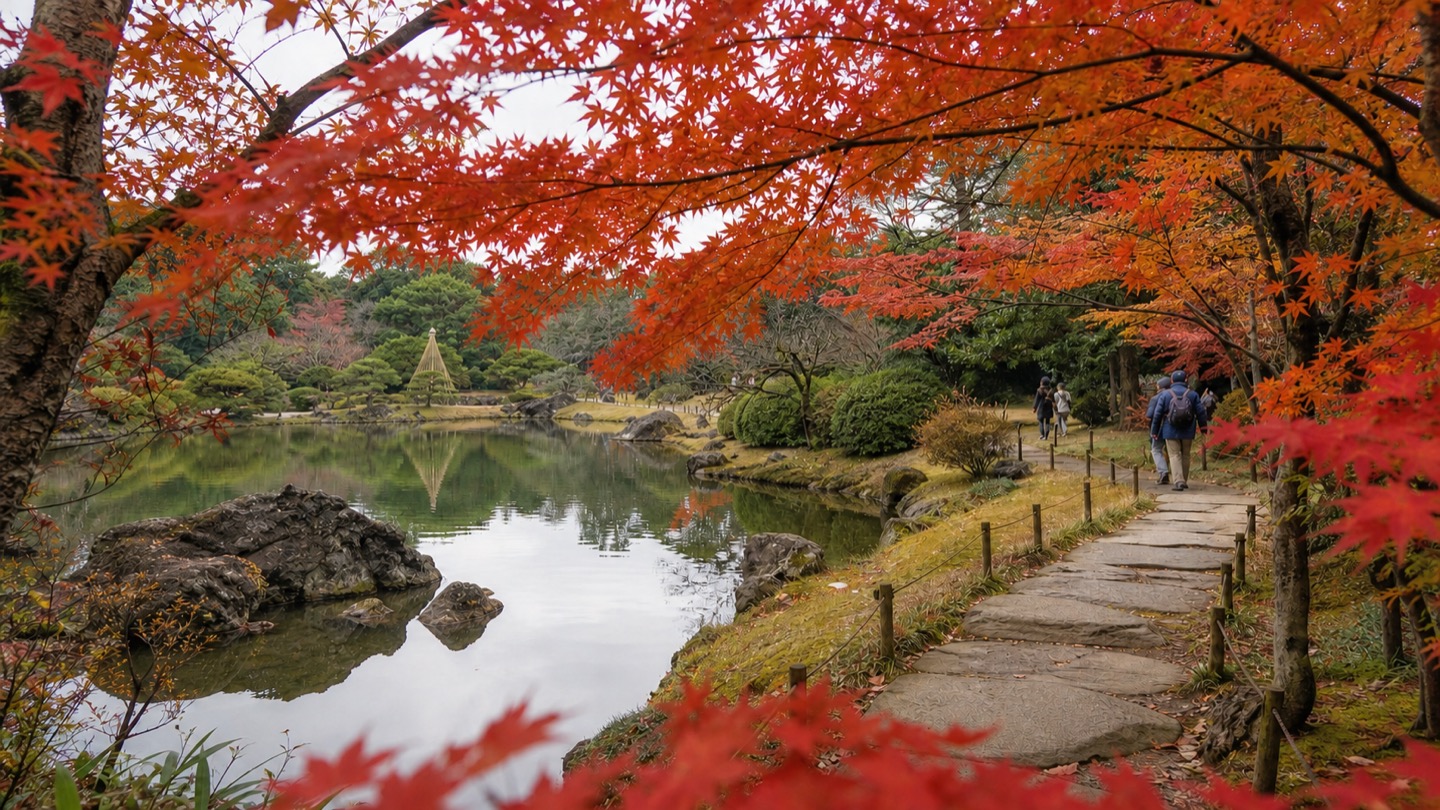
Rikugien is a strolling garden created around the theme of waka poetry. The official Tokyo Metropolitan Park Association page lists regular hours of 9:00 a.m. to 5:00 p.m., with entry until 4:30 p.m. Adult admission is ¥300, and the garden closes for the year-end period from December 29 to January 1.
Its paths, pond and maples form a compact traditional garden, which can concentrate visitors during strong color. If a 2026 illumination is announced, check its separate entry and ticket conditions.
Choose Rikugien if traditional garden composition matters more than open lawns. Go near opening time for a calmer circuit.
6. Koishikawa Korakuen: choose it for history and a shorter garden visit
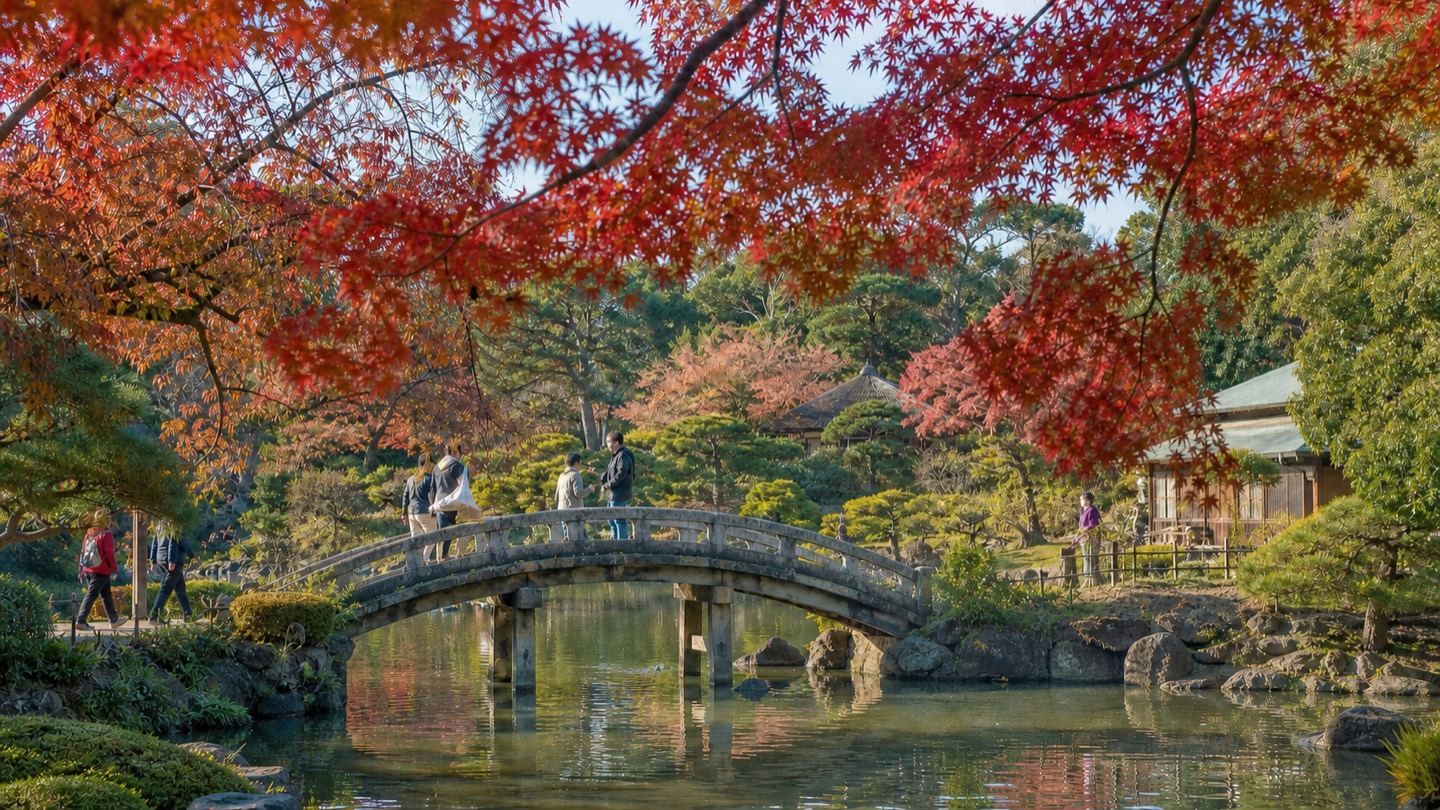
Koishikawa Korakuen is another central strolling garden with a pond, hills and maples. Its official page lists hours of 9:00 a.m. to 5:00 p.m., entry until 4:30 p.m., and adult admission of ¥300. It also closes from December 29 to January 1.
GO TOKYO highlights the garden’s red and orange maples. It provides a traditional landscape without taking a full day. Paths and bridges can slow when groups stop for photos, so keep narrow sections moving.
Rikugien and Koishikawa Korakuen can be visited on the same day when the live status justifies both. Two green gardens do not become a peak-foliage day because they share an itinerary.
How to check the live foliage status before you leave
Do this twice: once about a week before the visit, then again on the morning you travel.
- Start with GO TOKYO’s autumn forecast page. Check the update date. A page about 2025 is context, not a 2026 live report.
- Open the destination’s official website. Look for recent news, a flower or nature report, closures, event tickets and changed hours.
- Check the Japan Meteorological Agency forecast and warnings. Rain is one issue; wind can matter just as much once leaves are ready to fall.
- Check the rail or cable-car operator. This is essential for Mt. Takao and western Tokyo after bad weather.
- Save two options. One earlier-season or western option, and one central or indoor-friendly option.
- Make the decision before entering the station. Replanning after a one-hour journey wastes the advantage of having a Plan B.
Google Maps can help with routes, but the official facility page is the authority for closures and event tickets. Our Google Maps in Japan guide explains common route mistakes.
Tokyo autumn crowd plan
Go on a weekday if the leaves matter more than the event atmosphere
GO TOKYO recommends weekdays and mornings for autumn viewing. Mt. Takao’s official destination guide also points visitors toward weekdays in fall. This will not make a famous place empty, but it removes one predictable source of pressure.
Arrive near opening time at paid gardens
Rikugien, Koishikawa Korakuen and Shinjuku Gyoen have controlled gates and posted hours. Arriving near opening gives you more usable daylight and reduces the risk that a slow queue consumes the final entry window.
Treat night illuminations as separate events
An illumination can have different dates, tickets, entrances and exit rules from normal hours, and may be busier than daytime. Lighting and low-friction viewing can require different plans.
Choose one main photo, then keep moving
Narrow garden paths stall when many visitors try to create private photo sets. Take a few images, step aside and let the line continue. At Meiji Jingu Gaien, stay on pedestrian space and follow any traffic controls.
Save a second station or exit
At large parks and mountain areas, save the route to a second exit before your phone battery drops. For rail basics and IC-card use, see our Tokyo Trains 2026 guide.
What if the leaves are early, late or hit by rain?
If you are too early
First check Mt. Takao, Mt. Mitake, Okutama or another western Tokyo area. Do not travel there on hope alone; verify the current color and transport. If the mountains are also green, switch the purpose of the day.
From November 1 to 15, Shinjuku Gyoen’s official schedule includes the annual Chrysanthemum Exhibition period and says the garden opens daily during that window. That provides a seasonal target even when maples are late. For October alternatives, use our Tokyo flower spots guide and verify which displays are currently active.
If you are too late
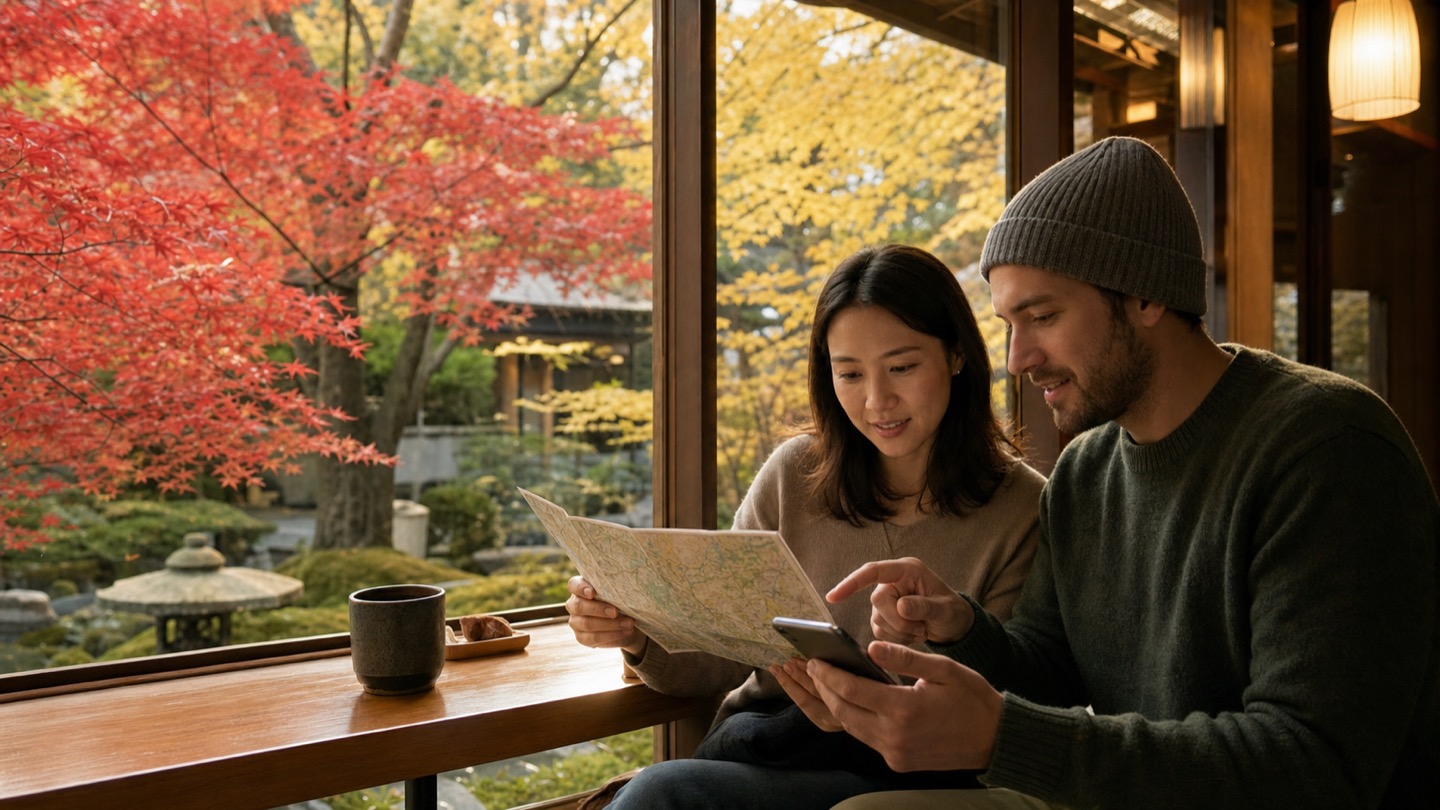
Check a mixed-species garden such as Shinjuku Gyoen rather than a single ginkgo avenue. If recent wind has stripped the trees, stop chasing the same failed condition across Tokyo. Use the garden architecture, a greenhouse, a museum or a food route as the day’s main purpose.
If it is raining
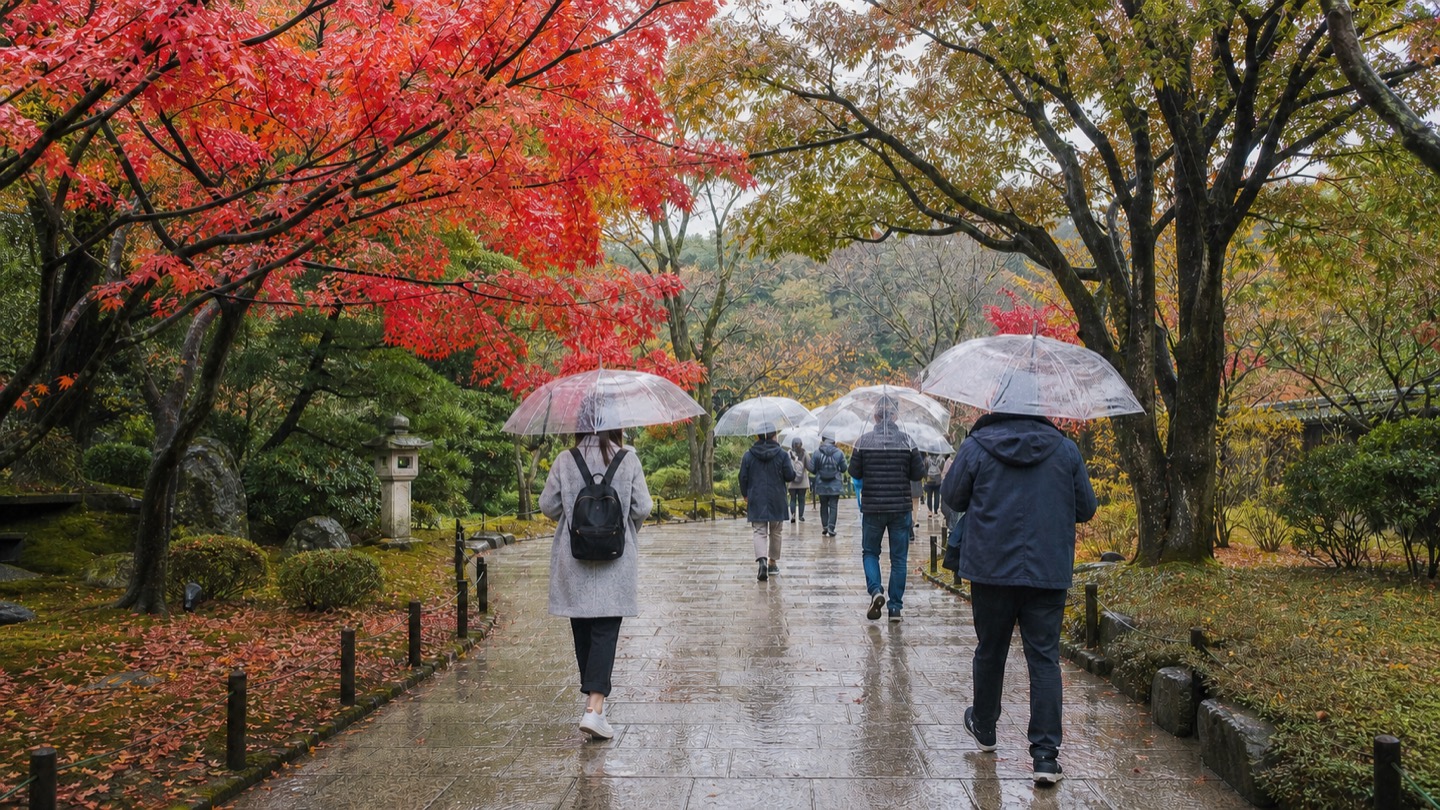
Light rain can still suit a short central-garden visit, but wet stone, fallen leaves and mountain trails can be slippery. Choose a compact route, bring waterproof footwear and avoid an exposed mountain plan when warnings or strong wind are present.
Shinjuku Gyoen’s greenhouse offers an indoor break during garden hours. For heavier weather, check official warnings and the relevant transport operator before leaving your accommodation.
If wind is the problem
Wind can remove leaves faster than temperature alone suggests. Check warnings and recent official photos. If conditions are uncomfortable or facilities suspend service, use an indoor Plan B. A fixed sightseeing list is less important than a safe day.
Three simple autumn plans from a Tokyo base
Plan A: central Tokyo, flexible half day
Start at Shinjuku Gyoen near opening. Walk the Japanese garden and a broad lawn route without trying to cover the entire park. If the live ginkgo status is good, continue to Meiji Jingu Gaien later. If not, stay in Shinjuku for food, shopping or the greenhouse.
Best for: first-time visitors, mixed mobility, uncertain color and a schedule that cannot afford a failed full-day trip.
Plan B: traditional gardens day
Visit Koishikawa Korakuen near opening, take a midday break, then decide whether the current Rikugien status justifies a second paid garden. Do not buy an evening plan until you confirm that a 2026 event exists and understand its ticket rules.
Best for: later-November dates, garden history, compact walking routes and travelers who prefer ponds and maples to hiking.
Plan C: one western Tokyo destination
Choose either Mt. Takao or Showa Kinen Park. Mt. Takao is the hiking-and-temple day; Showa Kinen Park is the ginkgo-and-open-space day. Check weather, color and operating information before leaving central Tokyo.
Best for: earlier dates, a full day, comfortable walkers and travelers willing to let live conditions choose the destination.
Practical checklist: trains, tickets, shoes and weather
- Check the live foliage status and the page’s update date.
- Confirm opening hours, last entry, closure days and special-event tickets.
- Load your Suica, PASMO or compatible IC card before a busy transfer.
- Wear shoes with grip; wet leaves and mountain paths can be slippery.
- Carry a light jacket or sweater. GO TOKYO’s current November guide lists 2024-based average highs of 17.8°C and lows of 10.2°C, but your day can differ.
- Bring a small rain layer instead of relying on a long umbrella in a crowd.
- Start earlier than you would for summer sightseeing; paid gardens begin last entry before sunset.
- Save official facility and transport links offline.
- Keep one indoor or non-foliage activity ready.
Tokyo autumn leaves FAQ
Is late October too early for autumn leaves in Tokyo?
It can be too early for central Tokyo’s main red and yellow display. GO TOKYO currently describes November as the city’s foliage season and mid-November to early December as the general best period. Check western or higher areas, but verify live status before making a long trip.
Can I see autumn leaves in Tokyo in early November?
Possibly, especially in western Tokyo or at Mt. Takao. Central gardens may be just starting. Keep one western and one central option, then choose after checking official updates.
When do Tokyo’s ginkgo trees tend to turn yellow?
Use November as the starting month for planning. GO TOKYO highlights Meiji Jingu Gaien in November, and Showa Kinen Park’s official guide lists ginkgo leaves in November. The exact week varies.
Can I still see autumn colors in Tokyo in December?
Early December is inside the current general viewing window. After the first week, check individual gardens because wind, tree species and local conditions matter more than a citywide date.
Is Mt. Takao earlier than central Tokyo?
It is often an earlier option. GO TOKYO currently describes Mt. Takao’s autumn color from early or mid-November, while central Tokyo’s broad guidance extends into early December. This is a tendency, not a guarantee.
How crowded are Tokyo’s autumn-leaf spots?
Famous gardens, Mt. Takao and ginkgo avenues can be very busy during strong color, particularly on weekends, holidays and illumination evenings. Visit on a weekday near opening and keep a second destination ready.
Are autumn leaves worth seeing in the rain?
A short central-garden visit can still work in light rain. Wet paths and fallen leaves are slippery, and mountain plans need stronger caution. Avoid exposed hiking when official warnings, strong wind or service suspensions apply.
How can I check the current foliage status?
Check GO TOKYO’s forecast update date, then the destination’s official news or nature report, the weather forecast and the transport operator. Do this again on the morning of your visit.
Sources and verification
Last checked: July 18, 2026 JST.
- GO TOKYO: Autumn Leaves Forecast in Tokyo
- GO TOKYO: Best Things to Do and See in Tokyo in November
- GO TOKYO: Tokyo Autumn Guide
- GO TOKYO: Mt. Takao and Around
- GO TOKYO: Mt. Takao
- GO TOKYO: Mt. Takao Autumn Leaves Festival
- Shinjuku Gyoen official admission information
- Showa Kinen Park official English visitor guide
- Rikugien official outline
- Koishikawa Korakuen official outline

Comments