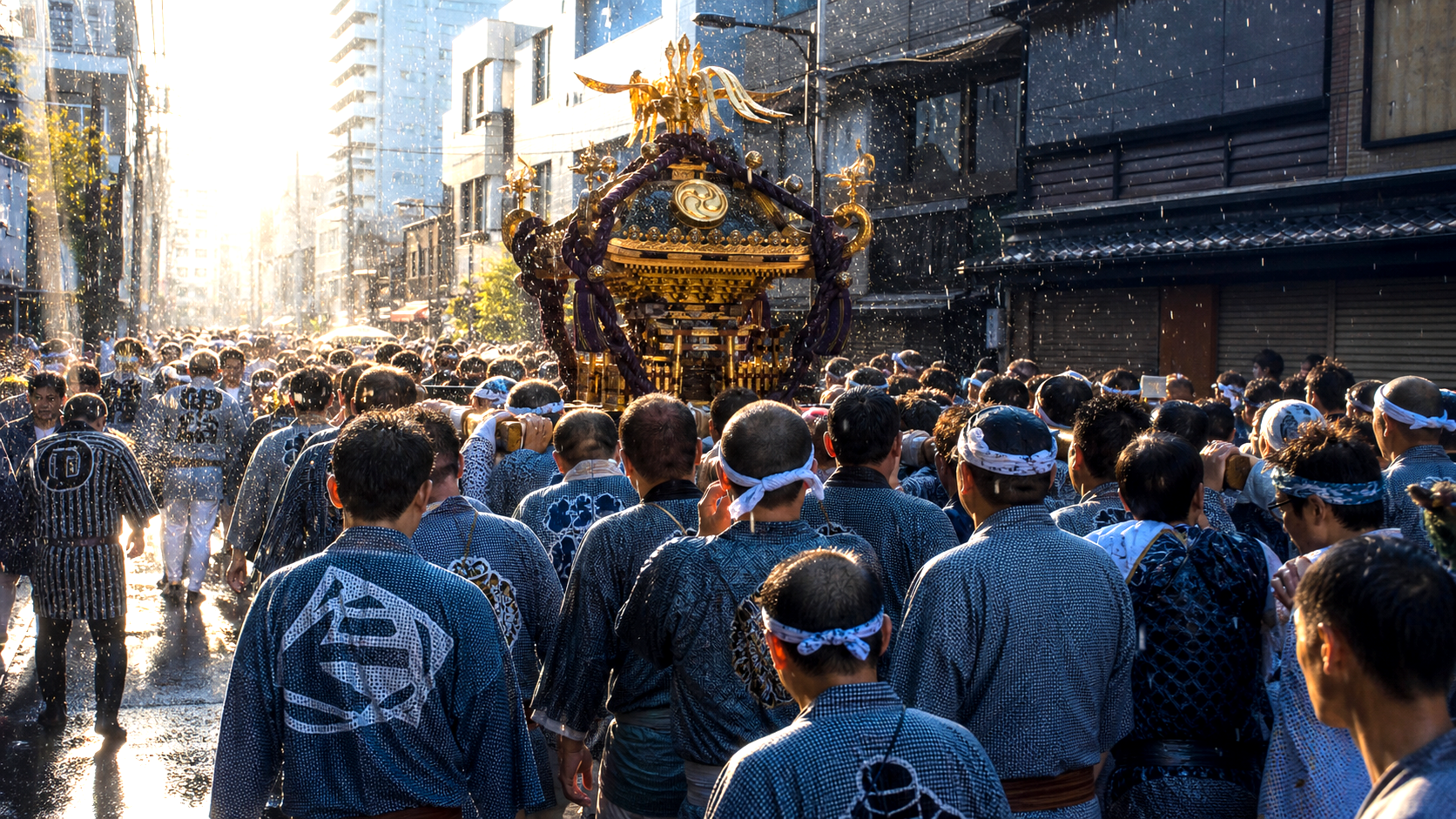
- Quick Answer
- What Is Fukagawa Hachiman Matsuri?
- 2026 Date, Time, and Official Status
- Where Is It?
- August 16 Route: Where the Festival Actually Moves
- The Water-Splashing Part
- What to Wear and Bring
- Crowd Plan: When to Arrive
- Train and Exit Plan
- Road Closures on August 16
- Photography and Manners
- Food, Toilets, and Cash
- Rain, Heat, and Plan B
- Best Itinerary for First-Time Visitors
- Common Mistakes
- FAQ
Quick Answer
Fukagawa Hachiman Matsuri 2026 is officially listed by Tomioka Hachimangu from Wednesday, August 12 to Sunday, August 16, 2026. The two days many short-stay visitors should understand are Saturday, August 15, when the shrine’s horen procession leaves at 8:00 and returns at 16:15, and Sunday, August 16, when the mikoshi joint procession starts at 7:30.
If you want the famous water-splashing festival atmosphere, August 16 is the day to prioritize. The official route map says 54 neighborhood mikoshi gather early on Eitai-dori and move on an approximately 8 km route before returning toward Tomioka Hachimangu. The official map also describes water splashing from trucks and firefighters after the procession passes Eitai Bridge, so protect phones, cameras, paper tickets, and passports before you stand close to the route.
For visitors, the safest plan is simple: arrive by train, do not bring luggage, expect road closures, and choose your exit route before the crowd peaks. Tomioka Hachimangu’s official access page lists Monzen-nakacho as the nearest station, but on August 16 the roads around Monzen-nakacho and Eitai-dori are part of the event zone. Treat the day as a moving street festival, not a normal shrine visit.
Official pages checked on July 10, 2026:
- Tomioka Hachimangu official site: http://www.tomiokahachimangu.or.jp/
- 2026 event schedule PDF: http://www.tomiokahachimangu.or.jp/pdf/R8reisai/nittei.pdf
- August 15 horen procession route PDF: http://www.tomiokahachimangu.or.jp/pdf/R8reisai/junro1.pdf
- August 16 mikoshi joint procession route PDF: http://www.tomiokahachimangu.or.jp/pdf/R8reisai/junro2.pdf
- August 16 traffic regulation PDF: http://www.tomiokahachimangu.or.jp/pdf/R8reisai/koutuKisei.pdf
What Is Fukagawa Hachiman Matsuri?
Fukagawa Hachiman Matsuri is the annual festival of Tomioka Hachimangu in Koto City, eastern Tokyo. The shrine’s own festival page says the festival is held around August 15, is also called Fukagawa Hachiman Matsuri, and is counted with the Sanno Matsuri and Kanda Matsuri as one of the three great Edo festivals.
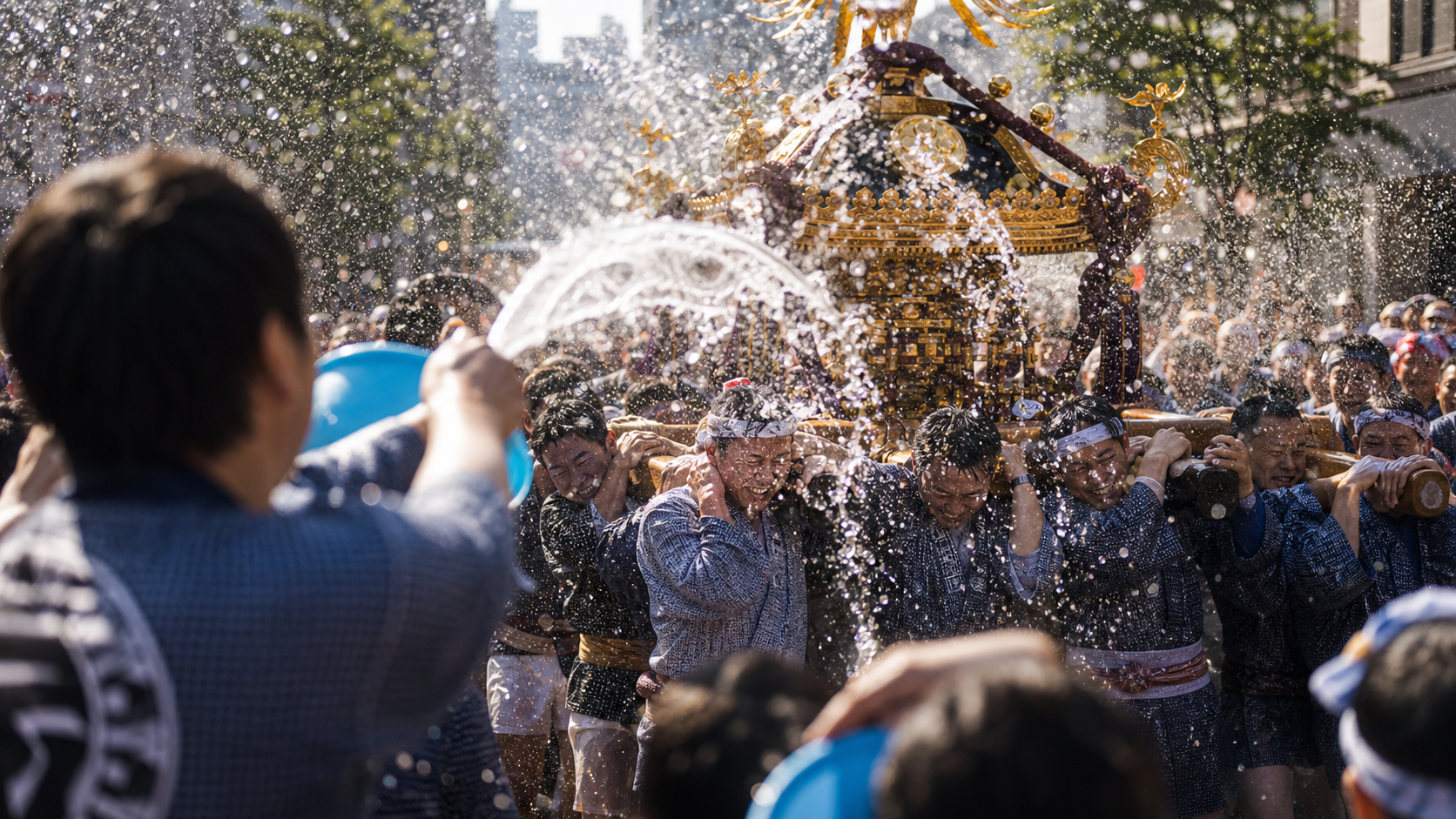
The same official page explains the part visitors remember: Fukagawa’s festival is also known as a water-splashing festival. Spectators throw cleansing water onto mikoshi carriers along the route, so the carriers and the crowd become part of the same moving scene.
This makes Fukagawa very different from a lantern festival or a ticketed fireworks show. You do not just stand and watch a single stage. The event moves through streets, bridges, station areas, and neighborhood routes. Your clearest experience depends on where you stand, how close you are to the splash zone, and how you leave when the road closures and station crowds build up.
Useful RJG background:
- For broader festival basics, read Tokyo Matsuri Guide 2026.
- For summer heat preparation, read Japan Summer Cooling Items 2026.
- For train basics before the day, read Tokyo Trains Guide 2026.
2026 Date, Time, and Official Status
The official 2026 schedule PDF, published in the shrine bulletin Tomigaoka No.121, lists events from August 12 to August 16.
| Date | Official schedule highlight | Tourist meaning |
|---|---|---|
| Wed, Aug 12 | 9:00 pre-pre festival ceremony, afternoon performances | Shrine atmosphere, less important for short-stay tourists |
| Thu, Aug 13 | 9:00 pre-festival ceremony, afternoon and evening performances | Cultural stage programs |
| Fri, Aug 14 | 11:00 festival ceremony, afternoon and evening performances | Ceremony day before the main processions |
| Sat, Aug 15 | 8:00 horen procession departure, 16:15 return | Best for seeing the shrine’s formal procession route |
| Sun, Aug 16 | 7:30 mikoshi joint procession | Main water-splashing mikoshi day for many visitors |
If your Tokyo dates allow one festival day, choose Sunday, August 16. If you care more about the formal shrine procession than the crowd and water spectacle, August 15 is also worth considering.
The key warning: times can move. The August 16 route PDF says listed times may shift, and the procession is not a train timetable. Arrive early enough that a 15 or 30 minute difference will not ruin your plan.
Where Is It?
Tomioka Hachimangu is in the Fukagawa and Monzen-nakacho area of Koto City. The official access page lists:
| Route | Official access note |
|---|---|
| Tokyo Metro Tozai Line | 3 minutes on foot from Monzen-nakacho Station |
| Toei Oedo Line | 6 minutes on foot from Monzen-nakacho Station |
| JR Keiyo Line | 15 minutes on foot from Etchujima Station |
| Bus | Tomioka Itchome stop, then 2 minutes on foot |
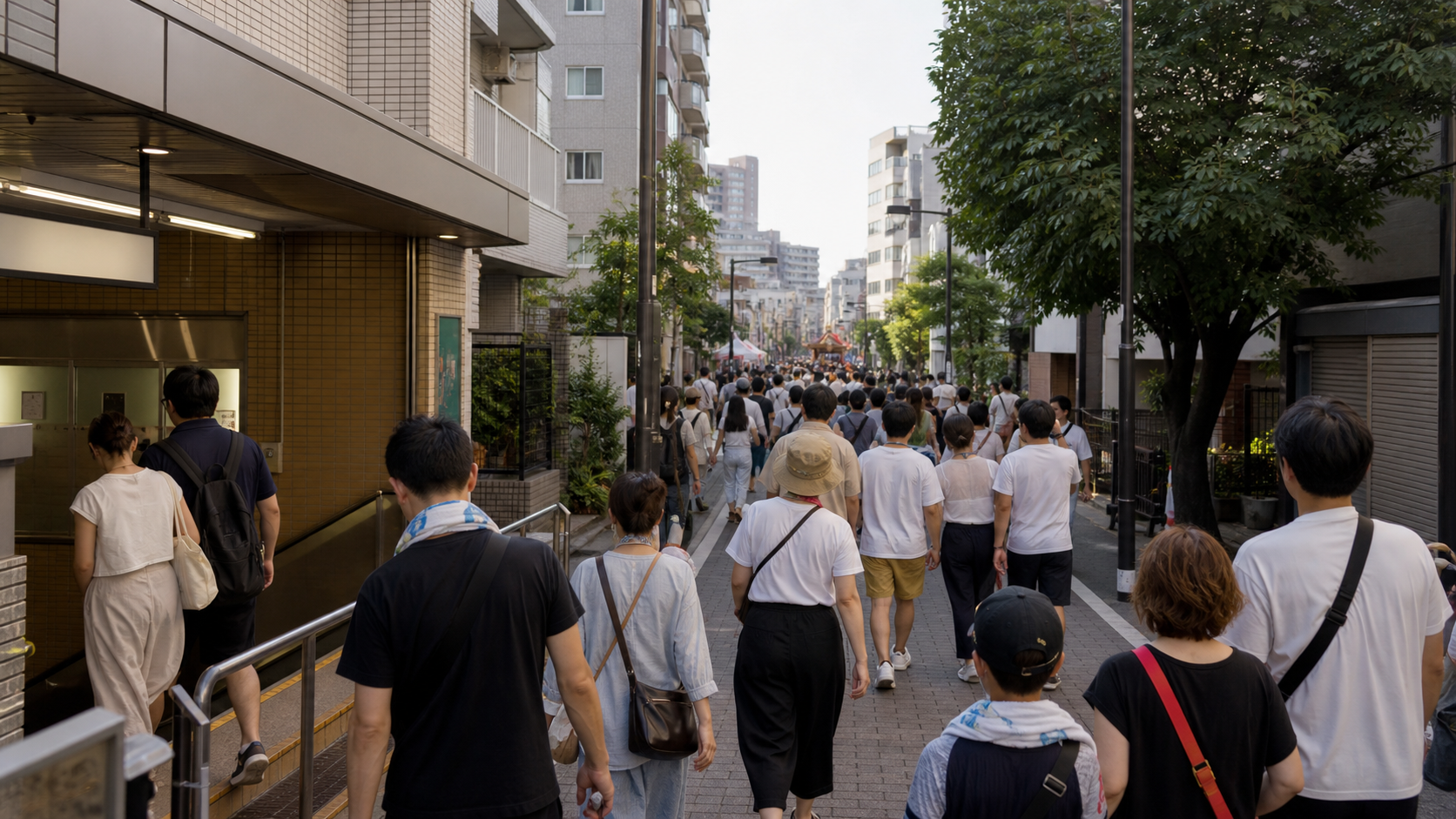
On a normal day, Monzen-nakacho is the obvious station. On August 16, it is still the closest station in the shrine’s official access guide, but it is also near the start, finish, and major road closures. Do not assume you can step out of the closest exit and move freely.
The Tokyo Metro station page identifies Monzen-nakacho as station T12 on the Tozai Line. For visitors, the useful point is that Monzen-nakacho is connected east-west across central Tokyo, but festival day crowds can make the station feel slower than the map suggests.
August 16 Route: Where the Festival Actually Moves
The official August 16 route map describes the joint procession as a loop of roughly 8 km. It starts in front of Tomioka Hachimangu, goes through the Fukagawa and Kiyosumi area, breaks for lunch around Shinkawa, then returns across the Eitai Bridge side toward the shrine.
The route map lists these timing points:
| Route point | Official listed time |
|---|---|
| In front of Tomioka Hachimangu, departure | First group 7:30, tail 9:00 |
| Eitai-dori to Daimon-dori | First group 8:00, tail 9:30 |
| Edo Museum Street area | First group 9:00, tail 10:30 |
| Kiyosu-bashi-dori | First group 9:30 |
| Shinkawa lunch break | First group 10:30, tail 12:00 |
| Shinkawa departure | 12:00 |
| Eitai-dori return side | Afternoon route |
| In front of Tomioka Hachimangu, arrival | First group 13:00, tail 15:30 |
For a first-time visitor, do not try to chase the whole route. Choose one segment, arrive early, and build your exit around that segment.
Good viewing strategies:
| Your priority | Better area to consider | Why |
|---|---|---|
| Easy shrine context | Around Tomioka Hachimangu early | You see the start and festival setting, but it gets crowded |
| Moving mikoshi without staying all day | Eitai-dori or Daimon-dori morning | Clear route energy before the day becomes too hot |
| Water-splashing atmosphere | Return side after Eitai Bridge | The official map highlights truck and firefighter water here |
| Less pressure to return to Monzen-nakacho | Kiyosumi or Kiba-side segments | You may be able to leave from a different station area |
| Short, low-risk visit | Watch one segment, then leave before noon | Avoids the strongest afternoon heat and return crush |
The Water-Splashing Part
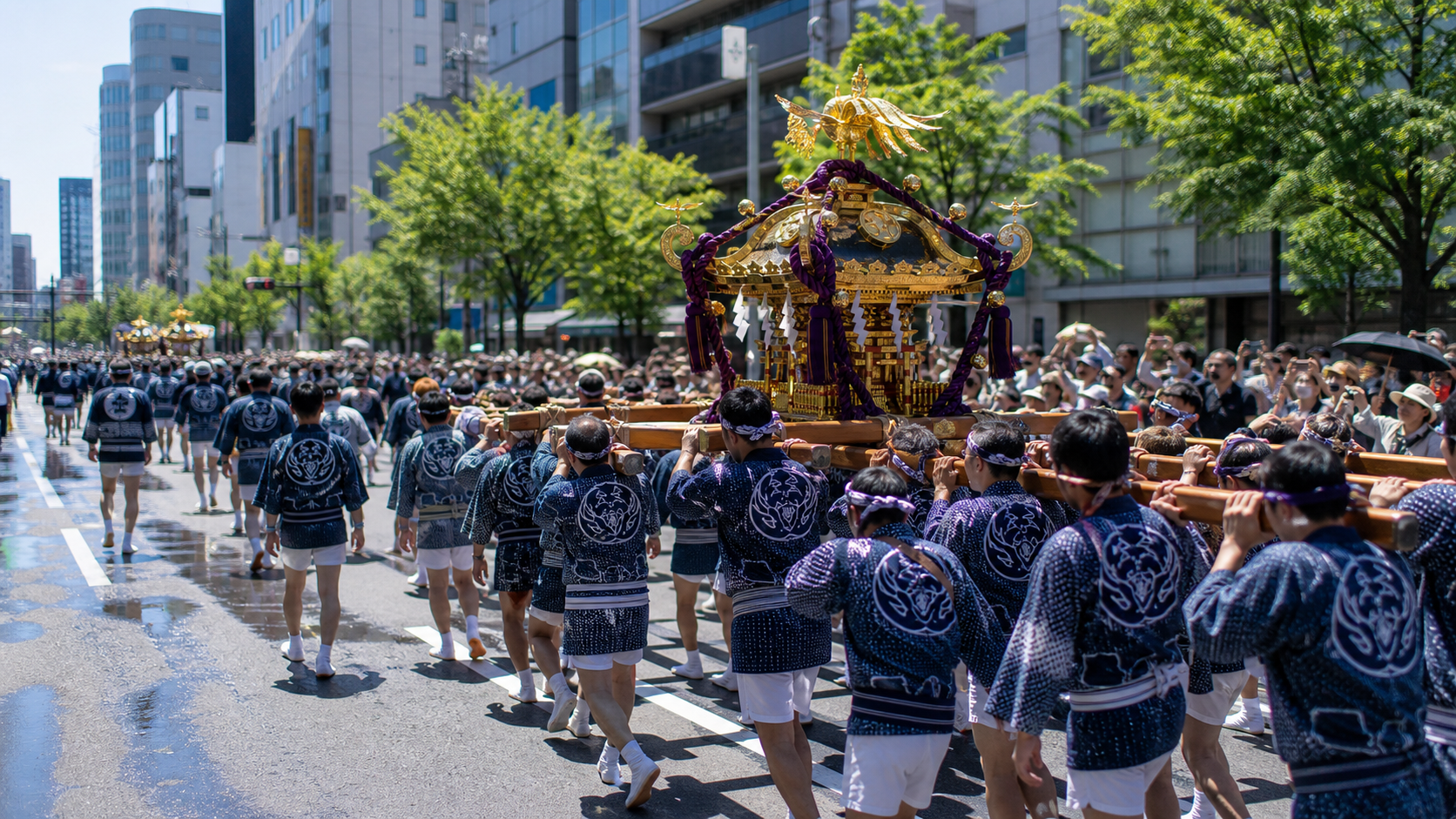
The water is not a random prank. The official festival page describes the water as cleansing water thrown from spectators to the mikoshi carriers. It is part of the identity of the festival.
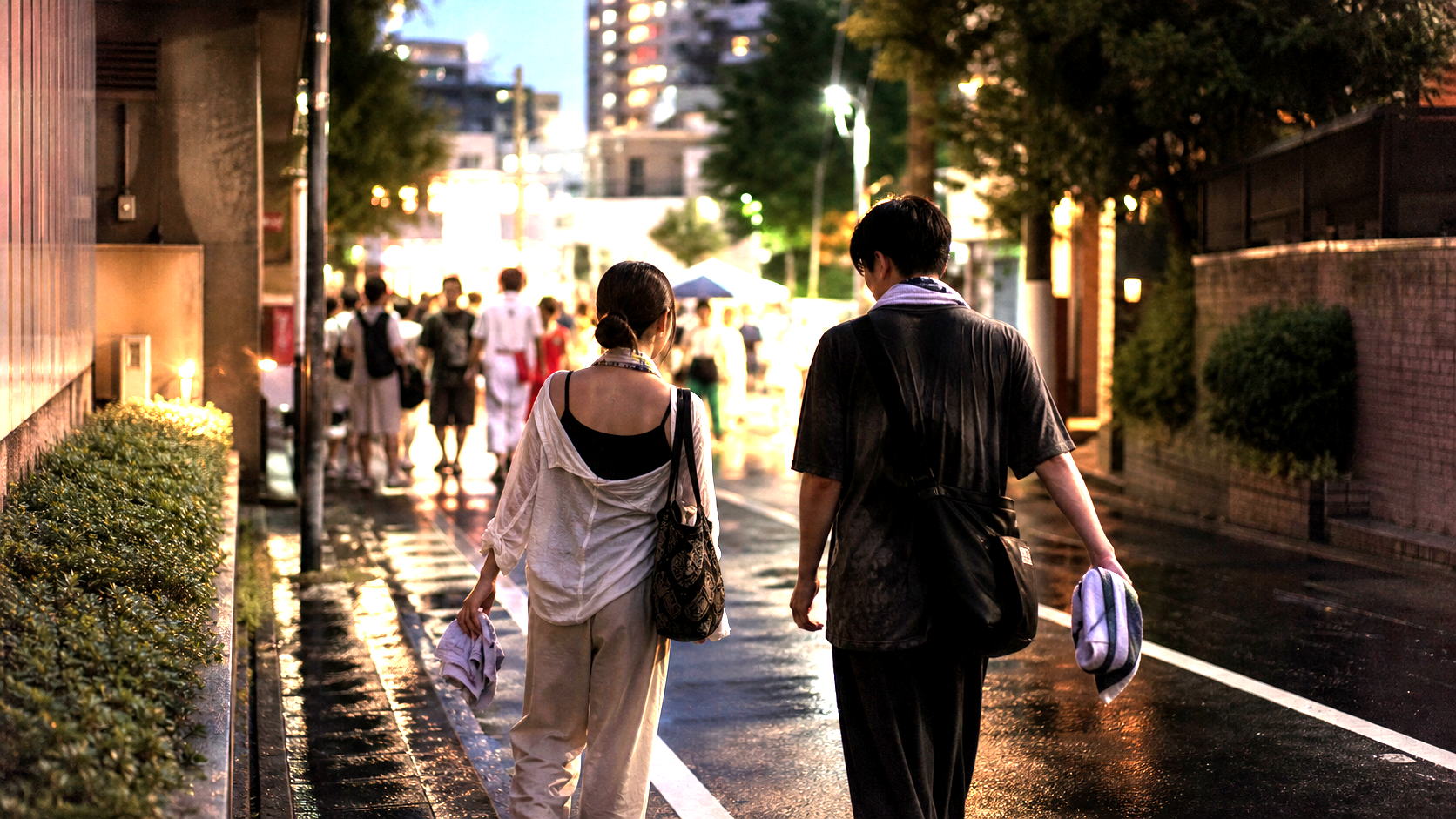
That said, a tourist with a phone in one hand and a passport in a shoulder bag should take it seriously. If you stand close to the route, assume splash is possible. If you stand at one of the heavy water points described on the official route map, assume getting wet is likely.
Bring or prepare:
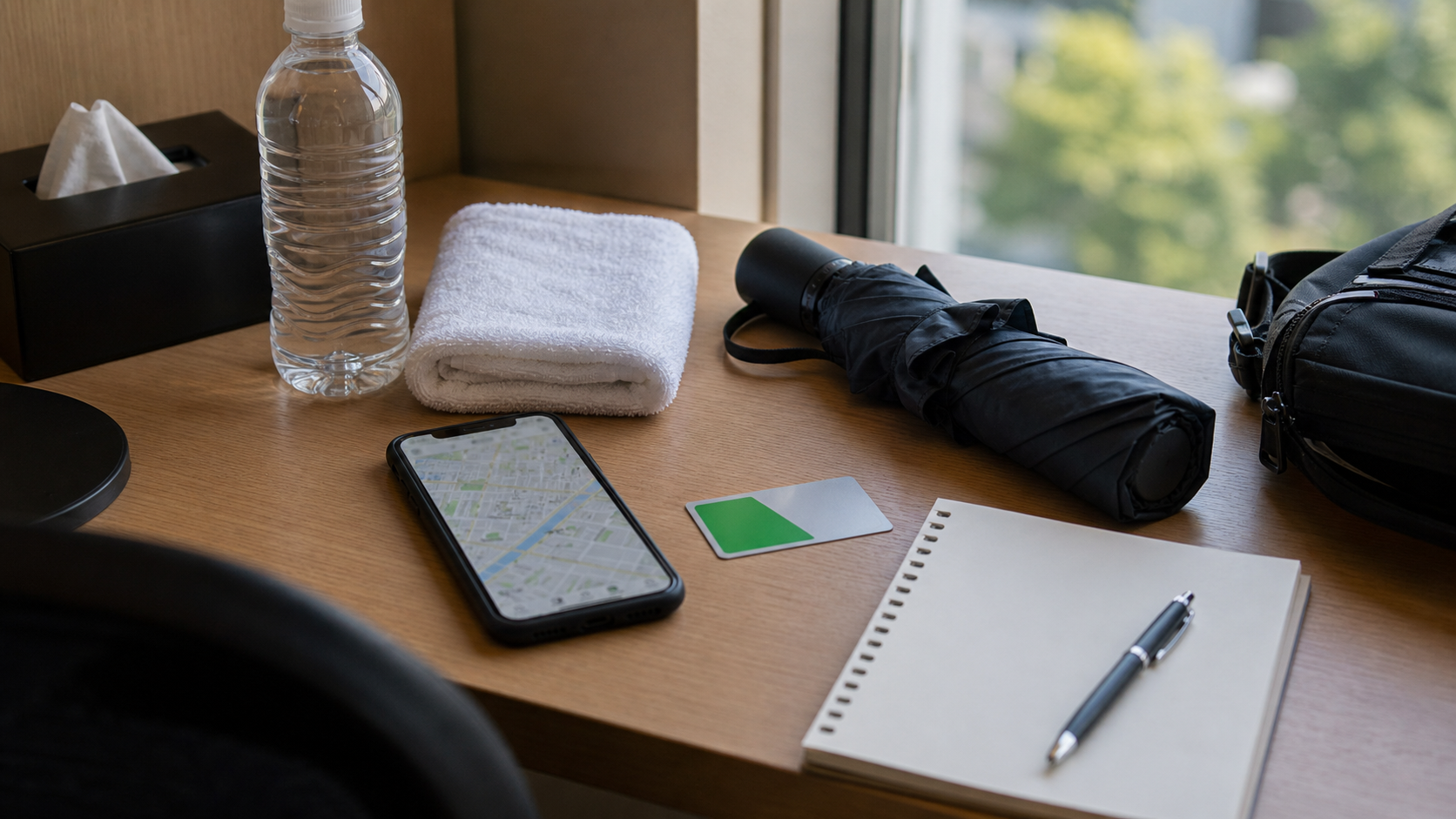
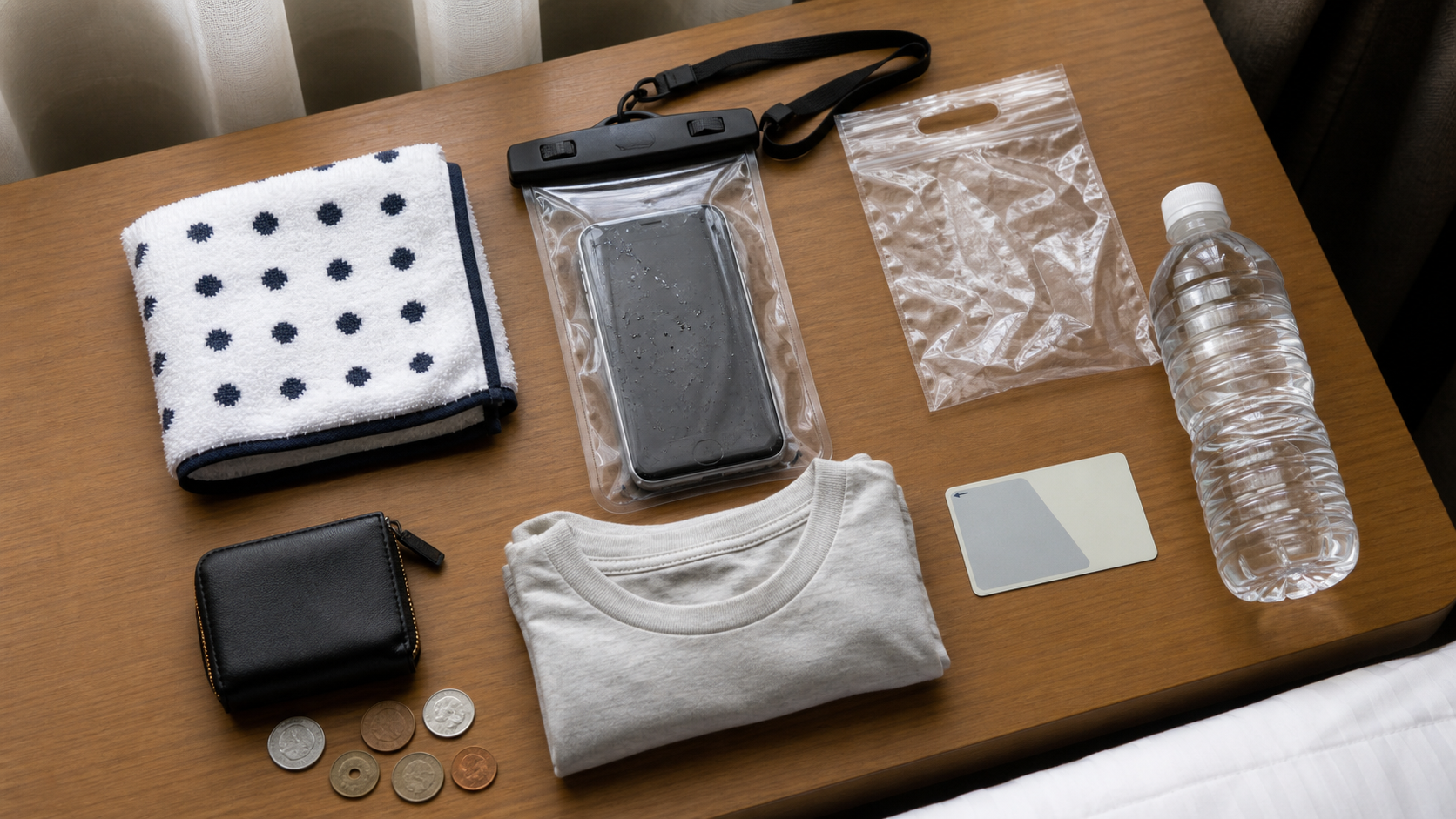
- A small towel.
- A plastic bag or waterproof pouch.
- A phone strap or secure pocket.
- Shoes that can handle wet pavement.
- Clothes that are acceptable if splashed.
- Cash and a transit card in separate protected places.
Avoid:
- Large cameras without weather protection.
- Open tote bags full of paper shopping bags.
- White clothing that becomes transparent when wet.
- Slippery sandals.
- Rolling suitcases.
If you want to throw water, follow the local crowd and staff direction. Do not throw water at police, staff, food stalls, nearby children, or people who are not in the procession. The point is to support the carriers, not to turn the street into a water fight.
What to Wear and Bring
Think “wet summer street festival,” not “temple photo walk.”
| Item | Recommendation |
|---|---|
| Shoes | Sneakers or secure sandals with grip |
| Clothes | Light, breathable, easy to dry |
| Bag | Small crossbody bag or backpack |
| Phone | Waterproof case or plastic pouch |
| Camera | Only if you can protect it from splash |
| Towel | Small towel for water and sweat |
| Drinks | Buy before entering the densest area |
| Cash | Small notes and coins for food or vending machines |
| IC card | Suica, PASMO, or mobile IC charged before arrival |
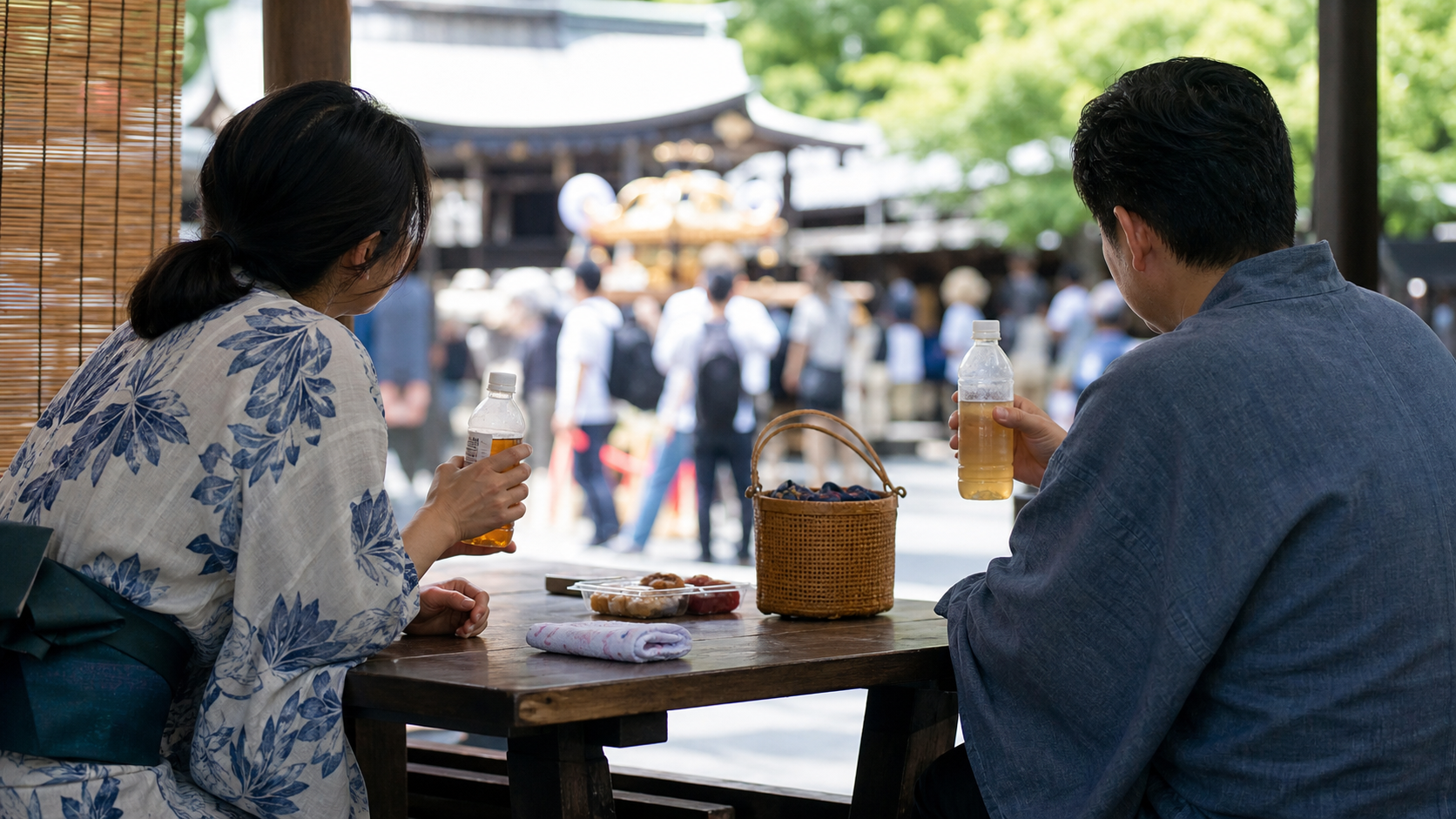
Yukata can look beautiful at summer festivals, but Fukagawa is not the easiest place for a first yukata experience if you plan to stand near the water-splashing route. If you wear one, stay farther back from heavy splash zones and choose footwear you can walk in.
If you want a calmer yukata evening in Tokyo, see Tokyo Yukata Guide 2026.
Crowd Plan: When to Arrive
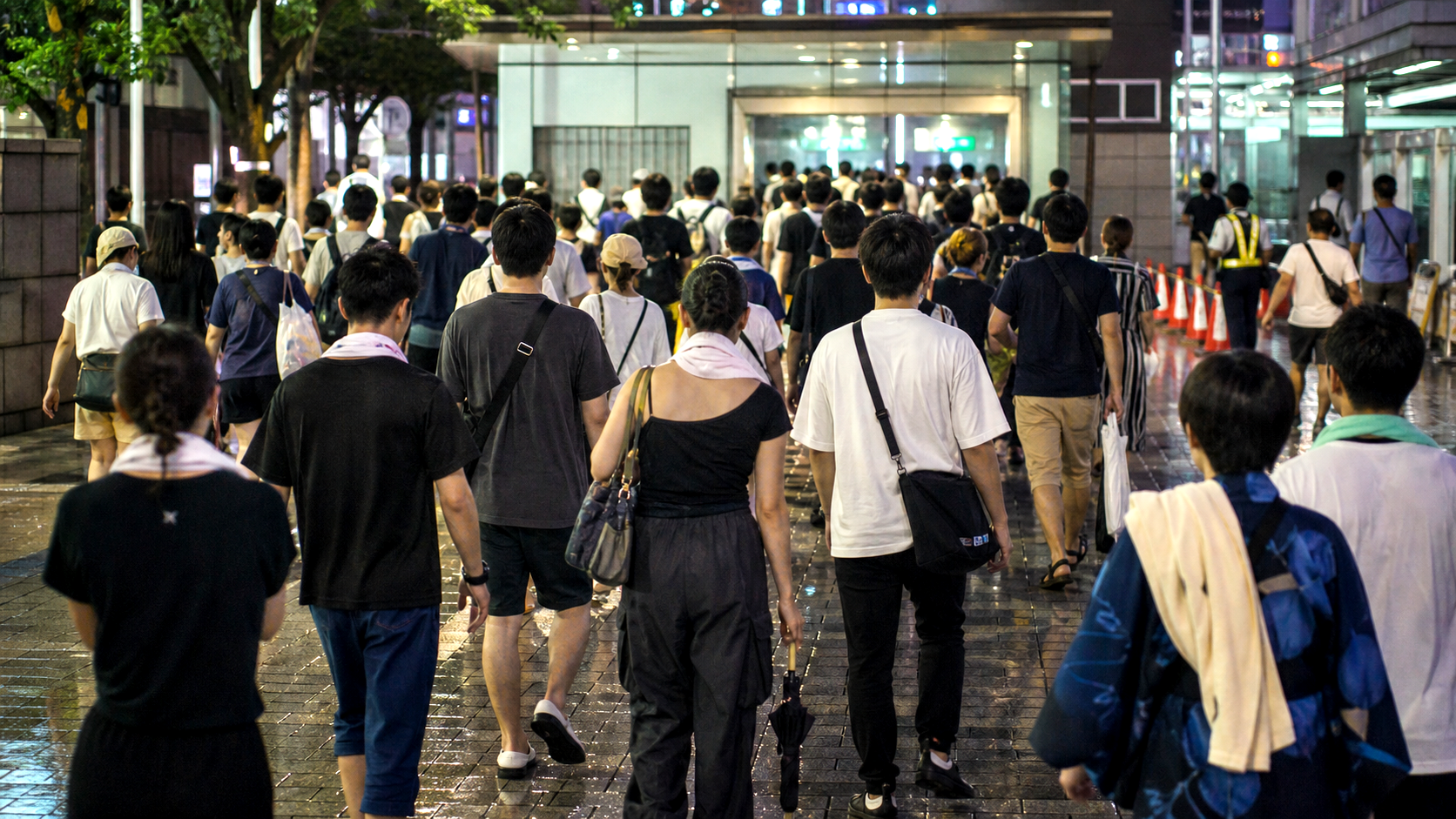
The crowd problem is not just the number of people. It is the combination of narrow streets, moving mikoshi, summer heat, wet pavement, and road closures.
Use this simple timing plan:
| Time | Practical meaning |
|---|---|
| Before 7:00 | For serious early watchers near the shrine |
| 7:30-9:30 | Strong morning viewing window near shrine and Eitai-dori |
| 9:00-10:30 | Good window for route segments away from the shrine |
| 10:30-12:00 | Lunch-break zone around Shinkawa on the official map |
| 12:00-15:30 | Afternoon return and stronger water-splashing scenes |
| After 15:30 | Procession tail returns, station and street movement may still be slow |
If you are visiting with children, older parents, or someone who struggles in heat, choose a morning segment and leave before the afternoon. If you want wetter water scenes, the afternoon return may be more exciting, but it is also the moment when you need a stronger exit plan.
Do not bring a stroller into the densest route areas. If you must use one, stay farther from the front line and be ready to leave quickly.
Train and Exit Plan
Monzen-nakacho is the natural access station, but the whole point of a Plan B is not forcing everyone back through the same station at the same time.
Before you go, choose:
- Your arrival station.
- Your planned viewing segment.
- Your fallback station.
- Your final destination after the festival.
- A meeting point outside the densest route.
Possible station logic:
| Station area | Use it when |
|---|---|
| Monzen-nakacho | You want the shrine, start, finish, or shortest normal access |
| Kiba | You watch the eastern side of the route and want to avoid returning west |
| Kiyosumi-shirakawa | You watch the northern route around Kiyosumi and want Oedo or Hanzomon access |
| Etchujima | You approach from the JR Keiyo Line side or want a quieter walk after |
| Kayabacho | You leave from the Shinkawa or Nihonbashi side after the route crosses west |
This is a route strategy, not an official crowd-control instruction. Follow police and staff on the day. If an exit, street, or bridge is closed, do not argue with your map app.
If you are going out again after the festival, save the route to your hotel before you enter the crowd. If the day runs late, use Tokyo Last Train & Taxi Plan 2026.
Road Closures on August 16
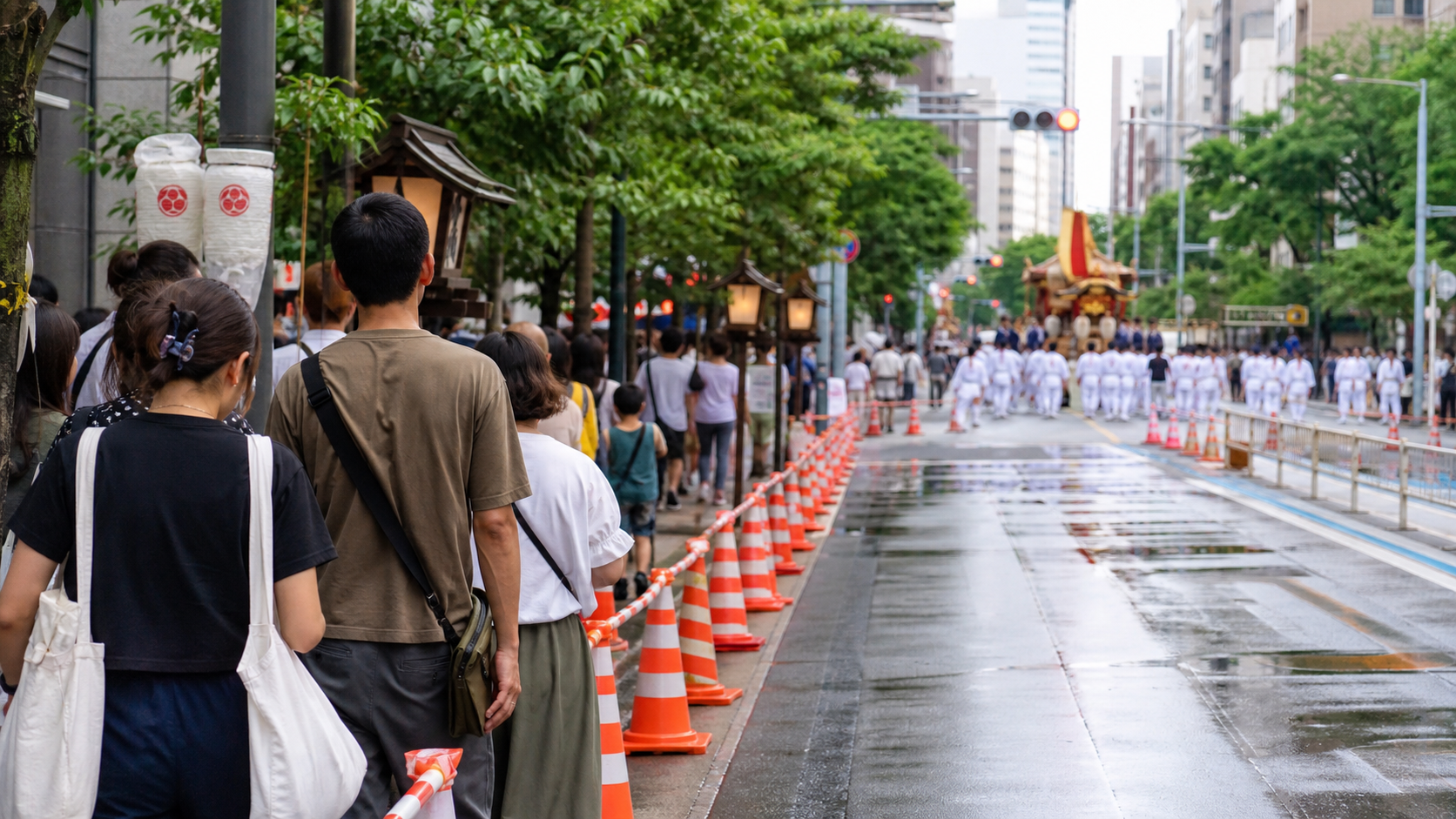
The official traffic regulation PDF for August 16 shows road closures and one-side restrictions across the route. The practical takeaway is that normal walking, taxi, and bus movement around the shrine and route will not behave like a normal Sunday.
The map labels Eitai-dori from the Monzen-nakacho intersection to the Kiba 5-chome intersection as fully closed from 6:30 to 17:00. It also shows timed closures or one-side restrictions on route areas including Daimon-dori, Shiryokan-dori, Kiyosu-bashi-dori, Hakozaki and Shinkawa-side roads.
That means:
- Do not plan to take a taxi to the shrine entrance.
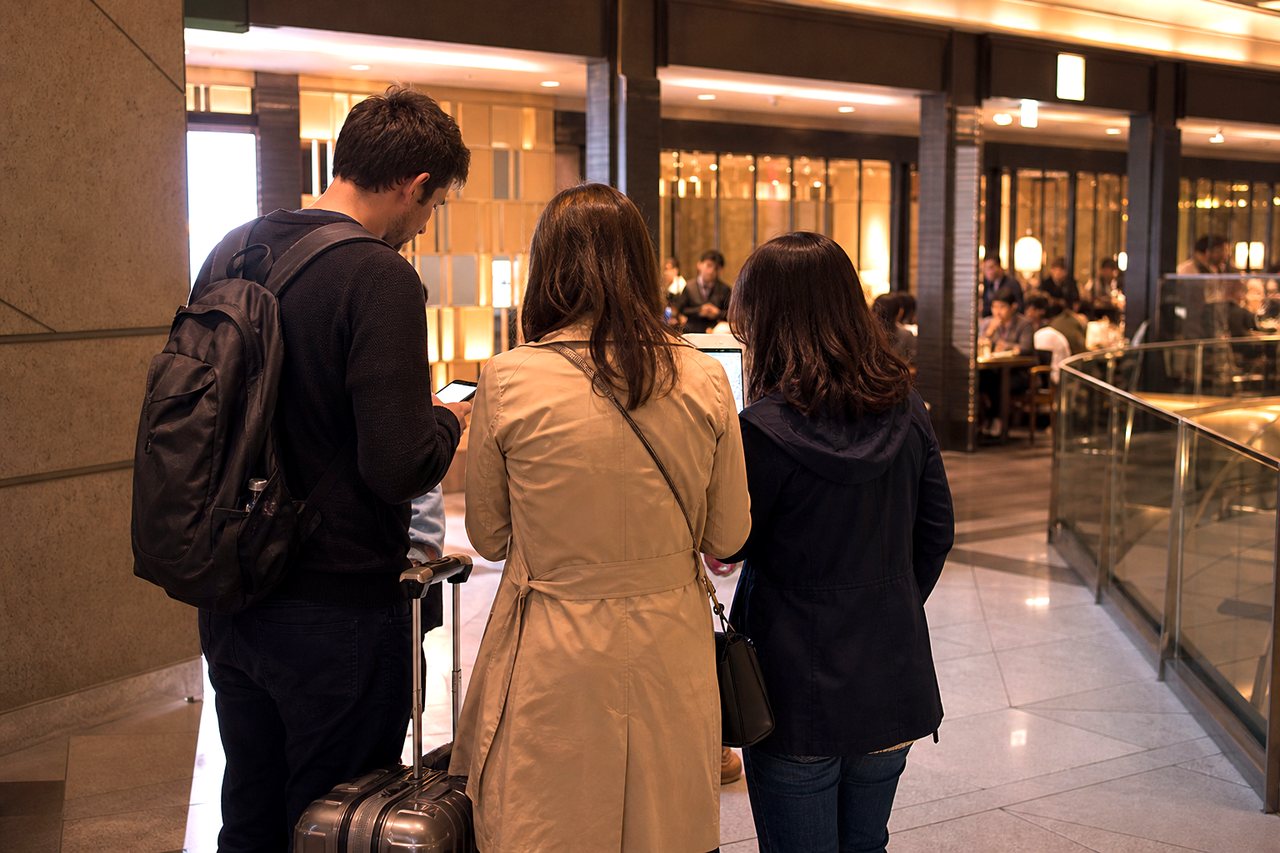
- Do not bring large luggage from checkout.
- Do not schedule a tight restaurant booking immediately after the festival.
- Do not assume buses will be the easiest way in or out.
- Give yourself a wide time buffer before any Shinkansen, airport transfer, or paid event.
If you are staying in an Airbnb or hotel nearby, ask yourself one question before leaving: “Can I walk back if trains or roads feel too crowded?” If yes, your day becomes much easier.
Photography and Manners
Fukagawa is photogenic because it is close, wet, and physical. That is also why visitors need to be careful.
Good behavior:
- Stand behind staff lines and local crowd boundaries.
- Keep your phone or camera below eye level when the crowd is tight.
- Step back if carriers, staff, police, or emergency vehicles need space.
- Ask before taking close portraits of children or carriers at rest.
- Protect your device before you enter a splash zone.
Bad behavior:
- Standing in the route for a shot.
- Blocking a narrow sidewalk with a tripod.
- Pushing a camera into someone’s face as they carry a mikoshi.
- Throwing water from the wrong place or at the wrong people.
- Stopping suddenly in a moving crowd to film.
If your goal is a clean image of the shrine, go on a different day. If your goal is the energy of the festival, accept that the best images may be imperfect, wet, crowded, and loud.
Food, Toilets, and Cash
Festival days are not ideal for solving basic needs at the last minute. Eat something before you enter the densest area, carry a drink, and use a restroom before you start watching.
Practical rules:
- Bring cash in small notes and coins.
- Do not rely on a convenience store restroom near the route.
- Buy drinks before you reach the crowd.
- Keep one plastic bag for wet trash or a damp towel.
- If you buy food, step aside before eating.
- Do not eat while pressed into the route edge.
If your group is food-focused, make Fukagawa one part of the day. Watch the morning or early afternoon segment, then move away from the route before choosing a meal. The area has good local food, but festival crowd timing can make spontaneous restaurant choices harder.
For a broader food backup system, see Tokyo Restaurant Plan B 2026.
Rain, Heat, and Plan B
This festival already involves water, but weather still matters. Rain changes visibility, footing, phone risk, and crowd patience. Heat changes how long you can stand.
Use this decision flow:
- The day before: check the shrine’s official site and social channels for changes.
- Morning: check rain, heat, and train status before leaving.
- On site: choose one viewing segment instead of forcing the whole route.
- If the crowd feels too dense, step back early.
- If you are wet, tired, or overheated, leave before the return rush.
Plan B ideas:
- Watch the early route, then visit Fukagawa Fudo-do or a nearby cafe away from the route.
- Choose Kiyosumi Garden or Kiyosumi-shirakawa on a calmer day, not during the densest procession.
- Move to a station-building meal in Tokyo Station, Nihonbashi, or Ueno.
- Save a second Tokyo festival for another night instead of trying to make this one ideal.
The goal is not to cover the full procession. The goal is to experience the festival and still get home comfortably.
Best Itinerary for First-Time Visitors
If you want a simple version, use this:
| Time | Plan |
|---|---|
| 6:30-7:00 | Leave your hotel with no luggage |
| 7:15 | Arrive around Monzen-nakacho or your chosen segment |
| 7:30-9:30 | Watch the morning departure and route flow |
| 9:30-10:30 | Move away from the densest crowd |
| 10:30-12:00 | Eat or rest outside the main route |
| Afternoon | Return only if you specifically want the water-splashing climax |
If you want the water climax:
| Time | Plan |
|---|---|
| Late morning | Arrive near your chosen afternoon segment |
| 12:00-13:00 | Check crowd flow before choosing a front-line spot |
| 13:00-15:30 | Watch the return route and water-splashing scenes |
| After | Leave by a station that avoids the tightest shrine-side crowd if possible |
For many travelers, one segment is enough. A festival that still feels exciting when you leave is better than a festival you remember mainly as heat, wet shoes, and station stress.
Common Mistakes
Do not make these tourist mistakes:
| Mistake | Better choice |
|---|---|
| Arriving at noon with no plan | Choose a segment and arrival time first |
| Bringing a suitcase after checkout | Store luggage before going |
| Standing close with an unprotected camera | Waterproof your gear or stand farther back |
| Assuming taxis can reach the shrine | Use trains and walking |
| Waiting for the crowd to force your exit | Leave before you feel trapped |
| Following only Google Maps | Follow police, staff, and official route signs |
| Trying to see the entire 8 km route | Watch one good section |
| Treating water splashing as a joke | Respect the ritual and the carriers |
FAQ
Q: When is Fukagawa Hachiman Matsuri 2026?
A: The official 2026 schedule lists events from August 12 to August 16, 2026. Two practical visitor days are August 15 for the horen procession and August 16 for the mikoshi joint procession.
Q: Which day should tourists choose?
A: Choose Sunday, August 16 if you want the famous water-splashing mikoshi atmosphere. Choose Saturday, August 15 if you prefer the formal shrine procession.
Q: Will I get wet?
A: If you stand close to the August 16 route, especially near heavy water-splashing points, getting wet is possible or likely. Protect phones, cameras, passports, and paper tickets.
Q: What is the nearest station?
A: Tomioka Hachimangu’s official access page lists Monzen-nakacho Station as the nearest station: 3 minutes from the Tokyo Metro Tozai Line and 6 minutes from the Toei Oedo Line.
Q: Can I bring luggage?
A: Do not bring luggage to the route. Road closures, crowds, wet pavement, and narrow sidewalks make suitcases a bad match for this festival.
Q: Is Fukagawa Hachiman Matsuri free?
A: Yes, this is a street and shrine festival, not a ticketed fireworks venue. You may still spend money on food, drinks, transport, or coin lockers.
Q: Is it safe for children?
A: It can be family-friendly if you stay back from the densest splash zones and choose a short viewing segment. Avoid front-line crowding with strollers.
Q: Can tourists throw water?
A: Follow the local crowd and staff direction. Throw water toward the mikoshi carriers where it is clearly part of the festival, and avoid staff, police, food stalls, or unrelated pedestrians.
Q: What should I wear?
A: Wear breathable clothes and shoes with grip. Bring a towel and waterproof protection for electronics. Avoid clothing or footwear that becomes uncomfortable when wet.
Q: What is the clearest Plan B if the crowd is too intense?
A: Step away early, use a different station area, and switch to a meal or quiet neighborhood plan. Do not force the full route if the heat, crowd, or water feels like too much.
Comments