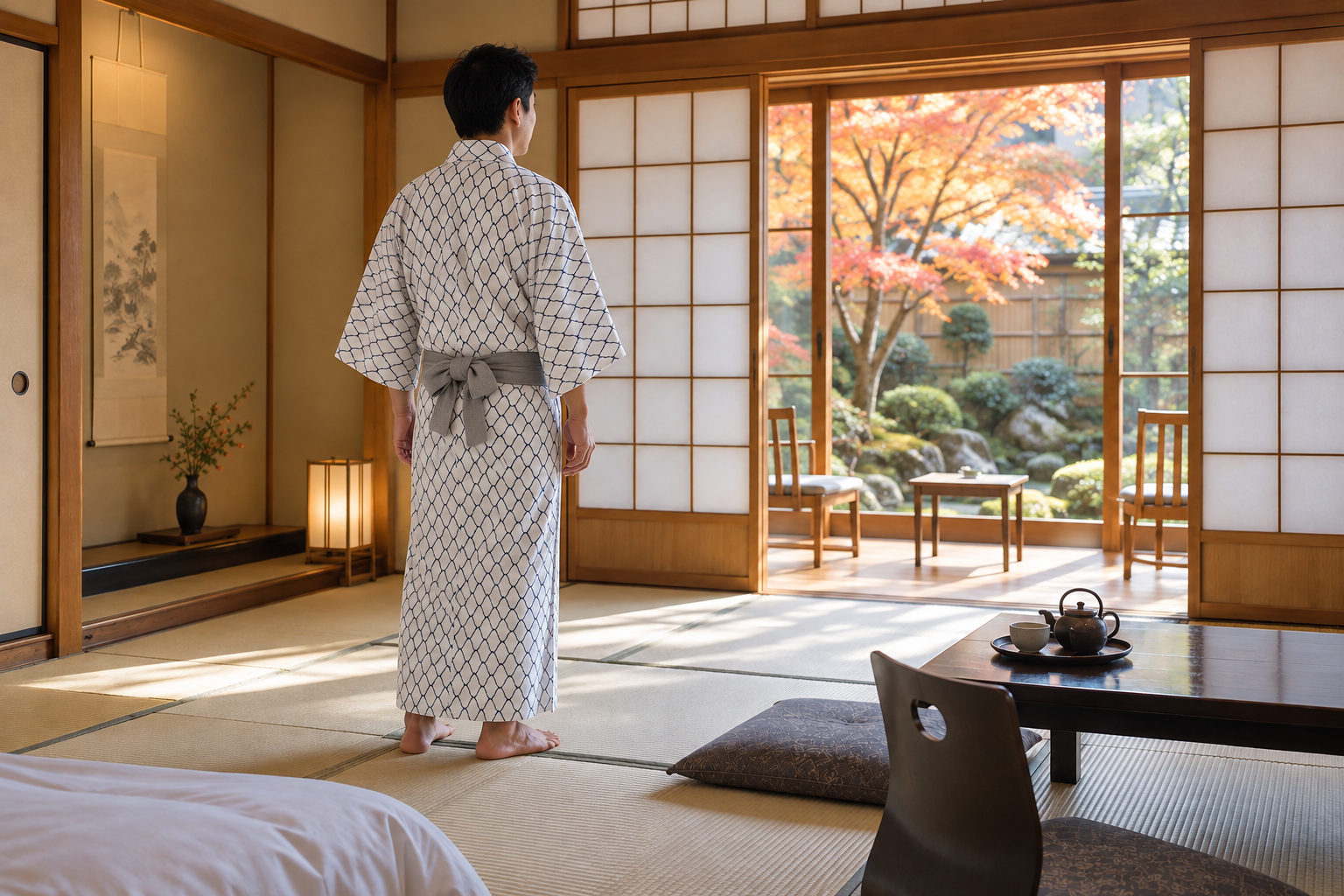
Quick answer: For a man’s ryokan yukata, bring your own right-hand panel across your body first, then lay your left-hand panel over it. Keep the sash low around your hips. With a simple soft inn sash, wrap it around while holding the robe closed and finish with a secure bow. Check the fit, then ask where the inn allows you to wear it.
Standing in your room with a folded robe and a long belt, you do not need a formal kimono outfit to get ready for dinner. You do need to identify which belt you have: a soft ryokan sash and a structured or pre-tied sightseeing obi use different instructions.
This guide covers men’s yukata self-dressing, especially at a ryokan. It is not a complete guide to formal men’s kimono, hakama or wedding clothes. Last checked: October 10, 2026. Images are AI-generated illustrations of generic settings, not photographs of actual inns or official demonstrations.
- Check the robe and belt before you start
- Choose a size that closes properly
- Wrap right first, then left over right
- Tie a soft ryokan sash low on your hips
- Using a kaku obi or a pre-tied obi instead
- Wear it comfortably at dinner, on stairs and outside
- Baths, cold weather and the fallback when it will not fit
- Frequently asked questions
- Is a man’s yukata wrapped differently from a woman’s?
- Do I need to learn a formal obi knot at a ryokan?
- Must the bow be at the back?
- Should men fold extra fabric at the waist?
- What should I wear underneath?
- Can I wear the room yukata to dinner?
- Can I take a walk outside in it?
- What if the largest robe does not fit?
- Is this enough for a formal men’s kimono outfit?
Check the robe and belt before you start
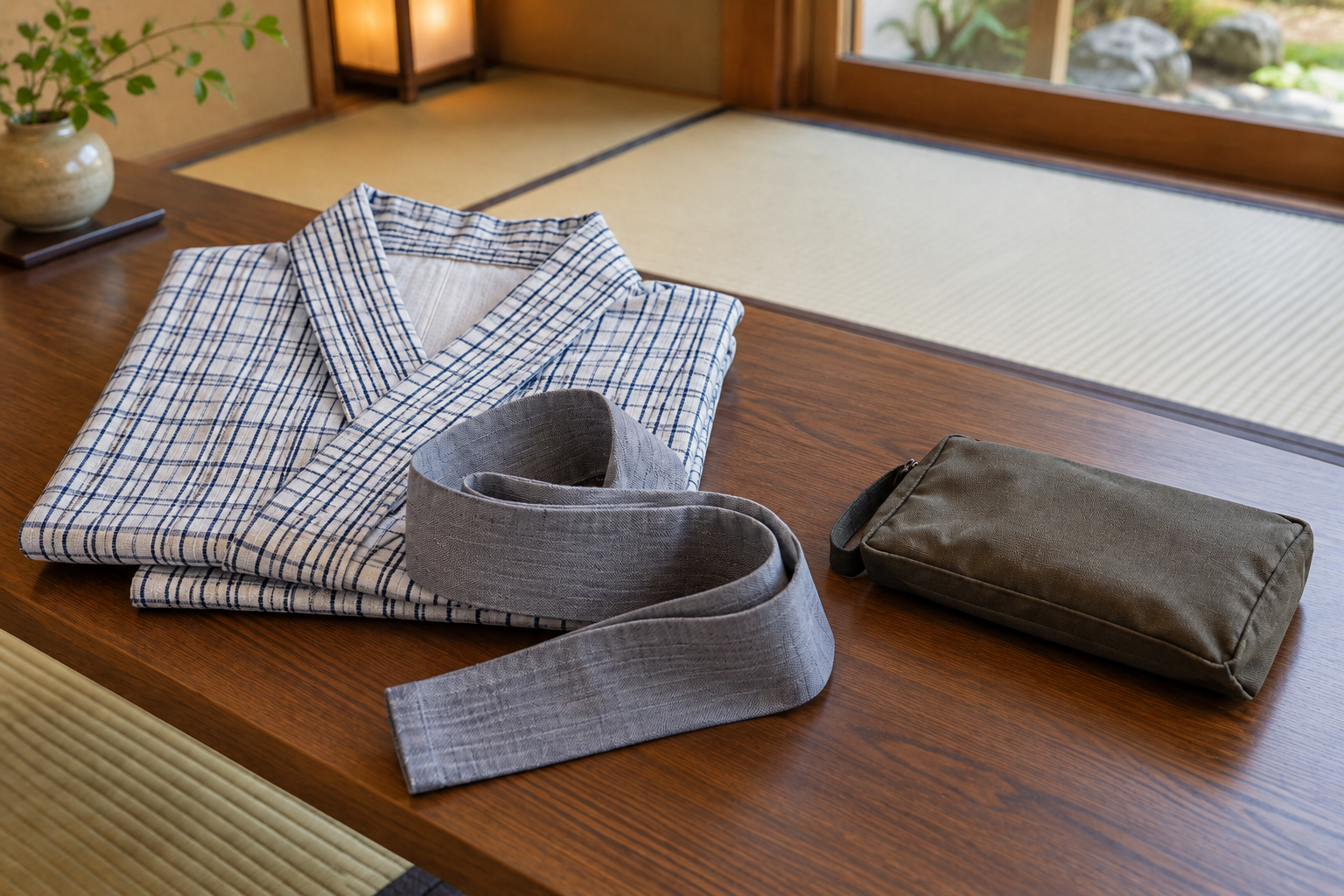
A yukata is a light, casual garment. JNTO explains that it differs from kimono outfits that use additional underlayers and accessories. The robe in an inn room is intended for a relaxed stay; do not assume the same set is suitable for a formal occasion. See JNTO’s kimono and yukata introduction.
| What you have | What to do |
|---|---|
| Soft, flexible cloth sash supplied with a room yukata | Use the simple wrap-and-bow method below, unless the inn supplies different instructions. |
| Firm, flat kaku obi for a men’s sightseeing outfit | Follow a demonstration for that belt and knot. Do not force it into the soft-sash method. |
| Obi with a ready-made knot, fastening or hook-and-loop closure | Use the maker’s instructions for attaching and positioning the knot. |
| A layered kimono outfit, or trousers resembling hakama | Ask the rental shop or dresser to explain the complete outfit before adjusting it. |
For example, Yukata Japan’s men’s tutorial demonstrates its own pre-tied, hook-and-loop obi. Its fastening sequence is not a universal knot tutorial. Check your actual belt rather than copying the last step of an unrelated video.
Put the sash within reach before wearing the robe. Keep your room key somewhere you can retrieve it once dressed. If you are going to a bath, prepare your towels and any required pass before tying up; it is easier than searching through a suitcase with the sleeves hanging loose.
Choose a size that closes properly
Keep your underwear on beneath the yukata. For extra coverage or comfort, consider a low-neck undershirt that stays below the collar. Yamato’s published men’s dressing checklist includes a wide-neck undershirt, shorts or similar underlayers, and a waist cord for its sightseeing setup. That list does not mean every inn robe requires all the same accessories. See Yamato’s men’s clothing checklist; the advertised seasonal service period has ended, so it is not a current booking recommendation.
Slip both arms into the sleeves and stand normally. Check that the back seam is centered and that you can overlap the front without pulling it hard. The men’s hem should fall around the ankles without dragging. Do not copy a women’s tutorial that creates a large folded section at the waist just to make an unsuitable robe shorter.
Suimeikan’s staff dressing guide recommends starting with the right length and asking for another size if necessary. A tall or broad traveler should check both length and front coverage; height alone does not tell you whether the robe will close comfortably.
If the hem reaches the floor or the front barely overlaps, ask for help before heading out. A different size or ordinary clothes is a better practical choice than tying an uncomfortable robe increasingly tightly. Availability varies, so do not assume an inn has a suitable replacement.
Wrap right first, then left over right
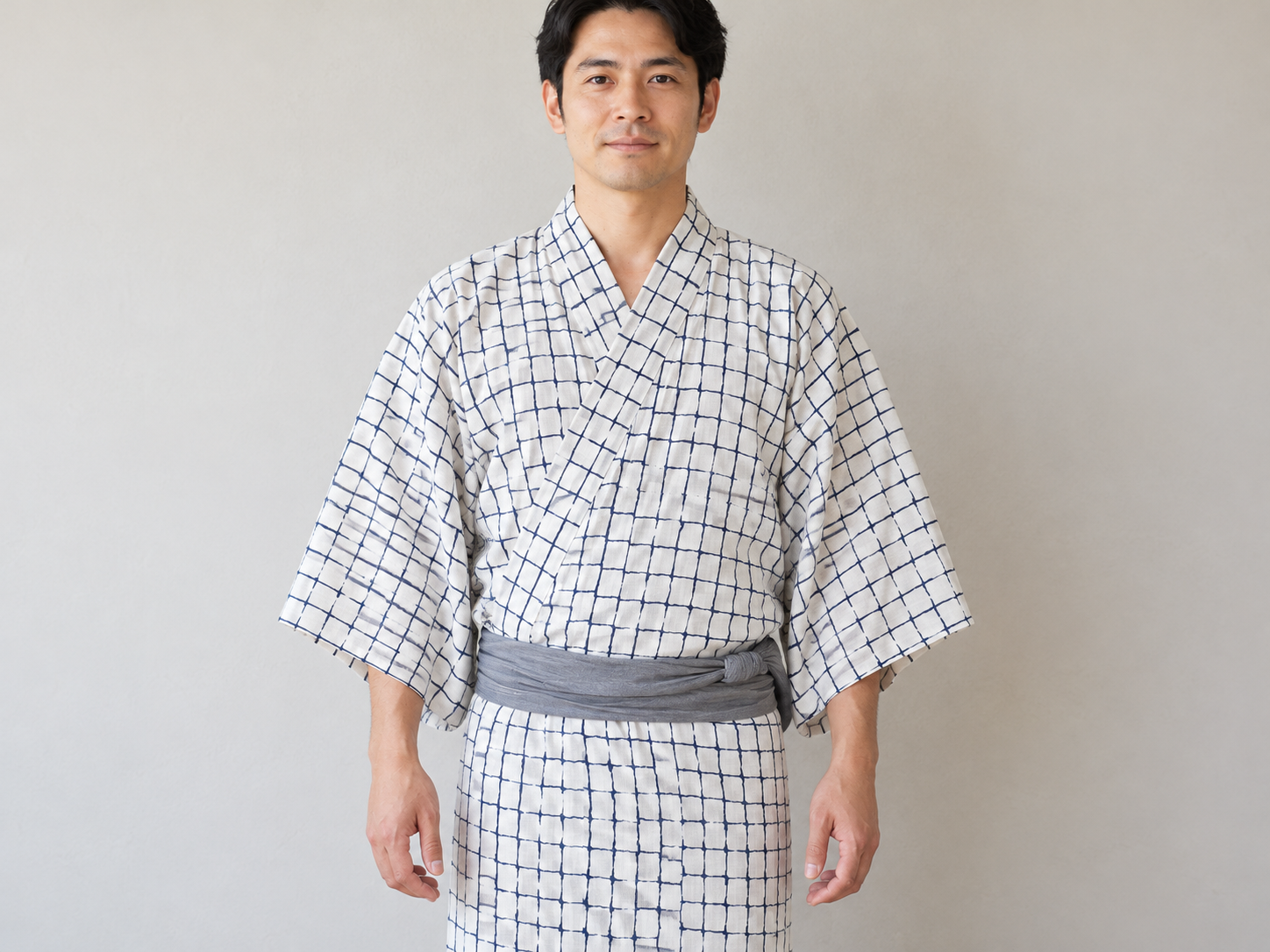
- Stand with the robe hanging evenly and its back seam centered.
- Take the panel on your right and bring it toward your left hip.
- Hold it against your body. Bring the panel on your left across it toward your right hip.
- Keep the left panel outermost while you pick up the sash.
These directions are from your own body, not the viewpoint of a person facing you. A mirror reverses the view, which can make a memorized picture confusing. Follow the sequence with your hands instead: right goes underneath, left finishes on top.
The Japan Ryokan Association’s dressing explanation gives the same overlap for men and women. Reversing it is traditionally associated with dressing the deceased. If you notice the mistake, simply unwrap and correct it; there is no reason to abandon wearing the yukata.
Make the collar neat and keep the chest covered. Check that the outer panel also covers the lower front when you take a short step. A correct neckline alone does not solve a robe that is too narrow.
Tie a soft ryokan sash low on your hips
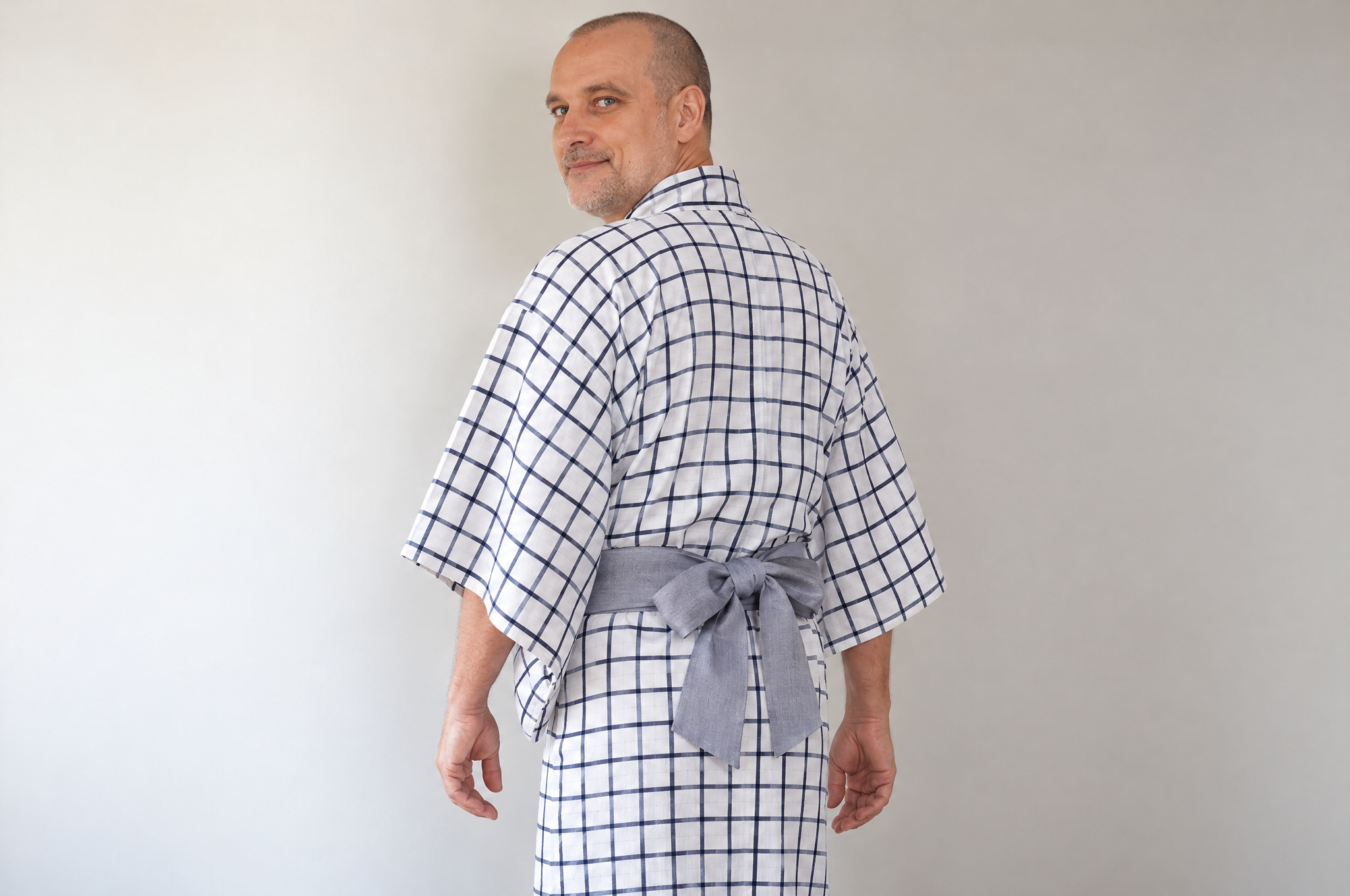
For the flexible inn sash, Visit Kinosaki’s official instructions describe wrapping the sash two or three times, leaving enough fabric for a bow. They place men’s sashes at the hips and allow the bow at the front or back.
- Hold the robe closed with one hand and place the sash around your hips, below the natural waist.
- Wrap it flat around your body, keeping enough length at both ends to tie. The number of turns depends on your sash and body; do not use up the ends trying to reach a fixed number.
- Cross the ends, pass one underneath the other, and pull them snug.
- Make a loop with one end. Wrap the other around that loop and pull a second loop through to form a bow.
- Adjust the loops and ends so the bow holds and nothing trails. If you are unsure it is secure, ask staff to check it.
Check the fit while sitting as well as standing. The sash should hold the panels together without preventing comfortable breathing or movement. Tightening the belt cannot replace enough fabric overlap.
If you prefer the bow behind you, move the whole sash carefully rather than dragging only the knot. Suimeikan recommends a back position for men. An inn’s simple front bow is also acceptable under Kinosaki’s guide: a different position is not automatically a mistake.
Using a kaku obi or a pre-tied obi instead
A flat, structured men’s obi needs its own tying method. Yamato’s men’s sightseeing service uses a kai-no-kuchi knot, while the Yukata Japan product tutorial uses a pre-made knot with a fastening. Those are two different systems.
Before choosing a tutorial, check three things: whether the obi is soft or firm; whether it has a finished knot already attached; and whether a separate waist cord is part of your set. Match all three. If you are renting, ask staff to demonstrate how to restore the outfit if it loosens, and save the shop’s own instructions.
For a first formal kimono experience, booking professional dressing avoids trying to assemble unfamiliar layers from a room-robe tutorial. Use RJG’s Tokyo kimono rental guide for plan inclusions and return conditions, rather than assuming dressing is included in every offer.
Wear it comfortably at dinner, on stairs and outside
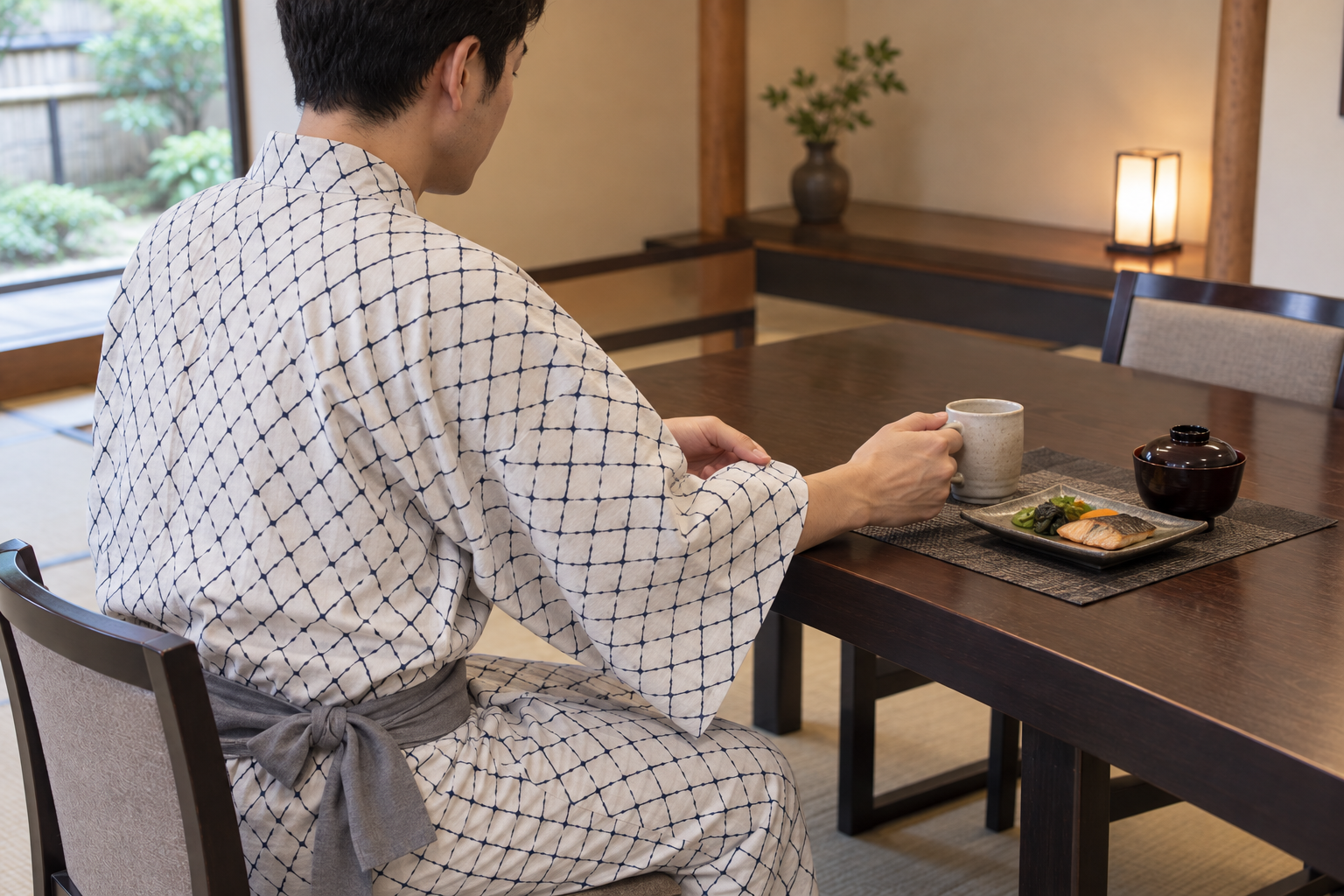
Before leaving your room, try a short walk and sit down. If the front opens, smooth and rewrap it in private. Take shorter steps, avoid spreading your knees widely when seated, and hold a sleeve back with the opposite hand when reaching across food. Suimeikan’s practical tips also advise lifting the hem slightly on stairs so you do not step on it.
Match footwear to the floor. The Hokkaido Transport Bureau’s inn guide explains that shoes and slippers stay off tatami and toilet slippers belong in the toilet. Wearing a yukata does not change these boundaries.
For dinner or a stroll, first check the room information or ask staff. Kinosaki explicitly welcomes yukata walks around town, but that does not give permission to wear another hotel’s room garment through every public area or restaurant. Ask separately about the place you are going, and choose ordinary clothes if the answer is unclear.
Baths, cold weather and the fallback when it will not fit
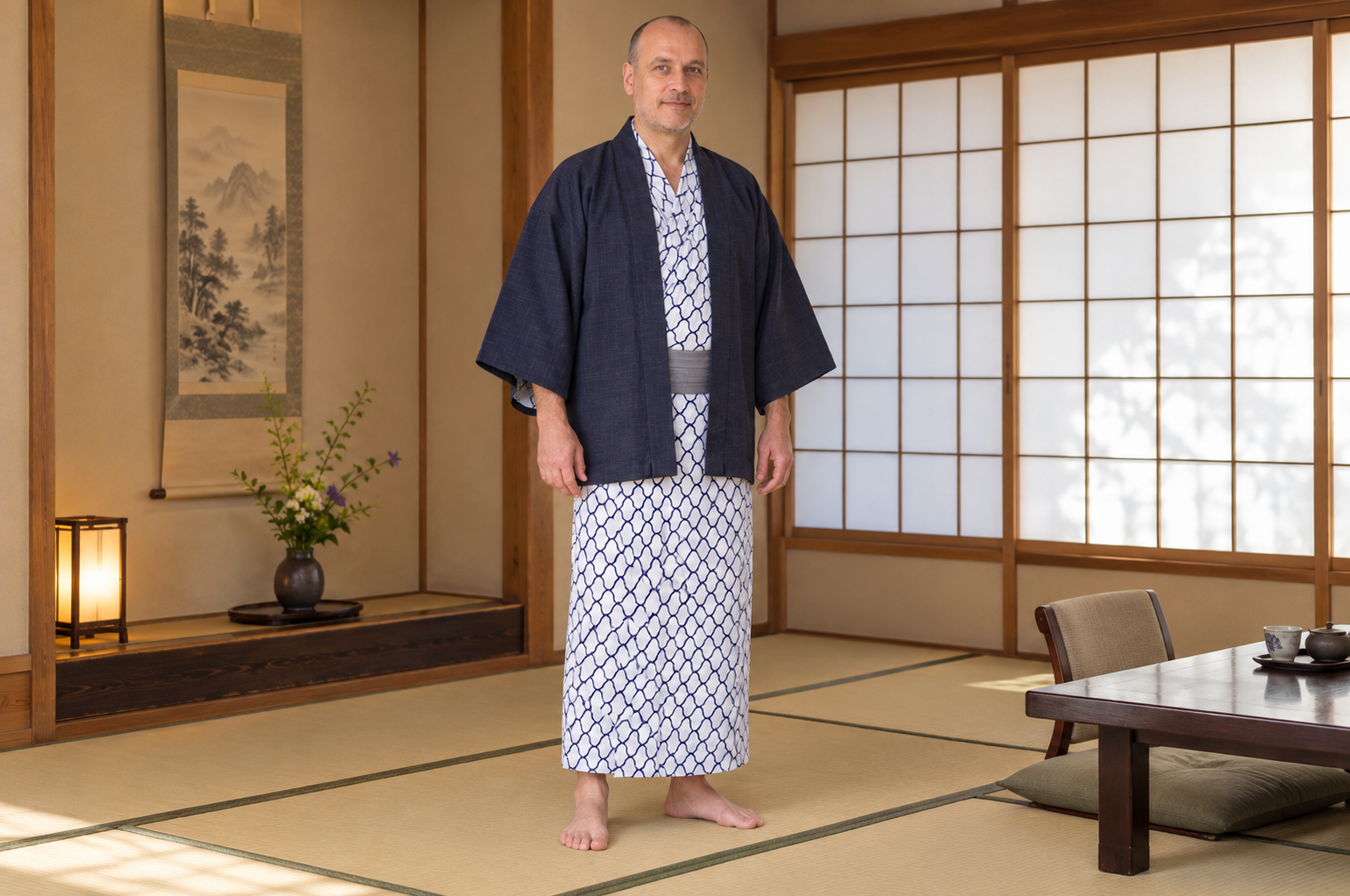
You may wear an approved yukata to the changing room, but remove it and your underwear before entering a conventional nude onsen bathing area. Kinosaki’s bathing instructions say to leave clothes in the locker and dress again after bathing. A swimsuit facility has its own rules; do not use this robe as swimwear.
A room yukata is not limited to summer. The Japan Ryokan Association describes year-round indoor use and extra layers such as a padded tanzen or a shorter haori in cooler conditions. Ask what your inn actually supplies. For a longer outing in cold or wet weather, ordinary outdoor clothing may be more practical.
| Problem | Practical next step |
|---|---|
| Hem drags, or front cannot cover you | Ask for a different size. If none fits, use ordinary clothes. |
| Sash keeps loosening | Rewrap in private and ask staff to show the correct method for that sash. |
| You cannot identify the belt | Show it to staff before copying a tutorial. |
| You are unsure about dinner or outdoor use | Ask about that specific destination; keep your normal outfit ready. |
Useful requests you can show on your phone:
- 浴衣の着方を教えてください。 Yukata no kikata o oshiete kudasai. Please show me how to wear this yukata.
- もっと大きいサイズはありますか? Motto ōkii saizu wa arimasu ka? Do you have a larger size?
- この浴衣で食事に行ってもいいですか? Kono yukata de shokuji ni itte mo ii desu ka? May I wear this yukata to the meal?
- この浴衣で外に出てもいいですか? Kono yukata de soto ni dete mo ii desu ka? May I go outside in this yukata?
Frequently asked questions
Is a man’s yukata wrapped differently from a woman’s?
No. The wearer’s left panel goes over the right in both cases. Men’s sash placement is lower, around the hips.
Do I need to learn a formal obi knot at a ryokan?
Not for a simple soft sash intended to be tied in a bow. A structured or pre-tied obi needs instructions for that specific belt.
Must the bow be at the back?
Not universally. Kinosaki allows a simple inn-sash bow at the front or back; Suimeikan recommends the back for men. Follow your inn’s demonstration.
Should men fold extra fabric at the waist?
Start with a men’s robe of the right length instead of copying a women’s waist-fold tutorial. If it drags, ask staff for another size or adjustment.
What should I wear underneath?
Keep underwear on. A discreet undershirt or shorts can add coverage or comfort. Remove all clothing in the changing room before a conventional nude bath.
Can I wear the room yukata to dinner?
Check the inn’s instructions for its particular dining area. Ask before going; permission for the bath route does not settle every restaurant’s dress rule.
Can I take a walk outside in it?
Kinosaki encourages this, but accommodation and destination rules differ. Ask about outdoor use and appropriate footwear.
What if the largest robe does not fit?
Wear ordinary clothes and ask what is acceptable for your plans. Do not sacrifice comfortable front coverage to imitate a photo.
Is this enough for a formal men’s kimono outfit?
No. Formal outfits require different garment choices, layers and accessories. Ask a rental shop or dresser for an occasion-appropriate complete set.
For planning the stay itself, see RJG’s ryokan booking and meal guide. For Tokyo summer rental and shopping options, see the separate Tokyo yukata guide.
Comments