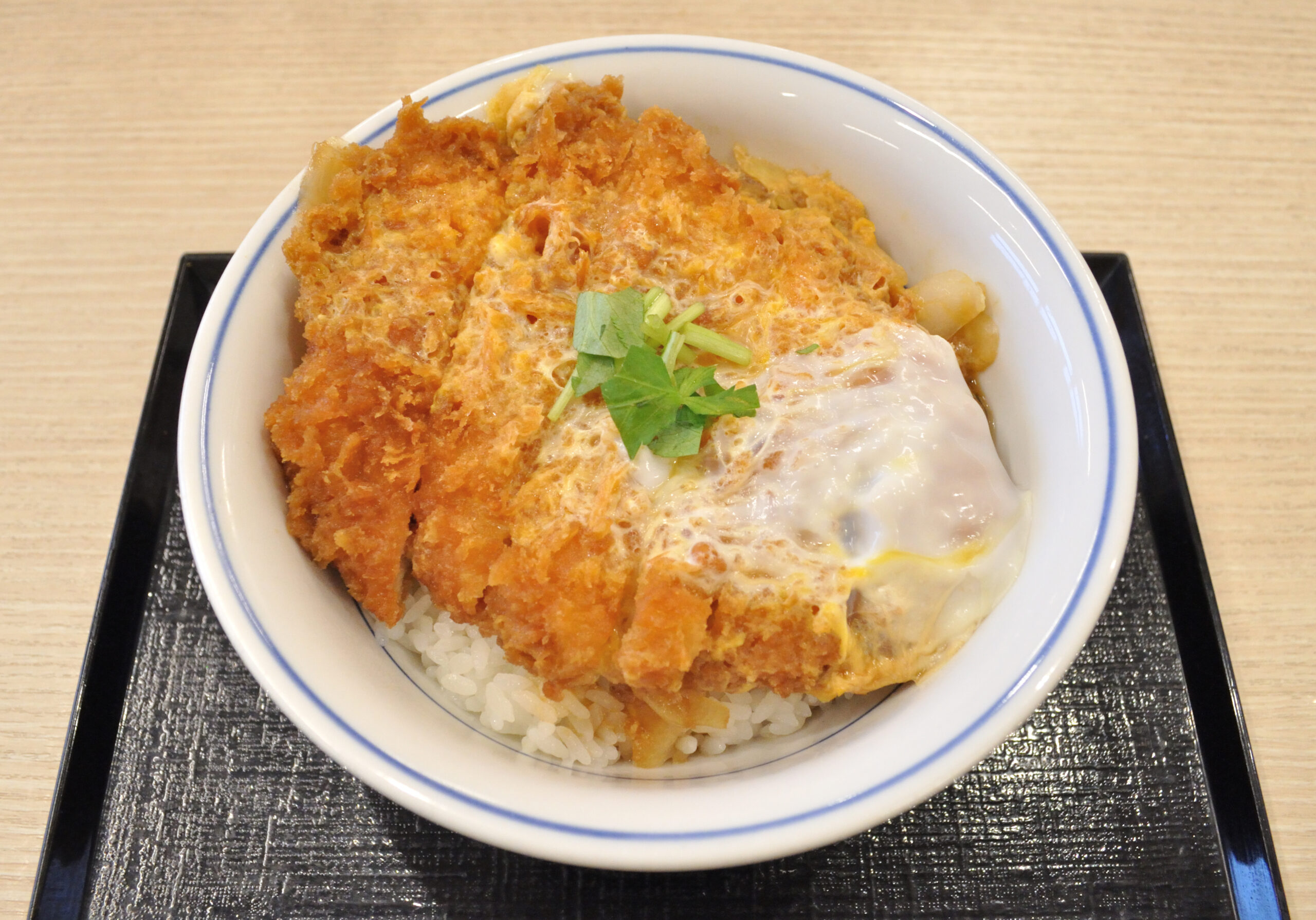
Katsudon in 30 Seconds
Katsudon is a rice bowl topped with a pork cutlet. The standard version used in this guide combines sliced tonkatsu with onion, a sweet-savory dashi and soy-based broth, and egg; egg doneness varies by recipe and shop. Because the cutlet is simmered before serving, its crust is usually softer than the crust on a tonkatsu set meal.
That is not the only style. In parts of Japan, the same menu name may mean a cutlet dressed with sauce and served over cabbage and rice, without an egg-bound topping. Niigata has a soy-sauce-based tare katsudon, and some shops offer their own baked or demi-glace versions. Check the menu photo or ask before paying if the style matters to you.
Egg, wheat, soy and pork are common concerns. A bowl without an egg-bound topping may still use egg in its breading or elsewhere. If staff cannot confirm what is in the whole dish, choose something else.
Read the KATSUDON Food Manga
Follow an RJG traveler from the shop entrance to the first bite, then return here for the practical ordering guide.
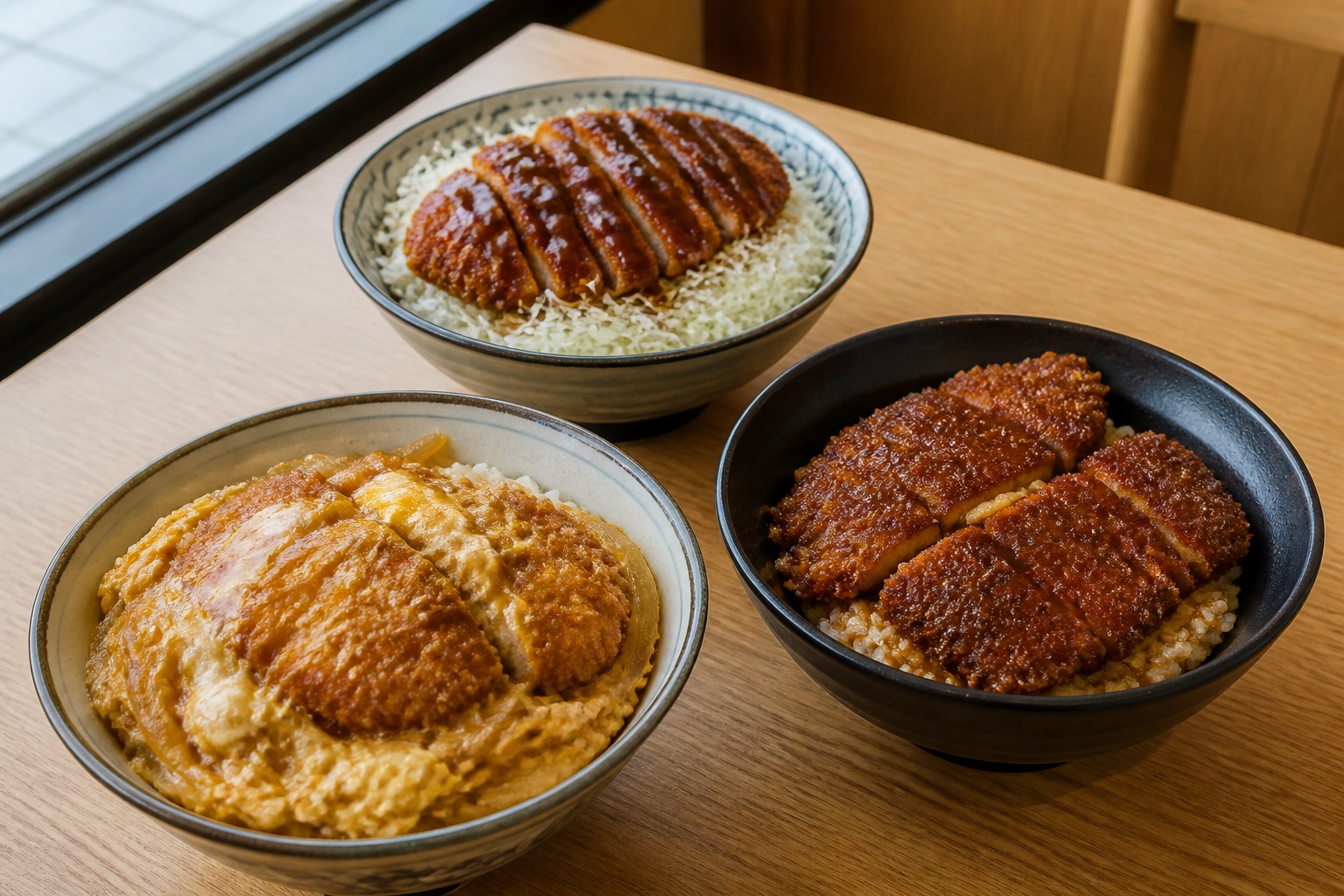
Which Katsudon Will You Get?
Do not assume that every bowl called katsudon has an egg-bound topping. Use the menu name, photo and short questions below to identify the style.
| Menu cue | What usually arrives | Texture to expect | What to confirm |
|---|---|---|---|
| カツ丼 / katsudon, with an egg-and-onion photo | Pork cutlet simmered with onion, broth and egg over rice | Soft, moist coating; some crust may remain at the edges | Ask whether it is tamago de tojite imasu if there is no photo |
| ソースカツ丼 / sauce katsudon | Sauced pork cutlet, often with cabbage over rice; no egg-bound topping in the regional forms described here | Crust usually stays firmer than egg-bound katsudon | Sauce, garnish and the full ingredient list vary by region and shop |
| タレカツ丼 / tare katsudon | Thin cutlets dipped in a sweet soy-based sauce over rice; associated with Niigata | Thin cutlet with a sweet soy-based sauce coating | No egg-bound topping does not mean the whole dish is egg-free |
| デミカツ丼 / demi katsudon | Cutlet and rice with a demi-glace-style sauce; associated with Okayama | Texture varies by shop | Ingredients are shop-specific |
| 焼きカツ丼 / yaki katsudon | A baked or pan-cooked shop variation | Varies substantially | Treat it as a shop-specific dish, not one nationwide formula |
Regional naming can reverse a visitor's expectations. Official sources describe sauce katsudon in Kiryu and Komagane, while a Ministry of Agriculture page describes Niigata tare katsudon. These are useful clues, not guarantees for every restaurant.
Egg-Bound Katsudon vs a Tonkatsu Set
Choose egg-bound katsudon when you want one comforting bowl in which the rice absorbs the broth and the pork, onion and egg are eaten together. Choose a tonkatsu set meal when keeping the breaded crust crisp is more important.
| If you want… | Better first choice |
|---|---|
| Egg, sweet-savory broth and rice in one bowl | Egg-bound katsudon |
| A visibly crisp cutlet with sauce added by you | Tonkatsu set meal |
| A rice bowl without an egg-bound topping | A verified sauce or tare katsudon; for an egg allergy, confirm the whole recipe |
| Maximum control over sauce and texture | Tonkatsu set meal |
Our Tokyo tonkatsu guide explains cutlet types and set-meal choices in more detail. This article focuses on identifying and ordering the bowl.
How to Order Katsudon
At a staffed counter, point to the exact menu item or photo and say:
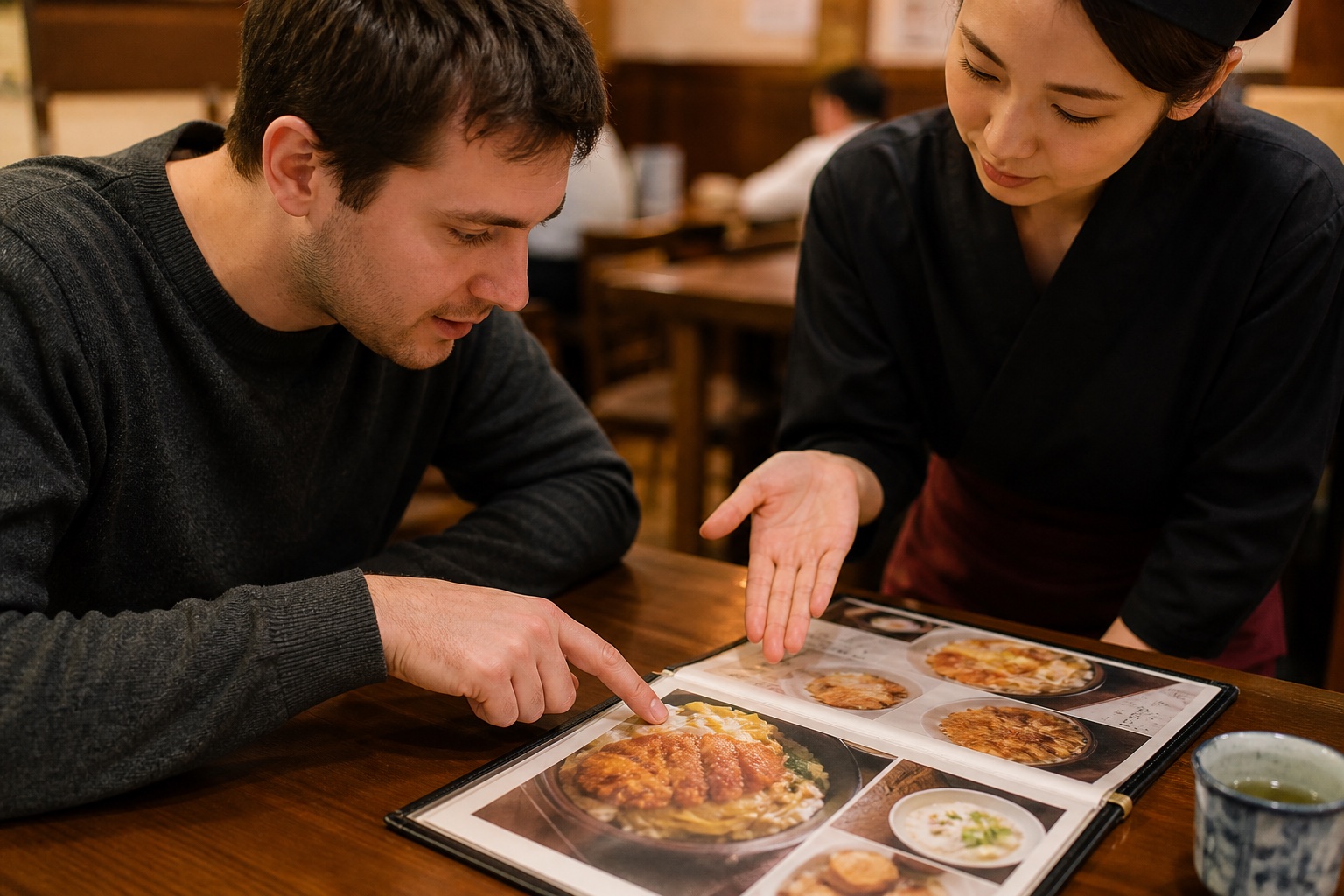
- Katsudon o hitotsu onegaishimasu. — One katsudon, please.
- Kore o hitotsu onegaishimasu. — This one, please. Point to the exact menu item or photo.
If the restaurant uses a ticket machine, identify the exact dish before inserting money or confirming payment. A button labeled only カツ丼 may not explain the regional style. Show the menu name to staff, ask whether it is egg-bound or sauce-style, then complete the purchase. Our Japan restaurant ticket-machine guide covers the full sequence.
Common Ingredients and Allergy Limits
A common egg-bound katsudon can include pork, egg, wheat in the breading, soy sauce, dashi, onion and rice. The frying oil, broth and sauce may introduce other ingredients. Sauce, tare and demi versions use different recipes.
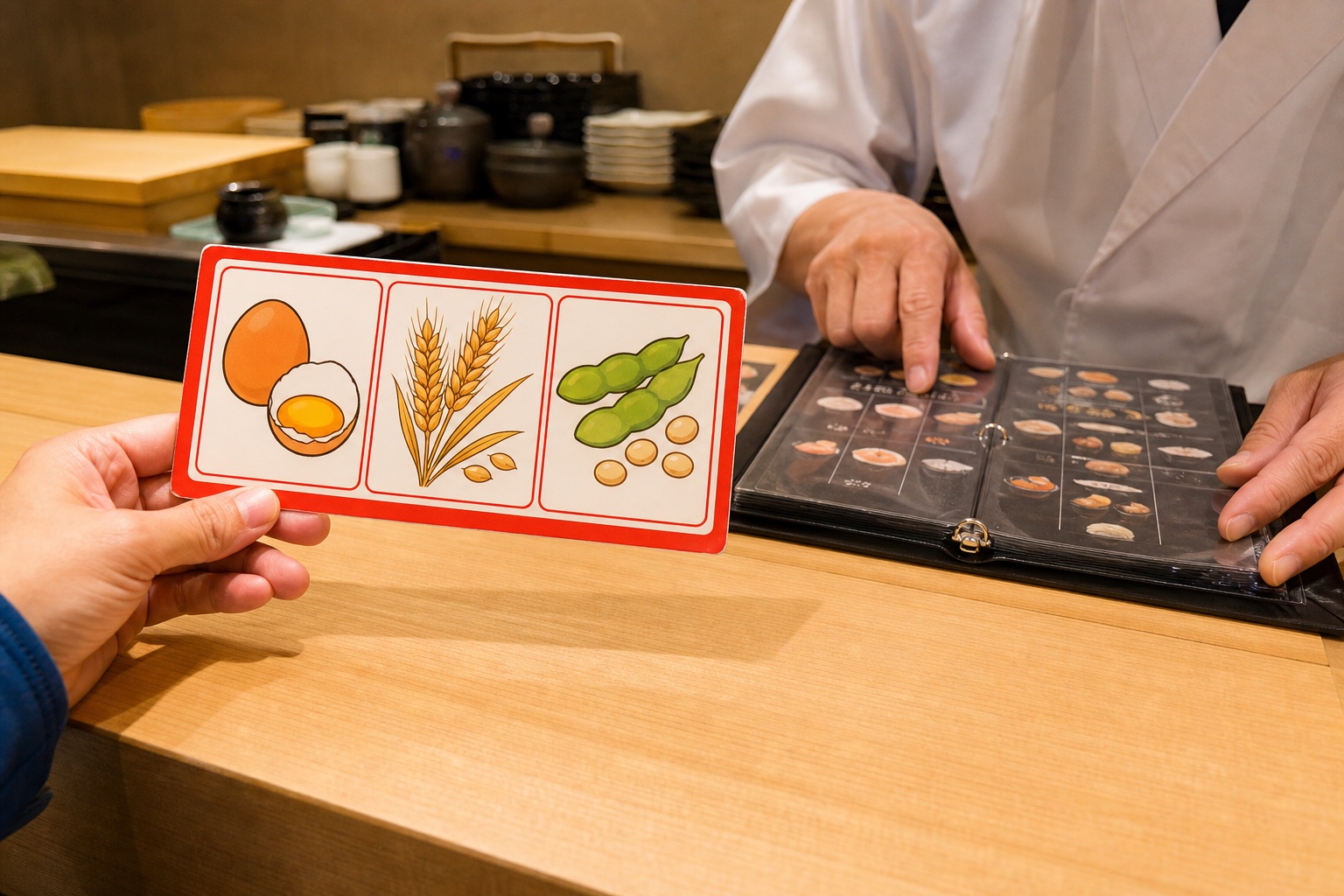
Japanese restaurant meals are not guaranteed to provide the same packaged-food allergen information that travelers may expect from retail products. Treat any short ingredient list as a starting point, not a complete allergen declaration.
Use our food-allergy guide for Japan to prepare an allergy card and understand the limits. If an allergen risk cannot be confirmed, do not order the dish.
Where Travelers Commonly Find Katsudon
Chains can offer a more predictable ordering format, but price, payment, English support and allergen support still need to be checked for the exact chain and branch. Do not infer a recipe from a shop being an old-style soba shop or shokudo. Tonkatsu or katsudon specialists may emphasize the cut, thickness, doneness or a modern style; a higher price does not by itself prove higher quality.
How to Eat It
There is no special ritual required. Chopsticks are common, and a spoon may be available or requested when useful.
For egg-bound katsudon, the coating softens as it absorbs the broth, although some edges may retain texture. This softness is part of the dish, not a failed version of tonkatsu.
Plan B When the Menu Is Unclear
Use this fallback rather than guessing:
- Before payment: show the menu photo and ask whether the bowl is egg-bound or sauce-style.
- If crispness matters: choose a verified sauce/tare style or a tonkatsu set meal. This is a texture choice, not proof that the dish is egg-free.
- If allergy information is uncertain: do not order it; switch to a dish the restaurant can confirm.
- If a ticket-machine choice is unclear: ask before buying another ticket. Do not make a second purchase based on a guess.
- If the dish is sold out or the queue no longer fits your plan: move to your saved alternative restaurant. Our restaurant Plan B guide explains how to prepare one.
Frequently Asked Questions
What is katsudon?
Katsudon is a Japanese rice bowl topped with a pork cutlet. A common version simmers the sliced cutlet with onion, broth and egg, but sauce, tare and other regional or shop-specific versions also exist.
Does katsudon always have an egg-bound topping?
No. The common version has one, while the sauce and tare forms described here do not. However, a cutlet without an egg-bound topping may still use egg in its breading or elsewhere, so confirm the whole recipe for an egg allergy.
Is katsudon crispy?
Egg-bound katsudon is generally softer than a tonkatsu set because the cutlet is simmered with broth and egg. Sauce and tare styles may retain more crust, but the amount of sauce and serving method change the texture.
What is the difference between katsudon and tonkatsu?
Tonkatsu is the breaded, fried pork cutlet itself and is often served as a set with rice and cabbage. Katsudon puts a cutlet on rice, usually with egg and broth or with a regional sauce.
What is sauce katsudon?
It is a rice-bowl style in which the cutlet is dressed or dipped in sauce, commonly served over cabbage and rice without an egg-bound topping. Recipes and naming differ by region and shop; confirm the whole recipe for an egg allergy.
How do I ask whether katsudon contains egg?
Show the exact menu item or photo and ask staff whether it is egg-bound. For the approved pointing phrase, say Kore o hitotsu onegaishimasu. after the correct item is confirmed.
Can I rely on a restaurant menu for allergy information?
Do not assume the menu lists every ingredient. Ask the restaurant, use a prepared allergy card, and choose another dish if the allergen risk cannot be confirmed.
How do I order one katsudon in Japanese?
Say, Katsudon o hitotsu onegaishimasu. At a restaurant with several styles, pointing to the exact menu photo is safer than relying on the dish name alone.
Last checked: August 24, 2026. Regional names and recipes vary. Confirm the exact dish and allergy information with the restaurant before ordering.


Comments