Ordering Japanese sake should not feel like an exam. You do not need to recognize dozens of labels or know a brewer’s history before you take your first sip. At an izakaya or Japanese restaurant, a useful order can be as simple as choosing a flavor direction, a temperature, and a serving size.
This guide gives you a practical decision path, the menu words worth recognizing, and short Japanese phrases you can show to a server. It also explains what to do when the menu is entirely in Japanese or when the restaurant does not serve sake in the format you expected.
- Quick answer: the easiest way to order sake
- What “sake” means in Japan
- Choose your sake in 30 seconds
- Menu words you actually need
- How to order sake step by step
- Hot, cold, or room temperature?
- Glass, tokkuri, ochoko, masu, and one go
- Sake etiquette without the myths
- What can go wrong—and your Plan B
- Where beginners can try a tasting flight in Tokyo
- Frequently asked questions
- What should I call Japanese sake in Japan?
- Should a beginner order sake hot or cold?
- How much is one go of sake?
- What is the difference between junmai and ginjo?
- Does a positive Sake Meter Value mean the sake will taste dry?
- Do I have to pour sake for other people?
- Do I have to finish sake after saying kanpai?
- What is the legal drinking age in Japan?
- Official sources checked
Quick answer: the easiest way to order sake
If you are new to sake, use this three-step order:
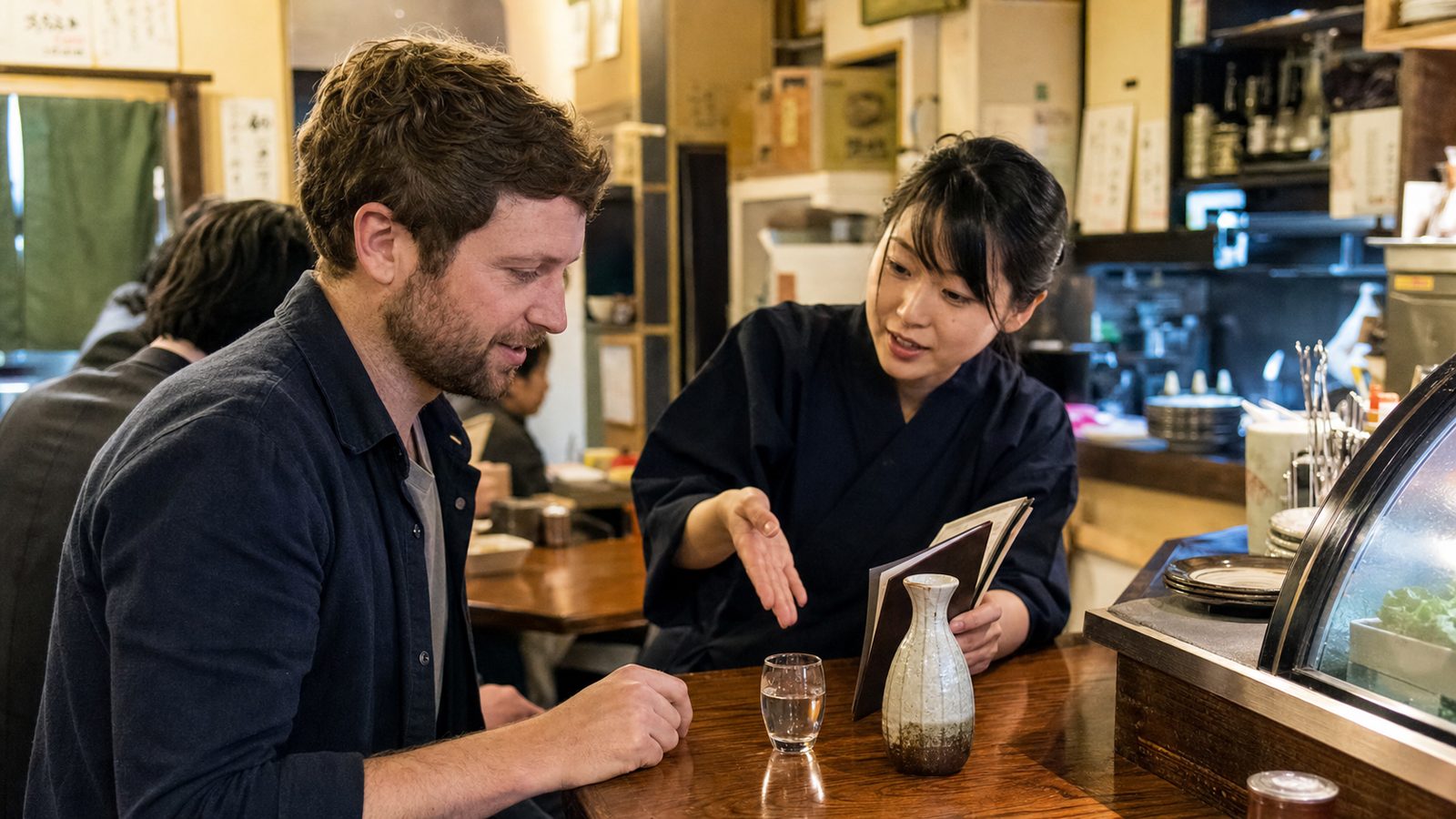
- Ask for the restaurant’s recommendation: Osusume no nihonshu wa arimasu ka? (Do you have a recommended sake?)
- Choose chilled, room temperature, or warmed. If you are unsure, ask how that label is intended to be served.
- Start with one glass or a tasting set when available. If the menu uses go, one go is the traditional 180 ml unit, but the amount poured into a glass or carafe can differ by restaurant.
| What you want | Useful starting request | What to confirm |
|---|---|---|
| Light, aromatic, fruit-led | A ginjo-style sake, served chilled | Glass size and current label |
| Rice-led, savory, or fuller | Ask for a junmai recommendation | Whether the staff recommends chilled, room temperature, or warmed |
| A comparison | A tasting set or three small pours | Number of samples and total volume |
| No decision-making | The staff recommendation with your meal | Price, serving size, and temperature |
| A small first serving | One glass | Actual volume shown on the menu |
There is no prestige test hidden in the temperature choice. The Japan Sake and Shochu Makers Association (JSS) explains that the same sake can show different characteristics when chilled, served at room temperature, or warmed. The useful question is not “Which temperature is more authentic?” It is “How does this restaurant recommend serving this bottle?”
Information checked July 19, 2026. Menus, labels, prices, serving sizes, and tasting-center lineups can change. Confirm the current menu before ordering. Alcohol may be consumed in Japan from age 20.
What “sake” means in Japan
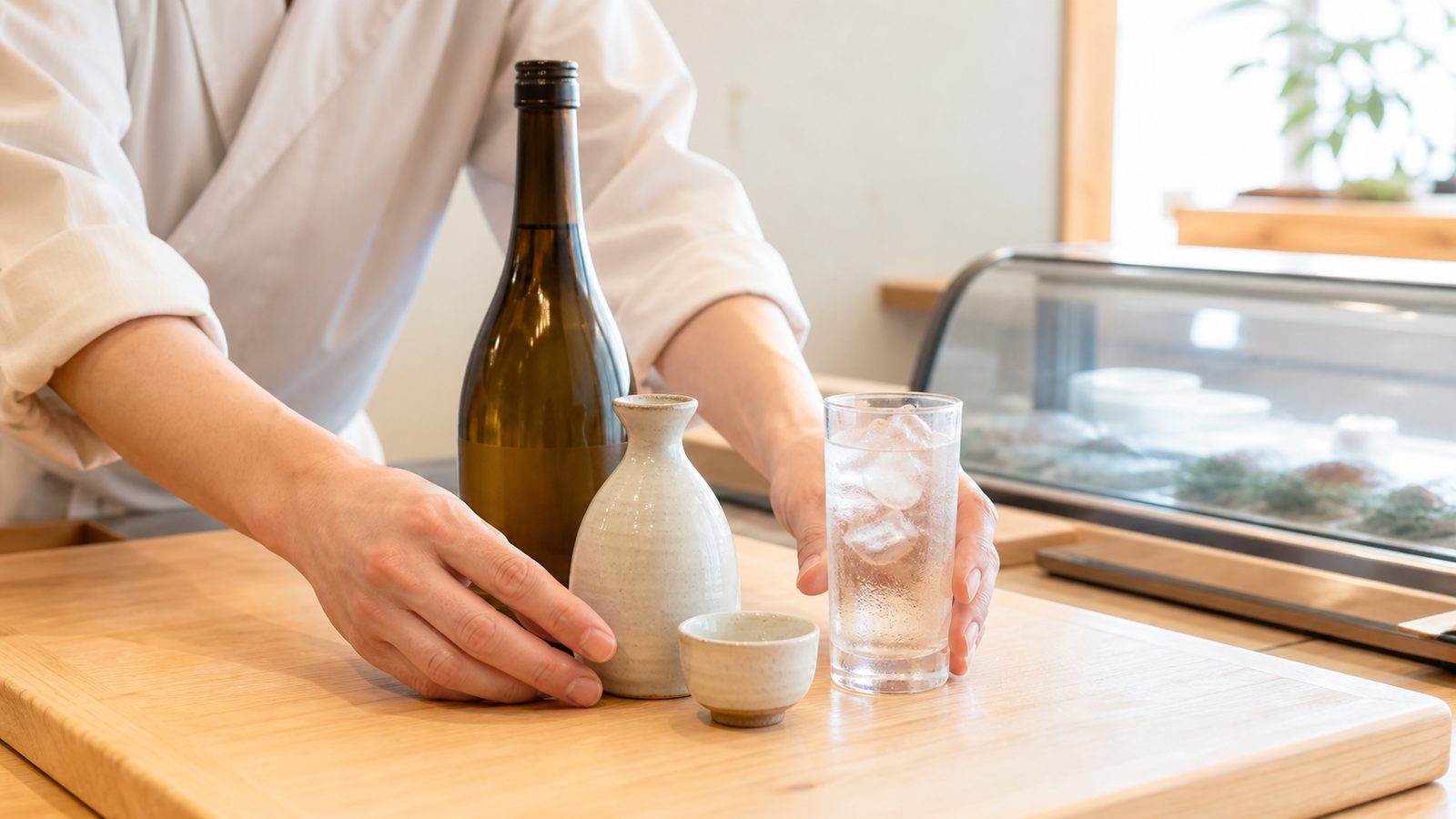
In English, sake commonly refers to the fermented rice drink discussed in this guide. In Japanese conversation, sake (酒) can refer more broadly to alcohol. The more precise word for Japanese rice sake is nihonshu (日本酒).
This distinction matters when you are looking at a menu. A heading that says osake may introduce beer, shochu, whisky, wine, cocktails, and sake together. Look for 日本酒, 清酒 (seishu), or an English “Japanese sake” heading if you want the rice-based drink.
You may also see shochu and umeshu nearby:
- Nihonshu: fermented sake made primarily from rice, koji, and water; some categories also permit a controlled amount of brewing alcohol.
- Shochu: a distilled spirit commonly made from ingredients such as barley, sweet potato, or rice.
- Umeshu: a sweet plum liqueur, often served on the rocks, with water, or with soda.
They are separate drinks. Saying “sake” in English while pointing to the nihonshu section can make your intention clear. When speaking Japanese, using nihonshu removes the ambiguity.
Choose your sake in 30 seconds
You can make a reasonable first choice without decoding the entire label. Start with flavor, then temperature, then volume.
Step 1: choose a flavor direction
Use ordinary sensory words rather than trying to sound technical.
| Preference | Phrase to show or say | Meaning |
|---|---|---|
| Fruity or aromatic | Furūtī na nihonshu wa arimasu ka? | Do you have a fruity sake? |
| Dry or crisp | Karakuchi no osusume wa arimasu ka? | Do you have a dry recommendation? |
| Soft or easy to approach | Nomiyasui nihonshu wa arimasu ka? | Do you have an approachable sake? |
| Good with this dish | Kono ryōri ni au nihonshu wa dore desu ka? | Which sake goes with this dish? |
“Dry” is useful but incomplete. Acidity, aroma, umami, temperature, and the food beside the drink can change the impression. If you have a food order in mind, asking for a pairing can produce a better result than selecting from a single number or category.
Step 2: choose a temperature
JSS groups serving temperatures into chilled, room temperature, and warmed. A practical restaurant vocabulary is:
- Reishu (冷酒): chilled sake.
- Jō-on (常温): room temperature.
- Okan (お燗): warmed sake as a general request.
- Atsukan (熱燗): a noticeably hot style of warmed sake.
The listed bottle may not be available at each temperature. Ask rather than assuming the restaurant will warm any label.
Step 3: choose a serving size
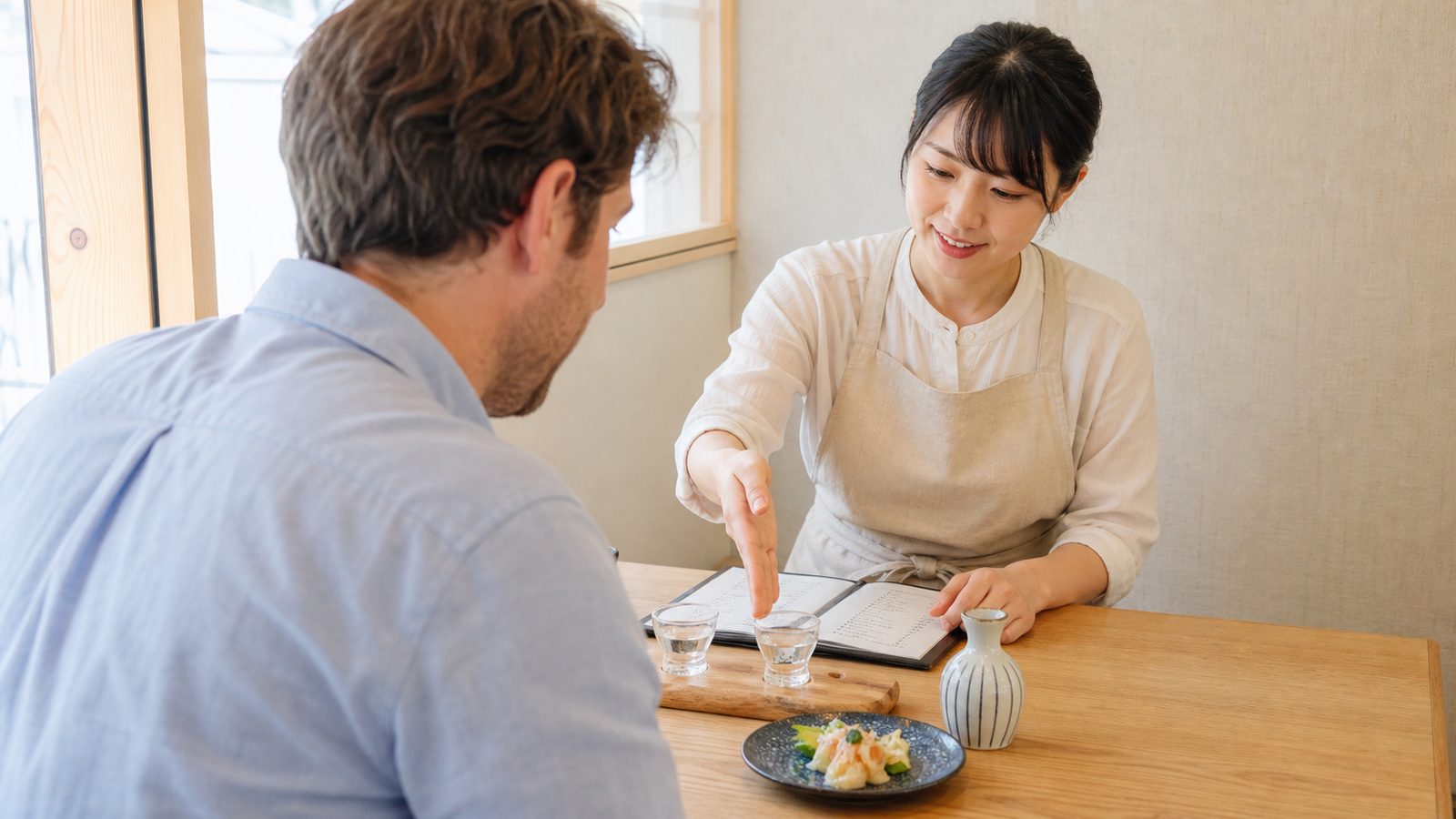
A tasting pour or single glass reduces the cost of a first experiment. A tokkuri carafe can make sense for sharing, but its capacity is not standardized across restaurants. If the menu says ichi-go, it refers to one 180 ml traditional unit. A glass labeled “one glass” may be smaller.
Before confirming, identify both the price and the unit. A number beside a brand could be a glass price, one-go price, carafe price, or bottle price.
Read a sample menu line without translating the full text
Imagine a menu line that reads:
Junmai Ginjo — Glass 90 ml ¥780 / Ichi-go ¥1,300 — Chilled recommended
You already have the information needed to order. Junmai ginjo is the style, 90 ml and one go are two different serving choices, and chilled is the venue’s recommendation. You do not need to translate the brewery story or identify the rice variety before choosing.
Another menu might say:
House sake — Small tokkuri, one go — Cold / room temperature / warm
Here, “small tokkuri” describes the serving vessel and “one go” gives the volume. The temperature is your remaining decision. If the price is shown once beside the line, point to it and confirm that it applies to one go before ordering.
Handwritten menus may omit English, but the same visual anchors help:
- グラス means glass;
- 90ml or 180ml states the amount directly;
- 一合 means one go;
- 冷 or 冷酒 indicates chilled;
- 常温 indicates room temperature; and
- 燗 or 熱燗 indicates warmed or hot sake.
Numbers are often more useful than a full machine translation. First find the volume and price, then ask about flavor or temperature.
What not to optimize on your first order
Do not assume that the lowest rice-polishing number, the longest description, or the highest price will produce the best first glass. Those details can be meaningful, but they do not replace your own flavor preference or the restaurant’s knowledge of the bottle.
A smaller serving with a clear recommendation gives you more room to learn. If you enjoy it, note the brewery, product name, style, temperature, and food pairing. Those five details are more useful for your next order than remembering a prestige category by itself.
Menu words you actually need
Sake menus can contain regional names, rice varieties, yeast information, brewing methods, and seasonal releases. A first-time visitor can focus on a smaller set.
Junmai
Junmai (純米) indicates a sake category made without added brewing alcohol. Its core ingredients are rice, koji, and water. The word does not promise one flavor: a junmai can be light or full, aromatic or restrained, chilled or warmed.
Use junmai as a production clue, not as a synonym for “premium,” “dry,” or “hot.”
Ginjo and daiginjo
Ginjo (吟醸) is made with a ginjo brewing method and rice polished so that 60% or less of the original grain remains. Daiginjo (大吟醸) uses rice polished to 50% or less. These styles often emphasize fruit-like aromas, and chilled service is a common starting point.
The prefix junmai can be combined with these terms. A junmai ginjo or junmai daiginjo is produced without added brewing alcohol. A ginjo or daiginjo without junmai may include a regulated amount of brewing alcohol as part of the style.
Honjozo
Honjozo (本醸造) permits a limited amount of brewing alcohol and uses rice polished to 70% or less. Added brewing alcohol is not the same as an inexpensive spirit poured into a finished bottle. It is part of the regulated production method and can be used to adjust aroma and texture.
Seimai-buai: rice-polishing ratio
Seimai-buai (精米歩合) shows the percentage of the rice grain remaining after polishing. A value of 60% means 40% was removed. A lower number requires more polishing, but it should not be read as a universal taste score. Brewing choices, storage, temperature, and personal preference still matter.
Nihonshu-do: Sake Meter Value
Nihonshu-do (日本酒度), often translated as Sake Meter Value or SMV, is related to the density of the sake compared with water. A positive number can point toward a drier direction and a negative number toward a sweeter direction, but acidity and other components affect what you perceive.
Do not use SMV as a promise. It is one clue beside the producer’s description and the staff’s advice.
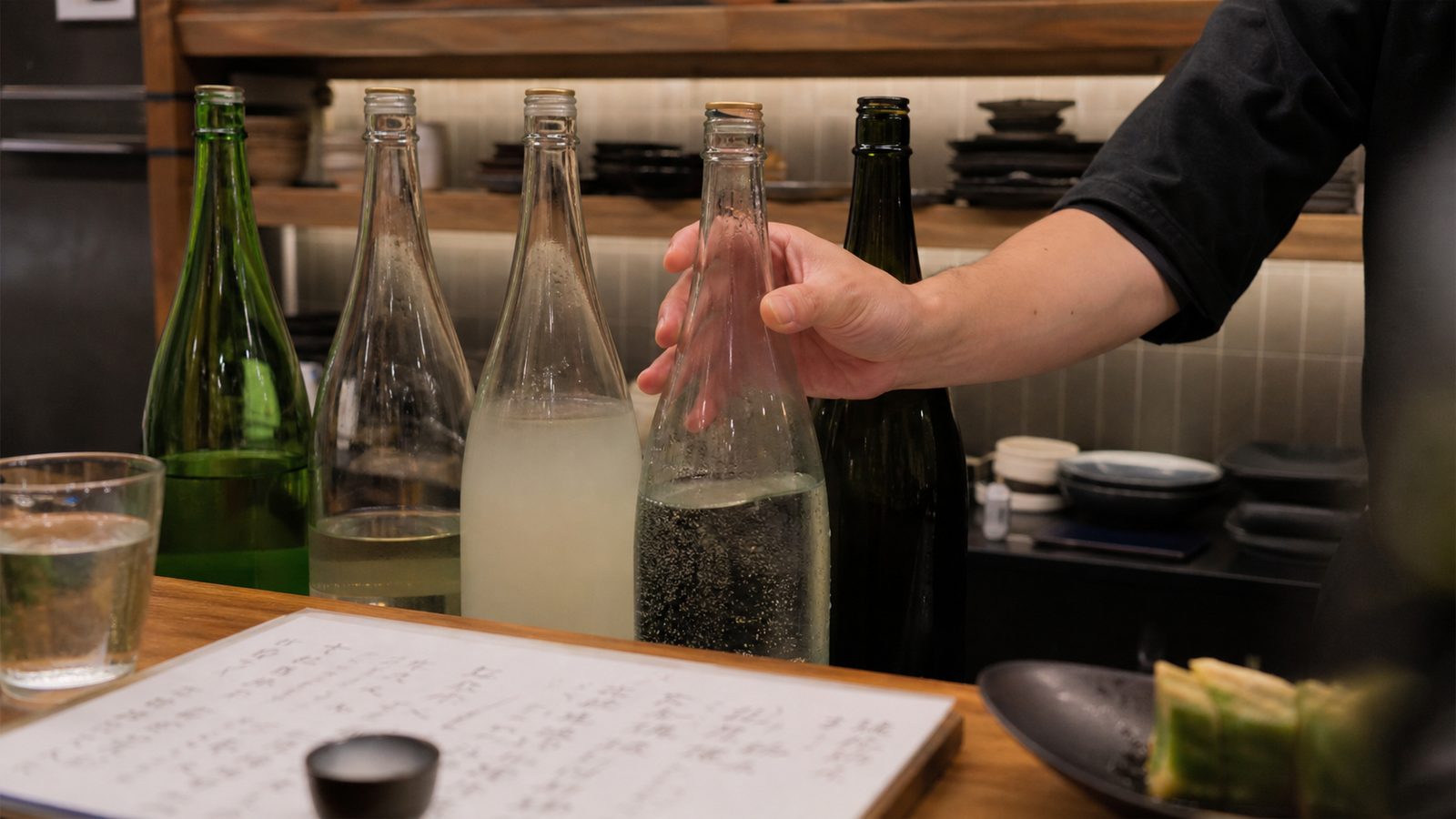
Nama, nigori, sparkling, and genshu
- Nama / namazake: unpasteurized sake that requires careful cold storage.
- Nigori: cloudy sake containing fine rice solids; sweetness and texture vary.
- Sparkling: carbonated or naturally sparkling sake; sweetness and alcohol content vary by product.
- Genshu: sake that has not received the usual dilution after brewing and can have a higher alcohol content.
If one of these words appears, ask how the bottle is stored and served. Do not infer the alcohol percentage from the style name; read the listed percentage.
How to order sake step by step
1. Find the nihonshu section
Look for 日本酒 or 清酒. If the menu groups alcohol together, ask:
Nihonshu no menyū wa arimasu ka?
Do you have a sake menu?
A dedicated sake restaurant may give you a long book of labels. A neighborhood izakaya may show a short handwritten list. The number of choices does not determine whether you can have a good first glass.
2. State one preference
Choose one: fruity, dry, gentle, warmed, chilled, or suitable for your food. Giving the server one preference leaves room for a useful recommendation.
Hajimete nanode, nomiyasui osusume o onegaishimasu.
This is my first time, so I would like an approachable recommendation.
3. Confirm temperature
Reishu de onegaishimasu. — Chilled, please.
Okan de onegaishimasu. — Warmed, please.
Osusume no ondo de onegaishimasu. — Please serve it at the recommended temperature.
The third phrase is useful when the restaurant knows the current label well.
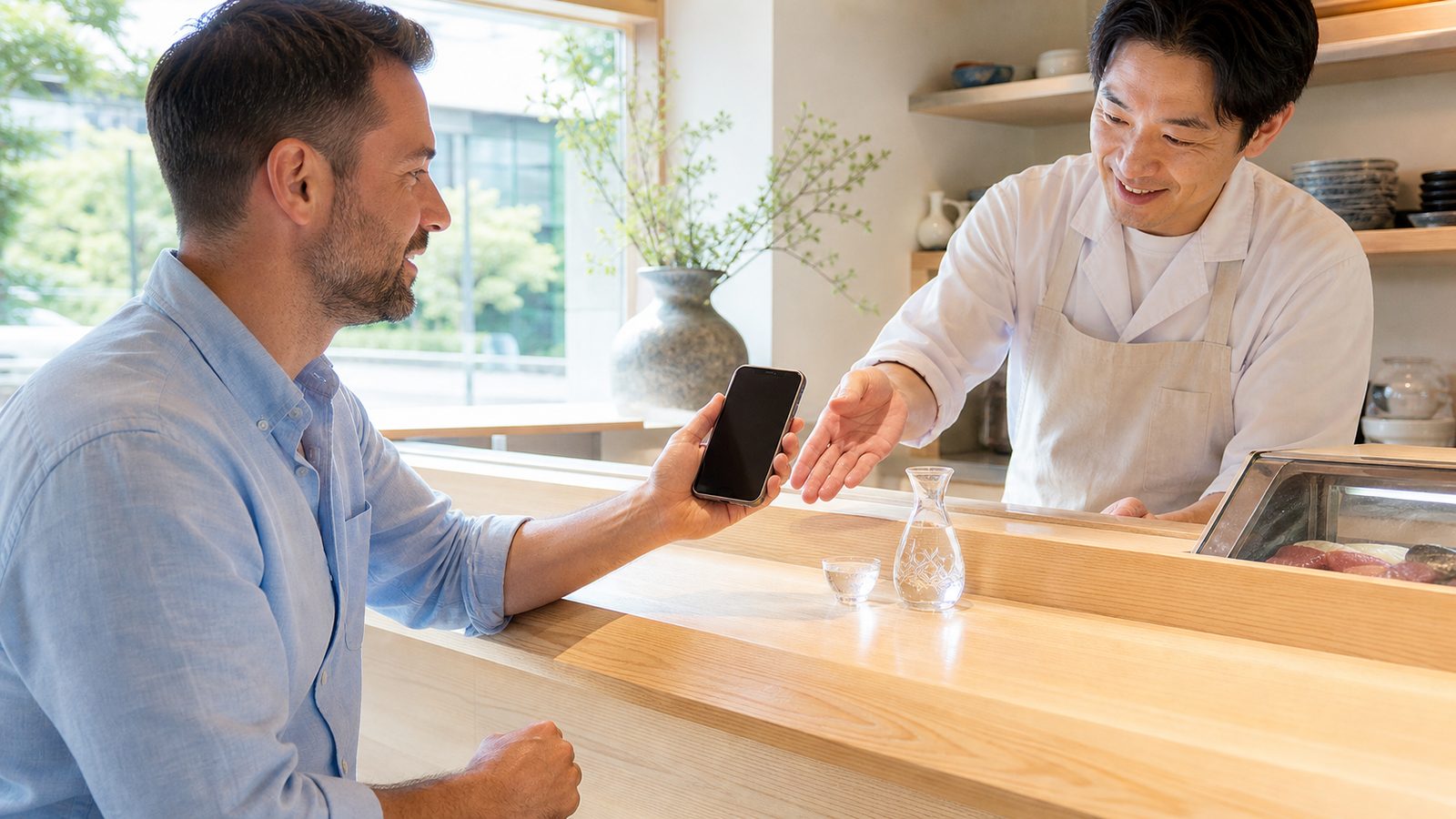
4. Confirm volume and price
Kore wa ippai desu ka, ichigō desu ka?
Is this one glass or one go?
If spoken Japanese feels uncomfortable, point to the price and show the phrase on your phone. Confirming the unit is more useful than guessing from the photo.
5. Order food or water beside it
Sake is commonly around 15% alcohol, though the bottle’s label is the relevant figure. Order food, pace the drink, and request water.
Omizu mo onegaishimasu.
Water as well, please.
JSS uses yawaragi-mizu for water taken between servings of sake. You do not need the specialist term to ask for ordinary water.
Hot, cold, or room temperature?
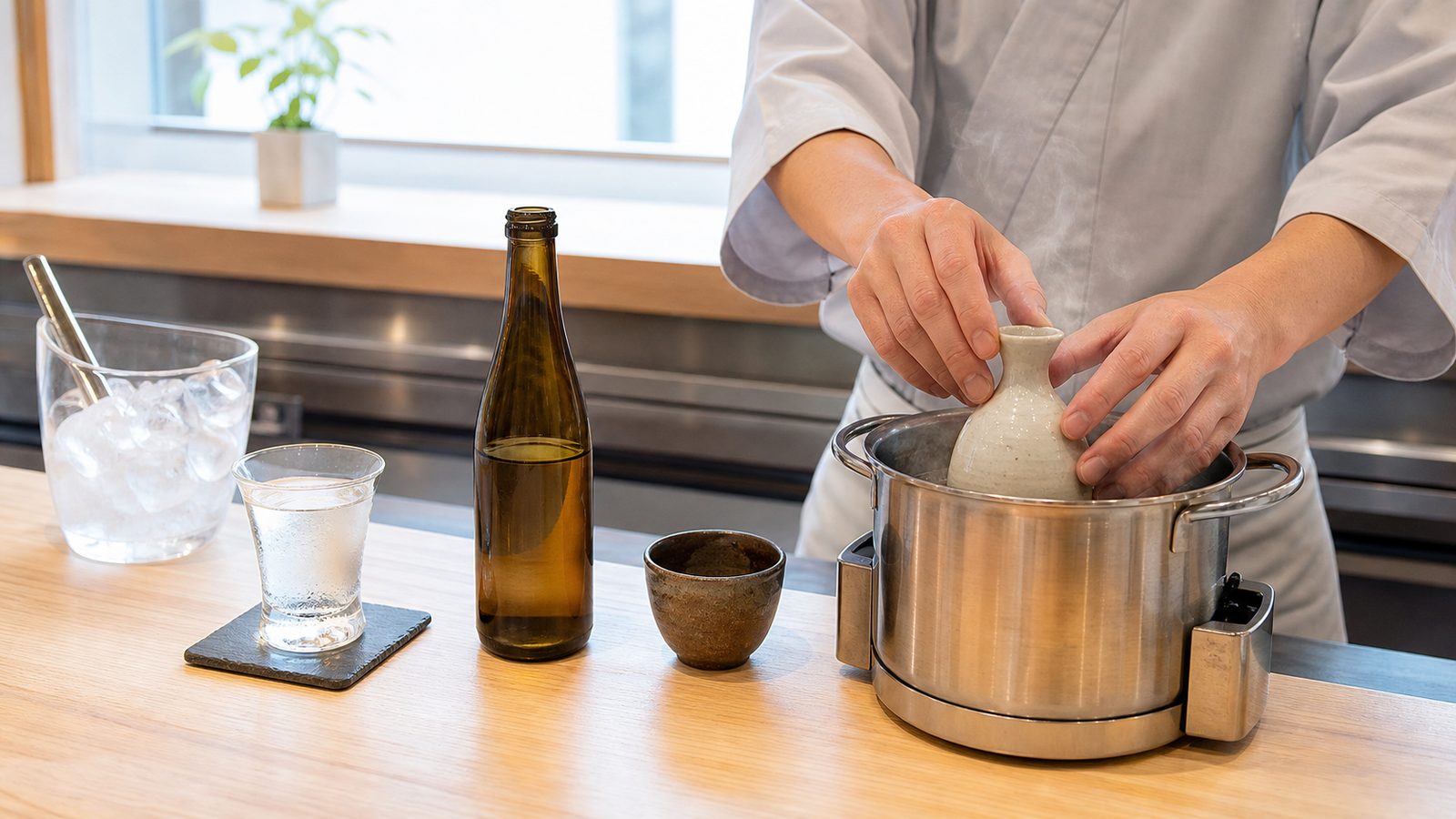
Temperature changes aroma, sweetness, umami, and texture. JSS gives the following broad ranges:
| Service | JSS range | General effect described by JSS |
|---|---|---|
| Chilled | 8–15°C | Lighter, crisper impression with fruit-led aroma more apparent |
| Room temperature | 15–25°C | Subtle, smooth impression with restrained aroma |
| Warmed | 40–50°C | Fuller flavor, more cereal-led aroma, lighter-feeling texture |
These are educational ranges, not mandatory restaurant settings. A menu may use several Japanese temperature names, and staff may recommend a narrower point for a specific bottle.
When chilled is a useful starting point
Chilled service can suit ginjo and daiginjo styles when you want to notice their delicate fruit-like aromas. It also makes sense for sparkling sake and namazake when the producer requires refrigeration.
When warmed is a useful starting point
Warming can bring forward sweetness, umami, grain aromas, and a fuller flavor impression. Junmai, kimoto, yamahai, aged sake, and other savory styles may be offered warm, but the label and restaurant recommendation should decide the individual case.
Room temperature is a real option
Room-temperature service is not a failed version of chilled sake. It can reveal a softer, less refrigerated expression. In a specialist bar, asking to compare the same sake at two temperatures can be more educational than ordering two unrelated labels.
A simple temperature rule
Do not rank temperatures by price or authenticity. Ask how the current sake is intended to be served, then choose according to the experience you want.
Glass, tokkuri, ochoko, masu, and one go
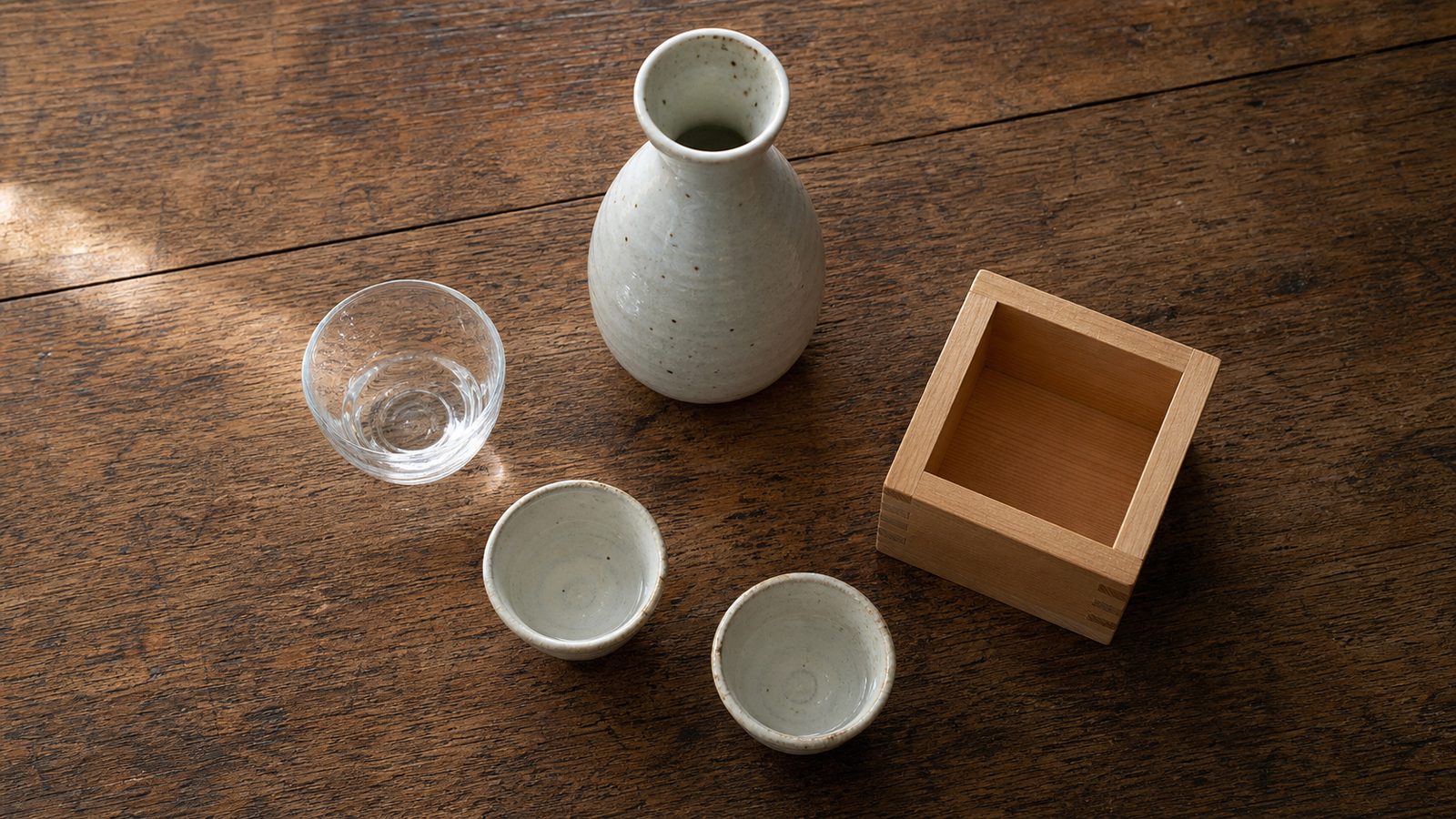
The vessel on the table helps you understand the order, but it does not guarantee the volume.
Glass
Chilled sake is frequently served in a small glass. JSS notes that small sake glasses up to 110 ml are common, while wine glasses can be used for aromatic sake. A restaurant’s “glass” serving can therefore be well below one go.
Tokkuri or ochoshi
A tokkuri is a narrow-necked carafe used to bring sake to the table. JSS describes serving vessels up to around 300 ml, which means the word tokkuri alone does not identify one fixed amount. Read whether the menu lists 90 ml, 120 ml, 180 ml, one go, or another size.
Ochoko
An ochoko is a small personal cup. The small size encourages sipping and sharing from a carafe. It is not a shot glass, and sake is not expected to be swallowed in one motion.
Masu and overflow service
A masu is a square wooden vessel that began as a measuring container. A restaurant may place a glass inside a masu and pour until sake runs over the rim. The overflow is part of the serving presentation. Follow the venue’s lead: you may drink from the glass first and then handle the sake in the masu carefully.
Ichi-go and ni-go
One go is 180 ml; two go is 360 ml. JNTO notes that restaurants may accept orders by the number of go. The term is a useful volume reference, but a “glass,” “small carafe,” or tasting pour may use a different amount.
Sake etiquette without the myths
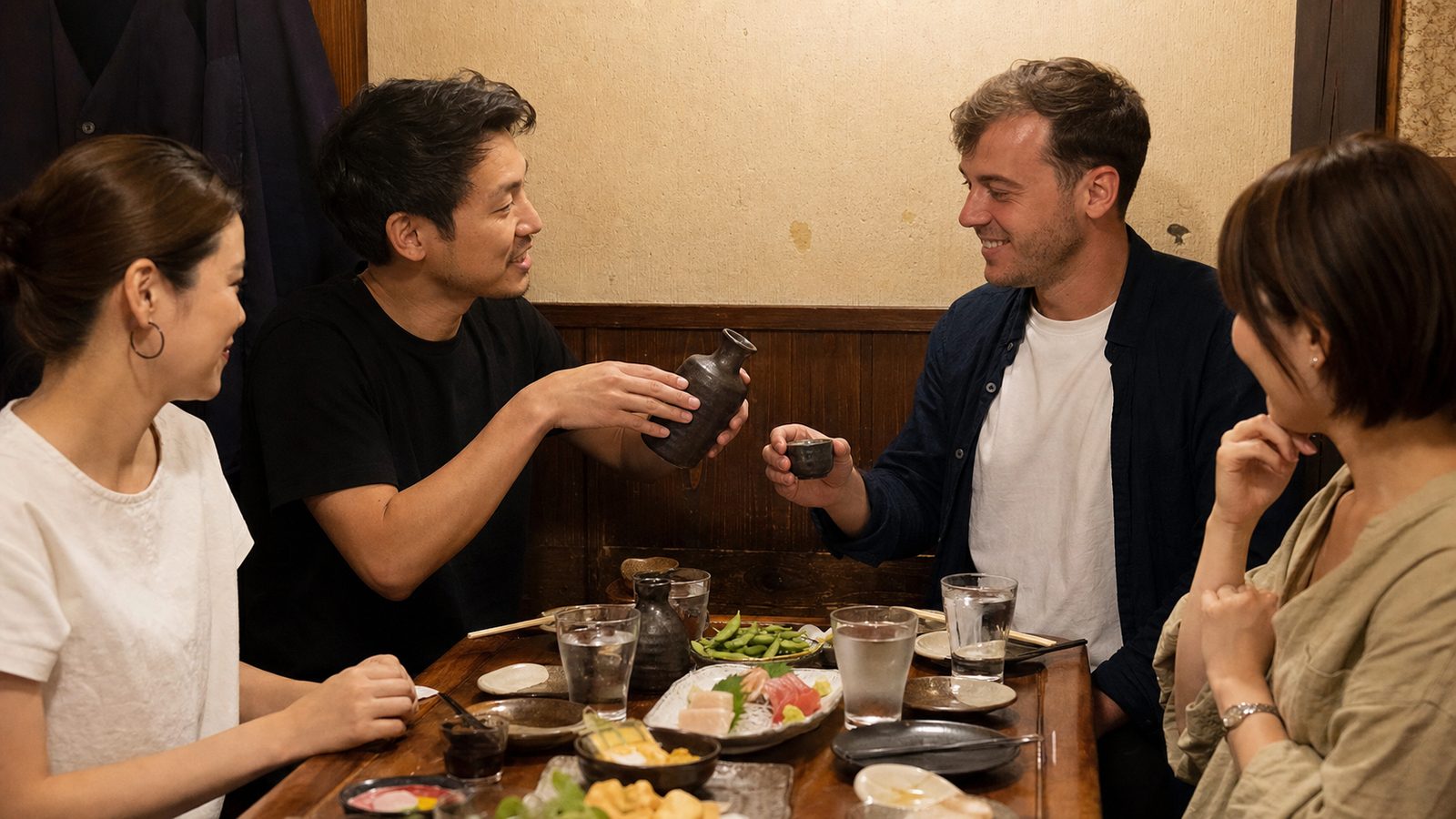
JSS states that casual sake drinking does not have strict rules. Consideration matters more than performing a ceremony.
Pouring for other people
Offering to pour for a companion is polite in a group. Ask before topping up; a nearly empty cup does not mean the person wants more. In a formal business setting, people may use both hands when pouring and receiving. At a casual dinner, copying the pace of your group is sufficient.
You can pour your own drink when needed. Treat the instruction that diners should not pour for themselves as formal etiquette guidance, not as a reason to feel anxious at an informal table.
Kanpai does not mean you must finish the cup
Kanpai is the Japanese toast. Although the literal characters suggest an empty cup, JSS explicitly says people are not expected to finish the drink in one gulp. Take a sip at your own pace.
You may decline a refill
Leave some drink in the cup, place a hand lightly over it, or say:
Daijōbu desu, arigatō gozaimasu.
I am fine, thank you.
Do not pressure another person to drink. A non-alcoholic drink is compatible with the social ritual of a toast.
Age and alcohol strength
Japan prohibits alcohol consumption by people under 20. Standard sake is often around 15% alcohol, and some products are higher or lower. Check the label, drink water, eat, and stop when you choose. This guide does not provide a medically “safe” amount because alcohol risk varies by person and circumstance.
What can go wrong—and your Plan B
The menu is entirely in Japanese
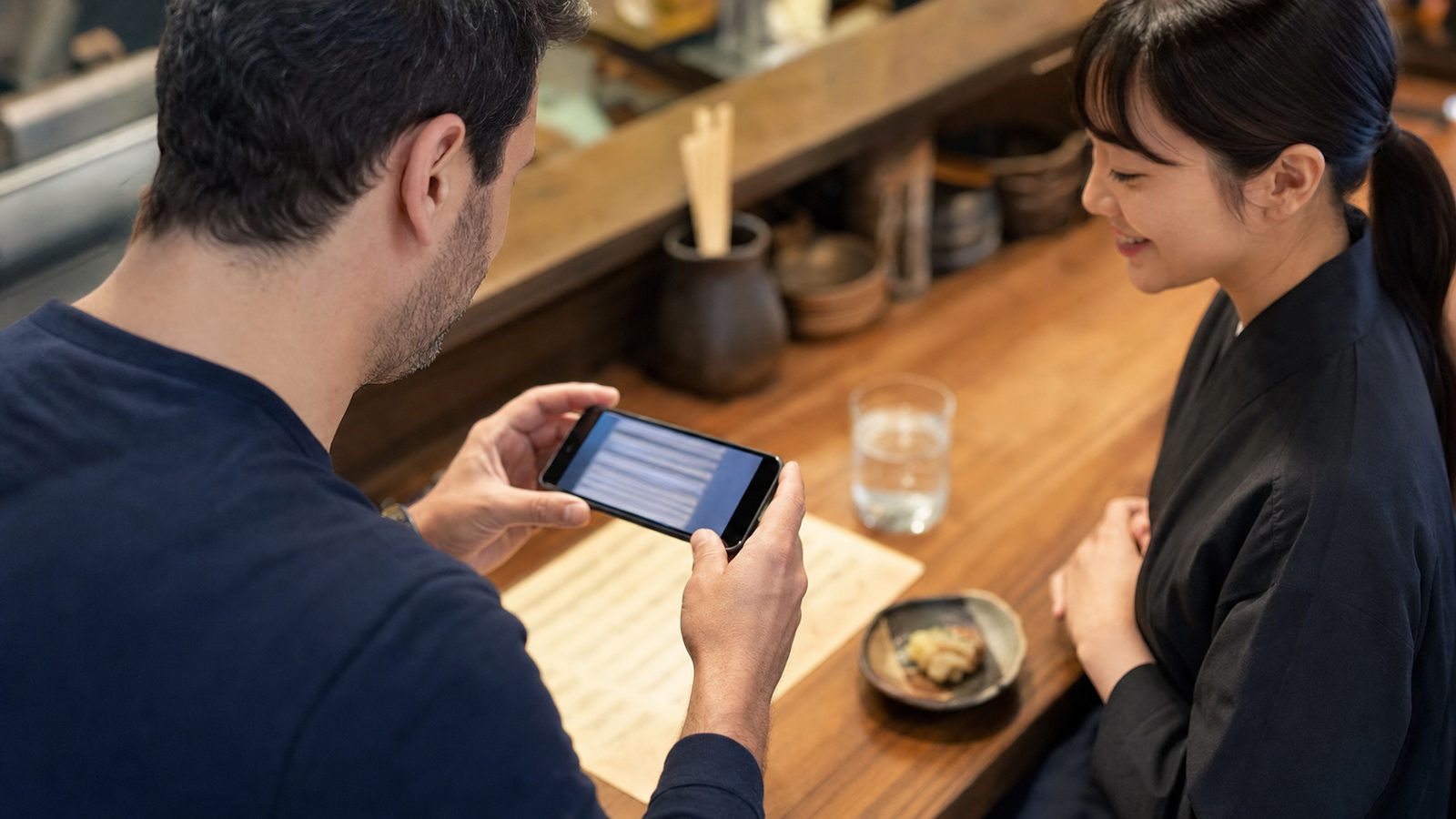
Before photographing the relevant section, check that the restaurant permits it. Then use your phone’s translation tool while keeping the original text visible, because brand names and brewing terms can be mistranslated. The simplest fallback is to point to 日本酒 and ask for the staff recommendation.
The server asks a question you do not understand
The likely questions are size, temperature, or whether you want a carafe or glass. Show this line:
Hajimete desu. Ippai, osusume no ondo de onegaishimasu.
It is my first time. One glass, at the recommended temperature, please.
The sake you chose is sold out
Ask for something similar rather than selecting a random high price:
Kore ni nita osusume wa arimasu ka?
Do you have a similar recommendation?
Warm service is unavailable
Some restaurants offer a limited set of labels for warming. Choose the house warm sake, accept the recommended temperature for your original label, or order a different drink. Do not ask staff to heat a bottle against the producer or venue guidance.
You cannot tell whether the price is per glass or bottle
Point to the amount and ask ippai desu ka? (Is this one glass?) or bin desu ka? (Is this a bottle?). A 720 ml bottle is much larger than a tasting pour and can change the cost and alcohol intake for the table.
Your group has mixed drinking preferences
Order one tasting set for eligible drinkers who want it, if sharing is permitted, and separate non-alcoholic drinks for the rest of the group. Confirm whether the tasting set is intended for one person. Water and food should remain part of the plan.
The restaurant is full or the sake list is too specialized
Use our Tokyo Restaurant Plan B guide to find a lower-friction meal, or read the Tokyo restaurant reservation guide before choosing a sake-focused venue. If you want sake as part of a dinner cruise, the Tokyo yakatabune guide explains how to check whether a drink plan includes it.
Where beginners can try a tasting flight in Tokyo
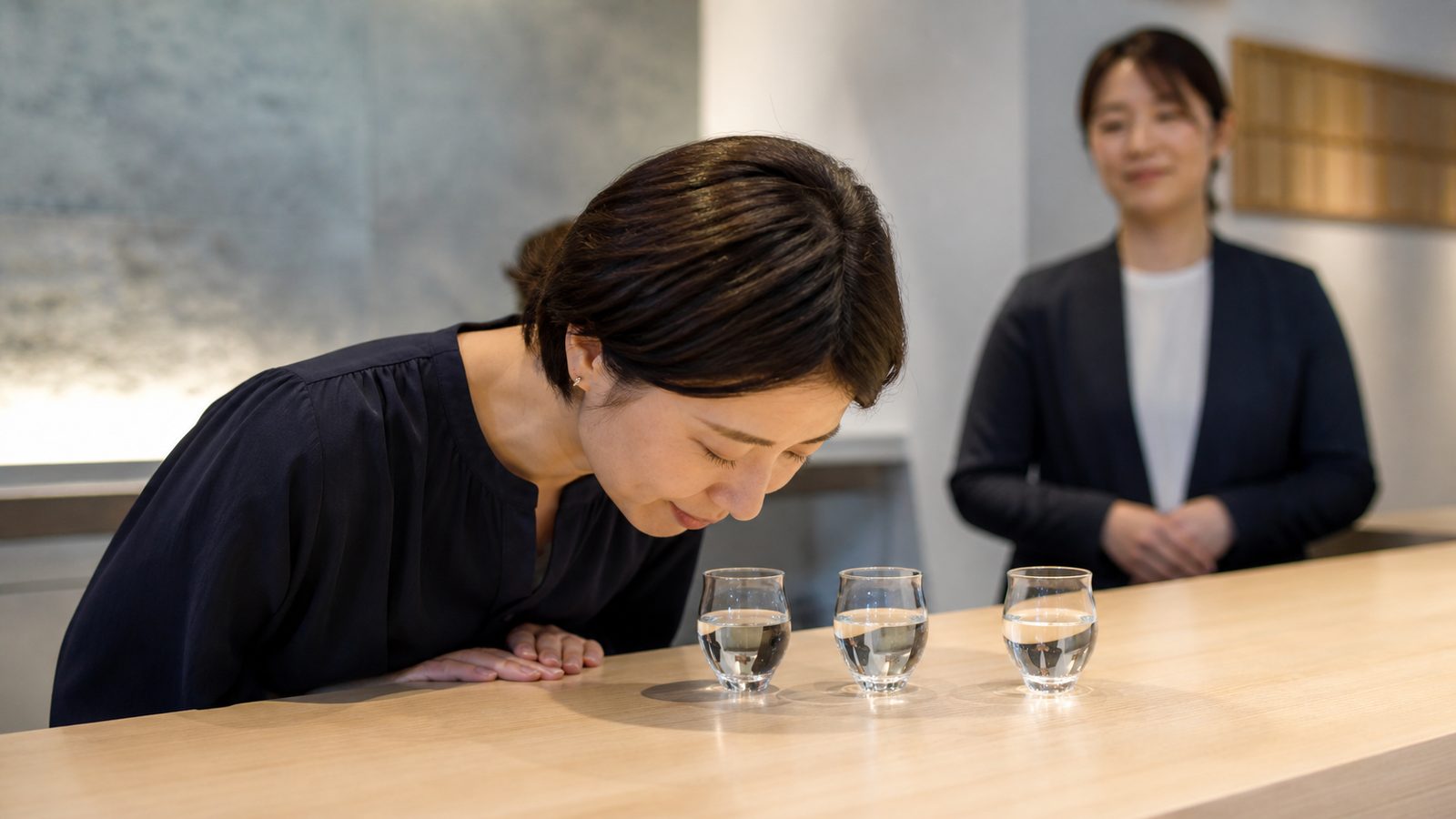
The Japan Sake and Shochu Information Center in Nishishinbashi is a practical starting point because it is operated by JSS rather than a single brewery. As checked on July 19, 2026, the official page lists:
- weekdays from 10:00 a.m. to 6:00 p.m.;
- closure on weekends;
- free admission;
- around 50 sake, shochu, and awamori items at the tasting bar;
- samples from ¥100 per cup;
- three-item tasting sets; and
- English, Chinese, Korean, and Japanese learning tablets.
The lineup changes. Check the official page shortly before visiting, especially around Japanese public holidays. Groups of ten or more are asked to contact the center in advance.
A tasting flight is useful because it lets you compare small samples before committing to a glass, carafe, or bottle. Use one comparison question—fruity versus grain-led, chilled versus room temperature, or junmai versus ginjo—rather than trying to memorize each brand.
Frequently asked questions
What should I call Japanese sake in Japan?
Use nihonshu when you want to be precise. The Japanese word sake can refer broadly to alcohol, while nihonshu identifies Japanese rice sake.
Should a beginner order sake hot or cold?
Neither temperature is the universal beginner choice. Chilled ginjo-style sake is a useful start for fruit-led aromas, while warmed sake can emphasize sweetness, umami, and grain notes. Ask how the restaurant recommends serving the current label.
How much is one go of sake?
One go is 180 ml. A glass or tokkuri does not necessarily contain one go, so confirm the menu’s stated volume.
What is the difference between junmai and ginjo?
Junmai indicates that brewing alcohol was not added. Ginjo describes a regulated brewing style and rice-polishing threshold. They are not opposite categories: junmai ginjo combines both terms.
Does a positive Sake Meter Value mean the sake will taste dry?
A positive SMV can point toward a drier direction, but acidity, aroma, umami, temperature, and food affect the perceived taste. Use SMV as one clue rather than a guarantee.
Do I have to pour sake for other people?
Offering to pour is polite, particularly in a group or formal setting, but JSS says casual sake drinking has no strict rules. Ask before refilling another person’s cup.
Do I have to finish sake after saying kanpai?
No. JSS says a toast does not require drinking the entire cup. Sip at your own pace and decline refills when you want to stop.
What is the legal drinking age in Japan?
Alcohol consumption is prohibited for people under 20 in Japan. Restaurants and retailers may ask for age identification.
Official sources checked
- JSS: The Basic Guide to Japanese Sake
- JSS: How to Serve Sake
- JSS: Sake Cups and Vessels
- JSS: Basic Sake Etiquette
- JSS: How to Read Sake Bottle Labels
- JSS: Japan Sake and Shochu Information Center
- JNTO: Sake 101
- National Tax Agency: Components of Japanese Sake
- National Tax Agency: Under-20 alcohol labeling and prevention
Comments