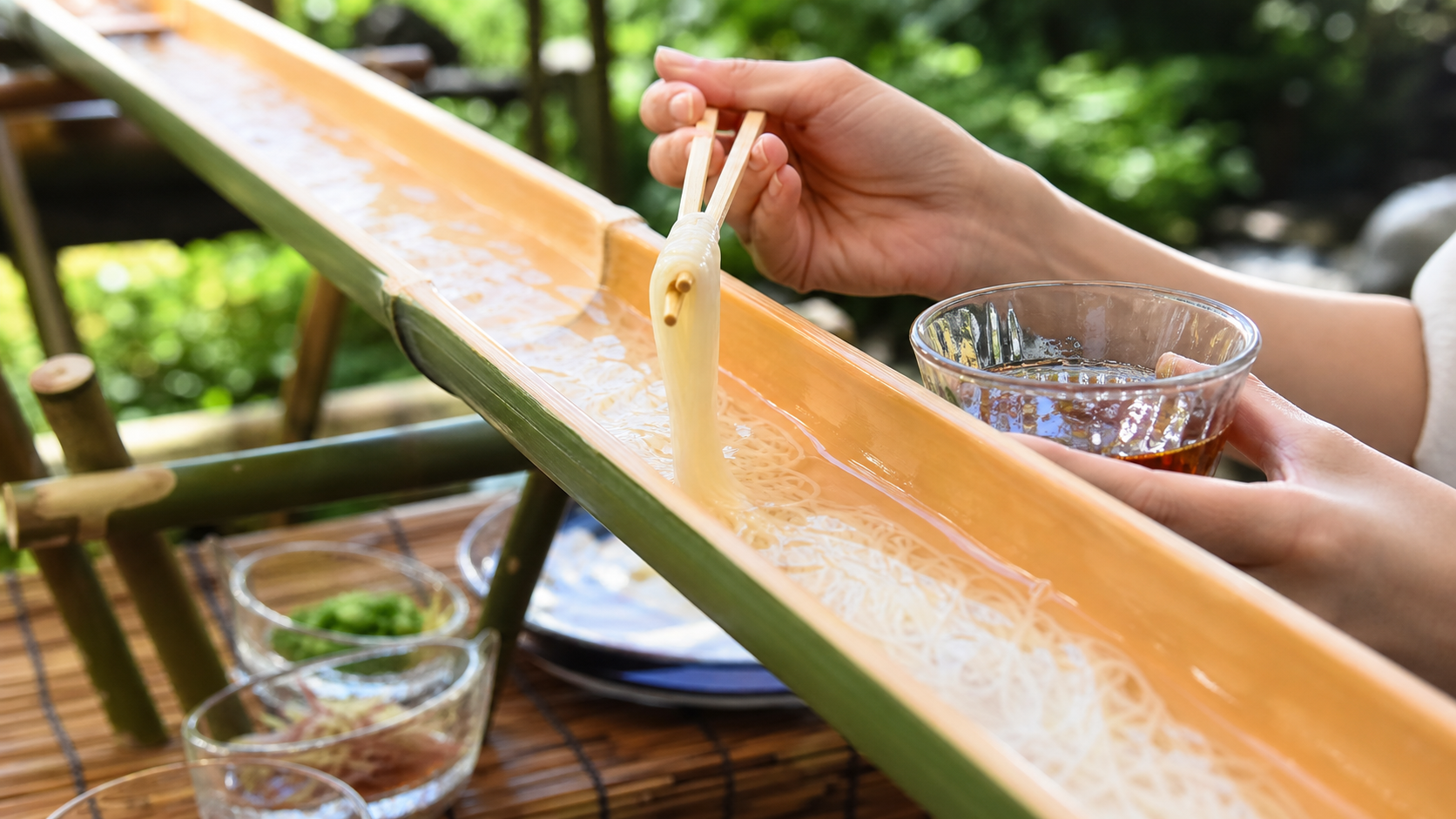
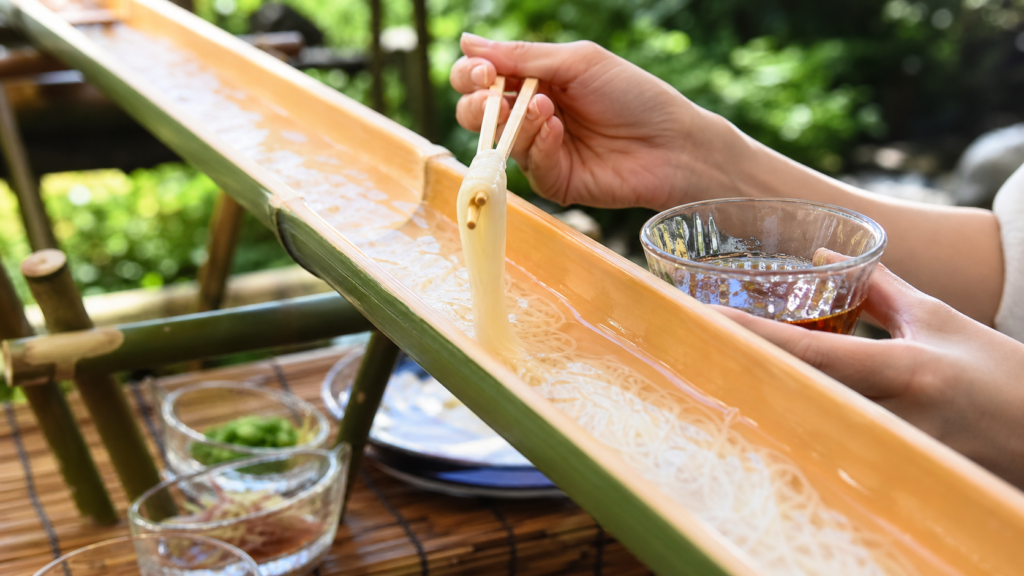
Nagashi somen is one of those Japanese summer experiences that sounds simple until you actually try it: cold, thin noodles flowing down a bamboo-style lane, everyone leaning in with chopsticks, and a bowl of chilled dipping sauce waiting in your hand.
For visitors in Tokyo, the catch is that reliable nagashi somen is not easy to find across the city. It is often seasonal, reservation based, and located at farms, riverside inns, barbecue sites, or countryside restaurants.
This guide focuses on places near Tokyo that are realistic for a summer trip in 2026, based on official venue information checked on July 10, 2026. Use it as a shortlist, then confirm the latest date, price, and reservation rules on the official site before you go.
- Quick Answer: Best Nagashi Somen Spots Near Tokyo
- What Is Nagashi Somen?
- How To Choose A Nagashi Somen Place Near Tokyo
- 1. Choseikan Nagatoro Nagashi Somen: Best Scenic First Timer
- 2. Bongo Villa: Best For A Casual Group Or Barbecue Day
- 3. Komatsuzawa Leisure Farm: Best Family Activity Day
- 4. Kawazakana Gourmet Kuruma: Best Countryside Food Trip
- Booking Without Japanese Stress
- Etiquette And Hygiene Tips
- Allergy, Vegetarian, Vegan, And Halal Notes
- What To Bring In Summer
- Plan B: Rain, Crowds, Sold Out, Or No Reservation
- FAQ
- Final Thoughts
Quick Answer: Best Nagashi Somen Spots Near Tokyo
If you want the shortest version, choose by trip style.
Official venue pages: Choseikan Nagatoro Nagashi Somen / Bongo Villa / Komatsuzawa Leisure Farm / Kawazakana Gourmet Kuruma.
Best for: Scenic first timer / Place: Choseikan Nagatoro Nagashi Somen / Area: Nagatoro, Saitama / Why it works: A clear tourist-friendly option with online booking, riverside sightseeing nearby, and official 2026 pricing listed.
Best for: Friends or barbecue group / Place: Bongo Villa / Area: Yachiyo, Chiba / Why it works: A casual barbecue-style site where nagashi somen can be reserved as a group activity.
Best for: Families with children / Place: Komatsuzawa Leisure Farm / Area: Yokoze / Chichibu, Saitama / Why it works: A farm activity day with summer family plans, fruit picking, fishing, and a private nagashi somen table option.
Best for: Countryside food trip / Place: Kawazakana Gourmet Kuruma / Area: Shibukawa, Gunma / Why it works: A spring-water and river-fish restaurant where nagashi somen is part of a rural summer meal.
My practical pick for many visitors is Choseikan in Nagatoro. It is not the closest place to central Tokyo, but the booking flow is clearer than many small seasonal venues, and the trip feels like a real summer outing rather than just a lunch stop.
If you are traveling with kids, Komatsuzawa Leisure Farm is easier to turn into a full day. If you are going with a group of friends, Bongo Villa gives you a more casual, barbecue-like setup. Kuruma is the most countryside-flavored option, but it needs more planning.
What Is Nagashi Somen?
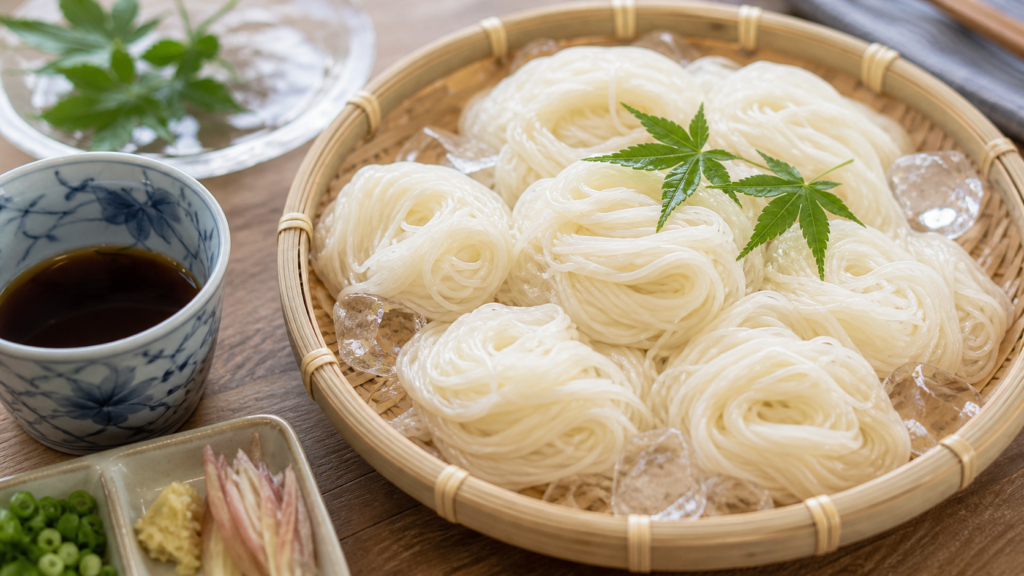
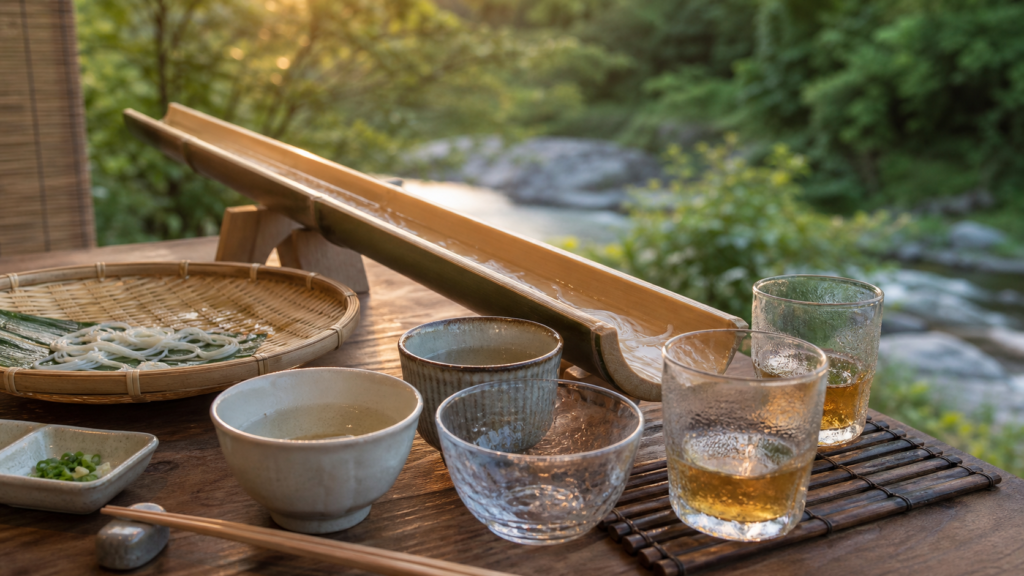
Nagashi somen means “flowing somen.” Somen are very thin wheat noodles, often served cold in summer. In a nagashi somen setup, the noodles flow down a long bamboo-style channel or machine lane with running water, and diners catch them with chopsticks.
You then dip the noodles into a small cup or bowl of chilled tsuyu sauce. The sauce is commonly soy-sauce based and often contains fish-based dashi, so vegetarian, vegan, halal, and allergy-sensitive travelers should not assume it is safe without asking.
The appeal goes beyond flavor. Nagashi somen is about the feeling: cold noodles, moving water, shared laughter, and the slight panic of trying not to miss your next bite.
For a broader summer food plan, pair this guide with our Tokyo shaved ice guide or Japan summer cooling items guide.
How To Choose A Nagashi Somen Place Near Tokyo
There are four things to check before choosing a spot.
First, decide between convenience and atmosphere. The more atmospheric places are often outside central Tokyo, in river or farm areas. The easiest lunch may not be the most atmospheric.
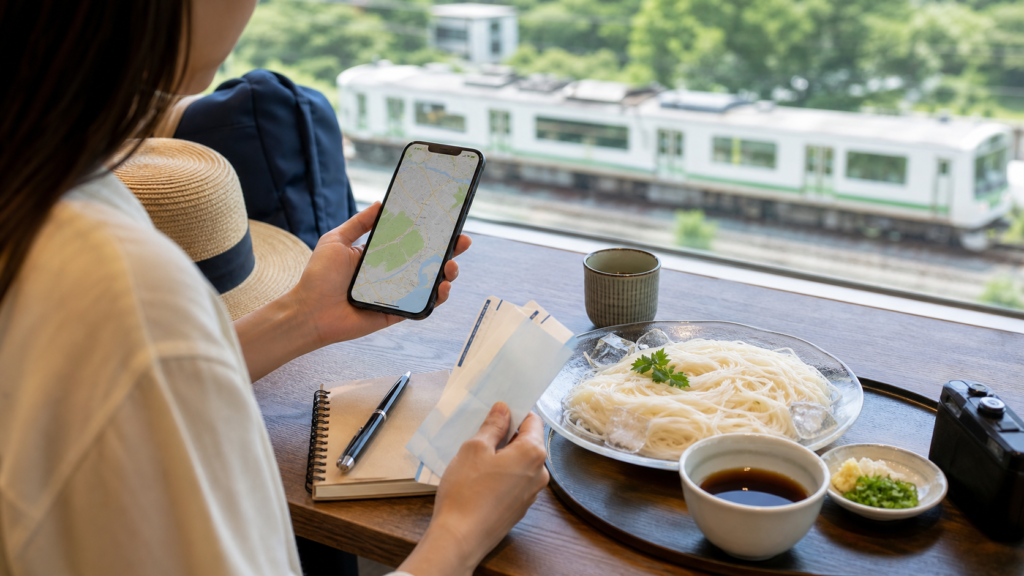
Second, check the reservation rule. Some venues require phone reservations, some use online booking, and some offer nagashi somen as part of a larger meal or activity set.
Third, check the food format. Some places use a fixed-time refill style. Others sell somen by serving, or attach it to a barbecue, fish, or farm activity plan.
Fourth, check the heat and weather plan. Nagashi somen is a summer activity, which also means strong sun, sudden rain, and crowded weekends. Read our Japan heat survival guide if you are visiting in July or August.
1. Choseikan Nagatoro Nagashi Somen: Best Scenic First Timer
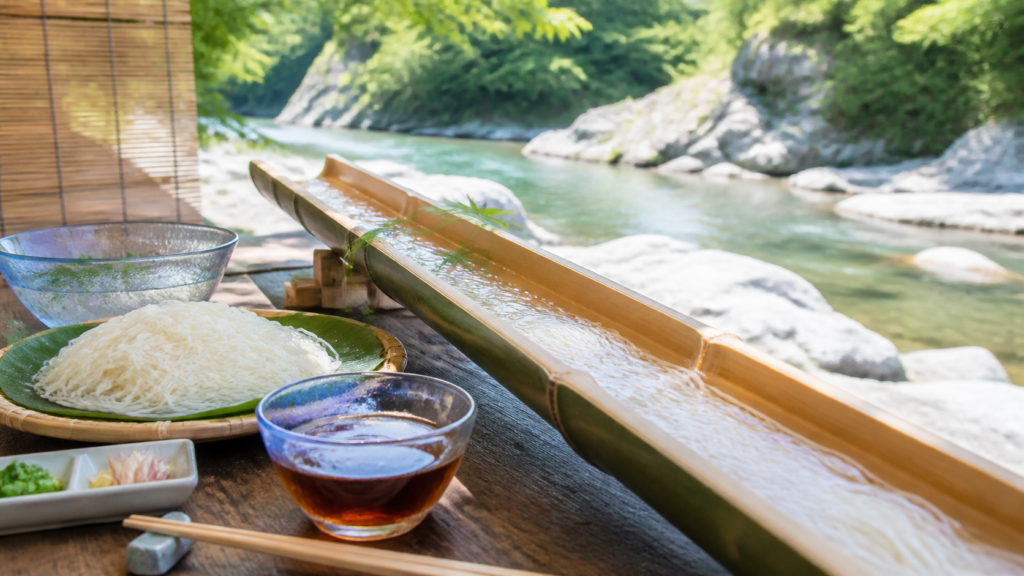
Choseikan is a long-established inn in Nagatoro, Saitama, and its nagashi somen setup is one of the clearest options for visitors planning from Tokyo. The official nagashi somen site states that the 2026 season started on March 20, 2026, and online booking is available.
The official 2026 page lists a 45 minute refill-style format, with adults and middle school students at JPY 2,000, elementary and preschool children at JPY 1,000, and children aged two and under free. Side orders are available separately.
The reason to choose Choseikan is the setting. Nagatoro is known for river scenery and the Iwadatami rock area, so the day can feel like a small escape from Tokyo: noodles, water, greenery, and a walk by the river.
This is the best fit if you want a photogenic day trip and a relatively easy booking route. It is less ideal if you want a quick meal between Tokyo sightseeing stops.
Good fit: Couples, first-time visitors, small groups, travelers who want one strong summer memory.
Check before going: Book online if available for your date, confirm the operating hours, and build in time for the train trip.
Watch the experience: See Nagatoro nagashi somen in motion on our Instagram Reel.
2. Bongo Villa: Best For A Casual Group Or Barbecue Day
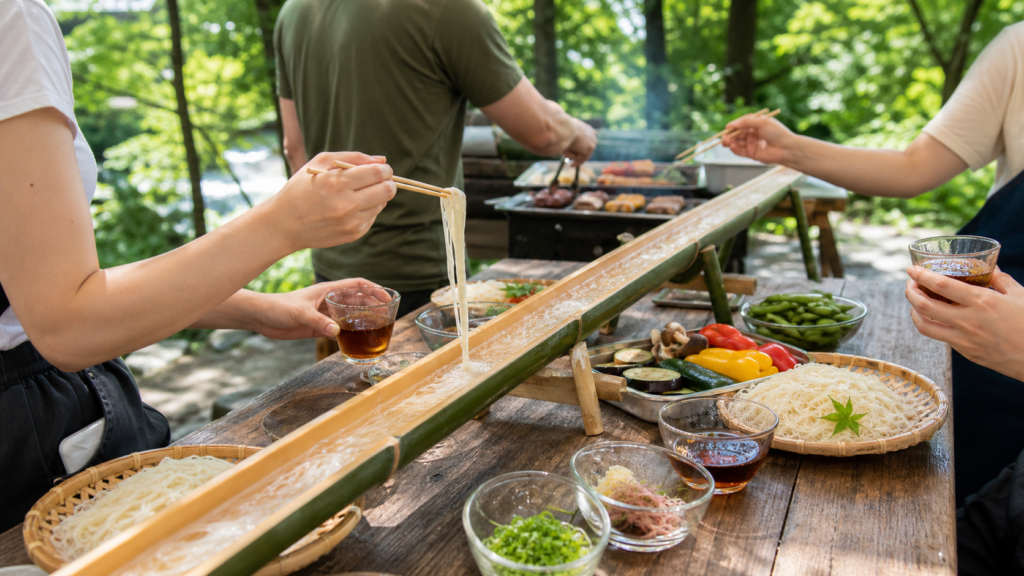
Bongo Villa in Yachiyo, Chiba, is a more casual group-oriented option. The official site describes nagashi somen as a famous activity there and says it requires a reservation. It also states that nagashi somen starts from three servings.
The official menu lists boiled fresh nagashi somen at JPY 500 per serving, with one serving equal to two bundles of somen. The site also notes separate group conditions, including a minimum adult fee rule, so do not treat the somen price alone as your total budget.
The atmosphere is closer to an outdoor leisure or barbecue day than a traditional restaurant visit. That makes Bongo Villa a good pick for friends, families, or groups who want to eat, relax, and make the activity part of a longer hangout.
Access is not the same as stepping out of a central Tokyo station. The official site gives directions from Katsutadai Station by bus, so check the bus route and return schedule before committing.
Good fit: Groups of three or more, barbecue plans, friends who want a relaxed summer activity.
Check before going: Reservation rules, minimum fees, weather policy, and how you will get back to the station.
3. Komatsuzawa Leisure Farm: Best Family Activity Day
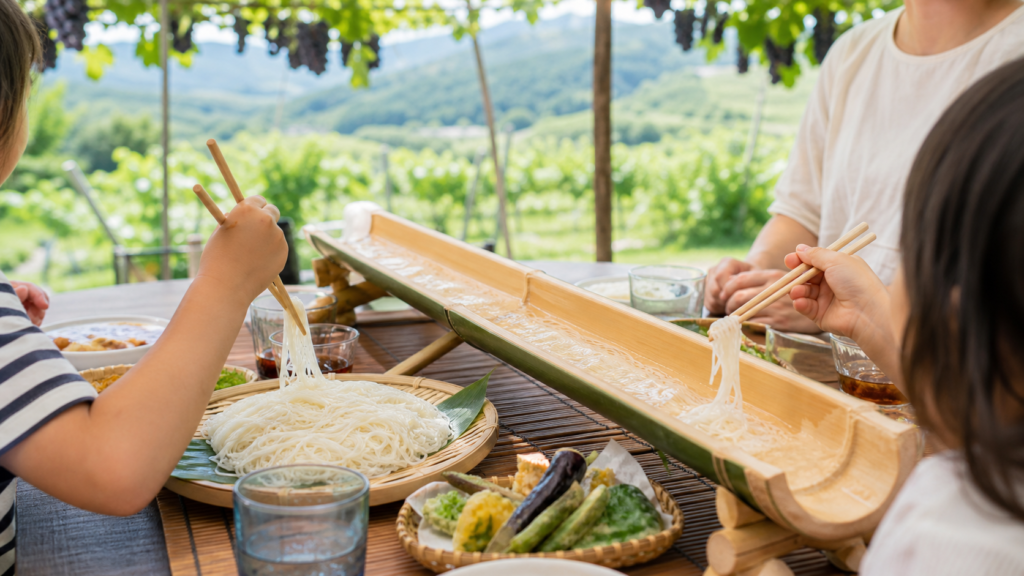
Komatsuzawa Leisure Farm is in the Yokoze and Chichibu area of Saitama. This is not just a noodle stop. It is a farm leisure destination with activities such as fruit picking, mushroom-related meals, and family-oriented seasonal plans.
For 2026, the official meal page lists a summer family set from early July to late August. It also says guests can change the rice and mushroom soup portion to a private 30 minute refill-style nagashi somen table, subject to the plan conditions and seat availability.
This makes Komatsuzawa a strong option for families because the noodles are not the sole attraction. If children get tired, there are other activities around the visit. If the adults want a fuller day, Chichibu also has enough sightseeing potential to justify the travel time.
The important point is that nagashi somen here is tied to the summer family set, not a standalone walk-in bowl. Read the official plan carefully before booking, especially the add-on fees, table fee, time slots, and maximum group size per table.
Good fit: Families, children, travelers who want farm activities plus lunch.
Check before going: The summer family set details, reservation window, activity availability, and what happens in bad weather.
4. Kawazakana Gourmet Kuruma: Best Countryside Food Trip
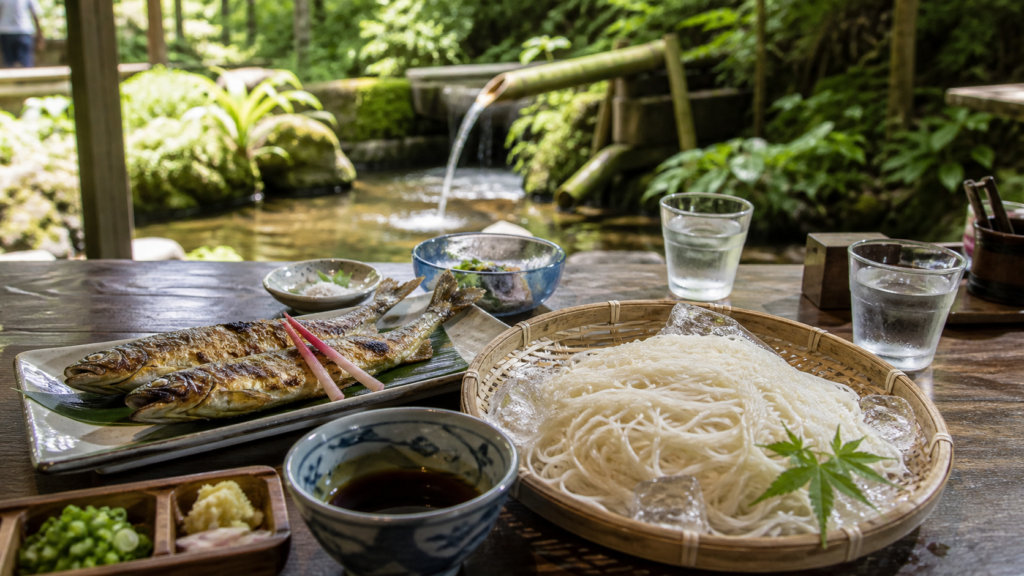
Kawazakana Gourmet Kuruma is in Shibukawa, Gunma. Compared with the other options in this guide, it feels more like a countryside food trip than a Tokyo-area convenience choice.
The official site emphasizes river fish and spring water, and lists nagashi somen as part of the facility. For summer 2026, the site says reservations are accepted for weekends, holidays, and the Obon period from July 18 through September, with phone booking by three days before the visit.
The official page also explains a weekday system from June to September: on weekdays, nagashi somen may be available on a first-come basis when ordering fish, while supplies last. The same official page notes that cash payment is required and outside food is not allowed.
This is the choice for travelers who want something rural, seasonal, and food focused. It is not the first place I would send a visitor who is nervous about transport or phone reservations.
Good fit: Food-curious travelers, countryside day trips, groups who can plan transport carefully.
Check before going: Reservation date rules, phone booking, cash, fish-order conditions, and transport.
Booking Without Japanese Stress

Nagashi somen is a case where “just show up” can fail. Seasonal venues may sell out, close for weather, restrict the number of tables, or require a set meal.
When booking, prepare these details first:
- Date and backup date
- Arrival time
- Number of adults and children
- Whether anyone has a food allergy or dietary restriction
- Whether you need nagashi somen by itself or a full set plan
- Whether you are arriving by train, bus, taxi, or car
If you need to call in Japanese, this simple script may help:
Nagashi somen no yoyaku wa dekimasu ka?
We would like to reserve nagashi somen. Is it available on this date?
Then give the date, time, number of people, and your name. If you are staying at a hotel, asking the front desk to call can be the easiest route.
For restaurant booking habits in Japan more generally, see our Tokyo restaurant Plan B guide and restaurant reservation guide.
Etiquette And Hygiene Tips
Nagashi somen is casual, but it still has rules.
Catch the noodles you plan to eat. Do not touch noodles and let them continue downstream. Do not lean over the lane, splash water, or block other diners. If the venue gives separate chopsticks or instructions, follow them exactly.
Use your own dipping cup, and avoid dipping used chopsticks into shared sauces or ingredients. If children are catching noodles, help them stay on their side of the lane and keep their hands out of the water flow.
The staff may control the pace of the noodles. If you miss a batch, laugh and wait for the next one. That is part of the experience.
Allergy, Vegetarian, Vegan, And Halal Notes
Somen noodles are made from wheat, so they are not gluten free.
The dipping sauce is the bigger issue. Standard tsuyu often contains soy sauce, mirin, and fish-based dashi. That means nagashi somen is not automatically vegetarian, vegan, halal, or safe for people with fish, soy, wheat, or alcohol-related restrictions.
Before booking, ask the venue whether the sauce contains fish-based dashi and whether substitutions are possible. Small seasonal venues may not be able to handle complex dietary requests.
If food restrictions are important for your trip, read our Japan food allergy guide before choosing a venue.
What To Bring In Summer
Even when the noodles are cold, the trip can be hot.
Bring water, a small towel, sunscreen, a portable fan, and insect repellent. If you are traveling with children, bring a change of clothes because water, noodles, and excitement are not a tidy combination.
Carry cash. Kuruma explicitly states that cash payment is required, and smaller seasonal venues may be less predictable than restaurants in central Tokyo.
Also bring patience. Summer weekends can be crowded, buses may be infrequent, and countryside restaurants may move at a slower pace than Tokyo station-area dining.
For more practical packing ideas, use our summer cooling items guide.
Plan B: Rain, Crowds, Sold Out, Or No Reservation
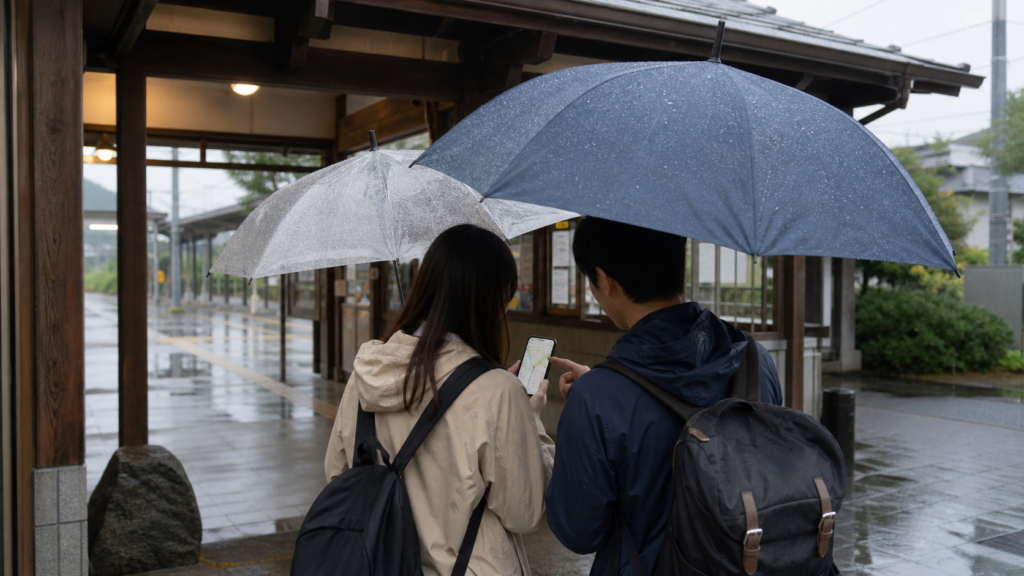
Nagashi somen is a weather-sensitive, seasonal activity. Have a backup before leaving Tokyo.
If the venue cancels or sells out, switch to a nearby indoor meal, shaved ice, a cafe break, or a simpler noodle lunch. Soba, udon, and cold ramen are easier to find than nagashi somen and still feel seasonal.
If you are building a summer itinerary, do not place nagashi somen, a major festival, and a long-distance evening train transfer on the same day. Keep one flexible block.
Useful backup guides:
- Tokyo soba guide
- Tokyo shaved ice guide
- Tokyo matsuri guide
- Japan rain and typhoon plan
FAQ
Is nagashi somen available in central Tokyo?
Sometimes small restaurants, pop-ups, or seasonal events in Tokyo offer nagashi somen, but they can be temporary or hard to verify in advance. For a visitor planning a real summer outing, the confirmed near-Tokyo venues in Saitama, Chiba, and Gunma are more reliable starting points.
What is the best nagashi somen spot near Tokyo for first-time visitors?
Choseikan in Nagatoro is the best first pick for many visitors because the official 2026 page lists online booking, pricing, and a clear refill-style format. The Nagatoro area also gives the trip a scenic summer feeling.
Do I need a reservation?
Often, yes. Bongo Villa says nagashi somen requires a reservation. Choseikan has online booking. Komatsuzawa ties the experience to a summer family set. Kuruma has specific phone reservation rules for weekends, holidays, and Obon. Check the official page before going.
Can children enjoy nagashi somen?
Yes, but choose the venue carefully. Komatsuzawa Leisure Farm is the strongest family activity day because nagashi somen can be combined with farm experiences. Bongo Villa can work for groups, while Choseikan may suit children who can sit and use chopsticks safely.
Is nagashi somen vegetarian or vegan?
Not automatically. The noodles are wheat-based, and the dipping sauce often contains fish-based dashi. Ask the venue before booking if vegetarian, vegan, halal, or allergy-safe food matters for your trip.
How much does nagashi somen cost?
It depends on the venue. Choseikan’s official 2026 page lists JPY 2,000 for adults and middle school students, with a 45 minute refill-style format. Bongo Villa lists JPY 500 per serving but has separate reservation and group conditions. Other venues may attach nagashi somen to a larger set plan.
Can I go alone?
Choseikan is the easiest candidate to check for solo travel because it has an online booking flow. Bongo Villa starts nagashi somen from three servings, and Komatsuzawa and Kuruma are better treated as group or activity trips. Confirm the latest rule directly before planning a solo visit.
What should I wear?
Wear light summer clothes that can handle heat and a little water. Comfortable shoes are important because some venues are outside central Tokyo and may involve bus rides, farm paths, or countryside walking.
What if it rains?
Call or check the official site before traveling. If the venue cancels or the trip feels too risky, switch to a city-based Plan B such as soba, shaved ice, a covered shopping area, or a museum.
Final Thoughts
Nagashi somen is not the easiest Japanese food experience to arrange, and that is exactly why it can feel special. It takes a little planning, a seasonal venue, and often a trip beyond the most obvious Tokyo sightseeing route.
For the smoothest first experience, start with Choseikan in Nagatoro. For a family day, check Komatsuzawa Leisure Farm. For a group barbecue feeling, look at Bongo Villa. For a more rural food trip, consider Kuruma in Gunma.
Whichever you choose, book early, check the official rules, carry cash, and keep a backup plan. Cold noodles taste better when the rest of the day is not falling apart.
Comments