JR Pass Complete Guide 2026: Prices, Routes & How to Buy (Before the Price Hike)
By Yukihiro Hirano / Last updated: 2026-04-18
Planning a trip across Japan and wondering whether the JR Pass is right for you? If you are visiting multiple cities — say Tokyo, Kyoto, Osaka, and Hiroshima — the Japan Rail Pass can save you hundreds of dollars on bullet trains, local lines, and even some ferries. But the rules have changed in recent years, and a price hike is coming in October 2026. This guide breaks down everything you need to know: current prices, how to buy, which trains you can (and cannot) ride, and whether the pass is actually worth it for your itinerary.
Quick answer: The JR Pass is worth it in 2026 if you plan three or more long-distance Shinkansen rides (for example, Tokyo→Kyoto→Hiroshima→Tokyo) within 7 days, or any 14-day multi-region itinerary covering Tohoku, Kyushu or Hokkaido. It is not worth it for a single Tokyo↔Kyoto round trip — buy individual Shinkansen tickets via Smart-EX instead. The 7-day Ordinary Pass currently costs ¥50,000 and rises again in October 2026, so locking it in before the hike saves another 10–20% if your trip fits the first scenario.
Quick Facts
- The JR Pass covers almost all JR trains nationwide, including most Shinkansen lines
- Available in 7-day, 14-day, and 21-day options (Ordinary or Green Car)
- Must be purchased online before arriving in Japan — no walk-in sales
- Prices increase on October 1, 2026 — buying before then locks in current rates
- Valid on Nozomi / Mizuho Shinkansen only with a paid supplement ticket (since October 2023)
- Only available to foreign tourists on a short-stay visa (and Japanese nationals living abroad 10+ years)
- How Much Does the JR Pass Cost in 2026?
- How to Buy the JR Pass (Step-by-Step)
- What Trains and Routes Does the JR Pass Cover?
- Is the JR Pass Worth It for Your Trip?
- Can You Ride the Nozomi and Mizuho Shinkansen?
- How to Reserve Seats with Your JR Pass
- Who Is Eligible for the JR Pass?
- How to Get Maximum Value from Your JR Pass
- Common Mistakes to Avoid
- Frequently Asked Questions
- Can I use the JR Pass on the Tokyo subway?
- Is the Green Car upgrade worth the extra cost?
- Can I get a refund on my JR Pass?
- Do I need to reserve seats, or can I just hop on?
- How far in advance should I buy the JR Pass?
- What happens if I lose my JR Pass?
- Will the JR Pass work on the new Hokuriku Shinkansen extension?
- Related Guides
- FAQ for First-Time Visitors
- Is the JR Pass worth it for a 5-day Tokyo-only trip?
- Can I use the JR Pass on the Tokyo Metro or Toei Subway?
- Where do I buy the JR Pass after the price hike?
- How do I activate the JR Pass at the airport?
- Can I ride the Nozomi or Mizuho with a regular JR Pass?
- What if I lose my JR Pass?
- Can I refund an unused JR Pass?
How Much Does the JR Pass Cost in 2026?
The Japan Rail Pass comes in two classes — Ordinary and Green Car (first class) — each offered in three durations. Here are the current prices, valid through September 30, 2026:
| Type | 7-Day | 14-Day | 21-Day |
|---|---|---|---|
| Ordinary | ¥50,000 | ¥80,000 | ¥100,000 |
| Green Car | ¥70,000 | ¥110,000 | ¥140,000 |
Children aged 6-11 pay exactly half price. Kids under 6 ride free as long as they do not occupy their own reserved seat — if you want a guaranteed reserved seat for a young child, buy a half-price child pass.
October 2026 Price Increase
Starting October 1, 2026, prices go up across every duration:
| Type | 7-Day (new) | 14-Day (new) | 21-Day (new) |
|---|---|---|---|
| Ordinary | ¥50,000 → ¥53,000 | ¥80,000 → ¥84,000 | ¥100,000 → ¥105,000 |
| Green Car | ¥70,000 → ¥74,000 | ¥110,000 → ¥116,000 | ¥140,000 → ¥147,000 |
Important nuance: This hike applies to passes sold through overseas travel agencies (JTB, HIS, Klook, etc.). The JR Group has announced that passes purchased directly through the official JAPAN RAIL PASS Reservation site (japanrailpass.net) are planned to keep the current rates for a limited period to encourage direct sales. If you are flexible on the vendor, the official site is likely to be the cheapest route after October — always confirm the latest pricing on the official site before buying. Your Exchange Order is valid for three months after issue, so purchasing before October also locks in the current rate.
How to Buy the JR Pass (Step-by-Step)
You must purchase the nationwide JR Pass online before you arrive in Japan. In-person sales at JR station ticket offices inside Japan were discontinued, so walking up to a counter at Narita or Tokyo Station and asking for a JR Pass will no longer work. Here is how to buy online:
- Choose your vendor — Buy through the official JR Pass website or a recognized travel agency (JTB, HIS, JALPAK, etc.).
- Select your pass type — Pick Ordinary or Green Car, and your duration (7, 14, or 21 days).
- Complete payment — You will receive an Exchange Order (a voucher) by email or physical mail.
- Fly to Japan — Bring the Exchange Order and your passport.
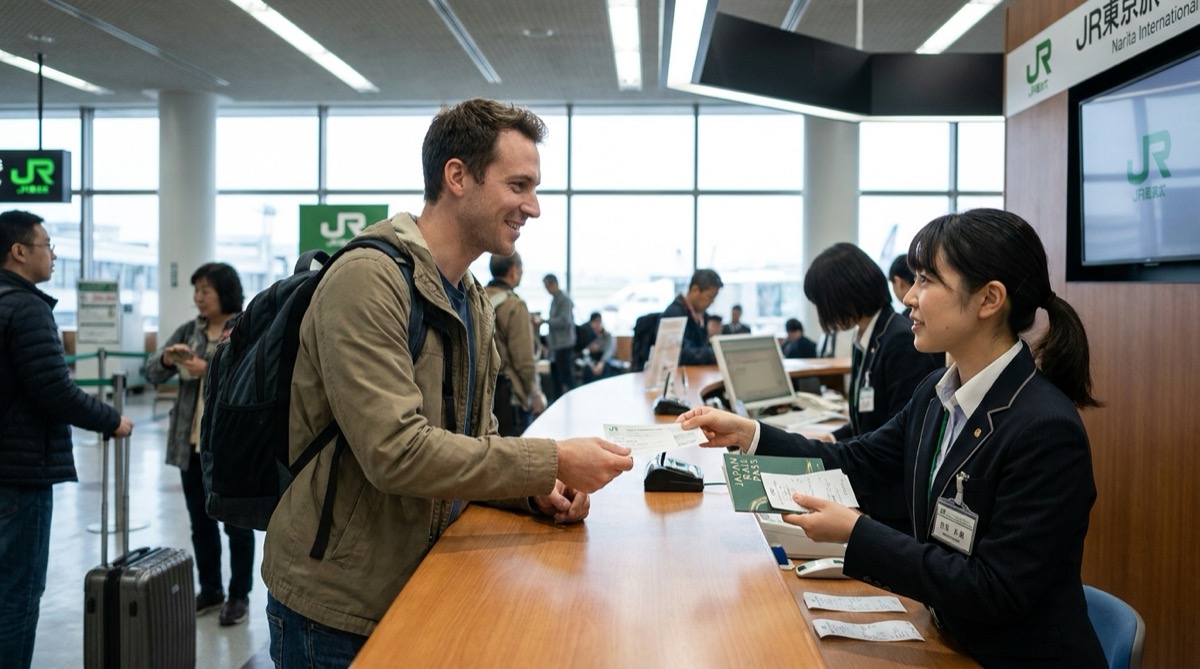
- Visit a JR Exchange Office — Found at major airports (Narita, Haneda, Kansai) and large JR stations. Present your Exchange Order and passport with the short-stay visa stamp.
- Set your start date — You do not have to activate the pass on the day you exchange it. You can choose any start date within 30 days of the exchange.
Important: Your Exchange Order expires 3 months from the date of issue. Plan accordingly.
What Trains and Routes Does the JR Pass Cover?
The JR Pass gives you access to an enormous network. Covered services include:
- Shinkansen (bullet trains) — Hikari, Sakura, Kodama, Tsubame, Hayabusa, Komachi, and more
- JR limited express trains — Thunderbird, Haruka, Azusa, and others
- JR local and rapid trains — Virtually every JR commuter line across the country
- JR buses — Select highway and local bus routes operated by JR companies
- JR ferry — The Miyajima ferry to Itsukushima Shrine (Hiroshima area)
- Tokyo Monorail — Haneda Airport to central Tokyo
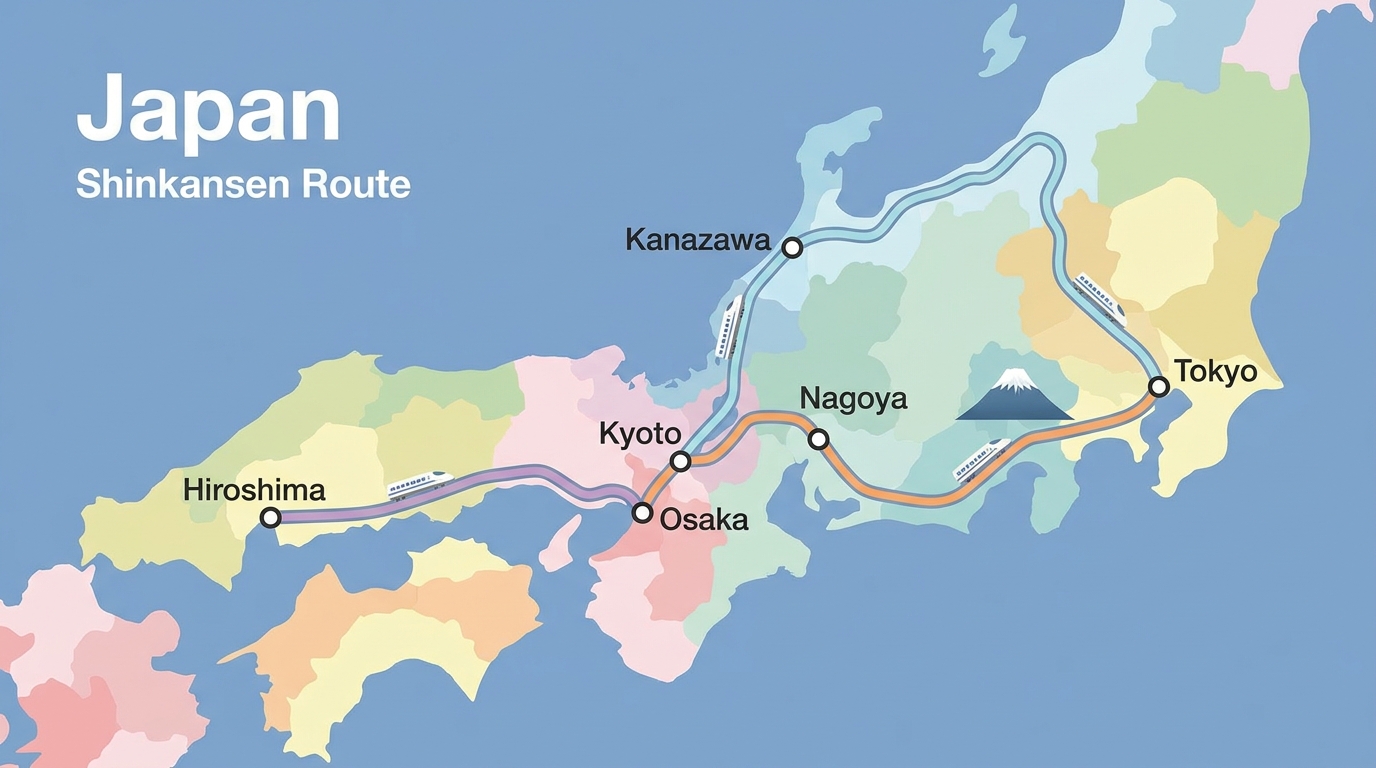
This effectively covers travel between every major city: Tokyo, Yokohama, Nagoya, Kyoto, Osaka, Hiroshima, Fukuoka, Sapporo, Sendai, and everywhere in between.
What the JR Pass Does NOT Cover
- Non-JR private railways — Kintetsu, Odakyu, Hankyu, Tobu, and other private lines
- Subways — Tokyo Metro, Osaka Metro, and other municipal systems
- Nozomi and Mizuho Shinkansen — Require a paid supplement ticket (see below)
Is the JR Pass Worth It for Your Trip?
Yes, if you are traveling between two or more major cities. A single round-trip Tokyo-Kyoto ticket on the Hikari Shinkansen costs roughly ¥27,000. Add a day trip to Hiroshima or a side trip to Kanazawa and you have already exceeded the ¥50,000 seven-day pass price.
Here is a quick comparison for common itineraries:
| Itinerary (7 days) | Individual Tickets (approx.) | 7-Day Ordinary Pass |
|---|---|---|
| Tokyo → Kyoto → Tokyo | ~¥27,000 | ¥50,000 |
| Tokyo → Kyoto → Hiroshima → Osaka → Tokyo | ~¥55,000 | ¥50,000 |
| Tokyo → Kanazawa → Kyoto → Osaka → Hiroshima → Tokyo | ~¥70,000+ | ¥50,000 |
| Tokyo only (day trips to Kamakura, Nikko) | ~¥10,000 | ¥50,000 |
Rule of thumb: If you plan to take at least two long-distance Shinkansen rides, the 7-day pass almost certainly pays for itself. If you are staying in a single city, it probably does not.
Can You Ride the Nozomi and Mizuho Shinkansen?
Yes — since October 2023, JR Pass holders can board them by adding a supplementary ticket. The Nozomi (Tokaido/Sanyo Shinkansen) and Mizuho (Sanyo/Kyushu Shinkansen) are the fastest services on their respective lines. You can buy a dedicated NOZOMI・MIZUHO Ticket at any JR ticket counter or ticket machine, and it stacks on top of your JR Pass.
As a rough guide, the Tokyo-to-Kyoto Nozomi supplement is around ¥4,960. Compared with the 20-25 minutes of travel time you save versus a Hikari, most travelers decide the supplement is not worth it — but the option is there when you are rushing to make a connection or pressed for time.
What Covers What — Hikari vs. Sakura
These two free-of-charge services fill in for Nozomi and Mizuho, but they do not run on the same lines:
- Hikari — operates on the Tokaido/Sanyo Shinkansen (Tokyo ↔ Shin-Osaka ↔ Hakata). This is the free alternative to the Nozomi. Tokyo to Kyoto takes approximately 2h 30m – 2h 50m depending on the specific train, versus about 2h 15m on the Nozomi.
- Sakura — operates on the Sanyo/Kyushu Shinkansen (Shin-Osaka ↔ Kagoshima-Chuo). This is the free alternative to the Mizuho for travel into Kyushu.
- Kodama — the all-stops Tokaido/Sanyo service. Slower, but a useful backup when Hikari seats are full.
Practical tip: Hikari trains depart roughly twice per hour on the Tokaido Shinkansen, and Sakura services run frequently on the Sanyo line. You will rarely wait long.
How to Reserve Seats with Your JR Pass
Once your pass is activated, you can ride freely on unreserved cars by simply walking through the gate. But for guaranteed seating — especially during busy periods — here is how to reserve:
- Visit any JR ticket counter (Midori-no-Madoguchi) at a major station
- Show your JR Pass and tell the staff your desired train, date, and time
- Receive a seat reservation ticket at no extra charge (included with the pass)
- Board the correct reserved car on departure day
You can hold multiple reservations at once. There is no limit on how many free reservations you make during your pass validity.
Peak travel periods when reservations are strongly recommended:
– Golden Week (late April – early May)
– Obon (mid-August)
– New Year (late December – early January)
– Cherry blossom season weekends (late March – mid-April)
Who Is Eligible for the JR Pass?
The Japan Rail Pass is available to two groups:
- Foreign tourists visiting Japan on a short-stay visa (typically 15 or 90 days). This includes citizens of the US, UK, EU, Australia, Canada, and most other countries that receive temporary visitor status on arrival.
- Japanese nationals with permanent residence abroad, who can present documentation proving 10 or more years of permanent residence outside Japan.
You are not eligible if you:
– Hold a work visa, student visa, or any long-term residence permit
– Are a Japanese national living in Japan
– Enter on a visa waiver for purposes other than tourism
Your eligibility is verified at the Exchange Office when you present your passport. The short-stay entry stamp must be visible.
How to Get Maximum Value from Your JR Pass
Getting the most out of your Japan Rail Pass comes down to planning your activation date strategically. Here are proven tips:
- Cluster your long-distance travel days together. If your trip is 14 days but your intercity travel happens in the first 8 days, a 7-day pass activated on day 1 covers most of your big-ticket rides.
- Use the pass for airport transfers. The Narita Express (N’EX) one-way fare is ¥3,140 to Tokyo Station (¥3,330 to Shinjuku/Shibuya/Shinagawa), reflecting JR East’s March 14, 2026 fare revision. Both routes are fully covered by the JR Pass.
- Take day trips. Popular JR-covered day trips from Tokyo include Kamakura, Nikko, and Hakone (partially). From Kyoto: Nara, Himeji, and Hiroshima.
- Ride overnight trains if available. A few overnight services remain, and the base fare is covered by the pass (sleeper supplements are extra).
- Combine with regional passes if needed. If you are only exploring one region (e.g., Kansai), a regional JR pass may be cheaper than the nationwide pass.
Regional Pass Alternatives
If your itinerary is concentrated in one area, consider these instead:
| Regional Pass | Duration | Price (approx.) | Best For |
|---|---|---|---|
| JR EAST PASS (all JR East lines) | 5 or 10 days | ¥35,000 / ¥50,000 | Tokyo + Tohoku + Koshinetsu |
| JR West Kansai Area Pass | 1-4 days | ¥2,800-¥7,000 | Kyoto, Osaka, Nara, Kobe |
| All Kyushu Area Pass | 3 / 5 / 7 days | ¥22,000 / ¥24,000 / ¥26,000 | Fukuoka, Nagasaki, Kagoshima |
| Hokkaido Rail Pass | 5 / 7 / 10 days | ¥22,000 / ¥28,000 / ¥37,000 (pre-purchase) | Sapporo, Hakodate, Asahikawa |
Regional pass prices listed are the pre-purchase (overseas) rate. Buying the same pass at a JR station in Japan typically adds ¥1,000 per pass. The JR EAST PASS listed above is the consolidated “JR EAST PASS (Tohoku area)” introduced in March 2026, replacing the older separate Tohoku and Nagano/Niigata passes. Always confirm the current price on the issuing company’s official site — regional pass rates have been revised multiple times since 2024.
Common Mistakes to Avoid
Even experienced travelers stumble on these points. Save yourself time and money:
- Assuming you can buy it in Japan. Nationwide JR Pass sales at in-Japan station counters have been discontinued. You must purchase online before arriving. Travelers who plan to “just buy it at the airport” will be turned away.
- Boarding a Nozomi or Mizuho without buying a supplement ticket. If you board without first purchasing the NOZOMI・MIZUHO Ticket, station staff will ask you to pay the supplement on board (or in some cases the full fare). Double-check the train name on the departure board, or buy the supplement in advance at any JR ticket counter.
- Activating too early. If you arrive on a Monday but do not need the bullet train until Wednesday, set Wednesday as your start date.
- Forgetting to exchange before the voucher expires. Your Exchange Order is only valid for 3 months from purchase. If you buy in January for an April trip, you are fine. Buying in January for a June trip? Cutting it close.
- Assuming all trains are JR. Major private railways like Kintetsu (Osaka-Nara), Odakyu (Tokyo-Hakone), and Hankyu (Osaka-Kyoto) look similar but are not covered.
Frequently Asked Questions
Can I use the JR Pass on the Tokyo subway?
No. The JR Pass only covers JR-operated lines. Tokyo Metro and Toei Subway are separate systems with their own fares. However, JR does operate the Yamanote Line, Chuo Line, and other commuter lines within Tokyo, which are fully covered by the pass. For many visitors, these JR lines alone provide sufficient coverage of central Tokyo.
Is the Green Car upgrade worth the extra cost?
For most travelers, no. Ordinary cars on the Shinkansen are already comfortable, with generous legroom and reclining seats. Green Car offers wider seats, more legroom, a quieter atmosphere, and sometimes complimentary drinks. If you value premium comfort or are traveling during peak season when Ordinary cars are packed, the upgrade can be worthwhile. The price difference for a 7-day pass is ¥20,000.
Can I get a refund on my JR Pass?
Yes, with conditions. An unused, unexchanged Exchange Order can typically be refunded through the original vendor, minus a handling fee (usually around 10-15%). Once the pass has been activated, no refund is possible. Check your vendor’s specific refund policy before purchasing.
Do I need to reserve seats, or can I just hop on?
You can hop on unreserved cars at any time — no reservation needed. Simply walk through the staffed gate showing your pass. However, seat reservations (free with the pass) guarantee you a specific seat on a specific train. During peak periods like Golden Week or Obon, unreserved cars can be standing-room only. Reserving takes just a few minutes at any JR ticket counter.
How far in advance should I buy the JR Pass?
At least one to two weeks before your trip. Online purchase and delivery of the Exchange Order can take several business days depending on the vendor and your country. Some agencies offer instant e-vouchers, but physical Exchange Orders are more common. Do not leave it to the last minute — and remember the 3-month validity window on the voucher.
What happens if I lose my JR Pass?
It cannot be replaced. A lost or stolen JR Pass is treated the same as cash — there is no reissue. Keep it in a secure but accessible place (many travelers use a passport holder or neck pouch). Some travel insurance policies cover the cost of a lost rail pass, so check your policy before departure.
Will the JR Pass work on the new Hokuriku Shinkansen extension?
Yes. The JR Pass covers all Shinkansen lines operated by JR group companies, including extensions to the Hokuriku Shinkansen. As long as the train is not a Nozomi or Mizuho, your pass is valid. The Hokuriku route (Tokyo to Kanazawa and beyond) uses Kagayaki and Hakutaka services, both of which are fully covered.
Planning your Japan trip? Bookmark this guide — we update it whenever prices or policies change. Safe travels.
Related Guides
Planning your Japan stay? These companion guides cover the other essentials of arriving at and settling into a Japanese vacation rental:
- How to Open a Key Box at Your Japanese Airbnb — the first challenge when you arrive at a self-check-in property.
- Japanese Futon Guide: How to Set Up, Sleep On, and Fold Your Bedding Like a Local — what to do when you open the closet and find no bed.
FAQ for First-Time Visitors
Is the JR Pass worth it for a 5-day Tokyo-only trip?
No. After the October 2026 price hike, the 7-day JR Pass costs around ¥53,000, which is far more than you would spend on Tokyo Metro and JR Yamanote rides over five days. Get a Suica or Welcome Suica instead. The JR Pass only pays off if you take three or more long-distance Shinkansen rides within seven days.
Can I use the JR Pass on the Tokyo Metro or Toei Subway?
No. The JR Pass covers JR-operated trains only. Tokyo Metro and Toei Subway are separate companies and require a Suica, PASMO, or paper ticket. For getting around Tokyo within JR, you can still use the Yamanote Line, Chuo Line, and other JR East lines with the pass.
Where do I buy the JR Pass after the price hike?
You can buy the JR Pass online from official sellers (JR East, JR Central, JR West) or via third-party resellers like Klook and JTB before arriving in Japan. Online purchase before arrival is the same price as the in-Japan exchange counter as of 2026, but saves you queue time at the airport.
How do I activate the JR Pass at the airport?
At Narita or Haneda, go to the JR EAST Travel Service Center. Show your e-ticket QR code and passport with a Temporary Visitor stamp. Activation takes about 10 minutes during off-peak hours. You set the first day of validity at activation, so do not activate it on a day you will not actually ride a Shinkansen.
Can I ride the Nozomi or Mizuho with a regular JR Pass?
No, not without paying a supplement. The standard JR Pass excludes Nozomi (Tokaido/Sanyo) and Mizuho (Sanyo/Kyushu) trains. You can pay an additional supplement of about ¥4,960 one-way for Tokyo to Shin-Osaka. Otherwise, just take the slower Hikari, which is only 17 minutes longer on that route.
What if I lose my JR Pass?
Lost JR Passes are not replaced or refunded. Treat the physical ticket like cash. Photograph both sides immediately after activation, and keep the pass in a passport wallet rather than loose in your bag or pocket.
Can I refund an unused JR Pass?
Yes, but only before activation and only at the original point of purchase. A 10 percent handling fee applies. Once activated, no refunds are possible. If your trip is cancelled, request a refund before redeeming the e-ticket QR code.


Comments