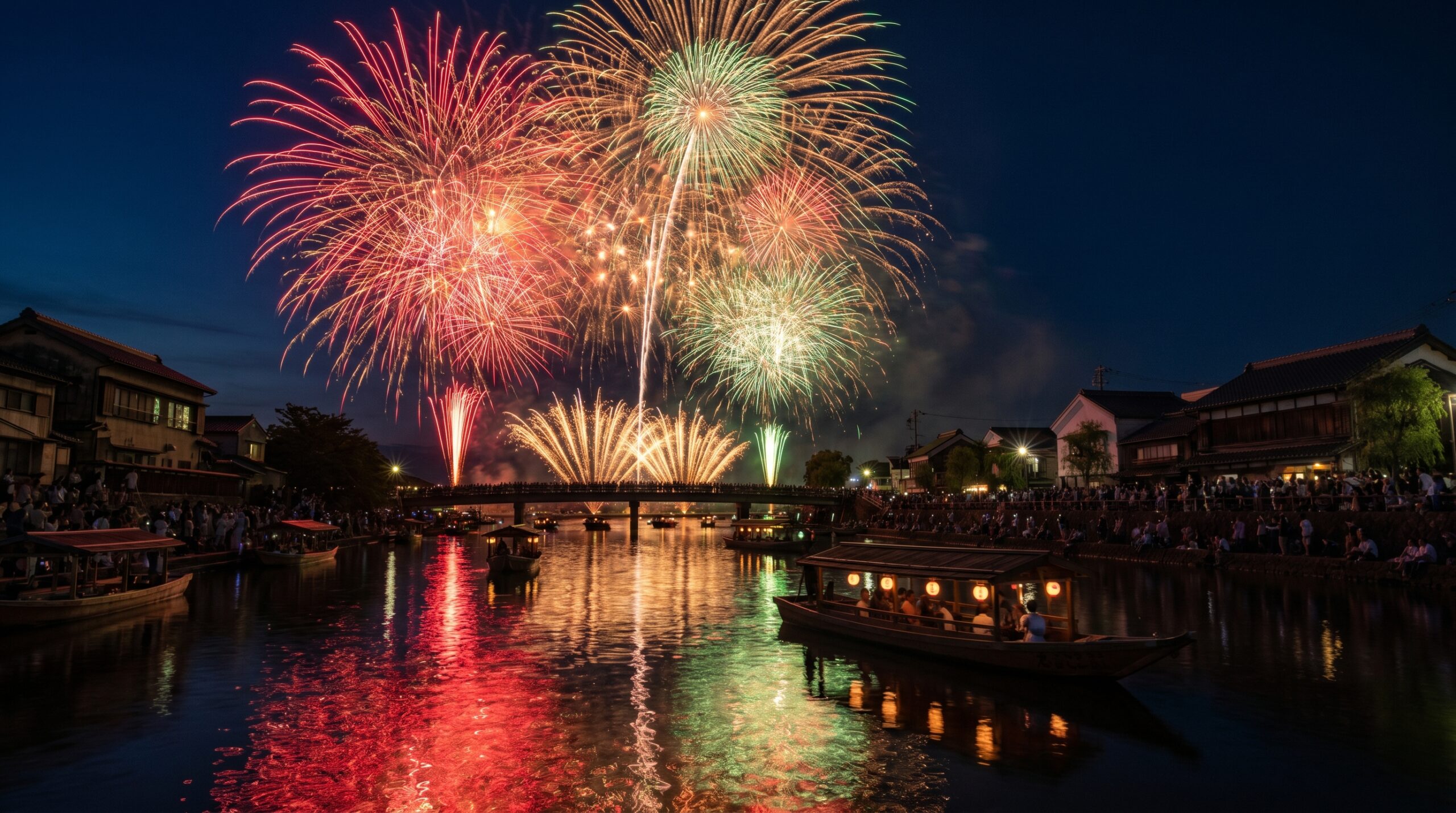
Quick Answer: Japan’s fireworks season (hanabi taikai) runs from late July through August, with a few famous competitions in late summer and autumn. In Tokyo, the biggest is the Sumida River Fireworks on Saturday, July 25, 2026 (about 20,000 shells, near Asakusa), followed by Edogawa and Itabashi on August 1 and the ticketed Jingu Gaien Fireworks on August 8. Nationwide, the three most celebrated are Omagari (Akita, Aug 29), Nagaoka (Niigata, Aug 2–3) and Tsuchiura (Ibaraki, Nov 7). Dates and seating can change, so always confirm on each event’s official site before you travel. Most festivals are free to watch from public riverbanks; the famous ones increasingly sell paid seats.
Few things feel as Japanese as a summer night spent watching hanabi — fireworks — burst over a river while the smell of grilled food drifts from rows of food stalls. If you are visiting Japan between late July and the end of summer, a fireworks festival is one of the easiest ways to step straight into local life. This guide covers what hanabi means, the most famous festivals across the country, Tokyo’s major displays for 2026, and exactly how to enjoy one like a local without getting caught in the worst of the crowds.
A quick note before the dates: many 2026 schedules were only confirmed in spring, and a few details — start times, paid-seat sales, rain dates — can still shift. We link the official site for every festival below so you can check the latest before you go.
- What is Hanabi? Why Japan loves summer fireworks
- Japan’s most famous fireworks festivals in 2026
- Tokyo’s major fireworks festivals in 2026
- Which festival should you choose?
- How to enjoy hanabi like a local
- Practical tips for tourists
- FAQ
- When is fireworks season in Japan?
- What is the biggest fireworks festival in Tokyo?
- Do I need a ticket to see fireworks in Japan?
- How early should I arrive?
- What are Japan’s three great fireworks festivals?
- What should I wear?
- Is it hard to get home afterward?
- Can I see fireworks in Japan outside of summer?
- Are the dates the same every year?
What is Hanabi? Why Japan loves summer fireworks
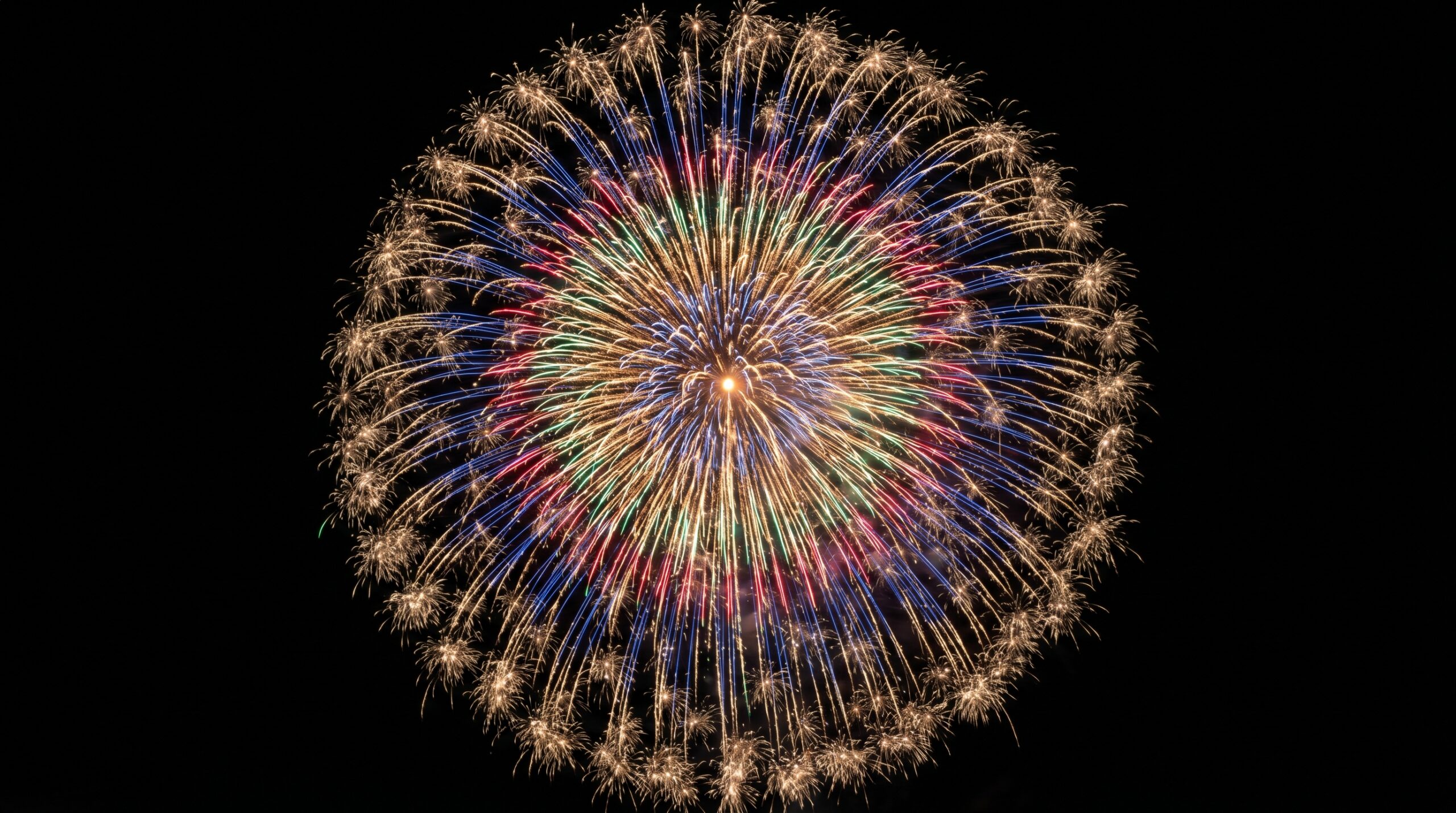
Hanabi (花火) literally means “fire flower,” and the word captures the spirit perfectly: each shell blooms, hangs in the sky for a moment, and fades. Fireworks have been part of Japanese summers since the Edo period (1603–1868). The Sumida River display in Tokyo traces its roots to 1733, when fireworks were set off along the river — by some accounts to console the spirits of those lost to famine and disease, and to pray against further misfortune. That blend of celebration and quiet remembrance still runs through many festivals today.
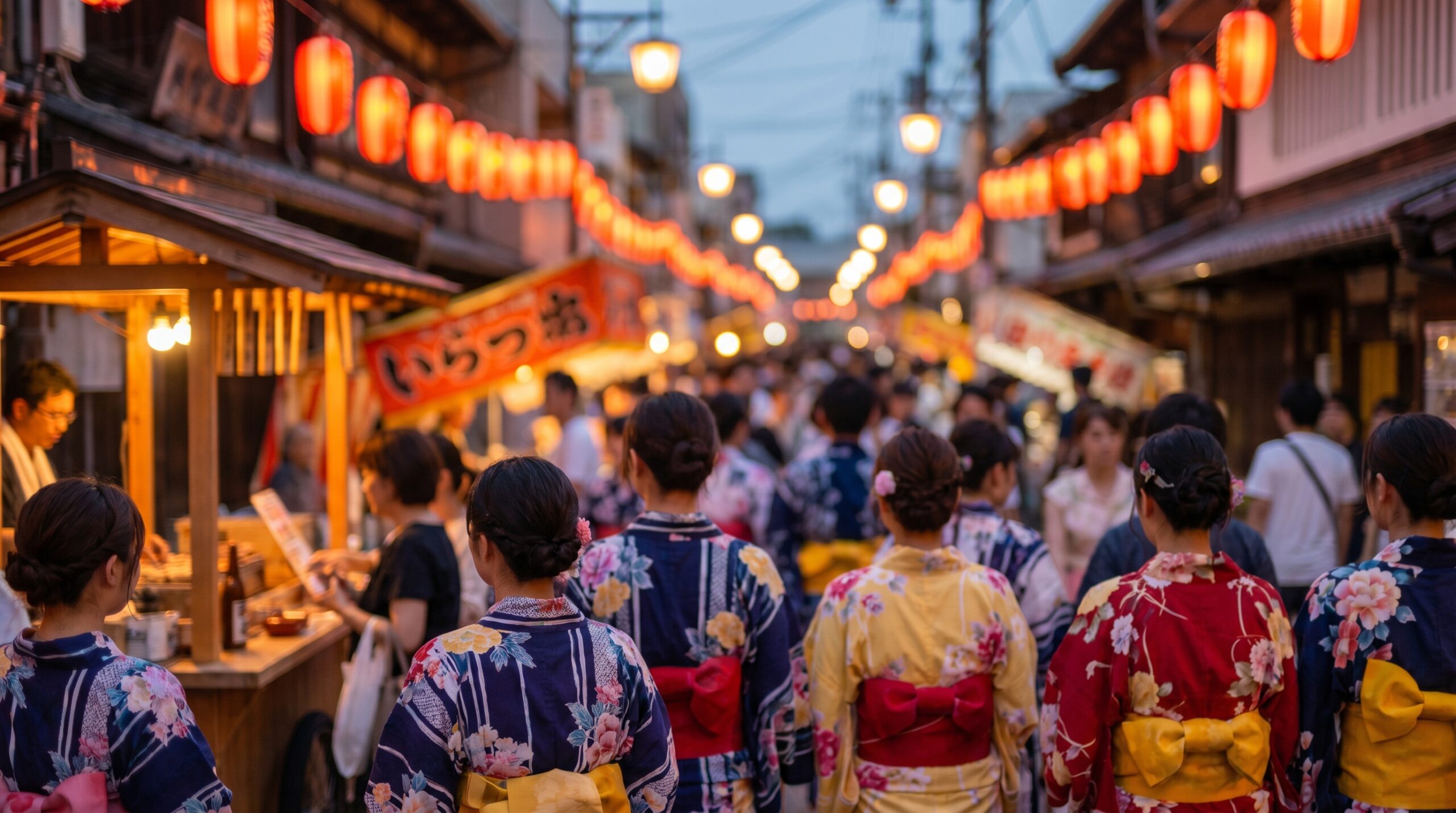
A Japanese fireworks festival is as much about the atmosphere as the sky. People arrive in the late afternoon wearing yukata (light cotton summer kimono), claim a spot on the riverbank with a plastic sheet, and graze from yatai — food stalls selling yakisoba, grilled squid, takoyaki, shaved ice and cold beer. Families, couples and groups of friends sit on the grass for hours before the first shell goes up. The fireworks themselves are often choreographed to music and build to a frantic finale that locals call the grand finale or, at competition events, judged set pieces.
There are two broad kinds of event. Festival displays (nouryou hanabi) are about pure spectacle and summer fun. Competition fireworks (kyougi hanabi), like Omagari and Tsuchiura, are contests where master pyrotechnicians from across Japan compete on shape, color and originality — the fireworks equivalent of a national championship.
Japan’s most famous fireworks festivals in 2026
If you are travelling beyond Tokyo, these are the displays that Japanese people themselves rank at the very top. The “three great fireworks festivals of Japan” (Nihon san-dai hanabi) are Omagari, Nagaoka and Tsuchiura. They draw hundreds of thousands of spectators, so plan transport and accommodation well in advance — hotels in these smaller cities sell out months ahead.
| Festival | 2026 date | Where | Why it’s famous | Official site |
|---|---|---|---|---|
| Omagari National Fireworks Competition (Omagari no Hanabi) |
Sat, Aug 29 | Daisen City, Akita (Omono River) |
Japan’s most prestigious competition; ~700,000 spectators. Daytime and night divisions. | omagari-hanabi.com |
| Nagaoka Festival Grand Fireworks (Nagaoka Matsuri) |
Sun–Mon, Aug 2–3 | Nagaoka City, Niigata (Shinano River) |
Home of the giant “Phoenix” set piece (~2 km wide) and the 650 m “three-shaku” shells. | nagaokamatsuri.com |
| Tsuchiura National Fireworks Competition | Sat, Nov 7 | Tsuchiura City, Ibaraki (Sakura River) |
The other great competition; held in autumn, so a rare late-season option. | tsuchiura-hanabi.jp |
| Lake Suwa Fireworks (Suwako Kojo Hanabi) |
Sat, Aug 15 | Suwa City, Nagano (Lake Suwa) |
~40,000 shells launched from barges on the lake; the surrounding mountains echo the booms. | suwako-hanabi.com |
| Naniwa Yodogawa Fireworks | Sat, Oct 17 | Osaka City (Yodo River) |
Osaka’s biggest display, reportedly ~20,000 shells. Now held in autumn — a good western-Japan option. | yodohanabi.com |
Omagari is the one to see if you want the most serious fireworks in Japan. Master pyrotechnicians compete in front of judges, and the night program ends with an elaborate showcase. It is in Akita Prefecture in the north, reachable by Akita Shinkansen to Omagari Station; online ticket sales for paid seats began in mid-June 2026, and they go fast.
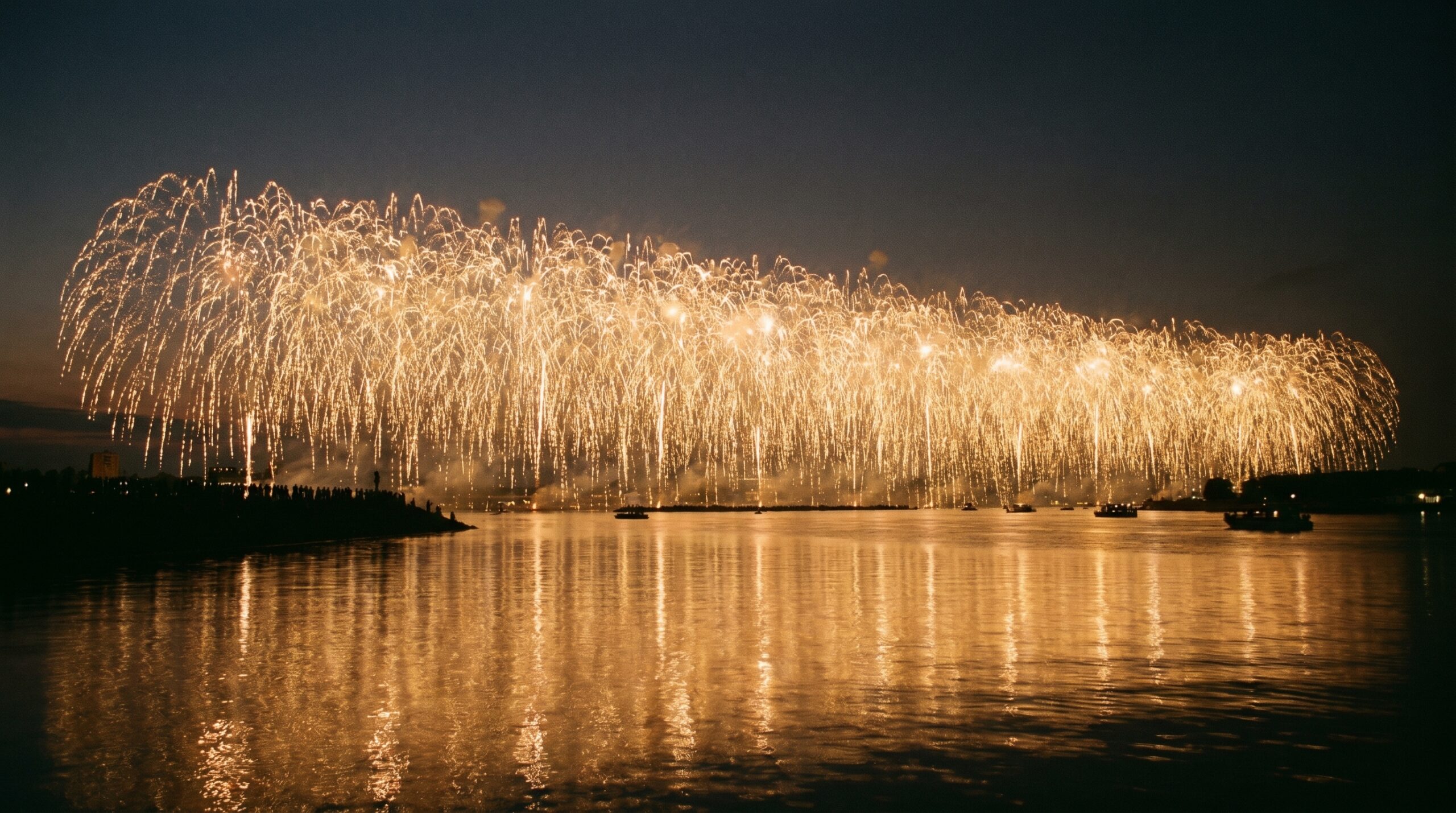
Nagaoka is famous for raw scale and emotion. Its “Phoenix” sequence, set to music, was created as a prayer for recovery after disasters, and the enormous shosanshakudama shells open to roughly 650 meters across. It runs over two evenings (Aug 2–3) along the Shinano River, about a 30-minute walk from Nagaoka Station, which is served by the Joetsu Shinkansen from Tokyo. There are no free seats inside the main venue — you need a paid ticket.
Tsuchiura is the autumn alternative. Held on November 7, 2026 on the banks of the Sakura River in Ibaraki, it is the second great competition event and a good choice if your trip falls outside the summer peak. JR Tsuchiura Station is about a 30-minute walk away, with paid shuttle buses on the day.
Lake Suwa in Nagano is the volume champion of the list — around 40,000 shells fired from barges on the water, with the lake reflecting the light and the mountains amplifying the sound. It is set for August 15, 2026, a 10-minute walk from JR Kami-Suwa Station.
Naniwa Yodogawa is the best-known display in the Osaka area, with a reported 20,000-plus shells over the Yodo River (the organizers do not publish an official count). After moving to autumn around the time of Expo 2025, it stays in October for 2026 (October 17), which makes it a convenient option if you are based in western Japan or visiting outside the summer peak. It is roughly a 15-minute walk from several stations, including Hankyu Juso and JR Tsukamoto.
Tokyo’s major fireworks festivals in 2026
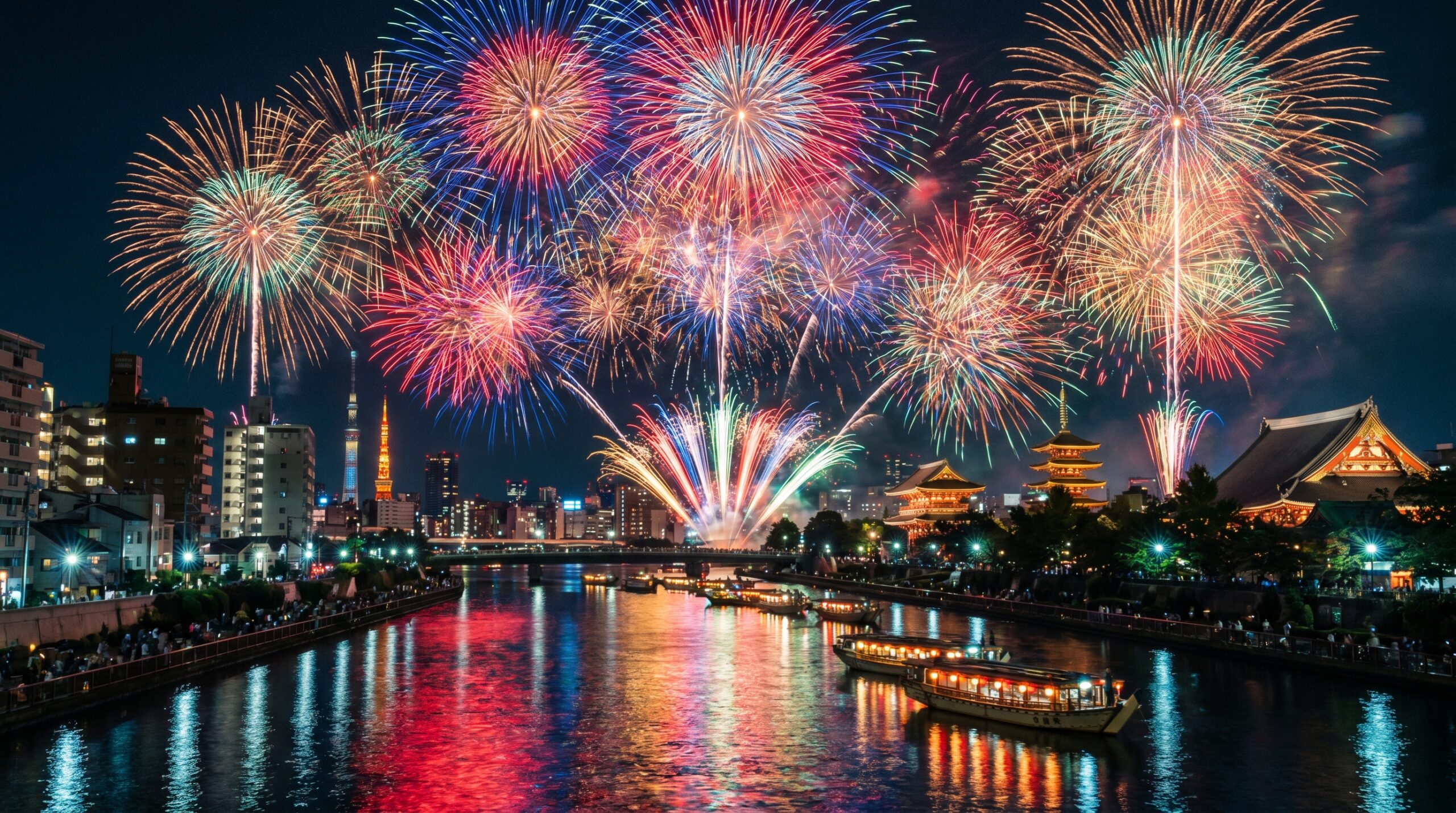
If you are based in Tokyo, you do not have to travel far. The capital and its rivers host a cluster of large festivals in late July and August. Below are the major ones for 2026, with the practical details tourists actually need. (Adachi’s festival, often the season opener in late May, has already finished for 2026, so it is not listed here.)
| Festival | 2026 date | Nearest station | Scale | Seating & notes |
|---|---|---|---|---|
| Sumida River Fireworks | Sat, Jul 25 (19:00–20:30) |
Asakusa / Kuramae (5–15 min walk) |
~20,000 shells | Tokyo’s signature display, with the Skytree in view. Free riverbank viewing; extremely crowded. |
| Katsushika Noryo Fireworks | Tue, Jul 28 (19:20–20:30) |
Shibamata | ~20,000 shells | Close, low launch site near old-Tokyo Shibamata; a drone show is also planned for 2026. |
| Edogawa-ku Fireworks | Sat, Aug 1 (19:15–20:20) |
Shinozaki (15 min walk) |
~14,000 shells | Known for a 5-second, 1,000-shell opening. Fired across the river with Ichikawa (Chiba). |
| Itabashi Fireworks | Sat, Aug 1 (19:00–20:30) |
Takashimadaira (~20 min walk) |
Arakawa riverbank | Held with Toda-bashi festival on the opposite bank. Free area reduced to the upper (west) side in 2026. |
| Jingu Gaien Fireworks | Sat, Aug 8 | Sendagaya / Shinanomachi / Aoyama-itchome |
~10,000 shells | Central Tokyo, all-paid reserved seating with live music acts. Buy tickets in advance. |
| Tokyo Bay Grand Fireworks (returns autumn 2026) |
Sat, Oct 24 (17:30–19:00) |
Harumi / Toyosu / Ariake area |
~12,000 shells | Returning after an 11-year pause for Chuo Ward’s 80th anniversary. Over the bay, with large 45 cm shells. |
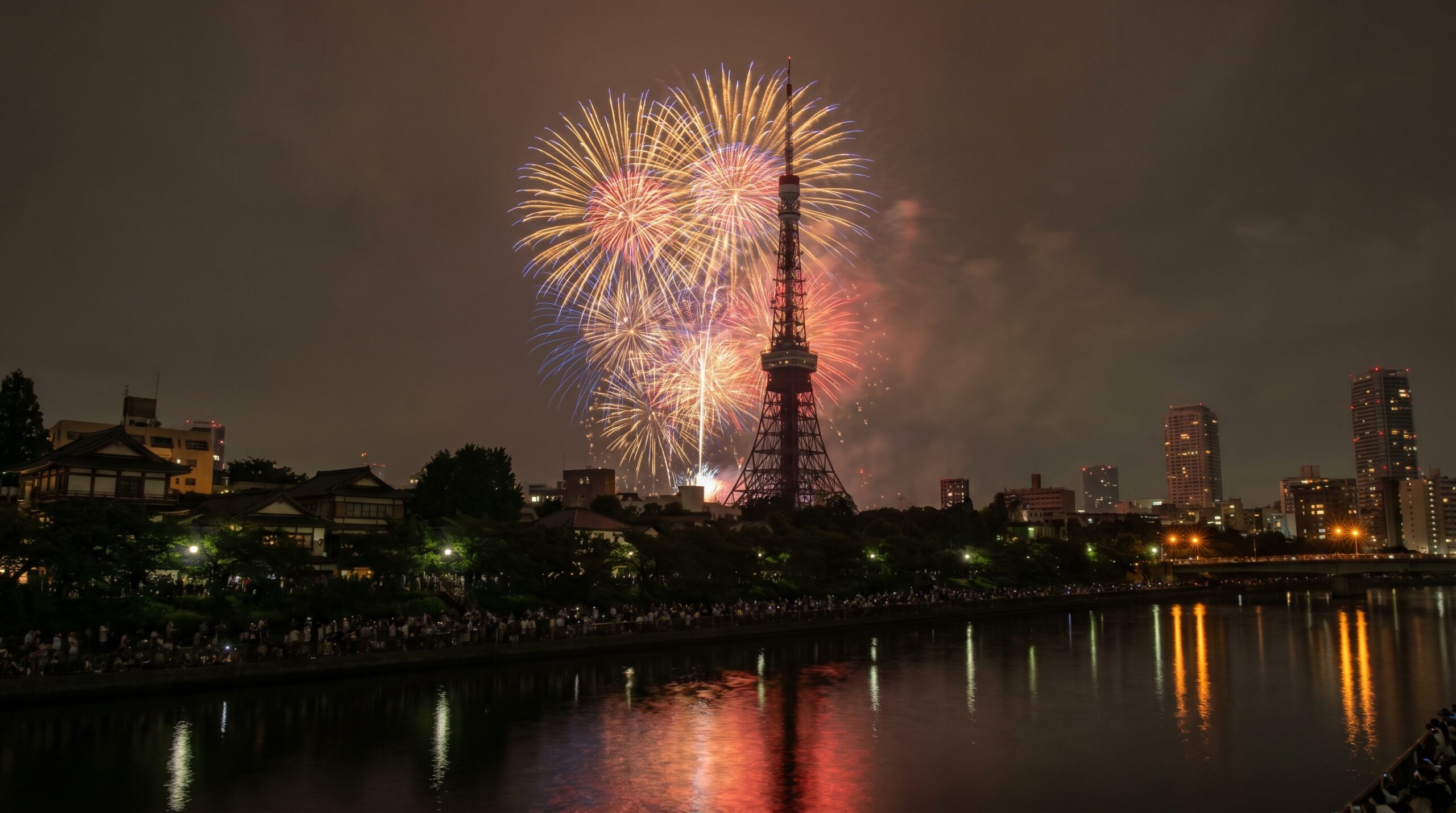
Sumida River (July 25) is the one most visitors picture when they think of Tokyo fireworks — about 20,000 shells over the river near Asakusa, with Tokyo Skytree in the background. There are two launch sites: the first near Sakurabashi (closer to Asakusa Station, about a 15-minute walk) and the second near Komagatabashi (about 5 minutes from Asakusa or Kuramae). Viewing from the public riverbank is free, but the area fills hours early and trains afterward are packed. This is the most atmospheric choice for first-timers who want the classic Tokyo scene.
Katsushika Noryo (July 28) is a local favorite because the launch site is unusually close to spectators, so the shells feel huge overhead. It takes place near Shibamata, one of Tokyo’s most nostalgic old neighborhoods, and a drone show is planned alongside the fireworks in 2026.
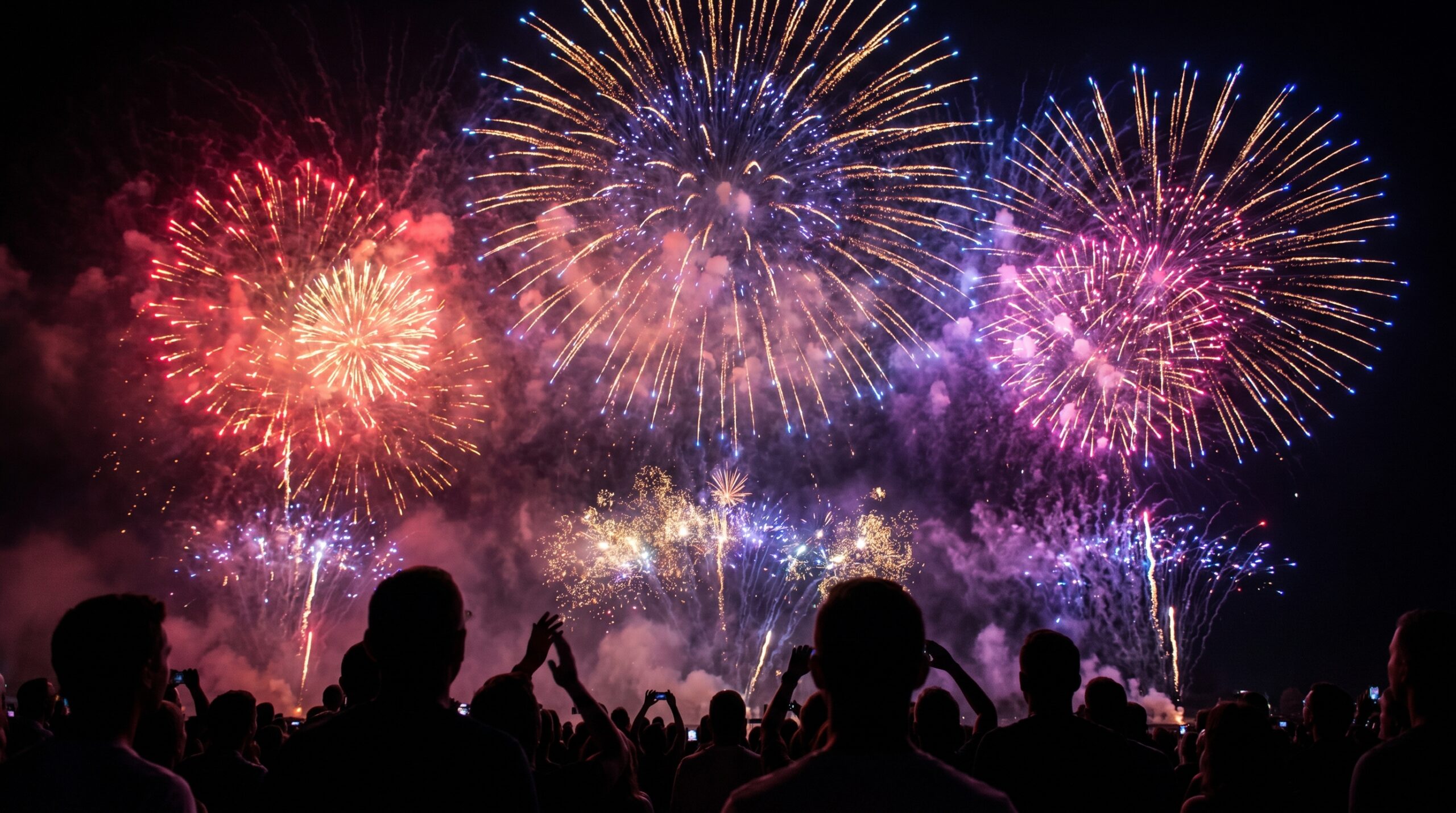
Jingu Gaien (August 8) is the odd one out — it is in the heart of the city rather than on a river, and it is fully ticketed. Around 10,000 shells are paired with live performances by Japanese artists, with seating in the baseball stadium and rugby ground. There is no real free-viewing option, so plan to buy a ticket. It is the easiest major display to reach from central Tokyo (Sendagaya, Shinanomachi or Aoyama-itchome stations).
Edogawa-ku and Itabashi both fall on Saturday, August 1, on opposite sides of the city, so you can pick whichever is closer to your stay. Edogawa is famous for its rapid 1,000-shell opening; Itabashi sits on the Arakawa River and pairs with the Toda-bashi festival across the water in Saitama. Important for 2026: Itabashi moved and shrank its free-viewing area, and the access station for free viewing is now Takashimadaira only — you can no longer reach the free zone from Nishidai or Ukima-Funado, so plan around Takashimadaira if you are not buying a seat.
Tokyo Bay Grand Fireworks is the headline comeback of the year. After an 11-year pause — the venue near Harumi was used for the Tokyo Olympic athletes’ village — it returns on October 24, 2026 to mark Chuo Ward’s 80th anniversary, with about 12,000 shells over Tokyo Bay, including huge 45 cm shells. It is an evening autumn show (17:30–19:00) viewed from the Harumi, Toyosu and Ariake waterfront, and a rare chance to see a bayside display in the heart of the city. Expect strong demand and a mix of free and ticketed viewing areas, so check the official Chuo Ward announcement for the latest.
Which festival should you choose?
With so many options, it helps to match the festival to the kind of night you want.
- First time in Japan, based in Tokyo? Go to Sumida River (July 25). It is the classic scene — fireworks, the river, Tokyo Skytree, food stalls and yukata — and it needs no ticket. Just arrive early and accept the crowds.
- Want a guaranteed seat and a show, not a scramble? Choose Jingu Gaien (August 8). It is central, fully seated and paired with live music, so you trade the free-riverbank atmosphere for comfort and certainty.
- Serious about fireworks as an art form? Travel to Omagari (August 29) or Tsuchiura (November 7), Japan’s two great national competitions, where the displays are judged and the craft is the point.
- Visiting outside high summer? Autumn now has real options: Tokyo Bay Grand Fireworks (October 24, returning after 11 years), Naniwa Yodogawa in Osaka (October 17) and Tsuchiura (November 7) all fall after the August peak.
- Want raw scale and emotion? Nagaoka (August 2–3) and Lake Suwa (August 15) are about sheer size — the Phoenix sequence and tens of thousands of shells over water.
You really only need to pick one. Trying to chase several across different regions in a single trip means a lot of travel and very crowded trains.
How to enjoy hanabi like a local
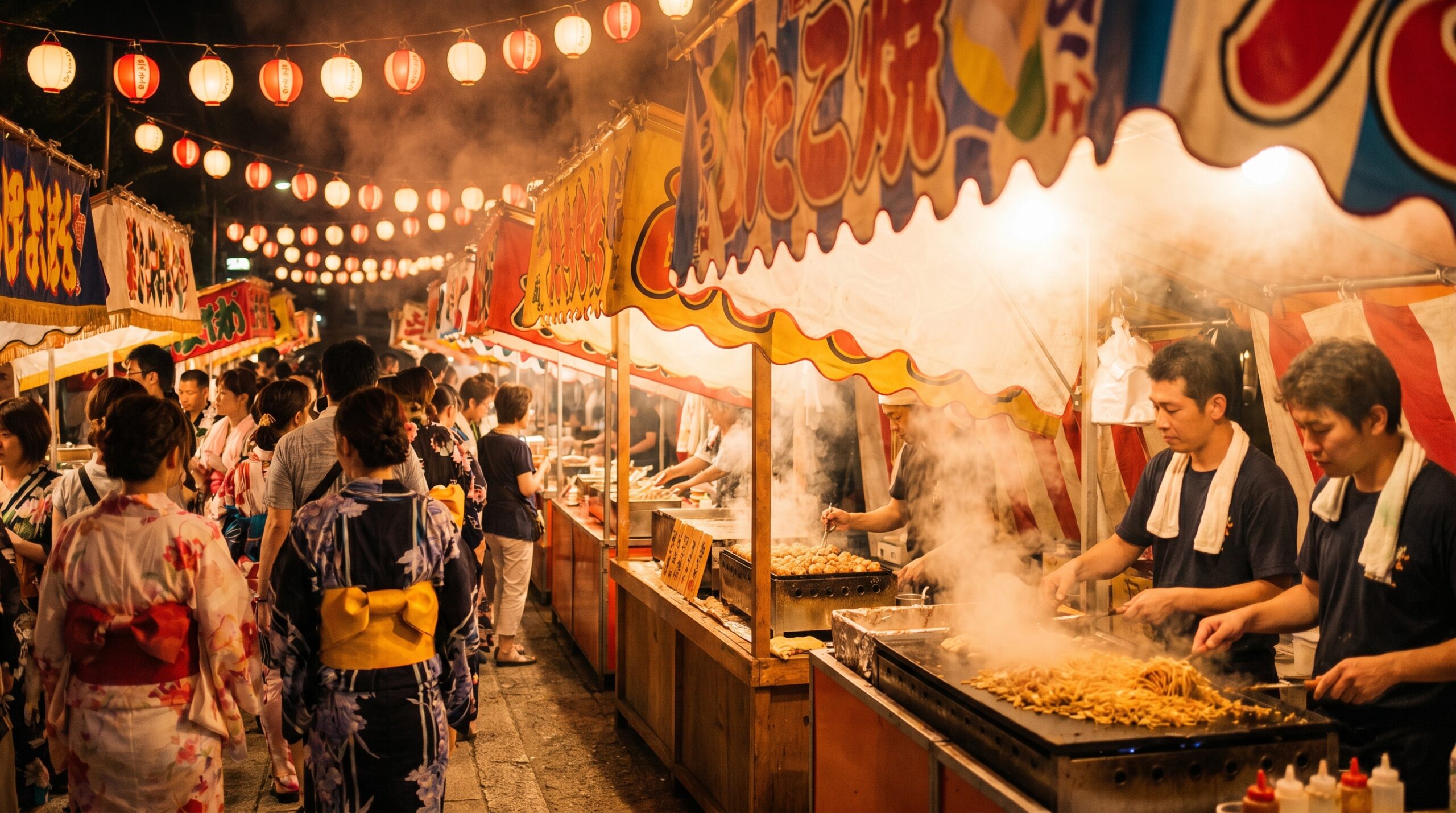
You do not need a ticket or a plan to enjoy most festivals — but a few local habits make the night far better.
Wear a yukata if you like. Many people, including visitors, wear a light cotton yukata and wooden sandals. Rental shops near major festival areas offer same-day dressing. It is entirely optional, but it makes the experience feel complete and the photos better.
Arrive early and bring a sheet. For free riverbank viewing, locals stake out spots in the late afternoon with a plastic leisure sheet (sold at any 100-yen shop or convenience store). For the biggest displays like Sumida, “early” can mean three or more hours before the first shell.
Eat at the yatai. The food stalls are half the fun. Expect yakisoba (fried noodles), grilled squid, takoyaki (octopus balls), karaage (fried chicken), chocolate bananas, kakigori (shaved ice) and cold drinks. Most stalls are cash-only and most items run roughly ¥400–¥800.
Bring the basics. A hand fan or portable fan, a small towel, insect repellent, a fully charged phone and a portable battery, and a trash bag (Japan expects you to carry your trash home). Restrooms are limited and lines are long, so go before the show starts.
Practical tips for tourists
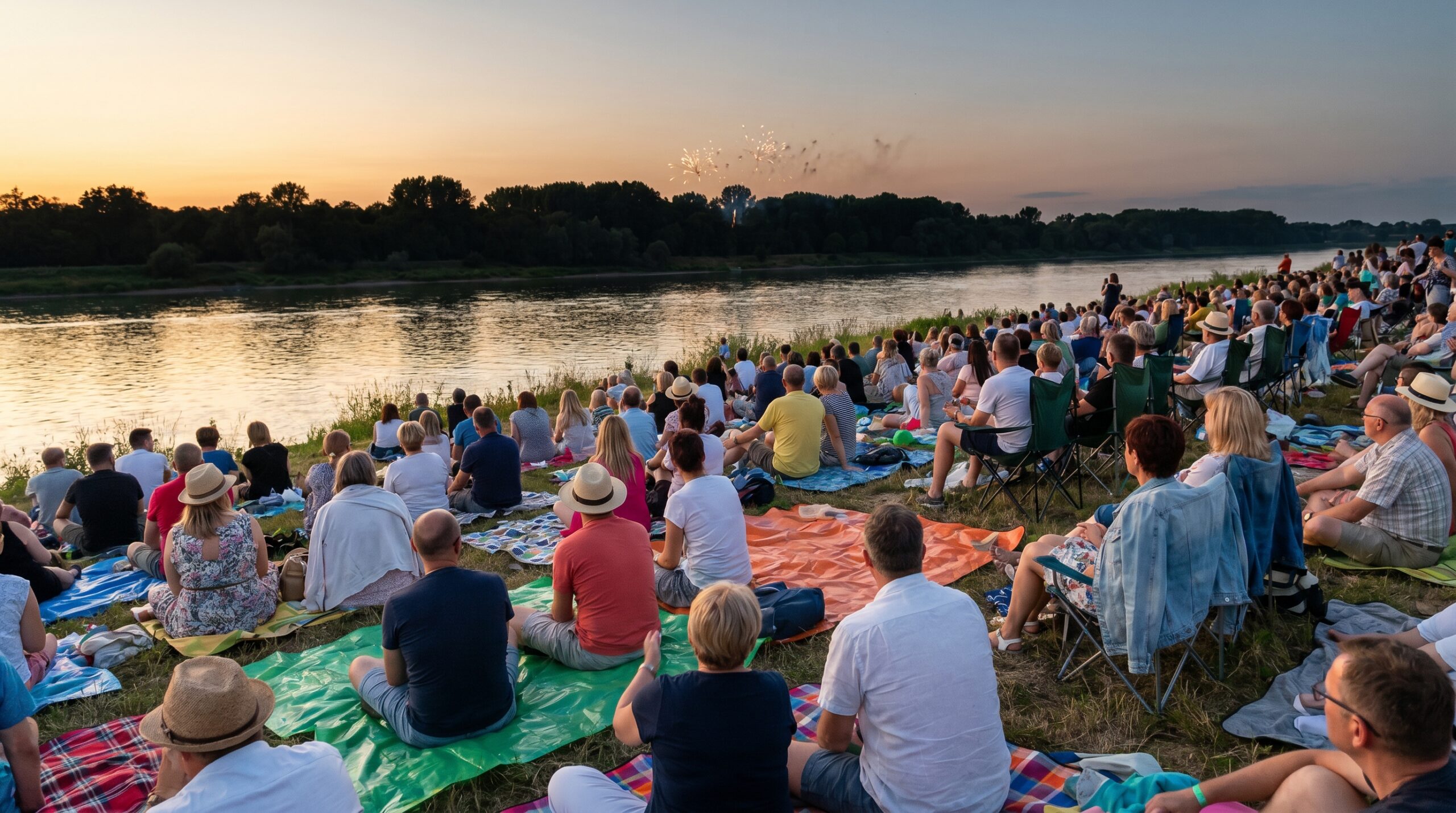
Free vs. paid seating. Most festivals can be watched for free from public riverbanks, but the famous ones (Nagaoka, Omagari, Jingu Gaien) are partly or fully ticketed, and even Tokyo’s free festivals sell premium seats. If you want a guaranteed view without arriving hours early, a paid seat is worth it — but they sell out weeks ahead.
The hardest part is leaving. Tens of thousands of people head for the same few stations at the same moment. Trains are extremely crowded for an hour or more after the finale. Locals either leave a few minutes before the end, or relax at a nearby spot and let the crush pass. Do not plan a tight connection (like a late Shinkansen) right after a major display.
Rain. Light rain rarely cancels a festival, but storms or high wind can postpone it to a rain date or cancel it entirely. Check the official site or social media on the day.
With children or limited mobility. Crowds, heat and long restroom lines make the biggest free festivals tough for small children or anyone with mobility needs. A paid reserved seat — or a smaller suburban festival — is far more comfortable.
Confirm before you commit. Dates, times and seating plans in this guide were accurate when written, but they can change. Click through to each festival’s official site (linked above) before locking in travel.
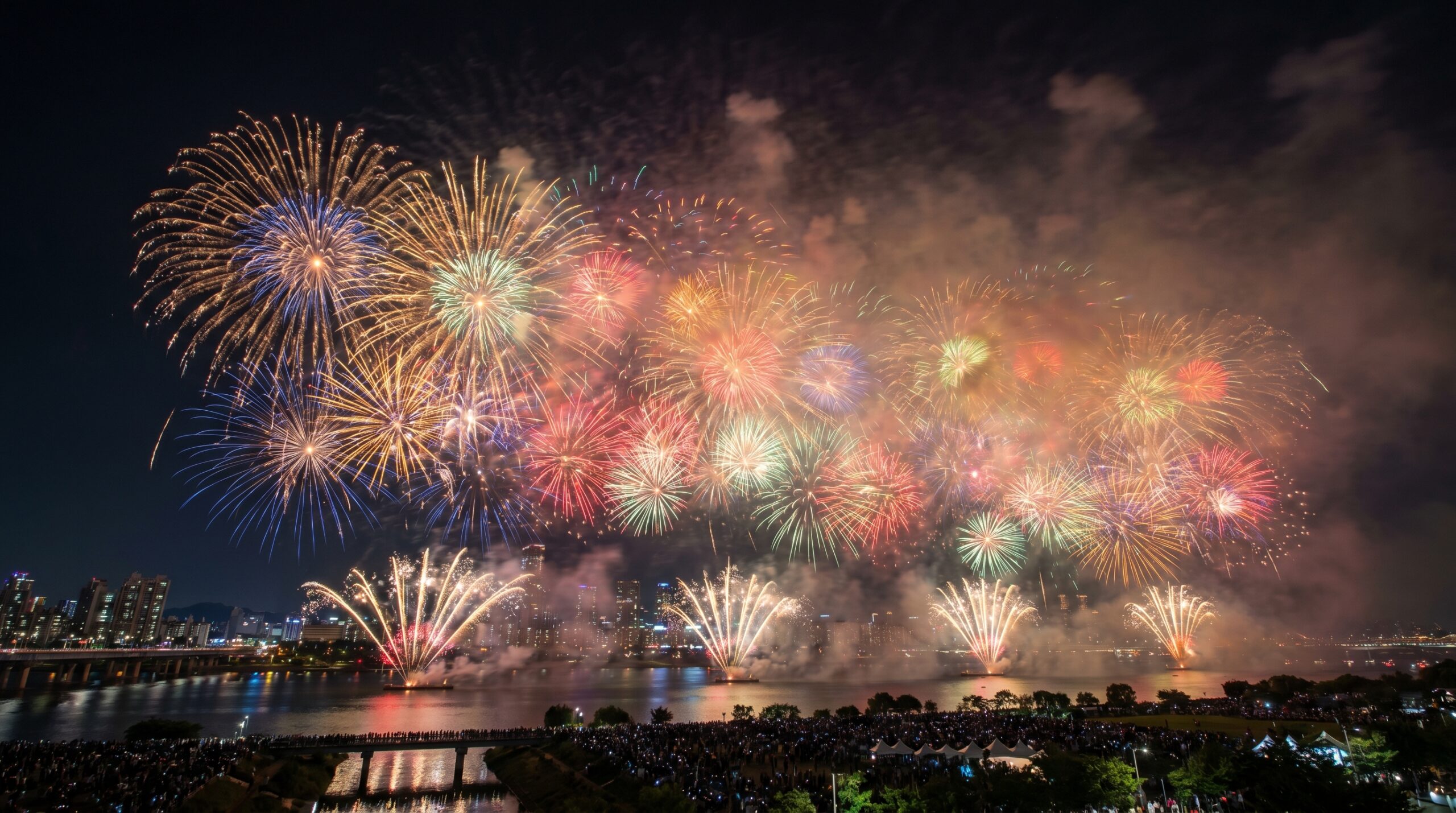
A Japanese fireworks festival rewards a little planning and a relaxed attitude. Pick one festival that fits your dates, arrive with time to spare, eat too much from the stalls, and let the rest of the evening take care of itself. It is, quite simply, one of the best nights you can have in a Japanese summer.
FAQ
When is fireworks season in Japan?
Most festivals happen from late July through August, peaking in early-to-mid August. A few famous competitions fall later — Omagari is in late August and Tsuchiura is in November.
What is the biggest fireworks festival in Tokyo?
The Sumida River Fireworks, held on July 25, 2026, with around 20,000 shells launched near Asakusa with Tokyo Skytree in view.
Do I need a ticket to see fireworks in Japan?
Usually no — most festivals can be watched free from public riverbanks. But the most famous events (Nagaoka, Omagari, Jingu Gaien) are partly or fully ticketed, and even free festivals sell paid premium seats that guarantee a view.
How early should I arrive?
For free viewing at a major Tokyo festival like Sumida, locals arrive two to three hours before the first shell to claim a spot. For ticketed seats, you can come closer to the start time.
What are Japan’s three great fireworks festivals?
Omagari (Akita), Nagaoka (Niigata) and Tsuchiura (Ibaraki). Omagari and Tsuchiura are national competitions; Nagaoka is famous for its giant Phoenix set piece.
What should I wear?
Anything comfortable for a warm, crowded evening. Many people wear a yukata (light cotton summer kimono), which you can rent near major festival areas, but it is entirely optional.
Is it hard to get home afterward?
Yes — trains near festival venues are extremely crowded for an hour or more after the finale. Avoid booking tight connections, and consider leaving a few minutes early or waiting out the rush.
Can I see fireworks in Japan outside of summer?
Mostly the season is summer, but the Tsuchiura competition in early November is a notable autumn exception, and some regions hold smaller displays in autumn and winter.
Are the dates the same every year?
No. Dates are set each year and can shift, and bad weather can push a festival to a rain date. Always confirm on the official website before you travel.

Comments