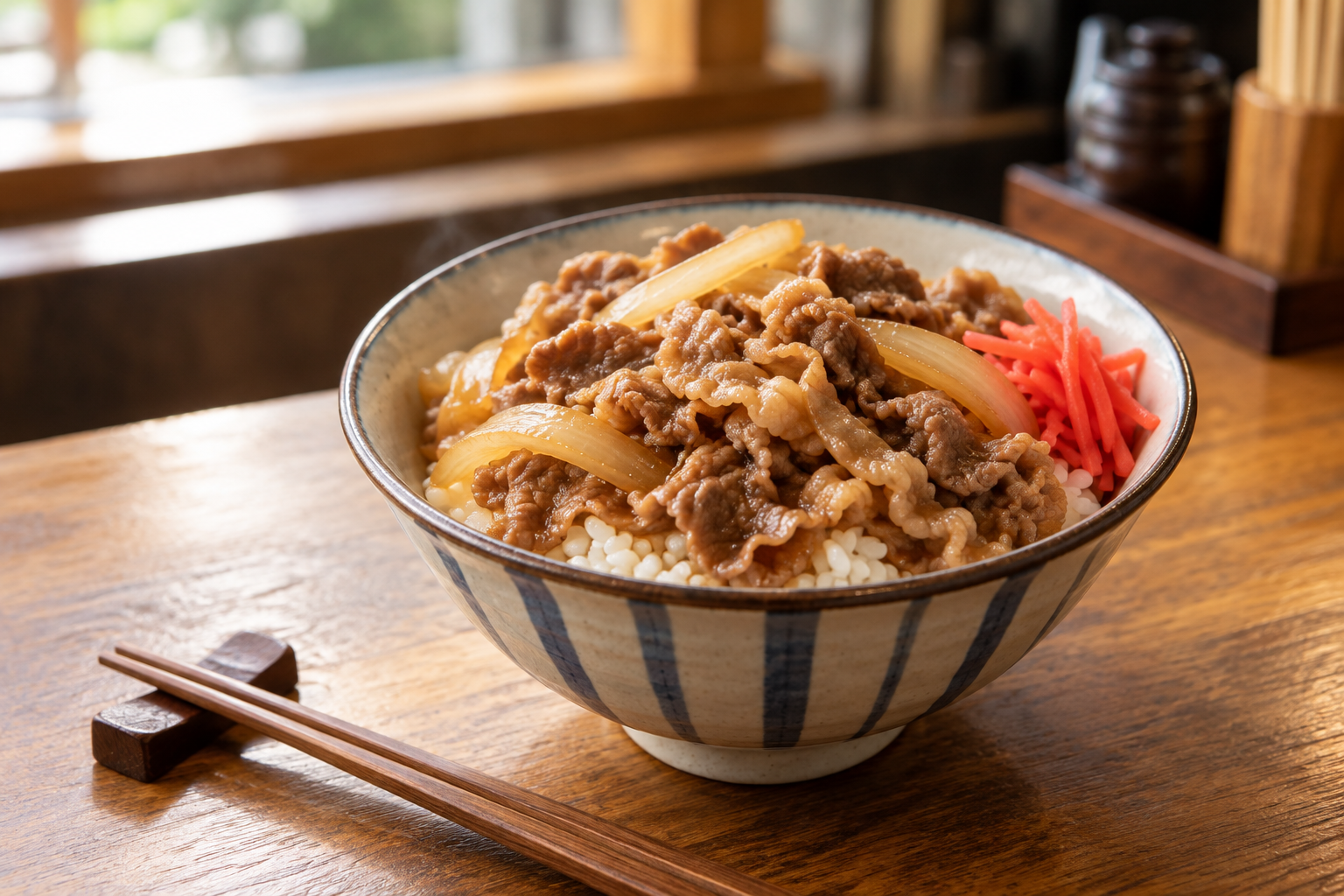
For a first gyudon order, choose a plain regular bowl, check whether soup is included, and confirm the total before paying. Gyudon (牛丼) is rice topped with thinly sliced beef and onions simmered in a mildly sweet soy-based sauce. Bigger sizes can change the balance of meat and rice, so “more beef” and “a larger bowl” are different decisions.
- Choose the bowl before the toppings
- Pick a size: regular, more meat or more overall
- Use the full meal price, not just the bowl price
- Check the time and the dine-in or takeaway choice
- At the entrance, identify how this branch takes orders
- A short order is enough
- Eat it simply, and choose extras deliberately
- Pay, collect and leave with the right order
- Frequently asked questions
- What is gyudon?
- Which size should I order first?
- Does “more meat” mean the same as large?
- Does gyudon automatically include miso soup?
- Can I get a bowl for under ¥500?
- Do I need to add a raw egg?
- Can I rely on the Matsuya app?
- Should I buy another ticket if the food has not arrived?
- Are the pictures exact chain portions?
- Official sources
Choose the bowl before the toppings
Look for 牛丼 / gyūdon on the menu. The beef and rice arrive together in one bowl. A 牛皿 / gyū-sara, by contrast, is the beef served separately; check whether rice is part of what you are buying. If you want a meal arranged as several dishes, compare a teishoku set meal.
Our suggestion for the first bowl is to start plain. Choose the portion, then decide whether you want a topping or a side. A photo of cheese, an egg and soup can be appealing, but it may show several paid choices rather than the basic bowl. Keep the exact item name in view while checking the price.
Sukiya’s English menu is useful for matching words to pictures: it identifies the basic beef-and-onion bowl, then lists separate versions with cheese, kimchi and other toppings. You do not need to learn a customization vocabulary to order the ordinary dish.
Pick a size: regular, more meat or more overall
並盛 / namimori means regular. It is a useful starting point if you do not know the portions. The label does not promise a standard weight across restaurants. Avoid comparing bowls solely by the size of their photographs.
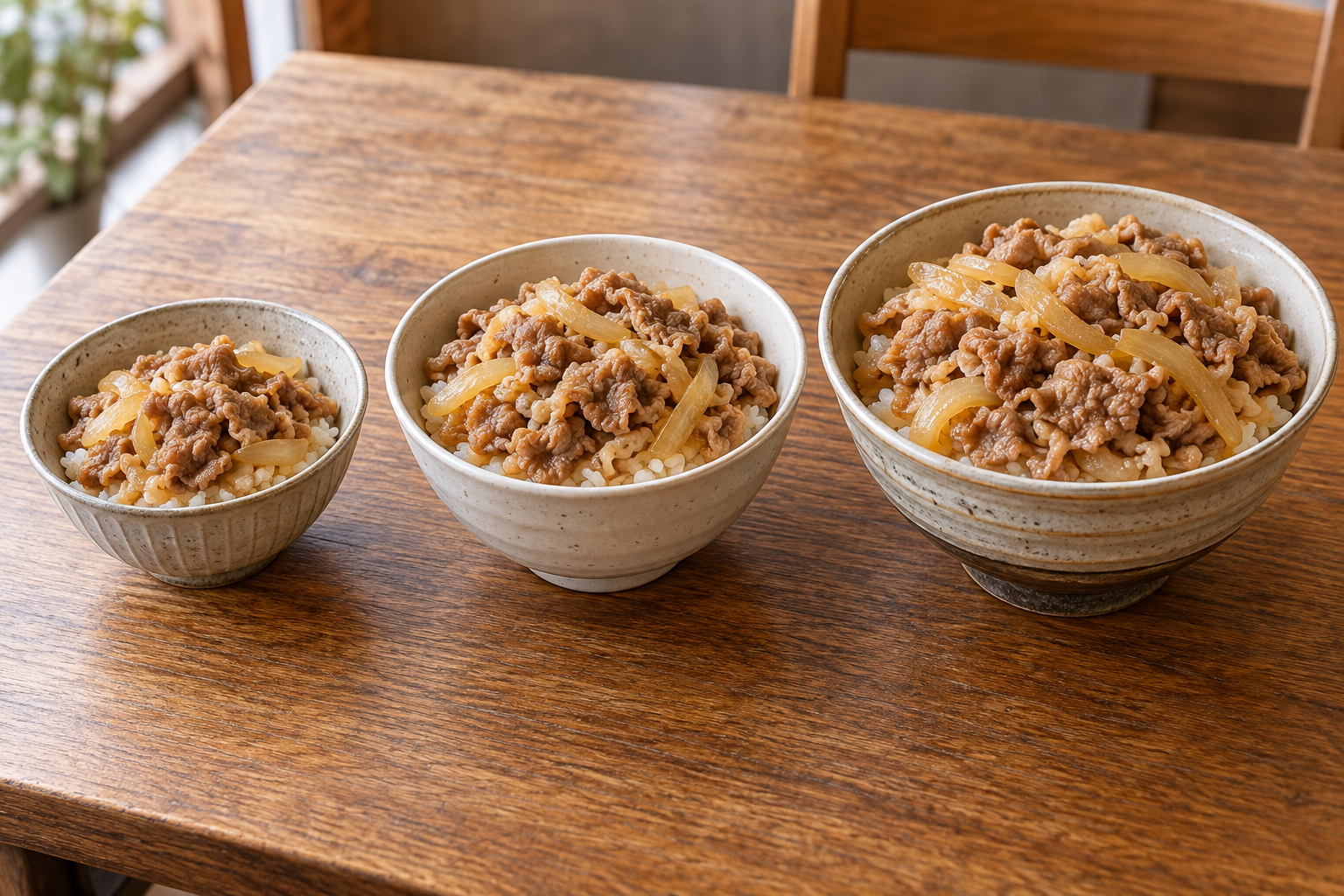
| Your aim | Menu clue | What to confirm |
|---|---|---|
| A smaller meal | 小盛 / komori; ミニ / mini | The smaller option for this dish |
| A first, ordinary portion | 並盛 / namimori | The regular bowl and its price |
| More beef without simply choosing the largest bowl | アタマの大盛; M-extra | How this option changes the meat and rice |
| A larger meal overall | 大盛 / ōmori and larger sizes | The actual portion description and extra cost |
Yoshinoya’s original explanation of atama no ōmori describes regular rice with the topping amount of a large bowl. The current menu still lists that option. Sukiya’s English menu labels M-extra as more meat than M; its Japanese menu calls this 中盛 / chūmori. Do not treat that word as a universal halfway point between regular and large.
At Sukiya, M-extra and L are both listed at ¥680. The same price does not make them the same choice. Tell staff whether you want more meat or a larger meal, or point to the precise option. If you are also planning snacks or another restaurant later, our recommendation is to start with regular rather than upgrading automatically.
Use the full meal price, not just the bowl price
The following examples come from the current Yoshinoya gyudon menu and Sukiya dine-in menu. Amounts include tax. They are menu references, not checked receipts from a particular branch; delivery prices and some locations differ.
| Plain gyudon | Yoshinoya, dine-in | Sukiya, dine-in |
|---|---|---|
| Small / mini | ¥465 | ¥420 |
| Regular | ¥498 | ¥480 |
| More-meat option | ¥674, atama no ōmori | ¥680, M-extra / chūmori |
| Large / ōmori | ¥740 | ¥680 |
A regular Yoshinoya bowl plus its separately listed ¥96 dine-in miso soup totals ¥594: ¥498 + ¥96. At Sukiya, a regular bowl plus the ¥200 soup-and-salad set totals ¥680: ¥480 + ¥200. These are calculations from menu prices, not equivalent meals or a ranking of value.
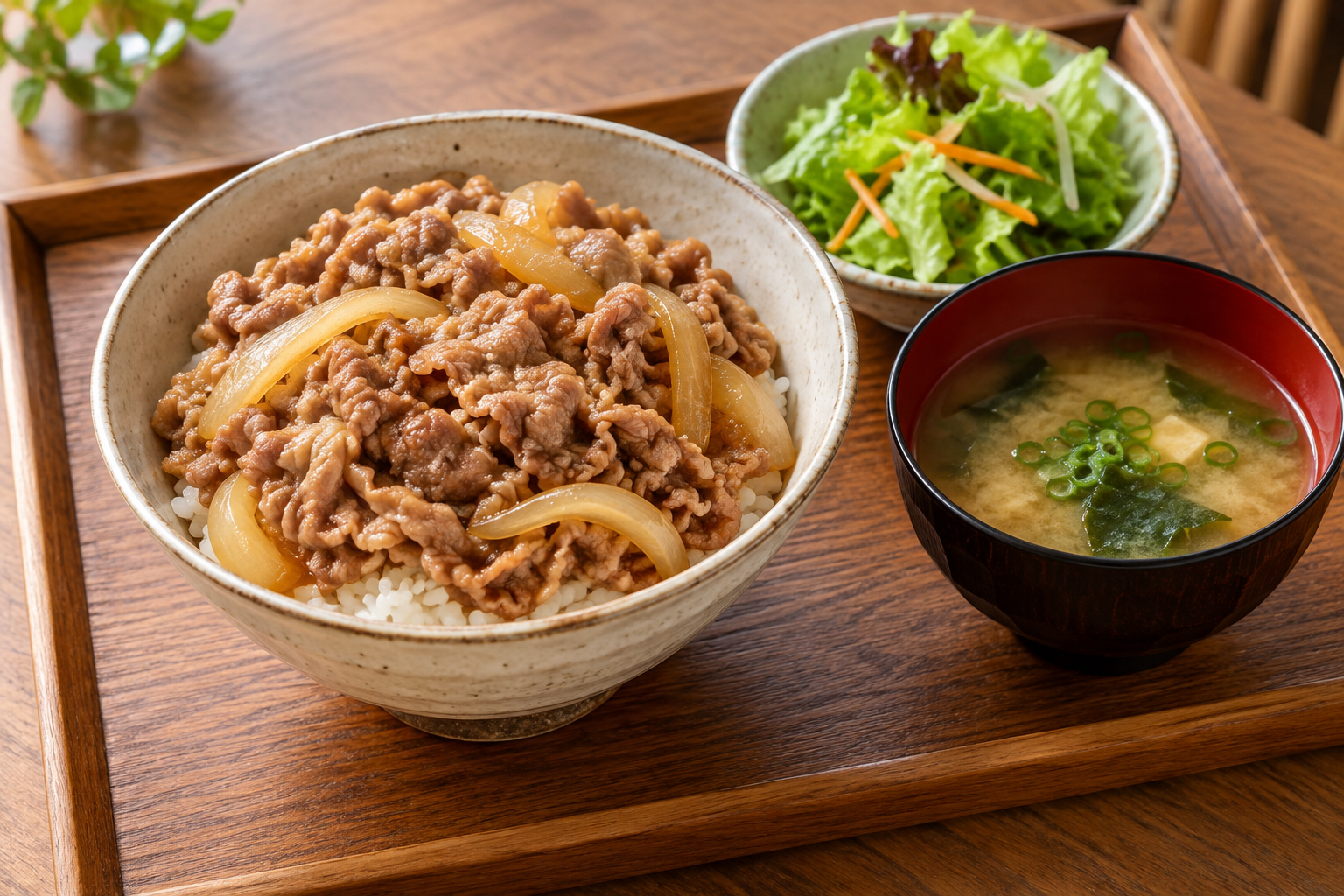
Decide what you actually want to eat, then compare that combination. A plain bowl, a bowl with soup, and a bowl with soup and salad are three different purchases. Check whether the extra you chose is a topping on the bowl or a separate side. Recheck the final screen if an unwanted set has been added.
Check the time and the dine-in or takeaway choice
Sukiya’s dine-in menu states that orders placed from 22:00 to 05:00 attract a 7% late-night charge on the order total. The daytime ¥480 figure therefore does not describe every late-night bill. As a planning calculation, ¥480 × 1.07 is ¥513.60 before the restaurant’s rounding; check the displayed payable amount rather than expecting that exact decimal sum.
Takeaway also needs its own price check. Yoshinoya lists the regular bowl at ¥489 to take away, compared with ¥498 for eating inside. Say which you want before ordering. Do not buy takeaway and assume that every shop allows you to use its seats.
Our practical rule is to check four things together: dish, size, extras and final payment amount. If a total is higher than expected, ask about the difference before completing payment. Remove an optional extra if needed, or choose a smaller order; a low base price is useful only when the whole meal suits your budget.
At the entrance, identify how this branch takes orders
Pause long enough to look for staff directions, an entrance ticket machine or a tablet at the seat. The chain name alone is not enough to establish the exact process. Follow the branch’s signs and ask before walking past a queue or occupying a seat.
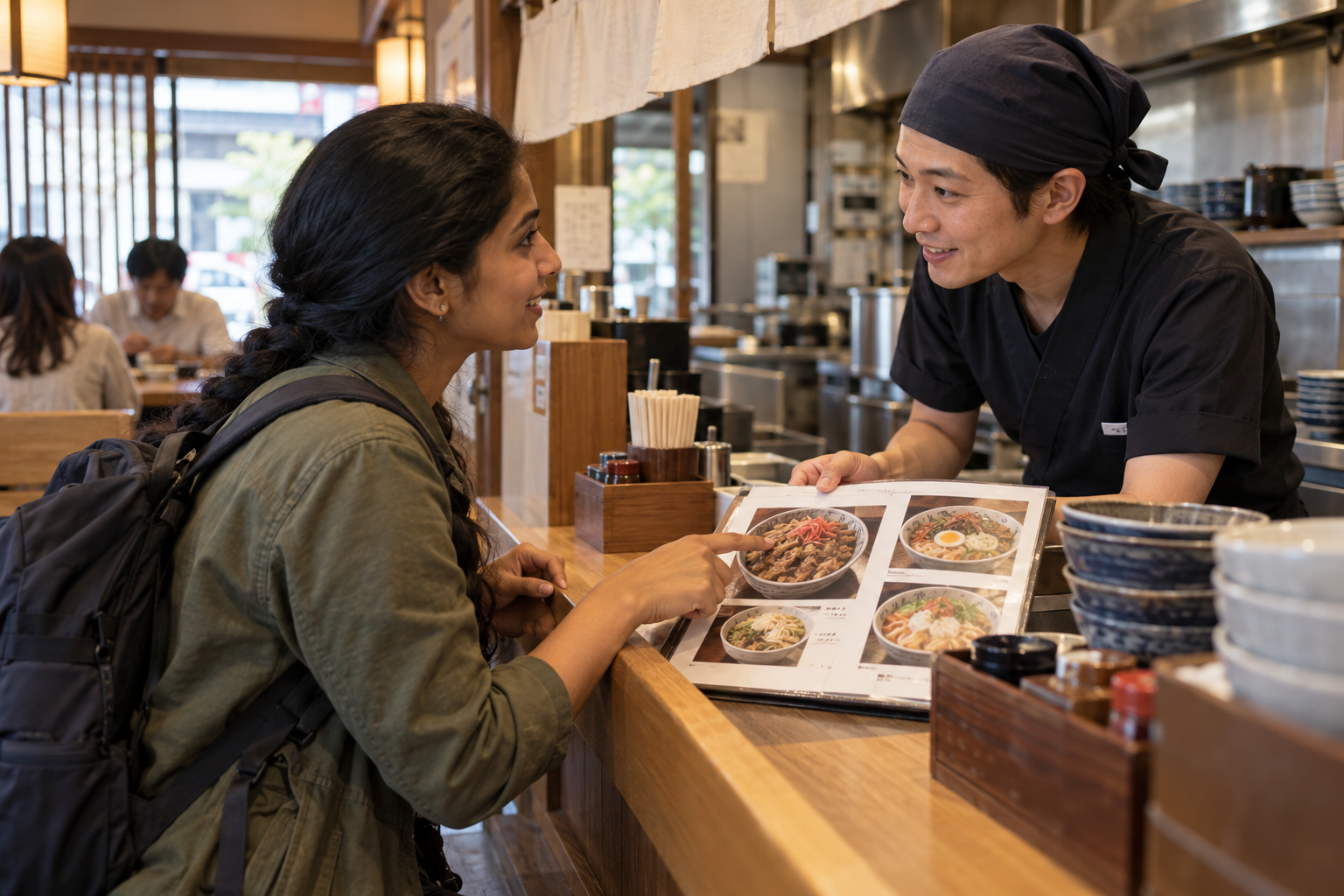
- Staff takes the order: point to the dish and say its size. Confirm whether you pay now or after eating.
- A tablet takes the order: check the dish, size and quantity before submitting. Selecting a photo is not the same as sending the order.
- A ticket machine takes payment: check the total before paying, keep the ticket, and follow the handover or pickup instructions. If your order is already confirmed, ask staff before buying another ticket.
These are practical checks for the system you find, not a claim that every branch uses all three. Our restaurant ticket-machine guide explains the different ticket and collection arrangements. If you are unsure, show your ticket and ask what to do next.
Matsuya: check in store while online services are interrupted
On November 1, the Matsuya menu address displayed an official notice that related website and app services were suspended. Its service update also said app orders were unavailable. We therefore do not quote a freshly verified Matsuya price or recommend relying on its app. Check the actual branch’s menu, payment and collection instructions. The online notice alone does not establish that a particular restaurant is closed.
A short order is enough
You can show these phrases rather than pronounce them. Pointing to the menu alongside the words helps distinguish the plain bowl from a similarly named topping version.
- 牛丼の並盛を一つください。
Gyūdon no namimori o hitotsu kudasai. / One regular gyudon, please. - 店内で食べます。
Tennai de tabemasu. / I will eat here. - 持ち帰りです。
Mochikaeri desu. / To take away. - みそ汁は付いていますか?
Miso-shiru wa tsuite imasu ka? / Is miso soup included? - 全部でいくらですか?
Zenbu de ikura desu ka? / How much is everything?
Before ordering, also resolve any ingredient requirement. These phrases describe a purchase; they do not communicate an allergy or establish how the food was prepared.
Eat it simply, and choose extras deliberately
Our suggestion is to taste a small bite of beef with rice before changing the bowl. Add a condiment gradually if you want it. If an unfamiliar container is on the table, identify its contents first. A topping pictured on a menu may cost extra even when a different condiment is available at the seat.
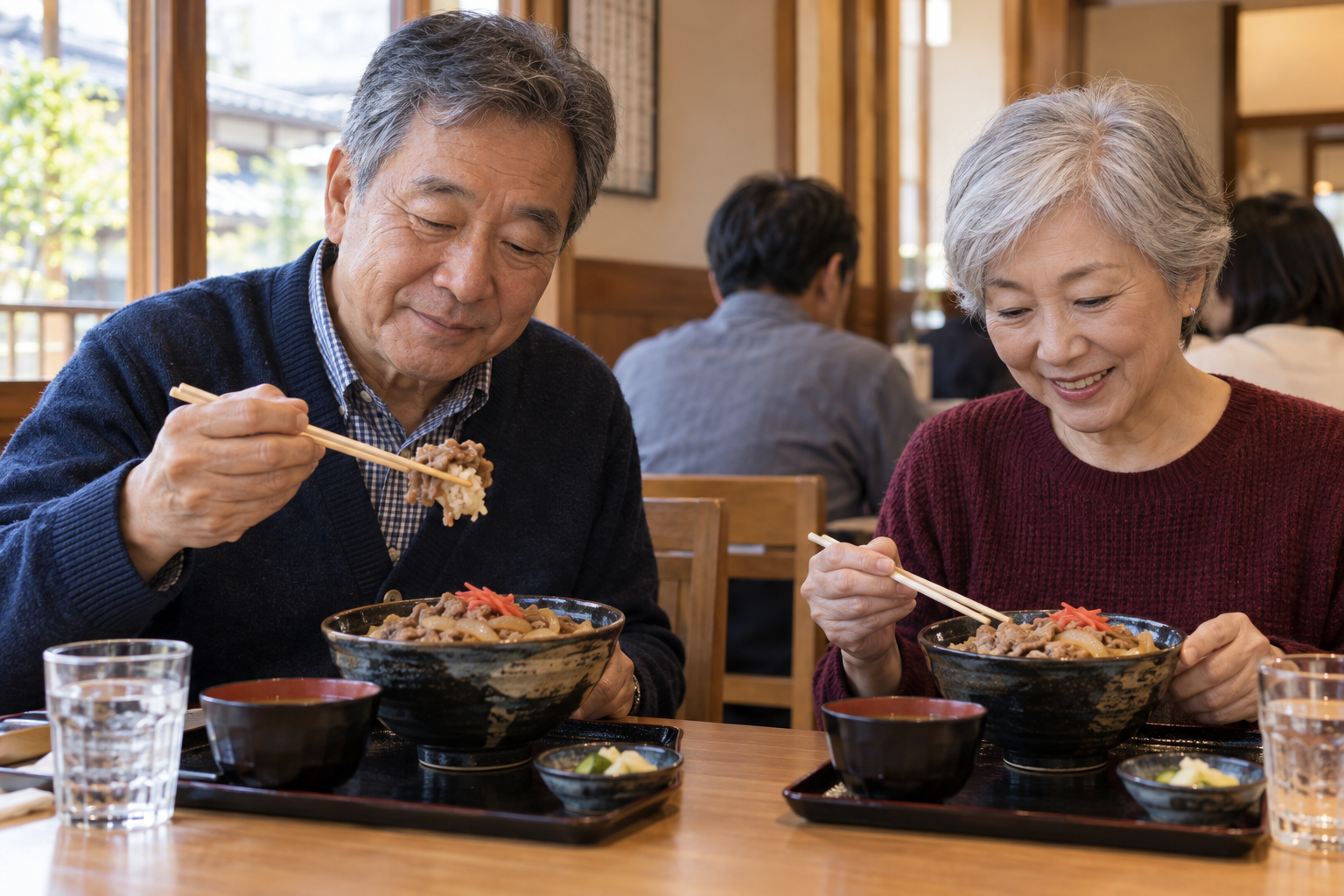
An egg is optional: you can order a plain bowl without adding one. If you want an egg topping, check whether the selected version is raw or partly cooked. Yoshinoya, for example, lists hanjuku tamago as a separate side. Do not choose by a small picture alone when the preparation matters to you.
For ingredient restrictions, consult the current information for the exact dish, sides and condiments before paying. Yoshinoya’s menu information specifically notes that wheat in its gyudon comes from soy sauce and warns of possible unintended allergen contact during preparation. Removing a visible topping does not establish suitability. Use our food-allergy guide for the broader checks; if the necessary information cannot be confirmed, choose another suitable meal.
Pay, collect and leave with the right order
Yoshinoya’s payment page lists transport IC cards and several card networks, with exceptions at some branches. That is not a guarantee for your particular foreign card or restaurant. Read the branch’s accepted-payment display before ordering and have a usable backup.
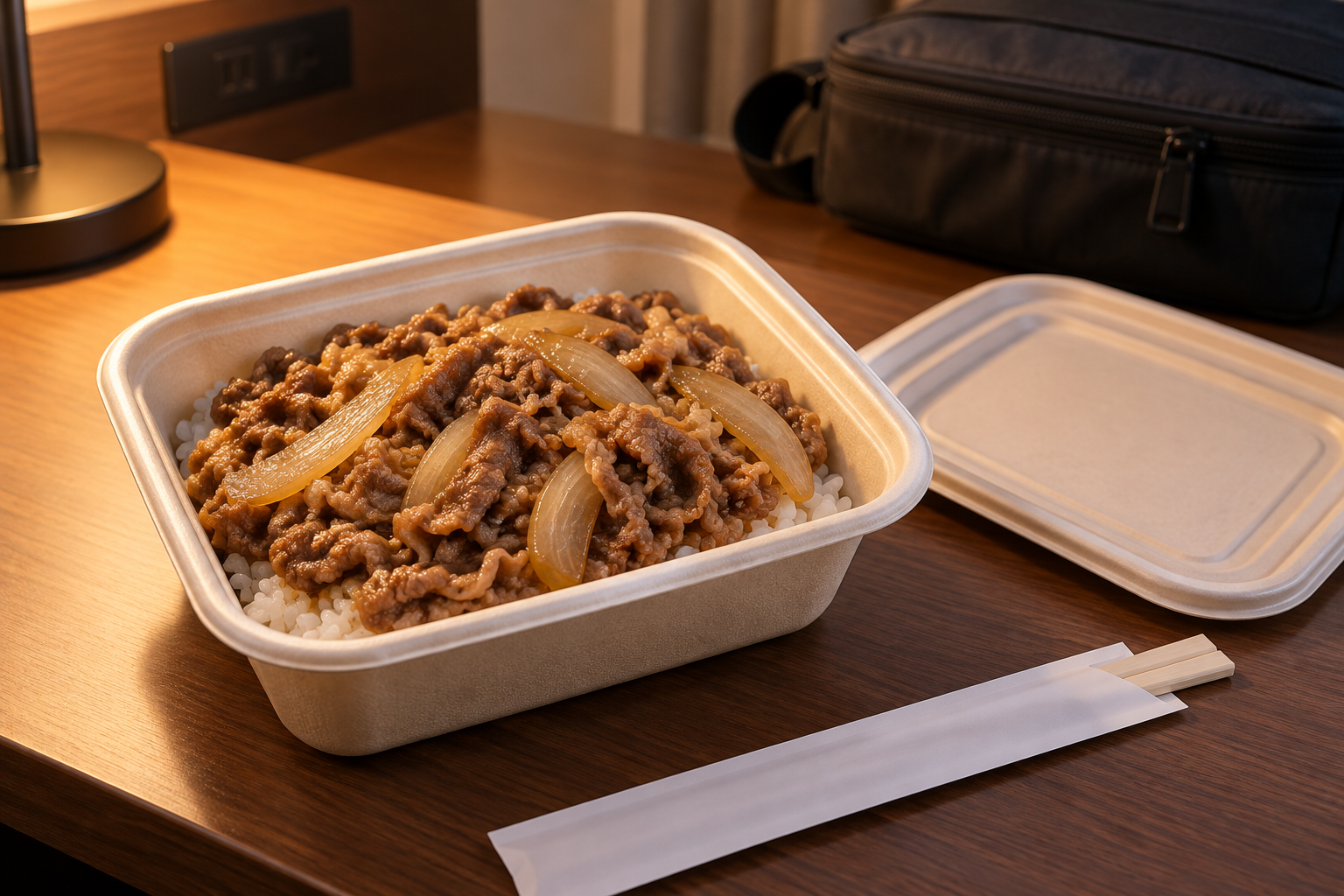
Keep the ticket or bill until the process is finished. For takeaway, check the item count, lid and utensils before leaving. Choose a permitted place to eat; if you plan to use your hotel room, check its arrangements. For dine-in, follow the shop’s instruction about returning the tray and whether any payment remains.
A beef bowl can fit into a sightseeing day without a reservation, but this guide does not verify today’s queue, opening hours or stock at any branch. Choose somewhere along your existing route and keep a time limit if you have a train to catch. If the restaurant cannot meet your needs, our Tokyo restaurant Plan B offers other ways to find a meal.
Frequently asked questions
What is gyudon?
Thinly sliced beef and onions in a mildly sweet soy-based sauce, served over rice. Check the exact menu for additions.
Which size should I order first?
Our suggestion is regular, or namimori, unless you already know you want a smaller or larger portion.
Does “more meat” mean the same as large?
No. Yoshinoya has atama no ōmori; Sukiya distinguishes M-extra from L. Read the option, not just its price.
Does gyudon automatically include miso soup?
Check the order. In our Yoshinoya example, soup is a separately priced item; Sukiya offers paid sets.
Can I get a bowl for under ¥500?
The checked regular dine-in examples are ¥498 at Yoshinoya and ¥480 at Sukiya before extras. Branch prices and applicable late-night charges can change the total.
Do I need to add a raw egg?
No. Choose the plain bowl if you do not want an egg. Check the preparation of any egg topping you select.
Can I rely on the Matsuya app?
Its official update reported app service interruption at this check. Read the latest notice and use the branch’s available ordering method.
Should I buy another ticket if the food has not arrived?
Ask staff first and show the existing ticket. A second purchase could create a second order.
Are the pictures exact chain portions?
No. They are AI-generated concepts. Use the restaurant’s actual menu for portions, products and prices.
Official sources
Checked November 1, 2026. Recheck current menus and branch instructions when buying.
Comments