
- Quick Answer
- The seven checks to make before buying or relying on a policy
- Cashless care versus reimbursement
- What to do when you become ill or injured
- The claim-document bundle
- Medical costs: what you can and cannot assume
- Plan B when cashless care is unavailable
- Before departure: the 30-second audit
- FAQ
- Is travel insurance mandatory for Japan?
- What does cashless treatment mean?
- Will every hospital accept my insurance?
- Should I call the insurer before an ambulance?
- What if I have a chronic or pre-existing condition?
- What documents should I keep?
- Is credit-card travel insurance enough?
- What if cashless care is unavailable?
Quick Answer
Verify travel insurance before departure, but do not stop at the word “insured.” Check the medical limit, deductible, exclusions, pre-existing-condition wording, planned activities, cashless arrangements, assistance contact, upfront-payment capacity and claim documents.
JNTO explains that “cashless service” generally means the insurer pays the medical provider on your behalf. Other policies may require you to pay first and claim later, and some clinics may not accept credit cards. Cashless care is a policy and case process, not an automatic result of carrying an insurance card.
If there is an immediate threat to life or serious injury, call 119 for an ambulance first. Contact the insurer or assistance service as soon as it is safe to do so.
This guide provides general travel-planning information. It is not medical, legal or individualized insurance advice, and it does not recommend a particular insurer or policy.
The seven checks to make before buying or relying on a policy

| Check | Question to answer before departure | Why it matters |
|---|---|---|
| Medical limit | What is the maximum covered amount? | “Medical cover” may still have a limit |
| Deductible/excess | What amount do you pay yourself? | A small claim may remain mostly out of pocket |
| Pre-existing conditions | How does the policy define and treat them? | JNTO notes that chronic disease affects coverage |
| Planned activities | Are skiing, hiking, cycling, diving or other planned activities covered? | Activity exclusions and add-ons vary |
| Cashless process | Is assistance authorization required, and which providers can use it? | Cashless service may not be available everywhere |
| Upfront payment | Can you pay if cashless service is unavailable? | The provider may require payment before reimbursement |
| Documents and deadlines | What originals, forms and notice deadlines apply? | Missing records or late notice can affect a claim |
Also check trip cancellation, interruption, baggage, personal liability and repatriation if they matter to your itinerary. JNTO specifically advises travelers to examine coverage and notes the relevance of third-party liability.
Do not assume that a credit-card benefit is the same as a standalone policy. Read its activation conditions, covered travelers, duration, limits and claim route.
Cashless care versus reimbursement
Cashless service
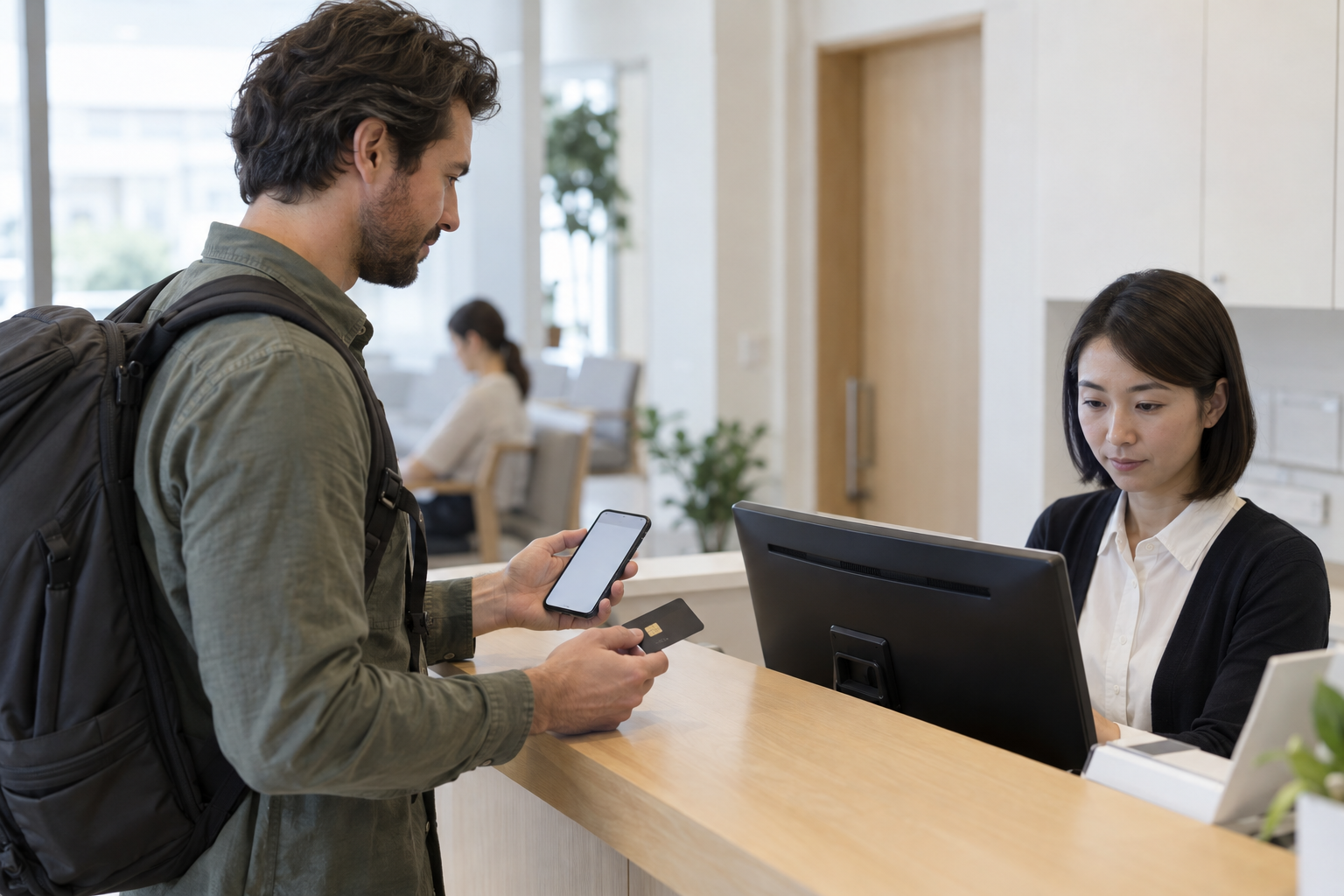
The assistance service may coordinate with a participating provider and pay an eligible cost directly. You may still need authorization, identification, policy details and confirmation that the provider accepts the arrangement. Deductibles, excluded treatment or non-covered items may remain payable by you.
Reimbursement
You pay the provider and later submit a claim. Ask the insurer what records it needs before leaving the facility. Common requests can include an itemized bill, receipt, medical certificate or diagnosis record, prescription information, claim form and proof of travel. Requirements vary by policy, so the policy wording and assistance team control the answer.
The safest assumption
Carry a payment fallback even if the policy advertises cashless service. That is not because cashless care is unreliable; it is because authorization, provider participation, office hours and case eligibility can differ.
What to do when you become ill or injured
1. Treat immediate danger as an emergency
Call 119 for an ambulance in a serious emergency. Use the RJG Japan emergency numbers guide for the broader help pathway. Do not delay urgent care to obtain insurance permission.
2. If it is not an immediate emergency, contact assistance first when practical
Use the telephone number or app listed in the policy. Ask:
- Is this situation potentially covered?
- Is cashless treatment available for this case?
- Which nearby provider should I use?
- Do I need a case or authorization number?
- What must I bring and what documents must I collect?

3. Confirm payment with the provider
Before non-urgent treatment, ask whether the facility has received cashless authorization or whether you must pay. Do not treat a verbal “we accept insurance” statement as confirmation that your specific insurer will pay the full bill.
4. Keep a complete document bundle
Collect and photograph documents before leaving, while preserving originals if the insurer requires them. Record the facility name, treatment date, amount, payment method, assistance case number and the name or department of the person you contacted.
The claim-document bundle

Prepare an offline folder before travel with:
- Policy number and insurer or assistance contact
- Full policy wording or benefit schedule
- Passport identity page copy stored securely
- Travel dates and booking proof
- Emergency contact details
- A payment card and an alternative payment route
After treatment, preserve:
- Itemized invoice and payment receipt
- Medical certificate or diagnosis record if issued or required
- Prescription and pharmacy receipts
- Assistance authorization or case number
- Claim form and submission confirmation
- Police or transport report for incidents where the policy requires one
Never upload medical or identity documents to an unverified link. Use the insurer's official channel and confirm the domain or app independently.
Medical costs: what you can and cannot assume
There is no single tourist price for all treatment in Japan. The provider, service, urgency, tests, medicines, insurance status and applicable institutional rules can change the amount. Some foreign visitors receive care as self-paying patients.
The practical decision is not to predict one bill. It is to check the policy limit, know whether cashless service is actually authorized, retain an upfront-payment fallback and collect the documents needed for reimbursement.
This guide does not generalize a 2026 MHLW pricing rule for certain medical corporations into a claim about all hospitals or clinics. If a provider gives you an estimate, ask what it includes and whether additional tests, medicine or after-hours care could change it.
Plan B when cashless care is unavailable
- Ask the assistance service whether another suitable provider can use cashless service.
- If changing providers is medically inappropriate or unsafe, follow the medical need first.
- Ask the current provider for an estimate and payment method when practical.
- Pay only through the provider's normal channel and obtain an itemized receipt.
- Ask the insurer exactly which documents and deadlines apply to reimbursement.
- Preserve originals and keep secure copies until the claim is closed.
If the claim is later denied or partly paid, request the reason in writing and compare it with the policy wording and appeal or complaint procedure. A denial is not automatically proof that the provider billed incorrectly, and a provider bill is not automatically proof that the insurer must reimburse it.
Before departure: the 30-second audit
- Medical limit checked
- Deductible or excess checked
- Pre-existing-condition wording checked
- Planned activities checked
- Cashless authorization route saved
- Upfront-payment fallback prepared
- Policy number and emergency contacts stored offline
- Claim documents and deadlines identified
FAQ
Is travel insurance mandatory for Japan?
This guide does not identify a general tourist-entry requirement to hold travel insurance. JNTO strongly recommends considering it because medical treatment can be expensive. Check any separate visa, tour, school or activity requirement that applies to you.
What does cashless treatment mean?
It generally means the insurer or assistance service pays an eligible provider directly. It may require prior authorization and a participating provider, and it may not cover deductibles or excluded costs.
Will every hospital accept my insurance?
Do not assume so. Ask the assistance service which provider to use and whether cashless authorization has been issued for your case.
Should I call the insurer before an ambulance?
Not in a serious emergency. Call 119 first when life or safety is at immediate risk, then contact the insurer when safe.
What if I have a chronic or pre-existing condition?
Read the definition, exclusions, stability period and any declaration requirements. JNTO notes that chronic disease can affect coverage. Ask the insurer in writing if the wording is unclear.
What documents should I keep?
Keep the itemized invoice, receipt, medical or diagnosis record when required, prescriptions, assistance case number, claim form and any incident report required by the policy.
Is credit-card travel insurance enough?
It may or may not be. Check activation conditions, covered travelers, trip duration, medical limits, exclusions, cashless arrangements and the claim route.
What if cashless care is unavailable?
Ask about another suitable provider. If you must pay upfront, confirm the payment method, obtain itemized records and follow the insurer's reimbursement instructions without delaying urgent care.
Last checked: September 12, 2026 JST. Policy terms, provider arrangements and medical-system information can change. Recheck your insurer, assistance service and official sources before travel.

Comments