Quick Answer
Tokyo’s summer festival (matsuri) season runs from mid-July to the end of August 2026. The headline events: Mitama Matsuri at Yasukuni Shrine (July 13-16), Tsukiji Hongwanji Bon Odori (July 29-August 1), Fukagawa Hachiman Matsuri (August 12-16 — a once-every-three-years main festival this year), Azabu-Juban Noryo Matsuri (August 22-23), and Koenji Awa Odori (August 29-30). Entry is free at each of these. Bring cash for the food stalls — ¥2,500-3,500 per person covers a satisfying evening of street food.
What Is a Matsuri?
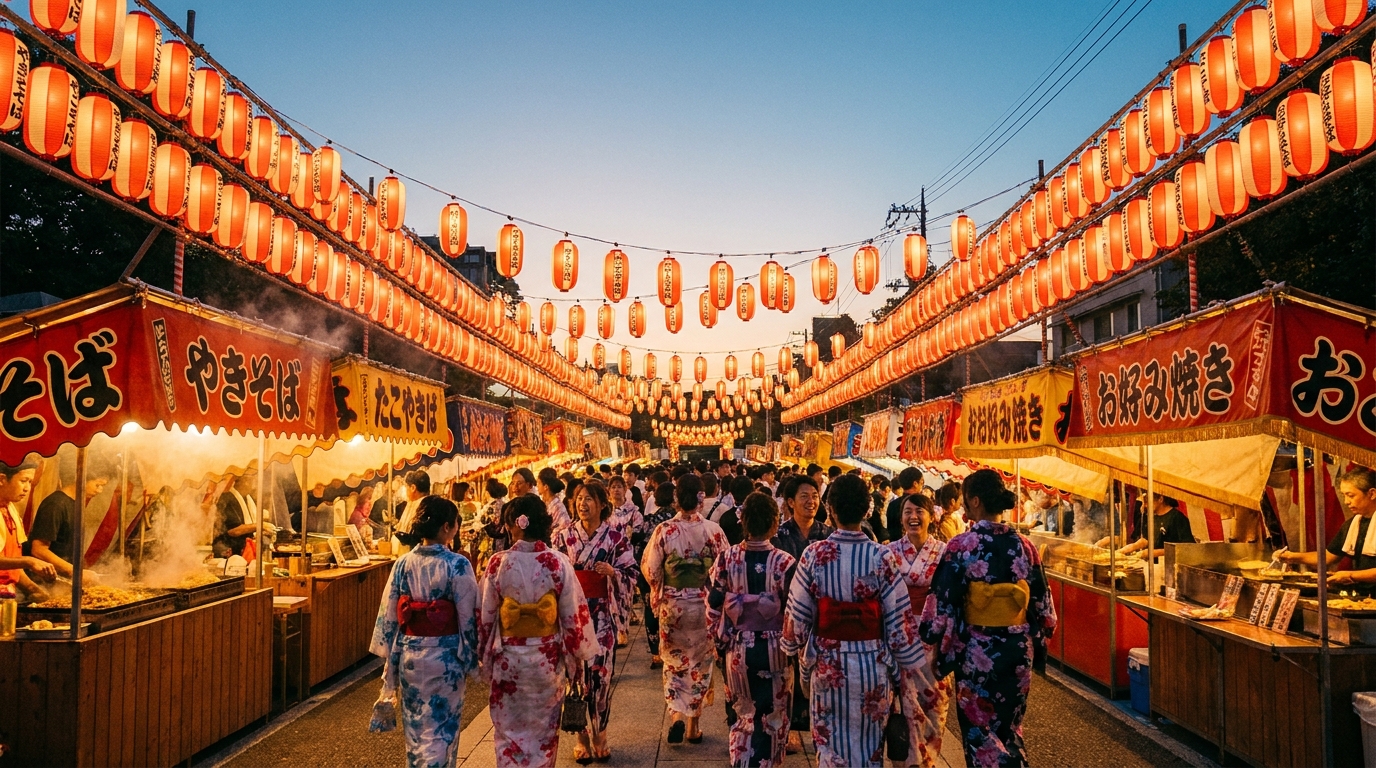
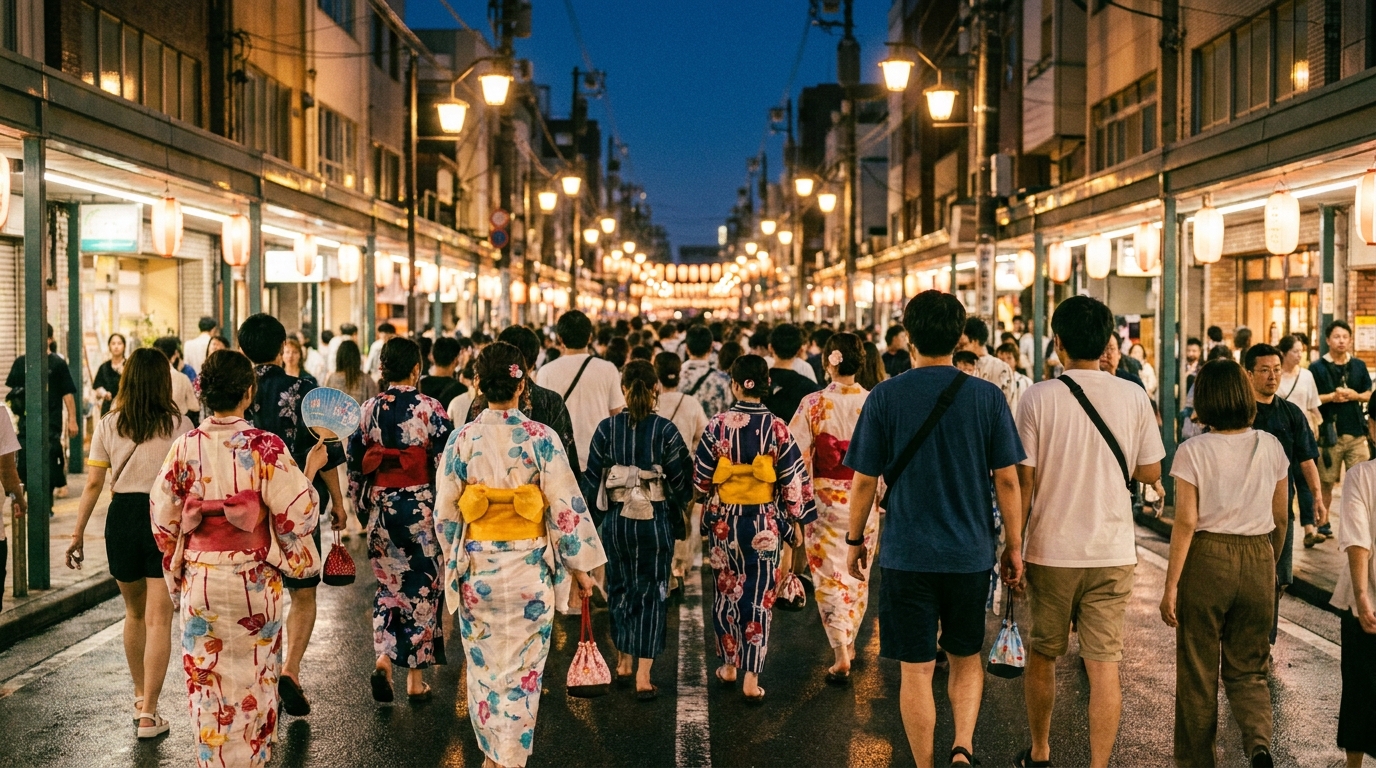
A matsuri is a Japanese festival, and in summer it takes one of two broad forms: a shrine festival, where portable shrines (mikoshi) are carried through the streets, or a community celebration built around food stalls, lanterns, and bon odori — a circle dance held during the season when ancestors are traditionally welcomed home.
For a visitor, the practical takeaway is simpler: a matsuri is a free, open-air street party. Nobody checks tickets at the gate for the festivals in this guide. You walk in, eat grilled noodles under paper lanterns, watch a procession or join a dance, and walk out whenever you like.
If you are staying at an Airbnb or guesthouse in Tokyo between July and August 2026, there is a good chance one of these festivals is happening within a 30-minute train ride of your room. This guide covers the dates, the food, and the unwritten rules.
Tokyo Summer Matsuri Calendar 2026
Dates below were checked against official festival organizers in June 2026. Summer weather can move schedules, so re-check the official page linked in each section a day or two before you go.
| Festival | Dates (2026) | Nearest Station | Highlight |
|---|---|---|---|
| Mitama Matsuri | July 13-16 | Kudanshita | 30,000 lanterns at night |
| Tsukiji Hongwanji Bon Odori | July 29-Aug 1 | Tsukiji | Dance circle + famous food stalls |
| Fukagawa Hachiman Matsuri | Aug 12-16 | Monzen-Nakacho | Water-splashing mikoshi parade |
| Azabu-Juban Noryo Matsuri | Aug 22-23 | Azabu-Juban | Gourmet street food from local shops |
| Koenji Awa Odori | Aug 29-30 | Koenji | 10,000 dancers in the streets |
Mitama Matsuri (July 13-16)
Yasukuni Shrine in Kudanshita hangs more than 30,000 paper lanterns along its main approach for four nights, creating one of Tokyo’s more striking summer scenes. The festival runs 9:00-21:30 each day, but the lanterns are the point — arrive after sunset, around 19:00. The 2026 edition is the 79th. Expect a calmer, more reflective atmosphere than the dance festivals later in the season; Yasukuni is a shrine honoring the war dead, and the lantern display is a memorial at its core.
Tsukiji Hongwanji Bon Odori (July 29-August 1)
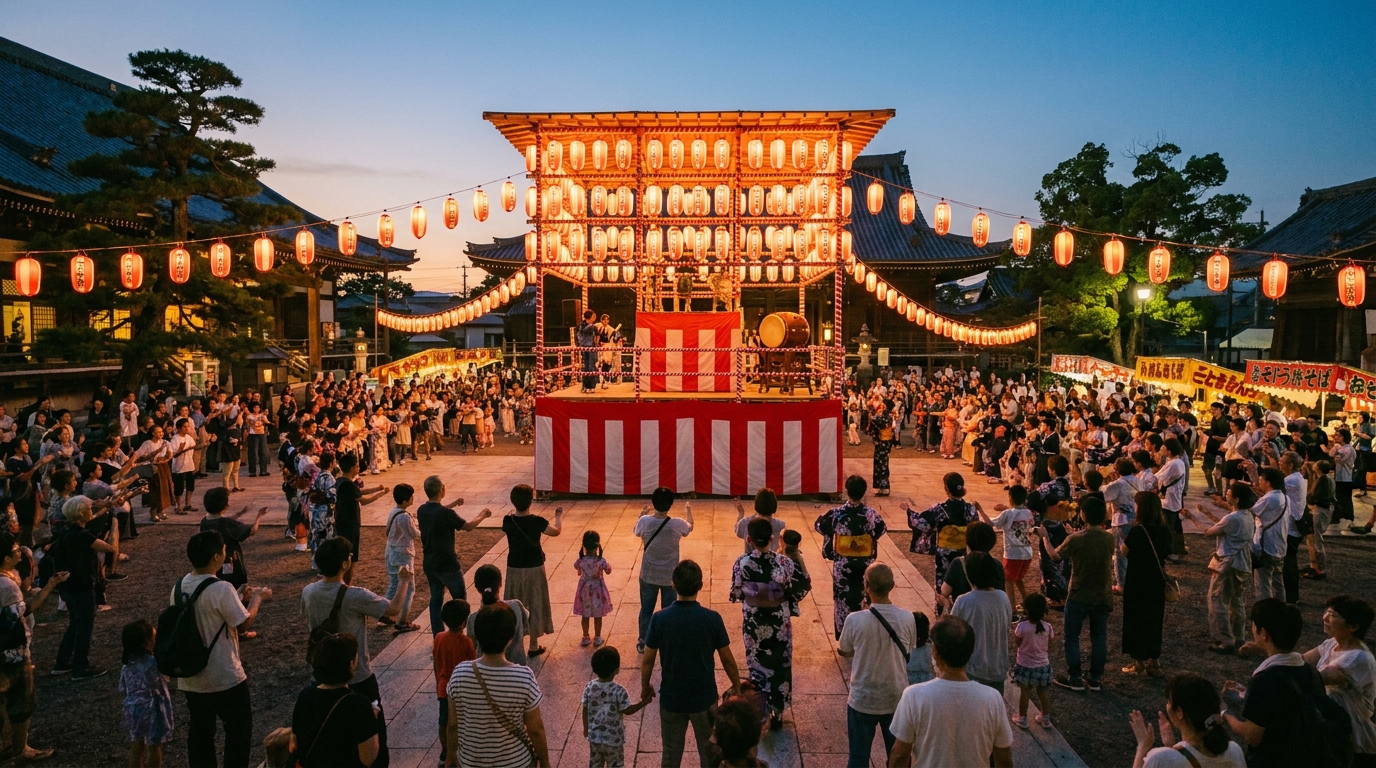
The 79th edition of this bon odori takes place in the front plaza of Tsukiji Hongwanji, the unmistakable stone temple next to Tsukiji’s famous outer market. Dancing runs 19:00-21:00 (the final night starts at 18:00). This one has a reputation among Tokyo locals for its food: stalls are run by restaurants from the Tsukiji area, so the quality is a clear step above standard festival fare. It is also one of the friendliest places in Tokyo for a first-time bon odori dancer — see the etiquette section below.
Fukagawa Hachiman Matsuri (August 12-16)
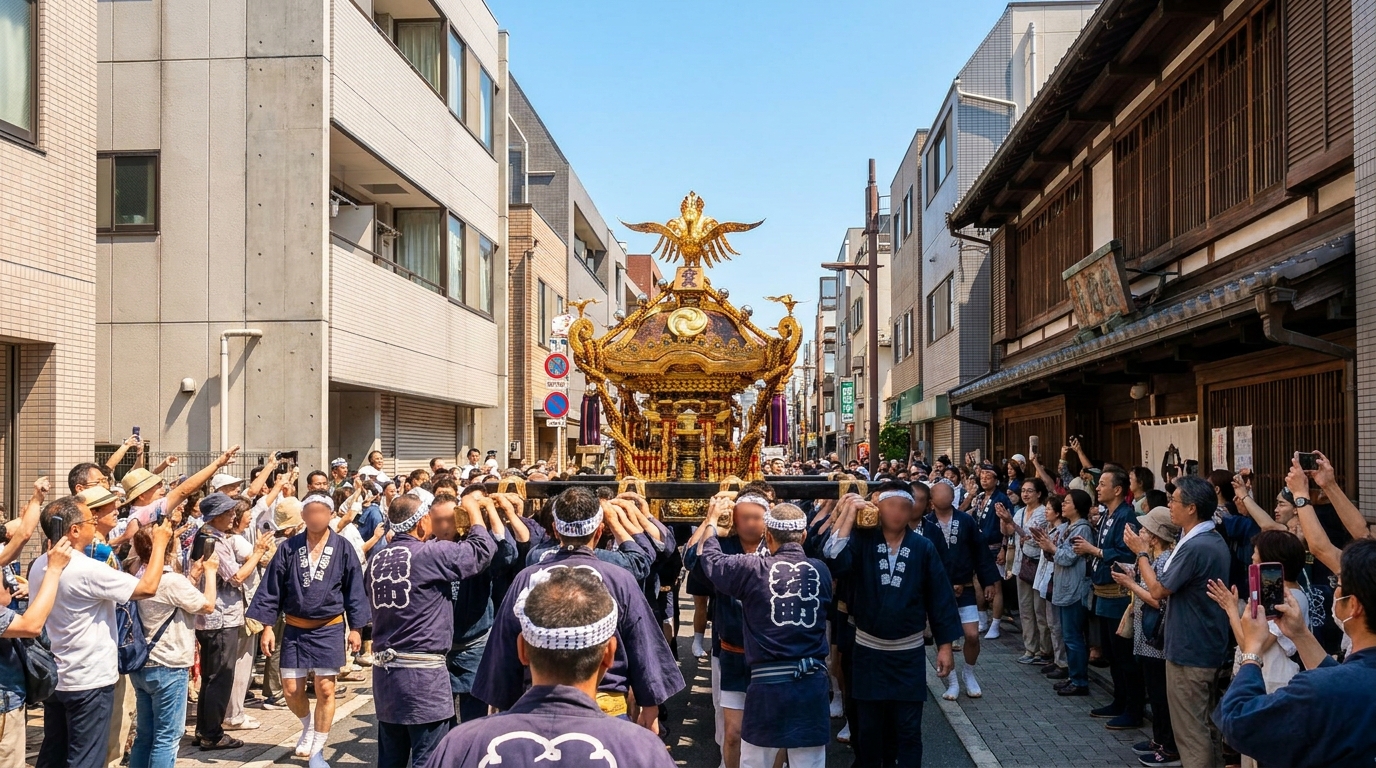
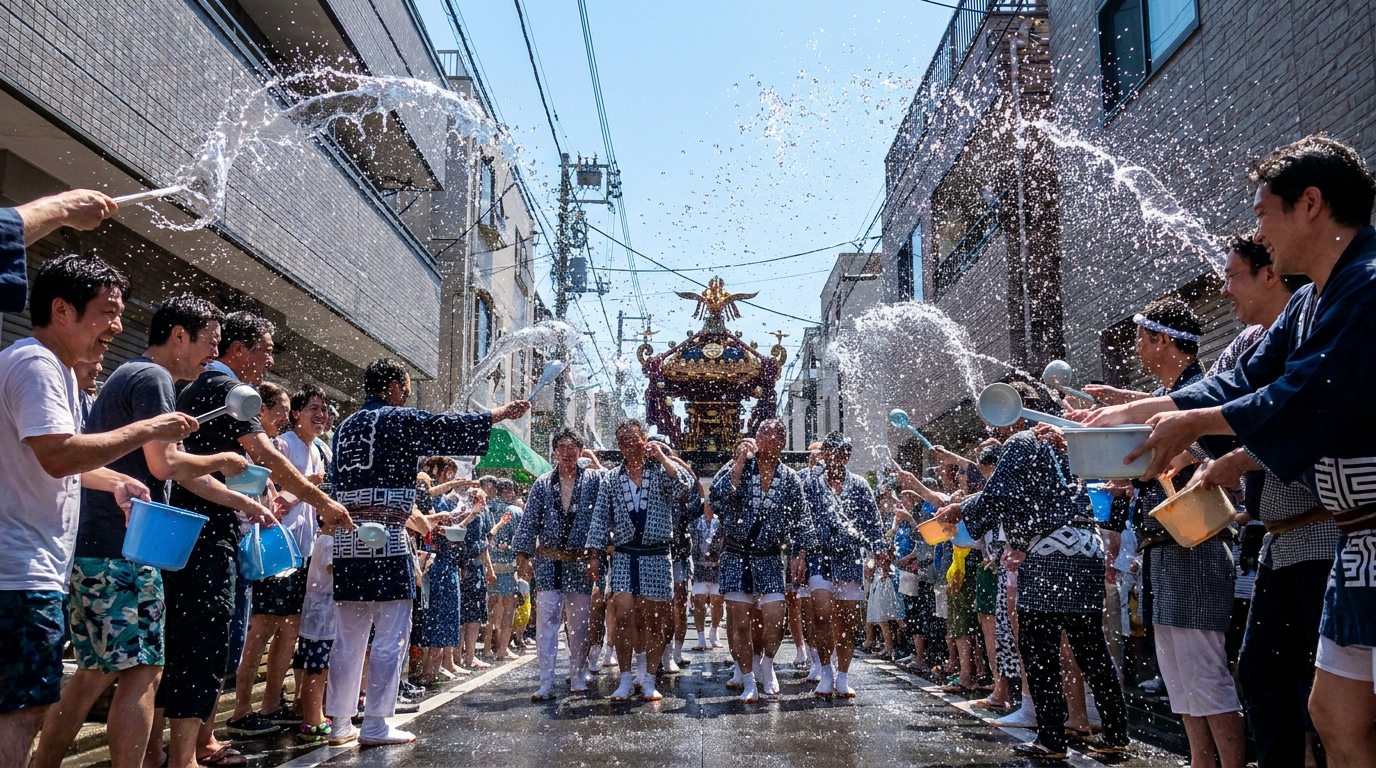
This is the one to plan around in 2026. Fukagawa Hachiman Matsuri at Tomioka Hachimangu shrine is counted among Edo’s three great festivals, and its full-scale version — the hon-matsuri — happens once every three years. 2026 is that year, held in the run-up to the shrine’s 400th anniversary in 2027. The climax is on Sunday, August 16: a joint procession of 54 neighborhood mikoshi, during which spectators throw buckets of water over the carriers. It is loud, wet, and completely unlike the quiet-lantern end of the matsuri spectrum. Stand back from the splash zone if you have a camera that dislikes water; stand in it if you don’t.
Azabu-Juban Noryo Matsuri (August 22-23)
A shopping-street festival rather than a shrine event, held 15:00-21:00 across the Azabu-Juban district. The stalls here are run by the neighborhood’s own restaurants and long-established shops, which makes it arguably the best pure eating festival in central Tokyo. It is also one of the most crowded — the streets are narrow and the crowd peaks between 17:00 and 19:00. Go at opening time with an empty stomach.
Koenji Awa Odori (August 29-30)
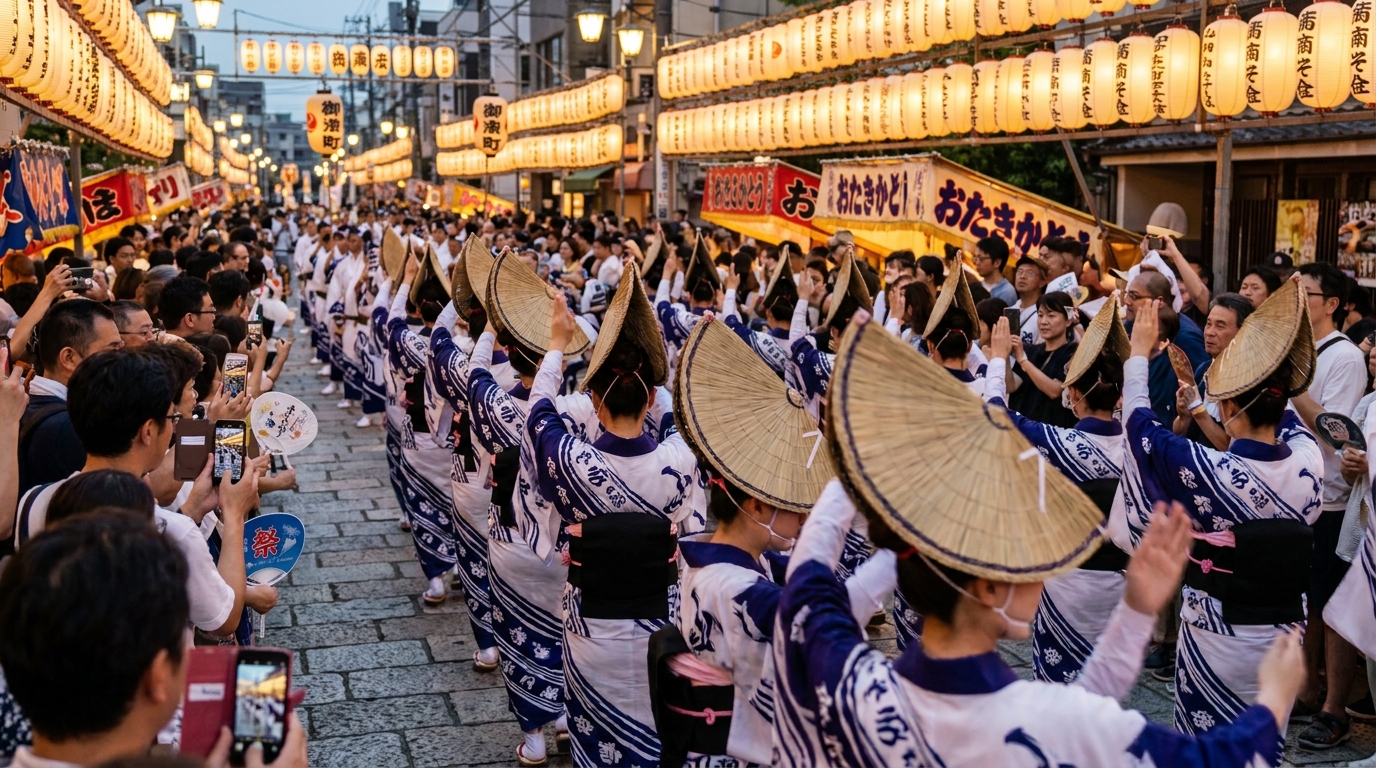
Tokyo’s biggest dance festival closes the season. Around 10,000 dancers in around 160 troupes parade through the shopping streets on both sides of Koenji Station and along Konan-dori avenue, performing the bouncing, hypnotic awa odori dance that originated in Tokushima. The 67th edition runs 17:00-20:00 on both days. Viewing is free from the roadside; arrive before 16:30 for a front-row standing spot along the shopping streets and Konan-dori avenue where the troupes parade. The energy here is the opposite of Mitama Matsuri — drums, shouting, and a crowd that dances along.
Smaller July Traditions Worth a Detour
Two short fairs in early July make a good warm-up if you arrive before the mid-July start of the calendar above: the Iriya Asagao (morning glory) Market near Iriya Station on July 6-8, and the Hozuki-ichi (Chinese lantern plant fair) at Sensoji in Asakusa on July 9-10, a fixed annual date. Both are small, local, and photogenic in a quieter way than the large-scale festivals.
Looking for fireworks instead? Tokyo’s major hanabi displays are a separate genre with their own crowd logistics — we cover dates, paid seats, and viewing strategy in our Japan Summer Fireworks 2026 guide.
Yatai Street Food: What to Eat and What It Costs
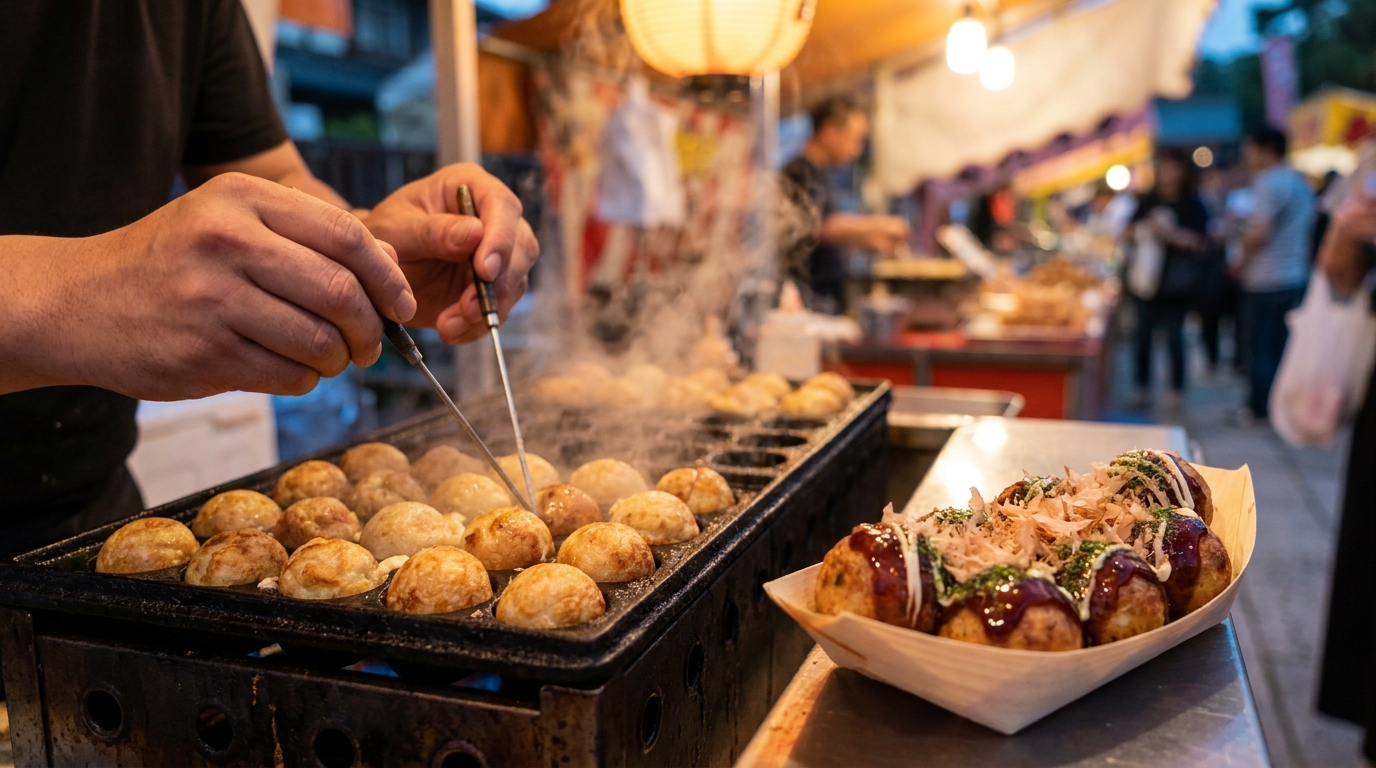
The food stalls — yatai — are half the reason to go. Prices have crept up with Japan’s recent food inflation and now cluster between ¥400 and ¥800 per item, so a budget of ¥2,500-3,500 per person buys a full evening of grazing.
| Item | What It Is | Typical Price |
|---|---|---|
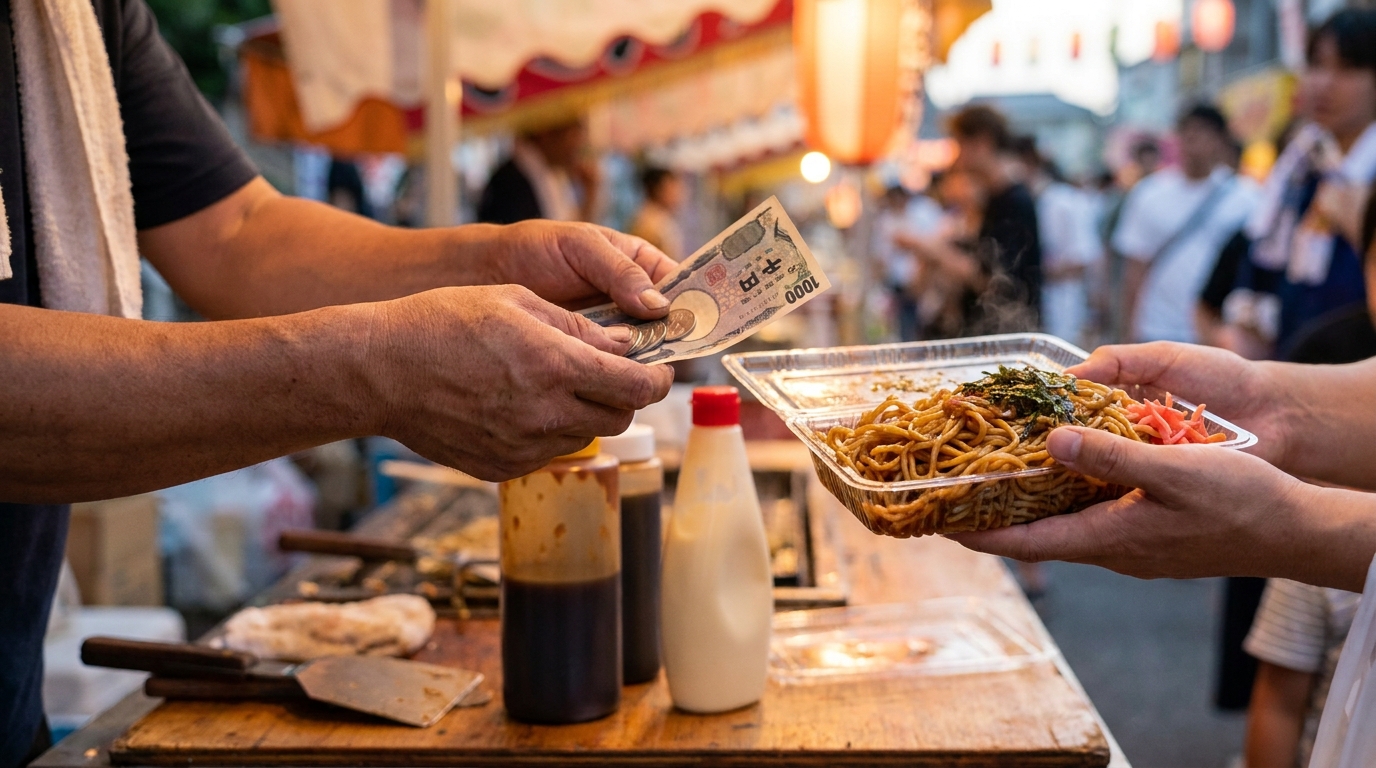
| Yakisoba | Fried noodles with pork and cabbage | ¥600-800 |
| Takoyaki | Octopus dumplings, 6-8 pieces | ¥600-800 |
| Yakitori | Grilled chicken skewers | ¥300-500 |
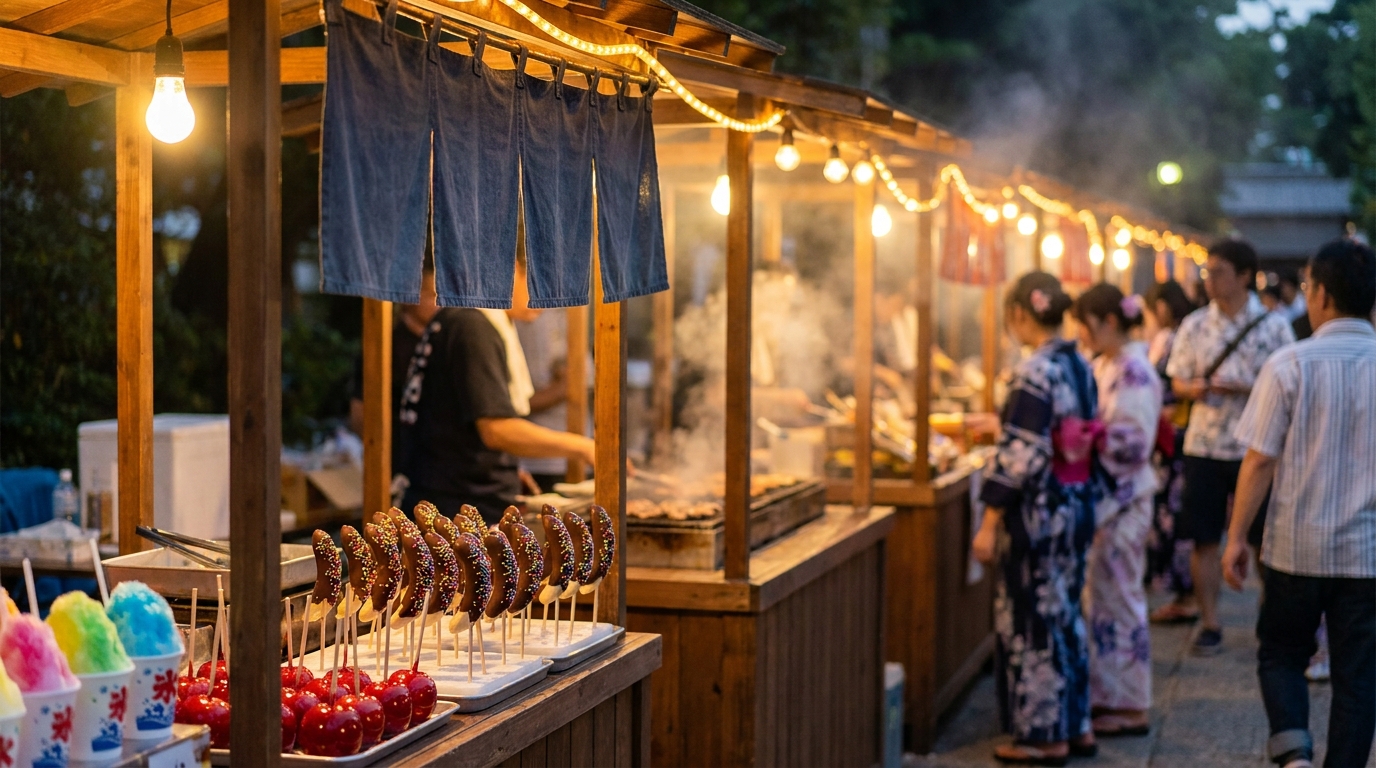
| Kakigori | Shaved ice with syrup | ¥400-600 |
| Jaga bata | Steamed potato with butter | ¥400-500 |
| Chocolate banana | Exactly what it sounds like | ¥300-500 |
| Ringo ame | Candied apple | ¥600-700 |
| Beer (cup) | Cold draft or can | ¥500-700 |
Three practical notes from a Tokyo-based festival regular:
First, watch the turnover, not the menu. A yakisoba stall with a fast-moving line is cooking in fresh batches; a quiet stall may be serving noodles that have sat on the griddle. The same logic applies to takoyaki — you want them made while you wait.
Second, queue rules are real. Lines form to the side of each stall. Order, pay, step aside, and wait for your number or eye contact from the cook.
Third, eat near the stall. Walking through a dense crowd with an open container of sauce-covered noodles risks someone else’s clothing more than your own, which is worse. Look for the standing tables or curb space set up near the food rows.
Cash, and How Much to Bring
Festival stalls are a cash economy. Some stalls have started accepting QR code payments such as PayPay, but card readers remain rare and you should not plan an evening around them — and the nearest convenience store ATM will have a line on festival night. Bring what you plan to spend, in the right shape:
- ¥1,000 notes and ¥100/¥500 coins are what stalls want. A ¥10,000 note for a ¥500 yakisoba will slow the line and may be refused early in the evening when the cash box is thin.
- ¥3,000-5,000 per adult covers food, drinks, and a couple of games comfortably at any festival in this guide.
- 7-Eleven ATMs accept overseas cards and dispense ¥1,000 notes if you withdraw amounts like ¥3,000 — see our Cash in Japan guide for the full breakdown of notes, coins, and ATM fees.
Festival Etiquette: The Unwritten Rules
None of this is policed, but following it is the difference between blending in and being the person locals quietly step around.
Do not touch a mikoshi or join the carriers. The portable shrine teams train together and wear matching happi coats for a reason — carrying is by neighborhood membership, not enthusiasm. Watching, cheering, and (at Fukagawa) throwing water are welcome.
Photography: crowds and performers in public are generally fine to photograph. Children, however, deserve the same caution you would apply at home — and at bon odori, avoid pushing a phone into the dance circle’s inner ring. Shrine inner sanctums often post no-photography signs; respect them.
Take your trash with you, or find the festival’s bins. Large festivals set up labeled trash stations (burnable / cans / PET bottles); when you find one, sort accordingly. Street trash cans barely exist in Tokyo outside the festival grounds — our Trash in Japan guide explains why, and what to do with a sauce-stained paper tray when bins are nowhere in sight (answer: a small bag back to your accommodation).
Drinking in public is legal in Japan as a general rule, and festival beer is part of the experience. One recent exception to know: Shibuya Ward banned street drinking year-round between 18:00 and 5:00 from October 2024, and parts of Shinjuku (Kabukicho) restrict it during event periods — none of the festivals in this guide fall in those zones, but keep it in mind if your night continues elsewhere. At the festivals themselves, the line locals draw is at behavior, not consumption — loud is fine at Koenji, less so in a residential lane at 22:00 on your walk back. If you are staying in an Airbnb, that walk home matters: see our noise rules guide for why Japanese neighbors are sensitive to late-night street noise.
Joining a bon odori circle is genuinely open to anyone — this is the one festival activity where participation is the point. Step into the outer ring, copy the dancer in front of you, and accept that you will be half a beat behind for the first three songs. At Tsukiji Hongwanji, first-timers and tourists join the circle as a matter of course.
What to Wear
A yukata — the casual cotton summer kimono — is welcome at any festival but required at none. At bon odori events roughly a third of the crowd wears one; at street festivals like Azabu-Juban, fewer. If you want the experience, rental shops in Asakusa offer yukata with dressing service from around ¥3,000-5,000 per day; reserve ahead for festival weekends.
Otherwise, dress for standing on asphalt in 28-30°C heat after dark: breathable clothes, real walking shoes (crowd-stepped sandals are a known regret), and a small towel — you will see locals carrying one, and at Fukagawa you will understand why. A handheld fan costs ¥100 at any convenience store and earns its keep by 19:00.
Practical Tips for the Crowds
Timing: the densest hour at evening festivals is 18:00-19:30, when after-work locals arrive. Going at opening time means shorter food lines and easier photos; going for the last hour means thinner crowds but some stalls sold out.
Trains, not taxis. All five festivals in this guide sit within a short walk of a station, and surrounding roads close or jam on festival nights. A Suica or PASMO card makes station crowds painless — if you have not set one up yet, our Suica and PASMO guide covers buying one at the airport. After Koenji Awa Odori ends at 20:00, the station entrance queues for 20-30 minutes; walking about 10 minutes south to Shin-Koenji on the Marunouchi Line is the established local workaround.
Toilets: shrine and temple grounds have public toilets, but lines grow long after dark. Convenience stores near festival sites often rope off their restrooms on festival nights. Go before you go.
Heat: Tokyo in late July and August stays above 28°C well past sunset, with high humidity. The vending machines that are everywhere else in Tokyo thin out inside festival crowds, so buy a drink before you enter the densest streets — context in our vending machine guide.
Rain: summer evening downpours are common. Festivals generally run in light rain; mikoshi processions and dance parades may pause or cancel in heavy rain, with announcements on the organizer’s site or X account the same day. There are no refunds to worry about, because there are no tickets.
FAQ
Q: Are Tokyo summer festivals free to attend?
A: Yes — all five festivals in this guide (Mitama Matsuri, Tsukiji Hongwanji Bon Odori, Fukagawa Hachiman, Azabu-Juban, Koenji Awa Odori) have free entry. What you spend goes to food, drinks, and games.
Q: Which Tokyo festival is the best one in 2026 specifically?
A: Fukagawa Hachiman Matsuri (August 12-16). Its full-scale hon-matsuri happens once every three years, 2026 is the year, and the 54-mikoshi joint procession commemorates the shrine’s upcoming 400th anniversary (2027). The water-splashing parade on August 16 is the single most distinctive festival event in Tokyo this summer.
Q: Can tourists join the bon odori dancing?
A: Yes. Bon odori circles are open to anyone, no registration or skill needed. Tsukiji Hongwanji (July 29-August 1) is an especially beginner-friendly place to try.
Q: Do festival food stalls take credit cards?
A: Plan on cash. Some stalls now take QR code payments, but card readers remain rare at yatai. Bring ¥1,000 notes and coins; ¥3,000-5,000 per adult covers an evening.
Q: What time should I arrive at a festival?
A: At opening (or 17:00 for evening events) for short food lines, or after 19:30 for thinner crowds. The 18:00-19:30 window is the most congested at each of the five festivals above.
Q: Is it OK to wear a yukata as a foreigner?
A: Yes, and it is generally read as a compliment to the occasion, not appropriation. Rental with dressing service runs ¥3,000-5,000 in Asakusa; flat sandals beat the traditional geta for a night of standing.
Q: Can I drink alcohol at a Tokyo festival?
A: Yes — drinking in public is legal in Japan and beer stalls are standard at festivals. Keep the volume neighborly on your walk back to your accommodation.
Q: What happens if it rains?
A: Organizers run stalls and lantern displays in light rain. Processions and dance parades may pause or cancel in heavy rain — check the festival’s official site or X account on the day. Entry is free, so nothing is lost but the evening.
Q: Are the festivals suitable for children?
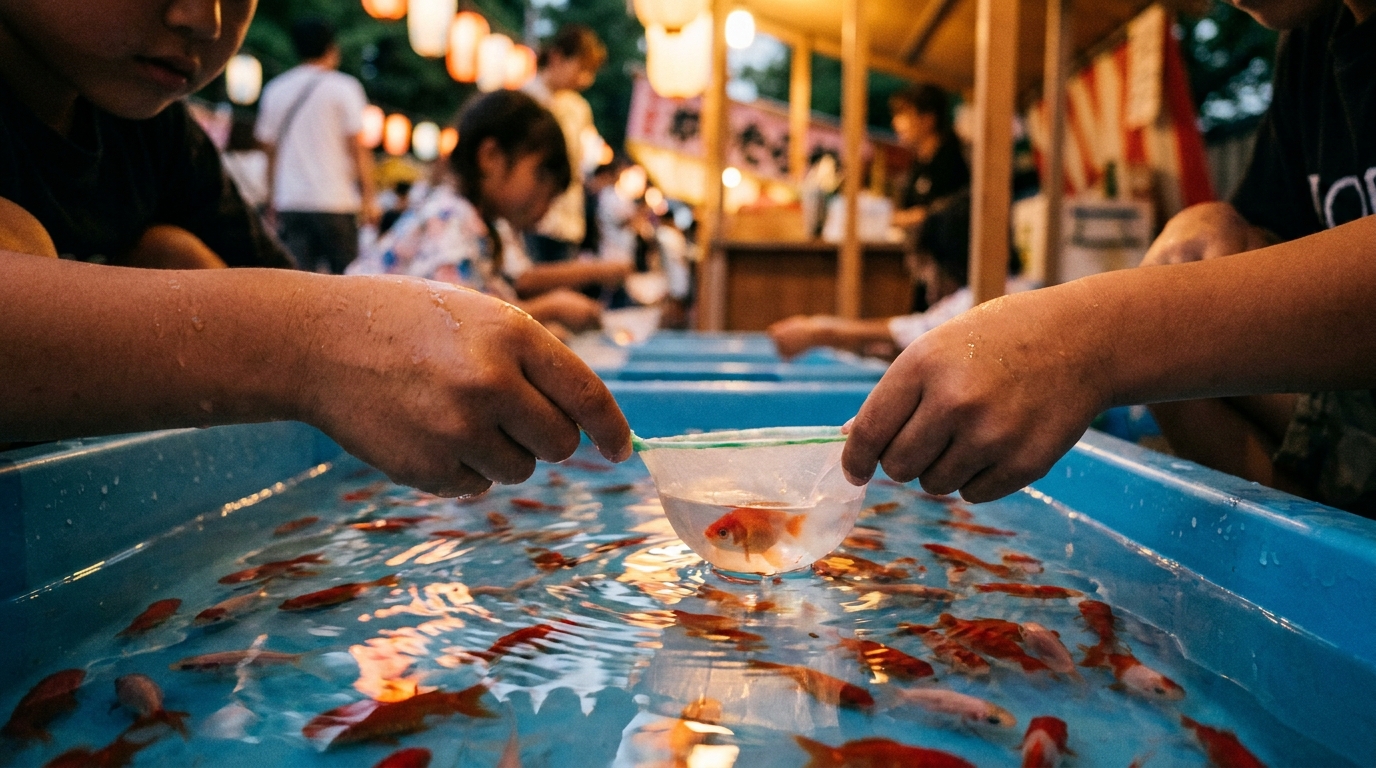
A: Broadly yes — festivals are family events in Japan, with games (goldfish scooping, ring toss) aimed at kids. The exception is peak-hour crowd density at Azabu-Juban and Koenji, which can be intense with a stroller; early arrival helps.
Q: Should I see a matsuri or a fireworks show if I can do one?
A: Different experiences: a matsuri is a participatory street event you wander through; hanabi is a seated spectacle with serious place-claiming logistics. If your dates allow Fukagawa Hachiman (August 12-16), choose the matsuri in 2026 — the hon-matsuri year tips the scale. Fireworks dates and strategy are in our fireworks guide.

Comments