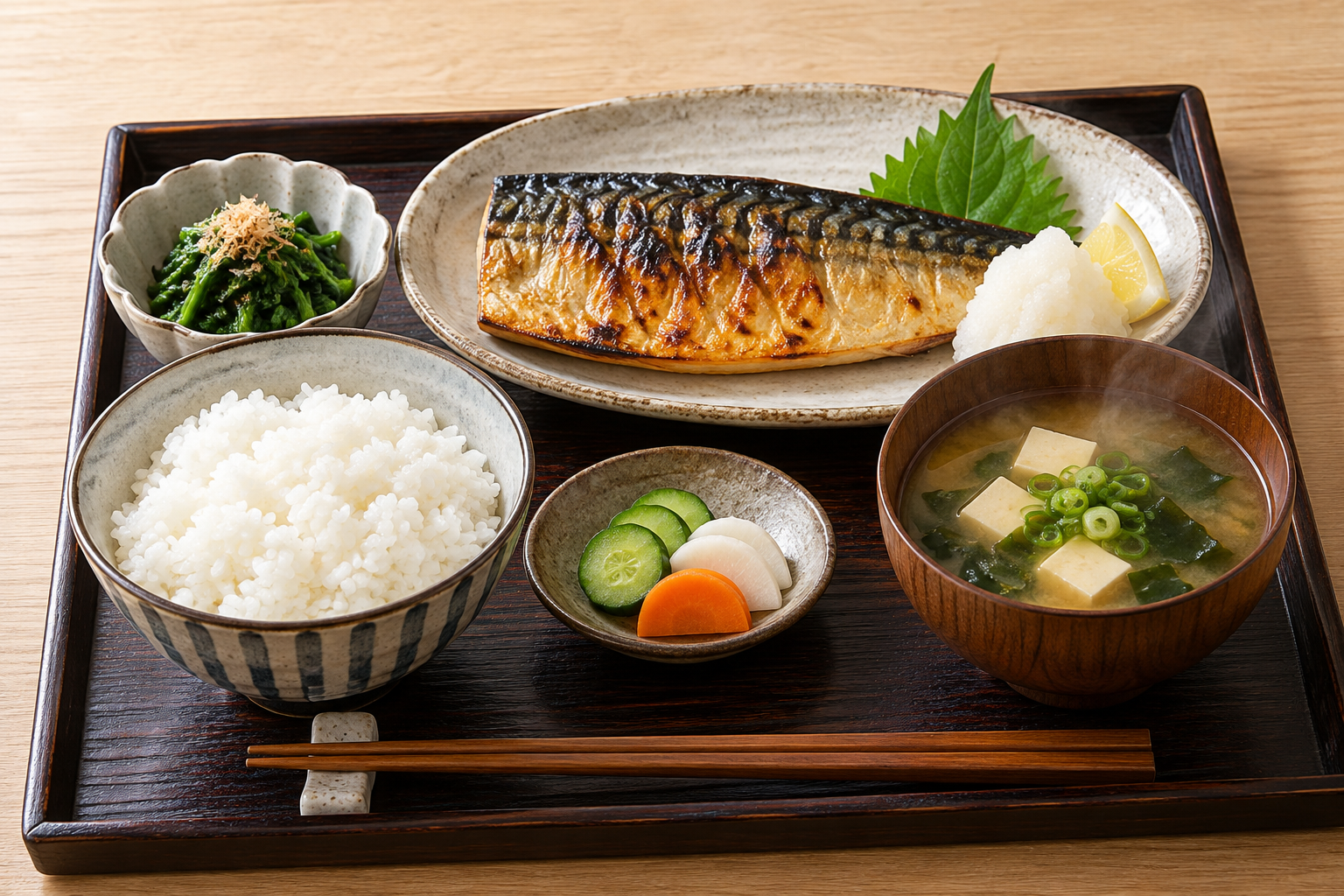
AI-generated set-meal illustration; not a photograph of a real restaurant or its menu.
Teishoku (定食) is a Japanese set meal: a main dish with separate rice, soup and accompanying small dishes. Choose the main you want, then check the set contents, rice size and final price. Rice refills depend on the restaurant and the menu category. At Yayoiken, for example, set meals qualify for white-rice refills; donburi and children’s menus do not.
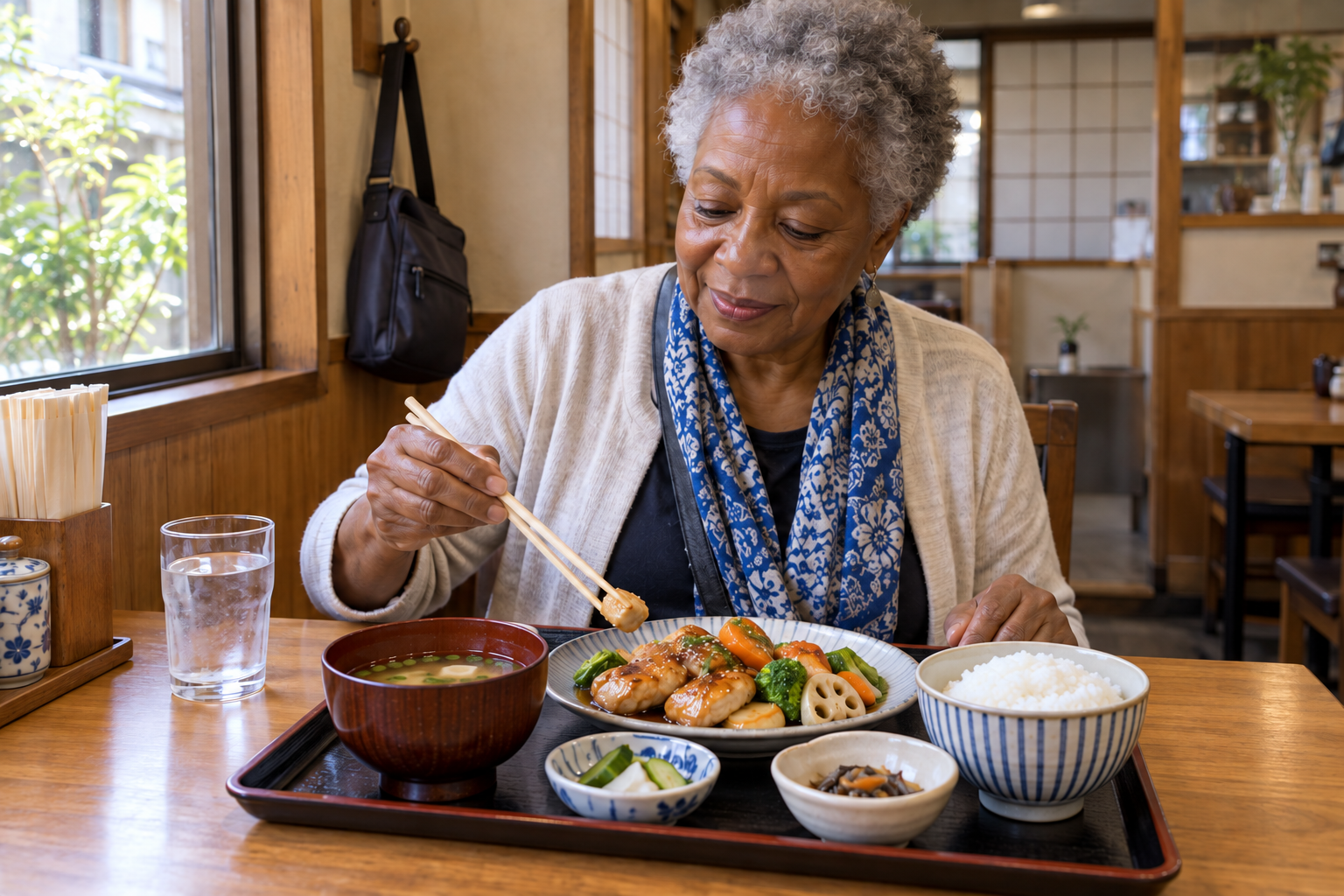
Official information checked October 28, 2026. This is a practical ordering guide based on published menus and service information, not a tasting report. Pictures illustrate meal formats and travelers; they do not show the named chains.
- Choose a set, a rice bowl or the main dish alone
- Pick the main dish before adding extras
- Use current branch prices for your meal budget
- Order once, then follow the restaurant’s handoff
- Check rice-refill eligibility, not just the word “set”
- Removing rice and ordering the main alone can have different prices
- Keep the dishes separate while you eat
- Check every component if ingredients matter
- Choose a nearby meal that fits the rest of your day
- Frequently asked questions
- What does teishoku mean?
- Is teishoku the same as donburi?
- Are rice refills always free?
- Can I refill barley rice at Yayoiken?
- Does a large rice order mean unlimited refills?
- Does removing rice make the meal cheaper?
- How much does a teishoku cost?
- Can a vegetarian choose any vegetable-looking set?
- Do I buy a ticket before sitting down?
- Official sources
Choose a set, a rice bowl or the main dish alone
A grilled-fish photo may sit beside several prices. Before comparing them, find out which meal each price buys. 定食 / teishoku identifies a set. 丼 / don identifies a rice bowl with a topping, such as katsudon. 単品 / tanpin means an individual item; check whether rice or soup needs a separate order.
| Menu format | How the meal is served | Check before ordering |
|---|---|---|
| Teishoku / 定食 | Main dish, rice and soup in separate dishes, with the listed sides | Which sides, rice choice and refill conditions are included? |
| Donburi / 丼 | The topping sits on the rice in one bowl | Is soup included or extra? Which bowl size is priced? |
| Tanpin / 単品 | The specified individual dish | What would you need to add for the meal you want? |
The Japan Foundation’s Irodori restaurant lesson explains the set-meal format and portion vocabulary. Its sample-menu prices are teaching material, not current restaurant prices. Use the live menu for your budget.
Choose teishoku if you want to alternate between plain rice and the main dish. Choose a donburi if you want rice and topping together. Our katsudon guide and tempura and tendon guide explain those dishes in more detail.
Pick the main dish before adding extras
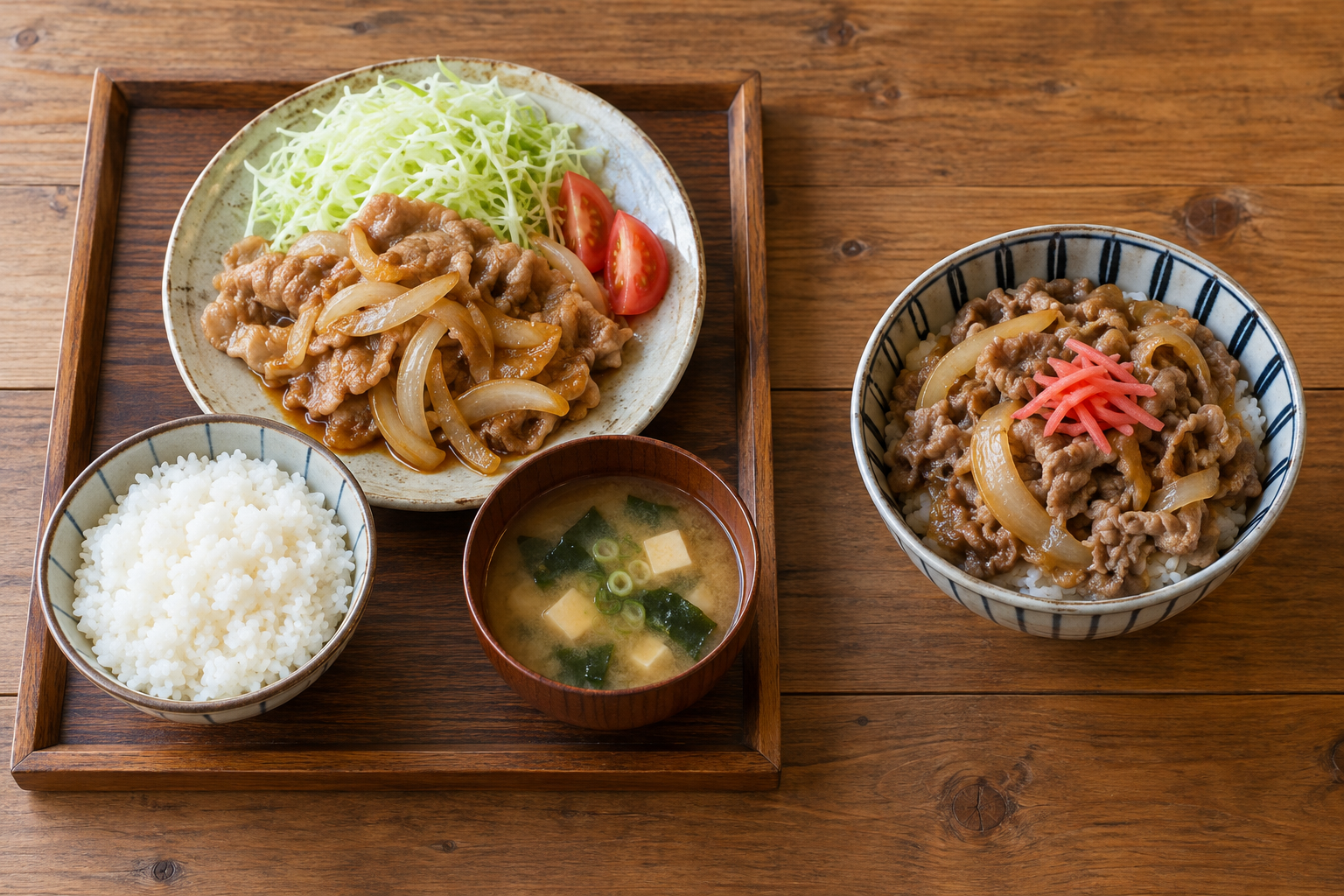
Start with a cooking style you want to eat: grilled fish, ginger pork, fried chicken or a simmered dish. Then inspect the full set rather than adding rice and soup from the side menu by habit. If you already chose a teishoku, those additions may duplicate what is included.
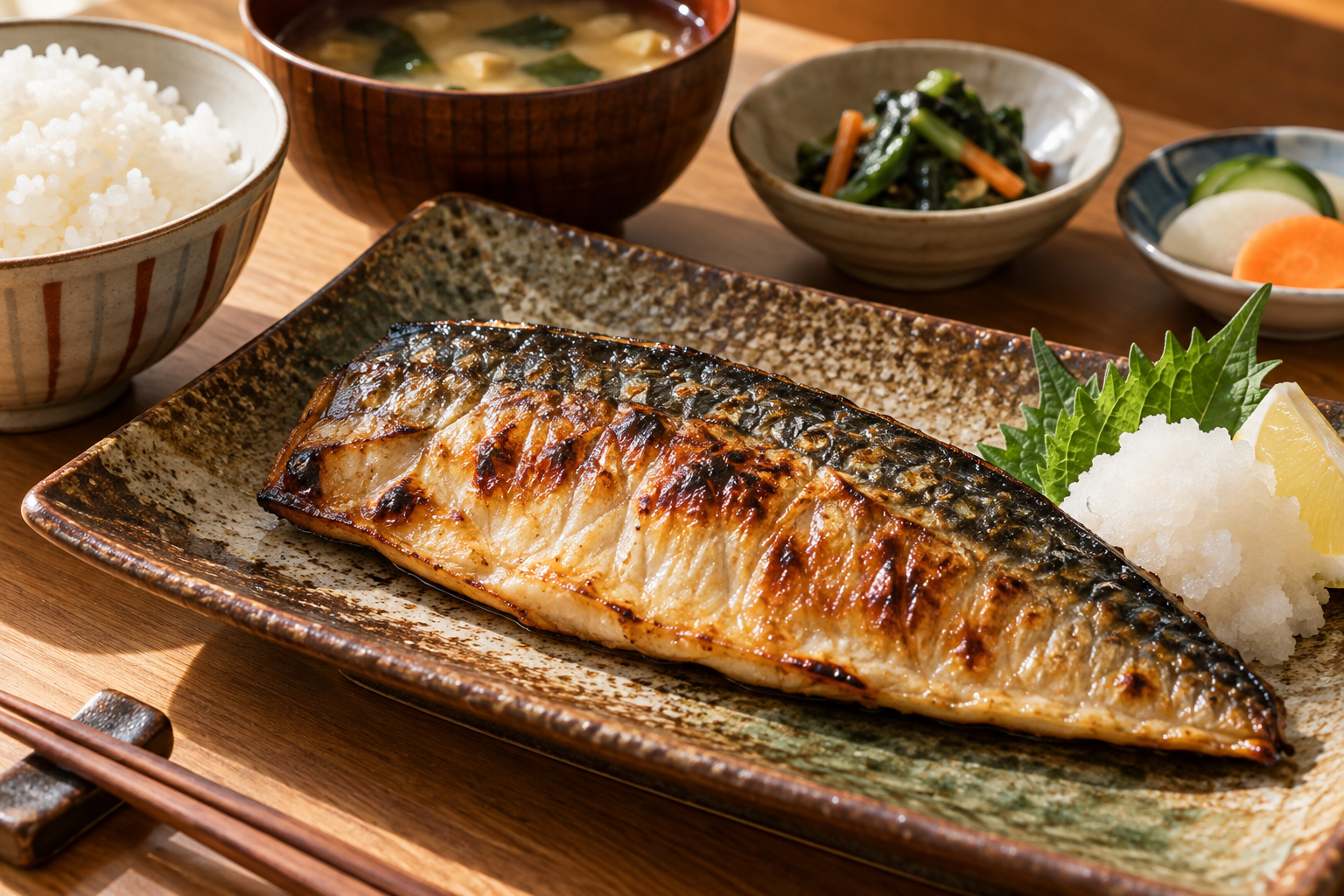
For recognizable examples, Ootoya’s English introduction describes grilled mackerel with grated daikon and chicken with vegetables in black-vinegar sauce. These are different mains within the set-meal category. Their names help you identify a dish; they do not establish the current contents or price at every branch.
For a first order, pick the main, choose the offered rice amount and review the total. Keep optional toppings for a later decision if you are unsure what the standard meal contains. A photograph can help distinguish a bowl from a plate, while the written item description establishes what you are buying.
Use current branch prices for your meal budget
Two checked examples show why a single “teishoku price” is unhelpful. Yayoiken’s Tokyo menu lists ginger-pork teishoku at ¥890 including tax. Ootoya Ikebukuro East Exit’s Daily Teishoku lists ¥1,480 including tax, with several dishes plus rice, miso soup and pickles. These are different meals, not a like-for-like ranking of the chains.
Both operators direct visitors to check location-specific information. Ootoya’s menu finder asks you to select a branch and warns that items and prices vary. Yayoiken’s Tokyo page also notes price exceptions. Treat these figures as dated examples and confirm the menu where you will eat.
Compare the total for one person’s intended order: the meal, any rice upgrade and any extra side or drink. If your budget is tight, decide which extras you want before confirming. Keep the in-store price and item name together on screen so you can point to the exact order.
Order once, then follow the restaurant’s handoff
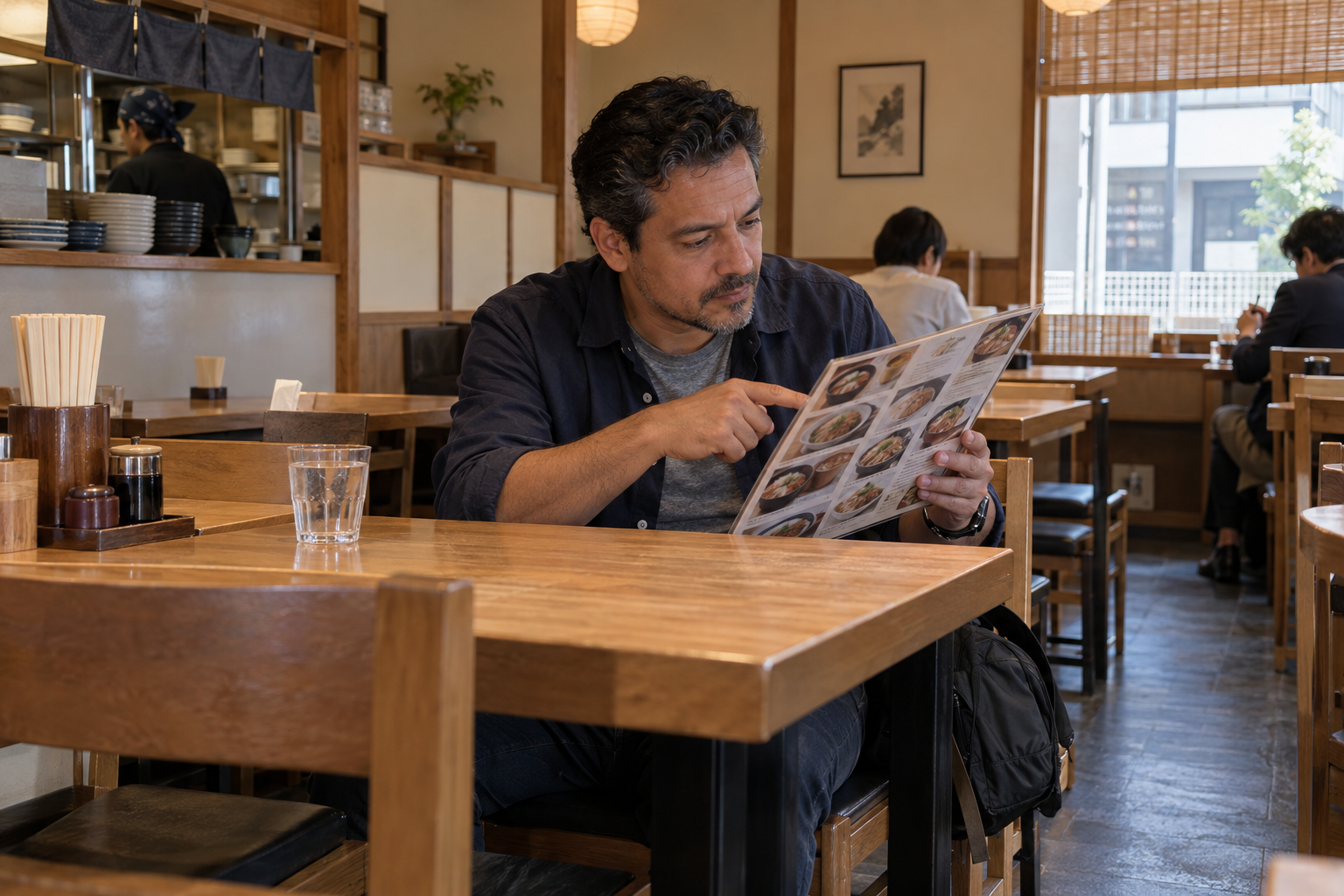
- Check the entrance instructions. A machine may take payment before seating; another restaurant may take your order at the table. Follow staff guidance for that location.
- Select the complete item. Match the main dish to 定食, 丼 or 単品, choose dine-in if that is your plan, and review any rice options.
- Resolve an important question before payment. Point to the item and ask about an inclusion or restriction. Avoid completing the purchase while the answer is still unclear.
- Keep your ticket or slip. Follow the posted or staff instructions for handing it over, waiting or collecting food. The paper’s purpose depends on the system.
Our restaurant ticket-machine guide covers the different handoff patterns. After an apparent payment failure, ask staff to check before buying the same meal again. Show the ticket or payment result rather than starting a second order to test the machine.
For table orders, point to one item, state the quantity and wait for the staff member’s response. If a rice question follows, answer that question before moving on. A short exchange is easier to resolve than reading a long translated paragraph aloud.
Check rice-refill eligibility, not just the word “set”
Ōmori (大盛り) means a larger serving; okawari (おかわり) means another helping. A larger first serving and later refills are separate offers. Ask which applies to your order and whether it costs extra.
Yayoiken’s official refill information gives a specific example: rice with set meals and breakfast meals can be refilled. Donburi and children’s menus are excluded. If you choose barley rice, the free refill is white rice, not another serving of barley rice. This is Yayoiken’s policy, not a rule for all Japanese restaurants.
Its refill-corner instructions say to place your empty rice bowl in the dispenser and press a portion button once. Available portion options can vary by store. At another restaurant, ask whether staff bring the refill or whether you use a self-service area. Check soup and side-dish refills separately.
Take a small amount if you only need a little more. Keep your main meal at the table and follow the displayed instructions for the rice bowl. If you cannot identify the correct area, ask staff before using an unfamiliar machine.
Removing rice and ordering the main alone can have different prices
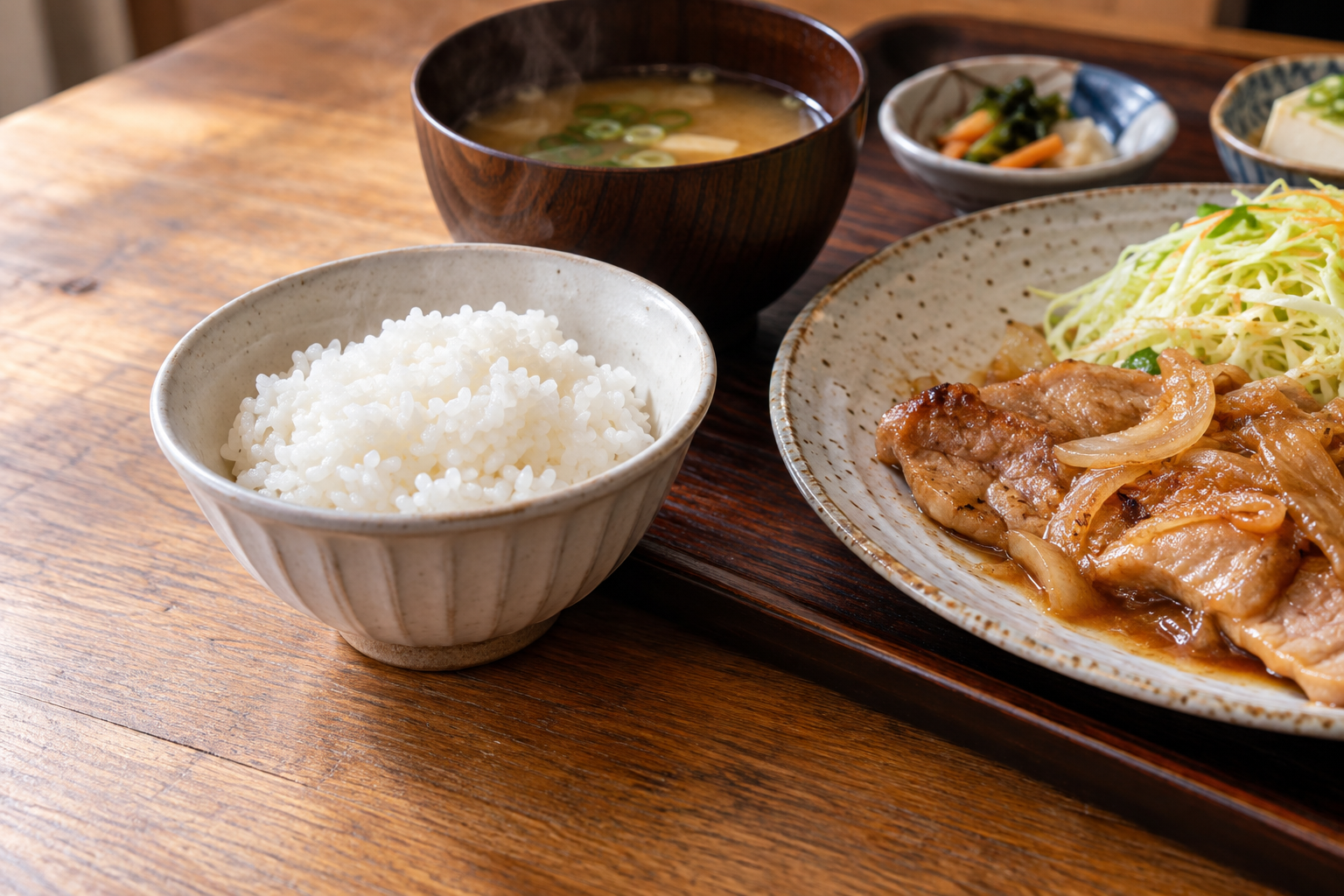
If you want less rice, ask about a smaller portion while ordering. If you want none, check how the restaurant handles that request. Yayoiken’s FAQ says it accepts orders without rice but the price does not change. It also says its main-only orders, available for many items, do not include the accompanying side dishes.
That makes the wording of your request useful. “Less rice,” “no rice” and “the main dish only” can lead to different meals. Ask staff to identify the menu item and price before confirming. Do not calculate a discount yourself by subtracting a side-menu rice price.
Payment belongs to the same branch check. Yayoiken lists cashless categories in its FAQ and directs customers to the specific store’s accepted methods. Confirm the method you intend to use before ordering; a logo elsewhere in the chain is not confirmation for your chosen location.
Keep the dishes separate while you eat
The separate bowls let you choose how much rice to eat with each bite of the main. For fried food, you can keep the rice away from the coating; for a sauced dish, you can alternate the seasoned main with plain rice. This is a useful reason to choose a set when the same restaurant also offers a bowl.
The Ministry of Agriculture’s washoku table-setting explanation places rice on the diner’s left and soup on the right. It describes a meal arrangement, not a promise that every commercial teishoku has exactly three sides. Leave space around hot bowls and keep the tray steady rather than rearranging everything for a photograph.
Check every component if ingredients matter
A set includes more than the visible main. Read the information for the soup, sauces and sides as well. Ootoya’s FAQ says it does not offer vegan or vegetarian products and cannot accommodate allergy-driven changes to cooking methods or ingredients. Its menu’s preparation notes also warn about shared equipment and oil.
Use current official ingredient information and explain your exact need before ordering. Choosing a meat-free-looking main or removing one side does not establish the suitability of the whole set. If the restaurant cannot answer the question you depend on, choose another meal or venue with clearer information.
Choose a nearby meal that fits the rest of your day
For an ordinary sightseeing lunch, start with two possible branches near your route. Open their current menus, choose a main and check what comes with it. If the first place has a queue you cannot fit into your plans, you can compare the second option without repeating the research while hungry.
For a lighter order, ask about rice quantity and the available main-only option before paying. For an appetite-led choice, check refill eligibility first and still compare the full price. If you need a place to wait with companions, our family-restaurant guide covers a different dining format. A set-meal menu alone does not tell you how long you can occupy a table.
Frequently asked questions
What does teishoku mean?
It means a set meal, typically a main with separate rice, soup and small dishes. Check the listed contents.
Is teishoku the same as donburi?
A donburi has the topping on the rice. A teishoku keeps the main and rice separate; included extras depend on the menu.
Are rice refills always free?
No. Check the restaurant and eligible menu category. Yayoiken excludes donburi and children’s menus from its rice-refill offer.
Can I refill barley rice at Yayoiken?
Its published policy allows white-rice refills after ordering barley rice. It does not promise barley-rice refills.
Does a large rice order mean unlimited refills?
No. A larger portion and an additional helping are separate offers. Confirm the price and conditions.
Does removing rice make the meal cheaper?
Not necessarily. Yayoiken says a no-rice request leaves the price unchanged. Ask about the restaurant’s main-only menu instead.
How much does a teishoku cost?
The checked examples were ¥890 for Yayoiken ginger pork and ¥1,480 for Ootoya Ikebukuro East Exit’s Daily Teishoku. Recheck your branch.
Can a vegetarian choose any vegetable-looking set?
Check the whole set and the restaurant’s policy. Ootoya’s FAQ says it does not offer vegan or vegetarian products.
Do I buy a ticket before sitting down?
Follow the entrance instructions. Restaurants use different ordering and payment systems; ask staff if the next step is unclear.
Official sources
Checked October 28, 2026. Prices, menu contents and services can change. Recheck the exact branch before visiting.

Comments