- Quick Answer
- What Are Okonomiyaki and Monjayaki?
- Okonomiyaki Styles: Osaka (Kansai) vs Hiroshima
- Who Grills It — the Staff or You?
- How to Cook Okonomiyaki Yourself
- How to Cook Monjayaki: The Tokyo “Dote” Method
- Where to Eat in Tokyo
- How to Order with No Japanese
- Plan B: If the First Shop Does Not Work
- Allergies and Dietary Notes
- FAQ
- What is the difference between okonomiyaki and monjayaki?
- Which should a first-time visitor order?
- Do I have to cook it myself?
- How much should I budget in Tokyo?
- How much should two people order?
- Do monjayaki shops accept cards?
- Where should I try monjayaki in Tokyo?
- Is okonomiyaki or monjayaki vegetarian, gluten-free, or halal?
Quick Answer
Choose okonomiyaki if you want a firm, filling pancake that is easier to divide. Choose monjayaki if you want a Tokyo-specific, shared griddle experience and do not mind a soft, gooey texture.
- Lowest-stress first order: ask whether the staff cook or you cook before touching the bowl. If you are unsure, ask, “Tsukutte moraemasu ka?” (Could you make it for us?).
- Budget: the official association pages for Monkichi Main Store and Oshio Main Store, checked on August 13, 2026, listed example monjayaki dishes at about ¥1,500 including tax. Monkichi listed an average meal budget of ¥2,000–¥3,000. These are dated examples, not a street-wide price.
- Quantity: restaurant portions are not standardized. Two first-timers can start with one dish, see the actual size, then add a second dish if needed.
- Plan B: if the first shop is full, cooking help is unavailable, or a dietary question cannot be answered, use the official shop directory for a nearby second choice or switch to a restaurant that clearly confirms your requirement.
Last checked: August 13, 2026 (JST).
What Are Okonomiyaki and Monjayaki?
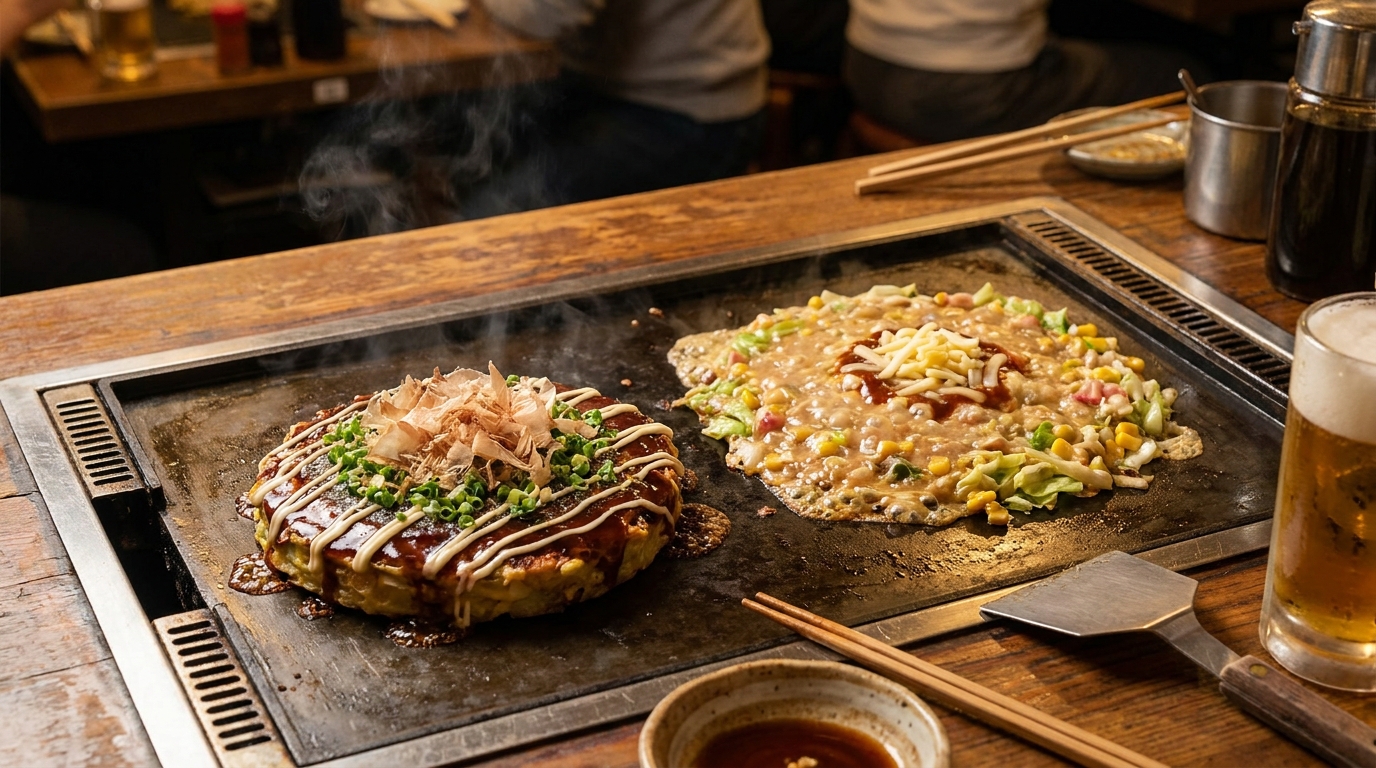
Both dishes are cooked on a flat iron griddle (a teppan) and both let you choose your own fillings — the word okonomi means “what you like.” They look and feel quite different on the plate, though.
Okonomiyaki is a thick, round savory pancake. Cabbage, batter, and toppings are combined and grilled into a firm cake you can pick up and cut. It travels well to your plate and holds its shape.
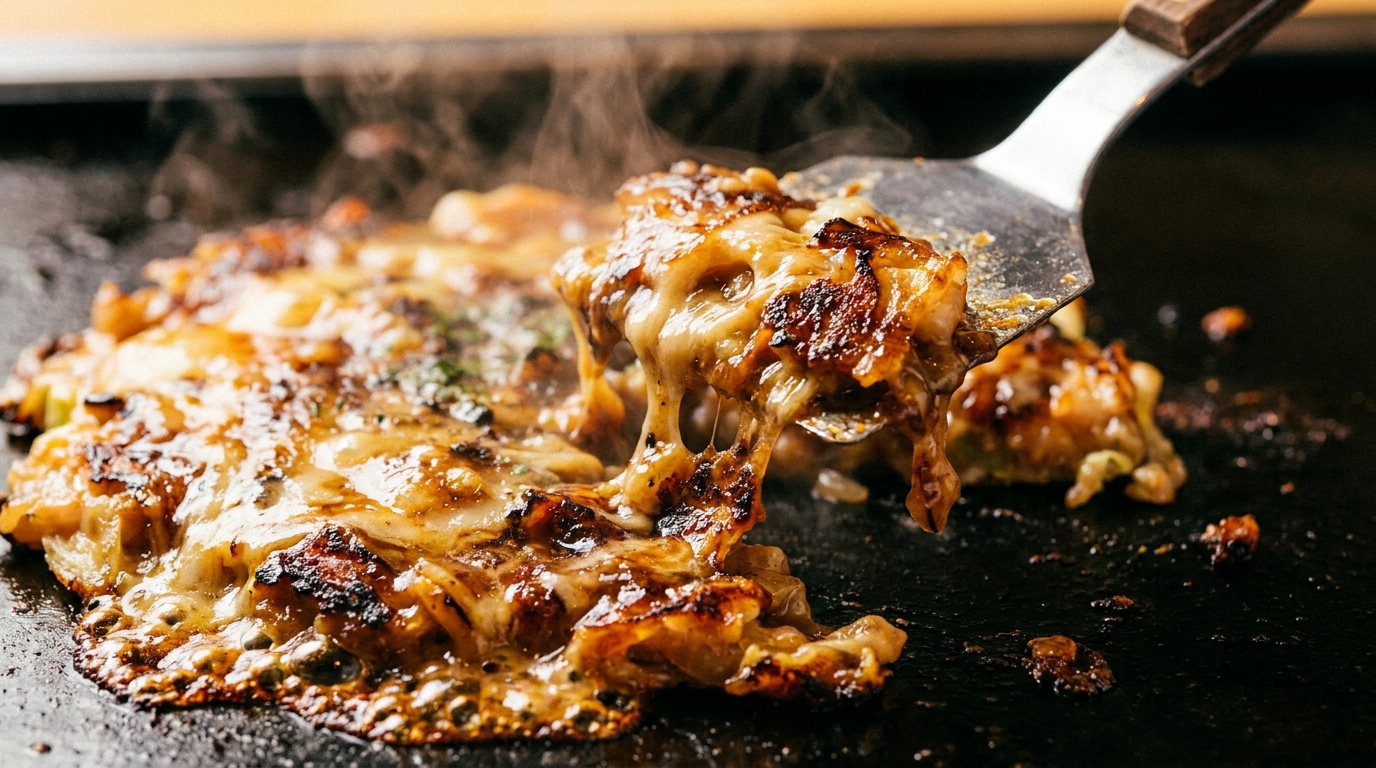
Monjayaki (often shortened to monja) is Tokyo’s looser, runnier cousin. It uses far more liquid, so it does not set into a solid cake. Instead it stays gooey on the griddle, and you eat it straight off the hot plate in small bites. Monja began in Tokyo’s downtown (shitamachi) area as an inexpensive children’s snack and grew into the local specialty it is today.
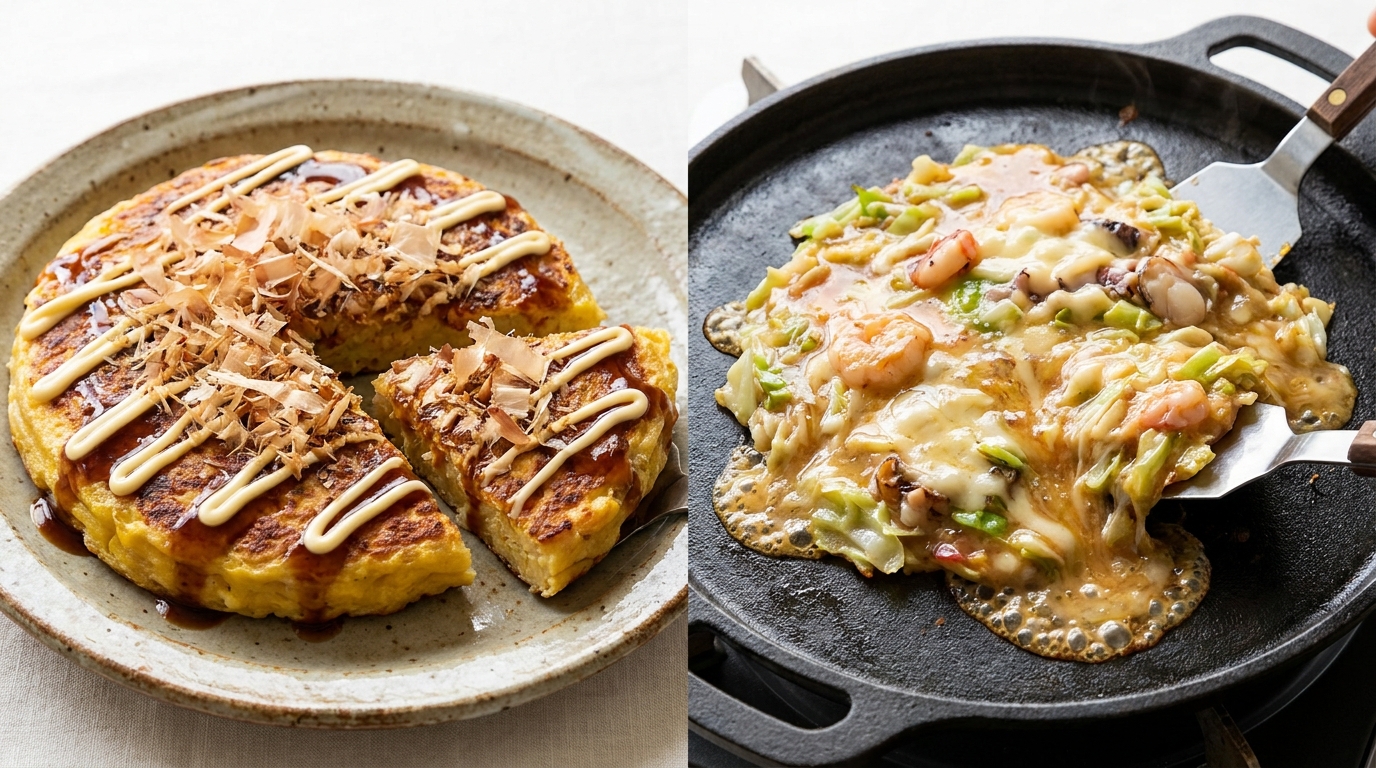
Here is a side-by-side overview to set expectations before you sit down.
| Point | Okonomiyaki | Monjayaki |
|---|---|---|
| Texture | Firm, pancake-like | Loose, gooey, never fully sets |
| How you eat it | Cut and lift onto a plate | Scrape small bites off the griddle |
| Home region | Osaka / Hiroshima | Tokyo (downtown) |
| Batter | Thicker | Much more liquid |
| Tool at the table | Spatula (kote) | Small spatula (hera) |
| Price check | Varies by shop, style, and toppings | About ¥1,500 for the two dated official examples checked; not a universal price |
There is no single standard price or serving size. The official Tsukishima Monja Association pages for Monkichi Main Store and Oshio Main Store listed example monjayaki dishes around ¥1,500 including tax when checked on August 13, 2026. Monkichi listed an average meal budget of ¥2,000–¥3,000. Check the exact shop menu again because toppings, drinks, set rules, and current prices change the total.
Okonomiyaki Styles: Osaka (Kansai) vs Hiroshima
Okonomiyaki comes in two main regional styles, and the difference matters because it changes whether you cook it yourself.
Osaka (Kansai) style mixes everything together. Cabbage, batter, egg, and your chosen protein are stirred in a bowl, then poured onto the griddle like a pancake and flipped once. Because the method is simple, Osaka-style shops frequently let you grill it at your table.
Hiroshima style layers the ingredients instead of mixing them. A thin crepe of batter goes down first, then a tall pile of cabbage, then toppings, and it commonly includes fried noodles (yakisoba or udon) and a fried egg. The stack is flipped as one piece, which takes practice, so Hiroshima-style shops generally have the chef cook it and serve it to you on a plate.
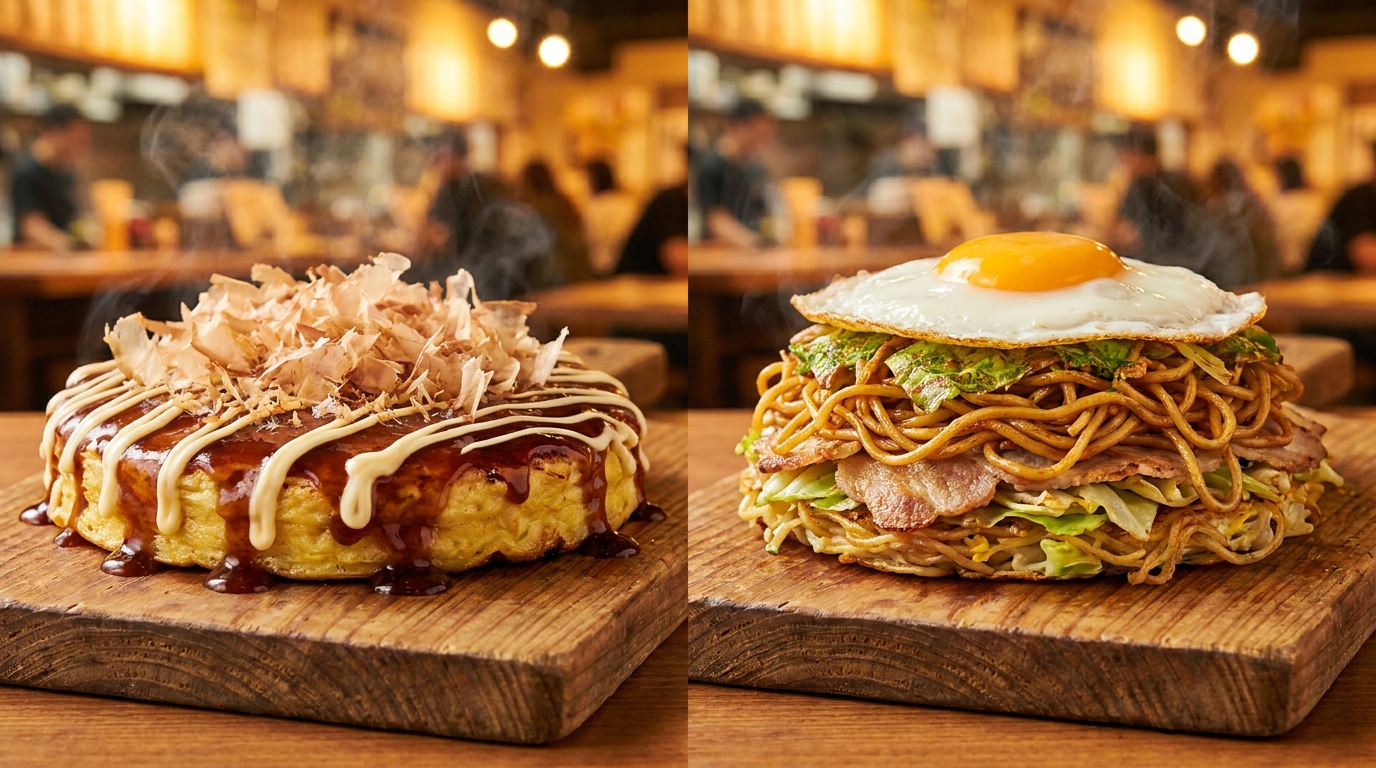
In Tokyo you will find Osaka-style okonomiyaki far more often than Hiroshima style. Dedicated Hiroshima-style shops do exist, but they are fewer, so if you specifically want the layered, noodle-filled version, it is worth checking the menu or the shop name in advance.
Who Grills It — the Staff or You?
This is the question that worries most first-time visitors, and the honest answer is: it depends on the shop. There is no single rule, but the pattern below covers most situations.
| Shop type | Who usually cooks |
|---|---|
| Osaka-style okonomiyaki, table griddle | Often you, sometimes with a staff demo first |
| Hiroshima-style okonomiyaki | Generally the chef, served on a plate |
| Monjayaki shop (Tsukishima and elsewhere) | Generally you; staff will show you on request |
| Casual teppan izakaya | Mixed — just ask |
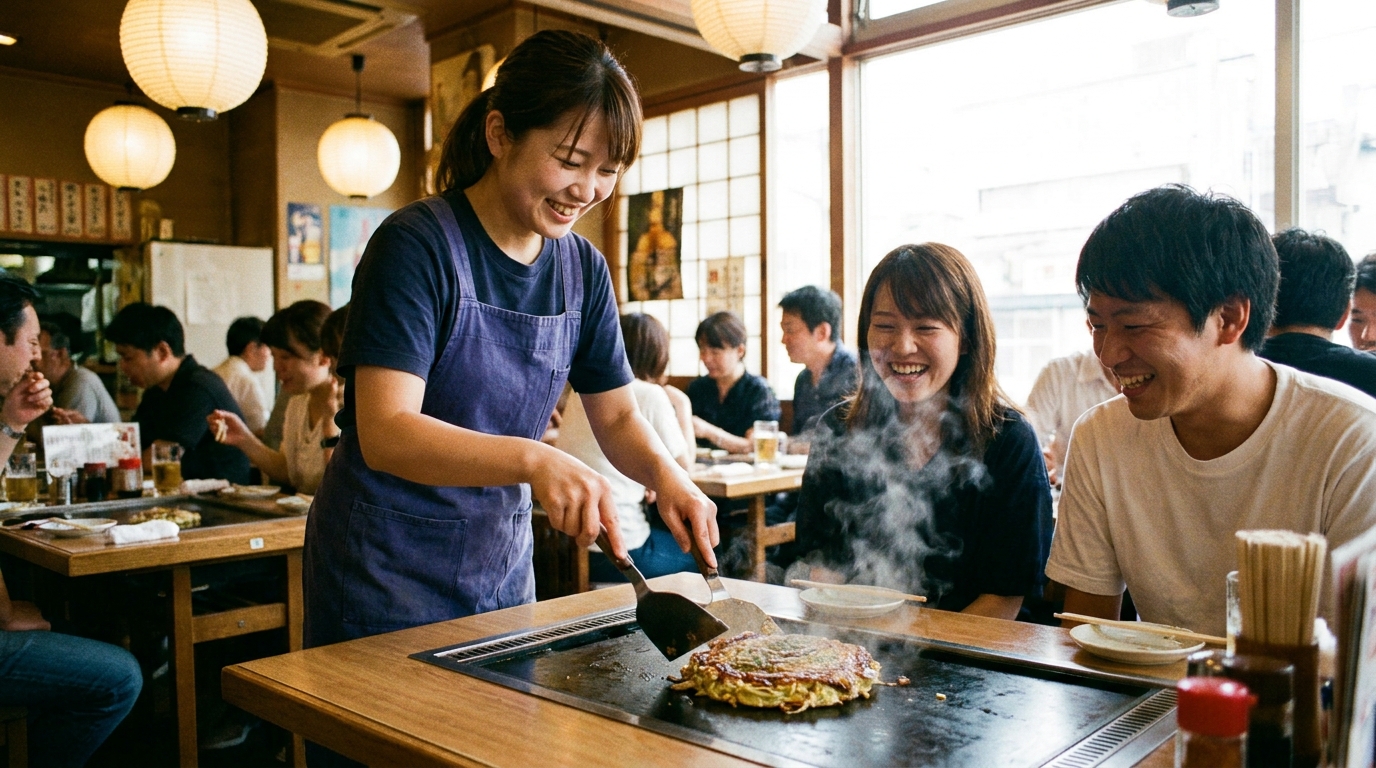
You do not need to guess. A simple way to settle it when you sit down is to ask, “Tsukutte moraemasu ka?” (Could you make it for us?). Many shops are happy to grill the first one as a demonstration even if the style is normally self-cook, which is the lowest-stress way to learn. If you would rather try yourself, the steps below are straightforward.
How to Cook Okonomiyaki Yourself
Osaka-style okonomiyaki is the easier of the two to grill, so it is a good place to start. The exact steps vary by shop, but the core flow looks like this.
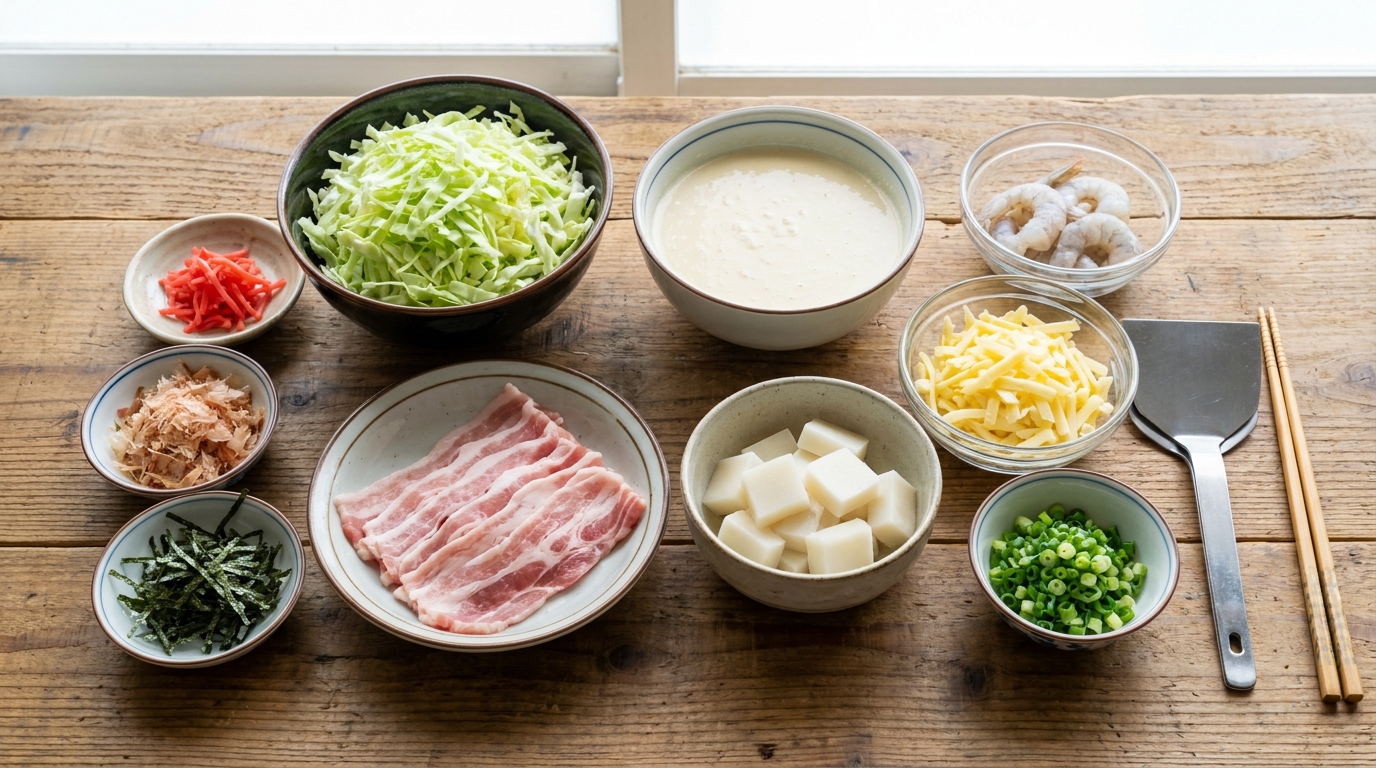
- Mix the bowl. Combine the batter, cabbage, egg, and toppings until everything is coated. Some shops pre-mix it for you.
- Pour onto the griddle. Tip the bowl onto the hot plate and shape it into a round mound roughly 2–3 cm thick. Do not press it down yet.
- Add the meat on top. If you chose pork, lay the slices over the surface now.
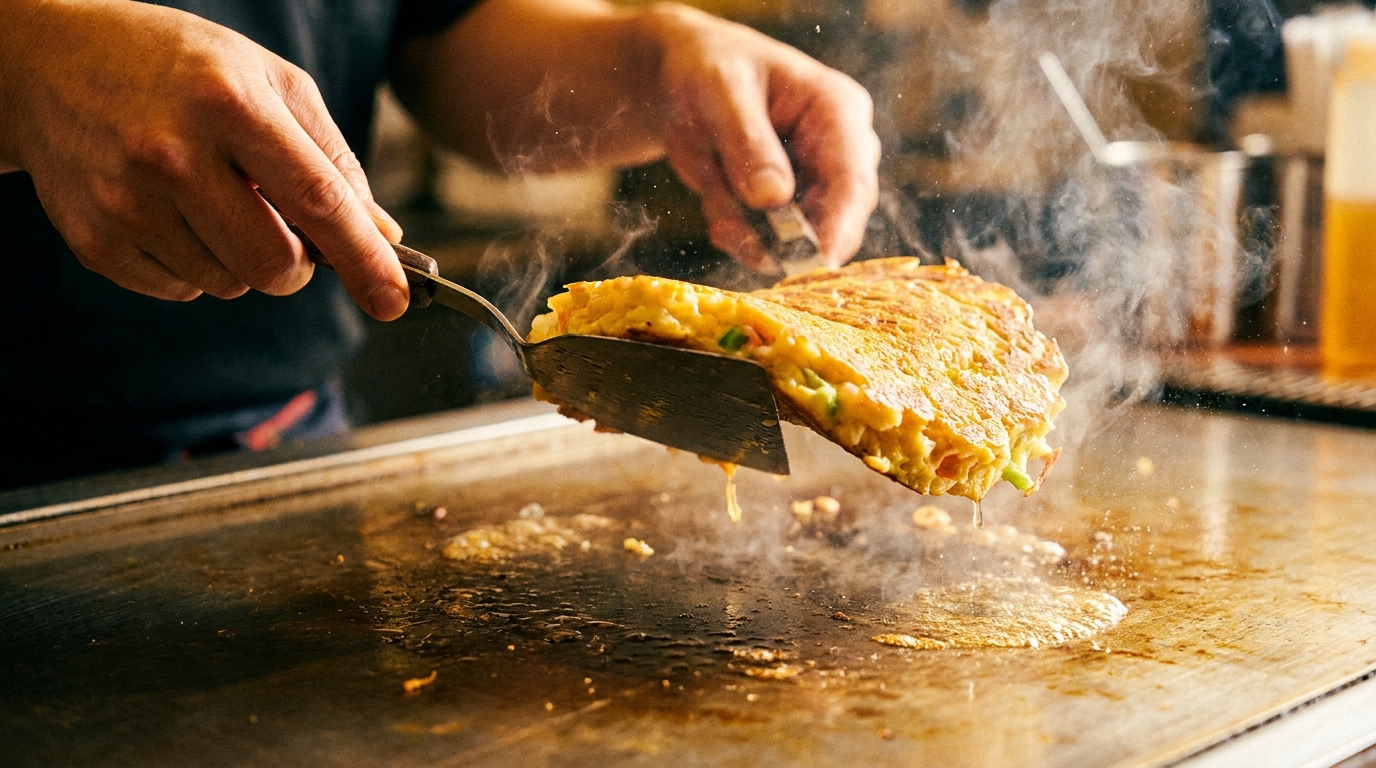
- Wait, then flip once. Let it cook a few minutes until the edge looks set, then flip the whole cake in one confident motion. Pressing it flat too early squeezes out moisture, so a light touch keeps it fluffy.
- Finish and dress. Once both sides are browned, brush on okonomiyaki sauce and mayonnaise, then scatter dried seaweed (aonori) and bonito flakes (katsuobushi). Cut it into wedges with your spatula and eat from a plate.
A common worry is flipping. If the cake feels too large to turn, ask the staff. The sequence above follows the same core mix, shape, cook, flip, steam, and finish flow shown in Otafuku Sauce’s official Kansai-style recipe, but the restaurant’s instructions come first.
How to Cook Monjayaki: The Tokyo “Dote” Method
Monjayaki has a reputation for being tricky, but it follows a clear sequence. The signature step is building a dote (土手), meaning an embankment or levee, which keeps the runny batter from flooding the griddle.
- Separate solids from liquid. Your bowl arrives with chopped cabbage and toppings sitting in a thin, watery batter. Lift out the solid ingredients first and leave the liquid in the bowl.
- Stir-fry the solids. Cook the cabbage and toppings on the griddle, chopping them finely with your two small spatulas as they sizzle.
- Build the dote. Arrange the cooked solids into a ring with a hollow center, like a doughnut wall. This wall is the embankment.
- Pour the liquid in. Slowly pour the watery batter into the center of the ring and let it settle. Wait until it starts to bubble and thicken.
- Combine everything. Once the center bubbles, break the wall inward and stir the ingredients into one gooey layer spread across the griddle.
- Let it crisp, then eat. Press portions thin and let the bottom form a light crust before you scrape it up.
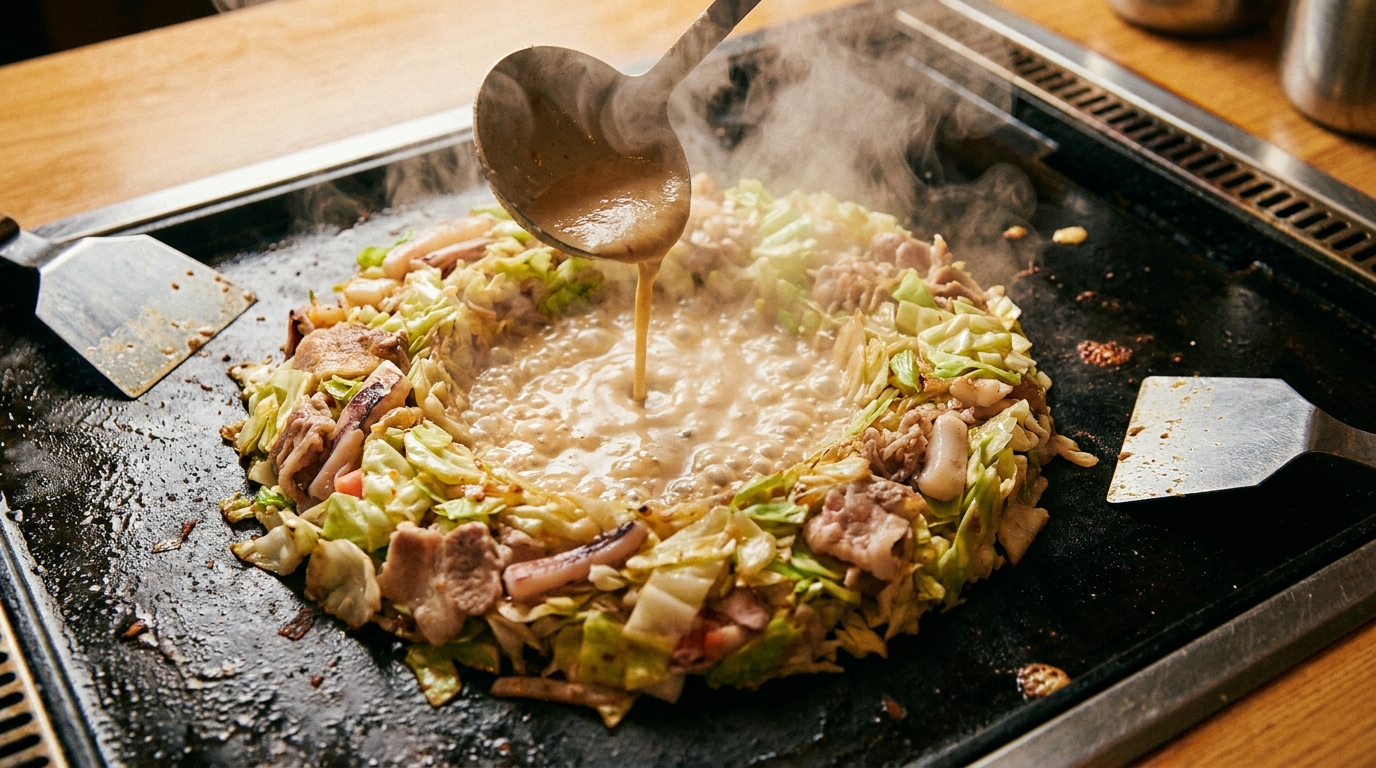
If this sounds like a lot, ask the staff whether they can demonstrate the first dote. The cooking sequence above matches the Ministry of Agriculture page based on a Tsukishima Monja Association recipe, but service style still varies by shop.
Where to Eat in Tokyo
Tsukishima Monja Street is the clearest starting point for monjayaki. GO TOKYO currently describes more than 80 specialist restaurants in the area, and the Tsukishima Monja Association maintains a current member-shop directory. Use the directory instead of assuming every shop has the same hours, price, reservation method, payment method, or cooking support.
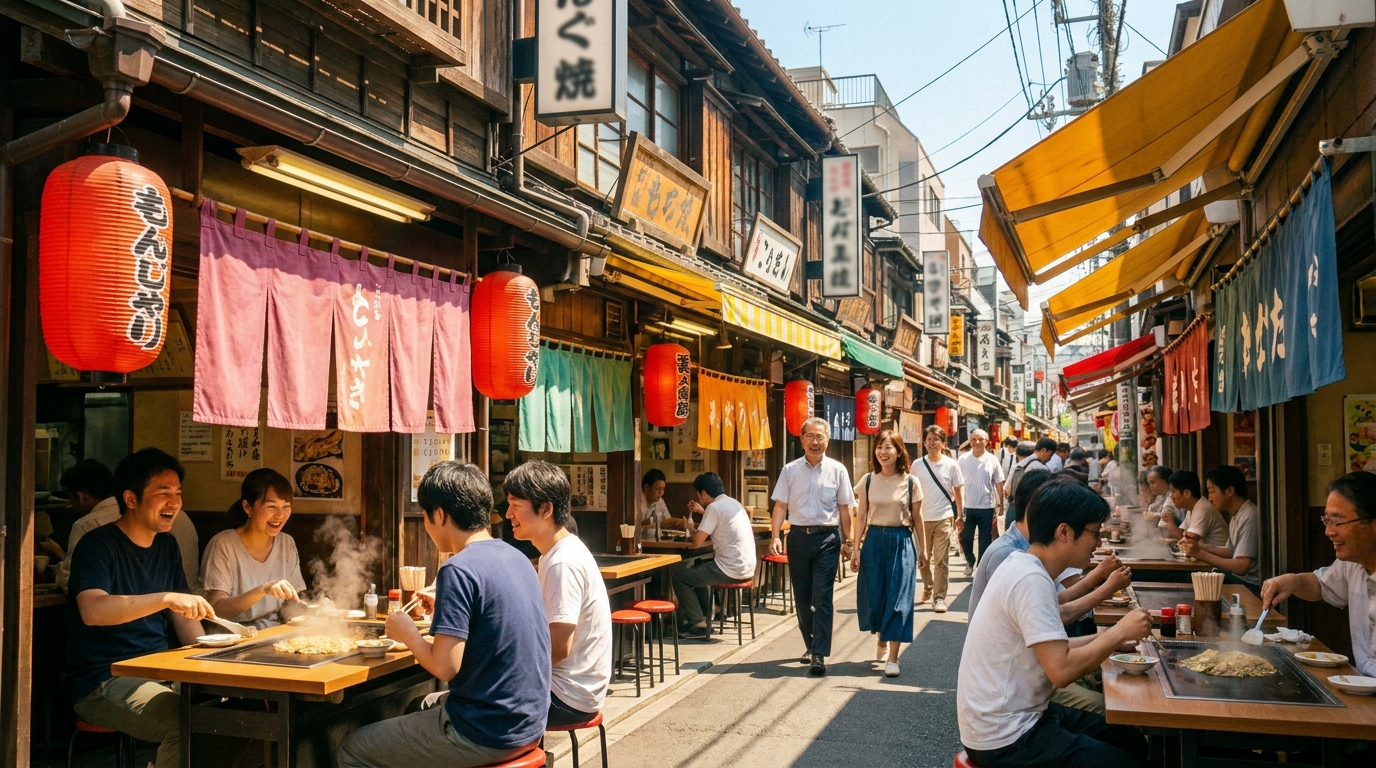
Tsukishima Station is served by the Tokyo Metro Yurakucho Line and the Toei Oedo Line. GO TOKYO links the area from Tsukishima Station; confirm your chosen shop’s exact address rather than relying on one exit for the whole district.
Queue, Reservation, Payment, and Portion Checks
- Pick two shops, not one. Save a first choice and a nearby backup from the official association directory before you travel.
- Check the exact booking method. Some association listings offer web reservations, while others require direct contact or walk-in service. If you need a fixed table, use the shop’s current official route or the Tokyo restaurant booking guide.
- Do not assume one payment rule. Some association listings mark cashless payment or specific cards and e-money, but that does not prove every shop accepts them. Check the exact listing and carry enough cash as a backup.
- Order in stages. A Ministry of Agriculture home recipe is written for two to three people, but restaurant portions vary. For two first-timers, one dish first and a second order later is safer than guessing from a photo.
- Ask who cooks. If the staff cannot demonstrate and you do not want to manage a hot griddle, choose a staff-cooked option or a different restaurant.
For okonomiyaki on its own, central Tokyo has both table-griddle and staff-cooked restaurants. Search by the style you actually want: Osaka/Kansai style for the mixed pancake, or Hiroshima style for the layered version with noodles. Do not assume the cooking method from the word okonomiyaki alone.
For train basics before you go, use the Tokyo trains guide.
How to Order with No Japanese
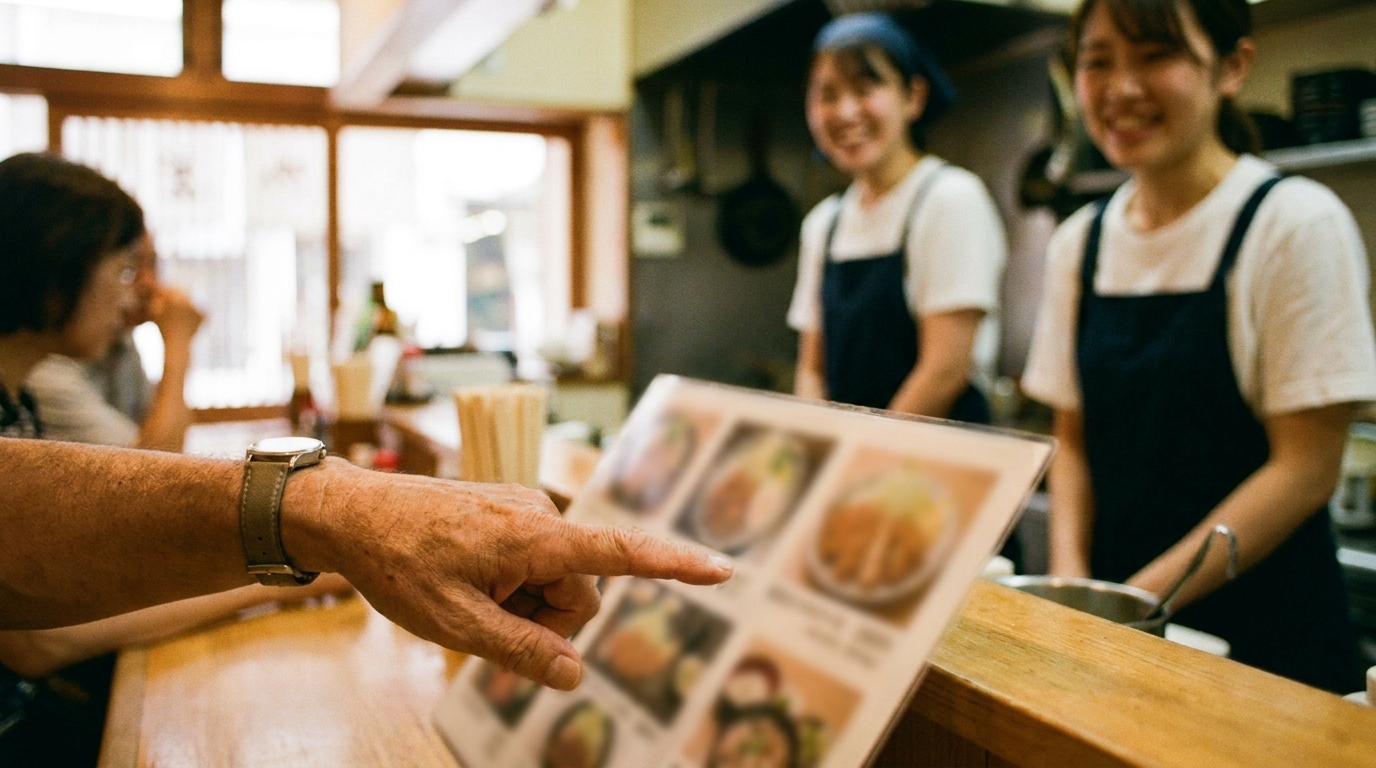
Many shops on tourist-heavy streets keep an English or photo menu, and pointing works well when they do not. A few terms make ordering smoother.
| Japanese | Meaning |
|---|---|
| Buta | Pork |
| Ebi | Shrimp |
| Mentaiko | Spicy pollock roe |
| Mochi | Chewy rice cake |
| Chiizu | Cheese |
| Kote / Hera | The small spatula you eat with |
| Tsukutte moraemasu ka? | Could you make it for us? |
To eat monja, hold the small spatula (hera), press it down on a small portion, and scrape toward you straight off the griddle. Work from the outside edge inward in little bites, and let each scoop cook a second on the metal before eating. The dish stays very hot, so small bites are safer and tastier.
One more practical note: the griddle is the hottest part of the table, so keep phones, sleeves, and menus clear of the surface.
Plan B: If the First Shop Does Not Work
- The first shop is full: use the official association directory and walk to the second shop you saved before traveling.
- You do not want to cook: ask for staff help before ordering. If help is unavailable, switch to a staff-cooked okonomiyaki style or another restaurant.
- The payment method is unclear: confirm before ordering and keep enough cash for the meal. Do not assume a cashless filter applies to every store.
- A dietary answer is unclear: do not guess with batter, dashi, sauce, or a shared griddle. Move to a restaurant that explicitly confirms your requirement.
- You dislike monja’s soft texture: order okonomiyaki instead; many monja-area shops also serve it, but check the exact menu.
Next action: open the official member-shop directory and save two shop names before you leave for Tsukishima.
Allergies and Dietary Notes
Standard okonomiyaki and monjayaki are not automatically vegetarian, vegan, gluten-free, or halal. A menu name is not enough to confirm ingredients or cross-contact.
- Wheat: Both standard batters are flour-based.
- Fish: Dashi and bonito flakes may contain fish even when you choose no visible seafood.
- Egg: Okonomiyaki commonly contains egg. Monjayaki recipes vary, so ask the exact shop.
- Meat and alcohol: Pork is common, sauces may need checking, and a shared griddle may have cooked other ingredients.
- Cross-contact: Removing one topping does not make a shared hot plate safe for a serious allergy or strict religious requirement.
Japan’s Consumer Affairs Agency tells diners to check restaurant food with staff and provides a multilingual food-allergy communication sheet. If the shop cannot confirm the batter, dashi, sauce, utensils, and griddle conditions you require, do not guess. Use the Japan food allergy guide to prepare your questions. Muslim travelers who need a separately verified meal can use the halal ramen guide as a fallback rather than treating standard monja or okonomiyaki as halal by default.
FAQ
What is the difference between okonomiyaki and monjayaki?
Okonomiyaki is a firm savory pancake that can be cut and shared. Monjayaki uses a thinner batter, stays soft on the griddle, and is eaten in small bites with a small spatula.
Which should a first-time visitor order?
Choose okonomiyaki for a firmer, more familiar meal. Choose monjayaki for a Tokyo-specific shared cooking experience. If two people want to compare, start with one dish and add the other after checking the actual portion.
Do I have to cook it myself?
It depends on the shop and style. Ask before touching the bowl. If you want help, ask, Tsukutte moraemasu ka? Many shops can explain or demonstrate, but service is not guaranteed everywhere.
How much should I budget in Tokyo?
Two official Tsukishima association shop pages checked on August 13, 2026 listed example monjayaki dishes at about ¥1,500 including tax. One listed an average meal budget of ¥2,000–¥3,000. Check your exact shop and toppings.
How much should two people order?
Restaurant portions vary. Two first-timers can start with one dish, see the size, and add a second dish if needed. Ask the staff if the menu has a minimum order or one-order-per-person rule.
Do monjayaki shops accept cards?
Payment is shop-specific. Some official association listings mark cashless payment or name cards and e-money, but this is not a rule for the whole street. Check the exact shop and carry cash as a backup.
Where should I try monjayaki in Tokyo?
Tsukishima is Tokyo's clearest dedicated monja area. GO TOKYO describes more than 80 specialist restaurants there. Save two choices from the official association directory in case the first shop is full or does not meet your needs.
Is okonomiyaki or monjayaki vegetarian, gluten-free, or halal?
Not by default. Standard recipes can contain wheat, fish-based dashi, egg, pork, sauces that need checking, and shared-griddle cross-contact. Ask the exact shop and use a verified alternative if staff cannot confirm your requirement.

Comments