By Yukihiro Hirano / Last updated: 2026-04-13
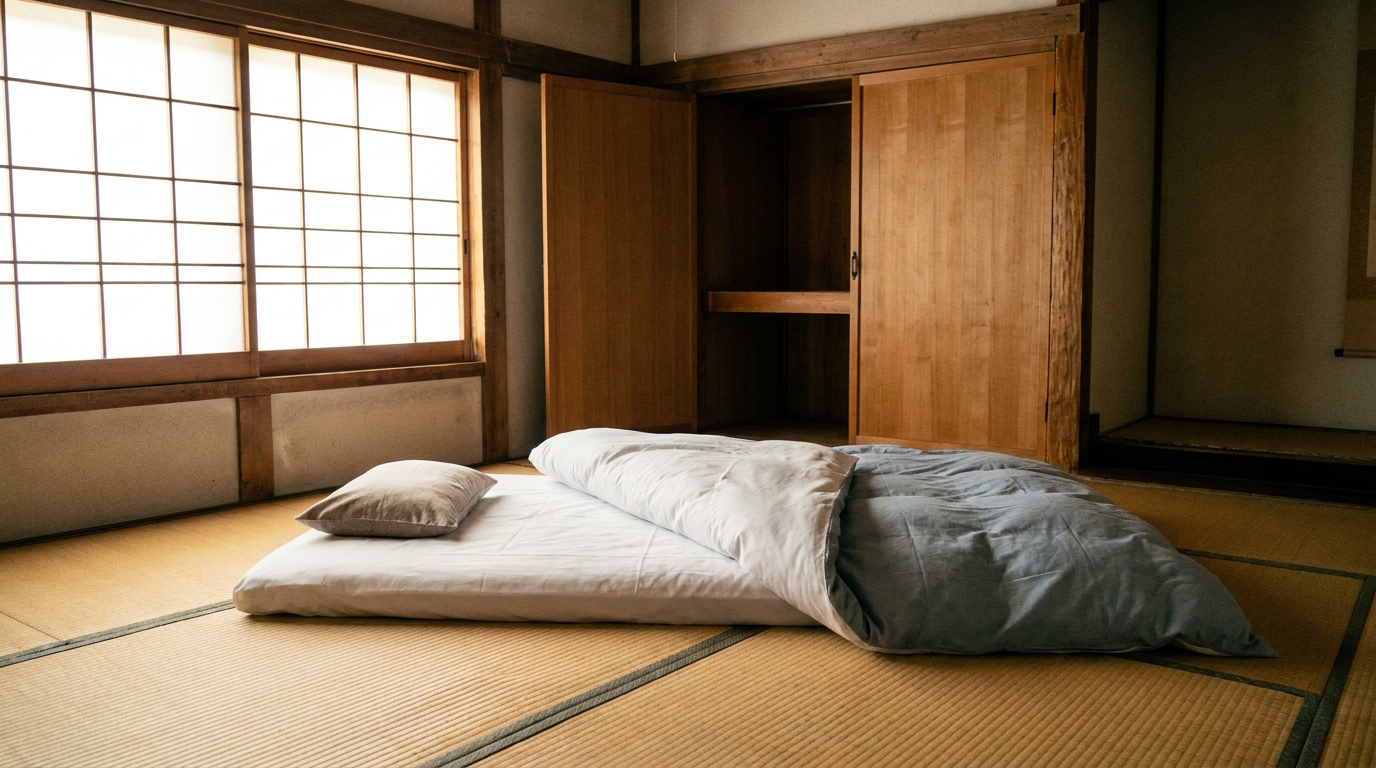
You walk into your Japanese Airbnb, look around the room, and realize there’s no bed. Instead, you find a closet with neatly folded fabric and pillows stacked inside. Congratulations — you’ve just met the Japanese futon, and for many travelers, it’s one of the most memorable (and sometimes confusing) parts of staying in Japan.
Don’t worry. Setting up a futon is simple once you know the order, and sleeping on one is far more comfortable than it looks. This guide walks you through everything: how to lay it out, how to get a great night’s sleep, how to fold it properly in the morning, and the cultural context behind why millions of Japanese people still prefer futons over beds.
Quick Facts
– A Japanese futon (布団 / ふとん) is a thin mattress placed directly on the floor — not the thick Western “futon sofa”
– It consists of 2–4 layers: mattress pad (shikibuton), comforter (kakebuton), and pillow (makura)
– Futons are stored in a closet (押入れ / oshiire) during the day and laid out at night
– Most vacation rentals in Japan provide futons in traditional-style rooms (tatami or flooring)
– Folding and storing the futon each morning is expected — it’s a basic courtesy, not a chore
Quick Answer: A Japanese futon is a thin mattress (shikibuton) and comforter (kakebuton) laid directly on the tatami floor and folded away each morning — not a Western sofa-bed. Lay it out at night, sleep on the firm surface (good back support for most people), and fold it back into the closet daily to prevent moisture and mold. If you prefer a bed, many listings offer Western-style rooms.
- Why Do Japanese People Sleep on Futons?
- What’s Inside a Japanese Futon Set?
- How to Set Up Your Futon: Step by Step
- 5 Tips for Sleeping Comfortably on a Futon
- How to Fold and Store Your Futon in the Morning
- Futon Etiquette: What Your Host Expects
- Prefer a Bed? Book the Right Accommodation
- Futon vs. Western Bed: Which Will Your Airbnb Have?
- FAQ
- Is sleeping on a Japanese futon bad for your back?
- Can I leave the futon out all day instead of folding it?
- Why is my Japanese pillow so hard?
- Do I need to wash or air out the futon during my stay?
- What’s the difference between a Japanese futon and a Western futon?
- Is it rude to ask for a bed instead of a futon?
- How much weight can a futon support?
- Related Guides
- Did this guide solve your problem?
Why Do Japanese People Sleep on Futons?
Before you wonder “why not just use a bed?”, it helps to understand the practical genius behind this system.
Space efficiency. Japanese homes and apartments are significantly smaller than their Western counterparts. Compact apartments of 20–30 square meters (215–320 sq ft) are common for single residents in Tokyo. By folding away the futon each morning, the bedroom becomes a living room, workspace, or dining area. One room serves multiple purposes throughout the day.
Climate adaptation. Japan’s humid summers and cold winters make airflow important. Sleeping closer to the floor takes advantage of cooler air in summer. Futons can be aired out (hung on a balcony railing) to prevent moisture buildup — something fixed mattresses can’t do easily.
Health beliefs. Many Japanese people believe that sleeping on a firmer surface supports better posture and spinal alignment. While scientific evidence is mixed, the preference for firm sleeping surfaces is deeply rooted in Japanese wellness culture.
Tatami compatibility. Traditional tatami mat flooring is made of woven rush grass over a rice straw core. It’s slightly cushioned and not designed to bear the concentrated weight of bed legs. Futons distribute weight evenly across the surface, protecting the tatami.
What’s Inside a Japanese Futon Set?
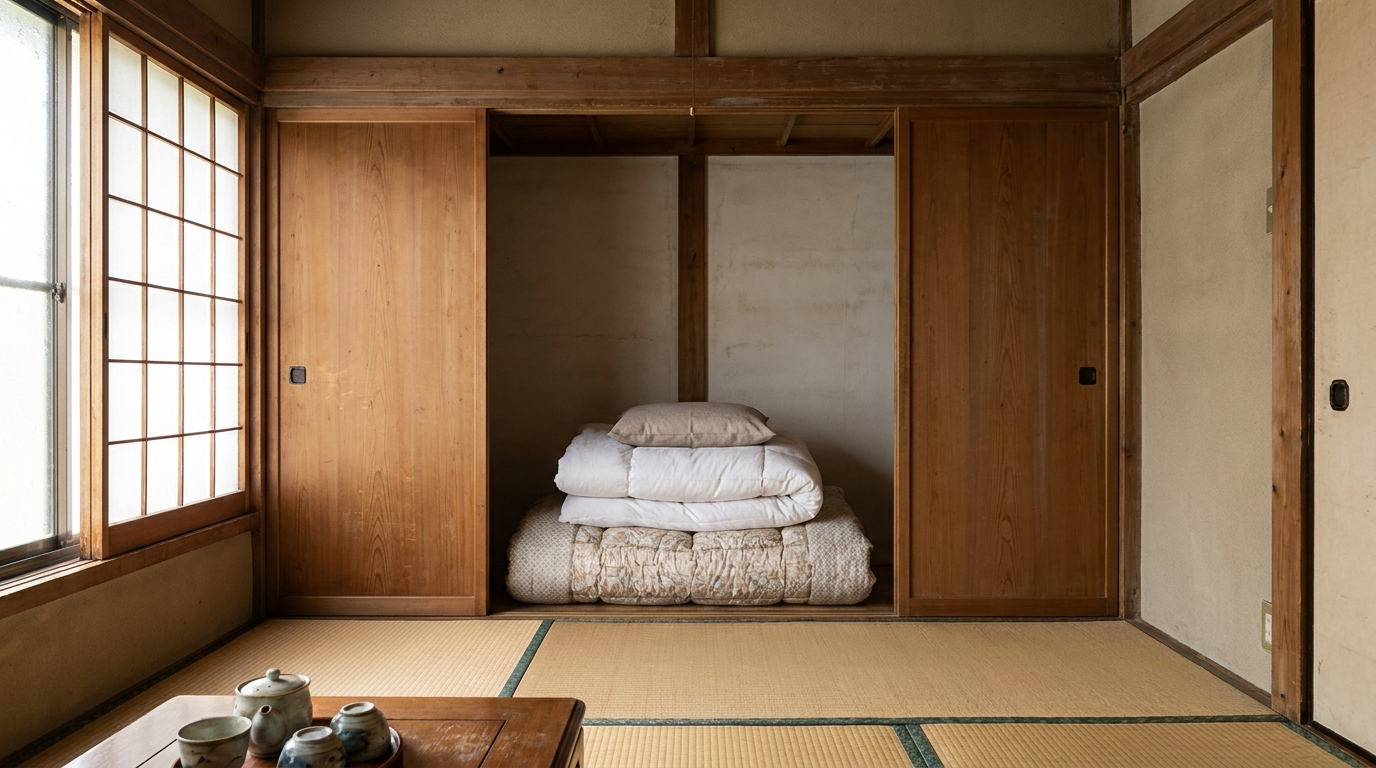
When you open the closet (押入れ / oshiire), you’ll typically find these items stacked in order:
1. Shikibuton (敷布団) — The Mattress
The bottom layer. It’s a rectangular cotton-filled pad, usually 5–10 cm (2–4 inches) thick. This goes directly on the floor or tatami. Some properties provide two shikibutons stacked for extra cushioning.
2. Shikipad or Mattress Pad (敷きパッド) — Optional Layer
A thin, fitted sheet or padded cover that goes over the shikibuton. Not all properties include this, but it adds comfort and keeps the mattress clean.
3. Kakebuton (掛布団) — The Comforter
Your top blanket. It’s a soft, lightweight duvet that’s warmer than it looks. In winter, some hosts add a second blanket (毛布 / moufu) for extra warmth.
4. Makura (枕) — The Pillow
Japanese pillows tend to be smaller and firmer than Western pillows. Some are filled with buckwheat hulls (そばがら), which make a rustling sound when you move. They provide excellent neck support once you get used to them.
How to Set Up Your Futon: Step by Step
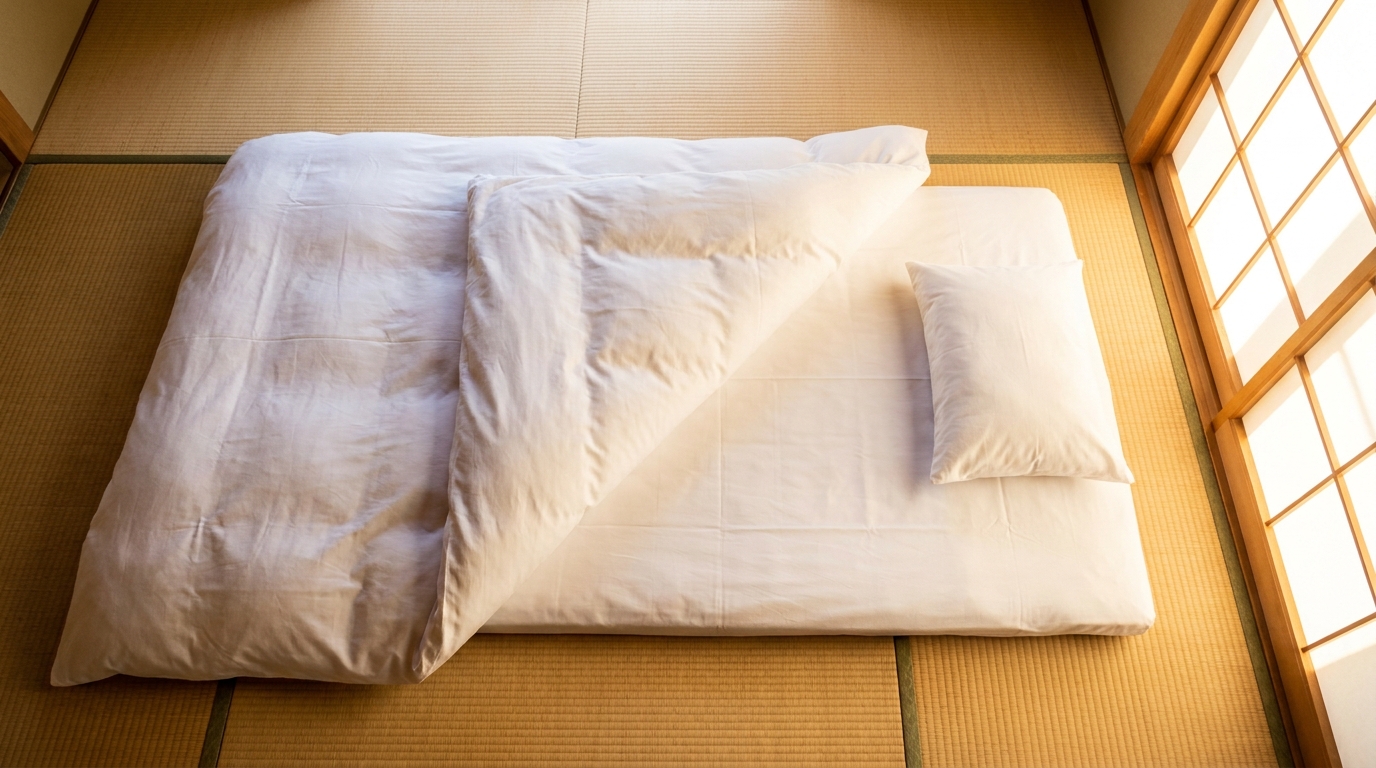
Setting up a futon takes about 2 minutes. Here’s the correct order:
Step 1: Clear the Floor
Move any furniture, bags, or items away from the sleeping area. If the room has tatami mats, you’ll lay the futon directly on them. If it’s a hardwood or vinyl floor, some hosts provide a thin mat or rug underneath.
Step 2: Lay Out the Shikibuton (Mattress)
Unfold the shikibuton and lay it flat on the floor. Smooth out any wrinkles. The longer side should align with your body length. If two are provided, stack them — the thicker or firmer one goes on the bottom.
Orientation tip: In traditional Japanese culture, sleeping with your head pointing north (北枕 / kita-makura) is associated with funeral rites and is considered bad luck. While most travelers don’t need to worry about this, if you notice the futon is positioned with the pillow end away from the north wall, that’s why.
Step 3: Add the Sheet or Pad
If a fitted sheet or shikipad is provided, place it over the shikibuton. Tuck the edges under the mattress to keep it in place.
Step 4: Place the Pillow
Put the pillow at the head of the mattress. If you find the buckwheat pillow too firm or noisy, you can use a rolled-up towel or a soft bag as an alternative.
Step 5: Spread the Kakebuton (Comforter)
Unfold the kakebuton over the mattress, leaving the top folded back slightly so you can slide in. In cold months, layer any additional blankets between the comforter and the sheet.
That’s it — your bed is ready.
5 Tips for Sleeping Comfortably on a Futon
If you’ve never slept on the floor before, the first night can feel unusual. These tips help:
- Give it two nights. Most travelers find futons uncomfortable the first night but fine by the second. Your body adjusts to the firmer surface.
- Request an extra shikibuton. If the mattress feels too thin, ask your host if they have a spare. Doubling up makes a significant difference.
- Sleep on your back. Futons work best for back sleepers. If you’re a side sleeper, place a folded towel or blanket between your knees to reduce hip pressure.
- Control the room temperature. Japanese rooms can get cold at night, even in spring. Learn how to use the air conditioner’s heating mode (暖房 / danbō) — our Wi-Fi, AC, and Appliances guide covers this in detail.
- Use the pillow as intended. The firm buckwheat pillow supports your neck, not your head. Position it under the curve of your neck, not flat under your skull.
How to Fold and Store Your Futon in the Morning
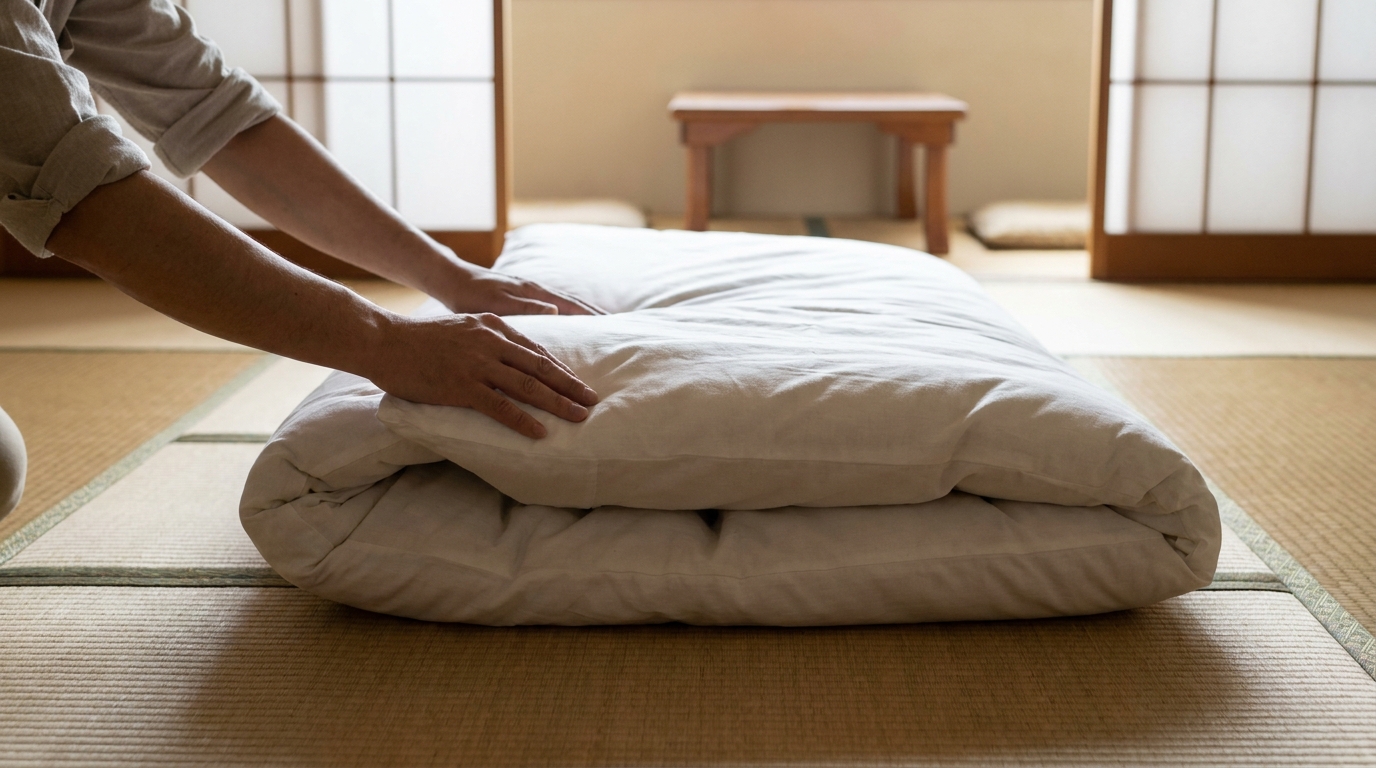
This is the part many travelers skip — but it’s an important courtesy to your host and to the next guest. Folding the futon prevents moisture buildup, keeps the room clean, and extends the life of the bedding.
Step 1: Remove the Comforter
Fold the kakebuton (comforter) into thirds lengthwise, then in half or thirds widthwise. Place it aside.
Step 2: Fold the Shikibuton (Mattress)
Fold the shikibuton into thirds — fold one end to the center, then fold the other end on top. This is the standard Japanese tri-fold.
Step 3: Stack Everything in the Closet
Place the folded shikibuton on the bottom shelf of the oshiire (closet). Stack the kakebuton on top, then the pillow on the very top. If a sheet or pad was provided, fold it neatly and place it between the layers.
Step 4: Leave the Closet Slightly Open
If possible, leave the closet door cracked open a few centimeters. This allows air circulation and prevents musty odors — a common practice in Japanese homes.
How long does this take? About 3 minutes. Your host will appreciate it.
Futon Etiquette: What Your Host Expects
Japanese hospitality culture (おもてなし / omotenashi) values considerate guests. Here are the unspoken expectations:
- Fold the futon every morning unless your host explicitly says otherwise. Leaving it spread out all day is considered inconsiderate.
- Don’t eat or drink on the futon. Stains on futon bedding are difficult and expensive to clean.
- Don’t wear shoes or outdoor slippers on tatami. Tatami is a natural material that damages easily. Walk barefoot or in indoor socks.
- Report any stains or damage immediately. Accidents happen — hosts appreciate honesty far more than discovering a stain after checkout.
- Don’t drag the futon to a different room. If you want to sleep in a different spot, ask your host first. Moving a futon onto non-tatami flooring without a protective layer can scratch the floor.
Prefer a Bed? Book the Right Accommodation
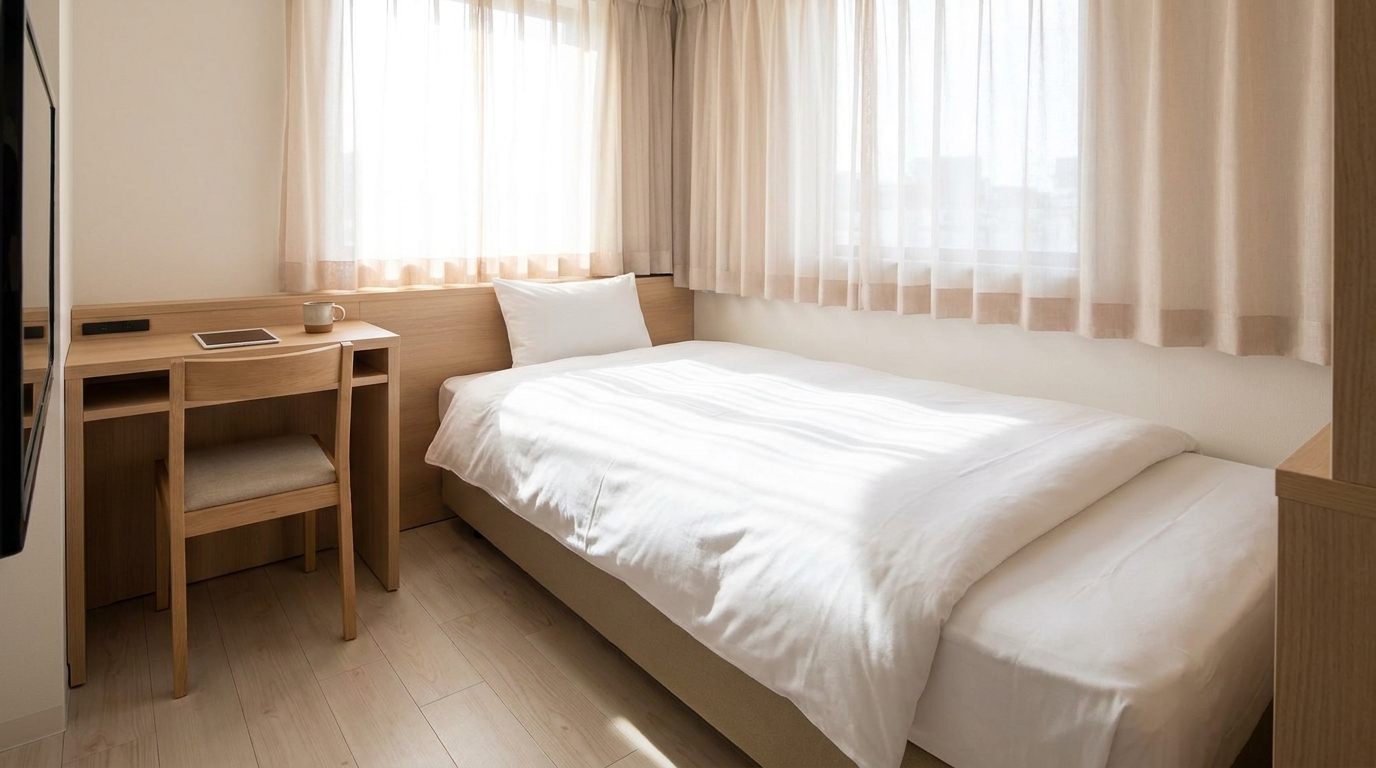
If you’d rather skip the futon experience altogether, many accommodation booking platforms let you filter for Western-style rooms. When booking through sites like Booking.com or Agoda, look for “Western-style room” or check the room photos for a bed frame. You can also message the host directly on Airbnb to confirm the sleeping arrangement before booking.
On the other hand, if you want the full traditional Japanese experience, consider booking a ryokan (traditional inn) stay through activity platforms like Klook or GetYourGuide — many include futon sleeping as part of an authentic cultural package with onsen (hot spring) access and kaiseki dinner.
Futon vs. Western Bed: Which Will Your Airbnb Have?
Not sure whether your accommodation has a futon or a bed? Here’s how to tell before you book:
| Clue | Likely a Futon | Likely a Western Bed |
|---|---|---|
| Listing says “traditional Japanese room” | Yes | — |
| Photos show tatami flooring | Yes | — |
| Listing mentions “bedding in closet” | Yes | — |
| Photos show a bed frame | — | Yes |
| Room described as “Western-style” | — | Yes |
| Hybrid listing (both room types) | Check which room is assigned | Check which room is assigned |
If the listing photos show an empty room with tatami mats and a closet, that closet almost certainly contains your futon.
FAQ
Is sleeping on a Japanese futon bad for your back?
Not typically. The firm surface provides good spinal support for most people, especially back sleepers. If you have a pre-existing back condition, request an extra mattress pad from your host or look for listings with Western beds.
Can I leave the futon out all day instead of folding it?
Technically yes, but it’s considered inconsiderate and can cause moisture problems. In humid Japan, an unfolded futon on tatami can develop mold within days. Fold it each morning — it takes 3 minutes.
Why is my Japanese pillow so hard?
Many Japanese pillows are filled with buckwheat hulls (そばがら), a traditional material valued for neck support and breathability. If it’s too firm, ask your host for a softer option, or use a folded towel as a supplement.
Do I need to wash or air out the futon during my stay?
For short stays (1–4 nights), no. For longer stays, hanging the futon over a balcony railing or chair for a few hours on a sunny day helps prevent moisture buildup. Your host may include specific airing instructions.
What’s the difference between a Japanese futon and a Western futon?
A Japanese futon (布団) is a thin mattress and comforter set placed on the floor and folded away daily. A Western “futon” is a thick mattress on a sofa frame — a completely different product that shares only the name. They are not interchangeable.
Is it rude to ask for a bed instead of a futon?
Not at all. Many Japanese Airbnbs offer both room types. If you prefer a bed, filter for “Western-style room” or message the host before booking. There’s no judgment — comfort preferences are personal.
How much weight can a futon support?
Standard Japanese futons are designed for adults of all sizes. There’s no practical weight limit since the futon sits directly on the floor. Heavier guests may want to request double-stacked shikibutons for added cushioning.
Related Guides
These companion guides cover the rest of your Japan stay, from check-in to getting around:
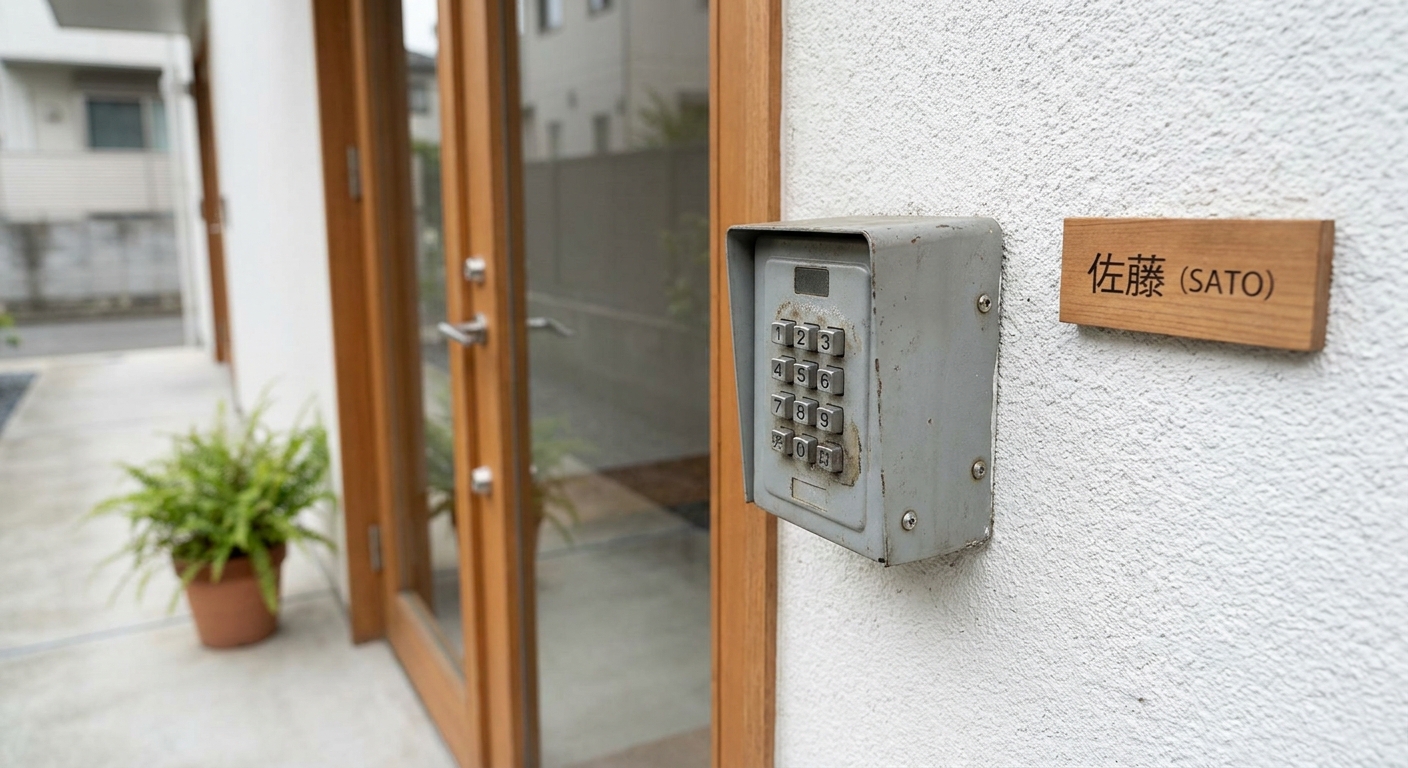
- How to Open a Key Box at Your Japanese Airbnb — the first hurdle before you ever reach the futon closet.
- JR Pass Complete Guide 2026: Prices, Routes & How to Buy — the smartest way to plan Shinkansen and long-distance travel during your trip.
- A Tourist Guide to Garbage Sorting in Japan — practical reading before your first checkout.

Comments