Where to Store Your Luggage in Tokyo: Coin Lockers, Cloak Services, Stations & Delivery (2026 Guide)

Uncategorized
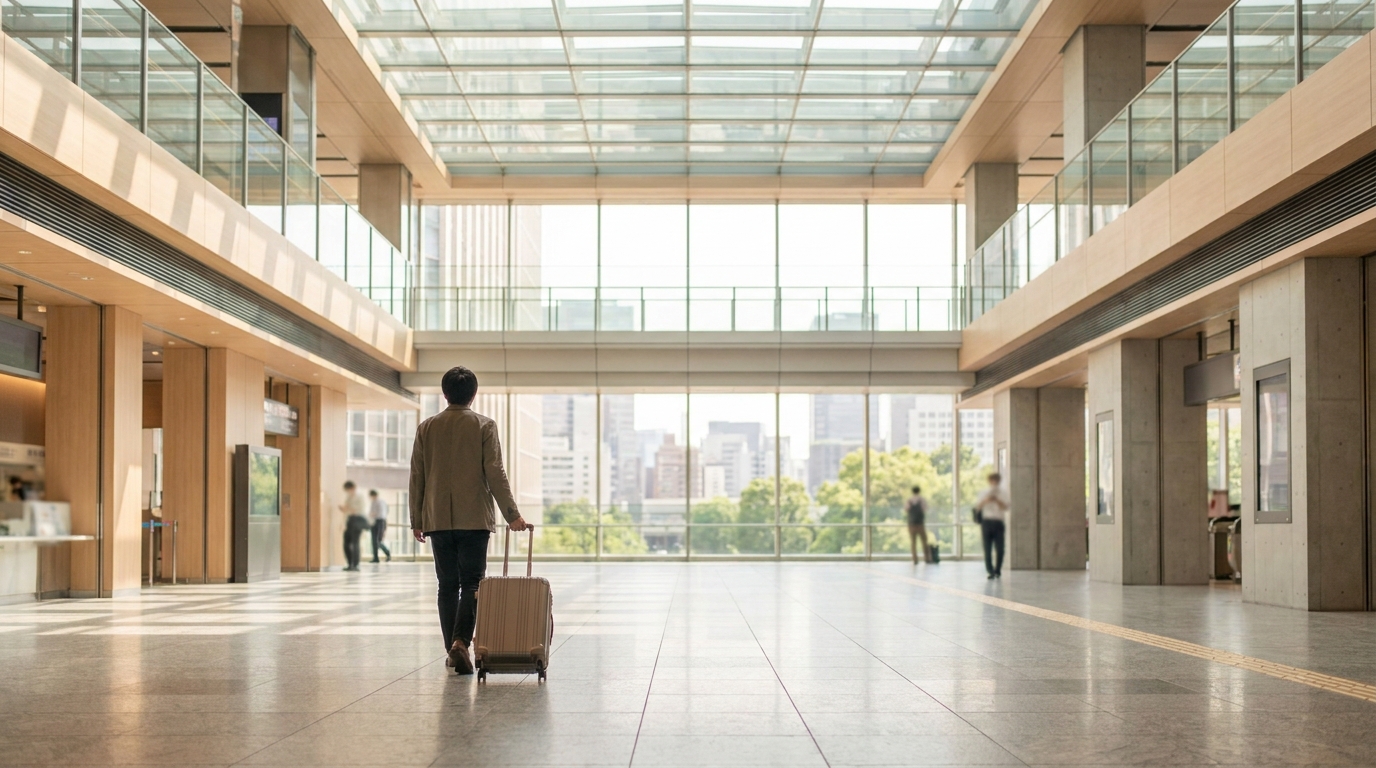
Traveler with suitcase at a Tokyo station concourse
  1. Quick Answer
  2. A Quick Decision Guide: Which Option Fits Your Day?
  3. Option 1: Coin Lockers at Stations and Public Spaces
    1. Sizes and Prices
    2. The Honest Reality: “There, but Often Full”
    3. Stations Where Large Lockers Are Realistically Available
    4. Good Use Cases for Coin Lockers
  4. Option 2: Cloak / Storage Shops (Ecbo Cloak, Bounce, Stasher)
    1. Ecbo Cloak
    2. Bounce
    3. Stasher
    4. Pros and Cons of Cloak Services
  5. Option 3: Station Hand-Baggage Counters
    1. Tokyo Station Hand-Baggage Counters (GranSta Cloak / JR East Travel Service Center)
    2. Other Staffed Storage Points
    3. When a Counter Makes Sense
  6. Option 4: Luggage Forwarding (Yamato Airport TA-Q-BIN, JAL ABC, Hands-Free Travel)
    1. Yamato Airport TA-Q-BIN
    2. JAL ABC
    3. Practical Notes (You Are the One in Charge)
    4. When Forwarding Makes Sense
  7. The Four Options Compared
  8. Area-by-Area Guide
    1. Shinjuku
    2. Shibuya
    3. Taito (Asakusa, Ueno)
    4. Sumida (Tokyo Skytree)
    5. Koto (Toyosu, Odaiba area)
    6. Katsushika (Shibamata, Aoto)
    7. Shinagawa
    8. Meguro
    9. Ota (Kamata, Haneda)
    10. Sōbu / Keisei Line Toward Narita
    11. Keikyu Line and Tokyo Monorail Toward Haneda
  9. Tips to Avoid Common Pitfalls
  10. Frequently Asked Questions
    1. Can I store luggage overnight in coin lockers in Tokyo?
    2. Is there 24-hour luggage storage at Haneda or Narita?
    3. How early can I drop my bag at my hotel before check-in?
    4. What is the cheapest option for storing a large suitcase in Tokyo?
    5. Can I send my suitcase from the airport to my accommodation?
    6. Do cloak services and coin lockers accept all types of bags?
    7. How do I find an available locker quickly at a busy station?
    8. Is luggage storage safe in Tokyo?
  11. Closing Thoughts

Quick Answer

If you need a place to drop your bags before check-in or after check-out in Tokyo, you have four main options: coin lockers at almost every station, app-based cloak services (Ecbo Cloak, Bounce, Stasher) that now include hundreds of 7-Eleven stores, station hand-baggage counters at major hubs, and luggage forwarding that ships your suitcase to your hotel or the airport. Coin lockers are the cheapest but are often full at busy stations and many do not fit large suitcases. For most international travelers, reservable cloak services are the most reliable choice. If you want to be hands-free for the day, forwarding services like Yamato Airport TA-Q-BIN or JAL ABC let you ship your bag to your hotel and travel light.

This guide walks you through each option, when to use which, and which neighborhoods in Tokyo have the most realistic places to drop your bags.


A Quick Decision Guide: Which Option Fits Your Day?

Before diving into the details, here is a simple way to choose:

Your Situation Recommended First Choice Why
Arrived early in the morning, hotel check-in is hours away Cloak service (Ecbo Cloak / Bounce / 7-Eleven via Ecbo) Reservable, predictable price, fits any size
Sightseeing in one neighborhood and want to drop bags for a few hours Station coin locker if you can find an empty large one, otherwise cloak service Lockers are cheapest if available
Going shopping and want to keep your hands free for the rest of the day Coin locker near the shopping area or cloak service No need to return to a counter at a fixed time
Moving between two stays, or heading to the airport later Luggage forwarding (Yamato Airport TA-Q-BIN / JAL ABC) Your bag travels separately so you can sightsee on the way

A few practical rules of thumb:
– For stays of a few hours, a coin locker is usually fine if one is available.
– For stays of a full day or longer, a cloak service is more predictable.
– For same-day airport shipping, you generally need to drop off at the airport counter by 11:00 to receive your bag at the hotel by 18:00 or later that day.
– For multi-day storage, cloak services are usually a better fit than coin lockers, which charge per calendar day and may be cleared by station staff after about three days.


Option 1: Coin Lockers at Stations and Public Spaces

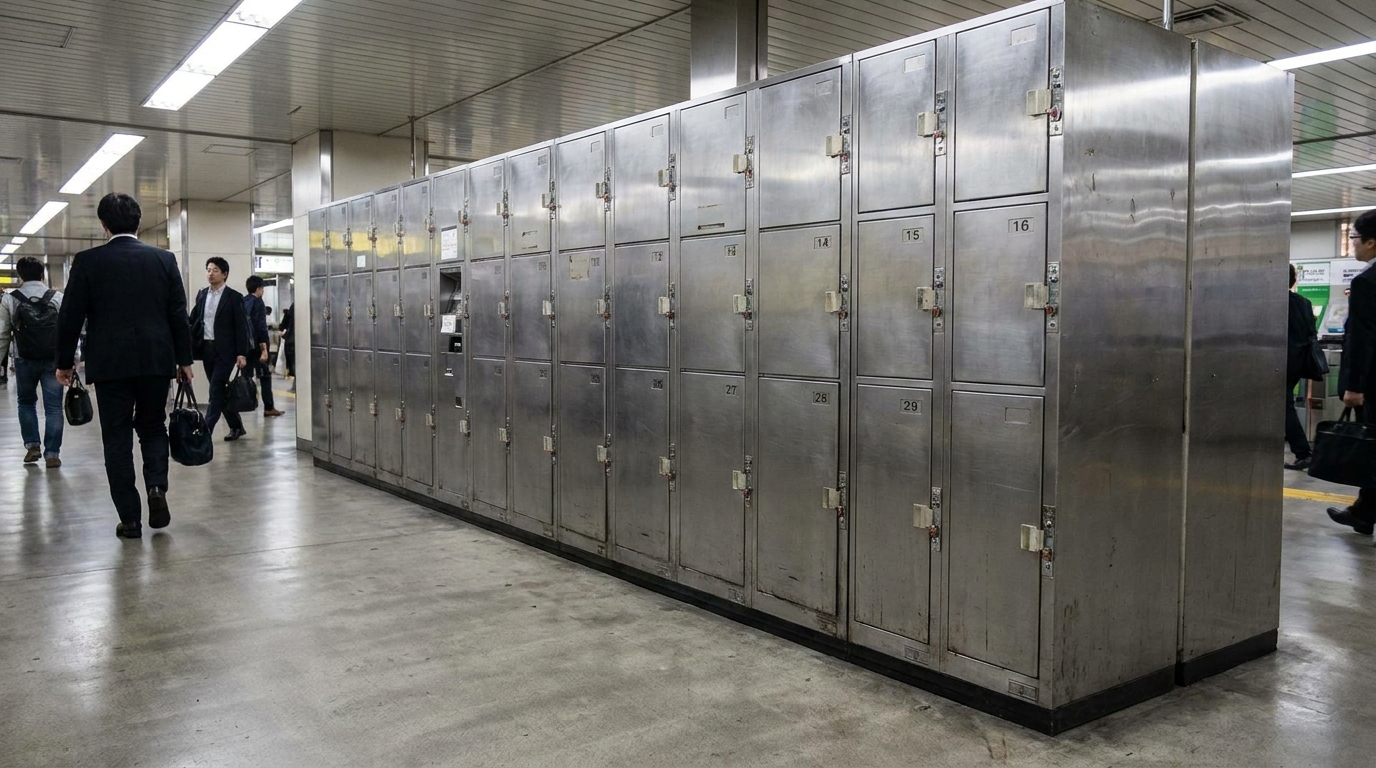
A bank of coin lockers in a Japanese train station

Coin lockers are the most widely available option in Tokyo. You will find them inside or near almost every JR, Tokyo Metro, Toei Subway, and private railway station, as well as inside many shopping complexes and around major sightseeing areas.

Sizes and Prices

Tokyo coin lockers generally come in three sizes:

  • Small (around 35 × 34 × 57 cm): about ¥300–¥500 per calendar day
  • Medium (around 57 × 34 × 57 cm): about ¥500–¥700 per calendar day
  • Large (around 117 × 34 × 57 cm): about ¥700–¥1,000 per calendar day

Prices are slightly higher at busy hubs such as Shinjuku, Tokyo Station, and around major attractions. Most newer lockers accept Suica, PASMO, and other transit IC cards, and many also accept credit cards. A small number of older banks of lockers are coin-only, so it helps to keep some ¥100 coins on hand.

Charging is based on calendar days, not 24-hour periods. If you store a bag in a small locker overnight, you will pay one day at drop-off and an additional day when you collect it the next morning. Most JR and metro lockers also enforce a maximum storage period of about three days; staff may remove luggage left longer and store it at a station office.

The Honest Reality: “There, but Often Full”

A frequently mentioned issue with coin lockers in Tokyo is not the price but availability. Large lockers in particular tend to be taken from early in the morning, especially during cherry blossom season, summer holidays, autumn foliage season, and the year-end and New Year period. At major hubs such as Shinjuku Station, large lockers can be hard to find during peak hours.

If you arrive at a busy station with a large suitcase at midday and rely on finding an empty large locker, you may end up walking between several locker banks before finding one. For travelers with tight schedules, a reservable cloak service is usually a calmer choice.

Stations Where Large Lockers Are Realistically Available

While availability changes hour by hour, the following stations are known for having a higher number of large lockers than average:

  • Shinjuku Station, West Exit underground area — one of the largest concentrations of coin lockers in Tokyo, including a notable bank of around 200 lockers with roughly 60 large units, typically priced around small ¥500, medium ¥700, and large ¥900 per calendar day. Look for the lockers off the JR West Exit area in the underground passages.
  • JR Ueno Station, Asakusa Entrance side — a large multilingual touchscreen locker room with rates typically around small ¥500, medium ¥700, and large ¥900 per day on Suica-compatible lockers. Note that the shutters in this area can close around midnight, so collect bags before then.
  • Keisei Ueno Station — a high concentration of lockers including a substantial number of large units, in the passages toward Ueno Zoo and the Benten Gate. Prices vary by locker bank and are broadly in line with the city-wide range above.
  • Asakusa Station, Tobu Skytree Line area (2F) — locker bank behind the stairs at the back of the Tobu ticket gates. Small around ¥400, medium around ¥500, large around ¥700.
  • Tokyo Station — multiple banks across the Marunouchi and Yaesu sides; large lockers in this area are typically priced around ¥800–¥1,000 per calendar day.
Traveler handing a suitcase to shop staff at a partner storage shop

For real-time availability at JR East stations, smart-locker systems such as To Locca and maruchi-cube (マルチエキューブ) display real-time vacancy information for many major hubs and let you pay by IC card or QR code. Apps such as Ecbo Cloak instead show reservable storage spots at partner shops near each station, which is the fastest fallback when nearby lockers are full.

Good Use Cases for Coin Lockers

  • You only need to store a daypack or carry-on for a few hours.
  • You are sightseeing close to the station and will return to the same spot.
  • You are flexible enough to walk to a second or third locker bank if the first is full.

If any of these are not true, a cloak service is usually the more comfortable choice.


Option 2: Cloak / Storage Shops (Ecbo Cloak, Bounce, Stasher)

Staffed travel service center counter with a suitcase

Cloak services partner with cafés, retail shops, hotels and — more recently — convenience stores to provide reservable luggage storage. You book a slot through an app or website, pay by credit card, and drop off your bag at the partner location during their opening hours.

The three services most travelers use in Tokyo are:

Ecbo Cloak

A Japan-based service available in English, Chinese, Korean and Japanese. Pricing is straightforward:

  • Bag size (longest side under 45 cm, e.g., backpacks, handbags): around ¥500 per day per bag
  • Suitcase size (longest side 45 cm or more): around ¥800 per day per bag

Reservations and payment are completed in the app or on the website. You arrive at the partner location, show your booking screen, and leave your bag.

A noteworthy 2026 update: Ecbo Cloak has partnered with 7-Eleven Japan, adding around 378 stores nationwide as storage points, including many 7-Eleven branches in Tokyo. These locations operate 24 hours a day, which is useful if your flight or train arrives outside normal shop hours. Pricing at 7-Eleven follows the standard Ecbo Cloak rates above.

Bounce

A global service with a large network in Tokyo (over 870 locations as of this writing). Prices in Tokyo start from around ¥275 per day per bag at some outer locations, with many central spots at ¥500 per day. Each booking comes with a protection guarantee of up to about ¥1,000,000, which gives some peace of mind for valuables that are not breakable, perishable, or otherwise restricted.

Bounce is reservable through their website or app, with locations near Shinjuku, Shibuya, Tokyo Station, Asakusa, Skytree, Shinagawa and more.

Stasher

Another international service, with prices in Tokyo starting from around US$3.69 per day (roughly the equivalent of ¥550–¥600 depending on exchange rate). Stasher’s flat fee covers any size of bag, and bookings include a protection guarantee. They have partner locations near major stations including Tokyo, Shinjuku, Shinagawa, Hamamatsuchō, Asakusa, and Haneda Airport.

Pros and Cons of Cloak Services

Pros
– Reservable in advance, so you do not have to gamble on locker availability.
– Clear, flat per-bag pricing that does not change with bag size at most locations.
– English-language interfaces and customer support.
– Many partner locations have staff who can help if you have questions.
– 7-Eleven partnership locations give 24-hour access for Ecbo Cloak users.

Cons
– You are tied to the partner location’s opening hours for non-24h spots, so plan pick-up before they close.
– Slightly more expensive than the cheapest coin lockers when the locker is available.
– Each service’s network differs, so you may need to compare two or three apps to find the best location for your route.

For most international travelers staying in Tokyo for multiple days or making early-morning arrivals, a cloak service is the option that is the easiest to plan around.


Option 3: Station Hand-Baggage Counters

Courier behind a counter receiving a suitcase

A few major stations operate staffed hand-baggage counters where you can leave your luggage with a person rather than in a locker. These are useful if every locker bank is full, if your bag is unusually large, or if you simply prefer a staffed service.

Tokyo Station Hand-Baggage Counters (GranSta Cloak / JR East Travel Service Center)

Inside Tokyo Station, the GranSta Cloak baggage room and the JR East Travel Service Center offer same-day hand-baggage storage with size-based pricing — typically starting at ¥500 per day for compact bags (up to roughly 100 cm in total dimensions) and rising up to around ¥2,000 per day for larger pieces. You must collect your bag on the same day before the counter closes. Locations include the Marunouchi area and other points inside the station; check the latest hours on the official GranSta and JR East websites before relying on these for late arrivals.

Note: A station-based “Crosta” hand-baggage and short-distance delivery service is operated by JR West in Kyoto and at Kansai Airport. In Tokyo, the equivalent same-day service is provided through the JR East Travel Service Center above and through Yamato / JAL ABC counters at the airports — the “Crosta” brand itself does not operate in Tokyo.

Other Staffed Storage Points

Some major stations such as Shinjuku, Ueno, and Shinagawa have storage rooms operated by private companies (for example, Sagawa Express around the Tokyo Skytree area offers temporary storage at around ¥800 per day, ¥500 around the Tokyo Skytree itself). These are not always easy to find without prior research, so it is worth checking the station’s official map or the operator’s website before you go.

When a Counter Makes Sense

  • Your bag is too big for any standard large locker (over about 60 cm depth or unusual shape).
  • You arrive at a major hub at a time when lockers are obviously full.
  • You prefer to talk to a person rather than tap through an app.
  • You are storing for the same day only and can collect before the counter closes.

For overnight or multi-day storage, a cloak service is usually a better fit than a station counter.


Option 4: Luggage Forwarding (Yamato Airport TA-Q-BIN, JAL ABC, Hands-Free Travel)

Traveler checking a digital locker screen with a suitcase

The fourth option is to not carry your bag at all. Japan has a well-developed luggage forwarding industry that lets you ship your suitcase from one place to another and travel separately with only your essentials.

This is sometimes called “Hands-Free Travel” and is run by two main operators for international travelers: Yamato Transport (Airport TA-Q-BIN / Kuroneko Yamato) and JAL ABC.

Yamato Airport TA-Q-BIN

Yamato has been running airport luggage delivery since the 1970s and is the most common service used by travelers.

  • From an airport to a Tokyo hotel: prices typically range from around ¥1,600 to ¥3,680 per bag depending on size (60 cm to 160 cm in total dimensions), with cashless payment a few yen cheaper than cash. For Narita or Haneda to a hotel in Tokyo’s 23 wards, allowing roughly ¥2,500–¥3,000 per bag is a reasonable budget.
  • Same-day delivery from Haneda: if you bring your bag to a Yamato/JAL ABC counter at Haneda Terminal 1, 2, or 3 by 11:00, your bag can be delivered to your hotel from 18:00 the same day. Available areas include central Tokyo, Urayasu, Kawasaki, and parts of Yokohama.
  • Standard delivery: next-day delivery is the default for shipments outside the same-day delivery window.
  • Payment: cash, credit card, QR code, and major electronic money are accepted at the counters.

JAL ABC

JAL ABC operates dedicated counters in Narita and Haneda airports.

  • Same-day Haneda delivery (JAL passengers): JAL operates a “Same-Day Baggage Delivery” arrangement for arriving JAL passengers at Haneda, currently published at a flat fee of around ¥2,800 per bag to select central Tokyo addresses. Cut-off times and eligible areas are listed on the JAL ABC website.
  • Standard delivery: starting from around ¥2,500–¥3,000 per piece for Narita or Haneda to addresses in central Tokyo, with delivery dates that can be specified in advance. Pricing scales with bag size and destination.
  • Size limits — standard service: most regular suitcases (up to 160 cm total dimensions) are accepted under the standard pricing.
  • Oversized service: a separate Large Baggage Delivery category covers pieces up to about 240 cm in total dimensions and 50 kg per piece, intended for golf cases, ski bags, and similar oversized items.

Practical Notes (You Are the One in Charge)

These services are designed for travelers to arrange themselves directly. The model is:

  1. You book or simply walk up to the counter at the airport (or, in some cases, at a partner counter in central Tokyo).
  2. You fill in the destination details, including the name of your hotel and the planned check-in date.
  3. You pay at the counter and receive a tracking slip.
  4. You collect the bag at the destination hotel front desk on arrival.

Most major hotels in Tokyo are used to receiving Yamato or JAL ABC deliveries and will hold the bag for you until check-in. For non-hotel accommodation, including short-term rentals and small inns, it is your responsibility to confirm in advance whether the property can accept and hold a delivered bag. If you cannot confirm this, sending the bag to a hotel in the same area, to a luggage delivery counter near the destination, or using a cloak service instead is a safer plan.

When Forwarding Makes Sense

  • You land at the airport in the morning and want to sightsee on the way to your hotel.
  • You are checking out of your hotel and want to spend the day exploring before catching a late flight.
  • You are moving between two stays in different cities and would rather not haul a suitcase on packed trains.

If you need your bag in the next few hours, forwarding is not the right choice — it is built around a same-day-evening or next-day delivery model.


The Four Options Compared

Feature Coin Lockers Cloak Services (Ecbo / Bounce / Stasher) Station Hand-Baggage Counters Luggage Forwarding (Yamato / JAL ABC)
Typical price (per bag, per day) ¥300–¥1,000 From ¥275, more commonly ¥500–¥1,000 ¥500–¥2,000 (size-based, same day only) ¥1,600–¥3,680+ standard; from around ¥2,800 same-day (JAL passengers)
Reservation possible? Mostly no (limited reservation via To Locca / Multi Ecube) Yes Walk-up Walk-up at counter, online options vary
Handles oversized suitcases? Sometimes (large lockers only) Yes Yes Yes (Yamato standard up to 200 cm / 30 kg; JAL ABC oversized up to 240 cm / 50 kg)
Storage period Per calendar day, ~3-day max Multi-day OK Same day only N/A — it ships the bag
Best for Short stops near a station Predictable storage of a few hours to multiple days Fallback when lockers are full Hands-free sightseeing on arrival or departure days
English support Mostly multilingual screens Yes Yes at major hubs Yes, well-established for travelers

Area-by-Area Guide

Below is an overview of the wards and lines that international travelers most often need luggage storage in. This is not an exhaustive station list — focus on the ward, then choose the option that fits your day.

Shinjuku

The largest interchange in Tokyo and one of the busiest places to look for a locker. JR Shinjuku has multiple locker banks across the Central, East, South, and West Exits, including a large West Exit underground area with on the order of 200 lockers (typical rates around small ¥500, medium ¥700, large ¥900). Demand is high all day, so backing up your plan with Ecbo Cloak, Bounce, or a 7-Eleven cloak point is sensible. There are also luggage storage shops a short walk from each exit.

Shibuya

A major hub with significant locker banks but extremely heavy daytime demand, especially around the Hachikō and Scramble Crossing exits. Bounce and Stasher both have many partner locations within a few minutes’ walk of the station, which is often the calmer choice if you arrive between late morning and early evening.

Taito (Asakusa, Ueno)

Tokyo station entrance with travelers and lockers visible

This is one of the easier areas for luggage storage in central Tokyo:

  • Asakusa Station (Tobu Skytree Line, 2F) has a useful locker bank with small ¥400, medium ¥500, and large ¥700 rates.
  • JR Ueno and Keisei Ueno together provide one of the densest concentrations of large lockers in Tokyo, useful if you are heading to Narita on the Keisei Skyliner.

Sumida (Tokyo Skytree)

Around Tokyo Skytree Station and Oshiage, you will find lockers in the station and beneath Tokyo Skytree Town. Sagawa Express also operates a temporary storage counter in this area at around ¥500–¥800 per day, which can be useful if every locker is full during weekends and holidays.

Koto (Toyosu, Odaiba area)

Toyosu and Tatsumi serve travelers visiting Toyosu Market, TeamLab Planets, and Odaiba. Locker banks at Toyosu Station and Tokyo Big Sight (when events are running) are useful, and several Bounce partners cover this zone.

Katsushika (Shibamata, Aoto)

A quieter area of eastern Tokyo with a less dense locker network. Travelers heading to Shibamata for a day trip can drop bags at coin lockers in nearby Aoto or Tateishi stations on the Keisei Line, or use a cloak service further west and travel light.

Shinagawa

A common arrival point for Shinkansen passengers and travelers using the Keikyu Line to Haneda Airport. The Konan Exit (east side) has multiple locker banks, and several Bounce and Stasher partners operate within a few minutes’ walk. This is also one of the most convenient areas for luggage forwarding to Haneda, since Yamato counters are easy to reach.

Meguro

A residential ward with lighter tourist traffic. Lockers at JR Meguro and Tokyu Meguro are available but limited in number; most travelers will be better off using a cloak partner near Shinagawa, Ebisu, or Shibuya and keeping Meguro for sightseeing.

Ota (Kamata, Haneda)

Kamata Station is a useful base for travelers using both JR and Keikyu lines toward Haneda Airport, and the surrounding area has growing cloak coverage. Haneda Airport itself has Yamato and JAL ABC delivery counters in Terminals 1, 2, and 3, plus general-purpose lockers throughout the terminals (note that some terminal lockers may be reduced or temporarily relocated due to ongoing construction, so confirm signage on arrival).

Sōbu / Keisei Line Toward Narita

Travelers arriving via the Keisei Skyliner or the JR Narita Express typically pass through Nippori (Skyliner) or Tokyo Station (NEX). Both have locker banks; if you cannot find availability, Ecbo Cloak partners near Nippori and JR Ueno give you a reliable backup.

Keikyu Line and Tokyo Monorail Toward Haneda

Stations on the Keikyu Airport Line (such as Keikyu Kamata and Sengakuji) and on the Tokyo Monorail (Hamamatsuchō, Tennōzu Isle) have moderate locker availability. For Haneda transfers it is usually simpler to use the Yamato or JAL ABC counters directly at the airport rather than chasing lockers along the line.


Tips to Avoid Common Pitfalls

Locker bank near a traditional-roofed station entrance

A few practical points that travelers often discover the hard way:

  • Holiday periods fill up fast. During cherry blossom season (late March to early April), Golden Week (late April to early May), Obon (mid-August), and the year-end and New Year period, lockers around major stations and tourist spots are often fully occupied by mid-morning. On these days, default to a reservable cloak service.
  • Measure your bag, not just the locker. Locker dimensions are usually listed inside the locker door. A typical “large” locker accepts most 28-inch suitcases on their side, but very tall or hard-sided cases may not fit. If you have an unusually shaped bag, a cloak service or hand-baggage counter is more forgiving.
  • Avoid storing valuables, fragile items, perishables, and anything restricted. Cloak services and coin lockers both publish lists of items they will not accept, including cash, jewelry, electronics that you actually need that day, food that needs refrigeration, and dangerous goods. Read each service’s terms before booking.
  • Mind the calendar-day clock. A coin locker that you fill at 22:00 will charge a second day’s fee when you collect the bag at 09:00 the next morning. Multi-day cloak storage tends to be cheaper per period.
  • Set a phone reminder for pick-up. Coin lockers do not send reminders. Most cloak services will, but only if you booked the correct end time. If you forget your bag in a coin locker for more than a few days, station staff will move it to lost property and you will need to retrieve it in person with ID.
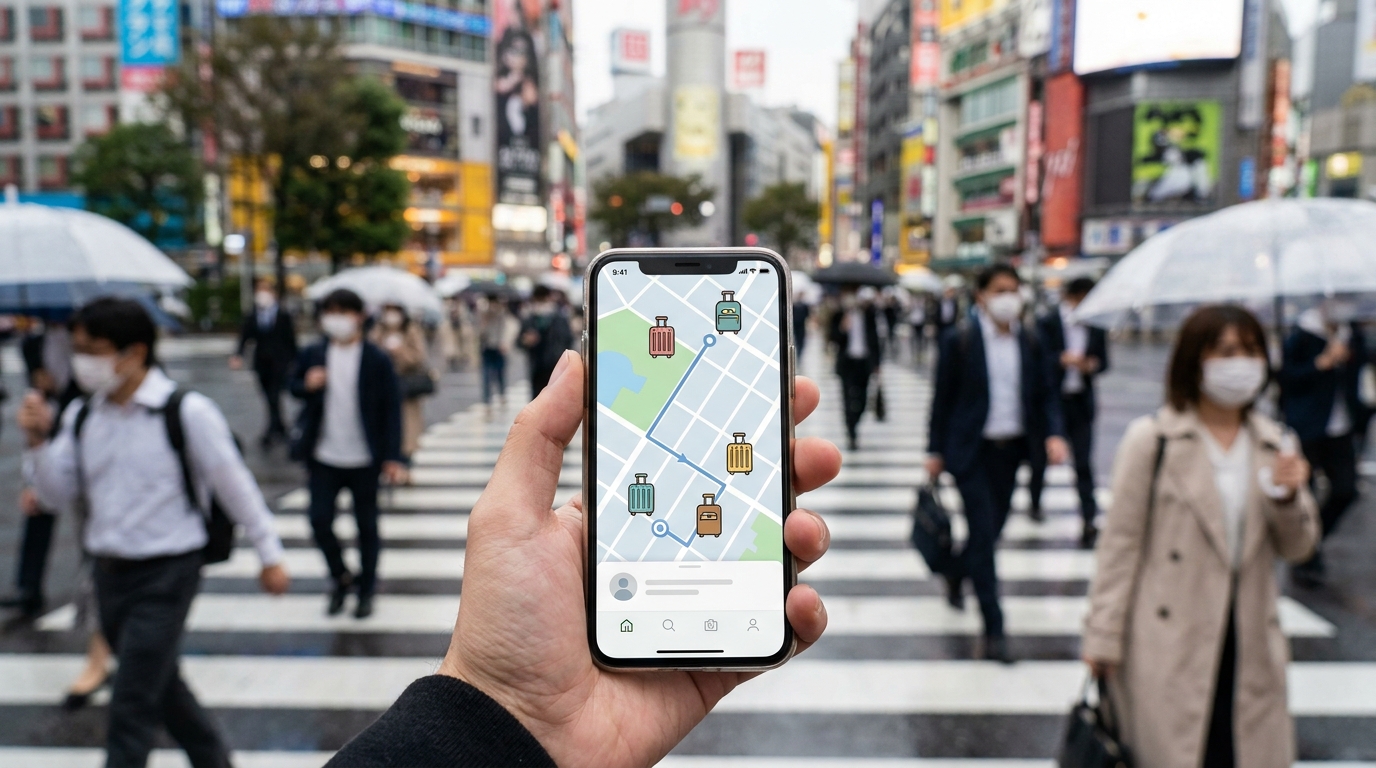
Hand holding a smartphone showing a generic storage app interface
  • Hotels can usually hold your bag too. If you are staying in a hotel, you can almost always drop your suitcase at the front desk before check-in or after check-out at no charge — this is one of the simplest and cheapest options if you are starting or ending the day at the hotel anyway. Confirm the policy with your specific property in advance.

Frequently Asked Questions

Can I store luggage overnight in coin lockers in Tokyo?

In most cases, yes. Coin lockers in Tokyo are billed by calendar day, so an overnight stay typically costs two days’ fees. Most JR and metro lockers also limit storage to about three days, after which staff may remove the bag and store it at a station office. For longer stays, a cloak service is usually a better fit.

Is there 24-hour luggage storage at Haneda or Narita?

Both Haneda and Narita Airports have coin lockers within their terminals, many of which are accessible around the clock, although availability varies by terminal and may be reduced during construction work. Yamato and JAL ABC delivery counters, by contrast, operate during fixed hours (typically morning until evening). For 24-hour storage in the city, the Ecbo Cloak partnership with 7-Eleven offers around-the-clock drop-off and pick-up at participating stores.

How early can I drop my bag at my hotel before check-in?

Most hotels in Tokyo will hold your bag at the front desk if you arrive before the official check-in time, often from the morning onward. This service is normally free of charge for guests with a confirmed reservation. Confirm with your specific hotel in advance, especially if you plan to arrive very early or want to drop off the day before your stay starts.

What is the cheapest option for storing a large suitcase in Tokyo?

If a large coin locker is available near your route, it is usually the cheapest at around ¥700–¥1,000 per day. If lockers are full, Bounce starts from around ¥275 per day at some outer locations (with many central spots at ¥500), while Stasher and the standard Ecbo Cloak rate sit a little higher (roughly ¥500–¥1,000 per day) but cover any size of bag.

Can I send my suitcase from the airport to my accommodation?

Yes. Yamato Airport TA-Q-BIN and JAL ABC both ship bags from Narita or Haneda to addresses across Tokyo. The standard service typically delivers next day, while same-day evening delivery from Haneda is available for select central Tokyo addresses if you drop your bag off by around 11:00. You arrange and pay for this service yourself at the airport counter, and it is your responsibility to confirm with non-hotel accommodations in advance whether they can accept a delivered bag.

Do cloak services and coin lockers accept all types of bags?

No. Both cloak services and coin lockers exclude items such as cash, valuables, fragile items, perishables, animals, and dangerous or illegal goods. Each operator publishes its own list of restrictions in its terms of service, which is worth reviewing before booking.

How do I find an available locker quickly at a busy station?

Several smart-locker systems (such as To Locca and maruchi-cube) and the Ecbo Cloak app display real-time locker and storage availability for many stations. Checking these on your phone before walking to a specific bank can save you time. If availability looks tight, booking a cloak service in advance for the same area is usually faster than continuing to search.

Is luggage storage safe in Tokyo?

In general, both coin lockers and reputable cloak services have a strong track record. Coin lockers rely on physical or digital locks, and cloak services use unique booking codes. Most cloak services additionally include an insurance or compensation guarantee for lost or damaged items within stated limits. Even so, valuables, important documents, and items you cannot afford to lose are best kept with you.


Closing Thoughts

Tokyo has more luggage storage options than almost any other city in the world, but availability changes constantly and the cheapest option is not always the easiest. If you arrive on an early flight, a forwarding service like Yamato or JAL ABC can send your bag straight to your hotel while you head out for a first day of sightseeing. If you have a few hours between activities, a coin locker — when one is free — is hard to beat on price. And if you want to plan with confidence, a reservable cloak service through Ecbo Cloak, Bounce, or Stasher, including the new 7-Eleven partnership locations, will almost always have a slot.

If you are planning the wider trip, our Complete JR Pass Guide covers regional transport, and our Konbini Travel Guide walks through how Japanese convenience stores can solve dozens of travel headaches — including, now, luggage storage.

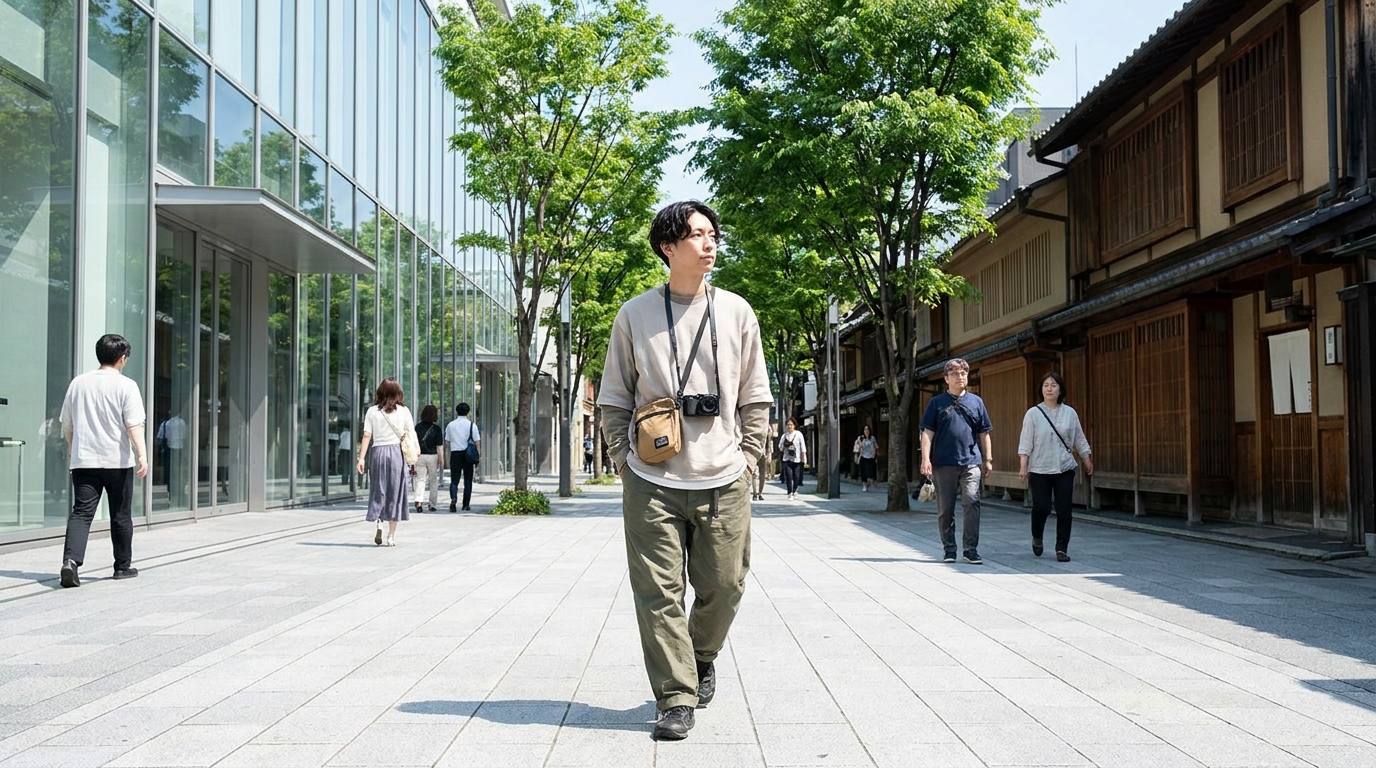
Traveler walking hands-free through a Tokyo street

Travel light, travel calm, and enjoy more of Tokyo with both hands free.


Comments

Copied title and URL