Last checked: June 29, 2026
- Quick Answer
- Why This Matters in Japan’s Summer
- What to Buy: The Short Version
- DEET vs Icaridin: What Travelers Need to Know
- Where to Buy It
- Festival and Fireworks Packing Plan
- When to Apply It
- What Not to Rely On Alone
- After You Get Bitten: What to Buy at a Japanese Drugstore
- A Simple Buying Script
- Air Travel and Bottle Size
- Best Scenarios for Mosquito Repellent in Japan
- How This Fits With Other Summer Prep
- Final Recommendation
- FAQ
- Do I need mosquito repellent in Tokyo?
- Can I buy mosquito repellent after arriving in Japan?
- Is DEET safe?
- What is icaridin?
- Should I buy spray, mist, gel, or wipes?
- Can I use mosquito repellent with sunscreen?
- Are mosquito coils useful for tourists?
- What should I do if I get bitten?
- What Japanese words should I look for after a bite?
- Can I bring mosquito repellent on a plane?
- Sources Checked
- About the Author
Quick Answer
If you are visiting Japan in summer, buy a skin-applied mosquito repellent and a small after-bite anti-itch medicine at a drugstore before going to evening festivals, fireworks, parks, riversides, or gardens. Look for repellent active ingredients such as DEET or icaridin, follow the age and usage instructions on the label, and pack both prevention and bite-care items with cooling goods and water.
For most short-term travelers, the easiest plan is simple:
- Buy one small spray, mist, or pump bottle at a drugstore.
- Apply it before you enter a crowded outdoor area.
- Reapply according to the product label.
- Carry an after-bite product for itching if bites still happen.
- Do not rely on repellent alone if you are standing near grass, water, or trees for hours.
This is especially useful for Japan’s summer festival season. Fireworks and matsuri often mean long waiting times outdoors, exposed ankles, short sleeves, riverbanks, shrine grounds, parks, and crowded food-stall areas. A small repellent can turn a sticky, itchy night into a normal travel memory.
Why This Matters in Japan’s Summer
Japan’s summer is not just hot. It is humid, slow-moving, and very outdoor-heavy. Tourists often spend hours outside for:
- Fireworks by rivers or bays
- Bon odori and neighborhood matsuri
- Shrine and temple festivals
- Night markets and food-stall streets
- Theme parks and gardens
- Early-morning or evening walks to avoid the heat
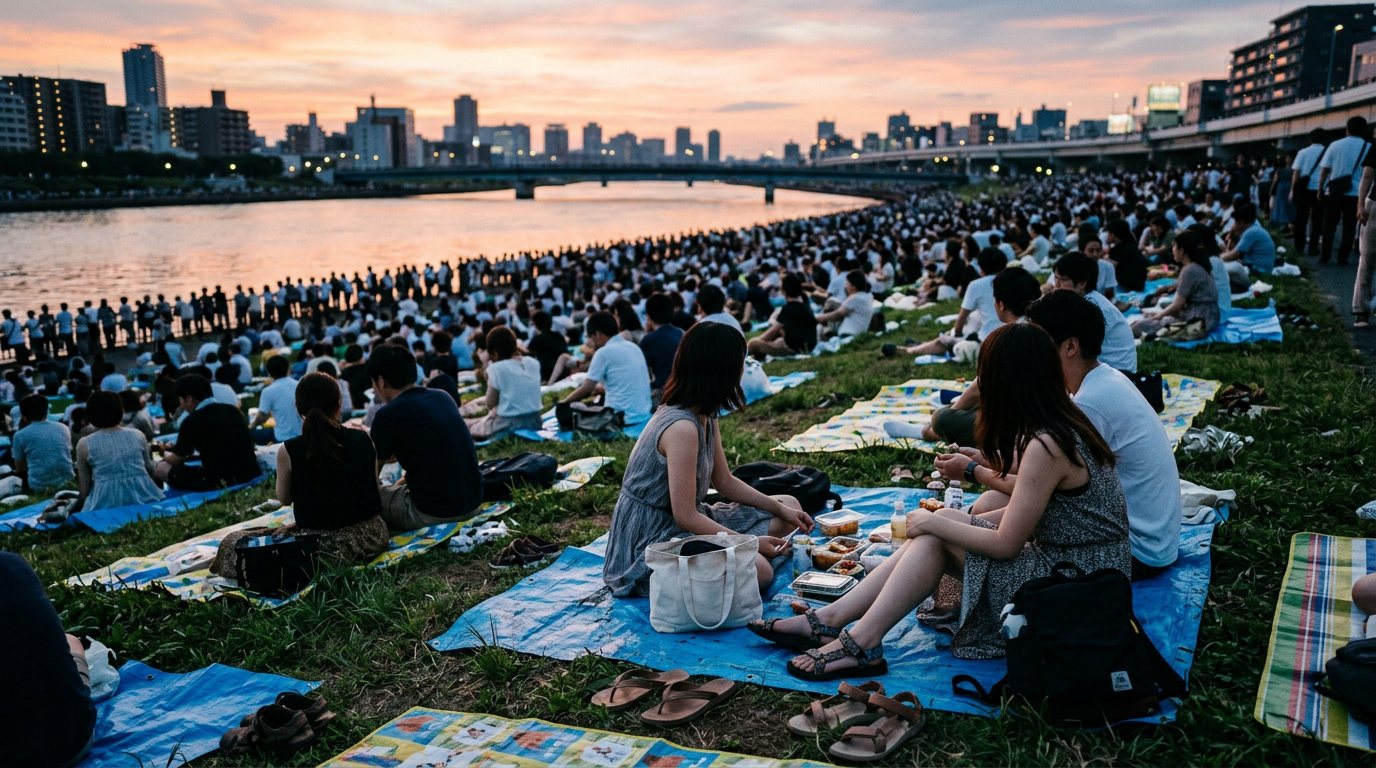
The friction is easy to miss before the trip. You may plan for heat, rain, cash, trains, and crowds, then arrive at a riverside fireworks spot at 5:00 p.m. with bare ankles and no repellent. By the time the first fireworks start, the closest convenience store may be crowded, sold out, or too far from your spot.
This guide is not medical advice. It is a practical buying and packing guide for travelers who want to reduce avoidable insect bites while enjoying Japan’s summer events.
If your main plan is a fireworks night, pair this with RJG’s Japan Summer Fireworks 2026 guide and Jingu Gaien Fireworks Festival 2026 guide. If your plan is a matsuri, RJG’s Tokyo Matsuri Guide 2026 is the better companion.
What to Buy: The Short Version
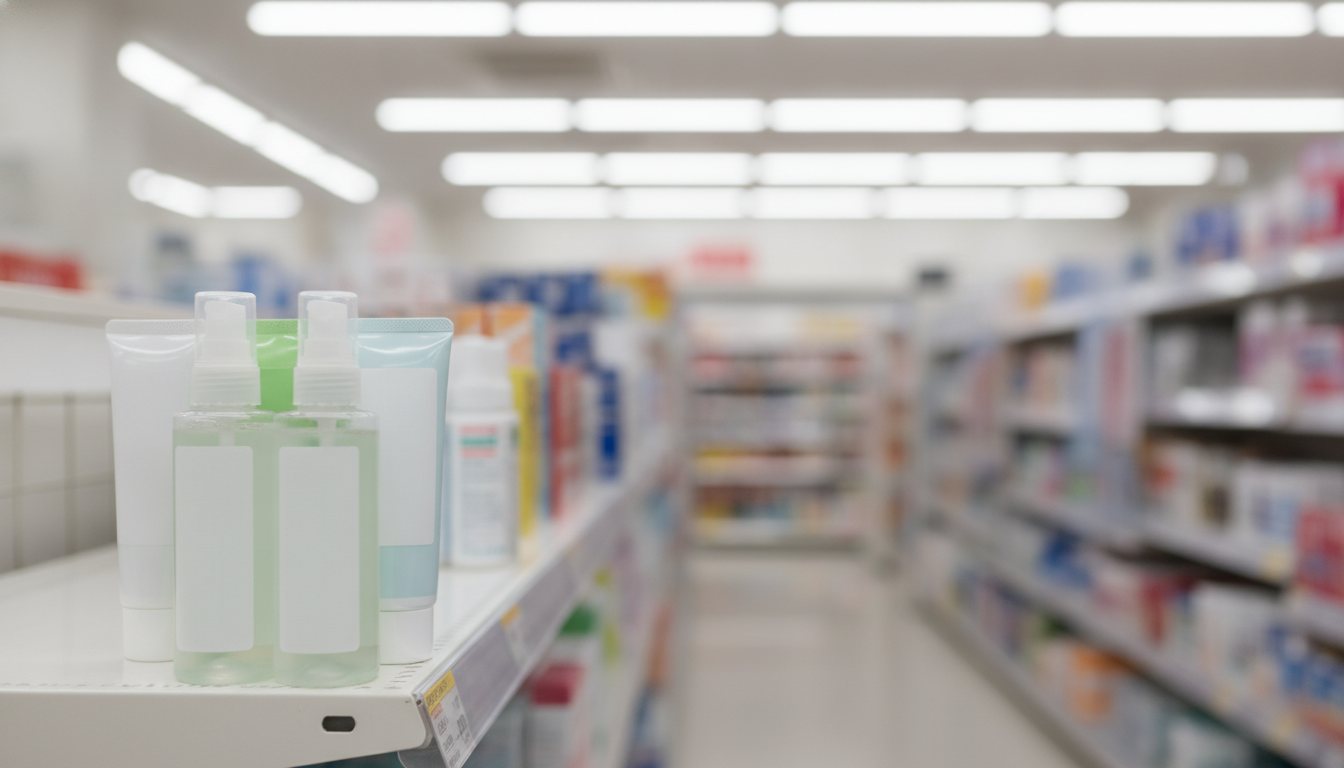
At Japanese drugstores, look for products in the insect repellent section. Useful Japanese words include:
| Japanese label | Meaning | Why it matters |
|---|---|---|
| 虫よけ / 虫除け | Insect repellent | General shelf keyword |
| 蚊 | Mosquito | Good keyword for summer use |
| ミスト | Mist | Easy to apply outdoors |
| スプレー | Spray | Common format, check where it can be used |
| ジェル | Gel | Useful if you dislike spray drift |
| 携帯用 | Portable size | Better for festivals and day bags |
| ディート | DEET | Common repellent active ingredient |
| イカリジン | Icaridin / picaridin | Common alternative active ingredient |
For a short trip, choose one product that is easy to carry and easy to apply. A compact repellent that stays in your festival bag is more useful than a bulky bottle left in your hotel room.
DEET vs Icaridin: What Travelers Need to Know
You do not need to become a chemistry expert. You just need to recognize the two names you are likely to see.
DEET is a long-used insect repellent active ingredient. Some Japanese products use DEET at different concentrations, and stronger products may have stricter age or usage instructions. Read the label carefully, especially for children.
Icaridin, also known internationally as picaridin, is another common active ingredient. In Japan, you may see it written as イカリジン. It is often marketed in family-friendly or skin-use products, but you should still follow the label instead of assuming the same product is suitable for children, sensitive skin, and adults in the same way.
The CDC recommends using EPA-registered insect repellents with active ingredients such as DEET, picaridin, IR3535, oil of lemon eucalyptus, para-menthane-diol, or 2-undecanone when protection from insect bites is needed. In Japan, tourists will most commonly notice DEET and icaridin/picaridin on mainstream drugstore products.
For RJG readers, the practical decision is:
- If you want the simplest drugstore choice, look for
虫よけplus eitherディートorイカリジン. - If you are buying for a child, check the age instructions carefully.
- If you have sensitive skin, test a small amount first and consider a gel or pump type to avoid overspray.
- If you are unsure, ask drugstore staff:
kore wa kodomo ni tsukaemasu ka?meaning “Can this be used for children?”
For a wider drugstore overview, read RJG’s Japan Pharmacy & Drugstore Guide.
Where to Buy It
The easiest place is a drugstore. In Tokyo and other major cities, look for chains and pharmacies near stations, shopping streets, and large tourist areas. You may also find seasonal insect products in some convenience stores, supermarkets, and home centers, but selection varies by location and season.
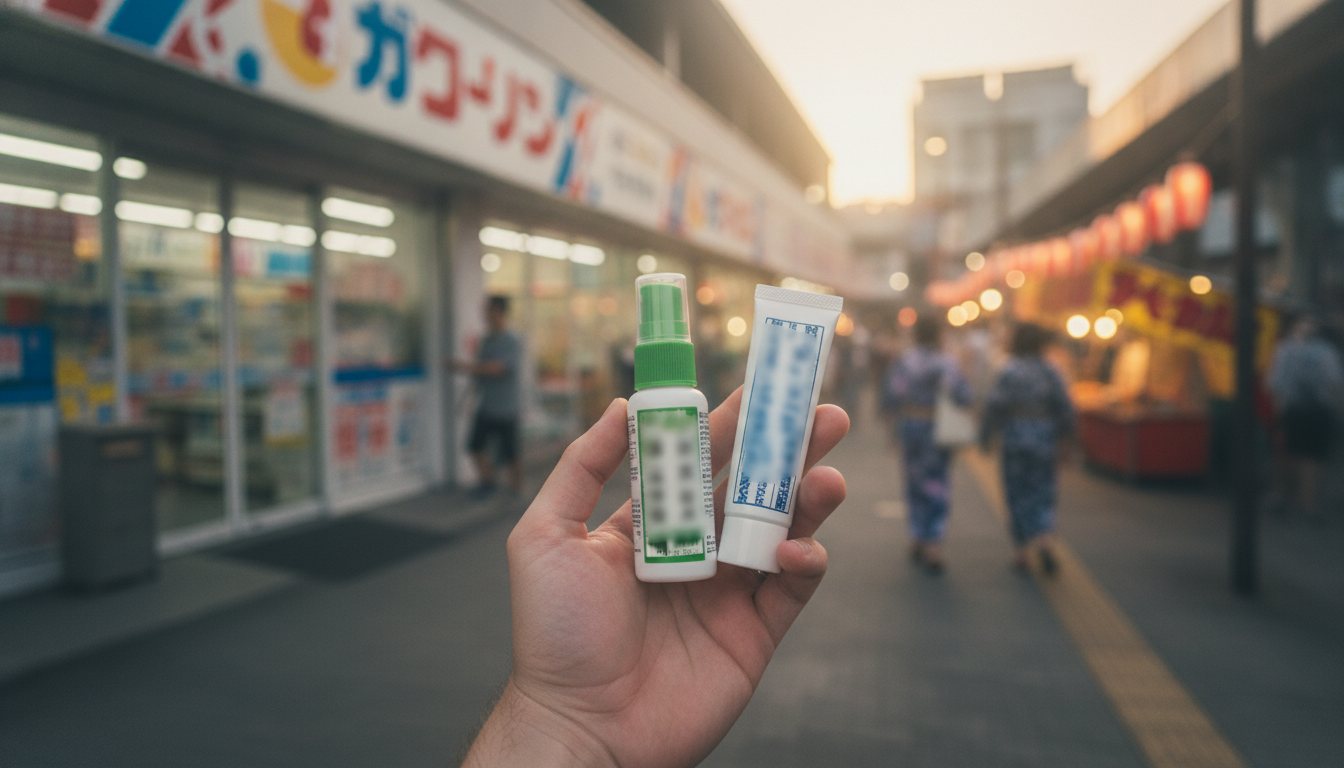
If you are going to a major fireworks event, buy repellent before you travel to the venue area. The best timing is:
- Morning or early afternoon: buy it near your hotel or a large station.
- Before dressing in yukata: apply carefully according to the label, avoiding fabric stains.
- Before entering the viewing area: do a final check for exposed ankles, calves, arms, and neck.
Do not wait until you are already holding a festival food tray in one hand and a drink in the other. That is the exact moment when a practical item becomes a small travel disruption.
Festival and Fireworks Packing Plan
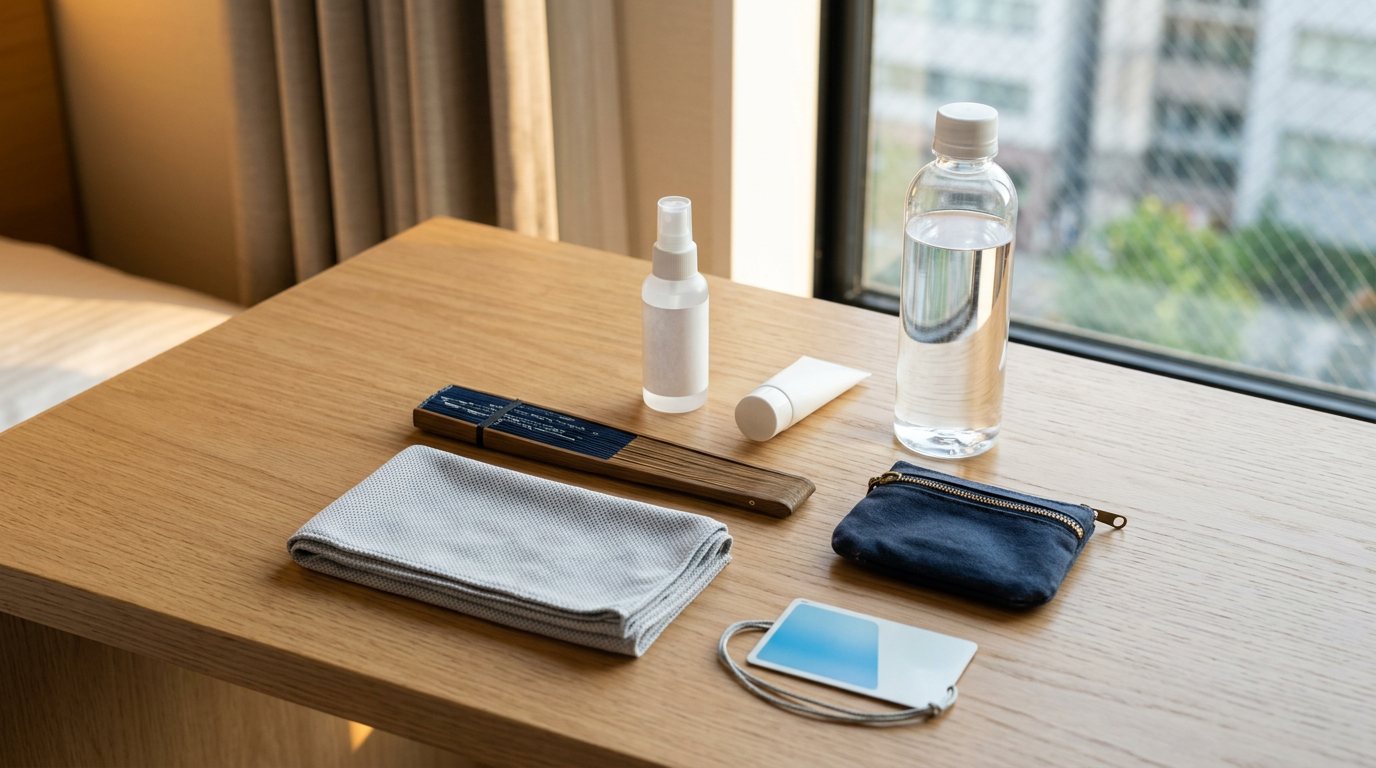
For a summer matsuri or fireworks night, pack repellent as part of a small outdoor kit:
| Item | Why it helps |
|---|---|
| Small mosquito repellent | Reduces avoidable bites during long outdoor waits |
| After-bite anti-itch medicine | Helps if bites still happen |
| Cooling wipes or towel | Helps with heat and sweat before reapplying products |
| Water or sports drink | Heat is often the bigger risk than insects |
| Small plastic bag | Useful for trash when bins are limited |
| Portable fan | Helpful in queues and station crowds |
| Light outer layer | Covers arms if you are near grass or water |
| Cash and IC card | Food stalls and transport may not be fully cashless |
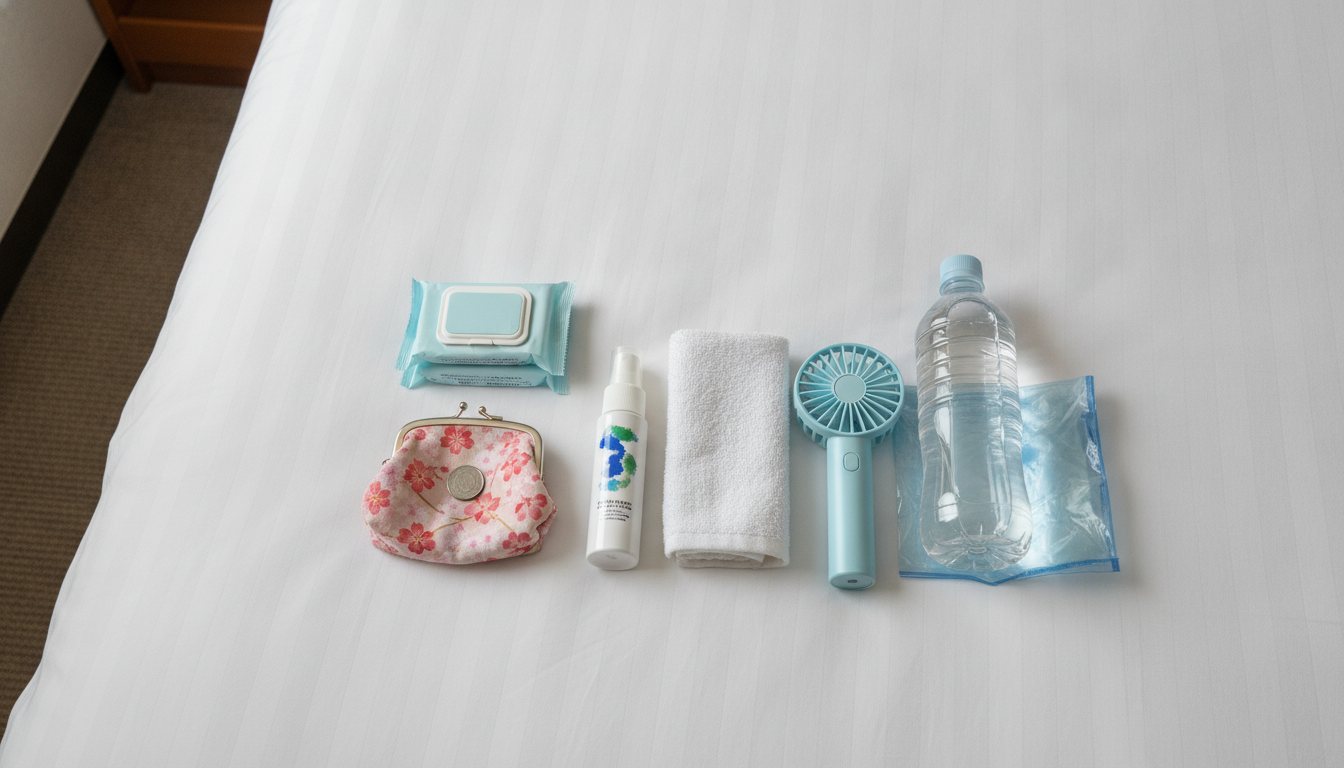
For fireworks specifically, think about your seat. A concrete embankment, grassy riverside, park lawn, and shrine approach are different environments. The more grass, trees, water, and waiting time you have, the more useful repellent becomes.
If you are wearing yukata, be careful with sprays. Apply according to the product label, avoid spraying directly onto delicate fabric, and wash your hands before touching your obi, rental bag, or phone. For more yukata-specific planning, read RJG’s Tokyo Yukata Guide 2026.
When to Apply It
The lowest-friction timing is before the event becomes crowded.
For a fireworks night:
- Apply sunscreen first if needed.
- Let it settle.
- Apply insect repellent according to the label.
- Wash your hands if you will eat.
- Reapply as directed.
Do not spray near other people’s faces in a crowded train, queue, or viewing area. If you need to reapply in public, step aside, point the spray downwind and away from people, and avoid food-stall lines.
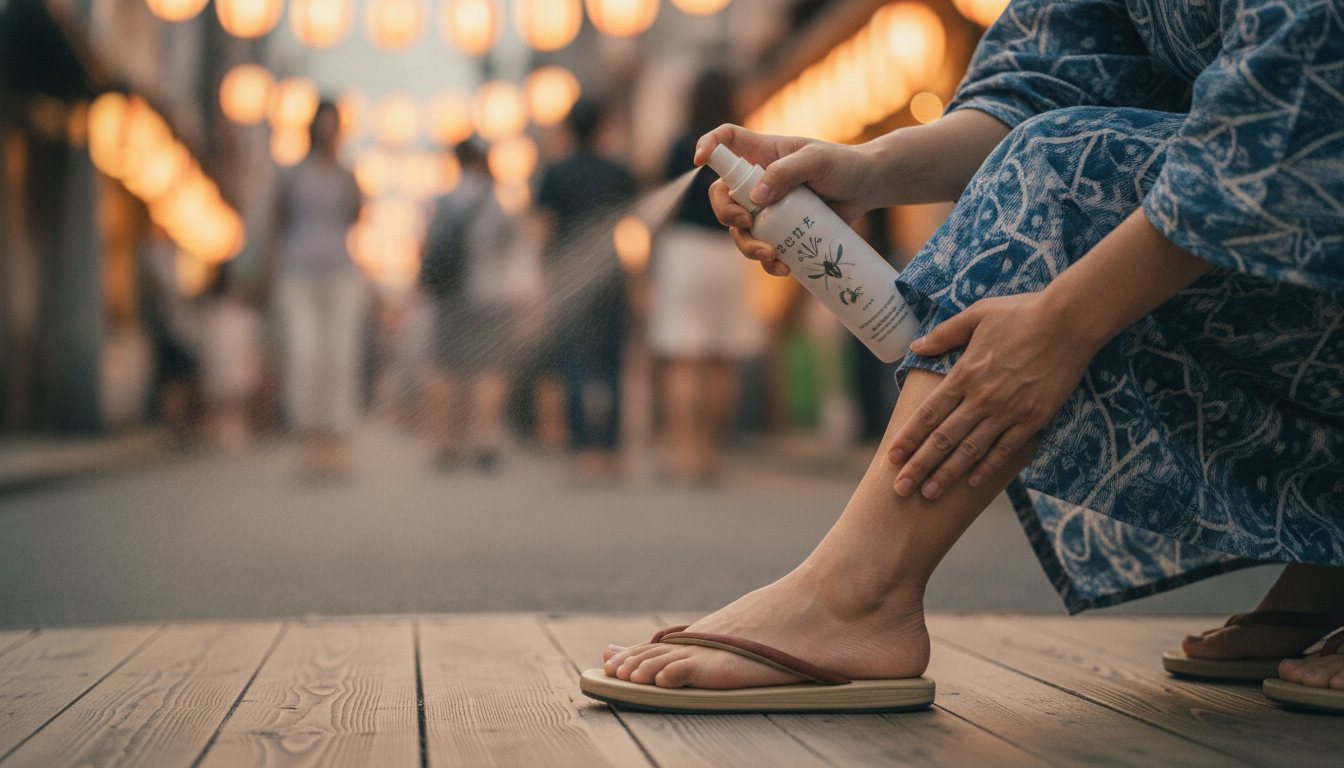
For children, do not improvise. Follow the age restrictions and application instructions printed on the product. Adults should apply the product to their own hands first when needed, then gently apply it to the child, avoiding eyes, mouth, and hands.
What Not to Rely On Alone
Japan sells many summer insect products: skin repellents, hanging devices, room products, coils, patches, and after-bite treatments. They solve different travel problems.
For a tourist walking around a festival or waiting outdoors for fireworks, prioritize a skin-applied repellent that is intended for personal outdoor use. Room products are for rooms. Hanging or stationary products may not protect you while walking through crowds. After-bite products help after the problem happens; they do not replace prevention.
A good rule:
- Outdoor event: carry skin repellent.
- Already bitten: use an after-bite anti-itch product as directed.
- Hotel room or Airbnb: use room-appropriate products as instructed.
- Fever, severe swelling, allergic reaction, or unusual symptoms: seek medical help.
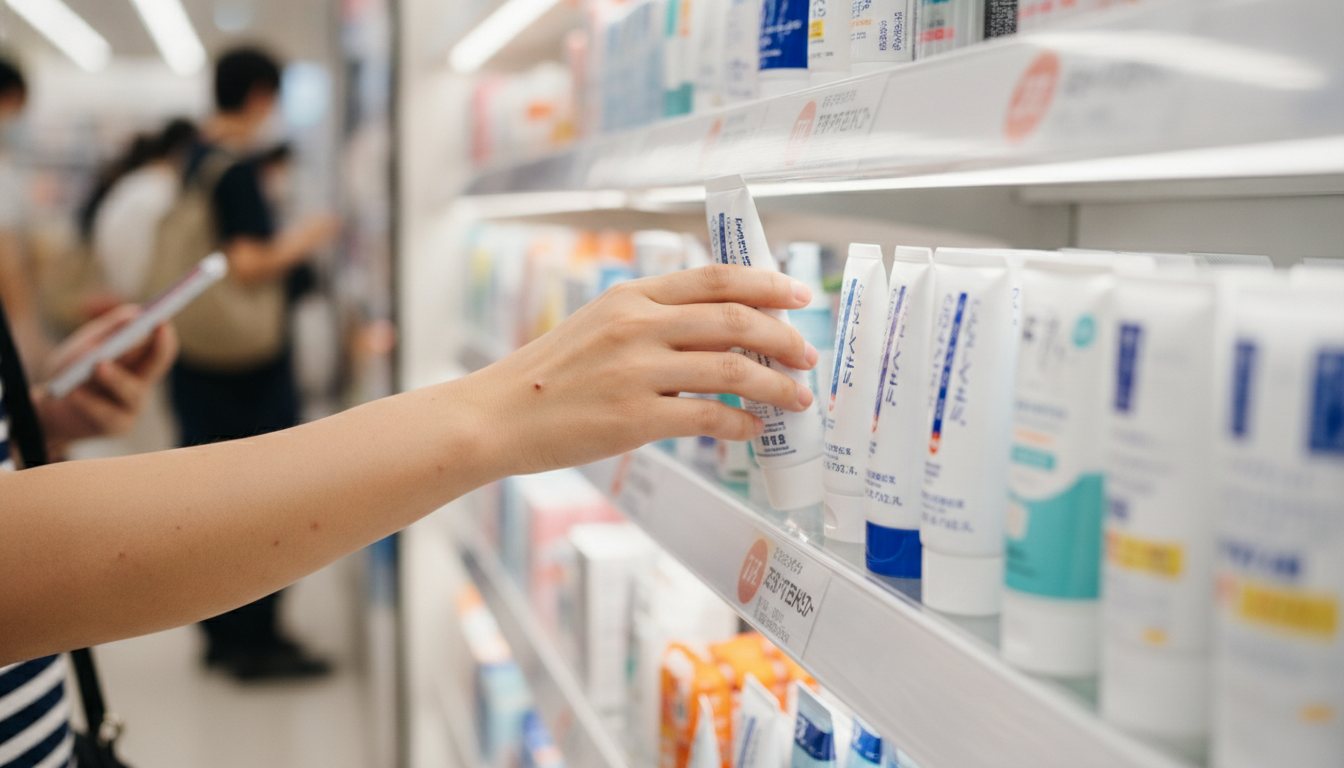
After You Get Bitten: What to Buy at a Japanese Drugstore
Even if you prepare well, bites can still happen. Add one small after-bite product to your summer kit, especially for fireworks, festivals, parks, and rural side trips.
In Japanese drugstores, look for these words:
| Japanese label | Meaning | How to use the clue |
|---|---|---|
| 虫さされ / 虫刺され | Insect bites | Main shelf keyword for bite-care medicine |
| かゆみ止め | Anti-itch | Useful if itching is the main problem |
| ぬり薬 | Topical medicine | General word for medicine applied to skin |
| 軟膏 | Ointment | Thicker texture, often in tubes |
| 液体 / ローション | Liquid / lotion | Easy to apply, may feel cooling |
| 抗ヒスタミン | Antihistamine | Often used for itch relief |
| ステロイド | Steroid | Anti-inflammatory ingredient; check cautions |
| 第2類医薬品 / 指定第2類医薬品 | Class 2 / designated Class 2 OTC medicine | Ask staff if you are unsure, especially for children |
The simplest traveler script is:
Mushisasare no kayumi-dome wa arimasu ka?
Meaning: “Do you have anti-itch medicine for insect bites?”
If the bite is on a child:
Kodomo ni tsukaeru mushisasare no kusuri wa arimasu ka?
Meaning: “Do you have insect-bite medicine that can be used for children?”
Some Japanese after-bite products are cooling liquids. Others are creams or ointments. Some products may contain antihistamine ingredients, anti-inflammatory ingredients, or steroids. Do not choose by package color alone. Check the label, and ask a pharmacist or registered sales clerk if you are pregnant, buying for a child, using it near the face, using it on sensitive skin, or already taking medication.
Use after-bite medicine as directed. Avoid eyes, mouth, mucous membranes, open wounds, and large damaged areas unless the label or a healthcare professional says otherwise. If you have fever, spreading redness, pus, severe swelling, breathing trouble, dizziness, or symptoms that feel unusual, do not treat it as a normal mosquito bite. Seek medical help.
A Simple Buying Script
If you are in a drugstore and need help, use this:
Sumimasen, ka-yoke no chiisai supuree wa arimasu ka?
Meaning: “Excuse me, do you have a small mosquito repellent spray?”
If buying for a child:
Kodomo ni tsukaeru mushiyoke wa arimasu ka?
Meaning: “Do you have insect repellent that can be used for children?”
If you want icaridin:
Ikarijin no mushiyoke wa arimasu ka?
Meaning: “Do you have icaridin insect repellent?”
For after-bite medicine:
Mushisasare no kusuri wa arimasu ka?
Meaning: “Do you have medicine for insect bites?”
You do not need polished Japanese. The words 虫よけ, 虫さされ, かゆみ止め, 蚊, 子ども, ディート, and イカリジン can help when shown on your phone.
Air Travel and Bottle Size
If you are flying internationally, remember that liquids, aerosols, and gels in carry-on baggage are subject to airport security rules. Japan’s Ministry of Land, Infrastructure, Transport and Tourism explains the restrictions for international flights, including the familiar small-container and clear-bag rules.
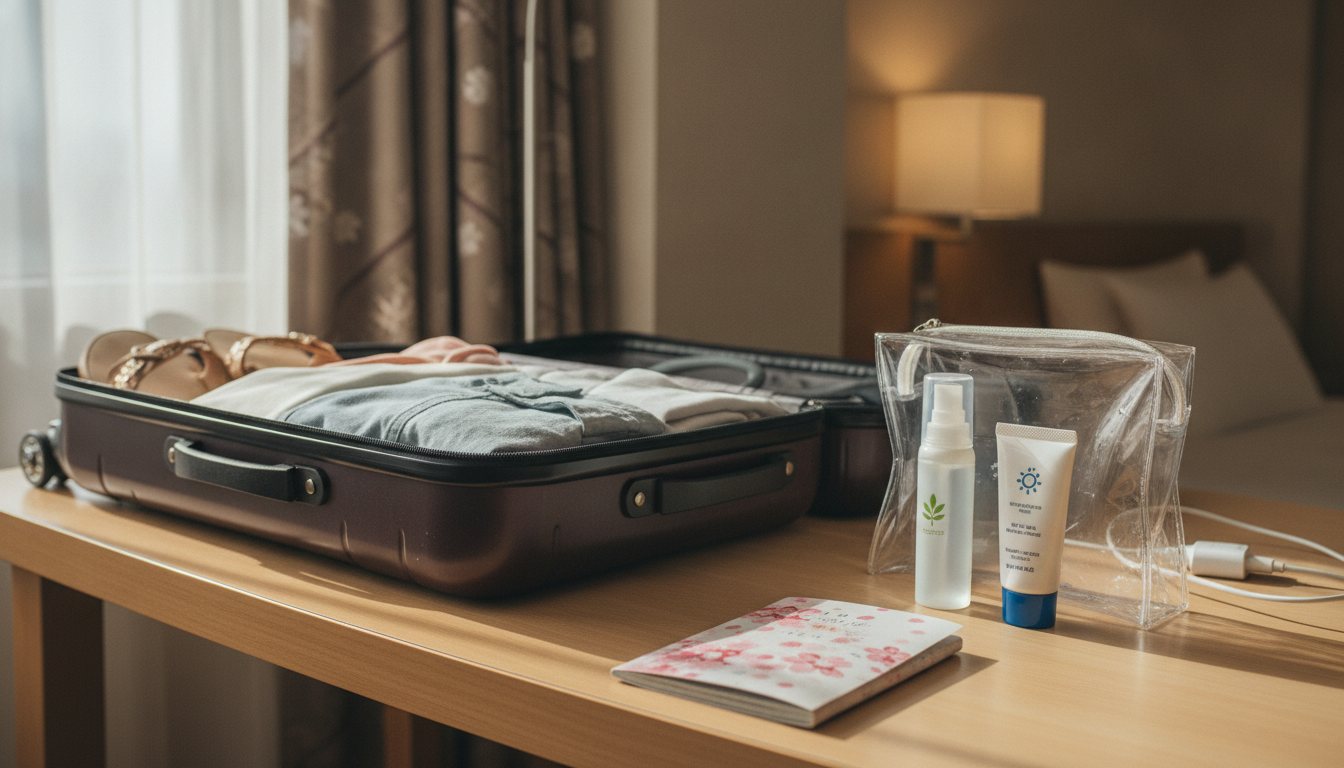
For travelers, the practical approach is:
- Buy a small portable bottle if you want to carry it during the trip.
- Do not pack large sprays in carry-on without checking airline and airport rules.
- If in doubt, buy repellent after arriving in Japan or place larger items in checked baggage if permitted.
- Do not assume aerosol rules are identical across products and airlines.
This matters if Japan is one stop in a multi-country summer trip. A full-size spray that was fine in your hotel room may become annoying at airport security.
Best Scenarios for Mosquito Repellent in Japan
| Travel scene | Repellent priority | Why |
|---|---|---|
| Fireworks by river | High | Long wait, exposed ankles, water and grass nearby |
| Shrine or temple festival | Medium to high | Evening outdoor crowds and trees |
| Park picnic or garden | High | Grass, shade, and still air |
| Night food-stall street | Medium | Less nature, but long outdoor time |
| Urban shopping day | Low to medium | Useful if you add parks or evening walks |
| Hotel room only | Different product | Use room-appropriate insect products, not outdoor spray as a room solution |
| Hiking or rural stay | High | Plan more carefully and check local conditions |
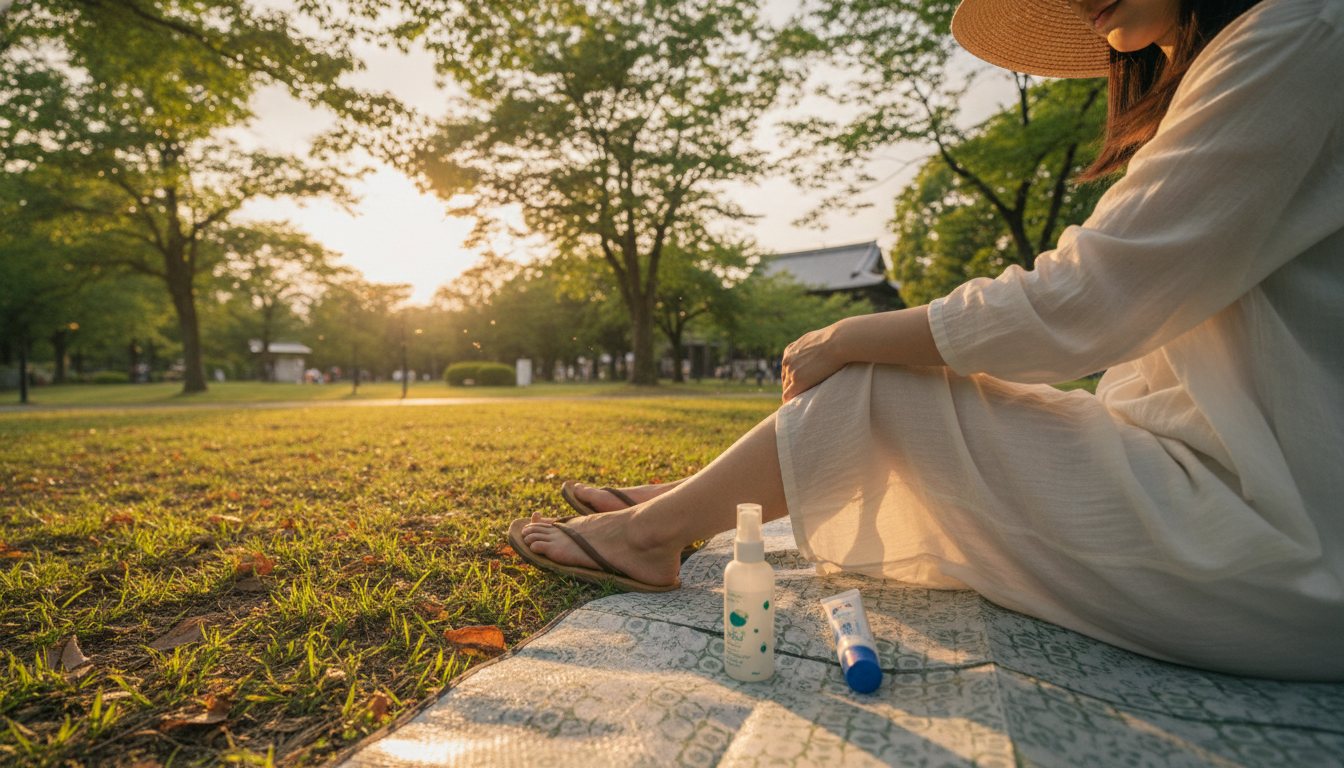
For RJG’s summer readers, the strongest connection is fireworks and festivals. You already need to plan trains, crowds, heat, food stalls, bathrooms, and cash. Repellent is a small item, but it protects the part of the night that makes Japan’s summer feel magical: standing outside long enough to enjoy it.
How This Fits With Other Summer Prep
Mosquito repellent is not a replacement for heat planning. In Japan’s summer, heat and humidity are often the bigger friction. Pair this guide with:
- RJG’s summer cooling items guide for drugstore and convenience-store purchases
- RJG’s fireworks guide for crowd timing, rain plans, and transport
- RJG’s matsuri guide for food stalls, cash, and etiquette
- RJG’s pharmacy guide for buying basic over-the-counter items in Japan
- RJG’s yukata guide if you plan to dress up for festivals
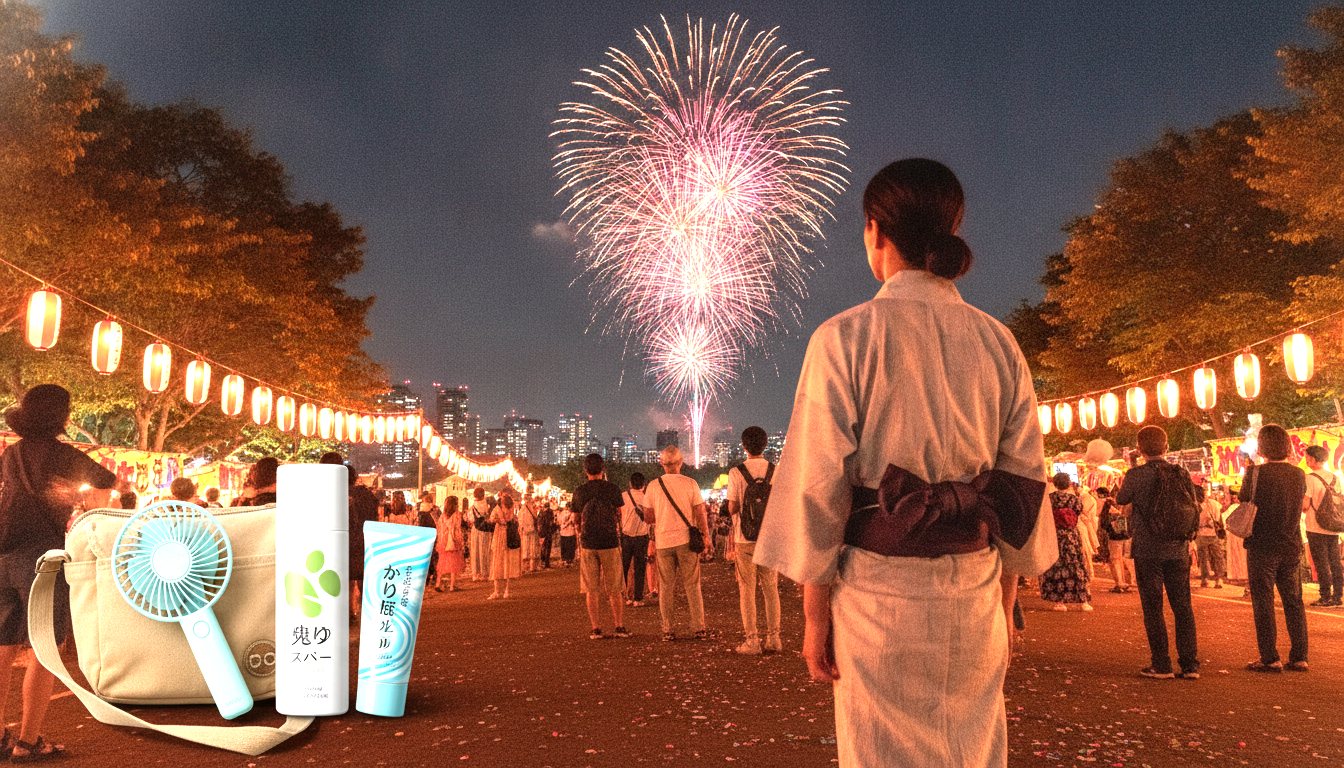
The goal is not to pack like a survivalist. The goal is to remove small frictions before they steal attention from the trip.
Final Recommendation
For most summer travelers in Japan, buy one small mosquito repellent and one small after-bite anti-itch medicine at a drugstore before your first outdoor evening event. Look for 虫よけ for prevention and 虫さされ or かゆみ止め for bite care. For repellent, check whether the active ingredient is DEET or icaridin, follow the product label, and carry it with your festival or fireworks kit.
The short version:
Buy it before you need it.
The best time to solve a mosquito problem is not after sunset on a crowded riverbank, when the itching has already started. It is earlier that same day, while you are still near a drugstore and your hands are free.
FAQ
Do I need mosquito repellent in Tokyo?
No. It is most useful for summer evenings, parks, riversides, gardens, shrine grounds, festivals, fireworks, and rural side trips. For a normal shopping or train-heavy day, you may not need it.
Can I buy mosquito repellent after arriving in Japan?
Yes. Drugstores are a reliable place to look. Search for 虫よけ, 蚊, ディート, or イカリジン on the package. Selection can vary by store and season.
Is DEET safe?
DEET is widely used as an insect repellent active ingredient, but you should follow the product label, especially for children, sensitive skin, and frequency of use. This article is not a substitute for medical advice.
What is icaridin?
Icaridin, also known as picaridin, is another insect repellent active ingredient. In Japan, it is written as イカリジン.
Should I buy spray, mist, gel, or wipes?
For festivals and fireworks, a small mist or pump bottle fits well in a day bag. Gel can be useful if you dislike spray drift. Choose the format you will actually bring with you.
Can I use mosquito repellent with sunscreen?
Many travelers use both in summer. Apply sunscreen first, let it settle, then apply repellent according to the repellent label. Avoid eyes, mouth, and hands, and wash hands before eating.
Are mosquito coils useful for tourists?
They can be useful in some stationary outdoor or home settings, but for a tourist walking around a crowded festival, a skin-applied repellent is the more practical mobile choice.
What should I do if I get bitten?
Avoid scratching, wash the area if needed, and consider an after-bite anti-itch product from a drugstore. Look for 虫さされ or かゆみ止め. If you develop fever, severe swelling, spreading redness, breathing trouble, or unusual symptoms, seek medical help.
What Japanese words should I look for after a bite?
Look for 虫さされ or 虫刺され for insect bites, かゆみ止め for anti-itch, ぬり薬 for topical medicine, and 軟膏 for ointment. If buying for a child, show 子どもに使えますか? to staff.
Can I bring mosquito repellent on a plane?
Carry-on liquids, aerosols, and gels are restricted on international flights. Check the bottle size, airport rules, airline rules, and whether the product is allowed in carry-on or checked baggage.
Sources Checked
- CDC Travelers’ Health: Avoid Bug Bites
- CDC Travelers’ Health: Japan
- PMDA: Safety Information Regarding Drugs
- MLIT: Liquids rules for international flights
About the Author
Basabasa is a former sergeant major in the Japan Ground Self-Defense Force who writes Real Japan Guide for first-time foreign visitors. He focuses on practical Japan travel frictions: how to order, pay, move, ask, queue, and avoid small mistakes that can make a good trip feel harder than it needs to be.
Comments