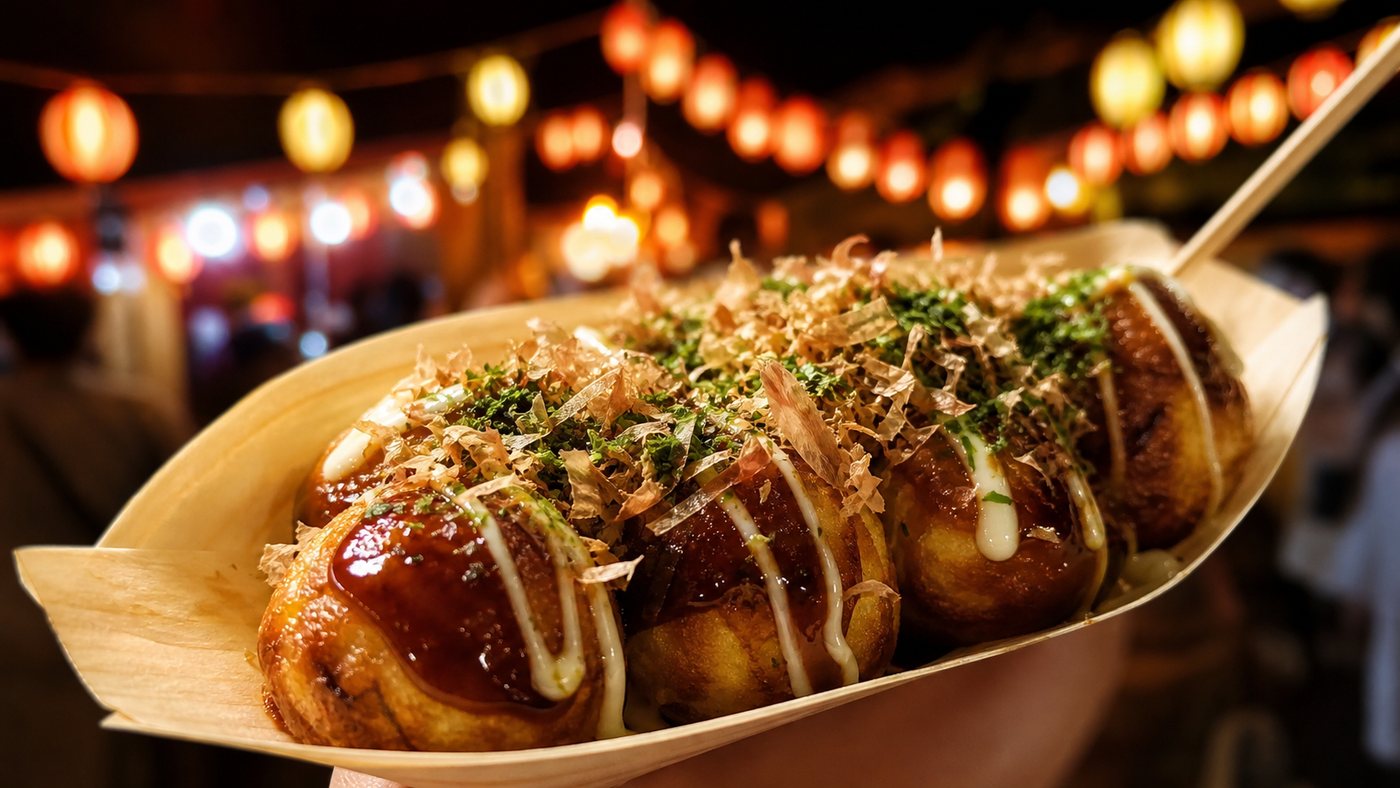
Takoyaki is easy to order and surprisingly easy to eat too quickly. The outside may look ready while the batter inside is still steaming hot.
This first-timer guide explains how to order, cool, and eat takoyaki, plus the ingredient checks that matter when dairy, seafood, vegetarian, vegan, or halal requirements affect your choice. Prices and official guidance cited below were checked on August 8, 2026.
- Quick Answer
- What Is Takoyaki?
- Why Takoyaki Works So Well At Festivals
- The First Rule: Let It Cool
- How To Order Takoyaki At A Festival Stall
- What The Toppings Mean
- Dietary Notes For Tourists
- Where To Try Takoyaki
- Takoyaki vs Okonomiyaki vs Monjayaki
- How Much Should You Order?
- Payment And Trash At Festival Stalls
- The Best Festival Takoyaki Strategy
- Common Mistakes
- A Simple Festival Food Plan
- Final Take
- FAQ
- About the Author
Quick Answer
How to eat takoyaki in 30 seconds:
- Order the smallest tray that suits your group and follow the counter’s payment flow.
- Move away from the pickup point so you do not block the queue.
- Split the first ball open, let steam escape, and take a small bite.
- Check the exact shop when allergens, cross-contact, vegetarian, vegan, or halal requirements matter.
There is no nationwide takoyaki price. As one dated example, Tsukiji Gindaco’s official menu listed a regular eight-piece tray at ¥702 for takeout and ¥715 for eat-in, tax included, on August 8, 2026. For ingredient uncertainty when eating out, follow the Consumer Affairs Agency’s food-labeling guidance and ask the exact shop rather than relying on the dish name alone.
Choose a shop or food court when ordering clarity matters most. Choose a festival stall when atmosphere matters more and you can manage a queue, limited seating, and variable menus.
What Is Takoyaki?
Takoyaki is often translated as “octopus balls,” but that phrase can sound stranger than the food feels.
In practice, takoyaki is a hot, round, savory snack:
- The outside is lightly browned.
- The inside is soft and creamy.
- A small piece of octopus is in the center.
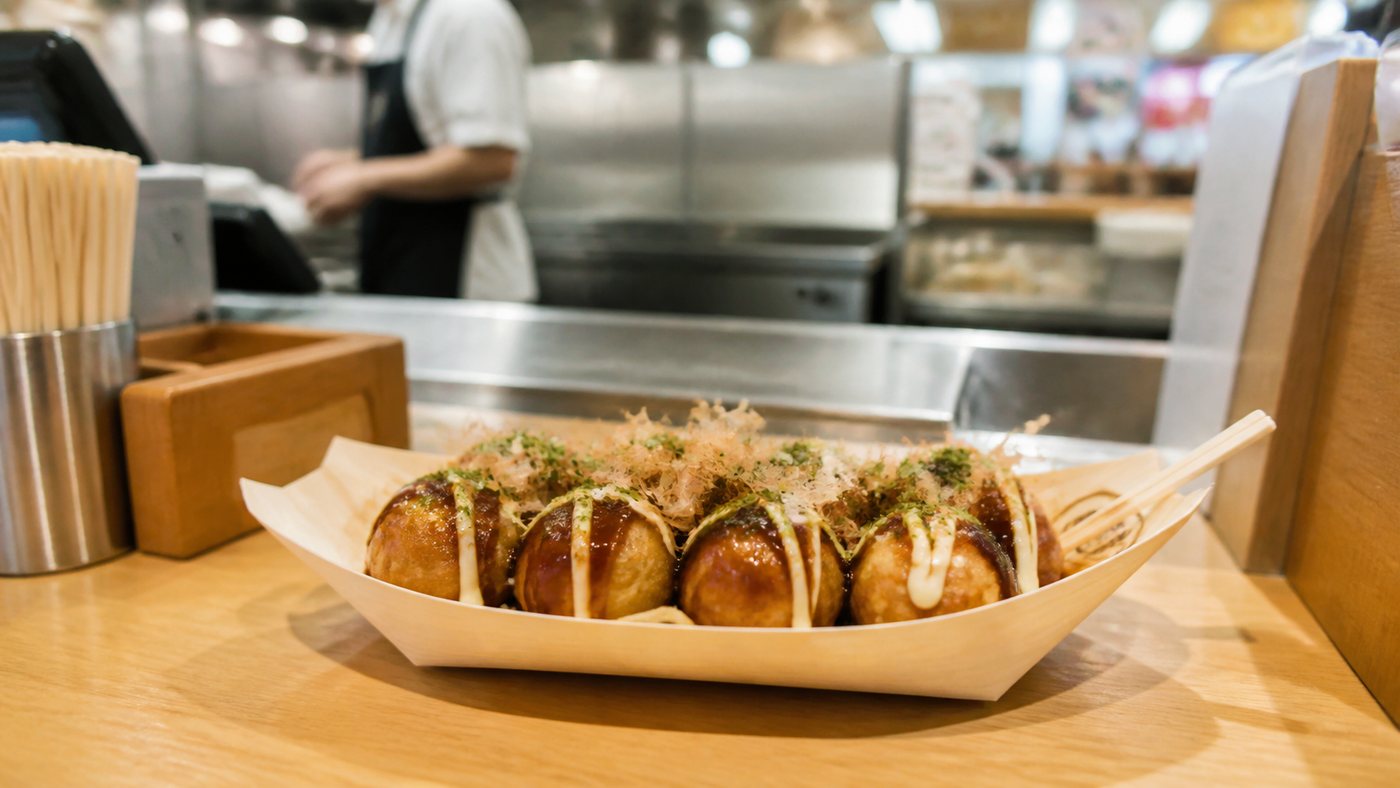
- The top often has takoyaki sauce, mayonnaise, aonori seaweed, and bonito flakes.
- It is normally eaten from a tray with a small pick, not with chopsticks.
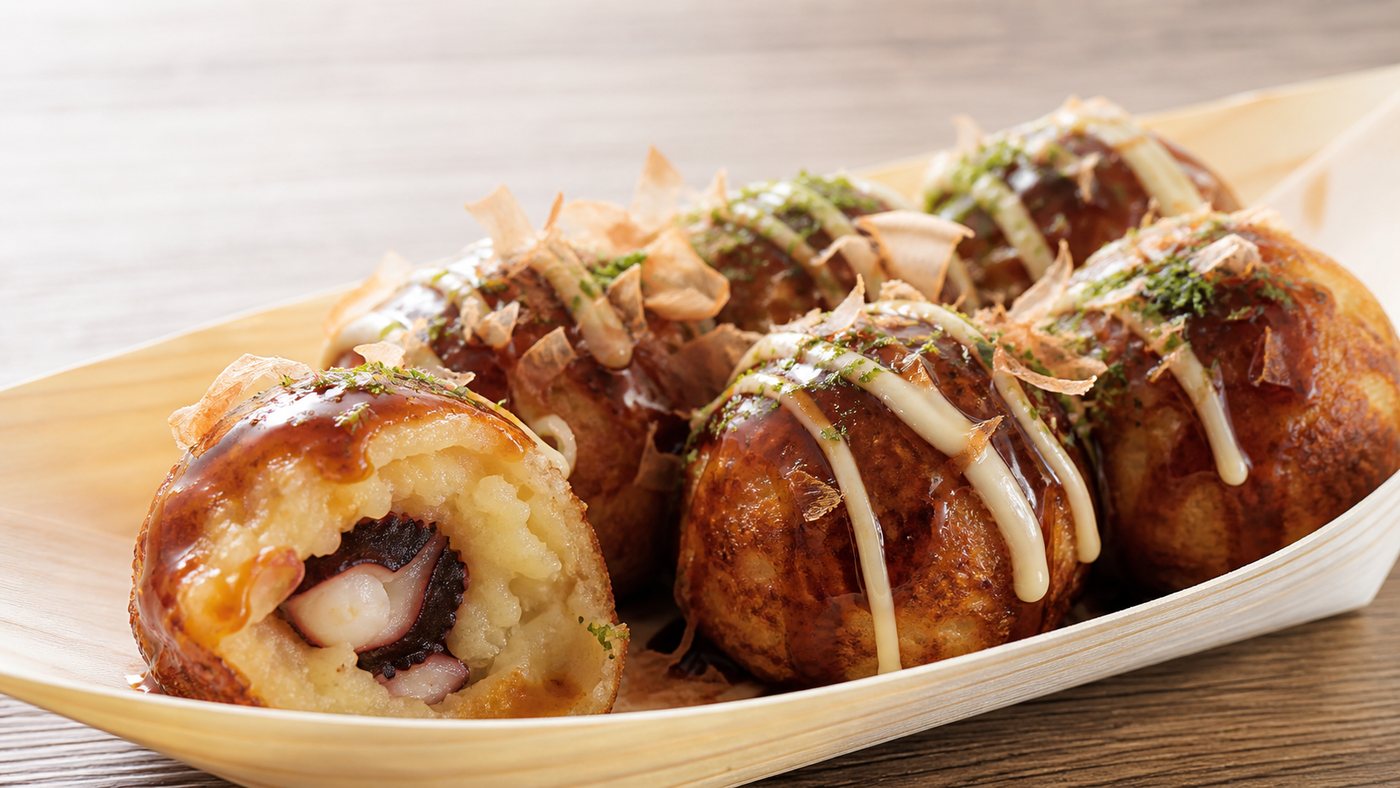
The appeal is the contrast: crisp edges, soft batter, chewy octopus, sweet-savory sauce, and smoky bonito. At festivals, the smell from a takoyaki stall can be enough to pull you out of whatever plan you thought you had.
A Short Origin Note
Takoyaki is closely tied to Osaka. Aizuya, a well-known Osaka shop that presents itself as the original takoyaki maker, says its founder Tomekichi Endo started the shop in 1933 and later developed takoyaki after experimenting from an earlier snack called radio-yaki. For travelers, the important point is simpler: takoyaki is an Osaka-linked street snack that has become easy to find far beyond Osaka.
Why Takoyaki Works So Well At Festivals
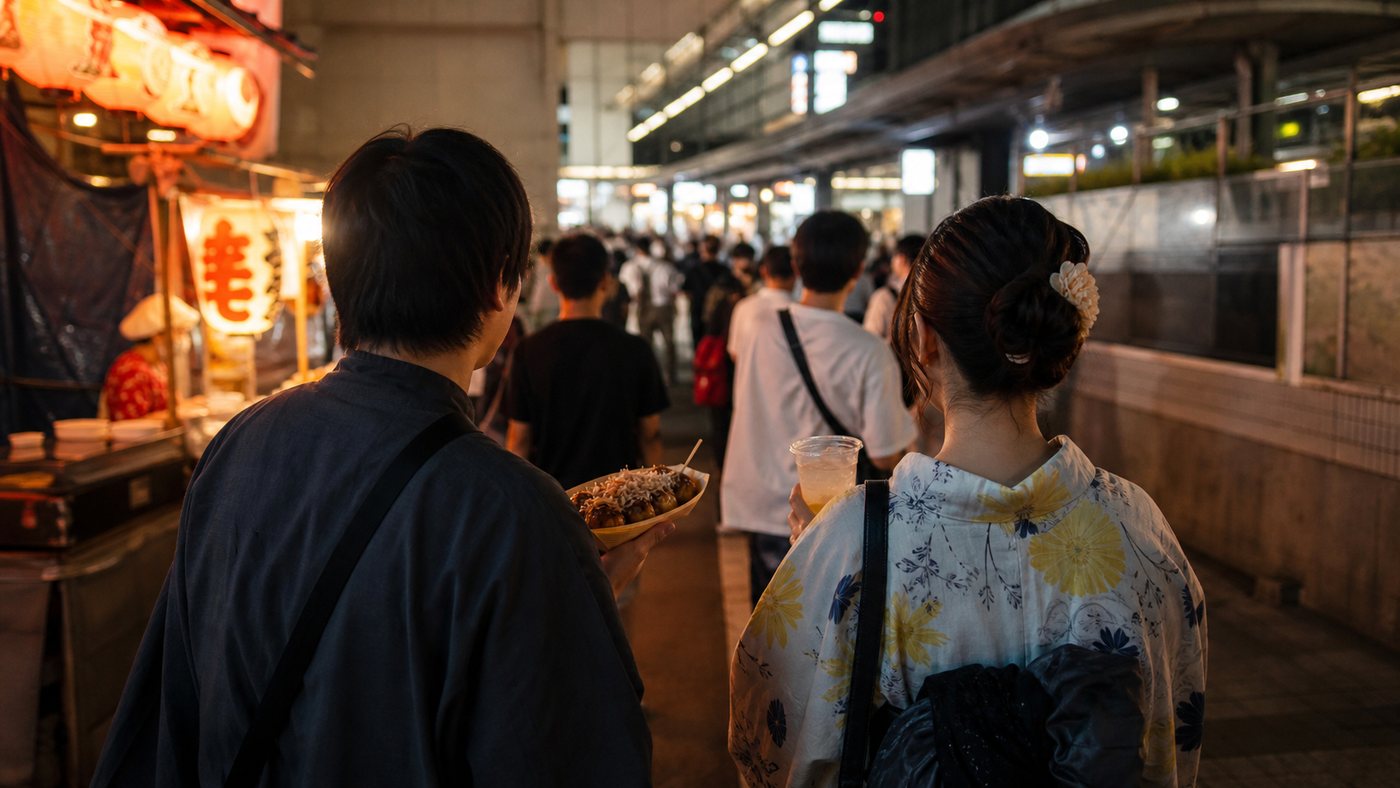
Takoyaki is a dish, but at festivals it also becomes a behavior: queue, watch the griddle, take the tray, step aside, let it cool, then eat while you keep moving with the crowd.
It works at matsuri because:
- You can buy one tray and share it.
- It is cooked in front of you, so the stall feels alive.
- The round griddles are fun to watch.
- It is filling enough to count as a snack, but many travelers will still want another food stop later.
- It pairs naturally with festival walking, fireworks waiting time, or a late-evening food stop.
If you are planning a festival night in Tokyo, use the Tokyo Matsuri Guide for event context first. This takoyaki guide is for the food decision once you are there.
The First Rule: Let It Cool
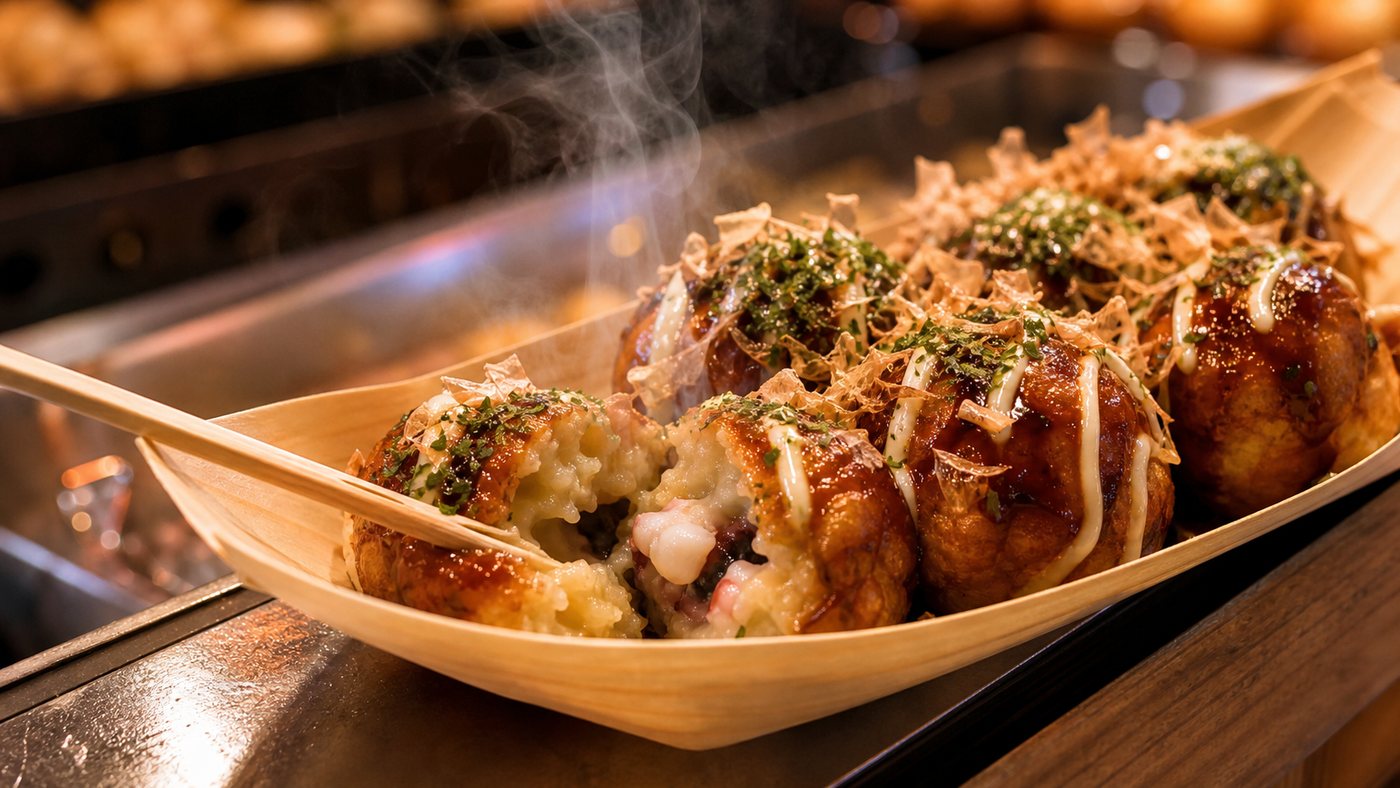
Takoyaki is famous for being hotter inside than it looks. The batter can stay soft and steamy after the outside seems safe.
The safest tourist move is simple:
- Pick up one ball.
- Break it open slightly.
- Wait a moment.
- Eat half or a smaller bite first.
This is about comfort and crowd control. In a crowded festival street, burning your mouth while holding a tray, bag, phone, and drink is a tiny disaster with very sticky sauce.
How To Order Takoyaki At A Festival Stall
Most takoyaki stalls are straightforward. You do not need advanced Japanese.
Look for:
- Price per tray
- Number of pieces, often 6 or 8
- Sauce options, if listed
- Queue direction
- Payment style
- Pickup point
Simple phrases:
| Situation | Japanese | Meaning |
|---|---|---|
| Ordering one tray | Takoyaki hitotsu kudasai | One takoyaki, please |
| Asking without mayonnaise | Mayo nashi de dekimasu ka? | Can you make it without mayo? |
| Asking without bonito flakes | Katsuobushi nashi de dekimasu ka? | Can you make it without bonito flakes? |
| Asking for a bag | Fukuro arimasu ka? | Do you have a bag? |
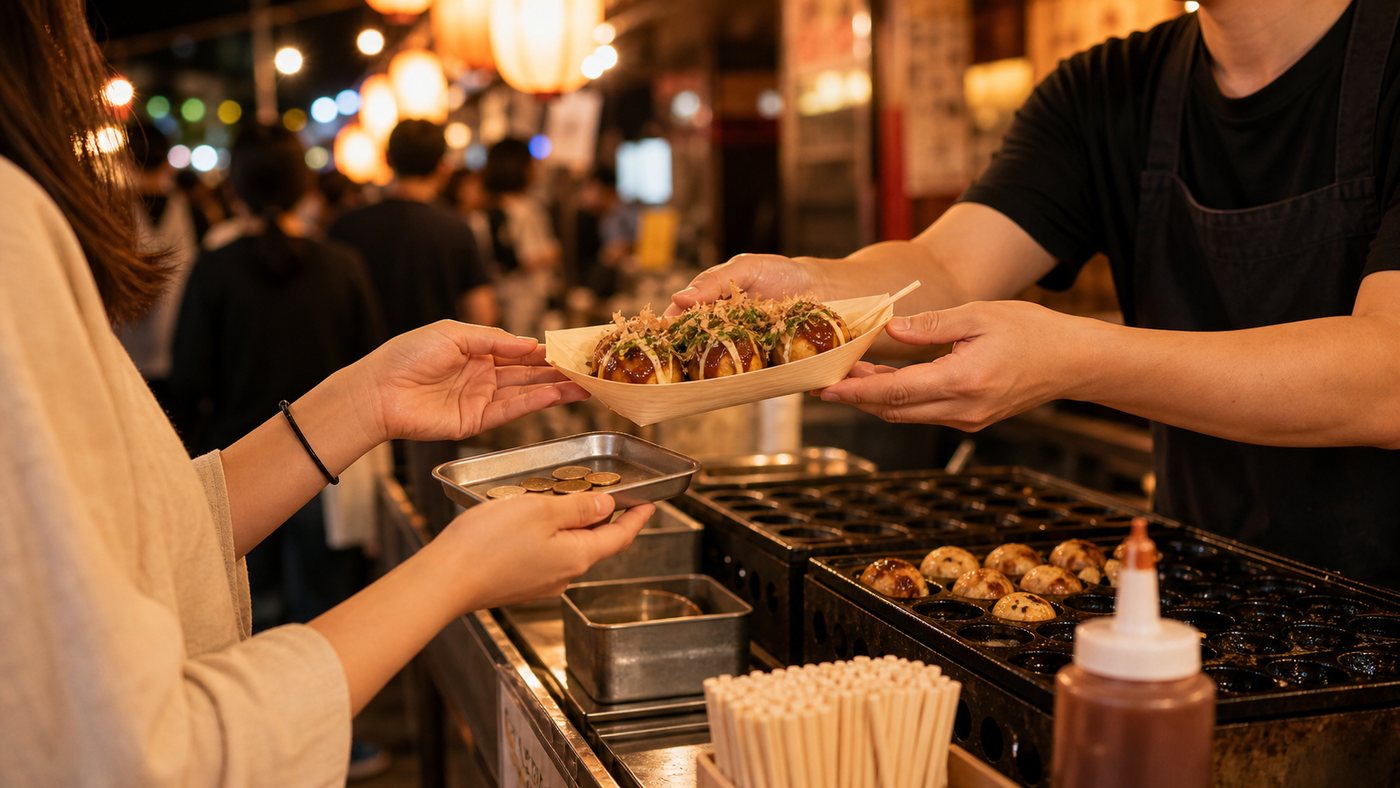
At busy stalls, keep it simple. Order what is visible on the menu, pay, take the tray, then step away so the next person can order.
What The Toppings Mean
Takoyaki toppings are part of the pleasure, but they can surprise first-time visitors.
Takoyaki Sauce
This is often a thick, sweet-savory brown sauce. It is closer to okonomiyaki-style sauce than to soy sauce.
Mayonnaise
Japanese mayonnaise is common on takoyaki. If you do not want it, ask before the staff starts topping the tray.
Bonito Flakes
Bonito flakes are thin shavings of dried fish. They can move from the heat of the takoyaki, which makes them look alive. They are not alive.
Aonori
Aonori is a green seaweed powder. It adds aroma and a little color.
Pickled Ginger Or Green Onion
Some takoyaki includes red pickled ginger, green onion, or other small ingredients inside or on top.
Dietary Notes For Tourists
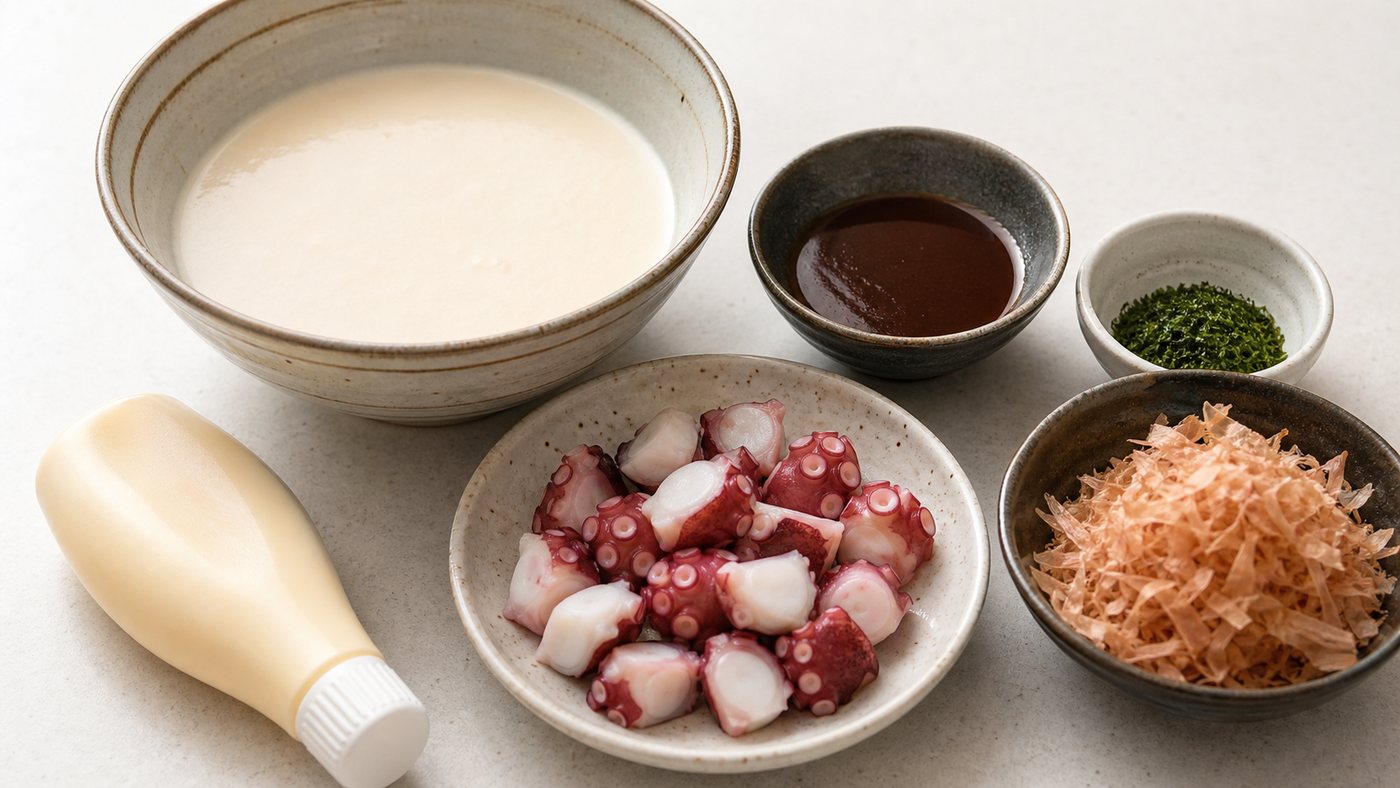
Takoyaki is not a safe “mystery snack” for everyone. Be careful if you have dietary restrictions.
Seafood
Standard takoyaki contains octopus. It may also use bonito flakes or seafood-based flavoring.
Wheat And Egg
The batter commonly contains wheat flour and may contain egg or dashi ingredients depending on the shop.
Pork Or Meat
Takoyaki itself is octopus-based, but sauces, shared cooking spaces, nearby stalls, or special versions may not fit your dietary rules. Do not rely on a festival stall for detailed ingredient explanations in English.
Vegetarian, Vegan, Halal, Or Kosher
Standard takoyaki is not a vegetarian or vegan default because of octopus and fish toppings. It is also not automatically halal or kosher. If this matters for you, choose a shop that clearly advertises compatible options rather than relying on a crowded festival stall.
For Muslim travelers comparing what Japanese accommodation and casual food culture can and cannot provide, this RJG guide may help set expectations: What to Expect as a Muslim Guest at a Japanese Airbnb.
Japan’s official food-allergen labeling rules are mainly designed around packaged processed foods. A festival stall or casual shop may not be able to answer detailed ingredient and cross-contact questions in English, so travelers with serious allergies should be conservative.
Where To Try Takoyaki
1. Festival Stalls
Best for atmosphere.
Festival takoyaki is about the whole scene: lanterns, smoke, queues, sauce smell, and eating while walking carefully through a crowd. The quality varies, but the experience can be memorable.
Good for:
- First festival night
- Sharing with friends
- Pairing with fireworks waiting time
- Photos from a safe distance after you step out of line
Watch out for:
- Very hot centers
- Long queues
- Limited seating
- Trash bins that may be hard to find
- Cash payment may be needed
If fireworks are part of the plan, read Japan Summer Fireworks 2026 before you build the evening around food stalls.
2. Takoyaki Specialty Shops
Best for taste and comparison.
A specialty shop is often easier than a festival if you want to sit, compare flavors, or understand the difference between sauce-heavy takoyaki and simpler styles.
This is also a better option if you care about texture. Some shops make takoyaki crispier outside, softer inside, or lighter in seasoning.
3. Food Courts And Shopping Areas
Best for convenience.
Food courts are useful when you want takoyaki without standing in a festival crowd. They are also easier for families because you may have seating, toilets, and other food options nearby.
4. Convenience Stores Or Supermarkets
Best for low-pressure trying.
Convenience store takoyaki is not the same as fresh festival takoyaki, but it can be a simple way to understand the flavor before committing to a crowded stall. For konbini basics, use the Japanese konbini guide.
Takoyaki vs Okonomiyaki vs Monjayaki
Tourists often group these foods together because they are savory, saucy, and flour-based in different ways. They are related in mood, but the eating experience is different.
| Food | Shape | Best situation | Tourist friction |
|---|---|---|---|
| Takoyaki | Round balls | Festival snack, quick bite, shared tray | Very hot inside, seafood ingredients |
| Okonomiyaki | Savory pancake | Sit-down meal, casual dinner | Cooking style and toppings vary |
| Monjayaki | Runny griddle dish | Social meal, Tokyo local experience | Harder to eat without guidance |
If you want the broader flour-based food comparison, read Tokyo Okonomiyaki & Monjayaki. This takoyaki article stays focused on the snack-and-festival experience.
How Much Should You Order?
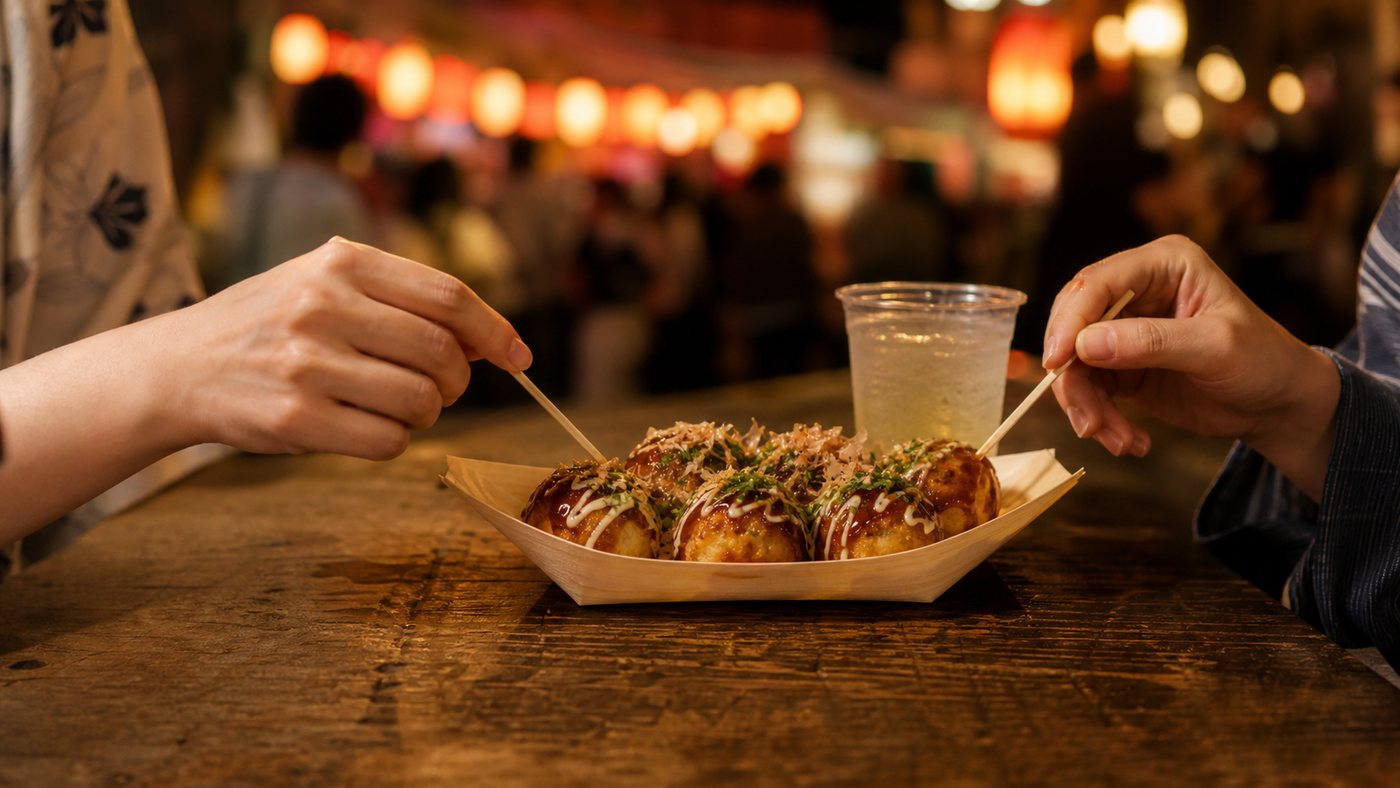
For one person, one tray is enough as a snack. For two people, one tray is a safe first order if you plan to try other festival foods.
Do not over-order early in the evening. Festival food is more enjoyable when you leave room for surprise: yakisoba, karaage, shaved ice, grilled corn, candied fruit, or whatever the next stall is doing better.
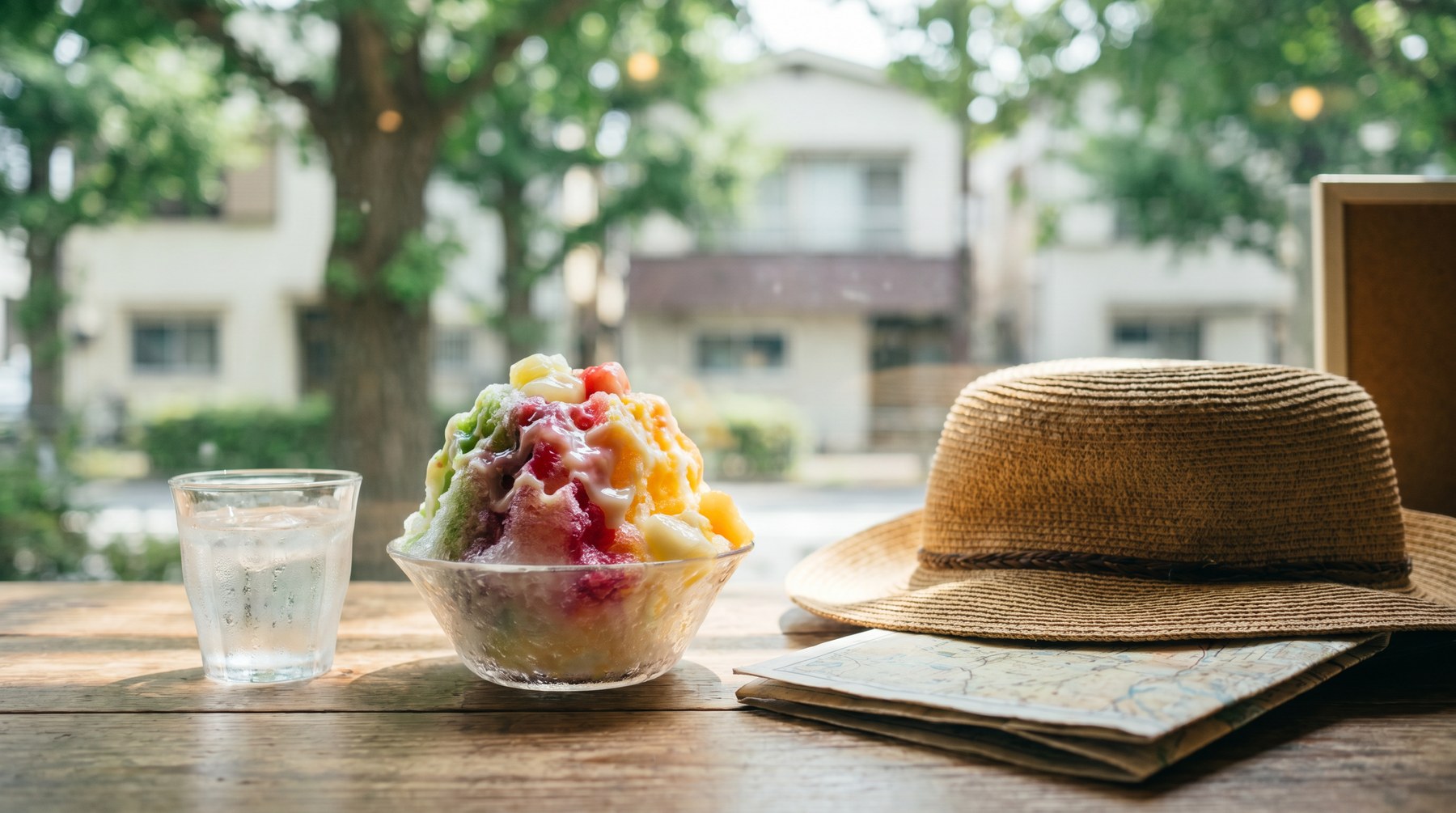
If you are planning a sweet finish, the Tokyo shaved ice guide pairs naturally after a salty takoyaki stop.
Payment And Trash At Festival Stalls
Some stalls may take cashless payment, but cash is still a useful backup at festivals and smaller food stalls. Carry small bills and coins if you plan to eat around.
If you need a quick money primer, see Cash in Japan 2026.
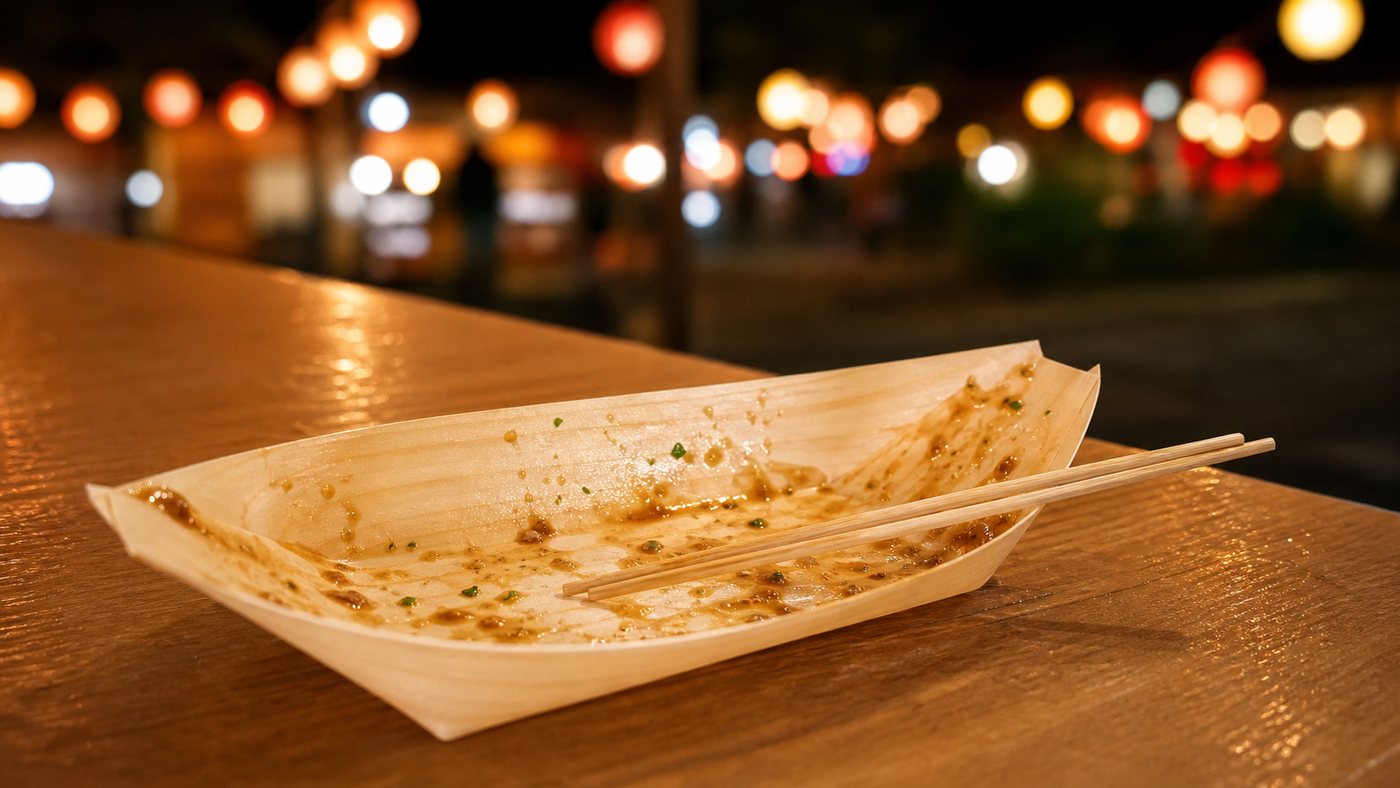
Trash is another practical point. Japan often has fewer public trash bins than visitors expect. At festivals, some stalls or event areas may have collection points. If you cannot find one, keep the tray carefully until you do.
Do not leave the tray on a shrine wall, station bench, planter, or vending machine area. It is a small thing, but it is exactly the kind of visitor behavior that makes local festival management harder.
For a broader cultural guide, read Trash in Japan.
The Best Festival Takoyaki Strategy
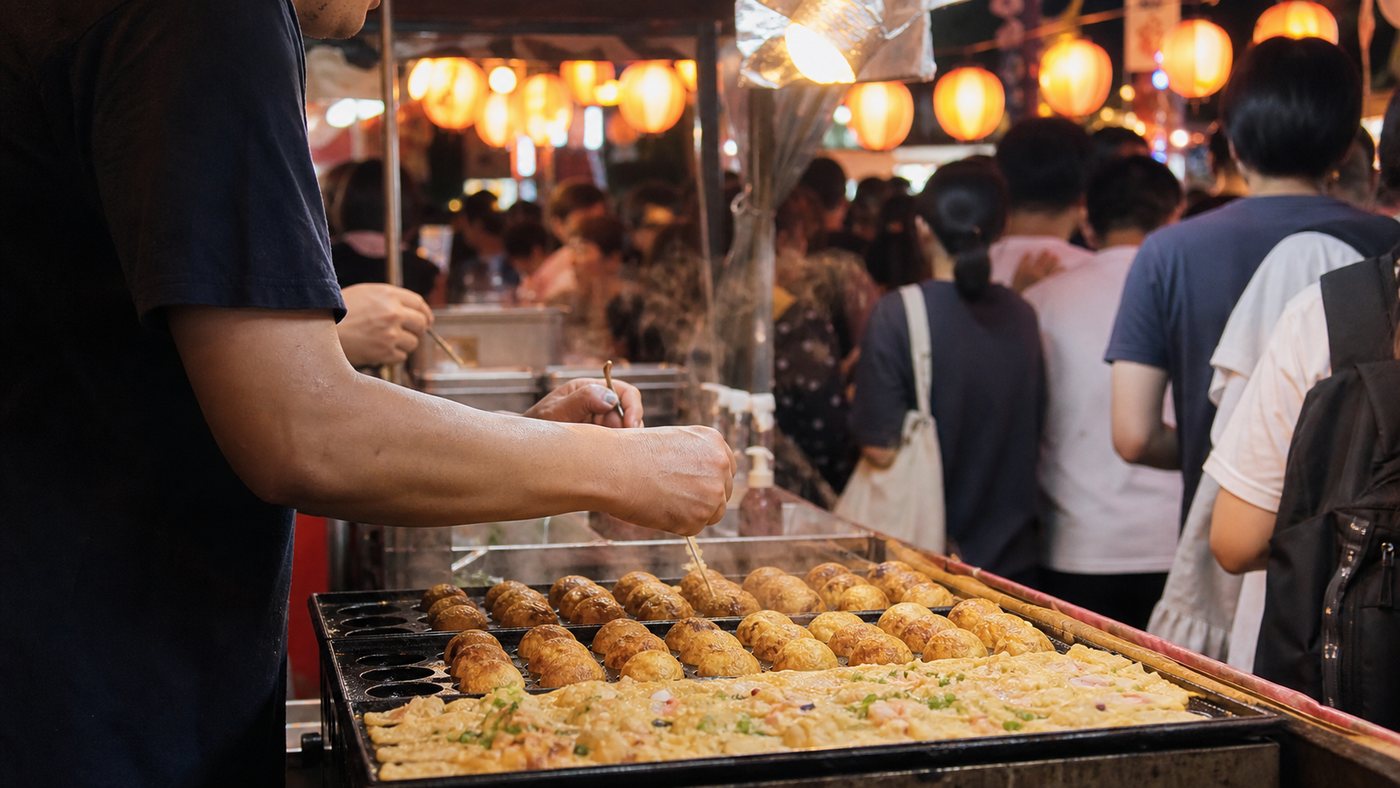
Use this order:
- Walk the first stretch before buying.
- Compare two or three stalls if the festival is large.
- Choose the stall with steady turnover.
- Order one tray first.
- Move out of the queue before eating.
- Break one ball open and let it cool.
- Share first, then reorder if you still want more.
Steady turnover helps because takoyaki is more enjoyable when it has not been sitting too long. At the same time, the busiest stall may not be the right choice if the line traps you in a hot crowd.
Common Mistakes
Eating One Whole Ball Immediately
The classic tourist mistake. Wait, split, then eat.
Standing In Front Of The Stall To Eat
Step aside. People behind you need to order.
Assuming It Is Vegetarian
Takoyaki contains octopus and often fish toppings.
Forgetting Cash
Bring small cash if you are going to a festival or local event.
Making It The Whole Dinner
Takoyaki is a snack for many travelers, not a complete meal. It is better as one strong stop in a food-walking evening.
A Simple Festival Food Plan
If your main target is takoyaki, build the evening like this:
| Step | What to do | Why |
|---|---|---|
| Before leaving | Eat a light meal or snack | You avoid arriving too hungry |
| Arrival | Walk once before buying | You see the stall options |
| First purchase | Takoyaki tray | Main food experience |
| Pause | Drink or shaved ice | Heat and sauce reset |
| Second food | Only if still hungry | Avoid over-ordering |
| Exit | Use planned station route | Crowds are easier with a plan |
For train planning after a crowded event, use Tokyo Trains 2026 and Tokyo Train Manners.
Final Take
Takoyaki is not just “octopus balls.” It is one of the easiest ways to understand Japanese festival food: hot, fast, saucy, social, slightly messy, and better when you know the small rules.
Order one tray. Step away from the stall. Let it cool. Set your mayo and bonito-flake preferences. Share if you are still exploring.
That is a better way to make takoyaki the focus without letting the festival crowd, the heat, or the sauce win.
FAQ
What is takoyaki?
Takoyaki is a round Japanese snack made from batter and filled with octopus. It is often topped with sauce, mayonnaise, bonito flakes, and aonori seaweed.
Is takoyaki from Osaka?
Takoyaki is closely associated with Osaka and Kansai food culture. It is now common across Japan, including festivals, food courts, casual shops, and convenience stores.
Is takoyaki eaten at festivals?
Yes. Takoyaki is a common festival-style food because it is cooked quickly, served in trays, and easy to share while walking carefully around event areas.
Why is takoyaki so hot inside?
The soft batter can hold heat even when the outside looks ready to eat. Split one open and wait before taking a full bite.
Is takoyaki vegetarian?
Standard takoyaki is not a vegetarian default because it contains octopus and often fish-based toppings or seasonings. Vegetarian or vegan travelers should look for clearly labeled specialty options.
Can Muslim travelers eat takoyaki?
Standard takoyaki is not automatically halal. It commonly contains seafood and may involve sauces, shared cooking spaces, or ingredients that are difficult to explain clearly at busy stalls.
Do I need cash for takoyaki stalls?
Cash is a useful backup, especially at festivals and smaller stalls. Carry small bills and coins if you plan to try several foods.
How many takoyaki should I order?
One tray is a reasonable snack for one person or a first shared order for two people. Start small if you want to try other festival foods too.
About the Author
Basabasa is a former sergeant major in the Japan Ground Self-Defense Force who writes Real Japan Guide for first-time foreign visitors. He focuses on practical Japan travel frictions: how to order, pay, move, ask, queue, and avoid small mistakes that can make a good trip feel harder than it needs to be.

Comments