
Pocket Concierge Japan: Fees, Cancellation Rules & Tips
- Quick Answer
- Is Pocket Concierge Legit?
- What Pocket Concierge Is Best For
- Pocket Concierge vs TableCheck vs OMAKASE vs Tabelog
- How Fees Work on Pocket Concierge
- Cancellation Rules: The Part You Must Read
- The Waitlist Can Be More Serious Than It Sounds
- A Safer Booking Checklist
- When Not to Use Pocket Concierge
- Plan B If Pocket Concierge Does Not Work
- A Simple Decision Rule
- FAQ
- Is Pocket Concierge safe to use for restaurant reservations in Japan?
- Does Pocket Concierge charge a booking fee?
- Will I have to prepay for the meal?
- What happens if I cancel late?
- Can I change the date, time, or number of guests after booking?
- Is Pocket Concierge better than TableCheck?
- Is Pocket Concierge better than OMAKASE?
- Should tourists join a Pocket Concierge waitlist?
- What To Do Next
- About the Author
Quick Answer
Use Pocket Concierge when you want to book a high-end restaurant in Japan from overseas, especially if the restaurant is hard to reserve by phone, does not have a simple English booking page, or asks for card-backed cancellation protection.
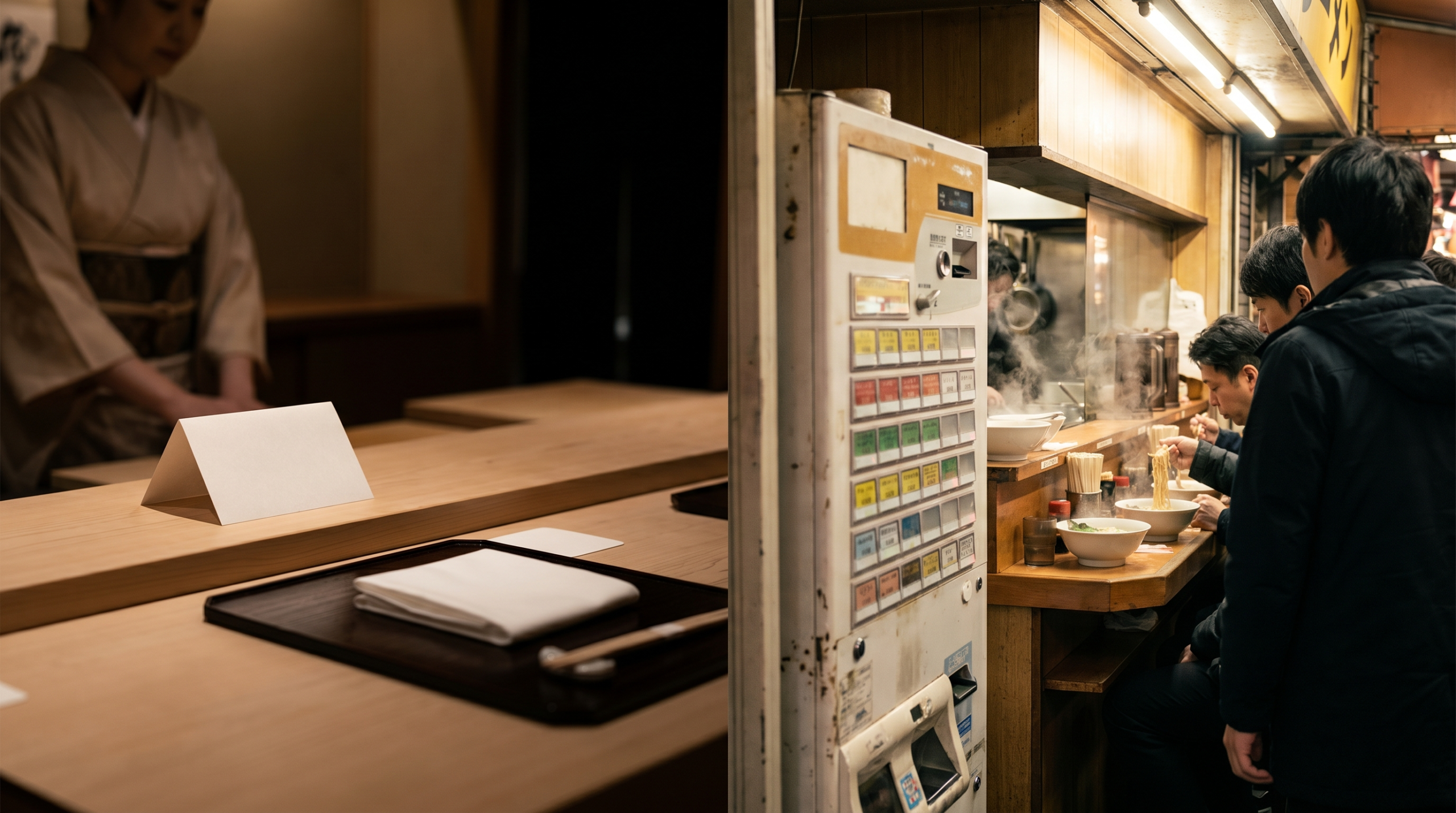
Do not treat it as a magic key for Japan dining. Pocket Concierge is best treated as a curated booking lane: useful for fine dining, special dinners, anniversary meals, sushi counters, kaiseki, premium yakiniku, and other places where the restaurant wants a serious reservation. For casual ramen, conveyor-belt sushi, everyday izakaya, or restaurants already easy to book on TableCheck, it may be more than you need.
The key point before pressing “confirm” is simple: read the payment screen and cancellation policy carefully. Pocket Concierge’s terms allow usage fees, smart payments, restaurant-specific cancellation policies, and default cancellation fees when a restaurant has not set its own policy. Once a reservation is established, you should not assume it can be freely changed or cancelled.
If you want the broader restaurant-booking picture first, start with our Tokyo Restaurant Reservation Guide. This article focuses on Pocket Concierge.
Is Pocket Concierge Legit?
Yes, in the practical travel sense: Pocket Concierge is not a random scraper or a message board. Its official English terms describe Pocket Concierge as a service operated by Pocket Concierge Inc. that provides tools and a platform to help users and restaurants form reservation and dining-service agreements.
But “legit” does not mean “risk-free.” A reservation platform can confirm a booking, process payment, and show policy terms, but the actual meal is still provided by the restaurant. Pocket Concierge’s own terms say the platform facilitates agreements between the user and the restaurant, and that the company is not the party that serves the meal.
That distinction matters for travelers. Use Pocket Concierge with confidence that you are using an official booking platform, but still check three things before booking:
- The restaurant name, date, time, and party size
- The total amount due now, if any
- The exact cancellation policy for that restaurant and course
If any of those feel unclear, pause. A high-end Japan reservation can be much harder to undo than a casual dinner booking in many other countries.
What Pocket Concierge Is Best For
Pocket Concierge is strongest when the meal itself justifies planning. Think of it as a “serious dinner” tool rather than a general food-discovery app.
Good use cases include:
- A birthday, anniversary, honeymoon, or client dinner
- Sushi, kaiseki, tempura, wagyu, French, Italian, or other tasting-menu meals
- Restaurants with limited seating and fixed courses
- Tokyo, Kyoto, Osaka, and other major food-trip destinations
- Travelers who want English-language booking and written confirmation
- Diners who are comfortable entering card details to secure a booking
It is also useful when you already know the restaurant name. Search engines and maps are good for discovery, but they often leave you wondering whether the official reservation path sends you to a Japanese-language page. Pocket Concierge can remove that friction if the restaurant is listed.
Poor use cases include:
- Ramen shops, casual curry, chain restaurants, and quick lunches
- Walk-in-friendly areas such as yokocho alley districts
- Big groups that may need back-and-forth communication
- Travelers whose plans may change at the last minute
- Diners uncomfortable with prepayment, card authorization, or cancellation fees
If your food plan is mostly casual, you will probably get more value from a mix of Google Maps, Tabelog photos, TableCheck, and walk-ins.

Pocket Concierge vs TableCheck vs OMAKASE vs Tabelog
These services overlap, but they are not interchangeable. Choose by the kind of meal you are trying to book.
| Service | Best fit | Main advantage | Main caution |
|---|---|---|---|
| Pocket Concierge | High-end and special-occasion restaurants | English-friendly curated booking lane | Policies, fees, and payments can vary by restaurant |
| TableCheck | Broad restaurant reservations, hotel restaurants, mid-range to upscale dining | Large Japan footprint and real-time booking flow | Some changes or payments still require contacting the venue |
| OMAKASE | Fine dining, sushi, kaiseki, counter-style restaurants | Strong fit for reservation-only restaurants | Reservation fees, membership features, and strict cancellation rules may apply |
| Tabelog | Research, photos, reviews, broad discovery | Huge Japan restaurant database | Reservation path and language support vary by restaurant and flow |
| Hotel concierge | Hard-to-book restaurants, phone-only restaurants | Human help and local trust | Works best if you stay at an upper-tier hotel and ask early |
TableCheck is often the easiest first stop for a wide range of restaurants. Its diner help pages describe a real-time reservation flow and say some venues require credit card input to finalize a booking. TableCheck also has TableCheck Pay at participating venues, where a registered card can be charged after the meal.
OMAKASE sits closer to Pocket Concierge in the fine-dining lane. Its terms describe restaurant reservations, cancellation rules set on the site, reservation fees shown on the site, and card-based handling of cancellation fees or deposits. That makes it powerful, but not casual.
Tabelog is excellent for checking photos, menus, scores, and how Japanese diners describe a place. For an overseas visitor, however, it is less clean as a single booking answer because the restaurant page may send you to another reservation flow, a Japanese-language page, or a phone path.
The hotel concierge is the old-school fallback. If a restaurant is important and online booking fails, send your hotel a short list as soon as your room is confirmed. Do not wait until you arrive.
How Fees Work on Pocket Concierge
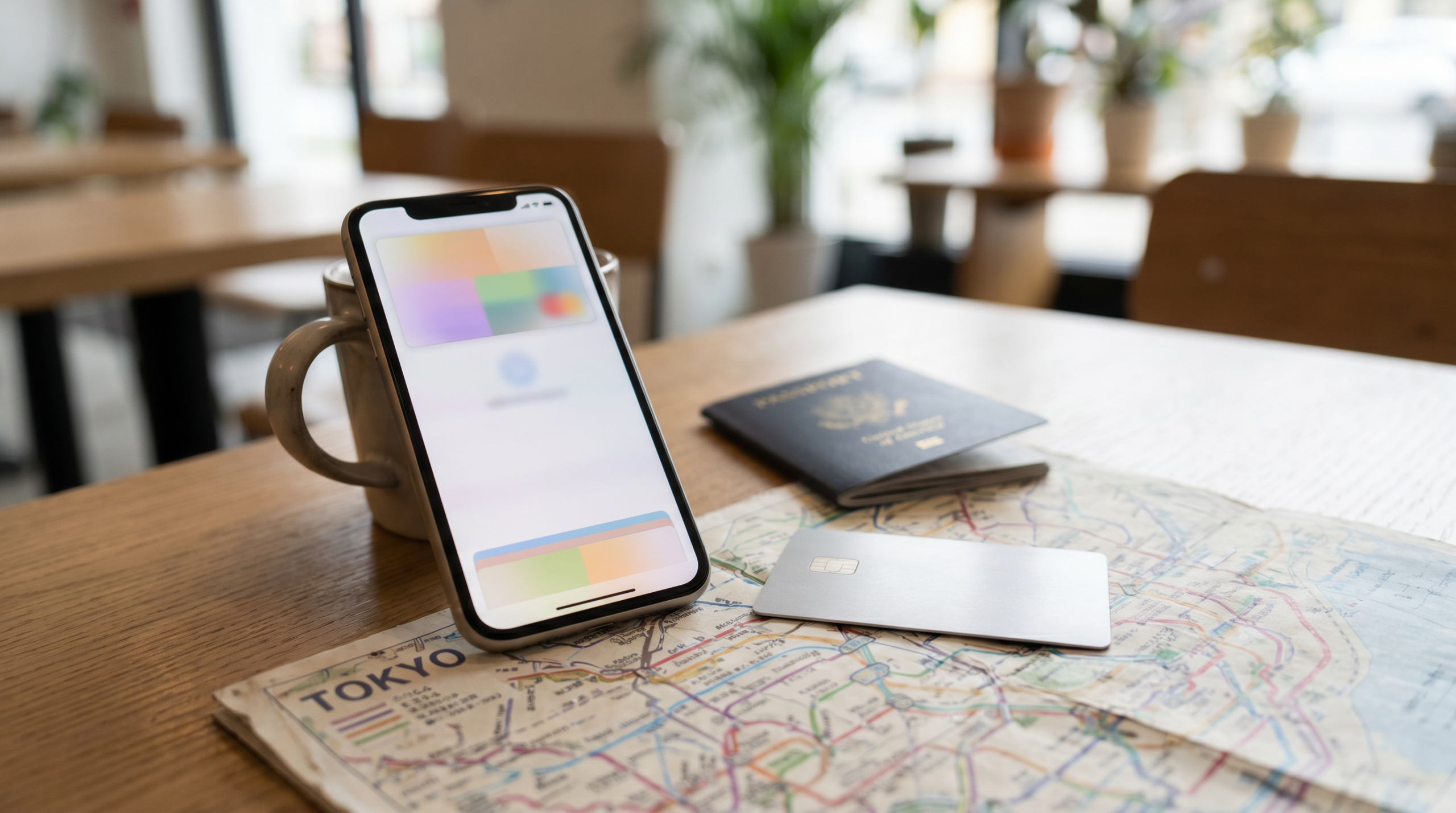
The safe assumption is this: if a fee or payment appears on the booking screen, treat it as real, read it before confirming, and do not assume it is refundable.
Pocket Concierge’s user terms allow the company to charge a separately determined usage fee in some cases. The terms also state that paid usage fees are not refunded. That does not mean the same extra fee appears on each reservation. It means travelers should look for the displayed payment terms on each restaurant and course.
There are three payment patterns you may meet:
-
Card guarantee. You enter a card to secure the booking, but pay for the meal at the restaurant. If you cancel late or do not show up, the card can be used for cancellation-related charges.
-
Smart Payment or prepayment. You may pay the course amount, reservation amount, cancellation fee, usage fee, or related charges through the platform or its payment company. Pocket Concierge’s terms call this online-payment model Smart Payment.
-
Additional charges after dining. If the restaurant handles extras through the platform, additional orders may be settled after the meal according to the restaurant’s flow.
The practical travel rule: take a screenshot of the payment page before you confirm. It is boring, but it can save you a long email thread later.
Cancellation Rules: The Part You Must Read
This is the highest-risk part of the reservation. Japan’s fine-dining restaurants often buy ingredients and plan seating around exact bookings. A late cancellation is not treated like a small inconvenience.
Pocket Concierge’s terms say that, in principle, a service agreement may not be modified or cancelled once established. If a user modifies or cancels anyway, the user may be charged according to the restaurant’s cancellation policy.
If the restaurant has not set its own cancellation policy, Pocket Concierge’s terms include a default policy. As of the English terms checked on June 23, 2026, that default schedule includes:
- Same-day cancellation: 100% of the total reservation amount
- 1 business day before: 100%
- 2 business days before: 50%
- 3 business days before: 50%
- No notice, late arrival, or no-show: 100%
Do not treat those numbers as the general rule across Pocket Concierge restaurants. Treat them as the fallback rule in the terms. The restaurant page or course page can set its own policy, and the specific policy shown at booking is the one you need to understand.
Also note two traveler traps:
Business days may matter. If a policy counts business days and does not count restaurant holidays, a weekend or regular closing day can make the cancellation window tighter than you expect.
Currency and refund costs may matter. The terms say users are responsible for fees or exchange losses incurred when changing or cancelling a reservation at the user’s request. If your card is billed in JPY and later refunded, your bank’s exchange rate may not match perfectly.

The Waitlist Can Be More Serious Than It Sounds
Pocket Concierge may offer waitlist functions for some restaurants or dates. Read that screen carefully.
The important distinction is whether you are simply asking to be notified, or whether an available seat can become a confirmed reservation automatically. The platform’s interface text indicates that if a seat matching your waitlist conditions becomes available, the reservation may be confirmed automatically and you will be notified.
That can be great if you truly want the seat. It can be expensive if you forgot you joined the waitlist and made another dinner plan.
Before joining a waitlist, decide:
- Am I still in this city on that date?
- Can I accept the booking immediately if it clears?
- Do I understand the cancellation policy after confirmation?
- Is the card I entered valid and ready for a possible charge?
If the answer is “maybe,” do not join casually.
A Safer Booking Checklist
Use this checklist before confirming a Pocket Concierge reservation.

-
Confirm the restaurant identity. Some restaurants have similar names, branches, or sister restaurants. Check the address and nearest station.
-
Confirm the date in Japan time. If you are booking from another time zone, double-check the local date in Japan, especially around midnight.
-
Confirm the number of guests. Going from four to three people can still matter at a counter restaurant. Do not assume you can casually adjust later.
-
Read the course details. Check whether drinks, tax, service charge, private-room fees, and seasonal supplements are included or separate.
-
Read the cancellation policy aloud. If the policy would hurt to pay, book when your travel plan is stable.
-
Check allergy and dietary limits. High-end Japanese restaurants may not be able to handle broad restrictions, vegan requests, strong seafood allergies, or last-minute changes.
-
Save the confirmation. Screenshot the booking page and save the email. At the restaurant, you may need the booking name and reservation time.
-
Arrive early, not late. For counter dining, five to ten minutes early is ideal. A late arrival can disrupt the whole seating.
When Not to Use Pocket Concierge
Pocket Concierge is good at a narrow job. It is not a general answer to Japan food planning.
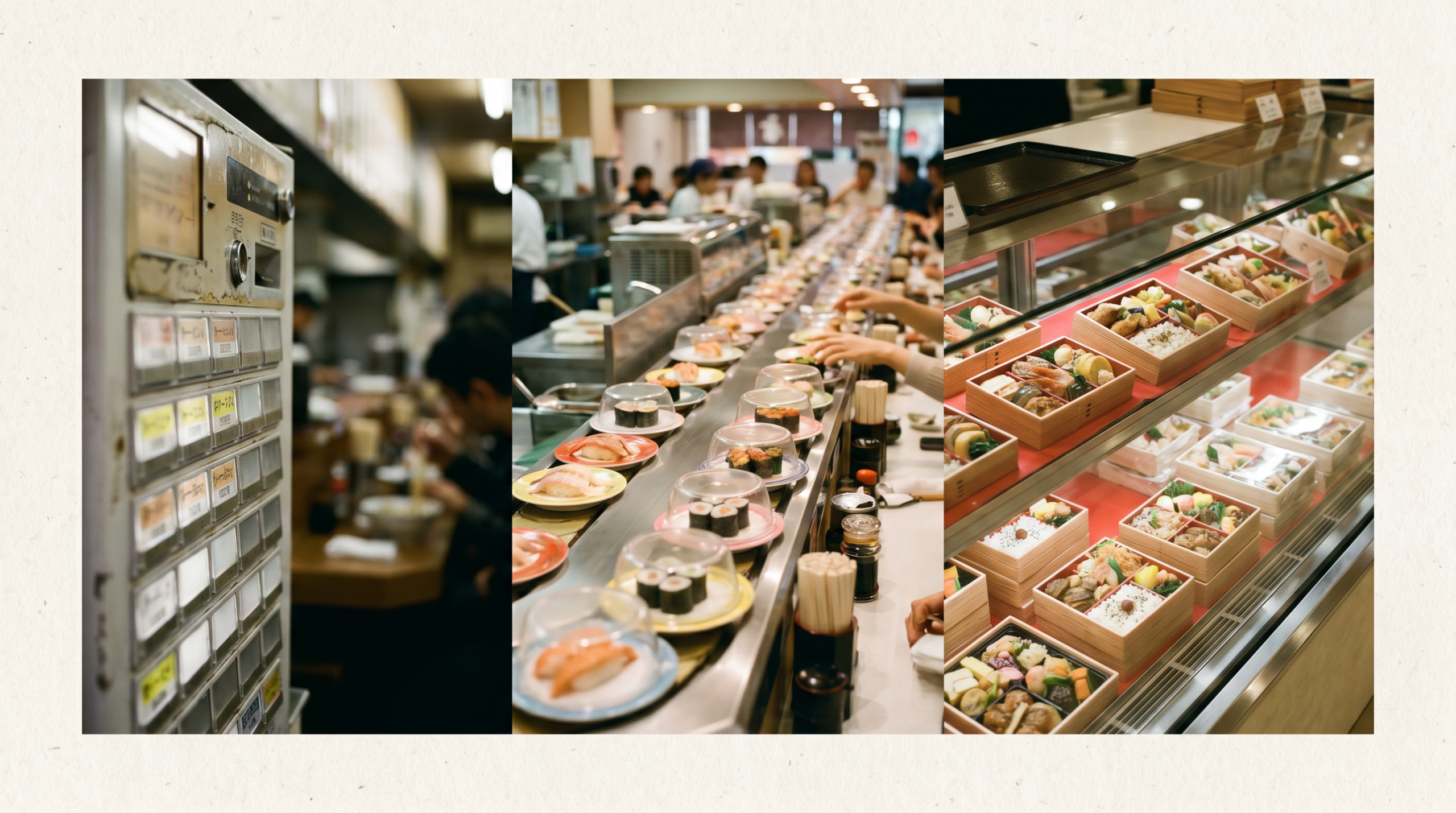
Do not start there if you want ramen. Most ramen shops are walk-in or ticket-machine based. A booking platform will not make the line disappear.
Do not start there for conveyor-belt sushi. For that, our Tokyo Sushi Guide explains the casual options better.
Do not start there if you are looking for the cheapest good meal near your hotel. Google Maps, Tabelog photos, department-store food halls, and local lunch sets are more useful.
Do not start there if your group size may change. Small fine-dining restaurants price seats tightly. A flexible group needs a more flexible restaurant.
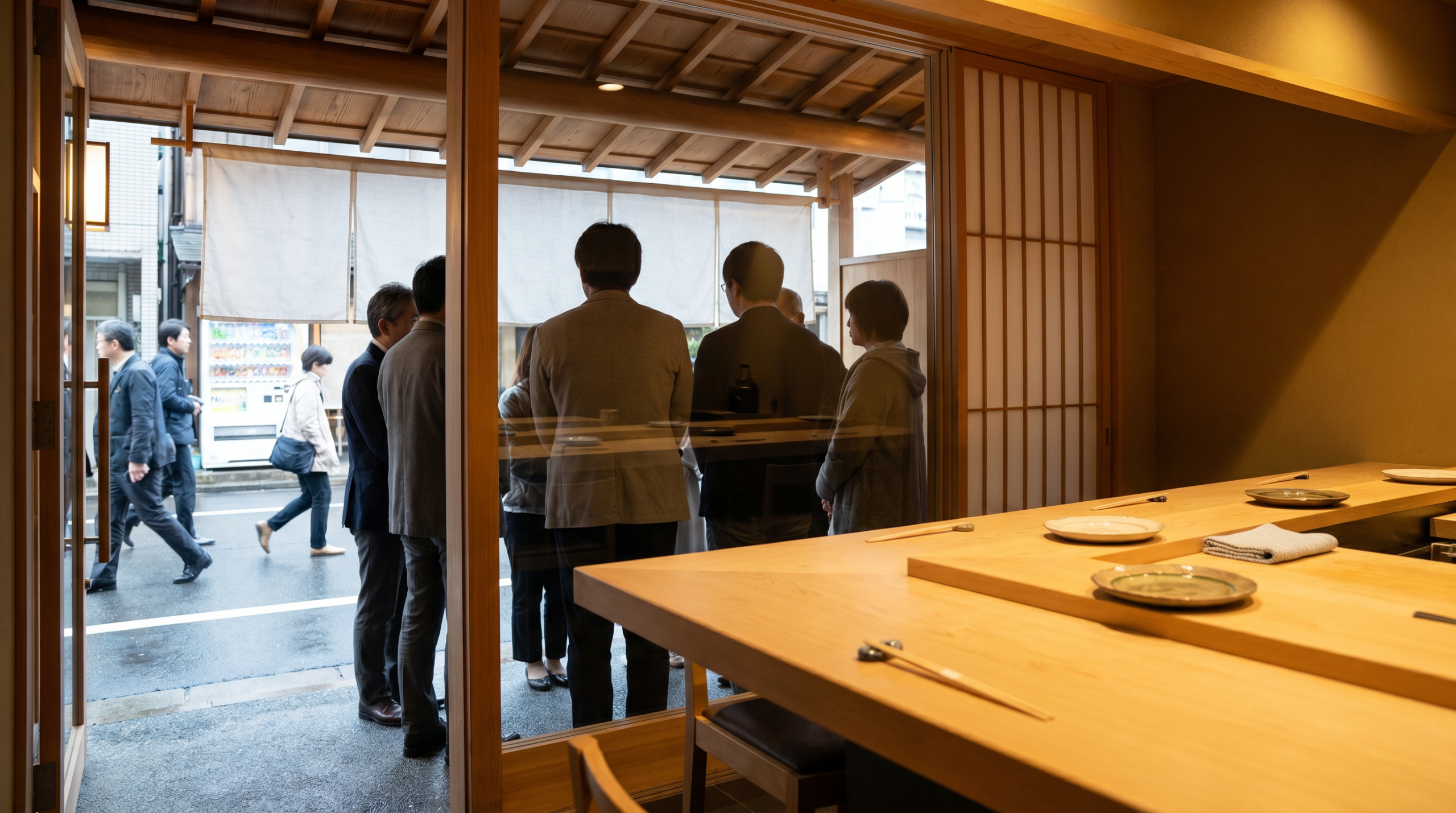
Do not start there if you dislike cancellation risk. The platform is designed for restaurants that often need card-backed commitment.
Plan B If Pocket Concierge Does Not Work
If your target restaurant is not available, do not panic. Try this order:
-
Search the restaurant’s official site. Many restaurants link directly to TableCheck, OMAKASE, Pocket Concierge, or their own booking form.
-
Search TableCheck by restaurant name. Some restaurants use TableCheck even if the link is not obvious from Google Maps.
-
Search OMAKASE for the restaurant or cuisine. This is especially useful for sushi, kaiseki, tempura, and counter dining.
-
Check Tabelog for the Japanese name. Even if you cannot book there, Tabelog can reveal the correct branch name, phone number, closing days, and photos.
-
Ask your hotel concierge. Send a short message with restaurant name, date range, party size, budget, allergies, and whether you accept alternatives.
-
Choose the same cuisine at a more bookable restaurant. This is often the smartest move. A second-choice restaurant with a confirmed seat beats a famous name you cannot reserve.
For beef-focused meals, our Tokyo Yakiniku Guide and Sukiyaki vs Shabu-Shabu Guide can help you pick a backup style that still feels special.

A Simple Decision Rule
Use Pocket Concierge when these four points are true:
- The meal is important enough to plan around
- The restaurant or course is expensive enough that a written policy matters
- Your date, time, and group size are stable
- You are comfortable with card-backed cancellation rules
Use TableCheck or the restaurant’s own site when you want a normal reservation at a restaurant that already has an easy English flow.
Use OMAKASE when the restaurant is clearly in the fine-dining reservation ecosystem and the listing there gives better availability.
Use a hotel concierge when the restaurant is important, online booking fails, and you are staying somewhere with staff who can call in Japanese.
Walk in when the category is built for walk-ins: ramen, kaiten sushi, teishoku, standing bars, depachika, and casual neighborhood spots.
FAQ
Is Pocket Concierge safe to use for restaurant reservations in Japan?
It is an official reservation platform operated by Pocket Concierge Inc., but you should still read each restaurant’s payment and cancellation terms before booking. “Safe” does not mean “free to cancel.”
Does Pocket Concierge charge a booking fee?
It can. The user terms allow separately determined usage fees, and paid usage fees are not refunded under the terms. Check the booking screen for the specific restaurant and course.
Will I have to prepay for the meal?
Sometimes. Some reservations may require a card guarantee, while others may use Smart Payment or prepayment. The payment screen should show what is due now and what may be charged later.
What happens if I cancel late?
The restaurant’s cancellation policy applies first. If the restaurant has no policy, Pocket Concierge’s terms include default cancellation fees that can reach 100% for same-day, one-business-day-prior, late arrival, or no-show cases.
Can I change the date, time, or number of guests after booking?
Do not assume so. The terms say that, in principle, a service agreement may not be modified or cancelled once established. If you need a change, use the platform’s contact or change flow as early as possible.
Is Pocket Concierge better than TableCheck?
Not automatically. Pocket Concierge can be better for some high-end and special-occasion reservations. TableCheck can be broader and easier for normal restaurant bookings.
Is Pocket Concierge better than OMAKASE?
It depends on the restaurant. Search both for fine dining, especially sushi and kaiseki. The better option is the one with the restaurant you want, a clear policy, and a booking time that fits your trip.
Should tourists join a Pocket Concierge waitlist?
Join if you are ready to accept the seat if it opens. Waitlist flows can be more binding than a casual “notify me” button, so read the screen before joining.
What To Do Next
If your Japan trip has one special dinner, book that first. Flights, hotels, and sightseeing can often flex around a dinner; a six-seat counter cannot flex around your itinerary.
A safe sequence is:
- Pick cuisine and budget.
- Search the restaurant’s official site.
- Check Pocket Concierge, TableCheck, and OMAKASE.
- Read the cancellation policy before confirming.
- Keep one backup restaurant in the same neighborhood.
Book carefully, arrive on time, and cancel early if plans change. That is the whole game.

About the Author
Basabasa is a former sergeant major in the Japan Ground Self-Defense Force who writes Real Japan Guide for first-time foreign visitors. He focuses on practical Japan travel frictions: how to order, pay, move, ask, queue, and avoid small mistakes that can make a good trip feel harder than it needs to be.