Where to Buy Souvenirs in Tokyo 2026: 6 Places Compared
- Quick Answer
- The 6 Places at a Glance
- 1. Depachika: The Efficient One-Stop for Gift Sweets
- 2. Don Quijote (“Donki”): Widest Mix Under One Roof
- 3. Daiso & 100-Yen Shops: The Budget Pick
- 4. Convenience Stores: Quick, Late, and Full of Limited Editions
- 5. Nakamise-dori, Asakusa: Traditional Crafts and Atmosphere
- 6. The Airport: A Last Resort, Not a First Choice
- How to Choose by Budget
- For Airbnb & Short-Stay Guests: Buying After Checkout
- FAQ
Quick Answer
Tokyo has no single “souvenir district” — where you should shop depends on what you want and how much time you have.
- Short on time, leaving soon? A depachika (department store food basement) next to a major station is the most efficient single stop for beautifully packaged sweets.
- Want the lowest prices and the widest mix? Don Quijote (“Donki”) carries snacks, cosmetics, character goods and quirky items under one roof, often with a tax-free counter.
- Tiny budget? Daiso and other 100-yen shops sell chopsticks, folding fans and Japanese-pattern goods from ¥110.
- Already at the airport? Departure-side shops still stock the classics (like Tokyo Banana), but prices tend to be higher and choice narrower.
This guide compares six common places to buy omiyage (souvenirs/gifts), so you can match the right shop to your remaining time, budget, and luggage space.
A note on tax-free shopping (changing in late 2026): As of mid-2026, registered shops can sell tax-free in store when a foreign visitor spends ¥5,000 or more (excluding tax) at one shop on the same day. From November 1, 2026, Japan is scheduled to switch to a system where you pay the full price including 10% consumption tax in store and claim a refund at the airport before departure. Rules and timing can change, so check current details before you rely on tax-free pricing. For the full breakdown, see our Japan Tax-Free Shopping guide.
The 6 Places at a Glance
| Place | Price range | Best for | Tax-free | Typical hours |
|---|---|---|---|---|
| Depachika (dept. store basement) | Mid–high | Packaged sweets, gift presentation | Often yes | ~10:00–20:00/21:00 |
| Don Quijote (“Donki”) | Low–mid | Wide mix, snacks, cosmetics, character goods | Often yes | Many late-night; some 24h |
| Daiso / 100-yen shops | Very low | Cheap, fun, light gifts | Limited | ~10:00–21:00 |
| Convenience stores (konbini) | Low | Snacks, limited-edition Kit Kat, quick pickups | No | 24h (most) |
| Nakamise-dori, Asakusa | Low–mid | Traditional crafts, festival atmosphere | Varies by shop | ~09:00/10:00–18:00/19:00 |
| Airport (after security) | Mid–high | Last-resort classics before boarding | N/A (duty-free area) | Aligned with flights |
Hours vary by branch and season — confirm the specific store before a special trip.
1. Depachika: The Efficient One-Stop for Gift Sweets
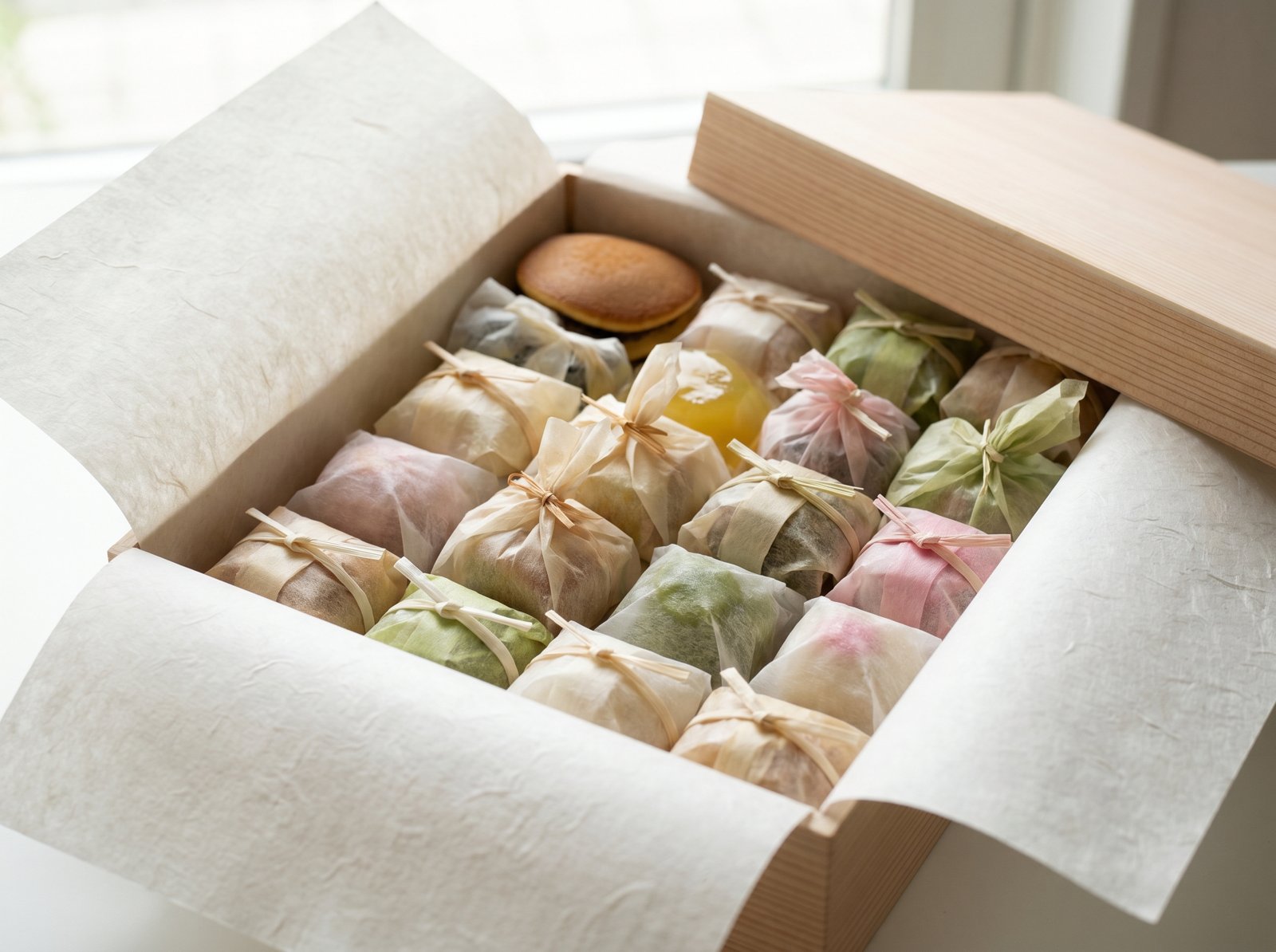
A depachika is the food basement of a department store. These floors are packed with confectionery counters, beautifully boxed sweets, and seasonal gifts, and many carry well-known Tokyo souvenirs such as Tokyo Banana.
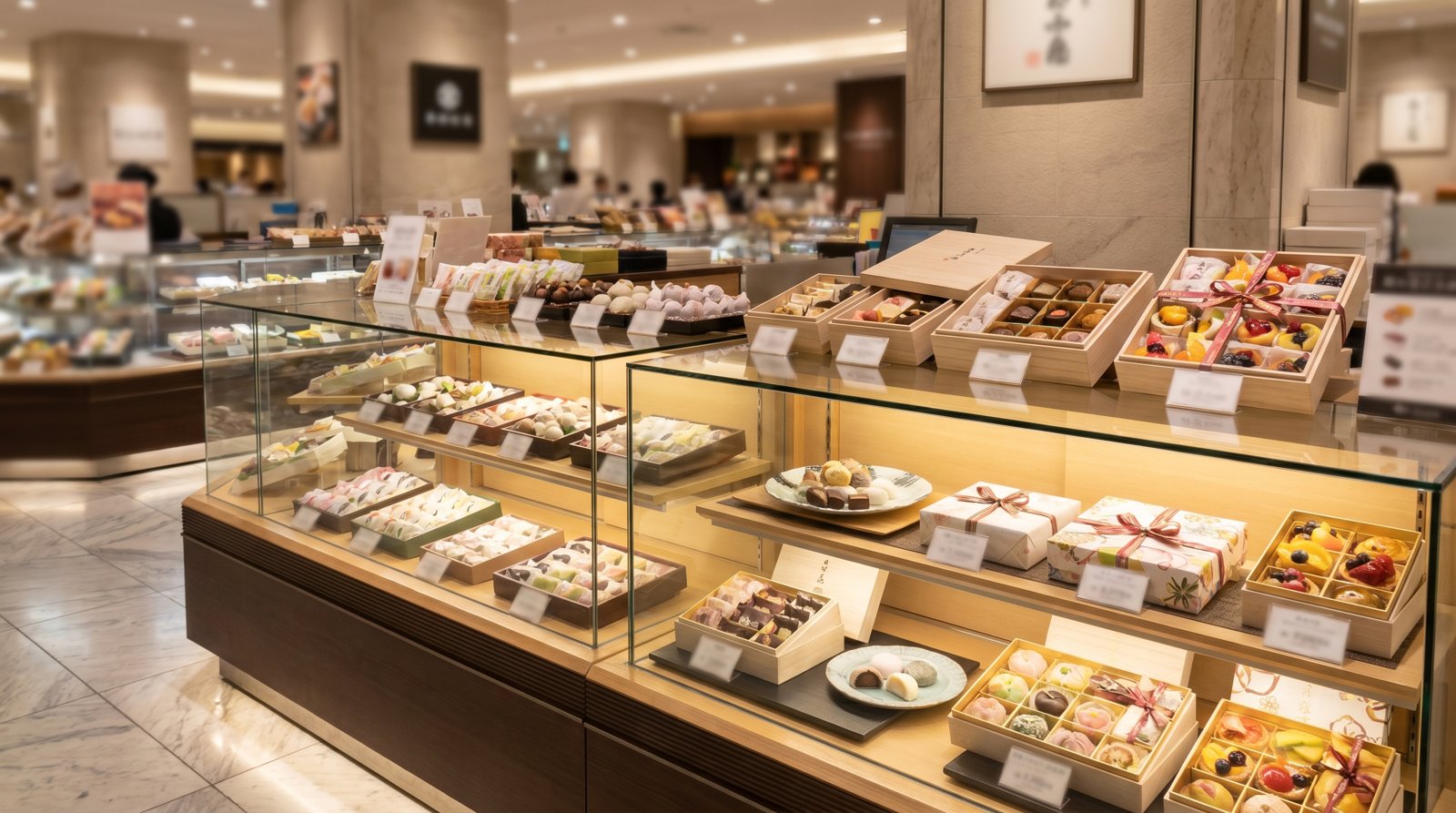
Two convenient examples for travelers:
- Daimaru Tokyo sits right next to Tokyo Station, which makes it a practical stop before a Shinkansen ride or the Narita Express. Its basement and ground floor are generally open around 10:00–20:00, with later hours (until about 21:00) on Thursdays and Fridays.
- Isetan Shinjuku is one of the city’s most famous depachika, generally open around 10:00–20:00, with a wide selection of sweets and gift items.
Why choose it: Presentation. Items are gift-wrapped and clearly priced, which is ideal if you need omiyage for family or coworkers. Watch for: Prices are mid-to-high, and closing times are earlier than konbini or Donki.
2. Don Quijote (“Donki”): Widest Mix Under One Roof
Don Quijote stores sell almost everything — snacks, cosmetics, character goods, household items and Japan-themed souvenirs — and many branches have a tourist-focused floor and a tax-free counter.
Opening hours vary widely: the Shibuya flagship (Mega Don Quijote Shibuya Honten) is open 24 hours, while a newer tourist-focused store in Shinjuku runs roughly 09:00–02:00. That late schedule makes Donki useful when department stores have already closed.
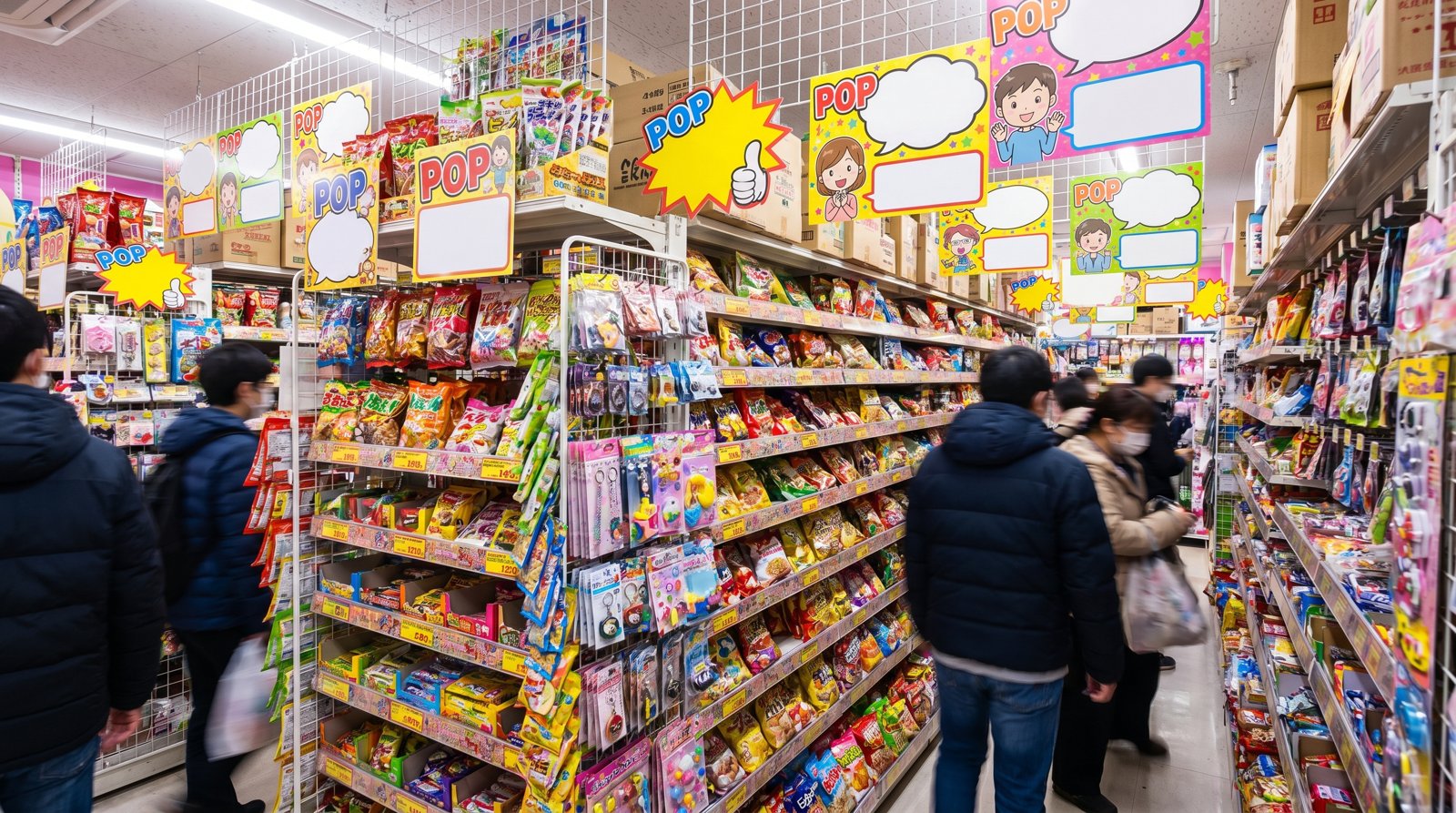
Why choose it: One stop, low-to-mid prices, and long hours. Watch for: Stores can be crowded and densely stocked, so finding a specific item takes patience.
3. Daiso & 100-Yen Shops: The Budget Pick
At Daiso, most items are ¥100 (¥110 including tax), with some at ¥300, ¥500 and above. For light, inexpensive gifts, it is hard to beat: chopsticks, origami sets, Japanese-pattern hand towels, ceramics and stationery.
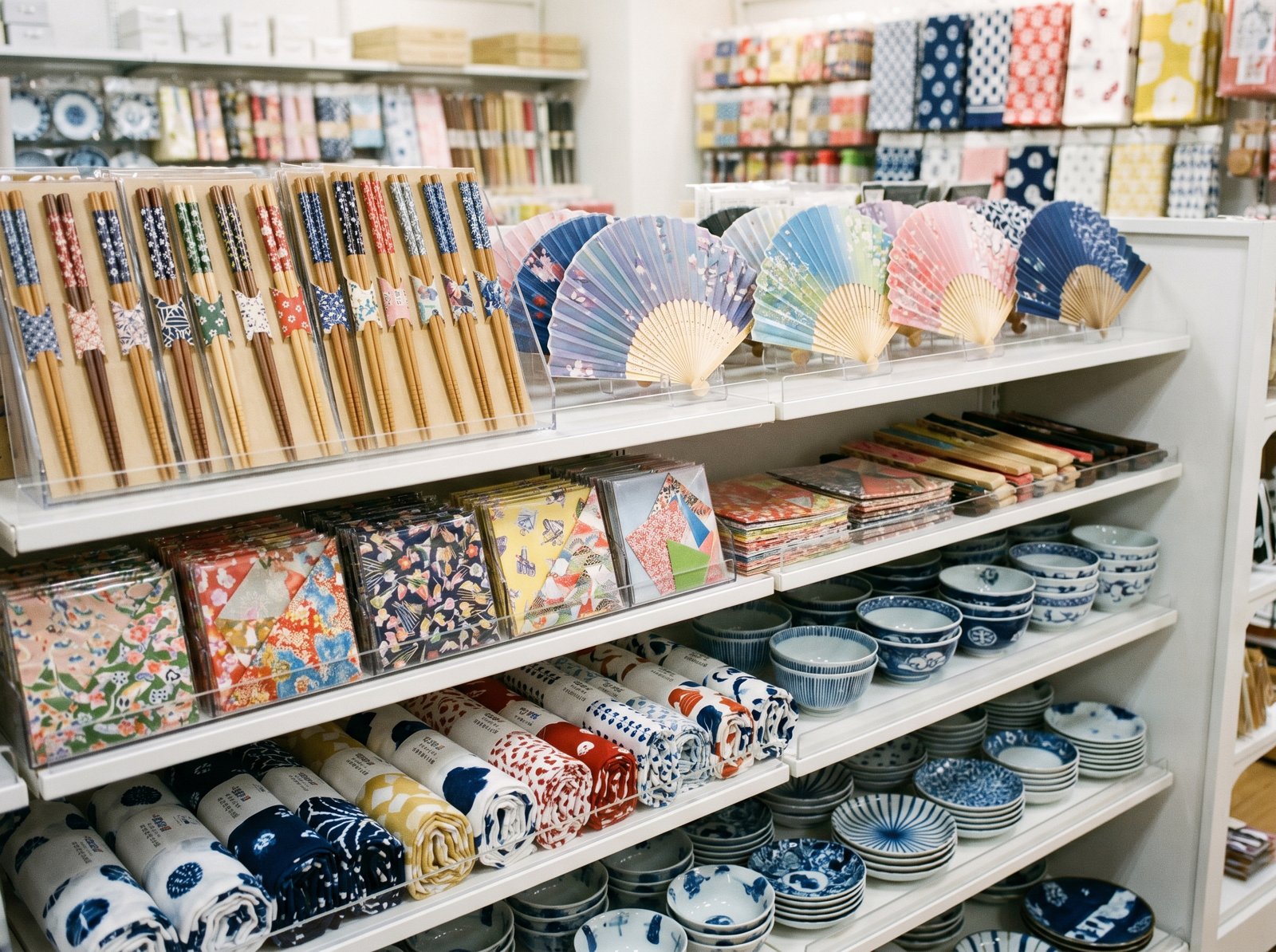
There are large branches in tourist areas (for example, near Asakusa), making it easy to combine with sightseeing.
Why choose it: Very low prices and genuinely fun browsing. Watch for: Tax-free handling is limited at 100-yen shops, and items are everyday-quality rather than premium gifts.
4. Convenience Stores: Quick, Late, and Full of Limited Editions
Konbini (7-Eleven, FamilyMart, Lawson) are open around the clock and stock snacks, drinks and rotating limited-edition treats — including unusual Kit Kat flavors. Convenience-store Kit Kats are often around ¥100–200 per pack (about 2–6 bars), while boxed gift versions in souvenir shops start higher (often from around ¥800).
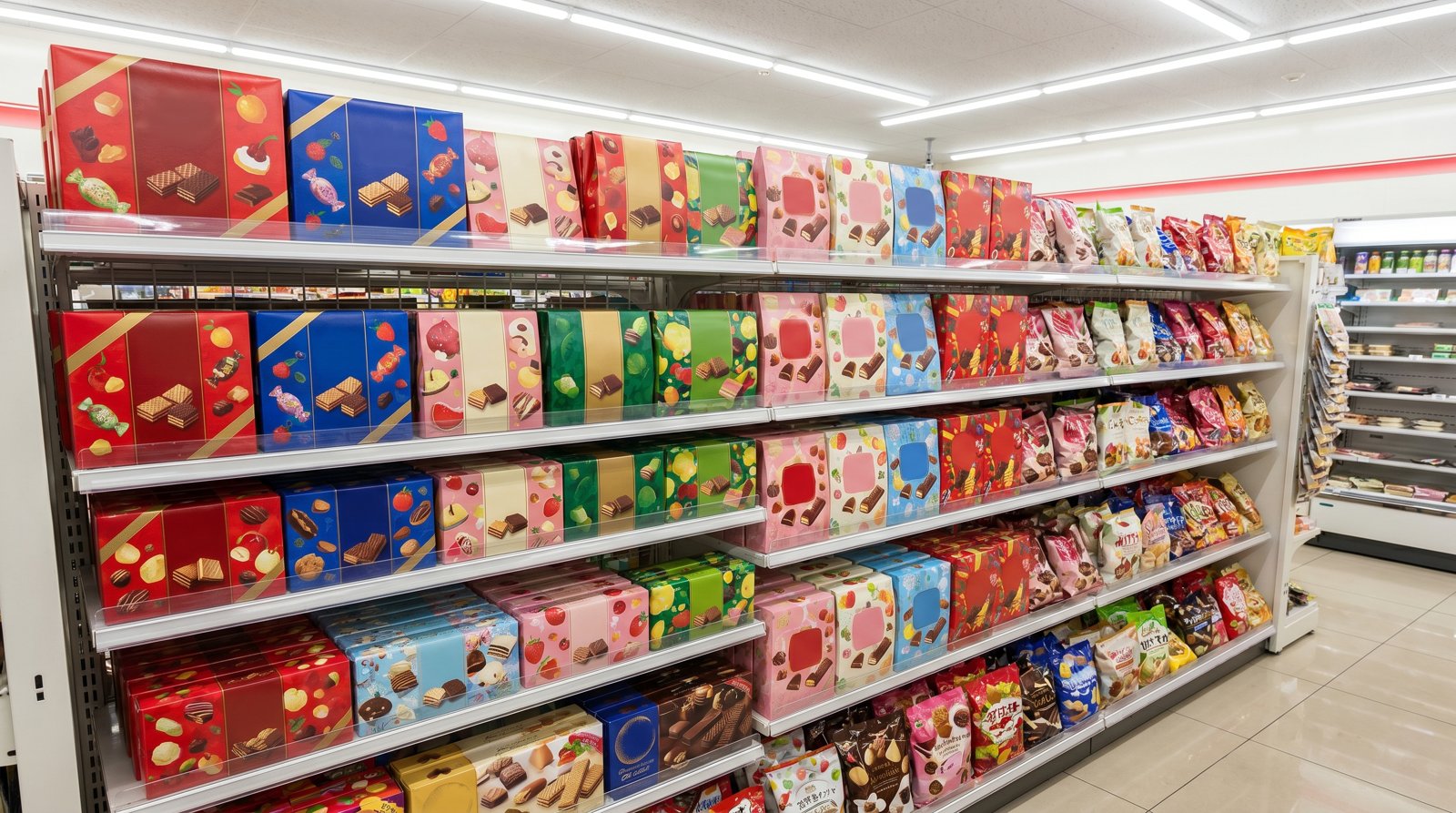
Why choose it: Open 24 hours and widely available, so it works well for a last-minute or late-night pickup. Watch for: Selection is snack-focused, not traditional crafts, and konbini do not offer tax-free shopping. For more on what konbini can do, see our Japanese Convenience Store guide.
5. Nakamise-dori, Asakusa: Traditional Crafts and Atmosphere
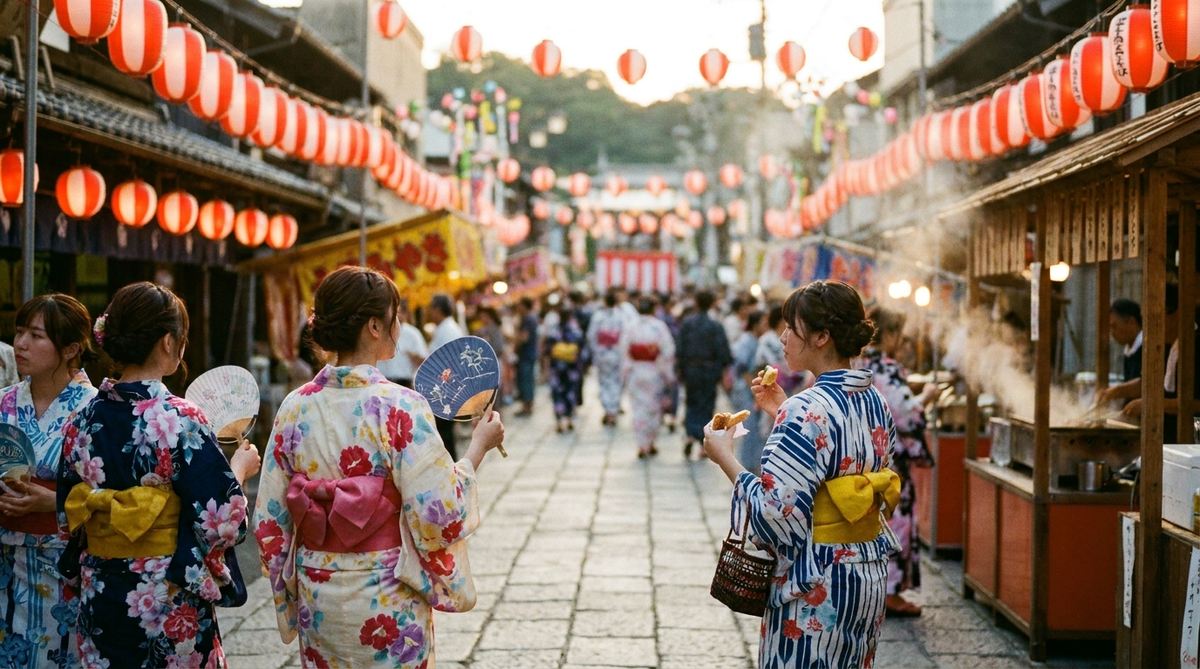
The Nakamise shopping street leading to Sensoji Temple stretches about 250 meters with around 90 shops. You will find folding fans, yukata and t-shirts, traditional snacks, lanterns, masks and small crafts — most souvenirs fall in the ¥500–3,000 range, though items run from about ¥200 snacks up to high-end kimono.
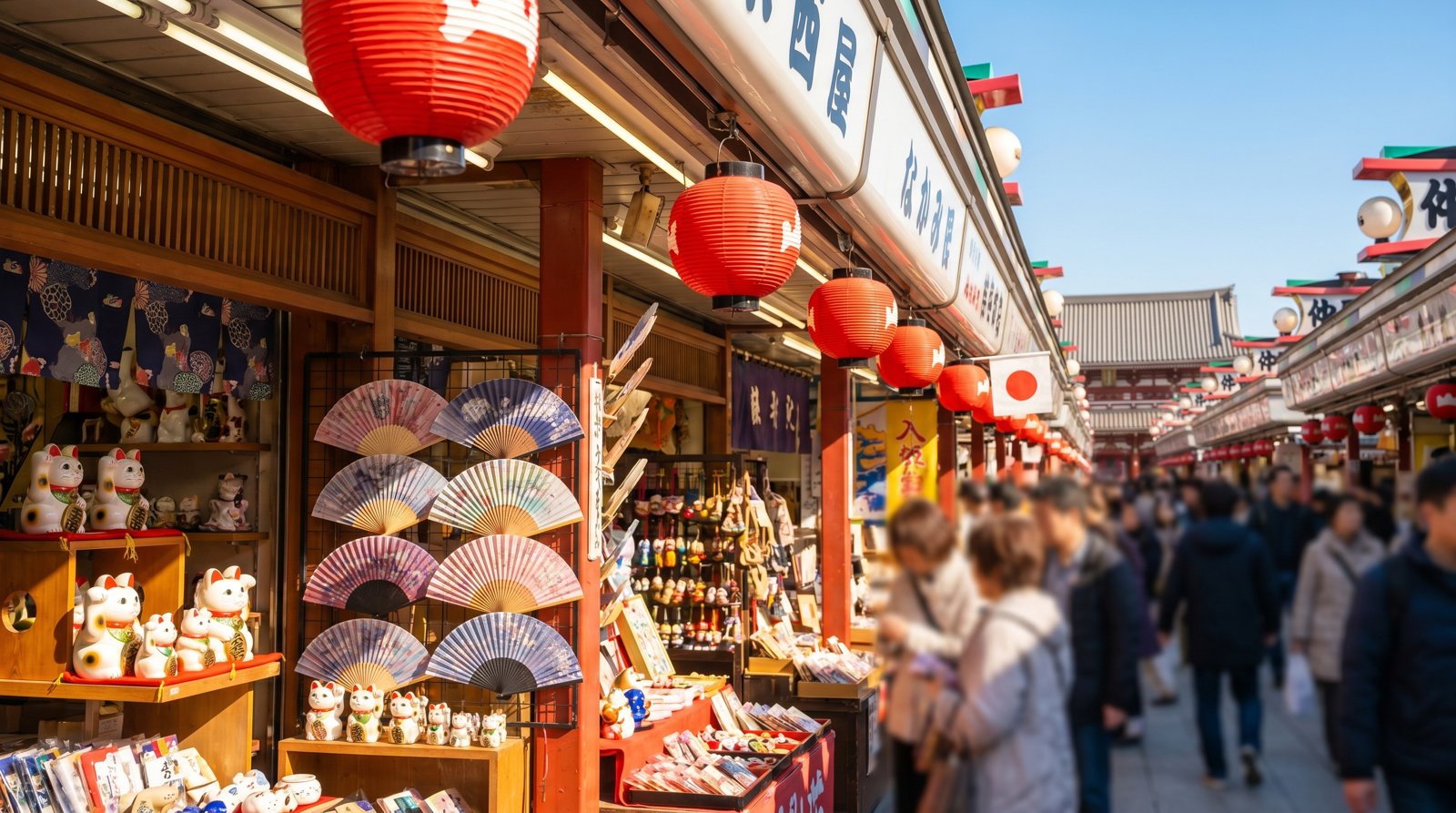
Most stalls open around 09:00–10:00 and close by about 18:00–19:00. Many small stalls are cash-first, though shops handling higher-priced goods often accept cards — carry some yen to be safe. Early morning or early evening tends to be less crowded.
Why choose it: Traditional, photogenic, and a sightseeing trip in itself. Watch for: Earlier closing and cash-leaning payment. You can fold this into a wider visit with our Asakusa Quick Guide.
6. The Airport: A Last Resort, Not a First Choice
Departure-side shops at Haneda and Narita still carry the classics. Tokyo Banana, for example, is sold at both airports, and a few flavors are airport-exclusive (an exclusive honey flavor is sold at Haneda, while a butter madeleine version is a Tokyo Station exclusive).
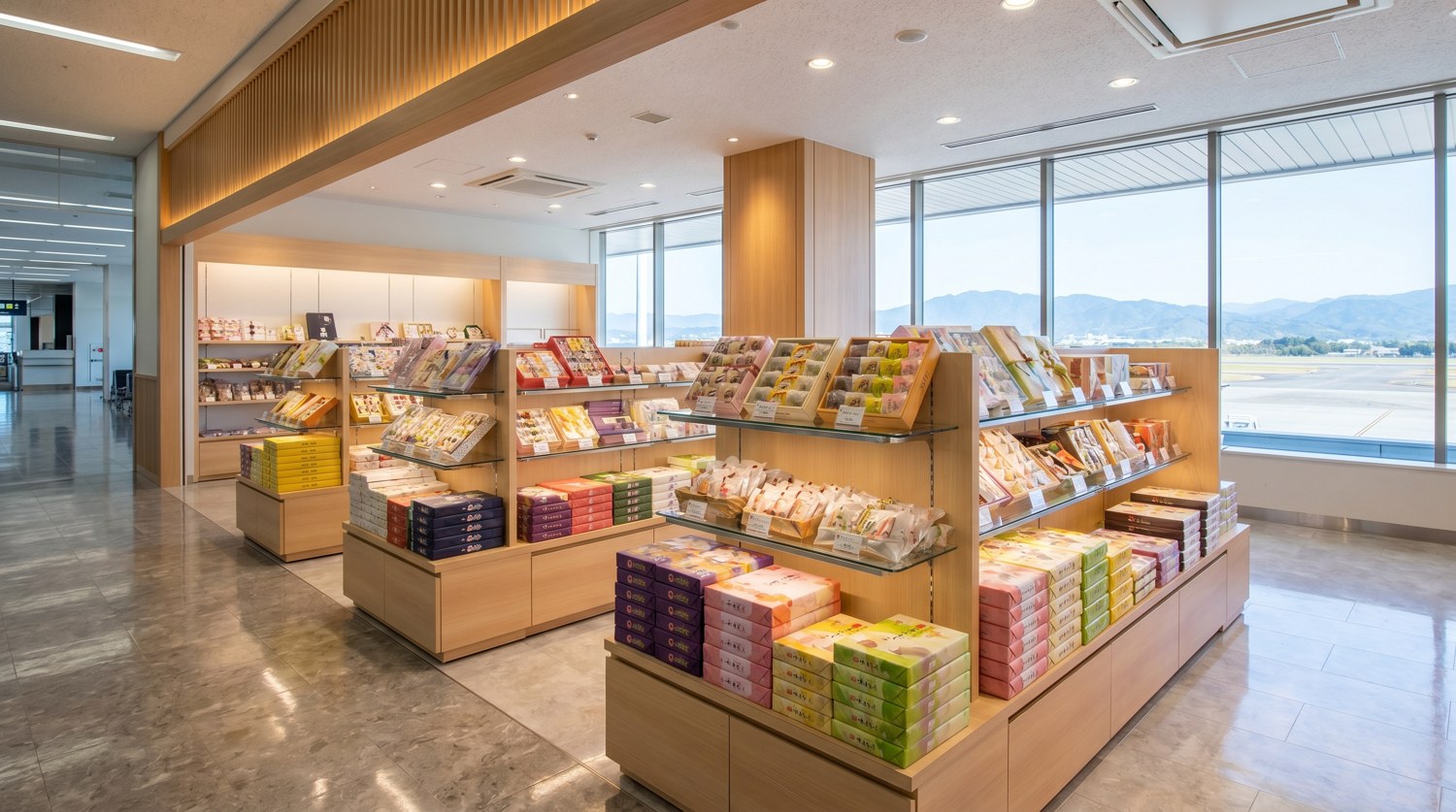
Why choose it: Convenient if you simply ran out of time. Watch for: Prices tend to be higher, selection is narrower, and you are limited to the shops past security. Treat it as a backup rather than your main plan. If you are still deciding how to reach the airport, see our Tokyo Airport Transfer guide.
How to Choose by Budget
- Around ¥500: A 100-yen shop set (chopsticks + a patterned towel), or a single boxed snack from a konbini.
- Around ¥1,000: A small box of brand-name sweets, or a few limited-edition Kit Kat packs to share.
- Around ¥3,000: A nicely presented depachika gift box, or a traditional craft from Nakamise-dori.
A practical approach for groups: buy small, individually wrapped sweets (a long-standing omiyage tradition) so one box can be shared among many people.
For Airbnb & Short-Stay Guests: Buying After Checkout
If your last day is tight, plan your souvenir stop around your route out of the city rather than a separate trip.
- Heading to Tokyo Station for the Shinkansen? Daimaru’s depachika is steps away.
- Late checkout, shops already closed? A 24-hour Donki or any konbini covers the gap.
- Truly out of time? The airport shops are your final option after security.
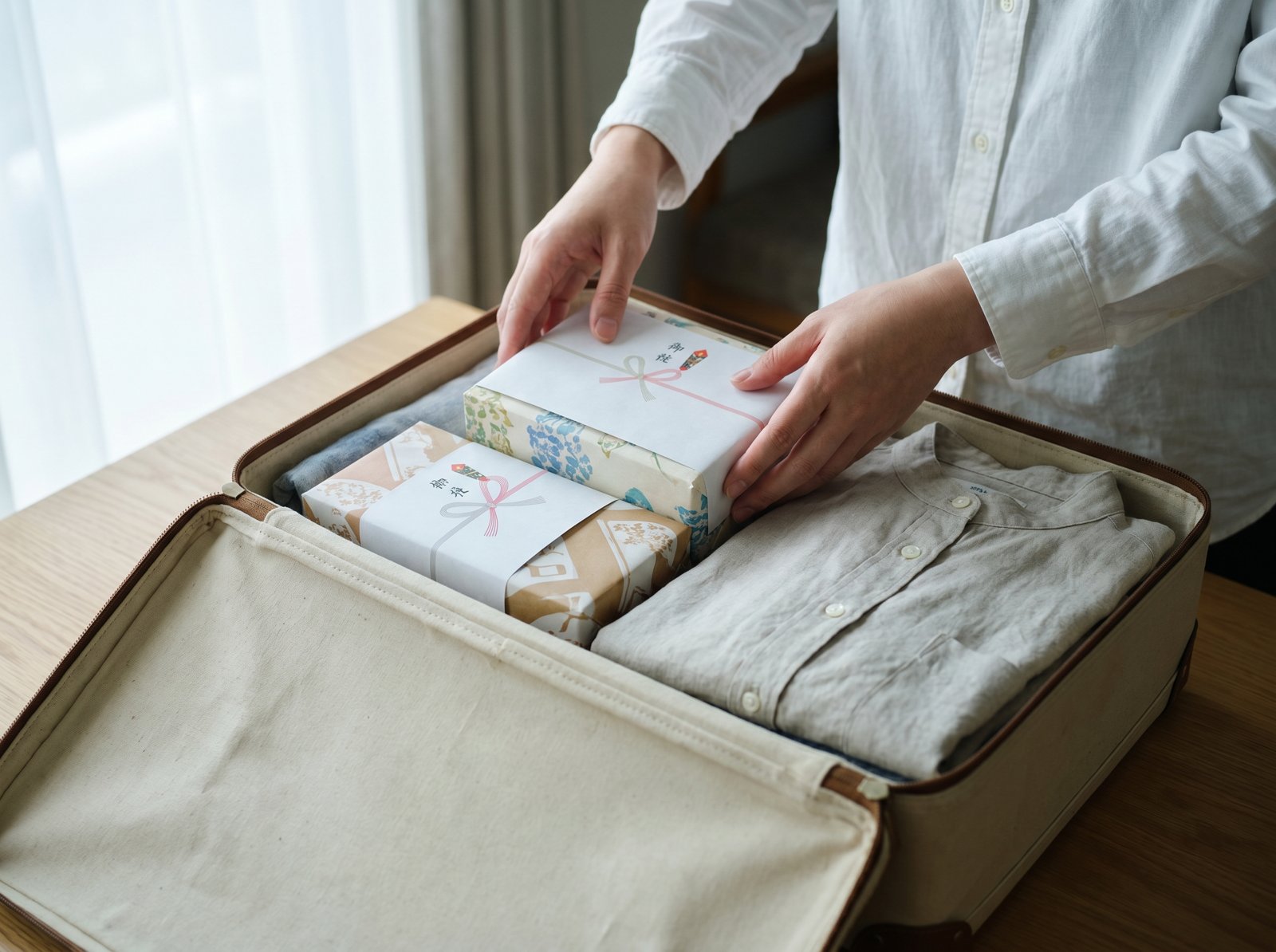
A few reminders for the trip home: pack fragile or liquid items (sauces, drinks, cosmetics) in checked luggage where appropriate, check best-before dates on fresh sweets, and remember that customs rules in your home country may restrict meat-based or fresh-food products — declare food items when in doubt. Paying is easy almost everywhere; if you are using IC cards or mobile payments, our Suica & IC card guide explains the options.
FAQ
Where is the best place to buy souvenirs in Tokyo?
There is no single best place — it depends on your time and budget. A depachika near a major station is efficient for gift sweets, Don Quijote offers the widest mix at low-to-mid prices, and 100-yen shops are best for cheap, light gifts.
What are the most popular Japanese souvenirs to bring home?
Common picks include boxed sweets like Tokyo Banana, limited-edition Kit Kat, green tea and matcha, traditional crafts (folding fans, chopsticks, ceramics), cosmetics, and character goods.
Where can I buy Tokyo Banana?
It is widely sold at Tokyo Station (which has many souvenir shops), at Haneda and Narita airports, at some station shops such as those in Ueno and Shinagawa, and at department store basements. A few flavors are location-exclusive.
Can I shop tax-free for souvenirs?
As of mid-2026, registered shops can offer in-store tax-free shopping when you spend ¥5,000 or more (excluding tax) at one shop on the same day. From November 1, 2026, Japan plans to move to an airport-refund system. Carry your passport and confirm current rules.
How much do souvenirs cost in Tokyo?
Roughly: 100-yen shop items from ¥110, konbini snacks from about ¥100–200, boxed sweets often ¥800 and up, and traditional crafts at Nakamise-dori mostly ¥500–3,000.
Do souvenir shops accept credit cards?
Department stores, Don Quijote and most larger shops accept cards and mobile payments. Small stalls at Nakamise-dori can be cash-first, so carry some yen.
Is the airport a good place to buy souvenirs?
It works as a backup if you run out of time, but prices tend to be higher and the selection is narrower than in the city. Buy in town if you can.
When do souvenir shops in Tokyo open and close?
Department store basements are generally open about 10:00–20:00/21:00, Nakamise-dori roughly 09:00/10:00–18:00/19:00, many Don Quijote branches stay open late (some 24 hours), and convenience stores are open 24 hours.
Can I bring Japanese snacks back to my country?
Packaged, processed snacks without meat are generally a safer choice, but rules differ by country. Fresh food, meat (including meat extract) and some dairy are often restricted, and declaring food at customs is recommended. Check best-before dates before you travel.

Comments