Japan Onsen Etiquette: Why Naked, Why No Tattoos (2026)
- Quick Answer
- 2 Things That Surprise Foreign Visitors
- Why Naked? Japanese Bathing Culture Explained
- Why Tattoos Are Restricted: The Yakuza History
- Onsen vs Sento vs Hotel Bath: Know the Difference
- Bathing Etiquette for Everyone (8 Rules)
- 5 Real Options for Travelers with Tattoos
- Tokyo Tattoo-Friendly Facilities
- How Cover Stickers Actually Work
- FAQ
- Q1. Can I keep a swimsuit on at a Japanese onsen or sento?
- Q2. Is it really okay for everyone to be naked together?
- Q3. Do I have to be naked in front of staff?
- Q4. What if my tattoo is small or in a hidden place?
- Q5. What about temporary tattoos or henna?
- Q6. Can children come into the bath?
- Q7. What if I’m menstruating?
- Q8. Why are photos and phones forbidden in the bath area?
- Q9. How long do people usually stay in the bath?
- Q10. Do I need to know any Japanese to visit?
- Related Reading
Quick Answer
Japanese onsen (hot springs) and sento (public bathhouses) operate on two rules that surprise most foreign visitors:
- You bathe completely naked — swimsuits and large towels in the water are not allowed
- Tattoos are restricted at most facilities — though the rules are slowly changing
This guide explains why these rules exist, walks through the basic etiquette so you don’t accidentally upset other bathers, and lists 5 real options for travelers with tattoos in Tokyo — including specific tattoo-friendly facilities, cover stickers, and private bath alternatives.
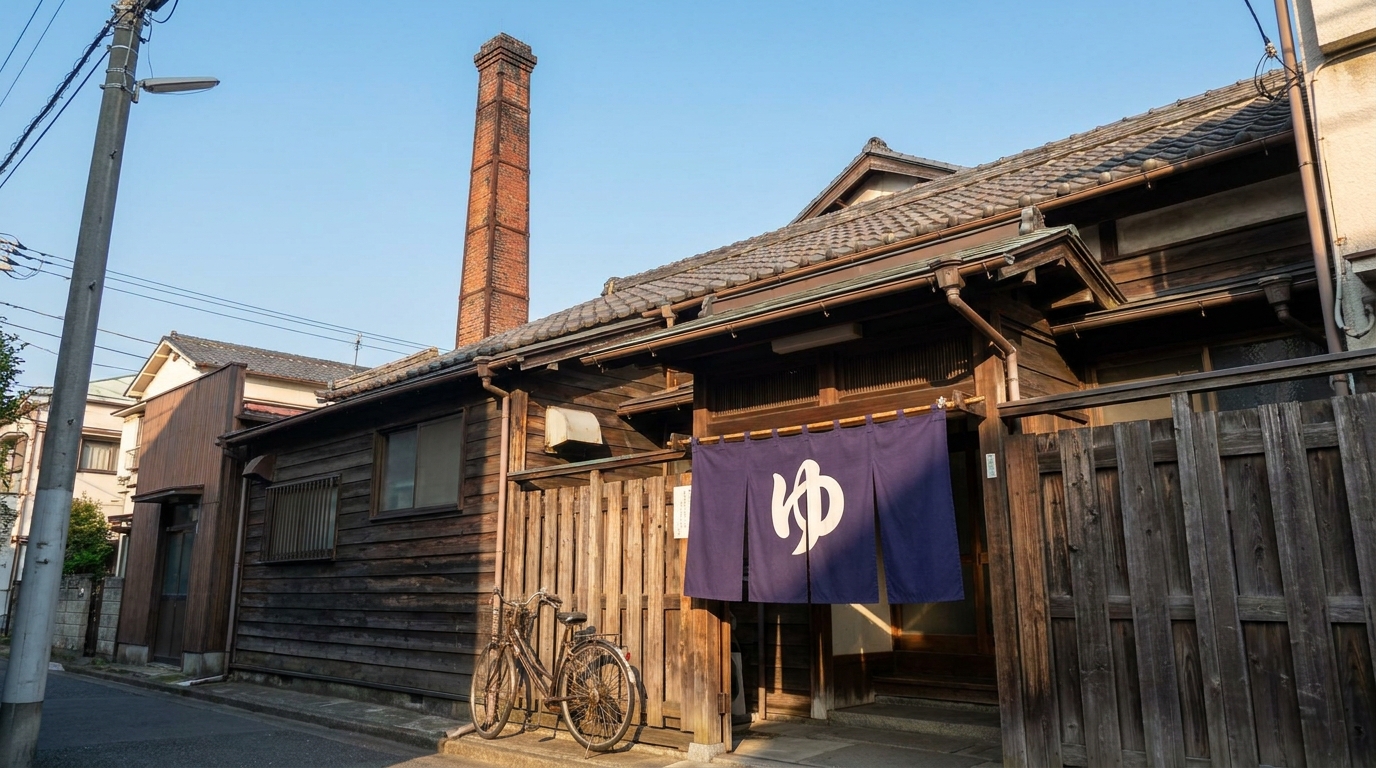
2 Things That Surprise Foreign Visitors
If you’ve never been to a Japanese bathhouse, two things will probably catch you off guard:
1. Total nudity is the standard
Not “swimwear optional.” Not “towel wrapped around the waist.” Completely naked, in front of strangers of the same gender. This isn’t a fringe practice — it’s how every onsen and sento in Japan works. Bathing facilities are split by gender (men’s side, women’s side), and inside, everyone is naked.
2. Many places turn away guests with tattoos
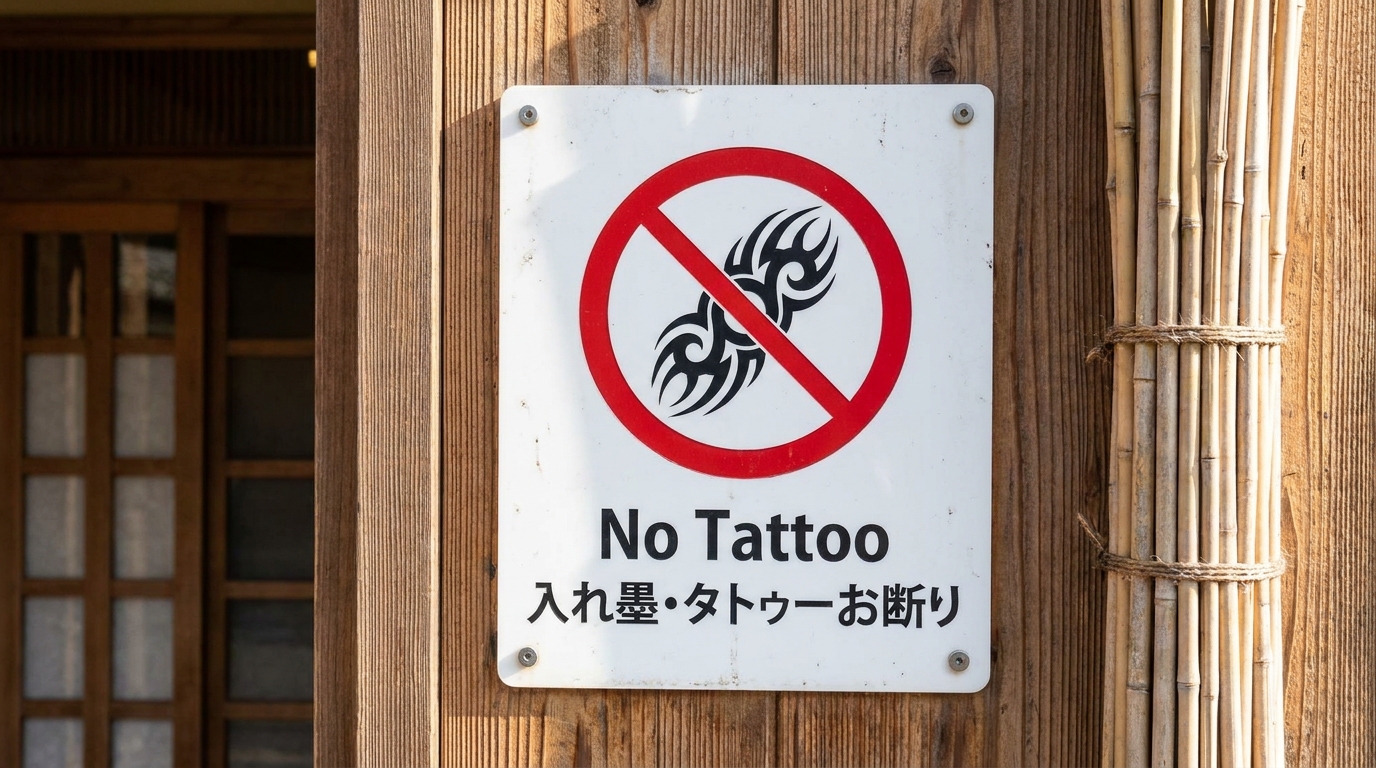
Even small tattoos. Even tasteful ones. The sign at the entrance often shows a tattoo crossed out — and the staff will politely refuse entry if they spot ink on your body.
These two rules can feel jarring if you’re used to Western pool or spa culture. But there’s history behind both, and once you understand the why, the rules make more sense — and you’ll know which workarounds actually work.
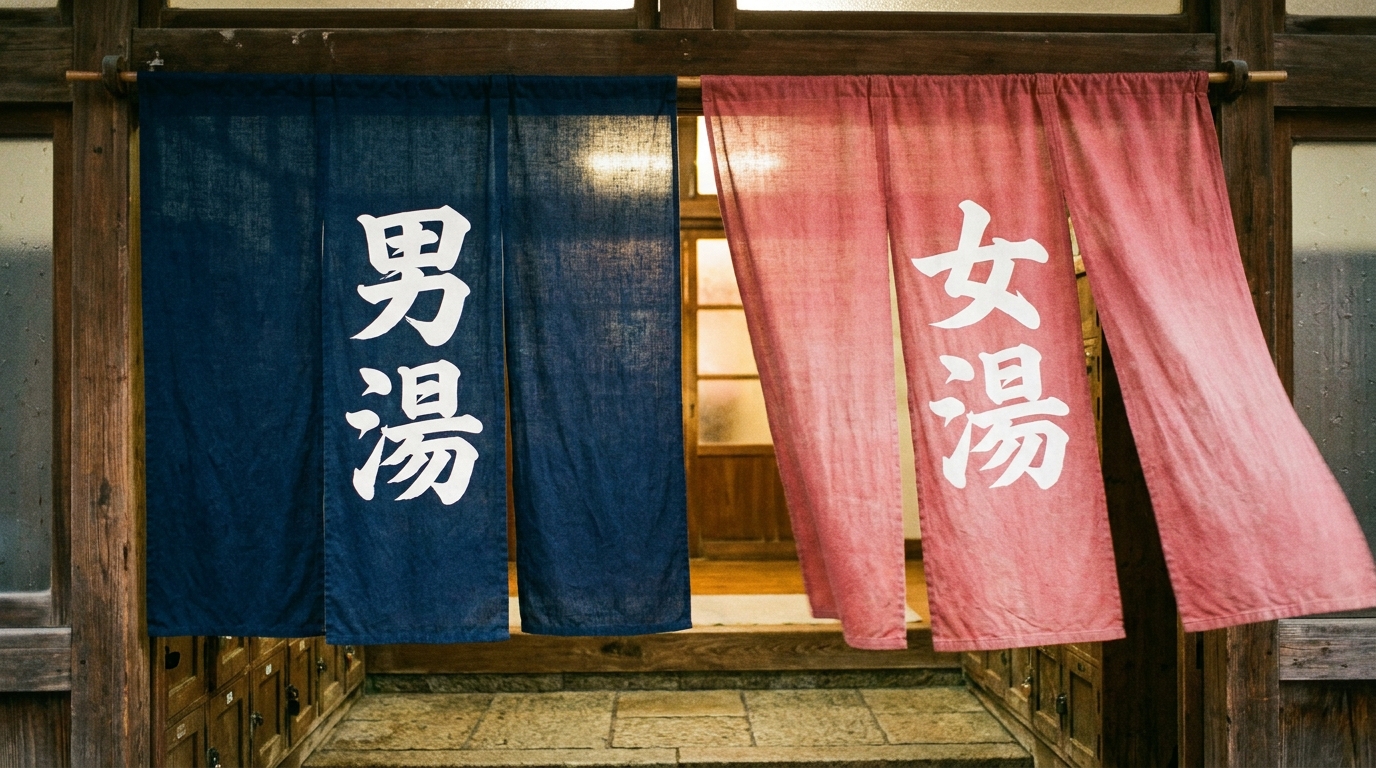
Why Naked? Japanese Bathing Culture Explained
Bathing as ritual, not just hygiene
Public bathing in Japan goes back over 1,300 years. The first communal bathhouses appeared in Buddhist temples around the 7th century, where bathing was treated as a form of spiritual purification. By the Edo period (1603–1868), neighborhood bathhouses called sento had become a daily fixture of city life — most homes didn’t have private baths, so the local sento was where you washed every evening.
“Hadaka no tsukiai” — naked communion
There’s a Japanese phrase, 裸の付き合い (hadaka no tsukiai), that translates roughly to “naked communion” or “the bond of being naked together.” The idea is that when everyone strips off their clothes, they also strip off their social labels. The company executive in his expensive suit, the convenience-store clerk in her uniform, the student in trendy sneakers — once they’re all sitting in the same bath, none of that matters. Conversations flow more honestly. Hierarchies relax.
This isn’t just sentimentality. Japanese business culture has long used onsen trips as team-building tools precisely because of this leveling effect.
Why no swimwear?
Two practical reasons:
- Hygiene. Swimwear carries detergent residue, lint, and outdoor dirt into the bath water, which everyone shares.
- Equality. Once anyone is allowed to wear something in the bath, the unspoken rule of “we’re all the same here” breaks down.
So when the rule is “no clothes in the water,” it’s not about exposing your body — it’s about keeping the water clean and the social atmosphere flat.
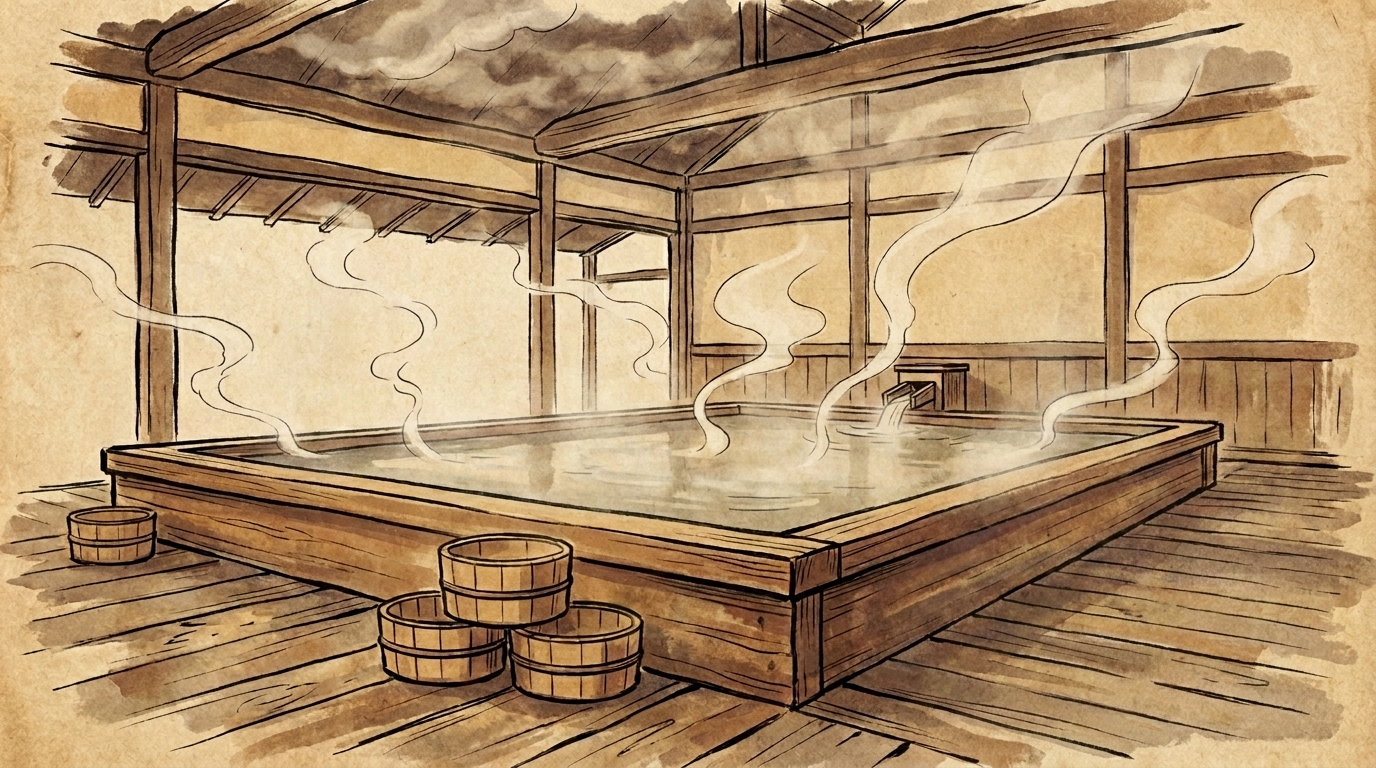
Why Tattoos Are Restricted: The Yakuza History
A 400-year-old association with crime
To understand why tattoos are still controversial in Japanese bathhouses in 2026, you need to go back to the Edo period.
During that era, the government used tattoos as a legal punishment. Repeat offenders — thieves especially — would have a black ring tattooed around their arm or a character on their forehead. This “punishment ink” served as a permanent, visible criminal record. Once you had it, every employer, neighbor, and landlord could see you’d been convicted.
The 1872 ban and the underground
In 1872, just after the Meiji Restoration, the new government banned decorative tattooing entirely — partly to modernize Japan’s image for foreign visitors. Tattoo artists went underground. The art form survived mainly in two places: among firefighters and laborers, who used tattoos as a kind of badge of toughness, and among organized crime groups that would later become the yakuza.
The ban was lifted in 1948 after World War II. But by then, the public association between full-body tattoos and yakuza was firmly cemented — reinforced through the 1960s and 70s by countless Japanese gangster films featuring elaborately tattooed antiheroes.
Why bathhouses still ban them
Most modern Japanese bathhouse operators aren’t worried that you are in the yakuza. They’re worried about other guests feeling like the yakuza is in the next bath. The bans exist primarily to maintain an atmosphere where regular customers feel safe and relaxed.
There’s also a quieter reason: traditional onsen carry a sense of spiritual cleanliness. Visible body modification, regardless of origin, can feel out of place in that aesthetic.
The slow shift
The picture is changing. According to a 2015 Japan Tourism Agency survey, around 30% of hotels and inns nationwide said they would allow tattooed guests in their communal baths. Subsequent inbound tourism waves — and the 2019 Rugby World Cup — pushed many facilities to soften their rules. Today, Tokyo has at least 18 verified tattoo-friendly onsen and sento, more than any other prefecture (per the Tattoo-Friendly Onsen directory).
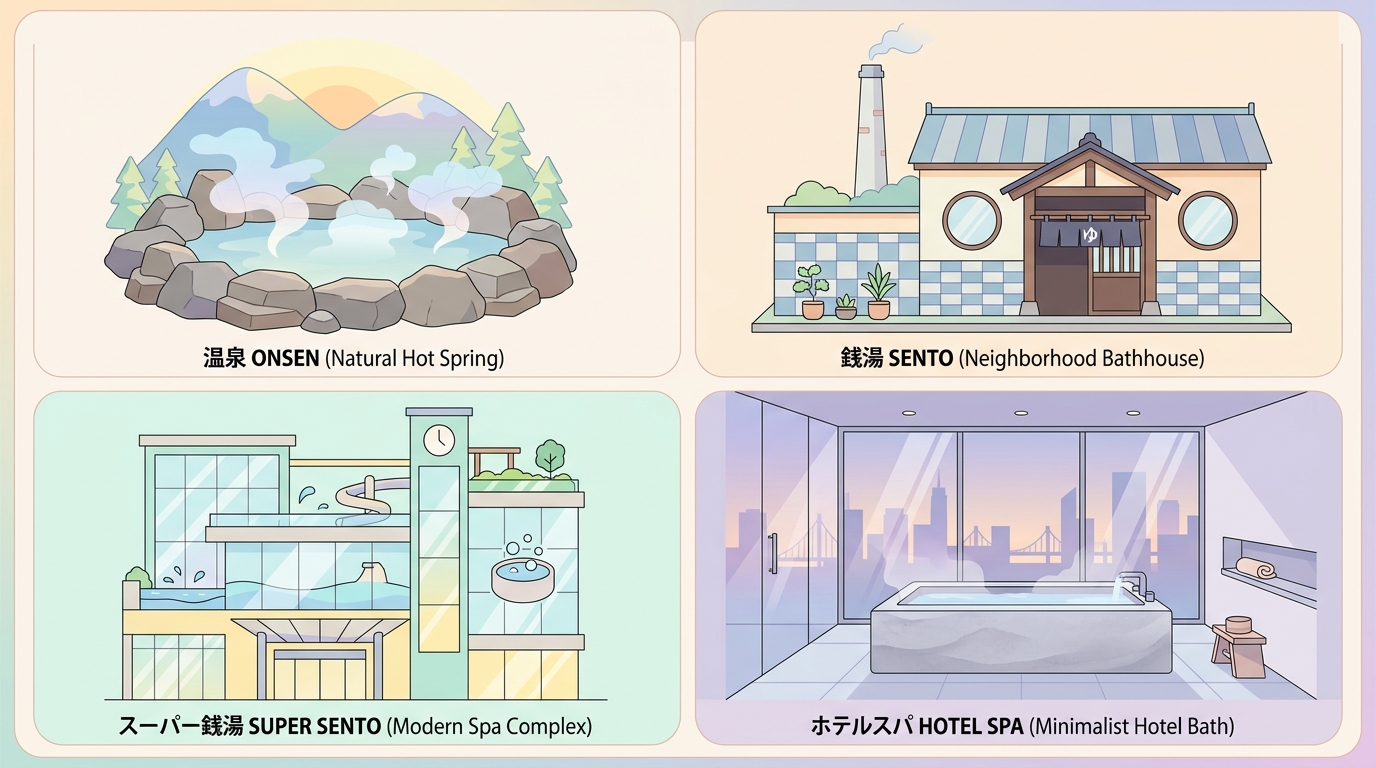
Onsen vs Sento vs Hotel Bath: Know the Difference
The Japanese word for “bath” covers four very different kinds of facility. Knowing which is which helps you pick the right place — especially if you have tattoos.
| Type | Water Source | Typical Price (Tokyo) | Tattoo Policy |
|---|---|---|---|
| Onsen (温泉) | Natural hot spring | ¥1,000–¥2,500 day-use | Mostly no, some yes |
| Sento (銭湯) | Heated tap water | ¥550 (regulated) | Often more lenient |
| Super Sento / Health Spa | Mix (spring + tap) | ¥1,500–¥3,000 | Varies widely |
| Hotel Day-Use Spa | Spring or filtered | ¥1,500–¥4,000 | Often allowed |
Onsen (温泉)
A bath fed by genuine hot spring water — meaning the water comes from underground and contains naturally occurring minerals. By Japanese law, “onsen” has a specific definition (water at 25°C+ at the source, or containing certain mineral concentrations). Onsen carry the strongest cultural weight and tend to have the strictest tattoo policies.
Sento (銭湯)
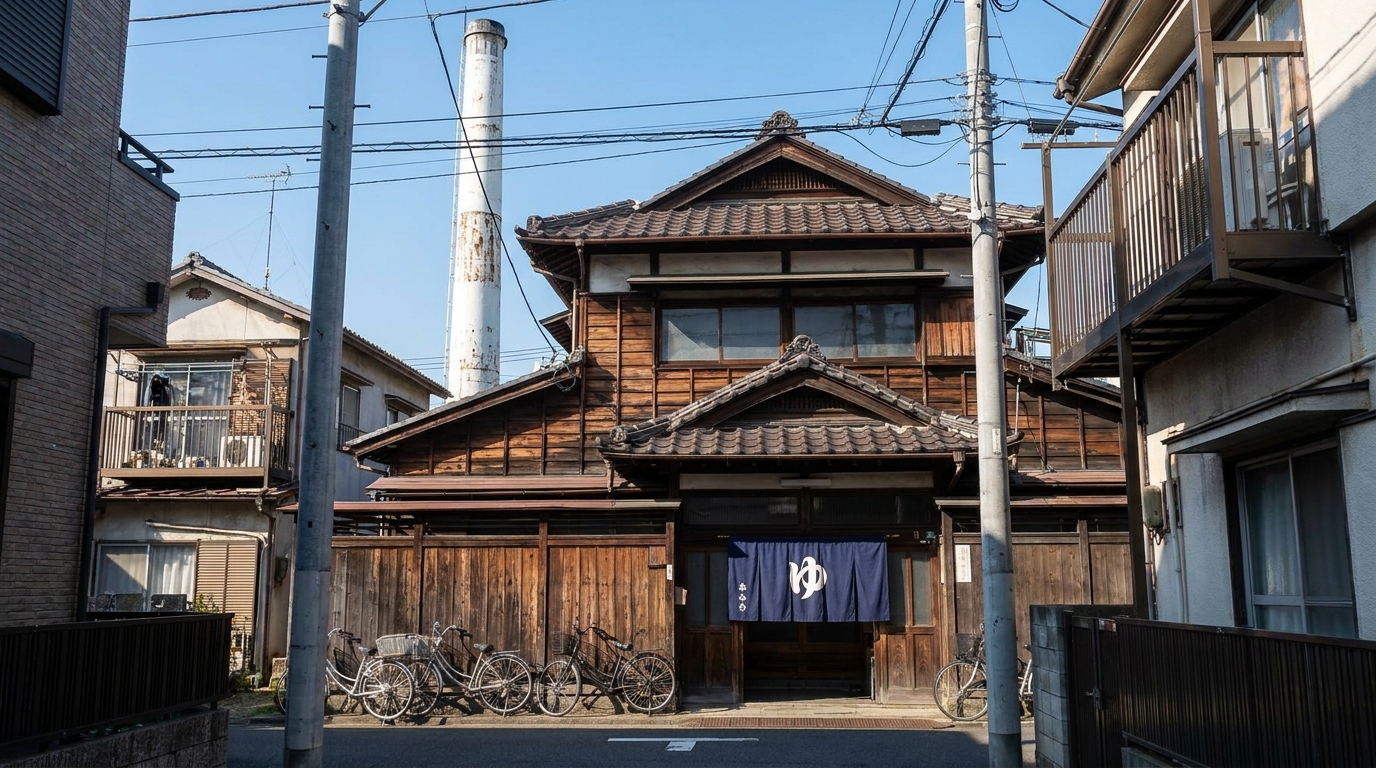
A neighborhood public bathhouse using heated municipal water. Tokyo regulates sento prices at ¥550 for adults as of 2026 (revised from ¥520 to ¥550 on August 1, 2024). Sento are often older buildings — many in working-class neighborhoods — and the operators are generally more pragmatic about tattoos than upscale onsen.
Super Sento / Health Spa
A larger, modern facility that combines pool-sized baths, saunas, restaurants, massage rooms, and sometimes overnight rest areas. Examples include Oedo Onsen Monogatari chains and Tokyo Kenkou Land. These are designed for half-day or full-day visits.
Hotel Day-Use Spa
Many Tokyo hotels with onsen facilities open them to non-staying day visitors, usually at higher prices. Tattoo policies tend to be more relaxed here because hotels see international guests regularly.
Bathing Etiquette for Everyone (8 Rules)
These rules apply whether you have tattoos or not. Following them is the single biggest factor in whether you have a smooth visit or an awkward one.
1. Pay and store your shoes first
Most facilities have a shoe locker just inside the entrance. Take off your shoes, lock them away, and pay at the counter — sometimes via a vending machine that prints a ticket.
2. Strip completely in the changing room
Put everything — clothes, underwear, bags — into the locker. You walk into the bath area carrying only a small towel (provided or rented separately).
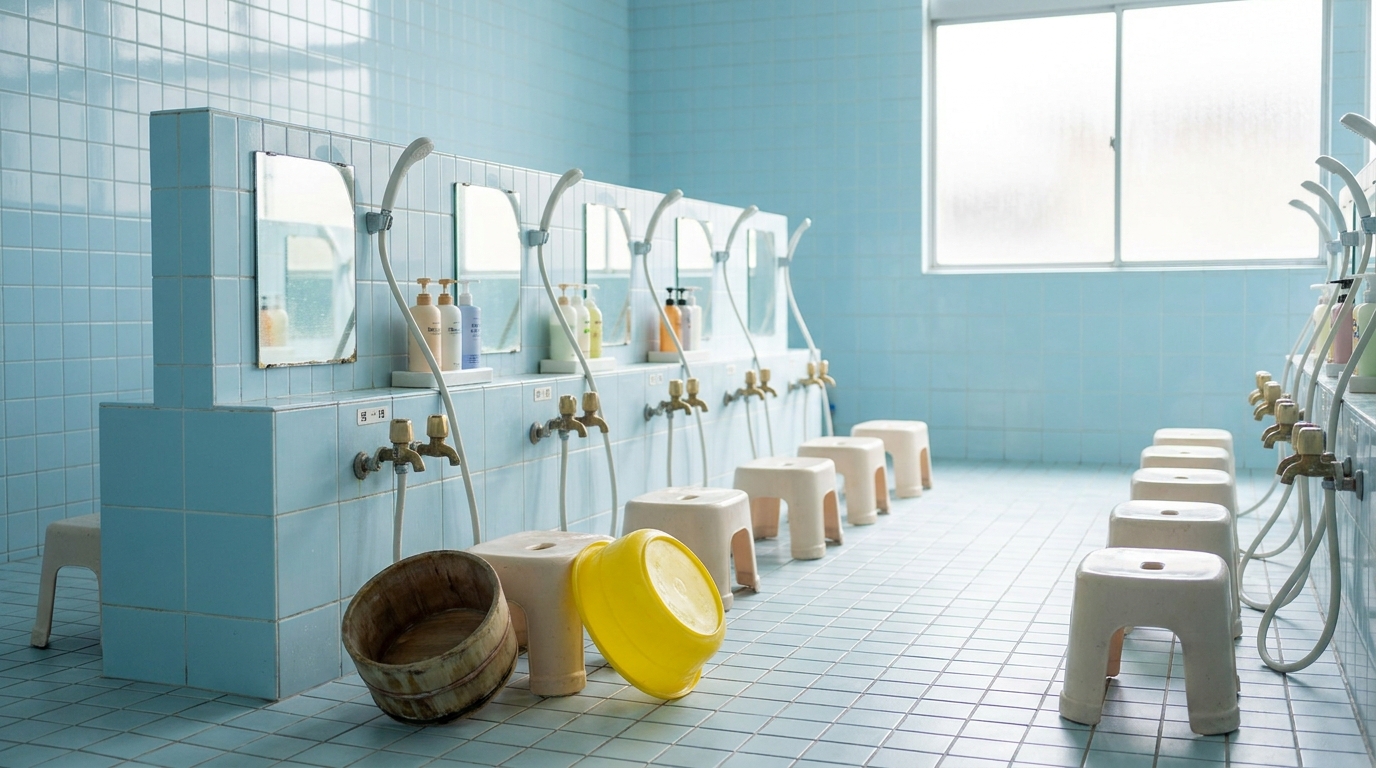
3. Wash thoroughly before entering the bath
This is the rule first-time visitors worry about most, and for good reason. Sit on the small stool at the washing stations, use the handheld shower, and scrub yourself with soap. Rinse off thoroughly. Only then do you enter the bath. Walking from the changing room straight into the water — even just to “rinse off in the bath” — is the most serious faux pas you can commit.
4. Tie up long hair
Long hair must not touch the bath water. Bring a hair tie or use the provided ones.
5. Keep the small towel out of the water
The little towel you carry is for washing and modesty. It must never enter the bath water. The standard move is to fold it and place it on top of your head while you soak.
6. No phones, cameras, or photos
Bath areas are strict no-photo zones. Even pulling out a phone in the changing room can get you a stern word from staff.
7. Keep voices low
Bathhouses are quiet places. Loud conversation, splashing, or horseplay will get you noticed — and not in a good way.
8. Drain your body before re-entering the changing room
Use your towel to wipe off most of the water before stepping back into the changing area. This keeps the floors dry for everyone.
5 Real Options for Travelers with Tattoos
If you have tattoos and still want to experience a Japanese bath, you have five practical options. Most travelers end up combining two or three.
Option 1 — Find a tattoo-friendly facility
The most direct route. Tokyo has at least 18 verified tattoo-friendly onsen and sento. The next section lists specific ones. Look for the phrase “tattoo OK” or “入れ墨可” in their official information, or check directories like the Tattoo-Friendly Onsen directory before going.
Best for: Travelers with visible or larger tattoos who want a normal bathhouse experience.
Option 2 — Cover with tattoo seals
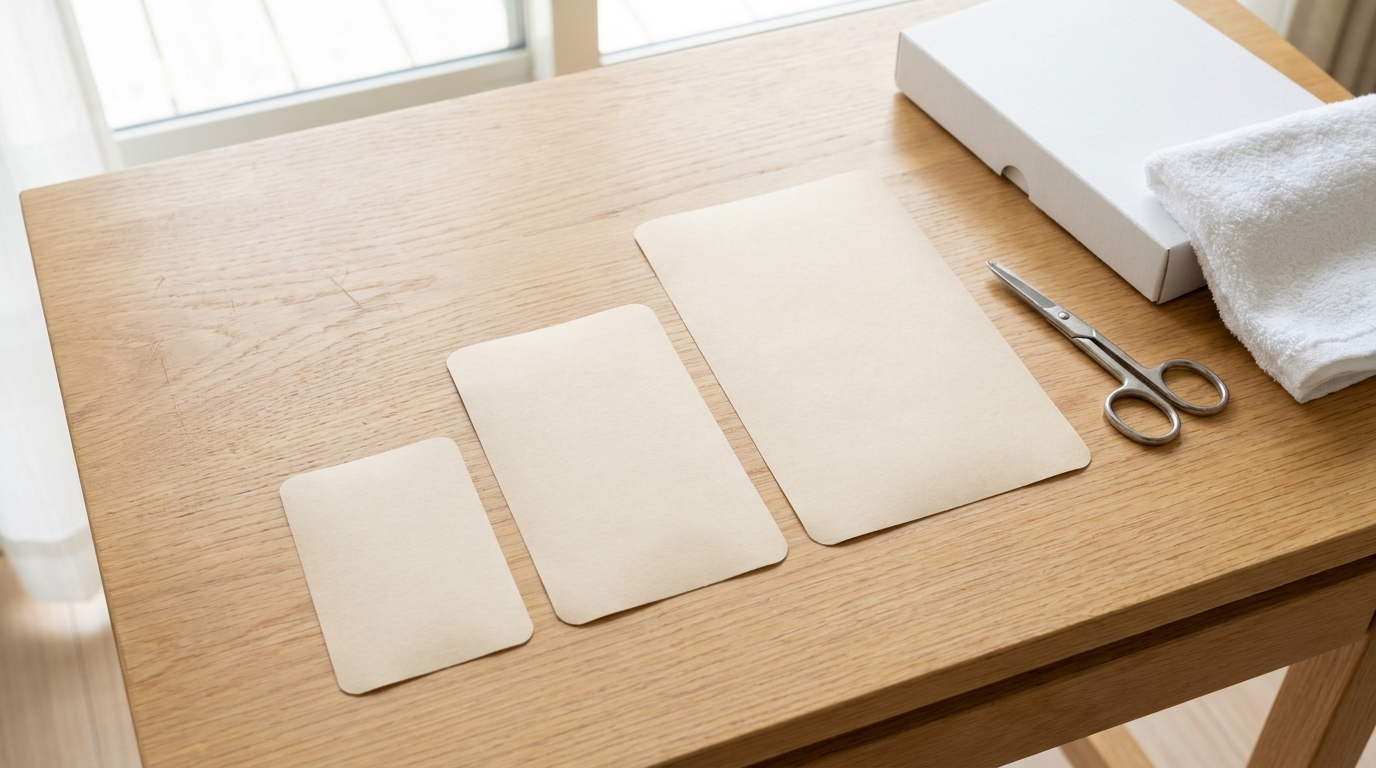
Waterproof skin-tone stickers — Foundation Tape (ファンデーションテープ) is the best-known brand — that hide tattoos for hours of soaking. Foundation Tape is sold via Amazon Japan, Rakuten, and the official online shop, and sometimes stocked at hotel front desks. Don Quijote stores carry alternative brands like Hada-Kakushi Sheet (肌かくしーと) that work similarly. Available in 4 sizes; the largest sheet (around 13 × 19 cm) is roughly tablet-sized.
Best for: Small to medium tattoos. Not realistic for full sleeves or back pieces.
Option 3 — Book a private bath (kashikiri / 貸切)
A kashikiri (“rented out”) bath is reserved for one person or one group at a time, typically for 45–60-minute slots. No other guests, so the tattoo question becomes irrelevant. Available at:
- Some ryokan as a free perk for overnight guests (e.g., Andon Ryokan in Minowa)
- Ryokan rooms with a private in-room hot-spring bath (e.g., Yuen Bettei Daita in Setagaya)
- Larger super-sento complexes that rent out family-sized private rooms, around ¥2,750 per 60 minutes (e.g., Manyo-no-Yu Machida)
Best for: Couples, families, or anyone with large tattoos who wants a real onsen experience without negotiating.
Option 4 — Use a hotel’s day-use spa
Many international-facing hotels run their onsen as day-use facilities and tend to have more relaxed tattoo policies. Prices are higher (¥1,500–¥4,000) but the rules are usually written in English and applied flexibly.
Best for: Travelers staying nearby who want a single, predictable visit.
Option 5 — Use the bath in your own accommodation
If you’re staying at an Airbnb, hotel, or ryokan with a private bathtub or in-room hot spring bath, you can experience Japanese-style bathing without leaving your room. This isn’t the same as a communal onsen, but it’s the simplest fallback if other options don’t work out.
Best for: Travelers who want the bathing ritual without the social challenge.
Tokyo Tattoo-Friendly Facilities
Below are five Tokyo facilities where travelers with tattoos have a realistic path to a Japanese bathing experience. Policies do change — confirm on the facility’s official site or by phone before going.
1. Daikoku-yu (大黒湯) — Sumida
A 10-minute walk from Asakusa, Daikoku-yu is a renovated traditional sento that openly welcomes tattooed guests in all bathing areas. The outdoor rotenburo (open-air bath) is the highlight. Standard Tokyo sento price of ¥550.
- Nearest station: Oshiage / Honjo-Azumabashi
- Why pick it: Closest tattoo-friendly sento to most central Tokyo accommodation
2. Mannenyu (萬年湯) — Shinjuku (Okubo)
A neighborhood sento 5 minutes’ walk from Shin-Okubo Station. Renovated in 2016, with ultrasonic baths, jet baths, a cold plunge, and a radon bath, all for ¥550. Tattoo-friendly.
- Nearest station: Shin-Okubo (5 min walk)
- Why pick it: Easy add-on if you’re already exploring Shin-Okubo
3. Andon Ryokan — Minowa (Asakusa area)
A small-scale ryokan offering free private (kashikiri) jacuzzi-bath sessions to overnight guests — the private setup means no questions about ink. Rooms from approximately ¥10,000–¥14,000/night (rates have risen with inbound demand).
- Nearest station: Minowa (Hibiya Line)
- Why pick it: Most affordable private-bath ryokan option in central Tokyo
4. Yuen Bettei Daita — Setagaya
A higher-end retreat in a quieter Tokyo neighborhood. The shared main bath has tattoo restrictions (small tattoos may be allowed if fully covered with stickers, but visible tattoos are not), so the path here is a room with its own private hot-spring bath (water piped in from Hakone). Rooms with private baths from approximately ¥45,000/night.
- Nearest station: Setagaya-Daita (Odakyu Line)
- Why pick it: Premium private-bath stay without leaving Tokyo
5. Manyo-no-Yu Machida (湯河原温泉 万葉の湯 町田) — Machida
A large super-sento complex in western Tokyo with day-use kashikiri (private rental) baths bookable for ¥2,750 per 60 minutes (plus the standard admission fee). The communal main baths typically restrict tattoos, but the kashikiri rooms are private and accessible to anyone who books.
- Nearest station: Machida (free shuttle from station)
- Why pick it: The most realistic day-use private-bath option in the Tokyo area for travelers who don’t want to spend a night at a ryokan
How Cover Stickers Actually Work
Tattoo cover stickers — sometimes called “tattoo seals” or “Foundation Tape” — are opaque, skin-tone, waterproof stickers designed to hide tattoos for short bathhouse visits. They’re a real solution for small to medium tattoos. They’re not realistic for full sleeves.
What they look like
Thin, slightly stretchy sheets. The edges are designed to fade so they blend with skin tone instead of leaving a visible rectangle. Some products use a lightly textured material that resembles bandage tape.
Where to buy
- Foundation Tape (ファンデーションテープ) — the best-known tattoo cover product in Japan, made by Login My Life — is sold via Amazon Japan, Rakuten, and the official online shop. It is not stocked at Don Quijote stores.
- Don Quijote stores do carry alternative skin-cover sticker products such as Hada-Kakushi Sheet (肌かくしーと) by Cosmotec. Look in the personal-care aisle. These are similar in concept but different brands.
- Some hotel front desks at international-facing properties sell tattoo cover stickers for guests heading to the on-site bath.
Sizes
Foundation Tape comes in 4 sizes (round, small rectangle, standard, and special-large), in 5 to 6 skin tones. The standard “large” size (about 9.5 × 14 cm) is roughly smartphone-sized. The special-large size (about 13 × 19 cm) is closer to a B6 paperback or iPad mini — large enough to cover a forearm panel or a calf piece.
How long they last
Once applied properly — clean dry skin, no air bubbles — Foundation Tape claims durability of up to a week including bathing, though most users find 3 to 5 days realistic. For a single onsen visit, that’s far more than you need. The material handles hot water and sweat without lifting if applied correctly.
Limits
- Full sleeves, large back pieces, and chest pieces are realistically uncoverable. Don’t waste money trying to patchwork.
- Some traditional onsen will refuse entry even with stickers visible — the rule is “no tattoos visible,” and a clearly stickered area can look more conspicuous than a small tattoo.
FAQ
Q1. Can I keep a swimsuit on at a Japanese onsen or sento?
No. The rule is complete nudity in nearly all standard onsen and sento. The handful of exceptions — like some theme-park-style spa complexes with mixed-gender bathing — explicitly market themselves as different from a traditional onsen.
Q2. Is it really okay for everyone to be naked together?
Yes — bathing facilities are split by gender, and the cultural understanding is that the bath area is non-sexual space. Once you’re inside, almost no one looks at anyone else.
Q3. Do I have to be naked in front of staff?
Cleaning staff (usually older female attendants regardless of which side they clean) sometimes pass through the bathing area to refill towels or check the floors. This is normal and not considered awkward by Japanese standards.
Q4. What if my tattoo is small or in a hidden place?
Many facilities apply the rule strictly regardless of size. A coin-sized tattoo on your shoulder can still get you turned away. The safer route is either a tattoo-friendly facility, a cover sticker, or a private bath.
Q5. What about temporary tattoos or henna?
Temporary tattoos and henna usually fall under the same rule, because staff can’t easily tell them apart from real tattoos at a glance. If yours is removable, wash it off before going.
Q6. Can children come into the bath?
Yes. Children of bathing age use the same-gender side as their accompanying adult. The opposite-gender age cutoff is set by each prefecture’s public bathhouse ordinance. In Tokyo, since the January 2022 ordinance change, the cutoff is age 7 — meaning a child can accompany the opposite-gender parent only up to age 6. From age 7, the child must use the same-gender side as their accompanying adult. Other prefectures may set the cutoff at 7 to 10.
Q7. What if I’m menstruating?
Most Japanese women avoid communal baths during menstruation as a matter of personal etiquette. There’s no official ban, but the convention exists out of consideration for shared water. A private bath, hotel in-room bath, or scheduling around your cycle is the typical workaround.
Q8. Why are photos and phones forbidden in the bath area?
Privacy. Everyone is naked, and even casual photo-taking — including selfies in the changing room — is treated as a serious breach. Phones should stay in your locker.
Q9. How long do people usually stay in the bath?
Most bathers cycle between the bath, the wash station, and a cool-down break, spending roughly 30–60 minutes total. Soaking continuously for more than 10–15 minutes at a time isn’t recommended — the water is hot enough to cause dizziness.
Q10. Do I need to know any Japanese to visit?
Not really. Pay at the front desk, follow other guests’ lead in the changing room, and watch what people do. The unspoken rules are visible if you pay attention. Knowing “sumimasen” (excuse me / sorry) covers most awkward moments.
Related Reading
- Japanese Toilets Explained: What to Expect at Hotels, Airbnbs, and Public Restrooms (2026)
- How to Check In to Your Japanese Accommodation: Airbnb, Hotel & Minpaku Guide (2026)
- Japanese Konbini Guide: What You Can Actually Do at a Convenience Store in Japan (2026) — where to buy tattoo cover stickers (some Don Quijote stores)
- Japanese Yen Banknotes and Coins: A Tourist’s Guide (2026) — most sento and small onsen are cash-only
Last updated: 2026-05-01. Tattoo policies, prices, and operating hours change. Confirm directly with the facility before visiting.

Comments