By Yukihiro Hirano / Last updated: 2026-04-26

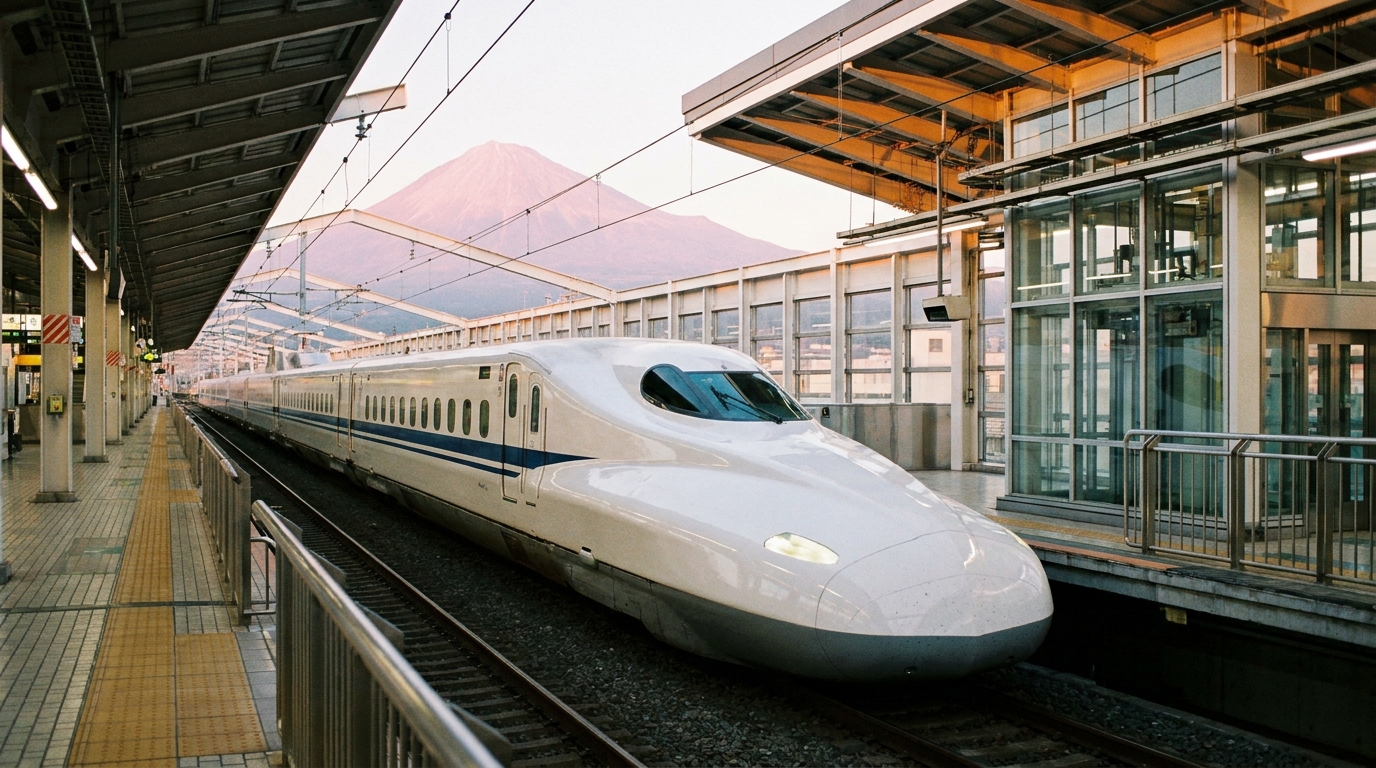
The first time you ride a Shinkansen, two things tend to surprise people. The first is how quiet it is — the train pulls into Tokyo Station, the doors open, nobody shouts, nobody shoves. The second is how punctual it is. Central Japan Railway reports that average delays per Tokaido Shinkansen operation were within 1 minute in recent fiscal years, including time lost to natural disasters and external causes (JR Central annual data book).
That combination — calm, fast, and nearly always on time — is why the Shinkansen is still the default choice between Tokyo, Kyoto, Osaka, Hiroshima, and much of the rest of Japan, even in an age of cheap domestic flights.
This guide walks you through the network as it stands in 2026: which train type to pick, what the JR Pass actually covers, how to book online with SmartEX as a visitor, and the oversized-baggage reservation rule that now applies to every passenger.
Quick Facts
- The Tokaido Shinkansen (Tokyo to Shin-Osaka) carries more than 400,000 passengers on a typical weekday and has operated since 1964 (JR Central)
- Top speed on the Tokaido line is 285 km/h; the newer Tohoku Shinkansen Hayabusa reaches 320 km/h (JR Central; JR East)
- Nozomi, Mizuho, and the premium Hayabusa “Grand Class” trains are not covered by the standard Japan Rail Pass (JR Pass official site)
- Oversized-baggage space (items with total dimensions over 160 cm) requires a free advance reservation on the Tokaido, Sanyo and Kyushu Shinkansen (JR Central; JR West)
- SmartEX is the official English-language online booking platform for Tokaido, Sanyo and Kyushu Shinkansen, available to overseas visitors with a foreign credit card (smart-ex.jp)
- What Is the Shinkansen?
- The Main Shinkansen Lines
- Tokaido and Sanyo Shinkansen (Tokyo to Hakata)
- Kyushu Shinkansen (Hakata to Kagoshima-Chuo)
- Nishi-Kyushu Shinkansen (Takeo-Onsen to Nagasaki)
- Tohoku Shinkansen (Tokyo to Shin-Aomori)
- Hokkaido Shinkansen (Shin-Aomori to Shin-Hakodate-Hokuto)
- Hokuriku Shinkansen (Tokyo to Tsuruga, via Nagano and Kanazawa)
- Joetsu, Yamagata, Akita Shinkansen
- Nozomi vs Hikari vs Kodama: Which Should You Pick?
- The JR Pass Rule You Need to Know
- How to Book: SmartEX and the Alternatives
- Reserved, Non-Reserved, and Green Car: What Should You Book?
- Luggage Rules: The Oversized-Baggage Reservation
- How Much Does It Cost?
- On Board: What to Expect
- Tips for Travelers Staying in an Airbnb or Vacation Rental
- Common Mistakes to Avoid
- FAQ
- What is the difference between Nozomi, Hikari and Kodama?
- Is the JR Pass worth buying in 2026?
- Can I ride the Nozomi with a standard JR Pass?
- How do I book a Shinkansen seat online as a foreign visitor?
- Do I need to reserve a seat in advance?
- Can I bring a large suitcase on the Shinkansen?
- How fast does the Shinkansen go?
- Is there Wi-Fi on the Shinkansen?
- Can I eat on the Shinkansen?
- Related Reading
- Sources
What Is the Shinkansen?
“Shinkansen” (新幹線) literally means “new trunk line.” It refers to Japan’s network of dedicated high-speed rail lines, separate from the regular commuter rail network and operated by the Japan Railways (JR) group.
The system opened in October 1964 with the Tokaido line between Tokyo and Shin-Osaka, timed for the Tokyo Olympics. It has since grown into nine operating lines that reach from the northern tip of Honshu down to southern Kyushu, with a short extension into Hokkaido (JR Central; Ministry of Land, Infrastructure, Transport and Tourism).
For visitors, three things about the Shinkansen matter more than the engineering:
- It is reliable. Trains leave and arrive on the minute, not the approximate minute.
- It is dense. On the Tokaido line between Tokyo and Shin-Osaka, trains run every few minutes for most of the day.
- It is not one single product. “Nozomi,” “Hikari,” and “Kodama” are different service levels on the same line, with meaningful differences in speed, price, and JR Pass coverage.
The Main Shinkansen Lines

The network is easiest to understand as a spine running southwest from Tokyo, with branches heading north and southwest.
Tokaido and Sanyo Shinkansen (Tokyo to Hakata)
The busiest corridor in the country. Operated by JR Central (Tokaido: Tokyo to Shin-Osaka) and JR West (Sanyo: Shin-Osaka to Hakata), this is the line most visitors will ride on a first trip: Tokyo – Shin-Yokohama – Nagoya – Kyoto – Shin-Osaka – Hiroshima – Hakata.
Three main service types operate here:
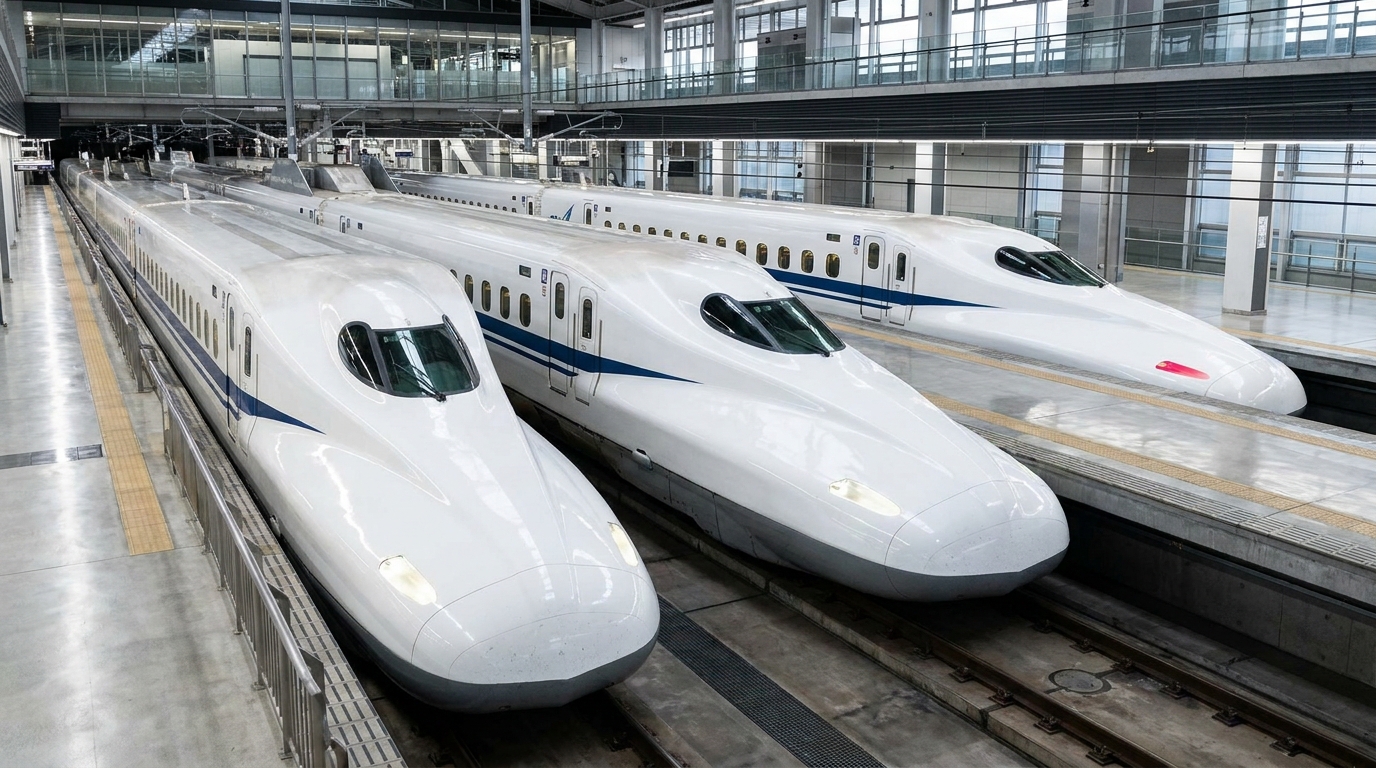
- Nozomi — fastest, fewest stops, highest fare (surcharge). Tokyo to Shin-Osaka in about 2 hours 21 minutes at best (JR Central)
- Hikari — moderately fast, more stops, same base fare as Nozomi but without the Nozomi surcharge
- Kodama — stops at every station; useful for small intermediate cities, slowest overall
Kyushu Shinkansen (Hakata to Kagoshima-Chuo)
Continues southwest from Hakata. Operated by JR Kyushu. Train types on this line include Mizuho, Sakura, and Tsubame.
Nishi-Kyushu Shinkansen (Takeo-Onsen to Nagasaki)
A shorter line opened in 2022, connecting to the conventional rail network at Takeo-Onsen. Train type: Kamome.
Tohoku Shinkansen (Tokyo to Shin-Aomori)
The main northbound line from Tokyo. Operated by JR East. The flagship Hayabusa service reaches 320 km/h, the highest top speed in the Japanese network (JR East).
Hokkaido Shinkansen (Shin-Aomori to Shin-Hakodate-Hokuto)
Extends the Tohoku line into Hokkaido via the undersea Seikan Tunnel. The originally planned extension to Sapporo has been delayed: in December 2024, the Ministry of Land, Infrastructure, Transport and Tourism (MLIT) and JR Hokkaido officially pushed the target opening from 2030 to fiscal year 2038 (around 2038-2039), citing serious tunneling difficulties at Mt. Yotei and labor shortages (MLIT; JR Hokkaido).
Hokuriku Shinkansen (Tokyo to Tsuruga, via Nagano and Kanazawa)
Operated by JR East and JR West. The line now runs all the way from Tokyo to Tsuruga as of March 16, 2024, when the Kanazawa-to-Tsuruga extension opened (JR West).
This is an important update for travelers heading to Kanazawa or Fukui from the Kansai region: the Limited Express Thunderbird from Osaka and Kyoto, and the Shirasagi from Nagoya, no longer run directly to Kanazawa. Instead, you take those limited expresses to Tsuruga, then transfer to the Hokuriku Shinkansen for the rest of the journey.
Joetsu, Yamagata, Akita Shinkansen
Branch lines serving the Japan Sea coast, central mountain cities, and northern Tohoku. Relevant for specific destinations such as Niigata, Yamagata, and Akita.
For a standard first-time itinerary — Tokyo, Hakone, Kyoto, Osaka, Hiroshima — you will almost exclusively be on the Tokaido and Sanyo Shinkansen.
Nozomi vs Hikari vs Kodama: Which Should You Pick?

On the Tokaido line, the same stretch of track is used by three different services. Picking the right one is the single biggest source of confusion for first-time riders.
Nozomi (のぞみ)
The flagship. Fewest stops between Tokyo and Shin-Osaka: typically Shinagawa, Shin-Yokohama, Nagoya, Kyoto, Shin-Osaka. Tokyo to Shin-Osaka in about 2 hours 21 minutes in the fastest scheduled service (JR Central).
Important: Nozomi trains are not covered by the standard Japan Rail Pass. JR Pass holders who want to ride Nozomi must either:
- Switch to Hikari or Kodama on the same route (free with the pass), or
- Pay the optional “Nozomi/Mizuho Ticket” supplement introduced in October 2023. The current per-ride supplement is 4,960 yen between Tokyo and Kyoto, or Tokyo and Shin-Osaka, and 6,500 yen between Tokyo and Hiroshima (JR Pass official site)
Hikari (ひかり)
Stops at more stations than Nozomi — typical stops include Shizuoka, Hamamatsu, Toyohashi, and Maibara in addition to the major cities. Tokyo to Shin-Osaka in roughly 2 hours 55 minutes to 3 hours depending on the specific service (JR Central).
For most JR Pass holders, Hikari is the sweet spot: the full pass covers it, departures run every 15 to 30 minutes on the Tokaido during daytime, and the time penalty versus Nozomi is real but modest — typically 30 to 40 minutes on the Tokyo to Osaka run.
Kodama (こだま)
Stops at every station on the line. Useful if you are going to a smaller intermediate city such as Atami, Mishima, or Himeji that Nozomi and many Hikari services skip. Tokyo to Shin-Osaka in roughly 4 hours, so not a realistic choice for the full run unless you actively want the slower pace (JR Central).
A Simple Rule of Thumb
- You are paying cash or using SmartEX and want to save time: take Nozomi
- You have a standard JR Pass and want to save money: take Hikari where possible, Kodama for smaller stations
- You need to reach a small station Nozomi skips: take Kodama or a Hikari that stops there
- You want the fastest available option and have a JR Pass: add the Nozomi/Mizuho supplement
The JR Pass Rule You Need to Know

The Japan Rail Pass is a flat-rate pass for overseas visitors covering most JR trains for 7, 14, or 21 consecutive days. It is often a good deal for long-distance travel, but the rules around Shinkansen coverage have changed in recent years.
Key points for 2026:
- The standard JR Pass covers Hikari, Sakura, Kodama, Tsubame, Hayate, Yamabiko, Nasuno, Toki, Tanigawa, Asama, Kagayaki, Hakutaka, Tsurugi, and most other regular Shinkansen services (JR Pass official site)
- The standard JR Pass does not cover Nozomi or Mizuho unless you buy the optional Nozomi/Mizuho supplement per ride. As of 2026, the supplement is 4,960 yen between Tokyo and Kyoto or Shin-Osaka, and 6,500 yen between Tokyo and Hiroshima (JR Pass official site, October 2023 change)
- Grand Class seating on Hayabusa and Komachi is not included
- The pass was significantly repriced upward in October 2023 (JR Pass official site)
Because of the 2023 price change, the break-even calculation has tightened. For a single Tokyo-Kyoto round trip, a cash ticket is now often cheaper than a 7-day JR Pass; the pass typically pays off when you make at least two longer round trips (for example, Tokyo – Kyoto and Tokyo – Hiroshima) or combine it with multiple shorter intercity hops.
If you do buy a JR Pass, we go deeper on eligibility, exchange procedure, and whether it is worth it in our dedicated JR Pass guide.
How to Book: SmartEX and the Alternatives

For visitors, there are four realistic ways to book a Shinkansen seat.
1. SmartEX (online, recommended for most visitors)
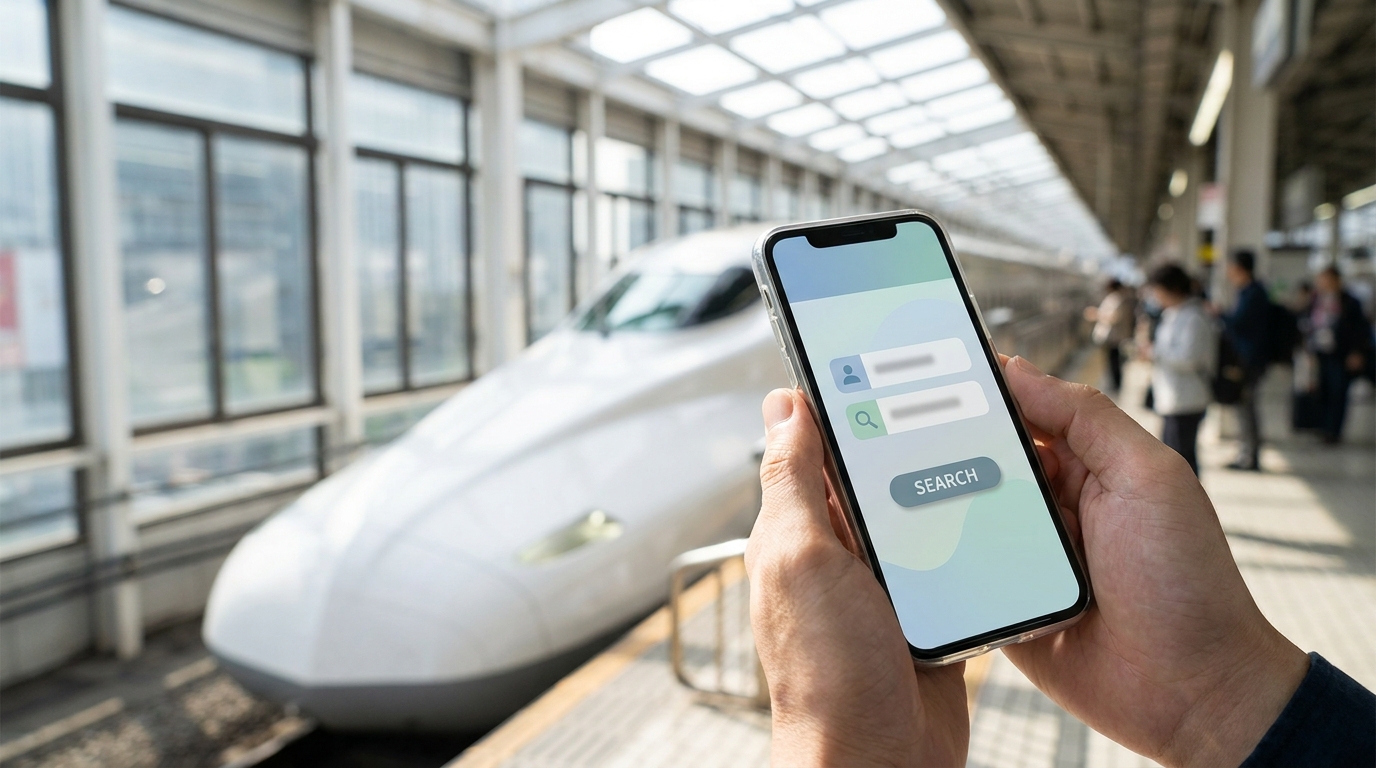
SmartEX is the official online booking platform for the Tokaido, Sanyo, and Kyushu Shinkansen, run by JR Central, JR West, and JR Kyushu. It is available in English and takes overseas-issued credit cards (smart-ex.jp).
Basic flow:
- Create a free account at smart-ex.jp and register a credit card
- Search for your train by date, departure and arrival station
- Select a Nozomi, Hikari, Kodama, Mizuho, Sakura, or Tsubame service
- Choose reserved (shitei-seki), non-reserved (jiyu-seki), or Green Car
- Pay and receive a confirmation
Boarding is either with a physical ticket printed at a station kiosk or, more conveniently, by tapping an IC card (Suica, PASMO, ICOCA and others) that you have linked to your SmartEX account at the ticket gate.
A note on foreign credit cards: SmartEX uses strict 3D Secure 2.0 authentication, and a meaningful number of overseas-issued Visa and Mastercards are rejected at the payment step. American Express and JCB tend to have a higher success rate. If your card is rejected, fall back to buying tickets at a station ticket machine or the staffed Midori no Madoguchi window.
SmartEX does not cover the Tohoku, Hokkaido, Joetsu, Hokuriku, Yamagata, or Akita Shinkansen. For those lines, use the JR-EAST Train Reservation site (the official English-language interface, powered by eki-net) instead.
2. JR Ticket Office (Midori no Madoguchi)
Every major JR station has a staffed ticket office (“Midori no Madoguchi,” green window). English signage is standard at airports and major hubs, and staff can usually handle simple routing requests in basic English. This is the fallback if you are exchanging a JR Pass voucher, if you want to ask about connections, or if SmartEX is giving you trouble with a foreign card.
Ticket machines at major stations also support English and can sell Shinkansen tickets for any JR line in Japan, paid by cash or credit card.
3. JR Pass Reservations
If you hold a JR Pass, Shinkansen seat reservations are free. You can make them:
- Online through the official JR Pass reservation site (for holders who pre-bought)
- In person at any Midori no Madoguchi
- At a JR ticket machine that supports pass holders at major stations
Reservations are recommended during long weekends, cherry blossom season, Golden Week, Obon (mid-August), and the New Year period, when popular trains sell out.
4. Travel Agencies and Third-Party Sites
Several overseas travel agencies sell pre-booked Shinkansen vouchers. This can be useful for planning, but there is almost always a markup over SmartEX or the station ticket office. For most visitors with a working credit card, SmartEX is the cheapest and most flexible path.
Reserved, Non-Reserved, and Green Car: What Should You Book?

Most Shinkansen trains offer three seating classes.
Non-Reserved Cars (Jiyu-seki / 自由席)
Open seating in designated cars, usually at one end of the train. Cheapest option. No advance reservation required; turn up and board any non-reserved car. During rush hours and peak holiday periods, non-reserved cars on the Tokaido can fill to standing capacity, so a reservation is safer.
Note on the Nozomi: during Japan’s three major holiday periods — Golden Week (late April to early May), Obon (mid-August), and the New Year period — Nozomi trains operate with all cars reserved and have no non-reserved cars. Outside these peak periods, Nozomi has non-reserved cars; from March 2025, the count was reduced from three cars to two (Cars 1 and 2) (JR Central, JR West).
The Mizuho service on the Sanyo and Kyushu Shinkansen continues to offer non-reserved cars year-round, including during peak periods, which can make it a useful option for JR Pass holders heading to Kyushu.
Reserved Cars (Shitei-seki / 指定席)
Specific seat assigned at booking. Small surcharge over non-reserved. Default choice for most visitors: you know you have a seat, and you can put your bag in a specific spot.
Green Car (Green-sha / グリーン車)
First-class equivalent. Wider seats (typically 2+2 abreast vs 2+3 in standard), more legroom, quieter cabins. Meaningful premium over reserved seating. Worth it for long runs (Tokyo-Hiroshima, for example) if comfort matters more than budget; less compelling for a short Tokyo-Kyoto hop.
Hayabusa services also offer a higher “Grand Class” above Green Car, with food and drink service, on the Tohoku and Hokkaido lines. Not covered by any JR Pass (JR East).
Luggage Rules: The Oversized-Baggage Reservation

This is the rule that catches travelers out most often, so it is worth reading carefully.
Since May 2020 on the Tokaido, Sanyo, and Kyushu Shinkansen lines, any single item with total dimensions (length + width + height) of more than 160 cm and up to 250 cm requires a free advance seat reservation with an oversized-baggage space assigned (JR Central; JR West).
Key points:
- Bags 160 cm or smaller in total dimensions: no special reservation needed, standard overhead racks are fine
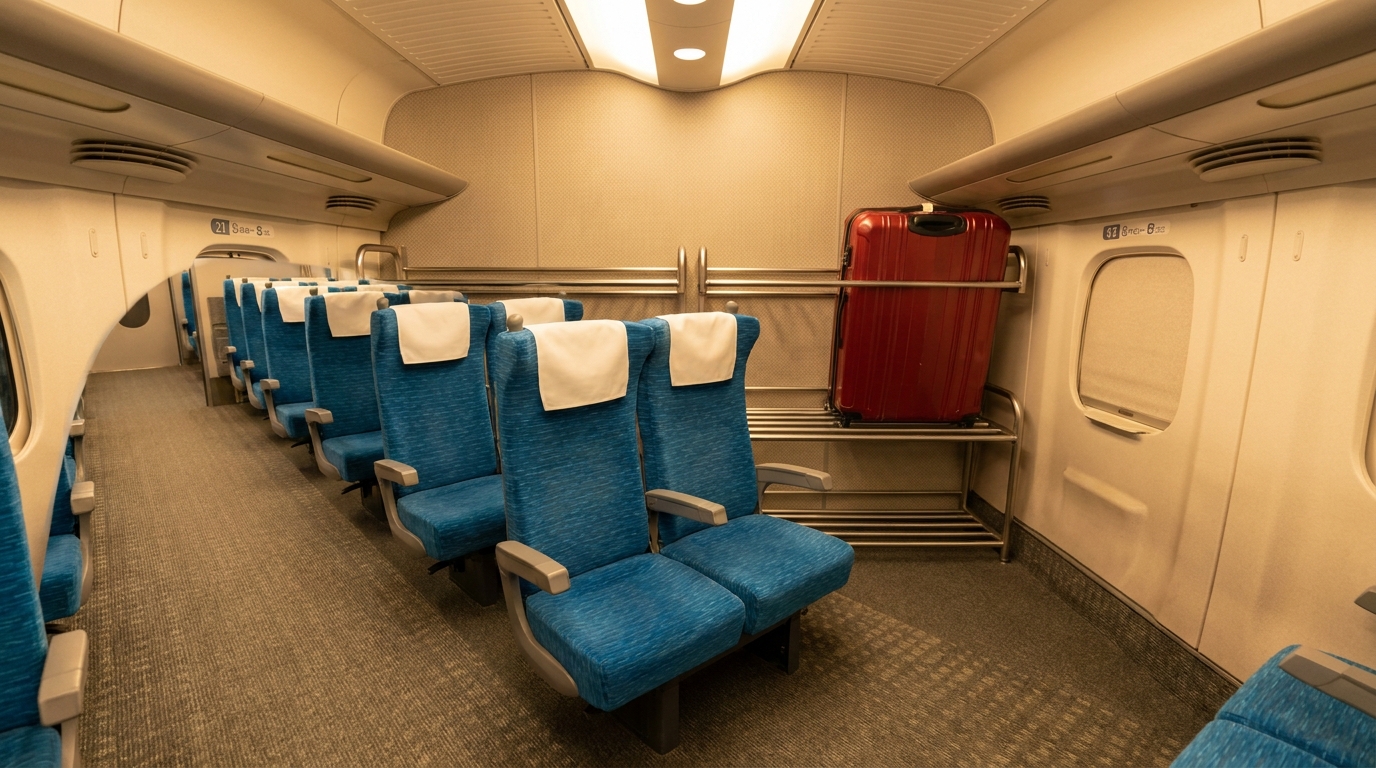
- Bags larger than 160 cm and up to 250 cm: must reserve a seat with an oversized-baggage space (either at the back of a car, with the space behind the last row, or the dedicated oversized area with advance lock)
- Bags larger than 250 cm total dimensions: not allowed on board
- If you board with an oversized bag without a reservation, a fee of 1,000 yen is charged (JR Central)
For typical visitors, a standard 28 to 30 inch suitcase is usually within the 160 cm threshold, so the rule does not bite. It applies mainly to oversized suitcases, very large boxes, some sporting equipment (surfboards, skis), and instrument cases.
On SmartEX, when you select a seat, an option for “Seats with oversized baggage area” appears; choose this if your bag falls into the 160 to 250 cm range. There is no extra fee if you reserve in advance.
Other practical luggage notes:
- Overhead racks fit most carry-on suitcases and small-to-medium checked bags
- The space behind the last row of each car is a common informal luggage zone for larger suitcases (these are the seats now designated as oversized-baggage seats on the Tokaido/Sanyo/Kyushu lines)
- Ski and snowboard cases have specific seasonal rules on some lines; check with the operating JR company if traveling with them
How Much Does It Cost?
Approximate standard-class reserved-seat fares in early 2026, one way, paid in cash through SmartEX (prices can vary by season and are rounded):
- Tokyo to Kyoto, Nozomi reserved: around 14,170 yen
- Tokyo to Shin-Osaka, Nozomi reserved: around 14,720 yen
- Tokyo to Hiroshima, Nozomi reserved: around 19,760 yen
- Tokyo to Hakata, Nozomi reserved: around 23,390 yen
- Tokyo to Sendai, Hayabusa reserved: around 11,410 yen
Hikari and Kodama fares on the Tokaido are slightly lower than Nozomi for the equivalent class (no Nozomi surcharge). Green Car adds roughly 4,000 to 6,000 yen per segment on the Tokaido. Non-reserved is roughly 500 to 1,000 yen below reserved.
Compare these to a 7-day JR Pass at the post-October 2023 price of 50,000 yen (ordinary) and it becomes clear why many short-trip visitors now do the math and often choose point-to-point tickets instead.
For up-to-date IC card tap-to-board setup so you can sail through the regular commuter network when you are not on the Shinkansen, see our Suica, PASMO and ICOCA guide.
On Board: What to Expect
A few things that make the experience smoother.
Boarding

Platform markers on the ground tell you where each car will stop. Queue at the marker for your car number. The train is usually in the station for less than 2 minutes, so be ready.
Seats

Rows are typically 3+2 in standard class and 2+2 in Green Car. Seats recline and have a fold-down tray. Power outlets vary by rolling stock: on the older N700A, outlets are typically only at window seats and the front and back rows of each car; on the newer N700S, every seat has its own outlet, including aisle and middle seats. If you need to charge a device on a long ride, an N700S service is the safer pick.
Turning Seats
On many Shinkansen, the seats can be rotated to face the direction of travel or to form a group of four by turning one row. There is a foot pedal or handle at the base; other passengers typically do this at the terminal station before departure.
Wi-Fi
Free Wi-Fi is available on Tokaido, Sanyo, Kyushu, Tohoku, and several other Shinkansen lines. Connection quality varies, and some services require an email registration on first use (JR Central; JR East).
Food and Drink

You can buy an ekiben (station bento box) at major stations before boarding and eat it at your seat. This is culturally fine and in fact part of the experience. Onboard carts are no longer available in the standard cars — on the Tokaido, the in-seat trolley service ended on October 31, 2023, and from November 1, 2023 it was replaced by a mobile QR-code ordering system that is exclusive to Green Car passengers (JR Central). For ordinary cars, plan to buy food and drinks at the station before boarding; a small in-station konbini or kiosk is the simplest way to stock up.
Phone Calls
Voice calls are not allowed at the seat. If you need to take a call, step into the vestibule area between cars where phone calls are permitted.
Announcements
Japanese first, then English. Key announcements (next station, arrival, doors opening on which side) are routinely bilingual on the Tokaido, Sanyo, Tohoku, and Hokuriku lines.
Tips for Travelers Staying in an Airbnb or Vacation Rental
Most guests will use the Shinkansen for exactly one reason: to reach the next city on the itinerary. A few practical notes for that case:
- Count suitcases before booking. If anyone in the group has a very large (over 160 cm total) suitcase, reserve an oversized-baggage seat on SmartEX when you book. Doing it at the station later is harder.
- Leave a buffer for station transfers. Tokyo Station is large. From a typical Chuo-line or Yamanote-line arrival to the Shinkansen gates, allow 15 to 20 minutes if you have luggage and are not familiar with the layout.
- Coin lockers exist but are not guaranteed. Major Shinkansen stations have coin lockers, but they fill up on weekends and holidays. Paid luggage offices (“ecbo cloak” and similar services) are a backup option.
- Check-in and check-out times. If you are leaving the rental at 10 a.m. and your Shinkansen is at 2 p.m., it is often easier to go straight to the departure station and use a coin locker than to drag your suitcases around sightseeing.
- Print or save your booking. SmartEX emails a PDF and shows the reservation in the app. Save an offline copy in case of patchy station Wi-Fi.
Common Mistakes to Avoid
- Confusing Shinkansen with regular JR trains. The Shinkansen gates are separate, usually signposted with a blue “Shinkansen” logo; at large stations you pass through both a regular ticket gate and the Shinkansen gate.
- Sitting in the wrong class. Reserved cars are labeled on the platform and on the car exterior; a conductor will ask you to move if you are in one with a non-reserved ticket.
- Missing the door. Shinkansen doors close on schedule with almost no dwell-time overrun. If you are still queuing for a snack when the bell rings, you will miss the train.
- Assuming Nozomi is free with your JR Pass. It is not, unless you have bought the supplement. Check the service type before boarding.
- Forgetting the oversized-baggage rule. If you are traveling with an extra-large suitcase, reserve the right seat in advance to avoid a 1,000 yen onboard fee.
FAQ
What is the difference between Nozomi, Hikari and Kodama?
They are three service levels on the same Tokaido/Sanyo Shinkansen tracks. Nozomi is fastest and has the fewest stops; Hikari is moderately fast with more stops; Kodama stops at every station. Nozomi is not covered by the standard Japan Rail Pass. Hikari and Kodama are covered.
Is the JR Pass worth buying in 2026?
It depends on your itinerary. After the October 2023 price increase, the 7-day ordinary pass costs 50,000 yen. For a single Tokyo-Kyoto round trip, cash tickets are usually cheaper. The pass typically pays off when you cover longer distances (for example, Tokyo-Kyoto-Hiroshima and back) or combine several intercity hops within a week. See our dedicated JR Pass guide for a break-even walkthrough.
Can I ride the Nozomi with a standard JR Pass?
Not without the optional Nozomi/Mizuho supplement introduced in October 2023, which is charged per ride. As of 2026 the supplement is 4,960 yen for Tokyo to Kyoto or Shin-Osaka, and 6,500 yen for Tokyo to Hiroshima. Without paying the supplement, you must switch to a Hikari or Kodama on the Tokaido and Sanyo lines.
How do I book a Shinkansen seat online as a foreign visitor?
Use SmartEX (smart-ex.jp) for the Tokaido, Sanyo and Kyushu Shinkansen. The site is available in English and accepts overseas-issued credit cards. You can collect a paper ticket at the station or link an IC card such as Suica or ICOCA to board with a tap. For the Tohoku, Hokkaido, Joetsu, Hokuriku, Yamagata and Akita lines, use the JR East eki-net site instead.
Do I need to reserve a seat in advance?
Outside of peak holiday periods (Golden Week in late April to early May, Obon in mid-August, and the New Year period), most Shinkansen have non-reserved cars you can board on a walk-up basis. During those peak periods, Nozomi trains operate as all-reserved with no non-reserved cars, so a reservation is effectively required. Mizuho services on the Sanyo and Kyushu Shinkansen continue to offer non-reserved cars year-round.
Can I bring a large suitcase on the Shinkansen?
Yes, within limits. Items with total dimensions (length + width + height) of 160 cm or less can be brought on board as standard luggage. Items between 160 cm and 250 cm require a free advance seat reservation with an oversized-baggage space on the Tokaido, Sanyo and Kyushu Shinkansen. Items over 250 cm are not allowed. Boarding with an oversized item without a reservation incurs a 1,000 yen fee.
How fast does the Shinkansen go?
Top operational speeds in 2026: 285 km/h on the Tokaido Shinkansen; 300 km/h on the Sanyo Shinkansen; 320 km/h on the Tohoku Shinkansen Hayabusa service; 260 km/h on most other lines. Average end-to-end speeds are lower because of acceleration, deceleration, and stops.
Is there Wi-Fi on the Shinkansen?
Yes, free Wi-Fi is available on Tokaido, Sanyo, Kyushu, Tohoku and several other lines. Quality varies in tunnels and mountainous sections. First-time users are often asked to register an email address.
Can I eat on the Shinkansen?
Yes. Buying an ekiben (station bento) and eating it at your seat is a normal part of the experience. Onboard trolley service was discontinued on the Tokaido Shinkansen in October 2023, so it is best to stock up at the station before boarding.
Related Reading
- JR Pass Guide 2026: Eligibility, Routes and Whether It Is Worth It (coming soon, HQ-066)
- Suica, PASMO and ICOCA: Japan’s IC Transit Cards Explained (coming soon, HQ-063)
- Japanese Konbini Guide: What You Can Actually Do at a Convenience Store in Japan (2026)
- Vending Machines in Japan: A Complete Guide for Tourists (2026)
Sources
- JR Central (Central Japan Railway Company), Shinkansen service information and annual data book, jr-central.co.jp
- JR East (East Japan Railway Company), Shinkansen network and Hayabusa specifications, jreast.co.jp
- JR West (West Japan Railway Company), Sanyo Shinkansen and oversized baggage rules, westjr.co.jp
- JR Kyushu, Kyushu Shinkansen service information, jrkyushu.co.jp
- Japan Rail Pass official site, japanrailpass.net — 2023 pricing and Nozomi/Mizuho supplement
- SmartEX official site, smart-ex.jp — online booking platform details
- Ministry of Land, Infrastructure, Transport and Tourism (MLIT), Shinkansen network overview
- JR Central press release, October 2023, on discontinuation of Tokaido Shinkansen onboard trolley service
- JR Central and JR West announcements, May 2020, on oversized-baggage reservation rule


Comments