- Quick Answer
- Soba vs Udon: What Tourists Need to Know
- Cold Soba, Hot Soba, and When to Order Each
- Common Soba Menu Words
- How to Eat Zaru Soba Without Looking Lost
- Where to Try Soba in Tokyo: 4 Reliable Lanes
- Allergy, Gluten, Vegetarian, and Cash Notes
- What to Order for Your First Bowl
- FAQ
- Related Reading
- About the Author
Quick Answer
Choose mori soba for plain cold noodles with dipping sauce, zaru soba for a similar cold order that often includes shredded nori, and kake soba for the simplest hot bowl. At a specialist shop, mori or zaru lets you taste the noodle most clearly. At a station counter or on a cold day, kake is easier and faster. Soba often contains wheat as well as buckwheat, and the sauce commonly contains fish-based dashi, so do not assume it is gluten-free or vegetarian.
| Menu word | Temperature | Choose it when… |
|---|---|---|
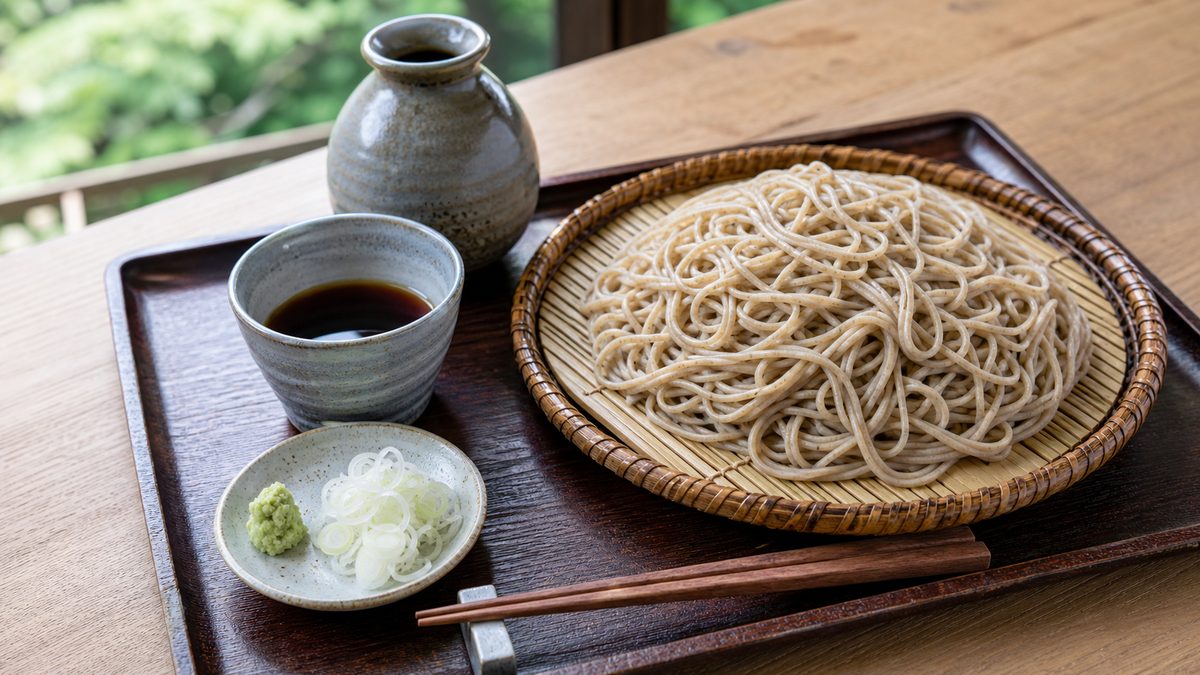
| Mori | Cold | You want the plainest noodle-and-dipping-sauce comparison. |
| Zaru | Cold | You want cold soba, often with shredded nori. |
| Kake | Hot | You want a simple warm bowl with no dipping steps. |
Soba vs Udon: What Tourists Need to Know
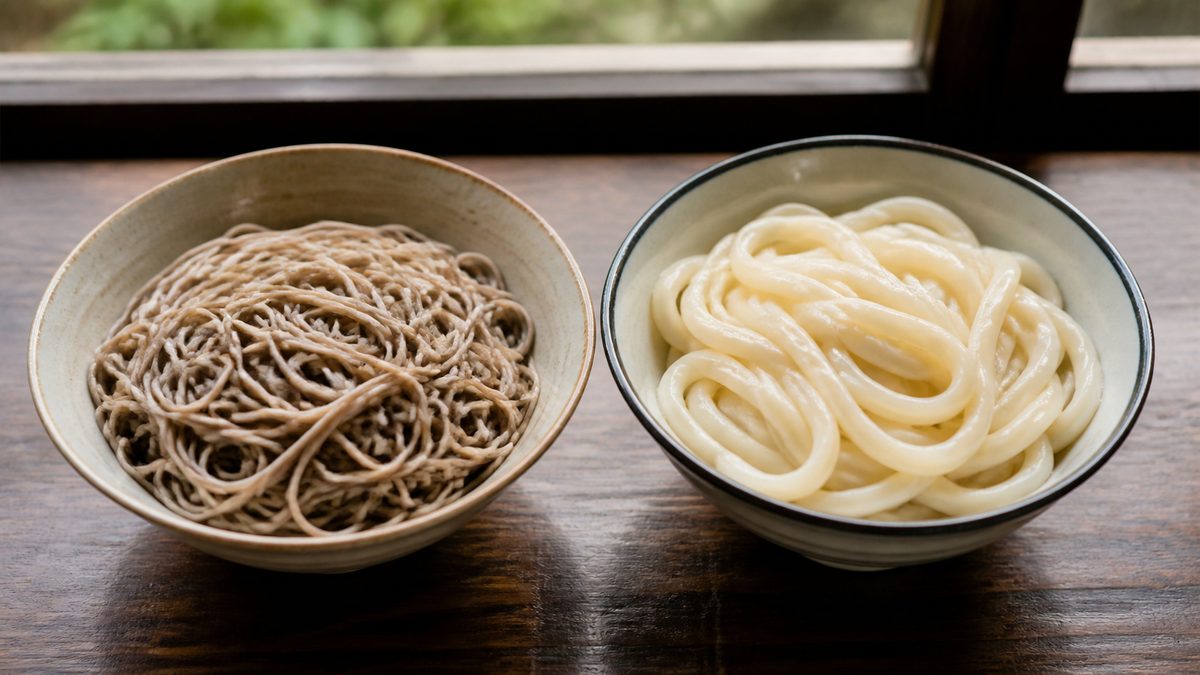
Soba and udon can appear on the same menu, but they are not the same experience.
| Noodle | Main impression | Typical ingredient base | Best first order |
|---|---|---|---|
| Soba | Thin, earthy, slightly nutty | Buckwheat, often mixed with wheat | Zaru, mori, or kake |
| Udon | Thick, soft or chewy, mild | Wheat flour | Kake, bukkake, zaru, or curry udon |
Soba is the better choice when you want a lighter meal, a cold noodle dish in summer, or a classic Tokyo-style noodle experience. Udon is better when you want a thicker, softer noodle or a more filling bowl.
Do not assume soba is gluten-free. Buckwheat itself is not wheat, but many restaurant soba noodles use a wheat-and-buckwheat blend, and the broth or toppings can add other allergens. If you need a strict allergy-safe meal, ask before ordering and be ready to choose another restaurant.
Cold Soba, Hot Soba, and When to Order Each
Soba menus often separate cold and hot dishes.
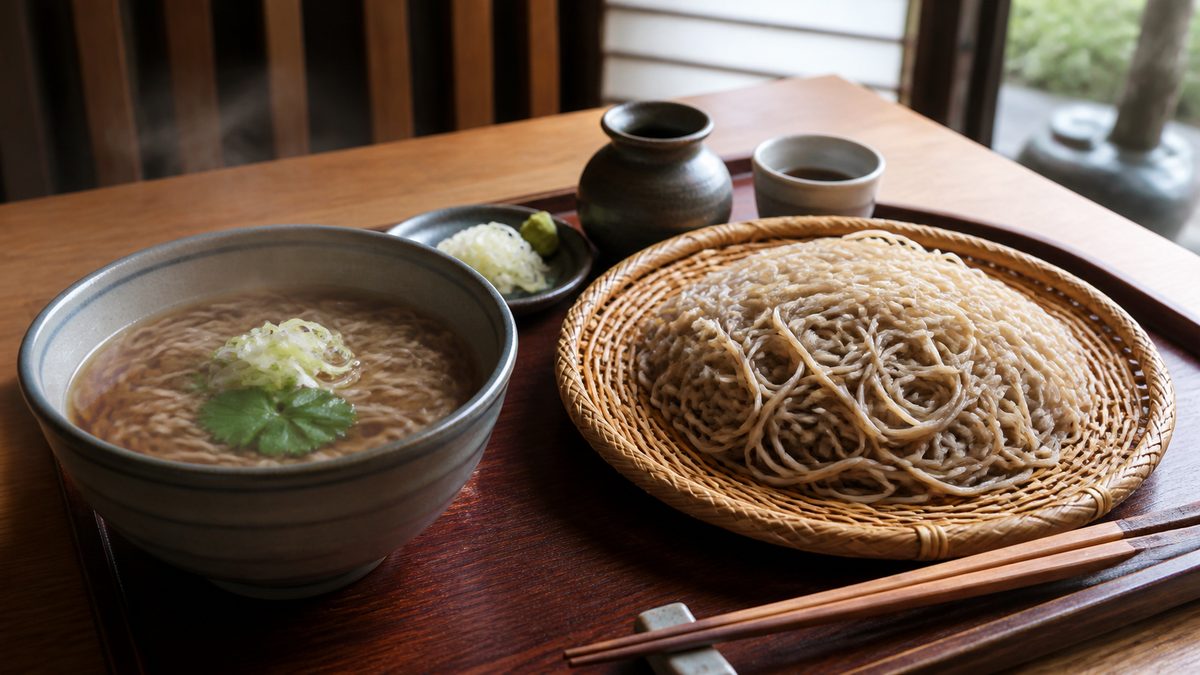
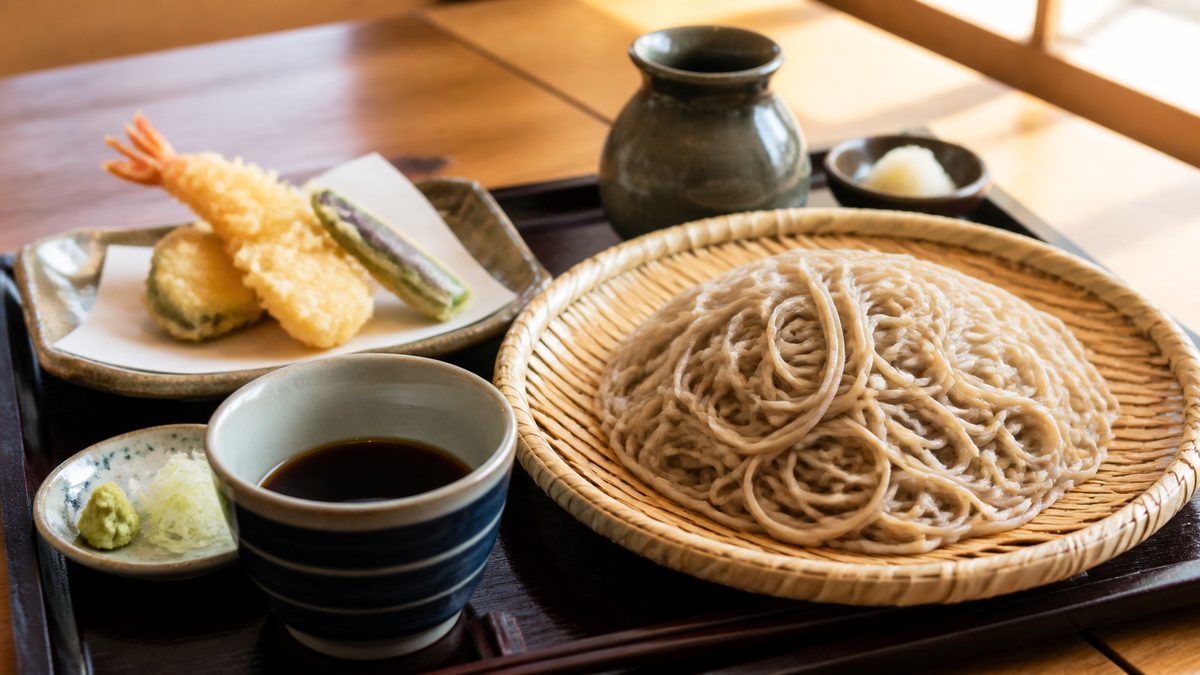
Cold soba is served drained, often on a bamboo tray or plate, with a small cup of dipping sauce called tsuyu. This is the easiest way to notice the aroma and texture of the noodle. In summer, cold soba feels clean and refreshing, especially with wasabi, grated daikon, and sliced scallion.
Hot soba is served in a bowl of warm broth. It is easier for first-timers who do not want to manage dipping sauce, and it works well in winter or when you want a quick station meal.
If you are unsure, use this simple rule:
- Hot day, light lunch, or first soba specialist visit: choose cold zaru or mori.
- Rainy day, late arrival, or quick counter meal: choose hot kake.
- You want one satisfying bowl: choose tempura soba or kakiage soba.
- You want a richer Tokyo-style option: choose kamo seiro or kamo nanban if the shop serves duck.
Common Soba Menu Words
These are the words that remove most of the ordering friction.
| Menu word | What it means | Traveler note |
|---|---|---|
| Mori soba | Cold soba with dipping sauce | Usually the plainest cold order |
| Zaru soba | Cold soba, often with nori seaweed on top | Similar to mori; common first order |
| Kake soba | Hot soba in broth | The simplest hot order |
| Tempura soba | Soba with tempura | Can be hot or cold depending on shop |
| Kakiage soba | Soba with mixed vegetable/seafood fritter | Common at standing soba counters |
| Kamo seiro | Cold soba with warm duck dipping broth | Richer, often more expensive |
| Kamo nanban | Hot soba with duck and long onion | Good in colder weather |
| Tororo soba | Soba with grated yam | Slippery texture; not for everyone |
| Oroshi soba | Soba with grated daikon | Light and sharp |
| Sobayu | Hot soba cooking water | Added to leftover dipping sauce at the end |
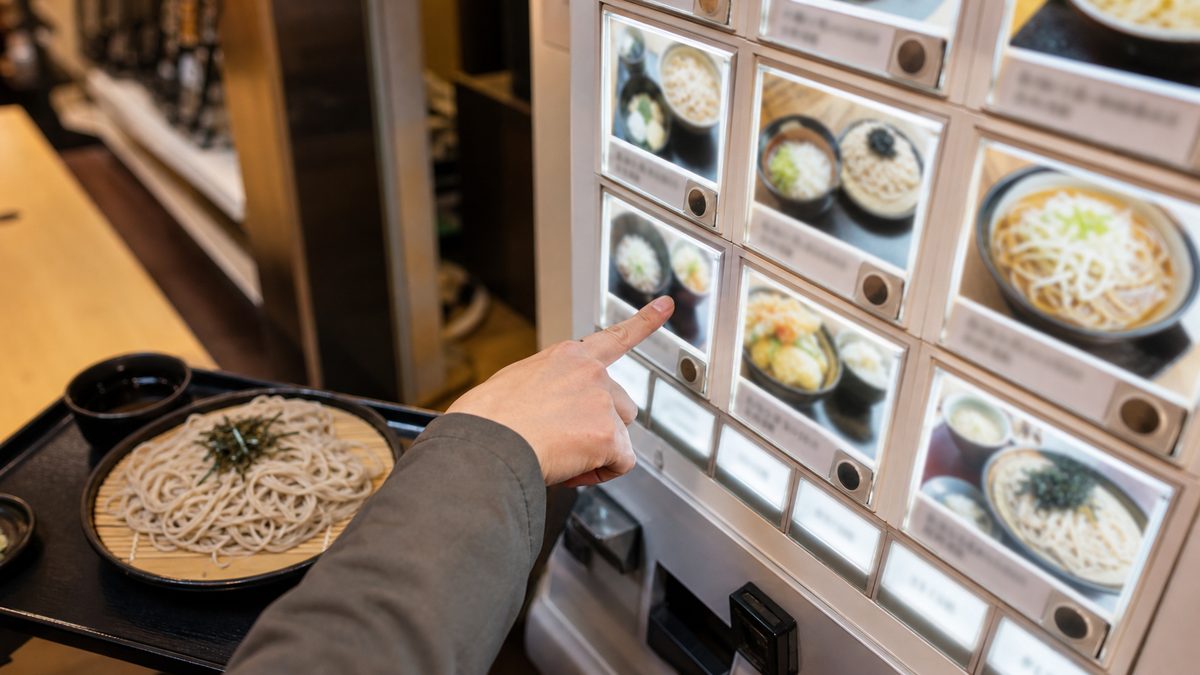
At ticket-machine shops, look for the photos first, then the temperature words: atatakai means warm, tsumetai means cold. If the machine has no English, a photo of a bamboo tray often signals cold soba, while a deep bowl points toward hot soba.
How to Eat Zaru Soba Without Looking Lost
Cold dipping soba looks simple, but first-timers often hesitate because there are several small dishes.
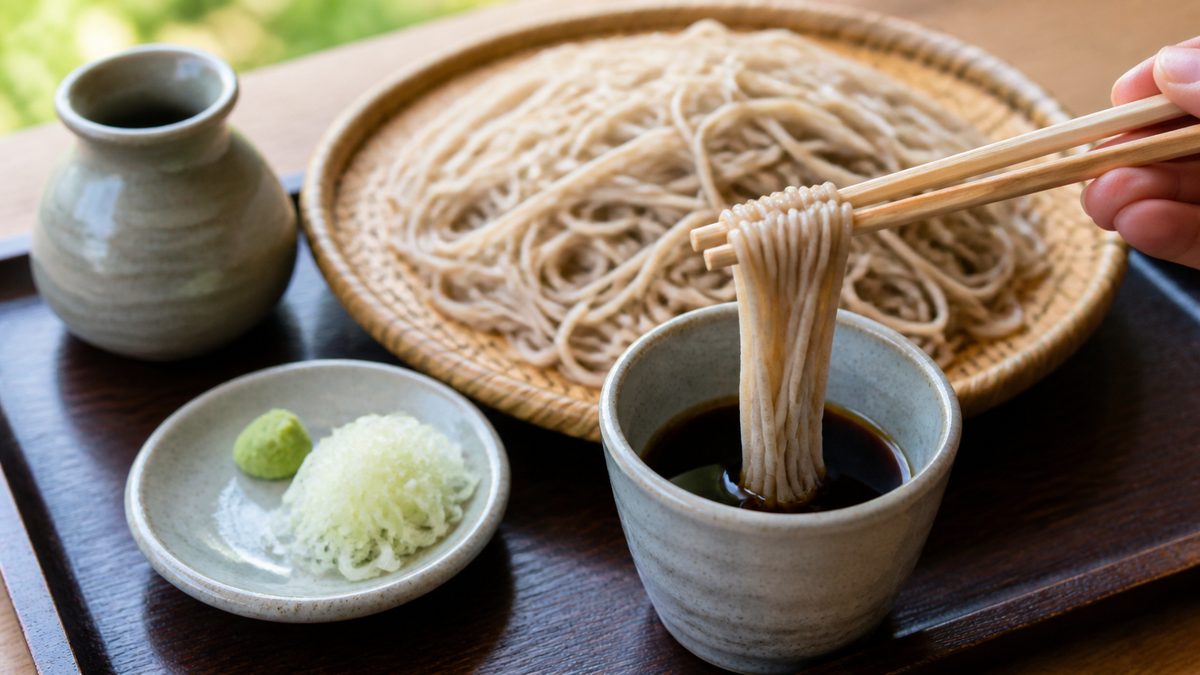
Use this flow:
- Put a small amount of wasabi and scallion into the dipping cup. You do not need to use the full portion.
- Pick up a small bundle of soba with chopsticks.
- Dip the lower part of the noodles into the tsuyu. The sauce is concentrated, so soaking the whole bundle can taste too salty.
- Slurp the noodles. This is normal in soba shops and helps you eat the noodles before they soften.
- Near the end, ask for or wait for sobayu. Pour it into the remaining sauce and drink it like a light soup.
Sobayu is the part many visitors miss. It is not a separate tea; it is the hot water used to cook soba. At specialist shops it may arrive in a small pot. At quick counters it may be self-serve, or not offered.
Where to Try Soba in Tokyo: 4 Reliable Lanes
Tokyo has several soba lanes. They solve different travel problems, so choose by mood rather than by prestige.
1. Quick Counter Soba: Fuji Soba and Yudetaro
This is the practical travel meal: fast, cheap, commonly near a station, and useful when you do not want a long restaurant search. Chains such as Fuji Soba and Yudetaro list basic hot or cold soba around the low hundreds of yen. In 2026, Fuji Soba lists kake soba and mori soba at 430 yen on its menu, with regional and branch variation noted by the company. Yudetaro's July 2026 menu also lists kake soba and mori at 430 yen.
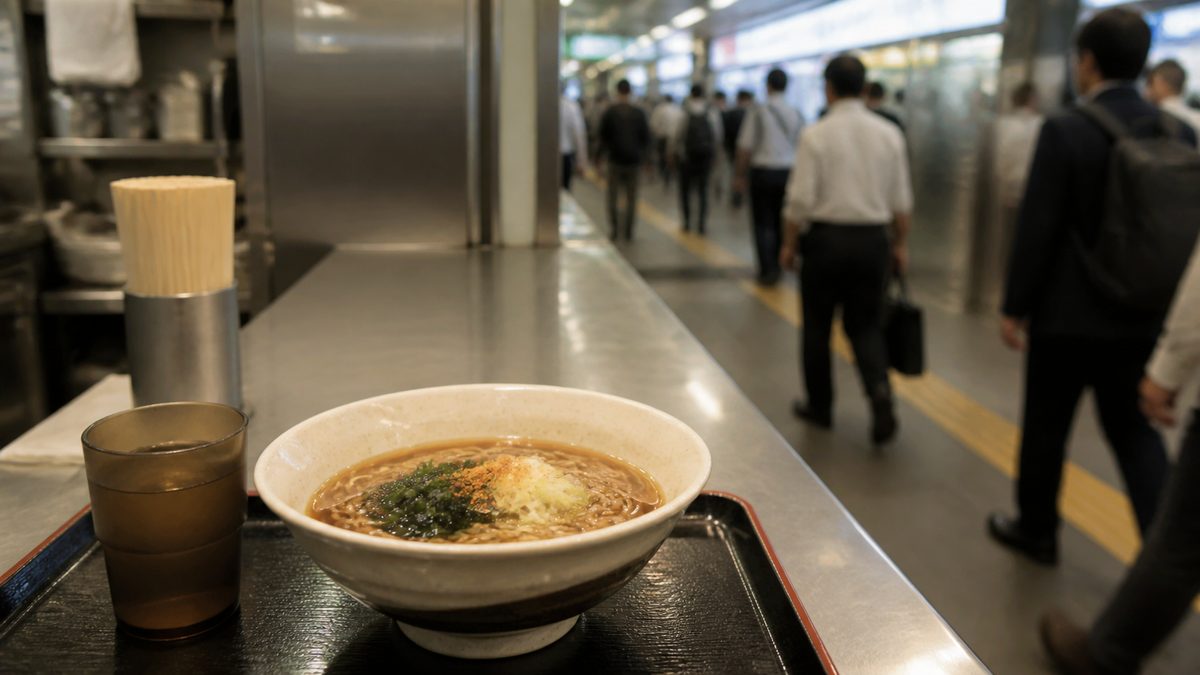
Expect a ticket machine or counter order, limited English, fast turnover, and a meal that can be finished in 10 to 20 minutes. This is not the place for a long conversation with staff about ingredients.
2. Classic Tokyo Soba: Kanda Yabusoba
Kanda Yabusoba is one of Tokyo's classic soba houses in the Kanda/Awajicho area. Its official site lists the address as Kanda Awajicho 2-10, opening from 11:30 with last order at 20:00, and Wednesday as the regular closed day. The menu lists seiro soba at 1,320 yen.
The important traveler point is not just the price. The shop also states that it cannot accommodate vegan, vegetarian, or gluten-free requests because of the nature of its main dishes. That makes it a useful example of how traditional soba restaurants can be wonderful for general diners but difficult for strict dietary needs.
3. Sarashina Style: Sarashina Horii in Azabu-juban
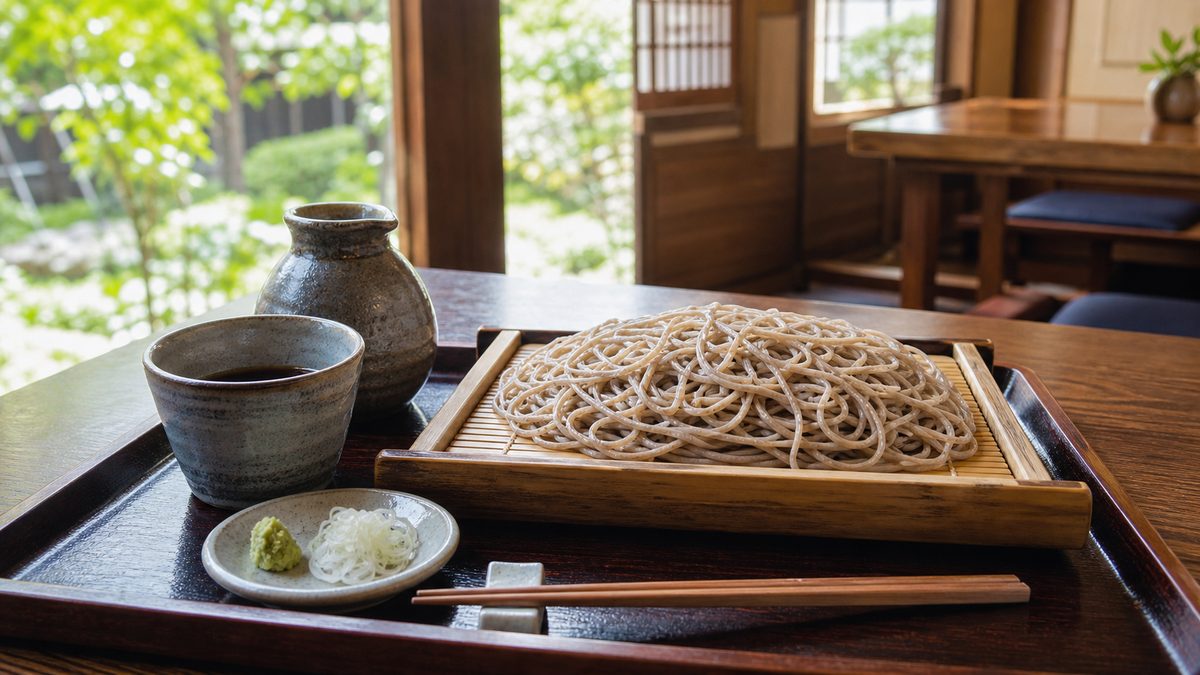
Sarashina Horii is useful for visitors because its English page explains core menu items clearly. It describes mori soba as handmade brown buckwheat noodles, sarashina soba as white soba made from the center of buckwheat, and futouchi soba as thick soba made with buckwheat powder. The English menu page also says payment is cash in yen for the Azabu-juban menu shown there.
This is a good place to understand how different soba can look. Sarashina can look pale and refined; inaka or darker soba can feel more rustic and aromatic.
4. Specialist or Neighborhood Soba
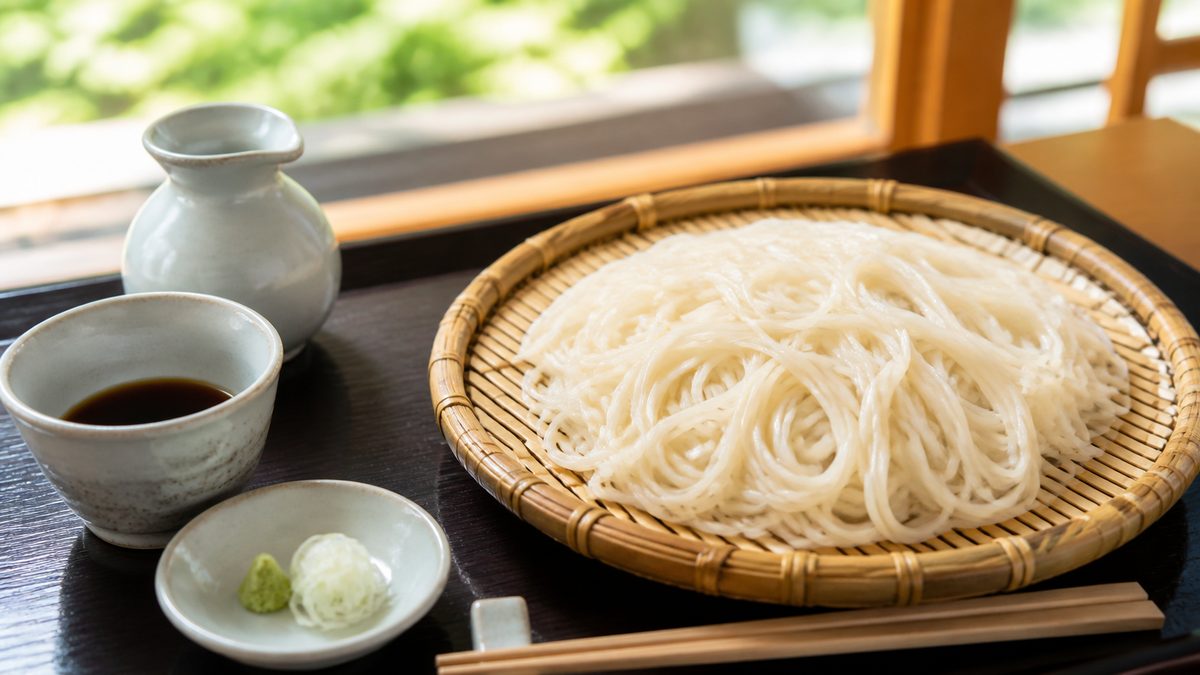
Between the chains and the famous old shops, Tokyo has many neighborhood soba restaurants. Some sell both soba and udon. Some focus on lunch. Some are old-school and cash-preferred. Some have photo menus, while others expect you to read a vertical Japanese menu on the wall.
For a traveler, the safest use case is simple: walk in when the shop looks calm, order mori or kake, and avoid peak lunch if you need time to read the menu. If you have an allergy or strict diet, choose a shop with written allergen information rather than relying on a busy counter conversation.
Allergy, Gluten, Vegetarian, and Cash Notes
Soba needs a stronger caution section than many Japan food articles because the word "buckwheat" can mislead visitors.
Buckwheat allergy. Japan treats soba as one of the specified allergenic ingredients for packaged processed food labeling. That does not make a restaurant safe for allergy management by itself. It means soba is serious enough to be part of Japan's allergen-labeling system.
Wheat and gluten. Many soba noodles include wheat flour, and quick soba chains often list both wheat and soba in allergen tables. Do not order soba as a gluten-free meal unless the shop explicitly confirms both ingredients and cross-contact conditions.
Vegetarian and vegan needs. Soba broth frequently uses dashi, commonly made with fish ingredients such as bonito. A plain-looking bowl can still contain fish in the sauce. At older shops, vegan or vegetarian accommodation may not be available.
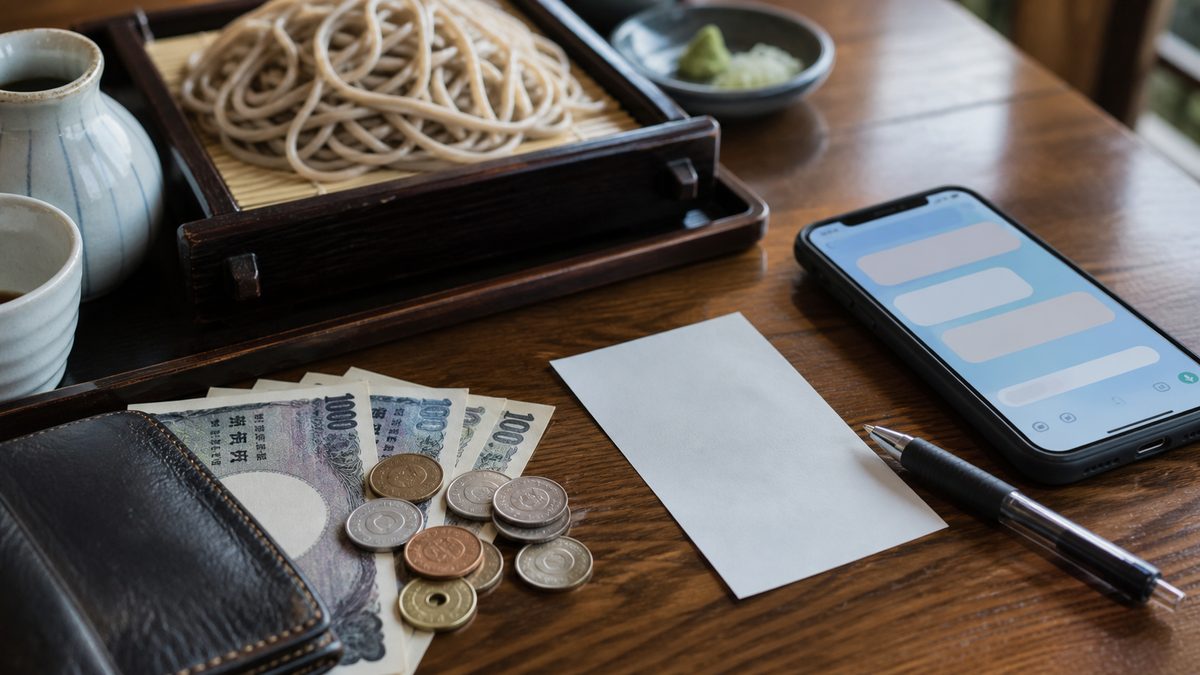
Cash. Quick chains increasingly accept multiple payment methods, but small shops and traditional restaurants can still be cash-heavy. Sarashina Horii's English menu page says cash in yen for the Azabu-juban menu shown there. Carrying a few 1,000-yen notes makes soba meals easier.
Allergy phrase. If you need to ask, keep the phrase direct:
Soba arerugii ga arimasu. Kono ryori ni soba wa haitte imasu ka?
I have a buckwheat allergy. Does this dish contain soba?
For severe allergies, phrase cards and written confirmation are safer than spoken Japanese alone.
What to Order for Your First Bowl
If this is your first soba meal in Tokyo, avoid overthinking it.
Choose one of these:
Zaru soba or mori soba Best first order at a soba specialist. You taste the noodle clearly, learn the dipping flow, and get the sobayu experience if the shop serves it.
Kake soba Best first order at a station or standing soba counter. It is simple, warm, and easy to eat quickly.
Tempura soba or kakiage soba Best first order when you want one complete meal. At quick counters, kakiage soba is filling and inexpensive. At classic shops, tempura soba can be a splurge.
Kamo seiro Best second soba order. Cold noodles with warm duck dipping broth give you contrast: clean noodles, rich soup, and a more "Tokyo soba house" feeling.
For a first Tokyo trip, one quick counter soba and one specialist cold soba meal can show why soba is not just "thin udon."
FAQ
Q1. Is soba made from buckwheat? Yes, soba is associated with buckwheat, but many soba noodles also contain wheat flour. Do not treat soba as gluten-free unless a shop clearly confirms it.
Q2. What is the difference between mori soba and zaru soba? Both are cold soba with dipping sauce. Zaru soba often has thin strips of nori seaweed on top, while mori is plainer. Usage can vary by shop.
Q3. Should I order hot or cold soba first? At a specialist shop, start with cold mori or zaru soba. At a quick station counter, hot kake soba is the easiest first bowl.
Q4. What is sobayu? Sobayu is the hot water used to cook soba. At the end of cold soba, you can pour sobayu into your remaining dipping sauce and drink it as a light soup.
Q5. Is slurping rude? No. Slurping soba is normal in Japan. Quiet eating is fine too, but you do not need to be embarrassed by noodle-slurping sounds.
Q6. Is soba vegetarian? Not automatically. The noodles may be simple, but the dipping sauce or soup frequently contains dashi, often fish-based. Ask before ordering if this matters.
Q7. Can I eat soba if I have a buckwheat allergy? Avoid it unless a qualified medical professional and the restaurant's written allergen information say otherwise for your situation. Soba means buckwheat, and cross-contact can be a concern in soba shops.
Q8. How much does soba cost in Tokyo? In 2026, basic chain bowls can be around 430 yen at shops such as Fuji Soba or Yudetaro, while classic shops can start around 1,000 yen and rise with tempura, duck, drinks, or courses. Prices vary by branch and season.
Q9. Do I need a reservation for soba? For quick chains and many neighborhood shops, no. For famous classic shops or dinner courses, check the shop website. If the shop is small, avoid peak lunch if you do not want to wait.
Q10. What should I order if I cannot read Japanese? Look for photos. A bamboo tray often suggests cold soba; a deep bowl often suggests hot soba. The safest words are mori, zaru, kake, and tempura.
Related Reading
- Tokyo Udon 2026
- Tokyo Sushi Guide 2026
- Famiresu in Japan
- Tokyo Restaurant Booking 2026
- Cash in Japan 2026
About the Author
Basabasa is a former sergeant major in the Japan Ground Self-Defense Force who writes Real Japan Guide for first-time foreign visitors. He focuses on practical Japan travel frictions: how to order, pay, move, ask, queue, and avoid small mistakes that can make a good trip feel harder than it needs to be.
Decision structure updated: August 4, 2026. Prices, payment notes, and allergy references were last checked on July 2, 2026. Restaurant hours, menus, and policies can change, so confirm with the venue before visiting. Images are illustrative unless explicitly labeled otherwise.
Comments