- Quick Answer
- Watch the atmosphere first
- What Is the Jingu Gaien Fireworks Festival?
- 2026 Date, Time, and Backup Date
- Tickets: What Tourists Should Know First
- Venue and Price Comparison
- Which Station Should You Use?
- Arrival Plan: How Early Should You Go?
- The No-Ticket Rule: Do Not Treat This as a Free Street Event
- Crowd Rules Tourists Should Know
- Rain Plan: What to Do If the Weather Looks Bad
- What to Bring
- After the Fireworks: The Train Strategy
- Plan B If You Cannot Get a Ticket
- Is Jingu Gaien Better Than Sumida River?
- A Simple Tourist Decision Rule
- FAQ
- When is the Jingu Gaien Fireworks Festival in 2026?
- What time do the fireworks start?
- How many fireworks are launched?
- Can I watch without a ticket?
- How much are tickets?
- Which station should I use?
- What happens if it rains?
- Can I use an umbrella during the fireworks?
- Can I bring food and drinks?
- Is there parking?
- What To Do Next
- About the Author
Quick Answer
The Jingu Gaien Fireworks Festival is scheduled for Saturday, August 8, 2026, with Sunday, August 9 as the backup date. The organizer lists about 10,000 fireworks, a 19:30-20:30 fireworks window, and two paid viewing venues: Meiji Jingu Stadium and Chichibunomiya Rugby Stadium.
For tourists, the most important point is not the fireworks count. It is the ticket rule. The official site says people without tickets should not come to the venue area, because crowding around the outside of the venue creates safety problems. Treat Jingu Gaien as a ticketed event, not as a free street-viewing festival.
If you already have a ticket, arrive early, choose your station by venue, set a meeting point before entering the area, and bring a raincoat. If you do not have a ticket, make a Plan B instead of trying to watch from the surrounding streets. Tokyo has many summer-night alternatives, and being trapped outside a closed event area is not the memory you want from Japan.
Official event pages checked on June 25, 2026:
- Jingu Gaien Fireworks Festival official site: https://www.jinguhanabi.com/
- Ticket page: https://www.jinguhanabi.com/ticket.html
- Access page: https://www.jinguhanabi.com/access.html
- Notice page: https://www.jinguhanabi.com/notice.html
- FAQ page: https://www.jinguhanabi.com/faq.html
Watch the atmosphere first
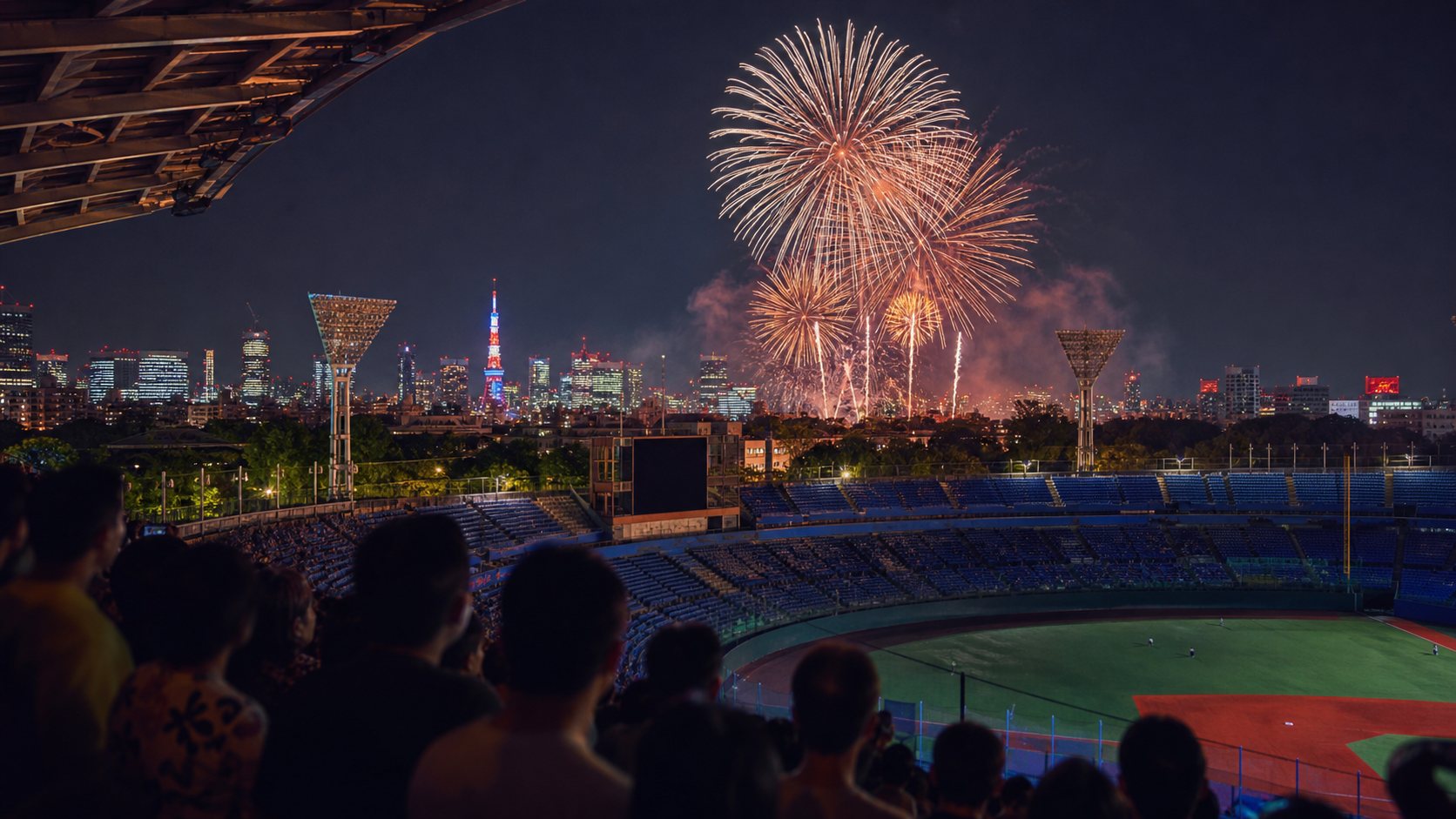
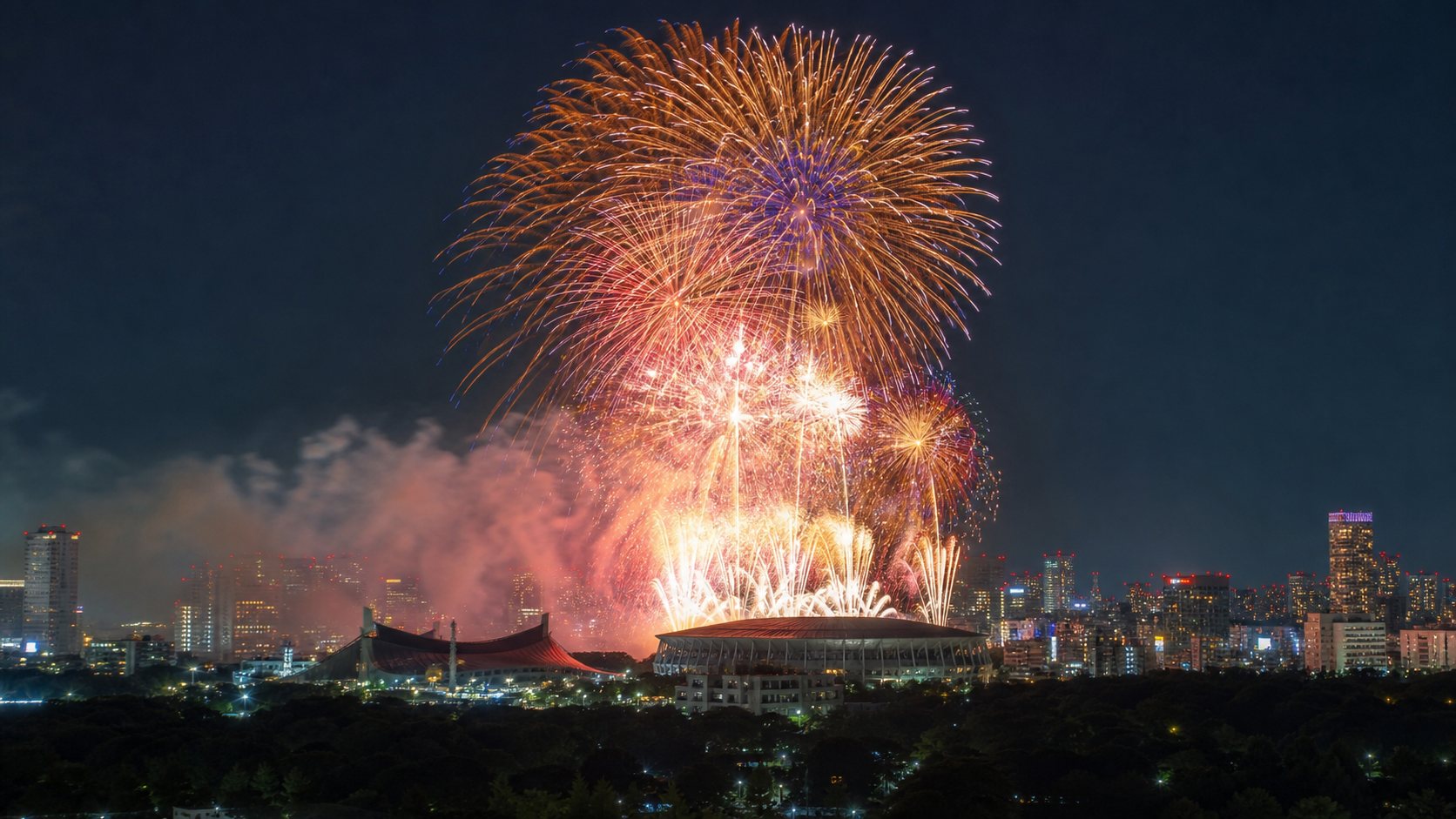
Before you go, watch the mood of a Jingu Gaien summer fireworks night: stadium lights, yukata, crowds, and bright bursts over central Tokyo. Then use the guide below to plan tickets, arrival time, crowd flow, and your rain backup.
What Is the Jingu Gaien Fireworks Festival?
Jingu Gaien Fireworks is one of Tokyo’s most central summer fireworks events. Unlike riverbank festivals such as Sumida River, this event is built around paid seating and live performances inside sports venues around Meiji Jingu Gaien.
That changes the travel strategy. At a free riverbank festival, the first question is often “how early should I claim a viewing spot?” At Jingu Gaien, the first question is “do I have a ticket, and which venue should I enter?”
The organizer presents two paid viewing venues for 2026:
- Meiji Jingu Stadium, the baseball stadium venue
- Chichibunomiya Rugby Stadium, a rugby-ground venue near Aoyama-itchome and Gaienmae
Both are close to the fireworks launch area around Meiji Jingu Gaien. Both can give a powerful view. The better choice depends less on the fireworks and more on your budget, your preferred station, and whether you want the baseball-stadium atmosphere or a simpler reserved-seat option.
2026 Date, Time, and Backup Date
The official site says the 2026 festival is planned for:
| Item | 2026 detail |
|---|---|
| Main date | Saturday, August 8, 2026 |
| Backup date | Sunday, August 9, 2026 |
| Fireworks time | 19:30-20:30, scheduled |
| Fireworks count | 10,000, according to the official FAQ |
| Main venues | Meiji Jingu Stadium and Chichibunomiya Rugby Stadium |
| Event decision announcement | Around noon on the event day, with a possible delay to around 14:00 depending on conditions |
The backup date matters. The official FAQ says light rain is expected to continue, while strong rain with strong wind, such as typhoon conditions, can move the event to August 9. The official notice also says that if the event is postponed to August 9, some artists may not be able to appear, and that this will not be treated as a ticket-refund case.
That means you should not schedule this as your last night in Japan if fireworks are a must-do experience. A traveler leaving Tokyo on August 9 may lose the backup-date option.
Tickets: What Tourists Should Know First
As of June 25, 2026, the official ticket page lists ticket sales through Ticket Pia. The Pia first-come-first-served presale is listed from June 21 at 11:00 to June 29 at 23:59, while planned quantities last. Earlier EPOS Card and Pia pre-reserve windows are already listed as ended on the official page.
If you read this after June 29, do not rely on this paragraph. Open the official ticket page first, then follow the current sales link.
Ticket basics from the official pages:
- Tickets are required from age 4.
- Children age 3 or younger may sit on a guardian’s lap without a ticket.
- Tickets are not reissued if lost.
- Sales can end when planned quantities are reached, and venues can sell out.
- After purchase, venue and seat changes are not allowed.
- Commercial resale is prohibited.
The safest travel rule is simple: buy from the official sales route linked by the event site. Avoid random resale listings, especially if you cannot read the Japanese terms.
Venue and Price Comparison
Jingu Gaien has two main paid venues in 2026. Choose based on the experience you want.
| Venue | 2026 listed prices | Scheduled opening | Best for |
|---|---|---|---|
| Meiji Jingu Stadium | JPY 11,000-15,000 | 16:00 open, 17:00 start scheduled | Main-event atmosphere, baseball-stadium scale, stronger “festival show” feeling |
| Chichibunomiya Rugby Stadium | JPY 7,000 | 15:00 open, 16:00 start scheduled | Lower price, simpler venue choice, convenient Aoyama-side access |
Meiji Jingu Stadium is the flagship venue. The official ticket page describes it as the event’s best-known venue, with live performances before the fireworks. The listed 2026 seat types include arena and stadium seats from JPY 11,000 to JPY 15,000.
Chichibunomiya Rugby Stadium is cheaper and more straightforward: the listed 2026 standard seat is JPY 7,000. The official page describes it as convenient and close to stations, with fireworks viewed over the rugby field and live performances also planned.
If budget is the deciding issue, Chichibunomiya is the obvious first check. If you want the bigger show atmosphere and are comfortable paying more, check Jingu Stadium availability first.
Which Station Should You Use?
Do not just type “Jingu Gaien fireworks” into a map app and follow a crowd. Choose your station based on your ticket venue.
For Meiji Jingu Stadium, the official access page lists:
- Sendagaya Station on the JR Sobu Line
- Shinanomachi Station on the JR Sobu Line
- Kokuritsu-Kyogijo Station on the Toei Oedo Line
For Chichibunomiya Rugby Stadium, the official access page lists:
- Aoyama-itchome Station on Tokyo Metro and the Toei Oedo Line
The FAQ also mentions Gaienmae and Aoyama-itchome for Chichibunomiya. On the notice page, the organizer asks Jingu Stadium visitors to use Shinanomachi or Kokuritsu-Kyogijo for crowd control, and Chichibunomiya visitors to use Aoyama-itchome.
Use that as your default. On event days, the “nearest” station on a normal map may not be the smoothest station.
Arrival Plan: How Early Should You Go?
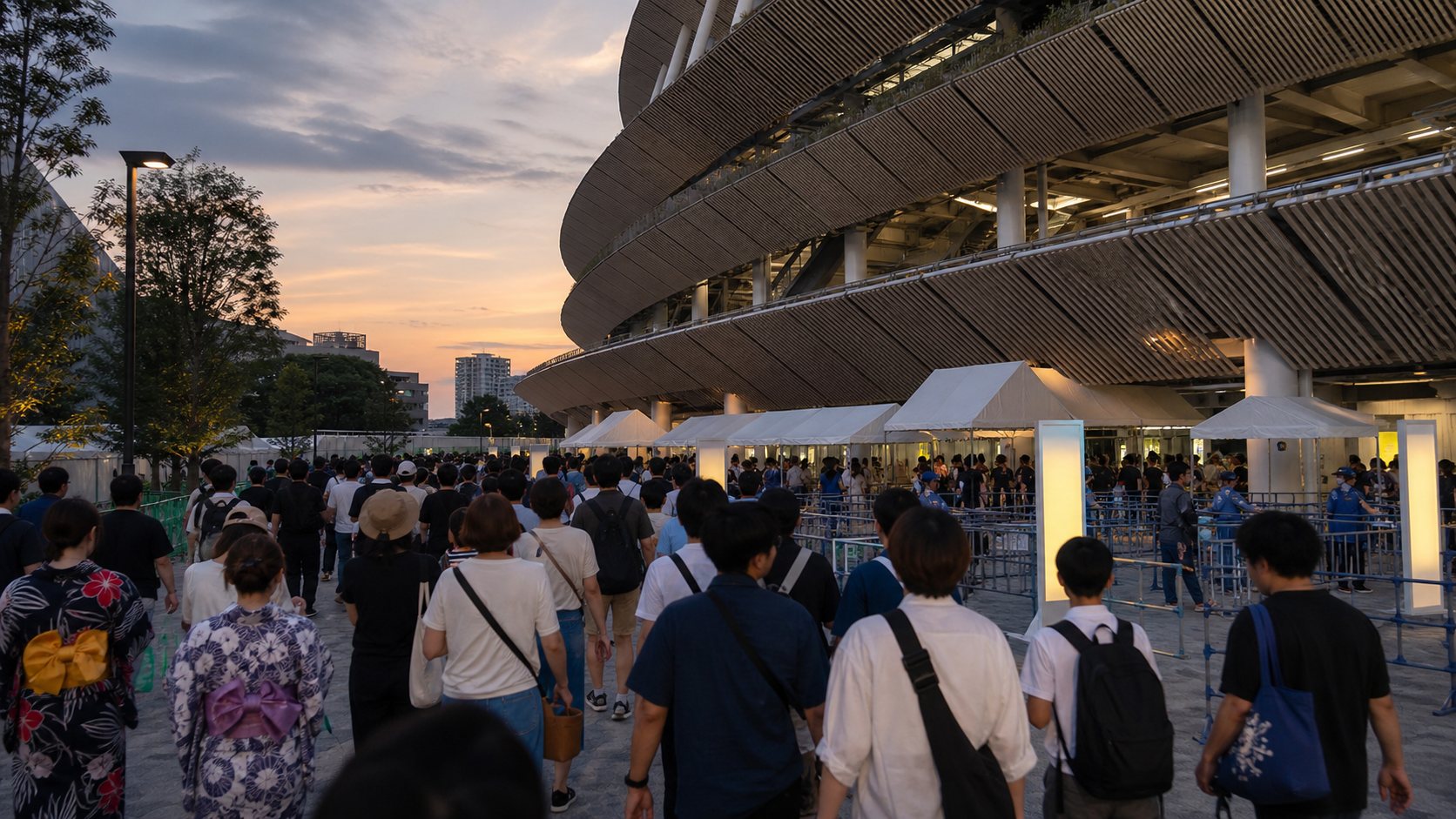
The fireworks are scheduled for 19:30, but you should not plan to arrive at 19:20. The official FAQ says coming right before the fireworks is possible, but surrounding roads may be heavily crowded and travel can take more than twice as long as usual.
A practical tourist schedule:
| Time | What to do |
|---|---|
| 15:00-16:00 | Earliest venue-opening window, depending on venue |
| 16:00-17:30 | Better arrival window if you want less stress |
| 17:30-18:30 | Still workable, but expect heavier station and gate flow |
| After 18:30 | Higher risk if you are unfamiliar with the area |
| 19:30 | Fireworks begin, scheduled |
| 20:30 | Fireworks end, scheduled |
If you want to eat before the event, eat before entering the crowd zone. Convenience stores around the nearest stations can become crowded, and normal restaurants may have waits. If you plan to bring drinks, the FAQ says plastic bottles and water bottles are allowed for the fireworks event, while bottles and cans are not allowed for fire-safety and security reasons.
There may also be bag checks at entry. Keep your bag simple. A small crossbody bag, backpack, or tote is easier than a hard suitcase or overloaded shopping bag.
The No-Ticket Rule: Do Not Treat This as a Free Street Event
This is the section that can save a tourist from a bad night.
The official site warns that people without tickets cannot view the event and asks them not to watch from outside the venue because of crowding and accident-prevention concerns. The FAQ similarly asks people without tickets not to come around the area.
That does not mean the sky will be hidden from the whole neighborhood. It means the organizer is not designing the surrounding streets as a viewing area, and you should not build your night around standing outside the venue.
If you do not have a ticket, choose a Plan B:
- Watch another Tokyo fireworks event with free public viewing.
- Choose a rooftop, restaurant, or hotel plan when it is clearly selling a viewing plan.
- Do a summer evening route in Aoyama, Omotesando, Shibuya, or Shinjuku instead.
- Save your fireworks energy for Sumida River, Edogawa, Itabashi, or another event better suited to free viewing.
If you want a broader 2026 fireworks list, start with our Japan Summer Fireworks Guide.
Crowd Rules Tourists Should Know
Jingu Gaien is easier than some free riverbank festivals because you have a reserved ticketed venue, but the area still gets crowded. Follow the event’s rules and add a little traveler common sense.
Set a meeting point before entering the area
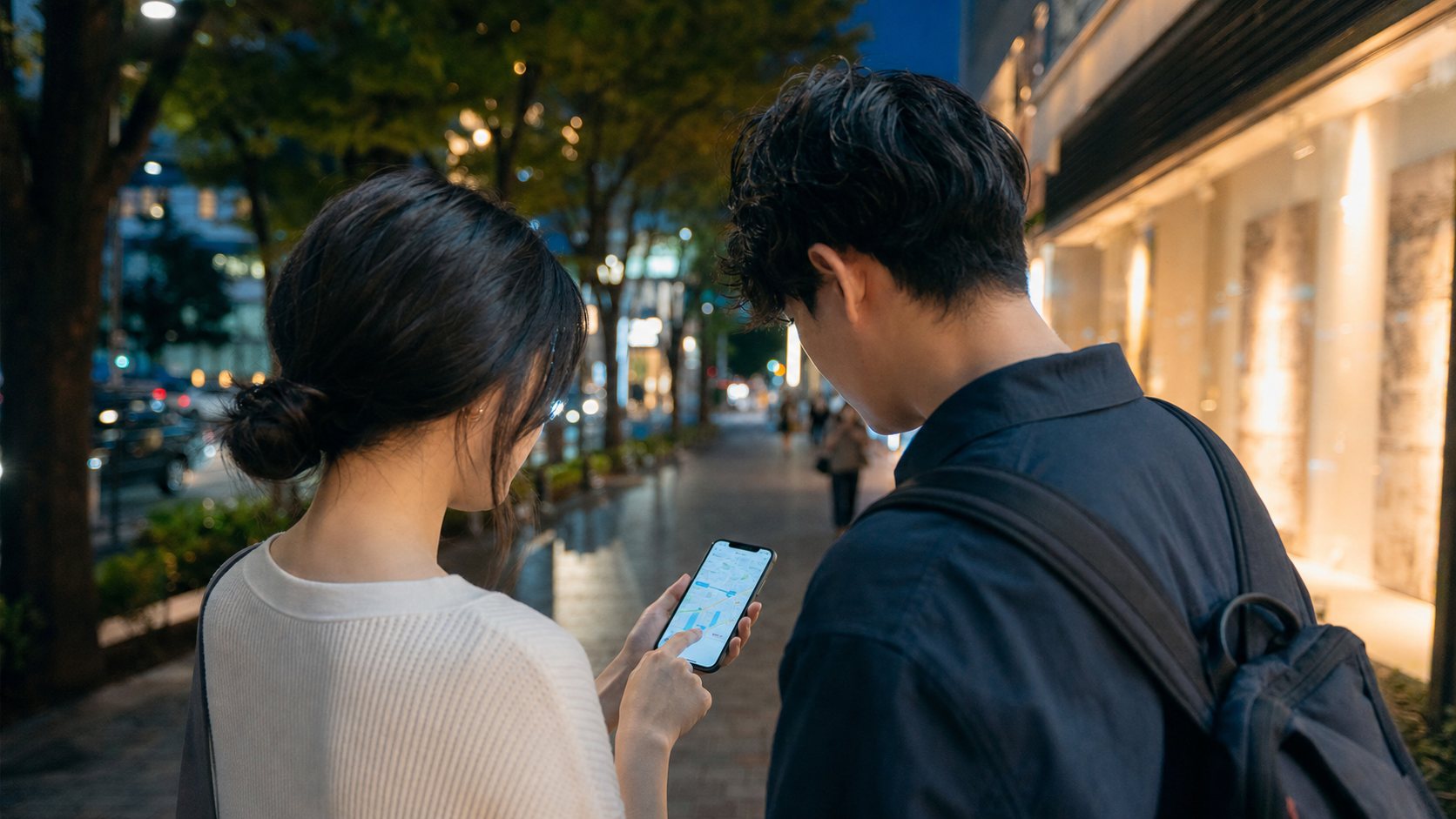
The official notice says mobile signal can be difficult inside and near the venue, and the FAQ warns that meeting people around the venue may fail because of crowds and possible phone trouble.
Do not rely on “I’ll call you when I arrive.” Decide:
- Which station exit you will use
- Which venue gate you will enter
- Where you will meet if separated
- What time you will stop waiting and go inside
Screenshots are better than live map links. Save your ticket, venue map, station exit, and hotel address before you enter the area.
Do not bring a drone or tripod
The notice prohibits flying small unmanned aircraft without permission. The FAQ also says tripods and monopods are not allowed, regardless of size.
Fireworks photography is allowed, but live artist performances are not. If your main reason for going is photography, use a phone or handheld camera and keep it low enough that you do not block people behind you.
Smoking is restricted
The official notice says the venue seats are non-smoking and asks smokers to use designated areas. If you smoke, do not assume you can step into the aisle or smoke near your seat.
Keep pets out of the plan
The FAQ asks visitors not to bring pets into the venue. Fireworks crowds are also stressful for animals, so this is not a pet-friendly travel activity.
Rain Plan: What to Do If the Weather Looks Bad
The official FAQ gives the key rule: light rain is expected to continue, while strong rain with strong wind can postpone the event to Sunday, August 9. The event decision is planned around noon on the day, with possible delay to around 14:00 depending on conditions.
Use this decision flow:
- Morning: check the official website and official social accounts, but do not panic over light rain.
- Around noon: check the event decision.
- If the decision is unclear, check again around 14:00.
- If the event goes ahead, bring a raincoat.
- If the event moves to August 9, check whether you can still attend before making other plans.
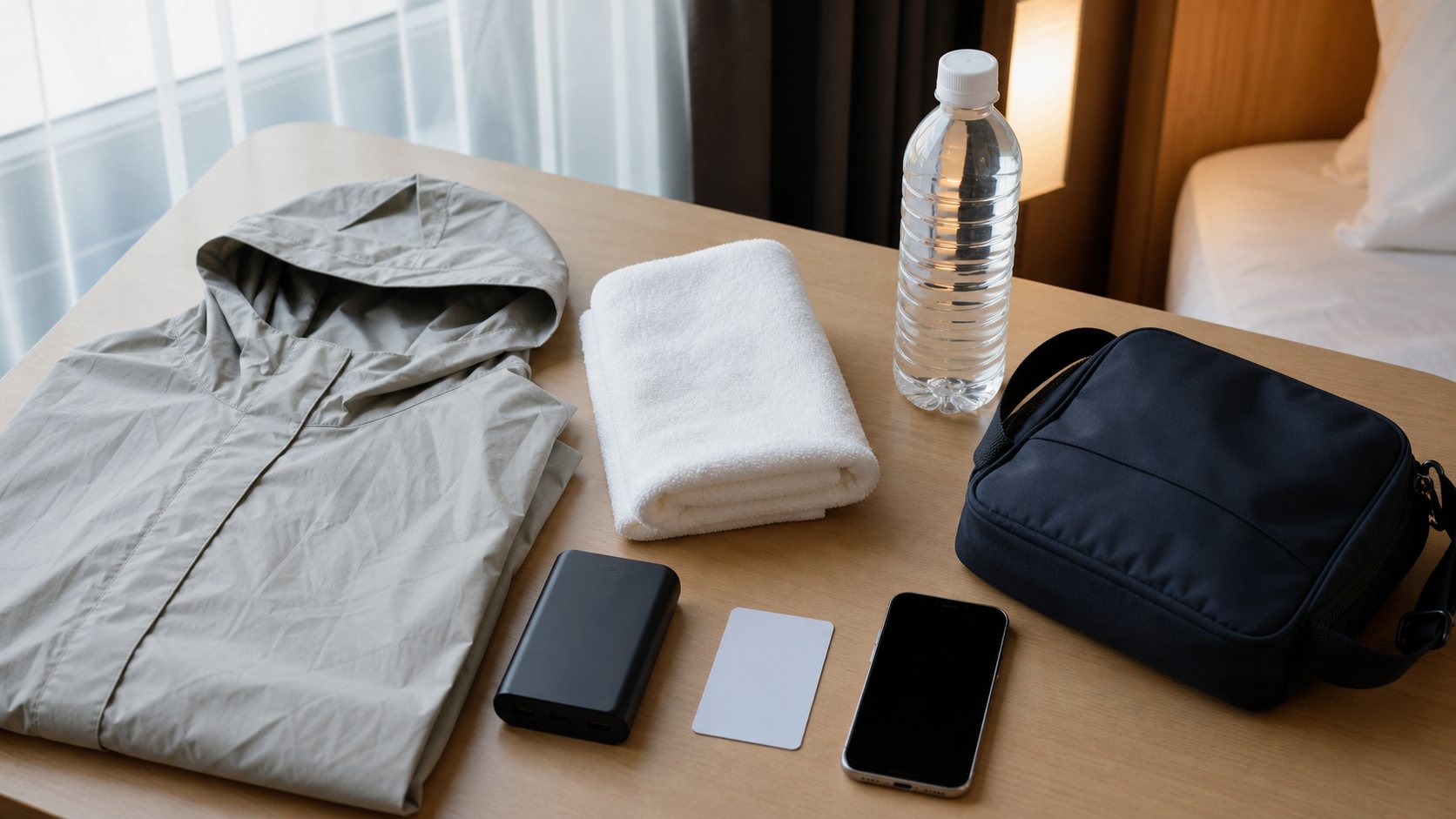
Umbrellas can be brought into the venues, but the official notices say umbrellas and parasols cannot be used during live performances or fireworks. That makes a raincoat the better choice. Bring a small towel and a plastic bag for wet items.
If you are visiting with children, older family members, or someone who struggles in heat and humidity, be more conservative. A hot, wet, crowded venue can turn from exciting to exhausting quickly.
What to Bring
Keep it light. You are going to a crowded ticketed venue, not a picnic on an open riverbank.
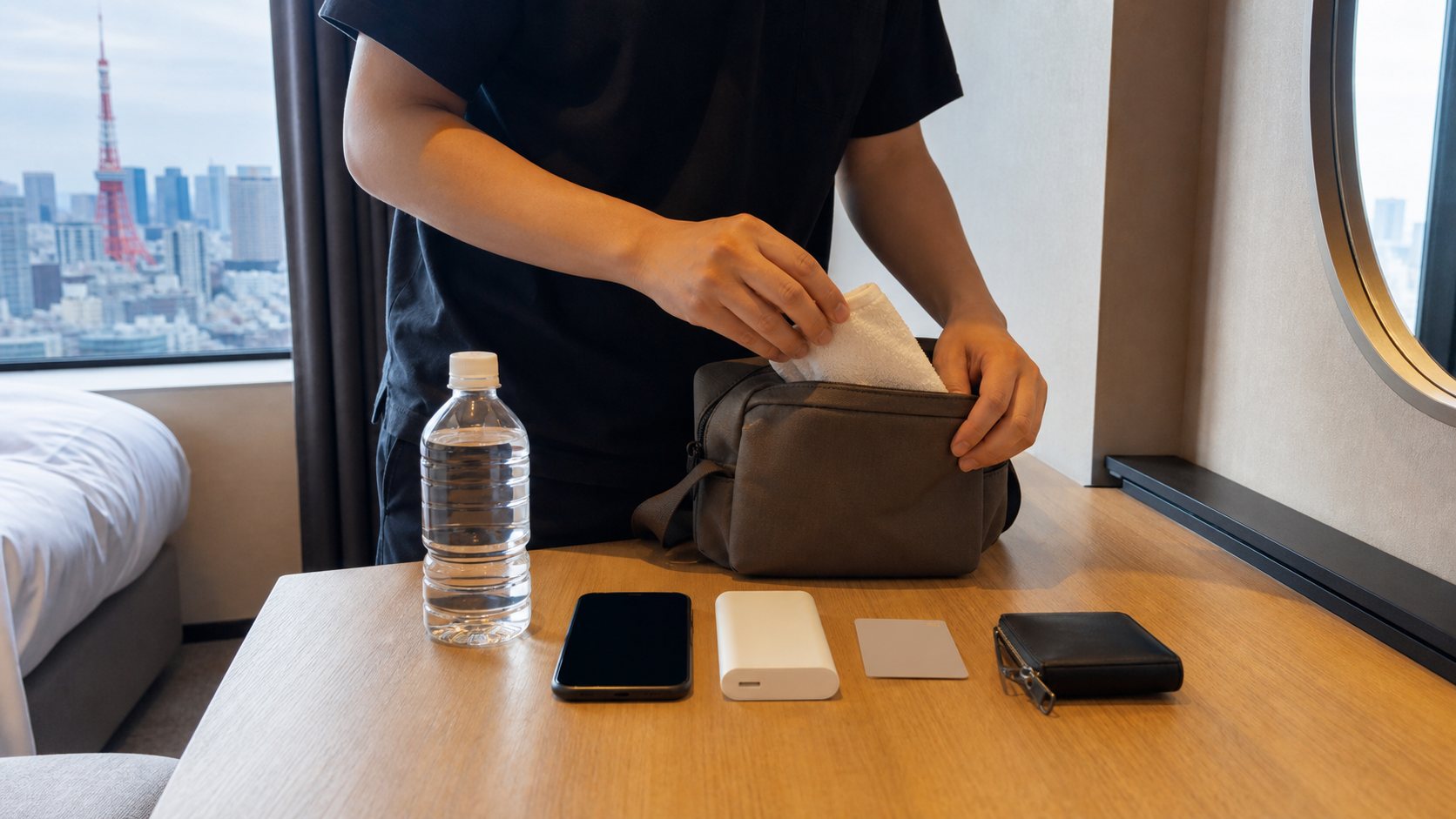
Bring:
- Ticket and backup screenshot
- Passport or ID if your ticketing flow may require identity confirmation
- IC card or train ticket balance for the return trip
- Phone battery pack
- Small towel
- Raincoat
- Water in a plastic bottle
- Small snack, if needed
- Cash for small purchases
- A plastic bag for trash or wet items
Avoid:
- Suitcases
- Glass bottles and cans
- Tripods and monopods
- Drones
- Large umbrellas you expect to use during the show
- Oversized shopping bags
If you have luggage that day, solve it before the event. Use your hotel, coin lockers, or a luggage-storage service. Our Tokyo luggage storage guide covers practical options.
After the Fireworks: The Train Strategy
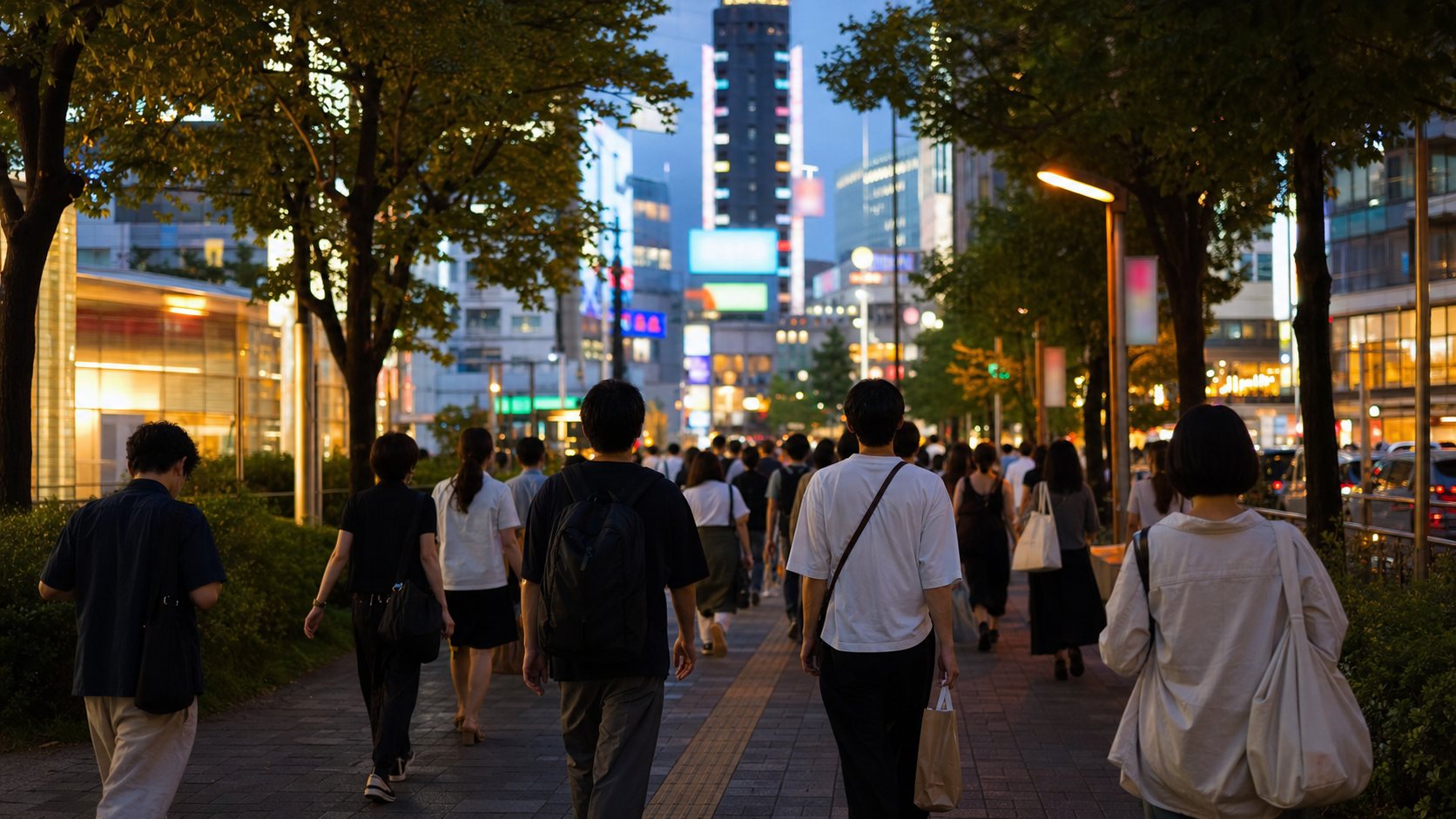
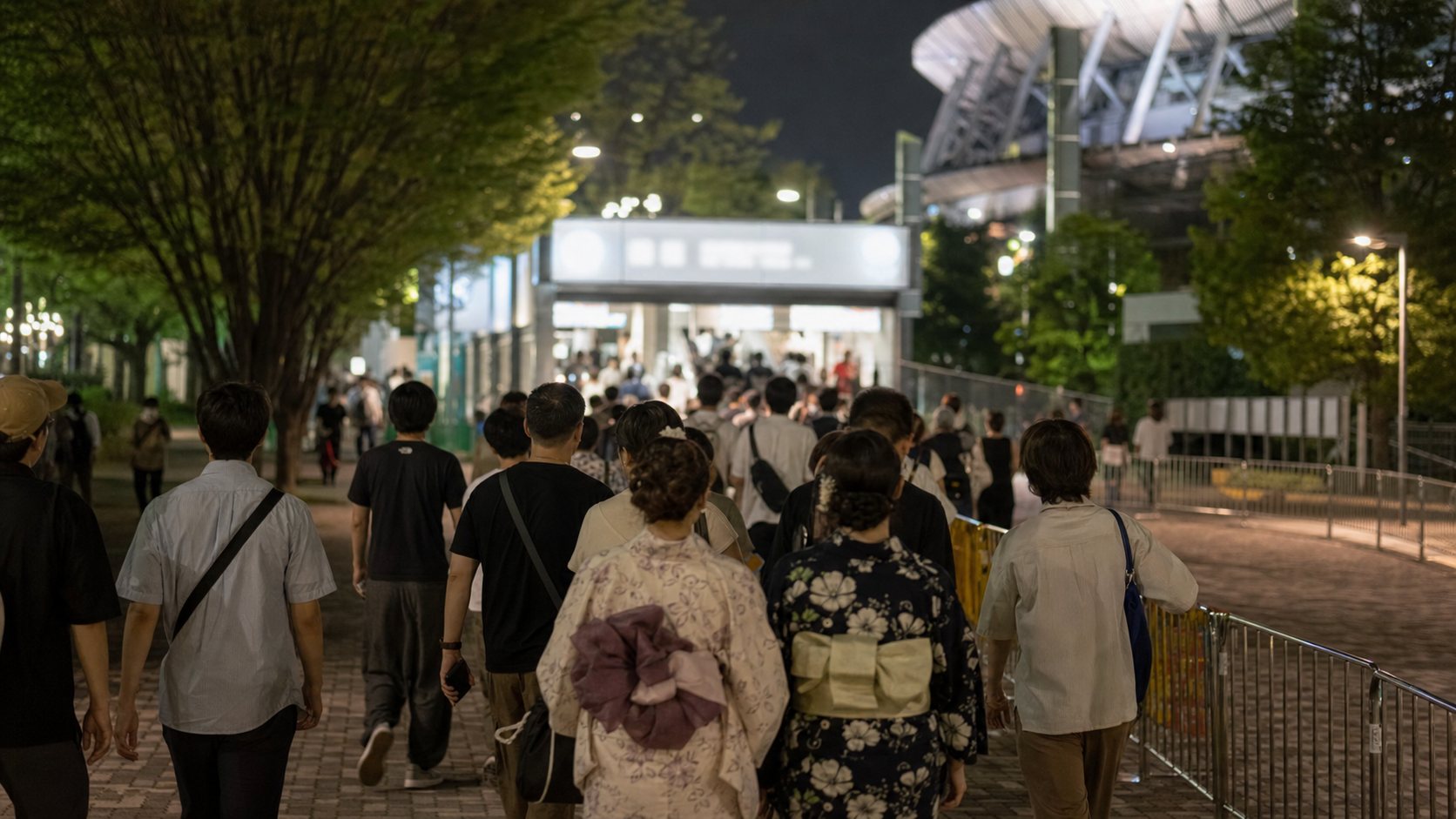
The fireworks are scheduled to end at 20:30. The hardest part of the night may be the next 60 minutes.
Thousands of people will move toward a small number of stations. Some visitors try to leave immediately and get trapped in slow station lines. Others rush to the nearest station even if a slightly farther station would have been calmer.
A safer strategy:
- Do not book a tight late-night reservation after the event.
- If you must move quickly, leave a little before the finale.
- If you can wait, stay seated until the first wave moves.
- Decide your return station before the show starts.
- Keep your IC card charged before entering the venue area.
For Jingu Stadium, Shinanomachi, Sendagaya, and Kokuritsu-Kyogijo are the practical station names to know. For Chichibunomiya, Aoyama-itchome is the key station, with Gaienmae also relevant depending on your route and crowd controls.
If you are staying near Shinjuku, Shibuya, Akasaka, Roppongi, or Ginza, check two return routes before the event. One delayed line should not ruin the night.
Plan B If You Cannot Get a Ticket
If tickets sell out, do not treat it as a failure. Jingu Gaien is one summer-night option among many in Tokyo.
Good Plan B choices:
- Go to another 2026 fireworks event with public viewing.
- Wear a yukata and do an evening walk through Aoyama and Omotesando.
- Book dinner before sunset, then walk somewhere less crowded.
- Choose a hotel, rooftop, or restaurant plan that clearly includes official viewing access.
- Move your fireworks night to Sumida River, Edogawa, Itabashi, Katsushika, or Tokyo Bay, depending on your travel dates.
Bad Plan B choices:
- Standing outside the Jingu venues hoping for a view
- Blocking streets, bridges, or shop entrances
- Following crowds without knowing where they are going
- Trying to fly a drone for a better angle
- Waiting until after 19:00 to decide where to go
The central Tokyo location makes Jingu Gaien tempting, but the event is not built for no-ticket viewing. If you missed tickets, choose a different evening that still feels intentional.
Is Jingu Gaien Better Than Sumida River?
It depends on what kind of night you want.
Choose Jingu Gaien if you want:
- A paid reserved-seat event
- Central Tokyo access
- Live performances before the fireworks
- A more controlled venue experience
- A strong option for couples or groups willing to pay
Choose Sumida River or another riverbank festival if you want:
- Free public viewing
- More classic street-festival atmosphere
- Tokyo Skytree or river scenery
- Food-stall wandering
- A lower-budget night
Jingu Gaien is not the “best” fireworks event for everyone. It fits a traveler who values a central location, an official seat, and a performance-style event more than a free picnic-style fireworks night.
A Simple Tourist Decision Rule
Use this rule:
Go to Jingu Gaien if you can buy an official ticket, you are free on both August 8 and August 9, and you want a central Tokyo ticketed event.
Skip it if you do not have a ticket, your schedule cannot handle the backup date, you dislike dense crowds, or you mainly want free viewing.
For many visitors, a safer plan is:
- Buy a Chichibunomiya or Jingu Stadium ticket if available.
- Keep August 9 open enough for the backup date.
- Eat early before entering the crowd zone.
- Bring a raincoat and battery pack.
- Accept that getting out will take time.
That plan will not make the event empty or effortless. It will make the night much less confusing.
FAQ
When is the Jingu Gaien Fireworks Festival in 2026?
It is scheduled for Saturday, August 8, 2026, with Sunday, August 9 as the backup date.
What time do the fireworks start?
The official FAQ lists the fireworks from 19:30 to 20:30, scheduled.
How many fireworks are launched?
The official FAQ lists 10,000 fireworks for the 2026 event.
Can I watch without a ticket?
Do not plan on it. The official site says people without tickets cannot view the event and asks them not to gather around the venue area because of crowding and accident-prevention concerns.
How much are tickets?
As of June 25, 2026, the official ticket page lists Meiji Jingu Stadium seats from JPY 11,000 to JPY 15,000 and Chichibunomiya Rugby Stadium seats at JPY 7,000. Check the official ticket page before buying, because availability can change.
Which station should I use?
For Meiji Jingu Stadium, use Shinanomachi, Sendagaya, or Kokuritsu-Kyogijo depending on your route and crowd guidance. For Chichibunomiya Rugby Stadium, Aoyama-itchome is the official access station listed on the access page, with Gaienmae also mentioned in the FAQ.
What happens if it rains?
The official FAQ says light rain is expected to continue, while strong rain with strong wind, such as typhoon conditions, can postpone the event to Sunday, August 9. The event decision is planned around noon, with possible delay to around 14:00.
Can I use an umbrella during the fireworks?
Umbrellas and parasols can be brought into the venue, but the official notices say they cannot be used during live performances or fireworks. Bring a raincoat instead.
Can I bring food and drinks?
The official FAQ says bottles and cans are not allowed, while water bottles and plastic bottles are allowed for the fireworks event. Keep your bag small and expect possible bag checks.
Is there parking?
Do not come by car. The FAQ says traffic restrictions are planned on the day, asks visitors not to come by car, and warns that nearby parking lots may not be able to exit during traffic restrictions.
What To Do Next
First, check the official ticket page. If tickets are available, decide your venue by budget and station: Chichibunomiya for the cheaper, Aoyama-side option; Jingu Stadium for the larger stadium atmosphere.
Second, keep the backup date in mind. If August 9 is impossible for you, understand that weather risk before buying.
Third, make the exit plan before the first firework goes up. A summer event in central Tokyo can be beautiful, but the train ride home is where many visitors lose patience.
Buy carefully, arrive early, and do not try to turn a ticketed event into a free-viewing hack. That is the real Jingu Gaien strategy.
About the Author
Basabasa is a former sergeant major in the Japan Ground Self-Defense Force who writes Real Japan Guide for first-time foreign visitors. He focuses on practical Japan travel frictions: how to order, pay, move, ask, queue, and avoid small mistakes that can make a good trip feel harder than it needs to be.
Comments