- Quick Answer
- What Is a Famiresu?
- When a Famiresu Is the Right Choice
- The Best Uses for Tourists
- Early Morning, Lunch, Dinner, and Late Night
- What About Suitcases?
- Large Groups: More Flexible Than Tiny Restaurants, Still Not Magic
- Chain-by-Chain: What Travelers Should Know
- Ordering, Paying, and Small Etiquette
- Food Restrictions and Halal / Vegetarian Caution
- Famiresu vs Other Traveler Options
- A Simple Decision Flow
- FAQ
- Can I sit in a famiresu just for drinks?
- Are famiresu open 24 hours in Japan?
- Is a famiresu cheaper than a cafe?
- Can I bring a suitcase into a famiresu?
- Are famiresu good for large groups?
- Do famiresu have English menus?
- Can I use a laptop in a famiresu?
- Are famiresu safe for halal, vegan, or strict vegetarian diets?
- Should I choose famiresu or konbini after a late arrival?
- What to Do Next
- About the Author
Quick Answer
A Japanese famiresu is a casual family restaurant where travelers can get a sit-down meal, a drink bar, a clean restroom, and a place to pause without booking a table. It works well for early breakfasts, cheap lunches, waiting between hotel check-out and check-in, and small groups that need more space than a tiny ramen counter.
Use a famiresu when you need a real seat and a predictable menu. Do not treat it as a luggage-storage service or a dependable late-night lounge: store large suitcases first, check same-day opening hours, and avoid busy lunch and dinner peaks if you want to linger.
Good default chains to recognize: Gusto, Jonathan’s, Denny’s, Royal Host, Saizeriya, Joyfull, and Coco’s.
What Is a Famiresu?
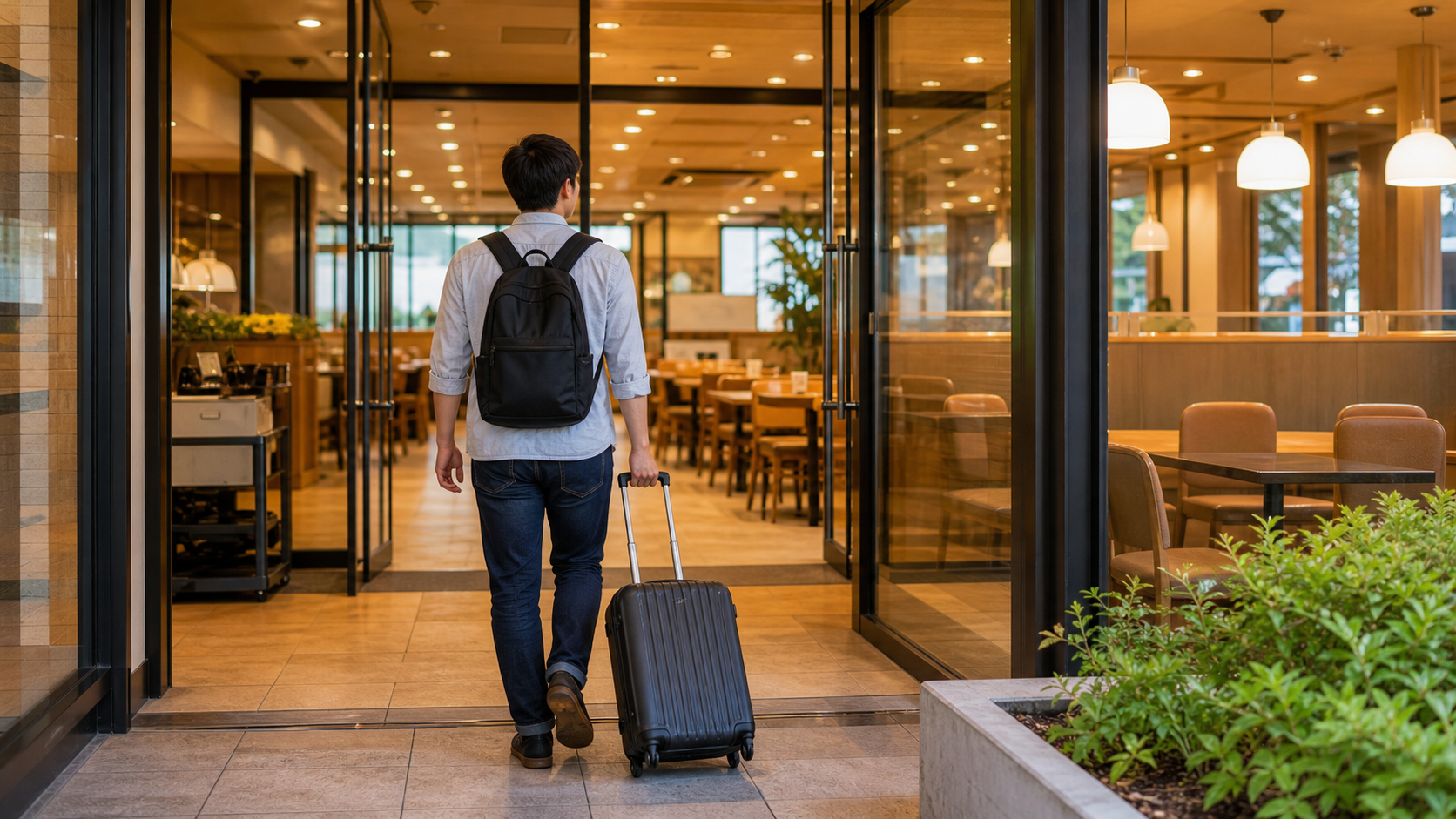
Famiresu is short for family restaurant. The closest overseas comparison is a casual diner, but the Japanese version can feel cleaner, quieter, and more systematized. You order from a menu or tablet, stay seated while staff bring food, and pay at the register or sometimes from the table.
For travelers, the point is not culinary prestige. The point is reliability:
- You can sit down without decoding a tiny local restaurant.
- Menus often include photos, tablets, or multilingual support.
- Many branches accept cards, IC cards, and QR payments.
- Drink bars let you refill coffee, tea, soft drinks, and sometimes soup.
- Large tables are more realistic than at ramen, sushi counters, or izakaya alleys.
- Restrooms can be easier than hunting for public toilets.
This makes famiresu useful in the awkward gaps of a Japan trip: too early for hotel check-in, too tired for sightseeing, too much luggage for a small cafe, or too many people for a counter-seat meal.
When a Famiresu Is the Right Choice
Use a famiresu when your problem is time, seating, or predictability.
| Traveler situation | Famiresu fit | Why |
|---|---|---|
| You need to kill 60-120 minutes before check-in | Good | A seated meal or drink bar feels normal |
| You want a cheap sit-down lunch | Good | Lunch sets and budget chains can beat cafes |
| You have children or older family members | Good | Tables, toilets, kids menus, and calmer lighting help |
| You are a group of 4-6 | Good outside peaks | More flexible than tiny restaurants, but not assured |
| You have one carry-on bag | Works in many cases | Keep it under the table or against your seat |
| You have several large suitcases | Poor | Use lockers or luggage storage first |
| You need to work for hours on a laptop | Mixed | Wi-Fi/power vary; avoid acting like it is a coworking space |
| You need to sleep | Poor | Staff may ask sleeping customers to wake up or leave |
If your main problem is luggage, read the Tokyo luggage storage guide first. If your main problem is arriving after midnight, pair this article with the late-night Tokyo arrival guide.
The Best Uses for Tourists
1. Killing Time Before Check-In
Japanese hotels often open check-in around mid-afternoon, while flights and trains can put you in the city much earlier. A famiresu is one of the easiest ways to turn a dead hour into a controlled pause.
The best pattern is simple:
- Store large luggage first if you have it.
- Choose a branch near your hotel area, not across town.
- Order a meal, dessert, or drink bar.
- Keep your stay reasonable if the restaurant starts filling up.
For a 60-90 minute wait, a famiresu can be more comfortable than standing in a station and less expensive than booking a day-use hotel. For a six-hour wait with multiple suitcases, it is the wrong tool; use a cloak service, coin locker, or luggage forwarding instead.
2. Cafe Use Without Cafe Pressure
Many travelers discover that Japanese cafes can be small, busy, or focused on quick turnover. A famiresu can feel easier because tables are larger and the menu is designed for sitting.
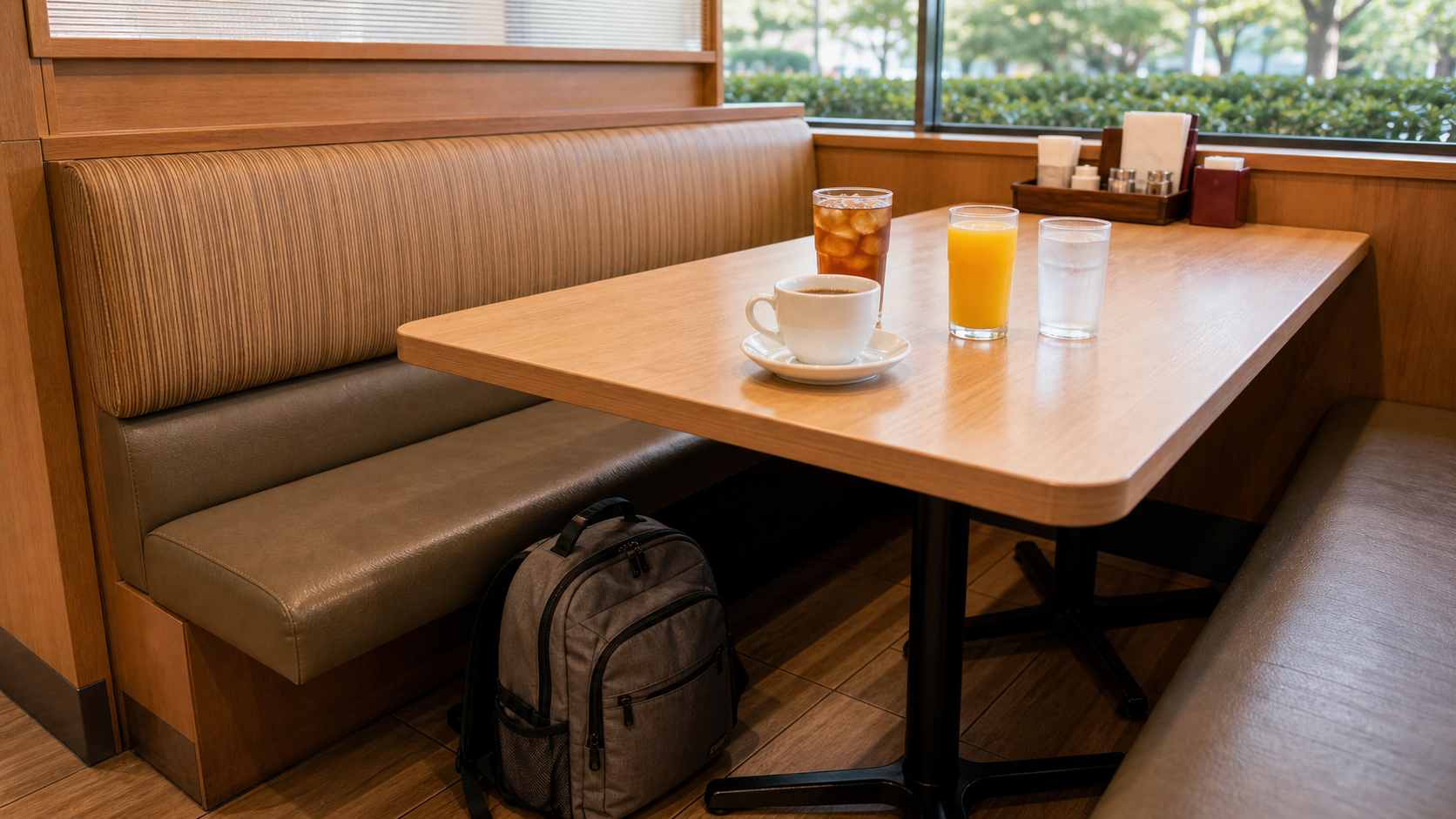
The drink bar is the core feature. Depending on the chain and menu, it may include hot coffee, iced coffee, tea, soda, juices, and sometimes soup. Some chains sell it as an add-on to a meal, while others allow drink-bar use without a full meal during certain hours or through set menus.
Use cafe-style famiresu time with common sense:
- Order something, even if it is small.
- Do not spread luggage across neighboring chairs.
- Avoid video calls and loud speaker audio.
- Leave if the entrance has a waiting line.
- Do not assume power outlets or Wi-Fi exist at the branch you picked.
Joyfull is one official example of a chain that actively supports this use case: its morning menu page describes the lineup as usable “cafe-style” or for a meal, and its official Wi-Fi page lists joyfull-wifi plus a tourist network, joyfull-tourist, with 30 minutes per login and up to six logins per day. Some franchise stores may differ, so check the branch if Wi-Fi matters.
3. Cheap Sit-Down Meals
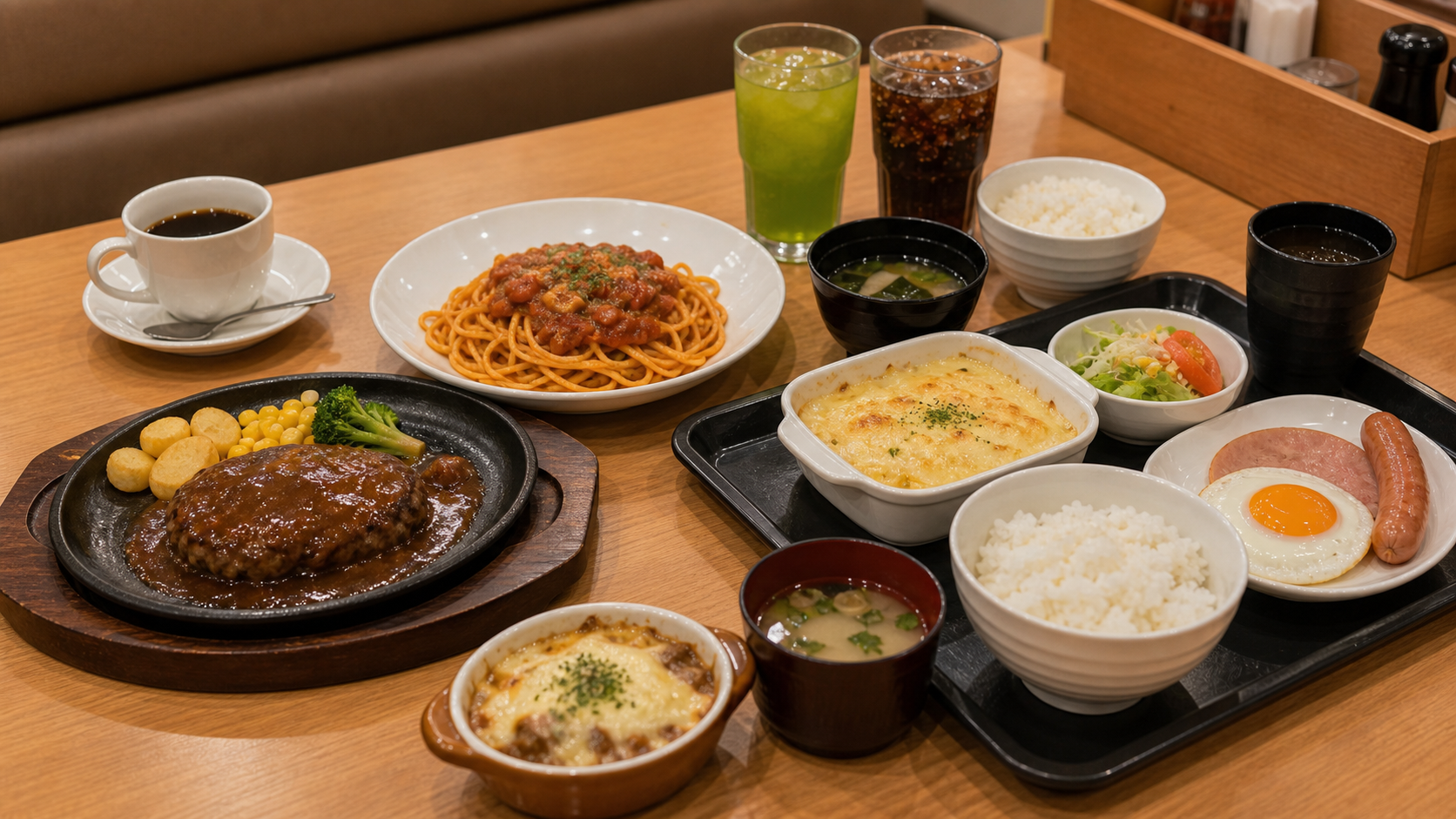
If you want the lowest possible meal, convenience stores and standing soba shops may beat famiresu. But if you want a real table, air-conditioning, a restroom, and time to regroup, famiresu can be excellent value.
Current official examples show the range:
- Joyfull’s morning menu lists a Bacon Morning at ¥328 including tax and several breakfast items under ¥700.
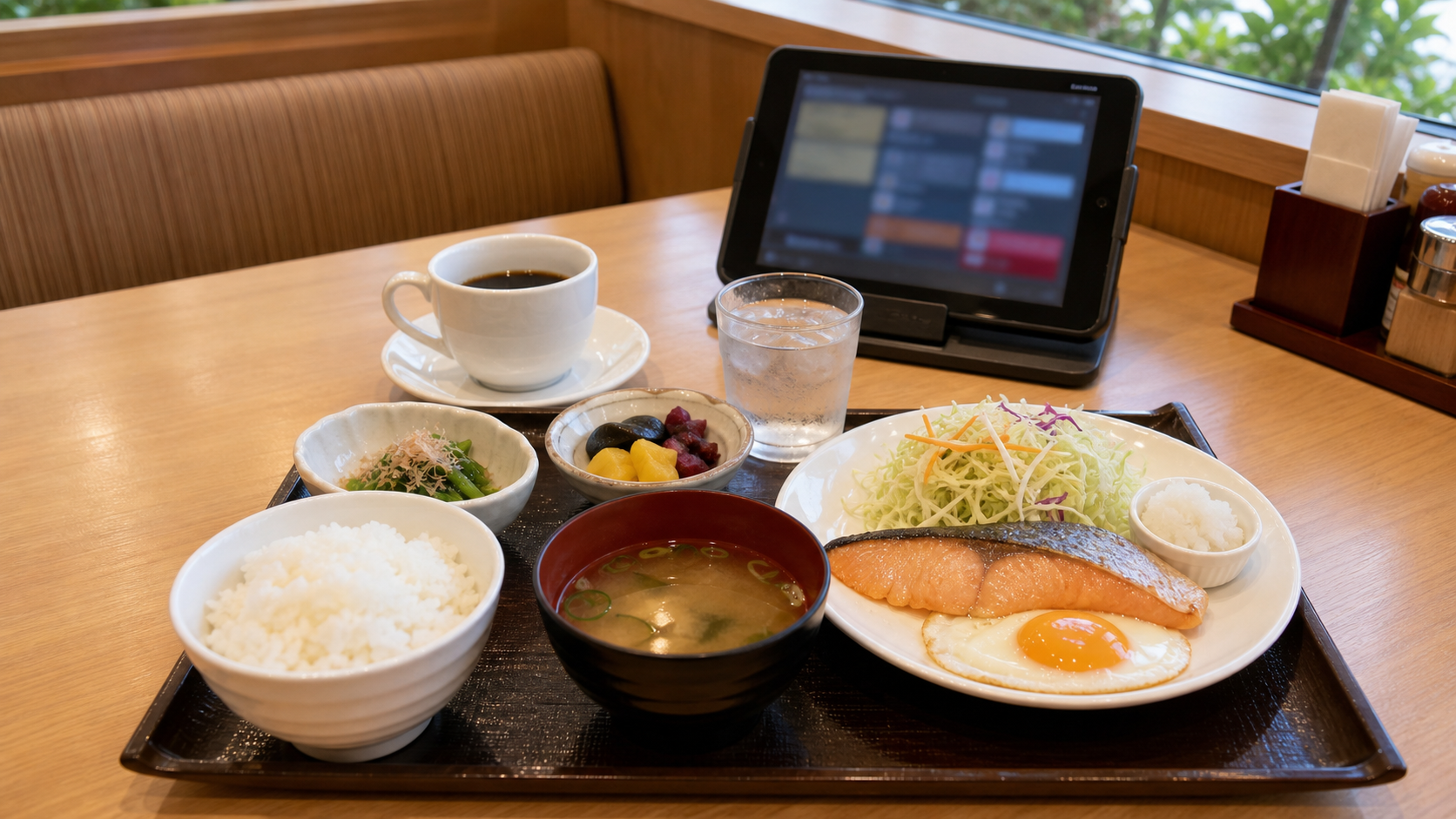
- Denny’s morning page lists Japanese breakfast sets such as grilled salmon breakfast at ¥682 including tax, with drink-bar bundle prices shown separately.
- Denny’s menu page lists weekday lunch service from 10:00 to 17:00, with some stores and items differing.
- Royal Host sits above the budget chains on comfort, but it offers breakfast from opening to 10:30 at participating branches and weekday lunch from 10:30 to 15:00.
- Saizeriya’s official menu library includes a Grand Menu in English, lunch menu, morning menu, and ordering guide, making it one of the easiest budget sit-down chains for travelers to understand.
Do not build a trip budget around a single menu item. Prices and participating stores change, and some central branches have different pricing. Use these as examples of the price band, then confirm the store menu on the day.
Early Morning, Lunch, Dinner, and Late Night
Timing matters more than many visitors expect. A famiresu that feels calm at 10:30 can be full at 12:15.
Morning: Best for Jet Lag and Early Arrivals
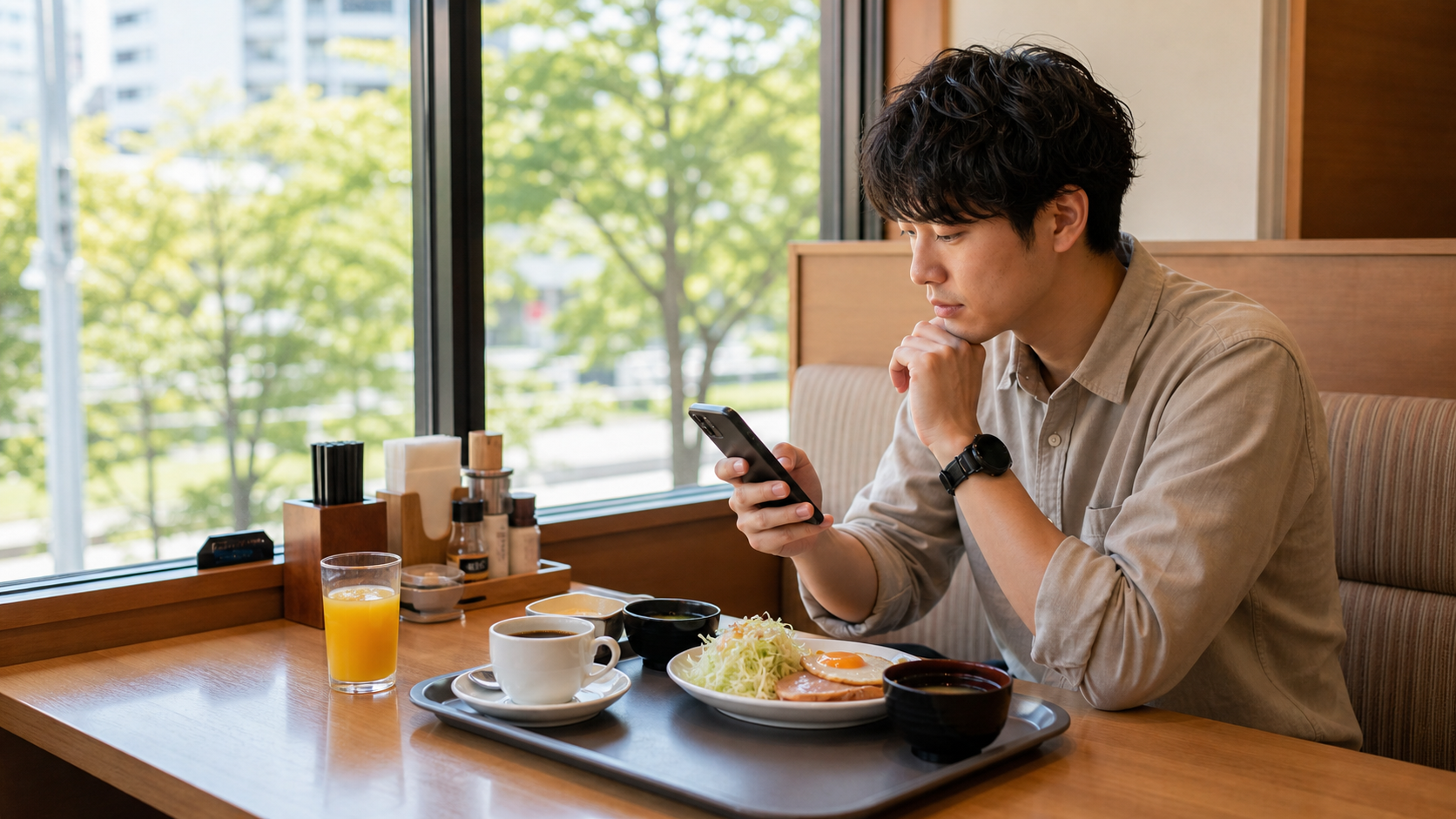
Breakfast is often the best famiresu window for tourists. Branches are quieter, prices can be low, and the restaurant is more likely to tolerate a slow start than during lunch.
Useful official time examples:
- Denny’s morning menu runs from opening to 11:00, with store exceptions.
- Royal Host breakfast runs from opening to 10:30 at participating branches.
- Some Saizeriya branches have a dedicated morning menu and an official morning-store list.
Morning famiresu is good for travelers who woke up at 5:00 from jet lag, arrived near a hotel before check-in, or need a calm breakfast with children.
Lunch: Cheap but Crowded
Lunch is where famiresu becomes most cost-effective and least relaxing. Office workers, families, and students can fill branches quickly around 12:00-13:00.
If you want lunch plus a slow planning session, arrive around 10:30-11:30 or after 13:30. If there is a wait list at the door, treat the table as a meal seat, not a lounge.
Dinner: Good for Groups, Not Necessarily Fast
Dinner is useful when your group cannot agree on one specialty restaurant. One person can get pasta, another a hamburger steak, another a Japanese set meal, and children can often find something plain.
The trade-off is atmosphere. A famiresu dinner solves logistics; it rarely becomes the meal you tell stories about later. Use it for recovery nights, not for your one special Tokyo dinner. For restaurants where reservations matter, use the Tokyo restaurant reservation guide.
Late Night: Check Carefully
Older Japan travel advice often treated famiresu as a 24-hour backup. That is no longer something to assume. Many branches reduced overnight hours after 2020, and even chains that have late stores vary by location.
Also watch for late-night surcharges. Denny’s states that from 22:00 to 5:00, a 10% late-night charge is added to food orders. Joyfull also lists a 10% late-night surcharge from 22:00 to 5:00. If your budget is tight, late-night famiresu can still be cheaper than many alternatives, but the price may differ from daytime.
What About Suitcases?
This is the question travelers actually need answered.
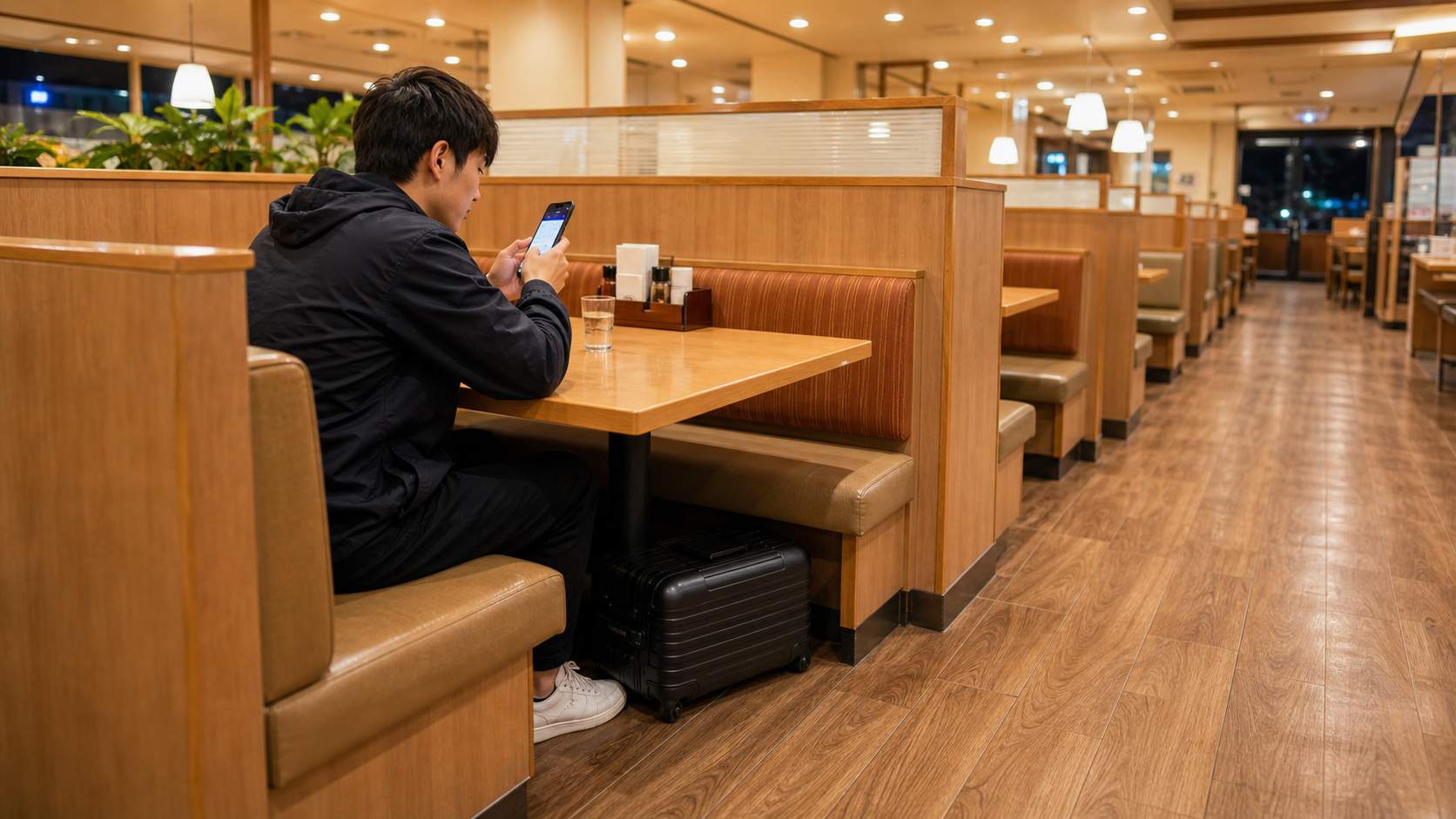
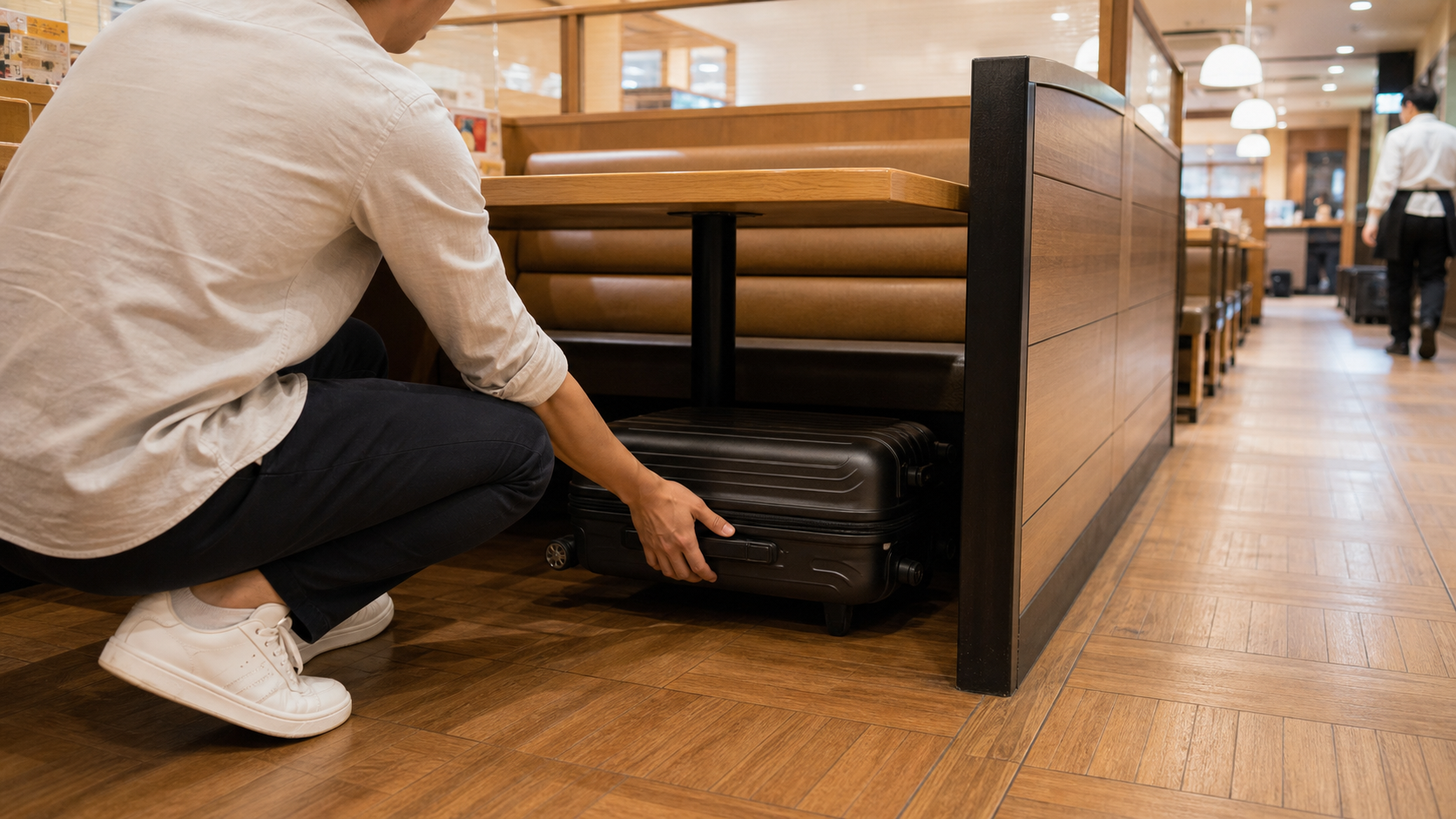
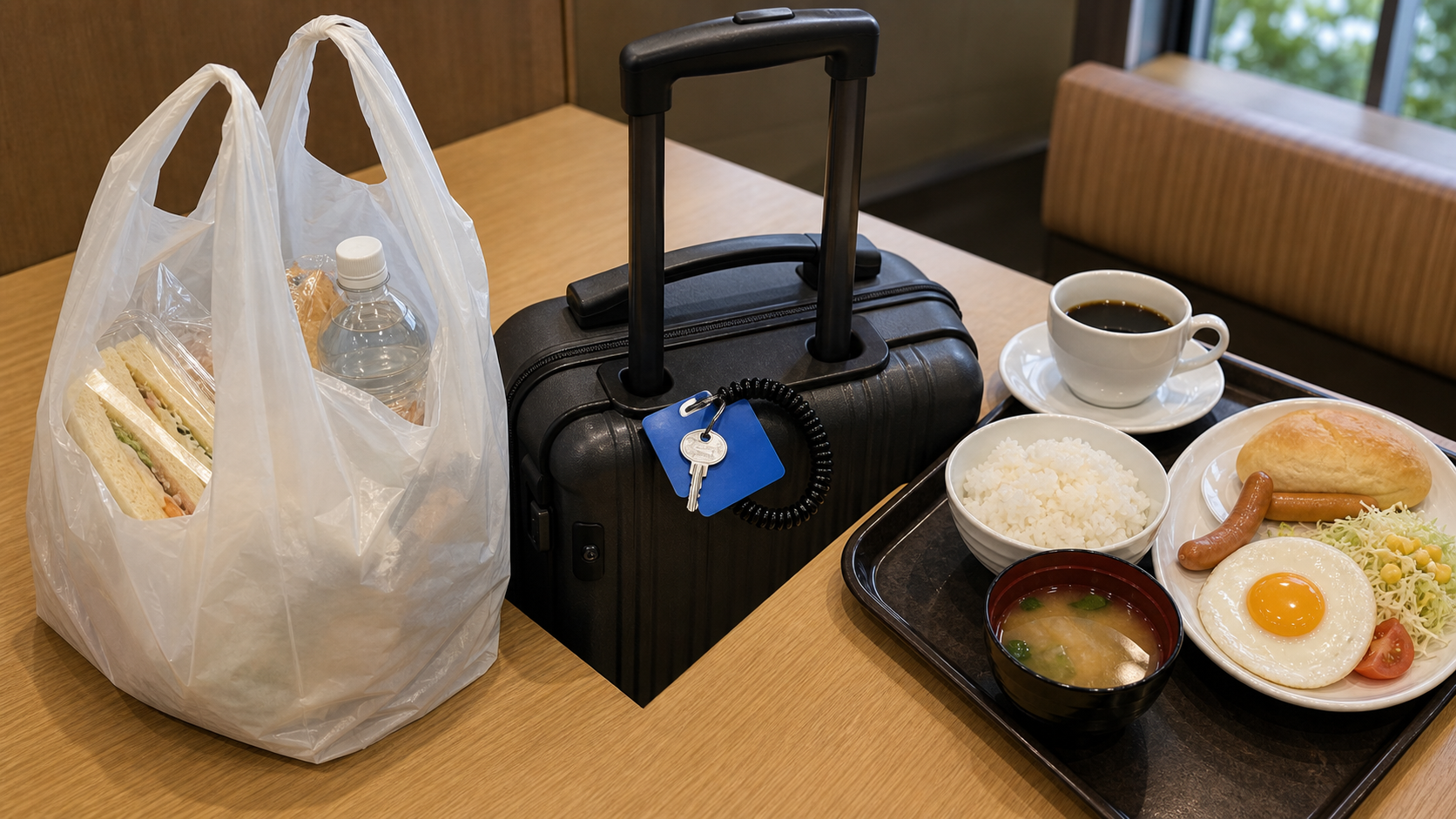
A famiresu is not luggage storage. It is a restaurant. That said, a small amount of luggage can work if you behave like a restaurant customer and keep aisles clear.
Lower-Risk
- One backpack.
- One small carry-on suitcase.
- A shopping bag or daypack.
- Luggage that fits under the table, against your seat, or beside your booth without blocking anyone.
Risky
- Two or more large suitcases.
- A stroller plus suitcases.
- Ski bags, cardboard boxes, musical instruments, or oversized shopping.
- Any luggage setup that blocks the aisle, emergency path, drink bar, or neighboring table.
If you have a large suitcase, ask yourself: “Could a staff member walk behind my chair carrying hot food?” If the answer is no, store the bag first.
The Best Luggage Strategy
Use this rule:
| Luggage situation | Best move |
|---|---|
| Backpack | Famiresu is easy |
| One carry-on | Famiresu is realistic in many branches outside peak hours |
| One large suitcase | Choose a spacious branch, avoid peaks, be ready to leave |
| Two or more large suitcases | Store luggage first |
| Group with many suitcases | Use a cloak service, hotel bag drop, or station counter first |
Coin lockers and cloak services exist because restaurants are not built to hold travel bags. If your day depends on sitting comfortably, solve luggage first, then eat.
Large Groups: More Flexible Than Tiny Restaurants, Still Not Magic
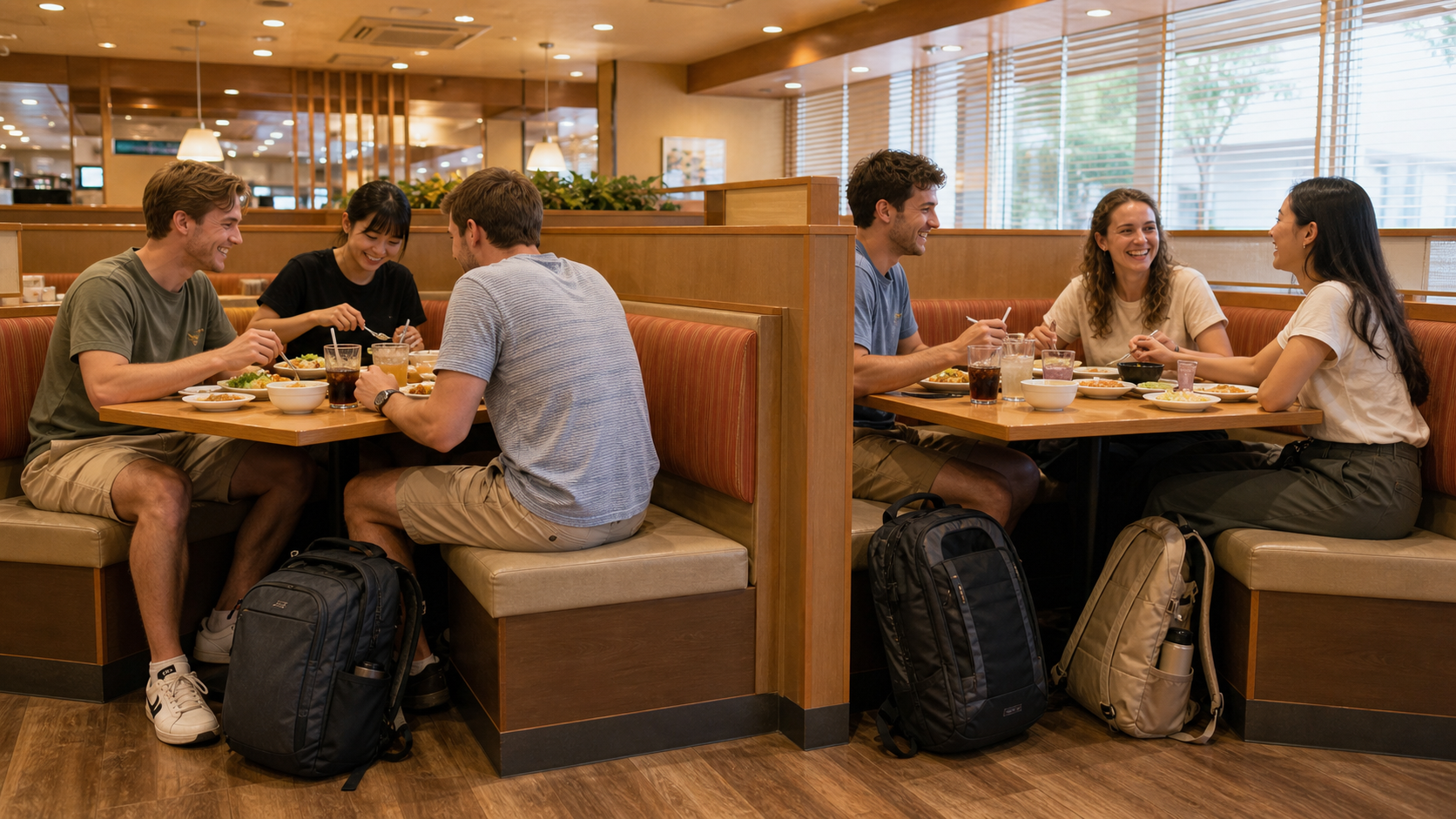
Famiresu are often easier for groups than ramen shops, sushi counters, and small izakaya. Booths and four-seat tables can be combined in some branches, and chains are used to families.
But do not assume that six or eight people can walk in at 12:30 and sit together immediately. The bigger the group, the more timing matters.
Good group tactics:
- Go before 11:30 or after 13:30 for lunch.
- Go before 18:00 or after 20:00 for dinner.
- Split into two tables if staff suggests it.
- Keep luggage out of the equation.
- For 8+ people, call ahead or use a reservation route where available.
There is also a difference between “tourist family of five” and “inbound tour group.” Skylark, the company behind Gusto and Jonathan’s, operates an official inbound group restaurant reservation page for travel agencies, with a reservation center open 10:00-20:00 and a flow for availability checks. That does not mean a normal traveler can reserve any branch casually, but it does show that large-group dining is treated as a separate operation, not a walk-in promise.
Chain-by-Chain: What Travelers Should Know
Gusto
Gusto is one of the most recognizable casual family-restaurant chains in Japan. It is useful for budget meals, children, and general “we need seats now” situations. The official Gusto site includes links for in-store menus, morning menu, store search, payments, and inbound group reservations.
Best for: cheap meals, families, casual groups, backup meals near stations.
Jonathan’s
Jonathan’s is part of the same Skylark group as Gusto and often feels a little calmer or more urban depending on the branch. It is a practical default in Tokyo neighborhoods where ramen or izakaya would be difficult with children or luggage.
Best for: mixed groups, breakfast or dinner near hotels, low-stress meals.
Denny’s Japan
Denny’s in Japan is not exactly the same as Denny’s overseas. It has Japanese breakfast sets, seasonal menus, and a broad family-restaurant lineup. Official menu pages clearly separate morning, lunch, grand menu, and drink-bar categories, which makes planning easier.
Best for: breakfast, late waits at branches with long hours, travelers who want a familiar name.
Royal Host
Royal Host is the more polished option. It is not the lowest-price chain, but it can be a comfortable choice for older travelers, families, and anyone who wants a calmer sit-down meal.
Best for: breakfast, better-quality casual meals, families who value comfort over the lowest price.
Saizeriya
Saizeriya is an Italian-style budget chain rather than a classic diner-style famiresu, but travelers use it in the same way: sit-down meals, low prices, and easy sharing. The official menu library includes English menu material and an ordering guide.
Best for: cheap lunch or dinner, groups, travelers who want to order several small dishes.
Joyfull
Joyfull is especially common outside central Tokyo and across regional Japan. It is worth knowing because its official site provides foreign-language menu PDFs, cashless payment information, and tourist Wi-Fi details.
Best for: road trips, regional cities, long pauses, travelers who need Wi-Fi backup.
Ordering, Paying, and Small Etiquette
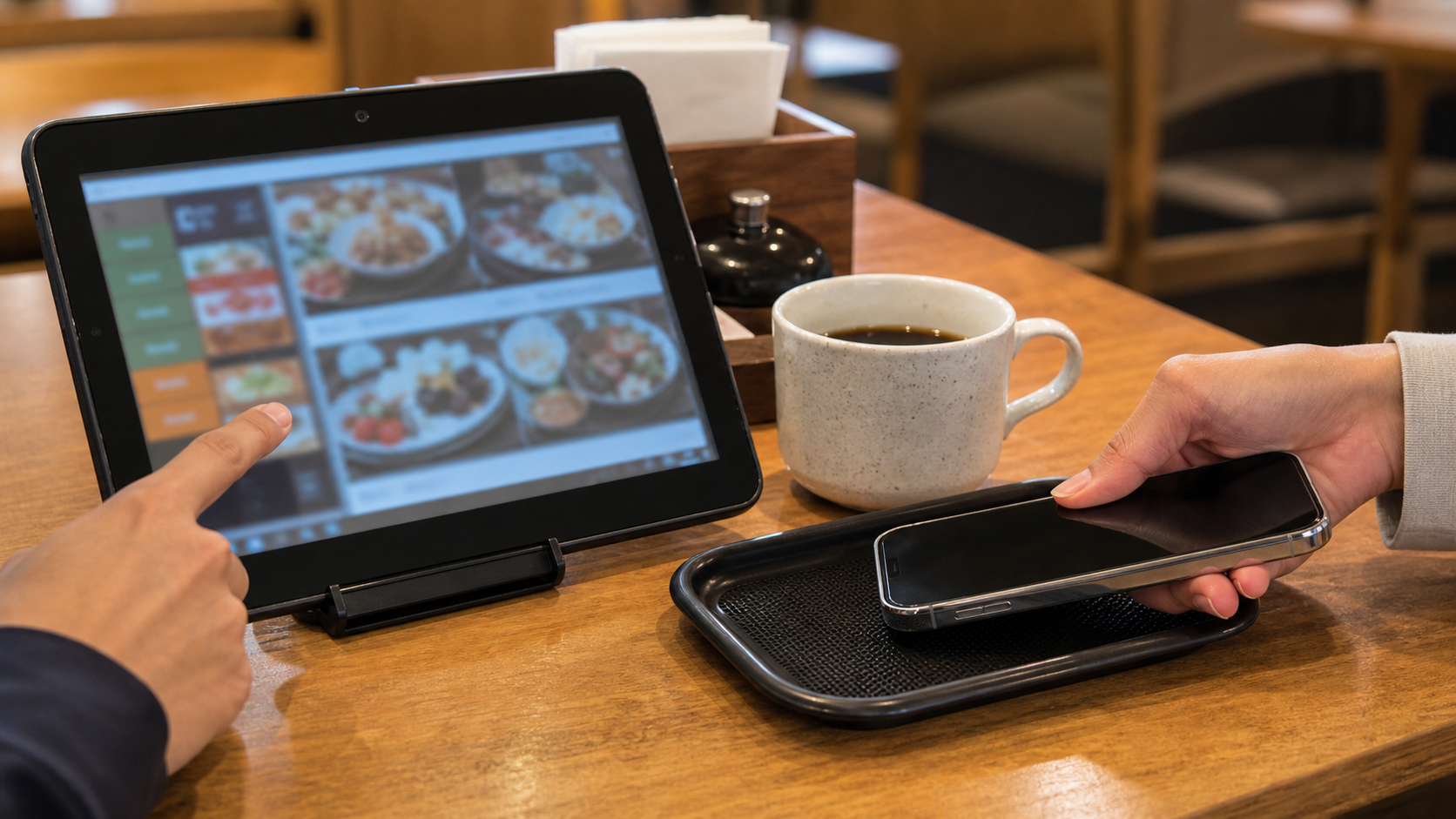
Ordering systems vary by chain and branch. You may see:
- A tablet at the table.
- A paper menu with a call button.
- QR-code ordering from your phone.
- Staff taking orders directly.
Photo menus make the process easy even without Japanese. If you have allergies or strict dietary needs, do not rely on photo menus alone. Ask staff, use the official allergy pages where available, and be careful with broths, sauces, and shared cooking equipment.
For payment, major chains increasingly support credit cards, transit IC cards, and QR codes. Joyfull’s official cashless page, for example, lists Visa, Mastercard, JCB, UnionPay, American Express, Diners Club, Discover, transit IC cards such as Suica and PASMO, and QR payments including PayPay, WeChat Pay, and Alipay. Individual stores can differ, so keep a little cash as a backup.
Etiquette is simple:
- Wait to be seated if there is a host stand or tablet queue.
- Order per person if you are staying more than a short time.
- Keep your voice low.
- Do not bring outside food and drinks.
- Do not sleep at the table.
- Leave when the restaurant is crowded and people are waiting.
Food Restrictions and Halal / Vegetarian Caution
Famiresu are convenient, but they are not automatically good for strict dietary needs.
Vegetarian travelers should be careful with soups, sauces, demi-glace, dashi, bacon bits, and shared cooking surfaces. Muslim travelers should not assume that chicken, beef, or “vegetable” dishes are halal. Pork, alcohol-based seasonings, and cross-contact can appear in unexpected places.
If dietary rules are important, check official allergen information and use restaurants that clearly publish what you need. For broader context, see the Muslim guest guide to Japanese Airbnb stays.
The safe famiresu mindset is: good for convenience, not good for invisible-ingredient certainty.
Famiresu vs Other Traveler Options
| Need | Better choice |
|---|---|
| Cheapest food possible | Konbini, supermarket, standing soba |
| Sit-down meal under moderate budget | Famiresu |
| Work for several hours | Dedicated cafe, hotel lobby, coworking space |
| Store luggage | Coin locker, cloak service, hotel bag drop |
| Sleep after late arrival | Capsule hotel, business hotel, sauna stay |
| Special dinner | Reserved restaurant |
| Mixed group with kids | Famiresu |
For the convenience-store side of the decision, read the Japanese konbini guide. The short version: konbini wins for speed and price, famiresu wins for seating and recovery time.
A Simple Decision Flow
Use this in the moment:
Do you have large luggage?
├── Yes, several bags -> store luggage first, then eat
├── One carry-on -> famiresu can work outside peak hours
└── Backpack -> easy

What do you need?
├── Real meal + seat -> famiresu
├── Just snack + speed -> konbini
├── Sleep -> capsule/hotel/sauna
├── Laptop work -> cafe or coworking; use famiresu when quiet
└── Group meal with kids -> famiresu, avoid peak times

Is it 12:00-13:00 or 18:30-20:00?
├── Yes -> expect waits, eat efficiently
└── No -> better chance for a relaxed pause
FAQ
Can I sit in a famiresu just for drinks?
Often yes, especially if the chain sells a drink bar and the restaurant is not busy. Order properly, keep the table tidy, and leave if people are waiting. Policies and staff tolerance vary by branch.
Are famiresu open 24 hours in Japan?
Do not assume so. Some branches still run very late, but many reduced overnight hours after 2020. Check the chain’s store page or map listing on the day you plan to go.
Is a famiresu cheaper than a cafe?
It can be, especially for breakfast or lunch sets. A cafe may be cheaper for one coffee, but a famiresu gives you a better chance of a larger table, more food options, and sometimes a drink bar.
Can I bring a suitcase into a famiresu?
A backpack or one small carry-on is realistic in many branches if it does not block the aisle. Multiple large suitcases are a bad fit. Use luggage storage first if the bags cannot stay neatly under or beside your seat.
Are famiresu good for large groups?
They are more flexible than many tiny restaurants, but seating is not assured. Groups of four to six are realistic outside peak hours. For larger groups, call ahead, split tables, or use official group-reservation routes where available.
Do famiresu have English menus?
Many major chains offer photo menus, tablet interfaces, or multilingual menu material. Joyfull and Saizeriya publish foreign-language menu materials online. Smaller or older branches may still require some pointing and translation-app help.
Can I use a laptop in a famiresu?
Sometimes, but treat it as a restaurant, not an office. Wi-Fi, power outlets, and staff tolerance vary. A short planning session is normal; a half-day workstation during lunch rush is not.
Are famiresu safe for halal, vegan, or strict vegetarian diets?
Not automatically. Broths, sauces, shared equipment, pork, and alcohol-based seasonings can be hard to detect. Use official allergen information and choose restaurants that clearly publish the dietary information you need.
Should I choose famiresu or konbini after a late arrival?
Choose konbini if you need food fast and have nowhere to sit. Choose a famiresu if you need a table, restroom, and 60-120 minutes to recover. If you need sleep, book a capsule, hotel, or sauna-style overnight option.
What to Do Next
Save two or three famiresu chains on your map before you travel: one near your hotel, one near a major station you will use, and one near your first-day sightseeing area. Then save a luggage-storage option nearby. That pairing solves more travel friction than either one alone.
Use famiresu as a recovery tool: sit, eat, plan, regroup. Use lockers and cloak services for bags. Use reserved restaurants for special meals. When you keep those roles separate, famiresu becomes one of the most useful small systems in Japan travel.
About the Author
Basabasa is a former sergeant major in the Japan Ground Self-Defense Force who writes Real Japan Guide for first-time foreign visitors. He focuses on practical Japan travel frictions: how to order, pay, move, ask, queue, and avoid small mistakes that can make a good trip feel harder than it needs to be.
Last updated: June 2026. Menu prices, opening hours, payment methods, Wi-Fi availability, and participating stores can change by branch. Check the official chain page or store listing before relying on a specific location.
Comments