- Quick Answer
- Japan’s Electricity in 30 Seconds
- Step 1: Find the Input Label
- Step 2: Match the Plug
- Phones, Tablets, Cameras, and Laptops
- Hair Dryers, Curling Irons, Kettles, and Other Heat-Producing Devices
- Medical Devices
- Does 50Hz vs 60Hz Matter?
- If the Power Goes Out or a Breaker Trips
- If You Need an Adapter or Replacement After Arrival
- What Tourists Commonly Get Wrong
- Packing Checklist
- FAQ
- Will my iPhone or Android charger work in Japan?
- Will my laptop charge normally in Japan?
- Can I use a 120V or 220–240V hair dryer in Japan?
- Do I need a different adapter in eastern and western Japan?
- Is a plug adapter the same as a voltage converter?
- What should I do if a charger gets hot, smells burnt, sparks, or trips the breaker?
- Bottom Line
- What to Do Next
Quick Answer
Check the small print on your charger or device. If it says INPUT: 100–240V, 50/60Hz, its power supply is designed to accept Japan’s 100V electricity. You may still need a plug adapter, and you must follow any grounding or model-specific instructions. If the label does not include 100V—or the item is a hair dryer, heating appliance, motorized device, or medical device—do not guess. Check the manufacturer’s instructions or use a Japan-rated replacement.
Checked on: July 12, 2026. Japan’s official tourism site states that the country uses 100V AC, with 50Hz in eastern Japan and 60Hz in western Japan.
Japan’s Electricity in 30 Seconds
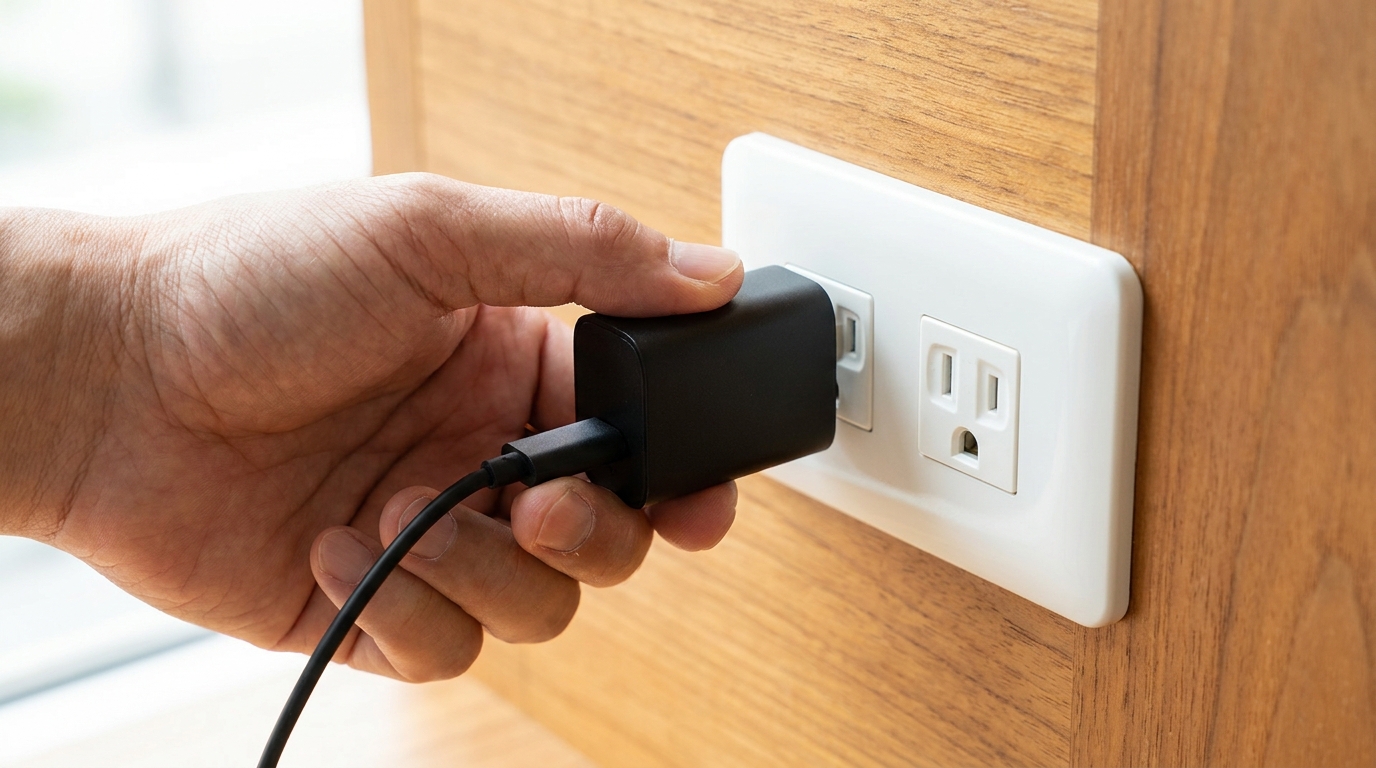
- Voltage: 100V AC nationwide
- Frequency: 50Hz in eastern Japan; 60Hz in western Japan
- Common wall plug: Type A, with two flat parallel blades
Sources: Japan National Tourism Organization — Plugs & Electricity for voltage and frequency, and the JNTO travel FAQ for the Type A plug description.
A plug adapter changes only the shape of the plug. It does not change voltage. A voltage converter changes voltage, but it must be suitable for the exact device and its power requirements.
Step 1: Find the Input Label
Look on the removable power brick, the wall charger, the underside of the device, or the manufacturer’s specification page. Find a line beginning with INPUT, AC INPUT, or Rated input.
| What the label says | What to do in Japan |
|---|---|
100–240V, 50/60Hz |
The power supply accepts Japan’s electricity. Match the plug shape; no voltage converter is needed. |
100V |
It is rated for Japan. Use it only as the manufacturer directs. |
120V only, 220–240V only, or a range that excludes 100V |
Do not assume it is safe or useful on 100V. Check the manufacturer or use a Japan-rated replacement. |
| Label missing, damaged, or unreadable | Do not plug it in until the model’s official specifications are confirmed. |
The label—not the device’s age, brand, purchase country, or USB connector—is the deciding evidence.
Step 2: Match the Plug
Japan’s common Type A socket accepts two flat parallel blades. A two-blade Type A plug may fit directly. Travelers whose plugs have another shape need an adapter that connects their plug to a Japanese Type A socket.
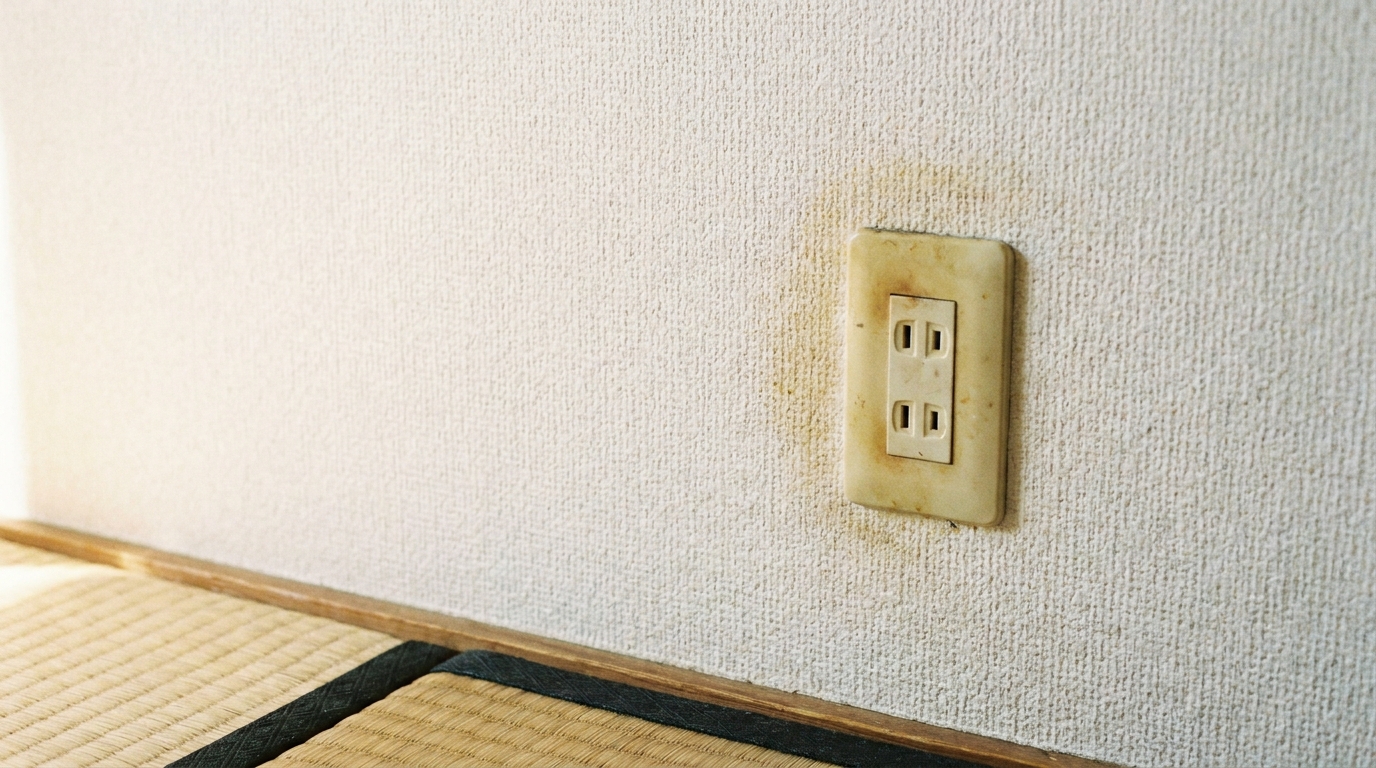
Do not force a wide blade, grounding pin, or bulky adapter into an outlet. Some rooms have different outlet arrangements, and a grounded device may require more than a simple two-pin adapter. If grounding is required by the device manual, confirm the available connection with the accommodation or equipment manufacturer.
Choose an undamaged adapter intended for the device’s load. A loose fit, scorch mark, cracked case, bent blade, exposed wire, or unusual heat is a reason to stop using it.
Phones, Tablets, Cameras, and Laptops
Many modern chargers are designed for a broad input range, but “most” is not a substitute for checking your own label.
If your charger says 100–240V, 50/60Hz:
- It is designed to accept Japan’s 100V supply.
- The input rating shows that the charger accepts Japan’s supply. Actual charging speed still depends on the charger’s output profiles, cable, device, and any model-specific limits.
- You may still need a plug adapter.
- Cable and charger wattage still matter. A phone charger may be too low-powered for a laptop even when its input voltage is compatible.
If the charger becomes unusually hot, smells burnt, sparks, buzzes abnormally, or repeatedly disconnects, unplug it and stop using it.
Hair Dryers, Curling Irons, Kettles, and Other Heat-Producing Devices
Treat high-heat appliances separately from phone and laptop chargers. Do not predict safety or performance from a simple voltage percentage. Heating elements, motors, thermostats, and electronic controls behave differently.
Use one of these options:
- Use the hair dryer or appliance supplied by your hotel or licensed accommodation.
- Use a travel model only when its manual and label explicitly include 100V and 50/60Hz.
- Ask the manufacturer whether the exact model is approved for use on Japan’s supply.
- If none of the above applies, leave it unplugged and use a Japan-rated replacement.
A plug adapter alone never makes an incompatible appliance compatible.
Medical Devices
For a CPAP machine, nebulizer, mobility-device charger, or other medical equipment, check the exact model before travel. Confirm:
- accepted input voltage and frequency;
- whether the power supply is built in or removable;
- grounding requirements;
- battery or airline requirements;
- the manufacturer’s recommended travel setup.
Do not rely on a general travel article for a medical device. Contact the manufacturer or medical-equipment provider before departure and carry the manual or specification page offline.
Does 50Hz vs 60Hz Matter?
Japan uses 50Hz in the east and 60Hz in the west. A device labeled 50/60Hz accepts both. That includes many switching power supplies used for personal electronics, but the label still decides.
If a device lists only one frequency, or its instructions warn about frequency, confirm with the manufacturer before moving between regions. You do not need a different plug adapter simply because you travel from Tokyo to Kyoto or Osaka.
Official reference: Japan National Tourism Organization — Plugs & Electricity.
If the Power Goes Out or a Breaker Trips
- Stop using and unplug the device that was running when the power failed, if it is safe to do so.
- Do not repeatedly reset a breaker that trips again.
- Follow the accommodation’s posted instructions or contact the front desk/host. Do not open covers or touch wiring.
- Check the plug, cord, and device for damage, scorch marks, unusual heat, odor, or moisture before any later use.
- If there is smoke, sparking, fire, or immediate danger, move away and call Japan’s fire and ambulance number, 119. See the JNTO emergency-number list.
Japan’s National Institute of Technology and Evaluation (NITE) advises checking power plugs, cords, outlets, and power strips for damage, deformation, discoloration, loose connections, and excessive load. Stop using equipment when you find abnormal heat, odor, or other warning signs. See NITE’s plug, cord, and outlet safety guidance.
If You Need an Adapter or Replacement After Arrival
Stock, price, opening hours, and supported plug types vary. Do not assume every convenience store or 100-yen shop carries the correct product.
For an ordinary plug adapter or replacement charger, a staffed electronics retailer is the safest first choice because you can show the device label and plug. For a high-wattage, grounded, unusual, or medical device, contact the manufacturer or a specialist rather than buying the first “travel converter” you see.
Before paying, confirm:
- input and output ratings;
- plug compatibility;
- maximum supported power;
- grounding requirements;
- the product and cord are undamaged;
- the instructions cover your intended use.
What Tourists Commonly Get Wrong
- “The plug fits, so it is safe.” Plug shape does not prove voltage compatibility.
- “USB-C means universal voltage.” USB-C describes a connector and charging system, not the AC input range printed on the charger.
- “A converter works with every appliance.” Converters have specific input, output, and power limits.
- “Lower voltage can never be dangerous.” Devices do not all behave like simple resistors. Do not use equipment outside its rated input.
- “A compatible charger must be slower in Japan.” Input compatibility alone does not determine charging speed; output profiles, cable, device, and model-specific limits also matter.
- “If the breaker resets, everything is fine.” Repeated tripping, heat, odor, noise, or visible damage requires stopping use and contacting the property or manufacturer.
Packing Checklist
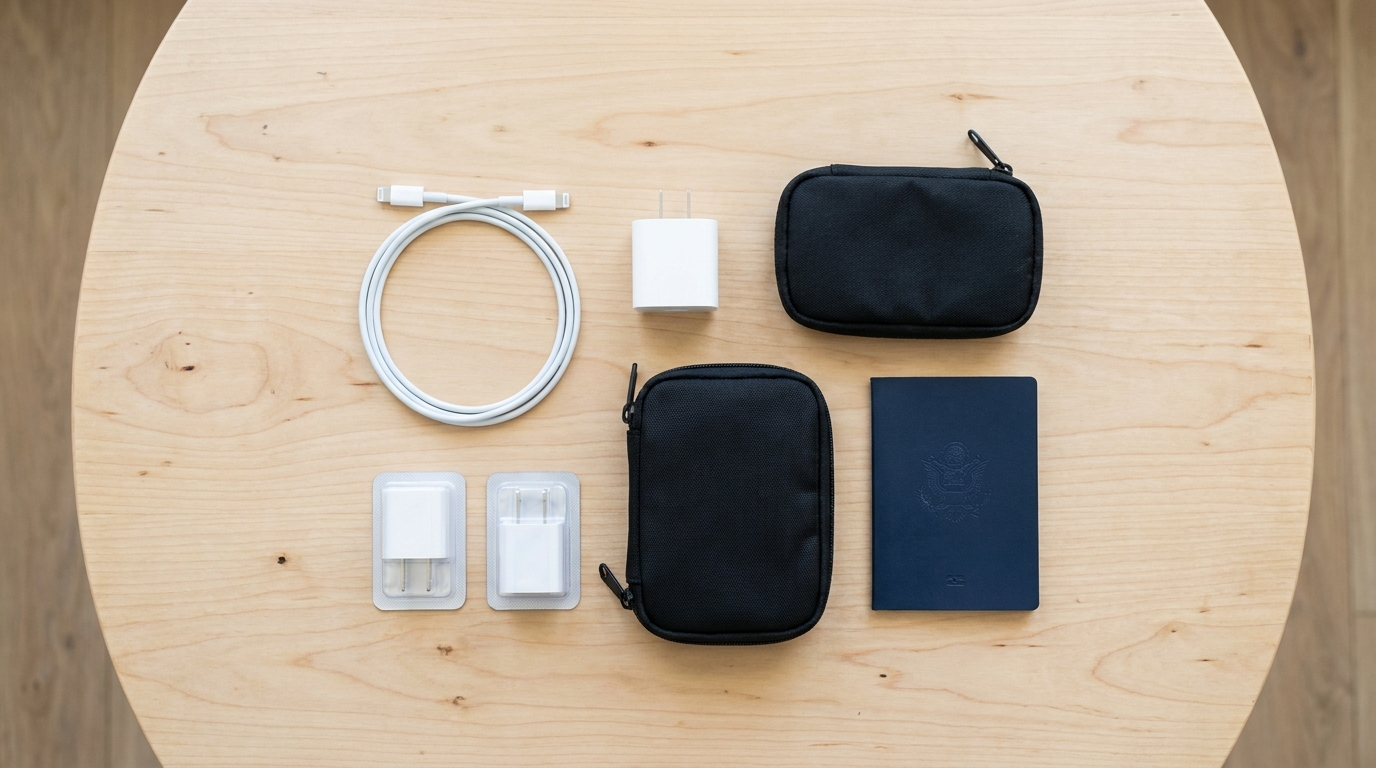
- Photograph the input label of each important charger or device.
- Confirm
100Vor a range including 100V. - Confirm
50/60Hzwhen moving between eastern and western Japan. - Bring only the plug adapter you actually need.
- Keep medical-device specifications and support contacts offline.
- Plan to use accommodation-provided heat appliances unless your own model is explicitly compatible.
- Pack an undamaged cable and a charger with enough output for the device.
FAQ
Will my iPhone or Android charger work in Japan?
Its power supply can accept Japan’s electricity if the charger’s input label includes 100V, commonly as 100–240V, 50/60Hz. You may still need a plug adapter and must follow grounding or model-specific instructions. Check the actual charger rather than assuming compatibility from the phone brand or USB connector.
Will my laptop charge normally in Japan?
Its power adapter can accept Japan’s supply if the input range includes 100V. Actual charging speed depends on the adapter’s output profiles, cable, laptop, and any model-specific limits. Use the manufacturer-specified charger and cable.
Can I use a 120V or 220–240V hair dryer in Japan?
Do not use it unless the exact model’s label and instructions include 100V and 50/60Hz. Hair dryers combine high heat, motors, and control components, so a plug adapter or simple voltage calculation is not enough. Use the accommodation’s dryer or a Japan-rated replacement if compatibility is not explicit.
Do I need a different adapter in eastern and western Japan?
No. The common plug shape does not change between regions. The frequency changes—50Hz in eastern Japan and 60Hz in western Japan—so check that the device label includes both, usually written 50/60Hz.
Is a plug adapter the same as a voltage converter?
No. A plug adapter changes the physical connection; it does not change voltage. A voltage converter changes voltage and must match the device’s required input and power. If a device excludes 100V, consult its manufacturer instead of assuming a generic converter is suitable.
What should I do if a charger gets hot, smells burnt, sparks, or trips the breaker?
Unplug it if it is safe to do so and stop using it. Do not repeatedly reset the breaker. Check for visible damage and contact the property or manufacturer. If there is smoke, fire, or immediate danger, move away and call 119.
Bottom Line
The safest answer is printed on the device. If the label includes 100V and the local frequency, match the plug and use it as directed. If the rating is unclear—or the device produces heat, uses a motor, requires grounding, or supports medical care—do not improvise. Verify the exact model or use a Japan-rated replacement.
What to Do Next
- Staying in a rental: use the Tokyo Airbnb Starter Guide to prepare the room and first night.
- Looking for essentials after arrival: check the Japanese konbini guide, but confirm live stock before relying on a store.
- Moving with a low battery: save your destination and read the Google Maps in Japan guide before leaving the station.

Comments