Quick Answer
Yes — at a Japanese konbini (7-Eleven, FamilyMart, Lawson) you can withdraw cash from foreign cards, top up your IC card, print Airbnb check-in papers, buy concert tickets, and grab 24-hour food. With 55,000+ locations open all night, konbini are survival hubs for travelers in 2026.
Japanese Konbini Guide: What You Can Actually Do at a Convenience Store in Japan (2026)
Yes — at a Japanese konbini (convenience store), you can withdraw cash from foreign cards, buy concert and event tickets, print documents such as Airbnb check-in papers, top up your transit IC card, and pick up food, bento boxes, or sandwiches around the clock. Most locations are open 24 hours, and there are more than 55,000 of them across Japan. For travelers, konbini are not just shops — they are survival hubs.
This guide explains what you can actually do inside a konbini, how the three biggest chains compare, and the five services that will save your trip.
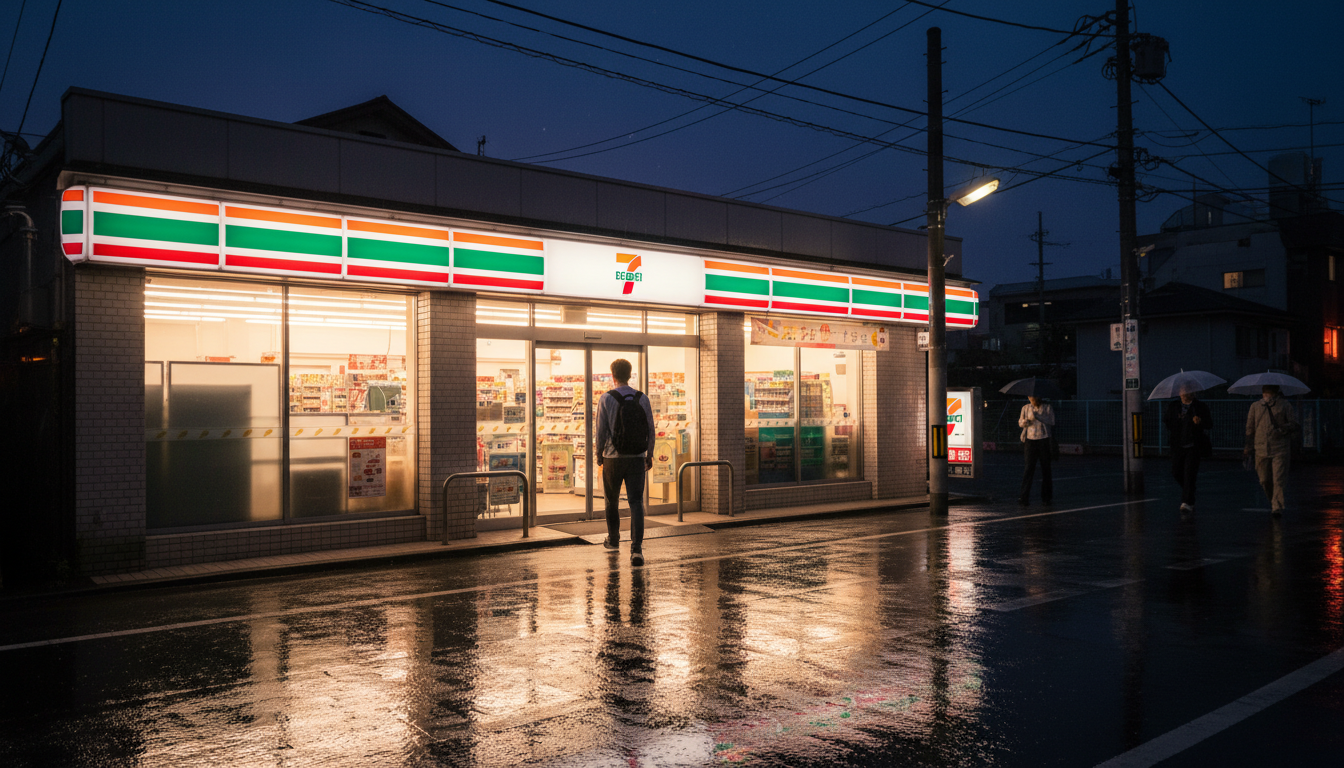
The Big 3 at a Glance
Three chains dominate the Japanese convenience store landscape. The differences are real but subtle — you will rarely be disappointed no matter which one you walk into.
| Chain | Approx. Stores (Japan) | Known For | English Support |
|---|---|---|---|
| 7-Eleven | ~21,000 | Strongest foreign-card ATMs, high-quality food | Good in urban areas |
| FamilyMart | ~16,000 | Fried chicken (Famichiki), FamiPort ticket machine | Good in urban areas |
| Lawson | ~14,600 | Premium desserts, Loppi machine, healthy options | Good in urban areas |
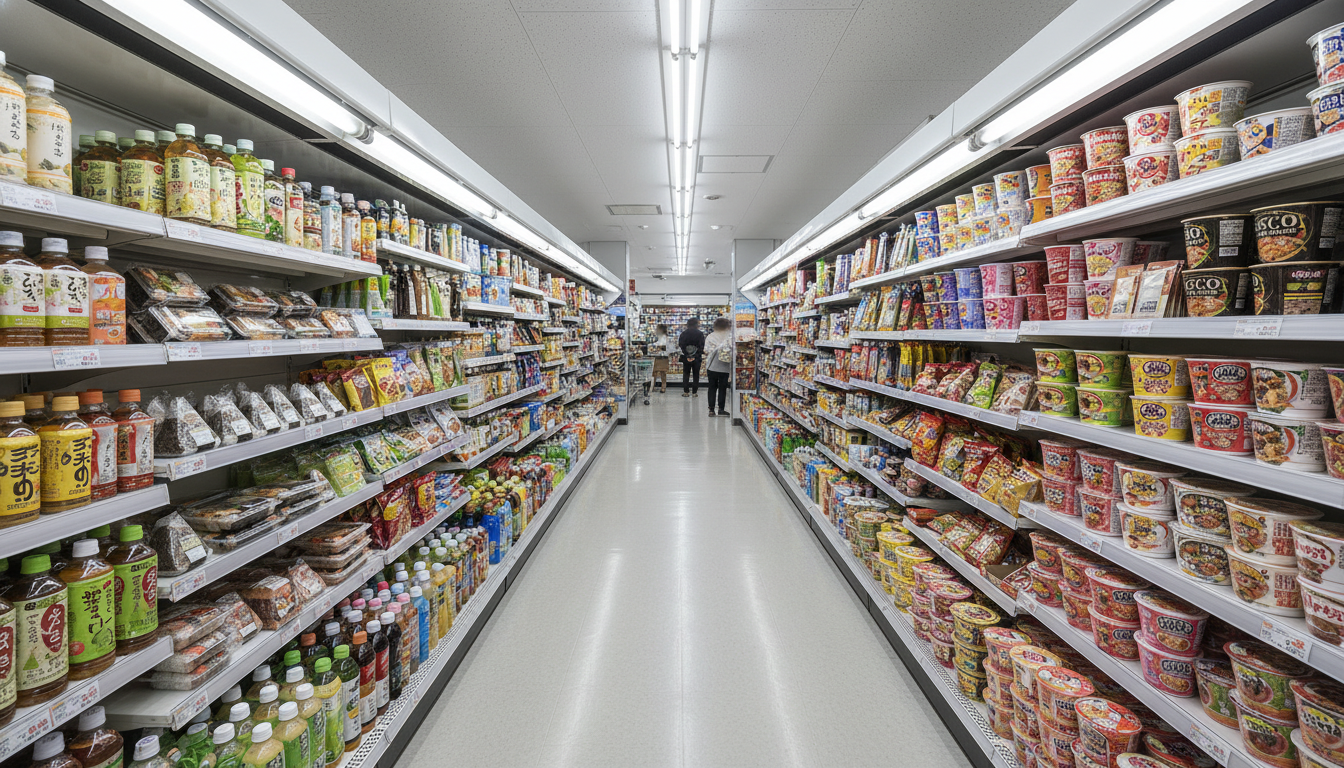
The honest truth: all three sell very similar things. You can get a rice ball, a bottle of green tea, a hot coffee, and use an ATM at any of them. Pick whichever is closest. The only time chain choice matters is when you need a specific service — covered below.
What You Can Buy
Japanese convenience store products are famously good, and the selection is far wider than most travelers expect. The table below is a non-exhaustive sample to give you a sense of what to look for — stock varies by chain, region, and season, and the product lineup rotates constantly.
| Category | Examples (a sample, not a recommendation) | Typical Price |
|---|---|---|
| Rice-based | Onigiri (rice balls), sushi rolls, inari-zushi | ¥150–250 each |
| Bento (meal boxes) | Karaage bento, grilled fish bento, curry, pasta bento | ¥500–800 |
| Noodles | Cup ramen, cup udon, cup soba, chilled noodle packs | ¥200–500 |
| Sandwiches & bread | Tamago (egg) sando, katsu sando, melon bread, curry bread | ¥200–400 |
| Hot counter items | Fried chicken, nikuman (steamed buns), oden (winter), corn dogs | ¥120–300 |
| Sweets & desserts | Cream puffs, roll cake, pudding, mochi snacks, Pocky | ¥130–350 |
| Drinks (non-alcoholic) | Green tea, barley tea, coffee (hot/cold), sports drinks, smoothies | ¥120–200 |
| Alcohol | Beer, chu-hai, small wine bottles, whiskey miniatures | ¥200–1,000 |
| Daily essentials | Toothbrush, phone charger, umbrella, tissues, basic medicine | ¥100–1,500 |
| Stationery & misc. | Pens, notebooks, batteries, stockings, magazines | ¥100–800 |
Food
- Onigiri (rice balls) — Fresh daily, wrapped so the seaweed stays crisp. Common fillings include tuna-mayo, grilled salmon, umeboshi (pickled plum), and kombu (kelp). Around ¥150–200 each.
- Bento boxes — Full meals for ¥500–700. Ask the staff to heat it (atatamete kudasai).
- Sandwiches — Soft crustless bread, generous fillings. The egg salad sandwich (tamago sando) has its own fan base.
- Hot snacks at the counter — Fried chicken, steamed buns (nikuman), oden in winter. Point and pay.
- Instant ramen — Cup noodles live here in a variety you will not find at home. Hot water is free at the counter.
Drinks
Every konbini has a full wall of refrigerated drinks: green teas, coffees, sports drinks, fruit juices, and alcohol. Beer, chu-hai, wine, and basic spirits are all available. Prices are slightly higher than supermarkets but still cheap by Western standards.
Alcohol and Tobacco
Both are sold at every konbini. You will be asked to confirm you are over 20 (the legal age in Japan) by tapping a button on the register touchscreen. The text will usually be in Japanese, but the staff will gesture — just tap yes and you are done.
Daily Essentials and Magazines
Toothbrushes, phone chargers, umbrellas, stockings, basic toiletries, stationery, batteries, and a small selection of magazines. Not a full pharmacy, but enough to fix most small travel emergencies.
What You Can Do: The 5 Services That Save Your Trip
This is where konbini go far beyond being a shop. The following five services are the ones most useful to travelers.
1. Withdraw Cash from a Foreign Card (ATM)
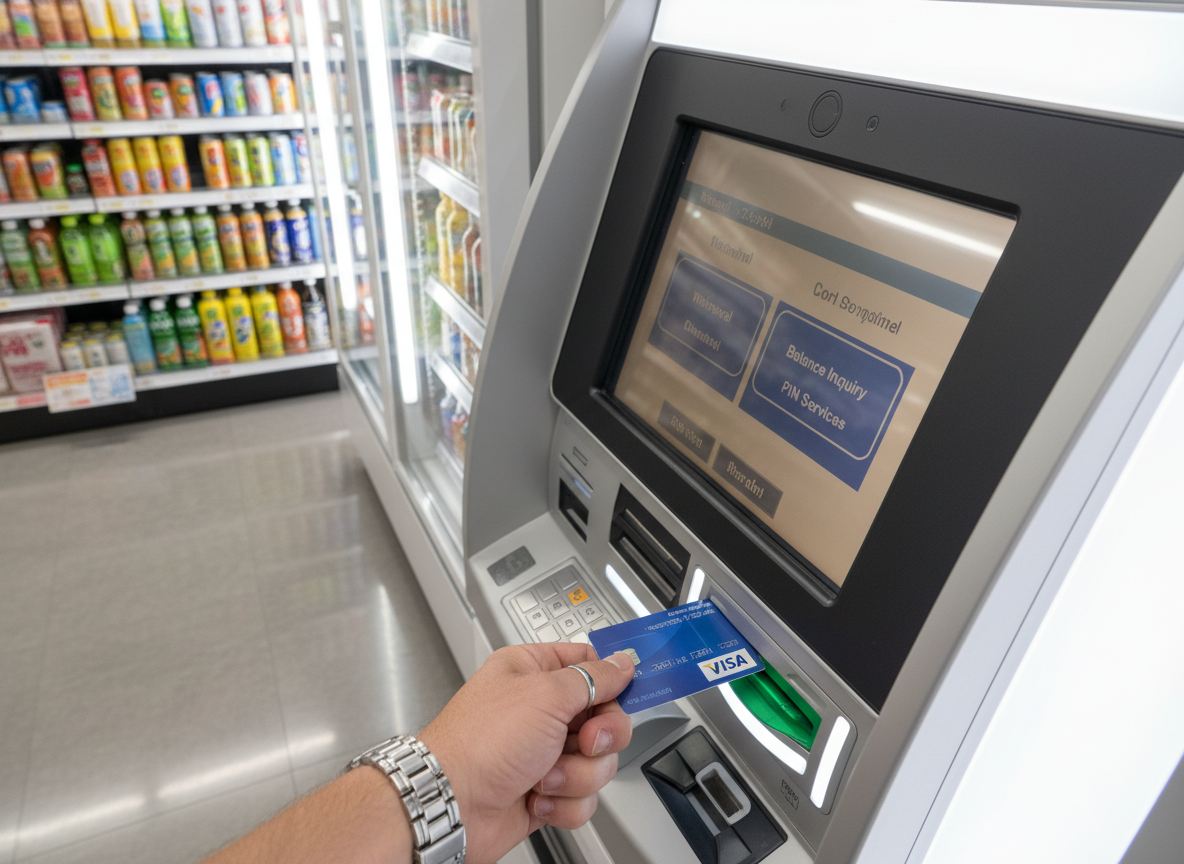
Japan still runs on a surprising amount of cash, and the best place to get it is a 7-Eleven ATM, officially called the Seven Bank ATM. These machines are famously friendly to foreign cards.
- Cards accepted: Visa, Mastercard, American Express, Discover, JCB, UnionPay, and most major debit cards
- Language: Full English menu (plus Chinese, Korean, Portuguese, and more)
- Hours: Most are 24 hours
- Fees: The Seven Bank ATM fee itself is typically ¥110–220 per withdrawal. Your card’s issuing bank will also charge its own foreign-transaction or overseas-ATM fee on top. Check with your home bank before you travel — these can range from a flat few dollars to 3% of the withdrawal.
Lawson and FamilyMart also have ATMs that accept foreign cards, but 7-Eleven has the widest compatibility and is the default recommendation. If your card is declined at another chain, find a 7-Eleven and try again.
2. Buy Tickets from the In-Store Machine
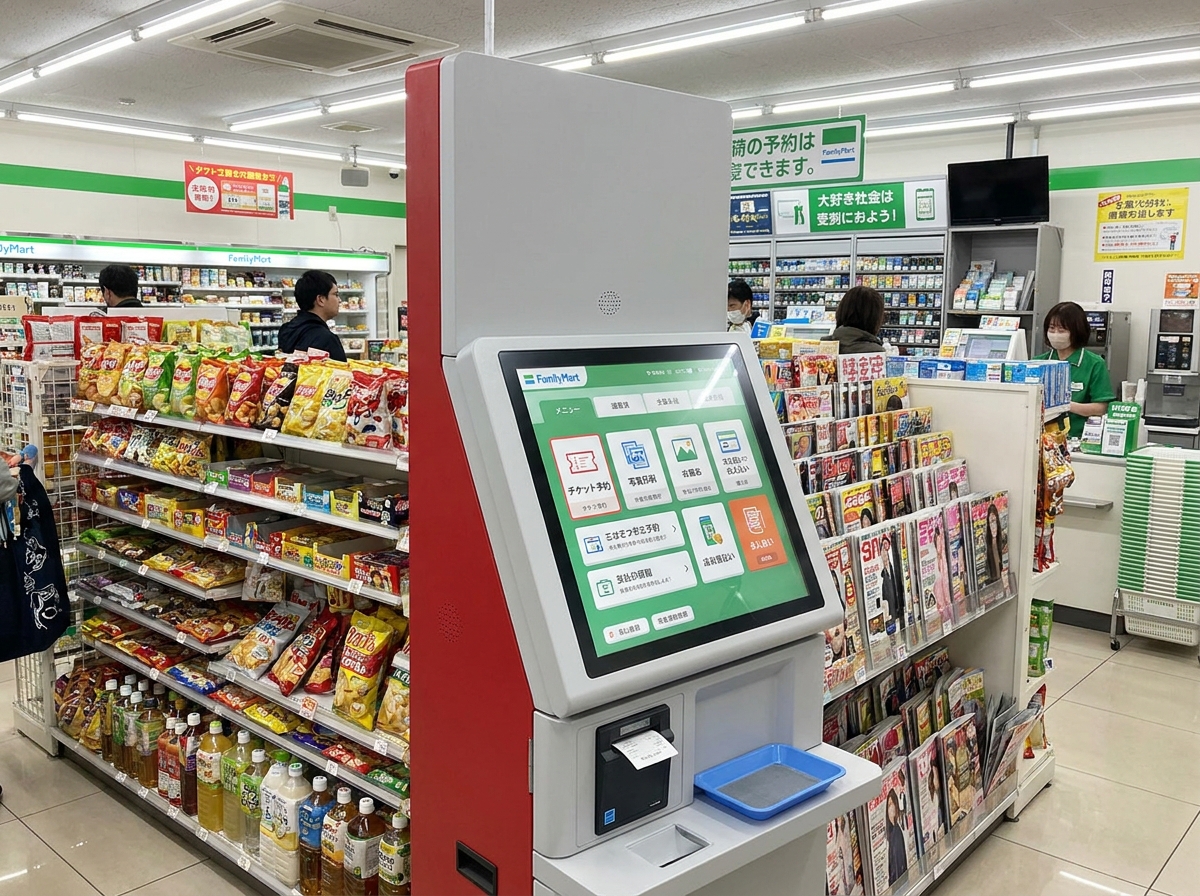
Every konbini has a multi-function terminal where you can buy tickets for almost anything in Japan: theme parks, museums, highway buses, Shinkansen, concerts, sports events.
- Lawson — Machine is called Loppi
- FamilyMart — Machine is called FamiPort
- 7-Eleven — Uses multicopy machines with ticket functions
The machines have English menus but can be tricky. For complex bookings (like concert tickets released online), having the reservation number from the event website ready makes the process fast: enter the number, print the voucher, pay at the register.
3. Print, Copy, and Scan Documents
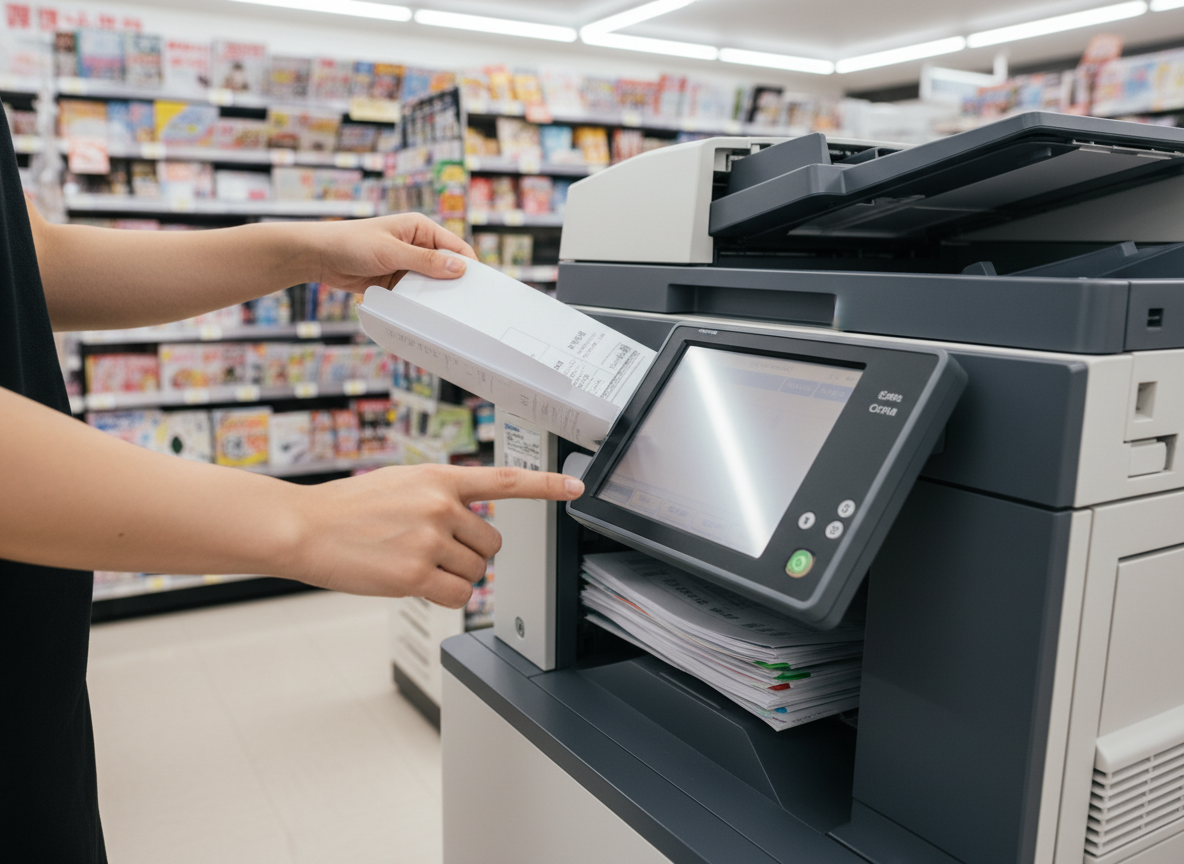
Most travelers do not realize this until they need it: konbini have full-featured multi-function printers with English menus.
- Print from USB drive, SD card, or smartphone app (e.g., 7-Eleven’s netprint and Kantan netprint apps)
- Cost — direct copy at the machine (paper in hand): black & white from ¥10 per page, color from ¥50 per page
- Cost — via smartphone app upload (netprint etc.): black & white from ¥20 per page, color from ¥60 per page
- Common travel uses: Airbnb check-in instructions, JR Pass exchange vouchers, e-tickets, boarding passes, emergency forms
A note on Airbnb and minpaku check-in paperwork: In Japan, some Airbnb and minpaku (private lodging) hosts send check-in instructions — including key-box codes, house rules, and emergency contacts — as a PDF attachment, and a portion of those hosts ask guests to bring a printed copy for the check-in confirmation. This is not a universal requirement, and many properties are fully contactless. But if your host has asked for a printed copy, or if you cannot open the attachment on your phone, a konbini’s multifunction printer is the nearest and cheapest option.
For smartphone printing, upload the document to the chain’s app, receive a reservation number, and enter it at the machine. No login or account creation is typically needed for one-time use.
4. Free Wi-Fi (Limited — Most Chains Have Ended Their Own Networks)
This is where traveler advice has changed significantly. Do not plan your trip around free konbini Wi-Fi — most of it is gone.
- 7-Eleven — The old free 7SPOT network was shut down in March 2022. 7-Eleven stores no longer offer their own in-store Wi-Fi.
- FamilyMart — The free Famima_Wi-Fi was ended in July 2022. FamilyMart now offers access only through d Wi-Fi, a service tied to Japanese carrier docomo — not practical for short-term visitors.
- Lawson — LAWSON_Free_Wi-Fi is still operating. It requires a one-time email registration and is free. This is currently the most reliable konbini Wi-Fi for travelers.
The practical takeaway: assume you will not have konbini Wi-Fi when you arrive, and sort out an eSIM or pocket Wi-Fi before leaving home or at the airport. Lawson is a useful backup if your mobile connection drops, but it is no longer reliable to treat konbini as a default connectivity option.
5. Top Up Your Suica / PASMO / ICOCA
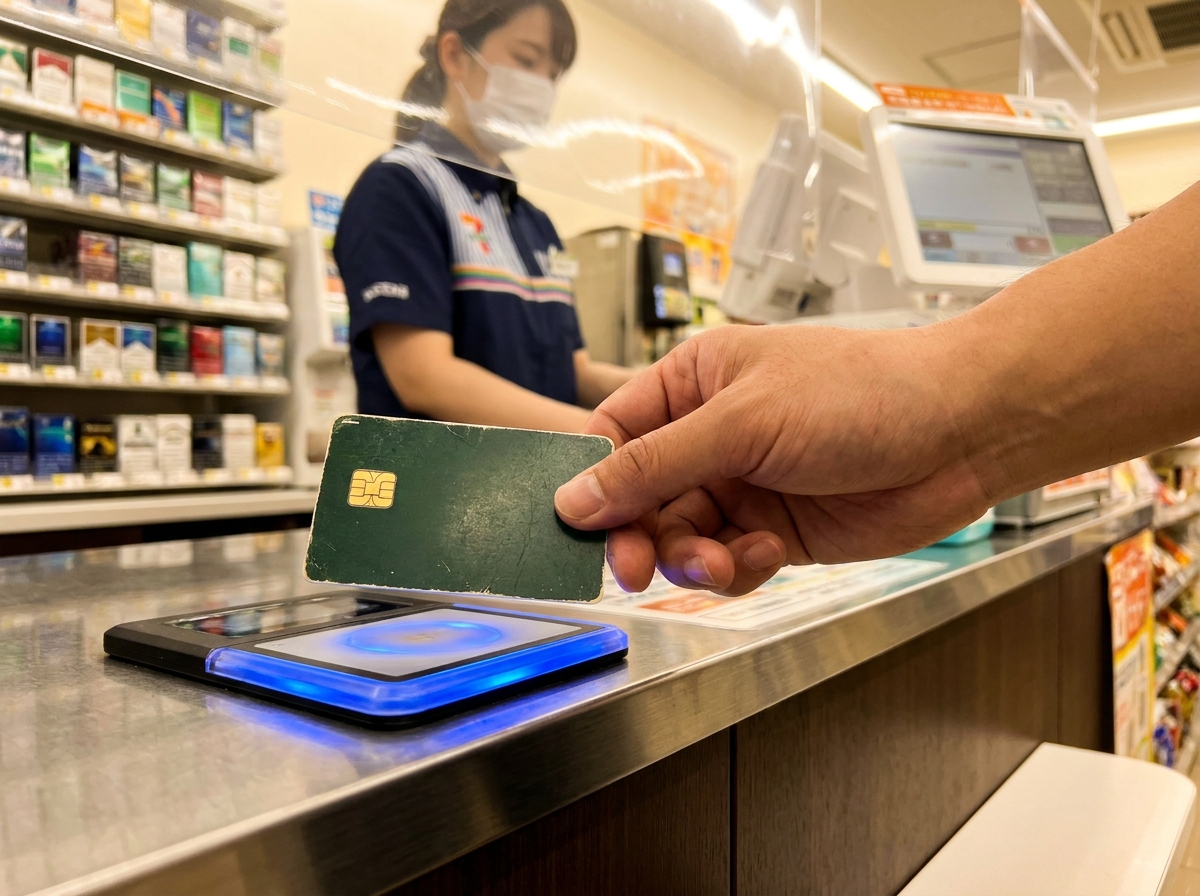
The IC transit card that pays for trains, buses, and even vending machines can be topped up at any konbini register.
- How to do it: Hand the card to the cashier and say “chaaji onegaishimasu” (please charge) or simply “charge” — then state the amount (¥1,000, ¥2,000, ¥3,000, ¥5,000, ¥10,000).
- Payment: Cash is still the safest assumption for IC top-ups at many convenience stores; check the register or payment screen before topping up.
- Bonus: You can also pay for your konbini purchase with Suica/PASMO by tapping the card on the pad at checkout
Konbini also accept utility bill payments and tax payments, but these are services for residents — not something travelers typically need.
A Traveler’s Playbook
Here is how the average traveler actually uses a konbini over the course of a trip.
The moment you land: Stop at the Seven Bank ATM in the airport konbini. Pull out ¥20,000–30,000 in cash. You will need it for small restaurants, shrines, and taxis.
Airbnb or minpaku check-in: If your host sent a PDF of the check-in instructions or the key-box code, and you cannot open it on your phone or have been asked to bring a printed copy, the konbini’s multifunction printer is the nearest place to print it.
Late-night arrival: Skip the hunt for an open restaurant. A konbini bento, an onigiri, and a cold beer is a real meal. You are eating what Japanese salarymen eat on the way home.
Concert or theme park day: If you bought tickets online, print the voucher at the konbini’s multifunction machine before leaving for the venue.
Any moment your phone dies: A phone charger is sold on the shelf at every konbini. If you need Wi-Fi, look for a Lawson — most other chains have ended their free networks.
Frequently Asked Questions
Can I use foreign credit cards at a Japanese konbini?
Yes, all major konbini chains accept Visa, Mastercard, American Express, and JCB for in-store purchases. Contactless payment works if your card supports it. For ATM cash withdrawals, 7-Eleven (Seven Bank) has the widest foreign-card compatibility.
Are Japanese convenience stores really open 24 hours?
Most urban locations are open 24 hours, especially in Tokyo, Osaka, Kyoto, and Fukuoka. In rural areas and since 2020, some locations have reduced hours (typically 5:00 AM to 1:00 AM). If you are relying on a specific store late at night, check Google Maps first.
Which konbini is best for tourists?
7-Eleven has the most foreign-card-friendly ATMs and a very consistent experience across Japan. FamilyMart has the best fried chicken. Lawson has the best desserts. If you have no specific need, pick whichever is closest.
Do konbini have free Wi-Fi?
The landscape has changed. 7-Eleven shut down its free 7SPOT Wi-Fi in March 2022, and FamilyMart ended Famima_Wi-Fi in July 2022. Only Lawson still offers free in-store Wi-Fi (LAWSON_Free_Wi-Fi), which requires a one-time email registration. For reliable connectivity in Japan, plan on an eSIM or pocket Wi-Fi rather than counting on konbini Wi-Fi.
Is there English-speaking staff at a konbini?
Not reliably, but staff are trained to handle foreign customers using gestures, point-to-photo menus on the register, and translation apps. Most basic transactions (paying, heating food, topping up Suica) require no language at all.
Related Reading
- Suica, PASMO & Welcome Suica Guide — IC cards for trains, buses, and konbini purchases
- Coin Locker Guide in Japan — For short-term luggage storage during sightseeing
- Best WiFi Options: eSIM vs Pocket WiFi — For when konbini Wi-Fi is not enough
Last updated: April 2026. Prices, service availability, and operating hours are current as of this date and may change. We verify key facts using official sources before publication.

Comments