- Quick Answer
- How Many Vending Machines Are There in Japan?
- What Do Japanese Vending Machines Sell?
- How to Read the Machine: Hot, Cold, and Sold Out
- How to Pay
- Where You Will Find Them
- Tips for Travelers Staying in an Airbnb or Vacation Rental
- What to Try
- Etiquette and Practicalities
- FAQ
- How many vending machines are there in Japan?
- Why does Japan have so many vending machines?
- Can I use a foreign credit card at a Japanese vending machine?
- Can tourists buy alcohol or cigarettes from a vending machine?
- What do the red and blue labels mean?
- What if the machine takes my money but does not give me the drink?
- Are vending machine drinks safe?
- Why does the machine reject my brand-new 1,000-yen note?
- How much does a typical drink cost in 2026?
- Will a vending machine accept a 10,000-yen note?
- Related Reading
- Sources
Quick Answer
Most Japanese vending machines accept ¥100/¥500 coins, ¥1,000 notes, and Suica/PASMO/ICOCA tap. Newer machines also take credit cards and Apple Pay (Mastercard/Visa via QUICPay or iD) since 2024 — but foreign credit cards may still fail at many machines. Carry coins or load Mobile Suica before you travel.
You step off the train at a small station at 11 p.m. The shops are shut, your throat is dry, and there is nobody at the ticket gate. Then you see the familiar glow: a line of vending machines, running 24 hours, every bottle lit up and ready. For many travelers, that first late-night drink from a Japanese machine is the moment the country starts to feel like a place designed for people on the move.
Japanese vending machines, called jidohanbaiki (自動販売機) or just jihanki (自販機), are not a novelty. They are infrastructure. They fill the gaps between convenience stores, cover the hours when everything else is closed, and quietly solve the “I need something, now” problem wherever you happen to be standing.
This guide explains what those machines actually sell, how to pay with cash or IC card, what the blue and red labels mean, and the few quirks that catch visitors out.
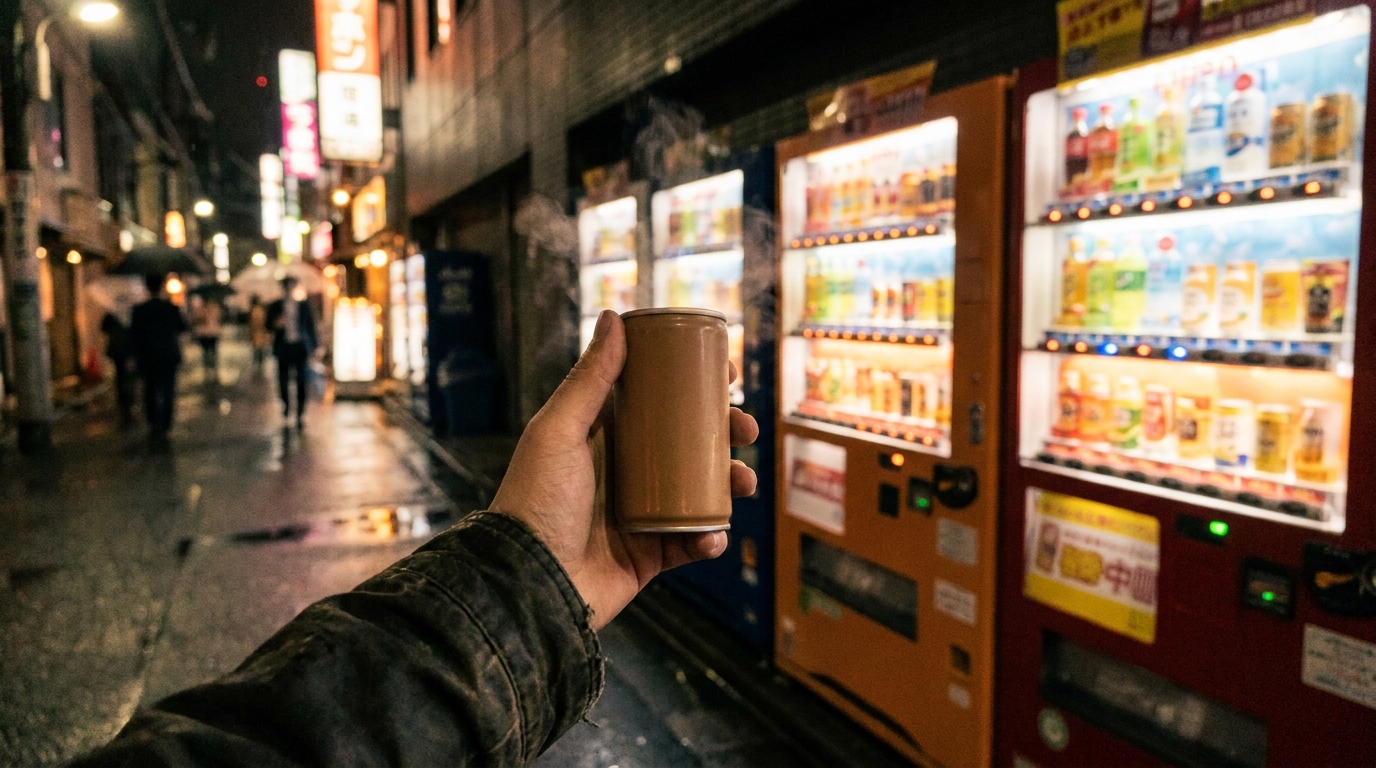
Quick Facts
- Japan has one of the highest densities of vending machines in the world, with roughly one machine per 31 to 32 people based on Japan Vending System Manufacturers Association (JVMA) data — about 3.93 million machines in late 2023
- Beverage machines account for the majority of installations — about 56 percent in 2022, per JVMA figures via GS1 Japan
- A standard 500ml drink now typically costs 130 to 210 yen; major-brand drinks crossed the 200-yen mark in late 2025 after successive inflation-driven price hikes (Japan Today, 2025)
- Most roadside drink machines take only 1,000-yen notes and coins; 5,000 and 10,000-yen notes are usually only accepted at ticket machines, not standard street machines
- Many older machines still reject the redesigned 2024 banknotes — keep some coins or an IC card as backup
- Hot drinks are marked in red (あたたかい / attakai) and cold drinks in blue (つめたい / tsumetai) — the color code is the same across every brand
How Many Vending Machines Are There in Japan?
The Japan Vending System Manufacturers Association (JVMA) tracks national installation figures each year. The most recent finalized data put the total at about 3.93 million machines at the end of 2023, with beverage machines making up roughly 2.21 million of that total — about 56 percent (GS1 Japan Handbook 2023–2024 / JVMA). The number has trended downward from a peak of around 5.6 million in the early 2000s as older cigarette and ticket machines have been retired and convenience stores have absorbed some of the foot traffic.
In a small but symbolic milestone, beverage machines specifically dipped below 2 million units in 2025 — the first time on record, with reported figures of around 1.95 million — as operators retired unprofitable rural locations facing higher energy and labor costs (Japan Today, 2025).
What makes Japan unusual is not the raw total — the United States has more machines overall — but the density. With a population of about 124 million, Japan averages roughly one machine per 31 to 32 residents, a concentration that is difficult to match anywhere else.
For visitors, the practical takeaway is simple: if you are in a town with a train station, there is almost always a drink machine within a minute or two of wherever you are standing.
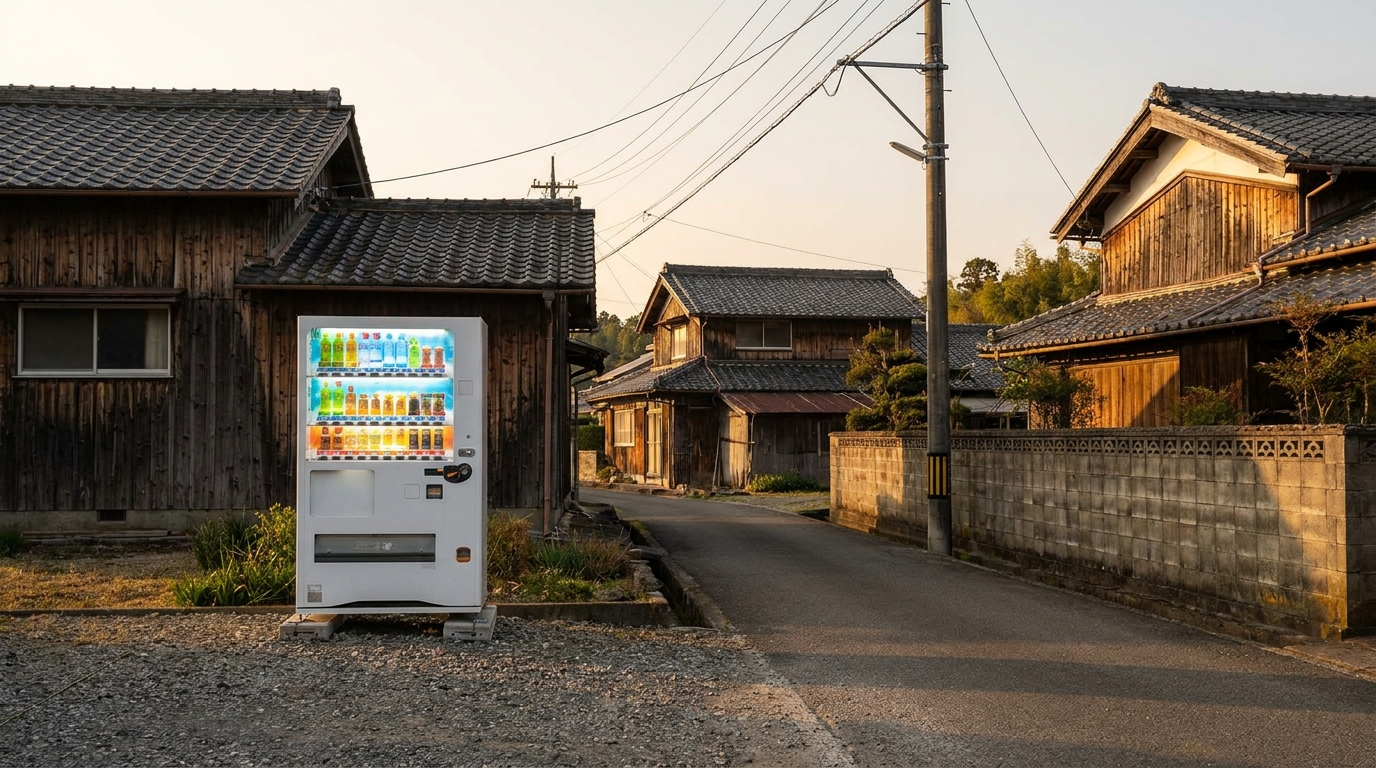
What Do Japanese Vending Machines Sell?
Most machines fall into one of three broad categories.
Beverages
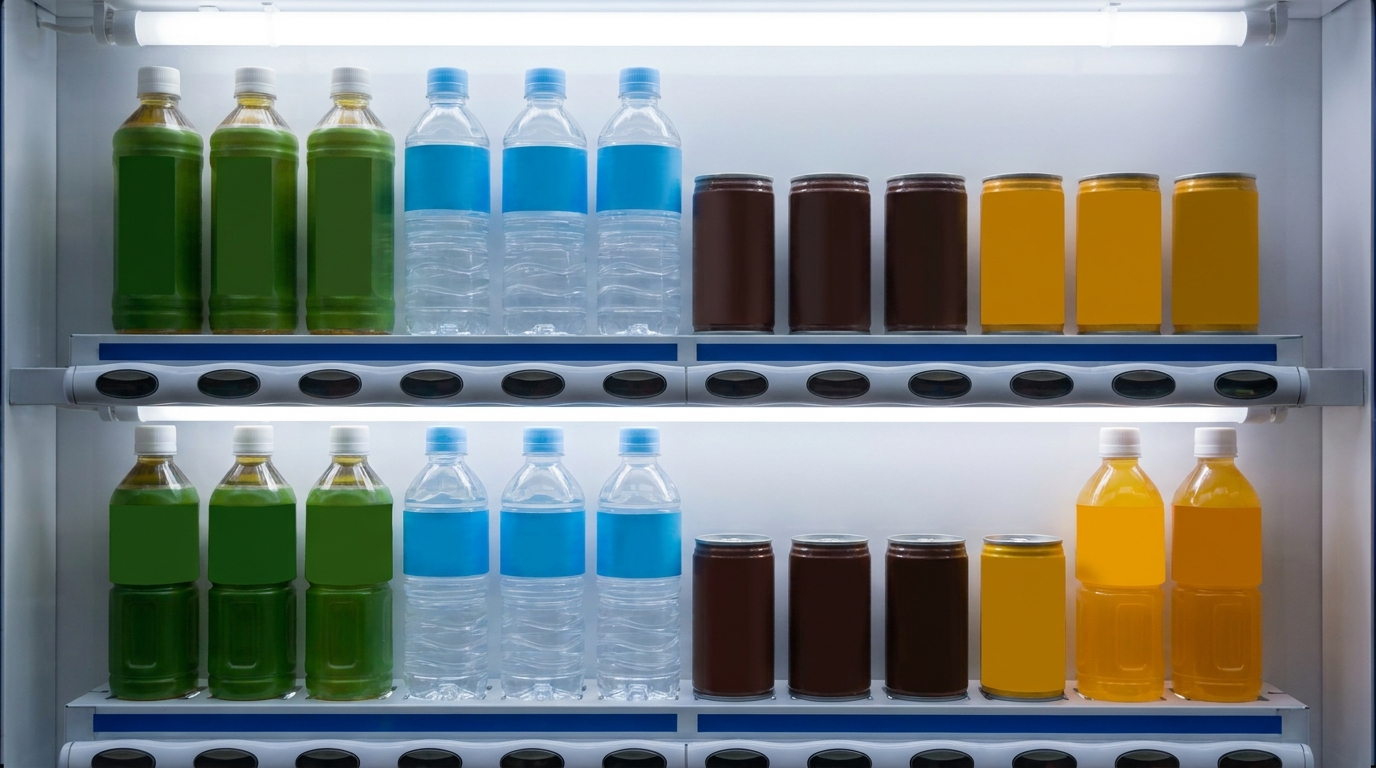
By far the largest category. A standard drinks machine carries 20 to 40 options across hot and cold:
- Bottled water and sparkling water
- Green tea (ryokucha), oolong tea, and barley tea (mugicha)
- Canned and bottled coffee, both black and with milk
- Sports drinks such as Pocari Sweat and Aquarius
- Soft drinks, juices, and energy drinks
- Hot soup, corn potage, and cocoa in winter months at many machines
Prices typically run 130 to 210 yen for a standard 500ml bottle, with smaller cans starting around 110 to 140 yen. Successive price hikes in 2024 and 2025 pushed major-brand 500ml PET drinks past the 200-yen mark in late 2025; the 100-yen bottled drink survives mostly at discount-machine networks in residential or rural areas (Japan Today, 2024 and 2025).
Food and Snacks
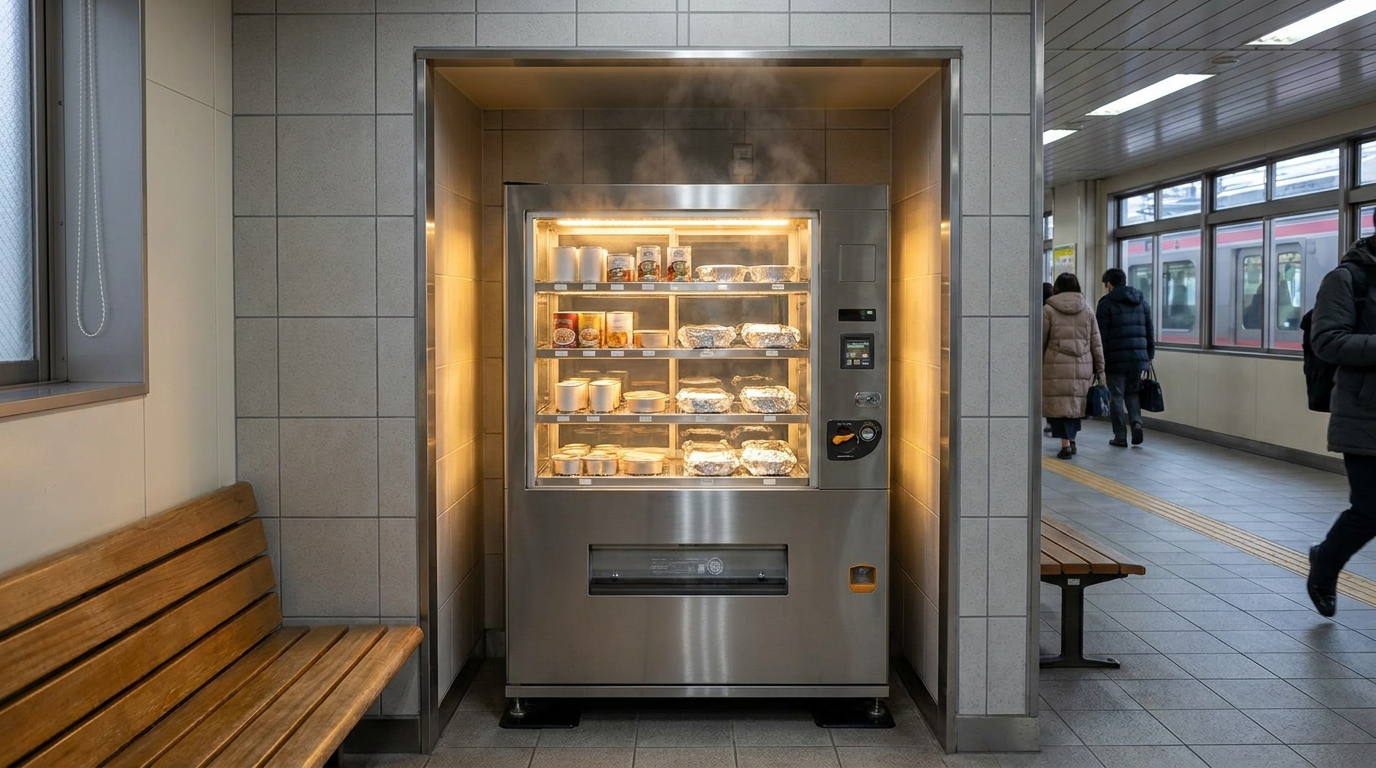
Less common than drinks, but present in stations, rest areas, and a growing number of themed spots. You will see:
- Hot canned meals such as oden (a savory winter stew with daikon and konnyaku) and corn soup
- Instant cup noodles, sometimes with a built-in hot-water tap next to the machine
- Ice cream freezers stocked with popular brands
- Bread, rice balls (onigiri), and packaged snacks at selected locations
- Specialty ramen machines that dispense chilled or frozen portions for home cooking, increasingly common around tourist districts (Japan Travel; japanwondertravel.com)
Other Goods
The long tail of Japanese vending culture — umbrellas on rainy days, batteries, single-use cameras, phone accessories, face masks, fresh eggs from farm stands, and occasional novelty items like canned bread or local dashi stock. These are far less common than drink machines, but part of why the category gets so much international attention.
Alcohol and Cigarettes
Machines selling beer, sake, or chu-hai still exist in older neighborhoods, inns, and rural areas, though their numbers continue to shrink. Cigarette machines are also still around in some places, but a major change took effect just before this guide was published.
The TASPO age-verification card system, which had governed cigarette vending machines since 2008, was permanently discontinued on March 31, 2026. The card relied on NTT Docomo’s 3G (FOMA) cellular network, which was retired the same day, so the system had to be retired with it (ITmedia; Japan Tobacco Institute, March 2026 announcement). Many cigarette machines have simply been decommissioned. The ones that remain in service have been retrofitted to read either a Japanese driver’s license or a My Number Card for age verification.
Alcohol machines typically use similar ID-card or driver’s-license readers.
For visitors on a tourist visa, the practical answer is unchanged: you will not be able to use these machines. None of the verification options — TASPO replacement readers, driver’s licenses, My Number Cards — accept foreign documents. Buy alcohol and tobacco at a konbini or supermarket instead, where staff can check your passport as ID (see our Japanese Konbini Guide).
How to Read the Machine: Hot, Cold, and Sold Out
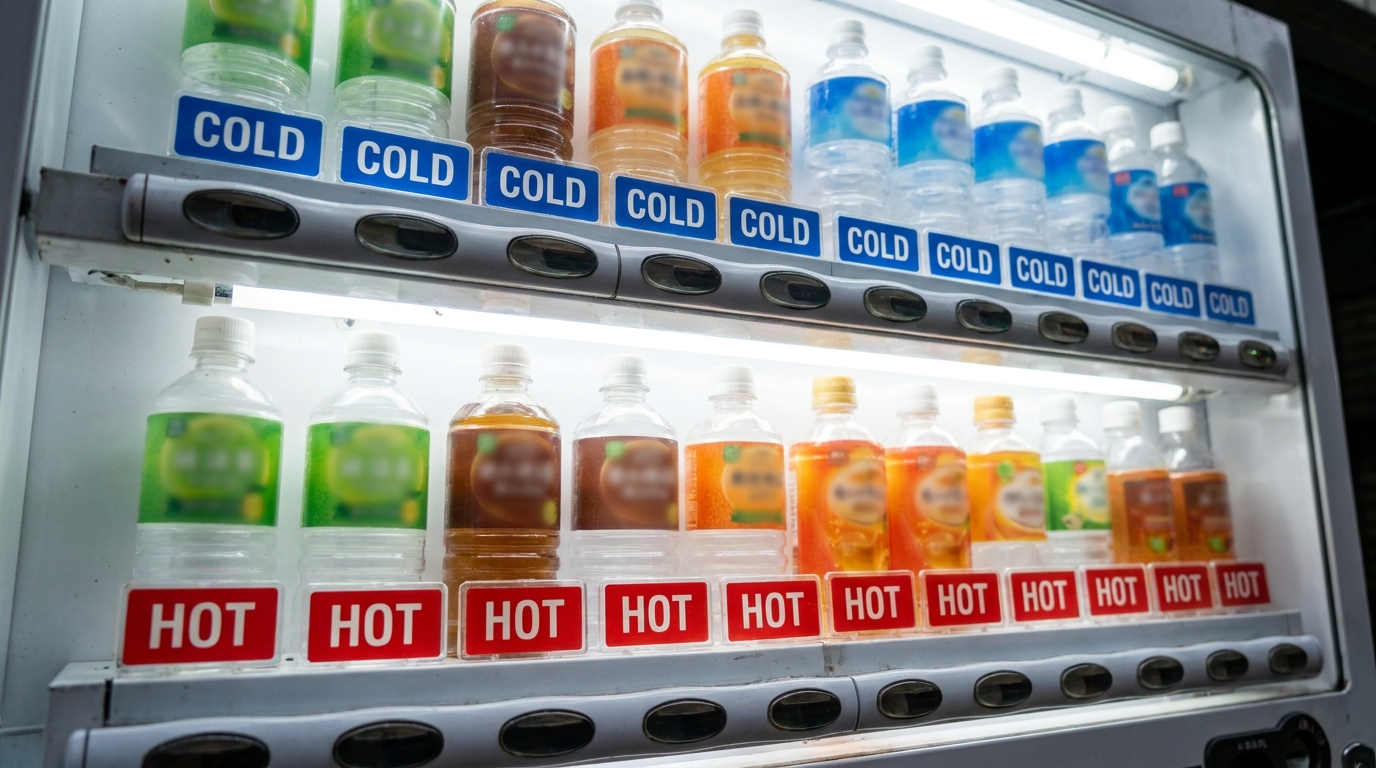
A drinks machine that carries both hot and cold items uses the same color code everywhere in Japan:
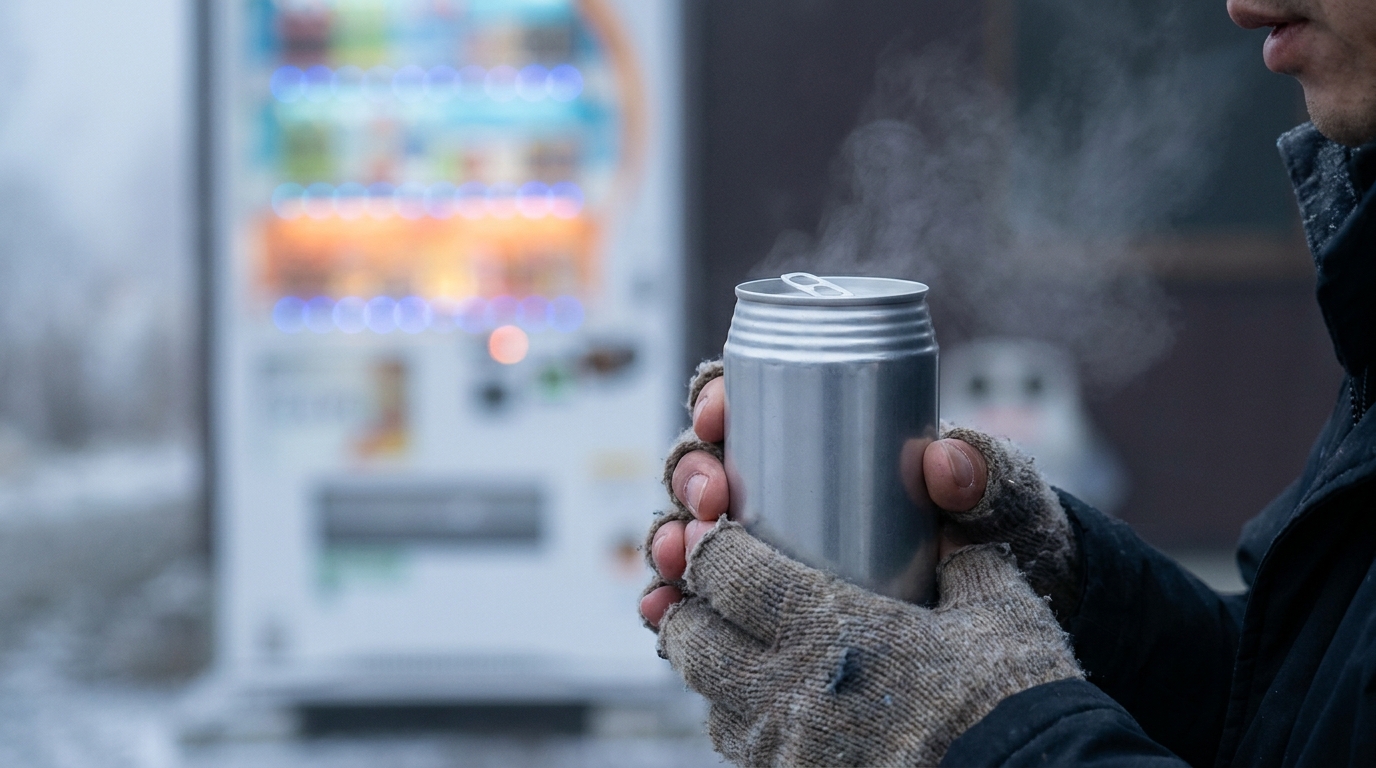
- Blue label or blue banner = cold drink (つめたい / tsumetai)
- Red label or red banner = hot drink (あたたかい / attakai)
Newer digital machines display a blue snowflake or a red flame icon next to the price. Some also show “HOT” or “COLD” in English.
If the price light is off or the button is dark, the item is sold out. Pick another.
Seasonal switch: most machines add hot drinks in mid- to late October and return to all-cold around April. With recent warmer autumns, some operators now delay the switch to hot stock until early November. Do not expect hot coffee in August — the machine physically will not be stocked with it.
How to Pay
Modern machines accept a mix of the following. Any individual machine will show logos for what it takes.
Cash
Coins accepted by standard vending hardware:
- 10 yen
- 50 yen
- 100 yen
- 500 yen (both the older silver and the bicolor 2021 redesign — though a small share of older machines still reject the 2021 bicolor coin)
Coins NOT accepted:
- 1 yen and 5 yen (the hardware does not read them)
- Commemorative coins (machines reject most novelty mintings)
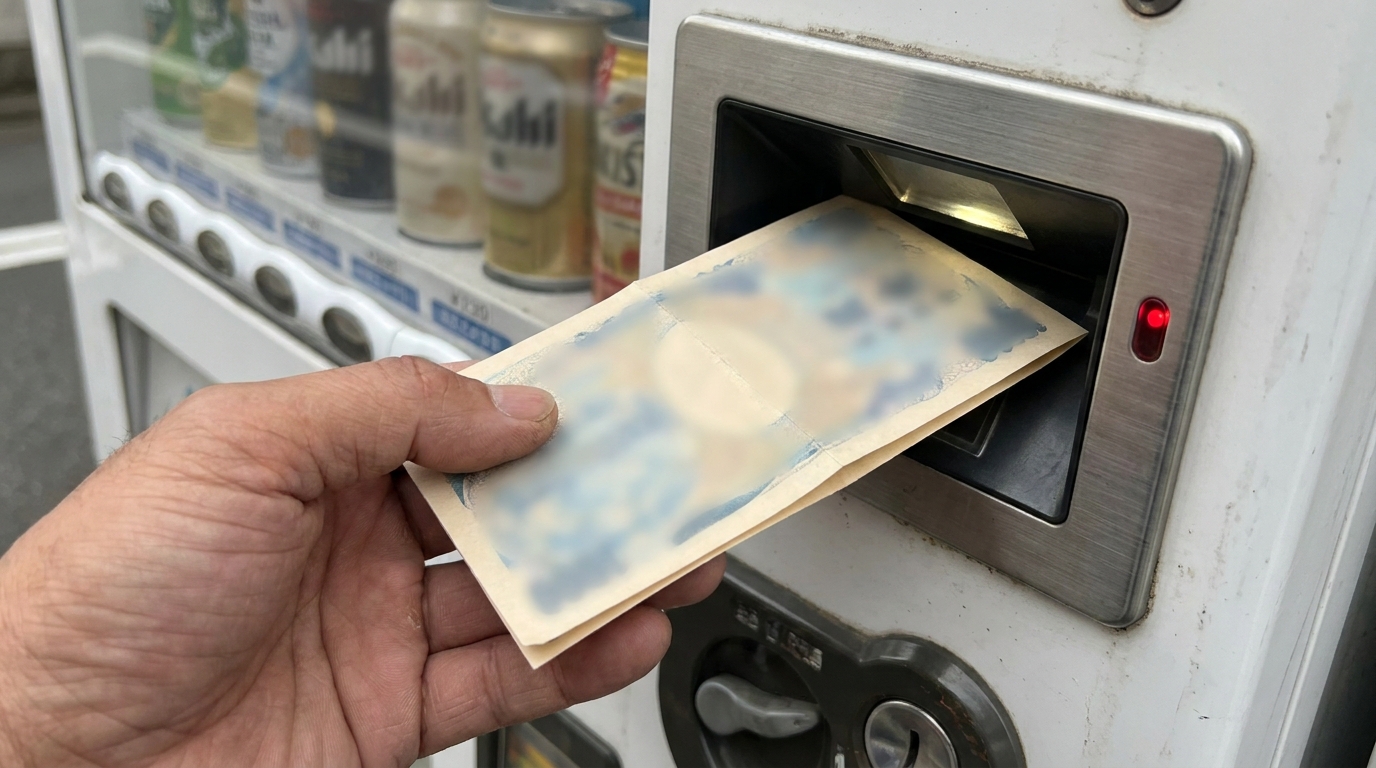
Bills are where Japanese vending machines surprise visitors. Most roadside drink machines, regardless of how new they look, accept only 1,000-yen notes. The reason is mechanical, not generational: a machine that accepted a 10,000-yen note for a 150-yen drink would need to dispense roughly 9,850 yen in coins, and operators do not stock that much change on the route. Larger denominations are reserved for ticket machines (ramen shops, train stations, parking meters) and a small number of high-end smart kiosks. If you are carrying a 5,000 or 10,000-yen bill, break it at a konbini first by buying something small.
A note on the 2,000-yen bill: this rare note is often not recognized by vending machines. The cost of updating bill readers for such a low-volume denomination was historically not worth it for operators, and most machines still reject it. The 2,000-yen note was also excluded from the 2024 banknote redesign, so its functional obsolescence in automated commerce is unlikely to change.
A note on the 2024 redesigned bills: Japan issued new 1,000, 5,000, and 10,000-yen notes on July 3, 2024. Updating a single bill validator costs operators well over 100,000 yen, and at the rollout an estimated 70 to 80 percent of beverage vending machines could not read the new design (Business Insider, July 2024). Many independent operators have not upgraded since. As of 2026, you will still encounter roadside machines that hand the new 1,000-yen notes back. If that happens, try an older-design 1,000-yen bill, use coins, or tap an IC card. Older banknotes remain fully valid alongside the new design.
Pricing in 2026: a standard 500ml bottle now typically runs 130 to 210 yen. Major brands (Coca-Cola, Suntory, Itoen) implemented successive price hikes in 2024 and 2025 to keep up with raw material and energy costs, and the once-iconic 100-yen bottled drink is now mostly limited to discount-machine networks in residential and rural areas (Japan Today, 2024 and 2025).
IC Transit Cards
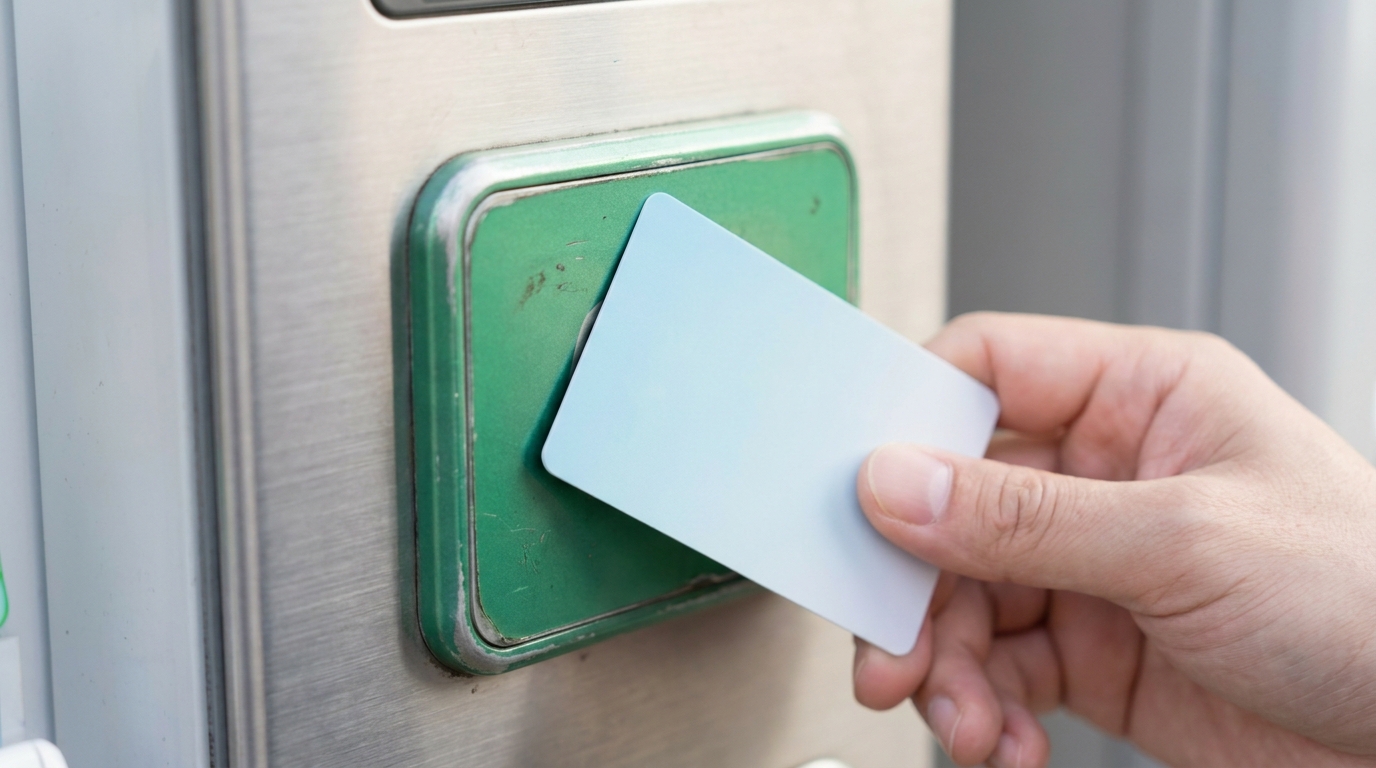
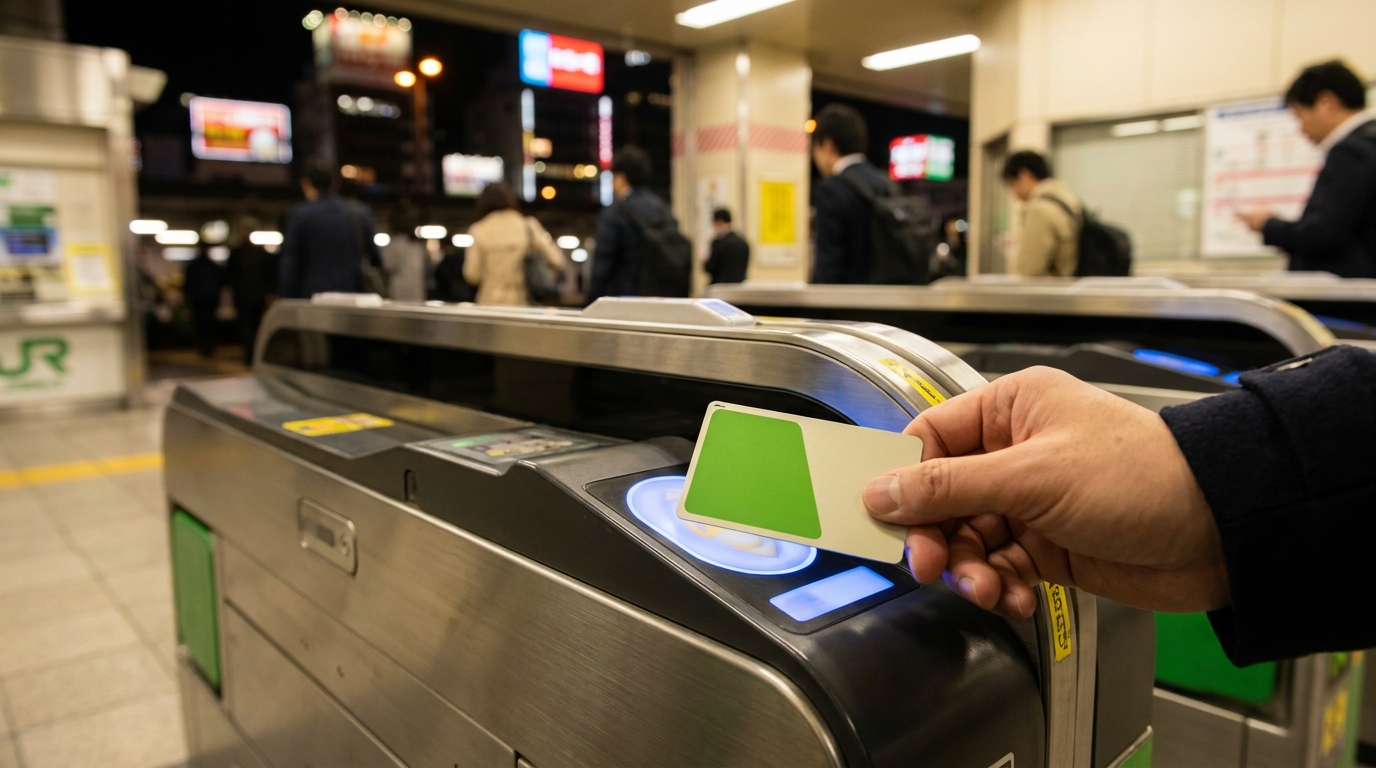
Many beverage machines, and almost all machines inside train stations, accept IC cards: Suica, PASMO, ICOCA, and their regional equivalents (TOICA, Kitaca, SUGOCA, nimoca, manaca, hayakaken, PiTaPa). Since 2013 these ten major IC cards have been interoperable across most of Japan (japan-guide.com).
Unlike cash, the order is reversed on IC-card machines:
- Press the button for the drink you want
- Tap your card on the reader
- Take the drink from the delivery slot
Look for the green IC symbol or a Suica penguin sticker on the machine.
Contactless Cards and QR Codes
A growing number of newer machines accept contactless payments — Visa or Mastercard tap-to-pay, Apple Pay, Google Pay — and QR code wallets such as PayPay and LINE Pay. Coverage is uneven. Station machines, airport machines, and machines in central Tokyo and Osaka are the most likely to support these; a rural roadside machine probably will not (Japan National Tourism Organization; Fusion Systems Japan Payment Guide).
If you prefer to travel without cash, putting 2,000 to 3,000 yen of credit on a Suica or PASMO is the most reliable single method for vending-machine purchases across the country.
Where You Will Find Them
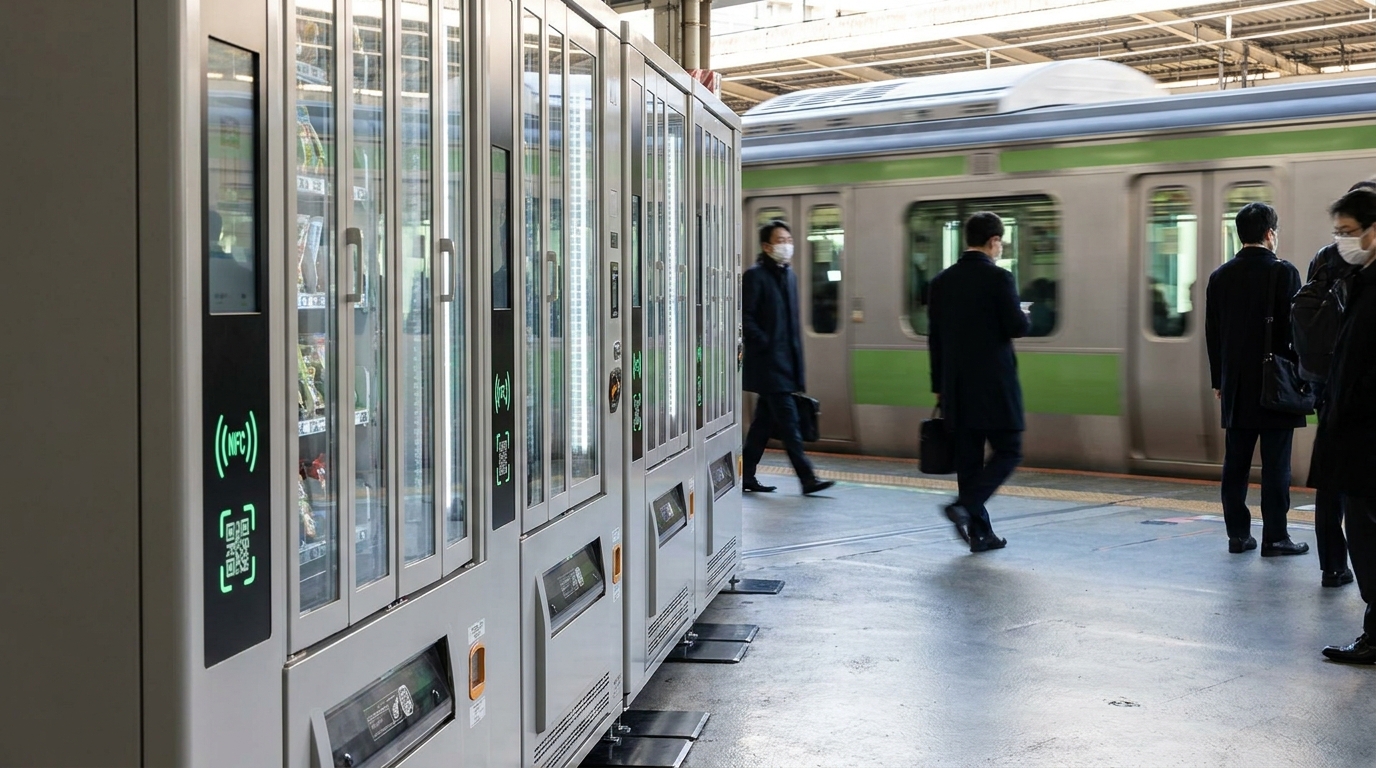
Roughly in order of density:
- Train stations and subway platforms (often IC card enabled, sometimes with unique regional drinks)
- Office districts and shopping streets
- Residential side streets — including quiet neighborhoods where the nearest convenience store is a ten-minute walk
- Parks, temples, and tourist sites
- Highway rest areas (service areas on expressways), which often have the widest selection including hot meals
- Hotel and ryokan hallways, sometimes stocked with local specialty drinks
- Small business entrances, where the owner runs the machine as side revenue
You will also find clusters in unexpected places — outside a rice field, next to a vending-machine-only restaurant, on the platform of a station with no staff. That is part of the character.
Tips for Travelers Staying in an Airbnb or Vacation Rental
Vending machines are especially useful during the gap between arrival and your first proper trip to the supermarket or konbini. A few specific moments when they earn their keep:
- Late check-in. If you arrive at the rental after midnight and the nearest konbini is 10 minutes away, a machine on the corner will usually have water, tea, and coffee.
- Morning coffee before the shops open. Many Japanese cafes do not open until 8 or 9 a.m. A hot canned coffee from the machine outside the station can bridge the gap.
- A hot drink on a cold night. Between November and March, the red-labeled hot drinks are genuinely useful — corn potage and hot lemon are local favorites worth trying.
- Hydration at temple and shrine visits. Many major sites have machines near the entrance. Prices are close to street prices; there is rarely a “tourist markup.”
- Emergency small change. Many machines give 500-yen coins and 100-yen coins as change for a 1,000-yen note, which is useful if you later need coins for coin-operated laundry or a shrine offering.
What to Try
A short list that tends to surprise first-time visitors in a good way:
- Boss Cafe au Lait (Suntory) — the classic sweet canned milk coffee that dominates office life in Japan
- Oi Ocha (Itoen) — unsweetened bottled green tea; the benchmark against which all others are judged
- Georgia Emerald Mountain Blend — Coca-Cola Japan’s flagship canned coffee line, black or with milk
- Pocari Sweat — a mild, lightly sweet sports drink that works surprisingly well for jet lag recovery
- Calpis Water — a yogurt-like milky soft drink with a uniquely Japanese flavor
- Hot corn potage — sold in winter; drink the liquid first, then shake to loosen the corn kernels
Etiquette and Practicalities
A few small conventions that make the experience smoother:
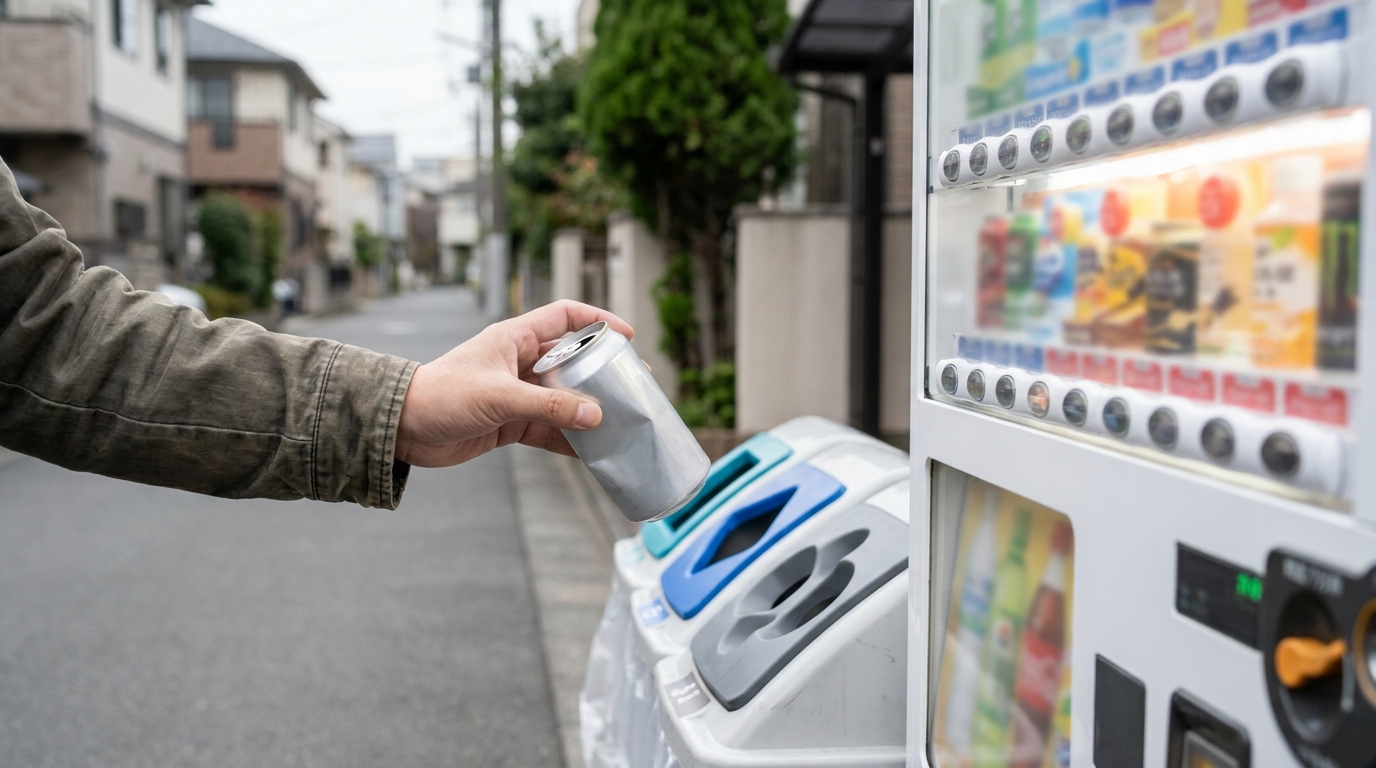
- Drink on the spot. Many Japanese people stand next to the machine, finish the drink, and drop the empty bottle or can in the recycling bin right there. Walking while drinking is not taboo, but taking trash with you through the city is — public bins are rare.
- Use the machine’s own recycling bin. Most drink machines have a sorted bin next to them for cans, bottles, and plastics. This is the easiest and most accepted place to dispose of an empty.
- If the machine eats your money. Look for a small button or lever labeled 返却 (henkyaku) — return — near the coin slot. Pressing it should release coins. If a bill is stuck, there is usually a phone number on the machine; the operator will refund you, though the process is in Japanese.
- Do not kick or shake a stuck machine. Apart from being rude, most modern machines have sensors that will simply lock up further and require a technician.
FAQ
How many vending machines are there in Japan?
Industry summaries citing Japan Vending System Manufacturers Association (JVMA) figures put the total at roughly 3.9 to 4 million machines in recent years, with beverage machines accounting for a majority of the installed base. The number has been slowly declining from a peak in the early 2000s as older cigarette and ticket machines have been decommissioned.
Why does Japan have so many vending machines?
Several factors are often cited: a low crime rate that makes unattended street machines viable, a cash-friendly economy, high urban density, and labor economics that make 24-hour unattended sales attractive compared to staffed stores. Beverage manufacturers also compete heavily for prime machine locations, which keeps the network dense.
Can I use a foreign credit card at a Japanese vending machine?
Sometimes. Newer machines, particularly in stations, airports, and central business districts, accept Visa and Mastercard tap-to-pay, as well as Apple Pay and Google Pay. Older street machines usually only take cash. If you want a single method that works almost everywhere, load credit onto a Suica, PASMO, or ICOCA IC card.
Can tourists buy alcohol or cigarettes from a vending machine?
In practice, no. The TASPO age-verification system that governed cigarette vending machines was permanently discontinued on March 31, 2026, in line with the shutdown of NTT Docomo’s 3G network that the system relied on. Many cigarette machines have been decommissioned; the ones that remain in service have been retrofitted to read Japanese driver’s licenses or My Number Cards, neither of which is available to short-term visitors. Alcohol machines use similar resident-only ID readers. Buy tobacco and alcohol at a convenience store or supermarket instead, where staff can check a passport as ID.
What do the red and blue labels mean?
Red (あたたかい / attakai) indicates a hot drink; blue (つめたい / tsumetai) indicates a cold drink. Newer digital machines also use red flame and blue snowflake icons. The color code is consistent across all brands and regions.
What if the machine takes my money but does not give me the drink?
Press the return button (返却 / henkyaku) near the coin slot first — that often releases the coins. If the item is still stuck or your bill was swallowed without producing anything, there is typically a service phone number printed on the machine. Larger operators will refund the amount, though the process is usually Japanese-only. In practice, mechanical failures are rare.
Are vending machine drinks safe?
Yes. Vending machines are regulated under Japan’s Food Sanitation Act, stock is rotated by route drivers, and the cold and hot temperature zones are maintained automatically. Bottled water, tea, and coffee from a vending machine are as safe as anything you would buy in a konbini.
Why does the machine reject my brand-new 1,000-yen note?
Japan introduced redesigned 1,000, 5,000, and 10,000-yen banknotes on July 3, 2024, featuring 3D holographic portraits. Updating a single bill validator costs operators well over 100,000 yen, and at the rollout most beverage machines could not read the new design. By 2026, many independent and rural roadside machines still reject the new notes. If yours keeps coming back, try an older-design 1,000-yen bill (older notes remain fully valid), use coins, or tap an IC card.
How much does a typical drink cost in 2026?
A standard 500ml bottle now usually costs 130 to 210 yen. Major brands such as Coca-Cola, Suntory, and Itoen pushed standard 500ml PET drinks past 200 yen in late 2025 after successive inflation-driven price hikes. The traditional 100-yen bottled drink still exists at discount-machine networks in residential and rural areas, but it is no longer the norm.
Will a vending machine accept a 10,000-yen note?
Usually not. Most roadside drink machines, regardless of how new they look, only accept 1,000-yen notes and coins. The reason is mechanical: a machine giving 9,850 yen in change for one 150-yen drink would empty its coin supply in minutes. 5,000 and 10,000-yen notes are typically only accepted at ticket machines (ramen shops, train stations, parking meters) or a small number of high-end smart kiosks. If you are only carrying a 10,000-yen bill, break it at a konbini first by buying something small.
Related Reading
- Japanese Konbini Guide: What You Can Actually Do at a Convenience Store in Japan (2026)
- Suica Sales Resumed in 2026: Welcome Suica vs PASMO
- Cash in Japan 2026: A Visual Guide to Yen Banknotes & Coins for Tourists
- Tokyo Late-Night Arrival: Where to Wait Until First Train
- Tokyo Smoking Rules 2026
Sources
- Japan Vending System Manufacturers Association (JVMA) statistics, as summarized in the GS1 Japan Handbook 2023–2024
- “Vending machines in Japan,” japan-guide.com
- “Caught in an inflationary squeeze, Japan’s vending machines face uncertain future,” Japan Today, 2024
- “Soft-drink vending machines in Japan fall below 2 million for 1st time,” Japan Today, 2025
- “Japan unveils new 1,000-, 5,000-, and 10,000-yen banknotes,” Bank of Japan and major news coverage, July 2024
- “Why Japan’s new bank notes are giving the country’s vending machines a headache,” Business Insider, July 2024
- “TASPO ends in Japan after FOMA network shutdown,” ITmedia / Japanese From Japan, March 2026
- “Prepaid IC Cards in Japan: Suica, Pasmo, Icoca,” japan-guide.com
- “Cashless Payments in Japan,” Japan National Tourism Organization (japan.travel)
- “Only in Japan: Vending Machines That Go Way Beyond Drinks,” Japan Travel
- “15 Weird But Amazing Vending Machines in Japan,” Japan Wonder Travel Blog
- Bank of Japan, “Can I use all types of banknotes that have been issued to date by the Bank?”
- Wikipedia and Bank of Japan reference data on the 2,000-yen note’s circulation


Comments