Quick Answer
Do not let one bowl of kakigori cost you a Tokyo afternoon. Choose by the failure you need to avoid: use Himitsudo only when Yanaka is already in your route and you can accept a day-of line; use Saka No Ue Cafe when a published queue process and optional paid priority arrival reduce uncertainty; use Azuki to Kouri only when you can book, enter card details, order one food item per seated guest, and accept a 40-minute visit.
- Before leaving: save the shop’s live-update or booking page, its map, and one indoor Plan B.
- At the shop: confirm the queue, price, payment method, and dietary answer before you commit.
- Abort early: leave if the wait, heat, payment, card hold, or allergy answer does not fit your limits.
Last checked: August 18, 2026 (JST). Recheck the exact shop on the day because hours, menu, queue status, and availability can change.
Video preview
Watch the 24-second Yanaka kakigori video before you choose a shop.
Solve the Failure First: 30-Second Selector
| Your main risk | Use this route | Do not use it when |
|---|---|---|
| You cannot tolerate an uncertain outdoor line | Saka No Ue FastPass if a slot is available, or a confirmed Azuki to Kouri booking | You need a guaranteed exact seating time; neither route promises that |
| You do not want to book or enter card details | Himitsudo only when Yanaka is already in your day and you accept a walk-in line | You need a known price or complete payment list before travel |
| You have a fixed sightseeing schedule | Azuki to Kouri with a confirmed booking and the 40-minute rule understood | You cannot accept the card hold or one-food-item-per-guest rule |
| You have an allergy or strict dietary requirement | Contact the exact shop before travel and carry the CAA communication sheet | The shop cannot confirm ingredients and cross-contact for your requirement |
| Heat, children, or limited mobility make waiting risky | Use only a controlled route with a saved indoor fallback | The queue is exposed, the wait is unclear, or anyone feels unwell |
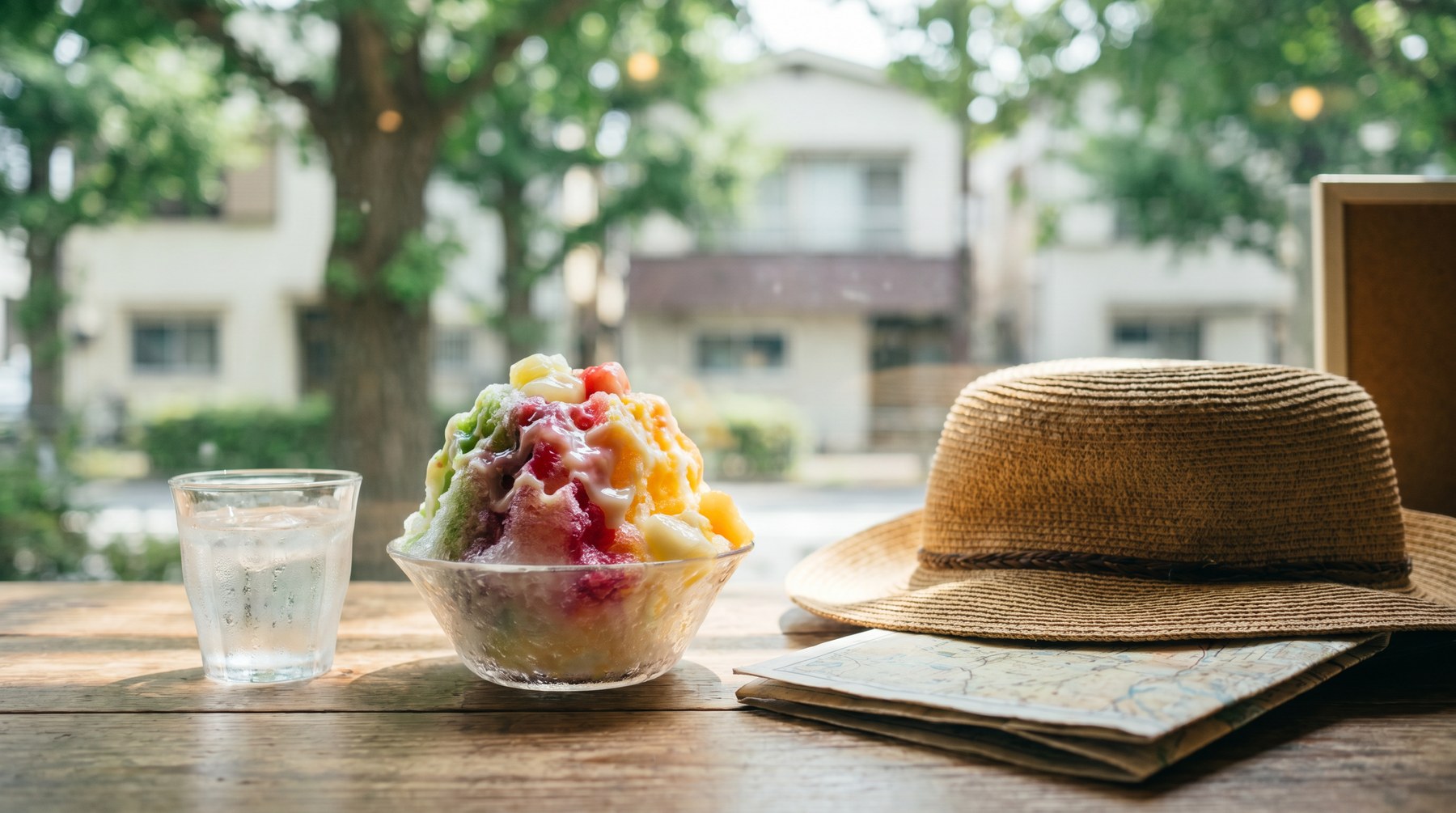
Kakigori is Japanese shaved ice with fruit, tea, milk, cream, red bean, nuts, or other toppings. The important travel decision is not which bowl is famous. It is whether the shop’s queue, reservation, payment, and dietary rules fit your day.
Before You Leave: Five Checks
- Open the live source. Check the official social account or booking page on the same day.
- Choose your maximum wait. Set a personal cutoff before travel; do not decide while standing in the heat.
- Check the money rule. Separate a bowl price, an average budget, a booking fee, and a card hold.
- Save proof. Keep the booking confirmation or queue screen available offline if you use one.
- Save two map pins. Pin the shop and the indoor Plan B before leaving your hotel.
If one of these five checks is unresolved, treat the shop as a flexible option rather than a fixed appointment.
Three Routes, With Arrival and Abort Rules
1. Himitsudo: Yanaka Walk-In Day
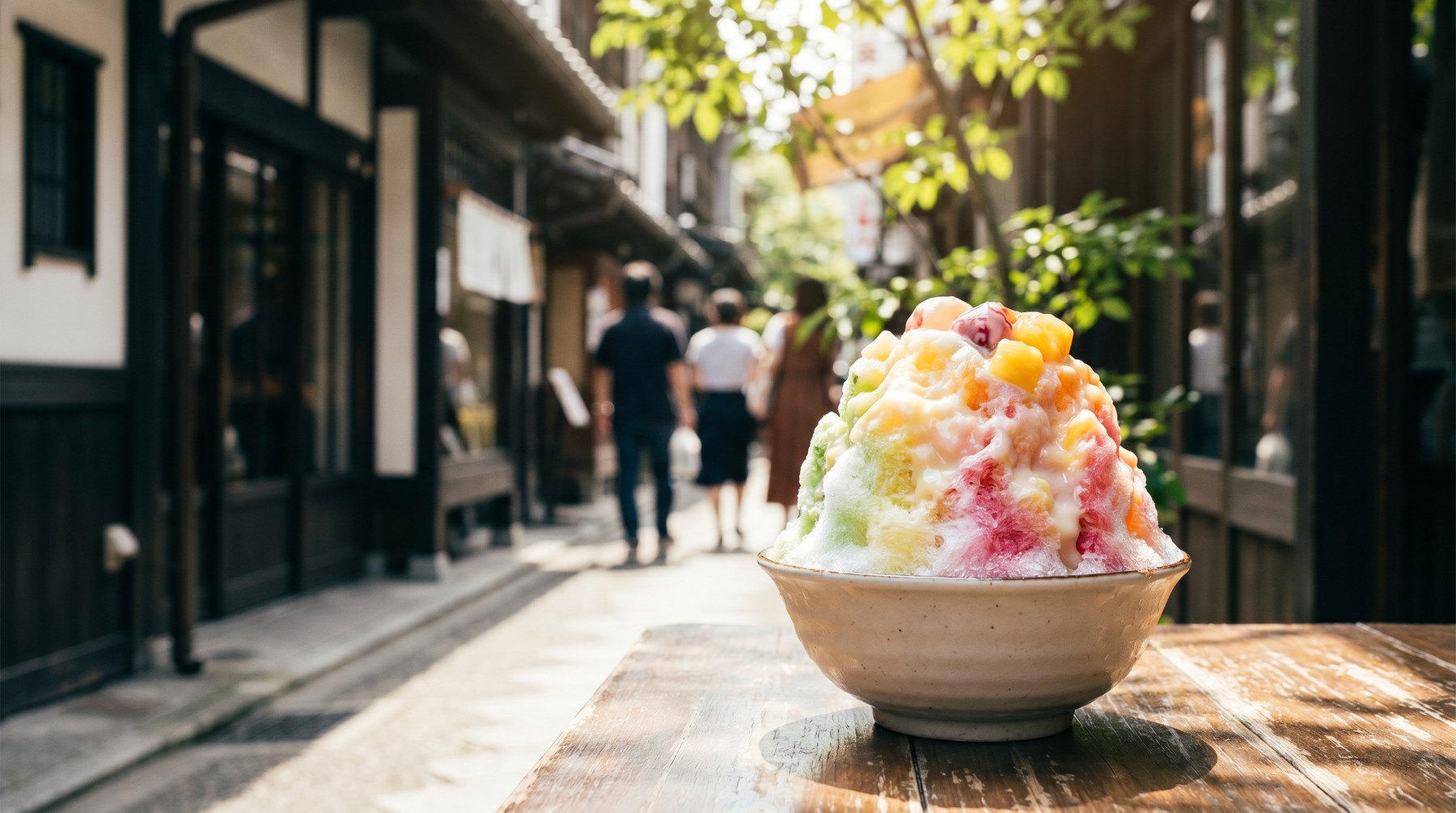
Himitsudo’s official page lists 3-11-18 Yanaka, Taito City. For the 2026 peak-summer period, it states daily 8:00-19:00 service from July 17 through September 1 and warns that hours can change, so check the official X account before traveling.
- Before leaving: open official X and save the shop map. Price and the complete payment list remain unknown until the day-of menu or shop answer.
- On arrival: ask staff where the queue begins and how the current system works before standing in line.
- Abort: do not travel after a changed-hours or sold-out notice. Leave if the line is exposed to heat or the unknown price/payment condition does not work for you.
Use this route when Yanaka Ginza or Nippori is already part of your day. Do not cross Tokyo only because a search result calls the shop famous.
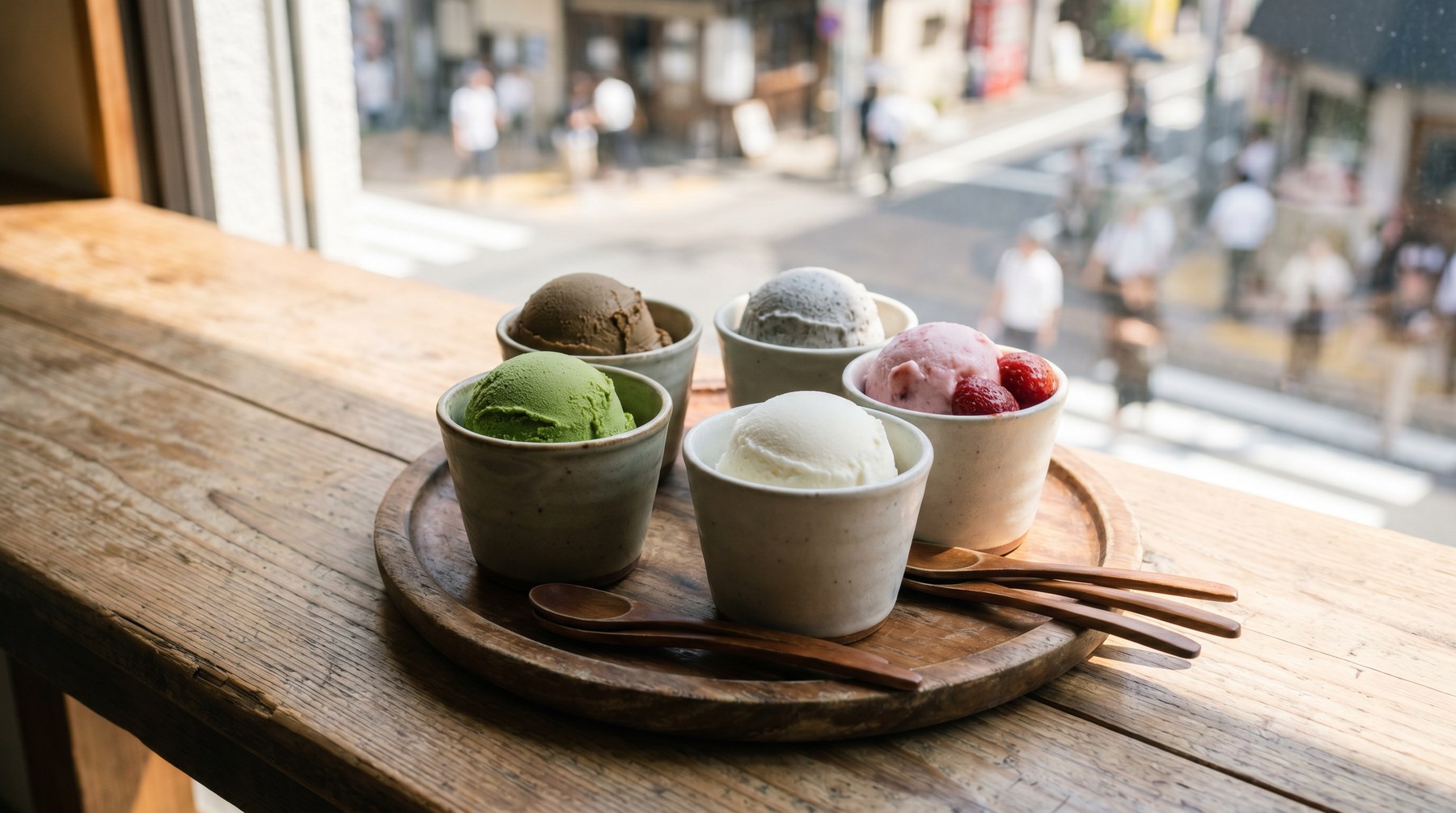
2. Saka No Ue Cafe: QR Queue or Paid Priority Arrival
Saka No Ue Cafe’s official site lists 2-22-14 Yushima, about three minutes from Yushima Station, and states that it serves kakigori year-round. Its August 2026 notice says 9:00-19:00 last order with no regular closing day that month. Busy periods use an in-store QR queue or ticket machine.
- Before leaving: check official Instagram, save the shop map, and decide whether the TableCheck priority route is worth JPY 500 per person.
- On arrival: TableCheck tells priority-arrival guests to speak to staff instead of joining the line. A short wait may remain.
- Abort: do not buy FastPass when you need an exact table time. Do not use this route if cashless payment or a non-refundable fee is a problem.
The shop’s official information publishes an average budget of JPY 1,000-3,000 and lists card, transport IC, and QR payment. FastPass is priority arrival, not a guaranteed reservation.
3. Azuki to Kouri: Reservation-First Counter
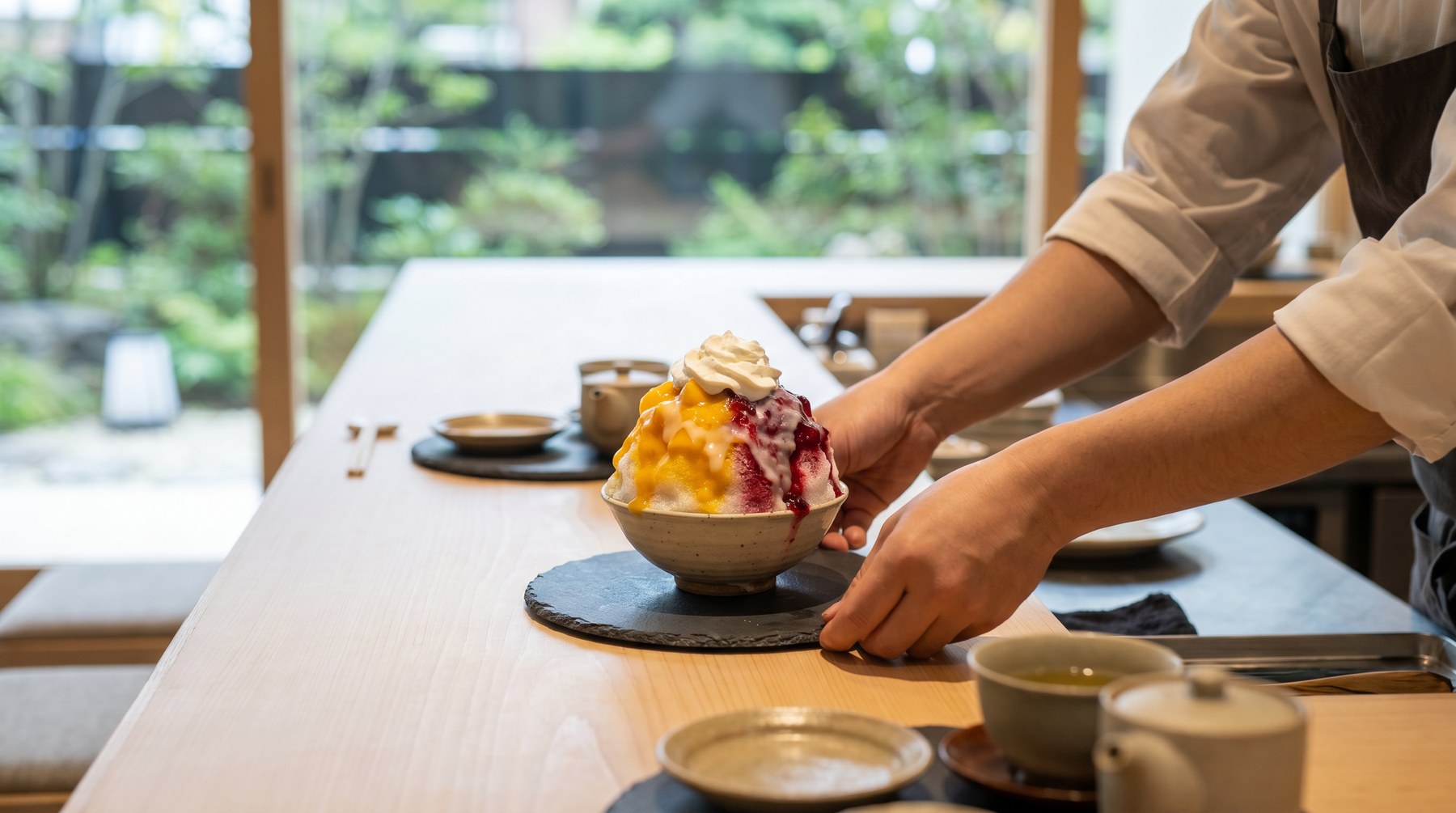
Azuki to Kouri’s official reservation page opens bookings seven days ahead at 21:00. Its current TableCheck rules require at least one food item, such as kakigori or French toast, for each seated guest and limit a visit to 40 minutes. Walk-ins depend on unreserved capacity and may not be accepted when bookings are full.
- Before leaving: use the official reservation guide, save the TableCheck booking page and shop map, and keep the confirmation available.
- On arrival: expect one food item per seated guest and a 40-minute visit. Do not arrive expecting an unconfirmed walk-in seat.
- Abort: choose another route if you cannot accept cashless payment, the card hold, the one-item minimum, the time limit, or uncertain walk-in capacity.
The page shows JPY 3,000 as the reservation hold/no-show amount, not the final bill. The final payment depends on the order. Debit-card users may see a temporary withdrawal before release.
At the Shop: Six-Step Playbook
- Stop before joining the line. Ask where the queue starts and confirm whether a QR code or ticket is required.
- Show your proof. If you booked or paid for priority arrival, show the confirmation to staff.
- Ask the current wait. Compare it with the cutoff you chose before travel.
- Confirm price and payment. Do this before ordering when the day-of menu or payment method is unclear.
- Order one item first. Do not assume a large bowl can be shared; Azuki to Kouri requires one food item per seated guest.
- Leave when an essential answer is unclear. A famous bowl is not worth a missed reservation, unsafe heat exposure, or dietary risk.
Heat and Dietary Stop Rules
A cold dessert does not prevent heat illness. Japan’s Ministry of the Environment first-aid chart lists dizziness, headache, vomiting, exhaustion, cramps, and impaired consciousness among warning signs. Stop the food plan, move to a cooler place, and use the official heat-illness first-aid chart and the RJG heat survival guide.
- Heat stop: leave when the wait is exposed, the time is unclear, or symptoms begin.
- Allergy stop: do not infer safety from “fruit,” “matcha,” or another flavor name.
- Dietary stop: vegan, halal, dairy-free, gluten-free, and nut-free suitability must be confirmed for the exact bowl and cross-contact risk.
Japan’s Consumer Affairs Agency provides an English food-allergy communication sheet and advises restaurant customers to check with staff. Download it before the trip. If staff cannot confirm your exact requirement, do not guess from the flavor name; choose another shop or a packaged item whose label you can check. The RJG food allergy guide explains the conservative fallback.
Concrete Indoor Plan B by Area
| Failed route | Indoor fallback | Important caveat |
|---|---|---|
| Himitsudo / Yanaka | ecute Nippori when your JR journey already takes you through Nippori Station | Most facilities are inside the JR ticket gates. From outside, a valid journey, entry ticket, or supported IC entry is required. |
| Saka No Ue / Yushima | Matsuzakaya Ueno in the Ueno-Hirokoji direction | Department-store and cafe hours vary by floor; check the official hours page on the day. |
| Azuki to Kouri / Yoyogi | Shinjuku Takashimaya near Shinjuku New South Gate | Check same-day hours and closure notices before relying on it. |
A Plan B is not a second famous kakigori queue. It is a nearby indoor place where you can cool down, reset the schedule, and choose food with clearer availability. If you need the lowest-pressure option, use the Japanese konbini guide.

Your One Next Action
Before leaving your hotel, choose one route and save exactly three links: the shop’s live-update or booking page, the shop map, and the indoor Plan B. If any essential condition is still unknown, keep the visit optional rather than building the afternoon around it.
FAQ
Can I avoid waiting in a long kakigori line?
No route guarantees zero waiting. A Saka No Ue FastPass gives paid priority arrival but not a fixed table time. Azuki to Kouri is reservation-first but may have no walk-in space. Himitsudo requires day-of checking and queue tolerance.
Is the Saka No Ue FastPass a table reservation?
No. Its current TableCheck page describes priority seating around an arrival time, not a guaranteed table time. The JPY 500 fee per person is non-refundable, including after cancellation.
What does the JPY 3,000 amount at Azuki to Kouri mean?
It is the displayed reservation hold/no-show amount, not a promised final bill. The final payment depends on the day’s order, and debit-card users may see a temporary withdrawal before release.
Can I pay with cash?
Do not assume. Saka No Ue and Azuki to Kouri currently state that they are cashless. Check Himitsudo's day-of information before visiting because the accessible official page does not publish a complete payment list.
Is kakigori safe for allergies, vegan diets, or halal diets?
Not automatically. Syrups and toppings may contain milk, egg, wheat, soy, nuts, gelatin, or alcohol, and cross-contact is possible. Ask the exact shop. If staff cannot confirm your requirement, use another dessert or packaged food with a label you can check.
What should I do if the booking or queue fails?
Do not cross Tokyo to chase another famous queue. Use the saved indoor Plan B for that area, cool down, and try kakigori on another day or at a shop whose current rules fit your schedule.
About the Author
Basabasa is a former sergeant major in the Japan Ground Self-Defense Force who writes Real Japan Guide for first-time foreign visitors. He focuses on practical Japan travel frictions: how to order, pay, move, ask, queue, and avoid small mistakes that can make a good trip feel harder than it needs to be.
Official Sources Checked for This Guide
- Himitsudo official X: use it for day-of changes. The shop website supplied the address and peak-summer hours at the checked date, but its HTTPS endpoint did not pass a repeat TLS check.
- Saka No Ue Cafe official Instagram: use it for current notices. The shop website supplied August hours, QR queue, address, access, average budget, and cashless payment at the checked date, but its HTTPS certificate did not pass a repeat hostname check.
- Saka No Ue TableCheck page: JPY 500 per-person non-refundable priority-arrival terms and walk-in availability.
- Azuki to Kouri official reservation page and TableCheck page: booking release, order minimum, visit limit, cashless payment, card hold, and walk-in uncertainty.
- Consumer Affairs Agency food-labelling page: English food-allergy communication sheet and restaurant checking guidance.
- Ministry of the Environment heat-illness first-aid chart: warning signs and cooling guidance.
- ecute Nippori access page: ticket-gate and entry requirements for the Yanaka-area indoor fallback.
- Matsuzakaya Ueno access page: official location and station access for the Yushima-area fallback.
- Shinjuku Takashimaya access page: official location and station access for the Yoyogi-area fallback.
Comments