- Quick Answer
- Choose Your Check-In Type
- What Documents Do You Need?
- Hotel Check-In: Fastest Route
- Ryokan Check-In: Protect Your Meal and Arrival Window
- Airbnb and Minpaku Self Check-In
- Fastest Fix by Problem
- Pre-Check-In Checklist
- After Check-In: Solve the Next Problem
- FAQ
- Does every foreign guest have to show a passport at check-in in Japan?
- What should I do if I am a foreign resident with an address in Japan?
- Can a registered minpaku verify me remotely?
- Can I check in late at night?
- What if the host or property does not respond?
- Can I leave luggage before check-in?
- What should I do when the key box code fails?
- Official Sources
Quick Answer
To check in smoothly in Japan, keep four things ready: the booking name, your reservation confirmation, the property address in Japanese, and the exact arrival instructions saved offline. Follow the time and method shown by your property – a front desk, kiosk, key box, smart lock, or remote identity check.
Passport rule: Japan asks foreign guests who do not have an address in Japan to provide nationality and passport number and to present a passport for copying. This is not a blanket rule saying that every foreign resident of Japan must show a passport. For private lodging (minpaku), the operator must also confirm each guest’s identity before the stay, either face to face or through an equivalent ICT method. See the Ministry of Health, Labour and Welfare guidance and the Japan Tourism Agency identity-confirmation guide (PDF).

If you are outside the property right now:
- Check the latest message in the booking app, not only the original confirmation email.
- Confirm the check-in date, permitted arrival time, building entrance instructions, and room/key code separately.
- Message or call the property through the contact route in your reservation.
- If the property does not respond, contact the booking platform’s support. Do not assume that the platform guarantees replacement accommodation.
- If waiting at the entrance feels unsafe, move to a staffed public place while you contact support and decide whether to book a refundable backup.
Choose Your Check-In Type
| Accommodation | Usual check-in route | Prepare before arrival | Common point of failure |
|---|---|---|---|
| Hotel or business hotel | Front desk or self-service kiosk | Booking name, confirmation, required guest details, payment method | Arriving after the property’s stated deadline without notice |
| Ryokan | Staffed reception | Arrival time, meal time if included, transport plan | Late arrival affecting dinner or reception arrangements |
| Self-check-in rental, including some listings booked via Airbnb | Key box, smart lock, in-person handoff, or remote check-in system | Identity check completed, full access instructions, separate entrance and room codes | Assuming self check-in means arrival is allowed at any hour |
| Hostel or capsule hotel | Reception, kiosk, or property-specific system | Reception hours, luggage rules, booking confirmation | Reaching the property after reception closes |
These are common patterns, not universal rules. Your reservation confirmation and the property’s latest message control the actual time, payment method, and access procedure.
What Documents Do You Need?
If you do not have an address in Japan
The Ministry of Health, Labour and Welfare states that foreign nationals who do not have an address in Japan must provide their nationality and passport number in addition to the standard guest-register information. The government also asks them to present their passport and allow a copy to be kept with the lodging record.
Keep the physical passport accessible even if the property collected information online before arrival. Make sure the request comes through the property or booking route connected to your real reservation. If a link fails or looks unrelated to the booking, ask the operator to resend the official check-in route or provide another verification method.
If you have an address in Japan
The national passport-presentation and copy rule described above specifically targets foreign guests who do not have an address in Japan. A hotel or lodging operator will still collect the information required for its guest register and may ask for identification under its own check-in procedure. If the property sends you a non-resident passport request, tell it that you have an address in Japan and ask what information it requires for your case.
For registered minpaku
Private-lodging operators must confirm the identity of each guest before accommodation begins. The Japan Tourism Agency says this must be face to face or use ICT in an equivalent way. For a remote check, the operator must be able to confirm the guest’s face against the passport image and confirm that the live image comes from the registered lodging, its vicinity, or the operator/administrator’s office. A video call or an installed tablet is one example in the official guide.
A passport-photo upload by itself should not be described as the whole identity-confirmation process for every property. Follow the operator’s actual instructions, which may combine advance registration with an on-site or live verification step. The official guide separately limits the passport-presentation and copy requirement to foreign guests who do not have an address in Japan.
Hotel Check-In: Fastest Route
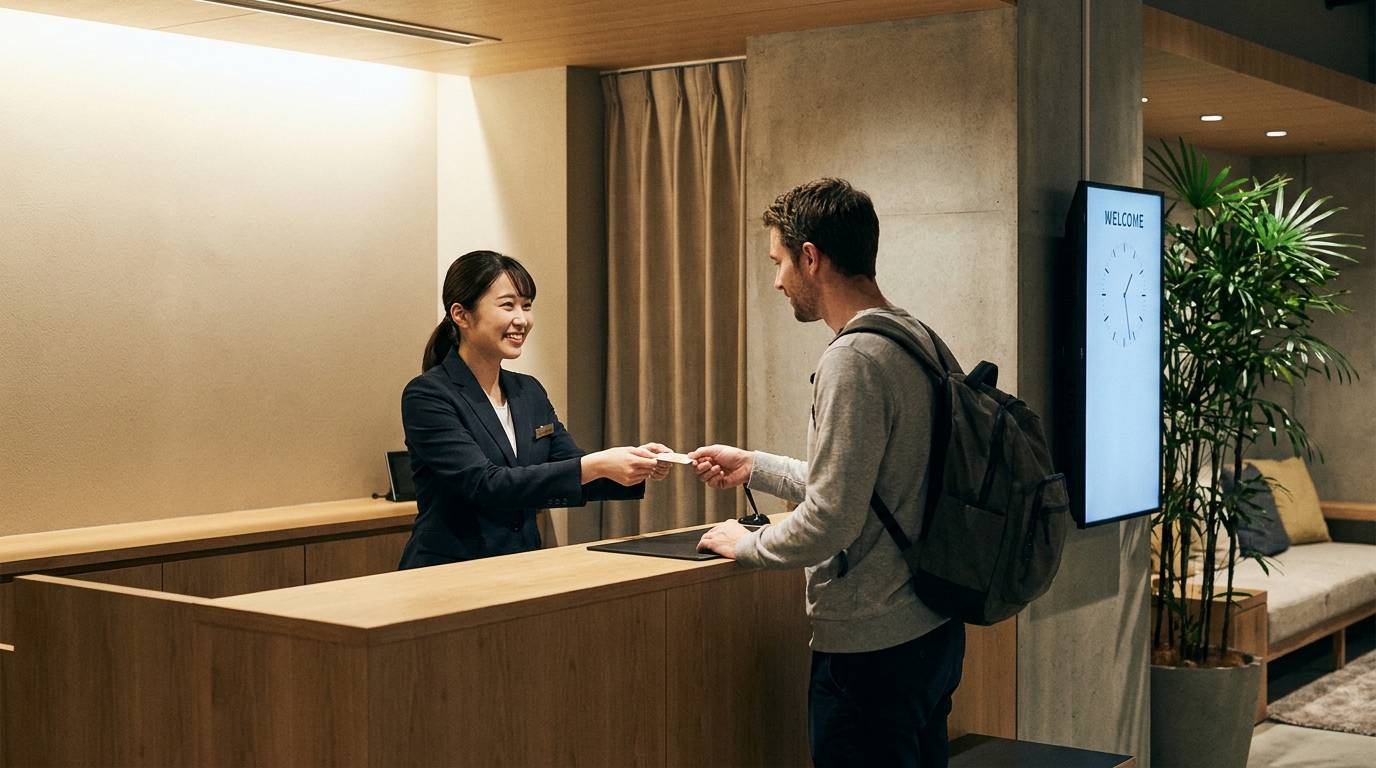
- Go to the front desk or the kiosk named in your confirmation.
- Use the same name and spelling as the reservation.
- Provide the guest-register information and any documents required for your situation.
- Confirm payment, checkout time, breakfast if booked, and how to enter after reception hours.
If you will arrive later than the time shown in your booking, contact the hotel before that deadline. Do not assume that every business hotel has a 24-hour front desk or that an unpaid reservation will be held indefinitely.
If the kiosk cannot find your booking
- Try the lead guest’s surname exactly as booked.
- Check whether the kiosk wants the hotel’s confirmation number rather than the booking platform’s number.
- Look for a call button or ask reception staff instead of repeating payment.
- If the property has more than one branch, verify the full address before leaving the lobby.
Ryokan Check-In: Protect Your Meal and Arrival Window
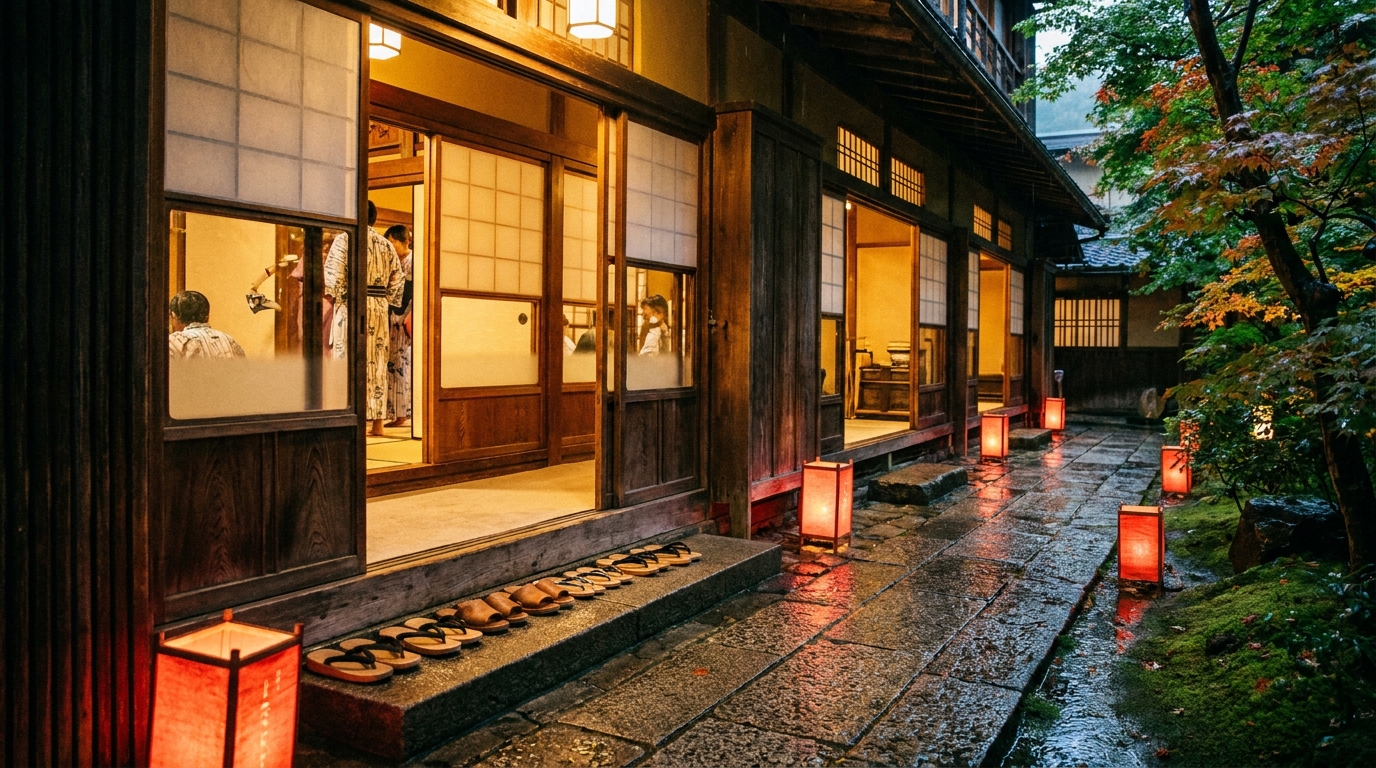
Ryokan check-in is usually staff-assisted. The important issue is not ceremony; it is timing. If dinner is included, the property may need your confirmed arrival time to serve it. Read the booking conditions and contact the ryokan as soon as you know you will be late.
- Confirm how to reach the entrance, especially if the ryokan offers a station pickup.
- Give the reservation name and complete the guest registration.
- Confirm dinner time, breakfast time, bathing hours, and checkout time.
- Ask before assuming that luggage, shoes, meals, or room access work like a standard hotel.
Airbnb and Minpaku Self Check-In
An Airbnb listing in Japan may be licensed under the Hotel Business Act or registered under the Private Lodging Business Act. The booking platform name does not by itself tell you which check-in procedure applies. Use the license or notification information in the listing and follow the operator’s instructions.
Before you travel to the property
- Complete the requested guest registration and identity check.
- Save the exact address in Japanese, the map pin, and exterior/building photos offline.
- Separate the building entrance code from the room, smart-lock, or key-box code.
- Check when the code becomes valid. A code may not work before the permitted check-in time.
- Confirm whether late arrival is permitted. Self check-in does not automatically mean 24-hour arrival.
- Keep the operator’s phone number and the booking-platform message thread available.
Where to find Airbnb instructions
Open your trip in the Airbnb app and check the arrival or check-in section, then read the latest host message. If the instructions are incomplete, contact the host through the reservation thread so that the conversation remains connected to your booking. Airbnb’s general support entry point is airbnb.com/help.
Key box or smart lock
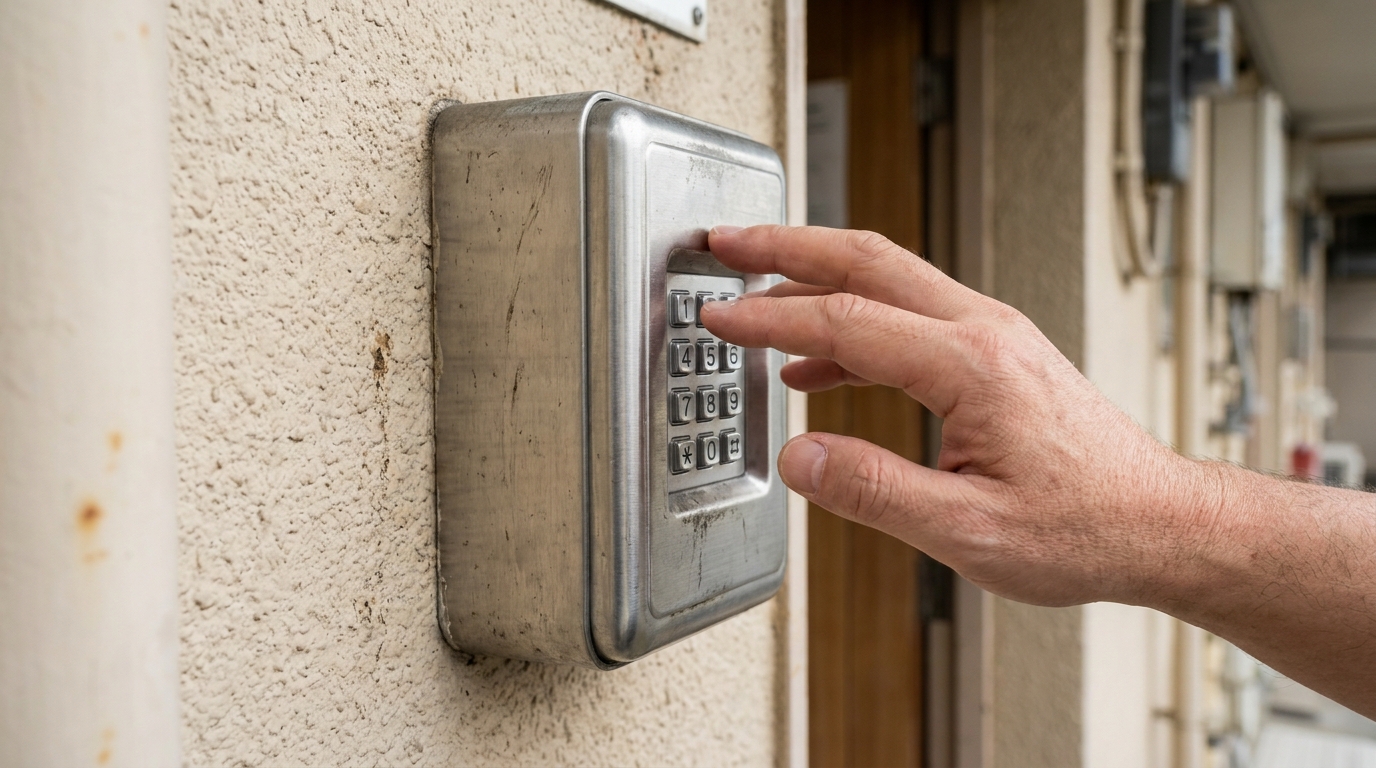
Check the permitted time first. Then confirm that you are at the correct box or door, enter the exact code, and follow the opening action shown by the host. Do not pull, pry, or test neighboring boxes. If you need a visual walkthrough, use our Japanese Airbnb key box guide.
How to check that the lodging is registered
Look for the license or private-lodging notification information in the listing or the operator’s check-in material. A property can be legal under different lodging frameworks, so the absence of one particular minpaku-number format does not by itself prove that the accommodation is illegal. The Japan Tourism Agency publishes the national framework through its private lodging portal. If the licensing information is unclear, ask the platform or operator before arrival.
Fastest Fix by Problem
I never received the check-in instructions
- Open the current reservation in the booking app and check the latest messages.
- Search the confirmation email for a separate property message or external check-in link.
- Confirm that all required guest registration steps are complete.
- Message and call the property using the contact details attached to the reservation.
- If there is still no response, contact the booking platform’s support and explain that you cannot access the booked property.
The main entrance is locked
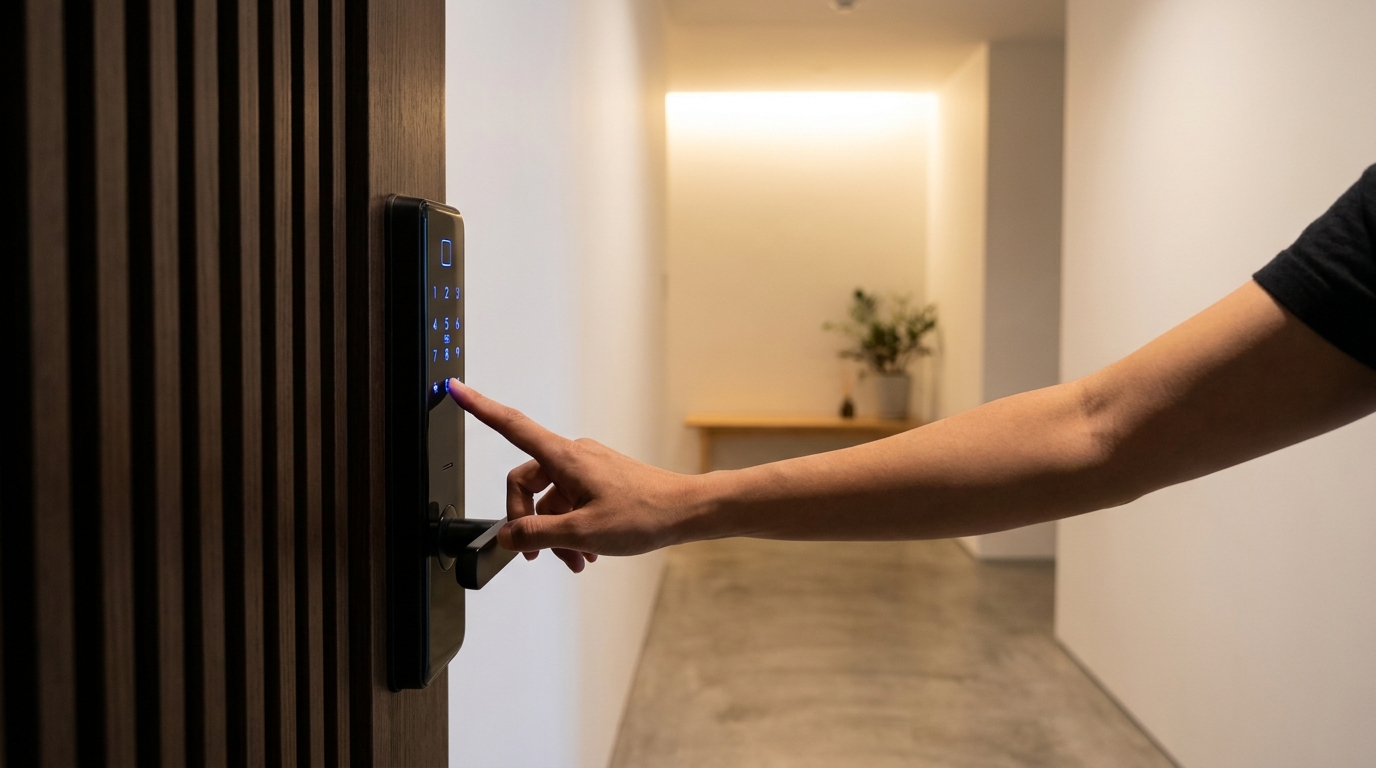
Look for a separate building-entry code, intercom instruction, or key pickup step. The room code may not open the building entrance. Confirm the building name and address before trying another entrance. Do not follow a resident through a secured entrance or ask them to bypass the lock for you. Contact the operator or platform and wait in a staffed public place if the entrance cannot be opened safely.
The key box code does not work
- Confirm the check-in date and the time when the code becomes valid.
- Verify that you are using the code for the key box, not the building or room.
- Follow the host’s reset/opening action after entering the digits.
- Send the operator a photo of the box location without exposing the code publicly.
- Use the full key box troubleshooting guide; do not force the box.
The passport or identity-check link does not work
Tell the operator exactly which step fails and ask it to resend the official route or offer another compliant verification method. If you have an address in Japan, state that clearly because the national passport-copy rule discussed in this guide applies to foreign guests without a Japanese address. Do not send identity documents to an unrelated email address or account simply to bypass a broken form.
I arrived before check-in
Do not enter early or leave bags at the door unless the property has confirmed this. Ask a staffed hotel whether it can hold your luggage. For rentals without storage, use a station locker, a staffed storage service, or another option in our Tokyo luggage storage guide.
I will arrive late
Contact the property before its stated deadline. Ask whether reception will remain open or whether all parts of self check-in – including the building entrance and identity check – will work at your arrival time. If transport and check-in no longer line up, use the Tokyo late-night arrival guide before traveling to a silent or inaccessible building.
The property does not respond
Keep messages inside the booking platform, call the property using the number on the reservation, and then contact platform support. Report the facts: your reservation number, location, attempted contact times, and the exact access failure. Do not rely on an unconfirmed promise that the platform will always provide emergency accommodation.
Pre-Check-In Checklist
- Booking name and reservation number
- Property name and full address in Japanese
- Check-in date and permitted arrival window
- Latest instructions saved offline
- Building entrance method
- Room, smart-lock, or key-box method
- Required guest registration completed
- Physical passport accessible if you do not have an address in Japan
- Property contact and booking-platform support route
- Luggage Plan B if you arrive early
After Check-In: Solve the Next Problem
- Key box will not open: use the key box guide.
- You arrived too early: compare lockers and staffed options in Tokyo luggage storage.
- You arrived after midnight: switch to the late-night arrival guide.
- The room feels unfamiliar: read the Japanese futon guide and Japanese toilets guide.
- The building is quiet: keep the noise rules guide handy for the first night.
FAQ
Does every foreign guest have to show a passport at check-in in Japan?
No. The national passport-presentation and copy rule described by the Ministry of Health, Labour and Welfare applies to foreign guests who do not have an address in Japan. Lodging operators still collect the information required for their guest register and may have their own identification procedure.
What should I do if I am a foreign resident with an address in Japan?
Tell the property that you have an address in Japan and ask what it needs for its guest-registration procedure. The national rule requiring passport presentation and copying is specifically described for foreign guests who do not have an address in Japan.
Can a registered minpaku verify me remotely?
Yes, if its method meets the official identity-confirmation requirements. The official guide says an ICT-equivalent method must clearly confirm the guest’s face and passport image and confirm that the image originates from the registered lodging, its vicinity, or the operator or administrator’s office. The passport-presentation and copy requirement is separately limited to foreign guests who do not have an address in Japan.
Can I check in late at night?
Only if the property confirms that your arrival time is permitted and every required step will work then. A key box or smart lock does not automatically mean that arrival is allowed 24 hours a day.
What if the host or property does not respond?
Check the latest reservation messages, call the contact number attached to the booking, and contact the booking platform’s support with your reservation number and access problem. Do not assume that replacement accommodation is guaranteed.
Can I leave luggage before check-in?
Only with the property’s permission. Staffed hotels may offer bag hold, while unattended rentals may have no storage. If early drop-off is not confirmed, use a locker or staffed luggage service.
What should I do when the key box code fails?
Confirm the permitted check-in time, the correct box, and whether the building and key-box codes are different. Follow the operator’s reset and opening instructions, contact the operator, and never force the box.
Official Sources
- Ministry of Health, Labour and Welfare: Request for producing passports for identification purposes
- Japan Tourism Agency: Identity Confirmation of Guests (PDF)
- Japan Tourism Agency: Private Lodging portal
Last checked: July 12, 2026.


Comments